Urgent: Witch hunt by neo-Nazis in Kharkov, Ukraine

Borotba banner at a rally outside the Kharkov Regional Administration building in May 2014. Photo: Svetlana Licht

Borotba (Struggle) is a revolutionary Marxist organization based in Ukraine and the Donbass people’s republics. It has been outlawed by the Kiev regime since the U.S.-backed coup in 2014.

Sept. 10 — Very disturbing news comes from the Kharkov region. Supporters of Borotba report that Ukrainian neo-Nazis have begun massacres of civilians.

From the city of Balakliya, which was occupied by Ukrainian troops yesterday, there are reports that people are being taken away in an unknown direction. We are talking about doctors, public utility employees, and other citizens who continued to interact with the Russian military-civilian administration.

There are eyewitness accounts that militants with neo-Nazi symbols simply grabbed people at their workplaces, and no one saw these people again.

We do not yet have the opportunity to double-check this information, but we have no reason not to trust our supporters.

We fear that Ukrainian neo-Nazis will organize another provocation, as they did in Bucha, and will try to blame the Russian military. Massacres are a common practice of neo-Nazis.

We ask you to spread this information as widely as possible. Perhaps it will save someone’s life.

Translated by Melinda Butterfield

Source

Strugglelalucha256


After Queen’s death, victims of British imperialism share why ‘we will not mourn’

As millions of Britons and admirers the world over mourned Queen Elizabeth II’s death Thursday, others—especially in nations formerly colonized by the British Empire—voiced reminders of the “horrendous cruelties” perpetrated against them during the monarch’s reign.

“We do not mourn the death of Elizabeth, because to us her death is a reminder of a very tragic period in this country and Africa’s history,” declared Julius Malema, head of the left-wing Economic Freedom Fighters party in South Africa.

“Elizabeth ascended to the throne in 1952, reigning for 70 years as a head of an institution built up, sustained, and living off a brutal legacy of dehumanization of millions of people across the world,” he continued.

“During her 70-year reign as queen, she never once acknowledged the atrocities that her family inflicted on native people that Britain invaded across the world,” Malema noted. “She willingly benefited from the wealth that was attained from the exploitation and murder of millions of people across the world.”

“The British royal family stands on the shoulders of millions of slaves who were shipped away from the continent to serve the interests of racist white capital accumulation, at the center of which lies the British royal family,” Malema added.

Larry Madowo, a CNN International correspondent from Kenya, said during a Thursday broadcast that “the fairytale is that Queen Elizabeth went up the treetops here in Kenya a princess and came down a queen because it’s when she was here in Kenya that she learned that her dad had died and she was to be the queen.”

“But that also was the start of the eight years after that, that the… British colonial government cracked down brutally on the Mau Mau rebellion against the colonial administration,” he continued. “They herded more than a million people into concentration camps, where they were tortured and dehumanized.”

In addition to rampant torture—including the systemic castration of suspected rebels and sympathizers, often with pliers—British forces and their local allies massacred unarmed civilians, disappeared their children, sadistically raped women, and clubbed prisoners to death.

“And so,” added Madowo, “across the African continent, there have been people who are saying, ‘I will not mourn for Queen Elizabeth, because my ancestors suffered great atrocities under her people that she never fully acknowledged that.”

Indeed, instead of apologizing for its crimes and compensating its victims, the British government launched Operation Legacy, a massive effort to erase evidence of colonial crimes during the period of rapid decolonization in the 1950s-’70s.

“If the queen had apologized for slavery, colonialism, and neocolonialism and urged the Crown to offer reparations for the millions of lives taken in her/their names, then perhaps I would do the human thing and feel bad,” tweeted Cornell University professor Mũkoma wa Ngũgĩ. “As a Kenyan, I feel nothing. This theater is absurd.”

Aldani Marki, an activist with the Organization of Solidarity with the Yemeni Struggle, asserted that “Queen Elizabeth is a colonizer and has blood on her hands.”

“In 1963 the Yemeni people rebelled against British colonialism. In turn the Queen ordered her troops to violently suppress any and all dissent as fiercely as possible,” he tweeted. “The main punitive measure of Queen Elizabeth’s Aden colony was forced deportations of native Yemenis into Yemen’s desert heartland.”

https://twitter.com/Aldanimarki/status/1567861794605043712

“This is Queen Elizabeth’s legacy,” Marki continued. “A legacy of colonial violence and plunder. A legacy of racial segregation and institutionalized racism.”

“The queen’s England is today waging another war against Yemen together with the U.S., Saudi Arabia, and the UAE,” he added.

Melissa Murray, a Jamaican-American professor at New York University School of Law, said that the queen’s death “will accelerate debates about colonialism, reparations, and the future of the Commonwealth” as “the residue of colonialism shadows day-to-day life in Jamaica and other parts of the Caribbean.”

Numerous observers noted how the British Empire plundered around $45 trillion from India over two centuries of colonialism that resulted in millions of deaths, and how the Kohinoor—one of the largest cut diamonds in the world, with an estimated value of $200 million—was stolen from India to be set in the queen mother’s crown.

“Why are Indians mourning the death of Queen Elizabeth II?” asked Indian economist Manisha Kadyan on Twitter. “Her legacy is colonialism, slavery, racism, loot, and plundering. Despite having chances, she never apologized for [the] bloody history of her family. She reduced everything to a ‘difficult past episode’ on her visit to India. Evil.”

An Indian historian tweeted, “there are only 22 countries that Britain never invaded throughout history.”

“British ships transported a total of three million Africans to the New World as slaves,” he wrote. “An empire that brought misery and famine to Asia and Africa. No tears for the queen. No tears for the British monarchy.”

Negative reaction to the queen’s passing was not limited to the Global South. Despite the historic reconciliation between Ireland and Britain this century, there were celebrations in Dublin—as a crowd singing “Lizzie’s in a Box” at a Celtic FC football match attests—and among the Irish diaspora.

“I’m Irish,” tweeted MSNBC contributor Katelyn Burns, “hating the queen is a family matter.”

Welsh leftists got in on the action too. The Welsh Underground Network tweeted a litany of reasons why “we will not mourn.”

“We will not mourn for royals who oversaw the protection of known child molesters in the family,” the group said.

“We will not mourn for royals who oversaw the active destruction of the Welsh language, and the Welsh culture,” the separatists added.

Summing up the sentiments of many denizens of the Global South and decolonization defenders worldwide, Assal Rad, research director at the National Iranian American Council, tweeted, “If you have more sympathy for colonizers and oppressors than the people they oppress, you may need to evaluate your priorities.”

Source: Common Dreams

Strugglelalucha256


Life expectancy and human development in the 21st century

Life expectancy is one of the best measures of human development.  In hunter-gather societies, on average, about 57-67% of children made it to 15 years. Then 79% of those 15-year-olds made it to 45 years.  Finally, those remaining at 45 years could expect to reach around 65-70 years. So we can see that life expectancy at birth in these societies was very low, given high child mortality. But some 40% did make it to about 65 years on average.  It seems to have been worse in the class-based feudal and slave societies.  The average medieval life expectancy for a peasant was only a mere 35 years of age at birth, but it was closer to 50 years on average for those who made it beyond 15 years.

You can see that measuring life expectancy at birth is not a perfect guide to how long humans did live in pre-capitalist societies.  Nevertheless, there is no doubt that life expectancy on average rose sharply once science came to bear on hygiene, sewage, knowledge of the human body, better nutrition, etc.  Of course, there were sharp inequalities in life expectancy in class societies between rich and poor.

If we accept that life expectancy is a good measure of human development, the latest data are revealing about capitalist societies in the 21st century.  Life expectancy fell in the U.S. in 2021 to its lowest since 1996, the second year of a historic retreat, mainly due to COVID-19 deaths.  The decline from 2019 marked the largest two-year drop in life expectancy at birth in close to a century, the U.S. Centers for Disease Control and Prevention (CDC) found.  Also, disparity in life expectancy between men and women widened last year to the highest in more than two decades, with American men now expected to live just 73.2 years, nearly six fewer years than women.

Deaths from COVID-19 contributed to over half of the overall decline in U.S. life expectancy last year.  COVID-19 was associated with more than 460,000 U.S. deaths in 2021, according to the CDC. But COVID was not the only factor in the decline.  Drug overdoses and heart disease are also major contributors, the data showed.  Interestingly, deaths from suicide decreased in 2020 during COVID, but they were still the fifth-biggest contributor to the drop in overall life expectancy last year. Suicide-related deaths are the third-leading contributor to the decline in life expectancy for American men.

While U.S. life expectancy decreased from 78.6 years in 2019 to 76.9 years in 2020 and 76.1 years in 2021, a net loss of 2.4 years, in contrast, peer countries averaged a smaller decrease in life expectancy between 2019 and 2020 (0.55 years) and a 0.26-year increase between 2020 and 2021, widening the gap in life expectancy between the U.S. and other advanced capitalist economies to more than five years. The decrease in U.S. life expectancy was highly racialized: as the largest decreases in 2020 occurred among American Indian/Alaska natives, Hispanics, black and Asian populations.  For native Americans and Alaska natives, life expectancy fell to 65, close to the national average during World War II.

This decline in life expectancy in rich U.S. contrasts with the continued rise in China throughout the COVID pandemic – where the death rate from the virus was minimal compared to the U.S. and Europe.  As a result, in 2021, China’s life expectancy at birth is now higher than that of the U.S.!

This outcome is a stark and depressing condemnation of American capitalism in the 21st century. “The stagnation in life expectancy reflects deep societal challenges — not just in our health system but also in our economic and political systems,” said Dave Chokshi, a physician and former NYC health commissioner.

It was not just the pandemic. Americans of every age, at every income level, are unusually likely to die from guns, drugs, cars, and disease.  American babies are more likely to die before they turn five; American teens are more likely to die before they turn 20; American adults are more likely to die before they turn 65. Europe has better life outcomes than the U.S. across the board, for white and black people, in high-poverty areas and low-poverty areas.

The U.S. has more drug-overdose deaths than any other high-income country—both overall and on a per capita basis. Even before the pandemic, life expectancy in the U.S. declined for consecutive years in 2015 and 2016, largely because of the opioid epidemic and drug overdoses. The U.S. has a higher death rate from road accidents than Canada, Australia, Japan, South Korea, and the European Union. Even on a per-miles-driven basis, the U.S. still has a higher death rate than much of Europe.

At 40 percent among adults, the U.S. obesity rate is double the average of most European countries and eight times higher than Korea’s or Japan’s. Although the precise relationship between weight and health is contentious, the nonpartisan Commonwealth Fund has stated bluntly that America’s obesity levels are responsible for roughly one-fifth of deaths among American adults aged 40 to 85.

The U.S. has fewer general practitioners per capita than most rich countries, in part because of the long and expensive medical education encourages doctors to become highly paid specialists. And along with this lack of affordable and accessible primary care, the U.S. has the highest rate of avoidable deaths of any rich nation. (Examples of the OECD’s definition of “avoidable” mortality include deaths related to alcohol, shootings, accidents, and influenza.)

Life expectancy is an important measure of human development, but it is not the only measure.  The UN has created a human development index (HDI) which measures not just life expectancy but also educational advancement and economic prosperity.  The HDI was launched in 1990.  In its latest Human Development Report (HDR), the data confirm that capitalism in the 21st century, if it ever was, is no longer progressive in the development of human well-being.  The report says that “decades of progress in terms of life expectancy, education and economic prosperity have begun unraveling since the pandemic.”  Over the past two years, nine out of ten countries have slid backward on their HDI.

Switzerland sits at the top of the index with a life expectancy of 84 years, an average of 16.5 years spent in education, and median salary of $66,000.  At the other end of the scale is South Sudan, where life expectancy is 55; people spend just 5.5 years in school on average and earn $768 a year. But recent setbacks in a majority of the 191 countries included in the index, especially in life expectancy, have taken development levels back to those seen in 2016, reversing a 30-year trend.

Over the years since the index was introduced, many countries have faced crises and slid backward, but the global trend consistently moved upwards. Last year was the first time the index declined overall since calculations began, and this year’s results solidified that downward trend. And “the outlook for 2022 is grim,” says Achim Steiner, one of the HDR authors, who points out that more than 80 countries are facing problems paying off their national debt.  “Eighty countries being one step away from facing that kind of crisis is a very serious prospect,” he says. “We are seeing deep disruptions, the tail end of which will play out over a number of years.”

When we look at the league table of countries in the HDI, the usual richer advanced capitalist economies are at the top.  But the U.S. is not in the top 20; it’s 21st, although it has by far the largest in population of these richer countries.  And if we compare the progress in human development in the top G7 economies using the HDI since 1990, we find, whereas the U.S. was the highest of the G7 in 1990, it has slipped to fifth out of seven.  While Germany’s HDI rose 13.6% from 1990-2021, the U.S. HDI rose only 5.6%.  And the U.S. rose the least of the G7 in the 21st century.  Strangely, the UK rose the most from 1990, if from a lower start, and was the fastest riser in the 21st century to date.  This may be due to the higher than average spending on education in the 1990s and early 2000s.

1990 2000 2021 1990-2021 2000-21
Ger 0.829 0.889 0.942 13.6 6.0
Can 0.860 0.890 0.936 8.8 5.2
UK 0.804 0.862 0.929 15.5 7.8
Jap 0.845 0.877 0.925 9.5 5.5
U.S. 0.872 0.891 0.921 5.6 3.4
Fra 0.791 0.844 0.903 14.2 7.0
Ita 0.778 0.841 0.895 15.0 6.4

Every G7 country did better than the U.S. – another indicator of the relative decline of U.S. imperialism.

The UN has also developed an inequality-adjusted HDI, where the degree of inequality of income is fed into the HDI to change the outcome.  Every country has a degree of inequality.  But some are much worse than others.  Among the G7 economies, the level of inequality in the U.S. and Italy is so high that it reduces the HDI in those two countries by over 11% and knocks them even further down the HDI league.

This is not surprising given the huge rise in inequality and poverty in the U.S. since the HDI was started.  In January 2022, the U.S. Census Bureau reported that in 2020, there were 37.2 million people in poverty, approximately 3.3 million more than in 2019 – that’s an official poverty rate of 11.4 percent, up 1.0 percentage point from 10.5 percent in 2019.  The “poverty threshold” for a four-person family in 2020 was $26,496.  And the U.S. Federal Reserve reports that in 1989 the top 1 percent controlled 23.5 percent of the nation’s wealth, and, in 2022, its share had increased to 31.8 percent or $44.9 trillion.  The bottom 50% of wealth holders had 3.7% of household wealth in 1989; now, they have 2.8%.

Inequality is even higher in many Global South countries; in particular, Brazil, South Africa, and India have shocking inequality rates that knocks their HDIs by over 25%.

If we look at the largest so-called emerging economies by population, including the BRICS (Brazil, Russia, India, China, and South Africa), as you might expect, China achieved the greatest improvement in its HDI of all countries.  From a lowly 0.48 in 1990, China’s HDI reached 0.77 in 2021, a rise of 59%.  Compare that to India, which started pretty much at the same HDI as China but reached only 0.63 in 2021, a rise of 46% but still way less than China.

1990 2000 2021 1990-2021 2000-21
Arg 0.72 0.78 0.84 16.5 8.1
Turk 0.60 0.67 0.84 39.7 25.1
Russ 0.74 0.73 0.82 10.6 12.3
Slan 0.64 0.69 0.78 23.0 13.7
Ukr 0.73 0.70 0.77 6.0 10.4
China 0.48 0.58 0.77 58.7 31.5
Mex 0.66 0.71 0.76 14.5 6.9
Bra 0.61 0.68 0.75 23.6 11.0
S Afr 0.63 0.63 0.71 12.8 12.6
Indo 0.53 0.60 0.71 34.0 18.5
India 0.43 0.49 0.63 45.9 28.9

Whereas China was just 5pts higher in its HDI than India in 1990, now it is 14 pts higher.  In those three decades, China has come from behind to overtake Mexico, Brazil, South Africa, and Indonesia – and close the gap with the U.S. from 40pts behind to just 15 pts.

For topical purposes, I also looked at Ukraine, Sri Lanka, and Russia.  In 1990, when the Soviet bloc fell, Ukraine had a HDI of 0.73, virtually the same as Russia and ahead of tiny debt-ridden Sri Lanka.  By 2000, the ‘shock therapy’ of the return to capitalism lowered the HDI in Ukraine and Russia while all others in the list rose.  And 30 years later, Ukraine’s HDI has crawled up just 6% to 0.77, falling behind Sri Lanka and Russia, both of which did not do very well either.

Are the major economies of the global South catching up with the G7 countries of the global North?  If we exclude China and India, then the global South average (as defined above) was 18pts behind the G7 average in 1990.  In 2021, the gap was 14pts.  So hardly any progress in closing the gap in 30 years.  And the countries of Global South chosen here are mostly the best performers, not the poorest and weakest.

Returning to the measure of life expectancy, we find that as people have healthier and longer lives, they become more skilled and educated and so enable economies to grow and to raise incomes and livelihoods.  So public health measures are the most important lever for fostering economic development. 

The news that after 140 years, scientists at the University of Oxford have finally developed a vaccine that has 80% effectiveness against the deadly disease of malaria, which has killed millions and still kills nearly one child a minute.  The big pharma companies had avoided putting funds into malaria vaccines for decades, preferring to develop anti-depressants and cancer drugs that could sell well in the richer countries.  So it has taken 140 years to develop the malaria vaccine compared to just one year to find a vaccine for COVID.  The latter, of course, affected the Global North too.  Now the possible eradication of malaria, that affects primarily the Global South, would probably be the most significant boost to life expectancy and human development this century.

Source: Michael Roberts blog

Strugglelalucha256


FBI persecution continues

Thursday, September 08, 2022 

The Committee in Solidarity with Cuba in Puerto Rico (CSC) has received dozens of national and international messages of support referring to the recent campaign of harassment by the U.S. government via the Federal Bureau of Investigation (FBI). 

On Wednesday, September 07 we learned that at least two pro-Cuba and anti-blockade activists in the northwestern region of the U.S. received telephone calls from the FBI, where they were “invited” to converse about the Puerto Rican brigade to Cuba. It is worth mentioning that the support letter sent from that region to the CSC mentioned electoral interests in Miami that coincide with a harassment campaign against the anti-blockade activities in that city, and questioned whether the current FBI harassment in Puerto Rico responds to those same interests. 

CSC condemns the efforts by the FBI to intimidate activists in the United States, and exhorts the movement against the criminal U.S. blockade against Cuba to continue raising its voice. 

In addition, we demand that the US government (1) stop all FBI interrogations of activists in solidarity with Cuba, including the Puerto Rican Brigade and solidarity groups in the US (2) that the Biden administration explain why it is investigating our movement and ( 3) end the blockade against Cuba. These actions by the U.S. government are a clear signal that our activism has had a positive effect. 

Solidarity can NOT be blockaded!

Strugglelalucha256


Sigue persecusión del FBI

Jueves, 08 de septiembre de 2022

El Comité Solidaridad con Cuba en Puerto Rico (CSC) ha recibido decenas de mensajes de apoyo nacional e internacional frente a la reciente campaña de acoso por parte del gobierno estadounidense via su Buró Federal de Investigación (FBI por sus siglas en inglés). 

El miércoles 07 de septiembre nos enteramos que por lo menos dos activistas pro-Cuba y anti-bloqueo en la región del noroeste de los EEUU recibieron llamadas de parte del FBI. En esas llamadas fueron “invitadas” a conversar acerca de la brigada puertorriqueña a Cuba. Cabe mencionar que la carta de apoyo enviada de esa región mencionó los intereses electorales en Miami que coinciden con una campaña de acoso contra la campaña en contra del bloqueo que se lleva en esa ciudad, y cuestionó si esas acciones de parte del FBI en Puerto Rico responden a los mismos intereses. 

El CSC condena los intentos de intimidar a las activistas estadounidenses, y le exhorta al movimiento en contra del bloqueo criminal contra Cuba a seguir levantando su voz. 

En adición le exigimos al gobierno estadounidense (1) que detenga todos los interrogatorios del FBI a activistas solidarios con Cuba, incluyendo la brigada puertorriqueña y los grupos solidarios en los EEUU (2) que la administración Biden explique por qué está investigando nuestro movimiento y (3) poner fin al bloqueo contra Cuba. Las acciones de parte del gobierno estadounidense son una clara señal que nuestro activismo ha tenido un efecto positivo. 

¡La solidaridad NO puede ser bloqueada!

Strugglelalucha256


The bewildering vote in Chile that rejected a new constitution

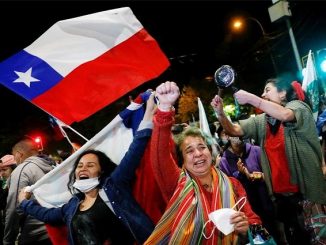
On September 4, 2022, more than 13 million Chileans—out of a voting-eligible population of approximately 15 million—voted on a proposal to introduce a new constitution in the country. As early as March, polls began to suggest that the constitution would not be able to pass. However, polls had hinted for months at a narrowing of the lead for the rejection camp, and so proponents of the new constitution remained hopeful that their campaign would in the end successfully convince the public to set aside the 1980 constitution placed upon the country by the military dictatorship led by General Augusto Pinochet. The date for the election, September 4, commemorated the day that Salvador Allende won the presidency in 1970. On that date, those who wanted a new constitution suggested that the ghost of Pinochet—who overthrew Allende in a violent coup in 1973—would be exorcized. As it happened, Pinochet’s constitution remains in place with more than 61 percent of voters rejecting the new constitution and only 38 percent of voters approving it.

The day before the election, in the municipality of Recoleta (a part of Chile’s capital city of Santiago), Mayor Daniel Jadue led a massive rally in support of passing the new constitution. Tens of thousands of people gathered in this largely working-class area with the hope, as Jadue put it, of leaving behind the “constitution of abuses.” It, however, was not to be. Even in Recoleta, where Jadue is a popular mayor, the constitution was defeated. The new constitution received 23,000 more votes than Jadue had received in the last election—a sign that the number of voters on the left had increased—but the vote to reject the constitution was larger, which meant that new voters made a greater impact on the overall result.

On September 7, Jadue told us that he was feeling “calm,” that it was a significant advance that nearly 5 million Chileans voted for the constitution and that “for the first time we have a constitutional project that is written and can be transformed into a much more concrete political program.” There is “no definitive victory and no definitive defeat,” Jadue told us. People voted not only on the constitution but also on the terrible economic situation (inflation in Chile is more than 14.1 percent) and the government’s management of it. Just as the 2020 plebiscite to draft a new constitution was a punishment for former President Sebastián Piñera, this was a punishment for the Boric government’s inability to address the problems of the people. Jadue’s “calm” stems from his confidence that if the left goes to the people with a program of action and is able to address the people’s needs, then the 5 million who voted for the constitution will find their numbers significantly increased.

Within hours of the final vote being announced, analysts from all sides tried to come to terms with what was a great defeat for the government. Francisca Fernández Droguett, a member of the Movement for Water and Territories, wrote in an article for El Ciudadano that the answer to the defeat lay in the decision by the government to make this election mandatory. “Compulsory voting put us face to face with a sector of society that we were unaware of in terms of its tendencies, not only its political tendencies but also its values.” This is precisely what happened in Recoleta. She pointed out that there was a general sentiment among the political class that those who had historically voted would—because of their general orientation toward the state—have a viewpoint that was closer to forms of progressivism. That has proven not to be the case. The campaign for the constitution did not highlight the economic issues that are important to the people who live at the rough end of social inequality. In fact, the reaction to the loss—blaming the poor (rotear, is the disparaging word) for the loss—was a reflection of the narrow-minded politics that was visible during the campaign for the new constitution.

Droguett’s point about compulsory voting is shared across the political spectrum. Until 2012, voting in Chile was compulsory, but registration for the electoral roll was voluntary; then, in 2012, with the passing of an election law reform, registration was made automatic but voting was voluntary. For such a consequential election, the government decided to make the entire voting process mandatory for all Chileans over 18 years old who were eligible to vote, with the imposition of considerable fines for those who would not vote. As it turned out, 85.81 percent of those on the electoral rolls voted, which is far more than the 55.65 percent of voters who voted in the second record turnout in Chile during the presidential election in 2021.

A comparison between the second round of voting during the presidential election of 2021 and the recent vote on the constitution is instructive. In December 2021, Chile’s President Gabriel Boric—leading the center-left Apruebo Dignidad coalition—won 4.6 million votes. Apruebo Dignidad campaigned for the constitution and won 4.8 million votes. That is, the Apruebo Dignidad vote in December 2021 and the vote for the new constitution was about the same. Boric’s opponent—José Antonio Kast—who openly praised Pinochet—won 3.65 million votes. Kast campaigned against the new constitution and was defeated by 7.88 million voters. That is, the votes against the constitution were twice more than the votes that Kast was able to garner. This figure does not register, as Jadue told us, as a shift to the right in Chile, but rather is an absolute rejection of the entire political system, including the constitutional convention.

One of the least remarked upon elements of political life in Chile—as is in other parts of Latin America—is the rapid growth of evangelical (notably Pentecostal) churches. About 20 percent of Chile’s population identifies as evangelical. In 2021, Kast went to the thanksgiving service of an evangelical congregation, the only representative invited to such an event. Forced to vote in the polls by the new mandatory system, a large section of evangelical voters rejected the proposal for a new constitution because of its liberal social agenda. Jadue told us that the evangelical community failed to recognize that the new constitution gave evangelicals “equal treatment with the Roman Catholic Church because it ensured freedom of worship.”

Those who were not in favor of the constitution began to campaign against its liberal agenda right after the constituent assembly was empaneled. While those who were in favor of the new constitution waited for it to be drafted, and they refrained from campaigning in the regions where the evangelical churches held sway and where opposition to the constitution was clear. The constitution was rejected as an expression of the growing discontent among Chileans regarding the general direction of social liberalism that was assumed by many—including the leadership of Frente Amplio—to be the inevitable progression in the country’s politics. The distance between the evangelicals and the center-left is evident not only in Chile—where the results are on display now—but also in Brazil, which faces a consequential presidential election in October.

Meanwhile, two days after the election, school children took to the streets. The text they circulated for their protest bristles with poetry: “in the face of people without memory, students make history with organization and struggle.” This entire cycle of the new constitution and the center-left Boric government began in 2011-2013, when Boric and many of his cabinet members were in college and when they began their political careers. The high school students—who faced the brutal police and now answer to Boric—want to open a new road. They were dismayed by an election that wanted to determine their future, but in which they could not participate due to their age.

This article was produced by Globetrotter.

Taroa Zúñiga Silva is a writing fellow and the Spanish media coordinator for Globetrotter. She is the co-editor with Giordana García Sojo of Venezuela, Vórtice de la Guerra del Siglo XXI (2020). She is a member of the coordinating committee of Argos: International Observatory on Migration and Human Rights and is a member of the Mecha Cooperativa, a project of the Ejército Comunicacional de Liberación.

Vijay Prashad is an Indian historian, editor and journalist. He is a writing fellow and chief correspondent at Globetrotter. He is an editor of LeftWord Books and the director of Tricontinental: Institute for Social Research. He is a senior non-resident fellow at Chongyang Institute for Financial Studies, Renmin University of China. He has written more than 20 books, including The Darker Nations and The Poorer Nations. His latest books are Struggle Makes Us Human: Learning from Movements for Socialism and (with Noam Chomsky) The Withdrawal: Iraq, Libya, Afghanistan, and the Fragility of U.S. Power.

Strugglelalucha256


La desconcertante votación que rechazó una nueva Constitución en Chile

El 4 de septiembre de 2022, más de 13 millones de personas que viven en Chile y chilenos y chilenas que viven en el extranjero (de un total aproximado de 15 millones de personas con derecho a voto, incluyendo a las personas migrantes) se pronunciaron sobre la propuesta de nueva Constitución para el país. Ya en marzo, las encuestas empezaron a señalar que la Constitución podría no ser aprobada. Sin embargo, los sondeos llevaban meses insinuando una reducción de la ventaja para el bando del Rechazo y un aumento para el Apruebo, por lo que los y las defensoras de la nueva Constitución seguían confiando en que su campaña lograría convencer a las grandes mayorías a desechar la Constitución de 1980, impuesta al país por la dictadura militar dirigida por el general Augusto Pinochet. La fecha definida para estas elecciones, el 4 de septiembre, coincide con la victoria electoral de Salvador Allende, en 1970. Ese día, quienes aprobaban el proyecto de nueva Constitución sugirieron que el fantasma de Pinochet – quien derrocó a Allende en un violento golpe de Estado en 1973 – sería exorcizado. No obstante, la Constitución de Pinochet sigue vigente, con el rechazo de más del 61% de las y los votantes a la nueva Constitución y sólo el 38% aprobándola.

Un par de días antes de la elección, en la comuna de Recoleta, en Santiago, el alcalde Daniel Jadue encabezó una inmensa manifestación en apoyo a la opción Apruebo. Miles de personas se reunieron en esta zona, mayoritariamente obrera, con la esperanza, como dijo Jadue, de dejar atrás la “Constitución de los abusos”. Sin embargo, eso no sucedió. Incluso en Recoleta, donde Jadue es un alcalde popular, la Constitución fue derrotada. La nueva Constitución obtuvo 23.000 votos más de los que había recibido Jadue en las últimas elecciones – una señal de que el voto de izquierda habría aumentado – pero el voto para rechazar la Constitución fue mayor, lo que significó que los nuevos y nuevas votantes tuvieron un mayor impacto en el resultado general.

El 7 de septiembre, Jadue nos dijo que se sentía “tranquilo”, que era un avance significativo que casi 5 millones de personas votaran por el cambio de Constitución y que “por primera vez tenemos en nuestras manos un proyecto constitucional que está escrito y que puede transformarse en un programa político bastante más concreto”. No hay “ni victoria definitiva ni derrota definitiva”, nos dijo Jadue. La gente no sólo reflejó en el voto su opinión sobre la Constitución, sino también sobre la situación económica (la inflación en Chile superó este mes el 14,1%) y la gestión del Gobierno al respecto. Así como en el plebiscito de 2020 para redactar una nueva Constitución jugó un rol el voto castigo para el ex presidente Sebastián Piñera, en este proceso se reflejó un voto castigo para la incapacidad del Gobierno de Boric de mejorar las condiciones materiales del pueblo. La “tranquilidad” de Jadue proviene de su confianza en que si la izquierda logra reconectar con la base social a través de un programa de acción capaz de abordar las necesidades de la gente, entonces, estos cinco millones que votaron a favor de la Constitución verán su número aumentado significativamente.

A las pocas horas de conocerse el resultado final de la votación, los analistas de todos los sectores trataron de analizar lo que era una gran derrota para el Gobierno. Francisca Fernández Droguett, miembro del Movimiento por el Agua y los Territorios, escribió en un artículo para El Ciudadano que la explicación de la derrota estaba en la decisión del Gobierno de hacer esta elección obligatoria. “El voto obligatorio nos puso de frente ante un sector de la sociedad que desconocíamos en términos de sus tendencias no sólo políticas sino valóricas”. Este sector fue precisamente, el que determinó los resultados en Recoleta. Droguett señaló que había un sentimiento generalizado entre la clase política de que quienes no habían votado históricamente tendrían una “radicalidad respecto a su lectura de lo institucional”, lo que les acercaría a ciertas formas de progresismo. Quedó demostrado que no es así. La campaña por el Apruebo no priorizó temáticas económicas y laborales que son fundamentales para las personas que viven en el extremo más duro de la desigualdad social. De hecho, en las reacciones mediáticas ante los resultados – señalar y estigmatizar a los sectores empobrecidos (rotear, en chileno) atribuyéndoles la responsabilidad de la derrota – se refleja la política de mente estrecha que también se evidenció durante la campaña por el Apruebo.

El punto de Droguett sobre el voto obligatorio es compartido por todo el espectro político. Hasta 2012, el voto en Chile era obligatorio, pero la inscripción en el padrón electoral era voluntaria; luego, en 2012, con la aprobación de una reforma a la ley electoral, la inscripción se hizo automática pero el voto fue voluntario. Para una elección tan trascendente, el Gobierno decidió hacer obligatorio todo el proceso de votación para todos las personas mayores de 18 años que estuvieran habilitadas para votar, con la imposición de considerables multas para quienes no lo hicieran. El resultado fue que votó el 85,81% de las personas inscritas en el censo electoral, lo que supera con creces el 55,65% que votó en el segundo récord de participación en Chile durante las elecciones presidenciales de 2021.

Una comparación entre la segunda vuelta durante la elección presidencial de 2021 y la reciente votación del plebiscito es instructiva. En diciembre de 2021, el presidente de Chile, Gabriel Boric, al frente de la coalición de izquierda y centro-izquierda Apruebo Dignidad, obtuvo 4,6 millones de votos. La misma coalición hizo campaña a favor de la Constitución y obtuvo 4,8 millones de votos. Es decir, el voto de Apruebo Dignidad en diciembre de 2021 y el voto a favor de la nueva Constitución fueron prácticamente iguales. El oponente de Boric – José Antonio Kast – quien elogió abiertamente a Pinochet, obtuvo 3,65 millones de votos. Kast hizo campaña contra la nueva Constitución, que fue derrotada por 7,88 millones de votantes. Es decir, los votos en contra de la Constitución fueron dos veces más que los votos que Kast pudo cosechar. Esta cifra no se puede interpretar, nos dijo Jadue, como un giro a la derecha del pueblo de Chile, sino como un rechazo a todo el sistema político, incluida la Convención Constitucional.

Uno de los elementos menos comentados de la vida política en Chile ​​– como en otras partes de América Latina – es el rápido crecimiento de las iglesias evangélicas (sobre todo pentecostales). Cerca del 20% de la población chilena se identifica como evangélica. En 2021, Kast acudió al servicio de acción de gracias de la iglesia evangélica, siendo el único político invitado al evento. Obligados a asistir a las urnas por el nuevo sistema de voto obligatorio, un amplio sector de los votantes evangélicos rechazó la propuesta de una nueva Constitución por su agenda social liberal. Jadue nos dijo que la comunidad evangélica no analizó que la nueva Constitución daba a la iglesia evangélica – por primera vez en la historia – “igualdad de trato ante la iglesia apostólica romana, porque aseguraba la libertad de culto y la igualdad de trato”.

Los que no estaban a favor de la nueva Constitución empezaron a hacer campaña justo después de que se instalara la convención Constitucional. Quienes estaban a favor de la nueva Constitución esperaron a que el borrador estuviese listo, y no concentraron la campaña en los mismos territorios en los que la iglesias evangélicas tiene influencia y donde la oposición a la Constitución era clara. La Constitución fue rechazada como expresión del creciente descontento de las y los chilenos ante la dirección general del liberalismo social que muchos – incluida la dirección del Frente Amplio – asumían como la progresión inevitable en la política del país. El distanciamiento entre los evangélicos y la centro-izquierda es evidente no sólo en Chile – donde los resultados están a la vista – sino también en Brasil, que se enfrenta a unas elecciones presidenciales de gran importancia en octubre.

Mientras tanto, dos días después de las elecciones, las y los estudiantes secundarios salieron a la calle. El lienzo que llevaban al frente de su primera marcha estaba lleno de poesía: “Ante un pueblo sin memoria, estudiantes haciendo historia: con lucha y organización”. Todo este ciclo de la nueva Constitución y del Gobierno de centro-izquierda de Boric comenzó en 2011-2013, cuando el ahora presidente y muchos de los miembros de su gabinete estaban en la universidad y comenzaban sus carreras políticas. Las y los estudiantes secundarios – que se enfrentaron a una brutal represión policial y ahora confrontan a Boric – quieren abrir un nuevo camino. Están consternados por unas elecciones que podían determinar su futuro y en las que no pudieron participar por su edad.

Este artículo fue producido para Globetrotter.

Taroa Zúñiga Silva es escritora asociada y coordinadora de medios en español de Globetrotter. Es co-editora, junto con Giordana García Sojo, del libro Venezuela, Vórtice de la Guerra del Siglo XXI (2020). Forma parte del comité coordinador de Argos: Observatorio Internacional de Migraciones y Derechos Humanos. También es parte de Mecha Cooperativa, un proyecto del Ejército Comunicacional de Liberación.

Vijay Prashad es un historiador, editor y periodista indio. Es miembro de la redacción y corresponsal en jefe de Globetrotter. Es editor en jefe de LeftWord Books y director del Instituto Tricontinental de Investigación Social. También es miembro senior no-residente del Instituto Chongyang de Estudios Financieros de la Universidad Renmin de China. Ha escrito más de 20 libros, entre ellos The Darker Nations y The Poorer Nations. Sus últimos libros son Struggle Makes Us Human: Learning from Movements for Socialism y The Withdrawal: Iraq, Libya, Afghanistan, and the Fragility of U.S. Power (con Noam Chomsky).

Strugglelalucha256


Silencing the lambs: How propaganda works

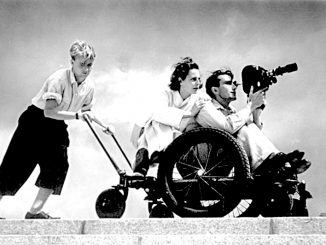
In the 1970s, I met one of Hitler’s leading propagandists, Leni Riefenstahl, whose epic films glorified the Nazis. We happened to be staying at the same lodge in Kenya, where she was on a photography assignment, having escaped the fate of other friends of the Fuhrer.

She told me that the “patriotic messages” of her films were dependent not on “orders from above” but on what she called the “submissive void” of the German public.

Did that include the liberal, educated bourgeoisie? I asked. “Yes, especially them,” she said.

I think of this as I look around at the propaganda now consuming Western societies.

Of course, we are very different from Germany in the 1930s. We live in information societies. We are globalists. We have never been more aware, more in touch, better connected.

Are we? Or do we live in a Media Society where brainwashing is insidious and relentless, and perception is filtered according to the needs and lies of state and corporate power?

The United States dominates the Western world’s media. All but one of the top ten media companies are based in North America. The internet and social media—Google, Twitter, Facebook—are mostly American-owned and controlled.

In my lifetime, the United States has overthrown or attempted to overthrow more than 50 governments, mostly democracies. It has interfered in democratic elections in 30 countries. It has dropped bombs on the people of 30 countries, most of them poor and defenseless. It has attempted to murder the leaders of 50 countries. It has fought to suppress liberation movements in 20 countries.

The extent and scale of this carnage is largely unreported, unrecognized; and those responsible continue to dominate Anglo-American political life.

In the years before he died in 2008, the playwright Harold Pinter made two extraordinary speeches, which broke a silence.

“US foreign policy,” he said, is “best defined as follows: kiss my arse or I’ll kick your head in. It is as simple and as crude as that. What is interesting about it is that it’s so incredibly successful. It possesses the structures of disinformation, use of rhetoric, distortion of language, which are very persuasive, but are actually a pack of lies. It is very successful propaganda. They have the money, they have the technology, they have all the means to get away with it, and they do.”

In accepting the Nobel Prize for Literature, Pinter said this: “The crimes of the United States have been systematic, constant, vicious, remorseless, but very few people have actually talked about them. You have to hand it to America. It has exercised a quite clinical manipulation of power worldwide while masquerading as a force for universal good. It’s a brilliant, even witty, highly successful act of hypnosis.”

Pinter was a friend of mine and possibly the last great political sage—that is, before dissenting politics were gentrified. I asked him if the “hypnosis” he referred to was the “submissive void” described by Leni Riefenstahl.

“It’s the same,” he replied. “It means the brainwashing is so thorough we are programmed to swallow a pack of lies. If we don’t recognise propaganda, we may accept it as normal and believe it. That’s the submissive void.”

In our systems of corporate democracy, war is an economic necessity, the perfect marriage of public subsidy and private profit: socialism for the rich, capitalism for the poor. The day after 9/11 the stock prices of the war industry soared. More bloodshed was coming, which is great for business.

Today, the most profitable wars have their own brand. They are called “forever wars”: Afghanistan, Palestine, Iraq, Libya, Yemen and now Ukraine. All are based on a pack of lies.

Iraq is the most infamous, with its weapons of mass destruction that didn’t exist. Nato’s destruction of Libya in 2011 was justified by a massacre in Benghazi that didn’t happen. Afghanistan was a convenient revenge war for 9/11, which had nothing to do with the people of Afghanistan.

Today, the news from Afghanistan is how evil the Taliban are—not that Joe Biden’s theft of $7billion of the country’s bank reserves is causing widespread suffering. Recently, National Public Radio in Washington devoted two hours to Afghanistan—and 30 seconds to its starving people.

At its summit in Madrid in June, Nato, which is controlled by the United States, adopted a strategy document that militarizes the European continent and escalates the prospect of war with Russia and China. It proposes ‘multi-domain warfighting against nuclear-armed peer-competitor. In other words, nuclear war.

It says: “Nato’s enlargement has been an historic success.”

I read that in disbelief.

A measure of this “historic success” is the war in Ukraine, news of which is mostly not news, but a one-sided litany of jingoism, distortion, omission. I have reported a number of wars and have never known such blanket propaganda.

In February, Russia invaded Ukraine as a response to almost eight years of killing and criminal destruction in the Russian-speaking region of Donbass on their border.

In 2014, the United States had sponsored a coup in Kyiv that got rid of Ukraine’s democratically elected, Russian-friendly president and installed a successor whom the Americans made clear was their man.

In recent years, American “defender” missiles have been installed in eastern Europe, Poland, Slovenia, the Czech Republic, almost certainly aimed at Russia, accompanied by false assurances all the way back to James Baker’s “promise” to Gorbachev in February 1990 that Nato would never expand beyond Germany.

Ukraine is the frontline. Nato has effectively reached the very borderland through which Hitler’s army stormed in 1941, leaving more than 23 million dead in the Soviet Union.

Last December, Russia proposed a far-reaching security plan for Europe. This was dismissed, derided or suppressed in the Western media. Who read its step-by-step proposals? On 24 February, Ukrainian President Volodymyr Zelenskyy threatened to develop nuclear weapons unless America armed and protected Ukraine. This was the final straw.

On the same day, Russia invaded—according to the Western media, an unprovoked act of congenital infamy. The history, the lies, the peace proposals, the solemn agreements on Donbass at Minsk counted for nothing.

On 25 April, the US Defense Secretary, General Lloyd Austin, flew into Kyiv and confirmed that America’s aim was to destroy the Russian Federation—the word he used was ‘weaken’. America had got the war it wanted, waged by an American bankrolled and armed proxy and expendable pawn.

Almost none of this was explained to Western audiences.

Russia’s invasion of Ukraine is wanton and inexcusable. It is a crime to invade a sovereign country. There are no “buts”—except one.

When did the present war in Ukraine begin and who started it? According to the United Nations, between 2014 and this year, some 14,000 people have been killed in the Kyiv regime’s civil war on the Donbass. Many of the attacks were carried out by neo-Nazis.

Watch an ITV news report from May 2014, by the veteran reporter James Mates, who is shelled, along with civilians in the city of Mariupol, by Ukraine’s Azov (neo-Nazi) battalion.

In the same month, dozens of Russian-speaking people were burned alive or suffocated in a trade union building in Odessa besieged by fascist thugs, the followers of the Nazi collaborator and anti-Semitic fanatic Stephen Bandera. The New York Times called the thugs “nationalists.”

“The historic mission of our nation in this critical moment,” said Andreiy Biletsky, founder of the Azov Battalion, “is to lead the White Races of the world in a final crusade for their survival, a crusade against the Semite-led Untermenschen.”

Since February, a campaign of self-appointed “news monitors” (mostly funded by the Americans and British with links to governments) have sought to maintain the absurdity that Ukraine’s neo-Nazis don’t exist.

Airbrushing, a term once associated with Stalin’s purges, has become a tool of mainstream journalism.

In less than a decade, a “good” China has been airbrushed and a “bad” China has replaced it: from the world’s workshop to a budding new Satan.

Much of this propaganda originates in the US, and is transmitted through proxies and “think-tanks,” such as the notorious Australian Strategic Policy Institute, the voice of the arms industry, and by zealous journalists such as Peter Hartcher of the Sydney Morning Herald, who labeled those spreading Chinese influence as ‘rats, flies, mosquitoes and sparrows’ and called for these ‘pests’ to be “eradicated.”

News about China in the West is almost entirely about the threat from Beijing. Airbrushed are the 400 American military bases that surround most of China, an armed necklace that reaches from Australia to the Pacific and Southeast Asia, Japan and Korea. The Japanese island of Okinawa and the Korean island of Jeju are loaded guns aimed point blank at the industrial heart of China. A Pentagon official described this as a “noose.”

Palestine has been misreported for as long as I can remember. To the BBC, there is the ‘conflict’ of “two narratives.” The longest, most brutal, lawless military occupation in modern times is unmentionable.

The stricken people of Yemen barely exist. They are media unpeople. While the Saudis rain down their American cluster bombs with British advisors working alongside the Saudi targeting officers, more than half a million children face starvation.

This brainwashing by omission has a long history. The slaughter of the First World War was suppressed by reporters who were knighted for their compliance and confessed in their memoirs. In 1917, the editor of the Manchester Guardian, C.P. Scott, confided to prime minister Lloyd George: “If people really knew [the truth], the war would be stopped tomorrow, but they don’t know and can’t know.”

The refusal to see people and events as those in other countries see them is a media virus in the West, as debilitating as Covid. It is as if we see the world through a one-way mirror, in which “we” are moral and benign and “they” are not. It is a profoundly imperial view.

The history that is a living presence in China and Russia is rarely explained and rarely understood. Vladimir Putin is Adolf Hitler. Xi Jinping is Fu Man Chu. Epic achievements, such as the eradication of abject poverty in China, are barely known. How perverse and squalid this is.

When will we allow ourselves to understand? Training journalists factory style is not the answer. Neither is the wondrous digital tool, which is a means, not an end, like the one-finger typewriter and the linotype machine.

In recent years, some of the best journalists have been eased out of the mainstream. “Defenestrated” is the word used. The spaces once open to mavericks, to journalists who went against the grain, truth-tellers, have closed.

The case of Julian Assange is the most shocking. When Julian and WikiLeaks could win readers and prizes for the Guardian, the New York Times and other self-important “papers of record,” he was celebrated.

When the dark state objected and demanded the destruction of hard drives and the assassination of Julian’s character, he was made a public enemy. Vice President Biden called him a “hi-tech terrorist.” Hillary Clinton asked, “Can’t we just drone this guy?”

The ensuing campaign of abuse and vilification against Julian Assange—the UN Rapporteur on Torture called it “mobbing”—brought the liberal press to its lowest ebb. We know who they are. I think of them as collaborators: as Vichy journalists.

When will real journalists stand up? An inspirational samizdat already exists on the internet: Consortium News, founded by the great reporter Robert Parry, Max Blumenthal’s Grayzone, Mint Press News, Media Lens, Declassified UK, Alborada, Electronic Intifada, WSWS, ZNet, ICH, CounterPunch, Independent Australia, Globetrotter, the work of Chris Hedges, Patrick Lawrence, Jonathan Cook, Diana Johnstone, Caitlin Johnstone and others who will forgive me for not mentioning them here.

And when will writers stand up, as they did against the rise of fascism in the 1930s? When will film-makers stand up, as they did against the Cold War in the 1940s? When will satirists stand up, as they did a generation ago?

Having soaked for 82 years in a deep bath of righteousness that is the official version of the last world war, isn’t it time those who are meant to keep the record straight declared their independence and decoded the propaganda? The urgency is greater than ever.

This article was produced by Globetrotter. John Pilger is an award-winning journalist, filmmaker, and author. Read his full biography on his website here, and follow him on Twitter: @JohnPilger. This article is an edited version of an address to the Trondheim World Festival, Norway.

Strugglelalucha256


Continúa la lucha sobre la energía en Puerto Rico

La política energética de un país debe estar diseñada para mejorar la calidad de vida de sus habitantes potenciando un desarrollo que fomente su economía y proteja su medioambiente. En esta colonia, es al revés. La política energética en la práctica, es realmente la de una falta de interés por el bienestar de la ciudadanía.

Aquí el gobierno permite que corporaciones extranjeras se apropien de nuestro entorno, construyan lo que quieran y donde quieran sin requerirles los permisos necesarios de construcción, ni de impacto ambiental. Es decir, les dejan operar al garete, igualito que opera el mismísimo gobierno.

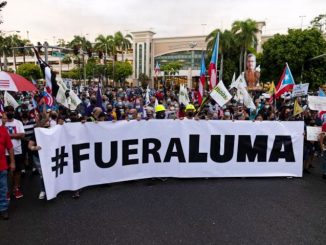
Si ya hemos reportado del desastre de la compañía mafiosa Luma Energy, hoy les quería mencionar a otro criminal de la energía, New Fortress Energy. Una de las compañías de gas estadounidense que tiene contrato con la Autoridad de Energía para suplirle gas natural.

Resulta que esta compañía construyó, sin los permisos necesarios, un terminal en la Bahía de San Juan, poniendo en peligro los alrededores, incluyendo a los habitantes de la zona.

Y como siempre, son las organizaciones ambientales, religiosas y comunitarias las que salen a defender al pueblo. Esta pasada semana un grupo de estas, se presentó a las oficinas de uno de los legisladores de la Comisión de Recursos Naturales llevando globos y un bizcocho hueco, coreando “Cumpleaños infeliz” para exigirle que se cumpla con una Resolución pasada hace ya un año, que obliga a los ejecutivos de New Fortress a declarar sobre la seguridad y los daños ambientales.

Esta se suma a las decenas de manifestaciones nacionales y locales que intentan exponer los crímenes neoliberales causados por las privatizaciones y el abandono de este gobierno fallido.

Por eso es más urgente que nunca la unidad de acciones como esta para encaminarnos a la recuperación de nuestro país a través de la independencia.

Y como decimos aquí, ¡Solo el pueblo salva el pueblo!

Desde Puerto Rico para Radio Clarín de Colombia, les habló, Berta Joubert-Ceci.


Strugglelalucha256


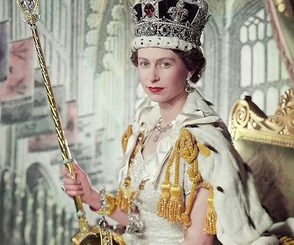
The Queen’s diamonds: Why has the monarchy survived?

“The Queen is dead. Long live the King.” On September 8, Buckingham Palace announced the death of Queen Elizabeth II and the succession of the Prince of Wales, now King Charles  III.

During the official coronation ceremony, Charles, currently titled prince of Wales and Earl of Chester, Duke of Cornwall, Duke of Rothesay, Earl of Carrick and Baron Renfrew, Lord of the Isles, and Prince and Great Steward of Scotland, will gain a new title by proclaiming himself the King and the Head of the British Commonwealth.

The English rebellions

The first successful British revolt against feudal relations and the monarchy occurred in a civil war from 1642 to 1660. King Charles I was executed by the authority of Parliament in 1649. 

Although the monarchy was restored under Charles II in 1660, the gains made by the revolutionary movement were solidified under parliamentary law.

In 1668, a constitutional monarchy was established in a parliamentary reform process. New laws broke down the old power relations of the monarchy. The English feudal state was overthrown and became supplanted by the rule of an emerging capitalist class.

According to Marxist historian Christopher Hill: “The Civil War was a class war in which the despotism of Charles I was defended by the reactionary forces of the established Church and conservative landlords, and on the other side stood the trading and industrial classes in town and countryside … the yeomen and progressive gentry, and … wider masses of the population whenever they were able by free discussion to understand what the struggle was really about.”

The guild democracy movement of the period won its greatest successes among London’s transport workers, most notably the Thames Watermen, who democratized their company in 1641–43.

And with the outbreak of the civil war in 1642, rural communities began to seize timber and other resources on the estates of royalists, Catholics, the Royal Family, and the church hierarchy. As a result, some communities improved their conditions of tenure on such estates.

In 1852 Karl Marx wrote: “The Tories in England had long imagined that they were enthusiastic about the monarchy, the church, and beauties of the old English Constitution until the day of danger wrung from them the confession that they are enthusiastic only about ground rent.”

The 17th-century English revolution preceded the French revolution and later struggles that overturned feudal relations across Europe.

In most instances, the old ruling class managed to hold on to its large land holdings and privileges of wealth while adapting to the new system of capitalist state power.

Property relations among this class over generations have obliged them to intermarry. The British monarchy is intimately related to all the monarchies across Europe.

The House of Windsor began in 1917 when the family changed its name from the German “Saxe-Coburg-Gotha.” Queen Elizabeth’s grandmother Queen Mary was born a royal princess of the German Duchy of Teck.

Former British PM Boris Johnson said, “I would have been terribly proud just to have been related to the German King, but I can’t hide it from you that even in our common European home, I am particularly thrilled to have some British Royal ancestry as well.” Johnson is a descendant of Prince Paul Von Wurttemberg.

In 1947, Queen Elizabeth became engaged to Prince Philip of Greece and Denmark. Philip and his family were exiled from Greece during his childhood, so he studied in France and Germany before serving in the British Royal Navy.

Philip’s mother, Princess Alice of Battenberg, was Queen Victoria’s great-granddaughter. She gave him a diamond tiara that could be dismantled and used to create an engagement ring fit for a queen.

The diamonds come from the Romanov dynasty. His mother had been given the tiara on her wedding day by Tsar Nicholas II and Tsarina Alexandra of Russia, the last rulers of the Russian Empire, to whom she was distantly related.

Vast land holdings

The Wall Street Journal reported on Dec. 9, 2021, that each one of the royal couple held control over a billion dollars in real estate, and that is just the property that can be valued. The Journal’s headline reads: “The Billion-Dollar Property Portfolios of Queen Elizabeth and Prince Charles.”

Here is the extensive real estate that they list.

The property holdings include castles, palaces, country houses, townhouses, city apartments, cottages, and farmhouses.

  • Clarence House, London;
  • Buckingham Palace, London;
  • Windsor Castle, Berkshire;
  • Sandringham Estate, Norfolk;
  • Highgrove House, Gloucestershire;
  • Hillsborough Castle, Northern Ireland;
  • Balmoral Castle, Aberdeenshire, Scotland;
  • Palace of Holyroodhouse, Edinburgh, Scotland;
  • Highgrove Estate, Cornwall.

The title of Duke of Cornwall was first established by King Edward III in 1337 to ensure his dominion over Cornwall. The duchy and the title have been passed down to the heir to the throne ever since. Prince William is next in line to become Duke of Cornwall.

The property holdings in Cornwall are vast. They include 130,125 acres of farmland, forests, coastline, and residential and commercial properties. In addition to Highgrove, the estate includes a large section of the Isles of Scilly, an archipelago of 200 islands off the coast of the English county of Cornwall, where Prince Charles has a portfolio of holiday cottages.

Other palaces, castles, and properties include:

  • Llwynywermod, Carmarthenshire, Wales;
  • Viscri property in Romania;
  • and Zalánpatak property in Romania.

The Royal blind trust

Stu Allen, a former diplomat at the British Foreign and Commonwealth Office, reported that: The Queen owns land privately in the United States and Canada, though not in her capacity as Sovereign. She owns a horse farm in Kentucky and is believed to own a prime Park Avenue estate in New York City. Details of ownership and much of her personal wealth are held in what is known as a blind trust.”

This blind trust protects the queen’s private property should the British monarchy be abolished, and the property of the Crown Estates revert to public ownership.

Defending private property and class relations is intrinsic to capitalist rule. Despite revelations of the corrupt character of the Royal Family, they have been allowed to maintain the illusion of a religious-like institution with all the accompanying pageantry and pomp. 

The Queen has been presented as a mother-like figurehead with no real power. That is far from the truth. She has had special consultation allowances regarding Freedom of Information requests to protect the reputation of the Royal household.

Despite this, scandals still manage to leak out. For example, in 2015, the British Guardian newspaper released the “Black Spider Papers,” 27 memos issued by Prince Charles in 2004 and 2005 and released only after the Guardian won its long freedom of information fight with the government. Prince Charles’ memos revealed extensive efforts to influence government policy, including action to expand armaments for British troops fighting in Iraq.

The Queen had numerous powers which could be used against the working class. The Queen was the head of the British state. All bills require the monarch’s signature before they can become law. She is responsible for dissolving parliament; she can call early elections; she swears in the Prime Minister. Private meetings are held weekly between the Queen and the Prime Minister.

The pro-monarchy Telegraph reported that senior royals had used their powers to impede the passage of at least 39 Bills Awaiting Royal Assent over the last 30 years. There is also significant evidence, supported by a BBC documentary “The Plot Against Harold Wilson” and other media reports, of a threat to use the monarch’s powers to overthrow left-leaning Prime Minister Harold Wilson in the 1960s.

David Cameron asked the Queen to intervene publicly to help prevent the success of the 2014 Scottish Independence Referendum. The Guardian reported that the Queen made a statement asking voters to “think very carefully” before voting, aiming to suggest the decision was “full of foreboding.”

Can the Queen’s descendants hold on to centuries of looted wealth and retain ownership of prime real estate all around the world, allowing them untold power?

Strugglelalucha256
https://www.struggle-la-lucha.org/2022/09/page/5/