Fear of an educated working class

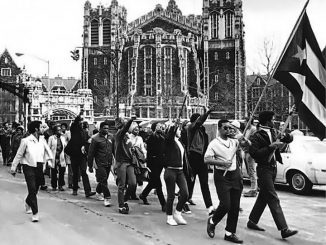
Black and Puerto Rican students and community members march to demand open admissions at New York’s City College 1969.

Former U.S. Senator Barbara Boxer didn’t have to worry about student loans when she graduated from Brooklyn College in 1962. Whites then comprised over 90% of the students in the City University of New York system. Nobody had to spend a dime on tuition.

By 2019, Asian, Black, Indigenous, and Latinx students accounted for 73% of the students in CUNY’s four-year colleges and 85% in CUNY’s community colleges. But CUNY isn’t free anymore. 

Current tuition is $6,930 per year for the four-year colleges and $4,800 per year in the community colleges. This doesn’t include over $200 in student fees or the cost of books and supplies. 

The imposition of expensive tuition on the much more diverse student body is racism.

Black and Latinx students accounted for 40% of New York City’s high school graduates in 1969. Yet CUNY’s student body was still 91% white.

The same year, a student strike demanded open admissions to CUNY for all New York City high school graduates. It was won in 1970.

One of the fighters for open admissions was the late Tom Soto. He was later invited to come to Attica by the prisoners who would be massacred by Gov. Nelson Rockefeller.

Open admissions benefited everybody. The number of first-time students almost doubled from 19,939 in 1969 to 38,256 in 1972.

Black students increased 2.7 times from 16,529 to 44,031. Latinx students almost tripled, going from 4,723 to 13,563.

The number of white students also rose by 18%, going from 106,523 in 1968 to 125,804 in 1972. Thousands of more white students were able to attend college because of open admissions.

When Asian, Black, Indigenous, and Latinx people move forward, so do all poor and working people.

Illiteracy is preferable to the rich

The wealthy and powerful hated open admissions. Just the idea that poor people could attend college offended them.

“We are in danger of producing an educated proletariat … that’s dynamite,” moaned Roger Freeman in 1970. Freeman was an advisor to then-Gov. Ronald Reagan of California. The term “proletariat” refers to the working class.

“We have to be selective on who we allow [to go to college],” said Freeman. Reagan and Freeman were outraged by the struggles of college students against racism and war in the 1960s.

On May Day, 1970, President Richard Nixon called these students “bums.” Three days later, four Kent State University students were killed by the Ohio National Guard. On May 15, 1970, two Black students at Jackson State College (now Jackson State University) in Mississippi were killed by police. 

The longest fight was the 1968-69 student strike at San Francisco State College (now San Francisco State University).

It won Asian, Black, Indigenous and Latinx study programs. Among the strike leaders were the future actor Danny Glover and future International Longshore and Warehouse Union officer Clarence Thomas.

Freeman’s sentiments were in tune with the Anglican Bishop Leonard Beecher’s 1949 report about education in the British colony of Kenya. Beecher wrote that “illiterates with the right attitude to manual labor are preferable to products of the schools.”

There were only three high schools for Africans in Kenya at the time, which admitted just 100 students annually.

Wall Street got its chance to gut open admissions and impose tuition for CUNY students during the 1975 “fiscal crisis” in New York City. 

This was a hold-up of over 7 million people by the banksters who demanded 50,000 city workers be fired. Among them were thousands of teachers.

The passing of California’s Proposition 13 in a 1978 referendum gutted funding for education and public services in the Golden State. While California residents paid a $300 yearly fee to attend the University of California at Berkeley in 1968, the tuition is now $15,000. 

In contrast, all education in socialist Cuba is free.

Also helping to drive poorer students out of college have been the attacks on affirmative action programs. California’s Proposition 209, which passed in 1996, banned these attempts to promote equality.

Black student enrollment reached 8% of the freshman classes in the California State University system in 1997. By 2018, it dropped to just 4%

Private schools are worse. Just 1% of the students at Caltech are Black. 

Thirty-nine lashes for teaching

Slave masters considered teaching enslaved Africans to read and write to be dangerous. If an enslaved person was convicted of teaching another enslaved African to read in North Carolina, they would be whipped 39 times.

Black people in the United States fought to build schools. Peter Humphries Clark, a co-worker of Frederick Douglass, was principal of Cincinnati’s Colored High School.

Clark was a socialist who spoke to striking railroad workers in 1877. “The miserable condition into which society has fallen has but one remedy, and that is to be found in socialism,” said Clark.

The struggle for free public education was connected to the abolitionist movement. Thaddeus Stevens fought for public schools at the 1837-38 Pennsylvania constitutional convention. 

Stevens later led the anti-slavery forces in Congress. He demanded land and freedom for Black people.

Following the U.S. Civil War, it was South Carolina’s Reconstruction government―known as the “Black Parliament”―that established the state’s first public school system. 

Capitalists need workers to have skills, yet they fear an educated working class. They want college to be reserved for “their kind.”

The wealthy also don’t want anyone else helping to educate poor and working people. The FBI hounded the labor schools operated by the Communist Party.

We agree that an educated proletariat is dynamite. All education should be free.

We look forward to helping to organize the coming social explosion that will get rid of capitalism forever.

Strugglelalucha256


Jean-Luc Godard, revolutionary filmmaker

We are saddened to receive the news of the death of the pioneering filmmaker, critic, and political activist Jean-Luc Godard on Sept. 13. 

His films broke ground as part of the French New Wave. Most importantly, Godard was interested in left politics and made films with revolutionary politics, together with a group of like-minded filmmakers. He became interested in Maoism as he was becoming radicalized during the 1960s, and made several films on that subject, including “La Chinoise.”

In 1970, Godard was invited to make a film about the Palestinian revolution against the zionist Israeli state. He visited Palestinian refugee camps in Jordan to collect footage. 

Later that year, the Jordanian royal army murdered most of the Palestinian refugees in those camps, in the massacre known as “Black September.” By the time the film was in the editing stage, most of the people on film were killed. 

It is said that Godard was devastated and had a breakdown after these tragic events and was unable to finish the film. Later, the footage was used in the film “Ici et ailleurs” (“Here and Elsewhere”), completed in collaboration with Anne-Marie Miéville in 1975.  

There’s a lot that can be said about Godard’s contributions to the world of independent cinema. However, we take this time to celebrate his contribution to revolutionary ideals in cinema. He was unapologetically anti-imperialist and defended the Palestinian revolution with mind and body.

The writer is a filmmaker and Amazon worker.

Strugglelalucha256


Boston: Protest to support trans youth, Sept. 18

Protest to support trans youth at Boston Children’s Hospital this Sunday 9/18 starting at 9am. Hate is not welcome and has no home here. 300 Longwood Ave, Boston, MA 02115

Strugglelalucha256


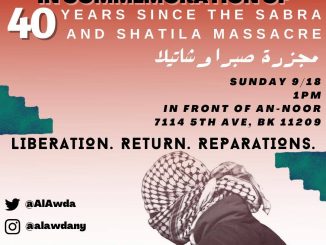
Commemorating the 40th Anniversary of Sabra and Shatila

Join us in a rally in commemoration of the 40th anniversary of the Sabra and Shatila massacre:
Sunday, September 18 at 1pm
in front of An-Noor, 7114 5th Ave, Brooklyn 11209
Endorsed by: American Muslims for Palestine-NJ, Palestinian Assembly for Liberation, New York for Palestine, and Al-Awda NY

In Commemoration of the 40th Anniversary of the Sabra and Shatila Massacre

September 16-18 marks the 40th anniversary of the Sabra and Shatila massacre in Beirut, a horrific war crime directed by zionist military forces who had invaded Lebanon in June 1982 in order to drive out the PLO. The Sabra and Shatila refugee camps were populated by Palestinian communities expelled from Jaffa in May, 1948 during the Nakba, whose 75th anniversary we will mark in the coming year.

From June through August 1982, zionist military forces encircled the PLO (who had been driven out of Jordan in 1970 by King Hussein with zionist support), killing 17,825 people and destroying the Ain al-Hilwa camp—home to over 40,000 refugees. In August, the PLO was forced into an agreement to evacuate all 11,000 fighters on the ground from Beirut and to dismantle its headquarters and infrastructure.

On August 23, Bashir Gemayel, leader of the zionist-backed Phalangists, was elected Lebanese president. Gemayel died on September 14 in a car bombing that zionists blamed on the PLO, but was later traced to a Syrian agent.

On Sept. 15, zionist military leaders and Phalangist commanders planned the invasion of the Palestinian refugee camps, sharing arial photographs. By noon, zionist forces had surrounded the camps with checkpoints and roadblocks, and began shelling.

On September 16, the zionist cabinet was told their military would not enter the camps, but that the Phalangists would be sent in “with their own methods.” At 4 p.m., 1,500 Phalange militiamen invaded the camps in zionist-supplied jeeps, following route markings painted by zionist military on the sides of buildings. At sunset, militia began entering homes, slitting throats, shooting, raping, taking groups outside, and lining them up for execution, aided through the night by floodlights from the zionist military.

On Sept. 17, word of the massacres spread via escaped refugees, medical personnel, and film crews. Exits were now blocked by zionists. Zionists allowed the Phalange to continue “mopping up” until 5 a.m. on Sept. 18. Bulldozers began digging mass graves inside the camps and hauling away bodies. Others were buried under houses designated as “illegal structures” and bulldozed with people inside. Phalangist militia attacked Akka Hospital, where victims of the massacre were being treated, killing doctors and nurses.

At 6 a.m. on Sept. 18, surviving camp residents were ordered over loudspeakers to exit their homes and surrender. Up to one thousand were marched at gunpoint toward a camp exit, with some taken out of line and executed, while others were loaded onto trucks and never seen again. At 7 a.m., Phalange militia attacked Gaza Hospital, killing the Arab staff. At 9 a.m., foreign journalists and diplomats entered the camp, finding hundreds of bodies, many mutilated. Just past noon, the first news of the genocidal massacre was broadcast to the world.

Strugglelalucha256


Biden adds billions in Ukraine ‘aid,’ pushing total to $70 billion

The people of Jackson, Mississippi, have toxic sludge coming out of their kitchen faucets. In some neighborhoods, there isn’t enough water pressure to flush toilets. They’ve gotten, at most, the distracted attention of President Joe Biden.

Jackson Mayor Chokwe Antar Lumumba says it will take $1 billion to fix the city’s water plant and another $1 billion to fix the sewer system. The Biden administration’s response? Last January, they promised to loan the state of Mississippi $459 million over 5 years for water “improvements.” (Reminder: these loans from the federal government must be paid back with interest.)

The loans go to the state, not to Jackson, a majority-Black city that has been underdeveloped for years.

With the new crisis in Jackson’s water system, nothing has come from the Biden administration.

One joker suggested that if the city of Jackson declared itself a part of Ukraine, the $2 billion check would be in the mail tomorrow.

The joke isn’t that far off.

$13.7 billion ‘slipped in’

Andrew Lautz in Responsible Statecraft reports that the Biden administration has “slipped” another $13.7 billion weapons package into a routine spending bill that Congress must pass to keep the government open past Sept. 30.

“If Congress accedes to the Biden administration’s request, then the U.S. government will have committed nearly $69 billion in taxpayer funds to Ukraine in just six short months,” the report says.

“The latest request from President Biden allocates about half of the total funding to the Department of Defense ($7.2 billion) and the other half to the Departments of State and Energy ($6.5 billion). This is in line with the first Ukraine aid package Congress passed ($13.6 billion total, which included $6.5 billion for DoD and $6.8 billion for State) and the second, much larger aid bill Congress passed ($41.6 billion total, including $20.1 billion for DoD and $19 billion for State).”

If the Biden request passes as is, then total U.S. war spending committed to Ukraine will be over $69 billion in six months. That’s more than triple what the U.S. spent in Afghanistan in the first year of the occupation. It’s more than the State Department’s budget. And it equals what Russia spent on defense in 2021, Lautz adds.

This is all new funding, not taken out of existing funds for the Pentagon, for example. That means that Biden and Congress must borrow the funds. Lautz explains: “In fact, rising interest rates mean that the interest costs alone on this $69 billion in debt could be an additional $14 billion to $15 billion over 10 years, raising the taxpayers’ total tab for Ukraine assistance to as much as $84 billion.”

The escalating billions for the U.S.-NATO proxy war on Russia have gotten not even a whisper of objection in Congress. With all the electioneering that is going on and the coming congressional elections, the only negative comment was from Sen. Jim Inhofe (R-Oklahoma), who said it wasn’t enough.

When it comes to Congress, the sky’s the limit for the Pentagon and the military-industrial complex.

Wall Street antics

Wall Street bankers and the military-industrial complex are calling the tune. And that can be seen in the antics of Ukraine President Volodymyr Zelensky, who is putting in performances at the centers of power. 

On Sept. 6, Zelensky rang the opening bell of the New York Stock Exchange, which was filled with the blue and yellow Ukrainian war flag. This was the day after Labor Day, which seemed to emphasize that Zelensky had recently imposed a martial-law condition on workers in Ukraine, outlawing labor unions for 80% of the workforce, banning strikes or picket lines, and tearing up existing union contracts. Zelensky signed the law in the last week of August. 

Zelensky’s vicious anti-labor laws have been compared to the anti-labor repression of Chile’s fascist Pinochet regime.

Zelensky announced at the Stock Exchange a massive $400 billion state selloff, inviting Wall Street’s imperialist capitalists to exploit Ukraine’s resources and low-paid labor.

Zelensky is following the Wall Street appearance with a show prepared for a major U.S. military-industrial conference on Sept. 21 in Austin, Texas, hosted by the National Defense Industrial Association (NDIA). Oleksii Reznikov, Ukraine’s minister of defense, is also scheduled to speak.

NDIA includes defense industry giants like Raytheon Technologies, Lockheed Martin and General Dynamics.

Eight defense contractors — including Raytheon, Lockheed and General Dynamics — attended an April Pentagon meeting to discuss how the U.S. could increase arms production for the Ukraine proxy war.

This should be sufficient to set the course for the anti-imperialist movement. The U.S.-NATO proxy war is being expanded. It can only be countered by organizing opposition to the imperialist war, the Wall Street bankers and the military-industrial monopolies behind it.

Strugglelalucha256


New Orleans abortion rights protest blocks busy Bourbon St.

New Orleans, Sept. 10 — Today the Louisiana Abortion Rights Action Committee held a demonstration and march downtown. Signs and hand-outs read, “Raise the wages, lower the rent, abortion access now,” highlighting the intersection of all these issues affecting poor and working people. Abortion access is a working-class issue.

The action was endorsed by Workers Voice Socialist Movement, Socialist Unity Party, Women In Struggle/Mujeres En Lucha, and Louisiana Workers Councils.

Speakers began with addresses outside the Louisiana Supreme Court building on Royal Street.

Gavrielle Gemma of the WVSM said that “there is a right-wing movement that wants to protect the accumulation of vast wealth and income inequality. They see [this moment] as an opportunity to take away everything—from workers, from women, from everybody, just so they can make profits. 

“Every movement has a beginning and a time when it seems as if it is not strong. But the people are strong. Vote for whoever you want; it won’t change the situation. Organize. People fighting back will change the situation.”

After the talks, the crowd began marching through the French Quarter, chanting, “Not the church, not the state, rich men won’t decide our fate” and “Abortion is health care.” Only a couple of onlookers were openly hostile. Overwhelmingly, the service industry workers and even some tourists seemed receptive. Servers and kitchen staff came out of the restaurants, took fliers, and pumped their fists.

For around 10 minutes, the marchers blocked one of the most commercially important intersections on Bourbon Street. Workers from the nearby queer bars came down to see what was going on, and some joined in the chants.

Over a megaphone, one organizer said: “If you’re wondering why we’re stopping traffic, the reason is that our lives—our right to exist with bodily autonomy, free from oppression, free from violence—is under attack! And whether you’re out there working or drinking, you are involved! Join us! Take a flier!”

Service workers’ power

In 2019, visitors to New Orleans spent $10.05 billion, making tourism and the service sector that it relies on a driver of the city’s economy. The French Quarter is the heart of that. This means that the workers here have tremendous power. Women make up 57% of New Orleans’ low-paid hospitality workforce. If workers–especially women and gender-oppressed people–collectively decide to shut the city down, we can stop the flow of cash to the bosses and force them to meet our demands.

The smallest direct action — like blocking Bourbon Street for a few minutes — contains within it the seeds of bigger collective action. On Saturday, the workers in the bars and restaurants heard the message and pumped their fists. One day, what if they all walk out?

There should be no doubt that the specter of the George Floyd Summer is fresh on the minds of the ruling class and all their lackeys in the state.

And that radical moment contained within itself yet more seeds and echoes of the urban rebellions that shook this country after Dr. Martin Luther King Jr.’s assassination. It was the rebellions of the people that consolidated the gains of the Civil Rights era.

Or take contemporary India. That country is very different from the U.S. But it’s still worth thinking about the fact that, for several years in a row, Indian workers (including farm laborers) have carried out possibly the biggest general strikes in history—even for a day. 

By shutting down whole sectors of the economy, the farmers defeated fascist Modi’s anti-farmer legislation. We have much to learn from the working class of India.

For now, the workers of New Orleans and the U.S. are a sleeping giant. But if we get organized, we can have the power. That’s what the ruling class and their fascist movement fear.

Abortion is health care. And if we don’t get it, shut it down! 


Strugglelalucha256


Remembering historic prison liberation struggles

The month of September holds several major anniversaries in the struggle for prisoner liberation and to end the racist prison-industrial complex. It is important to salute the struggles of those prisoners who rose up against brutal conditions and also those who were persecuted and imprisoned for espousing revolutionary politics. 

Attica prisoners seize control to address torturous conditions 

Beginning on Sept. 8, 1971, some 1,500 prisoners in Cell Block D seized control of upstate New York’s Attica Prison. The prisoners rebelled after they submitted a 27-point manifesto, demanding that the state Department of Corrections take immediate steps to improve the brutal conditions inside New York prisons. 

Attica prisoners were experiencing severe overcrowding inside the prison. The prison was built for 1,600 prisoners. By 1971, 2,300 people were crammed within Attica’s walls. Prisoners were limited to one shower per week and one roll of toilet paper a month. Every prisoner labored five hours a day, paid at most $1 for the entire day’s work. 

The uprising was indicative of more than just situational rage, but of growing revolutionary politics in the Black and Latinx communities. The Black Panther Party, the Young Lords and the Nation of Islam had members and organizers imprisoned for various reasons. They formed a Liberation Faction that played a crucial role in organizing the rebellion against Attica’s inhumane and racist conditions. 

The uprising was eventually broken by a vicious massacre of prisoners at the hands of New York State Police, resulting in 39 dead and 85 wounded. Even with this horrific ending, the bravery of the Attica prisoners lives on as an inspiration to revolutionary movements inside and outside of the oppressive walls. 

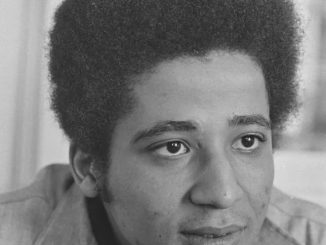
George Jackson, revolutionary prison organizer, is born

On Sept. 23, 1941, George Jackson was born in Chicago. Jackson was charged and convicted of armed robbery with a sentence of one year to life in prison. The alleged stolen money amounted to $70 and Jackson was just 18 at the time of the robbery. Nonetheless, Jackson faced a prison sentence that essentially equated to life in prison. 

While in San Quentin State Prison, Jackson was introduced to revolutionary Marxist figures and leaders like Karl Marx, Mao Zedong, Frederich Engels and Leon Trotsky. From his personal experiences with prison and his journey into revolutionary politics came writing that changed the movement against U.S. racism forever. 

During his time in prison, Jackson organized for the Black Panther Party – People’s Revolutionary Army and completed several books, including “Soledad Brother” and “Blood in My Eye.” He never stopped fighting. 

In 1971, a tower guard assassinated Jackson during an alleged escape attempt. Many community figures and thinkers, including James Baldwin, believed that Jackson was simply assassinated for his political activity. 

We remember Jackson’s sacrifice to the struggle against the racist prison system and his commitment to a world of liberated Black and Brown people all over the world. 

Strugglelalucha256


Black workers, history, and building union membership

There’s been a growing worker union movement in 2022. Workers are turning to labor unions at traditionally non-union companies like Trader Joe’s, Amazon, REI, Target, Chipotle, Starbucks, Apple, and more.

“Seventy-one percent of Americans now approve of labor unions,” Gallup announced in reference to its annual Work and Education survey, conducted between Aug. 1-23. “Although statistically similar to last year’s 68%, [labor union approval] is up from 64% before the pandemic and is the highest Gallup has recorded on this measure since 1965.

“Such support comes despite the fact that the vast majority of Americans aren’t in a labor union themselves.”

The current unionization wave is a response to the strains many workers have dealt with during the three years of the COVID-19 pandemic. Having to struggle to pay for goods and services

due to rising costs and stagnant wages while reflecting on ongoing conversations about the need for everyone to have a better work-life balance, has pushed workers to strike out for the positive features—i.e., better wages, health, and work-rule benefits—that being part of a union can bring.

“Among major race and ethnicity groups,” the Bureau of Labor Statistics said when it released its annual report on unionization this past January, “Black workers continued to have a higher union membership rate in 2021 (11.5%) than white workers (10.3%), Asian workers (7.7%), and Hispanic workers (9.0%).”

Generally, the Black community’s allegiance to unions comes as an inheritance from the Civil Rights Movement. Initially, when trade union organizations were created in the 1860s, white members voted to exclude Black workers. So, Blacks created their own labor organizations.

Black women were the first to establish a union less than a year after the official end of African enslavement. On June 20, 1866, the Washerwomen of Jackson, Mississippi sent a letter to the city’s mayor, making it known that they would be establishing a set price for their laundry work. There’s little information on how their statement was received in Jackson, but other unions of now free Black laborers were also quickly established. Two of the most famous were the “Colored” National Labor Union (CNLU) where Frederick Douglass was elected president in 1872, and the Brotherhood of Sleeping Car Porters (BSCP), the first all-Black labor union in the U.S., established in 1925 by A. Philip Randolph.

Randolph organized the men hired to work as sleeping car porters with the Pullman Palace Car Company because he knew they had been specifically hired to cater to the wishes of white railroad car travelers. “[George] Pullman was open about his reasons for hiring Black porters;” Jennifer Hasso writes in an article for Ferris State University’s online “Jim Crow Museum.” “[H]e reasoned that formerly enslaved people would best anticipate and cater to his customers’ needs and would work long hours for cheap wages. By the 1920s, 20,224 African Americans were working as Pullman porters and train personnel. This was the largest category of Black labor in the United States and Canada at the time.”

Under Randolph, members of the BSCP were considered some of the best-paid Black workers in the country. BSCP was later chartered by the American Federation of Labor (AFL)—and the organization’s strength and ability to promote and formulate agendas (Randolph’s threat of a march on Washington, D.C. in 1941 pushed then-President Franklin D. Roosevelt to issue Executive Order 8802, which banned racial discrimination by federal agencies and all unions working with the defense industry), made it vital in working with Civil Rights Movement activists. Alongside the BSCP, Randolph established the Negro American Labor Council (NALC) in 1960. The NALC was never as powerful as the BSCP, but it is recognized for having initiated the call for 1963’s famous “March on Washington for Jobs and Freedom.”

But aligning itself with the African American Civil Rights Movement was what doomed U.S. labor unions. In her book, “The Sum of Us: What Racism Costs Everyone and How We Can Prosper Together,” Heather McGhee points to a conservative talking point that tied unions to support for Black rights. “[P]riming white voters with racist dog whistles was the means; the end was an economic agenda that was harmful to working- and middle-class voters of all races, including white people. In railing against welfare and the war on poverty, conservatives like President Reagan told white voters that government was the enemy, because it favored Black and brown people over them—but their real agenda was to blunt government’s ability to challenge concentrated wealth and corporate power.”

This past Labor Day, Andre Powell, an AFSCME leader and long-time Baltimore, Maryland community activist, spoke at a Starbucks Workers United panel about the importance of understanding the role race and racism have played in trade union organizing in the United States: “Labor unions are…doing workshops around race. … More and more in the past two decades, the number of workers of color and women is growing,” Powell said as part of the  “Same Struggle, Same Fight: The Importance of Intersectionality Within the Labor Movement,” panel.

“So, it’s good to see them doing the workshops, but we need to just keep in mind that this country, here we are 160 years after the end of the Civil War and during Reconstruction, it was a little easier for Black people in the South. But then one of the presidents—I’m thinking Andrew Johnson or Andrew Jackson––withdrew federal troops from the South and that allowed these little renegade bands of racists to come back and take control and harass and terrorize Black people. But they didn’t do it wearing regular clothes, they put on these white sheets with these hoods.

“That legacy of racism has continued in this country: there were movements to beat it back in the 1960s and 1970s and we certainly pushed it back. But then again looking at the latest guy that used to be president, Trump, now the racists have come forward again and are emboldened to come out.

“Labor unions continue to stand against racism because we’ve got to remember the history, we must begin to teach the legacy of racism that started in this country. …We’ve got to link all of these, the intersections that we’ve got…and keep it solid, we’ve got to stay together and stay unified against racism, against sexism, against homophobia, and LGBTQ2-spirit oppression. This country was developed on a racist basis: the killing of Native Americans and stealing their land. And that legacy, some of it is trying to come back today. It’s going to take a strong united movement from the labor force and the non-labor force together to fight back.”

Source: Amsterdam News

Strugglelalucha256


Struggle ★ La Lucha PDF – September 12, 2022

Get PDF here

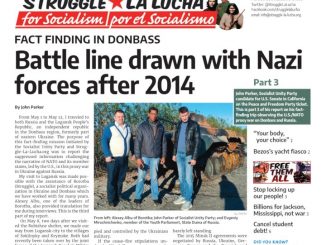
  • Fact-finding in Donbass
  • New York clinic defenders block anti-abortion bigots
  • On Jeff Bezos’ $500 million yacht fiasco
  • We want justice! Stop locking up our people!
  • ‘Billions for Ukraine – We say billions for Jackson’
  • Dedan Kimathi was hanged by Queen Elizabeth
  • There are no homeless people in Cuba. No landlords, foreclosures, or evictions
  • The Queen’s diamonds. Why has the monarchy survived?
  • Their debts and ours
  • In memory of Evgeny Golyshkin: The struggle suffered an irreparable loss
  • Prisoners for profit: from the Kononovich brothers to U.S. jails
  • Biden to name Ukraine war general
  • Massive protest in South Korea as U.S. launches ‘war games’
  • Biden escalates with $1.1 billion arms sale to Taiwan
  • Sri Lanka: The struggle continues
  • Pakistan floods & climate change
  • Argentina VP survives assassination attempt
  • Israel admits its troops responsible for Abu Akleh’s death
  • Mikhail Gorbachev died
  • Why China isn’t capitalist
  • ¡Fuera Luma! Dice el pueblo boricua
  • Declaración del grupo Mujeres Contra Luma
  • The Puerto Rican people say: Luma out!
  • FBI hands off Puerto Rican activists!
Strugglelalucha256


‘Washington doubles down on proxy war in Ukraine’

Talk given on behalf of the Socialist Unity Party at the international meeting “200 Days of War: Stop the War of U.S./NATO Imperialism Against Russia! Stop U.S. Preparations of War Against China!” on Sept. 10.

Today the capitalist media is rapturous with news of the advance of the long-anticipated Ukrainian counter-offensive and the withdrawal of Russian troops from the Kharkov region. How significant this will be remains to be seen. Less is said about why and how this counter-offensive was made possible: the massive intervention of the Pentagon and NATO to shore up their faltering proxy war against Russia.

Last week, as the Ukrainian offensive was taking shape, U.S. Secretary of State Antony Blinken made a “surprise” visit to Kiev to pledge another $2.8 billion in military aid from Washington. For those keeping track, that brings the total in public U.S. military aid to Ukraine this year to a whopping $16.5 billion. That’s more than the annual Gross Domestic Product of 98 countries, according to U.N. figures.

This has been described as the largest single arms transfer in U.S. history. It’s also an enormous transfer of wealth to the military-industrial bourgeoisie. But in reality, this is just the tip of a very large iceberg that includes separate Congressional funding, covert U.S. aid and the infusion of weapons, troops and mercenaries from the U.S.-controlled NATO alliance.

Blinken’s visit was not really a surprise. It was the latest in a long line of visits by high-ranking U.S. officials to give marching orders to their puppet regime in Kiev. These visits date back to the very beginning of the war against Donbass in 2014 and 2015, when it was then-Vice President Joe Biden, among others, who delivered the orders.

The continuing infusion of massive amounts of money and weapons to the war zone removes any illusions that the Ukrainian conflict is just a brief episode in the New Cold War against Russia and China. On the contrary, the way Washington has doubled down at a time of growing economic crisis for the masses in the U.S. and Europe shows that the ruling class intends this war to continue for a long time, to break up and dominate the Russian Federation.

But they also feel the urgency to make tangible headway quickly. The ability to seduce large sections of the U.S. population to “stand with Ukraine” has waned sharply with the accumulating crises facing the working class. Inflation is only the most obvious. The Biden administration is spending billions on war and police while funds for public health, pandemic eviction bans, climate crisis, and education are eviscerated. This contradiction cannot be papered over forever.

The situation will sharpen even more quickly among the Western European NATO powers, which face the prospect of winter without access to cheap Russian fuel.

Importance of Donbass struggle

The efforts of the organizations represented here for a genuine anti-imperialist position in the movement is making headway. Here in the U.S., the United National Antiwar Coalition has finally called for a week of action around U.S. threats to Russia and China in mid-October. There are many factors, but the impact of events like this one, and of John Parker’s visit to the Donbass front line in May, on the rank and file of the left are significant.

The importance of the Donbass people’s struggle continues to be under-appreciated, if not outright ignored, by most left forces in the West. If the people of Donetsk and Lugansk are considered at all, it is as mere tools of Russia. In fact, the relationship is quite different. 

Imagine trying to build an anti-imperialist movement during the Vietnam War while ignoring the struggle of the Vietnamese people! And yet, this is the standard position of the Western left on the conflict in Ukraine and the Donbass republics.

The explosion of resistance in eastern Ukraine after the Maidan coup in 2014, particularly in the Donbass, the most working-class region of Ukraine, was a tremendous breakthrough in reviving anti-fascist consciousness and internationalist solidarity rooted in the Soviet period. It reverberated through the people of all the former Soviet countries, particularly Russia. 

There is a reason why Soviet flags and the Banner of Victory are seen everywhere in the current anti-fascist military operation. It’s not that Putin is trying to restore the USSR, as the Western media claim, or put something over on the global left. He and the Russian ruling class would love nothing more than to be rid of those symbols. 

But they reflect the genuine consciousness of the most active elements of the Soviet people about the stakes of the war, even three decades after the destruction of the USSR. That includes many anti-fascist Ukrainians.

In 200 days since the launch of the Special Military Operation, the anti-fascist military alliance has succeeded in liberating much of Donetsk and Lugansk from Ukrainian occupation. But as they have advanced, a large group of Ukrainian troops, including some of the most hardened neo-Nazi battalions, has become concentrated in a well-defended area west of the capital of Donetsk. And all summer, this has meant unrelenting, daily, brutal Ukrainian attacks on the civilian population of the city, including raining thousands of small anti-personnel mines on the streets, where children, seniors and emergency workers have been the main victims. 

This heroic population, which has held strong for more than eight years of war, is under the worst siege of the war. The morale of this anti-fascist city is absolutely crucial to the struggle. We must elevate the plight of the people of Donetsk and expose the grotesque war crimes of the U.S. and Ukraine.

Victory to the Donbass republics and Russia! End the U.S./NATO proxy war and sanctions!

Strugglelalucha256
https://www.struggle-la-lucha.org/2022/09/page/4/