The Code of Families, a document built among all Cubans

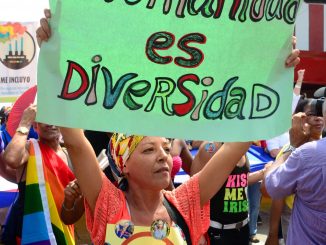
Humanity is diverse. Photo: Bill Hackwell

This week, Cuba began a historic process as Cubans started to going to more than 78,000 meeting points to discuss the new draft of the Family Code, a broad, complex, but very important process for Cuban families.

The document is the result of many people who have studied the Cuban social landscape for a long time. It is not a text fabricated by a single-family or a single person, and it did not just show up over night as a fait accompli.  “We did not shut ourselves in around a table to invent non-existent realities. Here all Cuban families reflected in one way or another,” the president of the National Electoral Council (CNE) Alina Balseiro Gutierrez explained.

These meetings, which will last until April 30, are not to disagree or discuss any issue, but to gather information and process it. It is a search procedure that will allow the legal authorities to detect if anything has been left unsaid.

We are facing a revolutionary document, which includes changes of perspective in many aspects of our society’s daily life. It addresses family plurality and the right of people from the LGBTQ community to marry, opens new horizons to labor relations, and refers to the urgent attention that should be paid to the aging population.

“This will be a Code of affections. Good behavior, attention, and care in the family environment will have their reward. Likewise, abandonment, negligence, and emotional and economic neglect will also have their consequences in the Code,” Alvarez-Tabío added.

One of the most transcendental changes in the text will be around the family plurality issues. Everyone will have the right to form a family united by the affection of its members.

The norm clarifies that affiliation is the relationship established between mothers and fathers with their sons and daughters. However, it adds that this affiliation has been radically transformed. It is no longer just consanguineous parentage.

Affiliation can also be determined through the use of an assisted human reproduction technique, or it can also be defined by socio-affectivity (that bond of love, of feelings that unites two people, grandparents, and grandchildren, nieces and nephews…) There is a plurality of sources that can give rise to legal parentage.

“It is important to read carefully each letter of the Family Code to discover that there are many benefits for many people in the family space, and not only in the aspect of marriage,”  added Balseiro, who is a Doctor in Legal Sciences.

The text also opens new horizons to labor relations. It proposes regulations related to unpaid licenses for family responsibilities, which will benefit those people who are dedicated to the care of family members in vulnerable situations. This decision was taken into account due to the accelerated population aging in Cuba, and the shift of the main caregiver roles to women, who sometimes, by family decision, leave their jobs to devote themselves to this task.

Each proposal in the Code shows how it will benefit all legal relationships in Cuban society. No one will be left behind. Families will be viewed in the plural, in accordance with the current diverse, plural, and democratic scenario. The text will add rights and will make visible family models that were not recognized until now, in a country that does not stop looking inside itself and thinking about its people, despite the adversities.

Source: Resumen Latinoamericano – English

Strugglelalucha256


12 February, NYC: #BoycottPuma Speak Out

Saturday, 12 February
3:00 pm
PUMA Flagship Store
609 5th Ave, NYC
Facebook Event: https://www.facebook.com/events/898450857498907/

Join us on Saturday, February 12th, outside the PUMA Flagship store in Manhattan, as we demand that PUMA ceases its sponsorship of the Israel Football Association.

This event is part of of the international day of action to #BoycottPUMA. In New York City, we stand in solidarity with Palestinian football players and global sports justice activists who have called on the company, which purports to follow a human rights mandate, to end its support for Israeli colonialism and apartheid.

samidoun | February 9, 2022 at 8:08 am | URL: https://wp.me/p2cx3f-dci
Strugglelalucha256


Freedom and med care for Leonard Peltier

For 40 years, former American Indian Movement (AIM) activist Leonard Peltier has been in the clutches of the U.S. prison system –The Iron House of the whites, as indigenous people call them – on trumped up murder charges. Now, as he suffers poor health and an abdominal aortic aneurism, time is no longer on his side.

The aneurism, diagnosed just weeks ago, threatens his very life, so supporters of Leonard are demanding his freedom, so he doesn’t perish in the Iron House.

Decades ago, when Bill Clinton was president, he visited Pine Ridge, South Dakota (once Peltier’s home) and told people there: “Tell Leonard I won’t forget about him.”

A promise from Clinton proved as empty as any politician’s promise: gas, air, wind. (He musta forgot, huh?)

So Peltier languished in the Iron House as decades passed. He wrote. He painted – and he awaited white justice.

He’s still waiting.

His supporters want people to write to the Bureau of Prisons (BOP), demanding his health care and release. The International Leonard Peltier Defense Committee needs you to write and call on Leonard’s behalf.

Contact:www.bop.gov/inmates/concerns.jsp.

Refer to Leonard Peltier #89637-132 and his home jail, USD Coleman I.

And while you’re at it, contact the White House and demand Leonard’s executive clemency.

Leonard Peltier needs freedom now; and Native Peoples need him to return home.

Source: Prison Radio

Strugglelalucha256


How China became an Olympic boogeyman for the West

In the early 1990s, barely a decade after rejoining the Olympic movement, Beijing launched a bid to host the 2000 Games. Unfortunately by then, U.S. policy had begun to shift perceptibly from the honeymoon years of rapprochement. Gone was the incentive for even arch-reactionaries like U.S. Presidents Nixon and Reagan to embrace the People’s Republic of China (PRC) effusively in the name of hard-nosed anti-Soviet realpolitik. With the end of the first Cold War, anticommunism also receded as a guiding framework for U.S. imperial rhetoric, in favor of a universalized (if richly hypocritical) weaponization of neoliberal “human rights.” This was a discursive terrain tilted heavily toward bourgeois democracies in the imperial core, on which China was hardly more equipped to compete than it had been in the Mao era.

Sure enough, the U.S. mainstream press united in opposition to Beijing’s bid, with the New York Times anticipating the facile and now-omnipresent analogies with Nazi Germany, as University of Hong Kong historian Xu Guoqi quotes in his 2008 book Olympic Dreams: China and Sports, 1895-2008: “The city in question is Beijing in the year 2000, but the answer is Berlin 1936.” Bipartisan majorities in both houses of Congress vehemently urged the International Olympic Committee (IOC) to reject the bid on human rights grounds. In the event, Beijing led in every round of voting until the last, when it narrowly lost to Sydney 45-43. It later emerged that the Sydney organizing committee had not only secured the two-vote margin via outright bribery (par for the course for the IOC), but had secretly commissioned an anti-China smear campaign laundered through a London-based human rights group. The bonds between white Anglo settler colonies prevailed, and the Sydney Olympics became the stage for a truly noxious whitewashing of Australia’s genocide against Aboriginal peoples.

Still smarting from its defeat and the naked hypocrisy of Western powers around the “politicization” of the Games, Beijing nonetheless forged ahead with a bid for the 2008 Olympics. This time it won with ease, aided by widespread sympathy for the circumstances of the 2000 loss, as well as a slick PR campaign designed to neutralize the attack lines that had sunk its previous attempt. Bid committee official Wang Wei assured the IOC that “with the Games coming to China, not only are they going to promote the economy, but also enhance all the social sectors, including education, medical care and human rights.” Despite strenuous efforts to weaponize large-scale unrest in Tibet in the months leading up to the Games, even limited boycott appeals from Western campaign groups went nowhere. The 2008 Beijing Olympics went down in history as China’s “coming-out party” and a seminal moment in its growing self-confidence as a rising world power.

It is telling that Jules Boykoff, the outspoken critic of the Olympics whose book Power Games I have relied on heavily in my research for this and other articles on this topic, makes no mention at all of this widespread popular perception of the 2008 Games or their significance in the broader arc of Chinese history. Instead he treats them as an exclusively elite project and focuses entirely on critical narratives, a tendency he has doubled down on in his most recent commentary on the 2022 Beijing Games. Possibly the most revealing line is his response to Beijing’s assurances from the 2008 bid: “This human-rights dreamscape never arrived. It’s telling that today, neither China nor the IOC are vowing that the Olympics will spur democracy.” It does not seem to occur to Boykoff to see this as a positive development: that China’s growing confidence in its own model frees it from the need to address Western imperialists in their favored (and deeply hypocritical) discursive terms. As the New York Times put it succinctly, “Where the government once sought to mollify its critics to make the Games a success, today it defies them… China then sought to meet the world’s terms. Now the world must accept China’s.”

This reflects a broader analytical lacuna in campaigns that take the Olympics themselves as an undifferentiated political target: they fail to account for the positions of different host countries vis-à-vis the imperialist world system. To flatten “the Olympics” or “human rights” as universal categories is effectively to privilege normative Western understandings of both. In practice this leads to the grossly uneven and asymmetrical treatment of Olympics hosted by self-styled democracies in the imperial core—historically the overwhelming majority—versus the few that are not. To be sure, local anti-Olympics campaign groups are undoubtedly justified in fighting the social dislocations they bring to host cities everywhere. (Full disclosure: I have previously worked with one such group, NOlympics LA, which does valuable work connecting the 2028 Los Angeles Olympics to gentrification and racialized policing.)

But where was the outrage over the illegal U.S. invasion of Afghanistan, when Salt Lake City hosted in 2002? Over Britain’s war crimes there and in Iraq, when London hosted in 2012? Over Japan’s continued refusal to acknowledge its colonial crimes against humanity, when Tokyo hosted in 2021? The indictment of entire host countries as “human-rights nightmares” (Boykoff’s crude label for China and Kazakhstan, when Beijing and Almaty wound up as the only finalists for 2022) seems to be reserved for nations outside the imperial core. The nascent transnational anti-Olympics movement needs to overcome these ideological blinders if it is ever to match the coherence of the great anti-racist mobilizations that shook the IOC in the 1960s and ’70s. Presently there seems little cause for hope, with leading figures like Boykoff and his fellow “left” sportswriter Dave Zirin uncritically propagating U.S. State Department lines on both Xinjiang and Peng Shuai in their coverage leading up to the 2022 Games.

New Emerging Forces

What, you might ask, was the People’s Republic of China up to in the world of international sport during its more than two decades in the Olympic wilderness (​​from 1952 to 1980)? The story of “ping-pong diplomacy” with the United States and other Western powers is already well-documented, reflecting an obvious Northern historiographical bias. But in an age of growing calls for “decoupling” between China and the West, and for South-South cooperation via the Belt and Road Initiative among other projects, the buried history worth uncovering is that of the Games of the New Emerging Forces (GANEFO).

GANEFO emerged from a bold act of anti-imperialist and anti-Zionist solidarity by the Indonesian government of Sukarno, the visionary anticolonial leader and co-founder of the Non-Aligned Movement. In 1962, Indonesia as host pointedly refused to invite Israel and Chiang Kai-shek’s Kuomintang (KMT) regime to the fourth Asian Games and was summarily suspended from the IOC. In response, Sukarno proclaimed that:

“The International Olympic Games have proved to be openly an imperialistic tool… Now let’s frankly say, sports have something to do with politics. Indonesia proposes now to mix sports with politics, and let us now establish the Games of the New Emerging Forces, the GANEFO… against the Old Established Order.”

His bracing rhetoric is reminiscent of the Chinese IOC delegate Dong Shouyi’s 1958 broadside against then IOC President Avery Brundage, but shorn of any residual attachment to a mystical “Olympic spirit.” China enthusiastically jumped in to help organize and promote GANEFO in 1963, covering travel costs to Jakarta for 2,200 athletes from 48 countries, overwhelmingly based in the Global South. It left with a bumper crop of athletic victories—topping the overall medal table, followed by the Soviet second-string squad and the Indonesian hosts—and effusive goodwill from athletes across the emerging Third World.

There would never be another GANEFO, owing to the horrific U.S.-backed coup that ousted Sukarno and installed Suharto’s military dictatorship in 1965. But this piece of history remains more vital than ever to recover. Because the lesson of Beijing 2022 and the moves toward a diplomatic boycott, however farcical, is that the United States and its allies in the Global North will never fully accept China as a legitimate member of their elite club. In their current position as hosts, PRC officials may feel understandably constrained in denouncing the “politicization” of the Games. But it would be wise for them, for the Chinese people, and for the rest of the world to keep in mind the fact that politicizing the Olympics is a long, hallowed tradition for the workers and oppressed nations of the world. The People’s Republic of China has a storied place in that tradition, of which it can be justly proud.

This article was first published on Qiao Collective and was adapted in partnership with Globetrotter.

Charles Xu is a member of the Qiao Collective and of the No Cold War collective.

Strugglelalucha256


Detroit says: No war on Russia and Donbass, U.S./NATO out of Ukraine, Feb. 11

FRIDAY AT 4 PM – 5 PM
Detroit says: No War on Russia & Donbass! U.S./NATO Out of Ukraine!
Hart Plaza, Jefferson and Woodward, Detroit

Moratorium NOW! Coalition and the Michigan Emergency Committee Against War & Injustice join the national call for actions against the threat of war.

From the national call:
We call for antiwar, workers’ and people’s organizations across the U.S. to hold rallies, pickets, mass leafleting, banner drops and other activities from Feb. 4-12. We must act now to stop another war before it starts.

Tell Biden and Congress:

No war with Russia and Donbass!

Stop military aid to Ukraine – withdraw all U.S./NATO advisors, trainers and mercenaries.

Sign Russia’s draft statement on European security – end NATO’s eastward expansion.

No new deployment of U.S. troops – bring all the troops home!

Disband NATO.

To endorse, email: solidarityukraineantifa@gmail.com
—————-
The Biden administration has put 8,500 U.S. troops on standby for deployment, on top of 64,000 already stationed in Europe. Millions of dollars in U.S. “lethal aid” (weapons) is arriving daily in Ukraine. Biden claims that there is an imminent threat of a Russian invasion. But the real invasion threat stems from U.S.-allied Ukraine against the independent Donbass republics of Donetsk and Lugansk, near Russia’s western border.

Washington and its NATO partners have been pushing Ukraine’s government to invade Donbass, hoping to provoke a response from Russia that can cover further NATO expansion. Ukraine has deployed 125,000 troops to the ceasefire zone, including battalions of neo-Nazis, armed with NATO weapons. Donbass residents have already suffered eight years of Ukrainian war and Western blockade. More than 14,000 people have perished in that conflict.

Despite a U.S. promise not to expand NATO eastward at the end of the Cold War, the alliance has added 14 members since. Russia has made it clear that a NATO takeover of Ukraine – the largest country on its European border – is an unacceptable threat to its national security. Biden has continued Trump’s war drive worldwide, from Yemen to Syria, Venezuela to Palestine, Iraq to the South China Sea.

Why is Washington provoking Russia? The U.S. under both Democrats and Republicans has long sought to dominate and plunder the entire former Soviet Union economically, politically and militarily. Today U.S. Big Oil companies and banks urgently want to stop the flow of Russian gas and oil to Western Europe, including the new NordStream2 pipeline, so U.S. allies will be forced to buy from them. Biden, who has betrayed the urgent needs of workers and oppressed communities that elected him, is desperate to funnel people’s anger at a foreign enemy.

We say no! Poor and working people are wracked with crisis after crisis here at home: rampant spread of COVID; deliberate dismantling of public health measures to control the pandemic; wages slashed by inflation; capitalism’s climate destruction intensifying; the end of eviction moratoriums; racist police terror; bans on anti-racist education in schools; far-right attacks from the streets to the Supreme Court on people’s basic democratic rights.

We need a struggle to end racism and poverty at home, not another criminal war abroad!

Called by (list in formation):
Solidarity with Novorossiya & Antifascists in Ukraine
Women Against Military Madness (WAMM)
Alberto Lovera Bolivarian Circle of N.Y.
Alan Dale, Minnesota Peace Action Coalition*
Communist Workers League
Anti-War Committee
Socialist Unity Party / Struggle-La Lucha newspaper
Harriet Tubman Center for Social Justice (Los Angeles)
Peoples Power Assembly (Baltimore)
Workers Voice Socialist Movement (New Orleans)
Youth Against War & Racism
Women in Struggle / Mujeres en Lucha
Moratorium NOW! Coalition (Detroit)

Strugglelalucha256


U.S. and international actions demand #UnblockCuba

On Sunday, Jan. 30, Miami Cuban-Americans and their supporters gathered at City Hall to caravan with bikes and cars to a rally at the statue of Cuba’s national hero, José Martí. Nearly two years since the election-campaign-filled months of 2020, throughout all of 2021 and now into 2022, these Miami actions have birthed a caravan movement across the U.S. and internationally on the last Sunday of the month – including in the streets of Cuba. 

This international outpouring of solidarity with the Cuban Revolution and its right to sovereignty and self-determination was especially noteworthy, as Feb. 7 marks 60 years since the effective date of President John F. Kennedy’s Proclamation 3447, prohibiting “the importation into the United States of all goods of Cuban origin and all goods imported from or through Cuba.”  

Also 60 years ago, on Jan. 31, 1962, under U.S. pressure, the Organization of American States expelled Cuba. Only Mexico withstood the U.S. demand to isolate the revolution. How the situation has changed in 60 years!

In the U.S., caravans kicked off the new year in Miami, New York City, Minneapolis, Las Vegas, Albuquerque, Tempe/Phoenix, Portland, Seattle and Los Angeles. Cars and – where temperatures permitted – bikes took to the streets. Outreach tables, pickets and educational online programs informed public gatherings about the U.S. economic, commercial and financial blockade of Cuba. 

In Miami, large posters displayed Cuban-American demands to undo some of the most painful of the 243 new economic blows imposed under Donald Trump and now continued and even expanded by President Joe Biden: reopen the U.S. Embassy in Havana; reunify families; restore direct flights from U.S. airports to provincial Cuban airports; and restore remittances, the right to travel and cultural-scientific cooperation between the two countries. 

In pre-pandemic Canada, pickets regularly reminded U.S. consulates that the Canadian people oppose the U.S. starvation schemes imposed on Cuba. Jan. 30 car caravans carried on the tradition in Montreal, Quebec, plus Vancouver, Calgary and Toronto. 

Information on the U.S. caravans are posted by the National Network On Cuba at NNOC.org/calendar with starting times and locations during the week before the last Sunday of the month. Local organizers can send details, images or Facebook event links for posting to SundayCaravan@NNOC.info 

Support mobilized from many countries as shown in this tweet.

Strugglelalucha256


Baltimore: Racist campaign targets Marilyn Mosby

On Jan. 12, the U.S. Department of Justice brought criminal charges of perjury and false mortgage applications against Baltimore City State’s Attorney Marilyn Mosby, a Black woman who has served in the position since 2015. 

The recent criminal indictment alleges that Mosby used COVID-related loan money to purchase vacation homes. Further, she is accused of falsely testifying under oath that she experienced financial hardship due to the pandemic. 

Mosby’s tenure has been a controversial one. In 2015, she charged six Baltimore police officers with the murder of an unarmed Black man, Freddie Gray. Baltimore cops killed Gray after he ran from officers who were screaming at him and waving their firearms aggressively. 

Following Gray’s murder, the people of Baltimore rebelled against racist police brutality and terror.  

When Mosby announced that she would prosecute the officers involved in Gray’s murder, this drew the ire of many, including the racist Fraternal Order of Police and right-wing politicians. Ultimately, Freddie Gray’s murderers were not convicted. Many returned to their jobs on the Baltimore police force. However, the “law and order” community never forgot Mosby’s attempt to convict the killers. 

Fast forward six years. Mosby announced that her office would no longer prosecute drug users and sex workers in the city of Baltimore in April 2021. This announcement was part of a larger effort to scale back the racist war on drugs that had wreaked havoc in Baltimore’s Black community for decades. This policy change was met with extreme vitriol from pro-police forces. 

The Baltimore Republican Party and its allies called for an indictment of Mosby on anything that could stick. In 2020, the DOJ and Internal Revenue Service investigated Mosby and her husband, Baltimore City Council President Nick Mosby, for alleged tax law violations. 

Eventually the claims against the Mosbys were found to be without merit and the investigation ended. However, federal investigations resumed after Mosby announced her initiative to decriminalize drug use and sex work. This investigation led to the January indictment. 

To be clear, it’s important to understand that Marilyn Mosby is an imperfect figure. She is not a socialist nor even a progressive. For her entire career, Mosby has been a mainstream Democratic Party politician. 

In many ways, Mosby echoes the “law and order” politics of people like former President Bill Clinton and former Maryland Gov. Martin O’Malley. This is best demonstrated by the continued prosecution of police shooting victim Keith Davis Jr. Mosby’s office has prosecuted Davis five times, after numerous mistrials and hung juries. The entire case is based on flimsy evidence; consequently, the Baltimore community has continually protested the prosecution. 

With that said, Mosby should still be defended against reactionary and racist attacks. The recent DOJ prosecution is exactly that. The charges against her aren’t based on justice or fairness. They are based on racist political retribution. Even with Mosby’s imperfections, progressives and socialists have a duty to stand in solidarity with Black elected officials against racist attacks. 

It is telling that Joe Biden’s DOJ has brought these charges against the State’s Attorney of a majority Black, working-class city like Baltimore. For better or worse, Mosby is paying the price for executing what she believed were Democratic Party values. She tried to prosecute killer cops and stop prosecuting innocent people. For that, she is under vicious attack. 

It is more important now than ever that the people stand in solidarity with her and other politicians who find themselves under attack for policies that challenge the police and mass incarceration. 

Strugglelalucha256


NYC student advocates mark National Transit Equity Day

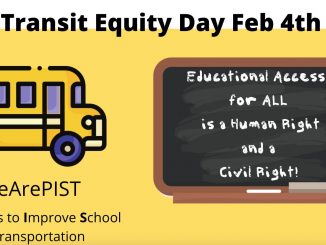
Feb. 4 – Parents to Improve School Transportation (PIST NYC) convened education, disability, and labor advocates to expose multiple facets of New York City’s chronic student transportation failures and to propose solutions via a School Bus Bill of Rights. 

The event, marking the birthday of civil rights icon Rosa Parks – Transit Equity Day – brought together a diverse group of parents and caregivers, elected officials, including State Assemblymember Jo Anne Simon and the Office of Public Advocate, the local Coalition of Black Trade Unionists, and environmentalists.

“Transportation for access to education is now a civil and human right under many laws and international conventions, but just like the people of 1955 Montgomery, we need collective action to get it,” said Johnnie Stevens, who coordinates the School Bus Bill of Rights referendum campaign for “safe, on-time, fully staffed school bus routes for students of all abilities and all housing circumstances.”

Organizers from across the city charged that policy changes before and during the pandemic have led to missed school, health risks for riders and a shrinking workforce. 

Claudia Galicia from Sunset Park explained the Department of Education “authorized the routes to double this year,” adding, “families may be informed when a child in the same school is COVID positive, but the bus routes include children from several schools.”

Bronx parent and Comite Timon leader Milagros Cancel spoke on the resulting inhumanity of long rides for children with medical and neurological conditions. Speaking in Spanish through tears, Cancel urged everyone to march over the Brooklyn Bridge on March 19 for equity in student transportation, saying, “This is criminal what’s happening.”

All attendees agreed: driver, attendant, paraprofessional and bus nurse shortages pre-dated COVID. In the words of Public Advocate Jumaane Williams: “The inequities and inadequacies in our educational system – which existed prior to the pandemic and have been exacerbated by it – extend to our buses. Shortages of staffing, length of rides, and overcrowding are persistent issues which disproportionately harm communities of more color and students with disabilities. The city must work to hire and train more staff at fair wages, develop shorter routes, and provide transparency and accountability throughout these processes.” 

Williams was represented at the meeting by First Deputy Nick E. Smith and other staff. 

Amy Tsai of the Citywide Council for District 75 (special education) reminded the gathering that “there was a huge furlough in 2020, so over that summer, a lot of kids weren’t able to utilize the Learning Centers for related services or instruction.” 

First Vice President of the Citywide Council on Special Education, Paullette Healy, added, “We have special education recovery services that started in December, and families cannot access them because there’s no transportation to get our children home.” 

Sara Catalinotto of PIST NYC said, “We predicted, over 10 years ago, that cuts to pay and Employee Protection Provisions (EPP) would push many school bus drivers and attendants from the workforce.” 

Rima Izquierdo of Bronx Family Autism Support elaborated on the concurrent shortage of school bus paraprofessionals and bus nurses, indicating her child in the background, who was “stuck at home again because his bus para called in sick, and there is no one else designated to ride with him.” 

Labor solidarity

Charles Jenkins of the Coalition of Black Trade Unionists NY Chapter, pledged support, saying that workers “need to be paid on a professional level that has benefits so that we can hire the best qualified and the best skilled folks to transport precious cargo.”

Another stated goal of this campaign is to prevent and troubleshoot problems efficiently without bias. Catalinotto cited “inequity in getting route information, let alone solutions, from DOE’s Office of Pupil Transportation (OPT) depending on how much time, internet access and computer savvy a family has, and in what language they are fluent.” 

Galicia blasted the OPT’s complaint hotline as an exercise in futility, saying: “There are long hold times, no follow-up, and no solutions. I don’t have enough hours of the day to make a complaint – two hours in the morning and two hours in the afternoon – because the limited travel time of my child is being violated.” 

Parent and advocate Maggie Sanchez testified in detail that: “Students in temporary housing miss more instruction and services, due to transportation problems, compared to their peers. We know what it’s like not to receive a bus route for weeks on end due to a simple address change.”

Beth Heller of Brooklyn Heights added, “Rather than correct the route problems, OPT sent cabs and car services for my child. I had to accompany him to and from school for a total of four hours a day. When OPT neglected to reserve a return trip, it cost $60 to get home. If OPT were to send us to and from my son’s non-public school for a full academic year it would cost $42,300. That could easily pay someone’s salary.”

State Assembly Member Jo Anne Simon offered her support for a School Bus Bill of Rights. Simon congratulated the coalition for “seeing this as a multi-pronged problem, [with] people assigned to and coordinating different areas of the battle.”

Justin Wood of the Clean School Bus Coalition cited evidence that “unhealthy conditions are caused by the diesel and gasoline school buses themselves, creating serious health issues for students, in both general and special education… and we know there’s linkages to severe COVID-19 illness now as well.” 

Event organizers said they had also received messages of encouragement from Teamsters Local 808 Secretary-Treasurer Chris Silvera, City Council member Gale Brewer, Community Education Council 17 President Erika N. Kendall, and various labor, education and community activists. 

Strugglelalucha256


‘Freedom Convoy’: a dangerous movement for the working class, but useful for the ruling class

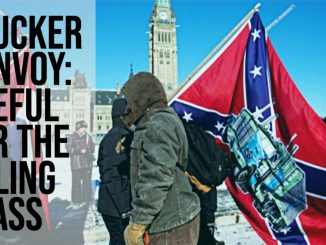
The Communist Party of Canada views the “Freedom Convoy” as a public expression of the increasingly organized and assertive far right. The clear links between the organizers of the convoy and far-right networks indicate that this is not a spontaneous working-class demonstration. On the contrary, it is part of a global phenomenon: the rise and mainstreaming of the far right, which is demonstrated by the strong support (ideologically and financially) from the US far right and circles close to Donald Trump and the Jan. 6 insurrection. The convoy is filled with Nazi and Confederated flags, election signs for Bernier and all sorts of far-right symbols. The $10 million raised through GoFundMe for this convoy also showcases that this was planned by ultra-right networks. It is certainly not the meagre earnings of the working class that is funding this effort.

We understand the frustrations of a growing part of the population. They are justified. Since the beginning of the pandemic, both federal and provincial governments have been busy ensuring that corporate interests are placed firmly ahead of public health. The deaths we mourn from this deadly pandemic are victims of decades of privatization of our public health system. Emergency financial aid programs, whether it be the emergency wage subsidy or the CERB/CRB, have not served to raise the standard of living of working people, but only to barely keep 7 million people afloat. Over 880 000 people were cast adrift last October after CRB was ended. These programs have also benefited big business, big retailers, banks and lending institutions, and real estate speculators. After spending most of the CERB/CRB payments for groceries at Metro, Sobeys or Loblaws (whose CEO’s wealth rose by $4.5 billion after the first year of the pandemic), after paying rent to big real estate speculators such as Timbercreek, after paying off interest on credit cards, not much of the meagre $500 per week was left for people to make ends meet. Just as dangerously, while living and working conditions are deteriorating for the working majority, the government and the political parties in the pay of big business have agreed to increase military spending.

However, these self-proclaimed “spokesmen of the people” refuse to address these questions. They substitute a populist and anti-scientific discourse in order to funnel the anger of the working people towards other workers, particularly immigrants, women, Black and Indigenous People, Muslims, healthcare workers (who’ve been attacked), teachers and other public organizations. Racism, misogyny, violence and hate speech are commonplace in this convoy, which seeks only to divide workers and instill the idea that the enemy is not the bosses, but working people themselves.

This is far from a “freedom” convoy. This is a convoy of hate which has threatened and attacked the civilian populations in Ottawa and everywhere it has passed through.

They don’t say a word about the central issue of defending and expanding our public services, especially our public health care system; about raising wages and controlling the prices of basic necessities; not a word about nationalizing the pharmaceutical industry to stop Big Pharma’s profiteering (which is contributing to the proliferation of variants), about military spending and the danger of war to guarantee corporate profits. Far from attacking the system, they attack the workers struggling to deliver essential services that will save lives, despite systemic underfunding, privatization, and more.

Communists recognize the interests behind this demonstration very well: big business and the far-right (white supremacists, fascists, fundamentalists, the People’s Party, etc.) We know what it means when the far right organizes itself and tries to take root among the unemployed, the unorganized and the bankrupt. We also know that it will take mass political action by the labor and people’s movements to force Parliament to ​legislate hate groups as criminal organizations, to enact and enforce hate speech laws, and to defeat the rise of the ultra-right.

This is why we call on the most conscious workers, the trade union movement, but also on all progressive and democratic forces to block these reactionaries by unmasking them, and to oppose them by fighting for a a genuine people’s recovery that includes:

  • A $23 minimum wage and general wage increases, improved working conditions including decent pensions and retirement at 60, stable job creation especially in the manufacturing and value-added industry as well as expanded labour rights;
  • EI reform that is non-contributory and accessible to all workers, including first-time job seekers, covering 90% of previous income and that is available for the whole duration of unemployment;
  • Price controls and price roll-backs on food, fuel, rents and housing;
  • Reverse privatization and make a massive public investment in healthcare and social services;
  • Expand Medicare to include long-term care, dental, vision, drugs, and mental health care;
  • Create a universal, quality, public childcare system;
  • Public ownership and democratic control of banks, insurance companies, energy and natural resources, and the pharmaceutical industry;
  • Tax the corporations and the rich; tax relief for working people and the unemployed;
  • Strict civilian control over the police, the expansion and enforcement of anti-hate laws, and the designation of hate groups as criminal organisations;
  • Reduce the military budget by 75%.

Central Executive Committee, Communist Party of Canada

Source: communist-party.ca

Strugglelalucha256


China’s Olympic battle for legitimacy: The prehistory of the 2022 Beijing Games

Much has been made of the “diplomatic boycott” by the United States and its allies of the 2022 Beijing Olympics. But what much of the major Western media coverage misses is the historical and geopolitical significance of these games to China—as one of only three Asian host nations for the Olympics (along with Japan and South Korea), and the first Global South country to host the Winter Games. The countries boycotting the 2022 Olympic Games, it seems, see this moment and the history that underpins it as threatening to their global hegemony in both sport and geopolitics.

In 1949, the Communist Party of China decisively prevailed over Chiang Kai-shek’s Kuomintang (KMT) after 22 years of civil war, forcing the latter to flee to Taiwan. The founding of the People’s Republic of China (PRC) brought a definitive end to a “century of humiliation” inaugurated by the First Opium War, which had seen colonial powers reduce China to the “sick man of Asia.” This sickness had been a byword for the weakness, internal rupture, and forced narcotic dependency of the Chinese body politic—transposed inevitably onto the racialized Chinese body.

Overcoming these scars, in all their physical and psychological manifestations, was the guiding principle for sports policy in the PRC. Only through this lens can we understand why it fought in such an obstinate, pugnacious, and unabashedly political way for a place in the Olympic movement on its own sovereign terms. China turned the Olympics into a battleground in its contest for legitimacy with the KMT regime on Taiwan and its imperialist backers, elevating the dispute to “the main burden of Olympism,” in the words of Otto Mayer, chancellor of the International Olympic Committee (IOC) from 1946 to 1964. And as with the parallel struggle for recognition by the United Nations, this one ended after three eventful decades in unqualified triumph. University of Hong Kong historian Xu Guoqi relates this fascinating saga in his 2008 book Olympic Dreams: China and Sports, 1895-2008.

The KMT-led Republic of China had sent a solitary athlete to the 1932 Los Angeles Games, followed by larger delegations in 1936 and 1948—the latter, incredibly, as the KMT was losing the most decisive campaigns of the civil war to the Communists. After the regime’s flight to Taiwan, its National Olympic Committee (NOC) gave the IOC pro forma notice that it had relocated to Taipei with no further explanation. Throughout this period, the Soviet Union had pointedly snubbed the “bourgeois” IOC in favor of organizing its own proletarian Red Sport International, complete with “Spartakiad” games to rival the Olympics. But by the 1952 Helsinki Games, the Soviets were ready to join the existing Olympic movement in force (ultimately finishing a close second to the United States in the medal count) and duly urged the fledgling PRC to do so as well.

From its very first approach, the PRC boldly insisted on what would become known as the one-China policy: that it was the sole legitimate representative of the Chinese nation including KMT-occupied Taiwan. The IOC ultimately fudged on the question and extended a last-minute invitation to Beijing as well as Taipei. Nonetheless, Mao Zedong, Liu Shaoqi, and Zhou Enlai personally approved the decision to send a team, which arrived in Helsinki the day before the closing ceremony and could not take part in any competition. But merely being there was an unalloyed boon to the PRC’s legitimacy, especially as the rival Taipei-based NOC had withdrawn in protest. Avery Brundage, the notoriously racist American who took over as IOC president that year, complained bitterly that “I did everything in my power to prevent them from taking part. Unfortunately, I had only one vote and because many others present did not feel the same way I was outvoted,” as vocal Olympic critic Jules Boykoff recounts in his 2016 book Power Games: A Political History of the Olympics.

This initial success for the PRC’s efforts to participate in the Olympic movement was not to be repeated. In 1956, it was the PRC’s turn to withdraw in protest as Taipei’s delegation insisted on competing in the Melbourne Summer Games under the name “Republic of China.” Two years later, Chinese IOC delegate Dong Shouyi entered into a bracing war of words with Brundage, calling him “a faithful menial of the U.S. imperialists bent on serving their plot of creating ‘two Chinas’” in a resignation letter that concluded:

“A man like you, who stains the Olympic spirit and violates the Olympic Charter, has no qualification whatsoever to be IOC president. … I feel pained that the IOC is today controlled by an imperialist like you and consequently the Olympic spirit has been grossly trampled upon. To uphold the Olympic spirit and tradition, I hereby declare that I will no longer cooperate with you or have any connection with the IOC while it is under your domination.”

Dong would not be the last Chinese representative to evoke an idealized “Olympic spirit”—in opposition to the Americans, who arguably embodied the real one in all its racist ugliness. He would, however, be the last one on the IOC until 1979.

Interestingly, this two-decade hiatus (which actually amounted to a 28-year absence from the Olympic Games, from 1952 to 1980) saw the two most severe diplomatic incidents surrounding the China question at the IOC. Both centered on the KMT regime’s untenable claim to represent the entire Chinese nation as the “Republic of China,” and both ended in bitter defeats for it, even as Beijing was de facto boycotting the entire Olympic movement. In effect, the PRC substituted state-to-state diplomacy—first with the Soviet bloc and then with Western powers after the Sino-Soviet split—for a formal presence within the institutions, closely mirroring its geopolitical strategy.

The first episode occurred in 1959, not long after Dong Shouyi’s acrimonious resignation, when Soviet delegates to the IOC insisted that Taipei’s NOC change its name on the self-evident grounds that it “[could not] possibly supervise sports in mainland China.” The IOC as a whole readily agreed, with even the arch-anticommunist Avery Brundage reluctantly assenting. The U.S. mainstream press exploded in outrage; absurdly, Brundage himself was deluged with hate mail alleging he had succumbed to “communist blackmail.” The U.S. State Department called the decision “a clear act of political discrimination” and even President Dwight D. Eisenhower condemned it. The whole affair ended in another embarrassing fudge, with Taipei competing under the name “Taiwan” at Rome 1960 and quietly reverting to “Republic of China” thereafter.

The second, even more damaging incident took place in the lead-up to the 1976 Montreal Games. After establishing diplomatic relations in 1970, the PRC informed Canada in no uncertain terms that the Taipei NOC should not be allowed to compete as the “Republic of China.” After lobbying earnestly but unsuccessfully for the IOC to recognize Beijing instead of Taipei, Canadian Prime Minister Pierre Trudeau’s government proposed that athletes from Taiwan compete under the neutral Olympic flag. The IOC grudgingly assented at the last minute, but not before debating whether to move the Games to the United States or cancel them entirely; the Taipei NOC ultimately withdrew.

Official reactions from Canada’s domineering southern neighbor were again apoplectic. U.S. President Gerald Ford and the head of the U.S. Olympic Committee seriously discussed the possibility of boycotting or trying to take over the Games at the last minute. This of course did not come to pass, but Canada took a significant reputational hit in the United States—a testament to China’s growing ability to exploit contradictions within the imperialist bloc. Canada’s independent China policy under Pierre Trudeau stood in stark contrast with that of his son Justin, who marched in shameful lockstep first with Trump’s judicial kidnapping of Huawei CFO Meng Wanzhou, and now with Biden’s “diplomatic boycott” of Beijing 2022 over exaggerated allegations of human rights abuses in Xinjiang.

Ironically, just a few years after savaging the Canadians, the United States would follow in their footsteps by establishing diplomatic relations with the PRC and (formally) cutting ties with Taipei under the one-China policy. This paved the way for the IOC to resolve the two-China question later in 1979 in its own unique way: by readmitting Beijing and allowing athletes from Taiwan to compete under the name “Chinese Taipei.” Deng Xiaoping personally approved this compromise in an early foretaste of the future “one country, two systems” settlements that would return Hong Kong and Macao to Chinese sovereignty.

The PRC’s delayed return to the Olympic movement, contingent in many ways on bilateral ties with the United States, contrasted sharply from its triumphant entry into the UN in 1971. On that occasion, an impressive coalition of African and other Third World countries—many fresh from their own national liberation struggles—had secured recognition for Beijing and expulsion of the KMT regime over the strident objections of the United States and most of its allies. By 1979, the basis for unity within the socialist and nonaligned camps had so thoroughly collapsed that China and many other Global South countries readily joined the U.S.-led boycott of the 1980 Moscow Olympics over the Soviet military intervention in Afghanistan.

Instead, mainland China made its long-delayed and triumphant return to Olympic competition at the 1984 Los Angeles Games—remembered locally as an orgy of Reaganite neoliberalism, American jingoism (amplified by the Soviet-led boycott), and militarized police terror that helped create the conditions for the 1992 Rodney King uprising. They nonetheless marked a high point in U.S.-China relations, with PRC athletes being warmly feted by the hosts. This goodwill was not dampened in the slightest when the women’s volleyball team sensationally defeated the hosts to win gold, in one of the most iconic moments of Chinese sports history.

There was ample reason to believe, even after the trauma of the 1989 Tiananmen incident and subsequent U.S. sanctions, that enough of it remained to propel Beijing to victory in its first bid to host the Games. As it turned out, the United States and its allies had no intention of ceding such recognition to a rising China without a fight.

This article was first published on Qiao Collective and was adapted in partnership with Globetrotter. Charles Xu is a member of the Qiao Collective and of the No Cold War collective.

Strugglelalucha256
https://www.struggle-la-lucha.org/2022/page/74/