¿Quién es ese que se escucha? Es el pueblo en pie de lucha.

Los maestros llevaron su protesta hasta La Fortaleza. Foto: Nahira Montcourt/ EL VOCERO

Una colonia existe únicamente para el lucro del poder invasor imperial. Y hoy Puerto Rico se encuentra en la mayor crisis de explotación en nuestra historia. 

Aparte de todos los planes de austeridad y robo de recursos impuestos por el Congreso de los EUA a través de la maldita Junta de Control Fiscal, el puñal lo han clavado justo en el corazón del pueblo, su clase obrera, la que forma la mayoría de nuestra población, ya esté organizada en sindicatos, o no. Los ataques están dirigidos a empobrecer tanto esta clase que no tenga más remedio que emigrar o morirse lentamente sin recursos ni salud en su patria.

Pero esa clase, indignada y rebelde,  está en constante pie de lucha para defender sus derechos laborales, sus salarios y pensiones que les permita vivir dignamente. Exigen el cese de las privatizaciones que tanta corrupción y malos servicios han traído al pueblo.

Comenzaron por el sector del magisterio y de energía y se han sumado casi todos los sectores de servicio público, estudiantes y hasta meseras y meseros que reclaman un justo salario y no los $2.13 que reciben desde hace treinta años.

El magisterio en lucha está representado por FADEP, Frente Amplio en Defensa de la Educación Pública. Son sindicatos militantes que el gobierno no legitima porque solo avala el “representante exclusivo” la Asociación de Maestros, un sindicato patronal aliado al imperio y al sindicato estadounidense de maestros, la AFT.

Sin embargo, fue la FADEP la que luego de multitudinarias manifestaciones obligó al gobierno a sentarse a negociar, obteniendo una victoria parcial, el aumento de $1000 dólares al mes. Pero lo más importante, un retiro digno que represente un 75% de su paga como es actualmente, tanto la Junta como el gobierno se niegan a conceder. Prefieren usar ese dinero para pagar a los bonistas buitres, acreedores de una deuda ilegal que ni siquiera se ha auditado.

La lucha sigue creciendo y se están creando comités de huelga en los sitios de trabajo para adelantar un posible paro nacional en el futuro cercano.

Mientras tanto, la concientización del pueblo va aumentando y todos los días hay manifestaciones alrededor de la isla donde se oye decir ¿quién es ese que se escucha? Es el pueblo en pie de lucha.

Desde Puerto Rico, para Radio Clarín de Colombia, les habló Berta Joubert-Ceci

Strugglelalucha256


La estrategia de los aliados occidentales: señalar a China y Rusia mientras intimidan al resto del mundo

El 21 de enero de 2022, el vicealmirante Kay-Achim Schönbach asistió a una charla en Nueva Delhi, India, organizada por el Instituto Manohar Parrikar de Estudios y Análisis de Defensa. Schönbach habló como jefe de la marina alemana. “Lo que realmente quiere es respeto”, dijo, refiriéndose al presidente de Rusia, Vladimir Putin. “Y, dios mío, respetar a alguien cuesta poco, o nada”. Agregó que, en su opinión, “es incluso fácil darle el respeto que realmente exige y probablemente, también merece”.

Al día siguiente, el 22 de enero, el ministro de Asuntos Exteriores de Ucrania, Dmytro Kuleba, convocó a Kiev a la embajadora de Alemania en Ucrania, Anka Feldhusen, y “expresó su profunda decepción” por la falta de suministro de armas alemanas a Ucrania y, también, por los comentarios de Schönbach en Nueva Delhi. El vicealmirante Schönbach emitió un comunicado poco después, diciendo: “Acabo de pedir a la ministra Federal de Defensa [Christine Lambrecht] que me libere, con efecto inmediato, de mis funciones y responsabilidades como inspector de la marina”. Lambrecht no esperó mucho para aceptar la dimisión.

¿Por qué fue despedido el vicealmirante Schönbach? Porque dijo dos cosas que son inaceptables para Occidente: primero, que “la península de Crimea se ha ido y nunca [volverá]” a Ucrania y, segundo, que Putin debe ser tratado con respeto. El “tema Schönbach” es una vívida ilustración del problema actual al que se enfrenta Occidente, en donde el comportamiento ruso se califica rutinariamente de “agresión” al tiempo que se desprecia la idea de “respetar” a Rusia.

Agresión

A finales de enero de 2022, la administración del presidente estadounidense Joe Biden comenzó a usar la palabra “inminente” para describir una posible invasión rusa a Ucrania. El 18 de ese mes, la secretaria de prensa de la Casa Blanca, Jen Psaki, no utilizó la palabra “inminente”, pero estuvo implícita en su comentario: “Nuestra opinión es que se trata de una situación extremadamente peligrosa. Ahora estamos en una etapa en la que Rusia podría, en cualquier momento, lanzar un ataque a Ucrania”. Unos días después, el 25 de enero, al referirse al posible calendario de una invasión rusa, dijo: “Creo que cuando dijimos que era inminente, sigue siendo inminente”. Luego, el 27 de enero, cuando se le preguntó sobre su uso de la palabra “inminente” con respecto a la invasión, Psaki respondió: “Nuestra evaluación no ha cambiado desde ese momento”.

El 17 de enero, mientras se intensificaba en Washington la idea de una “inminente” “invasión”, el ministro de Asuntos Exteriores de Rusia, Sergei Lavrov, rebatió la sugerencia de “la llamada invasión rusa de Ucrania”. Tres días después, el 20 de enero, la vocera del Ministerio de Asuntos Exteriores de Rusia, Maria Zakharova, negó que Rusia fuera a invadir Ucrania, pero agregó que hablar de esa invasión permitía a Occidente intervenir militarmente en Ucrania y amenazar a Rusia.

Incluso una módica cuota de memoria histórica podría haber mejorado el debate sobre la intervención militar rusa en Ucrania. Tras el conflicto Georgia-Rusia en 2008, la Misión Internacional Independiente de Investigación del Conflicto en Georgia de la UE, dirigida por la diplomática suiza Heidi Tagliavini, descubrió que la guerra de información en el período previo al conflicto había sido tergiversadora e incendiaria. En contra de las declaraciones georgianas y occidentales, Tagliavini afirmó que “no había ninguna invasión militar masiva rusa en curso que haya tenido que ser detenida por las fuerzas militares georgianas que bombardearon Tsjinvali”. La idea de “agresión” rusa que se ha mencionado en los últimos meses, al referirse a la posibilidad de que Rusia invada Ucrania, reproduce el tono que precedió al conflicto entre Georgia y Rusia, otra disputa sobre las antiguas fronteras soviéticas que debería haberse gestionado diplomáticamente.

Los políticos y los medios de comunicación occidentales han utilizado el hecho de que 100.000 soldados rusos se hayan estacionado en la frontera de Ucrania como una señal de “agresión”. La cifra – 100.000 – suena amenazante, pero ha sido sacada de contexto. Para invadir Irak en 1991, Estados Unidos y sus aliados reunieron más de 700.000 soldados, junto con toda la tecnología bélica estadounidense que tenían en sus bases cercanas y barcos. Irak no contaba con aliados y tenía una fuerza militar agotada por la guerra de desgaste contra Irán, que duró una década. El ejército ucraniano – regular y de reserva – cuenta con unos 500.000 soldados (respaldados por el millón y medio de tropas de los países de la OTAN). Con más de un millón de soldados uniformados, Rusia podría haber desplegado muchas más tropas en la frontera ucraniana (y hubiera necesitado hacerlo) para una invasión a gran escala de un país socio de la OTAN.

Respeto

La palabra “respeto”, utilizada por el vicealmirante Schönbach, es clave en el debate sobre la irrupción de Rusia y China como potencias mundiales. El conflicto no tiene que ver únicamente con Ucrania, al igual que el conflicto en el Mar de China Meridional no tiene que ver únicamente con Taiwán. El verdadero conflicto gira en torno a si Occidente permitirá que tanto Rusia como China definan políticas que se extiendan más allá de sus fronteras.

Rusia, por ejemplo, no era vista como una amenaza o agresión cuando estaba en una posición menos poderosa en comparación con Occidente (después del colapso de la URSS). Durante el mandato de Boris Yeltsin (1991-1999), el Gobierno ruso fomentó el saqueo del país por parte de la oligarquía – la cual, hoy en día, reside en buen parte reside en Occidente – y definió su propia política exterior basándose en los objetivos de Estados Unidos. En 1994, “Rusia se convirtió en el primer país en unirse a la Asociación para la Paz de la OTAN”, y ese mismo año, Rusia inició un proceso de tres años para unirse al Grupo de los Siete, que en 1997 se amplió al Grupo de los Ocho. Putin llegó a la presidencia de Rusia en el año 2000, heredando un país enormemente agotado, y prometió reconstruirlo para que Rusia pudiera desarrollar todo su potencial.

Tras el colapso de los mercados crediticios occidentales en 2007-2008, Putin comenzó a hablar de la nueva solidez de Rusia. En 2015, me reuní con un diplomático ruso en Beirut, quien me explicó que a Rusia le preocupaba que el acceso a sus dos puertos de aguas cálidas – en Sebastopol, Crimea, y en Tartús, Siria – fueran amenazadas por diversas maniobras respaldadas por Occidente. Según me dijo, fue en reacción a estas provocaciones que Rusia actuó tanto en Crimea (2014) como en Siria (2015).

Durante la administración del presidente Barack Obama, Estados Unidos dejó claro que tanto Rusia como China deben permanecer dentro de sus fronteras y conocer su lugar en el orden mundial. Una agresiva política de expansión de la OTAN hacia Europa del Este y de creación de la Cuadrilateral (Australia, India, Japón y Estados Unidos) atrajo a Rusia y China a una alianza de seguridad que no ha hecho más que reforzarse con el tiempo. Tanto Putin como el presidente chino Xi Jinping coincidieron recientemente en que la expansión de la OTAN hacia el este y la independencia de Taiwán no eran aceptables para ellos. China y Rusia ven las acciones de Occidente – tanto en Europa del Este como en Taiwán – como provocaciones contra las ambiciones de estas potencias euroasiáticas.

El mismo diplomático ruso con el que hablé en Beirut en 2015 me dijo, en ese momento, algo que sigue siendo pertinente: “Cuando Estados Unidos invadió ilegalmente Irak, ninguno de los medios de comunicación occidentales lo llamó ‘agresión’”.

Este artículo fue producido para Globetrotter.

Vijay Prashad es un historiador, editor y periodista indio. Es miembro de la redacción y corresponsal en jefe de Globetrotter. Es editor en jefe de LeftWord Books y director del Instituto Tricontinental de Investigación Social. También es miembro senior no-residente del Instituto Chongyang de Estudios Financieros de la Universidad Renmin de China. Ha escrito más de 20 libros, entre ellos The Darker Nations y The Poorer Nations. Su último libro es Washington Bullets, con una introducción de Evo Morales Ayma

Strugglelalucha256


War in Europe and the rise of raw propaganda

Marshall McLuhan’s prophecy that “the successor to politics will be propaganda” has happened. Raw propaganda is now the rule in Western democracies, especially the U.S. and Britain.

On matters of war and peace, ministerial deceit is reported as news. Inconvenient facts are censored, demons are nurtured. The model is corporate spin, the currency of the age. In 1964, McLuhan famously declared, “The medium is the message.” The lie is the message now.

But is this new? It is more than a century since Edward Bernays, the father of spin, invented “public relations” as a cover for war propaganda. What is new is the virtual elimination of dissent in the mainstream.

The great editor David Bowman, author of The Captive Press, called this “a defenestration of all who refuse to follow a line and to swallow the unpalatable and are brave.” He was referring to independent journalists and whistleblowers, the honest mavericks to whom media organizations once gave space, often with pride. The space has been abolished.

The war hysteria that has rolled in like a tidal wave in recent weeks and months is the most striking example. Known by its jargon, “shaping the narrative,” much if not most of it is pure propaganda.

The Russians are coming. Russia is worse than bad. Putin is evil, “a Nazi like Hitler,” salivated the Labour MP Chris Bryant. Ukraine is about to be invaded by Russia—tonight, this week, next week. The sources include an ex-CIA propagandist who now speaks for the U.S. State Department and offers no evidence of his claims about Russian actions because “it comes from the U.S. Government.”

The no-evidence rule

The no-evidence rule also applies in London. The British Foreign Secretary, Liz Truss, who spent £500,000 of public money flying to Australia in a private plane to warn the Canberra government that both Russia and China were about to pounce, offered no evidence. Antipodean heads nodded; the “narrative” is unchallenged there. One rare exception, former prime minister Paul Keating, called Truss’s warmongering “demented.”

Truss has blithely confused the countries of the Baltic and Black Sea. In Moscow, she told the Russian foreign minister that Britain would never accept Russian sovereignty over Rostov and Voronezh—until it was pointed out to her that these places were not part of Ukraine but in Russia. Read the Russian press about the buffoonery of this pretender to 10 Downing Street and cringe.

Dangerous farce

This entire farce, recently starring Boris Johnson in Moscow playing a clownish version of his hero, Churchill, might be enjoyed as satire were it not for its willful abuse of facts and historical understanding and the real danger of war.

Vladimir Putin refers to the “genocide” in the eastern Donbas region of Ukraine. Following the coup in Ukraine in 2014—orchestrated by Barack Obama’s “point person” in Kiev, Victoria Nuland—the coup regime, infested with neo-Nazis, launched a campaign of terror against Russian-speaking Donbas, which accounts for a third of Ukraine’s population.

Overseen by CIA director John Brennan in Kiev, “special security units” coordinated savage attacks on the people of Donbas, who opposed the coup. Video and eyewitness reports show bussed fascist thugs burning the trade union headquarters in the city of Odessa, killing 41 people trapped inside. The police are standing by. Obama congratulated the “duly elected” coup regime for its “remarkable restraint.”

In the U.S. media the Odessa atrocity was played down as “murky” and a “tragedy” in which “nationalists” (neo-Nazis) attacked “separatists” (people collecting signatures for a referendum on a federal Ukraine). Rupert Murdoch’s Wall Street Journal damned the victims—“Deadly Ukraine Fire Likely Sparked by Rebels, Government Says.”

Professor Stephen Cohen, acclaimed as America’s leading authority on Russia, wrote:

“The pogrom-like burning to death of ethnic Russians and others in Odessa… reawakened memories of Nazi extermination squads in Ukraine during World War II. … [Today] stormtroop-like assaults on gays, Jews, elderly ethnic Russians, and other ‘impure’ citizens are widespread throughout Kiev-ruled Ukraine, along with torchlight marches reminiscent of those that eventually inflamed Germany in the late 1920s and 1930s…

“The police and official legal authorities do virtually nothing to prevent these neo-fascist acts or to prosecute them. On the contrary, Kiev has officially encouraged them by systematically rehabilitating and even memorializing Ukrainian collaborators with Nazi German extermination pogroms…, renaming streets in their honor, building monuments to them, rewriting history to glorify them, and more.”

Today, neo-Nazi Ukraine is seldom mentioned. That the British are training the Ukrainian National Guard, which includes neo-Nazis, is not news. (See Matt Kennard’s Declassified report in Consortium News on February 15.) The return of violent, endorsed fascism to 21st-century Europe, to quote Harold Pinter, “never happened… even while it was happening.”

On December 16, the United Nations tabled a resolution that called for “combating glorification of Nazism, neo-Nazism and other practices that contribute to fuelling contemporary forms of racism.” The only nations to vote against it were the United States and Ukraine.

Almost every Russian knows that it was across the plains of Ukraine’s “borderland” that Hitler’s divisions swept from the west in 1941, bolstered by Ukraine’s Nazi cultists and collaborators. The result was more than 20 million Russian dead.

Russian proposals

Setting aside the maneuvers and cynicism of geopolitics, whomever the players, this historical memory is the driving force behind Russia’s respect-seeking, self-protective security proposals, which were published in Moscow in the week the UN voted 130-2 to outlaw Nazism. They are:

  • NATO guarantees that it will not deploy missiles in nations bordering Russia. (They are already in place from Slovenia to Romania, with Poland to follow.)
  • NATO to stop military and naval exercises in nations and seas bordering Russia.
  • Ukraine will not become a member of NATO.
  • the West and Russia to sign a binding East-West security pact.
  • the landmark treaty between the U.S. and Russia covering intermediate-range nuclear weapons to be restored. (The U.S. abandoned it in 2019.)

These amount to a comprehensive draft of a peace plan for all of post-war Europe and ought to be welcomed in the West. But who understands their significance in Britain? What they are told is that Putin is a pariah and a threat to Christendom.

Russian-speaking Ukrainians, under economic blockade by Kiev for seven years, are fighting for their survival. The “massing” army we seldom hear about is the 13 Ukrainian army brigades laying siege to Donbas: an estimated 150,000 troops. If they attack, the provocation to Russia will almost certainly mean war.

In 2015, brokered by the Germans and French, the presidents of Russia, Ukraine, Germany and France met in Minsk and signed an interim peace deal. Ukraine agreed to offer autonomy to Donbas, now the self-declared republics of Donetsk and Luhansk.

The Minsk agreement has never been given a chance. In Britain, the line, amplified by Boris Johnson, is that Ukraine is being “dictated to” by world leaders. For its part, Britain is arming Ukraine and training its army.

Since the first Cold War, NATO has effectively marched right up to Russia’s most sensitive border having demonstrated its bloody aggression in Yugoslavia, Afghanistan, Iraq and Libya and broken solemn promises to pull back. Having dragged European “allies” into American wars that do not concern them, the great unspoken is that NATO itself is the real threat to European security.

In Britain, a state and media xenophobia is triggered at the very mention of “Russia.” Mark the knee-jerk hostility with which the BBC reports Russia. Why? Is it because the restoration of imperial mythology demands, above all, a permanent enemy? Certainly, we deserve better.

This article was produced by Globetrotter. John Pilger is an award-winning journalist, filmmaker, and author. Read his full biography on his website here, and follow him on Twitter: @JohnPilger.

Strugglelalucha256


The Western allied nations bully the world while warning of threats from China and Russia

On January 21, 2022, Vice Admiral Kay-Achim Schönbach attended a talk in New Delhi, India, organized by the Manohar Parrikar Institute for Defense Studies and Analyses. Schönbach was speaking as the chief of Germany’s navy during his visit to the institute. “What he really wants is respect,” Schönbach said, referring to Russia’s President Vladimir Putin. “And my god, giving someone respect is low cost, even no cost.” Furthermore, Schönbach said that in his opinion, “It is easy to even give him the respect he really demands and probably also deserves.”

The next day, on January 22, Ukraine’s Foreign Minister Dmytro Kuleba summoned Germany’s ambassador to Ukraine, Anka Feldhusen, to Kyiv and “expressed deep disappointment” regarding the lack of German weapons provided to Ukraine and also about Schönbach’s comments in New Delhi. Vice Admiral Schönbach released a statement soon after, saying, “I have just asked the Federal Minister of Defense [Christine Lambrecht] to release me from my duties and responsibilities as inspector of the navy with immediate effect.” Lambrecht did not wait long to accept the resignation.

Why was Vice Admiral Schönbach sacked? Because he said two things that are unacceptable in the West: first, that “the Crimean Peninsula is gone and never [coming] back” to Ukraine and, second, that Putin should be treated with respect. The Schönbach affair is a vivid illustration of the problem that confronts the West currently, where Russian behavior is routinely described as “aggression” and where the idea of giving “respect” to Russia is disparaged.

Aggression

U.S. President Joe Biden’s administration began to use the word “imminent” to describe a potential Russian invasion of Ukraine toward the end of January. On January 18, White House Press Secretary Jen Psaki did not use the word “imminent,” but implied it with her comment: “Our view is this is an extremely dangerous situation. We’re now at a stage where Russia could at any point launch an attack in Ukraine.” On January 25, Psaki, while referring to the possible timeline for a Russian invasion, said, “I think when we said it was imminent, it remains imminent.” Two days later, on January 27, when she was asked about her use of the word “imminent” with regard to the invasion, Psaki said, “Our assessment has not changed since that point.”

On January 17, as the idea of an “imminent” Russian “invasion” escalated in Washington, Russia’s Foreign Minister Sergei Lavrov rebuked the suggestion of “the so-called Russian invasion of Ukraine.” Three days later, on January 20, spokeswoman for Russia’s Foreign Ministry Maria Zakharova denied that Russia would invade Ukraine, but said that the talk of such an invasion allowed the West to intervene militarily in Ukraine and threaten Russia.

Even a modicum of historical memory could have improved the debate about Russian military intervention in Ukraine. In the aftermath of the Georgian-Russian conflict in 2008, the European Union’s Independent International Fact-Finding Mission on the Conflict in Georgia, headed by Swiss diplomat Heidi Tagliavini, found that the information war in the lead-up to the conflict was inaccurate and inflammatory. Contrary to Georgian-Western statements, Tagliavini said, “[T]here was no massive Russian military invasion underway, which had to be stopped by Georgian military forces shelling Tskhinvali.” The idea of Russian “aggression” that has been mentioned in recent months, while referring to the possibility of Russia invading Ukraine, replicates the tone that preceded the conflict between Georgia and Russia, which was another dispute about old Soviet borders that should have been handled diplomatically.

Western politicians and media outlets have used the fact that 100,000 Russian troops have been stationed on Ukraine’s border as a sign of “aggression.” The number—100,000—sounds threatening, but it has been taken out of context. To invade Iraq in 1991, the United States and its allies amassed more than 700,000 troops as well as the entire ensemble of U.S. war technology located in its nearby bases and on its ships. Iraq had no allies and a military force depleted by the decade-long war of attrition against Iran. Ukraine’s army—regular and reserve—number about 500,000 troops (backed by the 1.5 million troops in NATO countries). With more than a million soldiers in uniform, Russia could have deployed many more troops at the Ukrainian border and would need to have done so for a full-scale invasion of a NATO partner country.

Respect

The word “respect” used by Vice Admiral Schönbach is key to the discussion regarding the emergence of both Russia and China as world powers. The conflict is not merely about Ukraine, just as the conflict in the South China Sea is not merely about Taiwan. The real conflict is about whether the West will allow both Russia and China to define policies that extend beyond their borders.

Russia, for instance, was not seen as a threat or as aggressive when it was in a less powerful position in comparison to the West after the collapse of the USSR. During the tenure of Russian President Boris Yeltsin (1991-1999), the Russian government encouraged the looting of the country by oligarchs—many of whom now reside in the West—and defined its own foreign policy based on the objectives of the United States. In 1994, “Russia became the first country to join NATO’s Partnership for Peace,” and that same year, Russia began a three-year process of joining the Group of Seven, which in 1997 expanded into the Group of Eight. Putin became president of Russia in 2000, inheriting a vastly depleted country, and promised to build it up so that Russia could realize its full potential.

In the aftermath of the collapse of the Western credit markets in 2007-2008, Putin began to speak about the new buoyancy in Russia. In 2015, I met a Russian diplomat in Beirut, who explained to me that Russia worried that various Western-backed maneuvers threatened Russia’s access to its two warm-water ports—in Sevastopol, Crimea, and in Tartus, Syria; it was in reaction to these provocations, he said, that Russia acted in both Crimea (2014) and Syria (2015).

The United States made it clear during the administration of President Barack Obama that both Russia and China must stay within their borders and know their place in the world order. An aggressive policy of NATO expansion into Eastern Europe and of the creation of the Quad (Australia, India, Japan and the United States) drew Russia and China into a security alliance that has only strengthened over time. Both Putin and China’s President Xi Jinping recently agreed that NATO’s expansion eastward and Taiwan’s independence were not acceptable to them. China and Russia see the West’s actions in both Eastern Europe and Taiwan as provocations by the West against the ambitions of these Eurasian powers.

That same Russian diplomat to whom I spoke in Beirut in 2015 said something to me that remains pertinent: “When the U.S. illegally invaded Iraq, none of the Western press called it ‘aggression.’”

This article was produced by Globetrotter. Vijay Prashad is an Indian historian, editor and journalist. He is a writing fellow and chief correspondent at Globetrotter. He is the chief editor of LeftWord Books and the director of Tricontinental: Institute for Social Research. He is a senior non-resident fellow at Chongyang Institute for Financial Studies, Renmin University of China. He has written more than 20 books, including The Darker Nations and The Poorer Nations. His latest book is Washington Bullets, with an introduction by Evo Morales Ayma.

Strugglelalucha256


World Federation of Trade Unions supports initiative against blockade against Cuba

Paris, Feb 17 (Prensa Latina) — The World Federation of Trade Unions (WFTU) announced today its support to the media marathon called by the channel Europe for Cuba to denounce and condemn the blockade imposed by the United States on the island for more than 60 years.

The WFTU, the militant voice of more than 105 million workers worldwide, supports and participates in this initiative scheduled for April 2 and 3, said the organization’s Secretariat, in a communiqué shared with Prensa Latina by the European solidarity platform activated in October 2020.

In the document, the Federation recalled its traditional rejection of the economic, commercial and financial siege that Washington applies to the Caribbean country, a policy intensified in the midst of the Covid-19 pandemic.

Our union family denounced from the first moment the criminal blockade against Cuba, and through various militant actions organized throughout the planet, continues to demand its total lifting, it stressed.

The WFTU also repudiated the aggressions aimed at destabilizing the island, which it described as imperialist provocations.

On January 23, Europe for Cuba launched the call for 24 hours of uninterrupted broadcasts through social networks, radio, television and the written press against the U.S. blockade, starting on April 2 at 8:00 p.m. Central European Time.

The call consists of using all possible platforms to disseminate videos, interviews and testimonies on the siege imposed by Washington and its consequences.

According to the WFTU, the initiative is a also a good time to show its support and solidarity with the workers and people of Cuba, whom it congratulated for their achievements and resistance.

“Cuba is not alone,” the world organization concluded its communiqué.

In a statement to Prensa Latina, José Antonio Toledo — one of the coordinators of the channel — highlighted the progress made last month in responding to the call, which seeks to accompany the universal demand to put an end to the blockade against the largest of the Antilles.

We already have numerous channels, radio stations and written press that will join in on April 2 and 3, so that little by little the foundations are being laid for a world media marathon, he said.

Toledo insisted on the importance of the participation of the alternative media, many of them already confirmed, for their role against the prevailing information monopoly.

Source: Prensa Latina

Strugglelalucha256


El terrible destino del pueblo afgano

El 8 de febrero de 2022, el Fondo de Naciones Unidas para la Infancia (UNICEF) Afganistán publicó una serie sombría de tuits. En uno de los hilos, que incluía una foto de una niña tumbada en una cama de hospital y su madre, sentada junto a ella, se leía: “Tras recuperarse de una diarrea acuosa aguda, Soria, de dos años, está de vuelta en el hospital, está vez sufriendo de edema y emaciación. Su madre ha estado junto a su cama las últimas dos semanas, esperando ansiosamente que Soria se recupere”. La serie de tuits muestra que Soria no está sola en su sufrimiento. En Afganistán, “una de cada tres adolescentes sufre de anemia” y el país se enfrenta a “una de las tasas más altas del mundo de retraso en el crecimiento en niños y niñas menores de cinco años: 41%”, según UNICEF.

La historia de Soria es una entre millones. En la provincia de Uruzgan, en el sur de Afganistán, los casos de sarampión están aumentando debido a la falta de vacunas. El hilo de tuit sobre Soria fue un nuevo y sombrío recordatorio sobre la gravedad de la situación en Afganistán y su impacto en la vida de los niños y niñas: “sin una acción urgente, un millón de niños y niñas podrían morir de desnutrición aguda severa”. UNICEF está distribuyendo “pasta de maní de alto contenido energético” para evitar la catástrofe.

Mientras tanto, la ONU ha advertido que aproximadamente 23 millones de Afganos – aproximadamente la mitad de la población total del país – están “enfrentando un nivel récord de hambre aguda”. A principios de septiembre, ni un mes después de que los talibanes tomaran el poder en Kabul, el Programa de Desarrollo de la ONU señaló que “una reducción de 10 a 13% del PIB, en el peor de los escenarios, arrastraría a Afganistán al precipicio de la pobreza casi universal: una tasa de 97% de pobreza para mediados del 2022”.

El Banco Mundial no ha proporcionado un cálculo firme de cuánto ha disminuido el PIB afgano, pero otros indicadores muestran que, probablemente, el umbral del “peor escenario” ya se ha pasado.

Cuando los occidentales abandonaron el país al final de agosto 2021, una gran parte del financiamiento extranjero (del que depende el PIB afgano) desapareció junto con las tropas: el 43% del PIB afgano y el 75% de los fondos públicos, que provenía de las agencias de ayuda, se secaron de la noche a la mañana.

Ahmad Raza Khan, el jefe de recaudación (aduanas) de Khyber Pakhtunkhwa en Pakistán, afirma que las exportaciones de su país hacia Afganistán han disminuido en un 25%. Según Ahmad, el banco estatal de Pakistán “introdujo una nueva política de exportaciones a Afganistán el 13 de diciembre” que exige a los comerciantes afganos demostrar, antes de ingresar al país, que tienen dólares estadounidenses para comprar productos. Esto es prácticamente imposible para muchos comerciantes, puesto que los talibanes han prohibido el “uso de moneda extranjera” en el país. Como están las cosas actualmente, es probable que Afganistán no esté lejos de la pobreza casi universal.

El 26 de enero de 2022, el Secretario General de la ONU, António Guterres declaró que “Afganistán pende de un hilo”, al tiempo que señalaba el 30% de “contracción” de su PIB.

Sanciones y dólares

El 7 de febrero de 2022, el vocero de los talibanes Suhail Shaheen declaró a Sky News que esta peligrosa situación, que está provocando hambres y enfermedades a los niños y niñas de Afganistán, “no es el resultado de nuestras actividades [de los talibanes]. Es el resultado de las sanciones impuestas a Afganistán”.

En este punto, Shaheen tiene razón. En agosto de 2021, el Gobierno estadounidense congeló los 9.500 millones de dólares que el Banco Central de Afganistán (Da Afghanistan Bank) tenía en la Reserva Federal de Nueva York. Mientras tanto, los familiares de las víctimas que murieron en los atentados del 11-S habían demandado a “una lista de objetivos”, incluyendo a los talibanes, por sus pérdidas. Posteriormente, un tribunal estadounidense dictaminó que se pagara a los demandantes una “indemnización” que ahora asciende a 7.000 millones de dólares. Ahora que los talibanes están en el poder en Afganistán, el Gobierno de Biden parece estar avanzando en “despejar el camino legal” para que una parte del dinero depositado en la Reserva Federal (3.500 millones de dólares) se destine a “indemnizar” a las familias de las víctimas del 11 de septiembre.

La Unión Europea siguió su ejemplo, cortando 1.400 millones de dólares en asistencia gubernamental y ayuda al desarrollo a Afganistán, que se supone debía haberse pagado entre 2021 y 2025. Debido a la pérdida de este financiamiento por parte de Europa, Afganistán tuvo que cerrar “al menos 2.000 instalaciones sanitarias que atienden a unos 30 millones de afganos”. Cabe señalar aquí que la población total de Afganistán es de aproximadamente 40 millones, lo que significa que esta decisión se traduce en que la mayoría de los afganos y afganas perdieron el acceso a la atención sanitaria.

Durante todo el período de 20 años de ocupación estadounidense en Afganistán, el Ministerio de Salud Pública había llegado a depender de una combinación de fondos de donantes y asistencia de organizaciones no gubernamentales (ONG). Gracias a estos fondos, Afganistán experimentó un descenso en las tasas de mortalidad infantil y materna, según la Encuesta de Mortalidad de Afganistán de 2010. No obstante, todo el sistema sanitario público, especialmente fuera de Kabul, tuvo dificultades durante la ocupación estadounidense. “Muchos centros de atención sanitaria primaria no funcionaban debido a la inseguridad, la falta de infraestructuras, la escasez de personal, las inclemencias del tiempo, las migraciones y la escasa afluencia de pacientes”, escribieron profesionales sanitarios de Afganistán y Pakistán, basándose en su análisis de cómo el conflicto en Afganistán afectó a la “prestación de servicios de salud materno-infantil”.

Caminar por la carretera de Shaheed Mazari

El 8 de febrero de 2022, un amigo afgano que trabaja en la calle Shaheed Mazari de Kabul me llevó a dar un paseo virtual – utilizando la opción de vídeo de su teléfono – por esta transitada zona de la ciudad. Quería mostrarme que en la capital al menos las tiendas tenían productos, pero que la gente sencillamente no tenía dinero para comprarlos. Habíamos estado hablando de los cálculos de la Organización Internacional del Trabajo, según los cuales casi un millón de personas se quedarán sin trabajo a mediados de año. Muchas de estas personas son mujeres, que sufren las restricciones de los talibanes al trabajo femenino. Afganistán, me dijo, está siendo destruido por la combinación de la falta de empleo y de dinero, debido a las sanciones impuestas por Occidente.

Hablamos del personal talibán encargado de las finanzas, gente como el ministro de finanzas Mullah Hidayatullah Badri y el gobernador del Banco Central de Afganistán Shakir Jalali. Badri (o Gul Agha), el “hombre del dinero” para los talibanes, mientras que Jalali es un experto en banca islámica. No hay duda de que Badri es una persona con recursos, que desarrolló la infraestructura financiera de los talibanes y aprendió sobre finanzas internacionales en los mercados ilícitos. “Incluso la persona más inteligente y con más conocimientos no podría hacer nada si se mantienen las sanciones”, me dijo mi amigo. Él lo sabe. Solía trabajar en el Banco de Afganistán.

“¿Por qué no se puede utilizar el Fondo Fiduciario para la Reconstrucción de Afganistán del Banco Mundial (ARTF) para apurar el dinero a los bancos?”, preguntó. Este fondo, una asociación creada en el 2002 entre el Banco Mundial y otros donantes, cuenta con 1.500 millones de dólares en fondos. Si se visita el sitio web del ARTF, se recibe una sombría actualización: “El Banco Mundial ha pausado los desembolsos en nuestras operaciones en Afganistán”. Le dije a mi amigo que no creía que el Banco Mundial vaya a descongelar estos activos pronto. “Bueno, entonces nos moriremos de hambre”, me dijo, mientras pasaba al lado de unos niños sentados al costado de la calle.

Este artículo fue producido para Globetrotter.

Vijay Prashad es un historiador, editor y periodista indio. Es miembro de la redacción y corresponsal en jefe de Globetrotter. Es editor en jefe de LeftWord Books y director del Instituto Tricontinental de Investigación Social. También es miembro senior no-residente del Instituto Chongyang de Estudios Financieros de la Universidad Renmin de China. Ha escrito más de 20 libros, entre ellos The Darker Nations y The Poorer Nations. Su último libro es Washington Bullets, con una introducción de Evo Morales Ayma.

Strugglelalucha256


From the U.S. to Honduras – Socialism and Black Liberation, Feb. 20

From the U.S. to Honduras – Socialism & Black Liberation
Sunday, February 20, 5 pm ET, 4 pm CT, 2 pm PT
Please Register Here

Panelists: John Parker, Berta Joubert, Hernan Amador

See the film “Revolutionary Medicine: A story of the First Garifuna Hospital” 

Award winning documentary! “A moving true story of the courage of the Afro-Honduran community and Garifuna Dr. Luther Castillo who graduated from the ELAM medical school in Cuba”

It took only eight days for the newly elected administration of Xiomara Castro and the Libre Party to make changes that impact poverty and racism in Honduras. One million people had electricity bills cut, tuition for schools ended, and Afro-Hondurans made gains in hiring by the new government. 

Panelists include:

John Parker is a founder of the  Harriet Tubman Center for Social Justice and the Socialist Unity Party. He was part of an international delegation that attended the inauguration of President Xiomara Castro.. Parker will speak on the present, and historic role socialism has played in the liberation of Black/African peoples here in the U.S. and abroad.

Berta Joubert is a founding member of Women in Struggle/Mujeres En Lucha. Joubert lives in Puerto Rico and is a writer for Struggle La Lucha.  They were also a part of the international delegation at the inauguration of Honduran President Xiomara Castro.

Hernan Amador is a member of the  Libre Party of Xiomara Castro, who was part of the delegation. He lives in Costa Rica and will talk about the African ethnicities, including the Garifuna people in Honduras. In addition, Amador will discuss how conditions for Afro-Hondurans have changed since the U.S. supported the 2009 coup that unseated socialist and elected President Manuel Zelaya.

Strugglelalucha256


New York City: Rally in Solidarity with Workers’ Strikes in Puerto Rico, Feb. 18

Call to Action on Puerto Rico, Colectiva Solidaridad, New York Boricua Resistance and Partido Independentista Puertorriqueña will host a rally on Friday February 18 5 pm @ Union Square in solidarity with Worker strikes in Puerto Rico.

Un Llamado a la Acción por Puerto Rico, Colectiva Solidaridad, New York Boricua Resistance and Partido Independentista Puertorriqueña tienen una manifestación en solidaridad con las huelgas de trabajadores en Puerto Rico el viernes 18 de febrero @ las 5 de la tarde

Strugglelalucha256


Brian Flores lawsuit exposes NFL racism

Everyone in the sports world should unite in solidarity with Brian Flores for standing up against racism in the National Football League (NFL).

The NFL is being called out as a racist institution – particularly in its hiring practices of oppressed nationalities, specifically African Americans. Former Miami Dolphins head coach Brian Flores, who is Black, filed a class-action lawsuit against his former employer, the NFL, and two additional teams — the Denver Broncos and New York Giants.

Flores filed his case on the first day of Black History Month, accusing the NFL of systemic racism in the hiring of coaches and executives. Flores also dismissed the Rooney Rule, the league directive by which NFL owners are compelled to interview one “minority” candidate per head coach vacancy, as a sham that has produced nothing except unconvincing window dressing.

Besides being a clarion call for others affected by racism in the NFL to join in, the Flores’ lawsuit pays homage to those who sacrificed and challenged discrimination and racism. 

In his preliminary statement, Flores said, “As this Class Action Complaint is filed on the first day of Black History Month, we honor the brave leaders that fought so hard to help break down racial barriers of injustice. Martin Luther King Jr., Harriet Tubman, Rosa Parks, Frederick Douglass, Jackie Robinson and Mamie Till, to name only a few.”

In the 58-page lawsuit, Flores alleged that “the NFL remains rife with racism, particularly when it comes to the hiring and retention of Black Head Coaches, Coordinators and General Managers.” 

Flores — who was fired by the Dolphins in January, despite a record-winning three seasons — also claims that he was subjected to what he called “sham” interviews for head coaching positions by both the New York Giants this offseason and by the Denver Broncos in 2019. Flores says the interviews were only meant to satisfy the league’s quota for interviewing candidates of color before the teams ultimately hired white men.

Flores has recently been on the losing end of the lie that the NFL cares about diversity. He just completed his second consecutive winning season in Miami. It marked the first time that the hapless Dolphins have had consecutive winning seasons in almost 20 years. Flores even brought the team back from a 1-7 start to a winning record, the first NFL coach to accomplish that feat. And yet he was fired. 

Flores finally had enough and filed his lawsuit, after a phony Rooney Rule interview with the New York Giants – an organization that has never hired a Black head coach. 

Flores realized that his interview was a sham when his former mentor Bill Belichick texted him by accident. Belichick tried to congratulate Brian Daboll for landing the Giants job, but texted the wrong Brian. 

The Giants had seemingly decided to hire a white coach that had never been a head coach, even before Flores was interviewed. Flores decried the fact that the league has only one Black head coach while 70% of players are Black. 

What has really upset the NFL’s defenders is that Flores describes the NFL as being managed like a plantation. 

Flores recognizes that by undertaking his lawsuit, he will be white-balled from the league just like Colin Kaepernick was for kneeling against police terror. But he also sees the importance of challenging this racist institution for the sake of other Black coaches and players.

Strugglelalucha256


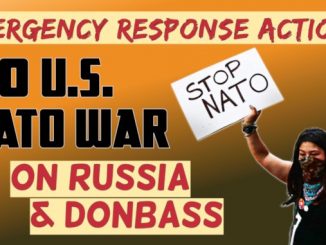
Call for emergency response actions: No war on Russia and Donbass!

We appeal to anti-war and people’s organizations to take to the streets on the day of, day after or as soon as possible after a Ukrainian attack on the Donbass Republics or other U.S./NATO provocation to draw Russia into a war.

On Feb. 11, U.S., Britain and European Union countries ordered their citizens and diplomats to leave Ukraine, claiming an “immediate” danger of a Russian invasion. Biden deployed an additional 3,000 U.S. troops to Poland. Even Ukrainian President Zelensky, no friend of Russia, said there was no indication of an imminent invasion and asked the U.S. to provide evidence for its claim.

The most likely scenario for a U.S./NATO war provocation against Russia is to push for a military attack on the independent Donbass republics — the Donetsk People’s Republic and the Lugansk People’s Republic. While the U.S. has raised alarms about 100,000-plus Russian troops stationed to protect that country’s western border, there are 150,000-plus Ukrainian troops deployed along the approximately 200-mile ceasefire “line of contact” between Ukraine and the Donbass republics. NATO itself has more than 175,000 troops deployed on Russia’s western border.

Ukraine has been at war against the Donbass republics for nearly eight years. More than 14,000 people have died in the conflict, according to the United Nations. Despite a longterm ceasefire agreement under the Minsk 2 accord, Ukraine has routinely violated the agreement, bombing civilian areas, deploying armed drones, shooting and kidnapping members of the Donetsk and Lugansk People’s Militias, and carrying out terrorist attacks on Donbass territory.

Since 2014, when the people of Donetsk and Lugansk voted for independence from Ukraine in a democratic referendum, the U.S. has claimed that Russia “invaded” the region. The People’s Militias composed of Donbass residents and internationalist volunteers have been falsely portrayed as “Russian occupation troops.” So a Ukrainian invasion or intensified bombing campaign that forces the Donetsk and Lugansk People’s Militias to respond defensively would almost certainly be the signal for Western claims that a “Russian invasion of Ukraine” had commenced.

There is a serious lack of attention to the plight of the people of Donbass by the anti-war movement in the U.S. People living in frontline villages have been subject to deadly attacks by Ukraine for years. Seniors and children routinely have to huddle in basements. A near-total blockade by Ukraine and its allies has attempted to starve the populace. Ukrainian neo-Nazi battalions that advocate genocide against the Donbass population are stationed at the front line and would form the spearhead of a Ukrainian invasion.

Other provocations are possible, including an incursion by Ukraine and Poland against Russia’s ally Belarus, or a false-flag attack within Ukraine that would be blamed on Russia. The anti-war movement must be prepared to take to the streets immediately against a new U.S./NATO war that could quickly escalate into a global conflict between the world’s nuclear powers.

U.S./NATO out of Ukraine and Eastern Europe! Hands off Russia and Donbass! Bring all the troops home!

Signed:

  • Solidarity with Novorossiya & Antifascists in Ukraine @UkraineAntifaSolidarity
  • Stop Imperialist Wars
  • Socialist Unity Party / Struggle-La Lucha newspaper @StruggleLaLucha

To endorse: solidarityukraineantifa@gmail.com

Strugglelalucha256
https://www.struggle-la-lucha.org/2022/page/72/