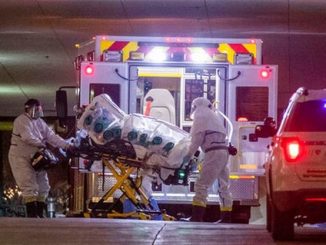
Defending people during coronavirus crisis: Nat’l webinar

N A T I O N A L   W E B I N A R  :

Defending People During Coronavirus Crisis

Facebook event: https://www.facebook.com/events/142736710469446/

 R E G I S T E R   H E R E 

Join us on a national webinar to hear from organizers on the front lines fighting for healthcare for all, against racism and repression, for workers’ rights and housing, in defense of prisoners and migrants, against sanctions and war. Learn what we can do to support our communities at this challenging time.

Saturday, March 28

6-9 p.m. Eastern  •  5-8 p.m.Central  •  3-6 p.m. Pacific

S P E A K E R S   I N C L U D E :

  • Mahtowin Munro, United American Indians of New England
  • Frank Chapman, National Alliance Against Racist & Political Repression
  • Meg Maloney, New Orleans Hospitality Workers Alliance
  • Adam Rice, Los Angeles Community Action Network
  • Ron Gochez, Unión del Barrio
  • Baltimore Amazon warehouse worker
  • Fernando Figueroa, UPS worker and Teamster
  • Pam Africa, MOVE Organization
  • Rev. Annie Chambers, Baltimore Peoples Power Assembly
  • Omowale Clay, December 12th Movement
  • Berta Joubert-Ceci, Puerto Rico Tribunal and Struggle-La Lucha newspaper
  • Irvin McQueen, Pan-African Community Action, Washington, D.C.
  • Terri Kay, Peoples Alliance, Bay Area
  • Lucy Pagoada, Departamento 19 – Frente Nacional de Resistencia Popular
  • Nana Gyamfi, Black Alliance for Just Immigration
  • and more!

Let’s build a fight-back network that can face the challenges confronting working people and oppressed communities today and in the weeks and months to come!

Register in advance for this meeting:
https://zoom.us/meeting/register/v5Yuce2prDwiwmrTEqlpB_atebmiMzesUQ

After registering, you will receive a confirmation email containing information about joining the meeting.

Hosted by Baltimore Peoples Power Assembly
and Harriet Tubman Center for Social JusticeLos Angeles

Strugglelalucha256


Trump spurs racist attacks on Asian Americans

Never forget Vincent Chin

“It’s not fair.” Those were the last words of Vincent Chin outside a McDonald’s in Highland Park, Mich., a suburb of Detroit. The 27-year-old was beaten to death by two white racists on June 19, 1982, because he was Asian American.

Chrysler supervisor Ronald Ebens hit Chin with a baseball bat while Ebens’ stepson, Michael Nitz, held Chin down. Vincent Chin’s skull was fractured and he died four days later on June 23, 1982. 

The United States was in a deep recession that year and the official unemployment rate reached 10.8 percent. It was worse in Michigan, with the jobless rate there climbing to 16.5 percent by the end of 1982.

Banksters and billionaires like the Ford family had already shut down hundreds of factories, warehouses and offices. They wanted people to blame Japan for deindustrialization. Their media and politicians repeated this big lie.

The result was that laid-off Chrysler straw boss Ebens yelled at Vincent Chin, “It’s because of you little m———-s that we’re out of work!” and killed him. That Vincent Chin was Chinese American made no difference.

Ebens and Nitz were clearly guilty of premeditated murder but were only convicted of manslaughter. These killers who robbed Lily Chin of her only son were sentenced to a mere three years probation and a $3,000 fine by Judge Charles Kaufman.

Thirty-eight years later, Trump wants us to blame the People’s Republic of China for the coronavirus. The racist pig in the White House calls this deadly disease “the Chinese virus.”

That’s not fair. Viruses don’t have a nationality. There’s been over 150 attacks on Chinese Americans and other Asian Americans since the pandemic started. 

Every one of those attacked could have been another Vincent Chin. Trump’s rhetoric helps fuel this racist violence.

Hate epidemic 

Blaming peoples and countries for disease is genocidal. Nazis claimed that Jewish immigrants from Poland were spreading tuberculosis in Germany.

Radio fascist Michael Savage claimed immigrants, particularly those from Mexico and Central America, were spreading tropical diseases in the U.S. That was the subject of his first hate show on March 24, 1994, broadcast from San Francisco. 

The same year, California’s Proposition 187 was on the ballot. It would have kicked immigrants out of hospitals and public schools. Savage was put on the radio to promote this segregationist referendum.

Savage is now blaming the People’s Republic of China for the coronavirus and Chinese Americans in San Francisco for spreading it.

That doesn’t stop Vice President Mike Pence from calling into Savage’s radio program. Donald Trump has welcomed the hate monger aboard Air Force One.  

It’s easy to dismiss Savage, who once touted coffee-filled enemas as a cure to kick cocaine addiction. But almost the entire capitalist media attack the People’s Republic of China for its handling of the coronavirus.

That’s not fair, either. China reported cases of pneumonia that had occurred in Wuhan to the World Health Organization on Dec. 31, 2019.

The next day, health officials closed the Wuhan seafood market that was linked to some of those who were ill. By Jan. 7, Chinese scientists had identified the new coronavirus.

The Trump administration and the $4 trillion medical-industrial complex squandered the advance notice given the United States by China. Trump and the airheads on Fox News belittled the new coronavirus. Radio bigot Rush Limbaugh dismissed it as the common cold.

It wasn’t China that shut down 135 hospitals across the U.S. since 2015. Capitalist greed and budget cuts got rid of the thousands of hospital beds that we now need.

China didn’t create dangerous shortages of masks and other protective equipment for medical workers. New York Gov. Cuomo is now begging for thousands of lifesaving ventilators.   

Elderly patients may be forced to die because there’s not enough of them. Chinese factories are working around the clock making ventilators for the U.S. and Italy. 

It’s because the People’s Republic of China is a socialist country that it was able to organize society to beat back the coronavirus. Tens of thousands of health care workers, including doctors, volunteered to go to Wuhan and the surrounding Hubei province. 

Last year, the capitalist police in the U.S. killed at least 1,004 people. The unarmed socialist police in Wuhan would deliver food to people who were quarantined.

China gave the world, including the U.S., a vital breathing space to push back the pandemic.

Blaming the People’s Republic of China for the coronavirus is war propaganda. Don’t believe it. It’s not fair.

Strugglelalucha256


Por qué el sistema de ganancias está entrando en crisis

Wall Street ha estado en una montaña rusa sin precedentes, con grandes oscilaciones en ambas direcciones todos los días durante más de una semana, una volatilidad no vista desde noviembre de 1929. El mercado bursátil tuvo la mayor caída en un día el 16 de marzo de 2020 —casi un 13 por ciento—algo histórico.

La caída no solo afecta a los grandes inversionistas– bancos grandes, corporaciones y fondos de cobertura—sino también a los planes de retiro 401(k) y ahorros ligados al mercado.

Los negocios ya empezaron a despedir trabajadores y reducir horas. “Alrededor del 18 por ciento de los adultos informaron que habían sido despedidos o que sus horas de trabajo se habían reducido”, informó el Los Angeles Times del 17 de marzo.

Los precios del petróleo cayeron a casi $20 por barril el 18 de marzo, por debajo de los $60 hace solo tres meses.

Están culpando a la pandemia del Covid-19. Miles de personas han perdido la vida y cientos de miles han sido infectadas.

Pero la pandemia es un evento que ha revelado la crisis del sistema capitalista—no causó la crisis. Desde el punto de vista económico, el virus lo que hizo fue exponer la subyacente inestabilidad de la economía.

Los paquetes de estímulo que ofrecen casi a diario el presidente Donald Trump y el Congreso, así como el Banco de la Reserva Federal, están destinados a mantener a flote la economía. Pero los efectos de estas medidas serán limitados sin una respuesta de salud pública que pueda contener el virus.

Gran parte de los sectores de servicio—restaurantes, bares, teatros—como también hoteles y aerolíneas—se ven gravemente afectados ya que las personas se mantienen alejadas de los lugares de reunión pública y dejan de viajar. La vida normal se está deteniendo al cerrar escuelas y lugares de culto, con la cancelación de conciertos y conferencias y la suspensión de las temporadas de las ligas deportivas.

La llamada fuerza de trabajo informal, trabajadores de servicios y la fuerza laboral por encargo [gig en inglés] se han visto especialmente afectados, sin tiempo libre remunerado, sin cobertura de atención médica, y sin garantías de trabajo, comida o vivienda.

La devastación económica de esta pandemia continuará hasta que el coronavirus sea contenido. Pero la contención ha sido lenta y casi inexistente en los EUA después de décadas de recortes a los sistemas de salud. En mayo de 2018, el entonces asesor de seguridad nacional, John Bolton, despidió a todo el Equipo de Respuesta a Pandemias de EUA. Al mismo tiempo, el presidente Trump recortó los fondos para los esfuerzos de prevención de brotes de enfermedades globales del Centro para el Control de Enfermedades.

De hecho, la crisis del coronavirus en Europa y EUA ahora es peor que en el peor momento en China. De hecho, el fracaso de los países capitalistas para contener el virus ha producido un desastre. En proporción a la población, la velocidad de propagación del virus en Europa es ahora más rápida que en cualquier momento en China. El número de casos nuevos diarios en Alemania fue tres veces mayor que el pico en China, en Francia cinco veces más, en España 12 veces más y en Italia 21 veces más alto.

El número real en los EUA es desconocido ya que las pruebas aún no están disponibles o están limitadas. Sin embargo, las pruebas son la única forma de poder comenzar las medidas necesarias para controlar la propagación del virus.

Según los informes, Trump tenía las pruebas lo más limitadas posible “porque más pruebas podrían haber llevado a descubrir más casos de brote de coronavirus, y el presidente lo había dejado claro: cuanto más bajos sean los números de coronavirus, mejor para el presidente, mejor para su potencial reelección este otoño”. 

En China no hay crisis económica

En términos de la situación global, la caída consistente en el número de nuevos casos de coronavirus en China confirma que el brote de coronavirus allí, aunque no ha terminado, ha sido controlado. Así que la producción y las cadenas de suministro tanto en China como desde China hacia la economía mundial comenzarán a mejorar.

El virus golpeó a China fuertemente por primera vez en Diciembre. China respondió con una movilización social del pueblo como en una guerra, para combatir el virus. Ahora el Covid-19 se ha contenido en gran parte en la propia China, gracias a la movilización que fue posible por su base socialista.

Es instructivo mirar una línea de tiempo de la respuesta de China (elaborada por el periodista Godfree Roberts):

Noviembre 2002: Después de su experiencia con el brote de SARS en la provincia de Guangdong en noviembre del 2002, China implementó un protocolo de respuesta rápida para enfermedades infecciosas. El protocolo autorizó al Ministerio de Salud a reunir ayuda profesional y gerencial de todo el país; estableció un equipo coordinador de respuesta de emergencia; preparó fondos y autorizaciones para obtener suministros, equipos e instalaciones de atención médica de emergencia, anticipando que los hospitales existentes se verían abrumados.

Julio a diciembre 2019: Investigadores chinos informaron al Ministerio de Salud de China sobre un brote de un nuevo coronavirus, lo que provocó una alerta de preparación en todo el país. La Organización Mundial de la Salud (OMS) describe lo que sucedió a continuación: “Ante un virus previamente desconocido, China ha lanzado quizás el esfuerzo de contención de enfermedades más ambicioso, ágil y agresivo de la historia….El audaz enfoque de China para contener la rápida propagación de este nuevo patógeno respiratorio ha cambiado el curso de una epidemia mortal y en rápido aumento”.

26 de diciembre 2019: Jixian Zhang detecta cuatro infecciones de neumonía anómala en Wuhan y las informa al CDC provincial al día siguiente. Las autoridades provinciales informan inmediatamente al CDC nacional, que se prepara para implementar los protocolos de respuesta ante una pandemia.

30 de diciembre 2019: El CDC nacional de China notifica a la OMS, que informa el descubrimiento de Zhang al mundo.

31 de diciembre 2019: La OMS anuncia al mundo el descubrimiento de Zhang.

7 de enero 2020: China identifica el virus cómo 2019-nCov y lo confirma cinco días después. El presidente Xi le dice a los funcionarios que el país está “en pie de guerra”.

13 de enero 2020: China pone a disposición los primeros kits de prueba 2019-nCov.

25 de enero 2020: Comienza la construcción de un hospital de cuidados intensivos de 1,000 camas en Wuhan.

26 de enero 2020: China extiende las vacaciones de Año Nuevo para contener el brote.

5 de febrero 2020: Se mudan los primeros pacientes a un nuevo hospital de cuidado intensivo de 1,000 camas.

4 de marzo 2020: Se reanudan las cargas ferroviarias de febrero, con un aumento del 4,5 por ciento.

5 de marzo 2020: Se actualizan envíos a clientes extranjeros; el gobierno subsidia las actualizaciones de la entrega marítima a la ferroviaria y de la entrega ferroviaria a la aérea.

10 de marzo 2020: El gobierno organiza y subsidia el transporte en autobús, ferrocarril y avión para que 200 millones de trabajadores migrantes regresen a trabajos urbanos.

16 de marzo 2020: El noventa por ciento de las empresas espera reanudar todas sus operaciones. Todas las tiendas de Apple se abren.

Sin despidos. Sin desalojos. Sí, la economía se desaceleró, como ocurre cuando se cierra la producción, pero no hubo crisis que implicara la pérdida de empleos, de hogares ni de alimentos.

Sin embargo, en los Estados Unidos, ya 1 de cada 5 personas ha sido despedida. Muchos, muchos trabajadores, quizás millones, pueden perder sus empleos, todo supuestamente debido al coronavirus. Pero si eso no sucedió en China, entonces tenemos que mirar otros factores que están haciendo caer la economía.

Crisis capitalista de sobreproducción

En el período anterior al colapso actual de Wall Street, la economía de EUA se estaba estancando, el crecimiento económico se detuvo virtualmente y se destacó la aparición de una sobreproducción global de productos vitales. Particularmente, los informes desde 2018 de una sobreoferta de petróleo, con los precios del barril cayendo a la baja.

Después de la Segunda Guerra Mundial, EUA era el centro mundial de producción industrial y la principal economía basada en eso. Hoy, la producción industrial se ha trasladado a China, India, Bangladesh y Vietnam. El capitalismo imperialista continúa extrayendo ganancias de la clase obrera industrial en rápida expansión de los países asiáticos, la mayor parte de la cual va a los bolsillos de los capitalistas de los Estados Unidos.

Mientras tanto, Estados Unidos se ha convertido en una economía basada en servicios e “informática”, es decir, programas y operaciones de computadoras. La economía de EUA ha sufrido una desindustrialización constante en las últimas décadas.

La respuesta ha sido un intento de convertir a Estados Unidos en el principal productor mundial de energía basada en el carbono a través del desarrollo de las vastas reservas de combustibles fósiles de América del Norte. De hecho, el antiguo monopolio industrial de los EUA sería reemplazado por un nuevo monopolio energético basado en el combustible a base de carbono extraído a través del fracking de esquisto bituminoso.

Estados Unidos y su satélite Canadá se han convertido en los principales proveedores de combustibles fósiles (petróleo, carbón y gas natural) en el mundo. Esa ha sido la base del crecimiento económico desde la Gran Recesión del 2008.

Un artículo titulado “EUA está superando a Rusia como el mayor productor de petróleo y gas” en la edición del Wall Street Journal del 3 de octubre de 2013, informó que:” La producción de energía en Estados Unidos ha aumentado en los últimos años, un auge impulsado por las formaciones de petróleo y gas natural de esquisto bituminoso que era inimaginable hace una década. Un análisis de datos globales del Wall Street Journal muestra que Estados Unidos está en camino de pasar a Rusia como el mayor productor mundial de petróleo y gas combinado este año, si es que aún no lo ha hecho”.

Estados Unidos produjo el 18 por ciento del petróleo mundial el año pasado, en comparación con el 12 por ciento de Arabia Saudita, el 11 por ciento de Rusia y el 5 por ciento de Canadá.

En lo que respecta al gas natural, Estados Unidos y Rusia son los productores dominantes, y el flujo de gas natural de Rusia a Europa pasa por Ucrania. Un corte en Ucrania obligaría a Europa a depender del petróleo o el gas natural producido en Estados Unidos transportado en forma líquida por barco. ¿Hay alguna duda de por qué Trump y Biden están luchando en Ucrania?

A medida que EUA y Canadá desarrollaron su rentable industria de combustibles fósiles, ya sea gas natural o petróleo de esquisto bituminoso, la economía estadounidense se ha vuelto cada vez más dependiente de la venta de productos energéticos basados en el carbono. ¿No es esa la razón por la que el presidente de los EUA niega el cambio climático o que fuerzas casi militares hayan sido desplegadas contra los opositores a las tuberías a través de tierras nativas en los EUA y Canadá?

La producción de petróleo y gas estadounidense se realiza mediante el costoso y ambientalmente horrendo método de extracción conocido como fracking. El precio del petróleo debe mantenerse bastante alto para que el fracking sea rentable.

Ahora el petróleo se ha visto afectado por una crisis de sobreproducción y la industria petrolera está a punto de colapsar.

La crisis de sobreproducción ha afectado a la industria petrolera desde al menos 2018 y no está relacionada con la caída en la demanda durante la epidemia del coronavirus. Los precios del petróleo han estado cayendo constantemente desde un máximo de aproximadamente $75 por barril en 2018. Hace tres meses, era de $60 por barril. Hoy, está cerca de $20 por barril. Esto está muy por debajo de lo que cuesta producir petróleo a partir del fracking. El petróleo de esquisto bituminoso no puede generar ganancias cuando los precios caen tan bajo.

Esto es sobreproducción capitalista. Se está produciendo más de lo que se puede vender para obtener ganancias.

La continua caída del mercado de valores refleja la inestabilidad general en el modo de producción capitalista con fines de lucro. La economía ya se estaba desacelerando, contrayéndose en una crisis capitalista cíclica. Los capitalistas lo llaman una crisis de ganancias ya que las mercancías producidas no pueden venderse con ganancias. Esa es la crisis que desencadena un importante descenso económico, una recesión total o incluso una depresión.

Strugglelalucha256


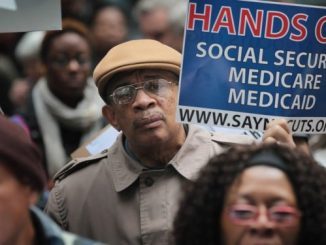
How ‘stimulus’ plans threaten Social Security

Millions of people are suffering under the Covid-19 epidemic — not only those who’ve fallen ill, but also those whose jobs and livelihoods are at risk. President Donald Trump has used the crisis as cover to try to push through right-wing policy victories, including attacks on unions, closing the southwestern border, and lowering the quality of food supplied to schoolchildren, as reported by the New York Times

But Trump also zeroed in on Social Security with a proposed payroll tax reduction that would have stayed in place at least through Election Day, and possibly through the end of the year. When his idea was dropped, the Democrats, like the other half of a wrestling tag team, hid a tax credit for employers to use specifically against their Social Security tax in their Covid-19 emergency bill. 

Both plans shortchange the Social Security Trust Fund, which is the sole source of retirement income for tens of millions of workers.

The Democratic Party leadership claimed to be opposed to Trump’s payroll tax cut. But that was pure sophistry — saying the right thing for the wrong reason. 

Everything they said about Trump’s plan is true. Even if the goal really was to put money in workers’ pockets and stimulate spending during the crisis, as Trump claimed, the power of a payroll tax cut is puny. It leaves out millions of workers. 

Disproportionate numbers of oppressed workers, communities of color, immigrants, LGBTQ2S people, women and youth are trapped in low-paying jobs, if they are lucky enough to have work. The lowest paid workers would benefit the least from a payroll tax cut. For most, the “relief” would amount to a few measly dollars per paycheck. 

The Democratic leadership mouthed the right words, but they hid another attack on Social Security in their Families First Coronavirus Response Act (H.R.-6201), which got through both houses of Congress with Trump’s approval.

‘A Trojan horse’

Dr. Hillel Cohen, professor of epidemiology at Albert Einstein College of Medicine in the Bronx, N.Y., was interviewed on WBAI Pacifica Radio on March 16 about the woeful U.S. response to Covid-19. He talked about H.R.-6201 as well: 

“The good side of it is that it makes it mainstream that there should be paid sick time and paid family leave,” Cohen said. “But it’s mind boggling that the biggest, richest corporations [those with 500 or more workers] are exempt. … Small businesses that have less than 50 workers are not exempt, but can apply for exemptions because of hardship, and they all will. 

“And it has within it a Trojan horse. One of the ways they are going to pay for it is to give credits for the payroll taxes [to] the businesses being mandated to provide paid sick leave and family leave. … We can expect that, down the road, they will then say that Social Security is underfunded and they will use that as an excuse to cut.”

Social Security, along with the other “entitlement” programs, is separate from the federal budget, which gets negotiated annually. It has no impact on the federal budget or the deficit. The money it takes in and spends is dedicated only to the payment of retirement benefits and the administration of the program. 

By law, the Social Security Trust Fund is not supposed to be borrowed from or added to by any source other than the Federal Insurance Contributions Act (FICA) deductions from workers’ paychecks and bosses’ matching portion. That firewall is there to guarantee that Social Security would never be subject to budget negotiations. 

Those intent on destroying Social Security hope that breaching the separation will help pave the way to budget cuts, underfunding the program and then destroying it altogether. 

Under H.R.-6201, it isn’t clear if there is a plan to reimburse Social Security later. Trump’s plan would have. 

The one other time that payroll taxes were cut as a stimulus was during the Obama administration, after the financial crisis of 2008-2009. In that case, funds were shifted from the Treasury back into the Social Security fund. But it opened the door to those who have long hoped to do away with all the entitlement programs, and moaned when the reimbursement was made that Social Security was bankrupting the government.

The tax cut and subsequent reimbursement shows that this is a purposeful act. If the plan wasn’t intended to weaken Social Security, they would simply take the money directly from the U.S. Treasury instead of touching our retirement fund.

Finding ways to chip away at Social Security is not a new idea for Trump or for a growing number of other elected officials from both capitalist parties. Trump expressed interest in doing the same thing in August 2019 when he was concerned about a coming recession endangering his re-election chances in November. 

He is no lone crusader. The list of those who wish for Social Security’s demise is a long one, stretching back in time for decades, and includes prominent Democrats like Joe Biden.

The people can’t rely on the twin parties of the billionaire class to protect Social Security. It was not a gift from them to us. It came into being in 1939 after millions of workers held strikes, fought the police and National Guard, seized factories, were jailed and sometimes killed. 

Its survival will depend on a broad, united, militant and determined movement.

Strugglelalucha256


Hospital closings = death

Will hospitals be able to cope with all the expected patients during the Covid-19 pandemic? New York Gov. Andrew Cuomo doesn’t think so. He told NBC’s Today Show on March 19 that “the health care system is going to be overwhelmed.”

What the governor didn’t talk about is whether elderly people will be left to die like roadkill. That may already be happening in Italy.

As of March 12, there were only 737 intensive care unit (ICU) beds available in Italy’s Lombardy region, which has 10 million people. Over 16,000 people there have the coronavirus. 

The Italian College of Anesthesia, Analgesia, Resuscitation and Intensive Care declared that “it may become necessary to establish an age limit for access to intensive care.” That’s a death sentence for the aged. It won’t be any different in the United States.

Italy asked for assistance from its NATO allies France and Germany. The wealthy ruling classes of those countries refused to help.

China, Cuba and Venezuela sent Italy doctors and supplies. That’s what socialist solidarity looks like. 

Italy’s catastrophe was years in the making. Between 2000 and 2017, the number of hospital beds there fell by 28 percent. In the same period, the number of beds in Britain declined 30 percent. That’s what capitalist austerity looks like.  

The U.S. medical-industrial complex got rid of 89,000 beds, a 9 percent cut. Twenty thousand of the hospital beds thrown away were in New York state, according to the New York State Nurses Association.

Socialist China built temporary hospitals in a few days, but the best President Trump can do is to promise to send a military hospital ship to New York City in a couple of weeks. The U.S. now has just 2.8 hospital beds per thousand people. Despite 60 years of being economically blockaded by the capitalist U.S., socialist Cuba has almost twice that number

It’s not just a shortage of hospital beds. There’s also not enough ventilators, the life-saving machines that pump oxygen into a person’s lungs. New York needs 18,000 of them. Nor can capitalism supply doctors and other front line medical workers with sufficient masks, gowns and eye gear

Even the Washington Post, owned by Amazon’s billionaire boss Jeff Bezos, calls this “a nightmare scenario.” President Trump’s response to governors requesting help was “respirators, ventilators, all of the equipment — try getting it yourselves.” 

Profits before people

Just as capitalism has shut down thousands of factories in the U.S., so has it closed hundreds of hospitals. “Since 2010, 121 rural hospitals have closed. The National Rural Health Association says more than one-third of all rural U.S. hospitals are at serious risk of shutting down.” 

For over 40 years, the capitalist class in New York City has been on a hospital-closing binge. Twenty-one hospitals in the city were shut just between 2000 and 2013

The biggest victims were the Asian, Black and Latinx communities. In Brooklyn, there are just two hospital beds per thousand people.

Brooklyn’s Long Island College Hospital, which closed in 2014, once had 500 beds. Peninsula General Hospital was shut down in 2012, leaving only one hospital to serve the Far Rockaway section of Queens. 

St. Vincent’s Hospital in Greenwich Village, with over 700 beds, closed in 2010, resulting in 3,000 workers fired. Probably even more beds were lost when Beth Israel Hospital in Manhattan’s Lower East Side was downsized to just 70 beds.

Two hundred beds were lost when Harlem’s North General Hospital closed in 2010. Four hundred ninety beds were lost when Cabrini Medical Center on Manhattan’s East 19th Street closed in 2008. Two hundred fifty-five beds were lost and 850 workers were fired when French Hospital, located near Penn Station, was shut down in 1977. 

Some hospitals were turned into expensive apartments. That’s what happened to Caledonian Hospital on Brooklyn’s Parkside Avenue, which closed in 2003. One-bedroom apartments there were renting for $2,300 per month in 2014. Eight hundred eighty-six beds were lost when Brooklyn Jewish Hospital on Classon Street in Bedford-Stuyvesant was closed in 1983 and converted into apartments.

Doctors Hospital in Manhattan’s Yorkville neighborhood had 210 beds and employed 850 workers. It closed in 2004 and was replaced by a new 19-story building containing 110 condominiums. St. John’s Hospital in the Elmhurst section of Queens closed in 2009 and was turned into “150 luxury apartments.”  

The late communist leader Vince Copeland helped lead efforts in the 1980s to keep the Jersey City Medical Center open. It once had 1,800 beds, but the buildings were turned into a luxury complex called the Beacon. The replacement facility has just 308 beds.

The lure of real estate profits also led to last year’s closing of Philadelphia’s Hahnemann University Hospital with 496 beds. 

Never forget Sydenham

The capitalist class wants to get rid of or privatize all public hospitals. That includes veterans’ hospitals.

New York City Mayor Abe Beame fired 50,000 municipal workers in 1975, including thousands of hospital workers. The next year, Beame shut down Fordham Hospital in the Bronx with 387 beds. 

Mayor Ed Koch, who succeeded Beame, wanted to close Metropolitan Hospital in El Barrio (East Harlem), which is still in operation.

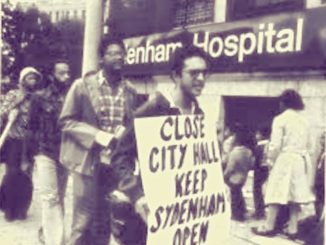
The biggest struggle was to keep Harlem’s Sydenham Hospital open. It was the first municipal hospital to hire Black doctors and it trained many Black nurses.

Among them was the late Baltimore activist Leola Brooks, who was a board member of the local NAACP chapter. When she was going to school, neither Johns Hopkins nor the University of Maryland would admit any African American students. So Leola Brooks came to Sydenham Hospital instead.

Five thousand people marched down Harlem’s 125th Street on March 25, 1976, to keep it open. Among the speakers was Manhattan Borough President Percy Sutton, who had been Malcolm X’s lawyer and friend.

Struggle kept Sydenham open for several years, but Koch was determined to shut it down. A sit-in was viciously attacked by police on Sept. 19, 1980, injuring 30 people.

The Rev. Wyatt T. Walker, who had been a co-worker of Dr. Martin Luther King Jr., called the police brutality as bad as anything that occured in Birmingham or Selma, Ala.

Although Sydenham was closed, the fierce struggle probably kept the other municipal hospitals open.

The $4 trillion capitalist health care system is incapable of dealing with the Covid-19 pandemic. We have to organize ourselves just to survive. A socialist revolution is more necessary than ever.

Strugglelalucha256


Cuba Saves

The cruise ship MS Braemar, with five confirmed cases of Covid-19 and a thousand people on board, docked shortly before dawn this Wednesday in the Port of Mariel, 40 kilometers from Havana. The airport evacuation corridor to the runway of the José Martí International Terminal, from where four United Kingdom planes moved the evacuees, left with the precision of a clockwork.

While the world holds its breath and it is impossible to predict the consequences of the pandemic, Cuba was in the news yesterday because of the transfer of more than a thousand passengers and crew members of the Braemar who, since March 8, were confined to being a ghost ship in the Caribbean.

The odyssey began when the British company Fed Olsen’s cruise ship arrived in Cartagena, where a woman from the U.S. disembarked and was diagnosed shortly afterward with coronavirus. From that moment on, five Caribbean ports denied entry to the ship and the families of the cruise passengers turned to the media to express their fears for the fate of their loved ones and the possibility that they would be forced to make the long journey back to Europe, exposed to massive contagion and perhaps death on an industrial scale before the ship could reach Britain.

The scaremongering and media hype surrounding the new coronavirus turned the passengers and crew into a kind of plague. Anthea Guthrie, a passenger on the Braemar and a retired gardener, showed a video on her Facebook page of the time when the cruise ship was being supplied 25 miles from one of the ports where they were unable to dock. A ship towed a second rudimentary barge, without engine or crew, to bring sacks of rice and bunches of bananas to the Braemar, where members of the British crew came aboard in the middle of the night, like fugitives in a kind of pirate expedition.

The testimony of that moment was shared by Anthea after she heard the good news that Cuba would receive them. She published another video in which the passengers, relaxed on deck, thanked the island’s gesture of solidarity and raised glasses to the health of the Cubans. Like a veteran of the networks, she has not only been reporting from the ship but included the label #DunkirkSpirit, which alludes to the evacuation of 330,000 allied soldiers – mostly British – from the French coast in May 1940, at the beginning of World War II, when Adolf Hitler seemed invincible.

“For us, Dunkirk does not only speak of heroism, but of humanity. It means that there are solutions in the worst of circumstances, and this time we will have Cuba to thank for it”, said Anthea, relieved after the news that the cruise ship would dock on the island.

Havana’s decision to allow entry to MS Braemar, following a request from the governments of the United Kingdom and Northern Ireland, did not surprise the Cubans, who have a long tradition of medical and humanitarian collaboration. Since the beginning of the sixties, thousands of health workers have collaborated with almost all the poor countries in the world. Over 35,000 medical students from 138 countries have studied for free on the island. Following the devastating earthquakes in Pakistan (2005) and Haiti (2010) or during the Ebola fever in Western Africa, in 2014, Cuban doctors were the first to arrive in the territories marked by devastation.

Cuban collaboration in health with its unquestionable scientific results, particularly in the field of biotechnology, have provoked poisonous anger in the usual privileged people and sympathy and warmth in the usual unprivileged. But the truth of Cuba, a life vest for many during the Covid-19 pandemic, has tipped the balance toward expressions of affection directed at the army of white coats. The Latin American governments that, under pressure from Washington, expelled the doctors today live the double ordeal of the coronavirus and the claim of their people for such an act of arrogance and stupidity. A line of nations are calling for medical collaboration and the island’s drugs, which have proven their effectiveness in treating the sick.

The great paradox is that, while the ships with oil and food contracted by Cuba are harassed by the United States, the ships with the sick that nobody wants in their ports receive solidarity and respect in Cuba. The Trump regime, by the way, refused to receive the Braemar, according to an article published yesterday in The UK Independent.

The two most repeated words since yesterday on Twitter are Cuba Saves. This is no coincidence.

Source: Resumen

Strugglelalucha256


Four Palestinian prisoners in isolation for potential coronavirus exposure from Israeli interrogator

Four Palestinian prisoners in Megiddo prison are reportedly in isolation for potential infection with coronavirus (COVID-19) after exposure to an Israeli interrogator who has been confirmed to have COVID-19. While the four prisoners’ diagnosis is not yet confirmed, at least one of the four is reported to have shown signs of illness after he was interrogated by the infected Israeli interrogator at Petah Tikva detention center.

Their family members have not been informed of their location. Previous reports have indicated that Israeli officials are using solitary confinement cells to quarantine prisoners, despite the fact that these cells are known to be dirty and infested with vermin. Samidoun Palestinian Prisoner Solidarity Network emphasizes the complete responsibility of the Israeli state and the Israel Prison Service for the lives and health of Palestinian prisoners and for their reckless and repeated exposure of Palestinian prisoners to Israeli guards and officials with coronavirus infections.

While Israeli occupation forces have barred Palestinian prisoners from purchasing at least 140 different items at the “canteen” or prison store, including cleaning and sanitation supplies, and prohibited family and legal visits to the prisoners, they have continued to put Palestinians ate severe risk by continuing interrogations, maintaining dirty and overcrowded conditions and pursuing transfers.  These policies place Palestinian prisoners at severe risk for exposure to COVID-19 from Israeli prison guards and interrogators. All of these policies apply equally to the 190 Palestinian child detainees in Israeli prisons.

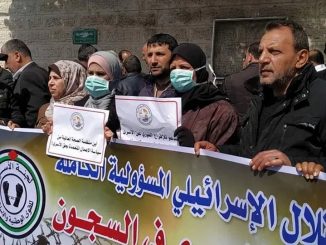
Earlier, 19 Palestinian prisoners were placed in isolation in Ashkelon prison after an Israeli psychiatrist, later diagnosed with COVID-19, visited Section 3 of the prison, where he interviewed a prisoner. While Palestinians in Gaza are refraining from most public events in order to prevent the spread of coronavirus, which has not yet been detected within the besieged area, advocates for the prisoners protested outside the offices of the International Committee of the Red Cross on Thursday, 19 March to demand protection and proper infection control inside Israeli jails.

Instead of protecting prisoners’ health, the Israeli policies – which have not been equally applied to Israeli civil and criminal prisoners but instead have been reserved for Palestinian political detainees – appear to be nothing more than a further attempt to undermine the severely limited rights of Palestinian prisoners. They reflect the ongoing mandate of Israeli Minister of Public Security Gilad Erdan (who also runs Israel’s “anti-BDS ministry” and engages in international smear campaigns against human rights defenders) to “make conditions worse” for Palestinian prisoners.

The Palestinian Prisoners’ Society announced that prisoners plan to close their sections and return meals on Friday and Saturday, 20 and 21 March, in protest against the punitive measures carried out against them in the name of infection control while they are denied real resources to help prevent the spread of coronavirus. Palestinian prisoners are instead demanding full sterilization, disinfection and cleaning of the prisons as well as proper health treatment for all detainees, according to the guidelines of the World Health Organization.

Samidoun Palestinian Prisoner Solidarity Network emphasizes that this situation is not simply a humanitarian concern for the health of the prisoners, but it instead reflects a systematic and racist Israeli policy of targeting Palestinian prisoners with complete disregard for their lives and health. Medical neglect and insufficient health care pose a constant threat to the prisoners, especially those who are also most vulnerable for COVID-19.

***

Samidoun Palestinian Prisoner Solidarity Network emphasizes the urgency of a global response to COVID-19 that focuses on solidarity, mutual aid and public health, rather than capitalist values of exploitation, oppression and marginalization of the must vulnerable. We reiterate our long-standing call for the immediate release of all Palestinian prisoners in Israeli jails, at severe risk in this time of pandemic, and especially administrative detainees, sick and elderly prisoners, and child prisoners. Defending public health must mean freedom for Palestinian prisoners, freedom for Palestine, and freedom for all oppressed peoples and nations.

Read our full statement on COVID-19 and Palestinian prisoners: https://samidoun.net/2020/03/israeli-apartheid-covid-19-and-palestinian-prisoners-freedom-now/

Source: Samidoun

Strugglelalucha256


What is a recession?

President Trump said on March 16 that a recession is likely, maybe the only factually correct statement he made that day.

But what is a recession? 

Wikipedia says a recession is a business cycle contraction when there is a general decline in economic activity. Huh?

Capitalist economists use unemployment numbers as the real measure of a recession. Put simply, a recession is when there is a significant rise in unemployment — layoffs, cutbacks, reduced hours, cuts in pay. 

The Washington Post reported on March 11, “The first U.S. layoffs from the coronavirus are here.” Layoffs have started already at airlines, hotels and on the docks. 

The airlines have asked for a $50 billion federal bailout. Airlines employ 750,000 people, and air travel helps support another 10 million jobs across the country. 

President Trump told reporters that the airlines will get some federal assistance. Trump said, “We’re going to be in a position to help the airlines very much. We’ve told the airlines we’re going to help them.” 

What does that assistance mean? Does it mean no layoffs? An income for those laid off? 

No. No assistance goes to the workers — it’s all going to the owners. And the airlines won’t promise no layoffs if they get the $50 billion.

CNBC reported on March 16, “Millions of Americans could lose their jobs in a coronavirus recession. Many won’t get severance pay.”

Using the economists’ rule of thumb, CNBC notes that “the typical post-World War II recession has seen the U.S. unemployment rate increase about 2 to 2.5 percentage points. That would translate to about 3.5 million jobs being lost in today’s environment.” 

The Federal Reserve announced on March 13 that it would inject as much as $1.5 trillion into Wall Street. President Trump announced an $850 billion bailout. They call these actions an economic stimulus, but it’s really a giveaway to the rich. Making the rich richer has never helped anyone but the rich.

What’s needed is a job protection plan. Stop all layoffs! Guarantee employment! That’d be the beginning of what’s needed to end a recession.

Strugglelalucha256


Immediate steps are required to avert mass casualties in prisons and jails

March 14 statement from the Chicago Alliance Against Racist and Political Repression.

The Illinois Department of Corrections has declared that all civilian visits to Illinois prison will be suspended indefinitely starting Saturday, March 14, due to the Covid-19 pandemic, for which a national emergency has been declared. New prison inmates arriving from any of the four “Reception and Classification Centers” are reportedly being held in quarantine.

These are minimal steps not based on science. Depriving prisoners of contact with their families only aggravates an already terrible and stressful condition.

A fundamental prerequisite for a science-based policy regarding Covid-19 in prisons and jails demands a crash program to manufacture and give priority distribution of tests and protective gear to those places where they are needed the most – places where people are confined in close quarters such as prisons and jails.

The Chicago Alliance Against Racist and Political Repression demands that the following scientific and humane steps be taken to contain the spread of the virus and avoid mass death among the incarcerated population:

  • Designate specific portions of federal emergency funding for addressing the coronavirus within prisons and jails.
  • Test prison and jail inmates daily for infection and provide hospitalization and treatment for those in need.
  • Provide hand sanitizer throughout all common areas of prisons and jails and hand washing facilities.
  • Require that all prison staff, vendors and contractors are queried, screened and tested when indicated for possible exposure and/or infection at every entry into a facility.
  • Report cases of coronavirus within prison and jails to the public and families.
  • Allow family and friends visits on the same basis. Provide hand sanitizer throughout visiting rooms and regularly disinfect them. Provide for prisoner and visitor handwashing before and after all visits.
  • Provide for free phone calls to family and friends during this public health crisis and increase the availability of remote video visits.
  • Immediately release to their homes or the homes of family and friends all prison inmates who are elderly (over 60) or have medical conditions that compromise their immune system, including Type 1 diabetes, rheumatoid arthritis, lupus, cancer, chronic HIV or HCV infection, leukemia, or multiple myeloma.
  • In addition, the Chicago Alliance endorses and signs on to the letter to Governor J. B. Pritzker on this issue organized by the Illinois Coalition for Higher Education in Prison (IL-CHEP) and urges all who share our concern for the lives of prisoners to also sign this letter.
  • Provide a minimum of a 30 day supply of all prescription medications (with written prescriptions) and foodstuffs to those released, and referral to local public health clinics in their areas.
  • Release on OR bonds all County Jail prisoners being held pending trial, except for those requiring hospitalization for severe mental or physical disorders, or those charged with first degree murder or sexual assault.
  • Adopt at the state and county level the National Commission of Correctional Health Care

More fundamentally, prison and jail health care system staff and resources need to be drastically ramped up to deal with this public health crisis. The private contracting of prison health care must be ended; sickness and injury to those behind prison walls cannot be a source of private profit.

Source: FightBack! News

Strugglelalucha256


Trump bails out oil industry as coronavirus crisis intensifies

“Trump has once again put the interests of oil and gas executives ahead of the interests of people and communities.”

Climate action groups and progressive critics expressed disappointment and outrage on Friday afternoon after President Donald Trump—despite a continued failure to offer far-reaching support to the U.S. public—moved to bolster the bottom lines of oil and gas companies by announcing a massive federal purchase for the nation’s Strategic Petroleum Reserve (SPR).

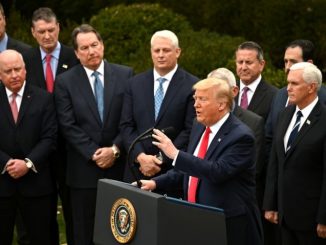
“Based on the price of oil, I’ve also instructed the Secretary of Energy to purchase at a very good price large quantities of crude oil for storage in the U.S. strategic reserve,” Trump announced during a White House press conference—surrounded by CEOs from major corporations, including Walmart, CVS, and Target—in which he also declared an official national emergency in order to combat the outbreak of the coronavirus.

“We’re going to fill it right up to the top,” said of the SPR, but critics were quick to point out that move has everything to do with helping his wealthy friends and cronies in the fossil fuel industry, and nothing to do with helping average people now under threat from the spreading pandemic.

“Trump has once again put the interests of oil and gas executives ahead of the interests of people and communities,” said Alex Doukas of Oil Change International. “With this move, Trump has rolled out a plan to prop up U.S. oil companies before he has even bothered to guarantee paid sick leave for US workers who are going to be on the frontlines of the coronavirus crisis for weeks to come.”

The news came Friday as additional school closures were announced for states nationwide, grocery store shelves were wiped clean, and worry continues to spread about just how extensive the outbreak will become.

Greenpeace warned that the total cost of the oil purchase “could exceed $2.6 billion in public funds,” a stark comparison when put next to the proposal put forth by House Democrats just hours earlier. Introducing the “Families First Coronavirus Response Act“(pdf), which calls for an estimated $1.7 billion aimed at helping working families and children to weather the public health crisis, House Speaker Nancy Pelosi said, “The American people expect and deserve a coordinated, science-based and whole-of-government response to keep them and their loved ones safe: a response that puts families first to stimulate the economy.”

By putting his adminstration’s emphasis on bailing out the oil industry, John Noël, a senior climate campaigner for Greenpeace USA, said the president is doing the opposite of putting people first.

“Trump’s response to a global pandemic is to put billionaires and corporate polluters ahead of American families. There’s no evidence that this handout would protect jobs, pensions, benefits, or ease the hardships facing fossil fuel workers or communities confronting the COVID-19 outbreak right now. It’s nothing more than a gift to the industry that created the climate crisis.”

Doukas agreed, calling it “wildly inappropriate” for Trump “to abuse the Strategic Petroleum Reserve as a tool to prop up the oil and gas industry at a time when the White House should be focusing on how to help everyday people in the US.”

Where is the relief for workers grappling with caring for their families, retail workers risking exposure every day, families grappling with debt and mounting bills while their livelihoods are put at risk?” he asked. “No, today President Trump focused on propping up polluting industries and trotting out CEOs to sell their wares.”

Despite the criticisms from those focused on the needs of families, it appeared the announcement during what was dubbed Trump’s “Shock Doctrine press conference” had the desired result.

As CNBC reported, following Trump’s late-day announcement, “crude futures jumped 5%” in the last hour of market trading.

Source: Common Dreams

Strugglelalucha256
https://www.struggle-la-lucha.org/covid-19/page/7/