China breakthrough: Mediates deal to restore Iran-Saudi Arabia ties

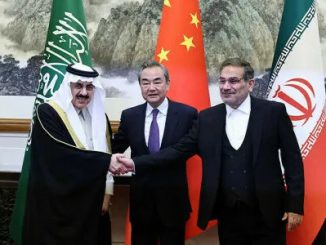
(L-R) Saudi Minister of State, Advisor to the Council of Ministers, and Saudi National Security Adviser Musaed bin Muhammad Al-Aiban, Director of the Office of the Central Foreign Affairs Commission of the Communist Party of China (CPC) Wang Yi and Iranian Supreme National Security Council Secretary Ali Shamkhani pose for a photo after their meeting.

Iran and Saudi Arabia agreed to restore diplomatic relations, a dramatic breakthrough brokered by China after years of soaring tensions, NBC News reported on March 10.

“The deal, which will see the two leading oil producers reopen embassies in each other’s capitals, was sealed during a meeting in Beijing — a boost to China’s efforts to rival the United States as a broker on the global stage,” NBC reports.

The joint statement by Saudi Arabia, Iran, and China says:

“In response to the noble initiative of His Excellency President Xi Jinping, President of the People’s Republic of China, of China’s support for developing good neighborly relations between the Kingdom of Saudi Arabia and the Islamic Republic of Iran;

“And based on the agreement between His Excellency President Xi Jinping and the leaderships in the Kingdom of Saudi Arabia and the Islamic Republic of Iran, whereby the People’s Republic of China would host and sponsor talks between the Kingdom of Saudi Arabia and the Islamic Republic of Iran;

“Proceeding from their shared desire to resolve the disagreements between them through dialogue and diplomacy, and in light of their brotherly ties.”

Iran’s mission to the United Nations says the agreement with Saudi Arabia will help bring a political settlement to Yemen’s years-long war. The IRNA news agency said the deal with Saudi Arabia would accelerate efforts to renew an expired ceasefire deal, “help start a national dialogue, and form an inclusive national government in Yemen.” The ceasefire, the longest of the Yemen conflict, expired in October.

The Wall Street Journal reported on March 10: “The deal signals a sharp increase in Beijing’s influence in a region where the U.S. has long been the dominant power broker, and could complicate efforts by the U.S. and Israel to strengthen a regional alliance to confront Tehran … It comes as the U.S. has been trying to broker a peace deal between Saudi Arabia and Israel, an effort now clouded with uncertainty.”

M.K. Bhadrakumar at Indian Punchline writes: “The U.S.’s humiliating exclusion from the center stage of West Asian politics constitutes a ‘Suez moment’… comparable to the crisis experienced by the U.K. in 1956, which obliged the British to sense that their imperial project had reached a dead end and the old way of doing things — whipping weaker nations into line as ostensible obligations of global leadership — was no longer going to work and would only lead to a disastrous reckoning.”

Strugglelalucha256


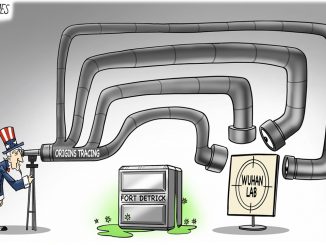
U.S. hypes old ‘lab-leak’ theory in new information war operation against China

Three years into the COVID-19 pandemic, the U.S. again gave the “lab-leak” theory a major boost, as its Energy Department, citing “new intelligence” but holding “low confidence” in it, joined the FBI in smearing China.

Reported exclusively by the Wall Street Journal (WSJ) on Sunday, the claim immediately made headlines in major U.S. news outlets. However, its timing and source “only show the low credibility” of the report, analysts said, adding that the new hyping of an old topic is part of the U.S.’ political and information warfare with China.

Mao Ning, spokesperson of the Chinese Foreign Ministry, said at Monday’s routine press briefing that the origins-tracing of SARS-CoV-2 is about science and should not be politicized. Certain parties should stop rehashing the “lab leak” narrative, stop smearing China and stop politicizing the origins-tracing, she noted.

The WSJ reported that a classified intelligence report provided by the Energy Department to the White House and key members of Congress said the virus likely spread due to a mishap at a Chinese laboratory.

The department admitted to having “low confidence” in the conclusion, which was made after “new intelligence” was gathered by the department’s network of national laboratories, according to the WSJ report.

One of the WSJ report’s authors is Michael R. Gordon, who was behind the “weapons of mass destruction” narrative the U.S. fabricated to justify its invasion of Iraq 20 years ago.

Lü Xiang, research fellow with the Chinese Academy of Social Sciences, told the Global Times on Monday that the timing of the hype is not a coincidence and that the U.S. will not leave COVID out of its “ammunition depot” against China.

China’s smooth transition in its COVID-response policy over the past months didn’t give the U.S. a chance to attack China over an out-of-control epidemic or economic failings, which is why the U.S. had to rehash the same old story, Lü said.

Lü also ascribed the latest hype to the earlier-than-usual presidential election campaign, as media will bring topics to the table for both parties to “make a fuss about.”

The WSJ report has already prompted debate between Trump supporters and opponents on Twitter. Some netizens also suspected the report aims to divert public attention from recent U.S. mishaps, such as the train derailment and chemical leak in Ohio.

The WSJ report remained very ambiguous in its wording despite its sensational headline. National Security Advisor Jake Sullivan said there is “not a definitive answer” on the origins tracing as the intelligence community has “a variety of views.”

Being ambiguous and non-official and using media rather than government departments to announce something demonstrated the U.S.’ skill in fighting a political war, Lü said.

Hysterical crusades against China have become a signature of the U.S. in our time. To win the competition with China, the U.S. will not let a single chance go by to smear China, whether it is a balloon that has gone astray, a carefully planned “lab-leak” theory, or unfounded weapon supply accusations regarding the Russia-Ukraine conflict, the expert said.

Strugglelalucha256


China’s Foreign Ministry on U.S. hegemony and its perils

From the Ministry of Foreign Affairs of the People’s Republic of China.

U.S. Hegemony and Its Perils

February 2023

Contents

Introduction

I. Political Hegemony — Throwing Its Weight Around

II. Military Hegemony — Wanton Use of Force

III. Economic Hegemony — Looting and Exploitation

IV. Technological Hegemony — Monopoly and Suppression

V. Cultural Hegemony — Spreading False Narratives

Conclusion


Introduction

Since becoming the world’s most powerful country after the two world wars and the Cold War, the United States has acted more boldly to interfere in the internal affairs of other countries, pursue, maintain and abuse hegemony, advance subversion and infiltration, and willfully wage wars, bringing harm to the international community.

The United States has developed a hegemonic playbook to stage “color revolutions,” instigate regional disputes, and even directly launch wars under the guise of promoting democracy, freedom and human rights. Clinging to the Cold War mentality, the United States has ramped up bloc politics and stoked conflict and confrontation. It has overstretched the concept of national security, abused export controls and forced unilateral sanctions upon others. It has taken a selective approach to international law and rules, utilizing or discarding them as it sees fit, and has sought to impose rules that serve its own interests in the name of upholding a “rules-based international order.”

This report, by presenting the relevant facts, seeks to expose the U.S. abuse of hegemony in the political, military, economic, financial, technological and cultural fields, and to draw greater international attention to the perils of the U.S. practices to world peace and stability and the well-being of all peoples.

I. Political Hegemony — Throwing Its Weight Around

The United States has long been attempting to mold other countries and the world order with its own values and political system in the name of promoting democracy and human rights.

◆ Instances of U.S. interference in other countries’ internal affairs abound. In the name of “promoting democracy,” the United States practiced a “Neo-Monroe Doctrine” in Latin America, instigated “color revolutions” in Eurasia, and orchestrated the “Arab Spring” in West Asia and North Africa, bringing chaos and disaster to many countries.

In 1823, the United States announced the Monroe Doctrine. While touting an “America for the Americans,” what it truly wanted was an “America for the United States.”

Since then, the policies of successive U.S. governments toward Latin America and the Caribbean Region have been riddled with political interference, military intervention and regime subversion. From its 61-year hostility toward and blockade of Cuba to its overthrow of the Allende government of Chile, U.S. policy on this region has been built on one maxim-those who submit will prosper; those who resist shall perish.

The year 2003 marked the beginning of a succession of “color revolutions” — the “Rose Revolution” in Georgia, the “Orange Revolution” in Ukraine and the “Tulip Revolution” in Kyrgyzstan. The U.S. Department of State openly admitted playing a “central role” in these “regime changes.” The United States also interfered in the internal affairs of the Philippines, ousting President Ferdinand Marcos Sr. in 1986 and President Joseph Estrada in 2001 through the so-called “People Power Revolutions.”

In January 2023, former U.S. Secretary of State Mike Pompeo released his new book “Never Give an Inch: Fighting for the America I Love.” He revealed in it that the United States had plotted to intervene in Venezuela. The plan was to force the Maduro government to reach an agreement with the opposition, deprive Venezuela of its ability to sell oil and gold for foreign exchange, exert high pressure on its economy, and influence the 2018 presidential election.

◆ The U.S. exercises double standards on international rules. Placing its self-interest first, the United States has walked away from international treaties and organizations, and put its domestic law above international law. In April 2017, the Trump administration announced that it would cut off all U.S. funding to the United Nations Population Fund (UNFPA) with the excuse that the organization “supports, or participates in the management of a programme of coercive abortion or involuntary sterilization.” The United States quit UNESCO twice in 1984 and 2017. In 2017, it announced leaving the Paris Agreement on climate change. In 2018, it announced its exit from the UN Human Rights Council, citing the organization’s “bias” against Israel and failure to protect human rights effectively. In 2019, the United States announced its withdrawal from the Intermediate-Range Nuclear Forces Treaty to seek unfettered development of advanced weapons. In 2020, it announced pulling out of the Treaty on Open Skies.

The United States has also been a stumbling block to biological arms control by opposing negotiations on a verification protocol for the Biological Weapons Convention (BWC) and impeding international verification of countries’ activities relating to biological weapons. As the only country in possession of a chemical weapons stockpile, the United States has repeatedly delayed the destruction of chemical weapons and remained reluctant in fulfilling its obligations. It has become the biggest obstacle to realizing “a world free of chemical weapons.”

◆ The United States is piecing together small blocs through its alliance system. It has been forcing an “Indo-Pacific Strategy” onto the Asia-Pacific region, assembling exclusive clubs like the Five Eyes, the Quad and AUKUS, and forcing regional countries to take sides. Such practices are essentially meant to create division in the region, stoke confrontation and undermine peace.

◆ The U.S. arbitrarily passes judgment on democracy in other countries, and fabricates a false narrative of “democracy versus authoritarianism” to incite estrangement, division, rivalry and confrontation. In December 2021, the United States hosted the first “Summit for Democracy,” which drew criticism and opposition from many countries for making a mockery of the spirit of democracy and dividing the world. In March 2023, the United States will host another “Summit for Democracy,” which remains unwelcome and will again find no support.

II. Military Hegemony — Wanton Use of Force

The history of the United States is characterized by violence and expansion. Since it gained independence in 1776, the United States has constantly sought expansion by force: it slaughtered Indians, invaded Canada, waged a war against Mexico, instigated the American-Spanish War, and annexed Hawaii. After World War II, the wars either provoked or launched by the United States included the Korean War, the Vietnam War, the Gulf War, the Kosovo War, the War in Afghanistan, the Iraq War, the Libyan War and the Syrian War, abusing its military hegemony to pave the way for expansionist objectives. In recent years, the U.S. average annual military budget has exceeded 700 billion U.S. dollars, accounting for 40 percent of the world’s total, more than the 15 countries behind it combined. The United States has about 800 overseas military bases, with 173,000 troops deployed in 159 countries.

According to the book “America Invades: How We’ve Invaded or been Militarily Involved with almost Every Country on Earth,” the United States has fought or been militarily involved with almost all the 190-odd countries recognized by the United Nations with only three exceptions. Three countries were “spared” because the United States did not find them on the map.

◆ As former U.S. President Jimmy Carter put it, the United States is undoubtedly the most warlike nation in the history of the world. According to a Tufts University report, “Introducing the Military Intervention Project: A new Dataset on U.S. Military Interventions, 1776-2019,” the United States undertook nearly 400 military interventions globally between those years, 34 percent of which were in Latin America and the Caribbean, 23 percent in East Asia and the Pacific, 14 percent in the Middle East and North Africa, and 13 percent in Europe. Currently, its military intervention in the Middle East and North Africa and sub-Saharan Africa is on the rise.

Alex Lo, a South China Morning Post columnist, pointed out that the United States has rarely distinguished between diplomacy and war since its founding. It overthrew democratically elected governments in many developing countries in the 20th century and immediately replaced them with pro-American puppet regimes. Today, in Ukraine, Iraq, Afghanistan, Libya, Syria, Pakistan and Yemen, the United States is repeating its old tactics of waging proxy, low-intensity, and drone wars.

◆ U.S. military hegemony has caused humanitarian tragedies. Since 2001, the wars and military operations launched by the United States in the name of fighting terrorism have claimed over 900,000 lives with some 335,000 of them civilians, injured millions and displaced tens of millions. The 2003 Iraq War resulted in some 200,000 to 250,000 civilian deaths, including over 16,000 directly killed by the U.S. military, and left more than a million homeless.

The United States has created 37 million refugees around the world. Since 2012, the number of Syrian refugees alone has increased tenfold. Between 2016 and 2019, 33,584 civilian deaths were documented in the Syrian fightings, including 3,833 killed by U.S.-led coalition bombings, half of them women and children. The Public Broadcasting Service (PBS) reported on 9 November 2018 that the air strikes launched by U.S. forces on Raqqa alone killed 1,600 Syrian civilians.

The two-decades-long war in Afghanistan devastated the country. A total of 47,000 Afghan civilians and 66,000 to 69,000 Afghan soldiers and police officers unrelated to the September 11 attacks were killed in U.S. military operations, and more than 10 million people were displaced. The war in Afghanistan destroyed the foundation of economic development there and plunged the Afghan people into destitution. After the “Kabul debacle” in 2021, the United States announced that it would freeze some 9.5 billion dollars in assets belonging to the Afghan central bank, a move considered as “pure looting.”

In September 2022, Turkish Interior Minister Suleyman Soylu commented at a rally that the United States has waged a proxy war in Syria, turned Afghanistan into an opium field and heroin factory, thrown Pakistan into turmoil, and left Libya in incessant civil unrest. The United States does whatever it takes to rob and enslave the people of any country with underground resources.

The United States has also adopted appalling methods in war. During the Korean War, the Vietnam War, the Gulf War, the Kosovo War, the War in Afghanistan and the Iraq War, the United States used massive quantities of chemical and biological weapons as well as cluster bombs, fuel-air bombs, graphite bombs and depleted uranium bombs, causing enormous damage on civilian facilities, countless civilian casualties and lasting environmental pollution.

III. Economic Hegemony — Looting and Exploitation

After World War II, the United States led efforts to set up the Bretton Woods System, the International Monetary Fund and the World Bank, which, together with the Marshall Plan, formed the international monetary system centered around the U.S. dollar. In addition, the United States has also established institutional hegemony in the international economic and financial sector by manipulating the weighted voting systems, rules and arrangements of international organizations, including “approval by 85 percent majority,” and its domestic trade laws and regulations. By taking advantage of the dollar’s status as the major international reserve currency, the United States is basically collecting “seigniorage” from around the world; and using its control over international organizations, it coerces other countries into serving America’s political and economic strategy.

◆ The United States exploits the world’s wealth with the help of “seigniorage.” It costs only about 17 cents to produce a 100 dollar bill, but other countries had to pony up 100 dollars of actual goods in order to obtain one. It was pointed out more than half a century ago, that the United States enjoyed exorbitant privilege and deficit without tears created by its dollar, and used the worthless paper note to plunder the resources and factories of other nations.

◆ The hegemony of the U.S. dollar is the main source of instability and uncertainty in the world economy. During the COVID-19 pandemic, the United States abused its global financial hegemony and injected trillions of dollars into the global market, leaving other countries, especially emerging economies, to pay the price. In 2022, the Fed ended its ultra-easy monetary policy and turned to aggressive interest rate hikes, causing turmoil in the international financial market and substantial depreciation of other currencies, such as the Euro, many of which dropped to a 20-year low. As a result, a large number of developing countries were challenged by high inflation, currency depreciation, and capital outflows. This was exactly what Nixon’s secretary of the treasury John Connally once remarked, with self-satisfaction yet sharp precision, that “the dollar is our currency, but it is your problem.”

◆ With its control over international economic and financial organizations, the United States imposes additional conditions to their assistance to other countries. In order to reduce obstacles to U.S. capital inflow and speculation, the recipient countries are required to advance financial liberalization and open up financial markets so that their economic policies would fall in line with America’s strategy. According to the Review of International Political Economy, along with the 1,550 debt relief programs extended by the IMF to its 131 member countries from 1985 to 2014, as many as 55,465 additional political conditions had been attached.

◆ The United States willfully suppresses its opponents with economic coercion. In the 1980s, to eliminate the economic threat posed by Japan, and to control and use the latter in service of America’s strategic goal of confronting the Soviet Union and dominating the world, the United States leveraged its hegemonic financial power against Japan, and concluded the Plaza Accord. As a result, Yen was pushed up, and Japan was pressed to open up its financial market and reform its financial system. The Plaza Accord dealt a heavy blow to the growth momentum of the Japanese economy, leaving Japan to what was later called “three lost decades.”

◆ America’s economic and financial hegemony has become a geopolitical weapon. Doubling down on unilateral sanctions and “long-arm jurisdiction,” the United States has enacted such domestic laws as the International Emergency Economic Powers Act, the Global Magnitsky Human Rights Accountability Act, and the Countering America’s Adversaries Through Sanctions Act, and introduced a series of executive orders to sanction specific countries, organizations or individuals. Statistics show that U.S. sanctions against foreign entities increased by 933 percent from 2000 to 2021. The Trump administration alone has imposed more than 3,900 sanctions, which means three sanctions per day. So far, the United States had or has imposed economic sanctions on nearly 40 countries across the world, including Cuba, China, Russia, the DPRK, Iran and Venezuela, affecting nearly half of the world’s population. “The United States of America” has turned itself into “the United States of Sanctions.” And “long-arm jurisdiction” has been reduced to nothing but a tool for the United States to use its means of state power to suppress economic competitors and interfere in normal international business. This is a serious departure from the principles of liberal market economy that the United States has long boasted.

IV. Technological Hegemony — Monopoly and Suppression

The United States seeks to deter other countries’ scientific, technological and economic development by wielding monopoly power, suppression measures and technology restrictions in high-tech fields.

◆ The United States monopolizes intellectual property in the name of protection. Taking advantage of the weak position of other countries, especially developing ones, on intellectual property rights and the institutional vacancy in relevant fields, the United States reaps excessive profits through monopoly. In 1994, the United States pushed forward the Agreement on Trade-Related Aspects of Intellectual Property Rights (TRIPS), forcing the Americanized process and standards in intellectual property protection in an attempt to solidify its monopoly on technology.

In the 1980s, to contain the development of Japan’s semiconductor industry, the United States launched the “301” investigation, built bargaining power in bilateral negotiations through multilateral agreements, threatened to label Japan as conducting unfair trade, and imposed retaliatory tariffs, forcing Japan to sign the U.S.-Japan Semiconductor Agreement. As a result, Japanese semiconductor enterprises were almost completely driven out of global competition, and their market share dropped from 50 percent to 10 percent. Meanwhile, with the support of the U.S. government, a large number of U.S. semiconductor enterprises took the opportunity and grabbed larger market share.

◆ The United States politicizes, weaponizes technological issues and uses them as ideological tools. Overstretching the concept of national security, the United States mobilized state power to suppress and sanction Chinese company Huawei, restricted the entry of Huawei products into the U.S. market, cut off its supply of chips and operating systems, and coerced other countries to ban Huawei from undertaking local 5G network construction. It even talked Canada into unwarrantedly detaining Huawei’s CFO Meng Wanzhou for nearly three years.

The United States has fabricated a slew of excuses to clamp down on China’s high-tech enterprises with global competitiveness, and has put more than 1,000 Chinese enterprises on sanction lists. In addition, the United States has also imposed controls on biotechnology, artificial intelligence and other high-end technologies, reinforced export restrictions, tightened investment screening, suppressed Chinese social media apps such as TikTok and WeChat, and lobbied the Netherlands and Japan to restrict exports of chips and related equipment or technology to China.

The United States has also practiced double standards in its policy on China-related technological professionals. To sideline and suppress Chinese researchers, since June 2018, visa validity has been shortened for Chinese students majoring in certain high-tech-related disciplines, repeated cases have occurred where Chinese scholars and students going to the United States for exchange programs and study were unjustifiably denied and harassed, and large-scale investigation on Chinese scholars working in the United States was carried out.

◆ The United States solidifies its technological monopoly in the name of protecting democracy. By building small blocs on technology such as the “chips alliance” and “clean network,” the United States has put “democracy” and “human rights” labels on high-technology, and turned technological issues into political and ideological issues, so as to fabricate excuses for its technological blockade against other countries. In May 2019, the United States enlisted 32 countries to the Prague 5G Security Conference in the Czech Republic and issued the Prague Proposal in an attempt to exclude China’s 5G products. In April 2020, then U.S. Secretary of State Mike Pompeo announced the “5G clean path,” a plan designed to build technological alliance in the 5G field with partners bonded by their shared ideology on democracy and the need to protect “cyber security.” The measures, in essence, are the U.S. attempts to maintain its technological hegemony through technological alliances.

◆ The United States abuses its technological hegemony by carrying out cyber attacks and eavesdropping. The United States has long been notorious as an “empire of hackers,” blamed for its rampant acts of cyber theft around the world. It has all kinds of means to enforce pervasive cyber attacks and surveillance, including using analog base station signals to access mobile phones for data theft, manipulating mobile apps, infiltrating cloud servers, and stealing through undersea cables. The list goes on.

U.S. surveillance is indiscriminate. All can be targets of its surveillance, be they rivals or allies, even leaders of allied countries such as former German Chancellor Angela Merkel and several French Presidents. Cyber surveillance and attacks launched by the United States such as “Prism,” “Dirtbox,” “Irritant Horn” and “Telescreen Operation” are all proof that the United States is closely monitoring its allies and partners. Such eavesdropping on allies and partners has already caused worldwide outrage. Julian Assange, the founder of Wikileaks, a website that has exposed U.S. surveillance programs, said that “do not expect a global surveillance superpower to act with honor or respect. There is only one rule: there are no rules.”

V. Cultural Hegemony — Spreading False Narratives

The global expansion of American culture is an important part of its external strategy. The United States has often used cultural tools to strengthen and maintain its hegemony in the world.

◆ The United States embeds American values in its products such as movies. American values and lifestyle are a tied product to its movies and TV shows, publications, media content, and programs by the government-funded non-profit cultural institutions. It thus shapes a cultural and public opinion space in which American culture reigns and maintains cultural hegemony. In his article The Americanization of the World, John Yemma, an American scholar, exposed the real weapons in U.S. cultural expansion: the Hollywood, the image design factories on Madison Avenue and the production lines of Mattel Company and Coca-Cola.

There are various vehicles the United States uses to keep its cultural hegemony. American movies are the most used; they now occupy more than 70 percent of the world’s market share. The United States skilfully exploits its cultural diversity to appeal to various ethnicities. When Hollywood movies descend on the world, they scream the American values tied to them.

◆ American cultural hegemony not only shows itself in “direct intervention,” but also in “media infiltration” and as “a trumpet for the world.” U.S.-dominated Western media has a particularly important role in shaping global public opinion in favor of U.S. meddling in the internal affairs of other countries.

The U.S. government strictly censors all social media companies and demands their obedience. Twitter CEO Elon Musk admitted on 27 December 2022 that all social media platforms work with the U.S. government to censor content, reported Fox Business Network. Public opinion in the United States is subject to government intervention to restrict all unfavorable remarks. Google often makes pages disappear.

U.S. Department of Defense manipulates social media. In December 2022, The Intercept, an independent U.S. investigative website, revealed that in July 2017, U.S. Central Command official Nathaniel Kahler instructed Twitter’s public policy team to augment the presence of 52 Arabic-language accounts on a list he sent, six of which were to be given priority. One of the six was dedicated to justifying U.S. drone attacks in Yemen, such as by claiming that the attacks were precise and killed only terrorists, not civilians. Following Kahler’s directive, Twitter put those Arabic-language accounts on a “white list” to amplify certain messages.

◆The United States practices double standards on the freedom of the press. It brutally suppresses and silences media of other countries by various means. The United States and Europe bar mainstream Russian media such as Russia Today and the Sputnik from their countries. Platforms such as Twitter, Facebook and YouTube openly restrict official accounts of Russia. Netflix, Apple and Google have removed Russian channels and applications from their services and app stores. Unprecedented draconian censorship is imposed on Russia-related contents.

◆The United States abuses its cultural hegemony to instigate “peaceful evolution” in socialist countries. It sets up news media and cultural outfits targeting socialist countries. It pours staggering amounts of public funds into radio and TV networks to support their ideological infiltration, and these mouthpieces bombard socialist countries in dozens of languages with inflammatory propaganda day and night.

The United States uses misinformation as a spear to attack other countries, and has built an industrial chain around it: there are groups and individuals making up stories, and peddling them worldwide to mislead public opinion with the support of nearly limitless financial resources.

Conclusion

While a just cause wins its champion wide support, an unjust one condemns its pursuer to be an outcast. The hegemonic, domineering, and bullying practices of using strength to intimidate the weak, taking from others by force and subterfuge, and playing zero-sum games are exerting grave harm. The historical trends of peace, development, cooperation, and mutual benefit are unstoppable. The United States has been overriding truth with its power and trampling justice to serve self-interest. These unilateral, egoistic and regressive hegemonic practices have drawn growing, intense criticism and opposition from the international community.

Countries need to respect each other and treat each other as equals. Big countries should behave in a manner befitting their status and take the lead in pursuing a new model of state-to-state relations featuring dialogue and partnership, not confrontation or alliance. China opposes all forms of hegemonism and power politics, and rejects interference in other countries’ internal affairs. The United States must conduct serious soul-searching. It must critically examine what it has done, let go of its arrogance and prejudice, and quit its hegemonic, domineering and bullying practices.

Strugglelalucha256


Blinken attacks China for seeking peace in Ukraine

Unable to intimidate the leadership of the People’s Republic of China (PRC) over its balloon being shot down by U.S. Air Force jets along with three other balloons in a missile-firing frenzy, President Biden, through his war hawk Secretary of State Antony Blinken, is now accusing China of “contemplating sending lethal aid” to the Russian Federation.

Speaking to “Meet the Press” on February 9 after meeting with Chinese top diplomat Wang Yi in Munich, Blinken arrogantly attacked China for its relations with the Russian Federation while it maintains strict neutrality in the conflict:

“Publicly, they present themselves as a country striving for peace in Ukraine,” he said … “But privately, as I said, we’ve seen already over these past months the provision of nonlethal assistance that does go directly to aiding and abetting Russia’s war effort.”

According to a February 20 article in the New York Times, Blinken then moved on from slander to insinuation:

Over the weekend, the U.S. secretary of state, Antony J. Blinken, indicated that he had evidence that, behind the scenes, Beijing was tilting toward stronger support for Mr. Putin and “considering providing lethal support to Russia in its aggression against Ukraine.”

Of course, Blinken offered no such “evidence.” He then made a veiled threat:

“And I was able to share with him [Wang Yi], as President Biden had shared with President Xi, the serious consequences that would have for our relationship,” Mr. Blinken said.

The U.S. has supplied more than $100 billion in military aid to Ukraine so far, with more on the way, according to a U.S.A Today February 19 article. This all comes as Biden made a surprise visit to Kiev to ensure that the Ukraine proxies keep fighting and dying for Big Oil’s capture of the EU oil and gas market, as described by Seymour Hersh in his expose of the U.S. secret operation to destroy the Nord Stream pipelines.

The PRC made it absolutely clear that it will not be bullied by Blinken, Biden, or U.S. imperialism as a whole:

“The U.S. is not qualified to give orders to China,” Chinese Foreign Ministry spokesperson Wang Wenbin said at a regular news briefing. “We will never accept U.S. criticism, even coercion and pressure on China-Russia relations.”

Wang said China’s position on Ukraine “can be simply put as promoting peace talks.”

“China will continue to firmly stand on the side of dialogue and peace and play a constructive part in easing the situation,” he said.

China has maintained that the U.S., by its campaign to expand NATO as an open military threat to Russia, bears responsibility for this conflict.

China’s overtures to Taiwan threaten U.S. war plans.

Six members of a high-level delegation from the People’s Republic of China (PRC) arrived at Taipei airport on the island of Taiwan on February 18. They were led by Liu Xiaodong, deputy head of the Shanghai office of China’s Taiwan Affairs Office. This is the first visit by PRC officials in three years, according to a February 18 Reuters report.

They were invited to attend the Lantern Festival in Taipei, the capital of Taiwan, by the city government. The mayor of Taipei, Chiang Wan-an of the Chinese Nationalist Party (KMT), was elected in December as one of many KMT candidates who scored a major victory in local elections across Taiwan.

The KMT, a pro-business and anti-communist political party, nevertheless is anti-Taiwan-independence and has called for a renewal of negotiations with the PRC. This contrasts sharply with the ruling Democratic Progressive Party (DPP), which has pushed for independence from China and has received increasing political and military support from U.S. Imperialism, which wants to turn Taiwan into a weapons-filled “porcupine” against the PRC and a center point for a U.S. military campaign against China.

This visit comes just after a visit by a KMT delegation to the PRC earlier in February. The KMT has a very real chance of winning the Taiwan presidential election next year, which would stymie U.S. war plans against China.

Taiwan is the lynchpin of the entire U.S. strategy against the PRC, which seeks to provoke a justified but costly Chinese military attack on Taiwan and thus “justify” a U.S. war against China. That U.S. strategy violates the “One China” policy agreed to by the U.S. in 1979 and which is recognized by nearly every nation on the planet.

Obviously alarmed by this visit, the Pentagon quickly dispatched Michael Chase, deputy assistant secretary of defense for China, to Taiwan. He arrived on the same day as the PRC delegation. According to a Bloomberg article this marks the first time a top Pentagon official has made a non-secret trip to Taiwan in three years.

The Bloomberg article continues:

A U.S. congressional delegation led by California Democrat Ro Khanna was also expected to arrive in Taiwan on Saturday in a mission aimed at bolstering economic ties in areas such as semiconductor manufacturing.

Meanwhile, the White House will hold “secret talks” with Taiwan officials in Washington next week, the Financial Times reported Saturday, citing people familiar with the matter. Taiwan’s Foreign Minister Joseph Wu and National Security Council secretary-general Wellington Koo will meet through the so-called “special channel” with U.S. Deputy Secretary of State Wendy Sherman and White House Deputy National Security Adviser Jon Finer, according to the report.

Biden computer chip strategy not popular in Taiwan

On February 17, the corporate magazine Foreign Affairs published an article titled “Taipei Fears Washington Is Weakening Its Silicon Shield.” The article describes a rift between Taiwan’s business community and Washington:

Last December, at the unveiling of a new semiconductor plant in Arizona, U.S. President Joe Biden triumphantly declared that “American manufacturing is back, folks.” Yet to some in attendance, the event was not a cause for celebration.

The Arizona plant belongs to Taiwan Semiconductor Manufacturing Company (TSMC). TSMC founder Morris Chang is a revered figure in Taiwan for making the island a technological powerhouse—but he is also one of the most outspoken critics of Biden’s plan to reinvigorate the U.S. semiconductor industry. In recent months, Chang has sounded the alarm that Taiwan’s chip sector is being “hollowed out” at the expense of its security. But unable to resist lush financial incentives and diplomatic pressure from Washington, TSMC and Taiwanese authorities approved the new Arizona plant.

The article asserts that Taiwan’s business leaders see the TSMC’s advanced facility as a “silicon shield” preventing the PRC from occupying the island. But China has always called for negotiations towards a peaceful resolution of Taiwan’s status under one China, whereas a November 2021 article from the U.S. Army War College pushed for the White House to “persuade” Taiwan’s leaders to plant explosives around the TSMC plant:

To start, the United States and Taiwan should lay plans for a targeted scorched-earth strategy that would render Taiwan not just unattractive if ever seized by force, but positively costly to maintain. This could be done most effectively by threatening to destroy facilities belonging to the Taiwan Semiconductor Manufacturing Company, the most important chipmaker in the world and China’s most important supplier.

An automatic mechanism might be designed, which would be triggered once an invasion was confirmed. In addition, Taiwan’s leaders could make it known now they will not allow these industries to fall into the hands of an adversary. The United States and its allies could support this endeavor by announcing plans to give refuge to highly skilled Taiwanese working in this sector, creating contingency plans with Taipei for the rapid evacuation and processing of the human capital that operates the physical semiconductor foundries.

Taiwan’s government officials were forced to tell the island’s legislature that this Pentagon “doomsday proposal” was just “wargaming” and that the international supply chain of parts and equipment for the chip industry was sufficient to deter the PRC from a military attack.

But as seen from last year’s election outcome on the island, residents would appear less than eager to have their homes and workplaces destroyed by Washington’s “scorched earth” policy and their loved ones shipped away. Even Taiwan’s business leaders feel threatened by Washington’s willingness to have their facilities destroyed to endow U.S. high-tech companies gain computer chip hegemony.

No wonder that island residents are increasingly open to restoring comprehensive talks with the PRC. An AFP website article described the visit by the Chinese officials to Taipei:

Officials “exchanged views on municipal issues such as culture, sports and tourism… The Shanghai delegation also said they felt a warm reception,” Taipei’s city government said in a statement on Monday [February 20].

China suspended a host of Taiwanese food and drink shipments in December, escalating a ban on fruit and fish imports imposed after then-U.S. House Speaker Nancy Pelosi’s visit to Taiwan.

Pelosi’s August trip tipped relations between Taipei and Beijing to their lowest point in years, with the People’s Liberation Army staging massive military drills around the island in protest.

Beijing had fostered closer ties with the KMT under Tsai’s pro-China predecessor Ma Ying-jeou and, with Tsai ineligible for another term, the field for the coming presidential race is more open.

Song Tao, head of Beijing’s Taiwan Affairs Office, told Hsia’s delegation the Communist Party was willing to work with the KMT to promote relations based on the shared political foundation of opposing Taiwanese independence, according to China’s state news agency Xinhua.

With the possibility of an election defeat of the pro-independence governing party in 2024, the U.S. is desperately searching for some pretext to isolate China and launch a military attack. So far, they have failed, but nonetheless, progressives and anti-war activists must prepare now to muster their forces.

Source: Fighting Words

Strugglelalucha256


Balloon shootout: Pretext for war with China

A stealth F22 fighter, costing some $350 million, managed to shoot down its first aircraft on February 4, a large Chinese balloon off the South Carolina coast. The People’s Republic of China (PRC) stated that it was a weather research device and apologized that it inadvertently passed over U.S. territory because of unexpected wind currents.

But the Biden administration, the Congress, and the Pentagon launched a full-scale tirade, accusing China of using balloons to spy on nuclear missile silos, intercept messages, and, most importantly, “violating U.S. sovereignty.” The corporate media has whipped up a frenzied campaign of mass hysteria.

Of course, every country, particularly the U.S., proclaims the right to conduct reconnaissance of other countries’ weapons systems that target them. China has more than 500 satellites circling the planet, which obviously makes balloon surveillance superfluous. But no country conducts more aggressive spying on countries than U.S. imperialism, which it combines with its regime change strategy to overturn governments that it is unable to bend to its will.

One could easily go onto the internet to find the location of the Montana missile base. And no balloon could possibly find the location of any of the nuclear missile-carrying submarines the U.S. has stationed around the world underwater. But global warming is a threat to every nation and its people, large and small. Scientific study of weather conditions in the upper atmosphere is vital to our understanding of the causes and pace of this danger.

The Pentagon and the White House declared that this was a “spy” balloon by noting that it had solar panels and several antennae. Would not a weather balloon carry that same equipment? It should be noted that the government has not released details of the remains of the destroyed balloon. And with the shooting down of two more “mysterious” devices over Alaska and Canada on February 10 and 11, the debris has not yet been found, and the “threat” posed remains a mystery:

As with the object that Mr. Biden ordered shot down near Alaska on Friday, officials said they had yet to determine just what had been blasted out of the sky over the Yukon, which borders Alaska.

On February 12, an F16 fighter jet shot down a fourth unknown “cylindrical object” over Lake Huron.

Congress: Balloon means inflate the war budget to threaten China

With the right-wing takeover of the House of Representatives, imposing budget cutbacks and austerity on the workers and oppressed communities is their top priority. But they are using this balloon incident to make it clear that there will be no reduction in military spending. On the contrary, they now call for massive increases for the war industry, already fattened by the proxy war in Ukraine directed against Russia. As a February 12 article from The Hill reported:

“The entire civilized world should recognize that communist China is probably the greatest threat we’ve ever faced, more severe than Soviet Russia was because of its economic integration into the West,” said Sen. Tom Cotton (R-Ark.) after receiving a briefing from senior administration officials on the spy balloon. “We should take every step we can to try to reduce our dependency on China [and] try to build stronger military deterrence against them.

“I do not think that we should be talking about cutting the defense budget at all right now. If anything, substantial defense increases,” he said.

So, it is clear that it will be social programs like education, health care, mass transit, housing, even Social Security and Medicare that will be put on the chopping block to feed the war machine.

Biden and Pentagon ramp up military threat against China

Since taking office two years ago, Biden has escalated the trade war against the People’s Republic of China, increasing the rate of inflation imposed on working families. With this new contrived “spy balloon crisis”, Biden has imposed new sanctions on several Chinese companies.

When the balloon’s presence was first announced, U.S. Secretary of State Antony Blinken canceled a high-level meeting with Chinese officials that was designed to “reduce tensions” and open “lines of communications.” Instead, the White House chose this moment to send Secretary of Defense Lloyd Austin to cement a new agreement with the Marcos regime in the Philippines, allowing the Pentagon to use that country’s military bases, particularly those close to the island of Taiwan. As a January 31 Rappler newsletter article explained:

Austin’s visit also seeks to tackle ways to “modernize” the two countries’ 76-year-old alliance to address new and emerging threats, including China’s continued assertion of its expansive claims in the South China Sea.

Similar new military agreements have already been secured with Japan, which for 50 years occupied Taiwan and, in WW2, killed more than 14 million people, mostly civilians. Pentagon generals have let loose a barrage of threatening rhetoric. Air Force General Minihan told his troops to expect war with the PRC to break out in 2025 and that “unrepentant lethality matters most – aim for the head.”

Not to be outdone, an Army major general told a reporter from Military Times on February 9 that:

U.S. treaty allies such as the Philippines, Japan, and Australia, among others, “have shown that they will band together, that they will not stand for aggression from these nations that have decided they want to change the world order out here,” Maj. Gen. Joseph Ryan said.

On February 16, Malaysia Now reported that the U.S., Britain, and Australia are holding intense three-week-long “Red Flag” fighter aircraft drills in the Nevada desert directed against China:

The U.S., Britain and Australia carried out joint air drills on Wednesday over the Nevada desert and beyond as part of an effort to simulate high-end combat operations against Chinese fighter aircraft and air defenses.

U.S. Air Force Colonel Jared J Hutchinson, commander of the 414th Combat Training Squadron that runs Red Flag, said the annual drills were not tied to any recent events. On Saturday, a U.S. fighter jet shot down a suspected Chinese spy balloon off the coast of South Carolina, hiking tensions.

“[China is] just the pacing challenge that we train so that we’re ready… We think that if we’re ready for China, we’re ready for anybody,” Hutchinson said, citing U.S. policy.

The Detroit News reported on February 12 that the U.S. Navy and Marines are engaging in war drills in the South China Sea:

Beijing – The U.S. Navy and Marine Corps are holding joint exercises in the South China Sea at a time of heightened tensions with Beijing over the shooting down of a suspected Chinese spy balloon.

The 7th Fleet based in Japan said Sunday that the USS Nimitz aircraft carrier strike group and the 13th Marine Expeditionary Unit have been conducting “integrated expeditionary strike force operations” in the South China Sea. It said exercises involving ships, ground forces and aircraft took place Saturday but gave no details on when they began or whether they had ended.

The U.S. military exercises were planned in advance. They come as already tense relations between Washington and Beijing have been exacerbated by a diplomatic row sparked by the balloon, which was shot down last weekend in U.S. airspace off the coast of South Carolina.

In the midst of all of this, it must be remembered that Biden was a supporter of the Bush doctrine of “preemptive strike” and the Iraq war. And the “balloon attacks” narrative should remind all of the Gulf of Tonkin phantom attack, which was used by the Johnson Administration to send in massive numbers of U.S. troops into Vietnam and escalate the war.

U.S. wants war now to head off peace agreement between Taiwan and the PRC

On February 10, the South China Morning Post reported that:

Taiwan’s main opposition party, the Kuomintang [KMT], should work with Beijing to defend their decades-old political consensus stating that there is only one China, a top mainland leader in charge of cross-strait policy has said.

The comments from Wang Huning, a member of the Politburo Standing Committee – Beijing’s top decision-making panel – and deputy head of the Central Leading Group for Taiwan Affairs, came as he met Andrew Hsia Li-yan, a KMT vice-chairman currently leading a delegation to the mainland.

“On the basis of reinforcing the political foundation of the ‘1992 consensus’ and opposing ‘Taiwan independence’, the Chinese Communist Party and Kuomintang should deepen political trust, maintain interaction in a constructive manner and strengthen cooperation and exchanges,” Wang told Hsia at Friday’s meeting, according to state broadcaster CCTV.

Wang was referring to a broad understanding reached between Communist Party and KMT negotiators in 1992, which stated there is only one China – in defining cross-strait relations. But this consensus was rejected by Tsai Ing-wen, leader of Taiwan’s independence-leaning Democratic Progressive Party, when she won the 2016 presidential race. Ties across the Taiwan Strait have deteriorated since then, with Tsai now in the final year of her second and last term.

The article goes on to note the improved chances of the anti-independence KMT party winning the 2024 Taiwan presidential election:

The visit by the KMT delegation, which will also include trips to Shanghai, Chongqing and Chengdu, comes after the KMT scored a notable victory in Taiwan’s local elections last November. The win has boosted hope among KMT supporters that the party would stand a better chance of regaining power in next year’s presidential election. Cross-strait relations had warmed considerably during the eight-year term of Tsai’s predecessor, the KMT’s Ma Ying-jeou.

Peace negotiations and a conflict resolution would be great news to the mainland and Taiwan Chinese residents, but it would put a dagger in the heart of U.S. imperialism’s war plans. That is what makes the current period so dangerous.

The U.S. war strategy against the PRC has depended on provoking China to launch a quite justified but costly war to recover its Taiwan province. If the anti-independence KMT party takes power in Taiwan and reopens negotiations with the PRC, then the U.S. “defend independent Taiwan” strategy goes up in smoke.

That is why the Biden administration is trying to find any pretest, even as absurd as a weather balloon, to spark a war with China before the current pro-independence regime in Taiwan is kicked out next year.

The progressive and anti-war movements must be made aware of this danger. The think tank Center for Strategic Studies issued a report on a study of a war scenario:

In most scenarios, the United States/Taiwan/Japan defeated a conventional amphibious invasion by China and maintained an autonomous Taiwan. However, this defense came at high cost. The United States and its allies lost dozens of ships, hundreds of aircraft, and tens of thousands of servicemembers. Taiwan saw its economy devastated.

Further, the high losses damaged the U.S. global position for many years.

Only a strong mass movement, such as the one that sprang up before the U.S. war against Iraq in 2003, can have any hope to help prevent this war from happening.

U.S. imperialism, with the economic and political crises at home and abroad, is in a far weaker position now than it was in 2003. A united, militant movement in the streets can stop this war in its tracks!

Source: Fighting Words

Strugglelalucha256


What’s the significance of the ‘spy balloon’ incident?

While an alleged “spy balloon” dominates the news, U.S. Secretary of Defense Lloyd Austin was just in the Philippines to announce the expansion of U.S. bases in anticipation of war with China over Taiwan.

On Feb. 2, General Austin spoke at a news conference at the Philippine military headquarters in Manila. U.S. troops, ships, and aircraft will be stationed in nine military bases in the Philippines, including a base on the Philippines’ most northern island, about 118 miles from Taiwan. This puts the U.S. military in place for a rapid operation in Taiwan.

“This is a big deal,” Austin said. “This is a very big deal.”

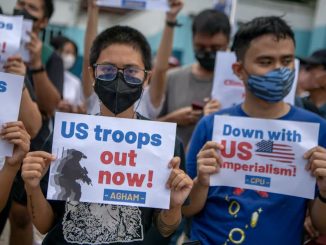
Outside the Philippine military headquarters, dozens of protesters opposed to the U.S. military occupation rallied with chants of “U.S. troops out now” and “Down with U.S. imperialism.”

As to the weather balloon, what is significant is not its presence. There have been three or more other times in the last few years that Chinese weather balloons have flown over the U.S., but none of them were reported in the news at the time.

This time the Pentagon announced the balloon’s presence “on an espionage mission.” The Pentagon managed the daily news reports, not the White House or the State Department. The generals were in charge. It was war propaganda.

All the news coverage in the U.S. called it a spy craft, never a weather research balloon, as China said.

According to a Politico report, Defense Secretary Austin, U.S. Northern Command Chief Gen. Glen VanHerck, and Joint Chiefs Chair Gen. Mark Milley were in charge, giving orders (called “recommendations” in the report) to the White House and the State Department as well as dictating the news reports.

One result was that U.S. Secretary of State Antony Blinken canceled his trip to Beijing for high-level diplomatic talks, which was to be the first secretary of state visit since Michael Pompeo’s belligerent confrontation in October 2018.

Blinken’s trip had become a focus of war hawks in Congress. Republican senators led by Marco Rubio from Florida signed an open letter to Blinken demanding that the trip be a confrontation with China, particularly focusing on Taiwan.

Signers of the letter, in addition to Rubio, were Senators Chuck Grassley, Bill Cassidy, Eric Schmitt, Dan Sullivan, Kevin Cramer, Ted Budd, Rick Scott, Marsha Blackburn, Lindsey Graham, Shelley Moore Capito, Pete Ricketts, John Hoeven, and Bill Hagerty.

Not that the Biden administration hasn’t followed or even escalated the anti-China policies of the Trump administration. In December, Biden approved $180 million in arms to Taiwan. Biden extended the ban on telecommunications equipment from China’s Huawei Technologies and ZTE. And the Biden administration instituted comprehensive restrictions on selling semiconductor chips and manufacturing equipment to China.

Air Force general says war

The Pentagon has been aggressively raising the threat levels.

In a memo dated Feb. 1 but leaked several days earlier, a four-star Air Force general instructed units under his command to begin concrete preparations for war with China that he predicted would come by 2025. Gen. Mike Minihan heads the U.S. Air Mobility Command.

Minihan’s memo seems to echo Air Force General Jack Ripper, a character from the 1964 movie “Dr. Strangelove” who orders his command wing to launch a nuclear attack on the Soviet Union.

Minihan lays out a nine-point plan as “preparation for the next fight.”

“I hope I am wrong,” he commented after the memo was made public. “My gut tells me we will fight in 2025.”

Michael McCaul, the new chair of the House Foreign Affairs Committee and the most powerful figure in the House on foreign policy, said on Fox News: “I hope he’s wrong as well. I think he’s right, though, unfortunately.”

That’s a war threat.

Japan and Australia

On Jan. 13, Japan’s prime minister, Fumio Kishida, met with Biden at the White House, the New York Times reports, “to work together to transform Japan into a potent military power to help counterbalance China and to bolster the alliance between the two nations so that it becomes the linchpin for their security interests in Asia.”

Washington and Tokyo are deliberately undermining the basis for diplomatic ties with China — the One China policy recognizing Beijing as the legitimate government of all China, including Taiwan.

“We have to protect Taiwan,” Japan’s deputy defense minister, Yasuhide Nakayama, said in 2021.

Japan had seized Taiwan in 1895, the beginning of Japan’s colonial empire in Asia.

The U.S. has secured military alliances with Japan and the Philippines that makes a north-south arc around Taiwan. A third treaty ally, Australia, is being equipped with nuclear-powered submarines by the U.S. and Britain to operate in the South China Sea. “Attack submarines are a big deal, and they send a big message,” the New York Times reported when the fleet of submarines were announced in 2021.

Today, the U.S. is the primary armaments manufacturer and exporter worldwide. Almost 40% of all armaments production in the world is in the U.S. The military industry is the core of manufacturing in the U.S., estimated to be more than 60% of all industrial production and supply in this country.

The military escalation against China was begun by the Trump administration. It should not be forgotten that Donald Trump was, first and foremost, an operative of the military-industrial complex. His cabinet and staff came from Raytheon and Boeing, as well as a slew of U.S. Army officers – generals and colonels. U.S. military expansion increased under Trump. 

Trump was the “cheerleader for U.S. arms exports.” He touted it as “making America great.” The New York Times cheered, too, saying that Trump had revived manufacturing in the U.S.

The weapons industry, of course, directly arms the military for the purpose of expansion and conquest of the world. But arms exports are another way to conquer. A country that adopts U.S. weapons and equipment puts itself under the control of the U.S. systems.

The industrial half of the military-industrial complex drives the arms buildup. It is they who are most in need of expanding the military. The military expansion is the expansion of business.

General Carl Von Clausewitz famously said: “War is the continuation of politics by other means.” And politics is concentrated economics, as V.I. Lenin pointed out. The politics producing this war buildup are the economic interests of big business.

Strugglelalucha256


China’s science-based COVID response effective, Western criticism untenable

BEIJING, Jan. 12 (Xinhua) — Through science-based adjustments to its COVID-19 response policies, China has won wide acclaim from scholars both at home and abroad.

Lawrence Loh, director of the Center for Governance and Sustainability at the National University of Singapore, said that China’s epidemic prevention measures are well-calibrated and are poised to lead China into the next era of development and advancement.

China has made an array of active adjustments in its COVID response, including announcing 20 measures in November and ten new measures in December 2022 and changing the Chinese term for COVID-19 from “novel coronavirus pneumonia” to “novel coronavirus infection.”

Since Jan. 8, 2023, China has been managing COVID-19 with measures designed for combating Class B infectious diseases instead of Class A infectious diseases.

Speaking of the attitude of certain Western countries toward the Chinese mainland’s epidemic response policies, Jieh Wen-chieh, a commentator from China’s Taiwan region, pointed out in a television interview that Western criticism is motivated by the intention of sowing trouble in China.

Jieh said that the Chinese mainland has been adhering to the principle of science-based epidemic control.

Considering its population, said Jieh, the Chinese mainland’s performance in COVID response is the best in the world. “You will come to this conclusion if you look at the statistics (of the countries) with better resources, more advanced medical technologies, and smaller populations,” Jieh said.

Jieh expressed his disappointment at reports by certain Western media outlets.

“When the Chinese mainland’s science-based epidemic prevention and control measures were stringent, Western media outlets rallied together to criticize them,” Jieh said. Now, he pointed out, those media outlets are doing the same thing with the measures being optimized. “It is very weird,” he added.

In Jieh’s opinion, the recent restrictions imposed by some Western countries targeting only Chinese tourists are unnecessary. “They harbor malicious intentions from the very beginning,” Jieh said. “Certain Western countries only want to believe that the Chinese mainland is doing a worse job on COVID response than them.”

In a period of about three years, China was able to dodge the havoc of the more deadly Delta variant and other variants, reducing its rates of severe cases and mortality and protecting people’s lives and health to the greatest extent possible.

John Ross, a British scholar, spoke highly of China’s endeavors in saving lives during the epidemic.

In a recent column, Ross, who is currently a senior fellow at the Chongyang Institute for Financial Studies of the Renmin University of China and a former director of economic and business policy for the mayor of London, noted that the average life expectancy of Chinese people in 2021, which is 78.2 years, is significantly higher than the 76.4 years of people in the United States.

Ross said that China has vastly outperformed the West, not only in terms of saving lives but also in terms of economic results, with the facts showing that China’s economy has slowed but still boasted a much better performance than the West. In particular, China has escaped the severe stagflationary crisis that struck the United States and the European Union.

“China’s performance in both health and economy during the pandemic is in international comparative terms little short of a miracle — above all in comparison to the Western countries,” Ross penned.

China’s average annual economic growth rate over the past three years was approximately 4.5%, higher than the global average and making an important contribution to global economic growth.

Today, the COVID situation in the world’s second-largest economy is improving, and some provinces and cities have already passed their infection peaks, and life and work are returning to normal at an accelerated pace.

Anna Malindog-Uy, vice president of the Manila-based think tank Asian Century Philippines Strategic Studies Institute, said the Chinese economy will likely witness a robust recovery and upward trajectory, benefiting many countries across the globe.

Strugglelalucha256


A look back on three years of China’s anti-Covid-19 fight

I arrived in Shanghai, 36 hours after leaving São Paulo, a near deportation in South Africa, and a canceled connecting flight. It was March 21, 2020. In the following days, China implemented its mandatory centralized quarantine for all international travelers. Exactly a week later, on March 28, China started its travel ban1 to prevent the spread of a still little-known virus called Covid-19, which was making its way to all corners of the earth.

Nearly three years later, on the coming January 8, 20232, China will officially open its borders, remove the mandatory quarantine and nucleic acid tests for people entering the country, and downgrade the management of Covid-19 from Class A to Class B3. It is not an end of an era; rather, it is a continuation of a rigorous process of confronting a historic and global pandemic, while putting science and the people at its center. It has been an incredible experience to see how the Chinese government and people have taken on this pandemic, while the world has suffered4 6.68 million recorded deaths, with over 650 million people infected. The impact of this virus is one for the history books, the lasting effects to be studied for years to come, and the fight has not yet ended.

The Western mainstream media, however, has been quick to criticize China every step of the way, from the “draconian5” Zero-Covid strategy to the “dystopian6” measures to ensure a safe Winter Olympics games in Beijing, and now to the “nightmare7” of relaxing the country’s Covid-19 requirements. Rhetoric aside, what has the fight against the virus been like in China—characterized by the Zero-Covid strategy—and why are the relaxation measures happening now? It is important to look back at the last three years to understand how we arrived at this point today. Having lived in China throughout the ebbs and flows of the Covid-19 virus, I would categorize the country’s dynamic strategy into four key phases.

Phase 1: Emergency response (December 2019 to May 2020)

Two-and-a-half weeks after I arrived in China, on April 8, the country celebrated the end to the 76-day historic lockdown in Wuhan, where the pandemic first broke out and claimed the lives of 4,512 Chinese people8. It was an emotional and bittersweet victory for the entire country, which had mobilized its people and resources to fight a very deadly and never-before-seen virus.

On December 26, 2019, Dr. Zhang Jixian9, director of the Department of Respiratory and Critical Care Medicine of Hubei Province hospital of Integrated Chinese and Western Medicine, saw an elderly couple that had a high fever and a cough—symptoms that characterize the flu. But further examination ruled out influenza A and B, mycoplasma, chlamydia, adenovirus, and SARS. She and her team then quickly determined there was a new virus at play. Three days later, the provincial authorities were alerted, then the Chinese Center for Disease Control (CDC), and by December 31, the WHO was informed10. On New Year’s Day, the CDC officials called11 Dr. Robert Redfield, head of the U.S. Center for Disease Control and Prevention, while he was on vacation, to inform him of the severity of their findings.

On January 3, the virus was identified with its genetic sequence which was then shared12 with the world a week later. At this point, there were many unknowns—what the virus was, how it was transmitted, and how it could be stopped. There were no vaccines, while the country—and the world—was unprepared. A strict lockdown of the city of 11 million people began on January 23, and 41,000 medical workers13 were dispatched from across the country to Wuhan. Saving lives and studying this new virus were the main priorities in this phase.

Phase 2: Control and elimination (June 2020 to July 2021)

After Covid-19 had been successfully contained in Wuhan, and throughout the rest of 2020 and 2021, China implemented a Zero-Covid strategy, characterized by extensive measures to track, test, isolate, and treat infected people. The Chinese mainland recorded extremely few deaths14 in this period since the Wuhan outbreak, while successfully containing 11 outbreaks15 of the Delta variant, which is more transmissible and the cause of more serious infections. Meanwhile, the global reported death toll had climbed to over 5.4 million people16 by the end of 2021, with countless millions more infected.

Far from “failing17” as the Western media is claiming now, Zero-Covid worked extremely effectively. Since the pandemic broke, the average life expectancy of Chinese people actually increased from 77.318 to 78.219 years (2019-2021), surpassing the United States for the first time in history (Chart 1). In the U.S., however, the average life span dropped from 78.820 to 76.421 years during that same period, owing in large part to the high number of Covid-related deaths. This is particularly striking when you consider that China was the eleventh22 poorest country in the world in 1949 (measured by per capita PPP GDP) with a life expectancy of only 3623 versus 6824 for the U.S. This means that an average Chinese person’s lifespan more than doubled, whereas in the U.S., the average lifespan only grew by eight years in nearly eight decades.

Chart 1. Life expectancy in China and the U.S. during the COVID-19 pandemic

| Chart 1 Life expectancy in China and the US during the COVID 19 pandemic | MR Online

Life expectancy in China increased beyond that of the U.S. during the pandemic.

The U.S. has recorded 1.1 million deaths due to Covid-19. The cumulative U.S. death rate per one million people is currently 83425 times that of China (3,339 versus 4). In the case of the U.S. and China, the use of “excess-death” numbers—the difference between observed and expected mortality rates—is of little value for analysis purposes as both countries had relatively low numbers of these deaths in the last three years. If China had followed the reckless U.S. path, these figures indicate China would have suffered 4.8 million dead. Even a quick calculation reveals that China’s strategy indeed saved millions of lives.

While it was containing the virus, China was also intensely studying the virus and developing responses, inaugurating26 its first vaccine, Sinopharm, in December 2020, which was subsequently approved27 by the WHO for emergency use on May 7, 2021. By October of that year, according to a Nature study28, Chinese vaccines accounted for nearly half of the 7.3 billion doses delivered globally. Since then, China has approved29 eight vaccines, with 35 others undergoing clinical trials, donated30 328 million doses, pledged31 over US$100 million to the Covax global vaccine distribution program for Global South countries, and proposed32 that vaccines become a global public good.

Phase 3: Adaptation and preparation (August 2021—October 2022)

In August 2021, in response to the spread of the highly transmissible Delta variant, China adopted33 a new strategy called “Dynamic Zero-Covid.” It was designed to balance health, economic, and social needs and to minimize the impact of the epidemic on the economy, society, production, and the people’s everyday life.

There is no one-size-fits-all measure for a country of 1.4 billion people. During this third phase, guided by science, the country experimented with its prevention and implementation practices. Mass testing was developed to high levels of efficiency, in which Guangzhou34’s 18 million inhabitants could be tested a mere three days, while the cost of pooling PCR tests (ten samples per test tube and taking advantage of low infection rates) were reduced to merely 3.5 yuan35 (US$0.50) per person. The country developed a nationwide digital travel code and city-level “green code” cellphone applications36 to track Covid cases and those who have visited high-risk areas. All the while, the government moved towards more targeted measures to limit the use of large-scale lockdowns. During the Shanghai outbreak, for example, residential communities were classified37 into “lockdown,” “controlled,” or “precautionary” zones based on their risk level to try to minimize the interruption of daily and economic life.

Between January 2020 and mid-April 2022, China had spent38 an estimated US$45.1 billion to provide 11.5 billion free PCR testing for its residents. The costs of this mass testing strategy, however, were also mounting, with estimates reaching 1.8 percent39 of the country’s GDP and putting pressure especially on local government budgets. Despite the economic pressures, rather than “crippling40” China’s economy, the country’s GDP grew nearly four times faster than the U.S. and five times compared to the EU, from the start of the pandemic to Q3 of 2022.41

Despite being the second largest economy, China is still a developing country. The pandemic strained the country’s medical system, which was lacking in several key areas. Accordingly, China used the last three years to begin to fill in those gaps, primarily through increasing its intensive care unit (ICU) capacity. In 2019, China had only 3.6 ICU per 100,000 residents42, which was nine times less than the U.S. with 34.7 units. Since 2019, China increased43 its supply of ICU beds 2.4-fold (57,160 in December 2019 to 138,800 in December 2022). In the same period, ICU doctors and nurses44 increased by one-third and doubled, respectively.

On January 15, 2022, China had its first case of locally transmitted Omicron infection. On April 18, 2022, Shanghai announced45 its first three Covid-related deaths, all unvaccinated elderly people aged over 89 years. At the time of the Shanghai outbreak, while 87 percent46 of the country were already fully vaccinated, that number dropped to only 62 percent47 for the city’s 3.6 million elderly aged over 60, with 38 percent having received booster shots. The country knew that this vulnerable sector of the population had to be protected.

Significant efforts have since been made to increase vaccination of the elderly. The official National Health Commission reported48 that on November 30, 2022, the breakdown of vaccination rates for people aged over 80 years are as follows: 76.6 percent at least one shot, 65.8 percent two shots or more, and 40 percent three or more doses. Despite the lower mortality rates of the Omicron variant, its highly contagious nature posed serious challenges to the country’s existing prevention and control measures, while putting great strains on the economy. Even two doses49 of so-called advanced Western mRNA vaccines like Pfizer/BioNTech’s vaccine or Moderna’s similar mRNA vaccine provide only about 30 percent protection against symptomatic infection from Omicron for about four months.

Phase 4: Downgrading severity and easing controls (November 2022 to present)

As Omicron began to spread, comparisons50 showed that the risk of death when infected with Omicron BA.2 was less than half that of Delta. One Chinese scientific study51 on mice showed that the new Covid-19 strains had 100 times lower virus load than the original, but was highly transmissible. China knew it needed to adjust its policies with the shifting nature of the virus, but with some important considerations.

On November 11, the central government released its “20 measures”52 to begin to relax its Zero-Covid policies. This included reducing mandatory quarantine time for inbound flights, decreasing isolation times, promoting vaccination of elderly, and eliminating the use of mass testing. For a country of its size, any central government policy takes time and huge organizational capacity to be implemented at the local scale.

The easing created initial confusion, and some people were upset with local community officials for not upholding the central government’s easing measures, frequently aired on Chinese social media platforms. Though there was frustration and exhaustion, it would be a mistake to believe that the downgrading phase was a response to the series of small, coordinated “white paper protests” that occurred after an Urumqi apartment fire that claimed the ten lives on November 24. Not only did the protests occur two weeks after the government began relaxing its Covid measures, but they were also not representative of the Chinese public opinion at large. The government easing also sparked another concern, with many people worried about getting infected. Several Weibo social media users53 expressed anger and criticism of the protesters, seeing them as irresponsible, middle-class youth who wanted their personal liberties at a collective expense. Unlike the blanketing Western media portrayals, Chinese people do not have a singular voice.

On Monday December 26, China announced54 it will downgrade the management of Covid-19 from Class A to Class B of infectious diseases on January 8, 2023. The three main reasons for this change include the fact that Omicron is not as virulent as Delta, a large percentage of the population had been vaccinated, and the country’s health system was better prepared. China uses a three-level system for the classification of infectious diseases, each delimiting specific response measures. Class A, the most dangerous, includes only cholera and the plague. Class B includes SARS, AIDS, and tuberculosis. Class C includes the flu and the mumps. Corresponding to this change, Covid-19 measures will be further relaxed.

Twelve55 main countermeasures were identified for the new Covid-19 policy corresponding to Class B control: 1) Increase vaccination rates; 2) prepare drugs and testing reagents for patients;  3) increase investment in construction of medical resources including ICU beds; 4) shift from mass PCR testing; 5) treat patients according to severity; 6) improve health survey and data, including vaccination status of those aged over 65 years; 7) control vulnerable population institutions, including elder care, hospitals, and schools; 8) strengthen prevention and control for rural areas and for high-risk patients; 9) increase epidemic monitoring, response, and control; 10) promote personal protection and the principle of everyone’s responsibility for their own health; 11) enable information access and education; and 12) optimize international personnel exchanges.

In a press conference56 of the State Council Joint Prevention and Control Mechanism, Dr. Yin Wenwu, Chief Physician of CDC’s Division of Infection Prevention, addressed the consequence of classifying Covid-19 as a Class B, which would reduce the frequency of the publication of data. The new data, which will be released monthly, will include the number of existing hospitalized cases and serious illnesses, including critical illnesses, and the cumulative number of deaths.

As expected, downgrading the severity of the virus’s management would also mean increasing the number of infections and related deaths. However, no single prediction model can be easily applied to China. Existing models for Covid-19 infection and mortality predictions have a wide range of outcomes. Forecast accuracy tends to decrease as prediction times increase, with models showing up to fivefold increase57 in error comparing one-week to 20-week horizons. Even the same Omicron variant has resulted in varied mortality rates in different countries. As of December 21, the U.S. seven-day rolling death rate58 was as high as 437 people, or a rate of 1.29 per million. Meanwhile, Japan had a comparable rate of 2.0 per million and New Zealand 0.85 per million.

Although China has now surpassed the life expectancy of the U.S., it has relatively fewer people 75 years and older than the U.S. (46 percent59 fewer as a percentage of the total population for each country). Omicron has had the impact that a massive 69 percent60 of all Covid-19 deaths in the U.S. in September 2022 were from this age group. The demographic difference in this age group, taken as a stand-alone factor, would imply an over 30 percent reduction in likely death rates for China.

Western media have been quick to use selective stories and photographs to create a broader image of the “chaotic61” situation in China, including alleging very high death rates. China, with a population of over 1.4 billion people, had over 27,00062 deaths per day prior to the pandemic. Using existing Omicron death rates from other countries would infer a possible 6 percent increase in death rates. These would be significant deaths, into the many tens of thousands, but there is no evidence yet provided that supports the millions that the West is speculating.

This downgrading phase is indeed complex and challenging, as doctors are working overtime with increase in cases, some hospitals are in full capacity, fever medicines have faced shortages, and winter-related ailments are adding complications. However, relaxing measures now means that China has used the last three years to try to prepare itself the best that it can by vaccinating the people, studying the virus, building medical infrastructure, training workers, and waiting until a much less deadly strain had emerged. It has also gained hard-earned experience that is essential to managing any future pandemic.

Steps being taken now

Not for lack of vaccines, there are several reasons for the relatively slow vaccination rates for China’s elders. Many of them63 had preconceived notions about vaccines or were worried about complications related to underlying health conditions, while the successful control of the virus disincentivized elders to get vaccinated. Comparatively, in the United States, only 36 percent of people 65 and older have received the updated shot, known as the bivalent booster64, according to data65 from the Centers for Disease Control and Prevention. China, on the other hand, has consistently made efforts to convince, and not coerce, this vulnerable group to get vaccinated.

On November 29, the State Council’s Joint Prevention and Control Mechanism, adjusted the booster vaccination protocol, and required localities66 to extensively survey senior populations and ramp up services and awareness campaigns. Between December 1 and 13, 823,00067 of those over 80 years old received a third vaccine. China has created the world’s first commercially released inhaled vaccine68 for Covid-19: CanSino Biologics’ Convidecia Air, a non-replicated viral vector vaccine. This booster is already gaining popularity69 with the elderly.

Regarding the supply of medicines, some cities had shortages of fever medicines in the first weeks of December as cases increased. Hoarding, price-gouging, and the spike in demand were among the factors that contributed the supply shortage. In response, local governments started to distribute70 Ibuprofen for free, and Beijing residents, for example, can now get Ibuprofen and Paracetamol within an hour. China also passed a regulation71 on online pharmaceutical suppliers, that included penalties up to five million RMB (US$720,000) for pharmacies that increase prices according to speculative behavior. China has72 also made Pfizer’s Paxlovid oral antiviral treatment available.

Due to mass testing during phase three of the anti-pandemic fight, the government was able to obtain accurate data about the virus to inform its responses. As mass testing has been phased out in this current phase, some data precision will inevitably be foregone. However, China’s resilience is demonstrated in its ability to respond to new situations, applying technologies and science to evolve its public health system. For example, in the past two weeks, over ten provincial CDC’s, including in Sichuan, Jiangsu, Zhejiang, have launched surveys73 with hundreds of thousands of participating citizens. This survey data, though limited by sampling methodology, provides an important reference for local and central authorities to monitor the path of the disease, and collect information including on important hospitals, availability of fever drugs, and response capacity of local governments.

On December 31, Hainan released74 the results of their second online survey (conducted December 19-25) filled in by about 3.4 percent of the province’s population. Below is one of the charts released (Chart 2).

Chart 2. Proportion of infected persons health care seeking behavior in the two rounds of survey population

| Chart 2 Proportion of infected persons health care seeking behavior in the two rounds of survey population | MR Online

China’s CDC continues to actively conduct real-time dynamic monitoring on Covid-19. From December 1 to 29, it had completed the whole genetic sequencing of 1,14275 cases through sampling survey. There are seven Omicron subvariants circulating, two of which, BA.5.2 and BF.7, account for more than 80 percent of all cases. BF.7 has greater immune escape ability, a shorter incubation period, and faster transmission. Guangzhou reported76 that 96 percent of people infected and tested had the BA5.2 variant, the symptoms of which are generally considered milder. There has been no reemergence of the Delta variant or other previous strains. However, the U.S. has conveniently used this moment to target visitors from China, requiring them to show negative Covid-19 tests to enter the country. Ironically, it was the U.S. that failed77 to prioritize Covid-19 variant surveillance in 2020.

Several prediction models have been published in the last week, including one by former CDC chief scientist of epidemiology Zeng Guang,78 states that the infection rate in Beijing may have exceeded 80 percent. These models also predict that the second wave is likely to be much milder and point to three factors behind the higher hospitalizations in the city: Beijing’s winter exacerbates respiratory symptoms among the elderly, Beijing is now listed as a moderately aging society (with 20 percent79 of the residents are above 60 years old, and the dominant80 BF.7 subvariant appears more virulent.

The government is paying close attention81 to the availability of medical resources, especially in the rural areas, in anticipation of the week-long spring festival starting January 21. China has increased daily production82 of antigen tests to 110 million units, along with 250,000 oximeters per day, and is prioritizing supply to rural areas. Rapid antigen tests cost as low as US$0.51 each on the e-commerce platform, Pinduoduo. In the rural areas where the medical infrastructure is less developed, the severity of the virus is not as bad as originally feared, according to online accounts83. Barefoot doctors84, a legacy of the Mao-era and sometimes pilloried by those seeking to privatize rural health, have been essential in providing care in rural eras despite having less resources than major city hospitals.

A look back at the last three years shows how difficult the pandemic has been for China and the world, testing the Chinese government’s capacity to confront such an unforeseen public health crisis as well as the people’s patience. In Beijing where I live, however, people are back and bundled in the streets, at work, and on the subways, with traffic and travel recovering. People are anxiously awaiting the spring festival, the most important holiday of the year. As we enter into a new year and a new era of fighting Covid-19—while anticipating the new viruses that will inevitably emerge—the hope is that the world can learn from these hard-earned lessons, act and cooperate using science, not rumors, and embody a spirit of international solidarity, not stigma.85

Notes

  1.  Ministry of Foreign Affairs, PRC, MFA News
  2.  Ministry of Foreign Affairs, PRC, MFA News
  3.  Global Times, China to downgrade management of COVID-19 from Class A to Class B from January 8
  4.  World Health Organization, WHO Coronavirus (COVID-19) Dashboard
  5.  Bloomberg, China Hits Zero Covid Cases With a Month of Draconian Curbs
  6.  Daily Mail and Reuters, Winter Olympics Dystopian Scenes Inside Beijing’s Closed-Loop Covid Quarantine
  7.  The Washington Post, China’s new covid nightmare could become a global catastrophe
  8.  CGTN, COVID-19 testing to be increased in China’s Wuhan after new case confirmed
  9.  Tricontinental: Institute for Social Research, China and CoronaShock
  10.  World Health Organization, Novel Coronavirus (2019-nCoV) SITUATION REPORT-1 JANUARY 21 2020
  11.  The New York Times, The Lost Month: How a Failure to Test Blinded the U.S. to Covid-19
  12.  World Health Organization, Novel Coronavirus (2019-nCoV) SITUATION REPORT-1 JANUARY 21 2020
  13.  China Daily, Entire nation mobilizes to help Wuhan
  14.  Worldometer, COVID-19 Data in China
  15.  China CDC Weekly, Eleven COVID-19 Outbreaks with Local Transmissions Caused by the Imported SARS-CoV-2 Delta VOC—China
  16.  Worldometer, Coronavirus Death Toll
  17.  Consumer News and Business Channel, Here’s what lies ahead for China after zero-Covid failed
  18.  National Health Commission, PRC, Statistical Bulletin of China’s Health Development in 2019
  19.  National Health Commission, PRC, Statistical Bulletin of China’s Health Development in 2021
  20.  National Center for Health Statistics of CDC, U.S. Life Expectancy Increased in 2019, Prior to the Pandemic
  21.  National Center for Health Statistics of CDC, Mortality in the United States, 2021
  22.  Asia Times, A history of China’s fight against poverty
  23.  National Library of Medicine, Nutrition and health in China, 1949 to 1989
  24.  National Center for Health Statistics of CDC, Mortality Trends in the United States, 1900–2018
  25.  Worldometer, Reported Cases and Deaths by Country or Territory
  26.  Contagion Live, China’s Sinopharm COVID-19 Vaccine Approved by WHO
  27.  World Health Organization, WHO lists additional COVID-19 vaccine for emergency use and issues interim policy recommendations
  28.  Nature, China’s COVID vaccines have been crucial—now immunity is waning
  29.  COVID19 Vaccine Tracker, 8 Vaccines Approved for Use in China
  30.  Bridge of Global Health Strategy, China COVID-19 Vaccine Tracker
  31.  South China Morning Post, Xi Jinping says China promises 2 billion Covid-19 vaccine doses to other countries in 2021
  32.  China Daily, China’s vaccines are global public good
  33.  China CDC Weekly, Perspectives: The Dynamic COVID-Zero Strategy in China
  34.  South China Morning Post, Coronavirus: 18 million tests in three days as Guangzhou tries to stem spread in latest outbreak
  35.  Caixin Global, China Further Slashes Price of a Covid-19 Test to $2.40
  36.  The Paper, When will the health codes be interconnected?
  37.  Global Times, Shanghai reports three COVID-19 related deaths due to underlying diseases for the first time amid the latest flare-up
  38.  Caixin Global, In Depth: As Mass Covid Testing Becomes China’s New Normal, Debate Grows Over Who Pays
  39.  Caixin Global, Will Regular Covid Testing Help or Hurt China’s Economy?
  40.  Financial Times, How China’s lockdown policies are crippling the country’s economy
  41.  This data was provided by British economist John Ross and is included in his upcoming article on Covid-19 and the Chinese economy.
  42.  Global Times, China further focuses on severe COVID cases treatment with tiered medical services plan
  43.  Yujian Finance and Economics, ICU beds increased 2.4 times in three years: our critical care supporting facilities have been racing against time
  44.  Yujian Finance and Economics, ICU beds increased 2.4 times in three years: our critical care supporting facilities have been racing against time
  45.  Global Times, Shanghai reports three COVID-19 related deaths due to underlying diseases for the first time amid the latest flare-up
  46.  YCharts, China Coronavirus Full Vaccination Rate
  47.  Global Times, Shanghai reports three deaths, all elderly, unvaccinated
  48.  Joint Prevention and Control Mechanism of the State Council, Work Plan for Strengthening COVID-19 Vaccination for the Elderly
  49.  The Scientist,  Omicron Appears to Evade Vaccines Better Than Other Variants
  50.  JAMA Network, Estimates of SARS-CoV-2 Omicron BA.2 Subvariant Severity in New England
  51.  Global Times, Exclusive: Chinese scientists prove Omicron’s pathogenicity has geometrically decreased compared with previous strains
  52.  Global Times, China optimizes anti-epidemic measures, shortens quarantine period for intl arrivals
  53.  The Wall Street Journal, China’s Censors End Crackdown on Covid-Policy Criticism—of a Certain Kind
  54.  China Daily, China to manage COVID-19 with measures against Class B infectious diseases
  55.  National Health Commission, PRC, Explanation on Overall Plan for Implementing Class B Infectious Disease Management for COVID-19 Infections
  56.  National Health Commission, PRC, Transcript of the Press Conference of the Joint Prevention and Control Mechanism on December 27, 2022
  57.  PNAS, Evaluation of individual and ensemble probabilistic forecasts of COVID-19 mortality in the United States
  58.  Our World in Data, Coronavirus (COVID-19) Deaths
  59.  Statistics Times, United States vs China by population
  60.  Kaiser Family Foundation, Deaths Among Older Adults Due to COVID-19 Jumped During the Summer of 2022 Before Falling Somewhat in September
  61.  The Economist, Ending China’s zero-covid policy could unleash chaos
  62.  National Bureau of Statistics, PRC, Statistical Bulletin of China’s National Economic and Social Development in 2019
  63.  Caixin Global, Weekend Long Read: Why China’s Seniors Hesitate to Get Vaccinated
  64.  U.S. Food & Drug Administration, COVID-19 Bivalent Vaccine Boosters
  65.  Centers for Disease Control and Prevention, COVID-19 Vaccinations in the United States
  66.  China Daily, Vaccination action plan to target elderly
  67.  Joint Prevention and Control Mechanism of the State Council, Work Plan for Strengthening COVID-19 Vaccination for the Elderly
  68.  Business Wire, World-First Inhaled COVID-19 Vaccine, Developed in Partnership Between Aerogen® and CanSinoBIO, First Public Booster Immunization in China.
  69.  CGTN, Inhalable COVID-19 vaccines gain popularity among seniors in China
  70.  Communist Youth League Central Committee, Free medicines deliver in many places! Mobile diagnosis and treatment vehicles drive to the door and the PCR test booths turn into a diagnosis and treatment station.
  71.  South China Morning Post, China targets online pharmacies for price gouging on Covid-19 medication
  72.  Global Times, Beijing to distribute COVID-19 drug Paxlovid to community health centers to help key population amid approaching peak caseload
  73.  The Paper, Why did Sichuan, Jiangsu, Zhejiang and other provinces launch the COVID-19 infection survey?
  74.  Sanya Released, Online survey of COVID-19 infection in hainan province
  75.  Global Times, Virologists and CDC departments deny reemergence of COVID-19 original strain and Delta variant in China
  76.  Guangming, What strains are dominant in Guangzhou now?
  77.  JAMA Network, How the U.S. Failed to Prioritize SARS-CoV-2 Variant Surveillance
  78.  IFeng, Zeng Guang:Beijing covid infection rate may exceed 80%. The first storm is relatively large, then the second wave is very low.
  79.  Global Times, Beijing now a moderately aging society, to become severely aging by 2035
  80.  Guangming, Beijing’s main strain is BF.7, the most contagious one so far.
  81.  Joint Prevention and Control Mechanism of the State Council, Notice of the current work program for the prevention and control of covid infection in rural areas
  82.  Guancha, All-out efforts to ensure the supply of medical supplies and drugs
  83.  Yuyan Guancha, My hometown has survived the “pandemic”.
  84.  Gongdushijian, The barefoot doctors won a headwind game, while the online experts were confused
  85.  World Health Organization, WHO Director-General’s remarks at the media briefing on COVID-2019 outbreak on 14 February 2020

Source: Monthly Review


Strugglelalucha256


Reckless U.S. war games in South China Sea go against the current

U.S. military exercises have come within 400 miles of China’s mainland in the South China Sea (called the South Sea in China and the East Sea in Vietnam). The provocations have increased year after year since former President Obama’s imperialist “pivot” towards Asia.

Imagine if China had military exercises right on the doorstep of the U.S. mainland in either the Pacific or Atlantic oceans – close enough for a passenger cruise ship to come into contact with the exercises. And not just your typical military exercises, but ones that were in preparation for a coastal invasion. Imagine if China did this with three other countries, some of whom were promised nuclear weapons.

It’s hard to imagine such a scenario targeting the U.S. because it doesn’t exist. But for the people of China, the U.S. is very much at the doorstep on a daily basis. And on Nov. 29, the situation escalated.

According to a report in the Nov. 30 China Daily, a U.S. guided-missile cruiser illegally entered Chinese waters near the Nansha Islands on the morning of Nov. 29, a spokesperson from the People’s Liberation Army said.

“Without the approval of the Chinese government, the guided-missile cruiser USS Chancellorsville illegally entered the waters near the islands and reefs of China’s Nansha Islands on Tuesday,” Senior Colonel Tian Junli, spokesman for the PLA Southern Theater Command, said in a statement.

“The theater command has organized naval and air forces to track, monitor and warn it off,” he said.

The colonel added that the warship’s move, which seriously infringed on China’s sovereignty and security, is more “hard proof “that the United States is seeking maritime hegemony and militarizing the South China Sea.

According to the South China Sea Data Initiative, a project of Emory University and the University of California, in 2017, the USS Dewey warship held a “maneuvering drill” less than 400 miles from the mainland of China. In that same year, the USS Stethem came within 200 miles of China’s southernmost province, Hainan Island, with a population of about 10 million people.

The U.S. travels over 10,000 miles in the Pacific Ocean to go poking around in the waters of China. Yet if you look 2,000 miles out from the shores of the U.S. on either the Pacific or Atlantic oceans, you see no Chinese military exercises. In fact, you won’t find any hostile military exercises anywhere within thousands of miles of U.S. shores.

But Washington arrogantly says China is the guilty party threatening the U.S.

Strategy of provocation

The fact is that, like the strategy to provoke Russia exposed three years ago in the Rand Corporation Plan, this plan to target and provoke China is exposed in the 2022 National Defense Strategy document from the U.S. Secretary of State and blessed by President Joe Biden in its introduction. 

The plan was written before this latest provocation in the South China Sea and reveals that these altercations are pre-planned to solicit one result – war with China. 

China Daily reported March 29 that a study “by the South China Sea Strategic Situation Probing Initiative, a Beijing-based think-tank tracking U.S. military operations with open source data, said the U.S. carried out at least 95 military exercises in the South China Sea last year, ten more than in 2019.”

The article quotes Hu Bo, director of the think-tank, who said the U.S. military has maintained a fairly strong presence near China since 1949, but in recent years it has considerably ramped up its operations in the region and made them more public.

As the National Defense Strategy outlines, these provocations will be carried out with the assistance of other collaborators of U.S. imperialism. 

“In August 2021, the U.S., along with Australia, Britain and Japan, carried out ‘Large Scale Exercise 21,’ its largest naval exercise in 40 years, involving around 25,000 military personnel operating across 17 time zones from Europe to Asia,” says China Daily.

Hu warned that Washington’s reckless escalation in military activities severely stretched personnel and machinery, leading to a greater risk of accidents and friction in the South China Sea. 

For example, the USS Connecticut nuclear submarine recently collided with an uncharted seamount (underwater mountain) in the South China Sea last year, and an F-35C fighter jet crashed on an aircraft carrier operating in the region in January.

“In an era of peace, if one country maintains such a powerful military presence close to another country, it is hard for the former to convince people that it is doing it for peaceful purposes,” Hu said.

Driven by profits

What is the U.S. economic interest in the South China Sea? 

According to a 2018 CNBC report, the South China Sea has $5.3 trillion worth of trade going through its waters each year, or one-third of all global maritime trade.

It’s been estimated that between 11 billion and 125 billion barrels of oil and between 190 trillion and 500 trillion cubic feet of natural gas lies beneath. 

But for the U.S., grabbing control has become even more of an uphill battle since it has no NATO forces in the region. Many of the countries it would like to conspire within these provocations toward war have growing beneficial trade relations with China. This includes South Korea.

Moon Chung-in, chairman of the Sejong Institute in the Republic of Korea, quoted by China Daily, mentioned that the U.S. has been implementing its “Indo-Pacific” strategy, a strategy to isolate China economically, but this would hurt South Korea.

“China is our biggest trade partner so we cannot join the U.S. in decoupling with China, but meanwhile, we share similar values with the U.S.,” Moon said. “… Thus, we must return to the principles of multilateralism that Beijing has proposed.”

China’s economic and cultural ties have increased with the Association of Southeast Asian Nations (ASEAN), which was formed to create a more powerful force for maintaining the sovereignty and independence of its member nations. It consists of Brunei Darussalam, Cambodia, Indonesia, Lao People’s Democratic Republic, Malaysia, Myanmar, Philippines, Singapore, Thailand, and Vietnam.

According to Shi Zhongjun, secretary-general of the ASEAN-China Centre: “… two-way trade has grown by 85 times from 1991 to 2021, maintaining a robust growth momentum … bilateral trade increased by 15.8% year-on-year in the first ten months of this year to 5.26 trillion yuan ($737.6 billion), accounting for 15.2% of China’s foreign trade. And China has become the second-largest investor in ASEAN, with its investment in 2021 touching $14 billion, up 96% year-on-year.

“The two sides have also maintained frequent people-to-people exchanges … with mutual visits exceeding 65 million and the total number of flights between the two sides being more than 4,500 a week in 2019. …

“Chinese universities are offering majors in the official languages of all the ASEAN member states, and the two-way flow of students was more than 200,000 a year before the pandemic broke out.”

The reckless strategy laid out in the U.S. National Defense Strategy has little hope of unifying an anti-China conspiracy amongst the ASEAN nations, and without that, the plan will ultimately fail.

What the anti-war movement must do now is hasten that failure. We must build the understanding of who the real provokers of war are instead of allowing the vilification of Russia and China to distract us from stopping all manifestations of U.S. imperialist war strategies.

Strugglelalucha256


Taiwan local election shocks U.S. imperialism

On November 26, local elections were held throughout Taiwan, an island that has always been part of China but since 1949 has been ruled by a fascist leadership driven out of the mainland by the victorious Chinese People’s Liberation Army (PLA). Taiwan has since been “protected” by the military U.S. fleet, while Taiwan’s rulers maintained 48 years of martial law and a brutal regime of “White Terror.” In 1987, the regime allowed bourgeois elections.

Before the 2022 elections, Taiwan’s president, Tsai Ing-wen, had campaigned for her ruling “Democratic Progressive Party” (DPP) candidates with the assertion that Taiwan is an independent nation and should prepare to wage war. As a Nov. 25 CNN article describes:

Polls opened in Taiwan on Saturday in local elections that President Tsai Ing-wen has framed as being about sending a message to the world about the island’s determination to defend its democracy in the face of China’s rising bellicosity.

The local elections, for city mayors, county chiefs and local councilors, are ostensibly about domestic issues such as the Covid-19 pandemic and crime, and those elected do not have a direct say on China policy.

But Tsai has recast the election as being more than a local poll, saying the world is watching how Taiwan defends its democracy amid military tensions with China, which claims the island as its territory.

China carried out war games near Taiwan in August to express its anger at a visit to Taipei by then-US House Speaker Nancy Pelosi and its military activities have continued, though on a reduced scale.

Taiwan’s main opposition party the Kuomintang, or KMT, swept the 2018 local elections, and has accused Tsai and the DPP of being overly confrontational with China.

Election results a shock to the DPP and Washington

The results of the election were a major defeat for the pro-independence DPP and to Washington’s plans to attack the People’s Republic of China (PRC). As a British newsletter reported:

While Tsai’s personal brand as the quiet yet determined pro-democracy politician standing up to China has been a key component in Taiwan’s strengthening relationships overseas, her latest appeals appeared to fall flat with Taiwanese voters at home. Last Friday, Tsai’s party – the Democratic Progressive Party (DPP) – suffered one of its most significant electoral defeats in over thirty years. The more China-friendly rival Nationalist Party (Kuomintang or KMT) triumphed by winning 13 of 21 seats at the mayoral and magisterial levels, while the DPP only took five. The Taiwan People’s Party (TPP), a third party growing in popularity under founder and former Taipei mayor Ko Wen-je, won its first mayoral seat in the influential Hsinchu City, dealing another blow to the ruling DPP.

The results were so bad for the ruling DPP that President Tsai Ing-wen resigned her position as head of the party and will not run for reelection in 2024.

Washington has signaled it has no intention of allowing the people of Taiwan to slow down its drumbeat for war. A December 14th article from the U.S. Naval Institute describes U.S. imperialism’s new aggressive stance:

The U.S. military must be able to deter China from taking over Taiwan by force, a provision in the compromise Fiscal Year 2023 National Defense Authorization Act (NDAA) stipulates.

In accordance with the Taiwan Relations Act, the U.S. must “maintain the ability of the United States Armed Forces to deny a fait accompli against Taiwan in order to deter the People’s Republic of China from using military force to unilaterally change the status quo with Taiwan,” according to the policy bill’s explanatory statement.

Of course, the PRC has always considered Taiwan to be part of China. In 1979, in return for the PRC’s “opening up” of China to U.S. big business, the U.S. agreed to the “One China Policy,” clearly agreeing with the PRC’s position on the status of Taiwan.

But now China has become a powerful force in the world economy. It uses its socialist foundation to technically develop the country to an amazing degree. Through its “Silk Road” initiative, it offers a much brighter future to developing countries than Western Imperialism’s exploitation and weaponizing. That is why it has been targeted by the White House, Congress, and the mad generals at the Pentagon. The Naval Institute article continues:

The NDAA also includes language calling on both the Secretary of Defense and the Secretary of State, in accordance with the Taiwan Relations Act, to help upgrade Taiwan’s military capabilities and its collaboration with the U.S. military.

The FY 2023 policy bill, which the House passed last week and is awaiting action from the Senate, also calls for the U.S. Navy to invite the Taiwan Navy to the Rim of the Pacific 2024 exercise. Taiwan did not participate in RIMPAC 2022 this summer.

Although after the election, the U.S. and Taiwan corporate media downplayed the role of Taiwan’s relations to Washington’s pressing Taiwan into a new Ukraine-style proxy war against the PRC, it obviously played a key role to Taiwan’s people. An October article in gizmodo.com tells how government officials tried to discount reports that Washington was urging Taiwan to prepare to remove workers to the U.S. from the TSMC computer chip-making factory as they spoke to Taiwan’s legislature:

The country’s defense minister Chiu Kuo-cheng reportedly said ‘there is no such plot’ for the U.S. to start dropping bombs on TSMC factories if the country were invaded.

National Security Bureau Director-General] Chen further tried to tamp down on fears the U.S. is going to sap Taiwan’s top chipmaking minds from the country, calling those wargaming plans “just scenarios” while adding “If they understood TSMC’s ecosystem better, they would realize that it’s not as simple as they think. That’s why Intel can’t catch up with TSMC.

In fact, an article was written at the U.S. Army War College proposing that the U.S. urge Taiwan’s DPP government to plant bombs around the TSMC facility threatening to blow it up if it were to fall into the hands of the PRC. Obviously, Washington’s “wargaming” has grown more and more unpopular among Taiwan’s people.

Statement from the PRC on Taiwan’s election: “Peace, stability and a good life”

A Nov. 27th report from Reuters details the position of the PRC government on the Taiwan election results:

China’s government said on Saturday the results of local elections in Taiwan “revealed that mainstream public opinion in the island is for peace, stability and a good life”, after the ruling Democratic Progressive Party performed badly.

China will continue to work with Taiwan’s people to promote peaceful relations and firmly oppose Taiwan independence and foreign interference, China’s Taiwan Affairs Office said in a statement carried by the official Xinhua news agency.

We who live in the “belly of the beast” must mobilize all the anti-war forces to oppose Washington’s push for a new war directed against Socialist China.

Source: Fighting Words

Strugglelalucha256
https://www.struggle-la-lucha.org/china/page/7/