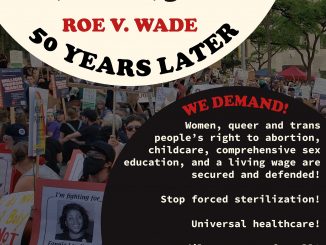
New York City: 50th Anniversary of Roe: We won’t go back! Free abortion on demand! Stop forced sterilization! Jan. 22

SUNDAY AT NOON
50th Anniversary of Roe: We won’t go back! Free abortion on demand! Stop forced sterilization!
17th Police Precinct- New York

Free abortion on demand! No forced sterilization!

Not the Church, Not the State: Women, Queer, and Trans Folks Will Decide Our Fate!

On what would have been the 50th anniversary of Roe v Wade, St. Patrick’s Cathedral is hosting a Prayer Vigil Mass for Life – an anti-abortion event. In our continued fight back to restore Roe v Wade and expand reproductive justice, the NYC Mobilization for Reproductive Justice is calling for a counter-protest. Starting with a speak-out in front of the NYPD 17th Precinct at 167 E 51st St from 12 noon to 1 PM connecting the issues of reproductive justice and abortion access to police violence, followed by a march to St. Patrick’s Cathedral on 5th Avenue.

Since the overturn of Roe v Wade, the emboldened religious right wing has been relentless in their attacks on the reproductive rights of working class and poor women, queer and trans people, hurting mostly disabled people of color and the multiply oppressed. While abortion is still legal in New York State, the Catholic Church has stepped up its aggressive attacks at women’s health clinics around NYC and towards abortion clinic defenders. This is with the protection of Mayor Eric Adam’s Strategic Response police unit, which goes after protesters. We condemn the recent arrests of clinic defenders by this police unit and DEMAND the separation of Church and State.

We also know that when abortion rights are under attack, forced sterilization of multiply oppressed people comes next. The NYC Mobilization for Reproductive Justice calls for free abortion on demand and a stop to forced sterilization!

We Demand!
*Women, queer, and trans people’s right to abortion, childcare, comprehensive sex education, and a living wage are secured and defended!
*Stop forced sterilization!
*Universal healthcare!
*Bodily autonomy for all!
*Separation of church and state!


Strugglelalucha256


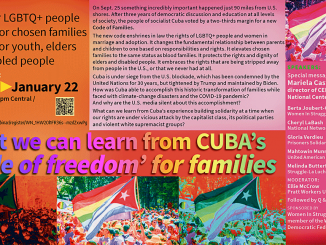
Jan 22 Webinar: What we can learn about Cuba’s ‘code of freedom’ for families

On Sunday, Jan. 22, a webinar panel will report on “What we can learn from Cuba’s ‘code of freedom’ for families.” The people of socialist Cuba voted by a two-thirds margin for the new Code of Families on Sept. 25. The vote was won after three years of democratic discussion and education at all levels of society.

The new code enshrines in law the rights of LGBTQ+ people and women in marriage and adoption. It changes the fundamental relationship between parents and children to one based on responsibilities and rights. It elevates chosen families to the same status as blood families. It protects the rights and dignity of elders and people with disabilities. It embraces the rights that are being stripped away from people in the U.S. or that we never had at all.

Cuba is under siege from the U.S. blockade, which has been condemned by the United Nations for 30 years, a siege tightened by Trump and now maintained by Biden.

The panel will discuss:

  • How was Cuba able to accomplish this historic transformation of families while coping with the U.S. blockade against Cuba, which has continued unabated during the COVID-19 pandemic and the recent climate-change catastrophes?
  • Why is the U.S. media silent about this unprecedented accomplishment?
  • What can we learn from Cuba’s experience building solidarity at a time when rights for LGBTQ+ people, reproductive care, equality for chosen families, as well as respect for youth, elders, and the disabled are under vicious attack by the capitalist class, its political parties and violent white supremacist groups?

Mariela Castro Espín, director of Cuba’s National Center for Sex Education (CENESEX), will present a message in the webinar panel. Some of the other speakers will include Berta Joubert-Ceci for Women In Struggle / Mujeres En Lucha; Cheryl LaBash, co-chair of National Network on Cuba; Gloria Verdieu from Prisoners Solidarity Committee; Mahtowin Munro from United American Indians of New England; Melinda Butterfield, a Struggle-La Lucha co-editor; and Ellie McCrow from Pratt Workers United. There will be opportunities to address questions to the speakers following the panel presentations.

The webinar is sponsored by Women In Struggle / Mujeres En Lucha, a member of Women’s International Democratic Federation.

Registration Link: https://us02web.zoom.us/webinar/register/WN_1HW2Ol1FR36s–mzdZxwPg

Strugglelalucha256


King Day in LA: For justice, against police terror and U.S. war

Activists from the Harriet Tubman Center for Social Justice, CodePink, Socialist Unity Party, Young Communist League, Organization US, and community activists joined a street meeting for justice and against police terror and U.S. war along the parade route for MLK Day.

The speakers, including one from Ukraine, demanded an end to U.S. weapons being sent to Ukraine and escalating towards World War III while encouraging more killing in a long war that only benefits the military industry and U.S. imperialism.

Participants also pledged to work towards building a Dr. King parade that honors his legacy next year. The march today by CORE included the Sheriffs and LAPD. The LAPD has recently come under fire from the community for killing three people in less than 24 hours after the start of this year. Between Jan. 2 and Jan. 3, Keenan Anders, Tarak Smith, and Oscar Sanchez were all killed by the LAPD. But that didn’t stop the corporate-financed “Kingdom Day Parade” from showcasing them in the parade as a welcome contingent.

Like the previous year, when the parade was taken over by the community, activists today promised that next year will be different.

Strugglelalucha256


‘Instead of focusing on Russia, look at the planners of this war’

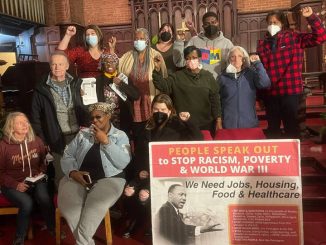
Talk given by John Parker at “People Speak Out to Stop Racism, Poverty and World War III” at St. Mary’s Episcopal Church in Harlem, New York, Jan. 13.

Almost a year ago, on Feb. 15, bombings by Ukraine were 70 bombs per day in the Donbass region. Then, to increase the provocation, it went up 20-fold to 1,400 a day by Feb. 22, with 150,000 Kiev troops at the border of the Donbass region ready to come in and commit genocide – that is undeniable. And the only thing that stopped that genocidal massacre was the Russian intervention that was requested by both Lugansk and Donetsk.

But, despite stopping a massacre — which is kind of important — we’re being told we should condemn Russia because perhaps it unified Europe. Regarding that, Thierry Meyssan – a political consultant for Syria and Libya, so an insider in geopolitics, and founder of the Voltaire Network, a very good news source out of France – wrote an interesting editorial titled The World Order Already Changed in 2022. He writes:

“Everyone is now beginning to think for themselves. We are not yet in the multipolar world that Russia and China are trying to bring about, but we are seeing it being built.

¨It all started with the Russian military operation to enforce Security Council Resolution 2202 and protect the entire Ukrainian population from its ‘integral nationalist’ government.”

Why is he saying that? He points to the unity being built, not destroyed.

Well, he goes on to mention the former European colonial African states that now want the Russian army to ensure their security. They reflect the view of much of the world that is fed up with the U.S. war on terrorism that is actually creating and supporting terrorists in their countries when it suits them. They are also concerned about the huge transfer of weapons destined for Ukraine but winding up on shopping sites for terrorists on the dark web, given the level of corruption in Kiev’s government.

And India and Iran are working hard with Russia to build a transport corridor that will allow them to trade despite the U.S. and Western European illegal economic sanctions. Already Mumbai is connected to Southern Russia and soon to Moscow and St. Petersburg. Beijing is building roads in Eurasia from East to West. None of these relationships are imperialist relationships – they are not exporting capital; they are helping developing countries build up their infrastructure for mutually beneficial economic interests, unlike the financial gangsters of the West – the IMF and World Bank.

See, if the glasses you wear only direct the light into your eyes from Europe, giving a Eurocentric view of the world, you don’t see the Global South. You don’t see that countries in Africa, Latin America, and Asia have a different view and collectively can have more of an impact on the world than Europe.

But I don’t want to give the impression that Europe is united either. Back in August, veteran journalist and TV host Saeed Naqvi wrote in the Indian Observer about French President Macron’s leaked conversation displaying anything but unity, but, for once, honesty: He said basically that Western hegemony might be coming to an end to senior French diplomats.

Macron said France, Britain, and the USA contributed to the world in this way: France is culture, England is industry, and the U.S. is war. He then criticized the wrong choices made by a series of U.S. Presidents from Clinton on. He also said China and Russia had achieved great success over the years under different leadership styles, then mentioned how China lifted 700 million people out of poverty. But, in France, Macron said, the market economy is increasing income inequality at an unprecedented rate. Ouch.

Macron is no anti-imperialist; he refused to take down statues of colonialists and brags about France’s possession of French Guiana. So, he’s not cheering on an end of hegemony; he’s crying about its end and blaming the U.S. administrations, from Clinton to Biden, for ruining the party.

And did you hear what Biden said when Zelensky was in Washington​? In response to a Ukrainian reporter’s question about why the U.S. isn’t arming Ukraine with even more advanced weaponry, he said: “The idea that we would give Ukraine material that is fundamentally different than is already going there would have a prospect of breaking up NATO and breaking up the European Union and the rest of the world.” And, Biden said, “I’ve spent several hundred hours face-to-face with our European allies and the heads of state of those countries, and making the case as to why it was overwhelmingly in their interest that they continue to support Ukraine.” Yikes.

He also said, “They’re not looking to go to war with Russia. They’re not looking for a third World War.” 

Biden ended the questions with this: “There’s more to say, but I’ve probably already said too much.” Yep, he did.

Now, when you dig even deeper in Europe, you see the tens and maybe now hundreds of thousands demonstrating in Europe against their resources being squandered for a U.S. proxy war in Ukraine and upset about their gas prices and general inflation going up.

See, when we talk about unity, we also can’t give the impression that it’s just the ruling class dynamics that matter – more importantly, it’s what’s going on with the working class, which, like the non-European majority countries on the globe, is potentially much more impactful on our future.

But, perhaps instead of focusing on Russia, folks should look at the planners of this war.

The 2022 National Defense Strategy document from the U.S. Secretary of Defense is worth a look. This document was blessed by President Biden, who is quoted in the introduction.

Right out of the gate, it calls China, Russia, Iran, and the Democratic People’s Republic of Korea threats to U.S. national security. And this threat must be met by making NATO even more powerful and nuclear-capable, especially surrounding Russia.

But in terms of priorities, China is the number one target. The document even goes so far as to say that the U.S. should begin training and arming Taiwan in asymmetrical warfare (or guerrilla war) against China.

What should we learn from this document and the Pentagon think tank, the Rand Corporation’s strategy published four years ago, planning the provocations that started this war? First, it didn’t matter what Russia did – the imperialists had a plan of action that was determined to cause war by any means.

But, it’s understandable that there is confusion because censorship by the Pentagon and social media platforms controlled by the State Department keep vital information out.

Sometimes you just have to go there. In the city of Rubizhne in the Donbass region, I arrived at a shelter to interview folks who were housed there to escape the shelling of their apartments by tanks.

In fact, there was a story in one of the only media outlets allowed to exist in Ukraine today – the Euromaidan Press about the shelter in Rubizne I visited.

The Euromaidan Press is an NGO partly funded by the U.S. intelligence National Democratic Institute and the British Embassy in Kiev and indirectly by the Soros’ Open Society Foundation, which funded regime change efforts in Ukraine.

They had a heart-wrenching story about a person’s parents killed by Russian soldiers simply for bringing food and water to a shelter where people had escaped attacks by Russian soldiers. So Ukraine created this shelter in Rubizhne to keep people safe.

Well, I visited the shelter in Rubizne about three weeks after this supposed incident. But, the people there told me they were there because their apartment buildings were being bombed by Ukrainian tanks, not Russian tanks, and while the Ukrainians were bombing them, there were no Russian soldiers on site. And, they said it wasn’t the Ukrainian soldiers that provided them shelter; it was the Russian soldiers and the Lugansk Peoples Militia transporting them there and protecting them from the Ukrainian military.

When I first got to Lugansk, I participated in a conference of religious leaders, Muslim, Jewish, and Christian. The topic of discussion was how to defeat the Nazi ideology that was growing exponentially in Ukraine. Why is it growing so fast – well…

Let’s suppose that Biden tomorrow erects statues of Hitler’s collaborators all over the country, then loans buildings for free to a white supremacist organization to indoctrinate the youth into fascist politics, with libraries filled with books like Hitler’s Mein Kampf and a gift shop downstairs with cute little keychains with Nazi insignias on them. Then to add icing on the cake he abolishes every police department in the country and replaces them with the Klan or some other fascist-white supremacist organization.

In that analogy, I am exaggerating not by one iota regarding what is happening in Ukraine today.

I should mention that when I was in Krymskye, also in Donbass, we visited a tuberculosis hospital that had been retrofitted for war by the Ukrainian military. On the wall was a giant swastika painted on it, and next to it, the sonnenrad, a symbol appropriated by the Nazis in World War II and used today by the Ukrainian Azov Battalion.

When some people say that Ukraine’s Nazi problem is “minor,” they callously ignore the 10 Black people killed at the Tops Supermarket in Buffalo, New York, by an 18-year-old white supremacist. He was wearing the emblem of the Azov Battalion – the same sonnenrad I saw on the wall in Krymskoye. 

This youth said he was inspired by New Zealander Brenton Tarrant, who killed 51 Muslims in a mosque. In his manifesto, Tarrant wrote that he was in direct contact with the Azov Battalion and was planning to go to Ukraine for military training.

In 2019, Time Magazine interviewed a former FBI agent who admitted that 17,000 white supremacists worldwide had traveled to Ukraine for military training. Azov and its partners have used some of the billions of dollars Ukraine has received in funding and training from the U.S. since 2014 to build a very successful social media presence aimed at alienated youth. 

Things are changing, and we must realize that we can no longer allow the U.S. ruling class the luxury of pushing us over the cliff of poverty, climate disaster, and World War III.

Dr. King said the greatest purveyor of violence in the world today – is my own government. He was certainly talking about the most aggressive, violent military alliance in history – NATO. We have the power to end this war and stop the tens of billions stolen from us to fund a war that does nothing but create death, inflation, and misery. We just need to be clear on who the real enemy is – it’s not Russia, and it’s not China – it’s U.S. imperialism, and imperialism’s attack dog – NATO. It’s time to put that rabid dog down. Abolish NATO Now!

Strugglelalucha256


‘Anti-war movement must be built on foundation of solidarity’

Talk given by Melinda Butterfield at “People Speak Out to Stop Racism, Poverty and World War III” at St. Mary’s Episcopal Church in Harlem, New York, Jan. 13.

Good evening friends, siblings and comrades.

Tonight I’d like you to join me for a little thought experiment. First, I want you to imagine there’s been a far-right takeover of the U.S. government supported by violent white supremacists. Sadly, that’s pretty easy to imagine these days. 

Next, imagine that people all over the country rose up to protest against this coup – Black and white, Latinx, Asian and Indigenous, LGBTQ+, immigrants, prisoners. But just as this anti-fascist movement seems to be gaining strength, a terrible massacre of activists takes place in Philadelphia. The resistance is brutally repressed in most of the U.S. Some people are killed, many are imprisoned, thousands have to flee abroad or risk death.

However, in two states, the anti-fascist movement successfully seizes control and holds it. Let’s say, for the sake of argument, that these states are New York and Connecticut. The new U.S. government sends in troops and tanks, but the community organizes itself and manages to push them back.  

A long-term standoff ensues. Many threatened activists from all over the U.S. wind up coming to New York City and Hartford to help strengthen the resistance.

Now imagine this state of affairs continues for nine years. Trade and supplies from the rest of the continental U.S. and Canada are cut off. Hartford, due to its location, is relatively sheltered from attack. But New York City is shelled with artillery from across the Hudson on a daily basis, targeting apartment buildings, schools, hospitals, and houses of worship. 

Death squads and armed drones are regularly sent in to infiltrate and carry out attacks on residents. Overseas allies of the regime in Washington send it more and more weapons. Over time, the number of federal troops surrounding this anti-fascist enclave grows.

The regime in Washington hates Mexico and is constantly trying to provoke a military conflict with our neighbors to the south (also not a far-fetched scenario). Mexico is the only country that offers support to the anti-fascists in New York and Connecticut. The Mexican government even tries to broker a peace agreement. But despite its promises, Washington keeps bombing New York City, week after week, year after year. According to them, we’re nothing but pawns of the evil Mexican government.

This imaginary scenario is one that I hope will never come to pass. But I asked you to consider it because I want everyone, just for a few minutes, to put yourselves in the shoes of people living in the Donbass, the former eastern regions of Ukraine called Donetsk and Lugansk. 

What I just described is reality for people living there since a U.S.-backed coup overthrew Ukraine’s elected government nine years ago, in 2014.

Life in Donetsk

Let me tell you about a dear friend of mine in Donetsk named Sveta. She’s one of the most courageous people I’ve ever known. Sveta is a socialist, a feminist, and a labor activist who grew up in Donbass, but later moved west to Kiev, the Ukrainian capital. 

In 2014, after the coup, she had to flee Kiev under threat of arrest or death. Her husband Denis is a Jewish union organizer from Western Ukraine, and if anything, he was in even greater danger. Sveta and Denis settled back in Donetsk and have lived there through years and years of Ukraine’s bombing war. 

Today, Denis is enlisted in the Donetsk People’s Militia to protect the people of Donbass. While some people have fled the bombing by going eastward into Russia, Sveta has stayed in the city to care for her elderly father. 

Almost every day, she posts updates on the situation there. Over the past year, they’ve grown increasingly heartbreaking. Even her incredible inner strength has been ground down to the bone by the unrelenting Ukrainian attacks on civilians, on her neighbors, on the streets she has to travel for food, medicine, and water. Yes, water, because people have to severely ration water since Ukraine cut off the city’s main source. 

Every time it seems like there might be an end to this nightmare, a new, more powerful weapons system supplied by the United States and NATO gets into the hands of the neo-Nazi Azov Brigade and other Ukrainian forces north and west of the city. Just yesterday, a grocery warehouse in Donetsk was attacked with NATO-issued weapons, killing a worker and wounding four more.

One of the Ukrainian regime’s worst crimes started this past summer. Their army began scattering small landmines called “petals” all over the city. They’re about the size of the palm of your hand. They’re colored and shaped to look like leaves. If you step on one, you may die, but you’re pretty much guaranteed to be left maimed and disabled. The majority of those who have fallen victim have been seniors or emergency workers, and some children too. As of Dec. 21, there were 87 victims of the petals.

Solidarity is essential

The countdown to World War III started long before Russia intervened to protect Donbass last February. People in Donetsk and Lugansk, like the people of Yemen and Palestine, and North Africa, are guinea pigs for testing U.S. weapons. In the event of a nuclear exchange, they will be the first to die. The avowed policy of the Ukrainian government since 2014 has been to “take back” the region and “cleanse” it of the majority Russian-speaking population. The guiding hand behind all of this has been the U.S. government – under both Democrats and Republicans.

Building a true anti-war movement here starts with poor and working people recognizing that it is not in our interests – that the $113 billion spent on the U.S. proxy war in Ukraine last year alone is money stolen from our pockets, money that’s desperately needed to address the crises of inflation, homelessness, poverty, lack of health care and climate catastrophe. 

We have our own battles to fight right here, against poverty, against racist police killings, which were the highest ever recorded last year, against the terrible attacks on voting rights, women’s reproductive freedom, and the right of transgender people like me just to exist. 

But to be effective, the anti-war movement must be built on a foundation of solidarity with the people directly affected. And those residents of Donbass and exiled Ukrainians have been completely written out of the U.S. narrative about the war and sadly, also by many existing anti-war groups.

Solidarity isn’t a one-way street. Earlier generations learned so much from the struggles of people in Vietnam, Central America, and Iraq. Today, when organized fascist groups are growing more threatening in this country, we need to learn from the people of Donbass and their nearly-decade-long resistance to fascism. 

Because, to paraphrase the powerful words of Dr. Martin Luther King Jr., the bombs dropped abroad also explode here at home – they destroy the dream and possibility of a decent life.

Thank you.


Strugglelalucha256


Ukrainian anti-fascist: ‘Continue telling the truth about what’s happening in Donbass’

Message to “People Speak Out to Stop Racism, Poverty and World War III” at St. Mary’s Episcopal Church in Harlem, New York, on Jan. 13. Albu is a coordinator of the Ukrainian Marxist movement Borotba (Struggle) and a survivor of the Odessa massacre on May 2, 2014, when neo-Nazis killed 48 people. He was forced into exile and currently lives in Lugansk.

Thank you for the rally against the war with Russia and China, against imperialism and NATO. I am very grateful to you for continuing to tell the truth about what is happening in the Donbass. It is very important for us that the world will know what is happening here.

In the last two months, the shelling of Donetsk, in comparison with the summer, has intensified. The neo-Nazis want us to move our artillery. They want to force us to remove it from those areas where their defense became weak. Therefore, the neo-Nazis deliberately bomb civilians. The military actions of the Armed Forces of Ukraine are bordering on genocide.

But I am sure that everything will change soon. Good news is already coming that in some areas the defenses of the Ukrainian army have been breached. Our comrades are waiting for good news in the coming months.

Please thank all the participants of the rally from the people of Donbass, from all the anti-fascists of Ukraine, and from Borotba.

No pasarán!

Strugglelalucha256


John Parker speaks at anti-NATO, anti-war NYC rally & march

Strugglelalucha256


People speak out to stop racism, poverty & World War III on weekend of Dr. King Jr’s birthday


Strugglelalucha256


A look back on three years of China’s anti-Covid-19 fight

I arrived in Shanghai, 36 hours after leaving São Paulo, a near deportation in South Africa, and a canceled connecting flight. It was March 21, 2020. In the following days, China implemented its mandatory centralized quarantine for all international travelers. Exactly a week later, on March 28, China started its travel ban1 to prevent the spread of a still little-known virus called Covid-19, which was making its way to all corners of the earth.

Nearly three years later, on the coming January 8, 20232, China will officially open its borders, remove the mandatory quarantine and nucleic acid tests for people entering the country, and downgrade the management of Covid-19 from Class A to Class B3. It is not an end of an era; rather, it is a continuation of a rigorous process of confronting a historic and global pandemic, while putting science and the people at its center. It has been an incredible experience to see how the Chinese government and people have taken on this pandemic, while the world has suffered4 6.68 million recorded deaths, with over 650 million people infected. The impact of this virus is one for the history books, the lasting effects to be studied for years to come, and the fight has not yet ended.

The Western mainstream media, however, has been quick to criticize China every step of the way, from the “draconian5” Zero-Covid strategy to the “dystopian6” measures to ensure a safe Winter Olympics games in Beijing, and now to the “nightmare7” of relaxing the country’s Covid-19 requirements. Rhetoric aside, what has the fight against the virus been like in China—characterized by the Zero-Covid strategy—and why are the relaxation measures happening now? It is important to look back at the last three years to understand how we arrived at this point today. Having lived in China throughout the ebbs and flows of the Covid-19 virus, I would categorize the country’s dynamic strategy into four key phases.

Phase 1: Emergency response (December 2019 to May 2020)

Two-and-a-half weeks after I arrived in China, on April 8, the country celebrated the end to the 76-day historic lockdown in Wuhan, where the pandemic first broke out and claimed the lives of 4,512 Chinese people8. It was an emotional and bittersweet victory for the entire country, which had mobilized its people and resources to fight a very deadly and never-before-seen virus.

On December 26, 2019, Dr. Zhang Jixian9, director of the Department of Respiratory and Critical Care Medicine of Hubei Province hospital of Integrated Chinese and Western Medicine, saw an elderly couple that had a high fever and a cough—symptoms that characterize the flu. But further examination ruled out influenza A and B, mycoplasma, chlamydia, adenovirus, and SARS. She and her team then quickly determined there was a new virus at play. Three days later, the provincial authorities were alerted, then the Chinese Center for Disease Control (CDC), and by December 31, the WHO was informed10. On New Year’s Day, the CDC officials called11 Dr. Robert Redfield, head of the U.S. Center for Disease Control and Prevention, while he was on vacation, to inform him of the severity of their findings.

On January 3, the virus was identified with its genetic sequence which was then shared12 with the world a week later. At this point, there were many unknowns—what the virus was, how it was transmitted, and how it could be stopped. There were no vaccines, while the country—and the world—was unprepared. A strict lockdown of the city of 11 million people began on January 23, and 41,000 medical workers13 were dispatched from across the country to Wuhan. Saving lives and studying this new virus were the main priorities in this phase.

Phase 2: Control and elimination (June 2020 to July 2021)

After Covid-19 had been successfully contained in Wuhan, and throughout the rest of 2020 and 2021, China implemented a Zero-Covid strategy, characterized by extensive measures to track, test, isolate, and treat infected people. The Chinese mainland recorded extremely few deaths14 in this period since the Wuhan outbreak, while successfully containing 11 outbreaks15 of the Delta variant, which is more transmissible and the cause of more serious infections. Meanwhile, the global reported death toll had climbed to over 5.4 million people16 by the end of 2021, with countless millions more infected.

Far from “failing17” as the Western media is claiming now, Zero-Covid worked extremely effectively. Since the pandemic broke, the average life expectancy of Chinese people actually increased from 77.318 to 78.219 years (2019-2021), surpassing the United States for the first time in history (Chart 1). In the U.S., however, the average life span dropped from 78.820 to 76.421 years during that same period, owing in large part to the high number of Covid-related deaths. This is particularly striking when you consider that China was the eleventh22 poorest country in the world in 1949 (measured by per capita PPP GDP) with a life expectancy of only 3623 versus 6824 for the U.S. This means that an average Chinese person’s lifespan more than doubled, whereas in the U.S., the average lifespan only grew by eight years in nearly eight decades.

Chart 1. Life expectancy in China and the U.S. during the COVID-19 pandemic

| Chart 1 Life expectancy in China and the US during the COVID 19 pandemic | MR Online

Life expectancy in China increased beyond that of the U.S. during the pandemic.

The U.S. has recorded 1.1 million deaths due to Covid-19. The cumulative U.S. death rate per one million people is currently 83425 times that of China (3,339 versus 4). In the case of the U.S. and China, the use of “excess-death” numbers—the difference between observed and expected mortality rates—is of little value for analysis purposes as both countries had relatively low numbers of these deaths in the last three years. If China had followed the reckless U.S. path, these figures indicate China would have suffered 4.8 million dead. Even a quick calculation reveals that China’s strategy indeed saved millions of lives.

While it was containing the virus, China was also intensely studying the virus and developing responses, inaugurating26 its first vaccine, Sinopharm, in December 2020, which was subsequently approved27 by the WHO for emergency use on May 7, 2021. By October of that year, according to a Nature study28, Chinese vaccines accounted for nearly half of the 7.3 billion doses delivered globally. Since then, China has approved29 eight vaccines, with 35 others undergoing clinical trials, donated30 328 million doses, pledged31 over US$100 million to the Covax global vaccine distribution program for Global South countries, and proposed32 that vaccines become a global public good.

Phase 3: Adaptation and preparation (August 2021—October 2022)

In August 2021, in response to the spread of the highly transmissible Delta variant, China adopted33 a new strategy called “Dynamic Zero-Covid.” It was designed to balance health, economic, and social needs and to minimize the impact of the epidemic on the economy, society, production, and the people’s everyday life.

There is no one-size-fits-all measure for a country of 1.4 billion people. During this third phase, guided by science, the country experimented with its prevention and implementation practices. Mass testing was developed to high levels of efficiency, in which Guangzhou34’s 18 million inhabitants could be tested a mere three days, while the cost of pooling PCR tests (ten samples per test tube and taking advantage of low infection rates) were reduced to merely 3.5 yuan35 (US$0.50) per person. The country developed a nationwide digital travel code and city-level “green code” cellphone applications36 to track Covid cases and those who have visited high-risk areas. All the while, the government moved towards more targeted measures to limit the use of large-scale lockdowns. During the Shanghai outbreak, for example, residential communities were classified37 into “lockdown,” “controlled,” or “precautionary” zones based on their risk level to try to minimize the interruption of daily and economic life.

Between January 2020 and mid-April 2022, China had spent38 an estimated US$45.1 billion to provide 11.5 billion free PCR testing for its residents. The costs of this mass testing strategy, however, were also mounting, with estimates reaching 1.8 percent39 of the country’s GDP and putting pressure especially on local government budgets. Despite the economic pressures, rather than “crippling40” China’s economy, the country’s GDP grew nearly four times faster than the U.S. and five times compared to the EU, from the start of the pandemic to Q3 of 2022.41

Despite being the second largest economy, China is still a developing country. The pandemic strained the country’s medical system, which was lacking in several key areas. Accordingly, China used the last three years to begin to fill in those gaps, primarily through increasing its intensive care unit (ICU) capacity. In 2019, China had only 3.6 ICU per 100,000 residents42, which was nine times less than the U.S. with 34.7 units. Since 2019, China increased43 its supply of ICU beds 2.4-fold (57,160 in December 2019 to 138,800 in December 2022). In the same period, ICU doctors and nurses44 increased by one-third and doubled, respectively.

On January 15, 2022, China had its first case of locally transmitted Omicron infection. On April 18, 2022, Shanghai announced45 its first three Covid-related deaths, all unvaccinated elderly people aged over 89 years. At the time of the Shanghai outbreak, while 87 percent46 of the country were already fully vaccinated, that number dropped to only 62 percent47 for the city’s 3.6 million elderly aged over 60, with 38 percent having received booster shots. The country knew that this vulnerable sector of the population had to be protected.

Significant efforts have since been made to increase vaccination of the elderly. The official National Health Commission reported48 that on November 30, 2022, the breakdown of vaccination rates for people aged over 80 years are as follows: 76.6 percent at least one shot, 65.8 percent two shots or more, and 40 percent three or more doses. Despite the lower mortality rates of the Omicron variant, its highly contagious nature posed serious challenges to the country’s existing prevention and control measures, while putting great strains on the economy. Even two doses49 of so-called advanced Western mRNA vaccines like Pfizer/BioNTech’s vaccine or Moderna’s similar mRNA vaccine provide only about 30 percent protection against symptomatic infection from Omicron for about four months.

Phase 4: Downgrading severity and easing controls (November 2022 to present)

As Omicron began to spread, comparisons50 showed that the risk of death when infected with Omicron BA.2 was less than half that of Delta. One Chinese scientific study51 on mice showed that the new Covid-19 strains had 100 times lower virus load than the original, but was highly transmissible. China knew it needed to adjust its policies with the shifting nature of the virus, but with some important considerations.

On November 11, the central government released its “20 measures”52 to begin to relax its Zero-Covid policies. This included reducing mandatory quarantine time for inbound flights, decreasing isolation times, promoting vaccination of elderly, and eliminating the use of mass testing. For a country of its size, any central government policy takes time and huge organizational capacity to be implemented at the local scale.

The easing created initial confusion, and some people were upset with local community officials for not upholding the central government’s easing measures, frequently aired on Chinese social media platforms. Though there was frustration and exhaustion, it would be a mistake to believe that the downgrading phase was a response to the series of small, coordinated “white paper protests” that occurred after an Urumqi apartment fire that claimed the ten lives on November 24. Not only did the protests occur two weeks after the government began relaxing its Covid measures, but they were also not representative of the Chinese public opinion at large. The government easing also sparked another concern, with many people worried about getting infected. Several Weibo social media users53 expressed anger and criticism of the protesters, seeing them as irresponsible, middle-class youth who wanted their personal liberties at a collective expense. Unlike the blanketing Western media portrayals, Chinese people do not have a singular voice.

On Monday December 26, China announced54 it will downgrade the management of Covid-19 from Class A to Class B of infectious diseases on January 8, 2023. The three main reasons for this change include the fact that Omicron is not as virulent as Delta, a large percentage of the population had been vaccinated, and the country’s health system was better prepared. China uses a three-level system for the classification of infectious diseases, each delimiting specific response measures. Class A, the most dangerous, includes only cholera and the plague. Class B includes SARS, AIDS, and tuberculosis. Class C includes the flu and the mumps. Corresponding to this change, Covid-19 measures will be further relaxed.

Twelve55 main countermeasures were identified for the new Covid-19 policy corresponding to Class B control: 1) Increase vaccination rates; 2) prepare drugs and testing reagents for patients;  3) increase investment in construction of medical resources including ICU beds; 4) shift from mass PCR testing; 5) treat patients according to severity; 6) improve health survey and data, including vaccination status of those aged over 65 years; 7) control vulnerable population institutions, including elder care, hospitals, and schools; 8) strengthen prevention and control for rural areas and for high-risk patients; 9) increase epidemic monitoring, response, and control; 10) promote personal protection and the principle of everyone’s responsibility for their own health; 11) enable information access and education; and 12) optimize international personnel exchanges.

In a press conference56 of the State Council Joint Prevention and Control Mechanism, Dr. Yin Wenwu, Chief Physician of CDC’s Division of Infection Prevention, addressed the consequence of classifying Covid-19 as a Class B, which would reduce the frequency of the publication of data. The new data, which will be released monthly, will include the number of existing hospitalized cases and serious illnesses, including critical illnesses, and the cumulative number of deaths.

As expected, downgrading the severity of the virus’s management would also mean increasing the number of infections and related deaths. However, no single prediction model can be easily applied to China. Existing models for Covid-19 infection and mortality predictions have a wide range of outcomes. Forecast accuracy tends to decrease as prediction times increase, with models showing up to fivefold increase57 in error comparing one-week to 20-week horizons. Even the same Omicron variant has resulted in varied mortality rates in different countries. As of December 21, the U.S. seven-day rolling death rate58 was as high as 437 people, or a rate of 1.29 per million. Meanwhile, Japan had a comparable rate of 2.0 per million and New Zealand 0.85 per million.

Although China has now surpassed the life expectancy of the U.S., it has relatively fewer people 75 years and older than the U.S. (46 percent59 fewer as a percentage of the total population for each country). Omicron has had the impact that a massive 69 percent60 of all Covid-19 deaths in the U.S. in September 2022 were from this age group. The demographic difference in this age group, taken as a stand-alone factor, would imply an over 30 percent reduction in likely death rates for China.

Western media have been quick to use selective stories and photographs to create a broader image of the “chaotic61” situation in China, including alleging very high death rates. China, with a population of over 1.4 billion people, had over 27,00062 deaths per day prior to the pandemic. Using existing Omicron death rates from other countries would infer a possible 6 percent increase in death rates. These would be significant deaths, into the many tens of thousands, but there is no evidence yet provided that supports the millions that the West is speculating.

This downgrading phase is indeed complex and challenging, as doctors are working overtime with increase in cases, some hospitals are in full capacity, fever medicines have faced shortages, and winter-related ailments are adding complications. However, relaxing measures now means that China has used the last three years to try to prepare itself the best that it can by vaccinating the people, studying the virus, building medical infrastructure, training workers, and waiting until a much less deadly strain had emerged. It has also gained hard-earned experience that is essential to managing any future pandemic.

Steps being taken now

Not for lack of vaccines, there are several reasons for the relatively slow vaccination rates for China’s elders. Many of them63 had preconceived notions about vaccines or were worried about complications related to underlying health conditions, while the successful control of the virus disincentivized elders to get vaccinated. Comparatively, in the United States, only 36 percent of people 65 and older have received the updated shot, known as the bivalent booster64, according to data65 from the Centers for Disease Control and Prevention. China, on the other hand, has consistently made efforts to convince, and not coerce, this vulnerable group to get vaccinated.

On November 29, the State Council’s Joint Prevention and Control Mechanism, adjusted the booster vaccination protocol, and required localities66 to extensively survey senior populations and ramp up services and awareness campaigns. Between December 1 and 13, 823,00067 of those over 80 years old received a third vaccine. China has created the world’s first commercially released inhaled vaccine68 for Covid-19: CanSino Biologics’ Convidecia Air, a non-replicated viral vector vaccine. This booster is already gaining popularity69 with the elderly.

Regarding the supply of medicines, some cities had shortages of fever medicines in the first weeks of December as cases increased. Hoarding, price-gouging, and the spike in demand were among the factors that contributed the supply shortage. In response, local governments started to distribute70 Ibuprofen for free, and Beijing residents, for example, can now get Ibuprofen and Paracetamol within an hour. China also passed a regulation71 on online pharmaceutical suppliers, that included penalties up to five million RMB (US$720,000) for pharmacies that increase prices according to speculative behavior. China has72 also made Pfizer’s Paxlovid oral antiviral treatment available.

Due to mass testing during phase three of the anti-pandemic fight, the government was able to obtain accurate data about the virus to inform its responses. As mass testing has been phased out in this current phase, some data precision will inevitably be foregone. However, China’s resilience is demonstrated in its ability to respond to new situations, applying technologies and science to evolve its public health system. For example, in the past two weeks, over ten provincial CDC’s, including in Sichuan, Jiangsu, Zhejiang, have launched surveys73 with hundreds of thousands of participating citizens. This survey data, though limited by sampling methodology, provides an important reference for local and central authorities to monitor the path of the disease, and collect information including on important hospitals, availability of fever drugs, and response capacity of local governments.

On December 31, Hainan released74 the results of their second online survey (conducted December 19-25) filled in by about 3.4 percent of the province’s population. Below is one of the charts released (Chart 2).

Chart 2. Proportion of infected persons health care seeking behavior in the two rounds of survey population

| Chart 2 Proportion of infected persons health care seeking behavior in the two rounds of survey population | MR Online

China’s CDC continues to actively conduct real-time dynamic monitoring on Covid-19. From December 1 to 29, it had completed the whole genetic sequencing of 1,14275 cases through sampling survey. There are seven Omicron subvariants circulating, two of which, BA.5.2 and BF.7, account for more than 80 percent of all cases. BF.7 has greater immune escape ability, a shorter incubation period, and faster transmission. Guangzhou reported76 that 96 percent of people infected and tested had the BA5.2 variant, the symptoms of which are generally considered milder. There has been no reemergence of the Delta variant or other previous strains. However, the U.S. has conveniently used this moment to target visitors from China, requiring them to show negative Covid-19 tests to enter the country. Ironically, it was the U.S. that failed77 to prioritize Covid-19 variant surveillance in 2020.

Several prediction models have been published in the last week, including one by former CDC chief scientist of epidemiology Zeng Guang,78 states that the infection rate in Beijing may have exceeded 80 percent. These models also predict that the second wave is likely to be much milder and point to three factors behind the higher hospitalizations in the city: Beijing’s winter exacerbates respiratory symptoms among the elderly, Beijing is now listed as a moderately aging society (with 20 percent79 of the residents are above 60 years old, and the dominant80 BF.7 subvariant appears more virulent.

The government is paying close attention81 to the availability of medical resources, especially in the rural areas, in anticipation of the week-long spring festival starting January 21. China has increased daily production82 of antigen tests to 110 million units, along with 250,000 oximeters per day, and is prioritizing supply to rural areas. Rapid antigen tests cost as low as US$0.51 each on the e-commerce platform, Pinduoduo. In the rural areas where the medical infrastructure is less developed, the severity of the virus is not as bad as originally feared, according to online accounts83. Barefoot doctors84, a legacy of the Mao-era and sometimes pilloried by those seeking to privatize rural health, have been essential in providing care in rural eras despite having less resources than major city hospitals.

A look back at the last three years shows how difficult the pandemic has been for China and the world, testing the Chinese government’s capacity to confront such an unforeseen public health crisis as well as the people’s patience. In Beijing where I live, however, people are back and bundled in the streets, at work, and on the subways, with traffic and travel recovering. People are anxiously awaiting the spring festival, the most important holiday of the year. As we enter into a new year and a new era of fighting Covid-19—while anticipating the new viruses that will inevitably emerge—the hope is that the world can learn from these hard-earned lessons, act and cooperate using science, not rumors, and embody a spirit of international solidarity, not stigma.85

Notes

  1.  Ministry of Foreign Affairs, PRC, MFA News
  2.  Ministry of Foreign Affairs, PRC, MFA News
  3.  Global Times, China to downgrade management of COVID-19 from Class A to Class B from January 8
  4.  World Health Organization, WHO Coronavirus (COVID-19) Dashboard
  5.  Bloomberg, China Hits Zero Covid Cases With a Month of Draconian Curbs
  6.  Daily Mail and Reuters, Winter Olympics Dystopian Scenes Inside Beijing’s Closed-Loop Covid Quarantine
  7.  The Washington Post, China’s new covid nightmare could become a global catastrophe
  8.  CGTN, COVID-19 testing to be increased in China’s Wuhan after new case confirmed
  9.  Tricontinental: Institute for Social Research, China and CoronaShock
  10.  World Health Organization, Novel Coronavirus (2019-nCoV) SITUATION REPORT-1 JANUARY 21 2020
  11.  The New York Times, The Lost Month: How a Failure to Test Blinded the U.S. to Covid-19
  12.  World Health Organization, Novel Coronavirus (2019-nCoV) SITUATION REPORT-1 JANUARY 21 2020
  13.  China Daily, Entire nation mobilizes to help Wuhan
  14.  Worldometer, COVID-19 Data in China
  15.  China CDC Weekly, Eleven COVID-19 Outbreaks with Local Transmissions Caused by the Imported SARS-CoV-2 Delta VOC—China
  16.  Worldometer, Coronavirus Death Toll
  17.  Consumer News and Business Channel, Here’s what lies ahead for China after zero-Covid failed
  18.  National Health Commission, PRC, Statistical Bulletin of China’s Health Development in 2019
  19.  National Health Commission, PRC, Statistical Bulletin of China’s Health Development in 2021
  20.  National Center for Health Statistics of CDC, U.S. Life Expectancy Increased in 2019, Prior to the Pandemic
  21.  National Center for Health Statistics of CDC, Mortality in the United States, 2021
  22.  Asia Times, A history of China’s fight against poverty
  23.  National Library of Medicine, Nutrition and health in China, 1949 to 1989
  24.  National Center for Health Statistics of CDC, Mortality Trends in the United States, 1900–2018
  25.  Worldometer, Reported Cases and Deaths by Country or Territory
  26.  Contagion Live, China’s Sinopharm COVID-19 Vaccine Approved by WHO
  27.  World Health Organization, WHO lists additional COVID-19 vaccine for emergency use and issues interim policy recommendations
  28.  Nature, China’s COVID vaccines have been crucial—now immunity is waning
  29.  COVID19 Vaccine Tracker, 8 Vaccines Approved for Use in China
  30.  Bridge of Global Health Strategy, China COVID-19 Vaccine Tracker
  31.  South China Morning Post, Xi Jinping says China promises 2 billion Covid-19 vaccine doses to other countries in 2021
  32.  China Daily, China’s vaccines are global public good
  33.  China CDC Weekly, Perspectives: The Dynamic COVID-Zero Strategy in China
  34.  South China Morning Post, Coronavirus: 18 million tests in three days as Guangzhou tries to stem spread in latest outbreak
  35.  Caixin Global, China Further Slashes Price of a Covid-19 Test to $2.40
  36.  The Paper, When will the health codes be interconnected?
  37.  Global Times, Shanghai reports three COVID-19 related deaths due to underlying diseases for the first time amid the latest flare-up
  38.  Caixin Global, In Depth: As Mass Covid Testing Becomes China’s New Normal, Debate Grows Over Who Pays
  39.  Caixin Global, Will Regular Covid Testing Help or Hurt China’s Economy?
  40.  Financial Times, How China’s lockdown policies are crippling the country’s economy
  41.  This data was provided by British economist John Ross and is included in his upcoming article on Covid-19 and the Chinese economy.
  42.  Global Times, China further focuses on severe COVID cases treatment with tiered medical services plan
  43.  Yujian Finance and Economics, ICU beds increased 2.4 times in three years: our critical care supporting facilities have been racing against time
  44.  Yujian Finance and Economics, ICU beds increased 2.4 times in three years: our critical care supporting facilities have been racing against time
  45.  Global Times, Shanghai reports three COVID-19 related deaths due to underlying diseases for the first time amid the latest flare-up
  46.  YCharts, China Coronavirus Full Vaccination Rate
  47.  Global Times, Shanghai reports three deaths, all elderly, unvaccinated
  48.  Joint Prevention and Control Mechanism of the State Council, Work Plan for Strengthening COVID-19 Vaccination for the Elderly
  49.  The Scientist,  Omicron Appears to Evade Vaccines Better Than Other Variants
  50.  JAMA Network, Estimates of SARS-CoV-2 Omicron BA.2 Subvariant Severity in New England
  51.  Global Times, Exclusive: Chinese scientists prove Omicron’s pathogenicity has geometrically decreased compared with previous strains
  52.  Global Times, China optimizes anti-epidemic measures, shortens quarantine period for intl arrivals
  53.  The Wall Street Journal, China’s Censors End Crackdown on Covid-Policy Criticism—of a Certain Kind
  54.  China Daily, China to manage COVID-19 with measures against Class B infectious diseases
  55.  National Health Commission, PRC, Explanation on Overall Plan for Implementing Class B Infectious Disease Management for COVID-19 Infections
  56.  National Health Commission, PRC, Transcript of the Press Conference of the Joint Prevention and Control Mechanism on December 27, 2022
  57.  PNAS, Evaluation of individual and ensemble probabilistic forecasts of COVID-19 mortality in the United States
  58.  Our World in Data, Coronavirus (COVID-19) Deaths
  59.  Statistics Times, United States vs China by population
  60.  Kaiser Family Foundation, Deaths Among Older Adults Due to COVID-19 Jumped During the Summer of 2022 Before Falling Somewhat in September
  61.  The Economist, Ending China’s zero-covid policy could unleash chaos
  62.  National Bureau of Statistics, PRC, Statistical Bulletin of China’s National Economic and Social Development in 2019
  63.  Caixin Global, Weekend Long Read: Why China’s Seniors Hesitate to Get Vaccinated
  64.  U.S. Food & Drug Administration, COVID-19 Bivalent Vaccine Boosters
  65.  Centers for Disease Control and Prevention, COVID-19 Vaccinations in the United States
  66.  China Daily, Vaccination action plan to target elderly
  67.  Joint Prevention and Control Mechanism of the State Council, Work Plan for Strengthening COVID-19 Vaccination for the Elderly
  68.  Business Wire, World-First Inhaled COVID-19 Vaccine, Developed in Partnership Between Aerogen® and CanSinoBIO, First Public Booster Immunization in China.
  69.  CGTN, Inhalable COVID-19 vaccines gain popularity among seniors in China
  70.  Communist Youth League Central Committee, Free medicines deliver in many places! Mobile diagnosis and treatment vehicles drive to the door and the PCR test booths turn into a diagnosis and treatment station.
  71.  South China Morning Post, China targets online pharmacies for price gouging on Covid-19 medication
  72.  Global Times, Beijing to distribute COVID-19 drug Paxlovid to community health centers to help key population amid approaching peak caseload
  73.  The Paper, Why did Sichuan, Jiangsu, Zhejiang and other provinces launch the COVID-19 infection survey?
  74.  Sanya Released, Online survey of COVID-19 infection in hainan province
  75.  Global Times, Virologists and CDC departments deny reemergence of COVID-19 original strain and Delta variant in China
  76.  Guangming, What strains are dominant in Guangzhou now?
  77.  JAMA Network, How the U.S. Failed to Prioritize SARS-CoV-2 Variant Surveillance
  78.  IFeng, Zeng Guang:Beijing covid infection rate may exceed 80%. The first storm is relatively large, then the second wave is very low.
  79.  Global Times, Beijing now a moderately aging society, to become severely aging by 2035
  80.  Guangming, Beijing’s main strain is BF.7, the most contagious one so far.
  81.  Joint Prevention and Control Mechanism of the State Council, Notice of the current work program for the prevention and control of covid infection in rural areas
  82.  Guancha, All-out efforts to ensure the supply of medical supplies and drugs
  83.  Yuyan Guancha, My hometown has survived the “pandemic”.
  84.  Gongdushijian, The barefoot doctors won a headwind game, while the online experts were confused
  85.  World Health Organization, WHO Director-General’s remarks at the media briefing on COVID-2019 outbreak on 14 February 2020

Source: Monthly Review


Strugglelalucha256


En Puerto Rico, gobierno a espaldas del pueblo

Cuando el pueblo no sabe de las infinitas injusticias, criminales, que el sistema colonial comete contra él, no hay forma de que pueda responder adecuadamente.

Y en Puerto Rico, la falta de transparencia en sus operaciones, tanto del gobierno local como del invasor yanki, es la norma. Esto ha sido resultado en parte del proceso neoliberal de “reducir el gobierno” y así todas las agencias del gobierno, incluyendo las fiscalizadoras, están inhabilitadas de operar adecuadamente por falta de fuerza trabajadora. Es interesante que la única agencia del gobierno que más o menos funciona bien ¡es la Forense!

Así que esta semana, el Centro de Periodismo Investigativo, que continuamente monitorea las operaciones del gobierno, fue al Tribunal Supremo de los EUA, para la vista más reciente de su demanda contra la Junta de Control Fiscal que el Congreso EUA impuso en PR. Exigen lo que normalmente es un derecho del pueblo, la información de sus quehaceres que impactan la vida de todas las personas en PR.

Pero la Junta ha tratado de impedir la publicación de sus documentos, correos y cualquier clase de comunicación. Han operado a espaldas del pueblo imponiendo los presupuestos y regulaciones de los servicios esenciales del pueblo a la vez que rehúsan designar lo que son Servicios Esenciales para así impedir que las leyes internacionales y locales sobre Justicia Social sean un obstáculo para sus recortes.

La decisión de la Corte se espera para el verano. Mientras tanto, solo las organizaciones de base del pueblo son las que se dan a la tarea de supervisar y exponer la incompetencia criminal del gobierno, desde la falta de escuelas, hasta la destrucción del medioambiente.

Este es el comienzo de este nuevo año donde se siente la calma que se experimenta antes de una fuerte tormenta, de un período de fuertes luchas.

Pero la reacción debe ser cuidadosamente estratégica para que el resultado sea una victoria del pueblo.

Y nos toca a las personas, organizaciones y partidos de izquierda asumir esa tarea. Difícil, pero es el único camino a la victoria aporque solo el pueblo salva el pueblo.

Desde Puerto Rico, para Radio Clarín de Colombia, les habló Berta Joubert-Ceci

Strugglelalucha256
https://www.struggle-la-lucha.org/2023/page/78/