Alicia Jrapko presente! Now and always

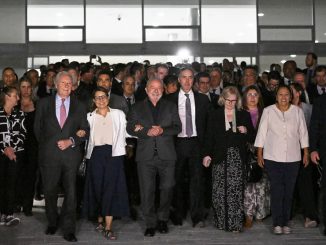
Jan. 7, International Committee for Peace Justice and Dignity, honoring Ali in Oakland, Calif.

Havana, Cuba, Jan. 11 — Ali, as all of us who had the honor of sharing dreams and militancy used to call her, went to another dimension exactly one year ago at night.

It is still hard for us to assimilate the physical absence of our dear companion, sister, and friend Alicia Jrapko, Argentine revolutionary who accompanied so many struggles of our peoples and dedicated more than three decades of her fruitful life to the defense of the Cuban Revolution.

Her work from the United States for the return of Elián Gonzalez, the freedom of the Cuban Five, and always against the draconian blockade consecrated her as one of our great referents, to whom the people and the leadership of the Cuban Revolutionary Government showed immense respect and affection.

You are present, Ali, in every small and big thing we achieve, in every challenge, and in all our struggles.

You live in our memory, in the love of your children and grandchildren, in the love of your dear comrade Bill.

Jan. 7 Alicia’s 3 children and partner pay tribute in Oakland.

Your smile continues to enlighten us; from it, with your immense courage and tenderness, you defy those who do so much harm to the people of this island. They will never succeed in turning back this Revolution that honored you as the faithful sister and companion that you will always be.

This past Saturday, it was Alicia’s children’s turn to show their love by honoring her in a large tribute in Oakland, California,  the city she lived in.

Alicia Jrapko Lives!

International Committee for Peace, Justice, and Dignity to the Peoples

Source: Cuba en Resumen

Strugglelalucha256


Lula: In the face of the coup and the importance of popular mobilization

The attempted fascist Bolsonarist coup d’état of January 8 in Brasilia is not merely a local event. Everything indicates that it had international sponsorship. It is far from being a spontaneous revolt, as there are countless facts that demonstrate a high degree of organization, coordination, and financing prior to the assault and vandalizing of the main institutions representing the three branches of state power in Brazil, no less than the Congress, the Planalto Palace and the headquarters of the Federal Supreme Court. This relationship with the support of an international organization behind the coup attempt and other serious subversive attempts occurring in our region has been pointed out by several analysts, but I have not read any as precise as that of the Cuban Hedelberto López Blanch (https://bit.ly/3Zrc9Rw).

He reminds us of the Conservative Political Action Conference (CPAC) held in Mexico last November 18 and 19, “the largest ultra-right-wing organization in the world, created and controlled for half a century by the American Conservative Union, which holds one or two meetings a year and where more than 100 organizations contribute with abundant capital”.  The author cites the presence at the meeting of Eduardo Bolsonaro, son of Jair, who in one of his speeches stated: “we must gather energies to launch the struggle for freedom in Brazil, Mexico, and the Latin American region,” all in the midst of warnings against the advance of socialism, as they call the slightest attempt to reverse neoliberal policies.

As for the planning and financing of the assault on the highest institutions of the Brazilian Republic, the evidence in the digital networks themselves is overwhelming, in which the call to Brasilia was reported in advance “with breakfast, lunch and dinner paid for” and of course, the mobilization of 100 buses for the transfer of people. Numerous publications in those media mentioned the three official buildings subsequently invaded and even said that they would camp at the Planalto. What is astonishing is that nobody informed President Lula of these preparations. Not even the national intelligence. It seems natural that at least some of his collaborators must have known about the announcements and perhaps underestimated them. It also seems a very big oversight of those in charge of security and defense in Lula’s cabinet to have left the bolsonaristas, head of the government of Brasília and head of the city security, in their posts. By percent, the latter apparently saw in Miami the scenes on TV of the assault on the government buildings sitting next to the ex-president. This explains the weak police response the mob encountered and the inaction, if not complicity, of the military police under the government of Brasilia. A very suspicious fact is the non-action of the battalion always on guard in the basement of the Planalto Palace. This battalion depends on the high command of the armed forces. The inaction of the generals in the face of the Bolsonarista camps located in front of the army barracks, especially in front of the headquarters of the armed forces, provoked Lula’s scathing comment on the passivity of the generals and that they “seemed to like” the calls to overthrow him made by the mobs gathered there.

The role of digital networks in the bolsonarista and ultra-right rebellion on a global scale deserves a separate chapter and two splendid articles by Ignacio Ramonet (https://bit.ly/3iqpAAJ), and Eduardo Febbro (https://bit.ly/3kbpYmO) have been published on the subject and the threat posed by these networks, in the hands of private mega-monopolies, to what is left of democracy in the world.

Lula has acted vigorously in the defense and protection of institutionality. He emerges strengthened from this setback. According to Datafolhs, 93 percent of Brazilians oppose the coup attempt.  Bolsonaro’s prestige is going through some low times. But Bolsonarismo is alive and already planning a new mobilization in Brasilia this week, which made the government reinforce security measures.  The bet of the ultra-right (and its new ally) the right in our region is on chaos and ungovernability. The main resource of progressive governments is mass support, as demonstrated in Mexico, where Lopez Obrador keeps it at bay with his enormous popular acceptance. This is what the tireless and experienced Lula will have to resort to with his charisma to consolidate his government and advance in his promising program of national salvation.

Source: La Pupila Insomne translation Resumen Latinoamericano – US

Strugglelalucha256


Thousands march in Paris over rising prices, pension reform

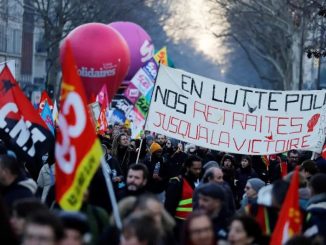
Thousands of people hit the streets of the French capital Paris on Jan. 7 as they demonstrated against President Emmanuel Macron for rising prices and pension reform.

“We went out today for the sake of all the French who are dying of hunger because of the high prices that they can no longer afford,” protester Jamal Bouaban said.

On Jan. 10, Prime Minister Elisabeth Borne detailed plans to make the French work longer, most likely by raising the retirement age to 64 or 65 from 62 currently.

Macron had to put the pension reform on ice in 2020 as the government rushed to contain the COVID outbreak and save the economy.

Now, he can count on tougher union opposition than in 2020, with even the reform-minded CFDT – France’s biggest union – threatening to protest, which it abstained from three years ago despite misgivings about the reform at the time.

“If the retirement age is pushed back to 65 or 64, the CFDT will do what we’ve said we’ll do, we will resist this reform by calling on workers to mobilize,” CFDT head Laurent Berger said last week.

Calls for walk-outs could find more traction this time, with frustrations already running high over the loss of purchasing power during the current inflation crisis.

https://twitter.com/dilanpcook/status/1612042270634831872

https://twitter.com/sahouraxo/status/1612198624347455489

Strugglelalucha256


Peruvian security forces massacre 17 protesters in Juliaca, Puno

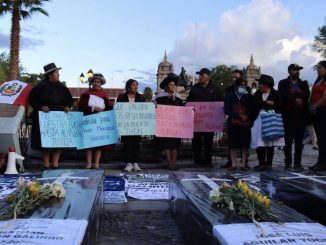
On Monday, January 9, Peruvian security forces brutally repressed an anti-government protest in Juliaca, a city in southern Peru’s Puno region, killing at least 17 protesters and leaving at least 68 others severely injured. The dead included at least two teenagers.

According to reports from local media, Peruvian police and military officers opened fire on thousands of protesters who had occupied the Juliaca airport as a part of nationwide protests demanding the release of former left-wing President Pedro Castillo, the resignation of de-facto President Dina Boluarte, the dissolution of the right-wing dominated unicameral Congress, fresh parliamentary elections, and a new constitution through a Constituent Assembly.

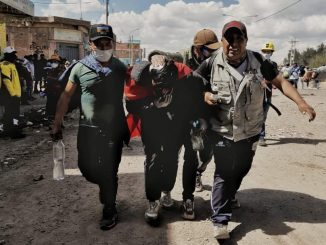
Photos and videos shared on social media networks showed victims bleeding from their heads, with pellet wounds on different body parts, people carrying people with severe injuries on their backs and in their vehicles to help them get to hospitals.

This was the second massacre at the hands of Peruvian security forces in one month of social protests demanding structural changes to the country’s political system. On December 15, 2022, the security forces massacred ten people and severely injured 52 others in Ayacucho, while trying to unblock the local airport, which was occupied by protesting residents.

With the latest victims, the death toll from state repression of anti-government protests rose to 46.

Peru’s Ombudsman Office requested the public order forces to comply with international standards in using force against protests and urged the Prosecutor’s Office to carry out a rapid investigation into the deaths.

The Inter-American Commission on Human Rights (IACHR) condemned the death of people in Juliaca, and urged the Peruvian State to take immediate measures to prevent and punish the excessive use of force in social protests; and to continue generating effective mechanisms of dialog to address social conflict and prevent violence. IACHR also announced that it would send another delegation to Peru to visit Lima and other cities from Wednesday to Friday to evaluate the situation.

The Office of the United Nations High Commissioner for Human Rights (OHCHR) in Peru also expressed its “deep concern over the escalation of violence in Peru,” and called for the adoption of urgent “measures to prevent more violence and ensure respect for human rights in the context of peaceful demonstrations.”

Popular resistance

Since January 4, tens of thousands of people, mainly from Indigenous and peasant communities, have been taking to the streets and organizing roadblocks in different parts of the country to express their rejection of the Boluarte government, demand respect for their vote and reinstatement of their democratically elected president.

Castillo was overthrown in a legislative coup carried out by the right-wing opposition majority Congress on December 7, after he tried to dissolve Congress and rule by decree. He was swiftly arrested following his dismissal for allegedly “breaching constitutional order.” On December 15, the Peruvian judiciary extended Castillo’s preventive detention to 18 months on the Prosecutor’s Office’s request, which is investigating him for the crime of rebellion, among others.

Puno, Arequipa, Cusco and Tacna are among the regions where massive anti-government protests have been taking place following the resumption of an indefinite national strike after the New Year break.

Following the massacre in Juliaca, the Indigenous and peasant communities, along with several popular movements, social organizations, student associations, and trade unions called for the intensification of protest actions against the Boluarte government and a march to the capital Lima to press for her resignation.

In the evening, thousands of people demonstrated in the streets and organized cacerolazos in Arequipa, Apurimac, Cusco, Puno and San Miguel. A cacerolazo is a form of protest in which demonstrators make noise by banging utensils.

Boluarte’s response

Speaking at a press conference from a “national agreement” meeting on Monday with representatives from the country’s regions and various political institutions, Boluarte said she doesn’t understand why people are protesting. She said that she could not respond to all the demands of the protesters.

“I have already explained to you that the four political points are not in my hands. The only thing that was in my hands was the advancement of elections, which we have already proposed,” said Boluarte.

“The Constituent Assembly does not pass through the hands of the Executive [president]. If, with this pretext, they are taking to the streets, the brothers from the regions where there are acts of violence, they are deceiving themselves,” she added.

Additionally, she continued criminalizing the protests without apologizing for unleashing brutal repression.

“What you are asking for is a pretext to continue generating chaos in the cities. In peace and order everything can be achieved, in the midst of violence and chaos it gets more complicated, it becomes difficult,” said Boluarte.

National criticism

Meanwhile, the Boluarte administration’s handling of the protests was widely criticized by various political leaders.

Vladimir Cerrón, progressive leader and the founder of the Free Peru party that sponsored Castillo’s presidential candidacy in 2021, called for Boluarte’s resignation.

“Dina, you should quit! The longer you are in power, the worse your legal situation will be, if with 28 deaths you had doubts and you have a prosecutor’s file investigating you for those crimes, with these 12 more deaths they could send you to prison for decades, while others benefit,” Cerrón tweeted.

With respect to her response that she couldn’t address protesters’ key demands, Cerrón explained how she actually can. “There are two paths: 1. A bill from the Executive to the Legislative, without going through commission due to the urgency of the case, the people convene outside Congress and the plenary vote, and 2. Return to the 1979 Constitution (Article 307) and convenes a Constituent Assembly,” he said.

Verónika Mendoza, former presidential candidate for the progressive New Peru movement, also criticized Boluarte’s response.

“Stop the massacre in Puno! There are already close to 40 Peruvians assassinated in less than a month of [a new] government! Mrs. Dina Boluarte, how can you continue in office and claim a “national dialogue” at the same time that the “law enforcement agencies” shoot to kill our compatriots? Resign now!” tweeted Mendoza.

“Given the critical situation we are going through, Dina Boluarte and the president of Congress must leave their positions so that—with a new board of directors of Congress—a transitional government can be built hand in hand with a broad platform of social and political organizations. From there, the elections should be brought forward to 2023 and a referendum to consult the people whether or not they want a new Constitution be called. By now we should all be clear that repression does not solve anything, it only exacerbates the conflict,” she added.

Source: Peoples Dispatch

Strugglelalucha256


“Los tirotearon como a animales”: Masacre en Ayacucho, Perú

El 15 de diciembre de 2022, en las afueras de la ciudad de Ayacucho, efectivos del ejército nacional del Perú dispararon contra civiles mientras helicópteros sobrevolaban la zona. Este ataque fue la respuesta a una huelga y movilización nacional en protesta por el golpe de Estado del 7 de diciembre, que depuso al presidente Pedro Castillo.

El día del ataque, cientos de estudiantes universitarios, comerciantes, vendedores ambulantes, trabajadores agrícolas y activistas se habían concentrado en el centro de Ayacucho para luego marchar hacia el aeropuerto, para mostrar su descontento por la destitución de Castillo. Acciones similares se sucedieron en varias otras ciudades de la región andina del sur del país.

A medida que los manifestantes se acercaban al aeropuerto, miembros de las fuerzas armadas abrieron fuego y dispararon bombas de gas lacrimógeno directamente contra ellos. Los disparos desde los helicópteros resultaron ser los más letales. Mientras cientos de personas desarmadas corrían para salvar sus vidas, los disparos continuaban.

La consecuencia de esta acción del ejército fueron diez personas muertas y 72 heridas, según cifras oficiales facilitadas por la oficina del defensor del pueblo. Para la fecha de este artículo, al menos seis personas siguen luchando por su vida en hospitales de Ayacucho y Lima, la capital de Perú. Las autopsias de las personas asesinadas en Ayacucho demuestran que seis de las víctimas murieron por heridas de bala en el pecho. El más joven tenía sólo 15 años.

El 27 de diciembre, Reuters relató la muerte de una de estas víctimas: Edgar Prado, de 51 años, recibió un disparo cuando intentaba ayudar a otra persona que había sido abatida durante las protestas.

La extrema violencia en la respuesta de las fuerzas de seguridad a las protestas antigolpistas en todo Perú fue ampliamente condenada. Una delegación de la Comisión Interamericana de Derechos Humanos (CIDH) visitó el país entre el 20 y el 22 de diciembre para recoger los testimonios de las víctimas y de organizaciones locales de DD. HH. sobre la violenta represión sufrida por los manifestantes. También habló con familiares de las 28 víctimas mortales que se han contabilizado hasta ahora a lo largo del país, incluyendo los diez casos de Ayacucho, a donde la delegación de la CIDH viajó el 22 de diciembre.

Mientras la delegación recogía los testimonios, más de una docena de familiares, habitantes de Ayacucho, organizadores y un par de periodistas independientes – incluyéndome – esperábamos en la acera de una de las estrechas y coloridas calles de la ciudad. Al ritmo de gente que entraba y salía, se fueron relatando gran parte de los acontecimientos y tragedias del 15 de diciembre.

La masacre

“Esto no te lo van a mostrar en las noticias”, me dijo Carmen (quien nos pidió no usar su nombre real) mientras me mostraba en su teléfono un vídeo en el que un grupo de manifestantes arrastraba hacia un lugar seguro a un joven con la camisa ensangrentada. “Es su sobrino”, me dijo, señalando a una mujer sentada en el suelo.

Pedro Huamani, un hombre de 70 años miembro del Frente en Defensa del Pueblo de Ayacucho (FREDEPA), acompañaba a las víctimas que esperaban fuera de la reunión de la CIDH. “Hemos sufrido una pérdida terrible”, me dijo, “yo ese día estaba en una marcha pacífica hacia el aeropuerto”.

“Cuando empezaron a dispararnos bombas de gas lacrimógeno y balas, empecé a asfixiarme, casi me muero allí”, dijo Huamani. “Escapé y bajé hacia el cementerio, pero fue lo mismo, intentábamos entrar y empezaron a dispararnos por detrás. Sobrevolaban helicópteros y desde allí nos disparaban bombas de gas lacrimógeno, intentando matarnos”.

Carmen me presentó a algunos de sus amigos y uno de ellos, vestido con un traje deportivo gris, me dijo: “Todos vivimos cerca del aeropuerto y vimos cómo ocurría todo. Tendrías que haber visto cómo les disparaban como a animales. Intentamos ayudar a algunos heridos, pero fue difícil”.

La masacre de Ayacucho, así como la violenta represión en todo el país, no ha hecho sino intensificar la exigencia popular sobre la dimisión de Dina Boluarte. Boluarte tomó posesión de su cargo el 7 de diciembre, inmediatamente después del Golpe contra Castillo. En entrevistas y discursos públicos, ha justificado el uso de la fuerza por parte de la policía contra los manifestantes calificando las protestas como actos de “terrorismo” y “vandalismo”.

Temblando y conteniendo las lágrimas Huamani, me dijo: “Es una presidenta asesina y en Huamanga no la queremos, ni la reconocemos como presidenta, porque esta mujer ordenó a la policía y al ejército disparar contra nosotros los peruanos. Y esas balas, esas armas, realmente las compramos nosotros, no el ejército, ni los soldados, sino el pueblo. Y que ellos nos esten asesinando es realmente horrible”.

La rabia que sienten los habitantes de Ayacucho también está vinculada al debilitamiento histórico de la democracia peruana y a la exclusión económica que sufren las regiones situadas fuera de Lima. Huamani explicó: “Sacaron a nuestro presidente [Castillo], así que esto no es una democracia. No somos una democracia, estamos en [estado de] guerra, pero no sólo en Ayacucho y Huamanga, sino también en Arequipa, Apurímac, Cusco. En estas regiones, estamos sufriendo la pobreza, ya no podemos sobrevivir, nos estamos muriendo de hambre… y estos derechistas quieren hacernos sus esclavos, pero no lo permitiremos porque estamos respondiendo y resistiendo”.

Viejas heridas abiertas

El 15 de diciembre no fue la primera vez que las fuerzas armadas peruanas masacraron a civiles en Ayacucho. Muchos de los que estuvieron presentes el 15 de diciembre dijeron que el trato bélico que recibieron los manifestantes pacíficos recordaba a los días del conflicto armado interno de dos décadas que los peruanos sufrieron hace más de 20 años.

“Todavía nos tratan como si todos fuéramos terroristas”, señaló un familiar de una de las víctimas de las protestas.

Como parte de la campaña del Estado contra la insurgencia guerrillera, se torturó, detuvo, desapareció y asesinó a decenas de miles de campesinos e indígenas inocentes, acusándolos de apoyar o formar parte de la insurgencia.

La población de Ayacucho fue una de las más afectadas. Según los informes de la Comisión de la Verdad y Reconciliación, creada para investigar las violaciones de los derechos humanos, de las 69.280 víctimas mortales estimadas del conflicto armado interno en Perú entre 1980 y 2000, 26.000 fueron asesinadas o desaparecieron a manos de agentes estatales o grupos insurgentes en Ayacucho. Miles de personas que huyeron de sus pueblos a la ciudad de Ayacucho durante el conflicto siguen buscando a sus seres queridos y exigiendo justicia.

Una de ellas es Paula Aguilar Yucra, a quien conocí a la salida de la reunión de la CIDH. Como más del 60% de los habitantes de Ayacucho, el quechua es su lengua materna. Esta mujer de 63 años es miembro de la Asociación Nacional de Familiares de Secuestrados, Detenidos y Desaparecidos del Perú (ANFASEP), con sede en Ayacucho. Huyó de su comunidad rural de Usmay a Ayacucho en 1984, después de que su madre fuera asesinada y su hermano secuestrado y desaparecido por los militares.

Casi 40 años después, vuelve a estar de luto. Su nieto, José Luis Aguilar Yucra, de 20 años, padre de un niño de dos años, fue asesinado el 15 de diciembre de un disparo en la cabeza cuando intentaba volver a casa después del trabajo.

En una vigilia celebrada en la tarde del 22 de diciembre, Paula, de pie junto a los demás miembros de ANFASEP, sostenía un cartel en el que se leía: “Luchar hoy no significa morir mañana”.

Este artículo fue producido para Globetrotter.

Zoe Alexandra es periodista y co-editora de Peoples Dispatch.

Strugglelalucha256


Over 7,000 nurses are on strike in New York City. Here’s why

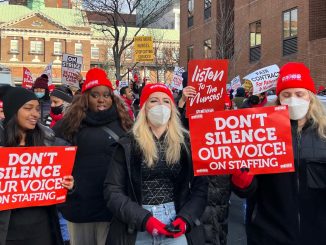
On Monday, January 9, over 7,000 New York City nurses from Mount Sinai and Montefiore hospitals in Manhattan and the Bronx, respectively, went on strike. Nurses, organized by the New York State Nurses Association (NYSNA), are demanding safe patient-to-staff ratios, fair wages, and to maintain existing healthcare benefits.

Nurses, who authorized a strike on December 21 with an overwhelming vote of 98.8% in favor, have been in contract negotiations with hospital administrations across the city. Initially, the number of nurses set to strike was around 16,000 at eight hospitals: NewYork-Presbyterian, Montefiore, Mount Sinai Hospital, Mount Sinai Morningside and West, Maimonides, BronxCare, Richmond University Medical Center, and Flushing Hospital Medical Center. However, hospital bosses scrambled to reach tentative agreements with the nurses to avert a strike at all hospitals save Montefiore and Mount Sinai Hospital.

The mood outside of Mount Sinai Hospital, in the Upper East Side of Manhattan, was fiery, despite negotiations being tense for the past few days. The picket line swelled with a crowd of hundreds of nurses, bisected by a road of slow-moving vehicles, many honking in support.

Mount Sinai management has claimed that NYSNA walked out of negotiations, while NYSNA has claimed the same of the hospital bosses.

“It is deeply unfortunate that instead of agreeing to either of these solutions and rescinding its strike notice, Mount Sinai’s NYSNA leadership has made the decision to ask nurses to leave patients’ bedsides during a tridemic,” claimed Mount Sinai on January 9.

Montefiore also made similar implications regarding the commitment of NYSNA nurses to their patients. “Despite Montefiore’s offer of a 19.1% compounded wage increase—the same offer agreed to at the wealthiest of our peer institutions—and a commitment to create over 170 new nursing positions, and despite a call from Governor Hochul for arbitration, NYSNA’s leadership has decided to walk away from the bedsides of their patients,” wrote the hospital in a statement.

Again and again, hospital bosses and their representatives have hammered in the point of how disastrous a strike by nurses would be. A strike would be a “public health calamity,” claimed Ken Raske, of the Greater New York Hospital Association.

Nurses are indeed essential, as evidenced by hospital executives’ costly efforts to make up for the losses of the strike by transferring infants to other hospitals or hiring travel nurses, who are paid more than a regular nurse. Union nurses have pointed out the incongruency of these decisions, as the millions of dollars required to prepare for a strike could be used to simply pay nurses more. And, as striking nurses have emphasized consistently, the picket line is the last place they want to be.

“We would rather be in there, doing what we love,” Diane, a nurse at Mount Sinai, told Peoples Dispatch, referring to the hospital building behind the picket line.

“We don’t wanna leave our patients. This is the last thing that we ever want to do. But unfortunately we’re pushed to this point,” said Jessica, also a nurse at Mount Sinai. “Management left their patients, not us. We’re here fighting for our patients.”

These nurses are referring to one of the primary concerns of unionized nurses: the lack of safe staff-to-patient ratios at New York City hospitals. New York state actually has existing staffing laws, which were passed in 2021 to address precisely the issue of hospitals using understaffing to cut costs. However, since then, New York state has failed to enforce these laws. Mount Sinai currently has 500 staff openings and Montefiore has 700, according to NYSNA.

Julia, another Mount Sinai nurse, told Peoples Dispatch: “When there’s too many patients being taken care of, then it compromises safety, and at the same time, it compromises your license. So that’s why we’re here. It really is safety for the patients as well as for the nurses.”

“Who were [the ones] here during the pandemic? Who is actually at the bedside?” Julia continued. “So if it is [the hospital executives’] family being taken care of, how could you expect me to really be addressing all of the issues of the one patient, if there’s maybe 17 other patients being taken care of in the emergency room in or in the ICUs or as inpatients.”

Hospital bosses claim that understaffing is due to a shortage of nurses. In reality, nurses are leaving the profession at increasing rates due to low wages and high stress. Union nurses argue that by investing in hiring more staff, which will decrease stress, and paying nurses more for their work, hospitals will be able to address a shortage of nurses. Instead of making these investments, the union has pointed out that hospital executives paid themselves tens of millions in bonuses during the height of the pandemic.

“We want New Yorkers to be taken care of. We stayed with you during COVID. You clapped for us with pots and pans,” said Nella Pineda-Marcon, nurse at Mount Sinai and NYSNA secretary, at a January 9 press conference at the Mount Sinai picket line. “Our loyalty is with New Yorkers. Our loyalty is with the community. It’s never profit over patients.”

Source: Peoples Dispatch

Strugglelalucha256


Peru: Juliaca massacre death toll rises to 17

January 10 — Peru’s human rights ombudsman has confirmed that the death toll from last night’s massacre in Juliaca has risen to 17. The protesters were killed while participating in the general strike against the coup regime led by President Dina Boluarte.

The statement from the ombudsman reads: “At nine o’clock at night on January 9, 2023, we recorded 17 deaths in Juliaca, and one further death due to events related to the road blockade in Chucuito, Puno”. The total number dead since the coup is now at 46.

The general strike against the coup is now in its 7th day, with barricades cutting off highways at 45 different points across the country. The indigenous Aymara region of Puno, which borders Bolivia, has been the epicenter of social protest. Other hotspots include; Arequipa, Cusco, Tacna, and Amazonian cities such as Pucallpa and Ucayali.

Following the deaths last night, Prime Minister Alberto Otárola announced that the government will not resign and will continue the repression in Puno in order to ‘restore order.’ Otárola asked the Prosecutor’s Office “to capture and prosecute those who are destroying the country financed by foreign interests and by the dark money of drug trafficking.”

The protests began on December 7th, when security forces arrested President Castillo, who is still being held without charge in Lima. The national congress, in which right-wing parties have a majority, installed Dina Boluarte as President until elections in 2024. Protesters want the resignation of Boluarte, immediate elections, and also a constituent assembly in order to draft a new constitution.

Source: Kawsachun News

Peru: General strike continues despite repression

January 9 — The general strike against Peru’s coup regime is on its sixth consecutive day with barricades and roadblocks erected across the country. The weekend also saw countless illegal arrests of protesters and journalists.

According to authorities, protesters have blocked highways at 45 different points. The indigenous Aymara region of Puno is the center of opposition to the regime, with the highest number of barricades erected along highways. The roads connecting Puno to Arequipa, Cusco, and the Amazon, are among those currently blocked.

In Lima, 224 people were detained on Friday for participating in protests organized by workers’ unions. Nevertheless, the transport workers union has announced that they will join the general strike “if this is the only way for them to listen to us,” said their general secretary Ricardo Pareja.

The possibility of dialogue appears unlikely after the Confederation of Peruvian Workers (CGTP), the largest union confederation, announced that it would not participate in the ‘National Agreement Session’ organized by the regime. The unions say that there cannot be social peace while the Peruvian people are being massacred, tortured, and killed for using their right to social protests.

The regime of Dina Boluarte has killed more than 30 protesters, mostly indigenous, since the coup against Pedro Castillo. Strike demands include the resignation of Dina Boluarte, new elections, a constituent assembly, and the release of Pedro Castillo.

Strugglelalucha256


Lula inspects damage caused by Bolsonarists in Brasilia

He described the coup attempt promoted by “fascist vandals” as “barbaric” and accused Jair Bolsonaro of “stimulating” these anti-democratic acts with his attitude.

On Sunday night, President Lula da Silva arrived in Brasilia to inspect the damage that Jair Bolsonaro’s supporters caused in the headquarters of the three powers during their attempted coup d’état.

The progressive leader verified the trail of destruction left by the far-right activists in the Planalto Palace, seat of the Brazilian government.

When the acts of violence broke out, Lula was in the state of Sao Paulo inspecting the municipality of Araraquara, which was heavily affected by the rains in recent days.

From there, in response to the chaos that Brasilia experienced for four hours, Lula decreed federal intervention in the security area of the Federal District until January 31.

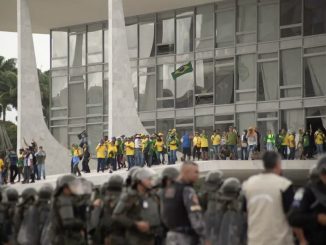
Thousands of far-right militants, who have spent weeks asking at the gates of the barracks for an intervention by the Armed Forces to overthrow Lula and return Bolsonaro to power, invaded and destroyed the headquarters of Congress, the Presidency and the Supreme Court.

Lula described the coup attempt promoted by “fascist vandals” as “barbaric” and accused Bolsonaro of “stimulating” these anti-democratic acts with his attitude.

The events in Brasilia were condemned by the international community and occurred exactly one week after Lula assumed the Presidency. The episode recalled the invasion of the U.S. Capitol that took place on January 6, 2021 by supporters of former President Donald Trump.

On Sunday, former president Bolsonaro, who is living in the United States, sent messages through social networks tepidly rejecting the coup acts.

Source: teleSUR

Strugglelalucha256


Coup attempt: Bolsonaro supporters invade Congress, Supreme Court, and office of President in Brasilia

Supporters of the former president Jair Bolsonaro invaded the Supreme Federal Court, National Congress, and the Planalto Palace, the office of the president, this Sunday January 8, breaking through the blockade of the Military Police and the National Security Force of the Esplanade of Ministers in Brasília.

The Planalto Palace, where the cabinet of the President also works from, was one of the key targets of the Bolsonaristas. According to CNN, there were members of the government in the building, that awaited rescue inside.

Dozens of buses had arrived on Saturday January 7 to the Federal District to carry out the coup actions. Estadão estimated that 100 buses and approximately 3,900 people had traveled to the capital.

On Saturday January 7, the Minister of Justice and Public Security Flávio Dino had authorized the use of National Force as security in the capital in light of the threat of violent actions.

“In addition to all of the federal forces available in Brasilia, and of the constitutional action of the Governor of the Federal District, we will also have the help of the National Force in the next few days. I just signed an act authorizing its action in the face of threats carried out against democracy,” the minister had written on Twitter.

Flávio Dino had also previously affirmed that those who financed the illegal protests would be punished. “The taking of power can only take place in 2026, in new elections,” the minister highlighted.

In an interview with CNN on following the attacks, Luciano Bivar, vice-president of the Chamber of Deputies, said that he spoke with the president of the body, Arthur Lira, and with Anderson Torres, former minister of justice, and current Secretary of Public Security of the Federal District. Torres confirmed that the Military Police would send back-up and that new contingents were sent to the area.

“Unfortunate developments right now in the Ministers Esplanade. I called on the operations sector of the Public Safety of the DF to take immediate measures to reestablish order in the center of Brasilia,” wrote Anderson Torres on Twitter.

Lula calls for federal intervention in Brasilia’s public security

An hour after the coup attempt, President Lula gave a press conference to condemn the situation and announce the response of the government to the actions. After criticizing the complicity of Brasilia’s public force in the coup attempt, he announced he was signing a decree for the federal intervention in public security of the Federal District until January 31. The announcement was made in Araraquara, São Paulo where the president was visiting to survey the impact of torrential rains in the region.

Lula told the press, “Those people that we call fascist, that are everything that is abominable in politics, invaded the seat of government, they invaded the Congress, and they invaded the Supreme Court. As true criminals and destroying everything they found in front of them. We believe that there was a lack of security. And I want to tell you, that all of the people who did this will be found and punished. They will see that democracy guarantees the right to freedom and free expression, but demands that people respect institutions.”

“The criminals, that we can call fanatic nazis, fascist fanatics, did what has never been done in the history of the country. The Brazilian left has already had people be tortured and killed, and you have never read about a left movement invading the Supreme Court, Congress, or Planalto. What they did is unprecedented. We are going to find out who are the people that financed these criminals that went to Brasilia. They will pay with the force of the law for holding responsibility in these anti-democratic acts, actions of vandals and fascists,” he declared.

Bolsonaro is silent

Hours after the coup attempt by his own supporters, the former president Jair Bolsonaro, who fled to Florida on December 30, 2022, has yet to make a comment about the situation.

On social media, the Chief of Staff of the Bolsonaro government did not condemn the actions but called for “balance and sense” of the invaders and declared “democracy is strengthened in the contradiction and respect of differences.”

Former vice president and current senator Hamilton Mourão is also yet to make a statement.

Source: Peoples Dispatch

Strugglelalucha256


Día de Reyes en Puerto Rico

Hay una campaña publicitaria sobre Puerto Rico donde se indica que tenemos las Navidades más largas del mundo, y en parte es así. Se celebran desde el último jueves de noviembre hasta mediados de enero.

Sin embargo, a pesar de que en Nochebuena y Navidad hay cenas criollas, intercambio de regalos y todo tipo de celebración con familiares y amistades, es el 6 de enero, en la Fiesta de los Reyes Magos que en nuestro país se fortalecen las tradiciones y costumbres boricuas.

El colonialismo yanki nos ha contaminado de costumbres tan foráneas a nuestra historia y cultura, que en pleno trópico, se reproducen escenas con nieve artificial y el consabido Santa Clós rubio y redondo. 

Pero el Día de Reyes surge la calidez de nuestro pueblo, el orgullo de tocar y cantar nuestra música, de ser nosotras y nosotros mismos y no la imagen gringa que han querido imponer desde su invasión en 1898. 

Y aunque su origen es religioso, de tiempos del colonialismo español, ahora se ha convertido en fiesta de Resistencia al invasor estadounidense. Tanto es así que se ha propagado la imagen de los Tres Reyes con las caras de Ramón Emeterio Betances, padre de la patria y líder del Grito independentista de Lares, Eugenio María de Hostos, independentista y educador que apoyó la independencia de Cuba, y Pedro Albizu Campos, líder independentista del Partido Nacionalista conocido como El Maestro.

Ahora en Puerto Rico, el Día de Reyes y los días siguientes, son realmente una fiesta de reafirmación boricua.

¡Muchas felicidades para la audiencia y fuerzas renovadas para seguir la lucha y vencer!

Desde Puerto Rico, para Radio Clarín de Colombia, les habló Berta Joubert-Ceci.

Strugglelalucha256
https://www.struggle-la-lucha.org/2023/page/79/