Peru: Demonstrators arrive in Lima to demand justice and democracy

17 dead in Juliaca.

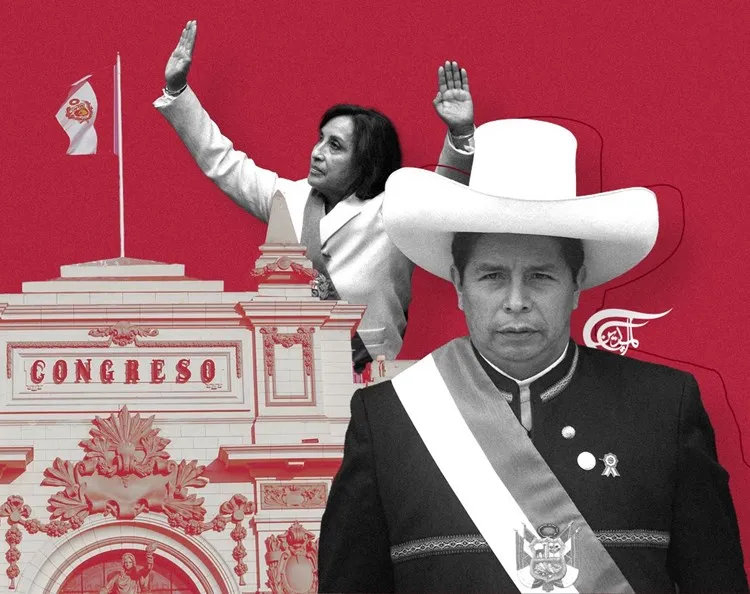
Today protesters against Peru’s unelected president, Dina Boluarte, began flooding into Lima after a month and a half of social unrest that has left more than 50 dead, mainly at the hands of police forces. The demonstrators, mostly farmers from the south of the country, spent the night on some university campuses and intend to march to the center of the capital while the state agents are trying to encircle their perimeter.

The crisis began last December 7, when former president Pedro Castillo, now detained in a federal prison, tried to dissolve the Congress after the continuous attempts of the ultra-right to overthrow his government.

On the day of its anniversary, Lima, the capital that often lives on the sidelines of what is happening in the rest of the country, received thousands of Peruvians demanding new elections and to be heard. It has been a long shot to get here, many protesters say.

The police have done everything to impede the advance of the march, called the Great March of the “Cuatro Suyos,“ an allusion to the social mobilization that put an end to the reactionary Alberto Fujimori’s regime in the early 2000s. Local newspapers report that the police have reinforced their controls on the highways to block the passage of the demonstrators, who come mainly from the Peruvian highlands.

At the moment, 11,800 troops, more than 120 pickup trucks, and 49 military vehicles are deployed on the streets, and there are also armed forces teams patrolling the communities of the capital, according to the head of the Lima Police Region, General Victor Zanabria. “The police are on maximum alert,” he added.

These words frighten the Peruvian people, who have already mourned the deaths of 54 people and a reported thousands more injured by police brutality in the ongoing protests, which have been going on for over a month.

“Peru hurts, and the people are not going to stop until they put an end to the injustice. If there is no dialogue, there will be more violence,” Stuardo Ralón, vice-president of the Inter-American Commission on Human Rights, warned the local press.

The most recent death was reported in the Peruvian town of Macusani, in the southern region of Puno, where a 30-year-old man was seriously injured amid a demonstration against the country’s president, Dina Boluarte. The young man is just one in a long list of people killed, among them also a 51-year-old woman and a baby who died in the womb of his teenage mother, according to the Ombudsman’s Office.

Meanwhile, what does the government say? “My commitment is to Peru, not to that tiny group that is bleeding the country,” Boluarte has said, and that hurts it is a big lie; because this is not a tiny group but rather the overwhelming majority of Peruvians who oppose her in a determined way.

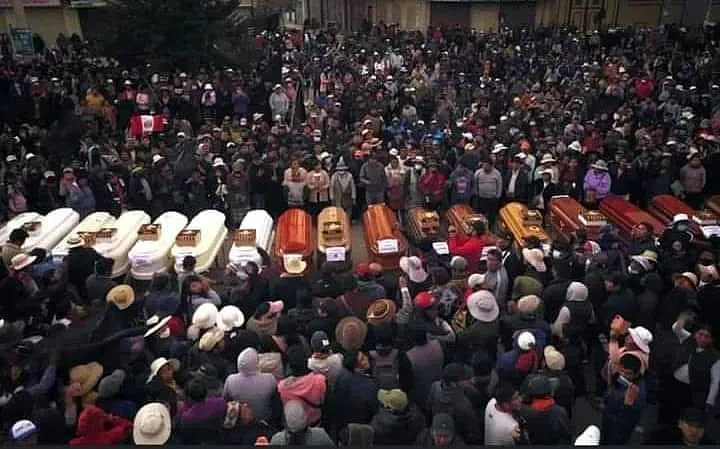
The eyes of the region and the world are on Peru. One image captures the attention of those of us in other latitudes trying to understand the pain of those fighting in the streets for justice and democracy: the photo of the burial of 17 protesters killed by security forces last week in Juliaca, in the southern region of Puno. The coffins were lined up on the public road, while dozens of protesters surround them. “We won’t forget them. We will be in Lima until justice is done,” protesters say.

Source: Resumen Latinoamericano – US

Strugglelalucha256


The impending world recession

The IMF managing director Kristalina Georgieva has now openly admitted that the year 2023 will witness the slowing down of the world economy to a point where as much as one-third of it will see an actual contraction in gross domestic product. This is because all three major economic powers in the world, the U.S., the European Union, and China, will witness slowdowns, the last of these because of the renewed COVID upsurge. Of the three, Georgieva believes the U.S. will perform relatively better than the other two because of the resilience of the labor market; indeed. the greater resilience of the U.S. labor market provides some hope for the world economy as a whole.

There are two ironical elements in Georgieva’s remarks. The first is that the best prospects for the world economy today, even the IMF concedes if only implicitly, lie in workers’ incomes in the U.S. not falling greatly. For an institution that has systematically advocated cuts in wages, whether in the form of remunerations or social wages, as an essential part of its stabilisation-cum-structural adjustment policies, this is a surprising, though welcome, admission. Of course Georgieva, many would argue, is seeing U.S. labor market resilience only as the result of U.S. economic performance and not as its cause. But her considering it a “blessing” (though not an unmixed one for reasons we shall soon see) leaves one in no doubt that the demand-sustaining role of workers’ incomes is also being recognized by her.

Some may contend that stabilisation-cum-structural adjustment policies of the IMF are typically meant for economies that are in crisis as a means of overcoming such a crisis, not as a panacea for growth, so seeing a change in IMF’s understanding in this regard may be unwarranted. But what the IMF is now saying is certainly out of line with what it usually says; it is, in effect, conceding that a resilient labor market in the U.S. is beneficial for its growth, which begs the question: why should other economies, too, not attempt to have resilient labor markets even when they are in crisis, and tackle their crises through other, more direct, means like import controls and price controls? Conceding that the resilience of the U.S. labor market can be beneficial for its economy, and hence for the world economy as a whole, thus fundamentally runs counter to what the IMF generally stands for, at least in the current neoliberal times.

The second ironic element in her remarks is her recognition that such a resilient labor market, while being beneficial for U.S. growth, will simultaneously keep up the inflation rate in the U.S., forcing the Federal Reserve Board to raise interest rates further. This has two clear implications. First, it means that the U.S. growth rate, while being less affected for the time being, will inevitably be constricted in the months to come as the Fed raises the interest rate. The U.S. performing relatively better in 2023 is thus not a phenomenon that will last long. Since any poor performance by the U.S. will have an adverse effect on the world economy as a whole, this amounts to saying that the world recession will worsen in the months to come unless China’s COVID situation improves substantially. It amounts to saying, in other words, that even if 2023 will only see a third of the world economy facing recession, a much larger swathe of it will fall victim to a recession later. This is certainly the most dire prediction made about the prospects of world capitalism at the present juncture by any major spokesperson of it.

The World Bank, too, has been warning of a serious recession looming over the capitalist world and discussing, in particular, its implications for third-world economies. In September 2022, it put out a paper in which it expected a 1.9% growth of the world economy in the year 2023. But both the IMF and the World Bank attribute the looming recession primarily to the Ukraine war and the inflation it has given rise to (and also in passing to the pandemic); the response to that inflation in the form of an all-round increase in interest rates is what underlies the current threat of recession. There is no recognition by these institutions of any problem arising from the neoliberal economy that could be underlying the looming crisis.

This analysis, first of all, is erroneous. Long before the Ukraine war, inflation had reared its head as the world economy had started recovering from the pandemic. At that time, such inflation had been attributed to the disruption in supply chains caused by the pandemic, though many had differed from this analysis even then. They had pointed out that, more than any actual disruption, the inflationary upsurge owed much to the jacking up of profit margins by large corporations in anticipation of shortages. The Ukraine war occurred against this backdrop of ongoing inflation and added to it quite gratuitously as the Western powers imposed sanctions against Russia.

A look at the movement of crude oil prices confirms this conclusion that the Ukraine war is not the genesis of the inflationary upsurge. The rise in brent crude prices occurred primarily in 2021 as the world economy started recovering from the pandemic: the rise between the beginning of 2021 and the end of that year was by more than 50%, from $50.37 per barrel to $77.24 per barrel; the corresponding rise in 2022, during which the Ukraine war occurred, was from $78.25 to $82.82, i.e., by 5.8%, which is less than the current inflation rate in most advanced capitalist countries, even though inflation is generally claimed to have been driven by oil prices. True, immediately after the imposition of sanctions against Russia, world oil prices shot up, reaching a high of 133.18 dollars per barrel during 2022, but then they came down quite sharply, as we have seen, so that simply blaming the Ukraine war for the price-rise is not only misleading (as it is not the war per se but the sanctions that were responsible) but also erroneous (as prices should have come down when the price-rise induced by the sanctions abated).

It is not just the analysis of the Bretton Woods institutions that is flawed. Even more noteworthy is the fact that they have no perception whatsoever, even in the terms of their own analysis, of how this world recession is going to end. If, as they believe, it is the Ukraine war that is responsible for the looming recessionary crisis, then they should, at the very least, have hoped for an early end to it. That, however, is unacceptable to Western imperialism, which wants the war to drag on so that Russia is “bled” into submission; this is why the twin institutions express no opinions on the need for ending the war. But even if they chose to remain silent on the question of ending the war, they could have expressed some opinion about tackling the inflationary crisis in some other way than by raising interest rates and unleashing a recession. The IMF and the World Bank, however, are so committed to free markets that they cannot contemplate any other inflation-control measure (such as direct price control), even as they lament the recessionary effects of interest rate hikes.

Likewise, even as the World Bank president David Malpass commiserates with debt-encumbered third world countries which are going to be badly hit in the coming months, and even says that a large chunk of their debt burden has arisen because of the high interest rates themselves, there is not a word in his speech in favor of lowering interest rates. Both the Bretton Woods institutions, in other words, are long on commiserations but short on concrete measures to help the world’s poor.

This is not just a symptom of timidity. It points to something deeper, namely the genuine impasse in which world capitalism finds itself today. If the structure of Western imperialism as it has evolved over the years is to be kept intact, then the metropolitan countries have to keep the Ukraine war going, in which case inflation at the current pace becomes unavoidable in the absence of an engineered recession, and the consequent unemployment. World capitalism’s taking this route, therefore, should not cause any surprise; the point is to resist it.

Source: Peoples Democracy
Strugglelalucha256


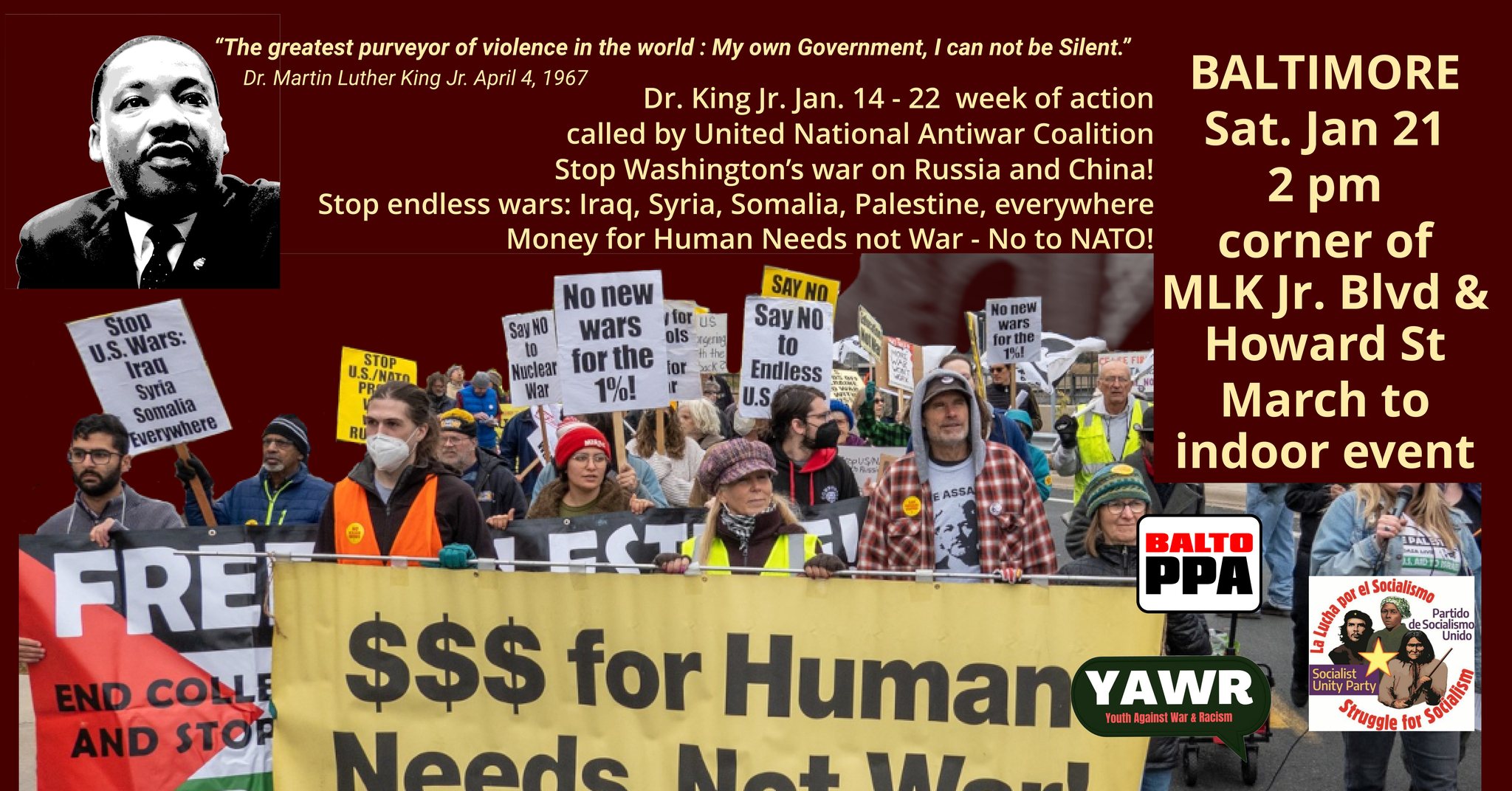
Baltimore: Protest war on Russia & China – National Week of Action, Jan. 21

Baltimore joins the national week of antiwar protest called by UNAC.

We will gather at Howard St & MLK Blvd., Saturday, January 21 @ 2 pm. Please don’t be late as we will march to indoor venue.

As Martin Luther King, Jr. so correctly reminded us, the U.S. is the greatest purveyor of violence in the world. Since WWII, the US has initiated more than 60 military interventions in foreign countries. The US/NATO proxy war in Ukraine brings the US in direct confrontation with a major nuclear power as does the U.S. provocation against China over Taiwan.

It is extremely important that we build a strong, unified antiwar movement that can break through the media propaganda and censorship and end the US military aggression around the world.
Each of our actions is based on building local connections among various solidarity organizations. A variety of actions are encouraged from demonstrations, teach-Ins, banner drops, chalk-ins to street meetings.

Actions linking ALL the continuing US wars and sanctions is a unifying focus and helps break through the propaganda that saturates each war.

Stop US/NATO Wars and Sanctions

Today working people face escalating costs of food and energy, recession, growing insecurity and attacks on efforts to unionize. The continuing wars and military provocations have brought us to the brink of nuclear war.

Strugglelalucha256


The role of the Brazilian military in the coup attempt

The far-right mob that invaded the federal building, Congress, and the Supreme Court and vandalized government buildings at Three Powers Plaza in Brasília on January 8, demanded a “military intervention” in Brazil. They had set up camps that had assembled in front of army barracks throughout the country since November, demanding the “military to overturn” the election of Brazilian President Luiz Inácio Lula da Silva (known as Lula). On November 11, 2022, the commanders of the armed forces released a note giving the coup camps a safe haven—not only physically but also legally. It is important to note two elements of that document: first, the commanders stated, through an illogical interpretation, that the camps in favor of a coup were legal because the protesters were peaceful, and that “both possible restrictions on rights by public agents and possible excesses committed in demonstrations” would be reprehensible, despite the fact that demanding the military to stage a coup is a crime (Article 286). In practice, the commanders of the three armed forces acted as constitutional interpreters, defending the democratic legitimacy of the coup camps and saying, in advance, that any measure taken by the institutions against the camps would be considered illegal by them.

The second element of the note made reference to the concept of “moderating power.” Reaffirming their commitment to the Brazilian people, the commanders said the armed forces were “always present and moderators in the most important moments of our history.” The moderating power was introduced as part of the constitution of 1824, based on the ideas of Benjamin Constant, who predicted that to avoid “anarchy” that marked the concept of the three branches of the government, it would be necessary to grant one of the powers (in Brazil, the monarch) a fourth power, capable of solving institutional disagreements.

On January 2, when Lula’s Minister of Defense José Múcio said that he considered the camps to be a “manifestation of democracy,” and that he had “friends and relatives” who were part of these camps, he was only repeating what the military had been saying since November.

Brazil has a long history of military intervention in politics. The Brazilian republic was founded through a military coup in 1889. From then until 1989, Brazil experienced at least 15 coups d’état attempts, of which five were successful: including a 21-year-long military dictatorship. After the fall of the dictatorship, in 1985, there was an expectation among Brazilians that civilian control would be established over the military and that respect for democracy would prevail among them. But the redemocratization process itself was controlled by the outgoing military government, through a “slow, gradual, and safe political opening,” in the words of then-military President Ernesto Geisel, and the pressure of the army on the Constituent Assembly that wrote the 1988 constitution guaranteed them the role of “[guarantors] of the powers and defenders of law and order.”

During Lula’s first two terms (from 2003 to 2011) as president, the military adopted a lobbying strategy in dealing with the government. Since the impeachment of former Brazilian President Dilma Rousseff in 2016, however, they seem to have returned to the forefront of politics. Statements encouraging coups began to emerge from among the reserve and active military personnel, without punishment, and even the then-commander of the armed forces, General Eduardo Villâs Boas, stated in a tweet that he “repudiates impunity” when the Supreme Court was preparing to decide on a habeas corpus petition filed by Lula in 2018. Villâs Boas later would describe his tweet as an “alert.” The army took important positions in former President Michel Temer’s government and expanded its political participation under the government of former President Jair Bolsonaro, and has continuously threatened the electoral process in 2022.

On January 8, as the governmental buildings in Brasília were vandalized by the angry mob, a Law and Order Guarantee (GLO) decree was discussed and 2,500 military personnel were mobilized, ready to respond to the escalating situation. If such a decree had been signed, the armed forces would have been responsible for controlling the security of Brazil’s federal capital. Lula, instead, decreed a federal intervention “in the area of security in the Federal District,” appointing Ricardo Capelli, executive secretary of the Ministry of Justice, to command it. The president later declared that if he had carried out a GLO, “then the coup that these people wanted would be taking place.”

The involvement of the military in the acts of January 8 is being investigated. Many reserve members of the armed forces participated in the acts. The reasons why the Presidential Guard Battalion, the army battalion responsible for the security of the Planalto Palace, did not prevent the demonstrators from invading the government headquarters is also under investigation. “There were a lot of conniving people. There were a lot of people from the [police] conniving. A lot of people from the armed forces here were conniving. I am convinced that the door of the Planalto Palace was opened for these people to enter because there are no broken doors. This means that someone facilitated their entry,” said Lula.

After the establishment of the federal intervention, the security forces, led by the intervenor Ricardo Capelli, repressed and arrested the coup demonstrators.. The army mobilized armored vehicles to block and prevent the police from entering the camp and arresting those responsible on January 8. According to the Washington Post, senior army commander, General Júlio César de Arruda, told the Minister of Justice Flávio Dino: “You are not going to arrest people here.” The police were only allowed to enter the camp the next day.

This incident is just a manifestation of what the armed forces have been saying since November 2022: that they consider themselves a moderating power and that they will not allow—even after the destruction on January 8—“public agents” to carry out any act they consider a “restriction of rights” of the coup demonstrators.

The army gave a safe haven to the coup demonstrators before and after they vandalized the buildings in Brasília and while they were asking for an army intervention against the president. At the same time, it was unable to protect the presidential palace from such a crowd. This sends a clear message about who the army was trying to defend and what it considers its true mission.

In Brazil, it becomes more and more urgent that the masses, who shouted in chorus “No amnesty!” for Bolsonaro during Lula’s inauguration on January 1, 2023, include the military in their demand.

This article was produced by Globetrotter in partnership with Revista OperaPedro Marin is the editor-in-chief and founder of Revista Opera. Previously, he was a correspondent in Venezuela for Revista Opera and a columnist and international correspondent in Brazil for a German publication. He is the author of Golpe é Guerra—teses para enterrar 2016, on the impeachment of Brazil’s President Dilma Rousseff, and coauthor of Carta no Coturno—A volta do Partido Fardado no Brasil, on the role of the military in Brazilian politics.

Strugglelalucha256


Top U.S. Marine Corps commander in Japan says Pentagon preparing for war with China

The United States is now publicly discussing the “containment” of China with its Asia-Pacific vassals. On January 8, the Financial Times reported that the supreme U.S. Marine Corps commander for Japan gave very direct statements regarding Pentagon’s China strategy. Lieutenant General James Bierman thinks there are “numerous parallels” between Ukraine and Taiwan and admits the U.S. is preparing what he dubbed “a counter-China theater” by strengthening coordination with its regional satellite states.

“The U.S. and Japanese armed forces are rapidly integrating their command structure and scaling up combined operations as Washington, D.C., and its Asian allies prepare for a possible conflict with China such as a war over Taiwan, according to the top Marine Corps general in Japan,” the FT report states.

Japan has indeed become more active, as its new government decided to abandon the economy-focused policies Tokyo practiced since WWII ended. The historic shift doesn’t only include (re)militarization but also an increasing rivalry with three regional powers – China, North Korea, and Russia. Apart from a break with its military neutrality, as Tokyo is massively increasing its defense budget, USMC Lieutenant General Bierman confirmed that Japan is exponentially expanding its role in joint military operations with America.

In what can only be described as a complete break with even a semblance of diplomatic etiquette, the U.S. general spoke in a very direct and rough manner, particularly in regard to the ongoing arming of Taiwan, claiming this serves “to prepare” the island similarly to how the Kiev regime has been since 2014. His exact statement was as follows:

“Why have we achieved the level of success we’ve achieved in Ukraine? A big part of that has been because, after Russian aggression in 2014 and 2015, we earnestly got after preparing for future conflict: training for the Ukrainians, pre-positioning of supplies, identification of sites from which we could operate support, sustain operations. We call that setting the theatre. And we are setting the theatre in Japan, in the Philippines, in other locations.”

The interview is scandalous, to say the least, as it can hardly be considered anything else but an attempt to provoke China. This is further reinforced by the U.S. general’s explicit comparison of Taiwan and Ukraine, which is a textbook example of how the political West generates conflicts that then turn into open warfare. Bierman’s position as the commander of the Third Marine Expeditionary Force and USMC Forces Japan makes these statements all the more disturbing and alarming, especially to Beijing, which has been making strides to improve relations with the U.S..

As the general casually admitted the political West spent years preparing the Kiev regime for war with Russia (while feigning “efforts for a peaceful resolution”), his comments about Taiwan are quite revealing and will surely be taken very seriously in China. Even the FT, one of the flagships of Western mainstream media, admits that Bierman’s statements are an “unusually frank” comparison with Ukraine. To make matters worse, he didn’t stop there, but made several more controversial “frank comments.” The FT claims the general’s further statements were as follows:

“When you talk about the complexity, the size of some of the operations they would have to conduct, let’s say [in] an invasion of Taiwan, there will be indications and warnings, and there are specific aspects to that in terms of geography and time, which allow us to posture and be most prepared… You gain a leverage point, a base of operations, which allows you to have a tremendous head start in different operational plans. As we square off with the Chinese adversary, who is going to own the starting pistol and is going to have the ability potentially to initiate hostilities… we can identify decisive key terrain that must be held, secured, defended, leveraged.”

The aforementioned preparations also include the Philippines. Manila reportedly plans to allow U.S. forces to double their prepositioned weapons and logistics in the island country. In addition to five Filipino bases, the Pentagon will gain access to five more, all of which will be part of the “China containment effort.” Bierman also “cautioned” the U.S. regional vassals “not to overestimate the Chinese military,” claiming that “the PLA should not be fearfully seen as being 10 feet tall”.

It’s quite clear the general couldn’t have possibly acted on his own when giving such statements, indicating that the Pentagon refuses to de-escalate the ever-growing tensions in the increasingly contested Asia-Pacific region. If Washington continues with these aggressive Sinophobic policies, Beijing is extremely unlikely to stand idle. China’s aim is a peaceful settlement with Taipei and this isn’t just its official position, but a clearly defined goal. Beijing has consistently been working to achieve this through diplomatic and economic means. For decades, it invested heavily in improving ties with the island, offering unparalleled autonomy.

On the other hand, the U.S. has been “discouraging” Taipei from signing any deals with China. This has prompted Beijing to further invest in its military might. Although China’s primary focus is economic development, it also had to make plans for strategically important contingencies such as further arming of Taiwan, to say nothing of the U.S.-backed independence movement, which has gained traction in recent decades. Although it hasn’t given up on a diplomatic solution, as it’s still investing in a “soft power” approach towards its breakaway island province, China still needs to mitigate the disastrous effects of the significant U.S. regional influence.

Source: InfoBrics
Strugglelalucha256


Honoring Dr. King’s legacy: Speak out against racism, poverty and World War III

A standing-room-only crowd packed St. Mary’s Episcopal Church in Harlem, New York, for a “speak out to stop racism, poverty and World War III.” The event honored Dr. Martin Luther King Jr.’s legacy on the weekend of the King Day holiday. (Watch the full stream at https://youtu.be/XAouhEvgGZI)

“We have gathered this weekend to revive the fighting legacy of Dr. King, who laid his life down to fight racism, poverty, and yes, war too, especially U.S. imperialism,” said Joyce Butler of the Peoples Power Assembly, who chaired the event along with Ellie McCrow of Pratt Workers United.

Rev. Annie Chambers, the National Welfare Rights Union co-chair, public housing advocate, and founding member of the Peoples Power Assembly, said: “What really threatened Dr. King was when he spoke out against the Vietnam War and the big money for war. That’s what got Dr. King killed.”

Melinda Butterfield, Struggle-La Lucha co-editor and author of “U.S. Proxy War in Ukraine and Donbass,” said, “Building a true anti-war movement here starts with poor and working people recognizing that it is not in our interests – that the $113 billion spent on the U.S. proxy war in Ukraine last year alone is money stolen from our pockets, money that’s desperately needed to address the crises of inflation, homelessness, poverty, lack of health care and climate catastrophe.” (Read the full talk at this link.)

Margaret Kimberley, executive editor of Black Agenda Report, held up a banner declaring “NATO = White Supremacy.” Kimberley opened: “That’s our message from the Black Alliance for Peace. We are talking about fighting white supremacy. We are talking about the whole system, from the Congress and the president to the Pentagon.” 

David Clennon, an actor and activist, said: “Mendacity. For me, the big story of 2022 was not the war in Ukraine; the big story was this overpowering, overwhelming  tide of official mendacity about the war and that mendacity was faithfully conveyed and amplified by the corporate mass media.”

Omowale Clay of the December 12th Movement said: “Reparations have to be an integral part of the struggle. Black people have the right to reparations. We have to fight for it. Our position is that reparations is a revolutionary question because this imperial country is never going to give reparations.”

John Parker, who traveled to Donbass as part of a fact-finding trip to bust the big business media lies, is the founder of the Harriet Tubman Center for Social Justice in Los Angeles and a national organizer for the Socialist Unity Party. Parker said: “When some people say that Ukraine’s Nazi problem is ‘minor,’ they callously ignore the 10 Black people killed at the Tops Supermarket in Buffalo, New York, by an 18-year-old white supremacist. He was wearing the emblem of the Azov Battalion – the same sonnenrad I saw on the wall in Krymskoye.” (Read the full talk at this link.)

Richie Merino, from the United National Antiwar Coalition and the Bronx Antiwar Coalition, noted: “When it comes to criticisms of the dissemination of imperialist propaganda, many anti-imperialist activists focus on propaganda campaigns waged by corporate media. Rightfully so. But as an anti-imperialist public school teacher in the South Bronx, I want to draw your attention to the U.S. education system as a tool of imperialism.”

Jessica Schwarz, from the Freedom Road Socialist Organization, said, “It is of utmost importance to not just support the legacy of Dr. Martin Luther King Jr., but to continue his struggle in our movements today.”

Michela Martinazzi, co-chair of the International League for the Peoples Struggle (ILPS) – U.S. Chapter, said, “There is nothing as strong or as powerful as people uniting against the many-headed beast that is imperialism on a global scale.”

Statements were read from Alexey Albu, a coordinator of the Ukrainian Marxist movement Borotba (Struggle), and Berta Joubert-Ceci from Women in Struggle/Mujeres En Lucha.

A representative of the “The Hands Off Uhuru! Hands Off Africa!” Defense Campaign spoke about the FBI’s attack on the movement and invited everyone to join the campaign at handsoffuhuru.org.

Strugglelalucha256


Stop the U.S. war on Donbass, Russia & China!

Anti-war protests were held in more than 90 cities across the U.S. on the week of Dr. Martin Luther King Jr.’s birthday holiday, Jan. 13 to Jan. 22. “Stop the U.S. war on Donbass, Russia & China! Unite to fight racism, fascism & imperialist war,” declared the banner carried by the Socialist Unity Party in Times Square, New York City, on Jan. 14.

Hundreds joined the Times Square rally, which ended with a march down Seventh Ave. At the rally, John Parker of the SUP strongly condemned NATO as the most violent, belligerent, aggressive military alliance in history. “Russia is not our enemy. China is not our enemy. Our enemy is U.S. imperialism, and its attack dog — NATO.” (Watch the talk at https://youtu.be/DZp4sQeZzSc)

The rally was called by ANSWER and endorsed by more than 30 organizations. 

Strugglelalucha256


Peru: Changing the rules of the game

“America for the Americans,” is the phrase with which Pedro Castillo closed his speech at the Summit of the Americas in Los Angeles in April 2022, which he attended without his traditional rural teacher’s hat. In the midst of the schism caused by the exclusion of Cuba, Venezuela, and Nicaragua from the United States, Castillo was one of those who chose to attend and not mention the issue that became the focus of the event.

“America for the Americans” is the central slogan of the Monroe Doctrine, on which the United States has based its hegemonic relationship with Latin America since the beginning of the 19th century, in practice, “America for the Americans, of the North.” The fact that the then-Peruvian president uttered such a phrase was attributed to his ignorance and that of his advisors, including his Foreign Ministry, and it is very likely that this was the case. However, the fact that in his speech, there was not the slightest reference to the questionable policies of the United States towards the region, including the blockade of Cuba that several leaders present there condemned, nor to the exclusions imposed by the U.S. organizers, reveals a complacent or at least uncritical stance towards what the progressivism of the region considers “the America that is not ours,” as defined by José Martí.

Upon being elected, Castillo appointed the intellectual Héctor Béjar as Chancellor. Béjar, who lasted less than a month in office, was lynched by the media for some statements in which he accused the Peruvian Navy of initiating terrorism and of having been trained for it by the CIA. He failed to say state terrorism, like all the armies that collaborated with Washington during the Cold War in Latin America, but he was still defenestrated. With Bejar in office, Castillo would not have committed the folly he did in Los Angeles, but he preferred to accept the resignation of the leftist intellectual. The unusual thing is that after being dismissed and being already in prison, Pedro Castillo discovered the CIA and the United States -those of America for the Americans, of the North- and accused them of being behind the repression that the now President Dina Boluarte executes with Army and Police against those in the streets of Peru who are demanding elections and qualify Castillo’s former Vice President as a dictator.

Castillo was not clueless this time, too bad it is a little late. U.S. Ambassador to Peru, Lisa Kenna, who according to her official State Department biography worked 9 years at the Agency, met with the Peruvian defense minister shortly before the democratically elected “leftist” president was overthrown in a coup d’état and imprisoned without trial. Four days after the coup, the same ambassador met with Ms. Boluarte and proclaimed the U.S. government’s support for her.

Boluarte, Vice President-elect of Castillo, like Michel Temer of Dilma Rouseff and Lenin Moreno of Rafael Correa, chose to be more faithful to the embassy than to the program chosen by the voters. A program that, by the way, has not had the slightest chance to be implemented because, between media attacks and congressional sabotage, Castillo was not allowed to govern. And the latter, instead of mobilizing the people to pressure in the streets for the Constituent Assembly and the measures of social justice he promised, devoted himself to a confrontation with the Congress lost in advance, giving it, with his last bureaucratic and unipersonal effort, the pretext to declare it anti-democratic, discredit it and take it to prison. Nobody has asked Boluarte about the program of changes for which she was voted together with Castillo, including a Constituent Assembly that Peruvians are also demanding in their protests these days.

But there the people are, putting their skins to the bullets in the streets for a President who was not up to his task. Will this struggle result in the end of the oligarchic control over the politics and resources of Peru? Hopefully, but there does not seem to be an organized political force capable of doing so, and only a radical change in the rules of the game could allow it.

Trying to change something out of concern for not bothering those who control the media and those who from the North have been removing and putting governments in many Latin American countries for more than a century always ends in the same place: defeat.

Fernando Martínez Heredia, a Cuban thinker whom Pedro Castillo surely does not know, but Héctor Bejar most probably does, wrote in his last text, dedicated to Fidel Castro: “Capitalism hoists its discredited democracy, corrupt and directly controlled by oligarchies, and demands from timid rulers and respectful opponents to abide by its rules as articles of faith, an attitude that would be suicidal, because those rules are made to preserve the system of capitalist domination.” Martinez Heredia died without knowing of the existence of Pedro Castillo, but the latter perhaps could have done with knowing Fernando.

Source: Al Mayadeen, translation Resumen Latinoamericano

Strugglelalucha256


World’s richest 1% captured over 63% of all wealth created since 2020: Oxfam

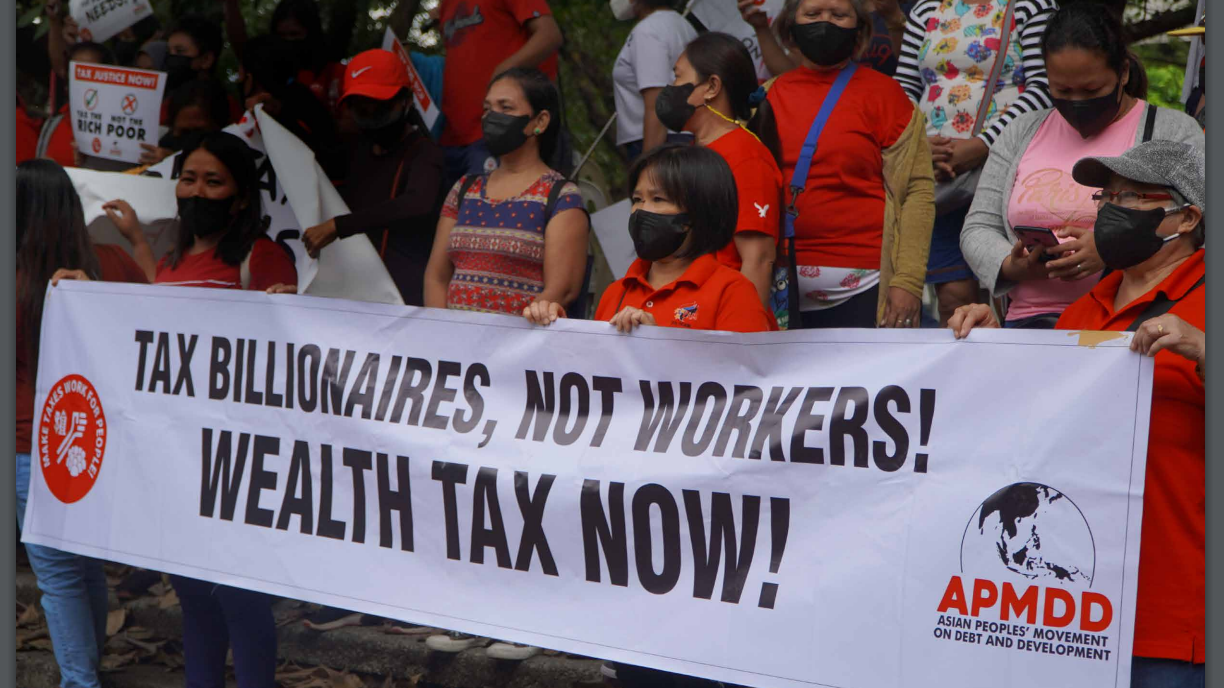
The world’s richest 1% captured over two-thirds of all wealth created by humanity since 2020, leaving just one-third for the other 99% of the population, claims a report published by Oxfam on Monday, January 16.

The report, titled ‘Survival of the Richest,’ notes that the richest 1% of the world’s population captured over USD 26 trillion (nearly 63%) of the USD 42 trillion created since 2020, nearly twice the USD 16 trillion (37%) that went to the rest of the population.

Oxfam notes that the rate of the concentration of wealth has been faster in the first two years of the new decade than ever before. In the previous decade, the super-rich had expropriated nearly 54% of the total wealth created.

The report was released on the occasion of the annual meeting of the World Economic Forum in Davos, Switzerland, which began on Monday and will continue until Friday. It is being attended by more than 50 heads of state and hundreds of corporate bosses from across the world. This forum has been the advocate of low tax, pro-corporate policies over the last few decades.

Oxfam underlines that the Davos meet is happening at a time when “extreme poverty and extreme wealth have increased simultaneously for the first time in 25 years.”

The report notes a billionaire earned USD 1.7 million for every dollar earned by 90% of the world’s population, while a billionaire’s wealth increased by USD 2.7 billion every day. This unchecked concentration of wealth has resulted in both the total number of billionaires and their wealth doubling in the last ten years.

This is happening at a time when billions of workers live in countries where their wages are outpaced by the inflation

Higher taxes on the rich is extremely necessary now 

The Oxfam report notes that nearly half of the world’s total billionaires live in countries where there is no inheritance tax and that they will pass nearly USD 5 trillion of their wealth – more than the total GDP of the African continent – to their heirs. This practice creates a new set of “aristocratic elites” living on an income that is completely “unearned and derived from returns on their assets,” contributing to an increase in extreme inequality.

In a press release on Monday, Oxfam’s executive director Gabriela Bucher said that “while ordinary people are making daily sacrifices on essentials like food, the super-rich have outdone even their wildest dreams.”

Nearly 820 million people are going hungry globally, even as excess corporate profits are contributing to rising inflation. According to the report, in the UK, US, and Australia, the profits the rich are making have contributed 54%, 59%, and 60%, respectively, to the inflation in these countries. In Spain, corporate profits have contributed more than 80% to inflation, making essential commodities unaffordable for a large proportion of the people.

The report notes that women and girls constitute a majority of the world’s hungry, nearly 60%, as they eat the least and often the last.

Oxfam suggests that if a 5% tax on the world’s top billionaires were imposed, it would yield nearly USD 1.7 trillion, enough to lift nearly 2 billion people out of poverty.

Bucher asserts that “taxing the super rich and big corporations is the door out of today’s overlapping crisis. It’s time we demolish the convenient myth that tax cuts for the richest result in their wealth somehow ‘trickling down’ to everyone else. Forty years of tax cuts for the super-rich have shown that a rising tide does not lift all ships—just the superyachts.”

The report notes that current tax regimes, which focus on indirect taxes, disproportionately harm those who earn less and contribute to inequality.

Rising inequality has also led, in some countries, to concerns about democracy. For example, in India, which has the largest number of poor in the world, just 10 individuals own more than 40% of all national wealth, the report notes.

“Taxing the super-rich is the strategic precondition to reducing inequality and resuscitating democracy. We need to do this for innovation. For stronger public services. For happier and healthier societies. And to tackle the climate crisis,” Bucher says.

Higher taxes can also help poorer countries solve problems created by prioritizing paying debts over increasing public spending on basic services such as health, infrastructure, or education. As of now, the poorest countries are spending four times more on repaying debts to rich countries than on health care.

The report notes that policy preferences for low tax rates have no rational basis. The high-tax regimes adopted after the second world war in most countries, including the rich west, “played a key role in expanding access to public services like education and healthcare” as well as leading to the “most successful years of their economic development.”

Source: Peoples Dispatch

Strugglelalucha256


France set for ‘Black Thursday’ nationwide strike over pension reforms

Massive mayhem is ahead in France, as unions and protesters call for a “Black Thursday” countrywide strike over the government’s pension plans this week.

The day of protest will be the first significant challenge that will establish the extent of the public’s will to pressure French President Emmanuel Macron to back down on plans to increase the official retirement age. To this end, French union leaders have urged for “massive mobilization.”

Three-quarters of teachers are anticipated to join the strike, disrupting schools, transportation, and healthcare services. Most trains will not operate, the Paris metro services will be significantly impacted, and flights are expected to be canceled. Truck drivers, couriers, petroleum refinery workers, and delivery businesses have all announced they will be joining the strikes.

For the first time in 12 years, unions have overcome their often adversarial relationships and found a common cause as union leaders declared that Thursday will be the “first day of mobilization” demanding the “unfair and unnecessary” pension plans be dropped.

1 in 2 French people want ‘new protest movement’: Survey

As the specifics of the French government’s contentious new pension reform proposal emerge, a poll indicated that 52% of those polled want to see France face a “social explosion” in the coming months, with the formation of a “Yellow Vests-type movement.”

This is the finding of a study conducted by the French polling institute Ifop, which also discovered that 79% of respondents believe that the scenario of an impending “social explosion,” including a new protest movement, is plausible.

It is worth noting that the results are considered the second-highest figures ever recorded by the polling institute since it was created in 1998.

Only in November 2020 did the figure rise above 85%. It was due to the government’s harsh coronavirus restrictions, including a second lockdown, at the time.

48% of French people are “outraged” over the country’s economic and social situation, as per the latest survey.

Only 32% stated they are “resigned” to the situation, while only 18% are “confident.”

In a similar context, Philippe Martinez, head of the General Confederation of Labour (CGT), France’s leading trade union, has lately warned that France will see a wave of mass strikes in early 2023 if the government does not roll back its pension reform.

Source: Al Mayadeen

Strugglelalucha256
https://www.struggle-la-lucha.org/2023/page/77/