The Supreme Court has no compassion for working-class families

The following was presented as part of a discussion of the Supreme Court’s recent rulings on affirmative action, LGBTQ+ rights, and student loans. The Court outlawed affirmative action against racism, endorsed discrimination against LGBTQ+ people, and backed bank usury on student loans.

This was on the WBAI program “Voices of Resistance,” hosted by Lucy Pagoada-Quesada and Andreia Vizeu. 

Listen: https://wbai.org/archive/program/episode/?id=41506

Gloria Verdieu

When I heard about the Supreme Court decision on Affirmative Action, I was saddened but not surprised.

The decision comes amid a gradual rolling back of several laws that protect society’s most vulnerable people, including abortion rights, gun safety laws, voting rights, housing, livable wages, and health — mental and physical — as well as climate change — so many issues. But once again, the Supreme Court chose the path that will make it more difficult and miserable for the working class currently facing a huge financial crisis.

This ruling overturns a longstanding precedent that had previously benefited Black, Indigenous, Latino, and Asian students in higher education due to an apparent historic lack of opportunities for those students. The Court’s decision that considering race as a specific factor in admissions violates the Equal Protection Clause. 

Why is race the only factor being scapegoated? There are many forms of admission preferences for affirmative action, such as athlete scholarships, legacy, and donor admissions.

A study published in the National Bureau of Economic Research found that 43% of white students admitted to Harvard University were recruited ALDC’s, shorthand for athletic recruits, legacies (relatives of Harvard Alumni), children of faculty and staff — applicants whose parents or relatives have donated to Harvard.

The study found that 75% of the white students admitted from those categories would have been rejected if they had been treated as white non-ALDCs.

In June 2022, the Supreme Court overturned Roe v. Wade declaring that the constitutional right to abortion, upheld for nearly 49 years, no longer exists.

In August 2022, Biden announced a student loan forgiveness plan. However, this plan was officially ruled out by the Supreme Court in June 2023.

President Biden criticized the decision and responded, “This is not a normal court,” and confirmed that discrimination still exists in America. Biden urged colleges and universities to continue to try to achieve diversity on their campuses by considering the hardships that their applicants have faced in their lives.

Even though the Supreme Court’s decision is final, they have no power to enforce it. Biden has the power. The people must take it to the streets and fight these oppressive attacks against the working class.

These issues affirmative action, women’s right to choose, voting rights, reparations, police brutality, mass incarceration, and the whole criminal justice system are all domestic issues that affect families. The family is the base of society. When families are in crisis, the whole of society is in crisis.

Here is where we look to socialist Cuba, which just recently replaced the Family Code that went into effect in 1975 on March 8, International Women’s Day, creating one of the most basic conditions for the further development of the revolution. The Family Code was approved by more than 98% of the participants in the meetings and assemblies.

What we need to look at is the process used to pass Cuba’s new Family Code in September 2022. All citizens over 16 years of age were eligible to vote in the Families Code referendum. Cubans at home and abroad were involved in the decision-making process. Some 6.5 million people participated, a show of true participatory democracy.

Cuba’s Family Code promotes the right to a family life free from violence and unprovoked stress. A life that values love, affection, solidarity, and responsibility.

The Supreme Court has shown no compassion toward working-class families. They are not addressing real issues such as livable wages, guaranteed income, homeless individuals, affordable housing, voting rights and ease of voting, free health care, and free education for all, protecting the environment issues that contribute to building happy, healthy families. The Supreme Court really serves no purpose that is worth preserving. It is time for the people to abolish it. Issues affecting the lives of the working class should be decided by the people through participatory democracy.

Issues like removing Cuba from the list of State Sponsors of Terrorism, ending the U.S. blockade, getting the U.S. out of Guantanamo, and normalizing relations with Cuba must be decided by the people.

We must fight for a stronger affirmative action that is truly for leveling the playing field for Africans and all oppressed people. We all know that regardless of what corporate media says, affirmative action one way to equalize the playing field for formerly enslaved people has benefited many oppressed groups, including white women.

For true equality, we need to study socialism. We need a socialist revolution.

Strugglelalucha256


Struggle ★ La Lucha PDF – July 10, 2023

Get PDF here

  • Global heat soars, wildfires spread toxic smoke
  • Not a spy balloon, but the propaganda sticks
  • Queer Liberation March defends trans lives
  • Longshore worker on meaning of Juneteenth
  • Slavery and the fourth of you lie
  • The secrets that the Pentagon Papers didn’t reveal
  • How Palestinian unity thwarted Israel’s invasion
  • State sponsor of peace: Cuba and the Colombia ceasefire
  • Los Angeles protesters: Take Cuba off ‘Terror’ list
  • LGBTQ+ Cuba delegation report back forum
  • NYC says NO! to the U.S. blockade of Cuba
  • Death of Nahel Merzouk: Who sows violence?
  • Borotba on Russia developments
  • Why Europe, U.S., China and Russia are not the same for Latin America
  • Puerto Rican organizations testify before UN Decolonization Committee
  • Organizaciones boricuas deponen ante el Comité de Descolonización en la ONU
  • Rechazo al aumento del costo de energía
  • Latinoamerica: Europa, EE.UU, China y Rusia, ni es lo mismo, ni es igual
Strugglelalucha256


Ukraine: Biden again escalates

The Washington Post says that the U.S. will now give cluster munition to Ukraine.

Biden approves cluster munition supply to Ukraine

President Biden has approved the provision of U.S. cluster munitions for Ukraine, with drawdown of the weapons from Defense Department stocks due to be announced Friday.

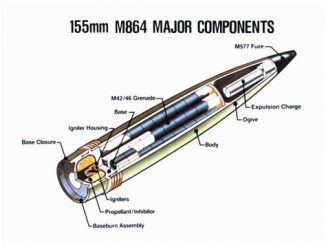
The munition will be 155mm grenades, Dual Purpose Improved Conventional Munitions (DPICM), that can be fired by ‘Western’ provided artillery.

The decision, likely illegal, was made because the U.S. and its allies have run out of other 155mm munitions:

The move, which will bypass U.S. law prohibiting the production, use or transfer of cluster munitions with a failure rate of more than 1 percent, comes amid concerns about Kyiv’s lagging counteroffensive against entrenched Russian troops and dwindling Western stocks of conventional artillery.

It is accompanied by false statements that Russia has used such ammunition in Ukraine:

It follows months of internal administration debate over whether to supply the controversial munitions, which are banned by most countries in the world.Cluster weapons explode in the air over a target, releasing dozens to hundreds of smaller submunitions across a wide area.

More than 120 countries have joined a convention banning their use as inhumane and indiscriminate, in large part because of high failure rates that litter the landscape with unexploded submunitions that endanger both friendly troops and civilians, often for decades after the end of a conflict. The United States, Ukraine and Russia — which is alleged to have used them extensively in Ukraine — are not parties to the convention. Eight of NATO’s 31 members, including the United States, have not ratified the convention.

It is well documented, by Human Rights Watch and others, that the Ukrainian military has used cluster munitions. There is nothing to support a claim that Russia has done so. The Pentagon has rejected claimed evidence of Russian cluster munition attacks:

Commenting on videos depicting alleged Russian cluster munition use, DOD officials stated during a March 1, 2022 press conference that “we’ve seen the same video that you have but we have not assessed that it is definitive with respect to the use of cluster munitions. So we are not in a position to confirm the use of cluster munitions at this time.” In a similar manner, a DOD official stated during March 3, 2022, press conference that DOD was still unable to confirm Russia’s use of cluster munitions.

Cluster munitions are banned by most countries because they often fail to explode on impact and thereby leave a lot of unexploded mines on the ground:

The principal weapon under consideration, an M864 artillery shell first produced in 1987, is fired from the 155mm howitzers the United States and other Western countries have provided Ukraine. In its last publicly available estimate, more than 20 years ago, the Pentagon assessed that artillery shell to have a “dud” rate of 6 percent, meaning that at least four of each of the 72 submunitions each shell carries would remain unexploded across an area of approximately 22,500 square meters — roughly the size of 4½ football fields.

Last year the Congressional Research Service found that the real dud rate is higher than what the Pentagon claims:

There appear to be significant discrepancies among failure rate estimates. Some manufacturers claim a submunition failure rate of 2% to 5%, whereas mine clearance specialists have frequently reported failure rates of 10% to 30%. A number of factors influence submunition reliability. These include delivery technique, age of the submunition, air temperature, landing in soft or muddy ground, getting caught in trees and vegetation, and submunitions being damaged after dispersal, or landing in such a manner that their impact fuzes fail to initiate.

The Pentagon claims that the ammunition it will provide has a lower dud rate. But it never produced data from tests that would support its claims.

By agreeing to provide the munition, Biden is circumventing or breaking the law:

There is no waiver provision in the 1 percent limit Congress has placed on cluster munition dud rates, written into Defense Department appropriations for the last seven years. Biden would bypass it and Congress, according to a White House official, drawing down the munitions from existing defense stocks under a rarely used provision of the Foreign Assistance Act, which allows the president to provide aid, regardless of appropriations or arms export restrictions, as long as he determines that it is in the vital U.S. national security interest.

Unfortunately, neither Congress nor the courts are likely to intervene.

The cluster ammunition, like the Uranium tank ammunition the U.S. and Britain have sent to Ukraine, will make large parts of the country uninhabitable and unusable for agricultural purposes. It will also make attacks and retreats through affected areas difficult for military forces on both sides.

Cluster ammunition was made during the Cold War for defending against large-scale armored attacks. They are imprecise area attack weapons. Their usefulness against the small unit attacks with a handful of tanks, which we have often seen during this war, is doubtful.

As the U.S. has run out of other ammunition, what will it provide to Ukraine after the DPICM fail to turn around the fate of the Ukrainian army?

Chemical weapons? Nukes?

Source: Moon of Alabama

Strugglelalucha256


Una colonia con soberanía deportiva

Si hay algo que une a este pueblo, es el deporte y nuestra bandera. Tanto anexionistas, como estadolibristas, e independentistas siguen fielmente a sus atletas, enorgulleciéndose de sus triunfos y su participación. Entonces se desprenden de sus signos políticos y asumen una identidad nacional única, la boricua, la que el estado colonial impuesto por el yanqui se ha empeñado en querer anular.

Y estas últimas semanas cuando se han celebrado competencias a nivel regional como los Juegos Centroamericanos en El Salvador, e internacional como las Olimpíadas Especiales en Berlín, las redes sociales han reflejado ese seguimiento continuo de los eventos deportivos, a pesar de todos los muchos sucesos políticos impactantes que se están dando en este archipiélago. 

Y no es un acto de escapismo a la crisis del país, sino la oportunidad de abrazar públicamente nuestra nacionalidad. Y es que es el único espacio donde Puerto Rico es verdaderamente soberano, que tiene su propio Comité Olímpico, donde desfila con solo nuestra bandera, la misma que estuvo prohibida por la Ley de la Mordaza a instancias del gobierno estadounidense durante los años cuarenta. Aquí, la bandera yanqui no tiene que acompañarla.

Es increíble que un país tan pequeño, de solo 3.2 millones, esté ahora entre los primeros 6 países en el medallero de los Juegos Centroamericanos. Nuestras y nuestros atletas se esfuerzan para hacer valer la identidad patria. 

Y como decía nuestro héroe y poeta nacional Juan Antonio Corretjer, se puede ser boricua hasta en la luna. Tanto es así, que incluso atletas boricuas que residen en la diáspora, prefieren representar a Puerto Rico que al imperio. Ejemplos como Mónica Puig que al ganar oro en las olimpiadas de Rio en el 2016 gritó “yo soy boricua, pa’ que tú lo sepas”, y Jasmín Camacho-Quinn, que sigue cosechando triunfos para Puerto Rico.

Desde Puerto Rico, para Radio Clarín de Colombia, les habló Berta Joubert-Ceci

Strugglelalucha256


Deadly hazards of capitalist profit system

Global heat soars, wildfires spread toxic smoke

UPDATED July 7

The beginning of July saw the hottest days on record globally. Daily heat records were set on July 3, 4, 5, and 6. Each day topped the previous day’s record, according to data from the University of Maine’s Climate Reanalyzer. The temperatures on these days are the hottest since record-keeping began.

“This record is the visible part of a huge amount of silent and often unnoticed suffering and dying of people and ecosystems,” says Friederike Otto, a climate scientist at Imperial College London. “We live in a dramatically different world to just a few years ago.”

At the same time, many parts of the U.S. are being blanketed with some of the worst air quality recorded, caused by particularly severe wildfire activity in Canada. It is likely that smoke will continue its penetrations, as Canada’s fire season is expected to run until at least October.

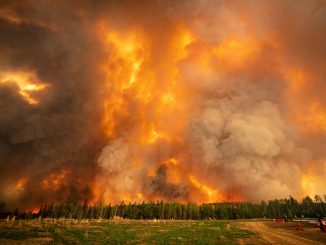
Canada is currently experiencing its worst wildfire season on record. As of June 29, 2023, over 3,000 wildfires in Canada have burned over 19 million acres of land. This is more than ten times the average number of fires and acreage burned during this time of year. 

The fires have been particularly destructive in Quebec, where over 2 million acres have burned. The smoke from the fires has made air in parts of Canada and the U.S. among the most polluted in the world.

On June 29, Chicago and Washington, D.C., had the worst air quality in the world, while Detroit and Minneapolis were in the top 10, according to IQAir.com.

The smoke from the Canadian wildfires has laid a thick blanket over parts of the Midwestern and Eastern U.S. Over 120 million people, or more than a third of the U.S. population, were under air quality alerts. It’s a major health hazard. The particulate matter, fine particles that can be breathed deeply into the lungs, poses considerable health risks.

Studies have linked wildfire smoke with higher rates of heart attacks, strokes, and cardiac arrests, increases in emergency room visits for respiratory conditions, and weakened immune defenses. The effects of exposure can persist for years.

In addition, prolonged exposure to elevated ozone levels is also dangerous and considered to be a cause of asthma.

Because of the shroud of smoke, solar power generation in parts of the Eastern U.S. plummeted by more than 50%. According to the region’s grid operator, solar farms powering New England were producing 56% less energy at times of peak demand compared with the week before. 

Reports in the big business media generally mention weather conditions and climate change as factors, including:

  • Drought: Much of Canada is experiencing a severe drought, which has dried out vegetation and made it more susceptible to fire.
  • Warm temperatures: The average temperature in Canada has been above normal this year, contributing to the severity of the fires.
  • Wind: Strong winds have helped to spread the fires and make them more difficult to control.
  • Climate change: Climate change makes wildfires more likely and severe in Canada. As the planet warms, the risk of drought and extreme weather increases, creating the perfect conditions for wildfires to start and spread.

Nothing to argue with there. But it leaves out another key factor: the industrialization of Canada’s forests.

A reference to this can be found in a careful reading of a New York Times report, “How Could This Happen?: Canadian Fires Burning Where They Rarely Have Before”:

“A combination of factors, fire officials said, laid the groundwork for the spread of wildfires in the Chibougamau area … Built on mining and the logging industry, Chibougamau is one of the few bold names on maps of Quebec’s vast, thinly populated northern regions.”

Canada is now mostly tree plantations and “managed forest,” which is more like a mono-crop farm than a forest, and much more prone to catastrophic burns. Clearcut logging and mono-crop replanting make wildfires worse.

A report, “Are the Canadian wildfires really ‘natural’ disasters” by Lambert Strether, documents this. 

First, from the Natural Resources Defense Council:

The logging industry relies heavily on replanting efforts that create tree stands that are less biologically and structurally diverse and less resilient to future disturbances like extreme weather and climate change than the trees that have been removed. This exacerbates clearcutting impacts because even when these forests regrow, many have been turned into monoculture tree plantations that do not have the same ecological health as intact, multispecies forest ecosystems. 

One 2012 study argued that “the widespread application of even-aged, single species management at all scales of boreal forest management interferes with fundamental ecological processes that maintain ecosystem integrity in boreal forests.”

In the report “Forest Herbicides, Monocultures Drive Wildfires, Harm Wild Species,” the Edmonton Journal says:

Forest companies using herbicides and mechanical removal methods to eradicate aspen from the spruce and pine crops they want to harvest are depriving moose of a winter food source and making wildfires more likely in Alberta forests, the Edmonton Journal reports.

The clumps and colonies of aspen that grow around Edmonton and northern Alberta “are less likely to burn than spruce or pine and cool the forest so well that, when fully-leafed out, wildland firefighters flee to a stand of aspen if the fire unexpectedly shifts,” the Journal explains.

But “forestry companies consider aspen a weed when growing conifers, spruce or pine. So roughly 30,000 hectares a year of forest are sprayed with glyphosate, the active ingredient in RoundUp. That’s roughly half the size of Edmonton, or 40% of the 80,000 hectares of forest harvested annually” across the province.

By killing off all the broad-leafed species, the companies create a monoculture, “making a coniferous tree plantation instead of a forest,” the paper adds.

The Halifax, Nova Scotia, Examiner reported in “The NS wildfires are not ‘natural’ disasters: climate change, forest management, and human folly are all to blame”:

“What’s really changed is the condition of our forest,” [professional forester Wade] Prest tells me. “It’s no longer diverse.

“Our original forest was probably mostly mixed. It tended towards a softwood mix in some areas, and to hardwood mix in others,” Prest explains. Prior to European settlement, he says Wabanaki-Acadian forests would have good canopy coverage, and underneath the canopy, it would be generally damp most of the time, without a lot of sunlight getting through to the forest floor.

“And that in itself would be what would stop the fires from either starting or being widespread,” Prest says. “Certainly, the forest has changed.

“I’ve always been critical of industrial forestry practices, and have vigorously promoted the natural Acadian forest as a model for ecological, social, and economic sustainability for Nova Scotia,” Prest says.

The Halifax Examiner report adds:

One of the greatest defenses that we have against fire risk is diversity … not just of species composition but also age and physical attributes. [Mike Lancaster, coordinator of the Healthy Forest Coalition in Nova Scotia] notes that after World War II and the Vietnam War, there was an explosion in the development of herbicides that were used to kill off deciduous species and manage forests for softwood species industry was looking for.

“It is widely known that conifer forests present a greater forest fire risk than those which are deciduous dominant,” Lancaster says. Because the forestry industry in Nova Scotia has historically been geared to favor coniferous species, in his view, “That translates as an increased forest fire hazard.”

Finally, author Peter Gelderloos in Quebec says on a Twitter thread:

The fires in Quebec are raging in tree plantations that get counted as carbon offsets. … Tree plantations are part of the industrial system of extraction and production. A form of mono-crop farming, they are the basis for the profits of the logging industry, which is more in demand as green products proliferate. … Tree plantations are also advantageous because they are fully integrated with the mining industry, using some of the same extraction infrastructure and helping cover up part of the sacrifice zones mining leaves behind. …

Most urban people and settlers do not know what a forest is. They see trees and think it is a forest.

Governments use the term “forest” without distinguishing between a forest ecosystem and a tree plantation. When I talk about a forest, I’m talking about a robust ecosystem. Granted, non-forests exist on a continuum from mono-crop tree plantations planted in rows to post-clearcut regrowth that is managed and commercially harvested.

The forest fires in Quebec and Ontario originate disproportionately in “managed forest,” which are on the continuum of tree plantations.

Strugglelalucha256


Report shows how military-industrial complex sets media narrative on Ukraine

The Quincy Institute—whose own start-up funding came mainly from George Soros and Charles Koch—looked at 11 months of Ukraine War coverage in the New York Times, Washington Post, and Wall Street Journal, from March 1, 2022, through January 31, 2023, and counted each time one of 33 leading think tanks was mentioned. Of the 15 think tanks most often mentioned in the coverage, only one—Human Rights Watch—does not take funding from Pentagon contractors. Quincy’s analysis found that the media were seven times more likely to cite think tanks with war industry ties than they were to cite think tanks without war industry ties.

With 157 mentions each, the top two think tanks were the Atlantic Council and the Center for Strategic and International Studies (CSIS). Both of these think tanks receive millions from the war industry. The Atlantic Council has long been the brain trust of NATO, the military organization whose expansion towards Russia’s borders was a critical factor in Russia’s decision to invade Ukraine. (See FAIR.org3/4/22.) Both think tanks receive hundreds of thousands of dollars from Raytheon and Lockheed Martin, companies that have already been awarded billions of dollars in Pentagon contracts as a result of the war in Ukraine.

CSIS was revealed in a New York Times expose (8/7/16) to produce content that reflected the weapons industry priorities of its funders.  It also “initiated meetings with Defense Department officials and congressional staff to push for the recommendations” of military funders.

In addition to showing think tanks’ enormous influence, the Quincy report highlights how difficult it is to trace just how much war industry funding these think tanks receive and exactly whose interests they represent. “Think tanks are not required to disclose their funders,” study author Ben Freeman wrote, and, “many think tanks list donors without indicating the amount of donations and others just list donors in ranges (e.g., $250,000 to $499,999).”

While the study was not aimed at establishing a causal connection between weapons industry funding and the think tanks’ positions, it acknowledges that funding typically plays a major role in shaping the institutions. “Funders,” Freeman wrote, “are able to influence think tank work through the mechanisms of censorship, self-censorship, and perspective filtering.” In other words, people with points of view antithetical to the funders likely would not last long in these think tanks.

Causal or not, there is a marked correlation between war industry funding and hawkish positions. “Think tanks with financial ties to the arms industry often support policies that would benefit the arms industry,” the report noted. For example, one Atlantic Council article (2/6/23) advocated against “any compromise with the Kremlin,” while another, titled “Equity for Ukraine” (1/16/23), argued that Ukraine has a “right to destroy critical infrastructure in Russia and plunge Moscow and other cities into darkness.”

Earlier this year, the president of the American Enterprise Institute—fifth on the list, with 101 mentions—was cited numerous times in the Wall Street Journal (e.g., 1/20/231/25/23) arguing that “tanks and armored personnel carriers are essential,” and agreeing to provide them will “let Ukraine know that it can afford to risk and expend more of its current arsenal of tanks in counteroffensive operations because it can count on getting replacements for them.” AEI (6/9/23) has gone so far as to suggest that the U.S. give tactical nuclear weapons to Ukraine, something that could easily escalate to all-out nuclear war.

The Quincy Institute did not find a single instance in which a media organization disclosed the fact that its source received funding from the war industry, obscuring how interested parties may be shaping coverage or promoting policy recommendations that directly benefit their funders.

The study found that for the few think tanks that receive little or no Pentagon contractor funding, positions on the war are dramatically different. With less influence from the war industry, the study found, these organizations emphasize “expository rather than prescriptive analysis, support for diplomatic solutions, and a focus on the impact of the war on different parts of society and the region.”

Human Rights Watch, which takes no war industry money, “was agnostic on the issue of providing U.S. military assistance to Ukraine,” and instead “focused on human rights abuses in the conflict.” The Carnegie Endowment, which receives less than 1% of its funding from that industry, was never quoted advocating an increase in military spending or weapons sales during the Ukraine War.

One critical way that corporate news media manufactures consent for U.S. foreign policy is by carefully selecting the sources and voices that they present and narrowing the spectrum of debate. While this can take the form of uncritically repeating pronouncements from government officials, this research demonstrates that there are more subtle ways in which media outlets can push a corporate/state agenda under the guise of independent journalism.

Source: FAIR

Strugglelalucha256


Mutulu Shakur, Black Liberation Movement elder and stepfather to Tupac, dies at 72

Mutulu Shakur, the Black liberation movement elder and stepfather to the late rapper and actor Tupac Shakur who was incarcerated for more than 36 years before being released amid declining health last year, has died at 72.

Activist Kamau Franklin tweeted that Shakur died Thursday night. While no cause of death was immediately reported, Shakur had been suffering from terminal cancer. He was reportedly living with his family in Southern California following his release.

“Comrade Mutulu Shakur: veteran of the Revolutionary Action Movement, Republic of New Afrika & Black Liberation Army leader, fighter and political prisoner of 36yrs passes on to the ancestors,” the Malcolm X Movement confirmed on Twitter late Friday morning. “We stay loyal to your path.”

https://twitter.com/mxmovement/status/1677345843861397508

Shakur, who was given six months to live more than a year ago, was granted parole for an early release from prison late last year after serving decades for his alleged role in the “expropriation” of $1.6 million from a Brinks armored truck. He was subsequently sentenced to 60 years in prison but became eligible for parole in 2016 after serving 30 years in the federal system.

Mutulu Shakur finally freed

Last December, the U.S. Parole Commission finally felt comfortable enough to free the elderly man more than six months after doctors gave him half a year to live.

“Mutulu is deeply grateful for the broad expression of trust and support, and thanks everyone who has helped him over the years,” a statement posted to a website devoted to Shakur said in part. “We ask that he have the space and time to be with his family when he is released and to continue receiving medical treatment.”

Advocates were fighting for Shakur’s release for years.

Last summer, hundreds of faith leaders signed an open letter to officials with the Department of Justice, Bureau of Prison and United States Parole Commission urging the dying elder’s release.

“Our request is in no way meant to denigrate the victims’ families or ignore the loss of life,” the letter sent in July 2022 read in part. “It is our belief that Mr. Shakur has been more than adequately punished for those acts. The continued incarceration of this terminally ill senior citizen serves no useful purpose as Mr. Shakur represents absolutely no threat to public safety.”

Also last year, the Malcolm X Grassroots Movement organized a virtual celebration to raise awareness around Shakur’s case as part of broader efforts to free movement elders.

“This country is not the same country it was at the time of my conviction and I have lived long enough to understand the changes the country and I have undergone. I will always care about freedom and equality for black Americans, marginalized people and the lower classes in this country and abroad. The struggle was never about me, but for the will of the people,” Shakur wrote in a petition for his release that was signed by nearly 20,000 people.

“I cannot undo the violence and tragedy that took place more than thirty years ago. But for several decades while incarcerated I have dedicated myself to being a healer, spreading a message of reconciliation and justice, and playing a positive role in the lives of those I come into contact with, in and out of prison,” Shakur also wrote.

“We are relieved that the Parole Commission now recognizes what has long been true — that Dr. Shakur’s release poses no risk whatsoever,” Brad Thomson, an attorney who represents Shakur, told the Intercept at the time. “It is tragic that it took until he was on the verge of death for that truth to finally be realized.”

Attempts at parole

Jomo Muhammad of the Malcolm X Grassroots Movement previously told NewsOne that Shakur had been denied parole nine times despite having an essentially infraction-free time in prison. He also explained that Shakur petitioned for compassionate release earlier in the pandemic, given the various health issues and being diagnosed with an advanced stage of terminal bone marrow cancer. But he was denied essentially because a judge did not think his condition was severe enough to justify a release.

Another likely reason for the repeated denials of release is that Shakur was very active in the Black Liberation Movement of the late 1960s and 1970s and involved in exposing COINTELPRO, the FBI’s so-called Counter Intelligence Program that surveilled, infiltrated, discredited, and disrupted organizations like the Black Panther Party.

Source: NewsOne

Strugglelalucha256


Communist activists Aleksander and Mikhail Kononovich are facing death threats in Ukraine

Communist youth leaders Aleksander Kononovich and his brother Mikhail, who are under house arrest in Ukraine, have said they are facing death threats. Left and progressive organizations across the world have condemned the persecution of the activists

Various communist and progressive youth groups have denounced the death threats and other forms of intimidation against communist youth leaders Aleksander Kononovich and his brother Mikhail Kononovich. The duo is currently under house arrest in Ukraine. Earlier this week, the Kononovich brothers, in an appeal, stated that President Volodymyr Zelensky’s regime was trying to assassinate them. They alleged that a police officer, Yevgen Kravchuk, had repeatedly come to their home and threatened to murder them. The same officer also made a Facebook post issuing a public call for their murder and revealing the address of their house. In the wake of such threats, various groups including the World Federation of Democratic Youth (WFDY), Communist Party of Greece (KKE), and Communist Youth of Greece (KNE) have reiterated the demand for the immediate release of the brothers.

According to a report by 902.gr, a KKE delegation led by MEP Lefteris Nikolaou-Alavanos, along with KNE leaders, will visit the Ukrainian embassy in Athens on July 6 to deliver a resolution “protesting against the ongoing threats against the lives of the two young communists.”

Following the onset of the Russia-Ukraine war, the Security Service of Ukraine (SBU) arrested the Kononovich brothers, leaders of the Leninist Communist Youth Union of Ukraine (LKSMU), from the capital Kiev on March 6, 2022, and put them in jail. The SBU accused them of being propagandists holding pro-Russian and pro-Belarusian views with the goal of destabilizing the internal situation in Ukraine and creating a “necessary information picture” for Russian and Belarusian channels. The arrest triggered widespread protests from progressive and communist groups in Europe and abroad, who denounced the move as part of the purge initiated by EU-NATO-backed Zelensky against communists, socialists, and other critics of his regime in the name of national security. Later, in July 2022, a show trial of the Kononovich brothers started in the Solomensky District Court in Kiev. The court sessions were continually delayed and postponed and the brothers were put under house arrest. July 5 marked 486 days since their arrest.

During their trial, the brothers stated that “our case is completely fabricated from start to finish. What are we charged with? Pro-Belarussian views are being charged. We are being tried for our views. What kind of democracy can we talk about?”

In its statement on July 5, WFDY said, “We reiterate our demand for their immediate release and an end to the political persecution. We call upon the anti-imperialist youth all over the world to redouble the struggle to defend the life and freedom of our comrades. Because wherever there is a case of repression, we will not leave them behind.”

Even before the war began, the post-Euromaidan regime in Ukraine had started decommunization attempts and persecution of communists. The Communist Party of Ukraine (KPU), led by Petro Symonenko, was banned from contesting elections in 2015. Its publication Rabochaya Gazeta was banned and its leaders and members faced police repression and assaults from far-right groups. Braving all these difficulties, members of the KPU and LKSMU continued to organize protests against decommunization, pro-corporate land reforms, government support to neo-Nazi groups, the rise in electricity and water prices, and NATO expansionism. They also organized campaigns calling for a peaceful resolution to the Russia-Ukraine conflict. The Eighth Administrative Court of Appeal in Lviv, Ukraine, on July 5, 2022, upheld the ban on the KPU and ordered the state to seize the property of the party.

Regarding the ban on KPU, Mykhail Kononovich had told Peoples Dispatch in an interview in February 2021, “I emphasize that the communist ideology, the idea, cannot be banned by any laws. So it is impossible to ban common sense and science. It is simply impossible to ban the Communist Party of Ukraine (KPU) because we are a party with more than a hundred years of history, a party that has an experience of subterranean struggles. We, communists, have fought and will continue to fight for the benefit of our people!”

Source: Peoples Dispatch

Strugglelalucha256


#FREEKONONOVICH: We will not leave you behind

As we approach 500 days since the kidnapping of our comrades Mikhail and Aleksander Kononovich by the Security Service of the reactionary regime of Ukraine, their situation continues to worsen.

In the last hours, we have been informed that the threats against their physical integrity, including death threats, are escalating. A clear example of this situation is the posts of the Ukrainian police officer, Yevgeny Kravchul, on his social media instigating to escalate the repression of our comrades and their murder. Considering that since they have been under house arrest fascist groups are hovering around their home, this is an added risk to their lives.

As we have been denouncing since their kidnapping in March 2022, not only the reactionary regime in Ukraine is responsible for their situation, but its imperialist allies such as the USA, the EU and NATO are equally responsible for what happens to our comrades. We reiterate our demand for their immediate release and an end to the political persecution. We call upon the anti-imperialist youth all over the world to redouble the struggle to defend the life and freedom of our comrades. Because wherever there is a case of repression, we will not leave them behind. Their repression will not stop our struggle against capitalism in its imperialist stage; to build a world free of exploitation and all kinds of oppression.

Source: World Federation of Democratic Youth

Strugglelalucha256


EXPLAINER: How Palestinian unity, resistance thwarted Israel’s Jenin invasion

Why did Israel invade Jenin? And did it succeed in achieving its objectives? what are the Israeli objectives anyway? And why is the Palestinian Resistance claiming victory for the refugee camp over the massive Israeli military machine? These questions and more are answered below ..

Israeli Army Radio confirmed the withdrawal of Israeli occupation forces from the town and refugee camp of Jenin on Wednesday, after a two-day operation in which 12 Palestinians were killed and 120 were wounded.

Though the Israeli government of rightwing Prime Minister Benjamin Netanyahu has claimed to have completed the objectives of the invasion, Palestinian Resistance said that it has successfully repulsed the Israeli advances.

An international outcry followed the Israeli invasion, which resulted in an unprecedented number of Palestinian casualties, the worst since 2005, according to United Nations officials.

During the invasion, Israel occupied residential homes, fired at a hospital and journalists. It also barred medics from reaching the wounded inside Jenin.

Why Israel invaded Jenin?

Israel has raided Jenin several times in recent months, most notably in January and June of this year. Many Palestinians were killed and wounded in those raids.

The July 3 raid, dubbed by Israel “House and Garden” has been the largest, most violent, and, unlike previous raids, it wasn’t just intended to ‘send a message.’

According to the Israeli military, 3,000 soldiers took part in the invasion, and hundreds of military vehicles, drones, and other military equipment were deployed.

The intention, as stated by the Israeli military and government, was to eradicate the Resistance from Jenin altogether.

Did Israel succeed? 

The short answer is no.

Though Israel killed 12 Palestinians – including three children – and wounded 120, it didn’t claim that any of those killed were top ‘wanted’ Palestinian fighters.

Israel also says that 300 Palestinians have been detained, yet again without any news suggesting that any of these people were top commanders in the Palestinian Resistance.

Another indication of Israel’s failure to achieve major objectives is that the invading Israeli forces couldn’t penetrate deep inside Jenin, especially the refugee camp. The battle of the Damaj neighborhood was a perfect illustration of this.

What do Palestinians say? 

As soon as Israeli forces began their withdrawal from Jenin, thousands of Palestinians marched in the streets of the Jenin refugee camp and several West Bank cities to celebrate what they saw as the victory of the Palestinian Resistance.

Large crowds participated in spontaneous marches in Jenin refugee camp, Ramallah, Jericho, and Nablus, and the participants chanted slogans glorifying the Resistance and its steadfastness in the face of the Israeli occupation forces.

Islamic Jihad Secretary-General Ziad al-Nakhaleh said the Palestinian people had achieved a ‘great victory’ by defeating the Israeli aggression on Jenin and its camp.

Al-Nakhaleh said that the Jenin battalion courageously and heroically led this great victory.

Al-Nakhaleh called for Palestinian solidarity to strengthen the steadfastness of the Jenin camp so that it remains an “inspiring title for revolution, challenge, jihad, and resistance.”

Are these claims founded? 

Palestine Chronicle editors thoroughly analyzed many statements issued by the various Resistance groups in Jenin during the Israeli attacks.

The Resistance made several major claims:

One, the Israeli military was repelled repeatedly in its attempt to enter the center of the camp.

Two, Resistance fighters were united throughout the operation and engaged with Israeli forces at very close proximity.

Three, the Resistance blew up several Israeli military vehicles, killing and wounded soldiers.

According to video footage circulating on social media, local and international news reports, and even some Israeli official statements, the claims of the Resistance seem to be accurate.

Like Gaza, Palestinian Resistance perceives that preventing Israel from achieving its declared objectives is a victory.

But why did Israel bomb Gaza? 

To demonstrate unity, a Gaza-based group launched several small rockets at an empty area inside Israel. Israel claimed that ‘all’ rockets were intercepted by its ‘Iron Dome’ defenses.

The Gaza rockets, however, were not intended to cause harm, but to send a message that Palestinians in Gaza and the West Bank are united, and it is not Israel, but the Resistance that determines the time and place of confrontations with Israel.

Israel responded by bombing Palestinian positions.

Israeli warplanes bombed with several missiles a site belonging to the Palestinian Resistance in the town of Beit Lahia in the northern Gaza Strip, and another site west of Gaza City.

The Israeli raids caused material damage to the two targeted sites, but no injuries were reported.

The Israeli military said his forces attacked an underground weapons production site and a site producing Hamas rocket raw materials in the Gaza Strip.

The Israeli claims are yet to be verified.

Are Palestinians now united? 

Though unity among Palestinians has proved elusive politically, it seems that the unity on the battlefield is closer than ever.

Hours after Israel invaded Jenin, Resistance groups in Gaza communicated to Israel that the Resistance in the besieged Strip is ready to enter the battle if Israel doesn’t withdraw.

Though, initially, Israeli sources said that the Jenin invasion will last for many days – or for ‘as long as is necessary’ – the official Israeli line began changing, saying that it was just a small operation that is limited in both time and scope.

Hours before the Israeli withdrawal took effect, a Resistance unit involving the three major Palestinian groups, Fatah, Hamas, and the Islamic Jihad ambushed Israeli soldiers, killing one and injuring others.

The Gaza rockets were also a message that demonstrate what Palestinians refer to as ‘Wihdat al-Sahat’ – or unity of the battlefields.

What now?

Though Israel is claiming that its operation was a success, the Israeli military now understands that another Jenin operation, in fact a major West Bank reinvasion, like that of 2002 is no easy feat.

The political fallout of this realization is likely to be significant.

Source: The Palestine Chronicle

Strugglelalucha256
https://www.struggle-la-lucha.org/2023/07/page/5/