Peruvians social organizations and trade unions call for 10-day struggle against the Boluarte government

The new round of protests will be called the “National Day of Permanent Popular Mobilization” and take place between July 19 and 28

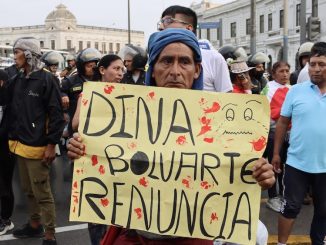
A protester in the center of Lima holds a sign that reads: “Dina Boluarte, resign.” Photo: Zoe Alexandra

On July 1 and 2, various social organizations and trade unions from the 25 regions of Peru held the First National Meeting of Regions and Organized People in the capital Lima to unite forces against the de facto government led by Dina Boluarte. During the two-day meeting, the Indigenous, peasant, social and union leaders agreed to organize 10 days of continuous social protests to demand Boluarte’s immediate resignation, closure of right-wing dominated Congress, new general elections, a Constituent Assembly to draft a new constitution, freedom of those arrested during protests and justice for those killed by the Army and the Police in the mobilizations.

Jorge Pizarro, representative of the National Assembly of the Peoples (ANP), explained that the new round of protests would be called the “National Day of Permanent Popular Mobilization” and that the capital Lima would be its epicenter. Pizarro informed that the protests would begin on July 19, the day for which ‘Toma de Lima’ or ‘Takeover of Lima’ march had been called, and conclude on July 28, on the Peruvian Independence Day.

Thousands of people from across the country are expected to arrive in Lima in the coming days. Pizarro reported that the leadership of the protest was considering the possibility of requesting international observers, in order to avoid deaths and injuries such as those registered during the demonstrations between December 2022 and February 2023. According to reports from local media and human rights organizations, an estimated 70 people were killed in violent repression by state security forces in the three months of social protests.

In June, Boluarte harshly criticized the announcement of new social protests against her government. She also ruled out the possibility of stepping down and organizing early elections. According to reports, the government has already ordered the deployment of more than 8,000 police officers at various points in the capital for July 19.

Boluarte, who took office after former left-wing President Pedro Castillo was removed in a legislative coup and subsequently arrested, has been highly unpopular since the day she assumed power. While she was elected on a progressive ticket, following the coup she entered into a political alliance with the country’s right-wing forces to govern.

Santos Saavedra Vásquez, the president of the Single National Union of Urban and Peasant Patrols Movement (Central Única Nacional de Rondas Campesinas – CUNARC), told La Republica that different patrol bases from the northern, central and southern regions were ready to travel to the capital.

“The president must resign before the national day, it is the most suitable thing to do in this political and social crisis. However, President Dina Boluarte and the Congress do not want to leave power despite the rejection of the Peruvians,” emphasized Saavedra Vásquez.

According to a new survey conducted by the Institute of Peruvian Studies (IEP), the disapproval rating of Boluarte has risen from 71% in January to 80% in June, while that of the Congress has increased from 88% to 91%. With respect to the issue of a new constitution, the poll showed that 47% were in favor of making some changes to the current Constitution, which was written and imposed in 1993 under the far-right dictatorship of Alberto Fujimori (July 1990–November 2000). Meanwhile, 34% said that the dictatorship-era constitution should be replaced completely.

Source: Peoples Dispatch

Strugglelalucha256


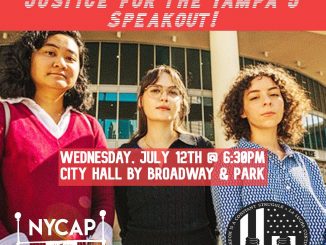
New York: Justice for the Tampa 5 speakout, July 12

Justice for the Tampa 5 speakout
Wednesday, July 12 – 6:30 p.m.
New York City Hall, Broadway & Park, Manhattan

Called by New York Community Action Project

Part of July 12 National Day of Protest to Drop the Charges on the Tampa 5

Join us to defend Affirmative Action and DEI initiatives on college campuses, and for the charges to be dropped NOW! Learn more at NAARPR.org! #tampa5 #justiceforthetampa5

Strugglelalucha256


The secrets that the Pentagon Papers didn’t reveal

The death of Daniel Ellsberg on June 16 should be a reminder that every big business war requires wholesale lying. In 1971 it was Ellsberg, along with Anthony Russo, who brought the Pentagon Papers into the open.

These documents revealed the falsehoods that successive presidential administrations told to sell the U.S. war against Vietnam. Among them was the big lie that small Vietnamese boats attacked U.S. naval vessels in August 1964.

That alleged incident was the excuse for the “Gulf of Tonkin” congressional resolution that President Johnson used to escalate the war massively.

Both Ellsberg and Russo faced decades of jail time for telling the truth. Their revelations came when the anti-war and Black liberation movements were shaking the capitalist power structure.

It was because of these movements, along with disagreements within the capitalist class itself, that charges were dropped against the two whistleblowers. 

Julian Assange

Julian Assange is not so lucky. The journalist faces decades in prison for exposing U.S. war crimes in Iraq and Afghanistan.

Lies aren’t enough to conduct bloody wars for Big Oil. Anti-war voices and movements have to be suppressed.

Thousands were jailed by the white supremacist President Woodrow Wilson for opposing World War I. Among them was the socialist Eugene Debs, who received nearly a million votes when he ran for president from prison.

The U.S. Army spied on the grandfather of the Rev. Martin Luther King, Jr. for denouncing lynching in a sermon. 

Just before the U.S. entered World War II, the feds framed the socialist leaders of Teamsters Local 544 in Minneapolis for attempting to overthrow the government.

And during World War II, Elijah Muhammed and over 40 other members of the Nation of Islam were railroaded to prison. FBI Director J. Edgar Hoover wanted Black newspaper editors jailed for exposing racism in the segregated U.S. armed forces.

Thousands of draft resisters were jailed or exiled during the Vietnam War. One of these heroes is Eddie Oquendo, who formed Blacks Against Negative Dying (BAND) in the Bedford-Stuyvesant neighborhood in Brooklyn, New York.

Open the files on Dr. King and Malcolm X!

Exactly one year after Dr. King declared that the United States was “the greatest purveyor of violence in the world today,” he was gunned down in Memphis on April 4, 1968. Coretta Scott King said, “There is abundant evidence of a major, high-level conspiracy in the assassination of my husband.”

The official story of Malcolm X’s assassination is also unbelievable. Two of the convicted assassins, Muhammad Aziz and Khalil Islam, were exonerated on Nov. 18, 2021. They had been framed in a 1966 show trial.

Muhammad Aziz, now over 80 years old, spent 20 years in prison. Khalil Islam, who died in 2009, served 22 years and never got to see his name cleared.

There were many reasons why the racist ruling class wanted Malcolm X killed. The wealthy and powerful considered his travels to Africa and ties with revolutionary movements there to be dangerous.

J. Edgar Hoover sent a telegram to the New York FBI office on June 6, 1964, demanding that they “do something about Malcolm X.” Eight months later, Malcolm X was murdered.

The Pentagon had special reasons to silence Malcolm X. In 1965 and 1966, one-fifth of all U.S. combat deaths in Vietnam were Black soldiers and marines.

Malcolm’s friend, Muhammad Ali, risked going to prison because he refused to kill Vietnamese people.

The military brass must have feared Malcolm X leading a draft resistance campaign that would eventually find support not only from the Black community but also from Asian, Indigenous, Latinx, and working-class white people as well.

Two months after Malcolm X was murdered, President Johnson sent 42,000 U.S. troops to invade the Dominican Republic. Over three thousand Dominicans were killed.

Malcolm X would have denounced this invasion.

The Pentagon Papers, which were finally declassified in 2011, don’t mention the assassinations of Dr. King and Malcolm X. We have to demand the truth while defending truth-tellers like Julian Assange.

We have to defend all those under attack. The FBI is now trying to frame African People’s Socialist Party Chairman Omali Yeshitela as well as Penny Hess and Jesse Nevel.


The Uhuru 3 face years in jail for opposing the U.S. war in Ukraine against the Russian Federation. See how you can help at www.handsoffuhuru.org

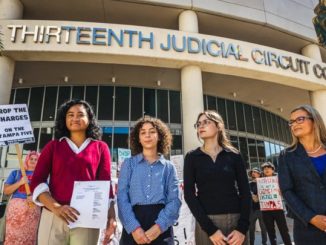
Florida Gov. DeSantis wants to lock up five members of Students for a Democratic Society (SDS) for opposing his racist agenda. The Tampa 5 are Chrisley Carpio, Laura Rodriguez, Gia Davila, Lauren Pineiro and Jeanie Kida. See NAARPR.org for more information on this dangerous frame-up.

Strugglelalucha256


In brutal summer heat, prisoners say their cells are like ‘stifling hot coffins’

Days of extreme heat without access to enough water and cooled air become deadlier for an aging prison population.

Shortly after midnight this past Friday, guards found 37-year-old Elizabeth Hagerty dead in her unair-conditioned Texas prison cell. The day before, temperatures had reached nearly 100 degrees.

Hagerty was scheduled for parole on August 2. She had been sentenced to four years in prison for not meeting the many requirements of her 10-year probation sentence for a fight with an ex-girlfriend.

Her mother-in-law, Martha Romero, told Truthout that Hagerty had diabetes, asthma and high blood pressure, but was otherwise healthy.

In mid-June, Hagerty was transferred from an air-conditioned prison to the Dr. Lane Murray Unit. Ten days later, she told Romero that she was feeling sick, could not keep food down, and had lost 12 pounds over the past week. Two days later, she was dead.

This past June, 32 people died in Texas state prisons. During the last week of June, three people, including Hagerty, died in Texas prisons that lacked air-conditioning. All were in their thirties. Thirty-five-year-old Tommy McCullough died while mowing the grass at the Thomas Goree Unit in Huntsville. His family told KXAN that he had been complaining about excessive heat and insufficient access to water all week.

Strugglelalucha256


France: Macron shuts down internet and fines protesters’ parents

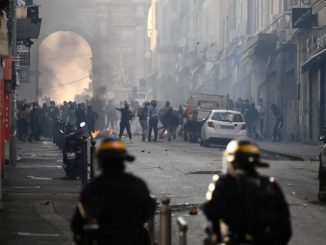
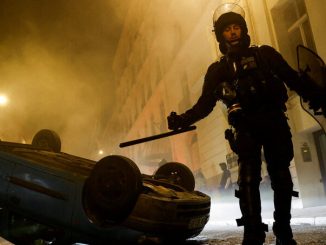
France’s government is targeting parents of minors and the internet to contain a people’s uprising that has entered its sixth day on Monday.

As he had threatened days earlier, French President Emmanuel Macron decided to cut internet access in different locations on the outskirts of Paris starting on Monday, July 3.

The French Ministry of the Interior explained via a statement that the restrictions are implemented in order to “prevent the abusive use of social media platforms to coordinate illegal actions and incite violence.”

Previously, Macron had said that the protests originated from false publications on social media, violent video games and a lack of parental responsibility. He stated that on social media, there has been “unacceptable exploitation of the death of a teenager. I condemn, in the strongest terms, all those who have used this situation to attack our institutions. They have an overwhelming responsibility. Faced with this, this is the appropriate response.”

This occurs while the West, including France, lashed out at Iran several months ago over internet restrictions during the violent unrest. At the time, France vowed to facilitate network access in Iran to support the rioters that killed several people.

Meanwhile, the NGO Human Rights International has criticized Macron’s measure. It warns that “wanting to limit internet access in France is an act of censorship which only seeks to prevent the reality of the country from being shown.”

Fines to parents of protesting minors

In another controversial move, French Justice Minister Éric Dupond-Moretti reported on Saturday that parents of minors participating in anti-police protests in France could face prosecution.

“Parents who do not take care of their children (under 17 years old), and leave them out at night knowing where they will go, will face two years in prison and a fine of €30,000,” Dupond-Moretti said.

Dupond-Moretti added that the authorities will crack down on the protests’ organizers, who have used social media to organize the protests. Dupond-Moretti warned that authorities could request IP addresses to identify users.

“So you’re 13, 14, 15, 16 or 17, you are at home and you’ve posted something on Snapchat, your account will be deleted, and you will be detected and punished,” he threatened.

Police and riot police have arrested more than 1000 demonstrators during mass protests against racism and police violence in France. The protests began in response to the murder of 17-year-old Nahel Marzouk by a French policeman during a traffic stop, which sparked outrage against racist and repressive policing.

(HispanTV)  with Orinoco Tribune content

Translation: Orinoco Tribune

Strugglelalucha256


Stop Israeli massacre in Jenin refugee camp

5 Ways to Take Immediate Action!
Stop the Israeli Massacre in Jenin Refugee Camp

End U.S. Support for Zionist War Crimes in Palestine
 Al Awda-NY/NJ &  The Palestinian Assembly for Liberation

As Palestinians are enduring unimaginable suffering at the hands of the colonizing zionist entity’s settlers and armed forces- who’ve escalated their coordinated and unbridled criminal violence- we call on all people of conscience to raise their voices and demand an end to the zionist massacre and invasion of the Jenin refugee camp; to end expansion of and dismantle settlements which are war crimes; and to end the horrifying settler pogroms against Palestinian towns. 

HERE’S FIVE WAYS YOU CAN MAKE A DIFFERENCE 

  1. Call, Email, Tweet @  Your Local and Federally Elected Officials, 30seconds to  just copy/paste!! ( see end of document for drafted email, talking points, emails, phone numbers and social media tags for your national and local reps. Just copy & paste  sample email/talking points)

🛑📢Call, email, tweet your elected representatives, and tag them on social media. Express your outrage over the ongoing Israeli war crimes and demand that they take immediate action. 

Urge them to call and advocate for the  

  1. Suspension of all material and political aid to the zionist entity; 
  2. Sanctions against the Zionist entity so long as it commits war crimes and crimes against humanity;  
  3. Condemnation of zionist  massacres in Jenin, and of settlement expansion and settler pogroms in Palestine; 
  4. Provision of support and supplies to Palestinians to defend themselves from zionist war crimes and pogroms.
  5. Spread Email Campaigns: Encourage your friends, family, and colleagues to join this email campaign, to flood their representative’s inboxes and ensure our message is heard loud and clear. Copy this email and send it to everyone you know.
  6. Organize, Mobilize, BDS: 

Take to the streets and organize protests, rallies, and marches in solidarity with Palestine. Even if it is just a few people, standing together with homemade signs, it is very powerful and raises Palestine in all spaces, take photos of your action to show Palestinians in Jenin you are with them! Use your social media platforms to spread awareness about the atrocities taking place. Engage in conversations, share informative articles and videos, and amplify the voices of Palestinians. Join Palestinian and solidarity organizations locally and nationally. Use the hashtags #Jenin #FreePalestine #DismantleApartheid #DismantleGenocide.
And always boycott Israeli products and companies that invest in the zionist entity, for a list see here: http://bdsguide.com/bds-list/ 

  1. Support Humanitarian Organizations:

Donate to reputable Palestinian-run and Palestine-based humanitarian and medical organizations in Palestine that are working tirelessly to provide emergency relief, medical assistance, and shelter. These organizations are a lifeline for Palestinians.

  1. Educate and Advocate:

Arm yourself with knowledge about the historical context, the root causes, and the ongoing struggle for Palestinian liberation. Join Palestinian-led advocacy and organizing groups in your community and schools. (Check out @AlAwda on twitter, @alawdany on Instagram, register at Palassembly.org, read https://decolonizepalestine.com/  and follow Palestinian news sources from Palestine.) 

5.5.   If you’re in Michigan support Dr. Mozghan for City Council, an unapologetic advocate for Palestinian liberation, you can also follow her on twitter @Mozghan4Council 

Time is of the essence. We must act now to  demand justice and support for the Palestinian struggle for liberation and safety from the Zionist colonization and war crimes project!

U.S.G. Officials:

Engage with Local Representatives:

We encourage you to get in touch with your local representatives, including your City Council and state legislative representatives, whom you can find here:

http://www.house.gov/representatives/find-your-representative

SAMPLE EMAIL & TALKING POINTS:
Subject: Urgent Action Required: Suspend Aid to Israeli War Crimes and Support Palestinian Rights

Dear [Elected Representative’s Name],

I am writing to express my deep concern regarding the ongoing Israeli war crimes against Palestinians. As your constituent, I strongly urge you to take immediate action to address the following issues:

  • Suspension of Aid to Israel: I call upon the United States government to suspend all aid to Israel until it abides by all tenets of international law and dismantles all institutions of Apartheid, colonization, and occupation. It is enraging to witness violence and human rights abuses perpetrated by the Israeli government against the Palestinian people with the material and political aid of the U.S. government and with my tax dollars.
  • Condemnation of Pogroms and Invasion of Jenin Refugee Camp: I urge you to use your position to demand that the Department of State, Congress, and the Executive Office publicly condemn the recent settler and soldier-led pogroms on Palestinian towns and the invasion and massacre of the Jenin refugee camp by Israeli forces. These actions have resulted in grave violations of international law arising to war crimes and must be condemned- and stopped forthwith!
  • Sanctions on Israel for failure to Comply with International Law and for War: It is crucial that Israel be held accountable for its actions and brought into compliance with international law. I implore you to advocate for imposing targeted sanctions on Israel until it takes immediate steps to end its war crimes and abide by international law.
  • Supporting Palestinian Self-Defense: The Palestinian people deserve the means to defend themselves against Israeli war crimes and aggression. I urge you to push for policies that ensure Palestinians have access to the necessary resources and support to protect their lives and livelihoods.

It is crucial that your office takes a principled and just stance in this ongoing conflict. By taking these actions, you will demonstrate your commitment to human rights, international law, and a lasting peace in the region.

I kindly request a prompt response outlining your position on these matters and the actions you plan to take to address these urgent concerns. Thank you for your attention to this pressing issue, and I look forward to your positive response.

Sincerely,

[Your Name]


Al-Awda, the Palestine Right to Return Coalition
P.O. Box 199
New York, NY 10272

Strugglelalucha256


Slavery and the fourth of you lie

The Declaration of Independence is Philadelphia’s proudest claim to fame. It was written by the Virginia slave master and future U.S. president, Thomas Jefferson, who sold his own flesh and blood — the product of his rapes — upon the auction block.

Almost three-quarters of the signers of the declaration were enslavers. Using genocidal language, the document also describes Indigenous peoples defending themselves as “merciless Indian savages.”

The “unalienable rights” that Jefferson’s original draft mentioned were “life, liberty and property.” This expression was lifted from the writings of John Locke, a philosopher of the English capitalist class.

Both John Adams and Benjamin Franklin, members of the declaration’s drafting committee, knew that “the embattled farmers” who had “fired the shot heard round the world” weren’t going to die for the rich man’s property. So they changed this phrase to “life, liberty and the pursuit of happiness.”

Frederick Douglass, who had escaped from slavery to become a leader of the Black struggle for freedom, told a Rochester, N.Y., audience in 1852 what “America’s national holiday” meant to millions of enslaved people:

“What, to the American slave, is your 4th of July? I answer: a day that reveals to him, more than all other days in the year, the gross injustice and cruelty to which he is the constant victim. To him, your celebration is a sham; your boasted liberty, an unholy license; your national greatness, swelling vanity; your sounds of rejoicing are empty and heartless; your denunciations of tyrants, brass fronted impudence; your shouts of liberty and equality, hollow mockery; your prayers and hymns, and solemnity, are, to him, mere bombast, fraud, deception, impiety, and hypocrisy — a thin veil to cover up crimes which would disgrace a nation of savages. There is not a nation on this earth guilty of practices, more shocking and bloody, than are the people of these United States, at this very hour.”

Yet there would be one magnificent Fourth of July. Four score and seven years after the Declaration of Independence was signed, two big Confederate armies would be defeated at Gettysburg, Pennsylvania., and Vicksburg, Mississippi.

These great battles — which culminated on July 4, 1863 — constituted the turning point of the U.S. Civil War. Interestingly, two of the four armies engaged in them were commanded by “Proper Philadelphians.”

Black soldiers need not apply

Gen. George Gordon Meade was the commanding general of the Union Army at Gettysburg. Meade came from a prominent Philadelphia family of merchants who had fallen on hard times. Born in Cádiz, Spain — where his merchant father “moved in the highest social circles” — Meade went to West Point because it was free.

In the summer of 1863, Robert E. Lee’s Army of Northern Virginia invaded the North. While marching through Maryland and Pennsylvania, Lee’s troops kidnapped and enslaved African Americans.

If the Confederates could have seized the Pennsylvania Railroad bridge spanning the Susquehanna at Harrisburg, the East of the Union would have been largely cut off from the Midwest.

Diplomatic recognition of the slave masters’ regime by Britain and France would probably have followed. Large sections of the capitalist class in the North might have thrown in the towel as well.

While Lee and the Confederacy were playing to win, Meade was trying not to lose. Meade originally wanted to withdraw from Gettysburg. After the battle — despite pleas from other Union generals — Meade refused to pursue Lee’s army.

Meade’s unwillingness to go on the offensive wasn’t based on faulty intelligence. Information had been received about demoralization in Confederate ranks and that they had lost a good deal of their artillery. Nor was it a question of personal cowardice.

Even after two years of bloody warfare — and six months after the Emancipation Proclamation was issued — Meade hesitated to destroy the Confederate Army. Along with much of his class, he was still hoping to strike a deal with the slave masters. Lee was allowed to retreat across the Potomac.

While white soldiers in the Union Army at Gettysburg were being slaughtered on Little Round Top and Cemetery Ridge, Black soldiers were not allowed to fight beside them. “A company of Black volunteers from Philadelphia who took the train to Harrisburg … were turned back because of their color,” wrote history professor Allen B. Ballard. (New York Times, May 30, 1999) 

Jim Dwyer reported that the racist Bally Corporation didn’t want African Americans to buy their shoes. (New York Daily News, Nov. 17, 1996) Here was the United States government prohibiting Black soldiers from dying for it.

Yet Black soldiers and sailors were indispensable for the Union’s victory. Nearly 200,000 Black soldiers fought in the Union Army and a quarter of the Navy was Black. Just for this participation in rescuing the Union from the Confederacy, reparations are owed Black people.

This was also a case of the capitalists fearing their own revolution. For Meade-the-merchant as well as Lee-the-plantation-owner, Black soldiers with guns represented a slave insurrection that could threaten capitalist rule too.

Vince Copeland pointed out this contradiction in his introduction to “A Voice from Harper’s Ferry”:

“The Black regiments were revolutionary in that they struggled against their own and their relatives’ slavery. But their creation and existence was also a subordination of the Black freedom struggle to the discipline of the anti-slave master capitalist class. It was a subordination of the revolutionary Black soldier to the moderate or often only half-revolutionary white Northern officer.”

Philadelphia traitor

The other “Proper Philadelphian” commanding an army that Fourth of July came from a much richer family than Meade’s. Gen. John Clifford Pemberton was a descendant of Israel Pemberton II — the King of the Quakers — who along with Benjamin Franklin had founded the first fire insurance company in the country.

On July 4, 1863, General Pemberton surrendered his besieged Confederate Army to Ulysses S. Grant at Vicksburg. The Confederacy had been split in two.

Lincoln declared that “the father of waters flows unvexed to the sea.” But it took Black troops to help capture Port Hudson a few days later to put the entire Mississippi River in Union hands.

After the war, the traitor Pemberton was welcomed back into the folds of Philadelphia’s capitalist class. He “spent the rest of his life with his sisters and brothers in Proper Philadelphia’s most exclusive rural-suburb of Penllyn,” according to historian E. Digby Baltzell in his book, “An American Business Aristocracy.”

The descendants of these and other Philadelphia capitalist families put fascist Police Commissioner Frank Rizzo in City Hall as mayor from 1972 to 1980 and sent Mumia Abu-Jamal to death row. This class kept the MOVE 9 defendants in jail for 40 years — two of the MOVE 9 died in prison — and is still keeping Mumia incarcerated.

But at least during the Civil War the ranks of Philadelphia’s business elite included the anti-slavery abolitionist Matthias Baldwin, whose factories eventually turned out 50,000 steam locomotives.

New York’s worse record

New York City had a worse record than Philadelphia. Little more than a week after the Battle of Gettysburg, a pro-slavery insurrection broke out in New York City on July 13, 1863. Two orphanages filled with Black children were set on fire. To this day, it’s uncertain how many African Americans were lynched.

This pogrom in Manhattan was no more spontaneous than the protests would be in 1974 in Boston of racists trying to stop busing of schoolchildren to desegregate public schools. Both were the result of racist agitation supported by important sections of the capitalist class. Particularly vicious in 1863 was the New York Herald, the Fox News of its time.

At City Hall Park, New York Gov. Horatio Seymour actually addressed members of this lynch mob as “My Friends!” Behind Seymour — who would be the (pro-slavery) Democratic presidential nominee in 1868 — was a host of millionaires. Among them were the railroad lawyer Samuel Tilden, who later became the Democratic presidential candidate in 1876, and the banker August Belmont, an opponent of the Emancipation Proclamation.

Probably the most important figure on Wall Street at the time, Belmont was head of the Democratic National Committee. He was son-in-law of Louisiana senator and plantation owner John Slidell.

Slidell was described by Civil War historian Bruce Catton as “running” the just pre-Civil War administration of President James Buchanan. Usually considered the worst president in U.S. history, Buchanan’s administration practically turned over army bases to the slave masters.

Slidell also played a major role in setting up the Confederacy. When he was en route to Europe seeking diplomatic recognition for the slave masters, Slidell was taken off a British vessel by a U.S. Navy captain. War almost broke out between the two countries as a result.

None of this harmed Belmont’s reputation within the capitalist class. Belmont Park, just east of New York City, and the Belmont Stakes, part of horse racing’s “triple crown,” are named after him. Belmont’s son became head of New York City’s first subway, the Interborough Rapid Transit Company — the I.R.T.

In 1992 — 129 years after the so-called “Draft Riots” — another racist mob gathered at City Hall Park. Ten thousand mostly drunken cops cheered Rudolph Giuliani as he denounced David Dinkins, the first African American mayor of New York City. These cops — and campaign contributions from Wall Street — would elect Giuliani as New York’s mayor the following year. Giuliani imposed eight years of increased police terror and kicked a million New Yorkers off public assistance.


Strugglelalucha256


Death of Nahel Merzouk: Who sows violence?

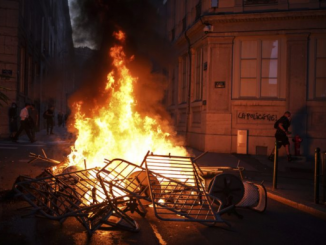
July 3 – French President Emmanuel Macron canceled his state visit to Germany over the weekend because of one of the biggest crises of his tenure. Clashes between the population, which is tired of the ongoing police violence, and the 45,000 police officers who have been dispatched have shaped events since Tuesday after 17-year-old Nahel Merzouk was shot dead at close range by motorcycle policeman and ex-soldier Florian M. during a vehicle check in Nanterre. However, the reasons for the anger that broke out on these summer nights lie much deeper than the misconduct of a single police officer.

Hundreds of buildings – police stations, tax offices, town halls, schools, etc. – and thousands of vehicles burned. The rebellion spread across the country over the weekend and as far as Brussels, Belgium. The discourse of an “inexcusable act” that the state leadership is trying to create seems unbelievable because the past few months have been marked by excesses by the emergency services. The gunman M., who has since been arrested, pleaded self-defense until his lie was exposed. 

Alongside social and racial segregation, police violence remains a problem that has never been seriously addressed, particularly in the outskirts of large cities. Unemployment and social cuts lead to weariness in the “banlieues” [impoverished suburbs], which is now turning into violence.

After just four nights, the authorities reported more than 2,000 arrests – as many as during the entire five-week uprising of 2005. At that time, the rebellions were triggered by the police-inflicted deaths of two youths in Clichy-sous-Bois. Meanwhile, the “anti-separatism law” of 2021 and a normalized state of emergency serve as the basis of police-state policy. 

Since the relaxation of firearms legislation under Social Democrat François Hollande in 2017, deaths by police have skyrocketed, particularly during vehicle stops. At the time, Michel Tubiana of the LDH Human Rights League called the amendment a “license to kill.”

The UN has already condemned France’s authoritarian doctrine of order three times since May. According to official information, the deadly shot in Nanterre was the third fatal use of firearms by the emergency services since the beginning of the year. But the number of unreported cases is higher. 

On June 14, patrol officers shot dead 19-year-old Guinean Alhoussein Camara during a vehicle stop in Angoulême. And the most recent riots are also claiming fatalities: A 54-year-old died on Thursday near Cayenne in French Guiana from a “ricochet.” That same evening, near Rouen, a youth fell to his death from the roof of a supermarket. A young man has been in mortal danger since Friday because of the use of firearms by the special unit RAID in Mont-Saint-Martin.

As in the previous crises of the Macron regime, from the “yellow vests” to the “pension reform” protests to the now-banned environmental campaign “Uprisings of the Earth,” state violence was preferred to dialogue. Typical of this are Macron’s trips around the country. For his visit to the violence-plagued Marseille suburb of Busserine on Monday last week, special units cordoned off the district and prohibited residents from leaving the blocks of flats. 

Macron only tolerates cheers. In France, the police protect the state, not the population.

Translated by Melinda Butterfield 

Source: Junge Welt

Strugglelalucha256


Why is France burning? Reasons for the revolt

Following the death of Nahel, a 17-year-old boy, shot point-blank by a police officer during a traffic control in Nanterre (Hauts-de-Seine) on the 27th, riots broke out in popular neighborhoods throughout France, which burns again (as in 2005), expressing its rage against police violence, racist discrimination and the relegation perpetuated by the political and media powers.

By the way, we share two visions of this event, published by the political analysis magazine Viento Sur. 

The first is an interview by Faïza Zerouala with the sociologist Michel Kokoreff, a university professor in Paris VIII and a specialist in poor neighborhoods and their relationship with the police. He discusses the riots that followed the young man’s death.

***

The sociologist Michel Kokoreff, a university professor in Paris VIII and author of Sociologie des émeutes (Payot, 2008) and La Diagonale de la rage (Divergences, 2022), talks to Mediapart about the three nights of riots that followed the death of Nahel in Nanterre. For him, who worked on the 2005 riots and the broken promises [of the government], the riots and the anger in popular neighborhoods, given the socioeconomic conditions of their inhabitants, the tense relations with the police and racism, it is legitimate.

In his opinion, the only possible way out of this crisis is to reverse the article of the 2017 law that facilitates and legitimizes the use of firearms by the police, even if it means offending the increasingly powerful police unions.

Mediapart : After these three nights of revolt, the parallels with the autumn of 2005 seem evident. Do you think it is relevant?

Michel Kokoreff: Collective amnesia surprises me. Yes, the social history of riots repeats itself. Since the 1970s, all urban riots in France, up until 2018 in Nantes, have followed the same pattern. That is, a black or Arab youth dies as a result of a violent interaction with a police officer.

The resulting collective emotion leads to riots, scenes of violence and clashes with the police. The White Marches [a call for peaceful demonstrations] called for calm, but the riots have continued for several days fueled by police repression and inflammatory statements and authoritarian and contemptuous gestures by the Minister of the Interior.

In 2005, the riots lasted for almost three weeks. At that time, Prime Minister Dominique de Villepin reactivated the 1955 state of emergency, which had been used during the Algerian war. With the return of law and order, the promises of solutions and the deghettoization of the neighborhoods disappeared.

On this occasion, we have not yet reached that point, although the situation in many popular neighborhoods has inflamed since the day Nahel was killed and during the following nights. I am inclined to establish the connection with the live agony of George Floyd, in 2019. The video of the shooting of the motorized police officer and his colleague in Nanterre shows police abuse similar to that seen in Minneapolis.

Often the evidence [about police abuse] is difficult to establish, but not in this case. Hence, undoubtedly, the low profile that the authorities have maintained, the denunciation of politicians (with the exception of Marine Le Pen) and popular athletes and artists. But in 2005, the rioters were on their own…

What continuity do you see in the triggering factors of these riots of the last three nights with respect to the previous ones?

The same causes produce the same effects. Social problems remain the same and accumulate. Poverty, unemployment, job insecurity, school failure and school dropout are structural causes to which ethno-racial causes are superimposed, with that feeling of exclusion that accompanies it, racism, Islamophobia, discrimination of all type, in particular the discriminatory controls known as au faciès [by the color of the skin].

The feeling of discrimination, together with the difficulty of finding a stable job, is fueled by the logic of ghettoization that the urban renewal policy has not been able to break.

And then there are the political causes, namely the fact that urban politics, which for a long time was a very complex hodgepodge, has been completely abandoned since François Hollande, with Macron’s burial of the Borloo report.

Among the more circumstantial causes, we can cite the 2017 law, which I will not go into detail about, which is a Pandora’s box to the extent that it broadens the conditions for the use of weapons by police officers, so that the number of shootings for refusing to abide by it has doubled and that since 2020 it has caused double the number of deaths than the average observed in the 2010s, as recorded by the online magazine Basta!

Lastly, another factor is the extreme right-wing of power.

What does this mean?

It must be said that in France we are in a fascist moment. Without going back to the 2016-2023 sequence, this can be measured by the political positioning of the police unions. After World War II, they were close to the Communist Party, in the 1980s to the Socialist Party, and today to the Rassemblement National [extreme right], or sometimes worse. The reactions of [police unions] Alliance and France Police, who applaud Nahel’s death, are despicable. At the same time, they show the extent to which public security and the police are co-managed by the majority unions as well as by the Ministry of the Interior. They did not express themselves like that in 2005, and the pressure of these unions, their pressure in the face of the 2017 law, was much weaker.

Now social networks are used massively in these cases. Does this change the situation and the way these events are perceived?

In 2005, we were still in the 20th century. We are now in the 21st century, in the era of the digital revolution and counter-communication. During [the mobilizations of] Nuit debut [2016] and the yellow vests, social networks were used a lot. Smartphones were heavily filmed and used to provide a counter-narrative to police violence, to show what the continuous disinformation televisions were obviously not showing.

The youth of the popular neighborhoods are not far behind and use this tactic to zbeul [create disorder] and impose a counter-narrative. The ludic motivations of this violence are not the only ones at stake. A teenager died brutally (it could have been any other young person), hence the anger that erupted against the armed wing of the State, which condenses all forms of domination. This reminds us that riots always have political significance. It’s not just about looking good, it’s about showing the anger and uprising of the people who, if necessary, use fireworks to assert their point of view, with a novelty: firing mortars.

Didn’t this kind of reaction exist in 2005 or 2007 in Villiers-le-Bel?

It may be anecdotal, but it did not exist in 2005, just as it did not exist in the demonstrations. In Villiers-le-Bel, in 2007, pellet guns emerged, but that was really very exceptional. But here, the mortar fire creates an atmosphere of tension: apart from being very visual and creating viral images, it’s a kind of response to the overarming of law enforcement that the BRI [anti-gang brigade] sends in. Basically, it’s a form of resistance inspired by the Hong Kong uprisings. And it is through social networks that the mobilizations are taking place.

In various neighborhoods, town halls, schools, media libraries and social centers have been targeted, with the recurring controversy of the destruction of public services that benefit local residents. Why is this rhetoric so prevalent and what response can be given to it?

The youth of popular neighborhoods attack public services because, along with the police, they are the only trace of state power. Destroying them is an answer, even if it is part of a self-destructive logic that can be understood. How else can you make yourself heard? Historically, in France we do not like the use of political violence because it seems to us necessarily illegitimate. But in South Africa, in the United States, it was violence that set things in motion, not to mention the yellow vests , even if they didn’t achieve much.

The point of riots is that they clear things up, make problems publicly visible. In 2007, Nicolas Sarkozy did not name his diversity ministers by chance. [Those riots] They also shed light on the divorce of the left with the popular neighborhoods, which he had abandoned.

In 2005, the inhabitants of the popular neighborhoods felt very lonely. Today, in the context of the repression directed against the Soulèvements de la Terre and environmental activists considered eco-terrorists , is it possible to link the two and change the situation?

Yes, there is an immediate echo between one form of repression and the other; even on Tuesday night at the Place de la République in Paris, at the rally in support of the Soulèvements de la Terre, several speakers expressed their solidarity, not only with the Nahel family, but also pointing out the systemic link between violence of the state in both cases.

But it must be said that this echo is not enough. A complicated relationship – perhaps a class and race relationship – continues to exist between the activists of the intellectual petty bourgeoisie and the inhabitants, who may also be activists, of the popular and racialized neighborhoods.

The former are unaware of the suburbs’ colonial and immigration history, which makes it difficult to cross the border between the two. And this despite the fear, since May 1968, of those in power that the peasants, workers and students will cooperate, and that this diagonal of rage will lead to the appearance of a class front . Although in practice this solidarity is hard to get going and make it last, it can help move the lines against an inflexible government.

Without risking risky forecasts, can this revolt last? How to get out of the crisis?

By dint of talking about conflagration, we are playing with fire; It is what we call self-fulfilling prophecies. In reality, political responses will be decisive. Is the executive going to let the situation fester to legitimize his command speech or is he going to crack down? Three examples have been mentioned: that the case of Nahel’s murder is not tried in the nearest court, as requested by the family’s lawyers; another key issue is reversing the 2017 law that broadens and obscures the conditions for the use of firearms by police officers. Finally, for years there have been calls for the creation of an external and independent police oversight body that is not judge and party like the current Inspectorate General of the National Police (IGPN). One only has to see what our neighboring [countries] are doing. But in the current political climate,

***

A new case of deadly police violence has rocked the country. In such situations, the authorities usually prefer to dispute the veracity of the facts. This time, a video showing the circumstances of Nahel’s death and the uproar it caused could not be ignored. A new barrier was erected to protect the police from criticism: the violent act in question could be explained by an individual fault of the police officer who fired the shot and his colleague.

More critical voices point to a change in the law that regulates the use of firearms and the lack of police training as fundamental causes. As explained by Paul Rocher, author of the book Que fait la police? (published by La Fabrique), the current debate fails to capture the underlying causes of police violence and racism that lie at the very heart of the police force.

Nahel’s death tragically reopens the debate about people killed by police officers in the context of what the police narrative presents as a refusal to respect the police order. Compiling data from the Ministry of the Interior, a team of journalists from Bastamag were able to show that “police officers have killed four times as many people for refusing to obey orders in five years as in the previous twenty.”

Therefore, it seems appropriate to ask why this impressive and relatively recent increase in shootings has occurred. Approximately 5 years ago, in March 2017, a new law on internal security made the use of weapons by police officers more flexible. The text authorizes police officers and gendarmes to use their weapons if they fail to immobilize a vehicle “whose drivers do not comply with the order to stop and whose occupants may perpetrate, in their flight, an attack on their life or physical integrity or other people’s.”

The wording of this law is notoriously vague: how can a police officer reasonably know a driver’s intentions? And it is in this vagueness that the problem lies. A team of researchers has studied the effects of this fuzzy contour law. As one of the study’s co-authors summarizes, “the law that allows police officers to shoot more often results in…they shooting more often, and the number of police homicides (monthly average) increases massively.” An internal security law that reduces public security would be almost comical if it did not have dramatic consequences.

The elephant in the room: institutional racism
By focusing on the rise in police shootings after a change in the law, you risk quietly overlooking a crucial aspect of the death of Nahel and so many others. Focusing on the shootings -as important as it is- tends to situate the debate on an a priori ground blind to the racial dimension of police violence. However, the victims of shootings are not usually white. Given this fact, the debate on the refusal to obey police orders is necessarily a debate on police racism, the existence of which has been solidly demonstrated. In 2009, a study highlighted and quantified what suburbanites had long known:

“Depending on who was looking at it, blacks were between 3.3 and 11.5 times more likely than whites to be stopped by the police” and Arabs “were between 1.8 and 14.8 times more likely than whites.” [1] .

Racial profiling is a reality. Ten years later, the conclusions are the same. In 2019, the French Ombudsman revealed the existence of “systemic discrimination that translates into the overrepresentation of certain immigrant populations and derogatory practices in conducting identity checks by the police” [2 ]. These systemic practices are so ingrained in the day-to-day running of the institution that police officers are not necessarily aware of it.

To clearly understand the scope of institutional racism, the work that the great British sociologist Stuart Hall wrote specifically to understand the riots in British working-class neighborhoods after police intervention is instructive:

“First, institutional racism does not need overtly racist individuals: racism is seen as the result of a social process. [Second, norms of racist behavior] are carried within the professional culture of an organization and transmitted from informally and implicitly through their routine, their daily practices as an indestructible part of the institutional habitus. Racism of this type becomes routine, a habit that is taken for granted. It is much more effective in the socialization practices of police officers than formal training and regulations.(…) It prevents the existence of a professional reflexivity.Far from being considered exceptional, this type of involuntary racism is becoming part and parcel of the very definition of normal police work ” [3] .

In other words, the institution’s commonly accepted definition of good policing involves acting on the assumption that a non-white person is a suspect.

The existence of this attitude is confirmed by a series of studies on the French case spanning several decades. In 2017, the work of sociologist Christian Mouhanna reached a very similar conclusion to that of his colleague René Lévy in 1987, who stated that racial categorizations “constitute, so to speak, the tools of the trade and are part of that body of knowledge practices that constitute the background, the reference point of police work” [4] . This literature also shows that “police suspicion acts as a self-fulfilling prophecy, that is, it helps produce what is expected and thus confirms police officers in their belief in the relevance of these categories” [5 ] .

The power to categorize the population, which the investigation highlights, in turn shapes the use of force. The police is the only body that is recognized as having the capacity to determine what is understood by public order and its opposite, disorder, justifying the use of coercive methods: the use of a lethal or non-lethal weapon, or the mobilization of other restraint practices [6] . Sociologist Ralph Jessen points out that the primary criterion for a police officer’s intervention is his assessment of a situation; therefore, laws and regulations are only of secondary importance, and law enforcement often have only partial knowledge of them [7] .

By now, the scope of the 2017 law is becoming clearer. By expanding the scope of the use of weapons based on the individual judgment of the police officer, immersed himself in a professional environment steeped in racist prejudices, this law especially exposes the non-white part of the population. But it is also clear that the debate cannot focus solely on the use of firearms, since police violence is not limited to them.

Another series of statistics compiled by Bastamag journalists shows that of the 676 people killed as a result of police action between 1977 and 2019, only 60% were shot. What’s more, the magnitude of police violence goes well beyond the most extreme case of deadly violence.

An institution that transforms officers
Although institutional racism is a well-established fact in scientific research, if we want to fully understand police violence, we must take into account another specific feature of the police, namely that it is characterized by an extraordinary degree of isolation from the outside world and a formidable degree of internal cohesion. Let us unravel this argument in two stages.

First of all, it turns out that the majority of people who decide to become police officers are characterized by a purely repressive conception of the profession [8] . Thus, the police do not attract a cross-section of society, but rather people who stand out for their taste for authoritarian media. After this initial stage of self-selection, police officers are further isolated from society by the institution itself. To understand this, it is useful to study professional socialization. It is a double process during which the candidate acquires the technical skills and knowledge of the profession, on the one hand, and absorbs the vision of society that prevails within the institution to which he is committed, on the other.

To clarify the vision that prevails within the police institution, we can use the terms of a scientific article according to which the policemen see themselves as living in a “besieged citadel”, which unites the group [9 ]. In other words, police officers feel under siege from the rest of society. The formation of an esprit de corps is therefore achieved through the construction of an enemy, and this process in turn encourages “excessively violent behavior that exceeds the limits of legitimate violence” [10 ]. Although the police force attracts very specific profiles, it is above all the police institution, during professional socialization, that generates officers who are very united internally and distrustful, or even hostile, towards society.

Once the inner workings of the police institution are brought to light, the argument that police violence can be explained by inadequate training, too short a training period and the lowering of the eligibility threshold for applicants to the police profession loses almost all his strength. Although these factors may play a marginal role, the problem does not reside mainly in those who access the institution, but in an institution that transforms the agents that work in it; an effect that, as Hall points out, deprives the institution of any self-reflexive capacity.

Thinking about the police institution also allows, without diluting the specificity of police racism, to understand that the increase in violence against the labor movement and the environmental movement in the spring of 2023 did not come exclusively from those who gave the orders to the government, but from the government itself. police apparatus. Even more so when one takes into account the unprecedented expansion of police forces in the last 30 years.

What does the police do? We show that, contrary to the widespread myth that the police, like the rest of the civil service, have suffered from austerity, in fact, they have experienced an unprecedented increase in resources during this period: +35% (much higher than the increase in resources allocated to education during the same period: 18%) [11] . The number of police officers has increased in similar proportions. The latest programming law of the Ministry of the Interior, approved at the end of 2022, plans to go even further, assigning almost 15,000 additional million in the next five years.

These developments indicate that the police are materially in a position to exercise unprecedented control over society. Among other things, this is reflected in more regular contact with the population, which is an opportunity to expose the prejudices that characterize the institution.

This helps explain why the uprisings that followed Nahel’s death were not limited to Nanterre. It also explains why an investigation into the shooter and his accomplice will not be able to eradicate the anger at the discrimination that has been experienced daily in the region for many, many years, and the pain of so many people, almost exclusively black or Arab. , who have suffered violence or have even lost a loved one.

(Taken from Viento Sur.)

Printed article from: Cubadebate: http://www.cubadebate.cu

Article URL: http://www.cubadebate.cu/especiales/2023/07/01/por-que-arde-francia-razones-de-la-revuelta/

Translation: Walter Lippmann

Strugglelalucha256


Protests erupt in Florida after anti-immigrant law goes into effect

Under the law, Florida no longer recognizes driver’s licenses issued to undocumented immigrants from other states.

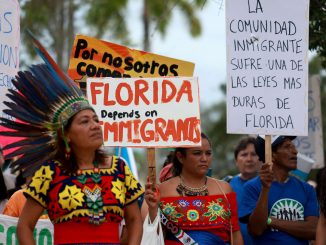
Protests against Florida bill SB 1718 have erupted across the state after the bill went into effect on Saturday. Under the law, Florida no longer recognizes driver’s licenses issued to undocumented immigrants from other states, and criminalizes the transportation of undocumented workers.

Since Gov. Ron DeSantis (R) signed the bill into law in May, Latinx activists have organized labor strikes, boycotts, cross-country caravans and marches to protest Florida’s anti-immigrant policies.

“We are fed up because despite our work, despite how we produce this country’s wealth, and because we pay taxes […] instead of gaining more rights we are losing rights,” Juan Jose Gutierrez, a California activist who is part of a pro-migrant caravan traveling to Florida to protest the law, told BorderReport. “Like my mother would say, ‘we are walking backwards like the crab.’”

Strugglelalucha256
https://www.struggle-la-lucha.org/2023/07/page/6/