On sixth anniversary, Ukraine’s war on Donbass takes ominous turn

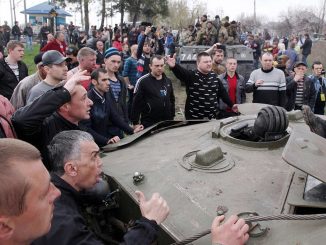
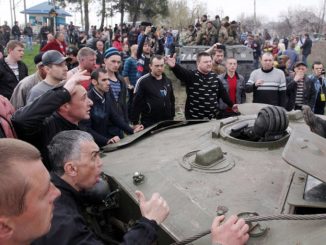
Donbass residents surround invading Ukrainian tank in April 2014.

Late in the afternoon of April 9, 25-year-old hotel worker Miroslava Vorontsova was killed by a Ukrainian military drone strike on the front-line town of Gorlovka in the Donetsk People’s Republic. A 59-year-old neighbor was seriously wounded in the blast. 

The drone strike occurred while Ukrainian military units and neo-Nazi “volunteer battalions” shelled the town’s outskirts with traditional weaponry — a regular occurrence — despite a ceasefire under the international Minsk Agreements.

Vorontsova is believed to be the first casualty of Ukrainian drone warfare. Up till now, Kiev has used drones only for spying missions over the independent Donetsk and Lugansk republics of the Donbass mining region, to seek out targets for bombing and assassination.

April 14 marks the sixth anniversary of Ukraine’s war against the residents of Donbass. In the midst of a deadly global pandemic that has caused violent panic inside Ukraine, the adoption of “remote control killing” by President Vladimir Zelensky sounds an ominous new note in a war that has cost more than 13,000 lives, according to the United Nations.

Coup regime targets workers

On April 14, 2014, less than two months after a U.S.-backed coup d’etat overthrew the elected government of Ukraine, tanks rolled into the country’s eastern Donbass region to attack civilian protesters. People in the multinational, working-class, predominantly Russian-speaking mining area had overwhelmingly rejected the new government headed by pro-Western politicians, oligarchs and neo-Nazis under the umbrella of right-wing Ukrainian nationalism. Local residents held mass protests and took over local and regional government buildings.

Soon Kiev sent fighter planes to bomb the regional capital of Lugansk. Heavy weaponry was directed against the capital of Donetsk and other population centers. 

The popular uprising in Kharkov was repressed. In the port city of Odessa, fascists bused in from the West slaughtered at least 48 local activists trapped in the burning House of Trade Unions on May 6.

This was the last straw for Donbass residents, who voted overwhelmingly in a referendum on May 19, 2014, to declare independence from Ukraine. They established the Donetsk and Lugansk People’s Republics. Locals established popular militias to defend their homes, and supporters from across Ukraine, other parts of the former Soviet Union and beyond came to help them.

In early 2015, the popular militias scored a decisive military victory when they encircled the demoralized and ill-equipped Ukrainian forces and liberated the embattled town of Debaltsevo. 

Since then, Ukraine’s forces have been unable to carry out a successful military offensive against the people’s republics. But they continue to routinely launch heavy artillery attacks on front-line towns and cities, often killing and maiming civilians and causing costly damage to civilian ‘infrastructure.

U.S.-NATO upgrade Ukrainian forces

Since the ignominious defeat of Ukraine’s military by the poorly armed but highly motivated people’s militias in 2015, the U.S. and its NATO military alliance have worked to steadily upgrade Ukraine’s military technology and organization. The death-dealing killer drone that stole Miroslava Vorontsova’s life is but one example.

Despite intense repression, including the jailing of thousands of political prisoners and assassinations of opponents, Ukraine was wracked by anti-war protests when soldiers were being sent into combat in the eastern regions. 

U.S. military and political bosses had already learned to deal with this problem using remote-controlled drone attacks. These caused the maximum carnage to “enemies” with minimal danger to U.S. troops.

Murder by drone first became routine under the government of Republican George W. Bush, as part of the so-called “War on Terror.” Under Democrat Barack Obama, who wielded a widely publicized “kill list,” drone attacks grew 10-fold

As with so many other policies of repression and austerity, the bipartisan drone war directly laid the basis for the policies of Donald Trump.

It should be noted that Obama’s vice president and now presumptive Democratic presidential nominee, Joe Biden, served as the unofficial colonial governor of Ukraine. He shuttled back and forth between Washington and Kiev frequently, wielding both carrot and stick to encourage repression and austerity measures against Ukrainian workers and harsh war against Donbass.

Zelensky, U.S. and Nazis

Most people in the U.S. first heard of Ukrainian President Zelensky during the impeachment proceedings against Donald Trump. Trump reportedly twisted Zelensky’s arm and temporarily withheld aid for dirt on Biden’s very real dirty dealings in Ukraine.

Zelensky was elected last year in very unfree elections that excluded opponents of the 2014 coup. Many Ukrainians voted for him in the hopes that he would make peace with Donbass and reverse the worst excesses of his predecessor, Petro Poroshenko. 

But Zelensky, a former TV comedian, is equally beholden to the coalition of far-right forces that wield the true power in Ukraine on behalf of U.S. and European Union imperialism. In fact, military attacks have increased under his administration. Two days after Miroslava Vorontsova’s death, Zelensky was photographed on a tour of the front lines wearing a military jacket with the emblem of a neo-Nazi group modeled on the German SS “Totenkopf” Division, which he received last year.

Take action!

In response to an appeal by the Communist Party of the Donetsk People’s Republic for solidarity actions to mark the war anniversary on April 14, Struggle-La Lucha newspaper has joined with others to call for an Online Day of Action to Fight Covid-19 Not Donbass.” 

Readers are encouraged to take a selfie while holding a sign calling for an end to the war and blockade of Donetsk and Lugansk. Post the photo on social media with the hashtags #StopWarOnDonbass and #FightCovid19NotDonbass. Send a copy of your photo to solidarityukraineantifa at gmail dot com.

Also, send emails of protest to Ukrainian Ambassador to the U.S. Volodymyr Yelchenko <emb_us@mfa.gov.ua>, U.S. Ambassador to Ukraine Kristina Kvien <kyivacs@state.gov>, former Vice President Joe Biden <https://go.joebiden.com/page/s/contact-us> and President Donald Trump <https://www.whitehouse.gov/contact/>.

Sample text for email: “April 14 marks six years since Ukraine’s illegal war on the people of Donbass began with U.S. assistance. More than 13,000 people have been killed. These war crimes must end! I demand an immediate end to U.S. financial, political and military aid to the Ukrainian government and its allied far-right groups. End the bombing and blockade of the Donbass region immediately. Recognize the Donetsk and Lugansk People’s Republics and adhere to the Minsk Agreements.”

Strugglelalucha256


Fight Covid-19 Not Donbass: Online Day of Action April 14

Tuesday, April 14

Solidarity with Novorossiya & Antifascists in Ukraine

On Facebook

Strugglelalucha256


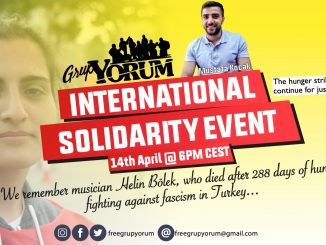
Free Grup Yorum International Solidarity Event on April 14

Tuesday, April 14, 2020 at 6:00 PM – 9:00 PM UTC+02

Online (Link to be shared on the day)

On Tuesday, 14th April 2020 an ONLINE EVENT by the Grup Yorum Solidarity Committee on international level will take place 6.00 pm. (CEST) for the demands and lives of Mustafa Kocak and Grup Yorum guitarists Ibrahim Gökcek.

We will commemorate Grup Yorum singer Helin Bölek, who was immortalised in her resistance on the 288th day of death fast.

The ongoing repression, crimes of the government in Turkey against the whole opposition and especially against prisoners didn’t stop during the “corona crisis”, rather the AKP government tries to take advantage of the silence and restrictions towards the masses.

The resistance has reached a very critical state, as the death of the musician Helin Bölek showed to us.

We shall be many thousands people participating in this event and also showing our direct reaction, shouting from one mouth the demands of the resisters! We can really manage to break through the wall of ignorance and silence! Let’s be ONE POWER on 14th April, Let’s BREAK THE SILENCE!”

Participants are:
Activists of the international solidarity campaign, musicians from different countries, Grup Yorum, People’s Lawyers from Turkey defending Mustafa Kocak..
The program includes live music, solidarity videos, messages, statements, call for action and Hashtag for Mustafa and Grup Yorum….

Online Link will be shared Monday!

What are they fighting for?
MUSTAFA KOCAK is ready to give his life in the struggle against injustice and corruption of the jurisdiction. He wants a fair trial and the end of policy of traitors and police informants. Because in Turkey, already around 300 persons, who are involved in the democratic struggle against the fascist rule of the state, were put in jail only because of the false statements of a person called Berk Ercan. He offered himself to the police in order to escape repression and served police to get rid of political dissidents. The police tortured many people to make statements against other. Mustafa denied and was tortured for weeks. He was punished by this politics for crimes he didn’t commit.
But he resisted and continues to protect his human dignity.
Mustafa suffers incredible pain, can’t sleep, can’t walk and even stand up anymore, has bruises all over the body from forced intervention and torture. And all he says is: “The pain is very strong, I can’t sleep due to the pain. My whole body is burning.. Yes the pain is very big, its unbearable, but nobody shall suffer this pain again in connection with justice.. I’m ready for this pain. I sustain, so the pain won’t remain until tomorrow”!

Grup Yorum
The music group exists since 1985 and already published 23 albums. The AKP regime wants to completely destroy opposition and all revolutonary potential which can mobilise the masses. Of course, Grup Yorum is the biggest and most popular group, who can bring 1 million people or more to the concerts. And their motto is socialism, independence, freedom, solidarity and unity among the people.
The songs of Grup Yorum unite people of all colors and beliefs, its not deviding but uniting. This is, what the state in Turkey fears.
Since a few years all concerts and cultural activies are banned, members of the group are arrested. Their cultural center was raided and completely destroyed with all instruments several times within 2 years.
There are still 5 members of the group in prison, also with statements of police informants. The group started a hunger strike to fight this repression and finally 2 members began with death fast.
Just to sing their songs freely, to get freedom and justice, Helin Bölek was hungry for 288 days and she was immortalised due to the fascist politics of the state. Ibrahim has reached the 300th day of his death fast.

MUSTAFA KOCAK AND IBRAHIM GÖKCEK MUST LIVE!
WE CAN DO IT TOGETHER!

LONG LIVE INTERNATIONAL SOLIDARITY!
HELIN BÖLEK IS IMMORTAL!

On Facebook

Strugglelalucha256


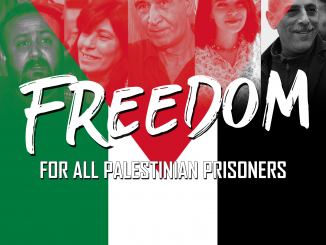
Palestinian Prisoners’ Day 2020: Week of Action for Palestinian Liberation

Call to Action | Suggested Actions |
Days of Solidarity | Visuals 

Call to Action in: Dutch | French | Italian | Swedish

Palestinian Prisoners’ Day 2020 approaches as 5,000 Palestinian prisoners inside Israeli jails face the ongoing threat of settler colonialism, apartheid and occupation, accompanied by the new threat to their health and lives posed by the global pandemic of coronavirus (COVID-19), accentuated by institutionalized Israeli medical negligence. Samidoun Palestinian Prisoner Solidarity Network urges all supporters of justice and liberation in Palestine to join us between 10 and 17 April for a week of action to free all Palestinian prisoners! 

Today, there are approximately 5,000 Palestinians jailed by Zionist colonialism, including over 180 children, 430 administrative detainees jailed without charge or trial and 700 sick and ill prisoners, 200 with chronic and serious diseases that place them at even greater risk should COVID-19 spread throughout the prisons.

The imprisonment of Palestinians is a colonial attack on the Palestinian people. Imprisonment affects nearly every Palestinian family, including Palestinians in the West Bank, Jerusalem, Gaza Strip, occupied Palestine ’48 and even in exile and diaspora. Palestinian prisoners are mothers and fathers, sisters and brothers, students and teachers, labor organizers, women’s leaders, student activists, community builders, freedom fighters.

Defending Palestinian prisoners and demanding their immediate release is not only a humanitarian necessity at a time when their lives are at great risk due to COVID-19, it is also a political imperative for all concerned with justice in Palestine. Palestinian prisoners represent the Palestinian resistance and the true leadership of the Palestinian liberation struggle, locked away in an attempt to preserve colonial control. Their liberation is critical to the victory of the Palestinian people and the freedom of Palestine, from the river to the sea.

The struggle of the Palestinian prisoners – and the Palestinian people – is an internationalist one. They are on the front lines of struggle every day behind bars for liberation, confronting not only Zionism and the Israeli state but also imperialism and reactionary regimes. The struggle to free Georges Ibrahim Abdallah from French prison is a critical part of this movement. The Palestinian prisoners’ liberation struggle is also linked to the fight of Irish republican prisoners, political prisoners in the United States, the Philippines, Turkey, Egypt and everywhere around the world for justice and liberation, and to the struggle to end racist and colonial incarceration.

The global pandemic of COVID-19 has presented new challenges for organizing everywhere, and the Palestinian prisoners – and, indeed, the Palestinian people – are also facing a severe attack. It is more necessary than ever to organize for Palestinian freedom and build our links of struggle, becoming more socially connected even as we are physically distant.

Samidoun calls on all friends of the Palestinian people, organizations concerned with justice in Palestine and Palestinian and Arab communities to join us in this week of action. A series of events that you can participate in is listed below. We encourage you to add your own! Please send your campaigns, virtual meetings and events to Samidoun at samidoun@samidoun.net or to our Facebook page for inclusion in this list or tag us on Twitter at @SamidounPP; now, more than ever, it is critical to unite our efforts to support the prisoners and fight together for the liberation of Palestine.

Please use the graphics here (in English, French, Arabic, Dutch, Swedish and German) to show your support for Palestinian prisoners and the Palestinian liberation struggle! We will be sharing graphics, videos, written content and more throughout the week and we encourage you to amplify and re-share these materials. Translations are welcome: please send to samidoun@samidoun.net.

For each day of the week, we have emphasized themes to highlight. Follow @SamidounPP on Twitter, Samidoun on Facebook and @samidounnetwork on Instagram to share content about these aspects of the Palestinian struggle and the prisoners’ cause. However, we urge you to share any and all information and action steps for Palestine and the prisoners on every day throughout the week!

Suggested Actions

  1. Videos and selfies are a great way to express solidarity with the Palestinian prisoners! Addameer Prisoner Support and Human Rights Association in Palestine issued a call for short video clips, and they have been pouring in from around the world. Share your video or selfie online using the hashtag #FreeOurPrisoners. Tag @Addameer to make sure that Addameer sees it, and tag us at @SamidounPP so that we can re-share and boost your solidarity efforts.
  2. Along with many other organizations, we will be announcing a Twitterstorm on 17 April to support Palestinian prisoners. The hashtag will be announced on that day for maximum impact, but your Tweets, Facebook, Instagram and other social media posts throughout the week can emphasize the critical importance of the Palestinian struggle! Tweet with #FreeOurPrisoners and #LiberatePalestinianPrisoners to join people around the world in expressing your solidarity with imprisoned Palestinians.
  3. If you cannot hold an in-person demonstration or action during this week, you can still support the prisoners with an online action or event! Several online meetings are listed below. Host a webinar or online meeting about Palestine and the prisoners’ struggle over Zoom, Facebook live or a platform of your choice. Send your event details – in any language – to Samidoun at samidoun@samidoun.net and we will include them in our list of activities.
  4. Demand the Red Cross act. Call on the International Committee of the Red Cross to uphold its responsibility and urge the immediate release of all Palestinian prisoners in Israeli jails. Sign the online petition initiated by War on Want: https://secure.waronwant.org/page/58733/
  5. Call in for action. Governments around the world, specifically imperialist powers and reactionary regimes, are fully complicit in Israeli crimes against humanity, including the mass imprisonment of Palestinians. Even if you have to leave a message, call your government officials and demand they pressure Israel to free Palestinian prisoners. Express your disgust at these governments’ ongoing support for Israeli colonialism:

Call during your country’s regular office hours:

    • Australian Minister of Foreign Affairs Marise Payne: + 61 2 6277 7500
    • Canadian Foreign Minister François-Philippe Champagne: +1-613-995-4895
    • European Union Commissioner Josep Borrell Fontelles: +32(0) 470 18 24 05
    • New Zealand Minister of Foreign Affairs Winston Peters: +64 4 439 8000
    • United Kingdom Foreign Secretary Dominic Raab: +44 20 7008 1500
    • United States President Donald Trump: 1-202-456-1111
  1. Boycott, Divest and Sanction. It’s just as important to boycott Israel when buying online! Join the BDS campaign to highlight the complicity of corporations like Hewlett-Packard and the continuing involvement of G4S in Israeli policing and prisons. Build a campaign to boycott Israeli goods, impose a military embargo on Israel, or organize around the academic and cultural boycott of Israel.

Days of Solidarity

Friday, 10 April
Theme: Day of action for sick and ill prisoners: Fighting Coronavirus and Israeli Medical Neglect

  • Join the online actions and keep tweeting and posting with #FreeOurPrisoners and #LiberatePalestinianPrisoners. Share your videos and selfies of solidarity!
  • Join the Twitterstorm to Free Georges Abdallah! 9 am Pacific/12 pm Eastern/6 pm Europe/7 pm Palestine and Lebanon. Use the hashtag #FreeGeorgesAbdallah and tag @NBelloubet @EmmanuelMacron and @General_Aoun

Saturday, 11 April
Theme: Day of action to free Khalida Jarrar and Palestinian women prisoners

  • Join the online actions and keep tweeting and posting with #FreeOurPrisoners and #LiberatePalestinianPrisoners. Share your videos and selfies of solidarity!

Sunday, 12 April
Theme: Day of action to free Mays Abu Ghosh, Tareq Mattar and Palestinian student prisoners

  • Join the online actions and keep tweeting and posting with #FreeOurPrisoners and #LiberatePalestinianPrisoners. Share your videos and selfies of solidarity!

Monday, 13 April
Theme: Day of action to free Ahmad Sa’adat and all Palestinian political prisoners

  • Join the online actions and keep tweeting and posting with #FreeOurPrisoners and #LiberatePalestinianPrisoners. Share your videos and selfies of solidarity!

Tuesday, 14 April
Theme: Day of Action against Home Demolitions and Collective Punishment
Day of Action for International and Arab Prisoners, including prisoners in Egypt, Turkey, the Philippines and the United States 

  • Join the online actions and keep tweeting and posting with #FreeOurPrisoners and #LiberatePalestinianPrisoners. Share your videos and selfies of solidarity!

Wednesday, 15 April
Theme: Day of Action for Prisoners for Palestine in Arab and International Jails: Free Georges Abdallah, the Holy Land Five and fellow Palestinian prisoners

  • Join the online actions and keep tweeting and posting with #FreeOurPrisoners and #LiberatePalestinianPrisoners. Share your videos and selfies of solidarity!
  • Participate in an online event: The International Association of Democratic Lawyers and the NLG International Committee will hold a webinar on economic sanctions and COVID-19, including among other speakers Raji Sourani of the Palestinian Centre for Human Rights. This will take place at 10 am Pacific/1 pm Eastern/7 pm Europe/8 pm Palestine. Register online here:  https://bit.ly/SanctionsWarWebinar

Thursday, 16 April
Theme: Day of Action to free Palestinian Child Prisoners
Day of Action Against Torture and Ill-Treatment

  • Join the online actions and keep tweeting and posting with #FreeOurPrisoners and #LiberatePalestinianPrisoners. Share your videos and selfies of solidarity!
  • Participate in an online event: Yafa Jarrar, Ghassan Abu Sitta and Tarek Loubani will speak on a webinar about COVID-19 and Palestine. 10 am Pacific/1 pm Eastern/7 pm Europe/8 pm Palestine. Event organized by University of Toronto Divest. Register online here: https://www.eventbrite.ca/e/contain-the-pandemic-free-palestine-tickets-101936476746

Friday, 17 April
Palestinian Prisoners’ Day

Saturday, 18 April

  • Samidoun will be holding a webinar on Palestinian prisoners and the struggle for freedom. 12 pm Pacific/3 pm Eastern/9 pm Europe/10 pm Palestine. Speakers TBA! Register online here: http://bit.ly/palestinianprisonersevent

Sunday, 19 April

  • NY4Palestine will host a webinar on the case of Ubai Aboudi and child prisoners in occupied Palestine at 11 am Pacific, 2 pm Eastern, 8 pm Europe, 9 pm Palestine. Register online to attend:  http://bit.ly/ImprisonedPalestiniansWebinar
Strugglelalucha256


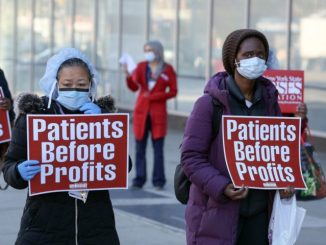
Capitalism & racism + Covid-19 = murder

April 11 — The Covid-19 pandemic is devastating New York City. Eighty refrigerator trucks are serving as mobile morgues to store the bodies.As of April 10, 92,384 people have been infected.

Inmates in the Rikers Island prison are being offered $6 per hour to dig mass graves on Hart’s Island off the Bronx. That’s the site of Potter’s Field, where a million people too poor to afford a funeral had their bodies dumped.

What’s happening in New York City is being repeated in Detroit, Chicago, New Orleans and Los Angeles. The coronavirus is ripping through the South with Black people suffering the most. About one in ten deaths has occurred in the adjoining states of Louisiana, Mississippi. Alabama and Georgia.

The Pentagon is seeking 100,000 body bags. The government’s stockpile of personal protective equipment ― a life and death matter for health care workers ― is almost depleted. But the Immigration and Customs Enforcement gestapo conducting deportation raids are guaranteed N95 face masks.

A hundred racist attacks against Asian Americans are occurring every day. Trump incited these attacks by calling the coronavirus “the Chinese virus.” We should call it the Trump virus. 

New York Gov. Andrew Cuomo has taken advantage of the pandemic to roll back bail reform and ram through Medicaid cuts in the state’s budget. 

Cuomo calls the virusthe great equalizer.” That isn’t true even if his own brother, CNN host Chris Cuomo, caught it. It’s certainly false with the city’s wealthy and powerful fleeing to the countryside. 

There’s nothing equal about this pandemic

The coronavirus has been much worse for New York City’s Black and Latinx communities. Orthodox Jewish communities in Brooklyn have been hard hit.

This writer lives two blocks from the Corona, Queens, N.Y., neighborhood where Louis Armstrong lived. Its 11368 ZIP code had 2,248 cases of the coronavirus as of April 10, the most of any in New York City.

Experts say New York City has been hardest hit because of its density. Nearly 9 million people live on about 300 square miles of land. 

Corona, Queens, is crowded with 41,768 people living per square mile. Two percent ― have been infected. 

Murray Hill ― ZIP code 10017 ― on midtown Manhattan’s East Side is even more crowded, with 51,775 people per square mile. Yet the neighborhood’s infection is just a quarter of Corona’s.

The difference is that while Corona’s median household income is $45,964, the figure for Murray Hill is $100,652, over twice as high.

Adjoining Corona in Queens is Elmhurst (ZIP code 11373) with 1,737 cases and Jackson Heights (ZIP code 11372) with 1,322 people infected. The Elmhurst Medical Center is being overwhelmed. (Figures for the different zip codes are updated every few hours at https://github.com/nychealth/coronavirus-data/blob/master/tests-by-zcta.csv)

All these neighborhoods are immigrant communities with many service and construction workers who had to continue going to their jobs while the pandemic was gripping the city. 

Black and Latinx neighborhoods in the Bronx, Brooklyn and Manhattan have also been hard hit. The eastern Far Rockways in Queens, home to four largely Black housing projects, have 993 cases.

The capitalist government is covering up the impact on Asian, Black, Indigenous and Latinx communities. Maryland lawmakers are demanding a breakdown of those who’ve caught the virus.

Social distancing an impossibility

Medical experts recommend that people keep a “social distance” of six feet from each other. How are the 2.2 million prisoners locked up supposed to follow that advice? Cook County Jail in Illinois already has 289 prisoners with the virus.   

For thousands of prisoners across the country, the coronavirus will be a death sentence. Activists like those in the Chicago Alliance Against Racist and Political Repression are fighting to free the most vulnerable prisoners. 

The hundreds of thousands in homeless shelters are also not able to keep six feet from each other. 

Social distancing is also impossible for the hospital and other “essential” workers taking overcrowded buses and subways in New York City. Fifty members of Transit Workers Union Local 100 have died of the coronavirus. 

Many essential workers who are risking their lives are among the lowest paid. The 3.6 million cashiers have an average annual income of just $22,430.  

Experts are recommending that trips to the food store be limited to once every two weeks. How many working-class families can do that? Not the ten million workers who have already been fired.

Density and lack of social distancing won’t account for all the deaths. We’re told to wash our hands, yet 141,000 Detroit families have had their water shut off since 2014. Service hasn’t been restored for thousands.

It’s worse on the Indigenous reservations. Forty percent of Navajo nation households aren’t connected to a water pipe. They have to haul water to their home. 

Overcrowded housing has skyrocketed because of rising rent. Many families are forced to move in with relatives.

Between 1980 and 2010, the number of these doubled-up families increased almost four-fold, 1.15 million to 4.3 million. (2012 U.S. Statistical Abstract, Table 59). Social distancing is impossible for them.

Millions of housing units are kept off the market to keep the rent high. A people’s movement is needed to seize them. 

Homeless families in Los Angeles have taken over over 12 empty homes. We need to follow their example.

Strugglelalucha256


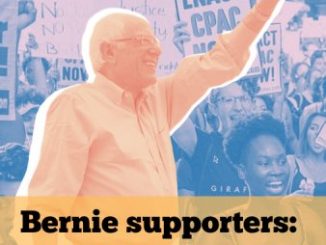
Bernie supporters: Join the Coalition to March on the DNC

Statement by Coalition to March on the Democratic National Convention
April 10, 2020

On April 8, Senator Bernie Sanders suspended his 2020 Democratic primary campaign. The Sanders campaign has inspired millions of working class and oppressed people, including an overwhelming majority of young people. The movement-building emphasis of the Sanders campaign is what truly sets it apart from anything seen in the U.S. since perhaps Jesse Jackson’s Rainbow Coalition in the 1980s.

What Sanders’s candidacy demonstrated again in 2020 is that working and oppressed people in the U.S. want more than what they’ve been afforded under the current system. His candidacy has solidified the fact that the change that people here so desperately need cannot come from the electoral arena. The ruling class who is in control of these mechanisms will not allow a self-proclaimed socialist to attain the highest office in government. However, this exact thing is why Sanders’ insistence on a mass movement of people is so significant.

History has shown that only when masses of people have united around demands, organized themselves into movements, and demonstrated for their causes in workplaces, on campuses, and in communities across the country have they ever been able to win change. The Coalition to March on the DNC exists to bring together as many of those progressive movements as possible in an effort to demonstrate the kind of future that is necessary for the masses of working and oppressed people in the U.S.

We have always sought to build the broadest possible coalition, whether that means revolutionary organizations, non-profits, labor organizations, or any other element within the people’s movements. Most of our points of unity can be connected to the types of things that Bernie has been promoting for his entire life. The Coalition to March on the DNC is a natural landing spot for his supporters who want to keep building the people’s movements.

Defeating Donald Trump is going to be on the minds of most people heading into November. Doing this in a practical sense can take a number of different forms. While some will look to the ballot box as the only option, others will work to develop broader networks, building stronger bases in their workplaces, communities and schools, and seek to challenge Trump and his reactionary policies more directly.

Bernie has always been clear about one thing: regardless of who it is that occupies the White House, without a mass movement at the grassroots level, nothing meaningful will be accomplished. The Coalition to March on the DNC as a temporary alliance of the various people’s movements serves as the most immediate extension of this call to continue organizing.

The start of the DNC has been moved from July 13 to August 17 due to the coronavirus. The Coalition intends to lead a mass demonstration within sight and sound of the Fiserv Forum, including a rally with many speakers and a march. The event will begin at 10 a.m. on Monday, August 17, the first day of the convention. All progressives, socialists and people’s movements are encouraged to make plans to join the Coalition to March on the DNC in Milwaukee this summer. For more information, please visit the Coalition’s website at www.marchondnc.org.

Source: FightBack! News

Strugglelalucha256


Covid-19: Weapons of mass incompetence

April 6 — As of this writing, 10,000 people [in the U.S.] have died from the impact of the coronavirus, also known as Covid-19. Ten thousand! And unless I miss my guess, it ain’t over yet. That’s because the coronavirus is not slowing down. If anything, it’s picking up speed. 

Almost everything we’ve heard about the virus from the media during the first weeks is false or misleading. I’m not talking about the big idiots crowing about “It’s a hoax.” It’s not. 

Originally, it was a virus attacking old people. We now know better. Young people, including children and even infants, have succumbed to this disease. There was an old woman in Italy who contracted the virus. She was sick, and then recovered. She was 102 years old. 

Viruses are living things. And like all living things, they surprise us. 

The U.S. government had months to prepare for the coming of the coronavirus. They treated it lightly, and nearly a thousand deaths a day proved that it is indeed deadly serious. We will see worse.

From imprisoned nation, this is Mumia Abu-Jamal.

Listen to Mumia’s commentary at PrisonRadio.org.

Strugglelalucha256


Police brutality victim Renardo Lewis still waiting for justice

One year after the police in Cobb County, Ga., assaulted and then arrested Renardo Lewis at an IHOP restaurant, the Lewis family is still waiting for justice.

During this Covid-19 crisis, created by the capitalist system’s callous disregard for our lives, Lewis is still being held under house arrest. A hard-working family man, Lewis is only allowed to work at his restaurant, RC Southern Cooking. He spent over a month in jail last spring for no other reason than the racism of the Cobb County Police.

The Atlanta Peoples Power Assembly is asking people to call the office of Cobb County District Attorney Joyette Holmes at (770) 528-3080 and demand that the charges against Renardo Lewis be dropped.

RC, as he is known by friends and family, states: “We are blessed and thankful to be alive and well during these difficult times. We’re also so thankful for all the support from everyone. That night has changed our lives. Thanks for everything and be safe out there.”

Read more about the Renard Lewis case here.

Strugglelalucha256


Rosemary Neidenberg: a century of revolutionary struggle

Rosemary Neidenberg died in Brooklyn, N.Y., on March 29 at the age of 99. For almost a century, her commitment to the revolutionary liberation of humanity never faltered. She was also one of the kindest, funniest, most thoughtful and hardworking people I ever knew. 

Comrade Rosie was born just three years after the Russian Revolution and lived through most of the major events of the 20th century. Through the decades, she was also at the center of building an independent Marxist current in the belly of U.S. imperialism, from the harshest days of the 1950s anti-communist witch-hunt to the defense of Black Liberation fighters Mae Mallory and Robert F. Williams, from the 1970s Food Is A Right campaign led by women of Youth Against War and Fascism to ensuring the uninterrupted distribution of Marxist agitation in the difficult years following the destruction of the USSR. 

She did it all in her modest, mostly behind the scenes, yet utterly indispensable way.

To give just one example of her far-reaching influence, consider that Bob McCubbin, author of the groundbreaking “Roots of Lesbian and Gay Oppression: A Marxist View,” recently wrote that Rosemary Neidenberg “won me to communism.” 

In the dedication to his newest book, “The Social Evolution of Humanity: Marx and Engels were Right!”, McCubbin said: “Rosemary Neidenberg (b. 1921) is a lifelong communist and founding member of Workers World Party, whose anger at imperialism remains undiminished and whose vision of a socialist future for humankind is uncompromised after many decades of struggle with the goal of the establishment of workers’ power here in the world center of capitalism.” 

Lallan Schoenstein recalled: “Rosemary was an inspiration personally and politically. My first encounter with her was in 1970, when I volunteered to help with a large mailing that rallied support for the Black Panthers, ‘Stop the War against Black America.’

“Rosemary was sitting at a long table among 20 or so people who were all decades younger than her. It wasn’t only her bright cheerful colors, but her animated, friendly attention that made her the only person I remember from that day. That first impression was later sealed by her political savvy and dependable support.

“It was impressive to see an older woman who didn’t seem aged,” Schoenstein said. “At first I wasn’t even aware of the significant difficulties she endured from a childhood bout with polio. Her dignity and self-esteem appeared to be generated by profound confidence that the tedium of the work she was responsible for would have a socially revolutionary impact.”

“I’ll always remember Rosie as the most loving and accepting revolutionary I know,” said Lizz Toledo. “After years of my being inactive at the national level, when she saw me at a meeting, she hugged me tight without questions, judgements or reprimands. She was just happy to see me. We shared a very touching, intimate moment as she whispered in my ear, ‘So happy to see you are back, we need you.’” 

That was Rosemary. She valued every comrade, their partners, their children. She was a devoted parent and grandparent herself, together with her life partner, Comrade Milt Neidenberg, who died in February 2018.

As for me, I met Rosie in 1990, when I moved to New York City fresh out of high school and determined to become a revolutionary. As a naive kid raised in rural Wisconsin, I could have run into a lot of problems inside or outside the struggle. Rosemary was one of the comrades who took an interest in me and helped steer me in the best direction. She was warm, witty and so kind that her sometimes sarcastic, always spot-on personal observations never seemed mean-spirited. 

A socialist youth

Rosemary joined the working-class movement as a high-school student in the industrial city of Buffalo, N.Y., during the mighty struggles of the Great Depression. She was fortunate to be on the ground floor of the revolutionary Marxist tendency led by Sam Marcy, Dorothy Ballan and Vince Copeland, which first took shape within the Buffalo branch of the Socialist Workers Party (SWP) and later founded Workers World Party (WWP) in 1959. They, in turn, were fortunate to have her revolutionary work ethic and charm in their corner.

In the summer of 2018, I interviewed Rosemary about her early experiences in the political struggle. She followed up by writing a brief account filling in more details. Here I share some of that conversation, as much as possible in her own words:

Rosemary Rook was part of a large Catholic family. They lived in her grandmother’s house. Her grandfather had been killed in an industrial accident at the flour mill where he worked before Rosie was born. 

Rosie’s grandmother would tell the story every time a new person came to the house. This made a very deep impact on her consciousness. Also, she recalled that one of her uncles was mercilessly hounded by the police for having stood up to them.

Rosie was struck with polio at age 7. Another uncle taught her to ride a bicycle despite her disability. She was able to pedal with one foot and push down the second, immobilized leg to keep going. Eventually, she was able to ride all over town, even up hills, in this fashion.

In high school, Rosie had a history teacher who recommended socially conscious literature, like the books of Upton Sinclair. She wrote: “Buffalo, N.Y., circa 1938. Fosdick-Masten High School. Cast: progressive history teachers Maurice B. Rovner and M. Rowen. Students Rosemary Rook, Rovner’s class, and Pearl Kessler, Rowen’s class, looking for a socialist organization. Artie Copeland, Rowen’s class, brother to actor Vincent Copeland, on tour with renowned Buffalo actress Katherine Cornell.”

Rosie continued: “Vinnie had been a Communist Party member or sympathizer, but had been introduced to the work of [Russian Revolutionary Leon] Trotsky while performing in Arden, Del., by Libby [Elizabeth Ross]. (Libby and Vinnie had fallen irrevocably in love.) Vinnie wrote political letters to his family. Artie brought one to Rowen’s history class, who shared it with Rovner’s class. Rosemary and Pearl were very impressed. Asked to meet Vinnie, and did. Much mutual admiration took place.”

At the time, Vince Copeland was performing on Broadway. Rosie and her friend Pearl went to meet Vince when he came back to Buffalo to perform in a play there. He invited them to visit him at his parent’s house. This is where their political association began. 

“Previously, Rosemary and Pearl, looking for socialism, had joined a Socialist Labor Party (SLP) study class held at the beautiful Grosvenor Library (where I later worked). At one session, a new member appeared, Frank St. George. He looked like a live one and as he sat opposite me to fill out an application for the class, I read his address upside down. I gave this address to Vinnie.”

A base in Buffalo

When Copeland returned to Buffalo for another play, he decided to set up a branch of the SWP. You needed five people to start a branch. He recruited Frank St. George, who recruited another three of the St. George brothers. “There were five brothers total from a large Italian family. The younger brothers all did what Frank told them to do. One of the younger brothers was quite militant though,” Rosemary explained.

“Much to my surprise and pleasure, the next time we saw Vinnie, there was an SWP branch in Buffalo.” Rosie and Pearl soon joined too.

“Vinnie had left the stage and soon brought Libby and her 4-year-old daughter Deirdre to Buffalo and introduced me to them. [We] quickly became closer than family.

“So the first SWP branch in Buffalo — created by a series of fortunate coincidences.”

Rosie also recalled when Milt Neidenberg moved to Buffalo – the third in a group of young Jewish veterans who came from New York City after World War II, looking for work and to be politically active.

The Buffalo comrades were then campaigning in defense of Willie McGee, an African American man who was sentenced to death in Mississippi on a false charge of raping a white woman. Large protests were organized in many cities. Although the movement was unable to stop McGee’s eventual execution in 1951, the protests reduced the number of legal lynchings and helped force the passing of anti-lynching legislation.

Rosie said she knew she was in love with Milt when she saw him at a street meeting for Willie McGee in the Black community. Two young women from the community came and spoke. She remembered seeing Milt handing out fliers in a very respectful way: “He was very dashing.” 

She also recalled buying a lot of Marxist books afterward, chuckling that it was “a dowry” as part of her plan to win his affections. She was successful, she said, but after so many years couldn’t remember if the books helped!

Today, the members and supporters of Struggle-La Lucha newspaper and the Socialist Unity Party work to carry forward the revolutionary ideas and traditions established by Sam Marcy, Dorothy Ballan and Vince Copeland in the modern conditions of decayed, crisis-ridden capitalism. As we do so, we proudly uphold the example of revolutionary worker Rosemary Neidenberg as one to aspire to.

Comrade Rosemary Neidenberg, ¡presente!

Strugglelalucha256


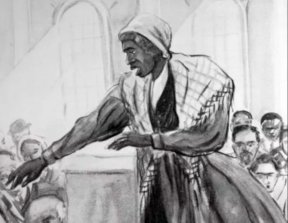
Sojourner Truth: ‘And ain’t I a woman?’

Members of the Socialist Unity Party who knew, struggled with and loved lifelong revolutionary Rosemary Neidenberg thought that reprinting this sensitive and politically powerful article written by her in 1971 would be a heartfelt way to honor her memory following her recent death at the age of 99.

“That man over there says that a woman needs to be helped into carriages, and lifted over ditches, and to have the best place everywhere. Nobody ever helped me into carriages, or over mud puddles, or gives me the best place. And ain’t I a woman? Look at me. Look at my arm! I have plowed and planted and gathered into barns, and no man could head me. And ain’t I a woman? I could work as much as a man, when I could get it, and bear the lash as well. And ain’t I a woman? I have borned 13 children and seen them most all sold off into slavery. And when I cried out with a mother’s grief, none but Jesus heard. And ain’t I a woman?”

— Sojourner Truth, speech before the Women’s Rights Convention at Akron, Ohio, 1851 

“Work hard and make your master happy and call on God for help.” Thus an African American mother trained her child for survival. The child who would become Sojourner Truth lived by her mother’s words. A New Paltz, N.Y., slave owner, John Dumont, said proudly of the six-foot-tall 13-year-old, “She’ll do a good family’s wash in the night and by morning she’ll be ready to go into the fields where she’ll do as much raking and binding as my best field hand.”

After 29 years as a slave, however, Sojourner Truth experienced a dazzling surge of realization. She said, “The Lord didn’t want me to be a slave.” She gave a name to the tremendous will, the great tide of energy and purpose that rose in her. She called it “the Lord,” but its real name was consciousness.

Remembering oppression

Memories of inexpressible tragedy formed that consciousness:

A cellar. Loose boards over mud that turned to muck in rainy season. Her earliest remembered home.

Her mother. Singing songs taught by her African grandmother in a language she didn’t know. Telling how 11 of her 13 children had been lost, either dead or sold away. A boy, 5, a girl, 3, taken away by a man in a bright red sleigh on a bitter winter morning. The boy at first sat joyfully, “as straight as a jack-rabbit.” But then he knew. He ran and tried to hide. “My boy never ran to me,” her mother said. He knew it was no use. His mama couldn’t protect her own child.

Her mother. Given “freedom” when she was too old and sick to work for the slave owner. “I stumbled against something on the cellar floor, Belle” (Sojourner’s slave name), her father told her. “I felt it with my hands. It was your Ma. Her body was cold.”

Her father. “Freed” like her mother. Found dead in a hut without food or water. She always remembered him as a bent old man, but once he was so straight and strong that they called him “The Tree.”

Herself. A 9-year-old child on the slave block, auctioned with a flock of sheep for $100. At 10 years, bound and beaten into unconsciousness. She recalled that she didn’t know what her alleged crime was. 

As a young woman, she loved a man who was beaten to the brink of death for trying to visit her. The last sight she had of him was his unconscious body being dragged out of her master’s yard. His wounds healed in several months, but he died not long after. People said his spirit had died.

Born into slavery

Sojourner Truth was born in 1797 on a Dutch-owned plantation near Kingston, N.Y. The New York State Legislature decreed in 1817 that all slaves over 28 were to be freed by 1827. The younger people had to work free for the slave owner until the age of 25 for women, 28 for men.

Two years before her freedom day, slave owner Dumont promised Sojourner Truth that he would free her a year earlier if she worked extra hard. So she did, working prodigally, ignoring a scythe wound in her hand that kept opening.

When the time came, Dumont refused to let her go. Determined to keep Dumont to his word, Sojourner walked away from slavery one day after she had brought in the harvest. Taking the youngest of her five children — she had been forced into marriage — she moved in with an Abolitionist family in the neighborhood. They bought her freedom, paying Dumont $20 for her services for the last year and $5 for her baby.

After a time, she thought of returning to her older children and to the warmth and camaraderie of the other slaves who were caring for them. But when Dumont came to get her, another thought seized her. In later years, she described how, as she walked toward Dumont’s carriage with her baby, she suddenly felt an overwhelming force block her path and heard a voice inside her saying, “Not another step.” She heeded that voice and Dumont rode home alone in his carriage.

Her new confidence and sense of power were soon to be tested. Two years before her freedom day, Dumont had sold the “services” of her 4-year-old son. It was illegal to take a “freedman” out of the state, but Sojourner learned her boy had been taken to Alabama. She was illiterate and inexperienced, but dauntless in the fight for her son.

She said in retrospect: “Oh, how small I did feel. Neither would you wonder, if you could have seen me, in my ignorance, trotting about the streets, meanly clad, bareheaded and barefooted.”

Sojourner prevailed. She harassed and hounded lawyers and courts until the slaver who had sold her son had to make a six-month journey south to bring him back. When she went to claim her son, the child screamed and said he didn’t want to leave his “kind master.” He had been terrorized, as Sojourner discovered when she took him home at last — brutalized so that the welts stood out like fingers on his body. “Oh Lord, render unto them double for what they have done,” she said.

Felt her destiny

In 1829, Sojourner Truth and her son went to New York City. There were no schools for African American children in rural New York. For 14 years Sojourner was a household servant. She worked in several religious and social work organizations, and found them futile or corrupt. Then the feeling about her special destiny, which had come upon her at the moment she had decided to be a slave no longer, burst out again. She said that the Lord told her no longer to be a servant of white people. She should do the Lord’s work and bring the truth to her people. 

All her years as a slave, as a servant, the tragedies of her own life, all she knew about slavery in the South had formed her smouldering hatred of oppression. Now, in 1843, the winds of change and rebellion were blowing stronger. Abolitionist activity was growing. More and more slaves dared to win freedom through the Underground Railroad. She heard about the great women and men who were leaders of her people.

She had been named Isabelle, called Belle, and known by the names of a succession of slave owners. Now she discarded her slave name, as so many were to do over 100 years later. She was a sojourner, a traveller. Truth was “the name of the Lord” and so she took the name. She was 46 years old when she left New York City “to do the Lord’s work.”

Famous speech

A large open-air religious meeting provided the first opportunity for Sojourner to speak to the people about the evils of slavery. Later, she stayed at a cooperative community where she met Frederick Douglass, William Lloyd Garrison and Olive Gilbert, the woman who collaborated with Sojourner on her autobiography. Her book became a weapon in the struggle against slavery. She began to speak at Abolitionist meetings, selling her book, singing her “homemade songs.”

Abolitionist activity led her quite naturally into the women’s rights movement. In the same manner, the militant white women who arrayed themselves against slavery had become the nexus of the women’s movement. There was no conflict over priorities in those early days — each movement fed the other, each movement was stronger because of the other.

It was in 1851 in Akron, Ohio, that Sojourner gaver her famous “Ain’t I a Woman” speech. The Women’s Rights Convention was chaired by Frances B. Gage. She said of that never-to-be-forgotten occasion:

“Through all the sessions old Sojourner sat crouched on the corner of the pulpit stairs, her sunbonnet shading her eyes. Again and again timorous trembling ones came to me and said, ‘Don’t let her speak, Mrs. Gage, it will ruin us. Every newspaper in the land will have our cause mixed up with abolitionists and n——-s, and we shall be utterly denounced.’ There were very few women in those days who dared to ‘speak in meeting’ and the august teachers of the people [hostile clergymen] were seemingly getting the better of us.

“When slowly from her seat rose Sojourner Truth, I rose and announced Sojourner Truth and begged the audience to keep silence for a few moments. Rolling thunder couldn’t have stilled that crowd, as did those deep and wonderful tones, as she stood there with outstretched arms and eyes of fire. It was pointed and witty and solemn, eliciting at almost every sentence deafening applause. She had taken us up in her strong arms and carried us safely over the slough of difficulty.”

Sojourner was the only African American woman at those early conventions and some of the things that concerned the middle-class white women were puzzling to her. She asked, for instance, “Should a woman not have the legal right to retain her own silver and jewelry if she divorces her husband?”

‘Speak upon the ashes’

Through the pre-Civil War years, Sojourner kept on talking, kept on singing, kept on walking — to Ohio, Michigan, Indiana, Illinois, back to Ohio and Michigan. Never resting, harassed, arrested, the 60-year-old woman kept on “bringing the truth to the people” about slavery. On one occasion she was told the Copperheads (Confederate sympathizers) had threatened to burn the meeting hall. “Then I will speak upon the ashes,” said Sojourner.

With the Civil War ending chattel slavery, Sojourner, nearing 70, continued to serve her people. She worked in a freedmen’s settlement in Washington and in a hospital for wounded soldiers. During that period she fought successfully to desegregate the horsecars in Washington. “The inside of those cars looked like pepper and salt,” she said after her victory.

The Emancipation Proclamation may have brought an end to chattel slavery, but it didn’t end the scourge of racism. The Black people, whose efforts had been decisive in turning the tide of war in favor of the North, were betrayed almost as soon as the war ended. Instead of the promised “40 acres and a mule” for ex-slaves, the plantations were restored to the former slaveholders. Sojourner’s people were jobless, homeless, hungry.

Sojourner, now 73, entered on her last great crusade to petition Congress to open up Western lands to ex-slaves.* She retraced the path she had followed in her long fight against slavery, speaking, travelling, filling up petitions with names to be presented to Congress.

As the U.S. government made less and less pretense of being concerned with the rights of African American people, Sojourner realized it would be a futile gesture, so the petitions were never presented to Congress. Yet even after defeat and disillusionment, as an 80-year-old woman she continued to travel and to speak against her people’s oppression, for women’s rights, for prison reform, and for the rights of working people.

Sojourner died in 1883. Once a slave who wanted to please her master, she had become a powerful servant of the people. She had lived long, but she did not, as we have not, seen the triumph of her two “beloved causes,” the liberation of the African American people and the liberation of women. “They will have to give us house-room or the roof will tumble in,” sang Sojourner in one of her “homemade songs.” Since then, Sojourner’s sisters and brothers, heirs in the struggle, have escalated her demand: “They will have to give us the house, or the roof will tumble in.”

* Given the record of cooperation between the African American and Native peoples during the centuries of slavery, we can visualize their sharing of Western lands to the benefit of both, and unity against the destruction of people and land in the interests of the ranchers and railroaders.

This article first appeared in the August 1971 issue of Battle Acts, a publication of Women of Youth Against War and Fascism.

Strugglelalucha256
https://www.struggle-la-lucha.org/2020/04/page/6/