U.S. groups denounce brutal repression in Bolivia

We, the undersigned U.S. organizations condemn the civic-military coup in Bolivia and the brutal repression unleashed by the police and military authorized by the self-proclaimed anti-Indigenous “President” of Bolivia, Senator Jeanine Áñez. 

The regime has burned the Wiphala, flag of the Indigenous nations of Bolivia; decreed an exemption to prosecution for the police and military for the use of lethal force against demonstrators; and has criminalized democratically elected officials and rank and file members of organizations associated with the deposed government. These decrees led to the massacre in Cochabamba on November 15 in which police and the armed forces opened fire on demonstrators killing five people and wounding more than 100, as well as the massacre of Senkata on November 19 in which at least 8 people were killed and at least 30 wounded. They have also led to the deployment of military, police and private intelligence agencies to hunt down and arrest political opponents of the coup regime.

We urge an immediate investigation by the U.N. of the killing of at least 32 people and the wounding of more than 700 by the police and security forces since the coup against President Evo Morales on November 10, 2019, based on official data from the Office of the People’s Defender  (“Defensoría del Pueblo”). We also call for the release of all political detainees.

We support calls by the constitutional President, Evo Morales as well as the United Nations, for dialogue to avoid further bloodshed. We call for the return of security forces to the barracks and an investigation into the crimes committed by the police and military, as well as those who authorized the use of lethal force, to hold perpetrators accountable. 

We also reject the illegal self-proclamation as “President” of Senator Jeanine Áñez, elected without a quorum and without the presence of MAS members of congress, whose safety is under permanent threat. This self-proclamation also violates article 161 of the Bolivian Constitution, according to which Congress must accept the President’s resignation in order for it to be valid, which so far hasn’t taken place.   

We urge the U.S. Congress and the Organization of American States (OAS) to condemn the coup against the constitutional government and support the path of dialogue over escalating confrontation.

WE DEMAND AN IMMEDIATE END TO THE KILLING OF INDIGENOUS BOLIVIANS!

PEACE FOR BOLIVIA!

SIGNATURES

  1. Forum of Sao Paulo, Executive Committee in Washington DC, Maryland and Virginia
  2. CODEPINK, USA
  3. ANSWER Coalition, USA
  4. Democratic Socialists of America, Richmond, Virginia chapter
  5. Socialist Unity Party / Partido de Socialismo Unido, USA
  6. International Committee for Peace, Justice and Dignity, USA
  7. Friends of the Congo, Washington DC
  8. National Network on Cuba, USA
  9. Popular Resistance, Washington DC
  10. Party for Socialism and Liberation, Washington DC
  11. Black Alliance for Peace, Washington DC
  12. Women’s Institute for Freedom of the Press, Washington, DC
  13. Communist Party, USA
  14. Central Committee of the Peace and Freedom Party of California,  San Diego, California
  15. Council on Hemispheric Affairs, COHA, Washington DC
  16.  Peace Council, Greater New Haven, Connecticut 
  17.  Red Nacional de Salvadoreños en el Exterior, RENASE, USA
  18. Carolina Peace Resource Center, South Carolina
  19.  Leonard Peltier Defense Committee,  San Diego, California
  20.  Congreso de los Pueblos, Colombia, international committee in DC
  21.  FigTree Foundation, USA, 
  22.  Comité de Salvadoreños en Washington DC
  23.  Friends of Latin America, Columbia, Maryland
  24. Rutilio House, Takoma Park, Maryland
  25. Committee Against Police Brutality, San Diego, California
  26. Women in Struggle, Washington DC
  27. Committee in Solidarity with the People of El Salvador, CISPES, Washington DC
  28. International Womxns Alliance-DC (DIWA)
  29. Comité del FMLN de Washington DC
  30. All-African People’s Revolutionary Party (GC), Washington, DC
  31. World Development Alliance, South Carolina

Source: COHA

Strugglelalucha256


Organizaciones de Estados Unidos denuncian la brutal represión en Bolivia

Nosotros, las organizaciones estadounidenses abajo firmantes, denunciamos y condenamos el golpe cívico-militar en Bolivia y la brutal represión desatada por la policía y los militares autorizados por la autoproclamada “presidenta” anti-indígena de Bolivia, la senadora Jeanine Áñez.

El régimen ha quemado la Whipala, bandera de las naciones indígenas de Bolivia; decretó la impunidad judicial para la policía y el ejército por el uso de la fuerza letal contra los manifestantes; y ha criminalizado a los funcionarios elegidos democráticamente y a los miembros de organizaciones asociadas con el gobierno depuesto. Estos decretos llevaron a la reciente masacre en Cochabamba el 15 de noviembre pasado, en la que la policía y las fuerzas armadas abrieron fuego contra los manifestantes, matando a cinco personas e hiriendo a más de 100, y a la masacre en Senkata el 19 de noviembre, donde al menos 8 personas fueron asesinadas y 30 fueron heridas.También derivaron en el despliegue de agencias de inteligencia militares, policiales y privadas para perseguir y arrestar a un grupo de dirigentes políticos opuestos al régimen golpista.

Demandamos una inmediata investigación por parte de la Organización de Naciones Unidas (ONU), sobre el asesinato de hasta ahora 32 personas y los más de 700 heridos a manos de la policía y las fuerzas de seguridad que se han producido desde el golpe de Estado contra el presidente Evo Morales, el 10 de noviembre de 2019, según cifras de la Defensoría del Pueblo. Exigimos también la liberación de todos los presos políticos.

Apoyamos el llamado del presidente constitucional, Evo Morales, así como de la ONU para crear instancias de diálogo para evitar más derramamiento de sangre; el regreso de las fuerzas de seguridad a los cuarteles; y una investigación sobre los crímenes cometidos por la policía y el ejército, así como contra aquellos que autorizaron el uso de la fuerza letal, de forma que los perpetradores asuman su responsabilidad judicial.

También rechazamos la autoproclamación ilegal como “presidenta” de la senadora Jeanine Áñez, elegida sin quórum y sin la presencia de miembros del Congreso del partido MAS, cuya seguridad está bajo amenaza permanente. Esta autoproclamación también viola el artículo 161 de la Constitución boliviana, según el cual el Congreso debe aceptar la renuncia del presidente para ser válida, lo que hasta ahora no ha tenido lugar.

Instamos al Congreso de EEUU y a la Organización de Estados Americanos (OEA) a que condenen claramente el golpe contra el gobierno constitucional y apoyen el camino del diálogo de forma de aminorar la confrontación que sufre el país.

¡Demandamos el cese de la matanza de indígenas bolivianos inmediatamente!

¡Paz para Bolivia!

Organizaciones firmantes

  1. Comité Ejecutivo del Foro de Sao Paulo en Washington DC, Maryland and Virginia
  2. CODEPINK, organización a nivel nacional
  3. Friends of the Congo (Amigos del Congo), Washington DC
  4. National Network on Cuba (Red Nacional sobre Cuba), organización a nivel nacional
  5. Socialist Unity Party (Partido de Unidad Socialista), organización a nivel nacional
  6. Women’s Institute for Freedom of the Press (Instituto de la mujer por la libertad de prensa), Washington, DC
  7. Central Committee of the Peace and Freedom Party of California (Comité Central del Partido por la paz y la libertad de California), San Diego, California
  8. Council on Hemispheric Affairs, COHA (Consejo de Asuntos Hemisféricos),  organización a nivel nacional
  9.  Peace Council (Consejo de la Paz), Greater New Haven, Connecticut 
  10.  Red Nacional de Salvadoreños en el Exterior, RENASE, organización a nivel nacional
  11. Carolina Peace Resource Center (Centro de Recursos para la Paz Carolina), South Carolina
  12.  International Committee for Peace, Justice and Dignity (Comité Internacional para la Paz, la Justicia y la Dignidad), organización a nivel nacional
  13. Democratic Socialists of America (Socialistas Demócratas de Estados Unidos), Richmond, Virginia chapter
  14. Leonard Peltier Defense Committee (Comité de Defensa Leonard Peltier), San Diego, California
  15.  Congreso de los Pueblos, Colombia, comité internacional en Washington DC 
  16.  FigTree Foundation (Fundación Higuera) , organización a nivel nacional
  17.  Comité de Salvadoreños en Washington DC
  18.  Friends of Latin America (Amigos de América Latina), Columbia, Maryland
  19. Committee Against Police Brutality (Comité contra la brutalidad policial), San Diego, California
  20. Women in Struggle (Mujeres en Lucha), Washington DC
  21. Committee in Solidarity with the People of El Salvador (Comité de Solidaridad con el Pueblo de El Salvador), CISPES, Washington DC
  22. International Womxns Alliance-DC (Alianza Internacional de Mujeres), DIWA,  organización a nivel nacional
  23. Popular Resistance (Resistencia Popular), Washington DC
  24. Comité del FMLN de Washington DC
  25. Party for Socialism and Liberation (Partido por el socialismo y la liberación), Washington DC
  26. Black Alliance for Peace (Alianza Negra por la Paz), Washington DC
  27. All-African People’s Revolutionary Party, GC (Partido Revolucionario para todos los pueblos de África), Washington, DC
  28. ANSWER Coalition (Coalición Answer contra la guerra), Washington DC
  29. World Development Alliance (Alianza por el desarrollo mundial), South Carolina
  30. Rutilio House (Casa Rutilio), Takoma Park, Maryland
  31. Partido Comunista de Estados Unidos

Fuente: COHA


Strugglelalucha256


Hong Kong riots share tactics, aims of Bolivia coupmakers

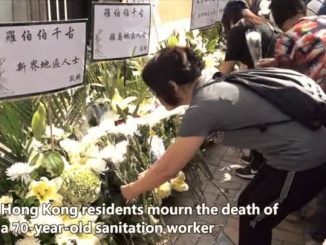
Nov. 21 — A standoff between authorities in the Chinese territory of Hong Kong and U.S.-backed rioters who occupied Polytechnic University appears to be winding down. Hong Kong police have the upper hand with a handful of holdouts still inside.

While Nov. 18 saw one of the most violent confrontations to date, after months of right-wing, anti-communist riots, the majority of those who had occupied Polytechnic exited the campus when the police were poised to move in. Much of the university, including libraries and other facilities used by students, has been destroyed.

Destruction of government buildings, blockades of mass transportation, bridges and other public facilities, and violent attacks on police and Hong Kongers loyal to socialist China are the hallmarks of this “democratic movement,” as the Western media characterize it.

This was only the latest episode — and with imperialist maneuvering driving the chaos, a return to normalcy is far from certain. 

The U.S. and Britain have egged on the pro-Western protests in an attempt to separate Hong Kong from China. Hong Kong was returned to China in 1997, after the British stole it in 1847 during the Opium Wars and held it as a colony for 150 years. 

In the 1997 agreement, China allowed that capitalism could continue to function in Hong Kong until 2047. What was essentially a “mini-constitution” for the city, called the Basic Law, was put in place. The agreement granted wide autonomy to the Hong Kong administration and gave final authority regarding any changes to the agreement to the central government of China.

Right-wing rebellion

What is in fact a right-wing rebellion began in early 2019 over an attempt to pass an extradition law to send a man, who had admitted to murdering his girlfriend, to Taiwan. Similar treaties exist between many countries in the world. 

The legislation was later withdrawn as a concession to the protesters, but by that time their demands had morphed into distancing Hong Kong from the People’s Republic of China. Large numbers of protesters faded away at that point. 

Now a smaller, more violent group, coaxed by imperialist functionaries, continue the mayhem. Tactics have shifted from mere property destruction to more use of petrol bombs, hurling bricks, violent attacks and the latest addition: bows and flaming arrows.

Until now, the Hong Kong police have been restrained, compared to what would have happened anywhere in the U.S. under similar circumstances. Imagine the U.S. response if Chinese officials were advising Black Lives Matter or Antifa organizers!

Links to Bolivia coup

The leaders of the Hong Kong protests have carried out actions and have associated with characters that reveal tactical similarities to the so-called color revolutions and other regime-change operations organized by intelligence agencies of the U.S. 

One example that comes to mind is how a Venezuelan “opposition” crowd burned an Afro-Venezuelan man to death in May 2017. Earlier this month, the “peaceful protesters” in Hong Kong doused a man arguing with them with a flammable liquid and lit him on fire as well.

In an episode of a podcast called “China Unscripted,” a ridiculous anti-communist host interviewed a young Bolivian woman named Jhanisse Vaca-Daza, who talked about her “nonviolent activism” in Bolivia. She and a handful of others led a propaganda blitz that blamed Bolivian President Evo Morales for the massive fires in the Amazon rainforest, effectively using Brazilian President Jair Bolsonaro’s profit-driven recklessness as a counterrevolutionary propaganda tool. 

She also praised and candidly admitted that she’s met with Hong Kong protest leaders. 

Vaca-Daza happens to be the “Freedom Fellowship Manager” at the Human Rights Foundation. On her LinkedIn profile, the Freedom Fellowship is described in typical National Endowment for Democracy language as “a one-year program that awards ten human rights advocates, social entrepreneurs and nonprofit leaders from countries ruled by authoritarian regimes around the world with the unique opportunity to dramatically increase the impact of their work.”

Numerous U.S. officials have met directly with leaders of the Hong Kong riots. Late in August, some anti-China Hong Kong officials flew to Montana and met under the radar with a bipartisan group, including a U.S. senator and three representatives, to discuss legislation to punish China for “human rights violations.” 

The fruit of that meeting is a pair of bills championed by House Speaker Nancy Pelosi and passed by both houses of Congress on Nov. 21: the so-called “Hong Kong Human Rights and Democracy Act.” One bill mandates an annual review to determine if Hong Kong’s level of autonomy warrants continuing special trade status and allows sanctions to be imposed. The second bill blocks sending nonlethal ammunition to the Hong Kong police. 

The response from China’s Foreign Ministry spokesperson, Geng Shuan, was swift and angry: “This act neglects facts and truth, applies double standards and blatantly interferes in Hong Kong affairs and China’s other internal affairs.

“The United States must immediately stop interfering in Hong Kong affairs and China’s other internal affairs, or the negative consequences will boomerang on itself,” the official said.

Many view Donald Trump’s ongoing trade war with Beijing as a possible restraint on more direct U.S. attacks on China’s sovereignty. But so far it has not restrained them. 

Hong Kong is part of China. The Chinese government and People’s Liberation Army may have no choice but to reinforce the Hong Kong police and end what is essentially a U.S. intervention in Hong Kong. 

Strugglelalucha256


When others go low, and you die: The loss of safe spaces for Black bodies

A talk given at the event “People Fight Back at Home and in South America” at the Harriet Tubman Center for Social Justice in Los Angeles on Nov. 2.

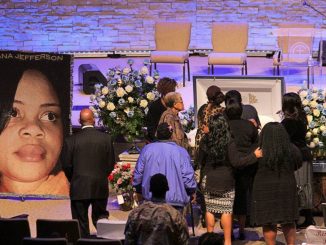
The abutting murders of Botham Jean and Atatiana Jefferson by police in Texas seem to be pertinent markers of the degradation of safe spaces for Black bodies. 

I reflect on the few moments of rest and joy a Black person may find; a moment of privacy to enjoy a snack in your home, family time with a young child that you love. I also reflect on the constant unrest a Black person always feels, even in those moments; the impending sense of doom, knowing it could be taken at any time. 

Before Botham and Atatiana there was Aiyana Stanley Jones and Kenneth Chamberlain Sr. and all of the endless cases in between. Every 28 hours and there are only so many of us. 

Unwillingly, an incident that happened to me this summer will not let my mind rest as I reflect on these cases. I want to dismiss it, I want to not give this malefactor any more time or space in my life, and yet her tale so perfectly encapsulates the sentiment of the white ruling class against Black bodies. I feel it necessary to call out this woman by name to hopefully help other Black artists avoid her exploitation. 

The tale of Shirley Morales

During a group trip to Senegal that was centered on celebrating Black artists, I was introduced to a white gallery owner, Shirley Morales. During the activities and excursions, Shirley somehow found a way to, time and time again, insert her opinion on how she thought the Black, Muslim nation should be run. 

I ignored her for days as she complained about how the cab drivers didn’t deserve the money they were making and how inconvenienced she was at the people celebrating Ramadan. In a large group, it was easy enough to avoid her, yet it was as if she was following me. 

One day at a group brunch, I was sequestered in a quiet corner after everyone else had finished eating, deep in a personal conversation with a brother from Ghana about police brutality in the United States. Suddenly Shirley appears, she makes herself at home at our table even though there are plenty of open spaces. 

I continue, unphased, as I refuse to censor myself in a majority-Black country trying to have a majority Black conversation. I am in the middle of describing the pointedly systematized way in which police officers hunt down Black people, when Shirley interjects, “Well everyone has a choice.” 

I am confused, stunned that she felt it her right to interrupt me and honestly unsure of what she could mean. “Excuse me?” I counter. 

She is emboldened. “Well if that happens, it means people had a choice to be in those situations.” I pause, I really wonder if she is saying what I think she is. “So are you saying Black people choose to get shot by the police?” 

I can tell she is uncomfortable with saying this explicitly, but she shoots back, “Well ya. If they are in those situations, they made a choice and I don’t want to hear this anymore, so it’s my choice to leave.” And in true Mephistopheles form she scuttles away as fast as she can after trying to ruin someone’s whole day. 

I was truly confounded. I’m sure my head was floating at a solid 3 o’clock angle for more than a few moments. The audacity, the total pomposity, had left me truly speechless, a rare and stunning occurrence. 

Does this in any way touch the horror of the murders we have experienced, the lives lost to white people thinking they can shoot into the homes of Black folks? Of course not, but I do believe this is where it starts: white people who have the gall to invade Black spaces and violate them. It’s just a comment or a “joke,” a violation of personal space, a purse clutch, an interruption — but what happens when those people are armed? The people who think Bothem and Atatiana and Aiyana and Kenneth had choices. And even when you are not in the alleged safe space of your home, that you should die for selling loosies, or smoking joints or walking or breathing. The same people who think they should be able to thrive off of the labor and exploitation of Black bodies. 

I later realized that I had actually been to Shirley’s gallery before I met her on that trip. I went to see a Black performance artist whose work I admired. Now I know what he represented to her: a paycheck. The same thing our bodies have always represented to the ruling class. Just another way to make a dollar. 

What safe space?

I often think about Michelle Obama’s famous line, “When others go low, you go high.” But no matter how high you put your hands in the air they will still squeeze the trigger, posthumously assigning your thugness as your cause of death. When they go low, but you should have went lower, hit the ground so maybe the bullet would miss through that open window. When they go low, but all you have left is the blood pooling around your body, your last breath when you can’t breathe, your back snapped hogtied. All of the choices. Just go high. I wonder — is high an afterlife? Is that the last safe space?

We are seemingly in the golden age of Black artists. Millions being spent to own a little piece of Black talent that has always been, yet now is worth acknowledging since there is money to be made. Hang it on the wall where it will stare back but remain silent. The owner can assign whatever feelings and values they choose to their new purchase. An image of a Black body forever stuck in servitude, the entertainment of their master.   

Black bodies are currency, both actual and social. Labor sold in prisons, talent exported and exploited. What can a safe space mean when we are merely inconveniences or dollar signs?

There is a growing emphasis on “safe spaces”, but how safe can we make them when at any time they are scared, confused, bored — we become target practice, a pin cushion for their spare bullets. When they can kick down the door, shoot through the window, bomb us out, gentrify our neighborhoods, give us predatory loans? 

I think of India Kager in her car with baby in tow, 30 rounds. In a parked car, 9 seconds, they saw the baby. But they did not see the baby, not as a human, not as our future. I won’t continue to expound, I can’t imagine what type of being shoots at a baby. I would not feel it necessary to kill a mosquito 30 times over, to delight in its suffering, plan for it, stalk it, make memes about, start hate groups about it, celebrate it. 

Capitalism and Black artists

We cannot be viewed as more than currency under capitalism. The legacy of white supremacy’s monumental growth under capitalism will always mark us as dollar signs, something to be bought, manipulated, traded, wasted. 

As an artist, I feel it my duty to analyze and discuss the modes in which art can be used to ignite the revolution and the ways it is misappropriated by the ruling class. The artworld is just catching up to sports and entertainment for exploiting Black artists. Though they were late to realize the infinite cultural capital and talent created by Black artists, they are now methodically cashing in on our creative skills. 

We are surviving in abject fascist conditions, we cannot consider our collective freedom under any conditions until we collectively end capitalism. It is the only way to build any space that can be safe. 

As fascism collectively strains the lives and work of Black art makers, we must make a concentrated effort to keep Black art in the community and support the work of emerging artists as they create art to uplift our communities.

Strugglelalucha256


Monopoly profits fuel U.S. maneuvers in Southwest Asia

Trump called an Oct. 27 press conference to brag about the alleged assassination of ISIS leader Abu Bakr al-Baghdadi and his family by U.S. Special Operations troops. Baghdadi was said to be hiding in Hayat Tahrir Al Shams (HTS)-controlled Idlib, Syria. He has been reported killed at least five times in recent years.

Trump announced the assassination one year and nine days before the 2020 election. President Barack Obama announced the extrajudicial execution of Osama Bin Laden by U.S. Navy SEALS on May 2, 2011, some 18 months before the 2012 election.

In an Oct. 30 interview, Syrian President Bashar al-Assad had this to say about Baghdadi: “It is well known that he was in American prisons in Iraq, and that they let him out in order to play this role. So, he is someone who could be replaced at any moment.

“Was he really killed? Was he killed but through a different method, in a very ordinary way? Was he kidnapped? Was he hidden? Or was he removed and given a facelift? God only knows. American politics are no different from Hollywood. They rely on the imagination. Not even science fiction, just mere imagination. So, you can take American politics and see them in Hollywood or else you can bring Hollywood and see them through American politics.

“I believe the whole thing regarding this operation is a trick. Baghdadi will be recreated under a different name, a different individual, or ISIS in its entirety might be reproduced as needed under a different name but with the same thought and the same purpose. The director of the whole is the same, the Americans.”

Russian Foreign Minister Sergei Lavrov described Baghdadi as a “brainchild of the United States. … Therefore, to a certain extent, the Americans eliminated the one they gave birth to, if it actually happened,” he said.

The ISIS deception

The “Islamic State in Iraq and Syria” is the product of a U.S.-Saudi project to disrupt anti-U.S. resistance with sectarian violence. Originally called “Al-Qaida in Iraq,” it was first funded by the Saudi General Intelligence Directorate. After the 2003 U.S. invasion of Iraq, AQI launched a bombing campaign against Shia Muslim mosques and holy places across the country.

Saudi Arabia, a virtual U.S. colony, has long funded covert operations on Washington’s behalf. In the 1980s, at Ronald Reagan’s request, the Saudi Kingdom paid for the CIA’s contra wars in Afghanistan and Nicaragua.

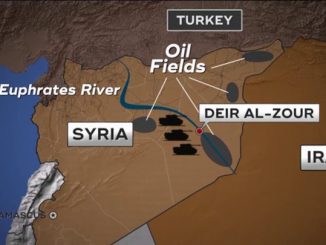
ISIS used Saudi cash to recruit thousands of former Iraqi soldiers and mercenaries from 54 countries. Most came through Turkey. With these forces, ISIS seized land in northern Iraq and eastern Syria, where it found a new source of revenue in captured oil fields. 

Oil money allowed ISIS to set up its own “caliphate” and break with al-Qaida. Much of the oil was smuggled out through Turkey to the Mediterranean and sold secretly to Israel.

The brunt of the battle against ISIS, al-Qaida and their offshoots has been borne by the Syrian Army and defense forces, Lebanese Hezbollah, the Iranian Revolutionary Guards, Iraqi Popular Mobilization Units and the Russian Armed Forces. The U.S., however, used “fighting ISIS” as a pretext to bomb, invade and occupy much of northern and eastern Syria, seizing the country’s oil and gas fields. Washington’s proxy war against Syria became an open military invasion.

In April 2017, the Trump regime ordered the first direct U.S. airstrikes on Syrian government installations. In January 2018, the White House announced an open-ended U.S. military occupation of northern Syria. On Feb. 7, 2018, U.S. planes and artillery attacked Syrian forces near oil fields in Deir Ezzor province, murdering 55 soldiers.

Thieves fall out

Washington’s long war in Southwest Asia (“the Middle East”) is a war of plunder. As one would expect in such a war, there are conflicts and divisions among the plunderers, from the mercenary forces on the ground to their state sponsors to the corporate war profiteers on Wall Street and their servants in Washington.

Trump’s phony withdrawal from Syria provoked apparent outrage in Congress, from Democrats and Republicans alike. Some of it, like the withdrawal itself, was a charade. Some reflected a genuine rift over U.S. relations with Turkey.

There was no fury on Capitol Hill when Trump announced that the U.S. Army had returned to seize Syria’s oilfields. But the House did pass a nonbinding resolution threatening sanctions against Turkey. It also voted for the first time to condemn the Armenian genocide, carried out by the Turkish Ottoman Empire between 1915 and 1923.

The White House and State Department oppose sanctions on Turkey. So does Senate Republican leader Mitch McConnell.

Why the U.S.-Turkey crisis?

The political fig leaf for the U.S. occupation of northern Syria was the “Syrian Democratic Forces” (SDF), an alliance of Kurdish nationalist and former Free Syrian Army (FSA) militias armed and protected by the U.S. military. The Pentagon spent at least $500 million arming and training SDF troops.

The U.S.-SDF alliance, however, complicated U.S. relations with NATO Turkey. The Turkish state, with U.S. support, has long been at war with the Kurdistan Workers Party (PKK), which is fighting for Kurdish autonomy in southeast Turkey. The strongest force in the SDF is the People’s Protection Units (YPG), led by the Democratic Union Party, the PKK’s Syrian affiliate.

Turkey has the second-largest land army in NATO and is the U.S. war industry’s fourth-largest overseas customer. It hosts a nuclear-armed U.S. Air Force wing at Incirlik Air Base. It is the main route by which Western-backed forces bring arms and fighters into Syria and smuggle oil out.

If Trump and U.S. oil companies seriously want to “develop” and steal Syria’s oil, they would need to bring it out via Turkey. More important to Trump’s oil industry bosses, the U.S. needs Turkey’s cooperation to keep Iran’s oil and gas off the world market.

But Washington’s sanctions and wars on Turkey’s neighbors — Iran, Iraq, Russia, Syria — have taken a toll on the country’s economy. “Turkey Faces Hike in Oil Prices as U.S. Thwarts Iran Oil Sales,” Al-Jazeera reported on April 24. “Initially Defiant, Turkey Complies with U.S. Sanctions on Iranian Oil,” Oilprice.com reported on May 21. 

The sanctions have forced Turkey to buy oil from U.S.-controlled Saudi Arabia and the United Arab Emirates. But the situation has also driven Ankara to seek closer economic ties to Russia. 

Turkey imports 50 percent of its gas from Russia. It is a potential pathway for Russian gas to reach southern Europe, bypassing U.S.-controlled Ukraine. Several joint Russian-Turkish pipelines are being built across the country. Bilateral trade between Russia and Turkey is expected to reach $110 billion this year, over five times that between Turkey and the U.S.

In June, Turkey outraged the U.S. military by buying Russian S400 anti-aircraft missiles instead of Patriot missiles made by Raytheon. Russia had agreed to allow greater technology transfer. At the Pentagon’s demand, the White House kicked Turkey out of the F35 Joint Strike Fighter program. That cost Lockheed Martin $500 million.

Republican Sen. Lindsay Graham is now one of the loudest advocates of U.S. sanctions on Turkey. But in August, he represented the White House in negotiations with Turkish officials. In that role, he expressed sympathy for Turkish action against “your YPG Kurdish problem.”

Graham also offered Ankara a “free-trade deal” if it broke its missile contract with Russia. We know this because one “Turkish official” Graham spoke with was Russian prankster Alexei Stolyarov, posing as Turkish Defense Minister Hulusi Akar.

Looting Palestine’s gas

There’s a much bigger prize at stake than Syria’s 2.5 billion barrels of oil: control of Europe’s energy market. To recapture it, U.S. firms seek to grab newfound gas reserves beneath the Eastern Mediterranean. At least 125 trillion cubic feet of gas are believed to lie there. 

Some 20 percent of that is known to be below the waters of Israeli-occupied Palestine. Much of the rest lies in a “joint-exploration zone” between Cyprus and Palestine and off the coasts of Lebanon, Syria and Egypt.

In March, Secretary of State Mike Pompeo presided over an “energy summit” in Jerusalem between Cyprus, Greece and Israel. The meeting approved plans for a $7-billion pipeline to bring stolen Palestinian gas to Europe via Cyprus, Greece and Italy.

Noble Energy, a Texas-based company with links to the Trump regime, is the lead investor in the project. ExxonMobil, which just found a huge gas field off Cyprus, is also interested. Noble already sells stolen Palestinian gas to Jordan.

Cyprus, however, is partitioned between the Republic of Cyprus and the Turkish-backed Republic of Northern Cyprus. Turkey opposes any energy projects there that don’t include Northern Cyprus. It also does not recognize the 200-mile offshore territorial limit that Cyprus claims under the United Nations Convention on the Law of the Sea.

Turkey, which never signed the convention, is exploring for gas in waters that Cyprus claims. In August, Russian Energy Minister Alexander Novak announced Russia was prepared to collaborate with Turkey on oil and gas exploration in the Eastern Mediterranean.

In April, the U.S. lifted an embargo on arms sales to Cyprus. In October, Pompeo traveled to Athens to sign a U.S.-Greece defense pact. On Oct. 8, he warned Turkey to stop drilling off Cyprus. On Oct. 9, from Rome, he announced the sale of 90 F35s to Italy.

A bill before Congress, the “Eastern Mediterranean Security and Energy Partnership Act,” supports a Greek-Cyprus-Israel military alliance to counter “Russia’s malign influence in the Eastern Mediterranean.”

Many in Washington seem to have written off the U.S.-Turkey relationship. The Trump regime, however, appears to be using “good cop, bad cop” tactics to try and pull Turkey away from Russia.

“We need Turkey back in the fold,” Defense Secretary Mark Esper said on Nov. 13. Raytheon, Esper’s former employer, provides electronics for the F35 fighter.

Monopoly profits depend on restricting supply

The Saudi ARAMCO auction and Eastern Mediterranean gas discoveries may conjure dreams of huge profits for bankers and investors. But there’s a rub: The contradictions of the capitalist profit system itself.

The world energy market is reeling from oversupply. In the past two months Iran announced big new oil and gas discoveries. Iran leads the world in gas-powered vehicles. “A surge of oil is coming, whether the world needs it or not,” wrote the New York Times on Nov. 3, citing new production in Brazil, Guyana, Canada and Norway. 

Meanwhile, new technologies, pioneered by oil-importing countries, threaten the future of fossil fuels. Looming over all this is the specter of a capitalist economic downturn.

Trump and his handlers know there is little chance that U.S. oil companies will invest in eastern Syria. U.S. troops are there to stop Syria from using its own oil and to block the long-planned Friendship Pipeline from bringing Iranian gas to the Mediterranean.

The U.S. wars against Iraq and Libya, combined with sanctions on Iran and Venezuela, devastated and impoverished those oil-rich countries. But they rescued the energy industry from a crisis of oversupply that followed the fall of the USSR. They created a bubble that drove prices through the roof and brought oil companies years of record profits. 

That bubble spurred trillions of dollars of new investment. Much of that was in the fracking industry, which is poisoning land, water and air across North America. That industry has a powerful voice in the Trump regime.

The bubble collapsed five years ago, putting huge investments in peril. The profitability of new energy projects depends upon limiting global supply.

The Obama-Kerry White House tried to take advantage of the bubble’s collapse to hurt the economies of Ecuador, Iran, Russia and Venezuela. It ordered Saudi Arabia to raise production and drive prices down further. The Trump campaign was in large part a revolt of the energy industry against that strategy.

No one in the White House, Congress or the Pentagon can admit going to war to restrict the energy supply and drive up prices and profits. But that is what monopoly capitalism is about. That is the hidden motive driving Washington’s brutal wars and sanctions against independent oil-producing countries around the world.

Corporate America’s need for endless war goes far beyond the military-industrial complex, critical as that has become. In a world where the productivity of labor is surging by leaps and bounds, only war and destruction can maintain the U.S. ruling class’s obsolescent position in the global economy. Ultimately, capitalism needs war because war destroys — and the value of both capital and commodities depends upon their scarcity.

Strugglelalucha256


‘What do we want? Justice! Boycott Wendy’s!’

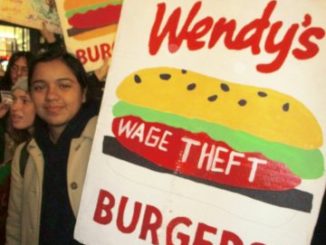
New York, Nov. 18 — Hundreds of Immokalee farmworkers and supporters took over the block outside Wendy’s headquarters this afternoon. Inside the upscale Manhattan offices at 280 Park Avenue were several of Wendy’s board of directors.

The fast food giant refuses to pay the workers that pick their tomatoes a penny more per pound.  

Showing a colorful display of signs, flags and banners, this very multinational and youth-led rally had speakers and music. They exposed the Wendy’s bosses for refusing to support human rights protections for Florida farmworkers who harvest tomatoes. 

Wendy’s management refuses to agree to worker-led monitoring that has ended sexual harassment, forced labor and other longlasting abusive violations.

Militant supporters chanted, “Down, down, exploitation! Up, up, fair food nation!” at this lively, bilingual rally. Religious leaders voiced support.

Hundreds stepped into the streets. Marching for blocks, the Immokalee worker-led protest drew more support.

New York is a union town and should stand strong against the Wendy’s bosses. Until they comply with the fair food program, “Boycott Wendy’s!” is the message of the day.

Strugglelalucha256


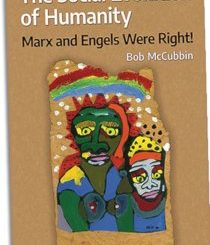
The Social Evolution of Humanity: Marx and Engels were right!

New by Bob McCubbin

This study of the evolution of humanity focuses on human social/sexual relations and, in particular, the changing social status of women.

It offers a selection of scientific evidence that updates and augment the viewpoint expressed in Frederick Engels’ masterful work, “Origin of the Family, Private Property and the State.”

Sometime in the early 1970s, Bob McCubbin read Frederick Engels’ “Origin.” What an amazing book! Women had not always been oppressed. In fact, they had played important, even crucial roles in the advancement of our species over hundreds of thousands of years. McCubbin had found a new reason to hate capitalism. It was the overthrow of early communal society’s mother-right and the division of society into classes or rich and poor, that had brought about the oppression of women worldwide.


McCubbin is the author of “Roots of Lesbian and Gay Oppression: A Marxist View.” First published in 1976, during the first flush of the modern LGBTQ2S movement, McCubbin’s unparalleled achievement was to offer a historical analysis of when, where, why and how LGBTQ2S oppression developed.


Order on Amazon

Strugglelalucha256


‘Pressed to the Wall … But Fighting Back’: The Black Radical Tradition and the Legacy of the Chicago Race Riots 1919

Recently, I watched the opening episode of the new HBO series “Watchmen.” Like millions of other viewers, I was pleasantly surprised to see that the episode began with the white terrorist assault on the community of Greenwood in Tulsa, Okla., popularly known as the Black Wall Street Massacre. 

The Black Wall Street riot resulted in as many as 300 Black people killed and hundreds more injured and has left a critical mark on the Black popular memory in recent decades, which we will discuss later. The omnipresence of Black Wall Street in the Black imagination undoubtedly influenced its insertion into the debut episode. 

The premier episode opened with a young Willis Reeves sitting in a Black movie theater watching a motion picture while his mother played the score on a piano. This fictional film featured a Black sheriff coming to the rescue of a frontier town and recalled the cinematography of Oscar Micheaux, the father of Black Cinema, and his two early films, “The Homesteader” and “Within Our Gates,” the latter being a cultural response to D.W. Griffith’s “Birth of A Nation” and the Chicago Race Riot of 1919. 

Willie’s film-going experience is abruptly ended by a white supremacist aerial assault. Immediately after Willie is transported out of town, the building he was in explodes from another bomb, killing his parents. The episode then moves to the present, where an unarmed Black police officer is shot by a white supremacist. In the following scenes, it is revealed that the hero of the television show, played by Regina King is, once again, a police officer.

I know what you are wondering. “I thought this article was about Chicago 1919? Why in the world is he talking about Tulsa 1921?” For this reason, let’s turn to this popular social media meme.

This widely distributed meme displays the way the period of racial violence and resistance has been largely retained as part of the Black capitalist imagination. This sort of memory obscures the way that the accumulation of Black wealth was the precise purpose for the colonial violence African people in the United State have endured. 

Instead, the lesson of Black Wall Street has become that “the color of Black Power is green.” Neither “Watchmen,” this meme, nor the popular documentary series “Hidden Colors” makes mention of the African Blood Brotherhood, the revolutionary nationalist organization led by Black Communist Cyril Briggs, which took up arms and defended Greenwood. Black capitalist histories have instead erased the legacy of New Negro-era Black radicalism.

This article seeks to recover the history of interwar Black Radicalism’s response to white terror. I aim to make three points: 

  1. Cultural workers played a vital role in leading the call for armed self-defense and revolution; 
  2. This was an internationalist struggle where African descended people clearly understood the white terror in the U.S. as a form of colonial violence, they saw their local and national struggles as tied to the international revolutions and; 
  3. This legacy still informs the vanguard of African global revolution in the 21st century.

Ida B. Wells recognized lynchings as colonial violence

Let’s go back a little further, and then I promise we will move forward in time. In March 1892, three friends of Ida B. Wells–Thomas Moss, Calvin McDowell, and Henry Stewart–were killed as a part of the People’s Grocery lynching. Co-owners of the People’s Grocery, Moss, McDowell and Stewart were murdered at the moment that their business began to rival a local white grocery store. 

Wells credits this event for the radical shift in how she viewed lynchings. Before, she admits, she believed them to be excessive acts against criminals. Yet, as Megan Ming Francis notes, Wells discovered that the cause of lynchings is economic and not criminal. Unfortunately, when recounting the history of lynchings and racial violence, it is assumed that allegations of sexual assault were the leading cause. THEY WERE NOT. Ignoring this reality limits not only our analysis but our political practice.

Racial violence in the United States was a form of colonial violence. The purpose was to reinforce the unevenly structured relations between white people and Black people in the United States. Ida B. Wells, Marcus Garvey, Claude McKay and subsequent activists recognized this and it became the factor for Black international formation. In response to the death of her friends, Ida B. Wells noted that it was “a scene of shocking savagery that would have disgraced the Congo.”

Migration of the African working class

Black Internationalism of the early 20th century was the product of the contradictions of global Black migration. Before he was shot to death, Thomas Moss reportedly said: “Tell my people to go West — there is no justice for them here.” 

Ida B. Wells moved to Chicago, Ill. Jim Crow’s racial terror is one push factor that overdetermined the rural to urban migration of millions of African Americans known as the Great Migration. Yet, Black migrants were met with more white terrorism. 

Illinois was home to three of the largest destinations–Springfield, East Saint Louis and Chicago–in the Red Summer of 1919, a term dubbed by James Weldon Johnson, an NAACP leader at the time. Two years earlier, the U.S. had been rocked with a series of race riots, including the one in East Saint Louis. W.E.B. Du Bois and Johnson responded by organizing a silent march in protest.

Yet, two years later, African Americans did not respond passively to racial violence. In 1919, over forty cities in the U.S. experienced race riots and as many as 1,000 people were killed. Arguably the worst, however, was in Chicago between July 27th and Aug. 3rd.

However, the Red Summer represented a turning point. While white violence claimed the lives of 23 Black Chicagoans, responding in armed self-defense, 15 whites were killed. Similarly, just weeks earlier in Longview, Texas, Black residents used their rifles in self-defense. This prompted the publication of “If We Must Die,” which became an anthem of Black resistance. Not surprisingly, however, it was not originally published in a Black organ but instead in a new socialist publication, The Liberator, edging towards the political shifts in Black radical politics:

IF WE MUST DIE

IF we must die—let it not be like hogs

Hunted and penned in an inglorious spot,

While round us bark the mad and hungry dogs,

Making their mock at our accursed lot.

If we must die—oh, let us nobly die,

So that our precious blood may not be shed

In vain; then even the monsters we defy

Shall be constrained to honor us though dead!

Oh, Kinsmen! We must meet the common foe;

Though far outnumbered, let us show us brave,

And for their thousand blows deal one death-blow!

What though before us lies the open grave?

Like men we’ll face the murderous, cowardly pack,

Pressed to the wall, dying, but fighting back!

— Claude McKay (1919)

Claude McKay and the African Blood Brotherhood

Let us compare McKay’s poem to another piece of cultural work produced that year: Oscar Micheaux’s “Within Our Gates.” Also, a response to the Red Summer, Micheaux’s film, while groundbreaking, represented the respectability politics and pigmentocracy of the mainstream civil rights activists. 

“If We Must Die” helped prompt the organization of the African Blood Brotherhood (ABB) in September 1919. This was a period of global revolutionary struggle. McKay and others were inspired by the groundswell of anticolonial struggles amongst African people around the world as well as the Bolshevik Revolution, and even the Irish Revolution. Even Marcus Garvey, who spoke disparagingly of white American socialists, spoke favorably of Lenin, the Bolsheviks and he supported Irish struggles. However, it is important to note that the ABB and McKay were inspired by the Communist International and the Bolsheviks, but not organized by them. They organized independently.

McKay represented another Black migration, the movement of African and Caribbean migrants from the periphery of the Western empire to its metropolitan centers. In 1912, McKay immigrated to the United States from Jamaica to attend Tuskegee Institute but was quickly shocked by the white power he encountered. 

As Winston James argues in “Holding Aloft the Banner of Ethiopia: Caribbean Radicals in Early Twentieth-Century America,” these confrontations with American racial capitalism had a jolting impact on Caribbean migrants for whom class and other privileges eroded. For in the United States, “race became the modality through which class was lived.” Immigration of African and Caribbean people to the U.S. in the early 20th century generated cross identification within the African diaspora that caused a multidirectional shift in identity and politics.

McKay, Cyril Briggs, Grace Campbell, Otto Huiswood and the leadership of the ABB developed the Universal Negro Improvement Association into a vanguard organization in the Black Freedom struggle. Sympathetic with the mass movement and respectful of the leadership of Marcus Garvey and the UNIA, they had all embraced socialism, in its different forms. Sympathetic with the struggles of the global working class, they also gained inspiration from the anticolonial struggles and socialist revolutions of the age. The ABB’s internationalism is captured in Briggs’s 1920 statement, “The cause of freedom, whether in Asia or Ireland or Africa, is our cause.”

The ABB also forged unity between African American and Afro-Caribbean migrants. As Minkah Makalani notes in his seminal text on Black internationalism “In the Cause of Freedom: Radical Black Internationalism from Harlem to London, 1917-1939”:

“The ABB’s membership consisted largely of workers — skilled laborers in Chicago; coal miners in West Virginia; World War I Veterans in Tulsa, Oklahoma; Anglo-Caribbean migrant laborers in the Domincan Republic and Panama.” 

At its peak, the ABB had 8,000 members. This paled in comparison to the millions in the ranks of the UNIA. Fashioned as “revolutionary secret order,” the ABB sought to raise the consciousness of the global African working class through what later became known as programmatic influence.

In 1921, the ABB gained a surge in popularity as reports of their armed defense of Tulsa spread. The following year, the ABB merged with the Communist Party. Vladimir Lenin had already stressed the importance of solidarity with anticolonial struggles in Africa and Asia. 

Yet, it is people like McKay and Huiswood who not only sharpened the Communist International’s position on the Negro Question: that is, the right to self-determination for the Black working class in the United States and Africa. The end result was, in fact, a synthesis of communist and Garveyist thought at the Sixth Comintern in 1928 with the production of the Black Belt Thesis on the U.S. and the Native Republic Thesis on South Africa, which demanded Black independence in the U.S. and national leadership in South Africa.

The one downfall, however, is that the ABB and the UNIA never found complete unity. The conflict between the ABB and the UNIA was hastened by government agitation — the first Black agents of the then Bureau of Investigation (now FBI) were hired to infiltrate and bring down both movements. 

However, the ABB suffered from its own failure to accept the will of the people. The African masses had chosen Garvey and the UNIA. As many argue, in the United States the movement would have been much stronger if the ABB leadership had made a stauncher commitment to principled engagement from within as members of the UNIA. In South Africa, far away from the center of conflict in New York, activists such as James La Guma synthesized Garveyism and Socialism — it would not be until the 1960s that these efforts would be reignited.

The Hip Hop Generation

As I have tried to show in my discussion of McKay’s response to the Red Summer, cultural work and cultural workers were central to Black radical formation. Cultural workers have the ability to move us beyond contemporary crises and enable the masses to imagine a new world beyond oppression — historian Robin Kelley refers to these radical productions as freedom dreams. 

Much of the contemporary freedom dreaming has been devoid of meaningful Black internationalism and calls to arms. Instead, appeals to the American nation-state and calls for nonviolent direct action have predominated.

This year marks the 25th anniversary of the end of apartheid, the creation of NAFTA and the creation of Operation Gatekeeper. Defined by a rise in neoliberal policy and cultural production, this period has been defined by an increased transnational movement of capital but a fracturing of Black international unity. 

We must remember that 1994 was also the year of the Rwandan Genocide and the U.S. invasion of Haiti. Confronted with images (1) a tendency of reformist activists would join with the Democratic Party or, at the least, further engage the arena of electoral politics; (2) a new generation of cultural nationalism would emerge. Far more intersectional than its predecessors, this tendency would be just as biologically determined as earlier forms of cultural nationalism. If not more turmoil throughout the African diaspora, the last 25 years have consisted of crosscurrents of disidentification. At no place is this sharper than at many college campuses. Yet this tide has begun to recede. And, once again, it is the product of struggle and cultural production.

Too often the activism in the era of Black Lives Matter has targeted local, state and national reforms as organizational goals — and even worse, mere demands to make white politicians “say black lives matter” became the terrain of struggle. We saw this fatal contradiction during the 2016 election season. 

Following a 2015 interaction between BLM activists and Hillary Clinton, I proposed that three dimensions would emerge from this age of Black radicalism: 

  • a tendency of reformist activists would join with the Democratic Party or, at the least, further engage the arena of electoral politics; 
  • a new generation of cultural nationalism would emerge. Far more intersectional than its predecessors, this tendency would be just as biologically determined as earlier forms of cultural nationalism, if not more; and 
  • revolutionary socialist tendencies would inevitably spread.

Recent studies show that the masses of youth are embracing socialism. This turn towards socialism has been matched with calls for armed self-defense. Chants such as “Fist Up! Fight Back!” and “Black Power Matters” guide the masses at demonstrations. As well, groups such as the Huey P. Newton Gun Club and Guerilla Maneframe have sought to train the masses of the African Working Class. This is the true legacy of 1919 — socialism and self-defense.

Strugglelalucha256


Bolivia resists racist coup

On Nov. 19, the tenth day of the coup against legitimate, democratically elected Bolivian President Evo Morales, police and soldiers fired from helicopters into a crowd of protesters — Indigenous people, workers and peasants — blockading a fuel depot in El Alto, the South American country’s largest city and a center of resistance near the capital, La Paz. 

The protesters were demanding the resignation of self-proclaimed interim President Jeanine Añez. Reports say at least one person and possibly as many as six were killed and 23 wounded.

Four days earlier, in the Indigenous stronghold of Huayllani, Cochabamba, nine people were shot dead during protests against the U.S.-backed coup regime. A relative of Armando Carballo, a peasant farmer who was among the victims, said: “My brother-in-law died with three gunshot impacts. Leaves a 2-year-old girl in the orphanage. We ask for justice for our brother.”

In all, at least 24 people have been killed, more than 700 wounded and over a thousand arrested since the military ousted Bolivia’s first Indigenous president on Nov. 10, after the U.S.-dominated Organization of American States supported opposition claims of election fraud — without proof

Morales and Vice President Álvaro García Linera, both representing the Movement Towards Socialism (MAS), were forced to leave the country, accepting asylum in Mexico under threat of assassination by police groups.

“We will be back and join the fight to strengthen our social forces,” Morales told Al-Jazeera.

The coup plotters, fronted by Añez, proclaimed the military free to fire on unarmed protesters with no consequences. Independent journalists are being driven from the country. So were Cuban health workers, after four of them were arrested on bogus charges of funding the anti-coup protests. Diplomats of Bolivarian Venezuela were expelled. Añez and another pretender “president,” Juan Guaidó of Venezuela, have expressed their mutual admiration.

Undefeated and fighting back

Looking at these facts in isolation, the situation seems grim. 

But the Bolivian people are not giving up. They have not been defeated. They are fighting back.

Despite the danger, protests are growing. Braving teargas and live ammunition, huge marches from the countryside are converging on urban centers, especially La Paz. While the repressive forces were attacking in El Alto on Nov. 19, thousands of rural teachers marched into the capital at the head of a major labor demonstration. 

Many protesters carry the colorful Wiphala flag — representing the Indigneous people of Bolivia and surrounding countries — which was torched by the racist-fascist forces that earlier mobilized against President Morales. 

Indigenous-led groups are organizing armed self-defense. Communities have established bodies of self-government.

This mass courage and determination helps to strengthen the resolve of the political representatives of the movement in La Paz. The Congress, where members of the MAS form a majority, have refused to accept Morales’ forced resignation or to recognize the legitimacy of the coup regime. 

Significantly, there are reports that rank-and-file soldiers, many of them Indigenous people themselves, are starting to break away and join the protesters, refusing to repress the people. 

A report sent by email to Morales supporters on Nov. 20 states: “The coup regime inside Bolivia is falling apart at the seams. According to sources inside the military, there has been friction, both between the military and the police, and between their respective leaders and foot soldiers.”

The report continues: “Bolivian media have reported that Bruce Williamson at the U.S. Embassy in La Paz has operated as a bag man, doling out millions of dollars to generals and police chiefs. Local media have reported that the general who told Morales to resign has already left for the USA with his money. The Bolivian news report states that it expects more generals to follow suit as they are fearful of being put on trial for their repressive acts, not to mention their corruption.”

The mask of “democracy” and “human rights” fashioned by their masters in Washington fits poorly on the crude white supremacists, anti-Indigenous racists and fascists at the center of the coup, and the military and police officials trained by the Pentagon’s infamous “School of the Americas” and the FBI. Añez herself is known for her racist, anti-Indigenous views.

International struggle

Most important, the struggle of the Bolivian people is not isolated. A furious class struggle rages across the South American continent and the Caribbean, where the people of Haiti continue to resist under harsh repression. 

Everywhere, the forces of the people — workers and peasants, Indigenous and Afro-descendants, women and LGBTQ2S people — are measuring their strength against the capitalist oligarchs and their repressive forces (military, police, death squads), behind whom stands U.S. imperialism.

In Brazil, the people’s relentless struggle and the resulting internal conflicts within the ruling class won the release of former President Lula da Silva of the Workers Party just days before the coup in Bolivia.

In Chile, the people continue to rise after more than a month of mass protests, despite horrific violence like police targeting the eyes of demonstrators, blinding more than 200 so far. They have forced the Sebastián Piñera government to agree to rewrite the Pinochet-era constitution. 

But the half-measures proposed by the U.S. stooges in Santiago have not demobilized the people, who demand a Constituent Assembly and genuine change in the relationship between rich and poor, a process that was brutally postponed more than four decades ago by the coup that overthrew Salvador Allende’s socialist government on 9/11/1973. 

Chilean protesters have proclaimed, “Neoliberalism was born in Chile, and it will die here.”

On Nov. 21, workers and students in Colombia will stage a general strike against the death-squad regime of President Iván Duque. Repression against Indigenous communities and left forces by the traitorous Lenin Moreno government in Ecuador is setting the stage for a new uprising like the one that won concessions against an International Monetary Fund austerity plan earlier this fall. 

Following the election of a new, left-leaning president in October, workers in Argentina have held massive protests in Buenos Aires and other cities against the coup in Bolivia and in solidarity with the Indigenous resistance there. Resistance is building in Peru and Uruguay, too.

Bolivarian Venezuela and socialist Cuba — fortresses of popular power besieged by U.S. imperialism and its oligarchic allies with blockades, sanctions, military threats and slanders — continue to resist and offer every assistance they can to the people in struggle.

In Bolivia and elsewhere, the masses are learning valuable lessons every day: by developing new, effective tactics of resistance; that the state cannot be merely taken over but must be smashed and replaced with the power of the workers and oppressed; how the capitalist media turn reality on its head, portraying right-wing violence as heroic while ignoring or disparaging genuine popular protest.

Let’s take inspiration from the resisting people of Bolivia to strain with every fibre of our being toward destroying the evil system of capitalism and imperialism in the U.S. and around the world. In the words of the socialist anthem, The Internationale, “a better world’s in birth.”

Strugglelalucha256


Open letter: Peoples of the world with Evo!

People’s organizations condemn U.S.-instigated coup in Bolivia

We, allied anti-imperialist organizations and individuals across the world, condemn the rightwing coup against Indigenous President Evo Morales that forced him and other members of the Bolivian government to resign. This coup is being undertaken to inflict the worst kind of violence upon class-conscious, Indigenous revolutionaries who, under the banner of Indigenous socialism, have forged the path toward self-determination and peace.

To this day, no evidence exists to demonstrate that the October 20 elections which Evo Morales won were fraudulent. As early as one day later–on October 21–the Organization of American States (OAS) released a public statement in an attempt to discredit the election results

without any supporting evidence. For all its claims of multilateralism and diversity, the OAS receives a disproportionate amount of its funding from Washington, D.C.

This is not the first time that the United States government engaged in a coup in Latin America. This is not the first time that the U.S. government fully supported a member of the local economic and political elite whose aim is to restore the ruling elite bloc’s policies which are hostile to the interests of the majority.

Evo Morales’ rival, former Bolivian President Carlos Mesa, an agent of the Washington, D.C.-based think tank, the Inter-American Dialogue, and a political figure known for his hostility towards Indigenous socialism and partiality to multinational big business, has the qualifications of an ideal imperialist comprador.

The contributions of the Movement for Socialism (MAS)–under the leadership of Evo Morales–enjoy enormous support from the Indigenous population and the working class of Bolivian society. Its contributions to the political and economic advancements of Bolivia through the painstaking economic and cultural empowerment of Indigenous people and workers is well known and is inspiring, especially at this time of neoliberal attacks on the world’s working people.

We stand together in unity with Bolivian workers, peasants and Indigenous people in their struggle against U.S. intervention and economic imperialism. We strongly condemn the comprador elite in Bolivia who are agents of U.S. imperialism. We are prepared to reinforce all efforts to bring the perpetrators of violence to justice, may it be in the form of support for our Bolivian friends and comrades and/or an international people’s tribunal that will hold the culprits in this electoral destabilization and rightist coup fully accountable for their crimes against humanity.

El mundo con Evo, so are we!

U.S. hands off Bolivia!

Defend the right to self-determination!

Defend the people’s right to live in peace!

Signed by:

    1. American Indian Movement Southern California
    2. Anakbayan USA
    3. BAYAN (New Patriotic Alliance) Philippines
    4. BAYAN- USA
    5. Black Workers for Justice
    6. Candidatura d’Unitat Popular Països Catalans
    7. Coordinadora Nacional Sindical y Social (CNUSS-Guatemala)
    8. Covert Action Magazine (USA)
    9. For the People – North Amerikan Federation (USA)
    10. Frente Populare (Italy)
    11. Frente Popular Revolucionario (FPR Mexico)
    12. Fundación Amancio (Guatemala)
    13. Human Rights Alliance for Child Refugees & Families (USA)
    14. International League of Peoples’ Struggle-Australia (ILPS)
    15. ILPS Canada
    16. ILPS Guatemala
    17. ILPS Philippines
    18. LPS Commission 1 The cause of national liberation, democracy and social liberation against imperialism and all reaction
    19. ILPS Commission 11 Struggle of teachers and other education workers against imperialism and for an alternative future
    20. International Women’s Alliance
    21. Inti Barrios: Costureras de Sueños (Mexico)
    22. Juventudes Socialistas del Perú
    23. Journal of Labor and Society
    24. May Day Committee (Melbourne Australia)
    25. Malcolm X Grassroots Movement (MXGM)
    26. New Afrikan People’s Organization (NAPO)
    27. New York Boricua Resistance
    28. New York Peace Council
    29. Occupy ICE Los Angeles
    30. October Revolution Centenary (New York City)
    31. Philippine-U.S. Solidarity Organization PUSO Seattle
    32. Philippines-Bolivarian Venezuela Friendship Association
    33. Potere al Popolo (Italy)
    34. Proles of the Roundtable (USA)
    35. Regional Council of Africans in the Americas
    36. Union of Cypriots (Cyprus)
    37. Unión del Barrio (USA)
    38. Carol Araullo – Chair, BAYAN Philippines
    39. Alessio Arena – Fronte Popolare, Italy
    40. Christopher Connery, Professor, University of California Santa Cruz
    41. Diego Gullotta, Professor of Sociology, PRC
    42. Giuliano Granato – National Coordination, Potere al Popolo, Italy
    43. Andrew Kahn, Voice of América Blog
    44. Liza Maza – Secretary-General, International League of Peoples’ Struggle
    45. Mateo Bernabé López Pérez, Coordinadora nacional sindical y social, Guatemala
    46. Florentino López Martínez, Frente Popular Revolucionario Mexico
    47. Immanuel Ness – author, Southern Insurgency: The Coming of the Global Working Class (2016) and Chair, New York Peace Council
    48. Ben Norton, journalist, USA
    49. Paloma Polo – filmmaker, Spain
    50. Sarah Raymundo – Chair, Philippines-Bolivarian Venezuela Friendship Association
    51. Renato Reyes Jr.,  Secretary-General BAYAN-Philippines
    52. Akinyele Umoja, author, We Will Shoot Back: Armed Resistance in the Mississippi Freedom Movement (2013)
    53. Samuel Villatoro, Fundación Amancio, Guatemala
    54. Samidoun: Palestinian Prisoner Solidarity Network
    55. Socialist Unity Party/Partido de Socialismo Unido (USA)
    56. Oz Karahan – President, Union of Cypriots (Cyprus)
    57. Loan Tran, International Action Center (U.S.)
    58. Alliance for Global Justice
    59. Chuck Kaufman, National Co-Coordinator, Alliance for Global Justice (U.S.)
    60. Prof. Jose Maria Sison, Chairperson Emeritus, International League of Peoples’ Struggle
    61. Students and Youth for a New America
    62. Dakota Lily, activist, Students and Youth for a New America, NYC-NJ-PA
    63. Congress of Teachers and Educators for Nationalism and Democracy-UP (CONTEND-UP)
    64. Gwen Bautista, Artist and Independent Curator
    65. People’s Power Assembly (Baltimore, MD USA)
    66. Youth Against War & Racism (Baltimore, MD USA)
    67. Malcolm Guy, Vice-Chair External, International League of Peoples’ Struggle
    68. Centre d’appui aux Philippines / Centre for Philippine Concerns (Montréal)
    69. Concerned Artists of the Philippines
    70. Antares Gomez Bartolome (Quezon City, Ph)
    71. Danny Haiphong, Contributing Writer, Black Agenda Report
    72. Cindy Sheehan, National Coordinator of March on the Pentagon and Host/Producer of Cindy Sheehan’s Soapbox
    73. March on the Pentagon
    74. Cindy Sheehan’s Soapbox
    75. Carlos Martinez, writer, Invent the Future (London, GB)
    76. Ann Garrison, Journalist, San Francisco Bay View, Black Agenda Report, Pacifica Radio
    77. ILPS Commission 4
    78. FMLN-Vancouver
    79. Solidaridad Ayotzinapa Vancouver
    80. Venezuela Peace and Solidarity Committee of Vancouver
    81. Jesús Rodríguez-Espinoza – Editor, Orinoco Tribune
    82. United National Antiwar Coalition
    83. Committee to Stop FBI Repression
    84. Chicago Committee for Human Rights in the Philippines
    85. Jaime Coreas Jiménez, FMLN Vancouver
    86. María Luisa Meléndez, FMLN Vancouver
    87. Clara Sorrenti, Activist, Communist Party of Canada – Forest City Club
    88. Venezuela Peace and Solidarity Committee of Vancouver
    89. Leslie Salgado, Friends of Latin America, Columbia, MD
    90. Michele & Rick Tingling-Clemmons, Gray Panthers of Metropolitan Washington

Go here to add your name to the list, then click SHARE in upper right corner.

Strugglelalucha256
https://www.struggle-la-lucha.org/2019/page/7/