Solidarity with Unist’ot’en Camp. ‘No pipeline on Indigenous land!’

International Day of Solidarity with the Wet’suwet’en pickets in New York City, Jan. 8. Photo: Greg Butterfield

New York City — A picket line outside the Canadian Consulate near busy Grand Central Station on Jan. 8 protested the attack by the Royal Canadian Mounted Police (RCMP) and Canadian military on the Gidum T’en checkpoint and an impending raid on the Unist’ot’en Camp in the region Canada calls British Columbia.

At least 14 people were arrested in the Jan. 7 police assault.

Actions were planned in more than 60 cities in Canada, the U.S. and other countries as part of an International Day of Solidarity with the Wet’suwet’en people, who face violent and unlawful raids for defending their sovereign territory from TransCanada’s Coastal Gaslink Pipeline project. Thousands rallied in Toronto, Canada’s largest city.

On Dec. 14, the Supreme Court of British Columbia issued an injunction granting TransCanada the go-ahead for its gas pipeline, clearing the way for the government attack. All five clans of the Indigenous Wet’suwet’en nation are united in opposing the project.

Canadian Prime Minister Justin Trudeau, who likes to posture as a progressive, has been silent.

At the New York action, activists chanted “Canada! Take a stand! No access to Native land!” They handed out fliers calling for solidarity with the Wet’suwet’en while demanding an end to threats of police-military invasion.

The statement read in part, “We stand as witnesses to this historic moment when the federal and provincial governments can choose to follow the principles of reconciliation and respect the United Nations Declaration on the Rights of Indigenous Peoples, or respond by perpetuating and entrenching the ongoing legacy of colonization in Canada.

“We are now preparing for a protracted struggle. The hereditary chiefs of the Wet’suwet’en and the land defenders holding the front lines have no intention of allowing Wet’suwet’en sovereignty to be violated.”

Some passersby who took leaflets drew the connection with the struggle of the Standing Rock water defenders in North Dakota and other ongoing battles for Indigenous sovereignty in the U.S.

For the latest updates, go to the Unist’ot’en Camp Facebook page.

Whitehorse, Yukon

Toronto

Halifax

Cape Breton

Winnipeg

Vancouver

Strugglelalucha256


Peoples of the world defend the sovereignty of Venezuela

The sixth presidential election in the contemporary history of the Bolivarian Republic of Venezuela took place on May 20, 2018. Nicolás Maduro Moros was elected Constitutional President of Venezuela and according to the Venezuelan Constitution will take office for a new presidential term on January 10, 2019.

The election took place in a climate of peace and tranquility with a participation of 46.02 percent of the total electoral voters, very similar to the percentage in U.S. elections.

Candidates of different political parties participated in the electoral contest, such as Henry Falcón, leader of the Advanced Progressive Party, and Javier Bertucci, leader of the El Cambio party, both opponents of the currently constituted government. It should be noted that of the total turnout, 67.84 percent of voters cast their ballots for Frente Amplio de la Patria and its elected candidate Nicolás Maduro. This represents 6,245,862 valid votes. The opposition party with the next most votes was Henry Falcón, who received only 20.93 percent of the votes, which represented 1,927,387 votes.

The electoral result and the democratic response of the Venezuelan people resulted in their decision to continue a path of democratic construction as their destiny.

During the last five years, different U.S. administrations have been implementing a sophisticated destabilization plan against Venezuela to overthrow a democratically elected government through an electoral system that even former U.S. President Jimmy Carter described as the best in the world.

The U.S. government’s attitude of regime change systematically violates the sovereignty and self-determination of the Venezuelan people.

In March 2015, under an executive order, the U.S. government declared Venezuela an “unusual and extraordinary threat to the national security and foreign policy of the United States,” declaring a “national emergency” in order to confront that threat. Another executive order in August 2017 requires the Treasury Department to implement “irreversible” sanctions against the Venezuelan economy and financial system, a set of unilateral coercive measures unacceptable under international law. With these legal frameworks, the economic siege has been activated against the recovery plans of the Venezuelan economy, affected by the collapse in oil prices beginning in summer 2014.

Compounded by the economic blockade of Petróleos de Venezuela (PDVSA), the backbone of the Venezuelan economy, the commercial and financial blockade is hitting hard the quality of life of the Venezuelan people. William Brownfield, former U.S. ambassador to Venezuela, referring to the South America country, declared in October 2018, “At this moment perhaps the best solution would be to accelerate the collapse, even if it produces a period of suffering to the population of months or perhaps years.”

Using the monopoly of media power, the United States is manipulating world public opinion by imposing the narrative of a “humanitarian crisis” in Venezuela, thereby seeking to justify a military intervention disguised as “humanitarian intervention.” In September 2018, Trump openly told the media at the United Nations that when it comes to Venezuela, “all options are on the table.”

In 2016, the document “Venezuela Freedom-2 Operation” of the U.S. Southern Command (Southcom), signed by commanding officer Adm. Kurt W. Tidd, was published, where the plan for the implosion-collapse with a set of policies aimed at overthrowing the Venezuelan government was outlined, using a broad-spectrum strategy where simultaneous, combined and continuous operations were to be developed in the period 2016-2018.

The U.S. and a group of governments obedient to the orders of the White House are preparing to ignore the legitimacy of the mandate conferred on President Nicolás Maduro Moros as of Jan. 10. Given this fact, we call upon the people of the U.S. and the international community not to intervene, and to recognize and respect the sovereign will of the Venezuelan people, who continue to chart their own path of peace, guided by their inalienable right to self-determination and independence.

January 7, 2018

The declaration was signed by nearly 600 intellectuals, academics, artists, representatives of religious organizations, lawmakers, ambassadors, lawyers, activists and peace-loving people from all over the world. See the complete list of signers here.

Strugglelalucha256


Call to Action: International Week to Free Ahmad Sa’adat, 15-22 January 2019

“The Palestinian people are determined to continue the intifada for all of the national rights of our people. This position is naturally consistent with the struggle of all progressive global forces confronting global imperial arrogance and struggling for independence, self-determination and liberation, for social justice, equality and socialism, based on a fair distribution of the wealth and human principles of peace, rejection of war, imperialism and all forms of oppression and exploitation…” – Ahmad Sa’adat

Today, we remember the 10th anniversary of the Israeli sentencing of prominent Palestinian national liberation and international left leader Ahmad Sa’adat, the General Secretary of the Popular Front for the Liberation of Palestine. We urge you to join us for an International Week of Action between 15 and 22 January 2019 to free Ahmad Sa’adat and all Palestinian prisoners!

On 15 January 2019, we will mark the 17th anniversary of Sa’adat’s arrest by the Palestinian Authority in the context of “security cooperation” with the Israeli occupation. After a violent attack on the PA’s Jericho prison in 2006, where Sa’adat was held under United States and British guards, Ahmad Sa’adat and his comrades are serving lengthy sentences in Israeli prisons. Sa’adat was sentenced to 30 years in prison, convicted in an Israeli military court of leading a prohibited organization and “incitement.”

Sa’adat is a leader in the Palestinian prisoners’ movement and the Palestinian national liberation movement. He is a figure of international importance and political clarity, targeted behind bars in an attempt to isolate him from his political role. He stands alongside nearly 6,000 fellow Palestinian political prisoners in Israeli jails on the front lines of the liberation struggle. As such, he is a symbol of Palestinian, Arab and internationalist resistance to capitalism, racism, apartheid and colonization.

The case of Ahmad Sa’adat also clearly highlights the complicity of international powers in the occupation and colonization of Palestine. He and his comrades were held for years under U.S. and British guards in a Palestinian Authority prison – and those guards moved away in a prearranged agreement to allow the Israeli occupation army to attack Jericho prison in 2006. The support of the United States, Britain, Canada, the European Union, Australia and others for the Israeli colonial project continues to perpetuate its impunity as it carries out land confiscations, home demolitions, mass imprisonment, extrajudicial executions, the ethnic cleansing of Jerusalem, the siege on Gaza and further crimes against humanity and war crimes.

The Palestinian Authority kidnapped Sa’adat under false pretenses and imprisoned him for four years before its prison was attacked by the Israeli occupation. This is part and parcel of the policy of “security coordination” that has led to the repeated imprisonment of Palestinians for their political involvement by the PA. Despite critical words, the policy remains firmly in place – with devastating and deadly consequences for Palestinians, as seen in the case of Basil al-Araj.

On 15-22 January 2019, join us in a collective call for the freedom of Ahmad Sa’adat and all Palestinian Prisoners. Join us to build the global grassroots campaign for boycott, divestment and sanctions from Israel and complicit corporations. Join us to fight for an end to aid and support for the Israeli occupation that has been confiscating land and lives for over 70 years.

We urge you to organize events, actions and protests in cities, campuses, communities, towns, campuses and all other public spaces. When we raise our voices, we can help to break the Israeli isolation of Ahmad Sa’adat and his fellow Palestinian prisoners. Free Ahmad Sa’adat! Free all Palestinian Prisoners! Free Palestine! 

Samidoun Palestinian Prisoner Solidarity Network
Campaign to Free Ahmad Sa’adat

Strugglelalucha256


NYC Jan. 10: Please join us at this critical moment in defense of the Bolivarian revolution

Join us  in defense of the Bolivarian revolution this coming January 10 at 5PM

THE BOLIVARIAN CIRCLE OF NEW YORK INVITES OUR FRIENDS FROM THE CITY OF NEW YORK

This coming January 10 there will be a protest organized by the most reactionary elements of the Venezuelan right wing in front of the consulate of Venezuela in the city of New York. Please come with your red flags or your Venezuelan flags, bring anything that shows your support for the Bolivarian revolution, at this critical moment we must be present!

Location of the consulate of Venezuela

Manhattan: between Madison Street and Fifth Avenue on the side of St. Patrick’s Cathedral  7 East 51st Street

This coming Thursday at 5 PM in the afternoon

“The United States seems destined by Providence to plague the America of misery in the name of freedom.”

Simón Bolívar (1783-1830)

For more information: cbalbertolovera@gmail.com

Strugglelalucha256


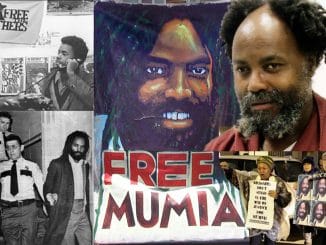
Hundreds march in Philadelphia to support Mumia Abu-Jamal

“Brick by brick! Wall by wall! We’re gonna free Mumia Abu-Jamal!” hundreds of people chanted as they marched through a driving winter rainstorm in Philadelphia on Jan. 5.

They came to stand in solidarity with the Black political prisoner and revolutionary journalist known worldwide as “the voice of the voiceless.”

They came to demand that Philadelphia District Attorney Larry Krasner respect Judge Leon Tucker’s Dec. 27 ruling that opens the way for a new appeal by Abu-Jamal of his 1982 conviction.

They came to show that the decadeslong people’s movement that saved Abu-Jamal’s life, that got him off death row and that won his right to life-saving hepatitis C treatment, would continue the fight until he is finally freed.

Struggle ★ La Lucha activists from Baltimore and New York and Baltimore People’s Power Assembly members joined with International Concerned Family and Friends of Mumia Abu-Jamal, Mobilization for Mumia, community members, trade unionists and prisoner advocates at an organizing meeting after the march.

These videos, shot by Struggle ★ La Lucha’s Sharon Black, feature Pam Africa and the Rev. C.D. Witherspoon firing up the marchers.

https://www.facebook.com/sharon.black.1650332/videos/10157085850359703/

https://www.facebook.com/sharon.black.1650332/videos/10157086210599703/

Strugglelalucha256


Trump, big coal and black lung

Black lung disease is a terrible way to die. Coal miners’ lungs become crusty and useless, according to Dr. Robert Cohen, a pulmonologist at the University of Illinois. Towards the end, Dr. Cohen told National Public Radio’s All Things Considered, patients are “essentially suffocating while alive.” (Dec. 18, 2018)

Miners get black lung because capitalist coal companies put profits  before safety. And the U.S. capitalist government helped cover up a growing black lung epidemic, as National Public Radio found out:

“A federal monitoring program reported just 99 cases of advanced black lung disease nationwide from 2011 to 2016. But NPR identified more than 2,000 coal miners suffering from the disease in the same time frame, and in just five Appalachian states.” (NPR)

Actually, the National Institute for Occupational Safety and Health reported last July that “one in ten underground coal miners who have worked in mines for at least 25 years were identified as having black lung … coal miners in central Appalachia are disproportionately affected with as many as 1 in 5 having evidence of black lung — the highest level recorded in 25 years.”

What’s the response of the Trump administration to this epidemic? The excise tax on coal mining that’s used to finance black lung benefits is scheduled to be reduced from $1.10 per ton to fifty cents on Dec. 31, 2018. That’s sixty cents per ton added to the profits of outfits like Arch Coal, which made $582 million in 2017.

The real war against coal miners

There never was a war on the coal industry, as Trump has claimed. But there’s been a war on coal miners for at least 150 years.

Trump’s own commerce secretary ― Wilbur Ross ― owned the Sago mine in West Virginia where a dozen miners were killed on Jan. 2, 2006.

Just from 1900 to 1970, the U.S. Labor Department recorded 101,704 coal miners who lost their lives.

That’s a larger figure than the 94,725 GIs who died in the dirty U.S. wars against the Korean, Vietnamese and Laotian people. And that’s not counting more than 76,000 miners who died of black lung since 1968, according to former Labor Secretary Thomas Perez.

Fabulous fortunes were made, like that of Henry Clay Frick. His estate’s art collection on Manhattan’s Upper East Side is probably worth at least a billion dollars.

Frick’s coal mines fed Pittsburgh’s steel mills. As a partner of steel tycoon Andrew Carnegie, he broke the 1892 strike of steelworkers in Homestead, Pa. If he were still alive, Frick would be praising Trump on Fox News.  

In the 1870s, Pennsylvania anthracite coal mine bosses framed Irish mineworkers and their supporters, the Molly Maguires. Twenty-one of these labor heroes were hanged.

The same Keystone State capitalist class is today keeping the innocent Mumia Abu-Jamal and MOVE 9 in jail.

Mineworkers built the labor movement

It was the rise of the United Mine Workers union that eventually brought down the death rate in the mines. The UMW supplied the funds and many of the organizers in the the great labor organizing drives of the 1930s.

UMW president John L. Lewis became president of the Congress of Industrial Organizations ― the mighty CIO. Former UMW president Richard Trumka is current president of the AFL-CIO.

But the UMW, like many other unions, has been decimated by automation. Membership has dropped from 500,000 to less than 70,000. Especially affected were Black coal miners, who numbered 55,000 in 1930. By 2014, there were less than 2,500 Black mineworkers.

Wyoming’s largely nonunion open pit mines accounted for 316 million tons of coal in 2016, compared to the 184 million tons mined in West Virginia, Pennsylvania and Kentucky.

Steam locomotives are not coming back. Neither are the anthracite coal mines that once heated homes and employed 250,000 miners.

What’s left are poor communities throughout Appalachia whose wealth was stolen by the billionaire class. Trump lied to the mineworkers, and attacked black lung benefits.

But there’s a new wind of struggle in West Virginia, where 20,000 teachers went on strike in 2018. These education workers are the future, not Trump’s bigotry.

Strugglelalucha256


Mapuche resistance in Chile intensifies in response to police killing

The November assassination of a young Mapuche man, Camilo Catrillanca, by a Chilean anti-terrorism police squad has intensified the centuries-old Mapuche Indigenous struggle and has brought thousands of Mapuche and Chilean allies out into the streets in protest.

The killing of 24-year-old Catrillanca on Nov. 14 is the latest flash point in the struggle over Mapuche ancestral lands, which has led leaders in Chile to treat some Indigenous land rights activists as terrorists — by, for example, charging and trying them under anti-terrorism laws.

Catrillanca, the grandson of a prominent Mapuche leader, was shot in the head while riding a tractor home after working in the fields near the town of Ercilla, in the Araucanía region. His death led to ongoing protests across the country.

The anti-terrorism “Jungle Commando” squad that shot Catrillanca erased the video recording of what happened. Initially, the Chilean authorities tried to limit the blame for the assassination, but Mapuche people and their supporters were clear that blame and corruption are widespread and that this is part of an ongoing militarized campaign against Mapuche resistance.

Chile’s right-wing president, Sebastián Piñera, has been forced by public outrage to ask multiple national police officials to resign. The Piñera government has been using anti-terrorism laws in existence since the Pinochet dictatorship as a cover to increase militarized force against the Mapuche.

Loss of Wallmapu homelands

The Mapuche comprise about 12 percent of the population in Chile and are the largest Indigenous nation there among nine recognized in the country.

Since the 1500s, when Spanish colonists first arrived in Wallmapu (traditional Mapuche territory located in Araucanía in Chile and Patagonia in Argentina), Mapuche have been defending their territory. Those early European invaders were never able to prevail, and, after the War of Independence from Spain, neither could the Chilean state, so it reached an agreement, recognizing the land south of the Bío-Bío River in south central Chile as Mapuche territory.

In the late 1800s, Chile began an expansion that continues to this day, sending in the army to clear the way for white settlers and pushing the Mapuche off much of their land in Araucanía. After Chile’s “pacification” campaign ended, the Mapuche were placed on “reducciones” (reservations) similar to what Indigenous people endured in Canada and the U.S. Wallmapu was split by the Chilean and Argentinian borders, dividing the Mapuche into virtual captive nations within two colonizing countries.

Over the last century, the Mapuche have lost a large portion of their ancestral territory. Conditions improved somewhat for them during the brief presidency of Salvador Allende and other presidents who engaged in some land reform efforts. But largely, the inherent rights of the Mapuche to their homelands — different in nature from the rights of campesino farmers — were not fully understood by governments or non-Indigenous social movements.

Under the Pinochet dictatorship of 1973-1990, the Mapuche land base was reduced from 10 million hectares (25 million acres) to under 400,000 hectares (a million acres), according to some estimates. Pinochet targeted Mapuche resisters and labeled them as terrorists for refusing to give up. The military dictatorship pursued policies that divided Indigenous communities, took control of lands for which the Mapuche did not have formal property titles, and encouraged the sale of the lands to large-scale farmers, lumber and energy companies, and other private owners.

Current President Piñera and his cronies plan major development of Araucanía that focuses on tourism and destructive corporate agriculture, forestry and energy projects that will intensify the devastating environmental losses already occurring. This will further displace and impoverish the Mapuche while creating profits for foreign and domestic capitalists.

Water is also a factor. Water in Chile is privatized and can be in short supply due to the huge amounts of water used by mining, commercial forestry, and other development. Araucanía has huge water reserves that are siphoned away to be squandered on these projects.

We aren’t the problem’

The Mapuche have continuously faced off against settler colonial, white supremacist institutions that have stolen their lands, excluded them socially, used their forced labor for sugar harvests, and forced women and children into domestic servitude. Their families have endured poverty and hunger and have often been forced to relocate to urban areas for economic reasons, with a third of them now living in Santiago. Their language and spiritual beliefs have been repressed.

Mapuche have taken autonomous control of some of their ancestral areas in Wallmapu (Mapuche homelands) and face constant harassment and targeting from settlers and police, especially from the “Jungle Commando” anti-terrorism forces. Some Mapuche are locked away as political prisoners in Chilean jails.

Their tactics include reclaiming land, protests, hunger strikes, burning corporate timber stands, and fighting against the proposed San Pedro dam project, mining, fish farms and other developments to which they have not consented.

At sacred Llao Llao Lake, Mapuche communities recently announced that they are engaged in reclaiming their lands and have demanded that logging companies and repressive forces that only “care for the interests of capitalism” immediately leave the territory.

“The origins of this conflict must be dealt with,” said Sergio Catrilaf, one of 11 Mapuches acquitted in 2017 for allegedly killing a settler couple. “There was a Mapuche nation here before the Chilean state arrived. We had and have our own organization; there were agreements made and violated. These have to be addressed. We aren’t the problem.”

The centuries-old struggle of the Mapuche exposes the violent reality of settler colonialism in Argentina as well as in Chile. The Mapuche and other Indigenous people in Argentina continue to resist and are politically repressed and targeted. Argentina continues to engage in a false national narrative that erases the existence of Indigenous peoples there, claiming instead that all of its inhabitants are supposedly of European descent.

Strugglelalucha256


China’s role in African development

China is using so-called market socialism models in its Silk Road initiatives in Asia, Africa and Latin America, sending some state-owned enterprises, but also private Chinese capitalists, abroad to set up companies engaged in building infrastructure.

The capitalists are motivated by profit, not social justice. However, unlike Western imperialist investors who are given free rein by their countries of origin to do whatever makes a profit, the Chinese capitalists are under the control of the Chinese government — a government whose financial, major utilities, oil, commercial and transportation industries are state owned. Any capitalist enterprise must be compliant with the state, not the other way around.

China’s so-called market socialism is really a partial ideological retreat. It comes from imperialism’s constant military threats and economic war against both China and the former USSR.

But our movement must recognize the difference between China’s engagements with Asia, Africa and Latin America versus the Western imperialist engagements there. Not to do so would only fuel anti-communism and benefit especially U.S. imperialism, by hiding the fact that China and the U.S. have irreconcilable differences in relation to which social classes they represent.

China’s significant investments in Africa since 2000 are a very real threat to imperialism as a whole and especially U.S. imperialism. It’s not only the hundreds of billions of dollars being invested, but the type of investment. China’s investments allow for the development of infrastructure and a real improvement in the economies of these countries.

Any improvement in the economy that affects the living standards of the people, that helps remove the stifling, debilitating, oppressive cloud of extreme poverty, is key to building self-determination and liberation.

We know that the development of the working class and productive forces is an important aspect of building socialism. But we also know that building socialism without a Soviet Union to counter violent U.S. imperialist embargoes and economic sabotage is even more challenging, especially for developing countries, which are therefore dependent on capitalist investment.

China can’t yet make up for the former USSR’s counterbalance to imperialism’s attacks on Africa and Latin America. But it seems willing to protect its investments and partnerships with military force, for example by supplying military means or funds to the African Union’s military unit, or by placing Chinese troops in South Sudan to protect the oil pipelines, which had been sabotaged by U.S.-supported rebel forces.

Last July, China set up its first military base overseas in the East African country of Djibouti, to establish an outpost capable of keeping an eye on the main U.S. Africom base there. China now has improved aircraft that can reach speeds of Mach 10, defying radar. Its qualitative leaps in the technology of encryption can potentially defy any National Security Agency surveillance.

All this must keep the monopoly bankers and industrialists who run this country up all night in a cold sweat. The U.S. especially will do everything it can to discredit and vilify China.

In reporting on China’s role in Africa, the bourgeois media scour the continent to find the most egregious examples of Chinese company injustice, hoping to paint all Chinese relations in Africa with the same brush. They especially like to talk about the Chinese privately owned Collum coal mine in Zambia, although the top four copper mining companies in Zambia are headquartered in Canada, Switzerland and India.

In 2000, five Chinese brothers asked the Zambian government to reopen a low-quality coal mine that had been shut down as not profitable. With capitalist production, when your product is inferior to that of your competitors, it’s impossible to maintain profits to the satisfaction of investors/creditors without cutting wages, safety standards and benefits while increasing speedup and ignoring ecological concerns.

The company was cited for severe air pollution and contaminating the water supply of nearby communities. The Mine Workers Union of Zambia complained that workers were being beaten by bosses while government officials and police were paid off to look the other way.

So in October 2010, hundreds of miners protested. Two Chinese supervisors began shooting. No one was killed — a pellet gun was reportedly used — but two people were critically injured and 11 miners were wounded.

By 2012, the workers were fed up and held another protest. This time a Chinese manager was unintentionally killed. However, no charges were brought against the workers and the Zambian government seized the mine.

In 2015, the government returned the mine to the Chinese owners with the warning that it would be taken again if safety and environmental violations arose.

Chinese companies in Africa get all the publicity, but little is said about Canadian-owned First Quantum Minerals, one of Zambia’s top four mining companies.

From 1980 on, Zambia was unable to fight strong-arm tactics by Canada, the International Monetary Fund and the World Bank regarding First Quantum Minerals. Economic aid essential for Zambia’s survival was threatened. So in 1990, the country was forced to privatize its nationalized copper mines and companies like First Quantum could buy them cheaply. The country was also forced to let a former vice president of the Bank of Canada become governor of the Bank of Zambia.

This guaranteed long-term poverty for Zambian workers as the Canadian government reinforced every crooked deal made by its majority holding companies, like First Quantum.

Yan Hairong, associate professor at Hong Kong Polytechnic University, explained the difference between the Canadian government’s attitude and that of China. Instead of demanding no action be taken against the anti-worker crimes of the company, the Chinese government welcomed the nationalization of the Collum company by Zambia. And it ordered Collum to pay injured workers thousands of dollars each. It then forced the owners to make a public apology to the entire workforce at the mine.

The Canadian government and First Quantum Minerals, on the other hand, set up a systemic guarantee of poverty in Zambia — yet no major headlines vilified Canada or its company.

Colonial or imperialist relationships are about politically and economically controlling a country to steal its resources and deny its ability to develop independently. That also requires a military force.

Some privately owned Chinese companies may exhibit chauvinism and even different forms of exploitation towards their workers in Africa. This does not automatically equate to colonialism, especially when it does not continue and create the underdevelopment that African scholar Walter Rodney exposed in 1968 with his groundbreaking and authoritative book: “How Europe Underdeveloped Africa.”

Rodney wrote: “In the first place, the wealth created by African labor and from African resources was grabbed by the capitalist countries of Europe; and in the second place, restrictions were placed upon African capacity to make the maximum use of its economic potential — which is what development is all about.”

U.S. military moves in Africa since 2008 are definitely part of its neocolonial plans and also threaten naked colonialism.

In a 2015 Black Agenda Report, Nick Turse of TomDispatch wrote: “In remote locales, behind fences and beyond the gaze of prying eyes, the U.S. military has built an extensive archipelago of African outposts, transforming the continent, experts say, into a laboratory for a new kind of war.”

China’s engagement is of a different nature. Zimbabwe Herald reporter Lovemore Chikova wrote about 2015 and 2016 loan packages negotiated between China and Zimbabwe.

They included $5 billion for free aid and interest-free loans. China would train 200,000 technical personnel and provide 40,000 training opportunities for African personnel in China.

In addition, the aid prioritized modernizing agriculture with technological expertise, machinery, training and teams of experts.

As Walter Rodney pointed out, increasing technology in agriculture is one of the most essential prerequisites for development in Africa.

I spent a few weeks in Sudan and Egypt. In Sudan, I saw an area for refugees that was many acres wide and long, as far as I could see. Families were living in mud huts in over 110 degree temperatures with no electricity, hospitals or stores in sight.

When our son was a toddler and got a fever, we could easily go to the corner store and get ibuprofen, a thermometer or Pedialyte. And we didn’t have to worry about U.S. drones flying overhead. Not so for many in Africa.

When we’re talking about development, it’s not about getting the latest consumer goods or trendy stuff or incorporating a Western lifestyle — we’re talking about attaining the basics for survival. Basics whose denial, as Walter Rodney illuminated, was not a lifestyle choice of African people, but a derailment of their natural progress by European colonialism.

By clarifying the character of China’s intervention in Africa, contradictions and all, we can be in solidarity with those voices in Africa representing the genuine people’s movements on the continent who are determined to arise, “no more in thrall.”

Strugglelalucha256


Protest for Mumia in Philadelphia on Jan. 5

Be in Philadelphia

Krasner, don’t stand in the way of justice for Mumia!

Saturday, January 5, 2019

Rally from 12 noon to 2 p.m. at District Attorney Larry Krasner’s Office, 3 Penn. Sq. Across from Philadlephia City Hall

Mumia Abu-Jamal won a significant case before Judge Leon Tucker in a decision announced on Dec. 27, granting Abu-Jamal new rights of appeal.

Abu-Jamal’s supporters will rally to demand Philadelphia District Attorney Larry Krasner not challenge this decision. Community activists will gather in front of the DA’s office, 3 S. Penn Sq. across from City Hall, on Saturday, Jan. 5 at 12 noon.

Current DA Krasner should cease defending former Philadelphia DA and later PA Supreme Court Judge Ron Castille’s now-discredited claim of impartiality. Furthermore, Krasner should not challenge Judge Tucker’s decision and allow Abu-Jamal to go forward with re-arguing his appeals, which Judge Tucker states “would best serve the appearance of justice.”

Pam Africa of the International Concerned Family and Friends of Mumia Abu-Jamal said, “The people’s movement is responsible for this victory. A new appeal opens the door to Mumia’s freedom – a new trial or dismissal of the charges.”

Judge Tucker’s ground breaking ruling could impact many other prisoners whose appeals were similarly denied.

Tucker ruled former Pa Supreme Court Justice Ronald Castille denied Abu-Jamal fair and impartial appeals by not recusing himself from the defendant’s appeals from 1998-2012. The ruling referenced Castille’s public statements of being a “law and order” prosecutor, responsible for 45 men on death row, the support of the Fraternal Order of Police and the new evidence of Castille’s having singled out men convicted as “police killers”. It all created the appearance of bias and impropriety in the appeal process.

Judge Tucker’s ruling means that Mumia Abu-Jamal’s appeals of his 1982 conviction, that he was framed by police and prosecution manufacturing evidence of guilt and suppressing the proof of his innocence as well as other due process trial rights, are re-stored and must be re-heard in the PA appeals court.

Abu-Jamal has always maintained his innocence in the fatal shooting of police officer Daniel Faulkner. His prosecution was politically-motivated because of his Black Panther Party membership, his support of the MOVE organization and as a radical journalist. His trial was racially biased: trial judge Albert Sabo declared, “I’m gonna help them fry the n—-r.” and the prosecution excluded African Americans from the jury.

After 37 years in prison for a crime he didn’t commit, the charges should be dismissed and he should be freed.

Strugglelalucha256


Puertorriqueños combaten tóxicas cenizas de carbón

Gobierno de colonia de EU aprueba su depósito

El movimiento ambientalista y por la salud puertorriqueño se ha movilizado  para frenar la legislación propuesta por el gobierno de la colonia estadounidense que eliminaría las restricciones a las tóxicas cenizas de carbón y por ende, a las ganancias de la compañía estadounidense AES. Esto claramente demuestra cómo la respuesta del gobierno puertorriqueño responde directamente a los intereses de los EU y no a los de su pueblo.  No es una coincidencia que esto suceda a la misma vez que la Agencia de Protección Ambiental de los Estados Unidos baja sus normas para beneficiar a las corporaciones tóxicas.

Alertado por activistas  militantes del municipio de Peñuelas, www.primerahola.com reportó, “Ricardo Roselló [el gobernador actual de Puerto Rico], A través del Departamento de Recursos Naturales y Ambientales, se está preparando para permitir el uso indiscriminado de estos residuos a través del estatuto ‘Normas para el uso beneficioso de residuos de combustión de carbón,’ que serán ‘discutidas este Jueves, 29 Noviembre en una audiencia pública’ en  Río Piedras.

El 12  de diciembre, manifestantes piquetearon la audiencia en la capital, San Juan. Jimmy Borrero denunció la propuesta  desde el público asistente. Borrero testificó por vídeo acerca de la lucha en Peñuelas en el Tribunal Internacional sobre Crímenes Coloniales de los Estados Unidos en Puerto Rico, en la ciudad de Nueva York el 27 de octubre de 2018.

El 20 de dic., el Centro de Periodismo Investigativo reportó: “Mientras que en la República Dominicana hay un debate sobre el número de personas que tienen que ser compensadas después de inhalar o ingerir — por años — las cenizas de carbón de la AES en Arroyo Barril, en Puerto Rico el gobierno presenta un reglamento que perpetúa los residuos tóxicos en la isla”.

Como se mostró en el Tribunal Internacional de Nueva York, el convertir las islas del Caribe en vertederos tóxicos para las compañías de los EU ha sido recibida con fuerte resistencia.  Lxs activistas de Peñuelas detuvieron el depósito allí y están decididos a detener esta nueva maniobra que intenta hacerlo legal. El cáncer, los defectos congénitos y la toxicidad que envenena el suelo, el agua y las plantas con metales pesados están bien probados y no se disputan.

Estos hechos son bien conocidos en Puerto Rico, pero el racismo ambiental de la AES es ignorado por la prensa estadounidense.

El sitio web de la AES alardea de que: “La compañía AES  (NYSE: AES) es una compañía de energía global del Fortune 500. Proporcionamos energía asequible y sostenible a 15 países a través de nuestro portafolio diverso de negocios de distribución así como de instalaciones de generación térmica y renovable.  Nuestra fuerza laboral esta comprometida a operar con excelencia y a satisfacer las cambiantes necesidades de energía del mundo. Nuestros ingresos en 2017 fueron de $ 11 mil millones y ahora poseemos y manejamos un total de $33 mil millones en activos.”  Su sede está en Arlington, Virginia. El lema oficial de la compañía es “El poder de ser global”.

La falsedad mortífera del llamado carbón limpio ha quedado horriblemente demostrado a lxs trabajadores en el reporte antes citado sobre Arroyo Barril por el Centro de Periodismo Investigativo. Puerto Rico y la República Dominicana tienen suficiente sol y viento para generar energía. Las plantas de carbón solo benefician a los intereses corporativos.

Strugglelalucha256
https://www.struggle-la-lucha.org/2019/page/67/