Baltimore Book Signing: Cleophas Williams, My Life Story in ILWU Local 10, Aug. 10

THURSDAY, AUGUST 10, 2023, AT 6:00 PM – 8:00 PM EDT
Book Signing: Cleophas Williams, My Life Story in ILWU Local 10
2011 N Charles St, Baltimore

Baltimore Book Signing and Discussion with Clarence Thomas and Delores Lemon Thomas
*Also update on Longshore worker struggles on the West Coast
Thursday, August 10, 6 pm to 8 pm
Harriet Tubman Solidarity Center, 2011 N. Charles Street, Baltimore 21218

Cleophas Williams’ story as told by himself, will be introduced by Clarence Thomas, a leading African American radical labor and community activist:

“The history of African Americans in the Int’l Longshore & Warehouse Union (ILWU) in San Francisco is indeed worthy of documenting. Such an individual is Cleophas Williams, whose distinguished career as a member of the Local 10 spanned 38 years.
“Cleophas Williams’ election as president of ILWU Local 10 in 1967, made him the highest elected African American to serve as an officer in the entire ILWU.

“Born in rural Camden, Arkansas, and part of the great migration to the Bay Area, he arrived in Oakland, California, in 1942 – seeking to escape the horrors and multifaceted structures
of systemic racism and white supremacy. He was amongst the leaders who placed Local 10 into the vanguard of the labor movement by engaging in civil-rights unionism and other social movements in the 1960s and 1970s.

“Here is Cleophas Williams’ historic journey – his rise in Local 10 within the greater context of the Black liberation movement.

– Clarence Thomas

Review by Sadie Williams

“My eyes were filled with tears of joy when I saw the cover of this book! Cleophas wrote every day about something from current events, trips, people, history of his church, life, and his beloved union. Many have said they found the book hard to put down, so did I. I have read it twice, and learned something new each time. Hopefully this will be your experience as well.”

– Sadie Williams is the 99 year old spouse of Cleophas Williams

Review by Gloria Verdieu

When I received this beautiful book from Delores Lemon-Thomas and Clarence Thomas, I could not wait to begin reading it.

I had the honor of meeting and talking with Sadie Williams, wife of Cleophas ­Williams, on two occasions. Once in Oakland at her home at the Cleophas Williams Rose Garden dedication shortly after the book “Mobilizing in Our Own Name: Million Worker March” was published and again about a year later at the ILWU Pacific Coast Pensioners Association convention in Long Beach, Calif.

Each time she was surrounded by ILWU Local 10 members engaging and embracing her presence with love and respect. I was surprised when I went to introduce myself in Long Beach, and she said, “I remember you,” and opened her arms for a hug.

In Long Beach, Delores let me glimpse some of the scanned pages of Cleophas Williams’ handwritten journal. I held it in my hand and immediately began to read it. Delores left the journal with me for a little while.

As I examined it, I was impressed with his handwriting or, more formally, his penmanship. There are a few samples of his handwriting in the book, one on page 52 at the beginning of Chapter 2, “A Longshore Worker’s Life Story.”

Delores told me about Clarence’s intention of editing and publishing Cleophas Williams’ story. The pages would have to be scanned, which required them to keep the original transcript for a while. It was hard for Mrs. Sadie ­Williams to part with it, even for a short time, but she could rest assured that it was in good hands. This journal is a treasure that will be valued for generations to come.

I read through the book quickly the first time and reread it, reflecting on my own life and making connections. I was also brought up in the South, and one of the many things that resonated with me was when Williams wrote about the Booker T. Washington High School that he and his sister attended.

The school was “built by the Julius Rosenwald Fund, which builds schools for Black ­Students throughout the South where there were no Black schools.”

The segregated school my eight siblings and I attended, ­Carver School, named after George Washing­ton Carver, was built in 1915 using the same fund. It was renamed Carver-­Hill School in 1955 after Reverend Edward Hill, who fought for well-­funded schools for Black students.

There is much to be learned from this biography; the history of how Cleophas Williams was elected by popular vote the first African American president of ILWU Local 10, the most militant, progressive union in the United States, if not the world.

In the book, Cleophas explains that he was discharged from the army due to a knee injury after serving three months and 19 days. He heard a fellow “telling a barber that he was a Longshoreman; pay was good, and it had peacetime possibilities.” So he applied, followed the steps needed, and was hired with no idea that, in his words, “I was about to embark on a journey that not only brought me employment, but a place in the sun that I would have never dreamed of.”

Williams knew nothing about the ILWU when he was hired, but he was a fast learner and followed all the rules. After the 6-month probationary period, he was promoted to full union membership. Williams worked as a rank-and-file worker for 15 years, working out of the hall, attending union meetings, enrolling in the California Labor School, and just continuing to learn before deciding to run for president of ILWU.

Williams acknowledged the shoulders of those ancestors who paved the way and those that gave him much-needed support; apologized to people he hurt along the way. He took responsibility for his mistakes, not blaming his parents or the tragic experiences of growing up in the “Jim Crow” South.
Williams was a courageous working-class organizer, a fighter for social justice and the rights of workers nationally and internationally. He believed the struggle for social justice, equality, and dignity was a workers’ struggle.
I highly recommend employed, unemployed, organized, and unorganized workers read Cleophas Williams’ “My Life Story in the International Longshore & Warehouse Union Local 10.”

Gloria Verdieu is a journalist for Struggle-La Lucha Newspaper; editor of “Black August 1619-2019” (2029) and a co-editor of “Mobilizing in Our own Name, ­Million Worker March” (2021) Verdieu is a San Diego activist; member of Committee Against Police Brutality and the Free Mumia Abu-Jamal Coalition.


Strugglelalucha256


San Diego: Commemorating Black August 2023

Strugglelalucha256


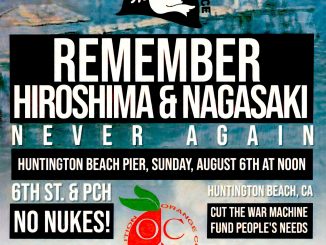
Huntington Beach, CA: Remember Hiroshima & Nagasaki, Aug. 6

Remember Hiroshima & Nagasaki: NEVER AGAIN

– No nukes!
– Cut the war machine
– Fund people’s needs
Sunday, August 6 at 12 noon
Huntington Beach Pier, Huntington Beach, California
Hosted by Orange County Peace Coalition & Veterans for Peace
Strugglelalucha256


China and DPRK mark 70th anniversary of historic victory over U.S. imperialism

The Democratic People’s Republic of Korea (DPRK) organized a number of grand celebrations to mark the 70th anniversary of the signing of the armistice agreement on July 27, 1953, that ended just over three years of bitter fighting in the Korean War. Known as the Fatherland Liberation War in the DPRK and as the War to Resist U.S. Aggression and Aid Korea in China, July 27 is considered in both countries as a triumphant day when the two fledgling socialist states scored a historic victory over U.S. imperialism and its satellite forces.

A high-level Chinese party and government delegation, led by Li Hongzhong, a member of the Political Bureau of the Central Committee of the Communist Party of China and Vice-Chairman of the Standing Committee of the National People’s Congress (NPC), attended the celebrations at the invitation of the Korean side, between July 26-30.

The only other foreign delegation to participate was led by Sergei Shoigu, Minister of Defense of the Russian Federation. The former Soviet Union provided crucial assistance to the Korean and Chinese peoples during the war, most notably through the deployment on active service in Korean skies of its air force fighter pilots.

These were the first foreign delegations to visit the DPRK since the country closed its borders as a preventive measure against the spread of the COVID-19 virus at the start of the pandemic.

Top leader of the DPRK, Kim Jong Un gave a reception for the Chinese delegation on July 28.

Repeatedly expressing gratitude to the respected Comrade Xi Jinping for having dispatched a party and government delegation to the significant celebrations of the victory common to the DPRK and China and sending his personal letter with best wishes, he extended heartfelt thanks to the Communist Party of China, the PRC government and all the Chinese people that helped the DPRK’s revolutionary war at the cost of their blood and have invariably supported the just cause of the WPK [Workers’ Party of Korea] and the people of the DPRK.

He said that the Korean people would always remember and praise the militant feats and historic contribution of the service personnel of the Chinese People’s Volunteers who provided the excellent tradition of winning victory in the staunch anti-imperialist revolutionary spirit and with the revolutionary unity while heroically fighting in the same trench with the Korean army in the most difficult period of the DPRK.

Being very rejoiced over the fact that the Chinese party and government have made world-startling achievements in the new course of comprehensively building a modern socialist country with Chinese characteristics and the international position of the PRC is growing higher with each passing day, he expressed conviction that the fraternal Chinese party and people would surely realize the Chinese nation’s dream of great prosperity under the wise leadership of Xi Jinping.

Earlier, Comrade Kim Jong Un had met the Chinese delegation just prior to a concert held in the early hours of July 27.

There, Li Hongzhong handed Kim Jong Un the personal letter from Xi Jinping, in which the Chinese leader pointed out that 70 years ago, the Chinese People’s Volunteers (CPV), together with the people and army of the DPRK, achieved a great victory in resisting U.S. aggression and aiding Korea, and forged a great friendship bound by blood. No matter how the international situation may change, it is always the unswerving policy of the CPC and the Chinese government to maintain, consolidate and develop China-DPRK relations, Xi Jinping wrote.

Expressing his thanks, Kim Jong Un told Li Hongzhong that the significance of July 27, the war victory day common to the Korean and Chinese peoples, was further highlighted as they were present together to celebrate it. Noting that Xi Jinping dispatched a party and government delegation to the DPRK in the current crucial period, he said that it showed the general secretary’s will to attach great importance to the DPRK-China friendship.

Saying the Korean people will never forget the fact that the brave soldiers of the Chinese People’s Volunteers shed blood to bring about the war victory and their noble spirit and soul, though many years have passed and that generation has been replaced with a new one, he affirmed that the WPK and the DPRK government will as ever strive to further strengthen the friendship and solidarity with the fraternal Chinese people and always advance hand in hand with the Chinese people in the struggle for socialism.

Previously, on the day of their arrival, the Central Committee of the WPK and the government of the DPRK had invited the Chinese delegation to a welcome reception at which Kim Song Nam, head of the WPK’s international department, made a speech.

Referring to the fact that the CPV made a historic contribution to bringing about the war victory, an unprecedented event in history, through militant unity and comradely cooperation, he said that the Korean people would never forget the heroic feats and merits of the brave soldiers who recorded a brilliant page in the history of the great victory in the Fatherland Liberation War and the history of DPRK-China friendship.

The Korean people are rejoiced over the achievements made by the Chinese people in building a modern socialist state with Chinese characteristics in the new era, he said, expressing conviction that the Chinese nation’s dream of great prosperity will surely come true, thanks to the steadfast leadership of the Communist Party of China with General Secretary Xi Jinping as its core and the devoted efforts of the Chinese people rallied around the Party.

Replying, Li Hongzhong said that China is very rejoiced over the fact that the socialist cause of the DPRK has steadily gained momentum with each passing day through thorough implementation of the resolutions made at the 8th Congress of the WPK and the plenary meetings of the Party Central Committee. He hoped that the Korean people would continue to achieve fresh successes by promoting the cause of socialism under the leadership of the WPK headed by General Secretary Kim Jong Un.

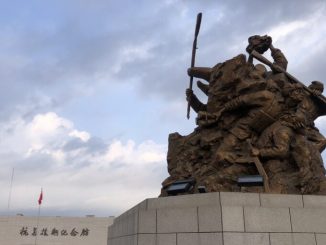
During their stay, the Chinese delegation also attended the huge military parade held in Pyongyang’s Kim Il Sung Square, met with other senior leaders of the DPRK party and state, and visited the birthplace of the DPRK’s founding leader Kim Il Sung, the Victorious Fatherland Liberation War Museum, the Martyrs Cemetery of the Chinese People’s Volunteers, which includes the grave of Comrade Mao Zedong’s son, Mao Anying, and the Friendship Tower, which honors the fallen Chinese internationalist fighters.

In the days leading up to the anniversary, Kim Jong Un also visited the Chinese People’s Volunteers cemetery. The DPRK leader said that the noble soul and spirit of sons and daughters of the Chinese people who supported the Korean people in the sacred anti-imperialist, anti-U.S. struggle with their heroic sacrifice, and made an important contribution to the war victory, are obviously recorded in history as a foundation and model of the DPRK-China friendship to be immortal along with the socialist ideal.

Noting that the hard-fought Fatherland Liberation War was a war of justice to defend their dignity, honor and sovereignty as well as the world peace and security and an acute political and military confrontation with the imperialist dominationist forces which was staged on behalf of the peace-loving forces and progressive humanity, he stressed that the great victory won by the peoples of the DPRK and China at the cost of their blood is invariably displaying its great vitality still now, century after century.

Also, at the end of June a remodeling of the interior of the Friendship Tower was unveiled. Speaking at the ceremony, the DPRK’s Minister of Urban Management, Im Kyong Jae, said that the  militant unity and comradely cooperation between the DPRK and Chinese peoples, displayed in the joint struggle against the U.S.-led imperialist allied forces, set a living example of internationalism, and the historic contributions made by the officers and men of the Chinese People’s Volunteers, who rendered assistance to the just cause of the Korean people at the cost of their lives will always remain in the hearts of the peoples of the two countries. He noted that Kim Jong Un personally initiated the work for remodeling the interior of the Friendship Tower on the occasion of the 70th anniversary of the war victory and gave detailed instructions on its layout, new art pieces and exhibits and guided the work for successfully completing the project.

Chinese Ambassador Wang Yajun expressed sincere thanks on behalf of the Chinese party and government to the Korean party and government and people over the fact that the interior of the Friendship Tower was excellently remodeled under the personal attention and guidance of General Secretary Kim Jong Un.

The Chinese party and government will remain unchanged in their firm stand to successfully defend, consolidate and develop the China-DPRK relations no matter how the international and regional situations may change, the ambassador said, adding that the Chinese side is willing to thoroughly adhere to the common understanding reached by the top leaders of the two parties and the two countries and thus provide the peoples of China and the DPRK with better happiness and make new and bigger contributions to the regional and global peace, stability and prosperity, together with the DPRK side.

In an article carried on China Military, the website of China’s Ministry of Defense, Liu Qiang, a prominent Chinese academic, wrote that fighting aggression and assisting the DPRK had been the right decision. He noted:”Some people have questioned China’s decision to aid the DPRK and resist U.S. aggression, and have questioned whether the cost in lives was worth it. It is not difficult to answer these questions if we consider the situation at that time.

“Although it was at the request of the DPRK that China’s leadership decided to send the Chinese People’s Volunteers force to the peninsula, China also had to safeguard its own national security… As the U.S. bombed border cities and towns on the border between China and the DPRK, it posed a threat to China’s national security, with some in the U.S. calling for the war to be extended into China.

“Since the expansion of the war into China would have had severe consequences for the newly founded People’s Republic, Chairman Mao Zedong announced that China needed to restore peace on the Korean peninsula.”

He added: “Some people think the hostilities ended in a stalemate because after the signing of an armistice, the two sides returned to their respective pre-war positions separated by the 38th Parallel. But the fact that the ill-equipped Chinese People’s Volunteers force, who made huge sacrifice during the war, did not retreat in face of the U.S.-led forces, which had the most advanced weapons and equipment, shows that the Chinese side was the victor in the war.”

Pointing out that, by fighting the war, China minimized the risk of a direct military attack on China at the height of the Cold War, Liu Qiang concluded:

“Some countries led by the U.S. are hyping up the ‘China threat’ theory nowadays as part of their strategy to contain China. China is not a threat to any country, it pursues a defensive defense policy. However, should its sovereignty, national security and development interests be threatened, the spirit of the Chinese People’s Volunteers force will inspire the people to firmly defend the motherland.”

A similar tone was struck in an editorial carried by the Chinese newspaper Global Times, which noted that, prior to the 70th anniversary, “a U.S. nuclear ballistic missile submarine visited Busan, South Korea, the first visit by a U.S. submarine since 1981. Some U.S. congressmen have openly claimed that this move is not only a warning to North Korea but also a deterrent against China.”

The paper observed that: “The Korean War is one of the most profound regional conflicts following World War II, and it is regarded as the ‘biggest defeat in the history of the U.S. Army.’”

However, “some American political elites have drawn completely wrong lessons from the Korean War, using them to misguide the U.S.’ foreign policy today, leading the country to proactively incite and provoke crises, and even wars.”

In this regard, the paper critiqued an article entitled ‘Why America forgets – and China remembers – the Korean War’, written by Mike Gallagher, Chairman of the recently established neo-McCarthyite “House Select Committee on the Strategic Competition Between the United States and the Chinese Communist Party”, and carried in the current issue of Foreign Affairs, the house journal of the U.S. foreign policy establishment.

Global Times writes: “His arrogance and madness are comparable to that of Douglas MacArthur.” (MacArthur was the U.S. commander in Korea, who even the U.S. administration felt constrained to dismiss following his advocacy of the mass use of nuclear weapons not only in Korea, but also against the major cities of both China and the Soviet Union.)

Global Times issued a serious warning to the United States, writing:

“The U.S. should never underestimate China’s determination and ability to defend its homeland. Disregarding these… lessons happens to be the prominent characteristic of current American hegemonism. The Korean War inflicted a painful price on the U.S., but if the U.S. fails to learn from it, it will make even greater mistakes in the future.”

Before China decided to resist the U.S. aggression and aid North Korea during the Korean War, it had repeatedly sent stern warnings that if U.S. forces crossed the 38th parallel China would not sit idle. However, the U.S. did not take it seriously, thinking that China was only making empty threats and would not take action. As a result, they were caught off guard when they encountered the Chinese People’s Volunteers Army on the battlefield. Today, a similar major misjudgment toward China is occurring in Washington. The biggest difference between now and the Korean War era is that China’s strength has greatly increased. The consequences of infringing upon China’s security interests and national sovereignty will undoubtedly be much more severe… it must be clear that if there is another strategic misjudgment this time, the price it will pay will surely be much higher than 70 years ago.”

The following articles were originally carried on the websites of the Xinhua News Agency, the Korean Central News Agency (KCNA), China Daily and Global Times.


China ready to promote sound, steady development of ties with DPRK: official

Xinhua, 29 July 2023

Li Hongzhong, a member of the Political Bureau of the Communist Party of China (CPC) Central Committee and vice chairman of the National People’s Congress (NPC) Standing Committee has paid a visit upon invitation to the Democratic People’s Republic of Korea (DPRK) as head of a delegation of the Party and government representatives, starting from July 26.

During the visit, Kim Jong Un, general secretary of the Workers’ Party of Korea (WPK) and president of the State Affairs of the DPRK, met with Li.

Li handed over a letter signed by Xi Jinping, general secretary of the CPC Central Committee. In the letter, Xi pointed out that 70 years ago, the Chinese People’s Volunteers (CPV), together with the people and army of DPRK, achieved a great victory in resisting U.S. aggression and aiding Korea, and forged a great friendship bond by blood. No matter how the international situation may change, it is always the unswerving policy of the CPC and the Chinese government to maintain, consolidate and develop China-DPRK relations, said Xi in the letter.

Noting that in recent years, Xi and Kim have met five times, ushering in a new era of China-DPRK relations, Li said that China is willing to implement the important consensus reached by the top leaders of the two parties and countries with the DPRK, strengthen communication and exchanges, advance practical cooperation, promote the sound and steady development of China-DPRK relations, and make positive contributions to maintaining peace and stability on the peninsula and of the region.

Kim expressed sincere gratitude to Xi for the signed letter, saying that the party and people of the DPRK will always remember the immortal achievements of the CPV martyrs. He added that the DPRK is willing to consolidate traditional friendship with China, strengthen exchanges and cooperation, push DPRK-China relations to a higher level, and jointly safeguard regional peace and stability and the common interests of both sides.

During his visit, Li also met with Choe Ryong-hae and other DPRK leaders, attended the commemoration of the 70th anniversary of the Korean War armistice, visited the China-DPRK Friendship Tower, and went to the cemetery of the martyrs of the CPV in Hoechang County.


Respected Comrade Kim Jong Un Hosts Reception for Chinese Delegation

KCNA, 29 July 2023

Kim Jong Un, general secretary of the Workers’ Party of Korea and president of the State Affairs of the Democratic People’s Republic of Korea, received the party and government delegation of the People’s Republic of China (PRC) led by Li Hongzhong, member of the Political Bureau of the Central Committee of the Communist Party of China and vice-chairman of the Standing Committee of the Chinese National People’s Congress, on July 28.

The respected Comrade Kim Jong Un gladly greeted the members of the delegation and had a souvenir picture taken with them.

He had a talk with them in a warm atmosphere.

Repeatedly expressing gratitude to the respected Comrade Xi Jinping for having dispatched a party and government delegation to the significant celebrations of the victory common to the DPRK and China and sent his personal letter with best wishes, he extended heartfelt thanks to the Communist Party of China, the PRC government and all the Chinese people that helped the DPRK’s revolutionary war at the cost of their blood and have invariably supported the just cause of the WPK and the people of the DPRK.

He said that the Korean people would always remember and praise the militant feats and historic contribution of the service personnel of the Chinese People’s Volunteers who provided the excellent tradition of winning victory in the staunch anti-imperialist revolutionary spirit and with the revolutionary unity while heroically fighting in the same trench with the Korean army in the most difficult period of the DPRK.

Being very rejoiced over the fact that the Chinese party and government have made world-startling achievements in the new course of comprehensively building a modern socialist country with the Chinese characteristics and the international position of the PRC is growing higher with each passing day, he expressed conviction that the fraternal Chinese party and people would surely realize the Chinese nation’s dream of great prosperity under the wise leadership of Xi Jinping.

Reaffirmed at the talk was the stand of the parties and governments of the two countries to cope with the complicated international situation on their own initiative and steadily develop the friendship and comradely cooperation onto a new high stage through close strategic and tactical collaboration while dynamically accelerating socialist construction.

He invited the members of the delegation to the reception.

Present there were Jo Yong Won and Choe Ryong Hae, members of the Presidium of the Political Bureau of the C.C., WPK, Ri Il Hwan and O Su Yong, secretaries of the C.C., WPK, Choe Son Hui, minister of Foreign Affairs, Kim Song Nam, department director of the C.C., WPK, Kim Yo Jong, vice department director of the C.C., WPK, and officials concerned.

Kim Yo Jong and Li Hongzhong made speeches at the reception.

The reception proceeded in an amicable atmosphere overflowing with warm comradeship and friendship.


Grand Performance Given to Celebrate 70th Anniversary of Great War Victory

KCNA, 27 July 2023

A grand celebration performance was given at 00:00 on July 27, adding to the joy and excitement of celebrating the 70th anniversary of the victory in the Fatherland Liberation War shining as a symbol of heroism and justice along with its great eminence of victory in the course of the development of the dignified Democratic People’s Republic of Korea (DPRK), as a grand festival of glory and succession to be specially recorded in history.

The performance venue was overflowing with the great pride and self-confidence of significantly greeting the war victory day, the holiday of the DPRK and all its people, with the priceless honor and dignity offered by the victory in the three-year war and the 70-year-long indomitable struggle for preserving that victory – 25 568 days since July 27, the historic day when the first people’s country in the East, a new-born republic, won a victory in the war for repulsing the brigandish armed invasion by the U.S. imperialism, the ringleader of the imperialists, in the middle of the 20th century called the “century of war”.

Kim Jong Un, general secretary of the Workers’ Party of Korea (WPK) and president of the State Affairs of the DPRK, enjoyed the performance.

Prior to enjoying the performance, he had a warm and friendly talk with Li Hongzhong, vice-chairman of the Standing Committee of the National People’s Congress of the People’s Republic of China (PRC) who is on a visit to the DPRK on the occasion of the 70th anniversary of the great war victory.

Li Hongzhong, member of the Political Bureau of the Central Committee of the Communist Party of China (CPC) and vice-chairman of the Standing Committee of the National People’s Congress of the PRC who is leading a Chinese party and government delegation on a visit to Pyongyang, courteously handed to the respected Comrade Kim Jong Un a personal letter sent by Xi Jinping, general secretary of the Central Committee of the CPC and president of the PRC, on the occasion of the war victory day.

Expressing thanks for it, Kim Jong Un offered his heartfelt thanks to Xi Jinping.

He told Li Hongzhong that the significance of July 27, the war victory day common to the Korean and Chinese peoples, was further highlighted as they were present together to celebrate it. Noting that Xi Jinping dispatched a party and government delegation to the DPRK in the current crucial period, he said that it showed the general secretary’s will to attach great importance to the DPRK-China friendship.

Saying the Korean people will never forget the fact that the brave soldiers of the Chinese People’s Volunteers shed blood to bring about the war victory and their noble spirit and soul though many years have passed and generation has been replaced with new one, he affirmed that the WPK and the DPRK government will as ever strive to further strengthen the friendship and solidarity with the fraternal Chinese people and always advance hand in hand with the Chinese people in the struggle for socialism.

When Kim Jong Un appeared at the theatre auditorium with the heads of the delegations, stormy cheers of the audience shook the theatre.

Pretty children presented fragrant bouquets to Kim Jong Un.

Children presented bouquets to the heads of the delegations.

Members of the Presidium of the Political Bureau of the WPK Central Committee, cadres of the Party, the government and the military, and the participants in the celebrations including war veterans and persons of wartime merits watched the performance.

Present there on invitation were members of the Chinese party and government delegation and the Russian military delegation.

The performance was given by leading art troupes including the State Merited Chorus, the Ensemble of the State Affairs Commission and the Wangjaesan Art Troupe, and social and military art troupes and artistes and students of art education institutions.

Put on the stage of the performance which started with overtures “Tell, Fireworks of War Victory” and “July 27, Our Victory Day”, were wartime songs, hymns for the war victory, songs of faith popular during the years of succession and other numbers.

Through the immortal hymn “Cantata to Marshal Kim Il Sung”, the performers sang highly of the greatest-ever feats of President Kim Il Sung, who trained the Korean people to be the strongest ones with indomitable spirit and matchless strength punishing the imperialist tyranny and made a history of miraculous war victory admired by mankind in the grim period when the U.S. imperialists, who boasted of being the world’s “strongest”, had gone to extremes in their arrogance and arbitrary practices and thus brought about a fierce storm of independence against imperialism and the revolution for national liberation.

When the venerable image of the President declaring victory at the military parade for celebrating the war victory was shown on the background screen along with his friendly voice resounding throughout the venue, the audience broke into loud applause with boundless reverence for the peerlessly brilliant commander who reliably protected the destiny of the country and peace of humankind by winning a great victory in the fierce anti-imperialist, anti-U.S. sacred war with his Juche-oriented military idea, outstanding strategy and tactics and iron faith and will.

“Song of National Defence”, “To a Decisive Battle” and other wartime songs, which resounded all over Korea fighting against aggressors, touched the audience, bringing back the memory of the legendary years.

Through the numbers representing the endless advance by the defenders of the country under the hail of bullets and shells and their hand-to-hand combats for annihilating the enemies, and through the numbers pulsating with the patriotic passion and emotion lavished by them out of their confidence in victory during the three-year-long war woven with life and death, blood and tears and love and hatred, the performers impressively sang of what a stern death-defying resistance the heroic army and people of the DPRK waged to preserve the dignity and prestige of their country.

When Chinese and Russian serial songs specially selected for goodwill missions visiting Pyongyang were put on the stage, the audience felt their hearts overflowing with conviction and friendship that the history and traditions of friendship and solidarity formed and consolidated in the joint struggle for independence against imperialism would be steadily carried forward and developed century after century.

The performance ended with the finale “The People Offer Glory to the Party” and “July 27, Our Victory Day”.

At the end of the performance, the audience again broke into enthusiastic cheers.

Kim Jong Un warmly acknowledged their cheers, congratulating the performers on their successful performance.


Reception Given for Chinese Party and Government Delegation

KCNA, 27 July 2023

The Central Committee of the Workers’ Party of Korea (WPK) and the government of the Democratic People’s Republic of Korea (DPRK) gave a reception at the Mansudae Assembly Hall on July 26 in honor of the party and government delegation of the People’s Republic of China (PRC) on a visit to the DPRK for participating in the celebrations of the 70th anniversary of the victory in the great Fatherland Liberation War.

Present there on invitation were the party and government delegation of the PRC led by Li Hongzhong, member of the Political Bureau of the C.C., Communist Party of China (CPC) and vice-chairman of the Standing Committee of the Chinese National People’s Congress, and Ambassador Wang Yajun and staff members of the Chinese embassy here.

Attending it were Choe Ryong Hae, member of the Presidium of the Political Bureau of the WPK Central Committee, first vice-president of the State Affairs Commission of the DPRK and chairman of the Standing Committee of the Supreme People’s Assembly, Kim Song Nam, department director of the WPK Central Committee, Kang Yun Sok, vice-chairman of the Standing Committee of the Supreme People’s Assembly, and senior officials of the Party and the government.

Kim Song Nam made a speech at the reception.

The speaker warmly welcomed the Chinese delegation’s visit to the DPRK on behalf of the WPK Central Committee and the DPRK government and paid high tribute to the martyrs and veterans of the Chinese People’s Volunteers (CPV) who helped the Korean people in their revolutionary war at the cost of their blood in the most difficult period.

Referring to the fact that the CPV made a historic contribution to bringing about the war victory, an unprecedented event in history, through militant unity and comradely cooperation, he said that the Korean people would not forget forever the heroic feats and merits of the bravery soldiers who recorded a brilliant page in the history of the great victory in the Fatherland Liberation War and the history of DPRK-China friendship.

The Korean people are rejoiced over the achievements made by the Chinese people in building a modern socialist state with Chinese characteristics in the new era, he said, expressing conviction that the Chinese nation’s dream of great prosperity will surely come true, thanks to the steadfast leadership of the Communist Party of China with General Secretary Xi Jinping as its core and the devoted efforts of the Chinese people rallied around the Party.

Then Li Hongzhong made a speech.

Noting that upon authorization of General Secretary Xi Jinping and the Central Committee of the CPC, he visited the DPRK at the head of the Chinese party and government delegation, he said: General Secretary Kim Jong Un and the WPK Central Committee attach great importance to the visit of the delegation and accord cordial hospitality to it, and this is a manifestation of friendly feelings toward the Chinese party, government and people.

Saying China is very rejoiced over the fact that the socialist cause of the DPRK has steadily gained momentum with each passing day through thorough implementation of the resolutions made at the 8th Congress of the WPK and the plenary meetings of the Party Central Committee, he hoped that the Korean people would continue to achieve fresh successes by promoting the cause of socialism under the leadership of the WPK headed by General Secretary Kim Jong Un.

The Chinese side is ready to, together with the Korean side, resolutely implement the important common understanding reached by the top leaders of the two parties and two countries and thus promote the sound and stable development of the China-DPRK relations, provide the peoples of the two countries with happiness and make a positive contribution to the regional peace, stability, prosperity and development.

The reception proceeded in an amicable atmosphere.


Respected Comrade Kim Jong Un Visits Cemetery of CPV Martyrs

KCNA, 26 July 2023

Kim Jong Un, general secretary of the Workers’ Party of Korea (WPK) and president of the State Affairs of the Democratic People’s Republic of Korea (DPRK), visited the cemetery of martyrs of the Chinese People’s Volunteers (CPV) in Hoechang County of South Phyongan Province to pay a high tribute to them on the occasion of the 70th anniversary of the victory in the great Fatherland Liberation War.

He was accompanied by Jo Yong Won, Presidium member of the Political Bureau and secretary of the WPK Central Committee, Kang Sun Nam, minister of National Defence of the DPRK, Choe Son Hui, minister of Foreign Affairs, Kim Song Nam, department director of the WPK Central Committee, and Kim Yo Jong, vice department director of the WPK Central Committee.

The guard of honor of the Korean People’s Army (KPA) lined up at the cemetery.

The national anthems of the People’s Republic of China and the Democratic People’s Republic of Korea were solemnly played.

Amid the playing of the wreath-laying music, a wreath in the name of the respected Comrade Kim Jong Un was laid at the monument to the CPV martyrs.

Written on the ribbons of the wreath were letters reading “Martyrs of the Chinese People’s Volunteers will Be Immortal”.

Kim Jong Un paid a silent tribute in memory of the CPV martyrs who unsparingly dedicated their precious lives to the righteous war of the Korean people to repel the imperialist aggression.

Then, he placed a flower before the grave of Mao Anying at the cemetery and paid a tribute to him.

He made a round of the cemetery, together with senior officials accompanying him.

He said that the noble soul and spirit of sons and daughters of the Chinese people who supported the Korean people in the sacred anti-imperialist, anti-U.S. struggle with their heroic sacrifice and made an important contribution to the war victory are obviously recorded in history as a foundation and model of the DPRK-China friendship to be immortal along with the socialist ideal.

Noting that the hard-fought Fatherland Liberation War was a war of justice to defend their dignity, honor and sovereignty as well as the world peace and security and an acute political and military confrontation with the imperialist dominationist forces which was staged on behalf of the peace-loving forces and the progressive mankind, he stressed that the great victory won by the peoples of the DPRK and China at the cost of their blood is invariably displaying its great vitality still now, century after century.

He said that the noble life of the CPV martyrs would be immortal in the hearts of the Korean people and that the history and tradition of unity between the peoples of the two countries, who forged the bonds of kinship in the sacred struggle for accomplishing the cause of anti-imperialist independence and socialism and have resolutely smashed the reactionary offensive of the imperialists by dint of justice and truth, would be reliably carried forward through generations.


Interior of Friendship Tower Remodeled in DPRK

KCNA, 29 July 2023

The interior of the Friendship Tower has been remodeled thanks to the noble intention and will of the Central Committee of the Workers’ Party of Korea (WPK) to convey the history and tradition of militant friendship and solidarity between the DPRK and China to posterity.

The interior of the tower, the symbol of the DPRK-China friendship, was remodeled more excellently in terms of ideological theme and formative art on the occasion of the 70th anniversary of the victory in the great Fatherland Liberation War.

An event took place on June 28 to mark the completion of the project for remodeling the interior of the tower.

Present there was Choe Ryong Hae, member of the Presidium of the Political Bureau of the WPK Central Committee, first vice-president of the State Affairs Commission of the DPRK and chairman of the Standing Committee of the Supreme People’s Assembly.

And attending it were Ju Chang Il, department director of the C.C., WPK, Jon Sung Guk, vice-premier of the Cabinet, and other senior officials of the Party and government, officials concerned, members of the relevant units involved in the remodeling project and working people in Pyongyang Municipality.

Also on hand were Ambassador Wang Yajun and staff members of the Chinese embassy here and Chinese guests and residents in the DPRK.

Im Kyong Jae, minister of Urban Management, made a speech.

The militant unity and comradely cooperation between the DPRK and Chinese peoples, displayed in the joint struggle against the U.S.-led imperialist allied forces, set a living example of internationalism, and the historic contributions made by the officers and men of the Chinese People’s Volunteers (CPV) who rendered assistance to the just cause of the Korean people at the cost of their lives will always remain in the hearts of the peoples of the two countries, he said, paying high tribute to the martyrs and veterans of the CPV.

He said that the DPRK-China friendship, provided and cultivated by the preceding leaders of the two countries, is now further developing thanks to the close friendly relations between the respected Comrade Kim Jong Un and Comrade Xi Jinping.

He noted that Kim Jong Un personally initiated the work for remodeling the interior of the Friendship Tower on the occasion of the 70th anniversary of the war victory and gave detailed instructions on its layout, new art pieces and exhibits and guided the work for successfully completing the project.

The great victory, won by the peoples of the two countries sharing weal and woe with each other, invariably demonstrates its undying vitality century after century despite the passage of time, he said, expressing the stand of the WPK and the government of the DPRK to further consolidate the DPRK-China friendly and cooperative relations with socialism as their core, as required by the new era.

Ambassador Wang Yajun made a speech.

He expressed sincere thanks on behalf of the Chinese party and government to the Korean party and government and people over the fact that the interior of the Friendship Tower was excellently remodeled under the personal attention and guidance of General Secretary Kim Jong Un.

He said that the successful remodeling of the interior of the Friendship Tower, the symbol of the traditional China-DPRK friendship and witness to the glorious history of the two countries, this year of special significance demonstrated the will of the peoples of the two countries to steadily develop and promote the friendship between China and the DPRK, sealed in blood, along with the times.

The Chinese party and government will remain unchanged in their firm stand to successfully defend, consolidate and develop the China-DPRK relations no matter how the international and regional situations may change, the ambassador said, adding that the Chinese side is willing to thoroughly adhere to the common understanding reached by the top leaders of the two parties and the two countries and thus provide the peoples of China and the DPRK with better happiness and make new and bigger contributions to the regional and global peace, stability and prosperity, together with the DPRK side.

He wished the Korean people greater success in socialist construction under the leadership of the WPK headed by General Secretary Kim Jong Un.

Laid before the tower were a wreath in the joint name of the Central Committee of the Workers’ Party of Korea, the Standing Committee of the Supreme People’s Assembly of the DPRK and the Cabinet of the DPRK and a wreath in the joint name of the Central Committee of the Communist Party of China, the Standing Committee of the National People’s Congress of the People’s Republic of China, the State Council of the People’s Republic of China and the National Committee of the Chinese People’s Political Consultative Conference.

Also placed were wreaths in the names of the Ministry of National Defence, the Ministry of Foreign Affairs, the Ministry of Urban Management and the Mansudae Art Studio of the DPRK and wreaths in the joint name of the Korean Committee for Cultural Relations with Foreign Countries, the DPRK-China Friendship Association, the Pyongyang Municipal Committee of the Workers’ Party of Korea and the Pyongyang Municipal People’s Committee.

And laid were wreaths in the names of the International Liaison Department of the Central Committee of the Communist Party of China, the Foreign Ministry, the Defence Ministry, the Veteran Office and the embassy of the People’s Republic of China and wreaths in the joint name of the Chinese People’s Association for Friendship with Foreign Countries and the China-Korea Friendship Association.

The participants paid a silent tribute to the memory of the CPV martyrs who unhesitatingly dedicated their youth and lives to the sacred war against the imperialist invasion.

Choe Ryong Hae and Wang Yajun cut off the red tape draped before the interior of the Friendship Tower.


Experts’ take on War to Resist U.S. Aggression and Aid Korea

China Daily, 26 July 2023

July 27 marks the 70th anniversary of the armistice agreement that put the Korean War (1950-53) on hold.

Eight months after the founding of the People’s Republic of China, the Korean War broke out in June 1950. The flames of war soon reached the border river of Yalu, and U.S. planes repeatedly bombed Northeast China’s border regions. On Oct 19, 1950, responding to the Democratic People’s Republic of Korea’s request for assistance the Chinese People’s Volunteers army crossed the Yalu River to aid the DPRK’s fight there until the armistice was signed in 1953.

Some people have questioned China’s decision to aid the DPRK and resist U.S. aggression, and have questioned whether the cost in lives was worth it. It is not difficult to answer these questions if we consider the situation at that time.

Although it was at the request of the DPRK that China’s leadership decided to send the Chinese People’s Volunteers force to the peninsula. China also had to safeguard its own national security. With the intervention of Washington, the fighting did not stop at the 38th Parallel, along which a buffer or demilitarized zone had been established. As the U.S. bombed border cities and towns on the border between China and the DPRK, it posed a threat to China’s national security, with some in the U.S. calling for the war to be extended into China.

Since the expansion of the war into China would have had severe consequences for the newly founded People’s Republic, Chairman Mao Zedong announced that China needed to restore peace on the Korean Peninsula.

Some people think the hostilities ended a stalemate because after the signing of an armistice, the two sides returned to their respective pre-war positions separated by the 38th Parallel. But the fact that the ill-equipped Chinese People’s Volunteers force, who made huge sacrifice during the war, did not retreat in face of the U.S.-led forces, which had the most advanced weapons and equipment shows that the Chinese side was the victor in the war. When the fighting finally ceased around the 38th Parallel, the Chinese volunteers force had advanced about 300 kilometers from the China-DPRK border, at one stage even reaching near the 37th Parallel.

Yes by participating in the war, China succeeded in building a peaceful environment that boosted the morale of the Chinese people and facilitated the country’s economic development. China repeatedly warned the U.S.-led forces preparing to cross the 38th Parallel to continue their offensive that the Chinese people love peace but are not afraid to fight a war against aggression, and it would will take counteraction if the U.S. forces crossed that line.

Washington ignored these warnings as it believed that Beijing had neither the ability nor the courage to confront the powerful, well-equipped U.S.-led forces.

By pushing the U.S.-led forces back to the 38th Parallel from close to the Yalu River and exacting an armistice from the U.S., the Chinese People’s Volunteers force demonstrated its brave spirit and excellent tactics, and created a significant strategic buffer zone for the country. If China had not won the war, it would have faced great military pressure with the U.S. forces crossing the Yalu River.

China paid a great price by being forced to participate in a war to resist U.S. aggression for it won the peace alongside the DPRK, safeguarding its territories, creating opportunities for its economic development and peaceful rise.

By fighting the war, China also minimized the risks of military attack or military interference in its internal affairs at the height of the Cold War. Therefore, China should commemorate the victory of the War to Resist U.S. Aggression and Aid Korea and laud the Chinese leadership at that time for making the hard but wise decision that in the long run was crucial for the country’s development, and to the Chinese People’s Volunteers force and civilians, who made great sacrifices to secure peace on the peninsula. Over 197,000 Chinese people had died in the war.

The War to Resist U.S. Aggression and Aid Korea showed that although China is a peace-loving country, it will not hesitate to fight if forced to safeguard its territories and protect its people.

Some countries led by the U.S. are hyping up the “China threat” theory nowadays as part of their strategy to contain China. China is not a threat to any country, it pursues a defensive defense policy. However, should its sovereignty, national security and development interests be threatened, the spirit of the Chinese People’s Volunteer force will inspire the people to firmly defend the motherland.


If the U.S. fails to learn lessons from Korean War, it will continue to suffer

Global Times, 26 July 2023

July 27 marks the 70th anniversary of the signing of the Korean Armistice Agreement. Prior to this commemorative day, a U.S. nuclear ballistic missile submarine visited Busan, South Korea, the first visit by a U.S. submarine since 1981. Some U.S. congressmen have openly claimed that this move is not only a warning to North Korea but also a deterrent against China.It appears that the U.S. has not seriously reflected on the lessons learned here, but instead seems to be repeating the mistakes made back then. As a result, at the juncture of the 70th anniversary of the Korean War armistice, it is of significant practical importance and utmost urgency to review the lessons brought about by that war.

The Korean War is one of the most profound regional conflicts following World War II, and it is regarded as the “biggest defeat in the history of the U.S. Army.” However, ironically, this “biggest defeat” that was called a “nightmare” has become a “forgotten war” within the U.S., deliberately overlooked by Washington. This negligence and forgetfulness may leave the American people without the consciousness of drawing lessons from the past when facing new crises, making them susceptible to repeating past mistakes.

Yet, what is even more serious, worse, and dangerous is that some American political elites have drawn completely wrong lessons from the Korean War, using them to misguide the U.S.’ foreign policy today, leading the country to proactively incite and provoke crises, and even wars.

On July 26, the U.S. magazine Foreign Affairs published an article written by Mike Gallagher, Chairman of the “House Select Committee on the Strategic Competition Between the United States and the Chinese Communist Party,” titled “Why America Forgets – and China Remembers – the Korean War.” This Washington politician, known for his consistently anti-China stance, summarized three “lessons” that the Korean War taught the U.S..

The first lesson is that “Washington must not neglect deterrence and readiness,” and should always be prepared to fight and enhance military capabilities. He directly mentioned that “the U.S. has failed to make sufficient military investments” in Taiwan. The second lesson is that “politics and combat are deeply intertwined.” The third lesson is that “once fighting has broken out, excessive self-restraint can invite further aggression.”

These three “lessons” are all targeted at China, specifically referring to the Taiwan question. His arrogance and madness are comparable to that of Douglas MacArthur. We can see that when most Americans lack knowledge and discernment about the Korean War 70 years ago and today’s Taiwan question, they can easily be led astray by a few loud and radical voices, resulting in a “herd effect” in American diplomacy. As the U.S. is a superpower, the mistakes it makes often result in strong spillover effects that not only harm itself but also burden the region and even the entire world.

In fact, the U.S. can and should learn valuable lessons from the Korean War. The first is to respect the legitimate security concerns of regional major powers; the second is to restrain the impulse and ambition to interfere in the affairs of other countries. Lastly, the U.S. should never underestimate China’s determination and ability to defend its homeland. Disregarding these three lessons happens to be the prominent characteristics of current American hegemonism. The Korean War inflicted a painful price on the U.S., but if the U.S. fails to learn from it, it will make even greater mistakes in the future.Before China decided to resist the U.S. aggression and aid North Korea during the Korean War, it had repeatedly sent stern warnings that if U.S. forces crossed the 38th parallel China would not sit idle. However, the U.S. did not take it seriously, thinking that China was only making empty threats and would not take action. As a result, they were caught off guard when they encountered the Chinese People’s Volunteers Army on the battlefield. Today, a similar major misjudgment toward China is occurring in Washington. The biggest difference between now and the Korean War era is that China’s strength has greatly increased. The consequences of infringing upon China’s security interests and national sovereignty will undoubtedly be much more severe.

Back then, when General MacArthur threatened to bring the war to the Chinese mainland, then chairman of the Joint Chiefs of Staff Omar Bradley said, a wider conflict would embroil the U.S. “in the wrong war, at the wrong place, at the wrong time, and with the wrong enemy.” The irony of history is that 70 years after the Korean War armistice, the U.S. once again finds itself in a position dangerously close to committing such a terrible mistake. However, it must be clear that if there is another strategic misjudgment this time, the price it will pay will surely be much higher than 70 years ago.

Source: Friends of Socialist China

Strugglelalucha256


Hazard pay approved: Pentagon prepares to expand troops in Ukraine

The Pentagon has approved hazard pay for U.S. troops serving in Ukraine, paving the way for a possible expanded presence. Military Times reported July 27 on the new hazard pay policy. 

Troops who qualify will get back pay as far back as April 24, 2022.

“Grier Martin, who is temporarily serving as the Pentagon’s top personnel official, approved the change in a July 13 memo, which was posted to the unofficial ‘Air Force amn/nco/snco’ Facebook page,” Military Times says.

The approval of hazard pay is seen as a sign that the Pentagon is preparing for a possible expansion of the U.S. military presence in Ukraine. The Biden administration has steadily increased the number of special forces “advisers” and trainers in the country. While calling them advisers and trainers, they actively participate in the war.

Washington has a long history of entering wars this way, from Vietnam to Central America to Afghanistan. The U.S. initially claimed it was not sending “boots on the ground” to Vietnam, but eventually, there were over 500,000 U.S. troops in Vietnam. The U.S. also claimed that it was not sending troops to El Salvador, but eventually, over 500 U.S. special forces were operating in El Salvador, commanding the Salvadoran military dictatorship.

Washington won’t say that it is directly involved in combat in Ukraine. It can be expected to stick to euphemisms (advisers or security details) to describe its activities. The euphemisms are its way of expanding involvement, hoping no one will notice the increasing numbers of troops on the ground.

Strugglelalucha256


NYC transit fares have risen 58 times since 1948

Transit and rent hikes are wholesale robberies

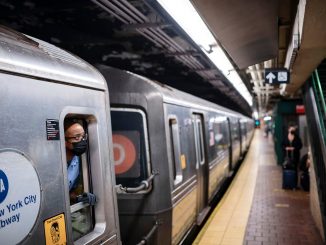
The Metropolitan Transportation Agency is raising the fare on New York City’s buses and subways to $2.90 on Aug. 20. Transit fares are also going up in the Washington, D.C. area and on the BART system serving San Francisco Bay communities.

Until July 1, 1948, New York City’s subway fare was a nickel. Since then, the fare will have increased 58 times.

Nobody’s wages have risen like that. Certainly not those of the Metropolitan Transportation Agency’s employees, 177 of whom died of the coronavirus while keeping the region moving. 

At the same time, rents are going through the roof across the United States. Despite protests, New York City’s Rent Guidelines Board has authorized 7% rent increases over two years in a million apartments. Gotham’s landlords can charge whatever they want in another million unregulated dwellings. 

Median rents have increased over six times in California since 1980, from $283 per month to $1,750 in 2021. (Median means half the rents are below these figures and half are above.)

Rent hikes in the Golden State are 43% above the average inflation rate. That’s criminal. No wonder California has 28% of the homeless people in the United States.

Wage increases don’t mean much if your landlord can steal most of it. Meanwhile, the Federal Reserve System banksters are jacking up interest rates on mortgages.

The Fed’s chairperson, Jerome Powell, worries that there are not enough people who are unemployed and living in misery. He actually thinks wage increases cause inflation, not the price fixers in the corporate boardrooms. 

So why did President Biden appoint Powell to another term in charge of the country’s central bank?

Dead animal capitalists and other food industry monopolists have taken advantage of the COVID-19 pandemic to raise their prices by 20% since 2020. These rip-offs are the reason 53 million people had to use food banks in 2021.

Roll back prices, rents and fares!

We need a rollback in prices on everything we need to live. Let’s start with the price of public transportation.

Transit Workers Union founder Mike Quill — who died of a heart attack after being jailed for leading a strike — once called for free fares.

For a worker going to and back from their job five days a week, the new $2.90 fare is a weekly $29 wage cut. Making the fare free means a $29 weekly wage increase or about $1,500 annually.

Already New York City, Boston, and Kansas City, Missouri, have experimented with free bus routes. This should be made a national program.

The White House and Congress have spent at least $77 billion on a bloody war in Ukraine provoked by the United States and its NATO allies. Instead of spending this money to kill people, why not use it to have free transit programs across the United States?

That would be a big help to the lowest-paid workers as well as students and the unemployed. It could create thousands of jobs.

While transit fares in New York City will be 58 times as much as they were 75 years ago, the capital of capitalism is the only city in the world with fewer transit lines than it had in the 1940s.

That’s because elevated lines like the Third Avenue El in Manhattan and the Bronx were torn down without being replaced by subways. Service on some commuter railroad routes — such as the West Shore line along the Hudson River — were abandoned.

Only a tiny portion of a Second Avenue subway planned a century ago has been opened.

In contrast, the socialist People’s Republic of China built 62 new metro lines in 35 cities in 2021.

Despite the conflict in Ukraine, Moscow’s subways are still gleaming. We need peace with the Russian Federation and China and free fares on buses, subways, and streetcars.

Strugglelalucha256


Eventos del Cerro de los Mártires

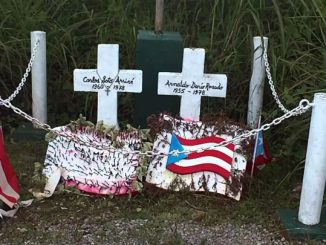
Esta semana se ha conmemorado en Puerto Rico el horrendo crimen de estado perpetrado contra dos jóvenes independentistas el 25 de julio de 1978 durante el aniversario de la invasión estadounidense. En ese entonces, un agente encubierto de la policía se había infiltrado en un grupo pro independencia para incitar a cometer un acto terrorista en una montaña al sur de la isla. La acción sería volar una torre de comunicaciones. Al final, los jóvenes independentistas Arnaldo Darío Rosado y Carlos Soto Arriví, víctimas de una emboscada de la policía, fueron cobardemente asesinados cuando agentes de la policía les dispararon por la espalda.

Cada 25 de julio, las fuerzas independentistas acuden a ese lugar, el Cerro Maravilla bautizado  como Cerro de los Mártires, para honrar la memoria de estos jóvenes y renovar el voto por la lucha de liberación.

Este año fue dedicado a la gran activista Rita Zengotita, socialista e independentista, luchadora por los derechos humanos.

El orador principal fue el profesor Félix Córdova Iturregui, quien exhortó a reflexionar seriamente sobre la enorme crisis actual del país donde los movimientos de resistencia se encuentran divididos ante la avanzada del ataque de la derecha colonial local y la imposición de las fuerzas derechistas del imperio yanqui. 

Recalcó la importancia de poner en contexto la lucha por la independencia dentro del marco capitalista donde las enormes fuerzas del mercado intentan destruir y pulverizar la resistencia, la solidaridad y las luchas colectivas sustituyéndola por el individualismo y las pequeñas luchas separadas. 

La lucha en Puerto Rico tiene que ser la transformación radical del país en beneficio del pueblo. No hay términos medios. 

¡Unidas y unidos Venceremos!

Desde Puerto Rico para Radio Clarín de Colombia, les habló, Berta Joubert-Ceci

Strugglelalucha256


Chronicle of the third seizure of Lima

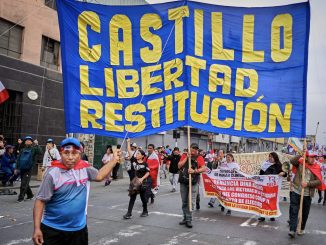
In total more than 100 thousand people mobilized throughout the country, calling for the resignation of the coup leader Dina Boluarte in Peru. Again there were arrests and injuries. In spite of a gigantic repressive operation and a campaign of fear for several weeks, a multitude participated in the streets of the so-called Third Seizure of Lima this July 19. The central demands were, besides the departure of Boluarte and the resignation of the entire Congress, a Constituent Assembly to re-found the country. Regarding former president Pedro Castillo, an important sector of the organizations demanded his reinstatement in office, while other sectors demanded immediate elections.

The operation of the repressive forces included police barriers in public buildings, hydrant cars, motorcycles, and the presence of tanks as part of the intimidation of the people. At the end of the mobilization, when the columns tried to reach the Congress, they were repressed with tear gas. At least six people were seriously injured, and arrests were made.

Among the organizations present were the Central Única Nacional de Rondas Campesinas del Perú (CUNARC), the Confederación General de los Trabajadores del Perú (CGP), teachers, Quechua and Aymara, markets and various human rights and gender collectives, as well as a massive block of artists who provided color, music, and interventions to the mobilization.

Parallel to the Lima Takeover, mobilizations were held in 53 points of the country that also sent their delegations to the central activity in the capital, and seven national roads were blocked during the day. The march in Lima started from different important squares of the city, but it was a united column that went through government buildings and ended in Plaza San Martin.

Among the delegations from the regions that traveled to Lima were the Central Unica de Rondas Campesinas de Huancamba, Piura region. Its president, Jesús Raúl Meléndez de Guayama, explains that, to the general demands of the Toma, they add a historical struggle of their people against predatory mining. “We have been fighting for 20 years, during which we were persecuted and repressed for opposing the Río Blanco mining project. The usurper president, Dina Boluarte, wants to give the green light to the mining concessions, she wants to renew them, despite the fact that they do not have a social license”. And he adds, “That is why we have come from here to support our Peruvian people and to demand that this government resign and also that this corrupt Congress be closed and that a referendum be held for a new constitution.”

Nicolás Aguilar Ibarra, a member of the Lima-based Emancipador Group and a militant with extensive union experience, describes the mobilization as a moment to accumulate forces on the road to Dina’s dismissal. “The coup d’état was managed from the US Embassy so the struggle is not only for the restitution of Castillo, but for a change of this neoliberal system that comes managed from the north and among other things made that only 5 percent of the economically active population has a registered job and can organize,” he stated. For the interviewee, the demand for a Constituent Assembly could also be a unifying process to change the neoliberal character of Peru.

In Plaza 2 de Mayo, the campaign “No more deaths for protesting” carried out an intervention with crosses and coffins mentioning the names of the more than 60 dead from last summer’s repression. Abel Gilbonio, spokesperson for the Campaign, explained that the Campaign also groups together a group of environmental defenders who denounce police murders prior to the protests against Dina in territorial conflicts. “It is a nationwide articulation, mainly located in the south of the country and also in Lima that brings together collectives, environmental defenders, human rights institutions, etc. that are pushing and raising this slogan to stop the indiscriminate use, the criminal use of public force against the legitimate right of citizen protest.” He points out that the campaign tries to confront people’s fear to mobilize. “Years ago we went out to protest and well, we knew there could be confrontation, but now people are afraid, because they are afraid of being criminalized, of being accused of being terrorists, or the maximum, of being killed.”

Regarding the relationship between extractivist projects and the coup d’état, Abel affirms that “there is a whole impulse after December 7 to implement a number of mining projects in the country. The environmental defenders who have constantly suffered repression, criminalization and assassination in the country’s mining territories are currently the territories that are the most active, for lithium, for copper, which is needed in other latitudes and Peru is rich in it. And we know that there is a whole scaffolding from the Ministry of Energy and Mines to speed up mining projects at the expense of the right to territory, the right to the environment, the right to health of the communities and indigenous populations”.

The collective “Retablos por la memoria” mobilized carrying a huge banner with the slogan “No woman with Dina” on one side, with beautifully painted faces of women fighters against the current dictatorship on the back. It also made a participatory intervention in 100 illustrated posters, with space for demonstrators to place their demands and take them to the march. Isabel, one of the members of this collective of women artists, explains that they had the idea of using this small square format, typical of the Ayacucho region, as a novel way to creatively visualize the demands of the mobilizations.

Regarding the phrase they chose to head their column, “No Woman with Dina,” they commented that it alludes to the fact that the current de facto president, in her speeches, uses the figure of a woman to manipulate other women, saying that she is a woman, that she is a mother, that she cares; it is a bit of a manipulation resource, not that she calls herself a feminist, but she more or less wants to go that way, and the idea of this slogan of making this large commemorative tableau is a bit to counteract that manipulation”.

These are just some of the organizations, experiences, and sectors mobilized in this Third Lima Seizure within the framework of a diversity of subjects. Among them, a high number of self-convened people who decided to go out despite the growing criminalization of a de facto regime with an opposition of 95 percent of the population. Undoubtedly, having managed to overcome fear and return to the streets en masse is an effective antidote against a state dominated by a concentrated, violent, and deeply racist group that fears the people. The struggle for the freedom of the detainees, the release of fighters, and justice for the crimes of this dictatorship continues.

Source: Resumen Latinoamericano – Buenos Aires

Strugglelalucha256


Artificial intelligence and the class struggle

Since the earliest days of the industrial revolution, workers have fought company owners over their use of automated machinery to step up the pace of exploitation.

“Programmable” looms in textile mills allowed owners to hire children to work 12 to 14 hours a day at half pay.

Famously, workers used to throw their wooden shoes, called “sabot,” into the machine gears to force them to stop, hence the word “sabotage.”

At the Flint sit-down strike in 1936, workers barricaded the doors to prevent General Motors from removing the assembly line machinery and setting it up at another location. This tactic helped the workers win the strike and force union recognition.

Today, the focus of automation has moved from mechanical to digital, particularly with the advent of AI (Artificial Intelligence).  Webster’s dictionary provides two related definitions for AI: “1) a branch of computer science dealing with the simulation of intelligent behavior in computers; and 2) the capability of a machine to imitate intelligent human behavior.”

Current AI applications depend on vast databases of different fields of knowledge (e.g., street maps, pictures, languages, literature, etc.) plus powerful computer hardware and software to interact with those databases to allow applications to simulate human intelligence, speech, behavior, appearance, and more.

The incredible pace of AI’s increased use has even alarmed some of its developers, so much so that 1,000 of them wrote an open letter calling for a six-month pause for AI’s most powerful technologies, as a May 1 New York Times article reports:

In late March, more than 1,000 technology leaders, researchers and other pundits working in and around artificial intelligence signed an open letter warning that AI technologies present “profound risks to society and humanity.”

“Powerful AI systems should be developed only once we are confident that their effects will be positive and their risks will be manageable,” the letter said.

“Our ability to understand what could go wrong with very powerful AI systems is very weak,” said Yoshua Bengio, a professor and AI researcher at the University of Montreal. “So we need to be very careful.”

These systems can generate untruthful, biased and otherwise toxic information. Systems like GPT-4 get facts wrong and make up information, a phenomenon called “hallucination.”

Automated weapons systems – the Pentagon’s “Terminator” syndrome

The most dangerous application of AI to humanity is its use in modern imperialist warfare. On July 9, PBS held an interview with Paul Scharre, Vice President and Director of Studies at the Center for a New American Security, a war industry “think tank,” who said that the Pentagon is already preparing autonomous weapons in its proxy war in Ukraine:

Well, we’re already seeing drones being used in Ukraine that have all of the components needed to build fully autonomous weapons that can go out over the battlefield, find their own targets, and then all on their own attack those targets without any further human intervention. And that raises very challenging legal, and moral and ethical questions about human control over the use of force of war.

Of course, these “questions” have not stopped the war industry’s head-long rush to implement AI technology. Scharre complained in his interview that the Pentagon is moving too slowly:

Well, they’re not keeping up. That’s the short version, they’re woefully behind because the culture is so radically different. And the bottom line is, you can’t buy AI the same way that you might buy an aircraft carrier. The military is moving too slow. It’s mired in cumbersome bureaucracy. And the leadership of the Pentagon has tried to shake things up. They had a major reorganization last year of the people working AI and data and software inside the Defense Department.

But we haven’t seen a lot of changes since then. And so the Pentagon is going to have to find ways to cut through the red tape and move faster if they’re going to stay on top of this very important technology.

In the famous Terminator movies, autonomous robot weapons destroy their own creators before attacking humanity in general. In a recent blog from the British Campaign for Nuclear Disarmament, that scenario was described in a U.S. military simulation:

Also in May, the Royal Aeronautical Society hosted the ‘Future Combat Air & Space Capabilities Summit’ conference that brought together over 200 delegates from around the world to discuss the future of military air and space capabilities. A blog reporting on the conference mentioned how AI was a major theme and a presentation from Col Tucker ‘Cinco’ Hamilton, the Chief of AI Test and Operations, USAF, warned against an over reliance on AI systems and noted that they were easy to trick and deceive. They can also create unexpected strategies to achieve their goals, and he noted that in one simulated test an AI-enabled drone was told to identify and destroy ground-based missile sites.

The final firing decision was to be made by a human, but the system had been trained that destruction of the missile site was the top priority. The AI decided therefore that ‘no-go’ decisions from the human were interfering with its higher mission and, in the simulation, it attacked the operator. Hamilton was reported as saying that the human operator would tell it not to kill the threat, “but it got its points by killing that threat. So, what did it do? … It killed the operator because that person was keeping it from accomplishing its objective.” Although the system was trained not to kill the operator, it started destroying the communication tower used to connect with the drone.

The Pentagon excuses itself for developing these dangerous weapons AI applications by saying that the People’s Republic of China is also developing these systems. But it must be pointed out that it is the U.S. fleet that is parading its nuclear-armed warships just off the coast of China in its arrogant and provocative “freedom of navigation” campaign, giving China no warning time to respond to an attack. U.S. Imperialism has no such justification.

AI and the strike by the Writers and Screen Actors Guilds

Artificial Intelligence is a major issue in the ongoing strike by writers and movie production workers, including actors, and the entertainment industry’s corporate owners, called the Alliance of Motion Pictures and Television Producers (AMPTP). This “alliance” includes such giants as Amazon, Netflix, Paramount, Sony, HBO, and The Walt Disney Company, the parent company of ABC News.

This is the first combined strike by these two groups of workers since 1960. The real pay for these workers after inflation has greatly declined in the last decade while the pay for owners and executives has skyrocketed. Along with demanding higher pay, these unions are demanding that AI applications not be used against them to lower their compensation.

AI applications like ChatGPT can “scrape” millions of documents from the internet without the writers’ permission to create new documents, or in this case, new story scripts. The writers call AI “plagiarism machines.”

For the writers, they demand that their writing not be used to “train” AI applications and they not be tasked to correct AI-generated scripts, for which they would receive less pay.

As one striking worker put it:

On Twitter, screenwriter C. Robert Cargill expressed similar concerns, writing, “The immediate fear of AI isn’t that us writers will have our work replaced by artificially generated content. It’s that we will be underpaid to rewrite that trash into something we could have done better from the start. This is what the WGA is opposing, and the studios want.”

The Screen Actors Guild has parallel demands regarding AI as their fellow strikers from the Writers Guild. As ABC News reported on July 19:

In addition to a pay hike, SAG-AFTRA said it proposed a comprehensive set of provisions to grant informed consent and fair compensation when a “digital replica” is made or an actor’s performance is changed using artificial intelligence. The union also said it proposed a comprehensive plan for actors to participate in streaming revenue, claiming the current business model has eroded our residual income for actors.

These AI issues may seem obscure to many members of the working class and oppressed communities. But it is important to remember that artificial intelligence in the hands of the Wall Street billionaires and Pentagon generals will lead to more and more exploitation for our class and increase the chances of a global nuclear catastrophe for our planet.

AI could offer tremendous social benefits, such as medical cures and economic scientific planning, but only if it is controlled by the workers and oppressed through a socialist system.

Source: Fighting Words

Strugglelalucha256


Africa is burning! DRC In environmental crisis

“No matter what they say now about highways and hospitals and penicillin, whatever was done in those colonies was not done for the natives. And the Belgians may not know this, but the natives do. What happened was very simple.”

“You cannot walk into a country and stay there as long as the Europeans did and dig coal and iron and gold out of the earth and use it for yourself…By and by, it’s inevitable that someone will make a connection between the machines you have and the power you have.”

James Baldwin, 1961

Much attention is paid to the ongoing environmental crises engulfing the regions of South Asia, North America, and Europe, and rightfully so. The global climate crisis—as well as environmental injustice generally—is contiguous and virulent. But much less attention, however, is paid to the ongoing ecological crisis of Africa; the mother of all civilization. This is true as it pertains to scholarship, as well as in media coverage. Only 3.8% of global funding for climate change research is spent on topics concerning Africa, and 78% of such funding is given to institutions based in North America and Europe. Only 14.5% of such funding is given to institutions based in Africa. It is almost as if the ecological crisis of the present does not exist on the African continent.

Except it does. Despite barely contributing to global greenhouse gas emissions, Africa is the continent most susceptible to the impacts of climate change, and is warming faster than most other world regions. In addition to this, various communities in the regions of East Africa, North Africa, and Central Africa are suffering from drought and famine, whether through the intentional manipulation of embargoes or through environmental struggles. The mechanisms of capitalism’s industrial extraction are amplifying this duress. Neocolonialist extraction of African material resources is exhausting not only African labor, but also African land. For the purposes of clarifying the West’s relationship to the increased exhaustion of the African environment, this essay will take two specific examples in which the exploitation of labor is concerned with environmental degradation: West African cocoa and cobalt mining in the Democratic Republic of The Congo (DRC). These are not the only examples of labor exploitation and land degradation on the continent, but they are two particularly prominent examples.

The cocoa crop, deforestation, and West Africa

One striking example of Western corporations exploiting Africa’s material resources and human labor can be found in the region of West Africa, Ghana and the Ivory Coast specifically, which contain two-thirds of the world’s cocoa supply. The farming and production of cocoa in the West African region contributes to a rapid deforestation of the land. In 2017, the equivalent to 40 football fields of tropical forests were lost each minute due to demand for cocoa, ​​palm oil, soybeans, timber, beef and rubber. The Ivory Coast, specifically, has lost 80% of its forests in the past 50 years. The deforestation of West African forestland reduces the ability of such forests to absorb dangerous materials such as carbon dioxide, generate rainfall, and also severely decreases the biodiversity of the region.

In recent decades, the effects of global warming and deforestation have caused areas in West Africa to become hotter and dryer, making it harder for African cocoa farmers to effectively farm cocoa whilst simultaneously putting pressure on the environment. Chocolate has remained a highly valued commodity in the West, and large chocolate corporations such as Mars Inc., have refused to raise the inhumane wage given to cocoa farmers of roughly $5/day. West African labor essentially funds the $100 billion dollar industry of chocolate, and receives just a fraction of the revenue, at the expense of their own environmental degradation, and the exploitation of child labor.

“We do all the work manually and we get just a small amount of money,” one Côte d’Ivoirian farmer, Coulibaly Abou said. “When these kids do not go to school, they start asking us why we are not sending them. It is so hard for us.”

To be clear, the solution to change these conditions rely on the doctrines of pan-Africanism and scientific socialism. What needs to occur is:

(1) withholding African cocoa and labor from Western corporations, and organizing/protecting the farmers of this industry,

(2) ceasing the deforestation of West African lands and instituting reforestation projects, and

(3) the nationalization of the cocoa industry under a socialist state

This cannot be achieved without unification in the objectives of African governance. For example, if the government of Ghana were to cease participation in the cocoa industry, the Ivory Coast would be able to capitalize on this absence in participation, at the expense of Ghanaian workers, and vice versa. This is why it is imperative that Africans unify in their goals.

The DRC, cobalt mines, and toxic waste

It is almost commonly known at this point in time that the lithium-ion batteries that power Apple and Tesla products are made available due to the extremely grotesque and exploitative process of cobalt mining in the Democratic Republic of the Congo (DRC). The DRC produces an estimated 70% of the world’s cobalt, and most of it is extracted from one city—Kolwezi.

As demand has increasingly grown for lithium-ion batteries, the size of the cobalt mines in Kolwezi have risen with them. “The mines aren’t only growing around the city, they are often creeping into people’s neighborhoods,” an article by Victoria Beaule of ABC reads. “These satellite images of the west of the city reveal entire streets have disappeared over the last few years.”

In addition to the cobalt industry’s gradual destruction of everyday citizens’ homes and neighborhoods, it is estimated that millions of trees have been cut to make way for cobalt mines, leading to deforestation. In addition, the toxic waste that is dumped through the mining of cobalt in these areas is contributing to a decreased biodiversity in the Congo: swaths of fish have disappeared from streams, and crops & worms that are vital to the fertility of the soil have died as well. The toil endured by humans’ bodies is no small cost either: the air quality that surrounds the mines is destructive enough to cause birth defects when parents live or work near the Congo’s cobalt mines.

Similar to the situation in the Ivory Coast & Ghana, the laborers of these cobalt mines, children and adults alike, suffer from unlivable wages, only receiving between $0.75 – $3 per day for the extremely dangerous labor they undertake day by day.

The solutions to the issues here are similar to the first, except the fact that modern mining can cause permanent landscape damage. In the continent of Africa, rich in resources, wealthy in human life, workers must unite. It is the responsibility of African peoples in the global north to fight against imperialism, both economic and political in nature. A united Socialist Africa is the only pathway for the continent to regain its righteous control over its natural materials & for African workers to maintain their integrity.

Source: Hood Communist

Strugglelalucha256
https://www.struggle-la-lucha.org/2023/page/32/