Around the world: Condemnation for NATO, solidarity with Donbass and Russia

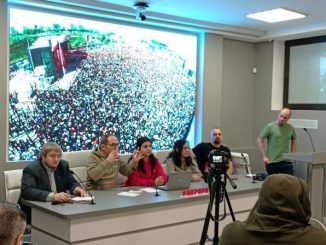
Moscow news conference with Grup Yorum, Feb. 21. Photo: Anti-Imperialist Front

To hear the U.S. corporate media tell it, the entire world has joined Washington in condemning Russia’s recognition of the Donetsk and Lugansk People’s Republics in Donbass and their joint anti-fascist military operation in Ukraine. But in reality, nothing could be further from the truth. 

It’s a fact that NATO allies and dependents have repeated the lies of an “unjustified Russian invasion” verbatim from U.S. State Department news releases. U.S.-owned social media platforms are flooded with “Pray for Ukraine” propaganda, much of it spiced up with photos of alleged Russian war horrors – often from attacks actually carried out by the U.S. and its proxies (in Yugoslavia, Palestine and even Donbass itself). 

What’s being carefully hidden from workers and oppressed people here is the opposition of many countries and movements to NATO expansion. They are aware of Washington’s true role: making an armed conflict inevitable by stoking the flames of war in the region for months and years. 

This is especially true in the case of the many countries that are themselves targets of U.S. war, sanctions and slander campaigns.

Venezuelan President Nicolas Maduro. Graphic: Alliance For Global Justice

Bolivarian Venezuela

Venezuelan President Nicolas Maduro has faced down many U.S.-instigated coups and assassination attempts. On Venezolana de Televisión Feb. 22, Maduro announced his government’s support for Russia’s decision to recognize the Donbass republics.

“We have been attentive to the events in Russia and in Ukraine, and we have been observing, not just now, but the whole evolution of the process where the North American empire and NATO intend by military means to end Russia, and to end this multipolar world that is already a reality.

“The Lugansk territory and the Donetsk territory assumed the functions of People’s Republics to defend themselves from a massacre that the fascist sectors, which had seized power in Ukraine, began to carry out. Hunting men, hunting women, assaulting families, bombing with heavy weapons.”

Maduro noted that during “all the stages” of this “extremely harsh conflict” in the region, “the diplomatic proposal, calling for dialogue, of President Putin has always been present.” This resulted in the Minsk agreements that were established to guarantee peace. However, these were “ripped to shreds by the neo-fascist ruling elite of Ukraine.”

He added: “The old colonialisms of Europe and the United States attack Russia, China and Iran, they threaten Turkey and Latin America, they also attack Cuba, Nicaragua, Bolivia, and Venezuela. The old colonialisms, the old superiority complexes of Europe and the old complexes of rapacious colonialism represented by NATO and the neo-colonialism of the U.S. empire.”

Maduro called Putin on March 1. “Putin shared his assessments of developments around Ukraine, noting that the goals of the special military operation are to protect civilians in Donbass, Kiev’s recognizing the DPR and LPR and Russia’s sovereignty over Crimea, as well as the demilitarization and denazification of the Ukrainian state, and ensuring its neutral and nuclear-free status,” the Kremlin press service reported.

“Nicolas Maduro expressed strong support for Russia’s decisive actions, condemned the destabilizing activity of the United States and NATO, and stressed the importance of countering the campaign of lies and disinformation launched by Western countries.”

Socialist Cuba

On Feb. 23, on the eve of the anti-fascist military operation, President Miguel Diaz-Canel and a large, high-level Cuban delegation met with visiting chair of the Russian Federation’s State Duma, Vyacheslav Volodin. 

Granma reports, “The Cuban president expressed his solidarity with the Russian Federation also facing escalating U.S. aggression and the expansion of NATO toward its borders.” Volodin emphasized Russia’s “condemnation of U.S. hostility toward [Cuba] and reiterated the will to continue strengthening exchanges at all levels.”

An official Declaration of the Revolutionary Government of Cuba on Feb. 26 stated: “The American determination to continue the progressive expansion of NATO towards the borders of the Russian Federation has led to a scenario, with implications of unpredictable scope, that could have been avoided. …

“History will hold the U.S. government accountable for the consequences of an increasingly offensive military doctrine outside NATO’s borders, which threatens international peace, security and stability.

“Our concerns are reinforced by the decision recently adopted by NATO to activate, for the first time, the Response Force of that military alliance.

“It was a mistake to ignore for decades the well-founded demands for security guarantees by the Russian Federation and to assume that the country would remain defenseless in the face of a direct threat to its national security. Russia has the right to defend itself. It is not possible to achieve peace by encircling or cornering states.”

Nicaragua and Bolivia

Speaking Feb. 21, on the anniversary of the assassination of the great revolutionary Augusto Sandino, Nicaraguan President Daniel Ortega said: “President Putin has taken a step today whereby he recognized … republics bordering Russia that did not recognize the coup government [in Ukraine] and created their own governments there.

“They set up their governments, they took on that fight, they have engaged in that struggle for independence. They have written to us, sending us messages explaining why they are waging this struggle. And meanwhile Ukrainian troops are looking for ways to overcome them, to liquidate them, to murder them; there have been thousands of deaths there over all these years. 

“Despite the aggression by the Ukrainian army, they have not been able to defeat them. So [Putin] has recognized these governments, and of course this also implies military support so that these governments have security.”

Former Bolivian President Evo Morales was the victim of a U.S.-backed coup in 2019, after an election marred by Washington’s interference. Fortunately, the militant people’s movement, led by Indigenous workers and peasants, returned the Movement Toward Socialism to power and Morales was able to come home in 2020. 

Morales said: “NATO is a serious threat to international peace and security; it’s record of invasions and aggression proves it. Now, its expansionist attempt is one of the main reasons for the situation in Ukraine.”

Socialist Korea

A declaration by the Foreign Ministry of the Democratic People’s Republic of Korea (DPRK) on Feb. 26 said in part: “The U.S. unilateral and unfair cold war mentality and its bloc-forming external policy transformed the structure of international relations into one of a new cold war, and they strain politico-military situations with each passing day and continue to spawn new knotty problems in different parts of the world. …

“In particular, the air raid conducted by NATO against Yugoslavia at the end of the last century served as an occasion of bringing to light the extent of U.S. and Western hypocrisy in their much-touted global peace and stability, territorial integrity and safeguarding of sovereignty, as well as of exposing in all its nakedness who is the real destroyer of international peace and stability.

“The Iraq war, the Afghan War and other ‘color revolutions’ which brought tragedy to the 21st century clearly substantiate the fact that the U.S. and the West would seek their policies of hegemony by fair means or foul.

“The present international order is that it has become an immutable law that seeds of discord are sown in every region and country where the U.S. intervenes, and that the relations between the states deteriorate.

“The root cause of the Ukrainian crisis also lies in the high-handedness and arbitrariness of the U.S. which has held on solely to the unilateral sanctions and pressure while pursuing only global hegemony and military supremacy in disregard of the legitimate demand of Russia for its security.”

Chinese Foreign Ministry spokesperson Hua Chunying. Photo: PRC Foreign Ministry

People’s Republic of China

In numerous official statements, articles and social media posts, the government and people of China – the world’s most populous country and another target of the U.S. New Cold War – have made it crystal clear that Washington and NATO are responsible for the unfolding crisis in Eastern Europe.

On Feb. 27, the diplomatic legation of the Chinese Embassy in Moscow reminded the world that “Of the 248 armed conflicts that occurred between the years 1945 and 2001 in 153 regions of the world, 201 were initiated by the U.S., accounting for 81 percent of the total number.

“Never forget who is the real threat to the world,” the Chinese embassy said.

It added that the administration of President Joe Biden is to “blame for the current tensions around Ukraine” as it poured fuel on the fire “while accusing others of not doing their best to put out the fire.”

At a Feb. 23 news conference in Beijing, Foreign Ministry spokesperson Hua Chunying stated: “When the U.S. drove five waves of NATO expansion eastward all the way to Russia’s doorstep and deployed advanced offensive strategic weapons in breach of its assurances to Russia, did it ever think about the consequences of pushing a big country to the wall?”

“The next day, as Ms. Hua was peppered with questions about whether China considered Russia’s ‘special military operation’ an invasion, she turned the briefing into a critique of the United States,” reported the New York Times. “‘You may go ask the U.S.: they started the fire and fanned the flames,’ she said. “How are they going to put out the fire now?’

“She bristled at the U.S. State Department’s comment that China should respect state sovereignty and territorial integrity, a longstanding tenet of Chinese foreign policy.

“‘The U.S. is in no position to tell China off,’ she said. Then she mentioned the three journalists who were killed in NATO’s bombing of the Chinese Embassy in Belgrade in 1999, a tragic incident that prompted widespread anti-U.S. protests in China.

“‘NATO still owes the Chinese people a debt of blood,’ she said.

“That sentence became the top Weibo hashtag as Russia was bombing Ukraine. The hashtag, created by the state-run People’s Daily newspaper, has been viewed more than a billion times. In posts below it, users called the United States a ‘warmonger’ and a ‘paper tiger.’”

Lebanon’s Hezbollah

The Lebanese resistance movement Hezbollah rejected a statement by the country’s Foreign Ministry that condemned Russia’s actions. During a Feb. 25 cabinet session in Beirut, Minister of Labor Mustafa Bayram, a member of Hezbollah, said the statement violated the principles of neutrality espoused by the Lebanese government.

Ibraham Al-Moussawi, a member of parliament from the Loyalty and Resistance bloc, criticized government officials who “distance themselves and pretend to be neutral where they want, and … interfere and condemn where they want.”

In a March 1 televised speech, Hezbollah Secretary General Sayyed Hasan Nasrallah slammed the West’s “double standards” and stressed that the U.S. is not trustworthy.

“The U.S. is to blame over the crisis in Ukraine,” Nasrallah said. “Washington has been inciting and working on this scenario for weeks.

“How did the international community react to wars on Iraq, Afghanistan, Palestine, Syria and Yemen? And how did it react to Russia’s military campaign in Ukraine? Such stances prove that the strongest is respected in this world while the weak are oppressed.”

Syria

Hezbollah, along with the governments of Syria and Iran, form the Axis of Resistance against U.S. imperialism in Western Asia. Together with Russia, they have fought to free Syria from the ultra-right Daesh movement and other Western allied “rebels,” and from U.S. occupation troops, in a war that has gone on for more than a decade.

Syria was among the first countries to welcome the news of Russia’s decision to recognize the Donbass republics. On Feb. 22, SANA reported, Deputy Foreign Minister Dr. Bashar al-Jaafari affirmed that Syria “supports Russia’s recognition of the independence of the Donetsk and Lugansk republics, indicating that it had expressed its willingness two months ago to work on building relations with the two republics in the context of common interests.”

In an interview, al-Jaafari said: “The question is whether or not the United States will succeed in imposing a unipolar regime on all countries of the world, including Russia and China. That is, the issue is related to geopolitics and not to politics in the simple sense of the word. Therefore, Syria is part of the scene, and China, Venezuela and Iran are part of this scene in the geopolitical sense.”

On Feb. 25, Syrian President Bashar al-Assad spoke with Russian President Putin to express his solidarity with the anti-fascist military operation and condemn the imperialists’ “dirty methods to support terrorists in Syria and Nazis in Ukraine.”

“President Assad stressed that what is happening today is a correction of history and a restoration of balance in the global order after the fall of the Soviet Union,” the Syrian government announced.

Assad also said that “Syria stands with the Russian Federation based on its conviction that its position is correct and because confronting NATO expansionism is Russia’s right.”

Iran 

On March 1, Iran’s religious leader Ayatollah Seyyed Ali Khamenei blamed the U.S. for the crisis in Ukraine, saying the Islamic Republic of Iran has always opposed war and destruction anywhere in the world.

“The U.S. disrupted the stability of the country by interfering in its affairs and organizing rallies and creating a color coup,” Khamenei explained. “We oppose the killing of people and the destruction of the infrastructure of nations.

“If the people of Ukraine had been involved, the Ukrainian government wouldn’t be in this situation. The people didn’t get involved because they didn’t approve of the government,” he said.

“The American regime is a perfect example of modern ignorance. This regime is a crisis-producing and crisis-consuming regime, and it feeds off creating crises in the world.”

According to Press TV, “As an example, the leader pointed to the U.S. formation of the Daesh Takfiri terrorist group, denouncing Washington for plundering oil resources in eastern Syria, stealing Afghanistan’s assets, and supporting Israeli crimes against Palestinians.

“The leader then pointed to the West’s double standards in dealing with the crisis in Ukraine, stating that Western countries support the killing of Yemeni people in the Saudi war, but they call for an end to the Ukraine crisis.”

“If the United States fails to create a crisis, the arms factories will not be able to make the most of it,” Khamenei said. “They have to create crises in order to maximize the interests of these mafias.”

Turkish movements

Turkey’s repressive government, a NATO member, has been waging war on Syria. It is also arming Ukraine with deadly drones and threatens to block Russian access to the Black Sea by closing the Dardanelles Strait.

The revolutionary music group Grup Yorum has suffered greatly from repression by Turkey’s government. Not only is it banned from giving concerts, but several members are imprisoned, and some have died after torture and hunger strikes. 

At a news conference in Moscow Feb. 21, visiting members of Grup Yorum declared their support for the people of Donbass in their fight against NATO imperialism and the far-right Ukrainian regime. Members said they would like to perform a solidarity concert there again, as they did in 2015.

The group opened its concert in Moscow Feb. 24 with these words: “We support the struggle of the people of Donbass against U.S. imperialism, against NATO, and against the fascist Ukrainian government. … Even a rock thrown against imperialism is a forward action for the people.”

The Communist Labor Party of Turkey/Leninist announced Feb. 24: “Our party, TKEP/Leninist, calls on all revolutionary, communist and progressive forces and the working class and oppressed peoples of the world to support both of these People’s Republics [Donetsk and Lugansk.] …

“The fact that the bourgeois government of Russia has been forced to support the People’s Republics because of its national interests should not be cause for hesitation. Imperialist apologists in Turkey and around the world have, either using Russia as an excuse or with empty words, abandoned this internationalist duty and argued for remaining neutral. 

“In fact, as a necessary outcome of its own national interests, Russia has supported socialist, popular governments in countries like Cuba, the Democratic People’s Republic of Korea, and Nicaragua against U.S. imperialism, acting as a shield, so to speak.

“If this operation … against Ukrainian fascism and which boldly challenges U.S., British, and German imperialism is victorious, it will be an enormous source of morale and embolden the working class and the oppressed and exploited working peoples of the world.”

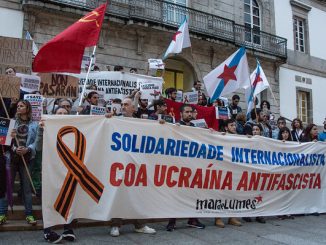
Actions in support of Russia’s recognition of the Donbass republics and the joint military operation have been held by movements in the Democratic Republic of Congo, Italy and Serbia

Car rally in the Democratic Republic of Congo in solidarity with Donbass and Russia, Feb. 22. Photo: Lugansk Information Center

Strugglelalucha256


Is Russia imperialist?

For socialists, the fundamental understanding of imperialism goes back to World War I and is found in the pamphlet written by V.I. Lenin, “Imperialism, the Highest Stage of Capitalism.”

Imperialism is not a policy chosen by one government and dropped by another. Imperialism is a system.

The first world war was the outcome of imperialism, Lenin wrote, an imperialist war waged for the political and economic exploitation of the world, export markets, sources of raw material, spheres of capital investment, etc. The imperialist powers raised huge armies and navies, not only to forcibly subjugate oppressed people in the colonies, but to make war against other imperialist countries competing for control.

According to Lenin, the world was already divided among the great capitalist powers when he wrote “Imperialism” in 1916. The war resulted from inter-imperialist rivalries to redivide the world.

The wars since WWI have changed circumstances. And World War II signaled a turning point in world imperialist relations. The United States emerged from WWII as the world’s most powerful imperialist country, gaining control of former European empires in Asia and Africa.

The overturn of the socialist Soviet Union and the breakup of the Soviet republics into individual nation states was a dismantling of a planned economy, resulting in capitalist economies that are under-developed. Out of these ruins, there has not been a sudden, almost magical appearance of an imperialist Russia.

Lenin thought that there were a few characteristics of imperialism, including the rise of finance capital and the export of capital, not just commodities. The U.S., for example, exports not just commodities but capital — mostly in the form of loans or investments. U.S. banks are at the center of world commerce.

Russia’s economy almost neocolonial

Today, capitalist Russia’s GDP is smaller than that of South Korea or India. Russia’s economy is almost neocolonial, dependent on the exchange of raw materials such as oil and ores. This is the classic economic relationship of a colony to imperialist finance capital. In the list of the top 50 banks in the world, not one is Russian. The ruble is not a currency of trade. Russia does not export capital.

During the Soviet period, Russia and the other republics that formed the Union of Soviet Socialist Republics made remarkable industrial progress. Indeed, between 1921 and 1988 there were no years of negative economic growth — no recessions — except for the World War II years.

The Soviet economy fell into recession only in 1989 as the Gorbachev government began to dismantle the planned economy.

Under Gorbachev and then even more drastically under the openly anti-communist, anti-socialist government of Boris Yeltsin in the Russian Federal Republic, and in the new non-Russian former Soviet republics including Ukraine, socialist industry was dismantled.

Yeltsin finished the job of dismantling the Soviet economy that Gorbachev began. The years of Yeltsin are now remembered as perhaps the worst period in Russia’s 1,000-year history. This was the greatest economic disaster any country has seen in modern times, in war or peace.

Ukraine had the second-largest economy in the USSR. “Independent” Ukraine is now the poorest country in Europe. By the end of 2020, some 45% of the population were in the poor category, according to a study by the Ptukha Institute. The deep poverty has created the conditions for fascist gangs to emerge.

Putin’s role

Putin, who was Yeltsin’s prime minister and chosen successor, took a more protectionist direction, unlike Yeltsin and Gorbachev, who had fawned on the West.

Does that mean Putin moved away from the policies of Yeltsin and Gorbachev that had oriented the economy to exporting raw materials? Did Putin adopt a policy of industrialization?

Under Putin, there has been little growth of Russia’s manufacturing production that had been demolished by the “perestroika” reforms. Manufacturing is the foundation of any successful modern economy. Yet, under Putin, Russia continues mainly as an exporter of raw materials.

Russia now accounts for about 6% of the global aluminum supply, 3.5% of the copper supply, and 4% of the cobalt supply. And Russia is the world’s largest producer of crude oil and second-largest producer of dry natural gas, after the U.S.

Russia is in the top 10 exporters of grain crops, including barley, corn, rye, oats and especially wheat. From 2017-2019, it was the biggest exporter of wheat, accounting for about 20% of the world market.

Russia is a capitalist state, but that does not make it imperialist. Not all capitalist countries are imperialist nations. For example, Mexico is a capitalist country with an economy that’s similar in size to Russia’s, but is Mexico an imperialist country or an exploited country? Saying that it is capitalist is not enough to know the answer.

Lenin named five characteristics of imperialism: concentration of production into monopoly; merging of bank capital with industrial capital, creating finance capital; the export of capital as distinguished from the export of commodities; the formation of international monopolist capitalist associations that share the world among themselves; the territorial division of the world among the biggest capitalist powers.

The role of finance capital and the export of capital may be most important. The World Bank and the International Monetary Fund have taken over the economies of the world. The dollar (not gold) is the currency of world trade. Today almost every country is capitalist, and most of those are exploited by imperialism, by finance capital.

Mexico is capitalist but it is not imperialist. Russia, too, is an exploited country in relation to imperialism, like Mexico.

NATO targets Russia

Russia is the primary provider of gas and oil to much of Europe. The European Union imports 40% of its gas from Russia. That’s put Russia in competition with the U.S., the biggest producer of gas in the world. 

The U.S. has been on a drive to control the world market in oil and gas. This can be seen in its attacks, actually acts of war (sanctions), against Iran and Venezuela as well as its war on Iraq. These are countries that had sought national sovereignty over oil and gas.

Russia, too, has been a target, especially its Nord Stream 2 pipeline, but not just for that. 

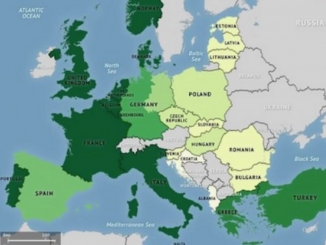
Look at a map of NATO’s expansion since the breakup of the USSR. The countries put under NATO include Estonia, Latvia, Lithuania, Poland, Czech Republic, Slovakia, Hungary, Slovenia, Croatia, Albania, Romania, Bulgaria, Montenegro, North Macedonia.

In 2008, NATO put the inclusion of Ukraine and Georgia, both bordering Russia, on the table.

NATO war on Yugoslavia

Despite the war propaganda that’s presented as news these days, the first war in Europe since World War II didn’t just start. That war was launched by the U.S. and NATO against Yugoslavia in 1999. 

For 78 days, from March 24 to June 10, 1999, NATO bombers hit Belgrade, Pristina in Kosovo, Podgorica in Montenegro and several other cities. On the first day more than 20 buildings in Belgrade were leveled. 

Much of the U.S./NATO bombing hit civilian targets. A passenger train was bombed. Cruise missiles could be seen flying down the streets. The U.S. directly bombed the Embassy of the People’s Republic of China in Belgrade, killing three Chinese reporters.

Russia understood the lesson of Yugoslavia and told the U.S. and NATO “no” to expansion to Ukraine and Georgia, on Russia’s borders – 5 minutes by missile to Moscow.

The former U.S. ambassador to Russia, William J. Burns, who is now director of the CIA, said in a February 2008 embassy cable that Ukraine joining NATO constituted a security threat for Russia. Burns noted that to push for this “could potentially split the country [Ukraine] in two, leading to violence or even, some claim, civil war, which would force Russia to decide whether to intervene.”

The U.S. never withdrew the proposal to include Ukraine.

Maidan coup

In Ukraine, the so-called Maidan coup in 2014 that was openly supported and financed by NATO put in a government that made NATO membership a policy mandate. Ukrainian President Volodymyr Zelensky has repeatedly requested Ukraine’s entrance into NATO. On Feb. 19, Zelensky demanded, once again, entry to NATO, saying, “Eight years ago, Ukrainians made their choice [the Maidan coup].”

Actually, many Ukrainians resisted the Maidan coup, particularly in the working class. In the Maidan civil war, fascist gangs emerged as a force for the coup. Resistance to the coup was strongest in the eastern section of the country. In Odessa, a neo-nazi pro-Maidan gang targeted the Odessa House of Trade Unions, near the center of the resistance. The building was firebombed and at least 46 anti-fascists and labor activists were burned alive.

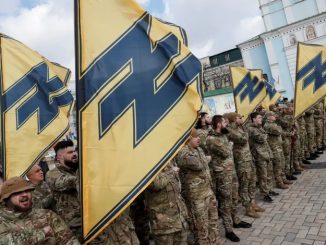
The resistance to the Maidan coup has continued from 2014 to today. The independent Donetsk People’s Republic and Lugansk People’s Republic were created when the people there voted overwhelmingly (89% and 96%) to secede from the Maidan regime. They have been subjected to continuous attack since then, particularly by the Ukrainian National Guard’s Azov regiment, a neo-nazi stormtrooper-like operation. More than 14,000 have been killed in Ukraine’s war on Donetsk and Lugansk.

As U.S. Ambassador Burns predicted, Russia was pushed into a corner by the unrelenting drive for NATO entry to Ukraine as well as the growing buildup of neo-nazi militias and the war on Donetsk and Lugansk. Ukraine had promised in the Minsk agreements it signed in 2014 and 2015 there would be a ceasefire, an end to all fighting, withdrawal of heavy weapons, release of prisoners of war, and the recognition of self-government in Donetsk and Lugansk. Ukraine fulfilled none of these promises.

Putin may not be an anti-imperialist leader, but the Russian military operation to “demilitarize and denazify” Ukraine and recognize the Donetsk People’s Republic and the Lugansk People’s Republic is a move against imperialism, U.S. and NATO imperialism.

Strugglelalucha256


When stopping racist killer cops is needed, Biden endorses more police

The Washington Post Fatal Shootings database reports 7,087 people shot and killed by the police since 2015. Even before we talk about racist police murder in the U.S. we have to say that that is an outrageous number in itself. Why does the U.S. have the highest amount of police killings compared to any other developed country?

It’s an indication of repression against working people in general, to discourage any protest against injustice, wage slavery and exploitation and the destruction of our environment.

When you add the fact that Black people are killed at twice the rate of white people we see an even greater problem relating to racism and genocide against Black and Brown youth.This shows why racism and white supremacy are so deadly to our class.

The Washington Post began taking the numbers of killings by police when it realized that the FBI’s numbers were only half of the actual shootings in 2014.

More recently, the New York Times published an article titled “More Than Half of Police Killings Are Mislabeled.” It reported the results of a study conducted by researchers at the University of Washington and published in the Lancet, the world-renowned medical journal.

The study confirmed that police violence has been grossly underreported for at least four decades.

So, the problem with police reporting was exposed to the world and to the administration of Barack Obama in 2015 by the Washington Post, yet nothing was done to correct it, and it still persists here in 2022.

That parallels the crisis of police killings since 2015 – from the Obama administration through the Trump administration and now the Biden administration – where it has remained steady at nearly 1,000 per year. 

Why? Because the problem is systemic. Since racism is an integral part of capitalism, it doesn’t matter whether a Democratic or a Republican regime is in power. Racism and racist repression are primary tools in maintaining this system. They are primary tools used to keep the working class divided and weak.

Biden and Mayor Adams

Biden’s Feb. 3 visit with New York’s Mayor Eric Adams means more of the same, or perhaps worse. Adams is a former cop and advocate for continuing police brutality and increasing the already inhumane treatment in New York prisons. 

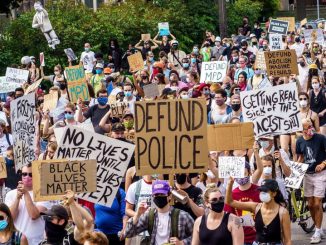
During his visit, Biden said: “Mayor Adams, you and I agree. The answer is not to abandon our streets. The answer is to come together, police and communities,” Biden said at the NYPD headquarters. “The answer is not to ‘defund the police.’ It’s to give you the tools, the training, the funding to be partners, to be protectors.”

This is a repeat of Biden’s callous suggestion in regard to genocidal police killings highlighted by the George Floyd killing in Minneapolis: that the cops should just shoot people in the leg; that the militarized weapons they carry and the funds to buy more of those weapons that terrorize communities of color are not an issue.

Mayor Adams has made reactionary statements in regard to hiding racist police killings, pushing right-wing buttons. He has called for the use of more solitary confinement, which is already being used illegally across the nation – calling it “punitive segregation.” He wants more minors to face criminal prosecution as adults, and more.

A UN organization, the Office of the High Commission for Human Rights, last year did a report on racial justice and equality relating to “current racially inspired human rights violations, systemic racism, police brutality and violence against peaceful protests.”

The report highlighted four areas to prioritize to end systemic racism and the violations by law enforcement against Africans and people of African descent. These are, as highlighted on the UN High Commission website:

  • STEP UP: Stop denying and start dismantling
  • PURSUE JUSTICE: End impunity and build trust
  • LISTEN UP: People of African descent must be heard
  • REDRESS: Confront past legacies, take special measures and deliver reparatory justice

Nothing that Biden is proposing with his friend, Mayor Adams, addresses these points – just the opposite. It was no accident that Biden, Obama, and especially the fascist former president Trump, have done nothing but enable police murder. Biden and Kamala Harris refused to even consider taking funds from the police or reorganizing the police to make them less lethal, especially against Black and Brown communities. Barack Obama, during his administration, was approached by Black Lives Matter activists pleading for him to take the military weapons, like assault weapons and tanks, away from local police. He offered only to make sure all cops would have cameras instead – and we’ve seen how that has not slowed down the murders by cops.

The Democrats and Republicans are given their marching orders from the super rich who put them in power. Stopping police violence threatens their vital tool to keep in place the status quo of exploitation and racism, so it is not allowed to be discussed in any real way. It will take a movement specifically against police murder, prioritizing the issue of how racism is used to murder Black and Brown youth, to make any real changes.

Strugglelalucha256


Francia se retira de Mali, pero sigue devastando el Sahel africano

El 17 de febrero de 2022, el presidente de Francia, Emmanuel Macron, convocó una conferencia de prensa en París (justo antes de la sexta cumbre entre la Unión Europea y la Unión Africana en Bruselas) junto con el presidente de Senegal Macky Sall y el presidente de Ghana Nana Akufo-Addo, así como el presidente del Consejo Europeo Charles Michel. En la conferencia, Macron anunció que las fuerzas francesas se retirarán de Mali. Esto significa que Francia y sus aliados europeos comenzarán a reducir “las operaciones antiyihadistas de Barkhane y Takuba, en Mali”. Las protestas en Mali contra la presencia de las tropas francesas parecen haber triunfado, finalmente.

Macron dijo que Francia tenía que retirar sus tropas porque ya no le gustaría “seguir comprometida militarmente junto a autoridades de facto cuya estrategia u objetivos ocultos no compartimos”. En la página web del Gobierno francés apareció una declaración firmada por la Unión Europea (UE) y por la Unión Africana (UA) en la que se afirmaba lo mismo, es decir, que “las autoridades de transición de Mali no han respetado sus compromisos”.

El lenguaje utilizado por Macron e incluido en la declaración de la UA y de la UE evidencian la falta de transparencia sobre las verdaderas razones de la retirada de las tropas. El Gobierno de Mali (“de facto” y “de transición”) llegó al poder mediante dos golpes de Estado: el primero, en agosto de 2020, contra el Gobierno electo, fue dirigido por el coronel Assimi Goïta, líder del Comité Nacional para la Salvación del Pueblo de Mali. Este instaló a Bah Ndaw, un militar, como presidente interino de Mali. Ndaw fue luego derrocado con un segundo Golpe, en mayo de 2021. Goïta asumió el cargo de presidente interino. En junio, los países europeos insistieron en que la nueva junta militar celebrara elecciones antes de febrero de 2022. Goïta dijo que cumpliría este plazo. No lo hizo, dando a la UE y a la UA una excusa para romper los vínculos con el Gobierno de Goïta.

Esta excusa es la misma que están utilizando las potencias regionales para reducir las operaciones en Mali. Sin embargo, los hechos se enturbian cuando se trata de las declaraciones que hizo Francia al respecto. Macron habló de los “objetivos ocultos” de Goïta, pero no profundizó en la acusación. ¿Cuáles podrían ser esos “objetivos ocultos”?

Los problemas de Mali

Los problemas de Mali no empiezan ni terminan con los disturbios en el norte ni con el Golpe militar. Si se le preguntara a Alpha Oumar Konaré, presidente de Mali de 1992 a 2002, contaría una historia diferente. Cuando Konaré asumió la presidencia en 1992, el pueblo estaba agotado por la crisis de la deuda, producida por las políticas del Fondo Monetario Internacional (FMI) y por el Gobierno militar. Querían algo más. Uno de los asesores más cercanos a Konaré declaró durante su mandato: “Pagamos la deuda de nuestro país puntualmente todos los meses, sin que falte ni un céntimo, y al mismo tiempo el pueblo se empobrece más y más”.

El Gobierno de Konaré pidió una reconsideración al FMI para poder destinar recursos al desarrollo de la parte norte del país; la insurgencia, argumentó Konaré, se enfrentaría mejor con desarrollo que con guerra. El Gobierno de Estados Unidos y el FMI no estuvieron de acuerdo.

Desde que Konaré ocupó la presidencia hasta ahora, los Gobiernos de Mali – tanto civiles como militares – han sido incapaces de elaborar un marco político para hacer frente a las crisis endémicas (sociales y económicas). Es cierto que ha habido una larga rebelión en el norte, que ha unido a los aristócratas ifoghas entre los tuaregs y a las facciones de Al Qaeda surgidas de la guerra civil argelina (1991-2002) y de la destrucción de Libia (2011-2012); ninguno de los muchos acuerdos de paz ha funcionado. Esto se debe, en gran medida, a que simplemente no hay dinero en Bamako, la capital de Mali, para prometer el tipo de desarrollo necesario para reparar un millón de frustraciones. Menos comentados, pero igualmente ciertos, son los devastadores indicadores sociales del resto de Mali, donde el hambre y el analfabetismo parecen normales en los bidonvilles (barrios marginales) de Bamako.

La intervención occidental en gran parte de África no se ha traducido en una ayuda económica beneficiosa para la región. Esta asistencia ha llegado a través de las políticas de austeridad del FMI y la ayuda militar.

La intervención militar de Francia en Mali en 2013 vino acompañada de la construcción, en 2014, de un proyecto militar en todo el cinturón del Sahel llamado G5 Sahel (incluye Burkina Faso, Chad, Mali, Mauritania y Níger). Los militares de cada uno de estos países recibieron ayuda y sus oficiales recibieron formación. No es sorprendente que Goïta, por ejemplo, recibiera entrenamiento de las fuerzas armadas de Estados Unidos en Burkina Faso junto con el coronel Mamady Doumbouya, responsable del golpe de Estado en Guinea en septiembre de 2021; tampoco sorprende que el teniente coronel Paul-Henri Sandaogo Damiba, de Burkina Faso, se entrenara junto a estos hombres y diera un golpe de Estado en su país en enero de 2022; y tampoco sorprende que en Chad, el “General Kaka” (Mahamat Idriss Déby Itno), hijo del anterior presidente, fuera investido presidente por los militares en lo que fue efectivamente un Golpe de Estado en abril de 2021. Tres de los países del G5 del Sahel – Burkina Faso, Chad y Mali – están ahora dirigidos por un Gobierno militar (las autoridades de Níger frustraron un golpe de Estado en marzo de 2021).

Todos los lamentos sobre por qué hay tantos intentos de golpe de Estado en África en estos días no conectan los puntos: los Estados occidentales no permiten ninguna agenda fuera del modelo de austeridad del FMI, que prefieren fortalecer las fuerzas militares en la región en lugar de permitir que se abra un verdadero proceso social democrático en estos países africanos.

Malestar con las intervenciones occidentales

En octubre de 2021, el actual primer ministro de Mali, Choguel Kokalla Maïga, declaró a un medio de comunicación ruso que su Gobierno tenía “pruebas” de que los franceses están entrenando a grupos terroristas como Ansar Dine. Según su entrevista, Francia habría creado un “enclave” en la región de Kidal en 2013. “Tienen grupos militantes allí, que fueron entrenados por oficiales franceses”, dijo Maïga. Kidal está en el norte de Mali, no muy lejos de sus fronteras con Argelia y Níger.

Nada de lo que dijo Maïga debería haber sorprendido a nadie. El exembajador de Francia en Mali, Nicolas Normand, hizo algunos comentarios similares en 2019 cuando publicó su libro sobre el continente, Le grand livre de l’Afrique. Normand dijo a Radio France Internationale que el Gobierno de Macron forjó lazos con el Movimiento Nacional de Liberación del Azawad y con los aristócratas de la región de Ifoghas para evitar que hicieran un rápido avance hacia Bamako. Francia quiso enfrentar a los “grupos armados buenos” con los “grupos armados malos”, pero al final no vio que ambos grupos eran terribles para Mali. Este enfoque, combinado con las víctimas civiles de las operaciones militares francesas (22 civiles murieron cuando Francia bombardeó una boda en Bounti en 2021, por ejemplo), alejó a la población de Mali de Francia.

Las tropas francesas han comenzado a abandonar Mali, pero no van a volver a Francia. Se desplegarán en el vecino Níger, donde continuarán con su misión de impedir la migración a Europa y de luchar contra las víctimas radicalizadas de la austeridad del FMI (que a menudo vienen en forma de jóvenes frustrados, algunos de los cuales se vuelven terroristas). Los ojos de Macron están puestos en las elecciones presidenciales francesas, previstas para abril de este año, y en las crecientes tensiones en respuesta a la intervención militar de Rusia en Ucrania.

Mientras tanto, el pueblo de Mali salió a las calles para celebrar la salida de los franceses. Curiosamente, muchos de los carteles daban las gracias a los rusos. ¿Quizás la entrada de ayuda rusa y mercenarios sean los “objetivos ocultos” a los que se refería Macron?

Este artículo fue producido para Globetrotter.

Vijay Prashad es un historiador, editor y periodista indio. Es miembro de la redacción y corresponsal en jefe de Globetrotter. Es editor en jefe de LeftWord Books y director del Instituto Tricontinental de Investigación Social. También es miembro senior no-residente del Instituto Chongyang de Estudios Financieros de la Universidad Renmin de China. Ha escrito más de 20 libros, entre ellos The Darker Nations y The Poorer Nations. Su último libro es Washington Bullets, con una introducción de Evo Morales Ayma.

Strugglelalucha256


Imperialist propaganda and Ukrainian Jews

Since it began, 2022 has been a year of intense U.S. imperialist saber rattling against Vladimir Putin and the Russian government. The U.S. military-industrial complex and Western media have pushed a narrative that any Russian incursion into the Ukraine is an invasion. Prior to the start of actual Russian military action, the U.S. propaganda machine sensationalized for months that a “Russian invasion is imminent.” 

As we have previously written, Russia is not the true aggressor in this situation. Since an alliance of fascists and military brass couped the popularly elected government in 2014, Ukraine and its imperialist allies have waged literal and economic warfare against the two Donbass republics. Struggle-La Lucha has thoroughly covered the real reasons behind this aggression. Any Russian military operation in the Ukraine is really an act of self-defense against nearly a decade of war and provocation from NATO and the Ukrainian government. 

In recent weeks, in addition to the fever-pitch saber rattling, another disturbing trend has developed in the media in regard to the Ukrainian Jewish community. The U.S. and their allies have used this war crisis as an opportunity to push Zionist ideology and muddle history. The aim of this media blitz has been to falsely compare Russia and Nazi Germany, with the hopes of pushing more Jews towards Zionism. This strategy is as insidious as it is cynical. What makes this propaganda beyond despicable is the long history of Ukrainian nationalist collaboration with Nazi Germany and the present alliance between the government and neo-Nazis.

Personal note

In 1905, a young Ukrainian Jewish woman arrived at Ellis Island, New York. Her name was Anna Goldstein. Jacob Goldstein, Anna’s father, decided it was time to move his family after pogroms devastated his village. Ukraine was part of the Russian Empire at the time, where anti-Semitic pogroms were as common as the sunrise. That young woman, Anna, was my great grandmother. 

Fewer than 15 years after my great grandmother left her small village in the Ukraine, the Bolshevik revolution led Russia into a new era. It is important to realize that the Tzar’s oppression of the Jewish community was a significant contributing factor to the Bolshevik revolution. My community was tired of the violence and the hate. It was for that reason that many Jews took up arms against the Tzar in the revolution of 1917. 

That revolution led to the formation of the USSR, a socialist state that fought for the rights of all oppressed people inside and outside of its borders. Less than 40 years after that revolution, the vile specter of fascism and hatred would haunt Ukraine and the surrounding area again. Eventually, it would be the troops of the USSR that destroyed that specter and liberated Jews from Nazi concentration camps.

Ukraine and the Holocaust

In 1941, there were just under three million Jews living in what is now known as Ukraine. That same year, Nazi Germany gained control of most of the western part of the USSR as part of Operation Barbarossa. This offensive was a violation of the non-agression pact between the two countries and resulted in the Nazi occupation of Ukraine. 

Almost immediately after Nazi forces occupied the western USSR, Adolf Hitler ordered the formation of SS death squads. These death squads were called “einsatzgruppen” and were particularly brutal in the Nazi-occupied regions of Eastern Europe. These death squads went to work immediately, targeting the Jewish community, as well as all other Soviet citizens in Ukraine, with confinement, torture, and murder. 

Starting on Sept. 16, 1941, Nazi forces commenced an extermination campaign against the city of Mykolaiv, Ukraine. Within two weeks, over 35,000 people were murdered, the majority of them Jewish. Towards the end of the Mykolaiv massacre, the most infamous Nazi massacre of Jews occurred. 

In a single day – a single day – Nazi forces killed 33,771 Jews in the Babi Yar ravine outside of Kiev. This author’s extended family were some of the many who fell at Babi Yar. The Babi Yar massacre was followed by a violent campaign of terror against all Soviet citizens in the area that resulted in approximately 150,000 deaths. Many were Jews. Many were not. 

It would be dishonest to discuss these atrocities without discussing Ukrainian collaboration with the Nazi occupiers. German Nazis were unforutnately not the sole perpetrators of these crimes against humnanity. In fact, many of these massacres were carried out by Ukraininan Nazis. Large movements of Ukranian Nazis branding themselves as “nationalists” enacted constant horrors against Jewish, Ukraininan, and Russian people in the region. These groups included the Organization of Ukrainian Nationalists (OUN) and the Ukrainian Insurgency Army (UPA). 

Both of these organizations espoused fascist and anti-Semitic ideology, and openly collaborated with Adolf Hitler’s forces. Tens of thousands of Jews, Poles, and Russians were slaughtered at the hands of these groups. Many of their leaders ultimately joined SS police battalions. This included the massacre of 6,000 Jews in Lviv by the Ukranian People’s Milita, a wing of the OUN, immediately after the city fell to Nazi forces. 

The remaining years of the war would see a littany of attrocities carried out not only by the Nazi army, but by the OUN and the UPA. The horrors inflicted by these groups and their leaders cannot be understated. When the holocaust ended, the Nazis and their Ukrainian allies had killed over one million Ukrainian Jews. The Jewish population in Ukraine was nearly halved. 

Unfortunately, and inexplicably, today the Ukrainian government lauds many of the OUN and UPA’s leaders as national heroes. In 2010, outgoing right-wing Ukrainian President Viktor Yushcenko awarded UPA leader Stepan Bandera the “Hero of Ukraine” award. Bandera was a virulent and violent anti-Semite who organized many pogroms against the Jewish community during World War 2. Yuschenko’s successor, Viktor Yanukovych, officially repealed the award. However, the Ukrainian parliament has attempted twice, in 2018 and 2019, to reinstate the award. The 2019 attempt was championed by Servant of the People, current President Vlodymyr Zelensky’s political party. As recently as Jan. 1, 2022, various Ukrainian nationalist organizations led mass marches through Kyiv in celebration of nazi-collarborator Bandera’s birthday.

Also in 2019, the Kiev City Council renamed two city streets after notorious Ukrainian Nazi collaborators, Nil Khasevych and Ivan Pavelnko. Pavlenko was personally responsible for the murder of Jews during World War 2 and eventually commanded an SS battalion. Khasevych was a leader in the OUN and one of the most famous Nazi propagandists of the time. It should be noted that Vitali Klitschko, the Mayor of Kiev who championed these proposals, is still in office.

As can be seen, the Ukrainian government has continued to honor fascists, particularly since 2014. This has not changed even with the election of a Jewish president, Vlodymyr Zelensky. 

Contemporary neo-Nazi movements in Ukraine and government collaboration

Corporate media today would have us believe that Russia is an inherent threat to Jewish life. There is no doubt that at the turn of the 20th century, the Russian Tzar and his empire were a grave threat to Jewish life. However, times have changed. The only threat to Jewish life in this conflict is the fasicst Ukranian government filled to the brim with Nazi collarborators. 

As if the incessant historical praise of World War II-era Nazis wasn’t enough, the Ukrainian government has continued to support various neo-Nazi militas and political parties in the present day. Ever since the Euromaidan of 2014, the Ukrainian government has been heavily influenced, if not controlled, by the fascist movement. 

Just three years ago, The Nation published a telling exposé on the growing nature of the fascist movement in Ukraine. The article describes large scale neo-Nazi marches with thousands of tiki torches and Nazi flags. However, the level of neo-Nazi infiltration in the current government coupled with NATO funds and arms getting to neo-Nazi militas is even more concerning. 

Since 2014, NATO has consistently trained and equipped the Azov Battalion, a fascist militia operating in the Donbass republics. This milita’s goal has been clear: to rid Ukraine of any “ethnic impurity.” This presumably includes Jews, Russians, and even progressive Ukrainians. In 2019, the Azov Battalion was officially integrated into the Ukrainian National Guard. 

As if that wasn’t enough, the current leader of the Ukrainian National Police, Vadim Troyan, is a veteran of the Azov brigade and a known neo-Nazi collaborator. Troyan consistently encourages his troops and deputies to study Stepan Bandera and carry on the proud tradition of “Ukrainian nationalism,” which is really just Nazism. 

It would seem that the current Ukranian government is simply a revival of the pro-Nazi organizations of the 1940s. 

So, should Jews support the governments of Ukraine and their NATO allies? 

Well, the answer is simple. No. 

For the record, Israel should be included in that no. 

Beginning around Feb. 21, mainstream media and multiple Jewish media outlets were blitzed with stories encouraging Ukraine’s roughly 300,000 Jews to emigrate to Israel because of the impending “Russian invasion.” These stories originated from the statements of several prominent rabbis to media outlets like the New York Times and Washington Post. These rabbis include the Chief Rabbi of Israel and a prominent Rabbi in Odessa. 

It should be noted, both of these rabbis are IDF veterans and support right-wing Zionist ideology. The implication of these articles and those alike is that Vladimir Putin is built in the mold of Adolf Hitler and that the fascist state of Israel is the only safe place for Jews. 

Given all of the historical and present connections between Ukrainian nationalists and the fascist movement outlined in the article, that assertion is far from the truth. This is not to say that Ukrainian Jews aren’t under threat. They certainly are. This threat just isn’t from Russia. It is from the fascist aligned Ukrainian government and its neo-Nazi militias. These are organizations that openly wave swastika flags and call for new pogroms against the Jewish community. 

There is also a sick irony in that idea that Israel is this place where war is as common as the air we breathe. The Israeli government commands one of the most aggressive and vicious militaries and police forces on the planet. No country bombs or attacks its neighbors more than Israel. There is no better demonstration of this than the Israeli military offensives against innocent Palestinian people in 2014 and 2021. To this day, Israel continues to launch unprovoked attacks on countries like Syria, all on behalf of the U.S. ruling class

As if this warfare on the Arab world wasn’t enough, Israel’s constant disdain for its own people, whether it be 18-year-old Israeli communist Roman Levin who refused to continue serving in a military that enforced apartheid against Palestine, or Ehtiopian Orthodox Jewish teenager Solomon Tekah, who Israeli police brutally murdered in 2019. 

As a global Jewish community, we need to be honest with ourselves. Why do we swallow whole the propaganda of countries like the U.S. and Israel when these countries could give a damn about us? Neither of these two countries care about the welfare of the Jewish community, or any other oppressed community for that matter. 

Russia is not the enemy of the Jewish community. Palestine is not the enemy of the Jewish community. The Donbass republics are not the enemy of the Jewish community. Fascism is the enemy of the Jewish community. Imperialism is the enemy of the Jewish community. 

We must resist both. That means refusing to support a NATO-backed Ukrainian fascist war. That means questioning the use of Israel as a cudgel to turn us against our brothers and sisters in the Donbass and Palestine. That means analyzing the true nature of past Ukrainian nationalist movements and the current fascist-friendly Ukrainian regime. 

Emigration to Israel won’t keep the Jewish community safe. Only solidarity will. We must do better. 

Strugglelalucha256


María Dolores (Tati) Fernós López-Cepero, ¡Presente!


Hoy quisiera rendir homenaje a una gran luchadora por los derechos de la mujer, la abogada y profesora María Dolores Fernós López-Cepero, mejor conocida como Tati Fernós quien falleció de cáncer esta semana.  En los 75 años que esta increíble mujer vivió,  pudo lograr lo que otras personas necesitarían siglos para poder concretar.

Gracias a su trabajo, las mujeres en Puerto Rico hemos podido adelantar nuestras luchas en muchos aspectos abarcadores de género, laborales, y de equidad en general.

Entre sus muchos logros, está la creación de leyes para la Prevención e  Intervención de la Violencia Doméstica, y en contra del Hostigamiento Sexual en el Empleo.

Creó la Oficina de la Procuradora de la Mujer en el año 2001 que presidió por 6 años  y desde la cual se pudieron lanzar muchos proyectos en defensa de la mujer.

Fue fundadora y activista de la Organización Puertorriqueña de la Mujer Trabajadora (OPMT), que forma parte de la Federación Democrática Internacional de Mujeres, la FDIM. Ayudó a crear organizaciones como Matria, que adelantan programas para el desarrollo económico de las mujeres. 

Como anticolonialista tuvo también que batallar contra las acciones reaccionarias de los enemigos de la independencia. Un ejemplo es que al poco tiempo de comenzar en la Procuraduría de la Mujer, un grupo de dirigentes del Partido Nuevo Progresista que quieren la estadidad para PR, irrumpieron agresivamente en su oficina para colocar una bandera de EUA porque Fernós había rehusado tenerla junto a nuestra bandera puertorriqueña.

Y aunque el proceso colonial con administraciones de gobierno local que entorpecen y hacen retroceder los logros de la mujer, las estructuras que Tati Fernós ayudó a crear, sientan las bases de lo que últimamente nos dará la victoria. 

A esta mujer cuyo lema era luchar por lo que le exigía su conciencia, decimos hoy: Gracias Tati Fernós, ¡siempre estarás Presente! 

Desde Puerto Rico, para Radio Clarín de Colombia, les habló Berta Joubert-Ceci

Strugglelalucha256


Struggle ★ La Lucha PDF – February 28, 2022

Get PDF here

  • U.S./NATO hands off Russia!
  • Why Russia recognized the Donbass republics
  • Brian Flores lawsuit exposes NFL racism
  • Professor Rabab Abdulhadi wins second grievance at SFSU
  • Oakland teachers and ILWU Local 10 join forces
  • Plans to build ballpark at the Port of Oakland threatens thousands of union jobs
  • A century of lies for war, about Russia
  • Cuba: Ukraine and the spark of Donbass
  • Biden gives Big Oil a win, gas prices going up
  • Granma: Ucrania y la chispa de Donbás
  • War crisis: Donbass resists U.S.-planned attack, needs solidarity
  • Por qué Rusia reconoció las repúblicas del Donbas
  • The Western allied nations bully the world while warning of threats from China and Russia
  • The occupation of Ottawa is a far-right assault on labor and democracy
  • ¡EUA / OTAN, saquen sus manos de Rusia!
  • ¿Quién es ese que se escucha? Es el pueblo en pie de lucha.
Strugglelalucha256


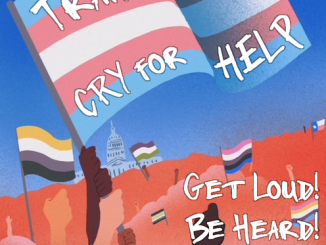
Austin, Texas: Trans kids cry for help, March 13

SUNDAY, MARCH 13
Trans Kids Cry for HELP!
Texas Governor’s Mansion

WHAT IS HAPPENING

On February 22nd Greg Abbott and Ken Paxton put all of the families with trans children in Texas at risk by declaring that gender-affirming care was child abuse based upon Texas state law.

This threatens to take trans kids away from loving and supportive parents in order to force them to detransition in the foster care system. Additionally, this will impact the trans kids already in the states care by removing any potential support they had within the system and further traumatizing them.

This would also require mandatory reporters to out trans kids to government officials making teachers, social workers, clergy, and medical care workers to participate in state violence or face legal consequences.

In the midst of this unprecedented anti-trans state violence, hundreds of thousands of tourists will be coming into the capitol city of Texas during March 11th-19th for SXSW, bringing money and positive attention to the state and the city of Austin.

WHAT WE ARE DOING ABOUT IT:

On March 13th we plan to get out and get LOUD at the Governors Mansion in Austin from 2-4PM to make sure trans kids, their families, and the trans community is heard.

In addition to the protest on-site at the Governor’s Mansion we will be broadcasting the demonstration as a live stream so that participants can park their cars around the city, open their windows, turn the sound all the way up, and BLAST our cries for help into the world so that the people of Texas and the people attending SXSW can not ignore our suffering in this time of crisis and need.

WHO IS ORGANIZING THIS:

This event is being organized by a number of organizations. We will announce our partners over the next couple of days.

IS THERE A WAY TO HELP IF I CAN’T COME TO AUSTIN?

We will be posting specific calls for help and boosting fundraising campaigns on the event page, but if you want to JOIN THE DEMONSTRATION you are encouraged to broadcast the live stream in whatever spaces you can, be it from car speakers, a Bluetooth speaker, or any other way you can think of to make sure trans kids’ cry for help is heard.

On Facebook

Strugglelalucha256


Understanding Ukrainian Nazism

In the West, media outlets are claiming that Russia’s agenda to “denazify” Ukraine is unfounded. At the same time, public opinion in Western countries is totally alienated from the Ukrainian reality, tending to believe only what is reported by the hegemonic media. The result of this is strong disapproval of the Russian attitude based on the lie that there is no trace of Nazism in contemporary Ukraine. In this sense, it is urgent that quality information be disseminated to the Western audience to avoid the proliferation of lies about the Ukrainian reality.

On almost every TV channel and newspaper in the West, Ukrainian Nazism is questioned with the worst possible arguments: Zelensky is Jewish, and the Ukrainian state is democratic. This kind of superficial thinking prevents a detailed analysis of the catastrophic situation in Kiev since the Maidan, when, through a coup d’état, an anti-Russian junta took power and institutionalized a racist and anti-Russian ideology, which remains until the current days.

When we talk about “Ukrainian Nazism” we are not saying that Kiev is a contemporary copy of Hitler’s Berlin, but that the neo-Nazi element is a fundamental point of post-2014 Ukraine. The Maidan coup was openly supported and financed by NATO as a way of undermining any Russian influence in Moscow’s own strategic environment. The aim was to make Ukraine a puppet state, commanded from Washington, ending any link with Russia. There was not only the objective to annihilate political, economic, and diplomatic relations between Kiev and Moscow, but also to eliminate cultural, ethnic, religious, and linguistic ties between both nations.

Since then, anti-Russian plans have been implemented. Ethnic Russians have been persecuted for the past eight years – even through systematic extermination in some regions. The Russian language has been criminalized in entire cities where the population does not speak Ukrainian. Schisms in the Orthodox Church have been supported to form a Ukrainian “national church” out of the Moscow Patriarchate. But the question remains: how has this been possible if Ukrainians and Russians are such close peoples? Many Ukrainians speak Russian and marry ethnic Russians, in addition to the fact that most of the country’s population follows the Orthodox Church. So how was it possible to initiate such a successful racist policy?

This was certainly one of the biggest concerns of the Maidan planners. And the answer lies in the Nazi element, which was very well worked out by Arsen Avakov, Minister of the Interior during the Poroshenko government. Avakov initiated a process of instrumentalizing neo-Nazi militias that had supported Maidan, making these extremist groups key points in the defense of the new Ukrainian regime. In the West, due to collective ignorance about Slavic history, many people think that Nazi racism was restricted to Jews, but in fact, anti-Russian hatred was one of the biggest locomotives of WWII, having led Hitler to the irrational decision to invade and try to annex the USSR. This sentiment is alive in these neo-Nazi militias, who are literally ready to do anything to annihilate the Russians, being much more fanatical in their racist convictions than the Ukrainian armed forces.

Groups such as the Azov Battalion, C14 and the armed militias of rightist parties such as Pravyy sektor and Svoboda operate freely in Ukraine and are most responsible for the extermination of ethnic Russians in the Donbass. These groups act with more violence and using more sophisticated equipment than the Ukrainian armed forces themselves, being the real face of Kiev’s anti-Russian brutality. As neo-Nazis, these militias have no obstacles in complying with the government’s objective of destroying any ties between Russians and Ukrainians, thus being the main allies of the Maidan era.

In a 2020 Freedom House’s report, “A new Eurasian far right rising”, it is said that the far right is one of the strongest and most influential elements in Ukrainian society today, being a sophisticated, highly professionalized, and visible political force. In other words, what would be violent and criminal urban groups elsewhere on the planet have been converted by Kiev into a pro-Maidan parallel armed force. The inspiration for this model of action comes from the original Nazism: the Schutzstaffel (SS) was one of the largest German armed political forces during the 1930s and 1940s, but the group was not part of the German Armed Forces, but a paramilitary militia instrumentalized by the government apart from the official troops. There was a major strategic objective with this: while the German military was commanded by the government, the SS fought for the Nazi Party and for Hitler – that is, if Germany surrendered, the SS would declare war on the German military. This type of “double-shielded” military system is the same one that Kiev has implemented: if one day a pro-Russian government is elected, the neo-Nazi militias will declare war on Kiev – and will be strong enough to defeat the official troops in the same way as the SS was stronger than the German armed forces.

It is necessary to note that these groups operate not only in the sphere of military force, but also in the cultural field, fomenting anti-Russian hatred among ordinary Ukrainians. The exaltation of Stepan Bandera (Ukrainian anti-Soviet nationalist leader who collaborated with Nazi Germany) is one of the symptoms of this. Before the Maidan, Bandera was a name like any other in Ukrainian history, but he came to be remembered and venerated as a national hero by neo-Nazis and anti-Russian politicians. In the same sense, these groups vandalize parishes and monasteries of the Russian Orthodox Church and are responsible for the consolidation of a Ukrainian mentality entirely hostile to Russia, which is gradually permeating the local population.

Ukraine is in fact ruled by a Jew and the country’s power structure is indeed publicly “democratic”, despite being internally authoritarian and corrupt. But the Nazi element is not in these aspects, but in the structure of protection of the post-Maidan Ukrainian state, which is supported by a national coalition of neo-Nazi militias whose objective is simply to persecute and kill Russians, regardless of who is in power in Kiev. It does not matter to these militias if the President of the Republic is a Jew – what matters is that Russians are dying, which favors both neo-Nazis and the pro-NATO politicians they protect. In other words, the Western media’s arguments to deny Putin’s claims about Ukrainian Nazism are weak and superficial.

Moscow is right in its concern to denazify Ukraine. It is a measure that should be taken in coalition by several countries. All over the world, Nazism is “condemned”, but only when it benefits the West. The closest political experience to Nazism in the present days has been seen and peacefully tolerated by liberal governments that claim to be defenders of human rights and democracy. Russia is simply no longer willing to put up with crimes being committed by neo-Nazis against its people and there is nothing wrong with that decision.

Lucas Leiroz, researcher in Social Sciences at the Rural Federal University of Rio de Janeiro; geopolitical consultant.

Source: InfoBrics
Strugglelalucha256


Por qué Rusia reconoció las repúblicas del Donbas

24 de febrero de 2022 

Para tener hoy una clara posición contra la guerra y el antiimperialismo, las/os trabajadores con conciencia de clase deben comprender el significado de la decisión del 21 de febrero de la Federación Rusa de reconocer a las repúblicas Donetsk y Lugansk del Donbas como países independientes y soberanos, casi ocho años después de que declararan por primera vez su independencia de Ucrania.

Luego de una transmisión en vivo sin precedentes de la reunión del Consejo de Seguridad Nacional de Rusia, el presidente Vladimir Putin anunció: “Considero necesario tomar una decisión que debería haberse tomado hace mucho tiempo: reconocer de inmediato la independencia y la soberanía de la República Popular de Donetsk (RPD) y la República Popular de Lugansk (RPL)”.

Putin firmó decretos presidenciales reconociendo las repúblicas; estableciendo tratados de amistad y cooperación mutua entre ellos, y autorizando el despliegue de fuerzas de paz rusas en el Donbas si así lo solicitaban. Los líderes de la RPD y la RPL, Denis Pushilin y Leonid Pasechnik, firmaron decretos recíprocos.

Estados Unidos y sus aliados globales denunciaron la decisión.

La decisión de Rusia se produjo después de varios días de intensos ataques militares ucranianos contra las dos pequeñas repúblicas. Dos terceras partes de las fuerzas militares ucranianas, armadas y entrenadas por la OTAN, se encuentran en la “línea de contacto” de aproximadamente 200 millas con Donetsk y Lugansk, cerca de Rusia. Mientras tanto, unas 175.000 tropas de la OTAN también están estacionadas en la frontera occidental de Rusia.

Cientos de ataques de artillería, tiroteos y actos terroristas ucranianos se han llevado a cabo desde el 17 de febrero, matando e hiriendo a civiles y miembros de las Milicias Populares del Donbas, destruyendo hogares y dañando infraestructura vital como plantas de filtración de agua, tuberías de gas y escuelas.

Las evacuaciones masivas de civiles de Donetsk y Lugansk comenzaron el 18 de febrero. Todos entendieron que una invasión ucraniana era inminente, a pesar de que la administración Biden, tergiversando la realidad, repetía que Rusia planeaba invadir Ucrania.

Aunque el bombardeo de Donetsk, la capital de la RPD, disminuyó brevemente después del anuncio de Rusia, pronto se reanudaron los ataques ucranianos, incluyendo un bombardeo en el centro de televisión de Donetsk y la muerte de dos civiles de Lugansk por un misil antitanque ucraniano el 22 de febrero.

Lo que quiere Washington

Desde noviembre del 2021, Washington ha presionado persistentemente a Ucrania para que lance un gran ataque contra el Donbas con la esperanza de involucrar a Rusia en un conflicto y así justificar una mayor expansión de la OTAN y cerrar las exportaciones de combustible ruso a Europa Occidental.

Durante tres décadas, el objetivo bipartidista del capitalismo estadounidense ha sido dividir a Rusia y ponerla firmemente bajo el control de Washington, algo que Putin reconoció en su discurso del 21 de febrero al pueblo ruso.

El 22 de febrero, Biden y el secretario de “Defensa”, Lloyd Austin, ordenaron el despliegue de miles de tropas más, helicópteros de ataque y aviones de combate estadounidenses en Europa del Este.

Biden impuso nuevas y extensas sanciones a Rusia, incluidas sanciones individuales a los parlamentarios que apoyaron la decisión de reconocer las repúblicas del Donbas. Otros países imperialistas y regímenes títeres de EUA rápidamente siguieron su ejemplo.

Quizás lo más importante fue cuando Alemania anunció el 22 de febrero que detendría la autorización del recién terminado gasoducto Nord Stream 2 que estaba destinado a aumentar significativamente el flujo de combustible de Rusia a la Unión Europea.

Cortando esta relación, obliga a que Europa compre productos de gas y petróleo de fuentes controladas y de propiedad estadounidense, dirigiendo las ganancias a los bancos de EUA. Este fue un objetivo principal de la campaña contra Rusia de Washington. Justo entonces, los precios del petróleo y el gas subieron a niveles casi récord, con el petróleo cerca de los 100 dólares el barril el 23 de febrero.

De todos los imperialistas de la OTAN, Alemania fue el país que más se demoró en apoyar la campaña de guerra de EUA. Pero es importante recordar que Alemania, aunque es la potencia económica más fuerte de Europa, también está ocupada militarmente por el Pentágono, con la friolera de 119 bases militares estadounidenses, solo superada por otro enemigo imperialista, Japón, con 120.

La verdadera importancia del reconocimiento

El reconocimiento de Rusia de las repúblicas de Donetsk y Lugansk fue recibido con gran entusiasmo por los residentes del Donbas, quienes han vivido ocho años de guerra y sanciones de Ucrania, y les ha costado más de 14.000 vidas. Fue un reconocimiento importante, aunque tardío, de su decisión democrática en el referéndum del 11 de mayo de 2014 y los sacrificios que han hecho para defenderse de la ocupación neo-nazi y la OTAN.

Ellos entienden, al igual que los fascistas ucranianos que buscan “limpiar” la región del Donbas, que una mayor agresión de Kiev ahora significa una confrontación militar con Rusia. El presidente de Ucrania, Volodymyr Zelensky teme esto, pero como herramienta voluntaria de Washington, no tiene poder para resistir.

Al mismo tiempo, Rusia no tuvo más remedio que dar este paso, obligado por Washington. Durante ocho años, desde el golpe de estado en Kiev del 2014 respaldado por Estados Unidos, Moscú ha evitado numerosos intentos occidentales de llevar a las fuerzas rusas a una lucha con Ucrania. Pero se ha hecho evidente que se ha agotado el margen de maniobra.

Entre el pueblo ruso hay un apoyo masivo a los residentes del Donbas. Es dudoso que el gobierno de Putin pudiera haber sobrevivido el abandono de Donetsk y Lugansk.

El discurso televisado de Putin combinó una evaluación clara de lo que está en juego en la confrontación actual para Rusia con un análisis de la historia de Ucrania severamente distorsionada por el antisovietismo y el nacionalismo ruso. Debemos reconocer honestamente que esto es un impedimento para reconstruir la solidaridad entre los trabajadores rusos y ucranianos.

Pero el verdadero significado de la decisión de Rusia de reconocer las Repúblicas Populares de Donetsk y Lugansk va en otra dirección. Es un reconocimiento de las tradiciones antifascistas e internacionalistas profundamente arraigadas de la clase obrera soviética multinacional, incluso tres décadas después de la disolución de la URSS socialista.

Hoy como nunca antes, las/os trabajadores y oprimidos de los Estados Unidos y el mundo deben rechazar las mentiras de Washington, Wall Street y los medios corporativos y exigir: ¡No a la guerra con Rusia! ¡Biden, reconoce Donetsk y Lugansk! ¡Estados Unidos fuera de Ucrania!

Strugglelalucha256
https://www.struggle-la-lucha.org/2022/page/69/