Struggle ★ La Lucha PDF – August 29, 2022

Get PDF here

  • Largest arms transfer in history: Biden escalates U.S. proxy war in Ukraine
  • Why does Washington prefer war drive over negotiating Brittany Griner’s release?
  • Support squeegee workers: Self-defense against racism is not murder
  • Hands off African People’s Socialist Party & all those targeted by bogus FBI indictments!
  • Brooklyn, N.Y.: Resistance and reparations!
  • Struggle for trans rights and socialism go hand in hand
  • Immigrants on front lines of reproductive and bodily autonomy
  • A day of solidarity with prisoners and formerly incarcerated people
  • How can we respond to U.S. crisis and threat of world war?
  • High prices, low pay: A Marxist analysis of inflation
  • Ukraine and Russia without the lens of Facebook & corporate media
  • Donetsk besieged by U.S. proxy war
  • Pelosi’s Taiwan provocation: No U.S. war on China!
  • A year later, Washington continues torture of Afghanistan
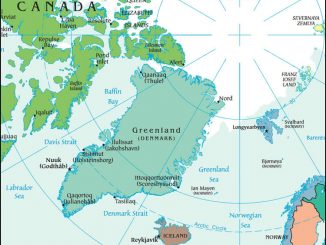
  • Greenland melts, billionaires profit
  • Puerto Rico: ¡FBI entrega a activistas solidarios con Cuba!
  • Puerto Rico: FBI hands off Cuba solidarity activists!
Strugglelalucha256


High prices, low pay: a Marxist analysis of inflation

Based on remarks at the Socialist Unity Party national plenum on Aug. 13.

The global working class is being hit hard by inflation. But what is inflation, and how can we understand both its causes and effects through a revolutionary Marxist lens?

According to Investopedia, “inflation is a rise in prices, which can be translated as the decline of purchasing power over time. [Emphasis added.] The rate at which purchasing power drops can be reflected in the average price increase of a basket of selected goods and services over some period of time.”

This basket of goods is another name for the Consumer Price Index (CPI). There are different ways of calculating this kind of measure, and the U.S. Federal Reserve — perhaps for obvious reasons — prefers a different measure that gives a lower figure.

At any rate, the rise in prices is clear enough for anybody who has bought anything since last year. In June, the U.S. CPI hit 9.1%, the highest level since 1981. This seems significant for assessing the overall health of capitalism.

There may be some slight dip in the inflationary pressures, with CPI for July being at 8.5%. This may be largely attributable to a drop in fuel prices.

Nevertheless, the problem doesn’t seem to be going anywhere any time soon. Workers are still experiencing a cut in real wages. For July, a monthly wage increase of only 0.5% was reported. Even with this tiny bump — with the inflation — wages are down 3% from last year.

Wages are down even as the median monthly asking rent for the U.S. as a whole exceeded $2,000 in May. In Los Angeles, it’s $3,400. Formerly considered a haven for relatively affordable housing, Nashville rents rose 32% from last year to $2,140. The soaring cost of housing is driven by a takeover of the market by giant financial entities.

During an Aug. 10 White House press briefing, President Biden asserted that inflation in July was at 0%. This is a distortion. Overall, there was a 0% increase in inflation, meaning prices held steady at an already high level. Fuel costs went down a bit, while others went up, e.g., food rose by 1.3%.

Biden’s triumphant messaging stands in stark contrast to the situation for working-class people. Household debt is up at a record $16.15 trillion. Evictions are back to pre-pandemic levels. Homelessness is up.

Inflation in U.S. and China

It’s not only the U.S. that’s being affected by inflation. Astonishingly, Argentina’s inflation has exceeded 70%. There were large protests in the capital, Buenos Aires.

Pew Research found that inflation rates have doubled in 37 of 44 “advanced economies” over two years, as of the first quarter of 2022. The same report found that Turkey had a 54.8% inflation rate.

For China, CPI had only risen to 2.7% in July, thought to be driven in part by a 20.2% rise in the price of a food staple, pork. The small size of this increase is notable, especially considering that the International Monetary Fund still expects the Chinese economy to grow by 3.3% this year. 

That’s with major supply-chain and other economic disruptions that result from the Chinese government’s continued commitment to a Zero-COVID policy; surely, the disruptions of Shanghai’s two-month shutdown are not ideal from an economic perspective, but China is still able to keep economic development going and inflation under control. As of June, only 5,226 had died from COVID-19 in China.

Meanwhile, in the U.S. — where over a million people have died from the disease and the federal government seems to have given up any pretense of trying to stop the spread – we are still looking at a U.S. GDP contraction of 2.5% so far this year. 

What GDP actually measures can be debated, especially from the standpoint of the working class. However, there is a clear difference between the two countries, even using bourgeois metrics.  

It is probably useful to look at China’s performance here and compare it to how economic planning enabled them to bounce back from the 2007-2008 financial crisis that affected the capitalist world economy as a whole, and moreover, how much of the growth and development since then has been driven by China. 

Our party maintains that despite China’s capitalist reforms that have threatened the gains of the Chinese Revolution, the economy remains fundamentally socialist. This is why the Chinese state, led by the Communist Party of China, has been able to respond to various global crises with effective social and economic planning.

What causes inflation?

So, here we have a broad sketch of the current situation. But what is the cause of the inflation?

Economist Richard Wolff put out a video on June 17 arguing strongly against the assertion that “supply chain disruptions” are the cause of the current massive inflation. He says that instead, it’s a case of companies across the board jacking up prices to recoup profits lost during the pandemic, which was also an economic disaster for the world economy. 

And he says that the capitalists are raising prices in the context of system failure, of a general breakdown of capitalism—especially in the U.S.—characterized by an overwhelming degree of dysfunction throughout, and which can’t be fixed by attacking or regulating individual aspects of the system.

This diagnosis seems mostly accurate. On the other hand, the fact of supply chain disruptions could be more significant, indicating the deeper structural dysfunction and systemic decline alluded to by Wolff.

In October 2021, Labor Notes co-founder Kim Moody argued against “just-in-time” supply chains, which are the norm today. This could be called the logistics equivalent of the Taylor-Ford revolution in manufacturing and was the brainchild of Toyota engineer Taiichi Ohno in the 1950s. 

The idea is that corporations can increase profits by delivering things in smaller quantities—just what is needed—and the corporate recipients could also cut costs by not having to maintain large inventories, meanwhile reducing the number of workers. 

In the West, this started in the automobile industry and spread out. It mirrors the general process of the tech revolution in the 1980s and 1990s, which saw dramatically more automation in manufacturing and so on, pushing down wages and undermining the existing union organizations. Sam Marcy detailed this process as it was happening in the articles that make up the book “High Tech, Low Pay.” 

All of this was contemporaneous with what has been called “neoliberalism,” which we can define from a revolutionary perspective as the great offensive of the capitalist class in the period of global revolutionary retreat (involving Western imperialist-backed counterrevolution in the USSR and more).

Moody points out that aside from being a driver of the shift to low-wage work, this logistics model involves vulnerabilities. It works really well for the capitalists when things are running relatively smoothly, but if there’s a logistics bottleneck — as when a ship blocked the Suez Canal last year or with the effects of the pandemic — the result can be catastrophic. 

This has also been the case with the global distribution of wheat as the U.S.-NATO proxy war in Ukraine drags on. Or we could point to climate-change disruptions in the form of fires, droughts, floods, hurricanes, etc. With worsening climate change, we should expect increasing supply-chain disruptions.

Current phase of global capitalism

This brings me to the main question that I would like to pose. It seems to me that a major task for revolutionaries now is to figure out how to characterize the current period, or even phase, of global capitalism. We likely all agree that Lenin’s analysis in “Imperialism, the Highest Stage of Capitalism” holds true, although the trends he outlined then were embryonic compared to the highly developed, even rotten, situation now.

Likewise, Sam Marcy’s analysis showing the effects of the growth of high tech at the end of the 20th century and the proliferation of low-wage jobs, with the disappearance of much of the manufacturing in the U.S. and other imperialist countries, has continued. 

In the past roughly 20 years, technological developments have enabled a radical transformation of logistics, characterized by Amazon, and spawning economies of micro-transactions, and so on. The pandemic has perhaps accelerated these trends.

These trends have continued through the cyclical or episodic ups and downs. Each time there is one of these crises, there is a recovery for profits and the stock market, but most of the population is still worse off than before. Workers are consumers, after all—capitalism is based on production of commodities. So the basis of the capitalist system, I would argue, becomes more brittle after each shock. The decent-paying jobs have never come back.

Nothing that the capitalist state does fixes the underlying problems. None of it really works.

The corporate giveaways (which are really a wholesale looting of workers’ wealth) give a little boost, but more is required each time.

I haven’t touched on military spending, another inflation source. More and more resources are thrown at the war machine, taking away from the civilian economy and overall social development. Value is destroyed on a massive scale. A missile that costs millions to produce disappears in an instant, and people die. The capitalists may have gotten some traction out of such spending in the past, but it doesn’t seem to be working now.

The sanctions regimes aren’t working, either. Washington is not effectively controlling the countries of Asia, Africa and Latin America anymore. In fact, sanctions seem to be backfiring. In a recent speech, Nicaraguan President Daniel Ortega said that the Washington imperialists had decided to destroy Western Europe to carry out their proxy war on Russia and China.

The worst is yet to come, as winter fuel shortages could be devastating for the working class. Perhaps we are seeing the end of the relative coincidence of interests among the imperialist countries that followed World War II, with Washington and Wall Street at the apex; it is difficult to imagine how German and other European leaders will be able to look their people in the face and tell them that it is in their interests to accept U.S. dominance.

In short, all the usual medicines seem to be accelerating the advance of the disease.

A turning point 

The final defeat in Afghanistan may have been a turning point. The value of the dollar and euro has declined, and more trade is happening in the yuan and ruble. Dollar dominance may be going out, and with it, the imperialists’ ability to push off their problems onto weaker countries.

If the capitalist-imperialist system is in decline, it can’t be the case that mere policy shifts or, say, adopting different models (i.e., away from “just-in-time” shipping) could easily be implemented, as all of these things developed out of the fundamental logic of the system, of the need to extract surplus value in the period of monopoly.

There’s no obvious path for bringing manufacturing back to the U.S. Rust Belt. Trump’s trade wars didn’t work. Brexit isn’t working, either; Britain hasn’t been able to form a coherent government since the Brexit vote. The political divisions are so deep, and there is extreme disunity in the ruling class. They can’t implement any programmatic change of direction.

Even commentators on NPR have been frank that the Inflation Reduction Act that just passed Congress is a massively scaled-back version of Biden’s Build Back Better plan and the Green New Deal. The vote happened on completely partisan lines, showing how brittle the ruling “coalition” is and how susceptible any policy change is to being overturned in future political chaos, e.g., by another Trump presidency. And presuming that this bill will curb inflation at all, the NPR commentators noted that there’s not likely to be much change either in 2022 or 2023.

Meanwhile, there’s no talk about emergency measures to help working-class people. In 1970, Nixon implemented a 90-day price freeze. There doesn’t seem to be political willingness to do anything like this now.

So, looking at all these trends, my assumption is that even if there is some recovery or inflation diminishes, the deeper problems will not decrease and should rather increase. All of the problems will certainly increase if there is another imperialist war. Washington’s threats against China are not encouraging.

So that is, overall, the question I leave: How to characterize the period and its dynamics? The counterpart to that is, how can the left form a fightback under current conditions, simultaneously to meet pressing needs and to advance toward a higher level of struggle?

Strugglelalucha256


Largest arms transfer in history: Biden escalates U.S. proxy war in Ukraine

While announcing a minimal $10,000 student debt relief plan, Biden announced another $3 billion additional military expansion in Ukraine. 

Earlier this month, when Senators Elizabeth Warren and Chuck Schumer said the debt relief plan should cancel $50,000 per student borrower, most student borrowers found that to be inadequate.

The $3 billion weapons package is the largest yet for Ukraine, according to Defense One, the Atlantic Media trade publication for the military-industrial complex. It will push total U.S. aid well past the annual budgets of at least eight federal programs, including the entire judicial branch. 

Since most of the Pentagon budget and military spending is handled secretly, there have probably been larger weapons packages that were not announced or reported.

The announcement came just five days after a previous statement unveiled a $775 million package of advanced missiles, armored vehicles, drones and artillery. The package includes additional HIMARS, the High Mobility Artillery Rocket System, and Howitzers.

No mention is made in any of these announcements that the massive U.S. military spending has been one of the factors in the serious and, for some, devastating inflation rise this year.

The U.S. has been escalating its NATO proxy war against Russia, not just with the largest arms buildup in U.S. history but with covert and special forces operations such as the assassination in Moscow of Russian journalist Darya Dugina. The assassination had the earmarks of a special forces operation, like the drone assassination of an alleged al-Qaeda leader in Kabul, Afghanistan, that Biden announced on August 1.

Dugina and her father, Alexander Dugin, have been elevated from the fringes in the U.S. media. Neither are big capitalists with the power that would bring nor in any position of political power; they are an easy target. Dugin is known for his outspoken far-right Russian nationalism, a view that is not popular in Russia and is not espoused by any in the government, including Putin.

The assassination was most likely a test, a show by the imperialists that they could strike in the heart of Moscow. 

Russian authorities have identified the killer of Darya Dugina as Natalya Vovk. Vovk is associated with the Azov battalion Nazis of Ukraine. The Azov battalion received training by the U.S. CIA

Vovk escaped to Estonia, a NATO member state. Any action to seek her extradition puts Russia in a direct conflict against NATO, even more directly than the U.S. proxy war in Ukraine has.

Ammunition in amounts ‘never seen before’

According to Defense One, the $3 billion package Biden announced on August 24 would be the largest single chunk of the total of $13.7 billion the United States has announced since February. Moreover, it will contain ammunition in amounts “we’ve never seen before.”

As noted, the Defense One figures are limited to the officially announced military packages. But Congress approved a $40 billion “Ukraine aid” package in May, which the Washington Post said was 60% military funds. The $13.7 billion figure cited by Defense One is just a fraction of the total U.S. military spending on the Ukraine war.

Still, the $13.7 billion package is more than the annual budget of some federal programs, Defense One admits, such as the National Science Foundation ($9.2 billion) and the Small Business Administration ($1.7 billion), according to Statista. It is larger than the annual budgets of the federal judiciary ($9.7 billion), Congress ($6.6 billion), or the Executive Office of the President ($0.6 billion). It is creeping up on the budgets of the Environmental Protection Agency ($15.9 billion), if not NASA ($24.9 billion).

Tracking largest arms transfer in U.S. history

Below is a timeline of all publicly disclosed major weapons shipments or funding packages going back to Feb. 24, compiled by the think tank Quincy Institute for Responsible Statecraft

This list only contains publicly announced information. The Pentagon admitted on August 11 to sending at least one type of missile that had not been previously mentioned in their press releases, so this list is not exhaustive.

August 8

The Pentagon announced that it would send $1 billion worth of security assistance to Ukraine via presidential drawdown, including:

  • HIMARS ammunition (This is an acronym for High Mobility Artillery Rocket System. These mobile missile launchers can fire a wide range of munitions, including rocket artillery and short-range ballistic missiles.)
  • Artillery ammunition
  • Javelin missiles and other anti-armor weapons

August 1

The Pentagon announced an additional $550 million of security aid via presidential drawdown, including:

  • HIMARS ammunition
  • Artillery ammunition

July 22

The Pentagon announced that it would send $270 million of military aid to Ukraine, with $175 million authorized via presidential drawdown and $95 million coming via Ukraine Security Assistance Initiative (USAI) funds. This included:

  • Four additional HIMARS
  • HIMARS ammunition
  • Four Command Post vehicles (These can be used as a tactical operations center or an armored ambulance, among other things.)
  • Tank gun ammunition
  • Phoenix Ghost drones (These are a type of “loitering munition,” or a weapon that can wait in the air for extended periods before attacking a target. The U.S. created this for use in Ukraine.)

July 8

The Pentagon announced an additional $400 million of military assistance via presidential drawdown, including:

  • Four additional HIMARS
  • HIMARS ammunition
  • Artillery ammunition

July 1

The Pentagon announced it would send $820 million of security aid, with $50 million authorized via presidential drawdown and the remaining $770 million coming via USAI funds. This included:

  • HIMARS ammunition
  • Two National Advanced Surface-to-Air Missile Systems (NASAMS) (This system launches missiles to defend against various types of aircraft, including drones.)
  • Artillery ammunition

June 23

The Pentagon announced an additional $450 million in military assistance via presidential drawdown, including:

  • Four HIMARS
  • Artillery ammunition
  • Grenade launchers
  • Patrol boats

June 15

The Pentagon announced an additional $1 billion in lethal aid, with $350 million authorized via presidential drawdown and $650 million coming from USAI funds. This included:

  • Howitzers (This is a popular long-range artillery weapon.)
  • Artillery ammunition
  • HIMARS ammunition
  • Two Harpoon coastal defense systems (These launch missiles that fly just above the water’s surface to attack planes and ships.)

June 1

The Pentagon announced an additional $700 million in military assistance via presidential drawdown, including:

  • HIMARS ammunition
  • Javelin missiles and other anti-armor weapons
  • Artillery ammunition
  • Four Mi-17 helicopters (These can be used for transport or combat.)

May 19

The Pentagon announced $100 million in lethal aid via presidential drawdown, including:

  • Howitzers
  • On the same day, Congress passed a $40 billion aid package for Ukraine, roughly half of which was earmarked for military assistance.

May 6

The Pentagon announced $150 million in military aid via presidential drawdown, including:

  • Artillery ammunition

April 21

DoD announced $800 million in further aid via presidential drawdown, including:

  • Howitzers
  • Artillery ammunition
  • Phoenix Ghost drones

April 13

The Pentagon announced that it would send an additional $800 million in military assistance via presidential drawdown, including:

  • Howitzers
  • Artillery ammunition
  • Largest arms transfer in history: Biden escalates U.S. proxy war in Ukraine
  • Switchblade drones (This is another form of loitering munition.)
  • Javelin missiles and other anti-armor weapons
  • Armored personnel carriers
  • 11 Mi-17 helicopters
  • Various types of explosives

April 6

The Pentagon announced an additional $100 million in aid via presidential drawdown, including:

  • Javelin anti-armor systems

April 1

DoD announced that it would send $300 million in lethal aid using USAI funds, including:

  • Laser-guided rocket systems
  • Switchblade drones
  • Puma surveillance drones
  • Anti-drone systems
  • Armored vehicles

March 16

The Pentagon announced it would send $800 million of military aid via presidential drawdown. The exact contents of this package are unclear, but it likely included Mi-17 helicopters, Javelin missiles, and Stinger anti-aircraft missiles.

March 12

The White House announced that it would send $200 million in lethal aid via presidential drawdown, including:

  • Javelin missiles
  • Stinger missiles

March 10

Congress approved $13.6 billion in aid to Ukraine, roughly half of which was earmarked for military assistance.

February 25

The White House announced that it would send $350 million in military aid via presidential drawdown, including:

  • Anti-armor weapons
  • Small arms
Strugglelalucha256


Immigrants on front lines of reproductive and bodily autonomy

Based on remarks at the Socialist Unity Party national plenum on Aug. 13.

Black women, Indigenous women, women of color and trans people have always fought for reproductive and bodily autonomy.

A man reported that a U.S. Immigration and Customs Enforcement (ICE) agent asked him to engage in oral sex and then threatened him with deportation after he refused. The ICE cop said he would be deported to Haiti, even though he is from the Bahamas. 

In Texas, a Border Patrol agent was driving detainees between detention centers. After a woman performed oral sex on him, he let her go.

Many women and men in immigration detention centers all over the U.S. reported that routine searches turned into groping and fondling incidents. Many reported being propositioned, subjected to sexual innuendo, and threatened with retaliation if they reported anything.

These are only a few of the hundreds of complaints of sexual and physical abuse in immigration detention. Many of course go unreported and fewer get prosecuted. Reports obtained by The Intercept in 2018 included 1,224 complaints filed, but only 2% were investigated and less than that were prosecuted. 

Despite serious obstacles for filing complaints and getting complaints investigated, the information that has been gathered by immigration advocates is that sexual assault and harassment in immigration detention is not only widespread but systemic and enabled by an agency that regularly fails to hold itself accountable. 

Forced sterilization, blocked abortions 

Over the course of a long history of abuses, both public and private actors in the U.S. target the poor, the disabled, immigrants, and racial minorities for forced sterilization. 

The eugenics movement popular at the turn of the 20th century was largely responsible for states enacting laws beginning in 1907 that authorized the sterilization of the “feebleminded.” More than 60,000 coercive sterilizations were performed throughout the U.S. pursuant to these eugenics laws.

It was not until Nazi Germany adopted U.S. eugenic theory and practice that public opinion shifted away from this anti-poor and anti-working-class policy in the United States. 

But even though support for these eugenics-based sterilization laws started to decline, new justifications for coerced sterilization came into the consciousness of the ruling class. In the 1960s, sterilization abuse once again targeted the poor, the immigrant community, and people of color.
 
Many cases revealed how discrimination along intersectional lines of gender, race, poverty and immigration status coalesced to result in sterilization abuse.
 
A 2020 report about coerced sterilizations of immigrant women at the Irwin County Detention Center (ICDC), a private detention center in Georgia, is a perfect example. In this case, immigrant women were taken to a physician who sterilized them without informed consent. 

A whistleblower, nurse Dawn Wooten, described multiple forms of medical abuse, from failures to protect patients against COVID-19 to forced hysterectomies. The reports of forced hysterectomies and other unwarranted gynecological procedures at ICDC were also intertwined with a pattern of lack of informed consent to medical treatment. 

In connection with the hysterectomies, Ms. Wooten explained: “These immigrant women, I don’t think they really, totally, all the way understand this is what’s going to happen depending on who explains it to them.”
 
Coerced sterilization in ICE detention is far from the only form of reproductive injustice inflicted upon immigrant women and men. Trump appointee Scott Lloyd attempted on several occasions to block teen migrants from accessing abortion care, even when their pregnancies were the result of rape. 

And of course, the Trump Administration’s “zero tolerance” policy forcibly separated parents from their children, including children under the age of 5.
 
As activists for reproductive justice, we have to continue to emphasize that the fundamental civil rights to abortion, procreation, bodily autonomy and parenting are deeply linked. All reproductive autonomy is simultaneously under attack, especially in the context of the poor, Black, Indigenous, migrants, trans people and people of color. 

Reproductive justice advocates must work even more urgently to protect the reproductive and bodily autonomy of all marginalized people.

Strugglelalucha256


Did you know? Greenland melts, billionaires profit

Did you know?

While the ice in Greenland is melting at an alarming rate, billionaires are figuring out how to make a profit out of this disaster.

Global warming is exposing precious minerals that were locked under previously permanent layers of ice. But Jeff Bezos, Michael Bloomberg and Bill Gates, so-called climate-conscious billionaires, aren’t crying — they are busy trying to figure out how to profit from what could be a bonanza for capitalists.

The hunt is already on for minerals like nickel, cobalt, copper, gold and zinc, believed to now be easily accessible to mining equipment and transport ships, according to a CNN report

Kobold Metals, a California startup that counts Gates and Bezos as investors, has been very quiet about its activities. Profiting off of melting Greenland isn’t a very good look.

Doesn’t look like “green” capitalist billionaires are the solution.

Strugglelalucha256


Puerto Rico: Comité de Solidaridad con Cuba denuncia operativo de visitas del FBI

Compartimos con nuestros lectores el comunicado del Comité de Solidaridad con Cuba (CSC) de Puerto Rico en el cual se denuncia el operativo de intimidación desatado por parte de agentes federales de EEUU.

La presidenta del Comité de Solidaridad con Cuba (CSC) de Puerto Rico, Milagros Rivera, denuncia el operativo de intimidación desatado por agentes federales mediante llamadas y visitas a varios militantes del Comité e integrantes de la Brigada Juan Rius Rivera.

Alegando que estaban investigando al Comité de Solidaridad con Cuba intentaron conocer detalles sobre la portavoz del Comité y del reciente viaje a Cuba realizado por la Brigada bajo la categoría diversos tipos de apoyo al pueblo cubano. La brigada entregó sendas donaciones sanitarias para el control del covid a hospitales en su recorrido por el país, así también hizo intercambios culturales y educativos con el pueblo.

Desde hora tempranas de la mañana de este martes, 23 de agosto, agentes que se identificaron como del FBI visitaron más de una decena brigadistas y amigos de la solidaridad en distintos puntos de la isla, alegando una investigación contra el CSC, su presidenta y la militancia solidaria.

Llegaron al colmo que en el caso de una familia indicarle que citarían a sus hijas por haber acompañado a sus padres en el viaje.

El CSC hace un llamado a las autoridades a dejar de criminalizar las gestiones que hace la Brigada donde las campañas de ayuda humanitaria son esenciales y el intercambio con el pueblo cubano fundamentales. Las relaciones entre Cuba y Puerto Rico son más que centenarias y ese operativo no las detendrá ni nos va intimidar.

Le indicamos al FBI que invierta sus recursos en perseguir a la mafia criminal en el país, a los corruptos y a investigar los asesinatos políticos que al día de hoy siguen encubriendo como el Carlos Muñiz Varela y el Filiberto Ojeda Ríos perpetrado por ellos mismos.

El CSC expresa que ningún militante, brigadista ni amigo solidario tiene que dialogar con el FBI. Si tienen alguna acusación que se comuniquen con los abogados que nos estarán apoyando.

Si quieren montar un show mediático en momentos como el que estamos viviendo advertimos que el imperio jamás podrá bloquear la solidaridad.

Exhortamos a la prensa y a los medios de comunicación social a investigar esta agresión del FBI contra nuestros jóvenes y personas que somos solidarios con el pueblo cubano y con toda causa justa de la humanidad.

Solicitamos a las organizaciones amigas se expresen contra este nuevo abuso del FBI. Prohibido olvidar.

Milagros Rivera
Presidenta CSC
San Juan de Puerto Rico, 23 de agosto de 2022

Foto de portada: Prensa Latina.

Autor

Strugglelalucha256


Sacramento: A day of solidarity with prisoners and formerly incarcerated people

Based on remarks at the Socialist Unity Party national plenum on Aug. 13.

This is the story of my experience going to Quest for Democracy 2022 on Aug. 8 in Sacramento, California’s state capital.

I was offered the opportunity to go to Sacramento with All Of Us Or None (AOUON), a grassroots organization led by formerly incarcerated people, whose purpose is to strengthen the voice of people most affected by mass incarceration and the growth of the prison-industrial complex. Their goal is to build a powerful political movement to win full restoration of human and civil rights for incarcerated and previously incarcerated individuals.

I was told Quest for Democracy is a statewide lobbying day giving incarcerated and formerly incarcerated individuals and their families the opportunity to meet with state representatives and learn the process by which bills are passed. Most important, it is a chance to hold elected officials accountable.

We were given a list of bills and asked to choose a couple that interested us. When meeting with assembly members, we were to speak on why the bill is important and ask the representatives, “Can we count on your ‘yes’ vote on this bill?”

I was a bit hesitant, because I was told not to bring up other issues and stick to the issues on the list. I don’t consider myself a lobbyist and I don’t have any confidence in the capitalist criminal justice system or the politicians to do the right thing.

Early on the morning of Aug. 8, a group of seven activists, including me, boarded two flights from San Diego to Sacramento. We rented a van and drove to the capital, where everything was set up. 

Some groups came the day before and received training on how to approach assembly members and present their concerns in a concise manner. The time you have is very limited, so you must make your point in 2 to 3 minutes or less. 

There was a line at the AOUON booth to get t-shirts, a lunch ticket, a packet listing summaries of many bills on prison reform, and a package of “courage score sheets” for state representatives. We were asked to review this information before going to visit with our assigned representative. I knew little about what was going to happen when we sat with the State Assembly member.

End involuntary servitude!

I was excited when the announcement was made from the capitol steps for everyone to gather in a semi-circle to prepare for a rally. 

The rally began with a respected Indigenous community member acknowledging the land where we gathered and the ancestors whose shoulders we stand on. He emphasized that we stand together to do the work here today that will bring justice and dignity to all those in prison and those of us who are in transition, our families, friends and all our relations.

The first speaker was Dorsey Nunn, co-founder of All of Us Or None, executive director of Legal Services for Prisoners with Children (LSPC) and one of the organizers for Quest for Democracy. Nunn was sentenced to life in prison when he was 19 years old.

Nunn spoke about justice, dignity and humanity for incarcerated and formerly incarcerated individuals, and the importance of ACA 3: the California Abolition Act – a bill which would amend the state constitution to end involuntary servitude in prisons.

Although more than 100 people came out and many groups were represented here, there was a great sense of unity, community and commitment to the issues of prisoners, families, reunification, support and education. It was very welcoming, and I could feel the gratitude towards everyone that came out on such a hot day. 

Listening to the stories from the speakers, all former incarcerated individuals, I felt the heat was nothing compared to what those in prison go through every day.

I thought about the MOVE 9 and Sekou Odinga, who told their stories at the Malcolm X Library in San Diego. In my mind I compared their stories of life as formerly incarcerated people in the U.S. with that of the Cuban 5, who returned to Cuba as heroes after 16 years in U.S. prisons.

All the bills addressed issues that the Cuban people had already worked out through roundtable discussions and popular mobilization using the principles of socialism. Cuba is our shining example; Cuba has paved the way. 

Fighting for basic needs

Christopher, a 17-year-old completing his first year at San Diego City College, came with our group. His thoughts on the bills echoed mine when he said, “Why should there be a debate about a prisoner’s right to call their family for free?” 

Prisoners and families should be able to call without paying extortionate phone rates (SB1008). Families should be encouraged to visit and stay connected with their loved ones in prison (AB990). Families should be notified right away when an imprisoned son, daughter, father, mother, brother, or sister has a medical emergency (SB1139).

There are so many bills that resonated with me, like one to prevent children 12 years old from being tried in juvenile court (SB429). Or the bill to release medically vulnerable people who are the most expensive to incarcerate and least likely to reoffend (AB960).

I was somewhat surprised as one of the State Assembly members spoke. I didn’t get her name, but I heard her say: “People just don’t know about the inhumanity that is prevalent in the California Department of Corrections and Rehabilitation (CDCR). Some think [imprisonment] is a vacation or a break. 

“You spend months, years or decades in prison, and when you get out you get $200. What the fuck can you do with $200?” she shouted. 

She supported a bill that would raise the “gate money” given upon release to $1,300, which she said is “still not enough.” (SB 1304) What’s needed is a path to reentry – training, counseling, housing, a job with a living wage, and compensation while you make that transition. 

There were many bills that impacted incarcerated peoples’ reentry into society. These are issues that Cuba has figured out. Yes, in Cuba you do the time, but the whole purpose is to come out restored, renewed, reunited with family and community, and hopefully you will do better. The system is not set up for you to fail.

As Gerardo Hernandez, one of the Cuban 5 who is now head of the Committees for the Defense of the Revolution (CDR), said: “Our purpose is to help. We talk with the family, we encourage the family to stay involved, because it is understood that the family suffers when a loved one is incarcerated.

“Prisoners need not be discriminated against because they went to jail. Our objective is not to make a repressive action against those persons but to help those persons, who are victims themselves in many cases.”

Cuba’s neighborhood CDRs number 138,000, with over 8 million members, and continue to work on programs and solutions to the problems of petty crime, drugs and mental illness.

Solution to mass incarceration

I think about the remarks by Cuban President Miguel Díaz-Canel on May 16: “In the United States, 2,000 children are arrested every day and 44,000 are in prison. We only cite this data to demonstrate, once again, the hypocrisy and double standards of those who presume to judge what happens around the world.”

Diaz stated, before our people and the world, that in Cuba no one under 16 years of age is imprisoned!

There are coalitions such as those which organized Quest for Democracy 2022 throughout the U.S. The Socialist Unity Party’s Prison Solidarity Caucus will work with these groups. We will support incarcerated and formerly incarcerated people, listen to their demands, support their efforts to reform this system and fight for their right to exist and live with dignity.

These organizers are aware of the hard, long struggle it’s going to take to pass these bills, because it took 10 years just to pass “Ban the Box” – the box on applications that is used to deny formerly incarcerated people access to livable wages, decent housing, medical care and many other life-sustaining benefits. 

When we had our 20 minutes with State Assembly member and Local Government Committee Chair Cecilia Aguilar and two of her staff, I asked about ACA-3, the amendment to end involuntary servitude. Aguilar said: “This is a hard bill to pass. My staff and I will research this bill. This is what we do with all bills.”

Each person spoke about bills, and she expressed her support for all of them. We thanked her for taking the time out of her schedule to talk to us and she thanked us for coming. 

We returned to our rented van and made our way to the airport for our 5:00 flight back to San Diego.

It was a learning experience. It didn’t change my position on lobbying with the politicians, but I am glad I went. It just shows how much work we must do to educate our class about socialism.

Prisoners should be compensated for their labor while incarcerated and at the time of their release. They should have a path for reentry, be united with family and community, be treated with dignity, and not be punished or discriminated against because they went to jail.

With over 2 million people in U.S. prisons, affecting millions of families, this is a major concern.

Every hard-won reform and act of solidarity, however small, is important. But as Cuba shows, the only solution is a socialist revolution.

Abolish capitalism! Shut down the prison-industrial complex! End mass incarceration now!

For more information about LSPC, AOUON and Quest for Democracy, visit PrisonersWithChildren.org/Policy-Advocacy/.

Strugglelalucha256


In just under three weeks, Ukrainian-fired prohibited ‘petal’ mines maim at least 44 civilians, kill 2, in Donetsk region

Ukraine continues to fire internationally-banned anti-personnel mines on civilian areas of Donetsk and other cities in the Donetsk People’s Republic (DPR), in violation of international law and of the mine ban convention Ukraine signed in 1999 and ratified in 2005.

Since July 27, Ukraine has been firing rockets containing cluster munitions filled with banned PFM-1 “Petal” (or “Butterfly”) anti-personnel mines all over Donetsk and surrounding areas. Each rocket contains over 300 of the mines. Already by August 3, the DPR’s Ministry of Emergency Situations noted that Ukraine had fired several thousand of the prohibited mines on Donetsk.

As of August 15, 44 civilians, including two children, have suffered gruesome injuries. Another mine victim died in hospital.

Some days ago, such mines grotesquely maimed a 15 year old boy in Donetsk.

Younger children don’t know that the mines aren’t toys, and elderly often simply don’t see them, or likewise don’t understand the danger, as was the case with an elderly lady with dementia who, on August 8, lost a foot as a result of stepping on a mine while she was going to work in her garden plot.

Photo: Eva Bartlett

Tiny but powerful, these insidious mines are designed not to kill but to tear off feet or hands. Their design allows them to float to the ground without exploding, where they easily blend in with most settings and generally lie dormant until stepped on or otherwise disturbed.

According to Konstantin Zhukov, Chief Medical Officer of Donetsk Ambulance Service, a weight of just 2 kg is enough to activate one of the mines. Sometimes, however, they explode spontaneously. An unspoken tragedy on top of the already tragic targeting of civilians is that dogs, cats, birds and other animals are also victims of these dirty mines.

In the grass, or surprisingly even on sidewalks and streets, it is very easy to overlook them or mistake them for a leaf. Even when I’ve seen such mines marked with warning signs or circled, it still took me quite a bit to actually see them.

Photo: Eva Bartlett]

In its relentless deploying of these mines, Ukraine has targeted all over Donetsk, as well as Makeevka to the east and Yasinovataya to the north. Ukraine has fired them elsewhere, including the hard-hit northern DPR city of Gorlovka, as well as regions in the Lugansk People’s Republic in previous months.

In fact, according to DPR authorities, Ukraine began using the mines in March, during battles for Mariupol, and in May was already firing them into DPR settlements. Also in early May, while in Rubiznhe in the Lugansk People’s Republic, I was warned that Ukraine had been littering nearby areas with the mines, something confirmed by locals when I went to nearby Sievierodonetsk on August 12.

Ukraine turns Donetsk into a minefield

I first saw the Ukrainian-fired mines on July 30, in Kirovskiy, western Donetsk, just days after Ukraine began showering the city with them.

Mine clearance sappers had isolated mines scattered in a field, to detonate after they had destroyed mines in the courtyard of an apartment complex. Amidst the tall grass, wild plants and garden plots, the mines would have been impossible for a non-sapper to spot, and very easy to disturb and lose a foot or hand in doing so.

Although I’d been assured that sappers had cleared the path, I still watched every step I took. And generally for the duration of my time in the DPR, I looked down while walking, watching for mines that could have been moved by wind or rain.

Behind a wall at one end of the apartment complex courtyard, sapper timer-detonated the eight mines they’d found scattered around the playground, lanes and walkways.

Mine sappers at work. [Source: Photo Courtesy of Eva Bartlett]

That evening, Ukraine fired more rockets with petal mines at Donetsk, this time targeting the centre of the city. People driving in the streets unknowingly set some off.

On a central Donetsk street the next morning, I saw a grouping of seven mines on a curbside, gathered either by sappers or some courageous local, with warnings to pedestrians and drivers of their presence.

They were so plentiful that marking them however possible was the only way to mitigate the immediate danger of someone randomly stepping or driving over them until they could be neutralized by the sappers.

Across the street, another group of mines curbside. A preliminary search in the nearby park found most of the mines, but I was warned to walk carefully as the park wasn’t officially mine-free. Having not been able to easily spot the circled and otherwise-identified mines on the street, I walked extremely carefully, wary of any object that could be covering a mine.

I saw mines on a lane behind an apartment building, on sidewalks nearby, and on leaf-strewn earth, and each time I couldn’t locate them immediately. I repeat this to emphasize how insidious Ukraine’s deploying of these mines is: if they are barely noticeable with warnings, it is all to easy without warnings to step on them and have your foot blown off.

Photo: Eva Bartlett

After the mines were scattered on July 30, DPR authorities created an interactive map showing areas most contaminated by the mines, giving residents a general warning of which areas to avoid walking or driving in. Some days after, however, Donetsk experienced heavy rains, washing the mines from where they originally landed, rendering the initial demining efforts futile and the map irrelevant, and meaning sappers would have to re-clear areas they had deemed mine-free.

On August 6, I went to an orphanage in Makeevka, a city just east of Donetsk, where two days prior Ukraine had fired artillery containing the nefarious petal mines which Ukraine has been raining down all over Donetsk, and Gorlovka to the north. Thankfully, all of the children had been evacuated in February, due to the proximity to the frontline.

Emergency Services sappers were working for a second day, having found 25 of the mines so far, including in the playground, on a swing, on a merry-go-round, on the roof of the orphanage itself, and around the property. A sapper suited up and prepared to destroy one more mine, lying in the grass of the playground.

Whereas in Kirovsky, sappers had detonated a group of the mines using explosive material, in this case, sappers detonated the single mine with an electric charge. Standing tens of metres back and around the side of the building—to avoid any potential flying debris—the blast from the single mine alone was still powerful. The thought of stepping on one is a dread which one can’t fully understand if you haven’t walked in streets and on sidewalks littered with the mines.

Media claims Russia is laying the mines

As with most of its war crimes against the civilians of the Donbass, Ukraine and NATO media invert reality and claim Russia is the guilty party. They cry crocodile tears for the Donetsk children Ukraine has targeted, also disingenuously claiming the now-famous video of a DPR soldier detonating a mine by throwing a tire at it was a Ukrainian soldier demining Russian-fired mines.

The notion that Russia would explode mines over the city is not a reality-based idea. Most of the population are ethnic Russians, a significant number who now happily hold Russian citizenship. And further, it is Russian and DPR sappers putting themselves at risk to clear the streets, walks and fields of the mines.

In fact, a 21 year old DPR sapper lost a foot to such mine. Director of the Department of Fire and Rescue Forces of the Ministry of Emergency Situations of the Donetsk People’s Republic, Colonel Sergey Neka, told me of his injury: “After the cleansing of territories from explosive objects, returning back to the transport, a mine fell from the building, as a result of which it exploded under his feet and he lost his foot.”

In Makeevka, Igor Goncharov, the Chief Physician of the bombarded orphanage, spoke to me about his anger that Ukraine was targeting the property, insisting it had been deliberate, that since 2001 the orphanage was well-known to various international organizations, as well as Kiev, because, “It was the only one specialized in HIV.”

According to him, “American law allowed the adoption of HIV-positive children, so the United States was the only state that adopted HIV-infected children, so we were well known both within Ukraine and the Russian Federation and abroad. When they shoot, they know where they shoot,” he said of Ukraine.

“I think that this is not just inhumane, it is without morality, without conscience and without honour.”

I asked him to address Ukrainian and Western claims that it was Russia which deployed the mines, Russia which is shelling Donetsk and surrounding areas, knowing full well any average local resident could likewise easily debunk the claims.

“Even without being educated in military matters, it’s easy to localize the craters. Which way they are located indicates which side they were sent from. We know perfectly well where they shoot from. It’s all from Peski, Avdeevka, Nevelskoye. You can hear the crash and the whistle coming first. Ballistics can be defined. All the shelling comes from the Ukrainian side, it is unambiguous.”

Even without that logical thinking, let’s recall that Ukraine has been committing war crimes in the Donbass for over eight years, violating the Minsk Accords signed in 2014 and 2015. That Ukraine would use Petal mines from its enormous stockpile, after already shelling and sniping civilians, it not at all out of the question.

Ukrainian nationalists openly declare they view Russians as sub-human. School books teach this warped ideology. Videos show the extent of this mentality: teaching children not only to also hate Russians and see them as not humans, but also brainwashing them to believe killing Donbass residents is acceptable. The Ukrainian government itself funds Neo-Nazi-run indoctrination camps for youths.

As mentioned at the start, Ukraine signed the Anti-Personnel Mine Ban Convention, under which Ukraine was obliged to destroy its 6 million stock of the mines. However, reportedly, its stockpile remains over 3.3 million such mines.

The convention, “prohibits the use, stockpiling, production, and transfer of anti-personnel landmines (APLs).” Further, as outlined, Ukraine is, “in violation of Article 5 of the Mine Ban Treaty due to missing its 1 June 2016 clearance deadline without having requested and being granted an extension.”

Ukraine’s firing of rockets containing these mines is against international law and the Geneva Conventions. Ukraine is specifically targeting civilian areas with them. It is pure terrorism. And it is another Ukrainian war crime in a very long list of war crimes stretching back over eight years.

Eva Karene Bartlett is a Canadian-American journalist who has spent years on the ground covering conflict zones in the Middle East, especially in Syria and Palestine (where she lived for nearly four years). She was a recipient of the 2017 International Journalism Award for International Reporting, granted by the Mexican Journalists’ Press Club (founded in 1951), and was the first recipient of the Serena Shim Award for Uncompromised Integrity in Journalism. See her extended bio on her blog In Gaza. She tweets from @EvaKBartlett and has the Telegram Channel, Reality Theories. Eva can also be reached at evabartlett@hotmail.com.

Source: CovertAction Magazine

Strugglelalucha256


Albert Woodfox: Angola Three Warrior Passes

Who has not heard of the Angola Three, three young Black prisoners who were falsely accused of killing a prison guard in 1972, in the infamous Louisiana maximum-security prison sited at a former slave plantation, and named for the place where the African captives came from: Angola. On Thursday, August 4th, attorneys for Albert Woodfox announced his passing at the age of 75.

For over 43 years, Woodfox and several other Black men were held in brutal solitary confinement, one of the longest-held solitary prisoners on Earth. 43 years, seven days a week, 23 hours a day. The United Nations Special Rapporteur on Torture has stated that any time above 13 days constitutes torture and a violation of international law. 13 days, 43 years.

How did Woodfox survive? He cites the teachings of the Black Panther Party; books by Frantz Fanon, Malcolm X, and Marcus Garvey; and lastly, the daily work they did for decades of calling down the tier to quiz guys on Black history, on math, and spelling bees. In an interview in The Guardian, Woodfox said, “Our cells were meant to be death chambers, but we turned them into schools, into debate halls.” By keeping their minds alive, they kept the beast of madness at bay.

After a bitter court fight, Woodfox was freed in 2016, and he returned to the remnants of his family. His daughter, Brenda, and her children and grandchildren, greeted his return. He wrote a book entitled Solitary and spoke at colleges around the world about his time in Angola.

In his last six years of freedom, he thought more and more of his mother, Ruby Mable Hamlin, who died while he was in Angola. He called her his true hero. She was, he said, “functionally illiterate.” But he added, “I never saw a look of defeat in her face no matter how hard things got. I grew into my mother’s wisdom. I carry it within me.” Albert Woodfox returns to his ancestors.

In love, not fear, this is Mumia Abu-Jamal.

These commentaries are recorded by Prison Radio.

Strugglelalucha256


How can we respond to U.S. crisis and threat of world war?

Based on opening remarks given at the Socialist Unity Party national plenum on Aug. 13.

A discussion on the continuing danger of imperialist war must lead our political discussion.  

Nancy Pelosi’s reckless and provocative actions in Taiwan could have easily touched off a military response that would have had wide consequences. I think it’s accurate to say that the Communist Party of China’s careful and measured response prevented that. This does not change the dangerous threat of war and the key importance of Taiwan. 

The amoral servants of finance capital – who conspire in their think tanks and board rooms, or in the Pentagon war room and the White House – may well have differences about when and how to pull the trigger. But the one thing that remains constant is the necessity of capitalism to expand or die. They are servants to that.

China is now second to the U.S. in gross domestic product and that nagging fact keeps most of them up all night.

Generals over the White House

I wanted to preface further remarks with a quote from Sam Marcy’s “Generals Over the White House.” It’s good to review this pamphlet for both a historical perspective and as a guide to understanding the present.

“The military-industrial complex is an historically inevitable outgrowth of the inherent tendencies in capitalist production in the epoch of imperialism, that is, monopoly capitalism.

“Our view of the military differs fundamentally from the anti-militarism of the liberal and progressive elements in capitalist society. Their anti-militarism takes as its point of departure the split of political, social, diplomatic and military policy from economics. 

“It fails to recognize that the structure of capitalist society, that is, the relationship between the basic classes, between exploiter and exploited, determines the politics of the capitalist state, no matter which policy the governing group may pursue. This policy is inevitably imperialist and today inexorably serves the military-industrial complex, which, willy-nilly, is propelled in the direction of imperialist war.

“Yet, revolutionary Marxists do not view the inevitability of imperialist war fatalistically. There are deterrents, of course.”

Afghanistan withdrawal

We are coming up on the one-year anniversary of the U.S. withdrawal from Afghanistan.

The U.S. military exit was more than just a political debacle for the Biden administration, as important as this is in calculating the trajectory of this past year, which shifted to a U.S. confrontation with Russia and the destruction of Ukraine.

Military contractors and U.S. banks made a fortune during the 20-year war on Afghanistan. The war was financed to the tune of $2 trillion. The U.S. Treasury will be paying the banks until 2050. With interest added, they will shell out $6.5 trillion in costs. This is surplus value stolen from the working class both now and in the future.

The military-industrial complex profited off of the death of close to 150,000 Afghan people. U.S. withdrawal didn’t end the pillage, destruction or misery. The U.S. immediately seized $9.5 billion from Afghanistan’s central bank held in the New York Federal Reserve. It enacted debilitating sanctions and prompted widespread starvation.  

This scorched-earth misery has played out in U.S. proxy wars and occupation from Yemen to Palestine, from Iraq to Libya, and around the globe.

Donbass, Russia and Ukraine

We should be proud of the work of our comrades – particularly of John Parker, who literally went to the front line in Donbass and Russia. And equally of the analysis and coverage that Struggle-La Lucha published and the actions we organized.  

All of this took place under the most difficult avalanche of bourgeois propaganda and the capitulation of a significant segment of the anti-war movement.

This has to be attributed to comrade Melinda Butterfield, who may be credited as one of the very few communists in the United States who not only wrote about the war on Donbass consistently from the beginning in 2014, but also initiated and organized protests.

The NATO build-up has nothing to do with the so-called defense of Western Europe or Japan.  Its purpose is to force upon them planes, guns, missiles and weapons systems made in the U.S. and sold at extortionate profits.  

The European Union countries should keep in mind the words of Victoria Nuland, who is currently the Under Secretary for Political Affairs, the fourth-ranking position in the Department of State. At the time of her famous private conversation in 2014 she was Assistant Secretary of State for European and Eurasian Affairs when she proclaimed, “F*** the EU.”

That quip sums up the relationship that U.S. imperialism has with its junior imperialist powers.

This same scenario is played out on the continent of Africa. The U.S. exports weapons, whether outdated or not, exacerbates divisions, plots coups and operates AFRICOM – while China is building infrastructure.  

There is not enough time to go over the global debt crisis instigated by U.S. finance capital – as important as it is – that threatens most of the poorer countries around the world. We wrote about Sri Lanka, which is good, but a lot more can be said.  

All of this is inexorably bound to what is taking place inside the U.S.

Political and economic crisis in U.S.

Of course, the chickens come home to roost, as Malcolm X proclaimed. 

We need to shift to some of the current problems that we are facing inside the U.S.

The Jan. 6, 2021, attack on the Capitol and the Department of Justice Investigation is continuing to dominate the news cycle. It will be important to go over all of this, especially in relation to the response of the FBI raid at Trump’s Mar-a-Lago mansion.  

The attempted coup on Jan. 6 is just the tip of the iceberg. The domestic counterpart to war and militarism is the growth of the violent far right.

The attack on abortion and transgender rights that is in full swing is just one of its symptoms. Every effort to defend these rights and arouse the working class is critical.    

In my opinion, it is likely that Donald Trump will run for president in 2024, short of some physical catastrophe for Trump or the possibility of his indictment, which could also spur another Jan. 6 type event prior to the elections.

This development may also subjectively push the Democratic Party establishment, particularly the Biden administration, toward open war with China – that is, if it doesn’t happen sooner. 

A fascist development, however you define it, will ultimately be aimed at the heart of the workers’ movement. This is particularly true if there is a deep capitalist crisis, perhaps even collapse, and a broad response by the working class takes shape. Monopoly capitalism is inclined to turn to fascism as an alternative to working-class revolution. 

This includes what is currently happening – the burgeoning development of young workers who are reviving the labor movement from Starbucks to Amazon and numerous other organizing efforts. 

The gloomy prospect of a deeper capitalist crisis is trumpeted everywhere. Anyone who looks at Biden’s Inflation Reduction Act has to come away shaking their head at its hollowness. 

We would be badly remiss not to take into consideration that an acute catastrophe, i.e. a major hurricane, flood, fire or other event, could become a social crisis which would figure into the equation prior to the 2024 elections.

How can we organize the working class and develop an immediate program of action around the climate crisis? It could be helpful for us to look at how the Cubans handle this.

Put struggle for socialism on the agenda

I want to end by saying something about the World Marxist Political Parties Forum that took place on July 28, and the urgent need to put the struggle for socialism on the agenda.

This conference was hosted by the International Department of the Communist Party of China’s Central Committee, General Secretary of the Communist Party of Vietnam Central Committee Nguyen Phu Trong, First Secretary of the Communist Party of Cuba Central Committee and President Miguel Diaz-Canel, and Chair of the Central Committee of the Communist Party of the Russian Federation Gennady Zyuganov.

More than 300 representatives from over 100 Marxist political parties, left-wing parties and political organizations in 70-plus countries attended the forum online. Chinese President Xi Jinping opened the forum with a congratulatory letter.

It’s perhaps hopeful and interesting that this gathering is taking place in the context of the potential for world war. Whether this represents a realignment of Marxist forces or not, its message of socialist unity and affirmation of Marxism, especially from Cuba’s President Miguel Diaz-Canel, is welcome.

I wanted to read two quotes from his address:

First: “We are firmly convinced that socialism is the only way toward development with social justice, as a creative overcoming of capitalism, its unsustainable irrationality and the values that guide it.”

Second: “The reality of today’s world confirms that it is increasingly necessary and urgent for us Marxist parties to unite in order to face the great challenges that lie ahead. Only unity in diversity will assure us victory. Long live the emancipatory ideas of Marxism!”

The fight for revolutionary socialism must be high on our agenda.

Going back to Sam Marcy’s pamphlet: “Revolutionary Marxists do not view the inevitably of imperialist war fatalistically. There are deterrents.”

Class struggle is one of the most potent deterrents. And the fight for socialism, both practically and in theory, is the most important weapon of the working class.

Strugglelalucha256
https://www.struggle-la-lucha.org/2022/08/page/2/