Donetsk besieged by U.S. proxy war

An example of the ‘petal’ antipersonnel mines scattered by Ukraine through the streets of Donetsk and other Donbass cities.

Based on remarks at the Socialist Unity Party national plenum on Aug. 13.

For eight and a half years, people living in the Donetsk and Lugansk People’s Republics have endured shelling, bombings, landmines, drone attacks, sniper fire, and acts of terrorism by the Ukrainian regime on behalf of U.S. imperialism. For those living in the capital of Donetsk and other nearby cities, the siege has never been more intense and unrelenting than it has been in recent months.

Since July, Ukraine’s military has been raining antipersonnel mines called “petals” on the streets of Donetsk and other urban areas. These small mines are easily overlooked. Anyone who steps on one is guaranteed to be killed or maimed for life. Most of the victims have been seniors, children, rescue and repair workers. The use of these mines in residential areas is banned under international law. But you will not hear or read a word about it in Western media.

Every day Ukrainian fascists shell residential areas of Donetsk and nearby cities. The allied forces of Donetsk, Lugansk and the Russian Federation continue to make steady progress in liberating Ukrainian-occupied areas of Donbass. However, as they advance, the Ukrainian forces have been driven back to high ground in a well-defended area west of Donetsk. This has resulted in more and more enemy fire concentrated on the capital.

Residents of Donetsk post updates on social media when they can, as do journalists in the city. What they share is harrowing. For months there has been no running water; drinking water is carefully rationed by the authorities to keep the population alive. Electricity and internet are out much of the time. Deaths from the mines and rocket attacks are a daily occurrence. 

The population is incredibly determined and strong, but there is growing despair. There is no light at the end of the tunnel right now.

Adding to the fear is that Ukraine is now starting to deploy high-range and more powerful weapons recently received from the U.S. and other NATO powers. Alchevsk, a city in central Lugansk, has largely been shielded from Ukrainian attacks since the start of the current phase of the war in February. But in the past three weeks, Alchevsk has been hit twice by high-powered rockets. One of those rockets hit a residential apartment building, killing a civilian and wounding 19, including several children. Similarly, areas in the east of Donetsk have been hit recently with new high-powered rockets.  

Now Ukraine’s forces are targeting sites with dangerous chemicals (Donetsk, Gorlovka) and nuclear materials (Zaporozhye). They are toying with, if not actively trying to cause, a mass-death catastrophe.

Washington doesn’t care about the lives of Ukrainians. As a popular saying goes, “Biden will fight to the last Ukrainian” to advance Wall Street profits and U.S. global domination. The proxy war is not ending anytime soon.

The recent FBI raid on Donald Trump’s Florida enclave is said to be centered around classified documents illegally removed from the White House, possibly including information on the U.S. nuclear arsenal. 

Whatever the truth behind this latest clash between two racist enemies of the working class, the groundwork is being laid with media speculation about “treason” for the Democratic administration to justify further aggression against Donbass and Russia. 

Democrats will use war mongering in the midterm elections, just as Republicans are campaigning by attacking the rights of women, trans people and people of color.

Unfortunately, the established anti-war organizations in the U.S. and Europe have abdicated their responsibility to oppose the U.S.-NATO proxy war against Donbass and Russia. We must continue to seek out and build cooperation with allies who take a genuinely anti-imperialist perspective, not just in words but in actions. 

Strugglelalucha256


Struggle for trans rights and socialism go hand in hand

Based on remarks at the Socialist Unity Party national plenum on Aug. 13.

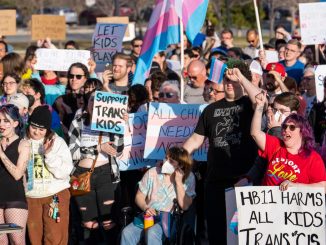
On Aug. 12, the state of Florida announced new guidelines to end all gender-affirming care for trans adults and children who receive Medicaid. This will result in the forcible detransition of thousands of the most vulnerable, especially Black, Brown and Indigenous people. It will result in more deaths among a community that suffers astronomical rates of suicide when denied gender-affirming care. 

It also means that private insurance companies are likely to begin denying gender-affirming care since the state rules give them a perfect excuse to do so. And that’s clearly what’s intended.

Gov. Rick DeSantis couldn’t get a trans ban through the state legislature, so this was enacted by the Department of Health through the recommendation of a hand-picked group of anti-trans doctors. This follows the example of Texas, where earlier this year Gov. Greg Abbott and Attorney General Ken Paxton unilaterally enacted criminal investigations of parents, teachers and health care workers who support trans children on charges of “child abuse.” 

While there are ongoing legal cases in these and other states, the political coup d’etat by the U.S. Supreme Court in June makes clear that these kinds of abuses of power will ultimately be legally upheld, as will anti-trans legislation – unless the working class intervenes to turn the situation around.

The combined attacks at the state and national level have unleashed an unprecedented wave of trans panic across the U.S. this year. The most serious escalation came during Pride month, when there were daily attacks aimed at trans people and the LGBTQ2S community generally, some spontaneous but many organized by the fascist right, often with police support. 

Hundreds of incidents have been recorded in both so-called “blue” and “red” states, from coast to coast, north and south, but there has been almost no media coverage beyond the local level.

The demonization of trans people is merely the first wave of a fascist-inspired, ruling-class-supported campaign that will next target the broader queer community, women, and all workers and oppressed people. The ultra-right Supreme Court majority has already outlined its plans to eliminate constitutional protections for same-sex marriage, contraception, and protection from so-called “sodomy” laws that are still on the books in many states. 

Divide and rule from above

The speed with which the attack on trans people has escalated this year is truly frightening. From state bills in several Republican-ruled states, which often went down in defeat; to governor-imposed mandates; to fascist violence on the streets and in other public spaces; to the same anti-trans arguments and lies flooding the columns and airwaves of so-called liberal media outlets like the New York Times and megacorporations like Netflix and Starbucks; to the complete silence and inaction of the federal government – it’s clear a large and growing section of the ruling class has enthusiastically embraced this particular course of divide and rule.

Another front in this war is the monkeypox virus. The CDC, after completely abandoning public health for COVID-19, has falsely portrayed monkeypox as a sexually transmitted disease, centered among gay men and trans feminine people, couched in stigmatizing language, while severely limiting the availability of vaccines. Already there have been incidents of violence and threats tied to this, which are sure to grow if the virus spreads more widely.

To resist this onslaught from above, the unity of the women’s movement, the broad LGBTQ2S movement, and the trans community is of the utmost urgency. Why is it important for us as communists to be front and center in this struggle? Because a revolutionary, class and socialist understanding of these issues is needed to build and protect that unity.

A major effort is underway to divide the women’s movement, the broad queer movement, and socialists from trans people. Two forms this takes are TERFs (Trans-Exclusionary Radical Feminists) and so-called “patriotic socialists” (patsocs).

TERFS claim trans women are “men” invading women’s spaces. Some even claim trans women are to blame for the loss of abortion rights for supposedly diluting the definition of “woman.” They claim trans men are vulnerable lesbians who have been tricked into transitioning. Their arguments are then taken up and given weight by the centrist and liberal media and right-wing politicians on behalf of the ruling class. 

“Patriotic socialists” claim that trans rights, queer rights and reproductive rights are a “distraction” from the class struggle. They said much the same two years ago about the Black Lives Matter movement. Their arguments can confuse young people who are interested in the class struggle but don’t yet have a Leninist understanding of special oppressions and the working class.

We have a special role to play in combating these reactionary forces that seek to divide and disarm the movement. We have not only the lessons taught by Lenin and Engels, but Dorothy Ballan and Bob McCubbin, and also Leslie Feinberg, who dispelled many of these anti-trans myths in the 1996 book “Transgender Warriors,” which was recently reissued for its 25th anniversary.

It is not just because some of our party members and many members of our working class are threatened, although that is certainly true. It is because the struggle against trans, queer and women’s oppression, like the struggle against national oppression, is central to the class struggle for socialism. Without upholding these struggles and incorporating them into everything we do, the communist movement will not be successful. 

Strugglelalucha256


Brooklyn, N.Y., rally: Resistance and reparations!

“When will we be paid for the work we’ve done?” That great song by the Staples Sisters roared out in Restoration Plaza in Brooklyn, New York’s Bedford-Stuyvesant community on Aug. 17.

“Resistance and Reparations” were the watchwords of the rally organized there by the December 12th Movement.

It was the 20th anniversary of the first U.S. National Reparations Rally in 2002 held in Washington, D.C. And the 135th anniversary of the birth of the Honorable Marcus Garvey.

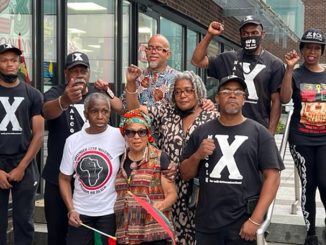
D12 Chairperson Viola Plummer chaired the event that drew 150 people. D12 is demanding President Biden make a $50 billion downpayment on reparations to meet the emergency medical crisis in the Black community.

For example, in New York City’s zip code 11369―the Black and Latinx neighborhood in East Elmhurst, Queens, where Malcolm X lived with his family ― one out of 114 residents has died of COVID-19. That’s almost triple the U.S. average.

A series of militant speakers supported these demands. New York City Councilperson Charles Barron attacked capitalism and called for a socialist revolution.

Barron described how New York City was a center of slavery. In 1741, 34 people were executed for an alleged conspiracy of enslaved Africans. Thirteen of them were burned at the stake.

Last year, when he was a New York State assemblyperson, Barron sponsored a law establishing the New York State Community Commission on Reparations Remedies. It passed in the assembly by a vote of 107 to 43.

What’s unique about this bill is that the commission will have more representation from the Black community than from government-appointed officials.

But this necessary legislation is being held up in the state senate.

Fighting to get it passed is State Senator Jabari Brisport, who spoke and declared himself to be a socialist.

City Councilperson Chi Ossé and Assemblyperson Phara Souffrant Forrest demanded reparations and justice.

Chi Ossé is a Black Lives Matter activist who is the youngest member of the city council. Phara Souffrant Forrest is a nurse and tenant activist fighting to get more funds for health care and mental health in the state budget. 

Free political prisoners!

Besides recorded music from the Staples Singers and Peter Tosh, an ensemble played with musicians from South Africa, Burkina Faso and Haiti.

Professor Raymond Winbush, director of the Institute for Urban Research at Morgan State University in Baltimore, reminded listeners that it was an enslaved African who brought smallpox vaccination to the colonial United States. Yet life expectancy for Black people in the U.S. dropped by almost three years between 2019 and 2020. 

Fyc from the International People’s Democratic Uhuru Movement denounced the FBI raids against the African People’s Socialist Party.

Zayid Muhammad of the Malcolm X Commemoration Committee saluted Fidel Castro and Che Guevara in a fiery speech. Speaking of the need to free political prisoners, Muhammad demanded that Dr. Mutulu Shakur be set free.

Shakur was trained in acupuncture in the People’s Republic of China and used his skills to fight drug addiction. He is dying of cancer in a federal prison and must be given compassionate release.

Marcus Garvey was both a political prisoner and an immigrant. The Black leader was framed, imprisoned and deported to Jamaica. 

Pam Africa came from Philadelphia to demand freedom for Mumia Abu-Jamal and all political prisoners. She pointed out that Abu-Jamal was scheduled to be executed on Aug. 17, 1995 – Marcus Garvey’s birthday.

It was the power of the people that stopped this murder. And it was people’s power that won hepatitis treatment for prisoners in Pennsylvania, including Mumia Abu-Jamal.

Omowale Clay of the December 12th Movement helped close out the rally with the chant, “They stole us, they sold us, they owe us!” This great and true slogan was originated by D12.

Reparations now!

Strugglelalucha256


Free the Kononovich Brothers! International Campaign Meeting, 8/25

Free the Kononovich Brothers! International Campaign Meeting
Thursday, August 25 – 19:00 BST / 2:00 pm EST / 11:00 am PDT
Confirmed speakers:
  • Chris Williamson, former Labour Party MP
  • Alexey Albu, Borotba (Struggle), survivor of the May 2 2014 Odessa Trade Union House Fire massacre
  • Steve Sweeney, former International Editor, The Morning Star, investigative journalist
  • Dmitry Dezhnev, Union of Ukrainian Political Emigrants and Refugees (depending on communications with eastern Ukraine)
  • Phil Wilayto, Odessa Solidarity Campaign (USA)
  • John Parker, Solidarity with Donbass and Antifascists in Ukraine (Los Angeles)
Free all Ukrainian Political Prisoners!
Restore political and media freedoms in Ukraine!
Register here: https://www.eventbrite.co.uk/e/free-the-kononovich-brothers-free-all-ukrainian-political-prisoners-tickets-401991436207
Strugglelalucha256


Commemorating the 191st Anniversary of the Nat Turner Rebellion – Aug. 21

The People’s Organization for Progress with the Friends of Nat Turner Park invite you to commemorate the 191st Anniversary of the Nat Turner Rebellion, Sunday, August 21, 2022, 1:00 P.M., Nat Turner Park, 171 Muhammad Ali Avenue and Jelliff Avenue (between Bergen Street and Irvine Turner Boulevard), Newark, NJ.

Please share with family, friends, organizations, and community. Masks and social distance protocols are encouraged. If you have questions, please call 973-801-0001.

Power to the People!!!

Lawrence Hamm Chairman People’s Organization for Progress

Strugglelalucha256


New Orleans: Speak Out and March for Abortion Rights, Sept. 10

SATURDAY, SEPTEMBER 10, 2022 AT 5 PM
Speak Out and March for Abortion Rights
400 Royal St, New Orleans

In the wake of the Louisiana Supreme Court’s upholding of the ban on abortion rights, it is not the time to remain complacent but to fight back and build a movement. We WILL win back our rights if we send the message that we will not let them continue as usual while they attack us. We must fight also for free childcare and all the necessities to bring us real reproductive freedom!

Join us on Saturday, September 10, at 5 pm at the steps at 400 Royal St. in the French Quarter to speak out and march for our rights.
Wear green and wear your mask!

Strugglelalucha256


Fidel’s guidance in all of Cuba’s struggles

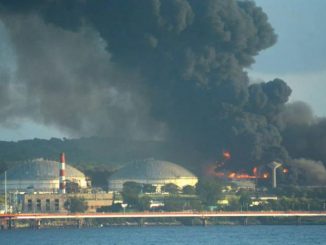
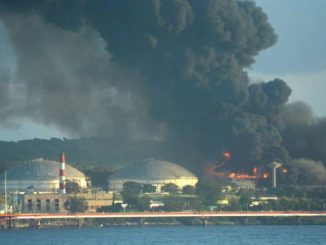
Havana, Aug. 11 — These days Cuba is recovering from an unprecedented fire, which has kept Matanzas, the whole island, and especially rescuers, firefighters, and authorities on full alert since the night of August 5. The continuous explosions in one of the main oil storage facilities in the country left a trail of thick black smoke that covered the Havana sky for five days. It also left so far two deaths, 14 people missing, and over a hundred people injured. Now that the flames have been extinguished the next phase of clean up will begin and it will start with finding the remains of those brave firefighters who threw themselves immediately into battle for their homeland.

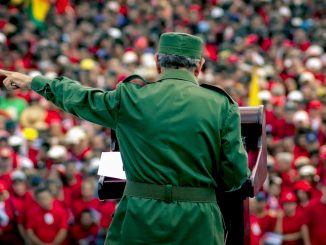
However, amid pain and agony, Cuba has one great consolation: since 1959, the people have never been alone in struggles, accidents, or catastrophes of any kind. Fidel never permitted it. Today, when the island is just 2 days away from remembering the 96th anniversary of his birth, the 6th that has passed without his physical presence, the people proved once again that his ideas and his example do not abandon them.

In the most uncertain moments of the fight to put out the fire, Cuban President Miguel Díaz-Canel Bermudez mentioned, again and again, a phrase well known to Cubans: “The protection of our citizens will always occupy the first place in our efforts. Nothing will have priority over this.”

Fidel repeated those same words in March 2003, a few months after two powerful hurricanes, Lili and Isidore, crossed the island in September 2002, both of which had an almost identical path, coming barely 11 days between one another.

“In the face of climate changes, the environmental damage caused by humankind, economic crises, epidemics and cyclones, our material, scientific and technical resources are increasingly abundant,” he added.

Cuba had already lived through other extreme experiences at that time. Hurricane Flora, for example, passed over the island in October 1963 and is remembered for its heavy rains, which overflowed rivers, ruined crops, and destroyed houses. More than 1,150 people died during that violent five-day storm, as well as thousands of animals.

According to Bohemia, Fidel directed the relief operations and moved from one province to another. First Santa Clara, then Camagüey, and even into the most dangerous area of the Cauto River.

“The Commander-in-Chief of the Revolution was, as always, in the front line. It was not uncommon to see him personally organizing rescue brigades, attending to the victims, sharing the pain of the people,” the magazine reported.

Fidel Castro was on the front line of the catastrophe, even during the battering of the winds and waters, even though the historic hurricane had not yet left the eastern province within which it performed several loops while trapped by the mountains.

The leader of the Revolution moved there with amphibious tanks of the Rebel Army and he personally saved many victims who remained on the roofs, the top of trees, or those who were trapped in the floodwaters. The helicopters fought against the heavy winds, taking advantage of every space of calm to save entire families.

All the victims received material assistance. The enormous damage was mitigated and everything was rebuilt. No family was left behind.

Since 2016, the year Fidel died, Cuba has faced other situations of great pain: Hurricane Irma (2016), the plane crash at José Martí International Airport (2018), and the tornado that destroyed hundreds of houses in Havana (2019), an unprecedented pandemic, a raging fire…

But Cuban leaders continue Fidel’s legacy. From the checkpoint stationed a few kilometers from the fire, after it was made known that the flames were already under control, Díaz-Canel took a few minutes to recall – as he does every day – some words of the man who remains and will remain present in each of our struggles: “Our people will be able to overcome any obstacle, any difficulty; our people will be able to march forward unstoppable, and they will be able to overcome their own weaknesses.”

Source: Resumen Latinoamericano-US

In commemoration of Fidel’s  birthday on August 13 we present Estela Bravo’s extraordinary documentary, Fidel the Untold Story

Strugglelalucha256


Las sanciones alimentan el fuego en la zona industrial de Matanzas, Cuba

El 5 de agosto, un importante depósito de combustibles en Matanzas, Cuba, ubicado a 90 km al este de La Habana, fue alcanzado por un rayo. Un tanque que contenía 25.000 metros cúbicos de petróleo crudo se abrió en llamas tras el impacto. Desde entonces, un enorme incendio ha hecho estragos en Matanzas. El teniente coronel Alexander Ávalos Jorge, subjefe del cuerpo de bomberos de Cuba, declaró que era imposible estimar cuándo se extinguiría completamente el fuego. Como consecuencia del volumen de la explosión y las características del fuego, que lo hacen difícil de controlar, se han reportado varias personas desaparecidas (incluyendo varios bomberos), otras tantas hospitalizadas con quemaduras graves y cientos de personas han sido evacuadas de sus hogares. El presidente de Cuba, Miguel Díaz-Canel, se trasladó a Matanzas el 6 de agosto, reuniéndose tanto con los funcionarios locales que trataban de controlar el incendio, como con los habitantes de la ciudad. Al día siguiente, interactuó con la prensa y habló sobre el heroico trabajo realizado por los bomberos y la solidaridad del pueblo cubano. “nunca nos vamos a detener ante las adversidades”, dijo.

Cuatro de los ocho tanques del depósito de combustible han sido alcanzados por las llamas. El 8 de agosto, el gobernador de Matanzas, Mario Sabines Lorenzo, confirmó que tres tanques habían colapsado. Nubes de polvo se ciernen ahora sobre la isla. Elba Rosa Pérez Montoya, ministra cubana de Ciencia, Tecnología y Medio Ambiente (CITMA), dijo que científicos de diversos ámbitos estaban monitoreando la situación para ver si el humo resultante del incendio provocará algún efecto negativo para la salud de los residentes de las zonas aledañas. Hasta este momento, dijo, “no tenemos evidencias de que haya afectaciones sobre la salud humana”. No obstante, se han detectado sustancias extrañas en los suministros de agua del Valle de Yumurí, en Matanzas. Diosdado Vera, un campesino de 89 años, mostró al periodista Arnaldo Mirabal Hernández el inusual color y olor del agua de una vieja bañera que sirve de fuente de agua para sus vacas. “Hay aproximadamente 3.200 partículas en el aire en estos momentos”, dijo el ministro del CITMA Pérez Montoya. “La nube tiene dióxido de azufre, óxido de nitrógeno, monóxido de carbono, entre otras sustancias, que están cayendo sobre Matanzas, Mayabeque y La Habana”. Pérez Montoya también declaró que un equipo de científicos y expertos están estudiando las extrañas sustancias encontradas en el Valle de Yumurí.

Esta tragedia también ha tenido repercusiones inmediatas para toda la población de la provincia de Matanzas y de toda la isla de Cuba, afectando el suministro eléctrico y el acceso a la salud, ya suficientemente tensionados bajo el peso del bloqueo estadounidense, que condiciona la disponibilidad de repuestos y la escasez de medicinas, respectivamente.

El incendio ya ha provocado que la central termoeléctrica Antonio Guiteras, en Matanzas, se encuentre fuera de servicio, como consecuencia de la escasez de agua y la contaminación del ciclo hídrico. Es probable que esto provoque graves cortes de electricidad en medio de las olas de calor de este verano. Ricardo Ronquillo Bello, presidente de la Unión de Periodistas de Cuba (UPEC), tuiteó que esta tragedia será “otra prueba para el periodismo cubano que sabrá honrar con su humanismo y responsabilidad social”. Ronquillo se refería a la avalancha de noticias falsas que recorrió las redes sociales, provocando una sensación de alarma en un momento que ya era, de por sí, difícil.

Durante esta grave crisis, tanto el pueblo como el Gobierno cubano respondieron inmediatamente, lo que se traduce en enormes esfuerzos en terreno para contener el fuego, evitar un desastre medioambiental de grandes proporciones y mantener a la población a salvo. También ha generado un clamor de ayuda y solidaridad internacional. Los Gobiernos de México, Venezuela, Rusia, Nicaragua, Argentina, Chile y varios otros han ofrecido rápidamente ayuda material, y algunos – como México y Venezuela – también han enviado expertos y bomberos para hacer frente a esta compleja situación. El Banco de Crédito y Comercio de Cuba (Bandec) ha habilitado una cuenta para que los habitantes del país puedan donar dinero al pueblo de Matanzas.

Hoy Cuba es Matanzas”, dijo el presidente Díaz-Canel, refiriéndose tanto a las repercusiones nacionales del incendio, como a la solidaridad que ha manifestado toda la isla.

Sanciones

El bloqueo de los Estados Unidos contra Cuba alimenta el fuego que se desata en el país, aunque las autoridades estadounidenses lo nieguen. El Gobierno de los Estados Unidos ha endurecido el bloqueo contra Cuba y ha negado que las sanciones tengan algún impacto en el funcionamiento del país (de hecho, en 2021, la entonces secretaria de prensa de la Casa Blanca, Jen Psaki, dijo que los problemas en Cuba no se deben a las sanciones estadounidenses sino a “la mala gestión económica del Gobierno cubano”). La embajada de los Estados Unidos en La Habana ha asegurado que el bloqueo autoriza a las entidades y organizaciones estadounidenses a proporcionar ayuda y respuesta en caso de desastre. Pero las organizaciones nos dicen que no es así, ya que las 243 sanciones impuestas a Cuba funcionan como un estrangulamiento contra la realización de cualquier actividad en el país. Muchas de estas organizaciones afirman que el proceso para enviar ayuda a Cuba es largo, con un régimen de licencias que requiere costosos abogados. La inclusión de Cuba en la lista de Estados patrocinadores del terrorismo hace que los bancos, tanto en los Estados Unidos como en el extranjero, sean reacios a procesar donaciones humanitarias.

Mientras Washington dice una cosa y hace otra, los bomberos de Matanzas – ayudados por los refuerzos de México y Venezuela – han estado rociando espuma sobre el fuego para evitar que se extienda más, y los helicópteros han estado vertiendo agua sobre los otros tanques de petróleo para evitar que se quemen. Incluso después de que el incendio se extinga y queden solo las cenizas, Cuba luchará por reconstruir estos tanques y por resolver su crisis energética. No se trata de problemas meramente internos, sino de problemas creados e incrementados por el nefasto bloqueo impuesto por los Estados Unidos desde hace seis décadas.

Poco después de la caída del rayo, los usuarios de las redes sociales compartieron la etiqueta #FuerzaMatanzas en varias plataformas. En 24 horas, la etiqueta fue compartida por casi mil millones de usuarios, según Dayron Avello, gerente de medios sociales de la Clínica Internacional Camilo Cienfuegos. Mil millones de personas han manifestado su apoyo a Cuba, una solidaridad que el bloqueo estadounidense no puede impedir.

El 11 de agosto Díaz-Canel confirmó que, gracias al trabajo conjunto de México, Cuba y Venezuela el incendio fue controlado. Gracias a este esfuerzo conjunto, se lograron extinguir las llamas, pero el bloqueo sigue en pie.

Este artículo fue producido para Globetrotter.

Vijay Prashad es un historiador, editor y periodista indio. Es miembro de la redacción y corresponsal en jefe de Globetrotter. Es editor en jefe de LeftWord Books y director del Instituto Tricontinental de Investigación Social. También es miembro senior no-residente del Instituto Chongyang de Estudios Financieros de la Universidad Renmin de China. Ha escrito más de 20 libros, entre ellos The Darker Nations y The Poorer Nations. Sus últimos libros son Struggle Makes Us Human: Learning from Movements for Socialism y The Withdrawal: Iraq, Libya, Afghanistan, and the Fragility of U.S. Power (con Noam Chomsky)

Manolo De Los Santos es codirector ejecutivo del People’s Forum e investigador del Instituto Tricontinental de Investigación Social. Coeditó, recientemente, Viviremos: Venezuela vs. Hybrid War (LeftWord Books/1804 Books, 2020) y Comrade of the Revolution: Selected Speeches of Fidel Castro (LeftWord Books/1804 Books, 2021). Es co-coordinador de la Cumbre de los Pueblos por la Democracia.

Strugglelalucha256


Sanctions fuel the fire at Cuba’s Matanzas oil storage

On August 5, a major oil storage facility in Matanzas, Cuba, 65 miles east of Havana, was hit by lightning. A tank that contained 25,000 cubic meters of crude oil caught fire after being struck. Since then, an enormous fire has been raging in Matanzas. Lieutenant Colonel Alexander Ávalos Jorge, deputy head of Cuba’s fire department, said that it was impossible to estimate when the fire would be completely extinguished. This tremendous explosion and hard-to-control fire has led to several people being reported missing (including firefighters), many others injured with severe burns, and hundreds more evacuated from their homes. Cuba’s president, Miguel Díaz-Canel, rushed to Matanzas on August 6, interacted with the local officials who were trying to get the fire under control, met residents of the town, and the next day, interacted with the press and spoke about the heroic work done by the firefighters and the solidarity of the Cuban people. “We are going to overcome this adversity,” he said.

Four of the eight tanks at the storage facility have been impacted by these fires. By August 8, Matanzas Governor Mario Sabines Lorenzo also confirmed that three tanks had been compromised. Clouds of dust now hover over the island. Elba Rosa Pérez Montoya, Cuba’s minister of Science, Technology, and Environment (CITMA), said that scientists from various backgrounds were monitoring the situation to see if the smoke resulting from the fire will lead to any negative health effects for the residents of the surrounding areas. As of that point, she said, “We have no evidence that there are effects on human health.” Nonetheless, strange substances have been detected in the water supplies in Yumurí Valley, Matanzas. Diosdado Vera, an 89-year-old farmer, showed journalist Arnaldo Mirabal Hernández the unusual color and odor of the water in an old bathtub that serves as the water source for her cows. “There are approximately 3,200 particles in the air right now,” said CITMA Minister Pérez Montoya. “The clouds have sulfur dioxide, nitrogen dioxide, carbon monoxide, among other substances that are falling on Matanzas, Mayabeque, and Havana.” Meanwhile, Pérez Montoya said that a team of scientists is investigating the strange substances found in the Yumurí Valley.

This tragedy has also had immediate repercussions for the entire population in the province of Matanzas and the whole island of Cuba since it affects their electricity supply and access to health care, which already are strained under the weight of the U.S. blockade, due to lack of availability of spare parts and scarcity of medicines in Cuba, respectively.

The fire has already led to the Antonio Guiteras thermoelectric plant in Matanzas being out of service due to a shortage of water and the contamination of the water cycle. This will likely lead to severe electricity outages amid record heat waves this summer. Ricardo Ronquillo Bello, president of the Union of Cuban Journalists (UPEC), tweeted that this tragedy will be “another test for Cuban journalism that will know how to honor with its humanism and social responsibility.” Ronquillo was referring to the onslaught of fake news that swept through social media, leading to a sense of alarm during an already difficult period.

In this dire crisis, the people of Cuba and their government have responded immediately, and this has resulted in on-site efforts to contain the fire, prevent a major environmental disaster, and keep the population safe. It has also led to a call for international aid and solidarity. The governments of Mexico, Venezuela, Russia, Nicaragua, Argentina, Chile and several others have promptly offered material aid, and some countries like Mexico and Venezuela have also sent experts and firefighters to confront this complex situation. Cuba’s Credit and Commerce Bank (Bandec) has set up an account so that people in the country can donate money to the people of Matanzas.

“Cuba is Matanzas,” said President Díaz-Canel, in the context of both the impact of the fire on the entire island and the solidarity that is visible across Cuba.

Sanctions

The U.S. blockade of Cuba fuels the fire that rages on in the country, despite denials by authorities in the United States. The U.S. government has both been stiffening up the blockade of Cuba and denying that sanctions have any impact on the functioning of the country (in fact, in 2021, then-White House press secretary Jen Psaki had said that the problems in Cuba are not due to the U.S. sanctions but rather are due to “the Cuban government’s economic mismanagement”). The U.S. Embassy in Havana has made assurances that the blockade authorizes U.S. entities and organizations to provide disaster relief and response. But organizations tell us that this is not the case, with the 243 sanctions imposed on Cuba working as a stranglehold against pursuing any activity in the country. Many of these organizations say that the process to send aid to Cuba is lengthy, with a licensing regime in place that requires expensive lawyers. Cuba’s inclusion in the state sponsors of terrorism list means that banks in both the United States and abroad are reluctant to process humanitarian donations.

While Washington says one thing and does another, the firefighters in Matanzas—aided by the reinforcements from Mexico and Venezuela—have been spraying foam on the fire to prevent it from spreading further, and helicopters have been pouring water on the other oil tanks to stop them from combusting. Even after the fire settles and the ashes remain, Cuba will struggle to rebuild these tanks and to solve its energy crisis. These are not merely domestic problems but rather are problems created and exaggerated by the harmful U.S.-imposed blockade that has been in existence for the past six decades.

Not long after the lightning strike, users on social media shared the hashtag #FuerzaMatanzas (be strong, Matanzas) on various platforms. Within 24 hours, the hashtag was shared by nearly a billion users, according to Dayron Avello, social media manager at Clínica Internacional Camilo Cienfuegos. A billion people have signaled their support for Cuba, a solidarity the U.S. blockade is unable to prevent.

This article was produced by Globetrotter.

Vijay Prashad is an Indian historian, editor and journalist. He is a writing fellow and chief correspondent at Globetrotter. He is an editor of LeftWord Books and the director of Tricontinental: Institute for Social Research. He is a senior non-resident fellow at Chongyang Institute for Financial Studies, Renmin University of China. He has written more than 20 books, including The Darker Nations and The Poorer Nations. His latest books are Struggle Makes Us Human: Learning from Movements for Socialism and (with Noam Chomsky) The Withdrawal: Iraq, Libya, Afghanistan, and the Fragility of U.S. Power.

Manolo De Los Santos is the co-executive director of the People’s Forum and is a researcher at Tricontinental: Institute for Social Research. He co-edited, most recently, Viviremos: Venezuela vs. Hybrid War (LeftWord Books/1804 Books, 2020) and Comrade of the Revolution: Selected Speeches of Fidel Castro (LeftWord Books/1804 Books, 2021). He is a co-coordinator of the People’s Summit for Democracy.

Strugglelalucha256


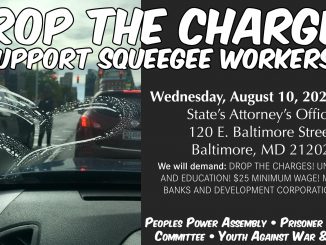
Baltimore: Support Squeegee Workers! Drop the Charges! Aug. 10

WEDNESDAY, AUGUST 10, 2022 AT 6 PM
Support Squeegee Workers! Drop the Charges! Protest @ States Attorney
Baltimore City State’s Attorney Office

Join us at the Baltimore City State’s Attorney’s Office on Weds., Aug 10. We will begin at 6 pm.

Ahead of the squeegee worker’s August 11 hearing, we are demanding that Baltimore State’s Attorney Marilyn Mosby drop all charges.

Instead of criminalization and crackdowns, we demand that the City address the root causes. Fight for well-funded schools and union jobs, raise the minimum wage to $25/hour, and create a scholarship program for squeegee workers. Make the banks and development corporations pay!

Strugglelalucha256
https://www.struggle-la-lucha.org/2022/08/page/3/