Minneapolis overpowers Trump rally with mass protest

More than 10,000 protest Trump in Minneapolis.

Minneapolis, Oct. 11 — Thousands of people poured into the streets on Oct. 10 to resist the reactionary rally held by President Donald Trump in the heart of Minneapolis. Long targeted by the president’s racist incitement against the city’s immigrant, Muslim and Black communities, Minneapolis rose to the occasion with a massive display of righteous militancy.

The evening began with several marches converging from multiple directions onto the Target Center stadium where Trump was set to appear. One march, organized by over a dozen union locals and labor organizations, shut down traffic for miles as well as a major bridge over the Mississippi River.

At the intersection of 6th Street and 1st Avenue outside the Target Center, Trump supporters were forced to run a gauntlet of thousands of protesters in order to reach the venue entrance. Surrounded by the crowd, they were met with jeers and taunts at point-blank range, the MAGA hats ripped from their heads. Everyone from Somali women, to working-class retirees, to queer youth, jostled for a chance to express their rage at the supporters of a president who has brought uncertainty and worsening oppression onto their communities.

Even armed brownshirt militias, like the Oath Keepers, who had confidently proclaimed their intention to “protect” the Trump rally, were helpless against the overwhelming demonstration of people power. Multiple attempts by police to enter the crowd were repulsed throughout the night.

The jam-packed crowd sprawled down the block to the next intersection, in front of the First Avenue nightclub, where protesters erected a makeshift stage. Thousands filled the adjacent streets, chanting slogans like “Show me what democracy looks like! This is what democracy looks like!” “When the working class is under attack, what do we do? Stand up fight back!” and “No Trump, no KKK, no racist USA!”

Although the spectacle of impeachment proceedings in Washington dominated cable news headlines, protest organizers emphasized the concrete threats Trump represents to communities in Minneapolis. The city has been disproportionately affected by racist policies like the Muslim travel ban, as well as Trump’s support for Minneapolis police federation head and the infamous killer-cop apologist Bob Kroll, who appeared with Trump onstage. Trade unionists emphasized the attacks on union organizing rights by Trump-appointed judges. All present condemned Trump’s history of sexual violence against women, and his attacks on LGBTQ rights.

Other chants included “No ban on stolen land!” and “From Standing Rock to Palestine, occupation is a crime!” reflecting the mass movement’s growing awareness of imperialism both inside and outside U.S. borders, and its ongoing consequences. Veterans of the Minneapolis-based American Indian Movement, famous for its 1973 armed standoff with federal officials at the Pine Ridge reservation in South Dakota, joined protesters onstage.

“Bound up in all the various progressive people’s movements is the struggle against war, the struggle against colonialism, the struggle against imperialism, the struggle to resist the occupation of indigenous lands,” said Autumn Lake of the Anti-War Committee, to the cheers of thousands.

“There’s a story they don’t tell you about why Somalis came here,” said Jaylani Hussein of the Minnesota chapter of the Council on American-Islamic Relations (CAIR-MN). “And that is that this country played with our country, and used it as a proxy in the Cold War. That’s why we are here.”

CAIR-MN was part of the ad hoc organizing committee for the event, which also included Minnesota Immigrant Rights Action Committee, Anti-War Committee, Twin Cities Coalition for Justice 4 Jamar, Freedom Road Socialist Organization, Communities United Against Police Brutality, Minnesota Workers United, No Cages Minnesota, Queer Revolutionary Workers Syndicate, Twin Cities Democratic Socialists of America, General Defense Committee Local 14, Immigrant Worker Solidarity, and others. Still more groups organized independently. Fight Back! spoke with many protesters who said they had been unaware that a demonstration was being organized at all, but simply knew they had to protest as soon as they learned that Trump was coming to town.

The scale of the protest reflected the steady growth of the mass movement in the Twin Cities. Though challenges remain for the movement, its powerful display on the night of October 10 points to new revolutionary possibilities in the fights ahead.

Republished from FightBack! News

Strugglelalucha256


Bombings greet the Great Migration

A fundamental change in the composition of the U.S. workforce was the Great Migration of African Americans from the South to Northern cities.

With the outbreak of World War I, factory owners lost Eastern and Southern Europe as a source of exploited workers. For the first time, Black people were able to get jobs in many Northern plants.

Hundreds of thousands of African Americans, largely from sharecropper families, went North. Chicago’s Black population increased two-and-a-half times between 1910 and 1920, rising from 44,103 to 109,408. In the same decade, Detroit’s Black community grew sixfold.

This sudden growth combined with segregation allowed landlords to jack up rents on their overcrowded properties. Real estate moguls tried to stop African Americans from moving into white neighborhoods.

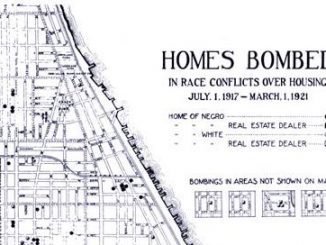
Between July 1917 and March 1921, 58 Black homes were bombed. The long-time anti-lynching activist Ida B. Wells demanded the city take action.

Among the few terrorists arrested for the bombings was James Turner, a clerk at the real estate firm of Dean & Meagher. A six-year-old Black child was killed when a bomb was thrown into a building on Chicago’s Indiana Avenue.  

Decades later, real estate sharks prefer setting fires to throwing bombs. Between 1978 and 1981, 41 people, including 30 children in Hoboken, N.J., were killed by arsonists. The Latinx population of this small city dropped by half.  

The Chicago bombings often followed racist meetings like the one organized by a “property owners’ association” on May 5, 1919. A real estate agent urged whites to “stand together block by block” against the “invasion” of African Americans seeking homes.

Two weeks later, the home of the renowned actor Richard B. Harrison and his family was destroyed on May 16. Harrison was most famous for his role in the Broadway play “The Green Pastures.”

Against a backdrop of racist newspapers and politicians, the  campaign of real estate crooks sought to provoke a hysteria among whites. A result was that the Black teenager Eugene Williams could be killed for swimming off the “wrong beach” of Lake Michigan.

Why didn’t the Great Migration happen earlier?

Why did it take 50 years after the Civil War for Northern industry to exploit Black workers? Andrew Carnegie recruited workers from the Austro-Hungarian Empire for his Pittsburgh steel mills. Why didn’t Carnegie seek Black or white employees from the U.S. South?

Northern capitalists needed Black and white labor to stay in the South. Cotton production grew from 4 million bales in 1870 to over 16 million bales in 1911. Even though U.S. manufacturing exports grew at a more rapid rate, cotton still accounted for 29 percent of U.S. exports in 1911. 

Employment in Southern logging, sawmills and tobacco factories also boomed. Yankee corporations grabbed much of the profit. Both the Southern Railroad, (now part of the Norfolk Southern), and the steel mills around Birmingham, Ala., were effectively controlled from J.P. Morgan’s banking house at 23 Wall Street.

As World War I began, Black labor was summoned North. But Chicago’s ruling class continued to use racism to pit workers against each other.

The packer Phillip Armour bragged that he sought to “keep the races and nationalities apart after working hours, and to foment suspicion, rivalry, and even enmity among such groups.”

Armour was filthy rich. His packing plants were just plain filthy. In 1898, when the U.S. invaded Cuba, Puerto Rico and the Philippines, more U.S. soldiers died by food poisoning from Armour’s tainted pork and beans than were killed by gunfire.

The Democratic machine and the race riot

Just as Wall Street ran New York City for generations through the corrupt Tammany Hall political machine, so did Chicago’s wealthy and powerful rely on the Democrats.

The living shadow of the 1919 “race riots” was the Chicago Democratic Party machine. Even decades later, a whole layer of this apparatus — alderman, judges, ward bosses and the like — could trace their careers to membership in the neighborhood “athletic clubs” that sparked the violence.

These clubs were sponsored by elected officials like the racist Cook County commissioner, Frank Ragen. His “Ragen’s Colts” killed and wounded Black people. They were like the fascist gangs that were being formed in Italy and Germany.

The coroner’s report emphasized the role of these clubs:

“Responsibility for many attacks was definitely placed by many witnesses upon the ‘athletic clubs’ including Ragen’s Colts, the Hamburgers, Aylwards, Our Flag, Standard … and several others. The mobs were made up for the most part of boys between 15 and 22.

“Gangs, particularly of white youths, formed definite nuclei for crowd and mob formations. Athletic clubs supplied the leaders of many gangs.”

Among the members of the “Hamburg Social and Athletic Club” at the time was 17-year-old Richard J. Daley, who would be elected six times as Chicago’s mayor.

Crucial to Daley’s political ascent was winning the presidency of the Hamburgers in 1924.

This racist swine was still mayor when he finally died in 1976. One of his sons, William Daley, became President Bill Clinton’s secretary of commerce and helped drive the North American Free Trade Agreement through Congress. 

Another of his sons, Richard M. Daley, was elected to his fourth term as Chicago’s mayor in 1999, the 80th anniversary of the “race riots.” 

Sources: “Race Riot, Chicago in the Red Summer of 1919” by William M. Tuttle Jr.; “The Kerner Report: The 1968 Report of the National Advisory Commission on Civil Disorders”; “A Few Red Drops, the Chicago Race Riot of 1919” by Claire Hartfield; “The Chicago Race Riots, July, 1919” by Carl Sandburg; “Down on the Killing Floor, Black and White workers in Cicago’s Packinghouses, 1904-54” by Rick Halpern; “Boss, Richard J. Daley of Chicago” by Mike Royko.

Next: What did the unions do?


Part 1: The long shadow of the 1919 Chicago race riot

Part 2: Bombings greet the Great Migration

Part 3: What did the unions do?

Part 4: Communists fight racism and evictions

Part 5: Chicago Mayor Daley’s racist machine

Part 6: Never forget Fred Hampton

Part 7: The people put Harold Washington in City Hall

Part 8: A city of struggle

Strugglelalucha256


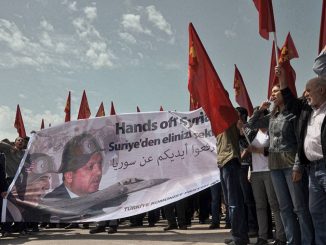
Communist Party of Turkey: ‘Hands off Syria!’

Statement issued by the Communist Party of Turkey (TKP).
HANDS OFF SYRIA!

[Turkey President Recep Tayyip Erdoğan’s party] AKP is committing a great crime for the last eight years. AKP disregards the sovereignty of another country.

Syria has been suffering for eight years.

About eight years ago, anti-government demonstrations commenced in Syria. These demonstrations soon turned into an armed uprising and clashes in certain cities. Then together with the involvement of foreign forces, the civil war and the occupation of imperialist powers led by the US, started

Back then, U.S. imperialism’s plans for the Middle East were in effect. The AKP government was more than eager to play the role of the primary actor in these plans. The United States and the AKP started arming and training various groups against the Assad government of Syria. NATO, MIT (Turkish National Intelligence Agency) and CIA all flock to Syria. Jihadist gangs were armed with the most modern weapons. Armies were established out of these gangs. Turkey took the responsibility for the training of these armies. As if these were not enough, meetings were held in Antalya and İstanbul with the representatives of these gangs. The gang members were paid salaries by Turkey. AKP went beyond interfering in the internal affairs of our neighbour Syria and took on the role of directly provoking a civil war in Syria. However, the process did not unfold as predicted by the US and the AKP. The people of Syria resisted against the imperialist occupation and the reactionary gangs.

On the other hand, the people of Syria paid a very heavy price in these eight years. Syria has lost hundreds of thousands of her people. Millions have been displaced. They were subjected to the medieval darkness in the middle of the 21st century. In some regions, the residents were subjected to the most savage barbarism and bigotry.

AKP HAS BEEN COMMITTING A CRIME FOR THE LAST EIGHT YEARS

Syria is still under actual occupation and is in a divided state. Jihadist gangs and their armed forces are still terrorizing certain regions.

AKP is committing a great crime for the last eight years. AKP disregards the sovereignty of another country.

They are overtly funding, training separatist, jihadist gangs and deploying them as armed forces within Syria.

AKP government along with the USA are the main criminals behind the human tragedy in Syria. This crime, on which they embarked together in the name of bringing freedom to the people of Syria, has opened a huge wound that cannot be healed for years not only in Syria but in the whole region.

AKP AND USA ARE PARTNERS IN CRIME IN SYRIA

Neither the AKP government nor the USA or any other imperialist force can bring peace to the people of Syria.

It is clear that the peace and freedom rhetoric by those who rely on imperialist forces, who see the solution in concepts such as autonomous government, locality, regionalism which are nothing but the product of imperialist strategies to divide the people, and those who rely on this or that nationalism are futile.

The decision for a peaceful and prosperous future only belongs to the people of Syria. The demands of the working people in Syria who have resisted the imperialist intervention for the last eight years is clear: Independence, sovereignty and territorial integrity.

AKP’s operation today against a country, whose sovereignty it disregards under the pretext of Turkey’s security, is unacceptable.

Additionally, the fact that this is justified with the claim of the return of the displaced Syrians to their homes is nothing but a grand hypocrisy.

IMPERIALIST FORCES ARE THE REAL THREAT TO OUR SECURITY

The real threat to the security of our country is NATO, the US and the imperialist forces and those who insist on collaborating with them.

The peace in Syria can be established only when all imperialist and occupying forces withdraw from the region. It is the Syrians who can determine the future of Syria.

The Communist Party of Turkey

Central Committee

9.10.2019

Strugglelalucha256


Ecuadorians mobilize against the ‘big package’ of Moreno and the IMF

Those who believe that class struggle is a matter of the past are wrong.  The economic elites of Ecuador, through the government of Lenín Moreno, have declared economic war on the Ecuadorian people, with the imposition of measures dictated by the International Monetary Fund, which include increasing fuel prices, more layoffs of public employees, cutting workers’ rights and measures to favor importers, exporters and the corporations of production.

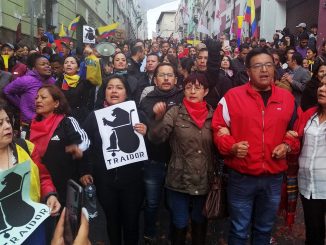
In response to this “big package,” the affected sectors immediately began mobilizing, demanding the repeal of the measures adopted by the government that impacts the majority of Ecuadorians.  The protests began with the strike of the transport workers and now continue with the active participation of indigenous peoples in the mountains and in the Amazon, as well as popular urban sectors, workers, students and women.

Instead of responding to citizen demands, the government decreed a state of emergency for 60 days, ordering the mobilization of the armed forces and police to repress the demonstrations.  As a result of this measure, there is one dead, hundreds of people arrested, assaults on journalists, young people wounded with firearms and tear gas bombs, people beaten and harassed.

Many reasons to protest

The rise in fuel prices is the trigger for the recent mobilizations, but the general discontent that reigns in Ecuador has broader and deeper roots, and must be looked at from the moment that Lenín Moreno turned his back on the government program that allowed him to assume the presidency.

Moreno’s initial cabinet was replaced by representatives of the production corporation and the private media, who are imposing their own vision and group and class interests in order to favor themselves enormously from the state administration.

When the economy was showing signs of recovery, these sectors worked on a tale that the country was experiencing the worst crisis in history, for which the previous government was to be blamed.  After adopting a series of measures, such as the pardon of fines and interest to the defaulters of the large economic groups that have debts with the State, which total more than 4,500 million dollars, the economy has gone from tumble to tumble.  Among the main impact has been the increase in poverty and extreme poverty, the reduction of adequate employment, the growth of underemployment, the dismissal of public workers, greater insecurity and violence, and the government’s inability to address serious problems such as violence in prisons, illegal mining and the border situation.

Coincidentally, while the majority of the Ecuadorian people are going through serious economic and social problems, the rich minority sectors are increasing their profits in the midst of the crisis.  The banking sector, for example, in 2017-2018, made a profit of 554 million dollars, which represents an increase of 39.8% over December 2017.

On the other hand, the government, instead of seeking to finance the budget with a tax policy so that those who have more pay more, collect the debts of big businessmen and combat tax evasion and avoidance, resorts to external indebtedness in conditions that are extremely disadvantageous for the country.

Under these conditions, the government resorted to the International Monetary Fund, with which it signed an IMF Extended Service Agreement, in exchange for a loan of 4.200 million dollars, and agreed to the strings attached to increase in value added taxes (IVA), the rise in cost of fuels, the privatization of strategic sectors, the so-called labor flexibilization, which in reality means attacking the rights of workers, the reform of the statute of the Central Bank, reduction of the size of the State with layoffs of public workers among others, in order to achieve “fiscal balance”.  It should be remembered that the last agreement with the IMF took place in 2003, during the government of Lucio Gutiérrez, who did not end his term because of popular rejection.

President Moreno, with a level of credibility bordering on 16% and acceptance of only 22%, thus imposes a package of economic measures that has received support from the International Monetary Fund, the chambers of commerce, bankers and the corporate media, which have closed ranks to defend the measures, pointing out that the government has had the “courage” to “withdraw the subsidy” to fuels, “something that has not been done in the last 40 years.

The rise in diesel prices from 1.03 to 2.30 dollars and extra gasoline from 1.85 to 2.39 dollars, prices that will fluctuate every month, will have a great impact on the popular economy, since they increase the prices of basic necessities and public transportation, deteriorating the purchasing power of most Ecuadorian families and worse for those who earn a basic salary or have reduced income. Every penny that goes up in fares and groceries counts a lot for the 1.7 million people who subsist on less than $1.6 a day, and for another 4.4 million who receive less than $2.9 a day.

Transport workers strike and popular mobilization

On Thursday, October 3 and Friday, October 4, the strike of transporters affected the whole country, classes were suspended and the working day was shortened due to the difficulties of mobilization. This was the trigger for other sectors to mobilize against the measures of Lenín Moreno’s government in several cities, especially in Quito, where even some flights were canceled at the Mariscal Sucre International Airport in Tababela, due to the impossibility of getting there.  Government Minister María Paula Romo said there were demonstrations in 300 places that day. In Guayaquil, taking advantage of the situation, looting occurred.

Indigenous Mobilization in the Central Highlands

To counteract the transport workers’ strike, the government proceeded to apprehend some of its leaders in Quito (Jorge Calderón) and Cuenca, who are being prosecuted for paralyzing public services.  At the same time, some private media orchestrated a smear campaign against certain leaders. After this campaign of intimidation, the government and the transporters reached an agreement whereby the latter suspended the strike in exchange for increases in freight and passenger costs in urban and interprovincial transport, tax exemptions for the import of spare parts and even allow them to carry passengers standing on buses that travel through provinces.

With this agreement, Moreno’s regime gave rise to a second economic package that will have serious repercussions on the family economy, even more so when no type of compensation has been foreseen.  The lifting of the strike, however, not all transport unions complied and demonstrations against the rise in fuel prices were took place in Sucumbíos, Quito and Portoviejo and other cities.

When business leaders, the media and the government thought that the end of the transport strike meant the end of the protests, the mobilization of the indigenous communities in the provinces of Imbabura, Pichincha, Cotopaxi, Tungurahua, Azuay, Cañar and Loja, as well as in the Amazon region, broke out with great force.

On Saturday, October 5, through Monday indigenous people blocked the roads with barricades and trees, while holding rallies in provincial capitals such as Ambato, Latacunga, and Riobamba. The objective of the indigenous struggle is not only to demand the repeal of the package of economic measures, but also the suspension of concessions to open-pit mining and other demands in defense of small-scale agriculture.

In response to the declaration of the “State of Exception”, the unleashed repression and the imprisonment of the leaders of Pachakútic, Marlon Santi and Jairo Gualinga, the indigenous leaders of CONAIE issued a communiqué declaring their own state of exception in all indigenous territories and warned that “military personnel who approach indigenous territories will be detained and submitted to indigenous justice. The measure is given in response to “the brutality and lack of awareness of the public force to understand the popular character of the demands of the National Strike against the Big Package, which affects the whole of Ecuadorian society and deteriorates the living conditions and existence of the most vulnerable sectors of the country.  The indigenous organization denounced that military and police contingents harshly repressed the indigenous mobilizations, even attacking women and children.

The military, according to CONAIE, entered indigenous territories at various points in the Ecuadorian sierra, raiding houses, using pellet guns and tear gas bombs that wounded  demonstrators.  In the Panzaleo sector, in the Andean province of Cotopaxi, the military detained demonstrators, put hoods on them, and took them to unknown places.

Military held by Indigenous people

In the community of Nizag, province of Chimborazo, in Peguche, province of Imbabura and in Lasso, province of Cotopaxi, indigenous people and peasants held military and police officers, to exchange them for indigenous people detained, denounce repression and apply indigenous justice.

The corporate media and the “public” media have closed ranks around Moreno’s government and its policies. They joined the official story by silencing or minimizing the protests, and give bias coverage by omission of the protests in the country like nothing was happening.  But popular independent social media has been filling the information void. One of them is the Universal Radio Pichincha that has a wide audience not only in Pichincha province but also in Quito. The site has lost power several times but it continues to report. The Moreno government has censored and closed other digital media including ElEstado.net and Ecuadorinmediato.com.

State of emergency … increased repression

Resorting to the declaration of a state of emergency by a government with such low popularity is a sign of weakness in the face of growing opposition,  The 60-day state of emergency suspends the right of association and assembly 24 hours a day, limits the right to freedom of transit, and provides for the mobilization of the armed forces and police “to maintain order.”

Under this framework, 24,000 military personnel and thousands of police have been mobilized to contain the popular protest that as of October 6 have detained nearly 500 people according, María Paula Romo, the Minister of Government.

Romo, who defines herself as a feminist and “from the left that believes in rights and liberties,” was a member of the Alianza País assembly in Rafael Correa’s government. Then, in the last presidential elections, she spoke in favor of banker Guillermo Lasso and now, as the head of the Ministry of Government, she directs the harsh police repression against the demonstrators.

While armored personnel carriers of the Army and military red berets were stationed in front of the Government Palace on the Sunday, the Minister of Defense, Oswaldo Jarrín denied it, and at the same time made a public announcement that “because the military knows how to defend themselves, they have experience in combat and war, they cannot be outraged, they have honor, they have dignity and will be respected.”

On the morning of seventh we were able to see that the armored vehicles had been removed, but hundreds of policemen surrounded the Government Palace in the centre of Quito, which is fenced in to keep out impede pedestrian traffic.

On the same day that the measures were announced, the United Nations Committee on Economic, Social and Cultural Rights questioned the Ecuadorian State about the adoption and impact of the structural adjustment provided by the IMF and its impact on human rights. The following day, in an unusual manner, the Committee issued a strong statement in which it pointed out that the reduction in the institutionality and budgets of the State through the implementation of the agreement with the IMF are incompatible with Ecuador’s international obligations and negatively affects economic and social rights.

The same concerns were communicated to Argentina a year ago in relation to measures dictated by the IMF. In March 2019 the Human Rights Council recognized that efforts to stabilize an economy in times of crisis disproportionately affect the most vulnerable sectors of the population and increases inequality in countries. This scenario of worsening inequalities and job insecurity is being implemented violently, as Moreno’s government intends to do through a state of emergency.

The UN Special Rapporteur on the Rights of Indigenous Peoples, Victoria Tauli-Corpuz, expressed concern about the situation of indigenous peoples in the context of protests in Ecuador and urged the government to avoid excessive use of force, respect human rights, and seek a solution to the conflict through intercultural dialogue.

Finally, it is important to point out that although the current mobilizations in the countryside and the city are the most significant in recent years, during the Moreno administration, various demonstrations and protests have taken place, largely hidden by the corporate media.  The most recent protests took place from September 24-30 in the northern province of Carchi, with the closure of roads, demanding the construction of roads, a differentiated added taxes valued for the province, the creation of a free zone and the refund of such taxes to the Decentralized Autonomous Governments. In the province of Bolívar, thousands of indigenous people marched on September 25 in the provincial capital Guaranda, for the government to annul the mining concessions, which would affect more than 160,000 hectares of water sources and moors. Women’s marches for the decriminalization of abortion in cases of rape, which was denied by the National Assembly, have also taken place.

Source: America Latina in Movement, translation, Resumen Latinoamericano, North America bureau

Republished from Resumen

Strugglelalucha256


Los crímenes de Biden — y de Trump — en Ucrania

Mientras el presidente de Estados Unidos Donald Trump pronunciaba un belicoso discurso ante la Asamblea General de las Naciones Unidas el 24 de septiembre atacando a Irán, Venezuela, China y a los trabajadores y oprimidos de todo el mundo, la presidenta de la Cámara de Representantes del Partido Demócrata Nancy Pelosi anunció el comienzo de una investigación para la destitución de Trump.

Sin embargo, el proceso de destitución no tiene que ver con las numerosas violaciones de Trump a la ley internacional, tales como descartar el acuerdo nuclear con Irán, ser cómplice de la confiscación de los bienes de Venezuela en el extranjero y de su Embajada en Washington, o reforzar el bloqueo ilegal contra Cuba. 

Tampoco tiene que ver con la violación masiva de los derechos humanos en la frontera entre México y Estados Unidos o el encarcelamiento de refugiados en campos de concentración. Tampoco se trata de que sus políticas fomenten la destrucción del medioambiente.

No, el proceso de destitución se centra en una llamada telefónica hecha el 25 de julio entre Trump y el presidente ucraniano Vladimir Zelensky, en la que Trump presuntamente presionó a Zelensky para que investigara los cargos de corrupción contra el ex vicepresidente y actual candidato presidencial demócrata, Joe Biden.

Este cargo “explosivo” fue hecho por un agente de inteligencia que presentó una denuncia incriminatoria. El agente insinuó que Trump había exigido un ‘quid pro quo’ a Zelensky a cambio de seguir recibiendo ayuda de Estados Unidos. 

Más tarde se informó que la administración Trump había retenido temporalmente casi 400 millones de dólares en ayuda militar a Kiev antes de la llamada. La ayuda militar fue liberada después. Trump dice que no había conexión entre la llamada y su “revisión” de la ayuda. 

Es razonable preguntarse por qué la dirección del Partido Demócrata considera que este juicio político es digno, cuando los asuntos de vida o muerte que afectan a millones de trabajadores no lo son.

La explicación oficial, según The Guardian, es que “es ilegal que una campaña política acepte ‘una cosa de valor’ de un gobierno extranjero. Los demócratas dicen que una investigación de un oponente político, para lo cual Trump parece haber estado presionando, equivaldría a “una cosa de valor”.

Lo que nadie en Washington ni en los medios corporativos se preocupa por mencionar son los crímenes reales y mortales del gobierno de Estados Unidos y de las grandes empresas en Ucrania, tanto bajo la administración demócrata de Obama, en la que Biden trabajó, como ahora bajo la administración de Trump.

Soldado de EE.UU. ayuda a neonazis

El 23 de septiembre, el periodista investigativo de Grayzone Ben Norton informó sobre el arresto por parte del FBI, de Jarrett William Smith, un soldado estadounidense que quería unirse al Batallón Azov, un grupo militar neonazi en Ucrania.

“Mientras servía en el ejército de Estados Unidos,” escribió Norton, “este extremista de derecha dio a los militantes fascistas de Ucrania y otros países información sobre cómo construir bombas. … 

“El FBI dijo que también había planeado viajar a Ucrania para unirse al Batallón Azov, una milicia neonazi que durante años ha sido apoyada directamente por el gobierno de Estados Unidos”.

Esta es la verdadera historia sobre Ucrania que debe ser traída a la atención de los trabajadores y los oprimidos, porque informa sobre los crímenes mucho más significativos de Biden, Trump y la clase patronal acaudalada a la que ambos sirven:

  • cómo Estados Unidos inició un régimen golpista de derecha en Ucrania en 2014 con la ayuda de fascistas declarados; 
  • cómo el nuevo gobierno apoyado por Washington lanzó una sangrienta guerra contra el pueblo de la región minera de Donbass, al tiempo que aumentaba las amenazas militares contra la vecina Rusia; 
  • La represión continua contra los opositores al régimen, incluyendo el encarcelamiento de cientos de prisioneros políticos, palizas y asesinatos por parte de grupos neonazis, y la masacre de 48 personas en la Casa de los Sindicatos en Odessa el 2 de mayo de 2014;
  • cómo la austeridad y la privatización han beneficiado a los grandes capitalistas y bancos occidentales, perjudicando sin embargo al pueblo de Ucrania;
  • y el hecho de que este proceso, que comenzó bajo la administración demócrata de Obama, continúa hoy bajo el Trump republicano.

Norton cita varios ejemplos anteriores de colaboración entre los supremacistas blancos estadounidenses y los fascistas ucranianos. El año pasado por ejemplo, se descubrió que miembros de un grupo de California que participaron en los violentos ataques racistas de Charlottesville en 2017, habían asistido a un campo de entrenamiento de Azov.

Azov se formó en 2014 como una de las varias “milicias de voluntarios” neonazis que, junto con las Fuerzas Armadas ucranianas, han librado la guerra contra los residentes, en su mayoría ruso parlantes, de la región minera de Donbass al este de Ucrania. En un referéndum popular, los residentes de Donbass votaron abrumadoramente a favor de la independencia y formaron las Repúblicas Populares de Donetsk y Lugansk. 

En 2015, cuando algunos congresistas estadounidenses expresaron su malestar por apoyar a un grupo que utiliza firmas signos fascistas, Azov fue rápidamente incorporado a la Guardia Nacional ucraniana para ofrecer una cobertura al entrenamiento y el equipo militar de Estados Unidos y la OTAN.

El 25 de febrero, la Oficina del Alto Comisionado de las Naciones Unidas para los Derechos Humanos informó que el número de muertes había llegado a 13.000 desde que comenzó la guerra en Donbass en 2014, con más de 30.000 heridos. Millones de personas fueron desplazadas y se convirtieron en refugiados como resultado de la guerra.

Para mantener un velo de “negación creíble”, la administración Obama había prohibido la venta directa de “armas letales” a Ucrania, facilitando esas ventas sin embargo, a través de terceros países como las monarquías del Golfo. Trump eliminó esa restricción.

Aunque Zelensky fue elegido por los ucranianos con la esperanza de poner fin a la guerra, los ataques militares de Kiev han aumentado desde que asumió el cargo en mayo.

El papel de Biden

Desde el comienzo de la guerra en 2014 hasta 2016, el vicepresidente Joe Biden sirvió como un virtual gobernador colonial de Ucrania. Visitaba el país con frecuencia, combinando recompensas y castigos para garantizar que el conjunto de oligarcas, políticos pro-occidentales y neonazis que tomaron el poder hicieran lo que Washington quería. 

El 25 de abril de 2014, este autor escribió: “La llamada ‘campaña antiterrorista’ [ataque militar a Donbass] fue lanzada tras una visita del director de la CIA John Brennan a Kiev los días 12 y 13 de abril. Tras humillantes reveses, incluyendo la deserción de muchas tropas que el régimen creía leales, el ataque se reanudó inmediatamente después de que el vicepresidente estadounidense Joe Biden, volara a Kiev el 22 de abril para ejercer más presión y prometer más ayuda”.

Fue Biden, más que ninguna otra figura de la administración Obama, quien supervisó las brutales “reformas” de austeridad y privatización exigidas por los grandes bancos y la guerra igualmente brutal de Donbass. 

Esto incluía la privatización de las ricas tierras agrícolas de Ucrania y su adquisición por Monsanto y otras corporaciones agroindustriales occidentales que empujan los transgénicos -una de las muchas disposiciones exigidas por el Fondo Monetario Internacional a cambio de un rescate de 17.500 millones de dólares-, así como la introducción del ‘fracking’. El hijo de Biden, Hunter Biden, estaba directamente involucrado en esto último como ejecutivo de la compañía productora de gas Burisma Holdings, junto con otros capitalistas con estrechos vínculos a la administración Obama.

Los cargos de corrupción que Trump supuestamente quería que Ucrania investigara tienen que ver con el papel de Joe Biden en el despido del Fiscal General ucraniano Viktor Shokin, quien supuestamente debía investigar corrupciones. Una de las entidades que Shokin estaba investigando era Bursima Holdings.

En una reunión del Consejo de Asuntos Exteriores, Joe Biden se jactó más tarde de cómo utilizó la amenaza de retirar una línea de crédito de mil millones de dólares para que despidieran al fiscal. Todo perfectamente legal y normal, se asegura. 

Los principales medios de comunicación, e incluso los medios alternativos como The Nation y The Intercept, se han esforzado mucho en justificar la conducta de Biden, tildándola como legal e inatacable, aunque admiten una apariencia de “improcedencia”. 

¡Después de todo, este tipo de conducta es costumbre normal para los políticos estadounidenses y la clase rica a la que sirven, sin importar a qué partido capitalista pertenezcan! 

El predicador de la austeridad

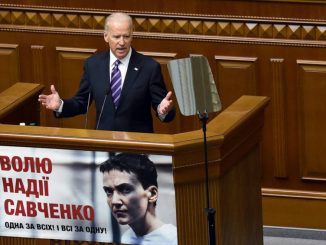
En diciembre de 2015, Biden habló en la Rada, el parlamento ucraniano, sobre la necesidad de “acabar con el amiguismo”. Elogió a los que llevaron a cabo el golpe dos años antes y a los que cometieron crímenes de guerra contra la población civil de Donbass.

También advirtió a los políticos allí reunidos que no perdieran los nervios al aplicar medidas de austeridad contra los trabajadores si querían seguir recibiendo dinero de Estados Unidos y del Fondo Monetario Internacional. 

“La parte más importante para seguir adelante con el programa del FMI requiere reformas difíciles. … votar para elevar la edad de jubilación es escribir su obituario político en muchos lugares. … Requiere sacrificios que pueden no ser políticamente convenientes o populares. …les insto a que mantengan el curso a pesar de ser tan duro como es”.

Cualquier trabajador, mirando estos hechos, podría preguntarse no sólo sobre la evidente corrupción, sino sobre cómo es “normal” y “legal” que un político estadounidense dicte la política económica y la política en general de otro país, incluyendo la guerra y la paz, la pobreza y la austeridad.

Tanto Biden como Trump, al igual que congresistas demócratas y republicanos están llevando a cabo su lucha por el poder y los privilegios sobre una montaña de cuerpos de niños, civiles y antifascistas asesinados en Donbass, y sobre la represión continua de los opositores políticos, periodistas y trabajadores comunes en Ucrania. 

Ese es el verdadero escándalo y la verdadera historia que debe ser expuesta.

Strugglelalucha256


The long shadow of the 1919 Chicago race riot

First in a series

A century ago, Chicago was convulsed by anti-Black riots. For days, African Americans were beaten and killed in a city whose first non-Indigenous resident was the Black man Jean Baptiste Point du Sable. Black workers couldn’t go to their jobs in the Union Stockyards, steel mills or downtown.

The violence started July 27, 1919, when five young Black men went to a beach on a hot Sunday afternoon. They climbed aboard a raft that they had helped build, went out into Lake Michigan and started diving from the vessel.

Chicago is a segregated city. It was worse a century ago. 

Black people were confined to part of the city’s South Side. While the 25th Street beach was for African Americans, the 29th Street beach was exclusively white. 

When the raft drifted into waters off 29th Street, a racist named John Stauber started throwing rocks at the Black youth. One of the rocks struck 17-year-old Eugene Williams, who drowned.

Williams’ companions went with an African American policeman from the 25th Street beach who asked Daniel Callahan, a white cop, to arrest Stauber. Callahan refused and stopped the Black officer from apprehending the killer. 

Reportedly, a thousand Black Chicagoans then assembled at the 29th Street beach and demanded the police arrest Stauber for murder. The police refused. A Black man named James Crawford was shot and killed by the police, but the crowd did not disperse. By nightfall, rumors of “race war” in white neighborhoods were running rampant, and the anti-Black rioting began.

This atrocity resulted in 34 deaths. Seven Black people were killed by racist police who often attacked and arrested the Black victims of mob violence.

A cop yelled, “I ought to shoot you!” at African American Joseph Scott after 25 whites had nearly killed him. None of the whites who attacked Scott on a streetcar were arrested. Instead, Scott was struck repeatedly by cops and thrown into a police wagon.

Horace Jennings was left wounded in the street by racists only to be asked by a policeman, “Where’s your gun, you Black son of a bitch?” The cop then swung his billy club at Jennings’ head, leaving the Black man unconscious.

Only after several blood-soaked days did the capitalist class decide to call in the National Guard to stop the anti-Black riot.

The capitalists acted partly because the shooting wasn’t all one-way. African Americans were arming themselves in self-defense. While 23 Black people were murdered, 15 whites were sent to the morgue as well.

The bloody red summer of 1919

The Chicago race riot didn’t occur in a vacuum. Seventy-six African Americans were lynched in 1919. At least 13 were veterans. More than 50 cities had anti-Black riots. 

The week before Chicago erupted, as many as 39 people were killed in the Washington, D.C., riot. Carter G. Woodson, the father of Black History Month, barely escaped harm as he saw a white mob shoot a Black man to death.

In May, six people were killed in Charleston, S.C. At the end of August, as many as 30 people were killed in Knoxville, Tenn.

In September, the 14-year-old future actor Henry Fonda witnessed the African American Willie Brown being hanged and shot in Omaha, Neb. A white mob tore down the courthouse and tried to hang the city’s mayor, Edward Smith.

The worst massacre was in Phillips County, Ark., near the city of Elaine. Hundreds of Black sharecroppers and their families were slaughtered.

Arkansas Gov. Charles Brough accompanied Col. Issac Jenks and 550 U.S. army soldiers who arrived in Elaine on Oct. 2. This all-white contingent proceeded to hunt down Black people hiding in the countryside.

None of these atrocities was spontaneous or accidental. Capitalist newspapers played a major role in whipping up racist violence. 

The Washington Post called for racist soldiers to assemble and conduct a “clean-up” against Black people. The Omaha Bee helped incite the murder of Willie Brown by printing sensational articles about rapes and attempted rapes that never occurred. 

Racist filth poured from the top of capitalist society. Four years before 1919, President Woodrow Wilson had the first Hollywood blockbuster ― ”Birth of a Nation” ― shown in the White House. The movie quotes Wilson on a title card praising “the great Ku Klux Klan.” The Ku Klux Klan used this viciously racist movie for decades as a recruiting film.

A free pass for racist terror

In 1919, the wealthy and powerful needed to pour even more poison into the white poor. The shock waves sent out by the Bolshevik Revolution were felt all over the earth. 

The Hungarian Soviet Republic was proclaimed on March 21, 1919. The Communist International was founded the same month.

Revolutionary ferment wasn’t confined to Europe. In February, W.E.B. Du Bois organized the first Pan-African Congress. The May 4th Movement of Beijing students in 1919 was the beginning of the Chinese Revolution.

The speculators at Chicago’s Board of Trade as well as the bankers on La Salle Street were more concerned about events closer to home. In 1919, over four million workers went on strike in the United States. One out of seven industrial workers walked a picket line. 

Among them were 365,000 steelworkers who began their walkout on Sept. 22. The strike’s organizer was future communist leader William Z. Foster. 

The strike was defeated with 18 strikers killed by police and private gunmen. But for weeks it shut down what was then the largest corporation on the planet, United States Steel, the crown jewel of the J.P. Morgan banking empire. (Now part of the JPMorgan Chase & Co. banking octopus with $2.7 trillion in assets.)

Twelve to fifteen thousand Black workers were employed in Chicago’s Union Stockyards, which at the time was the largest concentration of workers in the U.S. Much of the violence occurred around the stockyards, and Black packinghouse workers were prevented from going to their jobs for a week.

Swift, Armour and the other packers could have intervened to stop the racist mob violence. The Union Stockyards had its own private police force. Also, there were probably a thousand railroad cops in Chicago.

These forces could have escorted Black workers to and from their job. Just telling local shopkeepers and the white gangs that the slaughterhouse bosses didn’t want trouble could have dampened things.

The packers and the railroad companies did nothing. Eighteen years later, Chicago cops killed ten striking steelworkers ― six of whom were shot in the back ― in the 1937 Memorial Day massacre.

In 1919, the cops didn’t even try to break up the white mobs attacking Black people. They often aided them instead.

Sources: “Race Riot, Chicago in the Red Summer of 1919” by William M. Tuttle Jr.; “Red Summer, The Summer of 1919 and the Awakening of Black America” by Cameron McWhirter; “Organized Labor and the Black Worker 1619-1973” by Philip S. Foner.

Next: Bombings greet the Great Migration 


Part 1: The long shadow of the 1919 Chicago race riot

Part 2: Bombings greet the Great Migration

Part 3: What did the unions do?

Part 4: Communists fight racism and evictions

Part 5: Chicago Mayor Daley’s racist machine

Part 6: Never forget Fred Hampton

Part 7: The people put Harold Washington in City Hall

Part 8: A city of struggle

Strugglelalucha256


Oct. 19-20: National Network on Cuba Annual Meeting and evening public event

On Facebook

Strugglelalucha256


Oct. 7 Candlelight Vigil in D.C.: Cameroonian Dead in ICE Custody

Monday, October 7, 2019 at 6:30 PM – 8:30 PM EDT

500 12th St SW, Washington, DC 20024
Hosted by Cameroon American Council

From #CameroonCrisis to #BorderCrisis: Cameroonian Immigrant Dead in ICE Custody

**Please donate to help offset event costs, thanks! https://www.gofundme.com/f/takembeng-take-over ***

On Tuesday, a Cameroonian immigrant, Nebane Abienwi, 37, died in ICE custody. Over the past year, 9 people have died in ICE custody, many of whom were denied medical treatment or taken for treatment too late. As civil turmoil in Cameroon carries on, asylum seekers and refugees from Cameroon are gathering at the Southern border to the US in order to seek entry. His death is not an isolated incident. The UN has called the Cameroon crisis one of the worst in the world, and hundreds of Cameroonian asylum seekers are trapped in Mexico. The US House of Representatives have taken action and passed a resolution on Cameroon and a bi-partisan senate resolution 292 has been introduced and needs the attention of all senators. We must stand up to the US government and ICE to demand that the camps are closed, aslyum protocols are reinstated, and as we work for detainees to be released, they must receive medical care.

This Monday, October 7, join us for a candelight vigil outside the ICE headquarters in DC. Together, we will pay tribute to the memory of Abienwi, who died young and unfree in our nation’s cruel detention system. We will be convening on the sidewalk in front of ICE headquarters. Candles provided. Please share widely.

The event is located just three blocks south of the Smithsonian metro (blue/orange/silver lines) and about a 5-7 minute walk from L’Enfant plaza.

Get yourself informed:

About Abienwi’s death: https://www.buzzfeednews.com/article/hamedaleaziz/man-dies-ice-custody-san-diego-cameroon-san-ysidro

About the situation at the Southern border: https://www.aljazeera.com/indepth/features/world-refugee-day-fleeing-cameroon-mexico-border-corpses-180616131149367.html

https://www.theguardian.com/us-news/2019/sep/30/weve-been-taken-hostage-african-migrants-stranded-in-mexico-after-trumps-crackdown

https://psmag.com/social-justice/people-are-being-killed-like-flies-denied-asylum-in-the-u-s-cameroonians-fear-increasing-violence-back-home

Donate to support Cameroonian immigrants and asylum seekers:
https://www.gofundme.com/f/takembeng-take-over

Change.org petition to come!

Strugglelalucha256


Justice for Dennis Carolino, end police terror in San Diego

It appeared to be a Saturday like any other in my East San Diego community of El Cerrito. I had just finished a run and was headed down the hill on Adelaide Avenue to my house. As I walked, I came upon a neighbor whom I had seen many times before — a brown-skinned, Filipino man, who lived in a house on Adelaide with his two elder aunts. Although we had never spoken before this moment, for some reason we locked eyes, and I felt compelled to wave. I noted that he seemed a bit troubled as he turned and headed to the back of his house.

By the time my family and I arrived home later that evening after an outing, the entire block surrounding my neighbor’s house had been cordoned off with yellow tape and police cars. I shortly came to learn that Dennis Carolino, the person to whom I had waved just hours before, had been killed in his own backyard by Brad Keyes, an officer of the San Diego Police Department.

As it turned out, Saturday, Aug. 24th, was not just like any other day. For Dennis Carolino’s family it now registers as an unspeakable horror. None of his surviving relatives are experiencing this horror more than his aunt who, earlier that evening, had called the police asking for help after she realized that Dennis was experiencing an episode related to his mental illness — which she gathered was largely due to the fact that he had not taken his medication.

She had become alarmed when her nephew tossed a brick in her direction after she had asked him to clean himself up in preparation for dinner. Thinking they might be able to de-escalate the situation and help to get Dennis to take his medication, she called the police. Rather than receiving help from the police, her mentally ill nephew received bullets into his body and was executed in front of her eyes. In an interview conducted after the killing, a family member said of Dennis’s aunt: “She’s questioning herself why she called 9-1-1. She’s blaming herself, [thinking] my cousin died because of her.”

Dennis Carolino did not die because of his aunt. He was killed because of a racist San Diego police force — one that along with other branches of local law enforcement has taken the lives of nearly 1,000 San Diegans with virtual impunity since the 1950s. (https://uaptsd.org)

And, as is the case in cities throughout the country, most victims of police terror in San Diego have been Black or Brown, in poverty, and were often dealing with some form of mental illness at the time of their murder. For anyone familiar with this history, names such as that of Alfred Olango immediately come to mind — a case from 2016 in which a Black woman called police in the San Diego suburb of El Cajon in hopes of getting help with her brother who was suffering from a psychological episode likely having to do with the recent death of a longtime friend.

When police arrived on the scene, they ultimately killed Olango, an immigrant from Uganda, in broad daylight, in front of his sister — claiming that the officer who killed him had mistaken an e-cigarette that Olango was said to have been holding for a gun. This list also includes Valeria Tachiquín-Alvarado, a mother of five who was shot nine times and killed by an off-duty Border Patrol agent in the San Diego suburb of Chula Vista, in 2012; and Victor Ortega, whose murder at the hands of San Diego police in the same year was declared “justifiable homicide.” From the perspective of surviving family members, “justifiable” homicide is actually legally sanctioned murder.

In each of these instances, and too many more to name here, the blackness or brownness of the victim placed a veil of impunity over the heinous actions of the police. And, in Dennis Carolino’s case, as in the case of many other police shooting victims, the victim’s mental illness added yet another layer of disposability onto his body. As a recent report has pointed out, people with untreated mental illness are 16 times more likely to be killed by law enforcement than other people. (https://www.treatmentadvocacycenter.org)

We also know that when police do not resort to killing mentally ill people, encaging them has become the norm, with more than 10 times the number of people dealing with mental illness being locked in prisons and jails as are receiving professional care in the “free” world. When combined with the social demonization associated with mental illness, Carolino’s status as a dark-skinned Filipino man rendered him executable in the eyes of Brad Keyes and the racist institution that he serves.

This process has been exacerbated by much of the local media coverage, which has amounted to a stenographer-like transcription of the police department’s narrative. These accounts have worked to convict Carolino for his own killing within the court of public opinion, blaming the victim, and representing police violence as “peace keeping.” This is the same scenario that we have seen over and over again with the recent spate of police and vigilante slayings of Black people, including Trayvon Martin, Mike Brown, Tamir Rice and Sandra Bland. Accepting the officers’ version of what had occurred at Carolino’s home as fact, these reports tell of how an enraged Carolino attacked his aunt with a brick, “striking her in the chest.” They also speak of how “witnesses” saw Carolino advancing on the officers in the backyard, “swinging a shovel,” just before they shot him.

What family testimony unreported in the media makes clear is that the only “witnesses” to what happened in that backyard were the victim, his aunt and the police who shot him. And according to Dennis’ aunt, whom I have spoken with directly for the purposes of this article, she was never in fact “struck” by a brick—she knew full well that he never intended to harm her—a point made clear by the fact that she suffered no injuries and did not get taken to a medical facility after the event in question.

She stated to me that “there was no shovel” in her nephew’s hands at the time she witnessed the police kill her nephew. According to her, Dennis was actually holding some sort of small pole. And to be clear, even if he was actually holding a shovel, this should never have equaled a death sentence.

What Black, Brown and Indigenous people know all too well is that reported “facts” in cases of police killings can nearly always be manipulated to construe the actions of the victims as threatening or menacing — thereby turning murder into “justifiable homicide.” That said, some have expressed that Carolino’s family may be able to receive justice as a result of recently passed state Assembly Bill No. 392, more commonly known as the “Stephon Clark Bill.” (https://leginfo.legislature.ca.gov)

This legislation was written by San Diego state Assemblymember Dr. Shirley Weber, in response to the groundswell of community organizing that followed the killing of Clark by members of the Sacramento police in March of last year.

However, when looking at this reform to police procedure as to the use of deadly force there are a number of concerns. Firstly, the most important aspects of the legislation, as it was originally penned, were gutted due to the lobbying efforts of law enforcement — namely that which would have required officers to attempt to use practices of de-escalation rather than firearms in situations such as that which ended Carolino’s life.

Furthermore, while SB 392 acknowledges that many victims of police killings are mentally ill and find it difficult to comply with police orders, the bill states that deadly force may be used when the officers deem such violence to be “necessary” to protect officers or others from the threat of serious bodily injury or death. To acknowledge that many people are killed by police because their mental illness disallows them from complying with orders, and then to give officers the green light to murder such people because they fear they represent a threat, is a complete contradiction in terms. How does an apparently “non-compliant” person going through an episode having to do with their mental illness not appear “threatening” when holding a shovel, a pole, an e-cigarette that “looked like a gun,” or absolutely nothing at all — especially when that person has black or brown skin?

The fact is that no amount of tinkering with a rotten, violent, racist system of policing will make people like Dennis Carolino safe from being killed, or from having the blame for their premature death placed on them rather than their killers. From the perspective of Black, Brown and Indigenous people, the discourse of reform hides the fact that the system is actually functioning the way it is supposed to — that since its outset, the police have played the role of an occupying army in our communities.

I know something of the pain that Carolino’s family is feeling in this regard. My own father, also named Dennis, was murdered by police in Tulsa, Okla., when I was seven years old. Rather than being phoned by the authorities, my mother and I were left to learn of his death on the evening news. My younger brother was also seven years of age when his own father, also a Black male, was killed by police.

Just after the act of state-sanctioned terror against Dennis Carolino’s family, I spoke at U.C. Berkeley as part of a symposium marking the 400th year since the first slave ship arrived to these occupied Indigenous lands in 1619. During my lecture, I stressed how the everyday murder and imprisonment of Black people in the U.S. cannot be separated from their origins in the Middle Passage and plantation slavery.

The more I consider the case of Dennis Carolino and his family, the more I think of the connections between the terror they endured and that which Filipinos have long faced at the hands of the U.S. colonial state going back to the Spanish-American (and Philippine-American) war at the beginning of the 20th century. This was the moment when the U.S. used the occasion of Filipinos’ successful resistance to Spanish colonial rule to invade the islands in a campaign that led to the death of somewhere between 200,000 and 1.5 million people. (https://www.historyisaweapon.com/defcon1/
franciscofirstvietnam.html)

The connection between the terrorism endured by my family and Dennis’ is thereby reflected in much more than our shared first name: it is historical in nature. In fact, the most commonly used term deployed by U.S. soldiers to describe Filipino men, women and children as they were massacring them or placing them in concentration camps was “nigger.”

While I call upon everyone reading this to join in advocating for justice for all of the Dennis Carolinos, Alfred Olangos, Valeria Tachiquín-Alvarados, Stephon Clarks, Tamir Rices and Sandra Blands of the world, I do so with the caveat that what we absolutely do not need is “reforming” or “retraining” of police, prison guards, border agents, prisons, jails and immigrant detention centers. What we need is de-policing, de-incarceration and the cessation of deportations. We also need more mental health care professionals (not cages or bullets for mentally ill people), affordable housing, good jobs, community control of our public schools, along with more empowerment and togetherness within our neighborhoods.

In this light, I am left to think of my own responsibility for what happened to my neighbor. I wonder whether if I would have taken the time to know his name and something about his life—had given something more than a wave as I walked by his house—whether Dennis’ aunt may have been able to call upon me or other members of our community rather than the police when all her family needed was a little help and human kindness.

Dennis Childs is Associate Professor of African American Literature, University of California at San Diego

Strugglelalucha256


Resisting police abuse forum in Los Angeles

On Sept. 21, the British documentary titled “The Hard Stop” was presented at the Harriet Tubman Center for Social Justice in Los Angeles, as part of a series of screenings through different cities in the United States. 

The event, chaired by Rebecka Jackson of Struggle – La Lucha, included Dr. Mychal Odom from San Diego as well as Marcus Knox-Hooke and Kurtis Henville, longtime friends of Mark Duggan, who was slain by London police in 2011. 

“The Hard Stop,” directed by George Amposah and produced by Dianne Walker, tells the story of Mark Duggan`s assassination by a police officer–whose name is still undisclosed–during a “hard stop” in Tottenham, England, in 2011. This shooting was reminiscent of the 1985 police invasion of Cynthia Jarrett’s home, also in Tottenham, causing her heart-attack death. Both deaths led to uprisings that spread out of Tottenham and, as the film shows, brought members of all ethnic groups of the community together demanding justice. 

Henville and Knox-Hooke dispelled the myth that British police do not carry guns, stating that, at least in the Black neighborhoods, they do carry guns. Furthermore, they explained that a “hard stop” is a tactic used by police that involves using three vehicles to block a suspect`s vehicle on the back, front and road side, forcing a stop. In the case of Mark Duggan, it was a hard stop not only to his car, but also to his life and any dreams he had. It was also the start of a long period of suffering and hardships for his family and friends and a quest for justice that, after eight years, is still going on. Change the places, change the names, and we see that police treatment of dark skin people is the same.

Dr. Mychal Odom pointed out the similarities between Britain and the U.S. police state, its targeting of poor and dark-skinned people, and the lack of justice for the victims of police crimes. At the end of the documentary, comments were made and questions were directed to Henville and Knox-Hooke.

Strugglelalucha256
https://www.struggle-la-lucha.org/2019/10/page/6/