Declaración de solidaridad con el pueblo de Puerto Rico

El 22 de julio se ha convocado en Puerto Rico una jornada nacional de protestas y huelga general para exigir la renuncia del gobernador Ricardo Rosselló. Struggle-La Lucha publica esta declaración solidaria de líderes y organizaciones de trabajadores mexicanos, venezolanos y panameñas.

Expresamos nuestra solidaridad con el pueblo de Puerto Rico en su lucha contra el gobierno corrupto del Gobernador Ricardo Rosselló. Este viernes se cumplen siete días de protestas masivas exigiendo la renuncia del gobernador y sus allegados. A pesar de los ataques con gases lacrimógenos, de balas de goma, de los golpes y los arrestos por la policía, las protestas han crecido en la capital San Juan y se han extendido a todos los rincones de la isla. El miércoles 17 de julio más de 350 mil personas marcharon por las calles de la capital, una concentración sin precedentes.

Las protestas se iniciaron luego de las acusaciones y arrestos de varias jefas de agencias de gobierno de la administración Rosselló, entre ellas la ex Secretaria de Educación, Julia Keleher. Keleher, además de otorgar contratos a sus allegados, se distinguió por implantar la política de privatización del sistema de educación pública y por el cierre de más de 400 escuelas. Tanto las organizaciones de maestros y maestras como las comunidades afectadas han combatido esas políticas desde 2017. Ahora el pueblo entero se suma a la denuncia de Keleher y lo que representa, el neoliberalismo y su hermana la corrupción.

A las acusaciones contra Keleher y otros funcionarios de gobierno se sumó la publicación de un chat en el que compartían comentarios el Gobernador Rosselló, funcionarios de su administración y algunos allegados. Las más de 800 páginas publicadas revelan o sugieren una gran cantidad de delitos como obstruir la justicia, despedir personas por razones políticas, dar “escarmientos” a líderes de oposición como Manuel Natal del Movimiento Victoria Ciudadana, usar fondos públicos para fines privados. Pero, sobre todo, el chat pone al descubierto las actitudes machistas, homofóbicas y racistas de los participantes. Es el retrato vivo de la mentalidad de una clase privilegiada que gobierna al país como su fuera su finca privada, con desprecio total por la población, aunque públicamente se presentan como lo contrario. En el chat eran motivo de burla la muerte de críticos del gobierno, los cadáveres almacenados luego del huracán María y los activistas de base del mismo partido de gobierno. 

El pueblo de Puerto Rico ha decidido que tal persona no puede seguir siendo gobernador y desde hace una semana exige su renuncia.

Sabemos que Rosselló es solo parte del problema. Puerto Rico vive una crisis económica que ya dura una década. Se han perdido 20 por ciento de los empleos que existían en 2007. La crisis económica se ha traducido en una crisis de la deuda pública, que alcanza los $70 mil millones. Para pagarla una Junta de Control Fiscal impuesta por el Congreso de Estados Unidos está decretando medidas de austeridad que empobrecen al país y alargan la crisis. Por eso el llamado a la renuncia va acompañado del rechazo a la Junta y de la exigencia de auditoría de la deuda. No dudamos que la victoria contra Rosselló sentará las mejores bases para continuar la lucha en esos terrenos.

Expresamos nuestra admiración por la lucha persistente del pueblo de Puerto Rico, ejemplo para las luchas del mundo. Exigimos la liberación de las personas arrestadas o acusadas como resultado de participación en esta resistencia. Nos unimos al llamado a la renuncia inmediata del Gobernador Ricardo Rosselló.

Luis Bonilla-Molina, Coordinador Portal Otra voces en Educación
Stalin Pérez, LUCHAS, Venezuela.
Olmedo Beluche, Panamá.
Edgard Sánchez, México.
Josie Chávez, México
Luis Rangel, México
José Martínez, México
Alicia Mendoza, México
Mafer Arellanes, México
Melisa Morán, México
Luz Mayorga, Venezuela

DESDE MÉXICO: Frente Socialista: Frente del Pueblo (FP), Comité de Unidad Popular (CUP), Consejo Popular Magonista (COPM), Partido Revolucionario del Pueblo (PRP), Sendero Socialista (SS), Grupo Obrero Socialista (GOS), Organización Proletaria Emiliano Zapata (OPEZ histórica), Organización Política del Pueblo y los Trabajadores (OPT) y Partido Revolucionario de los Trabajadores (PRT)

Strugglelalucha256


Los Angeles: Community organizes self-defense against ICE raids

Los Angeles

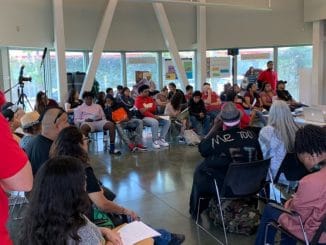
On Saturday morning, July 13, activists heeded the call of Unión del Barrio (UdB) and gathered at a community center in Los Angeles to anxiously hear plans on community self-defense strategies against raids by U.S. Immigration and Custom Enforcement (ICE).

The community meeting focused on the creation of “Comités de Resistencia/Community Self-Defense Committees” against ICE raids. It came on the same weekend that Donald Trump had threatened to carry out deportation raids targeting families in 10 major U.S. cities.

ICE and police terrorize Latinx residents on this side of the border, egged on by the white-supremacist Trump administration, while children continue to die in Trump’s inhuman detention centers.

Like many who are frustrated by the lack of real action by politicians to stop the racist, genocidal treatment of migrants at the border and in detention centers, UdB believes it is up to the people themselves to change the situation. 

Ron Gochez, one of the presenters at the community meeting, said: “Protests and marches are important, but they are not enough. We must organize ourselves and be ready to defend our people.”

At the meeting, organizers discussed how to create “Comités” in schools, churches, apartment buildings or anywhere necessary. The goal is to set up self-defense committees in different areas around the city of Los Angeles.

Some 70 people participated in the first meeting, and a second weekly meeting on July 20 was also well attended. The initiative by UdB has so far received a good amount of mainstream media attention. Six major media outlets attended a press conference held in South Central Los Angeles a few days prior to the meeting. 

Members of Partido de Socialismo Unido/Socialist Unity Party were invited to speak at this press conference and have joined the weekly meetings, hoping to build and support this most important effort in Los Angeles.

Another of the attendees at the press conference was a member from the San Diego chapter of UdB, where they are using cars with decals attached to the doors identifying them as people’s patrol cars to protect community members from ICE.

A Facebook page announcing future meetings states: “We call on the community to join the resistance against Trump, the migra, the police or anyone else who is threatening our community!”

It is no accident that this organization is leading the battle here in Los Angeles. Unión del Barrio is a community organization dedicated to the liberation of the people of Latin America against U.S. imperialism and works toward the empowerment of local Latinx communities, while also helping to build Black and Brown unity.

This type of response that empowers people to not rely on politicians or allow fear of the police and ICE to stifle activism will surely encourage similar strategies and militancy around the country, while building broader solidarity with migrants and all of those threatened by ICE and the police.

Strugglelalucha256


San Diego: Thousands at border rally demand ‘Let them all in!’

San Diego  

In the early evening of July 12, about 2,000 people converged at Larsen Park in the U.S./Mexico border community of San Ysidro to protest the inhumane practices of the U.S. government in its criminalization and incarceration of migrant and refugee families. 

The event was organized by the Coalition to Close the Concentration Camps–San Diego in response to a call issued by Lights for Liberty for nationwide protests against Trump’s concentration camps.

Indigenous leader Stan Rodriguez opened the rally after a performance by Aztec dancers. After hearing from several spirited speakers from supporting organizations, the coalition, which is led by mostly Latinx and Indigenous members, issued six demands to the Trump administration:

“1. Close the concentration camps! We demand an immediate STOP to the inhumane treatment of children!

“2. Let them all in! Migration is especially a right when the people that are migrating to your country come from areas of the world that your country helped destabilize.

“3. Stop deportations! No human being is illegal and crossing the border to seek refuge is not a crime.

“4. Abolish ICE! We reject the presence of Border Patrol in our communities!

“5. Reunite all children with their families as has already been ordered by the U.S. judicial system.

“6. Decriminalize humanitarian aid! Providing humanitarian aid is NOT a crime. We must IMMEDIATELY drop all charges levied against those that provide aid to migrants!”

Larsen Park is less than a mile away from the busiest port of entry in the Western Hemisphere, with an estimated 100,000 people crossing daily. After the demands were read, the large and loud crowd marched to the border. 

Some held signs that read “Close the camps,” “Let them in“ and “Abolish ICE!” They chanted “No to hate! No to fear! Immigrants are welcome here!” “Hey, hey, ho, ho! Donald Trump has to go!” and many other slogans. 

At the end of the march, there were several other speakers and the crowd continued to rally until 10 p.m.  

The march and rally were co-sponsored by an impressive list of organizations, including the American Friends Service Committee, Armadillos Búsqueda y Rescate, Border Angels, Bridge of Love Across the Border, the Democratic Women’s Club of San Diego County, Colectivo Zapatista, Danza Mexicayotl, the Democratic Socialists of America, Detainee Allies, Kalpulli Ketzalhuitzilin, the Leonard Peltier Defense Committee, Lights for Liberty and the National Brown Berets de Aztlan.

Also: The Overpass Light Brigade, the Party for Socialism and Liberation/Answer Coalition, People Over Profits, Raíces Sin Fronteras, San Diego Border Dreamers, the San Diego Committee Against Police Brutality, the San Diego County Central Committee of the Peace and Freedom Party of California, San Diego Indivisible, the San Diego Tenants Union, San Diego Socialists, the Partido de Socialismo Unido/Socialist Unity Party, the University Christian Church-Hillcrest and the Women’s March.

Photos: Raquel “Rocky” Natalicchio

Strugglelalucha256


Hands off Boris Litvinov and the Communist Party of Donetsk People’s Republic!

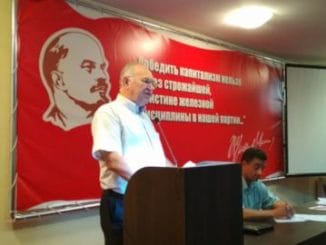
An assassination attempt was made July 19 against Boris Litvinov, first secretary of the Communist Party of the Donetsk People’s Republic (KPDPR). Litvinov discovered a bomb strapped to the underside of his car. This message from Struggle-La Lucha was sent to the KPDPR on July 21.

Struggle-La Lucha newspaper and the Partido de Socialismo Unido/Socialist Unity Party of the U.S. were outraged to learn of the latest assassination attempt against Comrade Boris Litvinov on July 19. We send our solidarity to First Secretary Litvinov and all comrades of the Communist Party of the Donetsk People’s Republic.

We hope the authorities in Donetsk will act quickly to find those responsible for planting the car bomb that threatened Comrade Litvinov. But we know that, whoever may have carried out this awful deed, the ultimate responsibility for this terrorist act and other war crimes against the people of Donbass rests with Western imperialism, especially the United States, which helped to engineer the 2014 Maidan coup in Ukraine and continues to arm, train and finance the Ukrainian regime and its neo-Nazi enforcers.

Ukraine is once again escalating its attacks on the civilian population of Donbass, as we saw with this weekend’s deadly shelling of Pervomaisk in the Lugansk People’s Republic. Despite the aspirations of many Ukrainians who voted for President Vladimir Zelensky in hopes of ending the fratricidal war, the crisis can’t be resolved through elections controlled by the very same oligarchs, fascists and imperialist powers that benefit from the war.

As Comrade Litvinov said: “Attempts on political figures of the DPR and LPR–like A. Zakharchenko, V. Bolotov, D. Pushilin, me and many others–indicate that it is too early for us all to relax. It is necessary to strengthen the unity of all politicians, public organizations and political parties which are ready to defend the ideas and principles of building a sovereign DPR and LPR, for which the overwhelming majority of Donbass residents voted in the referendum in the spring of 2014.”

In their desperate scramble for profits and global power, the U.S. imperialists are greatly overextending themselves everywhere–threatening war against Iran, Venezuela, the Democratic People’s Republic of Korea and the Palestinian people, to name just a few.

But this colossus has feet of clay. The U.S. ruling class faces growing internal resistance from the workers and oppressed peoples here. As we write this, there are mass protests throughout the country against Washington’s brutal treatment of refugees, as well as popular uprisings of the colonized peoples in Puerto Rico and Hawaii.

As we work to build solidarity between the workers of the U.S. and the people of the world, the valiant anti-fascist struggle of the Donbass remains a high priority for us. Though our united efforts, we can stop the imperialist war drive and unite the workers of the world to fight for a socialist future.

Strugglelalucha256


November anti-imperialist solidarity conference in Cuba

Anti-imperialist Meeting of Solidarity, for Democracy and against Neoliberalism.
Havana, November 1-3/2019.

The Anti-imperialist Meeting of Solidarity, for Democracy and against Neoliberalism will take place in Havana from November 1 to 3 of this year, organized by the Cuban Institute of Friendship with the Peoples (ICAP), Central Organization of Cuban Trade Unions (CTC), along with the Cuban Chapter of Social Movements and the Continental Conference for Democracy and against Neoliberalism.

The meeting in Havana expresses the Cuban Revolution´s decision to respond to the demand of the political, social left-wing and the Solidarity Movement with Cuba that our country continues to be a meeting point of the peoples struggles in our continent.

We have proposed the event to be a real contribution to confronting the current counterrevolutionary offensive of US imperialism, to the search for the widest possible unity of the leftist forces in the region and to strengthening militant solidarity with the just causes defended by the peoples. In the current political situation, marked by the aggressiveness of the Trump administration, new ways will be sought to reinforce solidarity with these causes in the world, mainly in our region.

In November, a heterogeneous representation of the United States and Canada will also be present in Havana, friends who have always been on the side of justice and who since the triumph of the Cuban Revolution have been in solidarity with us. We will also have important intellectuals, committed to the liberating struggles of the peoples.

The growing hostility against Cuba and other countries in the region, the judicial persecution of progressive leaders, the imposition of recycled neoliberalism, are distinctive features of the current North American policy towards Latin America and the Caribbean that awaken the fighting capacity of Latin American and Caribbean peoples.

In the same way, the mobilization for the occasion of hundreds of social fighters, political leaders, intellectuals, peasants, women, indigenous people, solidarity activists, among others; will constitute a formidable encouragement to the heroic resistance of the Cuban people, determined to defeat the Helms Burton Act, the blockade and to carry forward the updating of its economic and social development model.

Faced with pessimism and the claudication of some, the participants in the anti-imperialist solidarity meeting will respond with the strengthening of the struggle moral and the deep conviction that the Latin America and the Caribbean peoples will continue marching towards their second and definitive independence.

The Organizing Committee of the Anti-imperialist Meeting of Solidarity, for Democracy and against Neoliberalism, calls for an event that highlights the Cubans´ best traditions of hospitality and their commitment to independence, justice, peace and fraternity among the peoples.

Those interested should send their attendance confirmation to the email address enc.jornada2019@gmail.com with a copy to AMISTUR emails direccion@amistur.cu and comercial@amistur.cu


Anti-imperialist Conference of Solidarity for Democracy and against Neoliberalism.

Havana, Cuba, November 1-3, 2019.

Program

1st day: November 1st

9.00-09: 30: Opening of the event. Tribute to Fidel.
09.30-09: 45: Words from comrade Fernando González LLort, ICAP President and the Coordinating Committee of the event.
09.45-10: 15: Audiovisual projection about Cuba, its foreign policy and solidarity.
10: 15-12: 45: MINREX speech: Cuba’s foreign policy in the regional context. Fight against the blockade.
12: 45-14: 45: Lunch
15: 00- 17:00: Panel: Challenges of the left in the current regional scenario before the imperialist offensive.
17: 15-19.15: Anti-imperialist tribune in support of just causes.
– Closing of the tribune with Cuban troubadours and foreigners participating in the event.
                                                                                   
2nd day: November 2

09.00- 09.15: Audiovisual material presentation

09: 15- 10:45: Panel: Challenges for a solidarity articulation of
                       our struggles.

10: 45- 11:00: Break
11: 00- 13: 15: Working in Thematic Commissions.
– Solidarity with Cuba and other just causes.
– Peoples before free trade and transnationals.
– Decolonization and cultural war.
– Youth: strategies and continuity in struggles.
– Democracy, sovereignty and anti-imperialism.
– Strategic communication and social struggle.
– Integration, identities and common struggles.
1:30 – 3:00: Lunch
14:00 – 15:00 Anti-imperialist Twitterstorm
15: 00 – 16:30 Working in Thematic Commissions
16.30 – 18.00 Coordination Meetings
                              
3rd day: November 3

09: 00- 12:00: Process of articulation in Plenary.
– Presentation of working Commissions.
12: 00- 13:45: Lunch
14:00 -16: 00: Closing Plenary.
– Presentation and approval of the Action Plan Project.
– Closing speech.
16:00 – 18:00: Cultural Gala.

Strugglelalucha256


No new ICE prison in Baltimore! Sign-Making & Strategy Session July 25

Thursday, July 25, 2019
6:30 PM – 8:00 PM EDT

2011 N Charles St, Baltimore, MD 21218

Join us on Thursday at 6:30 pm for a sign-making & planning session to take action against ICE building a new detention center for im/migrants and refugees in Baltimore!

On July 18, the Baltimore Sun announced that U.S. Immigration and Customs Enforcement (ICE) is looking to open a new im/migrant detention center around Baltimore City. This new ICE prison would house between 600 and 800 im/migrant men, women, and children. Maryland already has three ICE detention centers in Howard, Worcester, and Frederick counties.

ICE is waging a horrific, racist war on im/migrants and refugees, especially children. Meanwhile in Baltimore City and around the country, racist law enforcement continues its war of mass incarceration and police brutality on Black and Brown communities. We know that prisons are concentration camps for the poor.

Powerful expressions of solidarity have spread across the U.S. in actions and demonstrations targeting ICE and DHS facilities, as well as Amazon and other companies that aid and collaborate with the Trump regime. Let’s follow the example of the Wayfair and Amazon workers, and of the Latinx, Black, Jewish and other youth who have stood up against ICE and the Trump administration’s racist war on im/migrants and refugees.

Let’s join together in solidarity and demand ICE camps out of Baltimore and Maryland! Justice for im/migrants and refugees everywhere!

On Facebook


Strugglelalucha256


From Mauna Kea to Okinawa, ‘U.S. imperialism harms our lands, waters and bodies’

On July 17, at least 33 Indigenous Hawai’ian elders and others were arrested while defending the Mauna Kea volcano from construction of the Thirty Meter Telescope (TMT) project. Gov. David Ige then declared a State of Emergency to ramp up repression against the land defenders. 

Struggle-La Lucha is publishing this letter from Hawai’ian activists with roots in Okinawa, another Pacific island chain which has been subject to U.S. military occupation and capitalist “development” projects that undermine Indigenous sovereignty and destroy the environment. We will have more coverage of the growing struggle at Mauna Kea coming soon.

An open letter to Governor David Ige

We write to you as fellow Uchinanchu (Okinawans), born and raised in Hawaiʻi. Yesterday, we watched video footage from Mauna Kea Access Road, where a line of kūpuna sat ready to face law enforcement in order to protect Mauna a Wākea from destructive and irresponsible corporate development. They sat in near-freezing temperatures, covered in blankets, singing songs of resistance and aloha.

As we watched those kūpuna, we were reminded of our trip to our own ancestral homeland—your ancestral homeland. In 2017, we traveled to Okinawa with members of Women’s Voices Women Speak, as Hawaiʻi’s delegation to the International Women’s Network Against Militarism. As part of this gathering, we visited the frontlines of the ongoing movement to stop the expansion of a U.S. military base in a region called Henoko. There, we saw our elders putting their bodies on the line to stop the construction of an airfield on the vibrant reef ecosystem of Oura Bay. Just like the kūpuna at Mauna Kea, they sat together facing down law enforcement to protect what we hold sacred–the lands and waters that sustain us all. Through it all, they shared food, laughter and song, and reminded us of the joy we can find in righteous resistance to oppression and desecration.

Our movement in Hawaiʻi is fueled by a fierce and steadfast commitment to aloha ʻāina. In Okinawa, the uniting principle is nuchi du takara, all life is precious. As Uchinanchu, we share with Kānaka Maoli the struggle against U.S. imperialism and the harm that it brings to our lands, waters and bodies. But the difference is that many Okinawans have come to call Hawaiʻi home and now live on lands that were stolen from Kānaka ʻŌiwi, who, despite prolonged occupation, have never relinquished their sovereignty. Because of that, we have a kuleana to serve as allies and accomplices in the struggle toward the collective liberation of the lāhui Hawaiʻi. We are filled with sadness and anger, because while our Uchinanchu elders are on the frontlines fighting against the violence of U.S. colonialism in the land of our ancestors, you are imposing that same violence on Kānaka Maoli.

Capitalism, militarism and colonialism catch Indigenous people in tangled webs and force us to move through the world in complicated ways. We do not always have a choice in this—we are thrust into diaspora, separated from our sacred places and our histories, we become settlers on other peoples’ lands. But you have a choice now. As governor of the occupying State of Hawaiʻi, you are uniquely positioned to stop this.

In this critical moment, you can enact the same colonial violence that your own ancestors survived and continue to fight against. You can hide behind the threat of tear gas, sound cannons and the National Guard. Hewa. Or, you can heed the call of our elders — both Uchinanchu and Kanaka Maoli. You can say no to the corporate interests driving irresponsible development without the consent of the people. You can say no to the imperialist will to “know” the universe even as we exploit the only planet we have. You can say no to the simplistic and insulting narratives that frame this conflict as one between science and tradition. You can say no to the blatant violation of Native Hawaiian cultural, religious and political rights. You can say no to the endless commodification, desecration and destruction of ʻāina, from ocean to sacred summit. Our planet is suffering, and we feel it in our everyday lives in Hawaiʻi. Now is the time to turn to the wisdom of our ancestors — not persecute it.

Today, we are watching as kūpuna again stand as the first line of defense. As Uchinanchu, we stand in solidarity with them, and with all kiaʻi mauna. We say no to the TMT.

Tina Grandinetti
Ph.D. Candidate
School of Global, Urban and Social Studies
RMIT University

Lisa Grandinetti
Union Organizer
UNITE HERE! Local 5

—————————— 

Resources from United American Indians of New England to aid the Mauna Kea struggle:

Words of the day:

kia’i –used to refer to the Mauna Kea protectors 

kūpuna — the elders.

Call Gov. David Ige at (808) 586-0034 or (808) 586-2211. Remember the time difference.

You do not need a script. Just say as much as you can of this: 

  • I’m outraged that elders are being arrested. 
  • I oppose the TMT telescope being built on Mauna Kea. 
  • I support Native Hawaiian people who are defending their own land. 

Where to donate:

Aloha ‘Āina Support Fund 

Hawai’i Community Bail Fund

HULI: To support the encampment with supplies 

Strugglelalucha256


Beneath the eyes of Martí, in the heart of Washington


On July 1, a new statue of Cuba’s national hero, the revolutionary thinker, fighter and anti-colonial strategist, José Martí, was inaugurated at the Cuban Embassy in Washington, D.C. We publish the Cuban Ministry of Foreign Affairs report, including the presentations delivered. English translation by Struggle-La Lucha.

From the afternoon of July 1, 2019, four years after the announcement of the restoration of diplomatic relations between Havana and Washington, the Apostle stands vigilant and thoughtful in the U.S. capital. Martí’s constant vigilance for the independence of the island and the continent was reflected in bronze: the look, weary but alert; the serene posture; the imprint of imprisonment and the insatiable search for knowledge. Nothing escaped the artist’s hand. His presence at the Cuban Embassy in the United States evokes the desire to bring closer together two peoples, who are only narrowly separated by geography.

The unveiling ceremony of the statue was presided over by Cuban Ambassador José Ramón Cabañas. Dr. Aisha Z. Cort, a professor of Cuban origin from Howard University, and Cheryl LaBash, a member of the Cuba solidarity movement, also spoke. Next, we share their interventions:

Remarks by Ambassador José Ramón Cabañas

Good afternoon everyone. We thank you for responding to our invitation, issued on short notice.

Today is a very special day for us, because in the framework of the celebrations of 100 years since the construction of our embassy building and also the 60th anniversary of the Revolution and Fidel’s visit to this building, we can finally inaugurate this statue of the Cuban National Hero José Martí y Pérez inaugurated. It is a dream of several years and several generations that has finally come true.

We want to thank, first of all, the author of the work, awarded the National Prize of Plastic Arts of Cuba in 2008, Maestro José Villa Soberón. From here, Maestro, we send our greetings.

Secondly, we must mention the artist who cast the original mold in bronze, Mr. Lázaro Valdés and his Asubronze team in Miami, Florida. We must also recognize the installers of the granite pedestal and the statue itself, Mr. Niv Fishbein of Fram Monument, who is with us today.

To reach this moment, we had the support of countless officials in Cuba who prepared and took charge of shipping the mold. We especially acknowledge the officials of the city of Washington, D.C., who led us through the process of obtaining the necessary permits for the installation of the statue, and our immediate neighbors in the Adams Morgan neighborhood, for whom any celebration at our embassy is a cause for joy.

This image of José Martí is inspired by the few photos of the time that show him full-length, organizing the war against Spanish rule among Cuban tobacco workers in Ybor City, Tampa, walking in Jamaica or coming to Washington in 1891 to participate in the Pan-American Conference that took place in what is now called the Eisenhower Building annexed to the White House.

He is a reflective, concerned Martí, a Martí who tries to understand reality and then change it. From today, he will accompany us for all time.

Today, July 1st, seemed to us an appropriate date to formally inaugurate it in the company of all of you. On this day in 1889, Edad de Oro [Golden Age] came to light for the first time in New York, a publication that Martí dedicated to the formation of new generations, because “children are the hope of the world.”  Exactly four years ago, on July 1, 2015, through an exchange of letters between our governments, we announced the re-establishment of diplomatic relations between Cuba and the United States, which became effective on July 20 with the reopening of our embassy.

In the conversations that were then established on a plane of equality and reciprocity between our authorities, the sense of dignity and the revolutionary work of the most universal of all Cubans was present.

It is our pleasure to present you, Dr. Aisha Cort, professor of Cuban origin from Howard University, and our friend Cheryl LaBash of the U.S. movement in solidarity with Cuba, who will also speak to the significance of the inauguration of this statue.

Thank you all very much.

Remarks by Dr. Aisha Z. Cort: Reflections on Martí 

My education of Martí comes from the home. As a child here in the United States, it was very important to my Cuban mother that I knew the figure of José Martí, not only as a poet, or “Guantanamera man” (as I called him), but as an iconic and key figure in contemporary Cuban history.

José Martí was a writer, activist, intellectual, journalist, but more than anything, he was a revolutionary. He was a fighter committed to Cuba’s independence from Spain.

He also dedicated himself to the development and progress of Cuba not only as a political entity but also in terms of the essential development of a definitely Cuban mentality and imagination. He believed that the Cuban nation was like a living being and that it could be an independent country composed of a multitude of people, experiences and realities united by the principles of an independent Cuba. Also part of his project was to establish and strengthen links between the members of the Cuban community and also between the Cuban people and their allies in Latin America, Europe and the United States. This is why today, and the dedication of this statue, is such an important day.

In Cuba there are not many places — squares, schools, hospitals, universities — that do not have a designated space for a reminder, whether it is a monument, a bust, a statue, a plaque, something that pays homage to the figure of José Martí. As the National Hero, José Martí is synonymous with the Cuban people and is the symbol that unites us wherever we are.

Between his birth in 1853 and his death in 1895 at the beginning of the Cuban War of Independence, his dedication to a free Cuba saw him taken prisoner, exiled, harassed. But also, he was inspired, respected, loved and honored by Cubans on and off the island who were pro-independence. He wrote hundreds (if not thousands) of articles, essays, poems, speeches, discussing the case for Cuba’s independence. 

Through his travels, writing, speeches and interactions with various Latin American countries, Europe and the United States, he inspired and organized several branches of the Cuban community, and the most important of these branches, for this event today, the Cuban community of the United States, which played a decisive role in achieving the independence of Cuba.

The United States served as a land of refuge and also a prolific location to foster crucial ties between Cuba and the Cuban community in the United States. Through readings and meetings, his relationships with tobacco factory workers in Tampa and workers in New York inspired his ideology about what it meant to be “Cuban.” He observed that despite the distances, members of the Cuban community in the United States were still Cubans. They were living examples of the fact that being Cuban was more than belonging to a territory. It was a way of being and a spirit, an untouchable Cubanness.

The pure existence of the Cuban community, especially in the United States, emphasized for Martí the unique, persistent and inimitable character of the Cuban people. And I would say that it was very helpful to Martí in formalizing the ideas that would serve as the basis of ideology for the modern and independent Cuban nation.

So José Martí, in his social work, in his efforts as a journalist, intellectual, activist, revolutionary, served not only as the point of contact between our countries but also as a cultural and literal bridge (symbolic) between worlds, ideas and transitions. And his legacy abounds.

And that is why it is appropriate and necessary for this statue to be installed here at the Cuban Embassy in the United States. May it serve as a visible and tangible symbol of the ties that have existed for more than a century between Cuba and the United States, and also between Cubans on the island and the Cuban community in the United States. May it commemorate our deep and lasting relationships and also the identity that has been maintained, grown and shared through the untouchable Cuban spirit that José Martí promoted.

Remarks by Cheryl LaBash: What having a statue of Martí here means to the solidarity movement

Today José Martí — revolutionary Cuban hero — stands on 16th Street in Washington, D.C., at the entrance to the Embassy of the Republic of Cuba, a building that has belonged to the Cuban people for 100 years. As tough and dangerous as our world is today — the battle is definitely not over — we are winning.

Winning in what the historical leader and eternal Commander in Chief of the Cuban Revolution, Fidel Castro, called the battle of ideas. Martí’s ideas: “With all, for the good of all” and “Homeland is Humanity”: unity, equality, internationalism, solidarity and human dignity.

Harsher travel restrictions had unintended consequences: they heightened general consciousness about Cuba and the blockade. It strengthened our movement with new ears to hear us and new hands to work alongside us.

The resoluteness of the Cuban people and Party and the global solidarity movement has brought us to this moment. We remember:

Fidel embraced so warmly at Harlem’s Hotel Theresa; Elián González returned to his Cuban father; the Venceremos Brigade’s 50 years defying U.S. travel bans; 30 Pastors for Peace Friendshipment Caravans persisting even through hunger strikes. They can’t roll back December 17, five years ago, when the Cuban 5 came home free.

And we cannot and will never forget revolutionary Cuba’s internationalism with the people of the United States, its example of converting former military bases to schools, from Moncada to the Latin American School of Medicine. We cannot forget Medical Brigade 1586, which mobilized to save lives in New Orleans after Hurricane Katrina in 2005, named for Henry Reeve, a U.S. citizen and Civil War veteran who fought and died for Cuban Independence.

José Martí represents the bonds of solidarity between the people of the U.S. and Cuba. They are historic, unbreakable and will be victorious.

SLL photo: Sharon Black

Strugglelalucha256


Bajo la mirada de Martí, en el corazón de Washington


Fuente original: Minrex

Desde la tarde del 1ro de julio de 2019, a cuatro años del anuncio del restablecimiento de relaciones diplomáticas entre La Habana y Washington, el Apóstol se yergue vigilante y pensativo en la capital estadounidense. El constante desvelo de Martí por la independencia de la Isla y el continente quedó plasmado en el bronce: la mirada cansada, pero alerta; la postura serena; la huella del presidio y la búsqueda insaciable de conocimiento. Nada escapó de la mano del artista. Su presencia en la embajada de Cuba en Estados Unidos evoca la voluntad de acercar a dos pueblos a los que solo separa, por estrecho margen, la geografía.

La ceremonia de develación de la estatua estuvo presidida por el embajador cubano José Ramón Cabañas. También hicieron uso de la palabra la profesora de origen cubano de la Howard University, Dra. Aisha Z. Cort, y Cheryl LaBash, miembro del movimiento de solidaridad con Cuba. A continuación, compartimos sus intervenciones:

Palabras del embajador José Ramón Cabañas

Buenas tardes a todos, les agradecemos haber respondido a nuestra invitación, formulada con poco tiempo de antelación.

Hoy es un día muy especial para nosotros, pues en el marco de las celebraciones por los 100 años de la construcción del edificio de nuestra Embajada y también los 60 de la Revolución y de la visita de Fidel a este edificio, finalmente podemos dejar inaugurada esta estatua del Héroe Nacional Cubano José Martí y Pérez. Es un sueño de varios años y de varias generaciones que finalmente se ha hecho realidad.

Queremos agradecer en primer lugar al autor de la obra, el Premio Nacional de Artes Plásticas de Cuba del año 2008, el Maestro José Villa Soberón. Desde aquí, Maestro, nuestros saludos. En segundo lugar, debemos mencionar al artista que fundió en bronce el molde original, el Sr. Lázaro Valdés y a su equipo de Asubronze en Miami, Florida. Debemos reconocer también a los instaladores del pedestal de granito y de la propia estatua, el Sr. Niv Fishbein de Fram Monument, que se encuentra con nosotros hoy.

Para llegar a este momento, contamos con el apoyo de un sinnúmero de funcionarios en Cuba que prepararon y se hicieron cargo del envío del molde. En especial mencionamos a los funcionarios de la ciudad de Washington, D.C., que nos condujeron por el proceso de permisos necesarios para la instalación de la estatua y a nuestros vecinos más inmediatos del vecindario de Adams Morgan, para los que cualquier celebración en nuestra Embajada es un motivo de alegría.

Esta imagen de José Martí está inspirada en las pocas fotos de la época que lo muestran de cuerpo entero, organizando la guerra contra el dominio español entre los tabaqueros cubanos en Ybor City, Tampa, caminando en Jamaica o viniendo a Washington en 1891 para participar en el Conferencia Panamericana que transcurrió en el hoy llamado edificio Eisenhower anexo a la Casa Blanca.

Es un Martí reflexivo, preocupado, un Martí que trata de comprender una realidad para después cambiarla. Desde hoy nos acompañará para todos los tiempos.

Nos ha parecido hoy 1ero de Julio una fecha apropiada para inaugurarla formalmente con la compañía de todos ustedes. En este día de 1889 salió a la luz por primera vez en Nueva York la Edad de Oro, publicación que Martí dedicara a la formación de las nuevas generaciones, porque “los niños son la esperanza del Mundo.” Hace 4 años exactamente, el 1ero de julio del  2015, a través de un intercambio de cartas entre nuestros gobiernos anunciamos el restablecimiento de relaciones diplomáticas entre Cuba y Estados Unidos, que se hizo efectivo el 20 de julio con la reapertura de nuestra Embajada.

En las conversaciones que se establecieron entonces en plano de igualdad y reciprocidad entre nuestras autoridades estuvo presente el sentido de dignidad y la obra revolucionaria del más universal de todos los cubanos.

Es un gusto para nosotros presentar ante ustedes a la Dra. Aisha Cort, profesora de origen cubano de la Universidad de Howard y a la amiga Cheryl LaBash del movimiento de solidaridad con Cuba, que se referirán también al significado de la inauguración de esta estatua.

Muchas gracias a todos.

Palabras de la Dra. Aisha Z. Cort: Reflexiones sobre Martí

Mi educación de Martí, viene de la casa. Como niña aquí en los Estados Unidos, era muy importante para mi mamá cubana que yo conociera la figura de José Martí, no solo como poeta, o “Guantanamera man” (como yo le llamaba), pero como figura icónica y clave en la historia contemporánea cubana.

José Martí era escritor, activista, intelectual, periodista pero más que nada, era revolucionario. Era un luchador comprometido con la independencia de Cuba de España.

También se dedicaba al desarrollo y progreso de Cuba no solo como entidad política sino también en términos del desarrollo esencial de una mentalidad e imaginación definitivamente cubana. Creía que la nación cubana era como un ser vivo y que podía ser un país independiente compuesto de una multitud de personas, experiencias y realidades unidos por los principios de una Cuba independiente. También parte de su proyecto era establecer y fortalecer vínculos entre los miembros de la comunidad cubana y también entre el pueblo cubano y sus aliados latinoamericanos, europeos y estadounidenses, es por eso que hoy, y la dedicación de esta estatua, es un día tan importante.

En Cuba no hay muchos lugares; plazas, escuelas, hospitales, universidades que no tienen un espacio designado para un recordatorio, si sea un monumento, un busto, una estatua, nombre, algo que da homenaje a la figura de José Martí. Como el Héroe Nacional, José Martí es sinónimo del pueblo cubano y es el símbolo que nos unifica dondequiera que estemos.

Entre su nacimiento en 1853 y su muerte en 1895 al principio de la guerra de independencia cubana, su dedicación a una Cuba libre le llevó preso, exiliado, acosado, pero también, fue inspirado, respetado, amado y honrado por los cubanos dentro y afuera de la isla que eran pro independentistas. Escribió centenas (o miles) de artículos, ensayos, poesía, discursos, discutiendo el caso para la independencia de Cuba. 

A través de sus viajes, escritura, discursos e interacciones con varios países latinoamericanos, Europa y los Estados Unidos inspiró y organizó varias ramas de la comunidad cubana. Y la más importante de estas ramas, para este evento hoy, la comunidad cubana de los Estados Unidos que desempeñó un papel decisivo en lograr la independencia de Cuba.

Los Estados Unidos sirvieron como tierra de refugio y también de carácter prolífico para fomentar lazos cruciales entre Cuba y la comunidad cubana en los Estados Unidos. A través de lecturas, y reuniones, sus relaciones con los trabajadores de las fábricas de tabaco en Tampa y los obreros en Nueva York inspiraron su ideología acerca de qué significaba ser “cubano.” Observaba que a pesar de las distancias, los miembros de la comunidad cubana en los Estados Unidos seguían siendo cubanos. Eran ejemplos vivos del hecho de que ser cubano era más que pertenecer a un territorio, se componía de una manera de ser y un espíritu, y una cubanidad intocable.

La pura existencia de la comunidad cubana, especialmente en los Estados Unidos enfatizó para Martí el carácter único, persistente e inimitable del pueblo cubano. Y yo diría que a Martí le ayudó muchísimo en formalizar las ideas que servirían como base de la ideología para la nación cubana moderna e independiente.

Entonces José Martí, en su obra social, en sus esfuerzos como periodista, intelectual, activista, revolucionario, sirvió no solo como el punto de contacto entre nuestros países sino también como un puente (simbólico) cultural y literal entre mundos, ideas y transiciones. Y su legado abunda.

Y es por eso que es apropiado y necesario que esta estatua se instale aquí en la Embajada de Cuba en los Estados Unidos. Que sirva como símbolo visible y tangible de los lazos que han existido por más de un siglo entre Cuba y los Estados Unidos, y también entre los cubanos en la Isla y la comunidad cubana en los Estados Unidos. Que conmemore nuestras relaciones profundas y duraderas y también la identidad que se ha mantenido, crecido y compartido a través del espíritu cubano intocable que José Martí promovió.

Palabras de Cheryl LaBash: Que significa tener una estatua de Martí aquí para el movimiento de solidaridad

José Martí — héroe revolucionario Cubano — se para en la calle 16 de Washington, D.C., en la entrada de la Embajada de la República Cubana, un edificio que le pertenece al pueblo Cubano por 100 años. Aunque tan peligroso y duro es nuestro mundo ahora — la batalla definitivamente no se acaba — estamos ganando.

Ganando es como el líder histórico y para siempre comandante en jefe de la Revolución cubana Fidel Castro llamó a la batalla de las ideas. Las ideas de Martí: “Con todos, para el bien de todos,” “La Patria es Humanidad,” unidad, igualdad, internacionalismo, solidaridad y dignidad humana.

Las medidas de viaje más severas tuvieron consecuencias involuntarias: mayor conciencia general sobre Cuba y el bloqueo. Fortaleció nuestro movimiento con nuevos oídos para escucharnos y nuevas manos para trabajar junto a nosotros.

La resolución del pueblo y partido cubanos y el movimiento de solidaridad mundial nos ha llevado a este momento. Recordamos: Fidel fue abrazado con tanto afecto en el Hotel Theresa de Harlem, Elián González regresó con su padre cubano, los 50 años de la Brigada Venceremos desafiando las prohibiciones de viajar a los E.U. 30 Caravanas de Pastores por la paz, insistiendo, en huelga de hambre. No pueden retroceder el 17 de diciembre, hace 5 años, cuando los Cinco Cubanos llegó a casa libre. 

Y no podemos olvidar ni nunca se nos olvidará el internacionalismo de la revolución Cubana con el pueblo de los E.U. y su ejemplo en convertir antiguas bases militares a colegios desde Moncada hasta la Escuela Latinoamericana de Medicina. La brigada médica con 1586 se movilizó fuerte para salvar vidas en Nueva Orleans después del huracán Katrina de 2005, que lleva el nombre de Henry Reeve, ciudadano de los E.U. y veterano de la Guerra Civil que luchó y murió luchando por la independencia de Cuba.

José Martí representa los lazos de solidaridad entre los pueblos de los Estados Unidos y Cuba. Son históricos, irrompibles y serán victoriosos.

Foto: Sharon Black

Strugglelalucha256


Japanese Americans rally to resist Trump concentration camps

Los Angeles

On June 27, nearly 1,000 Angelenos, including children, adults and elders, gathered at the Japanese American National Museum (JANM) to demand an end to the brutal U.S. policy of separating migrant and refugee families and detaining children in concentration camps. These camps are reminiscent of those that Japanese Americans were forced into during World War II. The slogan “Never again is now” rang through Little Tokyo in Los Angeles.

The rally was organized by a coalition of 13 Japanese American community organizations, including Nikkei Progressives, Nikkei for Civil Rights & Redress, the Manzanar Committee and Japanese Americans for Justice. JANM, where the rally was held, is located at the site where Japanese families stood in lines to board buses to U.S. concentration camps after being removed from their homes over 70 years ago.

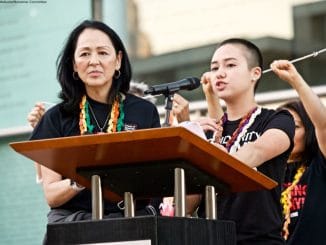
It was a diverse gathering. Korean drummers opened the rally, followed by a blessing from the Indigenous Tongva Elder Tina Orduno Calderon. Joy Yamaguchi of Nikkei Progressives reported from the June 22 protest being held at the infamous Fort Sill in Oklahoma, where 700 Japanese families were incarcerated during World War II. The protest at Fort Sill was in response to the Trump administration’s plans to detain migrant children there. The rally concluded with music, poetry and calls for continuing resistance.

The organizers announced a Crystal City Pilgrimage, an action at the Dilley Detention Center in Texas, from Oct. 31 to Nov. 2; and a Tsuru (paper cranes) for Solidarity Action in May 2020 in Washington, D.C.

Strugglelalucha256
https://www.struggle-la-lucha.org/2019/07/page/3/