Cuba: New actions against the island are being prepared

Cuban President Miguel Díaz Canel

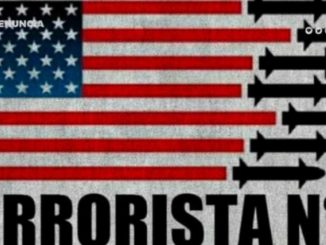
The war that the United States is waging against Cuba is broad and covers politics, economy, culture, sports, health, education, and everything they can do to hinder the development of the island, with the purpose of preventing the satisfaction of the people through their media campaigns projecting socialism as a failed system.

The new plan is centered on the upcoming visit to the UN in September of Cuban President Miguel Díaz Canel, where he will intervene as the current president of the Group 77 plus China, something that the Yankees could not prevent and which gives the Island an important role in the international arena, and something that counteracts the lies fabricated against the Revolution.

In Miami, the City of Hate, the elements financed by the State Department and the CIA to carry out the anti-Cuban plans designed by the specialists of the Internet Task Force for Subversion in Cuba, created in January 2018, and others dedicated to creating defamatory campaigns, are taking steps to organize acts of repudiation against the visit of the Cuban president and to create an atmosphere that will hinder his participation in the UN.

The memory of these specialists, many of them young, who have not searched their archives for the failures of their predecessors when they tried for years to do the same to Fidel Castro during his visits to New York, is bad. It always backfired, but hatred blinds them and does not allow them to reason.

For its part, the State Department is already deploying its guidelines and pressures on a group of journalists at its service so that they may quickly disseminate the information generated by the specialists in subversion against Cuba, as some Florida newspapers and television stations are doing.

Meanwhile, presidents and chancellors of countries where repression against popular protests is brutal are not subjected to a single word of criticism, among them the president of France, who has a long record of brutal beatings of workers, or that of Peru, which in less than a year has accumulated 70 deaths due to repression and more than 2000 wounded, pending trial, a situation that has never happened in Cuba after 1959.

The same Yankee president who allows his police forces to shoot to kill and use actions to immobilize detainees, causing their death by asphyxiation, the one who finances the war in Ukraine and even delivered cluster bombs prohibited by the United Nations, is not the object of accusatory campaigns.

The United States has an infinite sheet of crimes against humanity, during its recent wars against Afghanistan, Iraq, Syria, and Libya, with thousands of civilian deaths, mutilated, and the destruction of those countries, so it lacks morals to point out Cuba because it faced the disorders that occurred in 2021, incited by the imperial media machine itself, as has been proven.

The United States applies the death penalty to men, women, and even children and does not receive a single international condemnation. Its prisons are full of women and minors, many of them serving life sentences in adult facilities, in total violation of human rights; therefore, it should look inward before creating campaigns to countries that do not agree to submit to its dictates.

Recently, official documents were published revealing the covert actions of the CIA to overthrow the Chilean government of Salvador Allende, some of them with notes in the handwriting of Richard Helms, director of the CIA, during the meeting held on September 15, 1970, with Richard Nixon, then president of the United States.

In that meeting, Nixon directed the CIA to “work full time with the best men we have.” “Make the Chilean economy howl” and stressed: “I was not concerned about risks involving the United States.”

That same position was assumed by John F. Kennedy against Cuba, and that is why he approved in 1962 the Cuba Project, where also the economy was the main target, which remains unchanged with its criminal economic, commercial, and financial war, to prevent any satisfaction of the population, coupled with propaganda actions to achieve the resentment of the people against the revolutionary government.

Just as Nixon expressed in 1970, on January 19, 1962, Richard Helms, Chief of Operations of the CIA, sent a report to its director John McCone, of the result of a meeting with Robert Kennedy, Attorney General of the United States, on Cuba, where this among other things expressed:

“The overthrow of the Castro regime is possible. We urgently need to take actions that will keep Castro occupied with internal economic, political and social problems, preventing him from spending time on foreign policy issues, especially in Latin America”.

“A solution to the Cuban problem constitutes at this time, a high priority of the U.S. government, everything else is secondary and no time, money, effort or human resources will be spared.”

“The Attorney General of the United States expressed that the day before, January 18, 1962, President Kennedy indicated to me: The last chapter on Cuba has not yet been written, it must be done and it will be done. That is why he ordered the attendees at that meeting, their absolute and resolute dedication not to fail in the fulfillment of the 32 tasks of the Cuba Project”.

Nothing has changed. The destabilization of the economy of the countries that refuse to submit to the United States is the Yankees’ favorite weapon, but they try to create the matrix of opinion that it is false and only pretexts of those who suffer it to hide their failures.

The declassified documents of the CIA and the White House expose the truth, although the mercenaries of the pen in the service of the State Department never make reference to this information that demonstrates the irrefutable reality of who are the real violators of human rights, who cannot give lessons to anyone.

Cuba has nothing to be ashamed of, the Yankees cannot hide the work of the Revolution, and as José Martí expressed:

“To raise one’s brow is more beautiful than to lower it.”

Source: Razones de Cuba, translation Resumen Latinoamericano –  English

Strugglelalucha256


China’s Xi vows to support Cuba in defending Cuba’s sovereignty

China’s President Xi Jinping has pledged to support Cuba’s defense of its national sovereignty, opposing foreign interference and a U.S. economic blockade, and will expand strategic coordination with Havana.

Xi made the remarks in a meeting with Cuba’s President Miguel Diaz-Canel on the sidelines of the BRICS Summit in Johannesburg on Wednesday, according to a statement from the Chinese foreign ministry on Thursday.

“China highly appreciates Cuba’s consistent firm support for China on issues involving China’s core interests, and will continue to firmly support Cuba in defending its national sovereignty, opposing foreign interference and blockade, and doing its best to provide support for Cuba’s economic and social development,” Xi said at the meeting, according to the release.

During talks, Diaz-Canel labeled Cuban-Chinese relations at an “all-time high.”

“The Cuban people greatly admire President Xi Jinping and sincerely thank China for its understanding and valuable support for Cuba’s just cause,” Diaz-Canel said at the meeting, which was also attended by Chinese Foreign Minister Wang Yi.

The meeting between the two leaders comes months after a media report surfaced that China had reached a secret deal with Cuba to establish an electronic eavesdropping facility on the island. But the U.S. and Cuban governments cast strong doubt on the report.

China quickly denounced the U.S. government and media for releasing what it called inconsistent information, calling the allegations false.

Miguel Díaz-Canel Bermúdez met with Xi Jinping in the framework of the XV BRICS Summit.

From his Twitter account, the Cuban president announced the meeting and expressed the decision of both presidents to comply with the collaboration agreements between the nations. It said:  “In the context of the XV Summit of the #BRICS, I met with the President of the People’s Republic of China, Xi Jinping. We ratified the will to implement the important consensuses adopted during our visit to Beijing in 2022 for the benefit of both peoples.”

Díaz- Canel Bermúdez pointed out that “we noted a willingness to deepen inter-party ties and the close ties of friendship and cooperation.”

“I appreciated China’s solidarity and support for the just demand for the end of the blockade and the exclusion of Cuba from the list of state sponsors of terrorism,” said Miguel Díaz-Canel Bermúdez.

The Cuban president also held a meeting with leaders of the tripartite alliance of the South African Government, made up of the African National Congress, the South African Communist Party, and the Congress of South African Trade Unions.

“We expressed the willingness of our Communist Party of Cuba (PCC) to continue strengthening party ties. I appreciated the support and solidarity with Cuba,” said the head of state.

Source: Countercurrents

Strugglelalucha256


NYC meeting salutes the 70th anniversary of the Cuban Revolution’s beginning

Hundreds of people packed the Malcolm X and Dr. Betty Shabazz Memorial and Educational Center in New York City on July 29 to commemorate the 70th anniversary of the attack on the Moncada barracks in Santiago de Cuba. They came to denounce the cruel U.S. blockade of Cuba and salute socialist Cuba’s achievements.

Called National Rebellion Day in Cuba, the courageous action on July 26, 1953, against the dictatorship of Fulgencio Batista was the beginning of the Cuban Revolution. It inspired the July 26th Movement led by Fidel Castro that overthrew the U.S.-backed Batista on New Year’s Day, 1959.

The meeting opened with the singing of Cuba’s national anthem.

Ike Nahem of the New York / New Jersey Cuba Sí Coalition welcomed the large delegation from Cuba’s mission to the United Nations.

Nahem and other speakers pointed out that the meeting was held on hallowed ground, where Malcolm X had been assassinated on Feb. 21, 1965. Malcolm X defended the Cuban Revolution and met with Fidel Castro in Harlem at the old Hotel Theresa in 1960.

Rosemari Mealy, J.D., Ph.D., a leading member of the Cuba Sí Coalition, has written a vivid account of this historic meeting in “Fidel & Malcolm X: Memories of a Meeting.”

Nahem paid tribute to four remarkable defenders of Cuba who had passed: Frank Velgara, long-time Puerto Rican activist and a founder of the ProLibertad Freedom Campaign; Pat Fry, a member of the Communist Party, the Committees of Correspondence for Democracy and Socialism, and a union activist in 1199SEIU; Chris Che Matlhako, staunch internationalist and central committee member of the South African Communist Party; and the activist Jane Franklin, author of the classic “Cuba and the United States: A Chronological History.”

Co-chairs of the meeting were Andreia Vizeu, educator and Brazilian democracy activist, and Nancy Cabrero of Casa de las Américas.

Vizeu compared the attack on the Moncada barracks to the people power that freed “Lula” (Luiz Inácio Lula da Silva) from jail and brought him back as president of Brazil. Cabrero paid tribute to Fidel Castro’s determination and compared his leadership to the spirit of José Martí, the apostle of Cuban independence.

Steve Clark, editorial director of Pathfinder Press, which has published 40 books on Cuba and a member of the Socialist Workers Party national committee, described the sacrifices of those who stormed the Moncada. While five revolutionaries were killed in the military assault, 56 were murdered after being captured.

Fortunately, Fidel Castro survived. Clark told how Fidel’s great speech, “History Will Absolve Me,” was smuggled out of prison. Twenty thousand copies were distributed throughout Cuba.

Cuba’s UN ambassador speaks

The meeting’s highlight was the talk given by his excellency Gerardo Peñalver Portal, Cuba’s ambassador and permanent representative to the United Nations. Peñalver is also Cuba’s Deputy Foreign Minister.

“Dear friends, today, more than ever, the solidarity received from you takes on special significance because Cuba is under heavy siege … tied to the blockade, [that] continues to be the central element that defines the policy of the United States to Cuba, ” said the ambassador.

Referring to the lying designation by the U.S. government of Cuba as a State Sponsor of Terrorism, Ambassador Peñalver said, “The consequences of such a designation are extremely harmful for a small nation like ours.

“It gravely damages international financial and commercial transactions … in short, it is a measure that … reinforces the blockade against Cuba. It should not be forgotten that the U.S. government used the COVID-19 pandemic … in its efforts to increase the siege of Cuba. This included actions aimed at preventing our access to basic medical supplies … just at a time when the world needed solidarity more than ever.

“We are pleased that Cuba was able to successfully develop three … COVID-19 vaccines … we were able to vaccinate more than 90% of Cubans in spite of the blockade,” said Ambassador Peñalver.

He continued, “Dear friends … the government of Cuba has expressed its willingness … to foster civilized … relations [with the U.S.] based on mutual respect. … We will continue to promote and facilitate the closest possible ties with numbers of sectors of this country that want to build bridges with Cuba. … Cuba will never renounce its socialist system of social justice. …

“We have the support of many good people in the world like you … who have been tireless defenders of the lifting of the blockade and the right of our people to live in peace and to decide their own destiny.”

The representative of revolutionary Cuba concluded by declaring, “Cuba will not give up and we will continue to resist and overcome. Long live the Cuban solidarity movement in the U.S.!”

New York says NO! to the blockade

Andreia Vizeu led the audience in chanting “Cuba sí, bloqueo no!” She introduced Baba Zayid Muhammad of the Malcolm X Commemoration Committee.

Muhammad pointed out the significance of the meeting being held at the Shabazz Center. “This stage was built on Malcolm’s blood,” he said, referring to the spot of the Black leader’s assassination, adding that Malcolm was killed in front of his wife and four daughters.

Baba Zayid Muhammad recited a fiery “praise poem” about Malcolm X and quoted Assata Shakur, a Black revolutionary given asylum by Cuba. The FBI has placed a $2 million ransom on Shakur’s head but the Cuban people protect her.

A stunning demonstration of drumming was given by members of the Mapuche nation, who described their struggle in Chile and hailed the Cuban Revolution. Alegna Cruz from the Puerto Rican Nationalist Party demanded an end to the U.S. blockade of Cuba.

Nancy Cabrero announced a raffle of artwork with portraits of the Puerto Rican Nationalist Party leader Pedro Albizu Campos, who was tortured in a U.S. federal prison by radiation experiments.

Speakers commented on the New York City Council, representing over 8 million people, passing a resolution calling for lifting the U.S. blockade of Cuba. Many organizations, including the Communist Party and the Democratic Socialists of America, worked to achieve this.

Ninety city councils and labor unions representing millions of people across the U.S. have passed similar resolutions demanding peaceful relations with Cuba. The National Network on Cuba has helped coordinate much of this work.

Vinson Verdree of the December 12th Movement emphasized the hard work it took to pass the New York City resolution. It was important, he said, that it demands Cuba be taken off the bogus State Sponsors of Terrorism list.

Council member Charles Barron played a key role in pushing the resolution through the council. Barron rightfully wants the United States on a list of terrorist countries.

Verdree paid tribute to Cuba’s aid to African liberation. Over 2,000 Cubans died alongside their African comrades in defeating the fascist armies of apartheid South Africa.

Several people, including Gail Walker, Executive Director of the Interreligious Foundation for Community Organization, were recently arrested for merely asking to speak to U.S. Senator Robert Menendez about Cuba. Menendez is chair of the Senate’s Foreign Relations Committee and a hardline supporter of the cruel blockade of Cuba.

One of those arrested was Calla Walsh, a co-chair of the National Network on Cuba, who spoke at the rally. Walsh said that when she and the others were released from jail on June 22, one of the first things she heard was that the NewYork City Council resolution condemning the blockade of Cuba had passed.

Across the United States, the struggle is heating up. Hands off Cuba!

Strugglelalucha256


Cuba marks Its National Day of Rebellion with the determination of Fidel

Havana, July 25 — Tomorrow, the eyes of Cuba are on Santiago. The leaders of the island, Santiago inhabitants, and Cubans from all over the country are in the city where it all began 70 years ago. For others in other parts of the island, we will be closely following the calendar of activities that will be held to honor our National Day of Rebellion. Such a history to think that it has been seven decades since Fidel and the other revolutionaries attacked, against all odds, the Moncada Barracks with weapons that he characterized as being more appropriate for bird hunting.

I was thinking how appropriate it was that July 26 this year will be celebrated in Santiago de Cuba as it is intertwined with every facet of Fidel’s life, from his early schooling to the Moncada to his final resting place.

The little house in Santiago de Cuba from where Fidel saw the sea for the first time is still standing. He was six years old when his parents, Lina and Ángel, sent him to the Tivoli neighborhood, where the family of his teacher from Birán, his birthplace in Holguín, lived.

The wooden house at number 6 in the Loma del Intendente retains its austere character. In the small living room, where there was barely room for a piano, today the board walls are embellished with photos of the boy and phrases taken from the book Cien horas con Fidel by the journalist Ignacio Ramonet that recalls the conditions of our leader’s childhood in this place, where he lived for approximately two years and eight months.

In that memorable interview, he confessed to Ignacio Ramonet that it was “a damp, small house (…), without electricity (…) with walls made of boards and roofs of discolored tiles, facing a small dirt square, with no trees”. However, he was captivated by the balcony of this place “that leaked when it rained” and where “I lived through some very busy days” and which “had a beautiful view of the mountains of the Sierra Maestra, and also of a part of the Bay of Santiago, very close by.”

It is not hard to imagine him walking around La Loma, visiting the “little grocery store where they sold coconut nougat made with sugar, one penny each,” or climbing the stairs of Padre Pico Street, which years later saw the young people of the July 26th Movement (M26J) pass by, whom we remember today 70 years after the Revolutionary actions of that July 26th, 1953.

The Secondary School, which later became a barracks for the Batista dictatorship -today the Clandestine Fight Museum-, formed part of the surroundings.

The school, located in front of the house, was used by soldiers during the dictatorship of Gerardo Machado, and Fidel never forgot the scene he saw from the doorway: “The soldiers were kicking a civilian who might have said something to them as he passed by. The atmosphere was tense.”

Twenty-one years later, on November 30th, 1956, members of the M26J attacked the Institute – by then a barracks of the Batista dictatorship – led by Frank País.

Today, the house marked with the number 6 is the most discreet and yet endearing place in the Loma del Intendente.

This is where the leader of the Revolution’s relationship with Santiago began. The windows are always open, and the breeze running between the sea and the Sierra Maestra crosses the little house from side to side. Four flamboyant trees escort the plot of land where Fidel played and where other children remember him now.

The local government zealously guards these places that bear witness to Fidel’s life in a city still moved by the physical loss of the man who, as a child, saw the sea here for the first time.

In the early hours of Wednesday morning, the leaves of the red cloak, leaves that guard the Mausoleum where Fidel’s remains lie in Santa Ifigenia Cemetary, Santiago de Cuba, are damp. Two white roses adorn the smooth granite stone from a site near the Gran Piedra, on which all eyes in the cemetery at the foot of the Sierra Maestra coincide.

He is not alone. To his left, a sculpture by Mariana Grajales, the Mother of the Cuban Homeland, accompanies him next to the mausoleums of Carlos Manuel de Céspedes, the Father of the Homeland, and the Apostle José Martí. And to his right are the martyrs who fell in the actions of July 26, 1953. Frank and Josué País, young men killed by Batista henchmen on the streets of Santiago, lie a few meters away. They are also remembered on this National Day of Rebellion.

A life cycle that began in the little red-tiled house and ends in Santa Ifigenia, but the trail of Fidel and the young people of the July 26 Movement is not a circle that closes in time. The leader of a revolution “greater than ourselves,” as he once warned, is the horizon of a city, of a country, of an era that started 70 years ago but one that is just beginning.

Source: Resumen Latinoamericano –  English

Strugglelalucha256


How Cuba is fighting back against the U.S. blockade

Ever since the Cuban Revolution triumphed in 1959, the United States bankster government has been trying to strangle it. Wall Street’s biggest weapon is a cruel economic blockade that has cost socialist Cuba over $150 billion

That’s $14,000 stolen from every Cuban or $56,000 stolen from every four-person family. Cuba was largely prevented from selling to or buying from businesses in the United States.

The Cuban people refuse to surrender. Activists in New York had the opportunity to listen to Alejandro Gil Fernández, Deputy Prime Minister of Cuba and Minister of the Economy, on July 18. He spoke at Cuba’s mission to the United Nations.

Fernández described how Cuba lost 100% of its revenue from tourism in 2020 because of the COVID-19 pandemic. The number of tourists from other lands fell from 5 million in 2019 to zero.

Now it’s climbing back and may reach over 3 million this year. Trump’s restrictions kept many people in the United States from visiting Cuba.

Especially hurtful was Trump placing Cuba on the State Department’s bogus list of “State Sponsors of Terrorism.” Actually, it has been thousands of Cubans who’ve been killed by CIA-sponsored terrorism.

These terrorist acts included the bombing of Cubana de Aviación Flight 455 on Oct. 6, 1976, in which 73 people were killed. The SSOT label means non-U.S. banks jack-up interest rates on loans to Cuba or refuse any credit at all.

Fernández described how, because of the blockade, Cuba must import milk products from far away New Zealand instead of the nearby United States. The additional transport costs amount to millions.

The Biden Administration is continuing many of the Trump sanctions despite campaign pledges not to do so. But Fernández is confident that the U.S. blockade will end and thanked the audience for helping to fight it.

He pointed to the summit meeting between the Community of Latin American and Caribbean States (CELAC) and the European Union that condemned the blockade.

Thanking Cuba

During the discussion period, New York City Council member Charles Barron said it was an honor to be there with the Cuban representatives. He announced the City Council had passed a resolution demanding an end to the blockade. The overwhelming vote represents 8.6 million people in the five boroughs – Brooklyn, the Bronx, Manhattan, Queens, and Staten Island.

Charles Barron declared that the U.S. blockade of Cuba was economic terrorism. It’s the United States that should be on a terrorism list. The councilperson said Black and Brown people in the United States also live under a blockade.

“Without Cuba, no free Angola! Without Cuba, no free South Africa!” declared Charles Barron, referring to the Cuban military assistance to the African liberation struggle.

Former city councilperson and state assembly member Inez Barron thanked Cuba for giving asylum to Assata Shakur. The FBI — whose former director, J. Edgar Hoover, wanted Rev. Martin Luther King Jr. dead — has placed a $2 million bounty on the Black revolutionary.

The Cuban people are protecting Shakur from the slave catchers.

It was announced that the 70th anniversary of the attack on the Moncada barracks on July 26, 1953 — the beginning of the Cuban Revolution — will be celebrated in New York City.

The commemoration will be held at the Malcolm X and Dr. Betty Shabazz Memorial and Educational Center, 3940 Broadway at 165th Street. Doors will open at 5:30 p.m. with a reception including food and beverages beginning at 6 p.m. The program will start at 7:00 p.m., and a party and dance will follow at 8:30 p.m.


Strugglelalucha256


Women in Struggle rejects U.S./EU hostility to Cuba

From the United States, the members of Women in Struggle-Mujeres en Lucha strongly reject the hostile resolution proposed by the European Union against the Republic of Cuba.

The resolution raised in the European Parliament, which deals with the agreement on EU-Cuba cooperation and political dialogue, reflects once again the imperialist interference of the state that causes most wars and political instability in the world: the United States of America. 

We do not doubt that these right-wing European representatives are mere messengers, lackeys of imperialism and its fascist impulse around the world, that feed the lowest and most inhuman political tendencies. 

We see it in the resurgence of racist attacks on African immigrants in various countries of the European Union, where their governments have chosen to make the lives of their own population more expensive to satisfy the cravings of U.S. warmongers.

As people who reside in the United States, we are witnesses to the attacks committed daily against the poor, Black, Latinx and immigrant population. 

We stand in solidarity with the people and leadership of Revolutionary Cuba, which instead sends armies of teachers, doctors, firefighters and emergency personnel abroad. A Cuba that overflows with love instead of weapons. That promotes and embraces negotiation, as it has shown very well with our sister country Colombia.

So again we say: Long live Revolutionary Cuba, down with the Yankee empire!

Women in Struggle-Mujeres en Lucha
July 13, 2023


Strugglelalucha256


Cuba rejects presence of U.S. nuclear submarine in the Guantanamo Bay

Declaration of the Ministry of Foreign Affairs of Cuba

The Ministry of Foreign Affairs strongly rejects the arrival of a nuclear-powered submarine in the Guantanamo Bay on July 5, 2023, that stayed until July 8 at the U.S. military base located there, which is a provocative escalation of the United States, whose political or strategic motives are not known.

The U.S. military base, as is known, has occupied that 117 square kilometers territory for 121 years against the will of the Cuban people. It stands as a colonial remnant of the illegitimate military occupation of our country that started in 1898, after the expansionist intervention during the independence war waged by Cubans against the Spanish colonial power.

This is an enclave that has long lost its strategic or military importance for the United States. Its permanence only pursues the political objective of trying to outrage Cuba’s sovereign rights. Its practical usefulness in recent decades has been limited to operating as a center of detention, torture and systematic violation of the human rights of dozens of citizens from several countries.

The presence of a nuclear submarine there at this moment makes it imperative to wonder what is the military reason behind this action in this peaceful region of the world; what target is it aiming at and what is the strategic purpose it pursues.

It should be remembered that the 33 nations of the region are signatories of the Declaration of Latin America and the Caribbean as a Zone of Peace, signed in Havana in January of 2014.

It is also important to take into account the fact that, as a threat to the sovereignty and the interests of Latin American and Caribbean peoples, the United States has established more than 70 military bases in the region with different times of permanence, plus other operational forms of military presence. Recently, its high military commands have publicly announced their intention to use their war capabilities to realize the U.S. ambitions over the natural resources of Latin America and the Caribbean.

The Ministry of Foreign Affairs, while reiterating the rejection of the U.S. military presence in Cuba and demanding the return of the illegally occupied territory in the province of Guantanamo, warns about the danger of the presence and circulation of nuclear submarines of the United States armed forces in the nearby Caribbean region.

Havana, July 11, 2023.

(Cubaminrex)

Strugglelalucha256


Los Angeles protesters: Take Cuba off ‘Terror’ list

A hundred or more people joined a June 25 protest in Los Angeles to demand that the White House take Cuba off the State Sponsors of Terrorism (SSOT) list. The turnout included a broad range of progressive organizations in L.A.

Cuba was put on the SSOT list in the closing weeks of Donny Trump’s term in the White House. At the same time, he added 243 more trade sanctions to the sixty-year-old U.S. blockade against revolutionary Cuba. 

The SSOT is especially damaging to Cuba’s economy. Some 70 international banks cut ties with Cuba within weeks of Trump’s action, leaving little chance of being able to buy badly needed goods on the international market. The U.S. levies fines against banks that break the SSOT restrictions, which can collectively add up to billions of U.S. dollars. Even big European banks that had previously facilitated trade between Cuba and other countries no longer do so.

Cuba supporters throughout Los Angeles joined the effort to spread the word starting in April in response to a call put out by the National Network on Cuba for actions in as many places as possible on June 25. The L.A. action was initiated by the Harriet Tubman Center for Social Justice, but the groups working on it soon formed the June 25 Ad Hoc Committee. 

Individuals and organizations joined the effort to build an event that could help amplify the message to Biden: Get Cuba off the SSOT and end the U.S. blockade.

Among the organizations that helped organize and participated in the protest were Black Alliance for Peace, Union del Barrio, Code Pink, Red Berets for Queers, Association of Raza Educators, Peace and Freedom Party, L.A. U.S. Hands off Cuba Committee, and Healthcare for US.

Strugglelalucha256


State sponsor of peace: Cuba and the Colombia ceasefire

The bipartisan nature of imperialist aggression toward Cuba has never been more evident as President Joe Biden carries forward the Trumpist assault on Cuba via the U.S. State Sponsors of Terrorism (SSOT) list. 

In the closing weeks of his term, Donald Trump shut down what seemed to be the beginning of a U.S. rapprochement with Cuba started by the Obama-Biden administration. Obama removed Cuba from the SSOT list, but Trump reversed that decision and added 243 more economic sanctions. 

While campaigning for the White House, Biden had promised to “promptly reverse the failed Trump policies” against Cuba. Nearly three years later, Cuba is still suffering under the weight of the U.S. trade blockade, now worsened by the SSOT.  Some 70 international banks cut ties with Cuba within weeks of Trump’s actions, making it all but impossible for Cuba to buy badly needed goods on the international market.

Joe Biden taking no action to separate his administration’s policy toward Cuba from Trump’s is an affront to the sentiment of the entire world. UN votes have condemned the U.S. trade blockade thirty times in annual lopsided votes in which the U.S. has never mustered more supporters in favor of the blockade than in the single digits while the rest of the world voted to end it. 

Likewise, polls taken a few days after Obama’s 2014 visit to Cuba showed that a majority of people in the U.S. support normalization of relations and an end to the failed campaign of economic punishment.

Cuba hosted talks

Cuba has been hosting talks to bring an end to the bloodshed in Colombia since 2012. In the twisted line by the White House, Havana is accused of supporting terrorism because it rejected attempts to sabotage the process that offers hope for the people of Colombia. 

Cuba refused to extradite ELN (National Liberation Army) peace negotiators to their home country. Former Colombian President Ivan Duque — a right-wing, pro-imperialist politician — had demanded the extradition. His demand and Cuba’s refusal provided the Trump-Biden bogus justification for having Cuba on the SSOT list. The lie was exposed on June 9 when the ELN and the government of Colombia agreed to a ceasefire.

In 2022, former guerilla fighter Gustavo Petro was elected president of Colombia. Within days he canceled arrest warrants against ELN fighters and resumed negotiations. He traveled to Cuba this week to participate in the ceremony announcing the important breakthrough.

This follows previous agreements between the Colombian government and the Revolutionary Armed Forces of Colombia (FARC.) Each of these guerilla armies has fought a long struggle to end the aggression and domination of the U.S. and build a new Colombia that would eradicate the deep, widespread poverty in Colombia. 

Their forces have numbered at times in many tens of thousands of fighters, and they have held wide swaths of Colombia’s territory. In exchange for the cessation of armed struggle, the agreements have yielded concessions that offer hope for the needs of 40 million Colombians.

It was the U.S. that had been funding, training, and providing arms to the Colombian military and death squad paramilitary forces for decades. The U.S. aimed to pacify the powerful people’s struggle in Colombia and transform the country into a U.S. watchdog in Latin America. Under previous pro-imperialist administrations, Colombia launched failed attacks to sabotage the revolutionary process in Venezuela and sent troops to Ecuador to attack ELN combatants. Colombia’s continued alignment with the U.S. meant more sabotage, clandestine actions, and warfare against neighbors.

With the election of President Petro, and the supportive role played by Cuba, the peace negotiations in Havana are a threat to U.S. designs on Colombia. Keeping Cuba on the SSOT list serves two purposes for the U.S. – to strangle the Cuban economy and to try to salvage their campaign to destroy peoples’ resistance and turn Colombia into the Israel of Latin America.

Reagan, Clinton funded right-wing paramilitaries

Cuba was initially added to the SSOT by the Reagan administration as tens of thousands of workers, peasants, religious activists, and guerilla fighters were murdered in Nicaragua, El Salvador, Guatemala, and Bolivia during the 1980s. In 1994 U.S. President Bill Clinton launched “Plan Colombia,” which was hyped as a mission to eradicate the drug trade. 

Officially it ended in 2015. Billions of dollars that could have housed people or repaired schools, or provided medical care at home, financed this campaign of terrorism. U.S.-funded, right-wing Colombian paramilitaries murdered homeless people on the streets and Colombia led the world in the murder rate of trade unionists. The UN reported that 260,000 Colombians were killed, 88% were killed by the Colombian military and paramilitaries. They also reported absolutely no change in the drug market. The CIA has been pegged in scandals involving the import of cocaine.

Plan Colombia is only one episode in the long history of U.S. terror against Latin America and others worldwide. Cuba’s refusal to extradite peace negotiators to face the wrath of a U.S.-funded client government was righteous. Cuba is not a terrorist state.

Activists across the U.S. are taking action to demand that Biden pick up a pen and write a letter instructing Congress to take Cuba off the State Sponsors of Terrorism list. Check out NNOC.org to find out where, when, and how you can get involved. 

Strugglelalucha256


New York City says NO! to the U.S. blockade of Cuba

The New York City Council unanimously approved a resolution on June 22 calling for an end to the cruel U.S. economic blockade of Cuba. The next day a news conference was held in front of City Hall to celebrate this victory.

Omowale Clay of the December 12th Movement and Chief of Staff to Council member Charles Barron chaired the briefing. He called it an “important victory” that the Council representing 8.5 million people came out against the blockade.

“This blockade must stop,” declared Council member Charles Barron, who was the resolution’s prime sponsor. Other elected officials who spoke included Council members Alexa Avilés and Julie Won.

Barron pointed out that resolution 0825-A also demanded that Cuba be taken off the bogus U.S. State Department list of “State Sponsors of Terrorism.” Barron said that the apartheid state of Israel should be on the terrorism list instead

It’s Cuba that’s been the victim of U.S. government-sponsored terror. Among the thousands of Cubans killed were the 73 Cubana de Aviación Flight 455 passengers, who were murdered by a bomb on Oct. 6, 1976.

The CIA director at the time was future President George H.W. Bush. The bombing was retaliation for Cuban soldiers helping to defend Angola against the neo-Nazi armies of then apartheid South Africa.

Barron told of meeting two of his constituents from the Brooklyn neighborhood of East New York who are being trained as doctors in Cuba for free. 

Rosemari Mealy, Ph.D., JD, who worked tirelessly as a member of the New York / New Jersey Cuba Sí Committee to get the resolution passed, said that we were in “for the long haul.” She said the U.S. government “was intent on starving the people of Cuba.”

The more than 60-year-long blockade not only curbs U.S. trade with Cuba. It also penalizes other countries trading with Cuba, hindering imports of food and medical supplies, including syringes used in vaccinations.

Coast-to-coast movement defending Cuba

Ninety-one cities have come out against Washington’s cruel blockade of Cuba, including the city council of Washington, D.C.

Unions have also come out in defense of Cuba. The Professional Staff Congress, representing thousands of workers at the City University of New York, has demanded the blockade be lifted. A PSC representative spoke at the news conference.

Brother Shep McDaniel, an original Black Panther, described Cuba as a Pan-African nation. He saluted Cuba for giving refuge to fellow Panther Assata Shakur. The FBI has placed a two-million-dollar bounty on this freedom fighter who became a medical doctor in Cuba.

Attorney Joan Gibbs announced that Gail Walker, the executive director of the Interreligious Foundation for Community Organization (IFCO), had been arrested in Senator Robert Menendez’s office.

Walker and two other activists, who were also detained, were simply trying to meet with Menendez, who wants to strangle Cuba.

Roger Wareham of the December 12th Movement praised the role of Cuba in the international arena, always standing on the side of poor people. “Cuba exports solidarity,” said Jacob Buckner of the Young Communist League.

A representative of the Democratic Socialists of America spoke. Two DSA  members of the City Council supported the resolution.

Bill Dores of Struggle-La Lucha newspaper praised all those who worked to get the resolution passed. He thanked Charles Barron “as the only elected official who had the courage to go to Gaza and break the Israeli blockade.”

Dores said President Biden “should stop following in the footsteps of Trump … and in the footsteps of Thomas Jefferson who sanctioned Haiti when they overthrew slavery …

“The sanctions on Cuba are sanctions on low rent housing, they are sanctions on free health care, they are sanctions on free college education. … [Cuba] has no rent guideline board that raises the rent for corporate landlords in Cuba.”

Afterward, a delegation from the Cuban Mission to the United Nations, including Deputy Foreign Minister Gerardo Penalver Portal and Ambassador Yuri Gala Lopez, gathered with Council member Barron and solidarity activists in the City Council offices at 250 Broadway. 

Hands off Cuba! End the blockade!

Strugglelalucha256
https://www.struggle-la-lucha.org/cuba/page/13/