#LetCubaLive: Quebec union supports Cuba ‘Off the List’ million signatures campaign

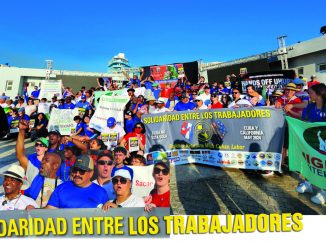
The Confederation of National Trade Unions (CSN) General Assembly, representing roughly 300,000 workers in Quebec, has just adopted a resolution to support the “OFF the List” Million Signature campaign launched by International Peoples Assembly affiliates in Latin America. Online signatures with more information can be found at LetCubaLive.info

Addressed to U.S. President Biden, the campaign is part of the growing international demand that Biden write the simple letter to Congress required to remove Cuba from the U.S. State Department “State Sponsors of Terrorism” list. The spurious list falsely uses “terrorism” terminology to prevent any international economic transactions with countries unilaterally added at the whim of the U.S. administration.

The CSN is the first national labor federation known to support this campaign. However, in the U.S., more than 30 local unions and Central Labor Councils have passed specific “OFF the List” resolutions this year. Most recently, the Los Angeles Labor Federation added its endorsement to this demand.

Through its Resolutions Task Force, the National Network on Cuba (NNOC) has accumulated over 100 declarations from City Councils, County Commissions, State Legislatures, School Boards, labor unions, central labor councils, and other organizations opposing the U.S. anti-Cuba policies. This unilateral war against Cuba intentionally creates hardships and shortages on the island with the 60-year failed goal of restoring capitalist exploitation of Cuba’s resources and people. 

On June 25, the NNOC rallied at the White House as part of their “Off the List” campaign.

On Nov. 1 and 2, the United Nations General Assembly will vote on a resolution calling for the U.S. to end the blockade of Cuba. Since 1992, the almost unanimous annual vote representing all but a couple of the world’s 193 countries stands with Cuba. Only the United States and Israel consistently voted to maintain the blockade, except for 2015, when both abstained, making the vote unanimous.

The petitions and resolutions will demonstrate that the people of the U.S. are arm-in-arm with the global sentiment. Biden! Take Cuba “Off the List.”

Strugglelalucha256


Struggle-La Lucha and the Socialist Unity Party condemn terrorist attack on Cuba’s Embassy

Sept. 25 — Struggle-La Lucha and the Socialist Unity Party denounce the terrorist attack on the Cuban Embassy in Washington, D.C. On Sunday evening, Sept. 24, two molotov cocktails were hurled at the Embassy following the successful visit by Cuba’s President Miguel Díaz-Canel to the United Nations.

This cowardly act of violence underscores the hypocritical lies against Cuba, which has been indefensibly placed on the U.S. list of state sponsors of terror. Ironically, it is Cuba that has been the target of terrorism in the U.S. and initiated against the island nation from the U.S.

This is the second violent act against the Cuban Embassy in the past three years. Veteran diplomat Cuban Ambassador Jose Cabañas and his team were threatened when a terrorist carrying an AK47 shot up the Cuban Embassy, just over a mile from the White House. 

We demand that the U.S. immediately remove Cuba from the list of state sponsors of terror.  End the U.S. blockade.  Sign the “Let Cuba Live” campaign.

Strugglelalucha256


Cuban President exchanges with U.S. revolutionaries on UNGA visit

On September 23, hundreds of people packed the auditorium of the New York Society for Ethical Culture to hear Cuban President Miguel Díaz-Canel speak, along with Venezuelan Foreign Affairs Minister Yván Gil Pinto, historian, and director of the Tricontinental: Institute for Social Research Vijay Prashad, and Cuban-trained physician and activist Dr. Samira Addrey. It was the last activity in Díaz-Canel’s week-long visit to New York City for the United Nations 78th General Assembly.

At this event, titled “Voices of Dignity,” the movement to lift all unilateral coercive measures against Cuba and Venezuela was elevated through cultural performances such as that of rapper and union organizer Linqua Franqa, Latin jazz musician Arturo O’Farrill, and Brooklyn-based DJ Cardamami.

In his address, Díaz-Canel outlined the specific ways in which the U.S. blockade against Cuba is putting a stranglehold on the Cuban people. “The U.S. government prevented suppliers of pulmonary ventilators from selling them to us at a time when we needed these ventilators to expand our hospitals to combat COVID,” Díaz-Canel said, to resounding boos from the crowd.

“Pessimism is not the nature of revolutionaries. That is not an option for those of us who believe a better world is possible. It is not an option for those of us who have the belief that it is worth it to fight for that better world,” Díaz-Canel told the gathered North Americans.

“The combined effect of the COVID-19 pandemic and the intensification of the U.S. economic blockade are posing serious challenges to our economic growth and the satisfaction of many of our public. But even in these conditions we have continued and will continue to prioritize social justice. We shall continue to satisfy the basic needs of our populace. We shall continue to defend equity. And we shall continue to make our strongest efforts to defend our socialist system for which so many generations of Cubans have sacrificed themselves.”

Venezuela is no stranger to U.S. hybrid war, and Gil Pinto spoke to the novel threats that his country faces. “The American empire is trying to impose a new military threat in our country, and the excuse that they are using is a border dispute that Venezuela has had for many many years…today, the U.S. is trying to mobilize military troops in Guyana, a conflict they are not involved in at all. If we want a settlement of this border dispute, of course this must be handled through diplomatic means.”

Dr. Addrey, who was trained at the Latin American School of Medicine (ELAM) in Havana, highlighted Cuba’s humanitarian work in training doctors from across the world and sending medical brigades of Cuban doctors to dozens of countries. “Cuba has sent medical internationalists to 165 countries in 60 years of this incredible humanitarian policy,” said Dr. Addrey, “ELAM is an extension of Cuba’s long history of medical internationalism,” she said. “Fidel taught us that we must be resolute that our bodies will no longer pay the price for imperialist crimes.”

Vijay Prashad described the motivations of those who drive sanctions and attacks against Cuba and Venezuela: “We love life. We love humanity. We love human beings… They love death. They love suffering. They want people to be hungry. They need people to go and die in their wars,” Prashad declared. “Those who love life love socialism.”

One day after the Voices of Dignity event, the Cuban embassy in D.C. suffered a terrorist attack, whilst on Friday, September 22, the Senator who has been the chief bulwark of sanctions against Cuba and Venezuela, Bob Menendez of New Jersey, was indicted on charges of corruption. He thus far refuses to resign from his post. Menendez had several Cuba solidarity activists arrested in June when they came to his office for a peaceful discussion.

Prashad also mentioned the wave of African nations that are standing up against French neocolonialism, including ChadNigerBurkina FasoMali, and Guinea.

“There are big changes taking place in the world these days,” Prashad said. “In the entire Sahel region, one country after the other has said, ‘France, go home!’” This last statement was met with enormous applause from the crowd, and chants of “France, go home!”.

The Voices of Dignity event concluded with a resolute slogan: “¡Cuba sí, bloqueo no!” (Cuba yes, blockade no!)

Díaz-Canel pays surprise visit to solidarity activists

Upon arrival on September 18, Díaz-Canel visited the Malcolm X & Dr. Betty Sabazz Memorial and Educational Center in Harlem to pay tribute to the historic meeting between Fidel Castro and Malcolm X in 1960. The African-American revolutionary leader welcomed the Cuban delegation at a time when the United States establishment was shunning, ridiculing, and isolating the newly liberated country.

On September 19, Díaz-Canel addressed the General Assembly. “Cuba will continue to strengthen its democracy and socialist model which, despite being under siege, has proved how much a developing country, with scarce natural resources, can do,” he declared.

On September 22, dozens of activists of all ages marched from Grand Central Station in midtown Manhattan to the Permanent Mission of Cuba to the United Nations, where they held a short rally. This action was organized by the International Peoples’ Assembly, the People’s Forum, the ANSWER Coalition, and others as part of an international call to take Cuba off of the United States’ State Sponsors of Terrorism list.

During their rally outside the mission, Díaz-Canel paid the demonstrators a surprise visit. Peoples Dispatch spoke to several people in the crowd, who were alarmed at first at seeing an entourage of suited men walk up to their action, but quickly turned elated when they realized that the President of Cuba himself had decided to attend their event.

“[When] I realized it was the President…I was overcome with emotion,” said Lillian House, an organizer with the Party for Socialism and Liberation who was a lead organizer in Denver during the 2020 uprising against police brutality. “To me, Diaz-Canel is a towering figure, the person entrusted by the Cuban people to take up the mantle of Fidel and Raul, someone who has lived his entire life in dedication to his people, and he came out to see us and thank us for our solidarity. Never do politicians in the United States come out to protests without teams of press and pre-prepared statements. Never is it in genuine relationship with the people and their struggles. It was a great honor to be there for that expression of mutual solidarity.”

Díaz-Canel joined protesters in chants of “Cuba si, bloqueo no!” before addressing the gathered crowd. “Sisters and brothers, many thanks for your solidarity,” he said. “Many thanks for your support. And many thanks for being here with us.”

Source: Peoples Dispatch

Strugglelalucha256


Cuban President Díaz-Canel joins Cuba solidarity rally in New York street

New York, Sept. 22 — Amidst cheers for Cuba, down with the blockade and other slogans, a demonstration of support for the island was taking place at the corner of Lexington Avenue and 38th Street by the Cuban Mission in New York this evening when at that moment, the cheers multiplied as Cuban President Miguel Díaz-Canel crossed the street to join them.

The president was on his way to a meeting there but took the opportunity, in a memorable moment of joy and solidarity, to chant with them, “Cuba si Bloqueo no!” and to express, “thank you all for being with us.”

The Cuban president has had an intense agenda since he arrived in this city last Sunday at the head of the delegation that attended the High-Level Segment of the 78th regular session of the UN General Assembly.

Source: Prensa Latina translation Resumen Latinoamericano – English

To see the exchange go to: https://www.youtube.com/shorts/VJxpfez9jtU

Strugglelalucha256


Cuba’s President Díaz-Canel at United Nations: “A new and fairer global contract is urgently needed”

Addressing the United Nations General Assembly on Tuesday, Cuban President Miguel Díaz-Canel Bermúdez said that “a new and fairer global contract is urgently needed.” He spoke on behalf of the Group of 77 and China, an organization of which Cuba holds the pro tempore presidency in 2023.

He referred to the results of the recently held Summit of Heads of State and Government of the G77 and China in Havana, where member countries approved a political declaration advocating changes in the international financial architecture in a way that allows all countries to advance more justly on the path to the Sustainable Development Goals (SDGs) and the 2030 Agenda.

The voice of the South, diverse peoples with common problems, has been heard from Havana, said Díaz-Canel, noting that more than 100 representatives of the 134 countries that make up the G77 and China “demanded changes that can no longer be postponed in the unjust, irrational and abusive international economic order, which has deepened year after year the enormous inequalities between a minority of highly developed nations and a majority that fails to overcome the euphemism of developing nations.”

“We are not asking for handouts or begging for favors. We are calling for a profound transformation of the current international financial architecture because it is deeply unjust, anachronistic and dysfunctional.”

“Cuba is the country that has endured unilateral coercive measures for the longest time.

We were not the first, and we are not the last. The pressures to isolate sovereign states today also affect Venezuela, Nicaragua…”.

He referred to the words of the UN Secretary-General when he stated in Havana that the G77 was founded 60 years ago to remedy centuries of injustice and neglect and that in today’s turbulent world, these nations are entangled in a tangle of world crises, where poverty is increasing, and hunger is growing.

The Group of 77 was united -the Cuban leader said- by the need to change what has not been resolved and the condition of main victims of the current multidimensional global crisis and the current abusive unequal exchange, of the technological scientific gap and the degradation of the environment.

“But we have also been united, for more than half a century, by the inescapable challenge and determination to transform the prevailing international order, which, in addition to being exclusive and irrational, is unsustainable for the planet and unviable for the well-being of all”.

The countries represented in the G77 and China are where 80% of the planet’s population lives, and “not only have we faced the challenge of development, but also the responsibility to modify the structures that marginalize us from global progress and turn many countries of the South into laboratories of renewed forms of domination,” said Díaz-Canel before the plenary of the General Assembly, which is holding its 78th session.

“A new and fairer global contract is urgently needed,” the Cuban president stressed.

He warned that, at the current pace, countries will fail to achieve any of the 17 SDGs, and more than half of the 169 targets agreed in 2015 will be missed. “The outlook is discouraging,” he said.

“In the midst of the 21st century, it offends the human condition that nearly 800 million people suffer from hunger on a planet that produces enough to feed everyone,” he stressed. “Or that in the age of knowledge and the accelerated development of new information and communications technologies, more than 760 million people, two-thirds of them women, do not know how to read or write.”

He said that “the efforts of developing countries are not enough to implement the 2030 Agenda.

He stressed that these efforts must be backed up by concrete actions in terms of market access, financing with fair and preferential conditions, technology transfer, and North-South cooperation.

“We are not asking for handouts or begging for favors,” said Díaz-Canel, and insisted that the G77 demands rights and will continue to demand a profound transformation of the current international financial architecture “because it is deeply unjust, anachronistic, and dysfunctional.”

Díaz-Canel pointed out that today’s prevailing financial architecture was designed to profit from the reserves of the South, perpetuate a system of domination that increases underdevelopment, and reproduces a model of modern colonialism.

“We need and demand financial institutions in which our countries have real decision-making capacity and access to financing.

“A recapitulation of multilateral and development banks is urgently needed to radically improve their lending conditions and meet the financial needs of the South,” he said.

The G77 countries have had to allocate $379 billion of their reserves to defend their currencies by 2022, almost double the amount of new special drawing rights allocated to them by the IMF, he said, and he considered it necessary to rationalize, review and change the role of credit rating agencies.

“It is also imperative to establish criteria that go beyond GDP to define developing countries’ access to concessional financing and appropriate technical cooperation,” he added.

“While the richest countries fail to fulfill their commitment to allocate at least 0.7% of their national GDP to official development aid, the nations of the South have to spend 14% of their income to pay interest associated with foreign debt.”

The Cuban president stressed that the G77 reiterates its call to public, multilateral and private creditors to refinance the debt through credit guarantees, lower interest rates and longer maturities.

“We insist on the implementation of a multilateral mechanism for the renegotiation of sovereign debt, with the effective participation of the countries of the South, which will allow a fair, balanced and development-oriented treatment”.

The president denounced onerous credits and cited that most G77 countries are obliged to allocate more to debt servicing than to investments in health or education. “What sustainable development can be achieved with such a noose around our necks?” he asked, calling on creditors to refinance the debt on terms that do not stifle the progress of nations.

On the effects of climate change on developing nations, Díaz-Canel recalled that they are the main victims, while industrialized countries, “voracious predators of resources and the environment”, evade their responsibilities and fail to fulfill their commitments.

“With a view to COP28, the G77 countries will prioritize the global stocktaking exercise, the operationalization of the loss and damage fund, the definition of the framework for the adaptation objective and the establishment of a new climate finance target, in full compliance with the principle of common but differentiated responsibilities,” he said.

He informed that the G77 is convening a summit of leaders from the South, to be held on December 2 in the context of COP28, in Dubai. “It will be a space to articulate the positions of our group at the highest level in the context of climate negotiations.”

He added that for the G77 it is a priority task to change once and for all the paradigms of science, technology and innovation that are limited to the environments and perspectives of the North, depriving the international scientific community of considerable intellectual capital.

“The successful summit in Havana launched an urgent call to integrate science, technology and innovation around the unrenounceable goal of sustainable development (…) We urge richer nations and international organizations to participate in cooperation projects,” he said when commenting on the initiatives presented during the conclave held on September 15 and 16 in the Cuban capital.

The Cuban president also criticized the imposition of unilateral punitive measures, “practices of powerful States to try to subdue sovereign States”.

He also recalled that Cuba is the country that has endured unilateral coercive measures for the longest time.

“I cannot pass through this world platform without denouncing, once again, that for 60 years Cuba has been suffering a suffocating economic blockade, designed to depress its income and standard of living, cause continuous shortages of food, medicines and other basic supplies and restrict its development potential,” said Díaz-Canel.

He denounced that pressures to isolate and weaken economies also affect nations such as Venezuela and Nicaragua, and that before and after they have been the prelude to invasions and overthrows of uncomfortable governments in the Middle East.

“We reject the unilateral punitive measures imposed on countries such as Zimbabwe, Syria, the Democratic People’s Republic of Korea and Iran, among many others whose peoples suffer the negative impact of these.”

On the policy of economic coercion and maximum pressure applied by the U.S. government against Cuba, in violation of international law and the UN Charter, he emphasized that “there is not a single measure or action by Cuba to harm the United States, to damage its economic sector, its commercial activity or its social fabric.

“There is no act by Cuba that threatens the independence of the United States or its national security, that undermines its sovereign rights, interferes in its internal affairs or affects the welfare of its people. The U.S. conduct is absolutely unilateral and unjustified”.

He also criticized the internal destabilization plans against Cuba promoted from Washington and Florida, as well as the unjustified inclusion of the country on the list of state sponsors of terrorism.

“Despite the hostility of your government, we will continue to build bridges with the people of the United States, as we do with all the peoples of the world,” he said.

“Cuba will not relent in its efforts to boost the creative potential, influence and leadership of the G77,” he assured while commenting on the country’s intention to present its candidacy to the UN Human Rights Council for an upcoming term. “Our group has much to contribute to multilateralism, stability, justice and rationality that the world requires today.”

Here is the link to Diaz Canel’s speech at the UN with simultaneous translation into English:

Source: Cubadebate translation Resumen Latinoamericano – English

Strugglelalucha256


Let Cuba Live: Take a stand and get Cuba off the SSOT list

Los Angeles, Sept. 14 — The multinational and multi-generational Let Cuba Live delegation that showed up on the steps of City Hall today was a dynamic and powerful group of activists calling on the L.A. City Council and Mayor Karen Bass to pass a resolution and take a stand against the inclusion of Cuba on the State Sponsors of Terrorism (SSOT) list.

Krishna Daly of Black Alliance for Peace and Let Cuba Live led the delegation to meet with L.A. City Counselor Eunisses Hernandez and deliver letters to other councilors and Mayor Karen Bass. Daly spoke with urgency of the painful and difficult conditions that face the Cuban people and medical community:

“It’s not just that they don’t have aspirin, they can’t do necessary surgery — they don’t have anesthesia and other crucial medical supplies, and they can’t get them because of the SSOT designation.” 

Pastor Kelvin Sauls of IFCO/Pastors for Peace & Sanctuary of Hope (SOH) related his history in South Africa. “The U.S. sustained the apartheid system, a system that made the great majority of people feel like pariahs in their homeland. This is the same thing that the U.S. blockade and SSOT designation does to the people of Cuba.”

Nathaniel Peterson, a youth who participated in the SOH trip to Cuba, saw the impact of the U.S. blockade with his own eyes. He and the other youth on the delegation delivered medical and stationery supplies to medical centers and Prensa Latina.

John Parker of the Harriet Tubman Center for Social Justice, Carlos Sirah of Black Alliance for Peace, Dave Clennon, an actor and member of SAG/AFTRA and Interfaith Communities United for Justice & Peace, and Maggie Vascassenno of Women in Struggle completed the delegation. The group visited Mayor Karen Bass’ offices and dispersed with plans for the next round of meetings, applying pressure on the L.A. City Council, Mayor Bass, and the L.A. County Board of Supervisors.

Strugglelalucha256


The significance of the Cuban 5 a quarter of a century since their arrest

Havana, Sept. 12 — The memory remains in the Cuban people for an event that occurred 25 years ago today. On September 12, 1998, five Cuban men were marked forever by the extreme hatred of those in Miami who have not ceased in attacking Cuba. That day they were arrested and their long battle for justice began.

Gerardo Hernandez, Ramon Labañino, Antonio Guerrero, Fernando Gonzalez and Rene Gonzalez were given brutal sentences ranging from 15 years to two life sentences, without being proven to be a danger to U.S. national security. They came to the U.S. unarmed except for the love of their homeland to monitor the activities of heavily financed anti-Cuba terrorist groups who were operating with impunity out of Southern Florida. Terrorists who were responsible for 3,500 deaths in Cuba since our revolution in 1959. The Cuban 5 should have never been even detained but on September 12 the FBI stormed into their apartments and locked them up in solitary confinement for 17 months.

Their federal trial took place in the hostile atmosphere of Miami and was the longest in U.S. history.  The shadiness of the court proceedings failed to prove anything except the penetration of the Five, without weapons, into the terrorist groups to learn their criminal intentions. Except for failure to register as a foreign agent, all the charges including espionage, could not be proven so the convictions were all based on conspiracy to commit charges. Exposing the true political nature of the trials and the government’s hatred of Cuba the U.S. justice system threw the book at them with long sentences. Ramon and Antonio got life sentences and Gerardo received 2 life sentences and 15 years.

As summarized by Cuban politician and diplomat Ricardo Alarcón de Quesada, the arrest took place almost three months after the visit to Havana of a high-level FBI delegation that was given abundant documentation and testimonial information about terrorist plans against Cuba and the financial backing of the Miami-based Cuban American National Foundation (CANF).

CANF, it should be remembered, was responsible for the lengthy record of services to the counterrevolution of terrorists like Luis Posada Carriles, the protagonist of many deadly like the mid-air explosion of a Cubana plane with 73 innocent people on board off the coast of Barbados in 1976.

The material turned over the FBI in Havana detailed investigations of dozens of terrorist acts planned between 1990 and 1998, with photographs of weapons, explosives and other evidence, and additionally 51 pages of the list of CANF money destined to various groups to do harm within the country.

In addition, the FBI received the files of 40 terrorists of Cuban origin, most of them residing in Miami, and the data to find each one. Also, the recordings of telephone conversations of Posada Carriles giving instructions for plans of sabotage in Cuba, and the information also included addresses of his homes in several countries, license plates of his cars and a list of places he frequented.

The U.S. delegation took samples of bombs deactivated at the Meliá Cohíba Hotel in April 1997, and in a tourist bus in October of the same year. Also, of the explosive device confiscated from two Guatemalans in March 1998, and the recordings of their statements, which clarify their links with Posada Carriles and Orlando Bosch.

When the FBI returned not a single piece of evidence was used to open up an investigation, much less the arrest of any of the terrorists instead, they went after the messengers. On September 12, the politically ambitious head of the FBI in Miami, Hector Pesquera,  was all over the Miami media smiling with anti-Cuban members of Congress, Ileana Ros Lehtinen and Lincoln Diaz-Balart, as he informed them of the arrest of the Five.

This jubilation did not last long because it was not long after that Fidel acknowledged publicly that the Five had been arrested and he vowed that they would Return. From that moment on the Cuban 5 became the only political prisoners in the world that had the backing of entire country demanding their freedom.

More than 16 years later, after months of negotiations between the governments of Cuba and the United States, on December 17, 2014, the final three of the Five Heroes returned to their homeland to walk free and continue to be defenders of the Revolution and the right of Cuba to determine its own future.

The real reason for their release was not because the U.S. somehow had a change of heart but rather through popular struggle. It was because of the unbendable bravery of the Cuban 5 in deplorable U.S. prisons, It was because of the relentless determination of their families who traveled the world as active agents in the battle for their freedom, it was because of the unwavering support of the Cuban people through all those years, and it was also because of the strength of a worldwide solidarity movement that kept growing calling for their release. Committees in support of the Cuban Five sprung up in over 150 countries and no U.S. Embassy in any part of the world was spared demonstrations demanding justice and their freedom.

The story of the Cuban 5, which began with their arrest 25 years ago today, is an important lesson that can still be applied today in our demands to end the unilateral blockade of Cuba and it gives the world hope that a better world is possible.

Source: Cuba en Resumen

Strugglelalucha256


Let Cuba Live Coalition builds solidarity in Los Angeles

The Let Cuba Live Coalition (LCLC) in Los Angeles is gathering steam for a fall offensive to take Cuba #OFFTHELIST and end the criminal U.S. blockade of Cuba. 

The local group is organizing to get the second largest city in the U.S. to finally join dozens of cities, counties, unions and community groups, including the New York City and Washington, D.C., City Councils, and pass a resolution to take Cuba off the State Sponsors of Terrorism (SSOT) list and end the U.S. blockade of Cuba. 

On the heels of a recent victory – the Sacramento Mayoral Proclamation that resolved to “…proclaim support for the efforts to remove Cuba from the (SSOT) list” – the LCLC is supporting efforts to get union backing while preparing to meet with local council members, county executives and Los Angeles Mayor Karen Bass.

The LCLC has connected with Sanctuary of Hope (SOH) to join the grassroots efforts to reach local politicians and expand the community’s understanding of Cuba’s example. SOH is a youth development organization, whose primary mission is to provide a caring and identity-affirming approach to services that help young people become self-sufficient, make connections, and lead meaningful lives. In that context, SOH took a delegation of youth to Cuba.

The SOH delegates have been invited to participate in meetings with city counselors and speak about their Cuba experiences at a Sept. 24 documentary film showing at the Harriet Tubman Center for Social Justice. The event begins at 2 p.m. at 5278 W. Pico Blvd., Los Angeles.

“Cuba in Africa” by Negash Abdurahman will be screened at the Harriet Tubman Center, with Abdurahman available via zoom to discuss the film and answer questions. The documentary is the dramatic untold story of 420,000 Cubans – soldiers and teachers, doctors and nurses – who gave everything to help end colonial rule and apartheid in southern Africa. “Cuba in Africa” is told primarily through the moving stories of Cuban survivors of the Angolan campaign, from soldiers to teachers to medical personnel to government officials.

Other Los Angeles community-building and Cuba awareness events included the important report from the Women in Struggle LGBTQ+ delegation to Cuba to learn about the progressive new Families Code. The report-back meeting stressed the urgency of fighting here in the U.S. for the recognition of all types of families, as was codified into law in Cuba. 

Melinda Butterfield, leader of the Women in Struggle delegation, encouraged everyone to go to Orlando, Florida, on Oct. 7 for the National March to Protect Trans Youth & Speakout for Trans Rights. Visit ProtectTransKidsMarch.org for info.

To get involved with LCLC, call (323) 306-6240 or email info@HarrietTubmanCenterLA.com.

Join the campaign for 1 million signatures to take Cuba #OffTheList of State Sponsors of Terrorism. Visit LetCubaLive.info.

Strugglelalucha256


The upcoming summit of the G77 group plus China in Havana: A draft declaration goes around the world

As part of the preparations for the Summit of the G77 Group plus China, to be held in Havana from August 15 to 16 this September, a draft declaration has been under discussion for months, to be approved by the heads of delegations attending the forum, and which would constitute the main political message to be projected by that conclave towards the future. Almost two weeks before the meeting, the text was disclosed, which already has the consensus of the representations of the member countries at the United Nations in New York, and which will be known as the declaration on “Current Development Challenges: The Role of Science, Technology and Innovation”.

For many, this could be just another document, another exercise in multilateral diplomacy that has nothing to do with the day-to-day lives of the people who pay tribute to an event that could be a tournament of speeches and memorable photo opportunities. But the reality, as always, is much more complex.

Before referring to some of the ideas contained in the document, it is worth mentioning that it is the synthesis of an extensive negotiation process in which 134 nations, that is, 134 governments and their 134 chancelleries, have summarized those ideas on which they have a consensus.

If we have any doubts about the significance of this achievement, let’s do the exercise of calling together only 3 or 4 friends to write at least one page on any topic of common interest, be it sports, cultural or religious. Immediately differences will arise that cannot be resolved by voting, whereby the majority simply defeats the minority, and the latter does not feel part of the final draft. It is much more complicated when the exercise is carried out by official representatives of States that have their own history, culture, principles, legacy and also political differences within their social fabric.

So let’s return to the point that the announced consensus has been reached among 134 nations, representing 80% of the world’s population.

This fact in itself would indicate the leadership capacity shown by Cuban diplomacy, on behalf of its people and authorities. It also represents a significant vote of confidence from small, medium and large countries that have bet on Cuba’s professionalism, honesty and transparency to lead this exercise.

This consensus also points in the direction of the urgency felt by all to address these issues, because we will act expeditiously in the face of some of them, or there will no longer be time to recover.

Other elements to be taken into account in this analysis are the circumstances in which this result has been achieved and its content. With regard to the former, it must be said that we are living in a circumstance of great uncertainty, in which Humanity is going through a period of transition towards a new international order. This transition has already taken place on several occasions throughout history, but it has always been preceded by a war of major proportions, which on two occasions, both during the twentieth century, has been on a global scale. This fact implies that a good part of those summoned to the Summit would be taking a new look at their environment, their alliances and their external projections.

The content of the announced consensus also deserves to be highlighted and analyzed separately. In this type of document, it is perhaps just as important to record those issues that are expressly mentioned as those that are not stated.

Of the former, one of the most important is the definition made by the G77 plus China of the priority issues of the moment, a sort of collective snapshot of current affairs.

The shutter of this fictitious camera has been fired in the face of an international economic order that is “unfair to developing countries”, which have not yet recovered from the shock of COVID19 , have not been able to overcome all its ravages and fear the occurrence of a similar pandemic in the future, without having healed the wounds of the first one. But the Group believes that all this is exacerbated by:

– geopolitical tensions

– unilateral coercive measures

– economic and financial crises

– the fragility of the global economic outlook

– the increasing pressure on food and energy

– displacement of people

– market volatility

– inflation

– monetary tightening

– growing external debt burden

– increasing extreme poverty

– increasing inequalities within and between countries

– the adverse effects of climate change

– loss of biodiversity

– desertification, sand and dust storms and environmental degradation

– digital divides

These phenomena gravitate on the so-called Global South without a clear roadmap to deal with them in a coherent and effective manner.

Certainly, the North could show some interest in this list, since these are common problems suffered by communities and areas within their own geographies, which are far removed from the standard of living of higher-income segments and far from the opulence of large cities and capital cities.

In the analysis, it is also worth mentioning some of the issues that are not listed in the text in question, but which are at the center of the “concerns” expressed by the associations of the political North, particularly NATO, and which its social communication machinery tries to persuade everyone that they are the most urgent issues.

In the consensus draft that has been disclosed there are no references to: Russia’s Special Military Operation in Ukraine, the technological aggressiveness of the Asian tigers (not only China), the political changes taking place in Africa and removing pro-European rulers from power, the decrease in the relative weight of the dollar in international transactions, the increase of progressive and socialist proposals in Latin America.

The draft declaration to be reviewed in Havana does not mention the so-called Fourth Industrial Revolution by name either, beyond the increase of the so-called digital divide, but there is a significant reference to “ensuring ethical, reliable and more equitable development, access and use of artificial intelligence”. There is not even a similar approach in this regard in collective documents of the G-7, or the European Union. On the contrary, the interests of the large transnationals that venture into such developments are protected.

There is another fundamental element in this proposal and it has to do with the way in which these 134 nations intend to advance their actions. The nine pages of common points are full of references to “acting together”, “global solidarity”, “international cooperation”, “benefit for all”, “community of shared future”, in addition to calls for “sustainable livelihoods” and “open science/knowledge at all levels”, “inclusive information society”.

There is no single idea that implies the preponderance of one of the members of the group over the rest, there is no hegemon, there is no single country that is considered as the paradigm, or the example to be imitated by the others.

As a novelty we should also mention the collective understanding, perhaps as never before, that Science, Technology and Innovation have a role to play for the development of all those who have been left behind, which is why new meetings and collective exercises are proposed to achieve such purposes. In other words, it is understood that not everything can be expressed at once, so it is intended to take subsequent steps in that direction.

Among the issues not mentioned in the document, and which should be the focus of attention in future meetings, should be the training of human resources in universities and research centers within the group itself. Those that do not exist today will have to be created. At least in the field of the social sciences, it is a contradiction to think that the magnitude of the changes that must take place can be led by leaders who are trained, and incidentally molded, in the educational institutions of those countries of the North that have been the protagonists of dispossession, marginalization and exclusion against the rest of humanity. There will always be exceptions, but there is also a need for doctors, engineers, experts, researchers, entrepreneurs, who put collective fulfillment ahead of individual fulfillment, who have the benefit of their communities above personal goals in their horizons. Buildings will have to be constructed on new pillars.

As is well known, the G77, unlike the Aligned Movement, rotates its presidency, but does not convene summit meetings on a cyclical basis. Therefore, each G77 summit is historic in itself and this one will be even more so because of the juncture in which it takes place.

Every Cuban should ask himself what is the significance of the fact that 133 other nations have now trusted our quality as hosts, in spite of the enormous material limitations the country suffers from. The choice of Cuba to temporarily coordinate this collective is not only a sign of the failure of the U.S. policy of isolation against our country. It is much more. It is a shout to 133 voices saying that Cuba is a respected country within the international community, which is recognized for its leadership and weight. Havana has hosted two summits of the Non-Aligned Movement (1979, 2006), ministerial meetings associated with the previous ones and a South Summit (2000, also of the G77), although it did not hold the pro tempore presidency at that time. It is worth adding to this list the multiplicity of events of CELAC, CARICOM, ACS, ALBA-TCP and many other regional bodies.

In the middle of the 1960s, when more than 100 bands of the so-called “alzados” were operating in Cuba, financed and organized from U.S. territory, causing 600 victims among the civilian population, when we were just beginning to suffer the effects of the economic, commercial and financial blockade, Havana was again and again the meeting point for the political forces that finally convened the first Tricontinental Conference, which in January 1966 created the Organization of Solidarity for Asia, Africa and Latin America (OSPAAAL). It is considered that this moment meant an extension of the Non-Aligned Movement to the latter region.

In Havana, once again, we convene and welcome, we discuss and agree, we offer and receive solidarity, we listen and propose on an equal footing, we respect and defend sovereignty. Only in this way will we be able to dream and build a better future.

José Ramón Cabañas Rodríguez is Director of the International Policy Research Center (CIPI) in Havana, Cuba and former Cuban Ambassador to the U.S.

to follow the G-77 + China live go to:

Canales de YouTube G77:

✅ @CubaG77_Español

✅ @CubaG77_English

Translation Resumen Latinoamericano – English

Strugglelalucha256


Cuban soldiers in the Russian Army?

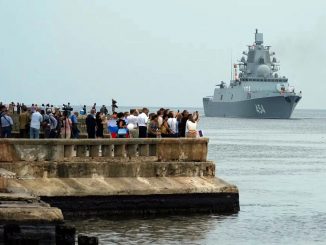
Havana, Sept. 7 — The “news” that Cuban troops are participating in combat actions on the Russian side in Ukraine, which comes well seasoned with melodramatic stagings, is grabbing headlines in the main counterrevolutionary media and their affinities in the world.

There is nothing complex about this new farce. The main objectives, as usual, are aimed at undermining Cuba’s support and contributing to the barbaric campaign by the U.S. government to discredit the island.

The Cuban Foreign Ministry’s (MINREX) statement issued a couple of days ago, sets out Havana’s position on the issue and clarifies some of the false matrices that the U.S. special services, the media conglomerates and mercenaries in their service are trying to sow.

It was not for nothing that they sent their star operator, Orlando Gutiérrez Boronat, to Ukraine on a tour financed by the State Department. There is no one quite like him to act in front of the cameras and tell outlandish and fallacious stories, without the slightest embarrassment, against the land where he was born.

First of all, the Russian government, using its sovereign right, made public an appeal for foreign citizens who are in the territory of that country to join the Armed Forces for a period of one year in exchange for which they could receive Russian citizenship.

Such a proposal is not an “invention” of Moscow; it is made by many governments in the world, including that of the U.S., which, by the way, does not always fulfill its commitment.

It is possible that some Cubans residing in Russia have chosen that possibility; after all, the Cuban community in that country is not small.

Another variant is that, as denounced by the Cuban Foreign Ministry, groups of human traffickers are taking citizens of the island to the war front in Ukraine by means of deceitful proposals or, frankly, through an offer of payment for services.

The third “vision of the issue” is the farce staged by the operators of the anti-Cuban ultra-right, the Miami counterrevolutionary mafia, and the CIA, which has invented that there are secret flights, even from the Varadero airport, to take Cuban troops to combat territory.

It is highly offensive, and it is clear that they do it motivated by the hatred they feel for the Cuban Revolution and to deceive and denigrate, to claim that the island is sending soldiers in exchange for material benefits.

Those who know the trajectory of the revolutionary government know perfectly well how our nation acts in these matters; Cuban internationalist soldiers have fought in Africa against colonialism and apartheid, but the only thing that Cuba has taken back, with the victorious departure of its troops, is the glorious bones of those who have fallen in combat.

This smear campaign, like so many others, will end in the dustbin of history.

Raúl Antonio Capote is a Cuban writer, professor, researcher, and journalist.

Source: Cuba en Resumen

Strugglelalucha256
https://www.struggle-la-lucha.org/cuba/page/12/