China commits to international solidarity in vaccines

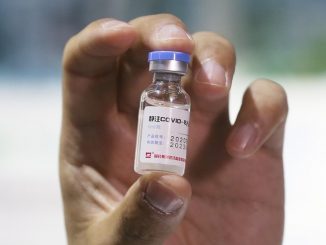
COVID-19 vaccine developed by China National Pharmaceutical Group.

On Oct. 9, China announced that it has joined about 160 other countries in a pact to ensure that COVID-19 vaccines and treatments will be distributed equitably around the world. The aim of the agreement is to provide two billion doses of vaccine to vulnerable populations and health care workers, especially in poor countries. 

The U.S. is among the few countries that have rejected taking part. The richest country in the world has snubbed the idea of joining forces with other countries to help stop a deadly virus from ravaging poor populations throughout the world. This right-wing orientation of the Trump administration is a byproduct of the capitalist system itself; essentially anything that weakens other countries helps to make the world more exploitable for profit. It was exposed in March when the Trump administration tried to secure the rights to vaccinations in development in Germany for the use of the U.S. only, forcing the German government to outspend U.S. offers to German companies.

STAT news described this competition in a Sept. 8 article: “The United States has ignited a vaccine nationalism wildfire, which is reaching conflagration status. Wealthy governments have locked down more than 4 billion doses of vaccines so far, with the United States topping the list with commitments for 800 million initial doses and options on another 1.6 billion doses; new bilateral purchase agreements are announced almost daily.” 

China vaccine available in Asia, Africa, Latin America

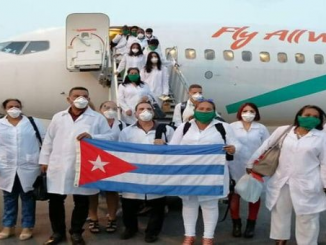
In total contrast, China’s joining the international agreement is only one part of their commitment to extend solidarity through COVID-19 vaccinations. Speaking to the World Health Assembly in May, President Xi Jinping said that vaccines should be for “global public good.” Since then, Xi and Premier Li Kequang have pledged repeatedly to make Chinese vaccines available to the Philippines, Cambodia, Burma, Thailand, Vietnam and Laos as well as Latin American and African countries. China is also currently in talks with the World Health Organization (WHO) for vaccines to be approved for emergency use authorizations. Obtaining that approval would cut red tape for member states’ use of the vaccines.

When the early cases of COVID-19 were discovered in Wuhan in late December 2019, China launched a “People’s War” against the virus that was nothing short of astonishing. The Chinese people, the People’s Liberation Army and many thousands of medical workers, scientists and volunteers succeeded in limiting the number of deaths to less than 5,000 people. At this point, some individual states in the U.S. have surpassed the number of fatalities in all of China — most recently that happened in the state of Michigan as a new surge of the disease spread through the Midwest. 

U.S. deaths 40 times that of China

The total number of deaths in the U.S., with 1/25th of the world population, is more than forty times that of China, where 1/5th of humanity lives.

Tens of thousands of people are participating in Phase 3 trials of China’s vaccine candidates outside of China, and through emergency use authorizations in both the United Arab Emirates and in Bahrain, doses of the vaccine have been supplied to various categories of workers who are at high risk because of the nature of their jobs. In China itself, members of the People’s Liberation Army and workers who travel frequently have also been vaccinated. In all cases, those who have been vaccinated are being closely monitored, like the monitoring regimen of the Phase 3 trial itself. So far, there are no major setbacks and no side effects, and in mid-September, Guizhen Wu, an official with China’s Center for Disease Control and Prevention, said that a vaccine could be ready for general distribution in November.

Given China’s astounding success and given the very advanced state of development and trials of vaccines there, China’s firm commitment to international solidarity in the form of vaccinations is a significant step forward in the global fight against the coronavirus. In recent decades, China’s scientific community has emerged as one of the most developed in the world in many fields, including advanced medicine. Chinese scientists have experience with vaccines from previous viral outbreaks and that has positioned them to be in the forefront of efforts at developing vaccines and treatments. Of the dozen vaccines that are currently in Phase 3 trials, four were developed in China.

But the foundation of China’s leading role in the fight against this pandemic is not just the medical or scientific experience that they have amassed. Socialized planning set the stage for those to occur. The orientation of the Chinese Communist Party toward humanity and solidarity, combined with socialized planning are the hope of humanity in the fight against COVID-19.

Strugglelalucha256


Pandemic

The population of planet Earth is at present experiencing the opening of the fifth, sixth or seventh month of the Coronavirus pandemic, as it came to be. It is generally regarded as a historic and continuing episode in the life of humanity. It seems to dwarf the Great Plague and the Black Death that afflicted European and Eurasian countries, as the Middle Ages began and ended. 

The only feature of the present experience that seems to be of greater historical significance than the pandemic itself is the lack of readiness of the G7 countries with their celebrated state-of-the-art devices to deal with the pestilence. Almost intoxicated with their scientific achievements and economic vigor at the top layers of their societies, they seemed instinctively and uniformly, in the majority of cases, to legislate measures far too late to restrict the spread of the virus. In the popular phrase, they shut the stable after the horse had escaped. 

Correspondingly, they are now in a seemingly accelerated mood, dismantling far too early the broad social preventive measures they had, in most cases, tardily imposed. And they are lifting these measures — some have used the phrase “liberating communities” — far too early for the comfort of the vulnerable. It is necessary to repeat, for the benefit of later generations, that the vulnerable are in the first place the health care workers at all levels in the front rank of responders, exceeded in number by the global communities of the wretched of the earth. They are engaging in this mode of liberation, as some of them conceive it, in spite of some of the warnings of their health experts and the Institutes of Health, including the World Health Organization, that these measures, intended to rescue their economies, are likely to jeopardize the safety of their populations.

At the time of writing, the news channels and dispatches are full of warnings that human life will be endangered by any premature or opportunistic dismantling of the régime of restraints and advisories, aimed at limiting the spread of the COVID-19 disease. In spite of these warnings, the government of the USA, a high field of the pandemic, has failed to promote the guiding principles formulated by the National Institutes of Health. A world power which boasts of its superiority in the arts of war is carrying out, or pretending to carry out, a campaign against a pandemic caused by a virus, without a basic understanding of the location and deployment of the unwelcome destroyer. 

Further, the executive intelligence shows no sensitivity to the often repeated fact that, within the boundaries of its empire, the mortality rate arising from the pandemic is highest among the less privileged demographics of its population. Moreover, there seems to be no appreciation of the fact that it will take years to replace the health care workers, who are in the firing line, as those standing personally between the pandemic and the population.

In the countries outside of the G7 and the G20, responses have varied with varying results. One prevailing weakness is that everywhere decisions are being made without the necessary basic information about the incidence and impact of the disease, which information is necessary for any judgment to be made on the success of the measures adopted in each country.

Many experts have said that this absence of information is due to the prevailing absence, until quite recently, of testing equipment and material which made it impossible to determine in the first place how many citizens, at any selected time or date, were unidentified or unsuspected carriers of the disease. Some experts have said that this information fog of uncertainty may have generated various forms of mental disorders.

There is universal consensus that the weapon of social distancing with its practice appears to be the most effective single response to the spread of the pandemic. In Guyana, the chief medical officer in a public address made this finding available in this phrase: “The larger the gathering, the wider the spread.” Many will reflect that the virus has brought humanity to a crossroads in which we as human beings, distinguished historically as gregarious or social by nature, must now isolate ourselves for self preservation.

It is beyond the scope of this comment to review the activity taking place in the specialized areas of chemistry, biology and medical arts. It will seek to examine mainly some of the effects of social distancing.

Although it was adopted very late after the appearance of the pandemic in many health jurisdictions, it has been proclaimed everywhere as leading to a decline in the spread of the infection. In spite of this welcome success and welcome news for survival among the vulnerable populations, it did not take long for a reactionary movement to develop against the maintenance and extending of social distancing. The cause of this reaction can be expressed in one word: Money.

The conflict in present-day society appears to be, in spite of what the contenders may proclaim, mainly though not entirely a conflict between the humanist desire to preserve life as we have received it and the desire to preserve profits as its owners have achieved it.

Recent economic experience has been marked by record-breaking excess profits by what has been called the one percent owning ninety percent of the world. This influential minority has been declaring annual profits that reach magnitudes that baffled the capacity of ordinary humans to conceive. This expansion of corporate profits has been continuing for many years and more notably from the time of the pro-business tax measures of the present administration of the USA. Without claiming special expertise in the area of business finance, this commentary is of the opinion that business in general, and especially big business, has been highly enabled by the increasing speed and specialization offered by the restless improvements in information technology, a sector in which competition seems to be outreaching its own record.

For companies to remain competitive, they must expand investment in the relevant tools and services. If they do not, they lose their competitive edge. As a result of this condition, the leading companies and the suppliers of goods and services in general have had to become more and more sensitive to the demand side of the market. It is clear that in these conditions any factor, event or development that tends to send demand on a downward slide, however slight, is likely to introduce an atmosphere of alarm in the business directorates. The application of this reasoning to the conditions of the present-day macro-economy may explain the confusing signals directed by decision makers to the general population. There is no longer among business leaders a sense of their capacity to cope with all challenges in the global economy.

Effectiveness of the lockdown as an anti-pandemic measure

In commenting on highly specialized areas of life, such as an epidemic, it is wise to rely on the findings of experts involved in the experience. With very few exceptions, these experts are actively engaged in diagnosis, treatment and prognosis all over the world in and out of the World Health Organization (WHO) and the Pan American Health Organization (PAHO). The Institutes of Health and Centers for Disease Control, as well as leading hospitals that monitor the global activity, are more or less agreed on essentials: The disease is spread by contact between animals and persons, or between contaminated surfaces and persons touching them. In limiting the spread of the virus, they have identified “social distancing” as the single most important measure to reduce the rate of contamination and infection. This is a matter of personal and group behavior. 

These experts also seem to agree that people above the age of about 60 years are the most vulnerable. They also have agreed finally that the wearing of masks in suspect environments is an essential aid in the breaking of the cycle of contagion. They agree that although younger individuals below the most vulnerable age may not have symptoms, these individuals may yet be carriers of the virus. It also seems to be agreed among them that quarantines and intensive care, along with the use, where necessary, of ventilators have proved effective. Finally, they have agreed that, in the long term, work towards development of a vaccine as a preventive tool will contribute dramatically to the successful management of the pandemic. 

In general, the jurisdictions, whether within countries or across the globe, that most consistently implemented the beneficial measures have experienced the greatest measure of success against the pestilence. It may be noted in passing that in the Caribbean, one or two small societies have claimed a high level of success, and that in Guyana, up to the time of writing, the most vulnerable demographic has been reported to be males in the age group of 20 to 29 years. (This finding is not a constant, but is subject to change.)

The lockdown and business activity (business as usual)

A large number of responsive health jurisdictions across the globe reluctantly or readily adopted the lockdown as a means of preserving life by stemming the tide of contagion. This tactic, although successful in its objective, soon began to run into tensions and conflicts with the fundamentals of what is called the economy in market-oriented countries, that is, in most countries of the world. The country most favorably placed to manage this tension was China, which combines a market-oriented economy with the retention of enormous powers of state intervention. The other economy in a rather favorable mode of production appears to be that of Cuba, with its emphasis on livelihood rather than profits, and a health sector dedicated to serving communities deprived of sophisticated health resources.

Readers may refer to a few European countries with some record of recovery and may wish to judge for themselves the factors responsible for advances and setbacks.

Brief history of stimulus regimes

Stimulus regimes and policies and similar techniques have been applied by governments in various countries and in one form or another for centuries. States and governments would not have been able to execute offensive or defensive wars, without using the technique of spending money which they did not have.

Within living memory, it is the recession in the years after 2008 that has made the term “stimulus” familiar to many of the present population of the globe. The same term was applied to the huge sums of money voted by fiscal authorities in various countries in restricting the spread of the viral disease, COVID-19.

Whereas in war time, as well as the recession in 2008, the big corporations, which see themselves as the economy, were very welcoming and compliant towards these measures. Their response was more complicated in regard to the stimulus measures applied to restrict the spread of the present pandemic. It is necessary, therefore, to examine in outline the differences between previous stimulus measures and those currently applied in the context of the pandemic.

Previous stimulus measures can be described as mainly of one direction. Under various objectives, they all funneled credit through the treasury and the big banks mainly to profit-making agencies, providing goods and services in such a way as to prevent stagnation or decline of economic sectors. In particular and in war time, this injection of liquidity into the system flowed mainly through contracts through the Department of Defense into companies devoted to production of war goods and whatever supplies were necessary to help the population maintain morale and singleness of purpose in the war effort. Briefly, they had the effect of overcoming sluggishness in the supply-and-demand sides of the economy. This is where they were different in quality from the present stimulus regime.

It has to be recalled that in the USA a new administration had dismantled the preventive machinery that had been prudently developed by its predecessor. The appearance of the novel coronavirus in China signaled to health specialists the need for resourcefulness and innovation. With the objective of reducing contact between carriers of the disease and members of the population still unaffected, the epidemiologists identified “social distancing” as the most effective single measure to be applied with all speed against a highly contagious viral disease.

Many jurisdictions in North America imposed lockdowns after initial resistance, only because they could do no better. Despite the fact that the health system was unequipped to deal adequately with the onset of the pandemic, the lockdowns were their only resort. 

The lockdowns, in spite of the many bottlenecks in terms of protective wear and gear, chemicals and medical supplies of all kinds, in spite of inadequate treating spaces, like ICUs and sanitizing materials, and despite tragic experiences like those of New York and New Jersey, began to justify themselves. Too late in the course of events, but just in time, the absence of means of testing showed itself to be a critical gap in the whole recovery process. The federal administration, it will be recalled, stoutly and shamelessly resisted the advice of expert policy makers to invoke defense emergency measures to compel the production of this new kind of war material, that is products necessary for defense against this pervasive enemy: the coronavirus.

Conflicts within the administration over health policy frequently leaked into the public area and gave rise to the exposure of dangerous tendencies in high places within the administration. These tendencies reflected a deep social conflict between policies narrowly focused on enrichment of a few big companies and policies devoted to public welfare, including the survival of the marginalized. Reflecting this conflict was the emergence of the new war cry from the most backward sectors of society for a return to business as usual, dismantling of social distancing measures and the call for cities to “liberate” themselves from the imposition of common sense. Readers will not recall the well-published moments of this tension without shuddering at the lack of sanity that made the reactionary campaign possible.

Conclusion

The populations of all countries, and in particular those of small countries, have looked and listened every day for the last seven months for “breaking news” that will break the scary and harmful boredom of the news that the pandemic is not going away with any speed. This is just as well, because the kind of made-up news and messages, coming from at least one major government, are nothing but a trap for the unwary that will have results with which, unfortunately, we have become familiar. It is clear that, in spite of wisecracks about masks and predictions from on high that the pestilence will soon go away, the danger is as real as it was at the outbreak. 

The best informed authorities and agencies have consistently warned the world’s population that lockdowns, mask-wearing, washing or sanitizing the hands and social distancing are the best means yet available to break the chain of infection, to reduce its range and progressively to limit it to smaller and smaller spaces. (Please see the medical advisory at the end of this article.) The WHO declared in early September 2020 that, in all likelihood, the pandemic would peter out in about two years from the time of that estimate.

There is general agreement that the pandemic has driven human activity, such as administrative, commercial, agricultural, cultural, educational, religious, sport, manufacture, travel, tourism and all other areas of the division of labor, into minimum activity and in some cases complete inactivity. Everywhere experts are talking of a “new normal,” that is, a rhythm of life far different from those to which the global population has become accustomed.

Those of us who feel the need to pose questions, that may indirectly lead experts close to the place where they can find likely solutions, have the duty of posing those questions now.

Since there has to be “a new normal,” how will traditional parliamentary government and administration fit into this “new normal”? This question is not intended to seek an alternative to the will of the people which, if anything, needs to be enlarged rather than restricted. The question seeks to ask whether cabinet government of the types now existing is sufficient. These governments are facing situations in which populations are exposed to random jeopardy when all the tools and processes at the disposal of the administrations are geared for management of routine problems falling under numerous ministries. The question is whether the experts care to redesign forms of administrations in which experts with the relevant knowledge and experience of pandemics, epidemics and public health are able to exercise decisive influence in matters of health, climate change and human survival. In other words, it is the opinion of this writer that government in the form of business as usual will not succeed in the tasks confronting us.

Many governments, especially in small countries like Guyana and other Caribbean countries have taken steps in this direction. In Guyana, to which this writer belongs, both the outgoing and incoming governments set up a task force. The new one is much better equipped with instruments than the previous one, but both of them, despite their rhetoric, represent the choice of the party in power and no other choice.

The new government of Guyana began on the last days of September to pay out to each household in the country a check of G$35,000 to cushion hardships caused by the pandemic. This is a step in the right direction. The recommendation that each household should receive a direct payment from the oil revenues of Guyana had come originally from Dr. C.Y. Thomas in 2019 and had been dismissed by the then-president and welcomed by the then-leader of the opposition. 

It follows in some ways the stimulus payments made, and not yet repeated, in the USA. However, the problem is that just as the inactivity and lockdowns are necessary, it will be necessary also to find better and better ways of injecting purchasing power on a socially just basis to be made available to each citizen, without the risk of giving it to the best bully in each household. These gestures on the part of small societies are commendable, but they must respond to need and must seek at the planning stage the participation of all citizens through their constitutionally authorized representatives.

The monetary system

Once civilized governments have made the choice of human survival instead of surrender to the deadly virus, there will need to be new concepts of economic rights, the right to life, human rights, and to serve these requirements, there must be new, if temporary, concepts of money, collateral, credit, liquidity and debt. Obviously, this is highly controversial ground that needs not only ethical insights of an amateur, but the hard expertise of those skilled in theory and practice of monetary management. 

World War II, aiming at mass destruction as a way to “victory” and peace, produced forms of financing, credit and money creation that would have been sheer heresy in other circumstances. Similarly, the present pandemic challenges human creative expertise to craft without delay systems and forms of monetary tokens, without which humanity at large will find it hard to survive to document its own disappearance. The case that comes to mind without research is the regimes of special drawing rights of the International Monetary Fund in the spirit of the Bretton Woods dispensation. Is it relevant, or is it not, to conceive through the United Nations and its agencies something like “special pandemic drawing rights”?

Those who perceive a gap in these recommendations do not vary much from their author. Missing here, up to this point, are any recommendations about some of the nitty-gritty of survival. The need naturally intertwines with the needs for climate change, sea level rises, conservation, spreading fires and over-powered winds. The production of food and its storage will have become once again, as in times of war, a global concern with global planning in which planned surpluses are available to match accruing shortages. Market forces have often achieved, though not perfectly, this leveling out of supply and demand.

The young generation

Some of the most challenging problems of the lockdown and of social distancing face the world in the most difficult of all jobs, that is, the cultivation of the rising human generation. This is an undertaking of the widest and deepest complexity and cannot be approached without parents, educators, psychologists, sociologists, trade unions, health workers, public health designers and, in particular, the whole body of social work professionals. An important branch of this problem is the housing of people made destitute in places where eviction for nonpayment of rent remains a part of business as usual. Apart from the sheer inhumanity of modern homelessness, each unhoused person becomes a potential carrier or victim of the virus. The design for processes for coping with the complex problems posed by the need for generational cultivation of the highest order will be successful to the extent that it takes into account the skill, the experience, the knowledge, the expertise and the wisdom of all who contribute to this human need. The needs are global as much as many of the particulars will turn out to be local and specific.

Eusi Kwayana is a poet, author, educator, political activist and unsung hero of Guyana. 


A MEDICAL ADVISORY FROM THE W.H.O. AND ALLIED INSTITUTIONS

SPREAD OF THE COVID-19 VIRUS

(Adapted from the World Health Organization, March 2020)

Respiratory infections can be transmitted through droplets of different sizes:

  1. If the droplet particles are greater than 5-10 μm (microns – a millionth of a metre) in diameter they are called respiratory droplets.
  2. When smaller than 5μm (microns) in diameter, they are called droplet nuclei
  3. According to current evidence, COVID-19 virus is primarily transmitted between people through respiratory droplets and contact routes.
  4. Droplet transmission occurs when a person is in close contact (within 1 m) with someone who has respiratory symptoms (e.g. coughing or sneezing) and is at risk of having his/her mucosae (mouth and nose) or conjunctiva (eyes) exposed to potentially infective respiratory droplets.
  5. Transmission may also occur by objects or materials which are likely to carry infections such as clothes, utensils (like stethoscopes or thermometers) and furniture in the immediate environment around the infected person.
  6. As such, transmission of the COVID-19 virus can occur by direct contact with infected people and indirect contact with surfaces in the immediate environment or with objects used on the infected person (e.g. stethoscope or thermometer). 

Airborne transmission is different from droplet transmission as it refers to the presence of microbes within droplet nuclei, which are generally considered to be particles less than 5μm in diameter. It can remain in the air for long periods of time and be transmitted to others over distances greater than 1 m.  

In the context of COVID-19, airborne transmission may be possible in specific circumstances and settings in which procedures or support treatments that generate aerosols are performed; i.e., endotracheal intubation, bronchoscopy, open suctioning, administration of nebulized treatment, manual ventilation before intubation, turning the patient to the prone position, disconnecting the patient from the ventilator, non-invasive positive-pressure ventilation, tracheostomy, and cardiopulmonary resuscitation. 

There is some evidence that COVID-19 infection may lead to intestinal infection and be present in faeces. However, to date only one study has cultured the COVID-19 virus from a single stool specimen. There have been no reports of faecal−oral transmission of the COVID-19 virus to date.

Conclusions

WHO continues to recommend droplet and contact precautions for those people caring for COVID-19 patients.

WHO continues to recommend airborne precautions for circumstances and settings in which aerosol generating procedures and support treatment are performed, according to risk assessment.

These recommendations are consistent with other national and international guidelines, including those developed by the European Society of Intensive Care Medicine and Society of Critical Care Medicine and those currently used in Australia, Canada and the United Kingdom.

At the same time, other countries and organizations, including the U.S. Centers for Disease Control and Prevention and the European Center for Disease Prevention and Control, recommend airborne precautions for any situation involving the care of COVID-19 patients, and consider the use of medical masks as an acceptable option in case of shortages of respirators (N95, FFP2 or FFP3). 

Current WHO recommendations emphasize the importance of rational and appropriate use of all personal protective equipment (PPE), not only masks, which requires correct and rigorous behavior from health care workers, particularly in removal of clothes, etc., and hand hygiene practices. 

WHO also recommends staff training on these recommendations, as well as the adequate procurement and availability of the necessary PPE and other supplies and facilities.

WHO continues to emphasize the utmost importance of frequent hand hygiene, respiratory etiquette, and environmental cleaning and disinfection, as well as the importance of maintaining physical distances and avoidance of close, unprotected contact with people with fever or respiratory symptoms.

Strugglelalucha256


Baltimore teachers demand ‘masks, tests and plexiglass!’

On Sept. 30, the Baltimore Teachers Union (BTU) held a protest and die-in in front of the Baltimore City Public Schools headquarters in Baltimore City.

Diana Desierto, BTU member and speech language pathologist, explained: “I am out here for the National Day of Resistance to make sure that our students, families and staff in Baltimore City are prepared and will be accommodated with all the things they need to return to school safely. 

“I’m here to support my students and their families. It’s been a struggle for them and for all of us. Of course we want to go back to school, we just want to go back safely.” 

Baltimore County teacher Jen Russo said: “I want to make sure that all teachers and students are heard in this crisis. Really, the Board of Education in all counties isn’t listening to teachers, even though it’s their safety and lives at stake.” 

Among the attendees were two members of the United Food and Commercial Workers union. Worker Jeffery Reeve explained why he came in solidarity: “UFCW Local 400 members have been on the frontlines since day one. Two hundred and sixty-nine of UFCW-represented grocery workers have gotten COVID. They’re union, I’m union, and I’m always looking for some good trouble.” 

BTU leaders led a chant that clarified some of their demands: “Masks, tests, and plexiglass!”

Strugglelalucha256


Brooklyn, N.Y.: Protest hits unsafe reopening of public schools

On Sept. 21, the first group of students — special education students and pre-kindergarten children — attended in-person classes in New York City public schools for the first time since school buildings closed in late March due to the COVID-19 pandemic. 

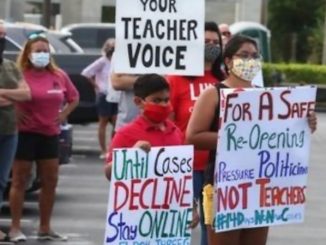
After school that day, teachers, other school workers, students and parents rallied to demand safe schools and call for remote-only schooling. The Movement Of Rank & File Educators (MORE-UFT), a social justice caucus of the United Federation of Teachers, called the action.

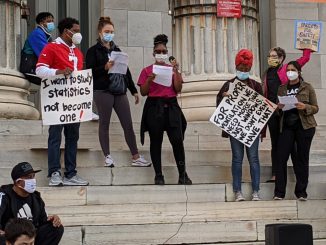
About 50 people picketed in front of the Department of Education in downtown Brooklyn before marching to nearby Borough Hall, where they occupied the steps, chanting “Money for schools, not for cops!” Soon after, they were joined by 100 educators and students who marched across the Brooklyn Bridge from Manhattan.

“This is a Black Lives Matter issue,” declared Dante, a student from Urban Assembly Maker Academy in lower Manhattan. “This is a funding issue.” 

Students, teachers and parents spoke out about the awful conditions confronting many of the city’s underfunded public schools that make in-person classes dangerous — especially overcrowded facilities and woefully inadequate ventilation. With the city and state in a deep budget crisis, and Gov. Andrew Cuomo rejecting calls to tax the rich, no money is being provided to make the necessary changes.

Speakers explained how the rate of COVID-19 infection varies greatly neighborhood by neighborhood. Several areas of Brooklyn have seen recent spikes. Students and teachers commuting to school on public transportation threaten to increase community spread. Black and Brown New Yorkers have disproportionately been victims of the coronavirus. 

Teachers, ordered to report in person even if they are teaching remote classes, have held daily protests outside their school buildings. Some have been working outside on playgrounds to demonstrate the lack of safety indoors. The city has rejected calls for mandatory weekly testing of all staff and students. By Sept. 23, 100 schools had at least one (self-reported) COVID-19 case — before the bulk of the city’s 1.1 million students even reported to class.

Cuomo, Mayor Bill de Blasio and Schools Chancellor Richard Carranza have lied repeatedly to city residents about the school system’s preparedness, protesters charged. Much of the promised personal protective equipment, additional teachers and school nurses never materialized. The city has twice been forced to delay the reopening under pressure from teachers, administrators and families. Now, most students are scheduled to return to classrooms part time during the week of Sept. 28.

As more communities learn about the lack of necessary preparation for safe in-person classes, nearly 50 percent of families have opted for remote-only learning. But the city has also failed to provide adequate equipment (including laptops and tablets) and WiFi access for New York’s many impoverished and homeless public school students, threatening to inflame already rampant educational inequality.

For daily updates on the struggle for safe schools in New York, visit MoreCaucusNYC.org.

Strugglelalucha256


Brooklyn march: Stop unsafe school reopening plan!

Brooklyn, N.Y. — A protest led by Black and Brown teachers and students drew hundreds of people to Grand Army Plaza on Aug. 20. Their call was to “oppose unsafe opening of New York public schools.” Organizers provided masks, hand sanitizer, water and snacks to those who needed them.

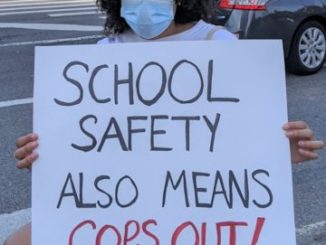
Solidarity with the mass movement to defend Black lives from police terror was central to the action. Many signs demanded “Defund the NYPD, fund public schools” and “Police out of schools.” 

Speakers called out the racist character of the city’s plan to reopen schools for in-person classes on Sept. 10. The unsafe conditions would fall on the backs of Black and Brown communities and working-class families, where and with whom the vast majority of public school students live.

Special education teacher Amy Tan works at a school in Brooklyn’s Sunset Park neighborhood, where the infection rate is now 7 percent. Tan described a “climate of fear” in the multinational neighborhood, which has also been terrorized by the threat of Immigration and Customs Enforcement (ICE) raids. 

“Are we going to ask our students to go into these conditions that have been defunded for decades?” she asked. “No!” shouted the crowd.

Earlier this year, New York Mayor Bill de Blasio and Schools Chancellor Richard Carranza delayed closing schools while the virus spread, until a virtual mutiny by teachers, students and parents forced them to do so in late March. Some protesters held signs with the names and photos of teachers who died from COVID-19.

The city was hard-hit by the pandemic in the spring, with hundreds dying daily, mostly in Black and Brown communities. Lockdown measures finally brought down the death rate by June. 

But the uncontrolled spread of the virus throughout the rest of the U.S. now threatens a new surge here. Infection rates were rebounding by mid-August in neighboring states and in some Brooklyn neighborhoods.

All summer, school workers, students and parents have argued that de Blasio’s plan to reopen public schools in September is not only inadequate, rushed and underfunded, but downright dangerous for the community. Today, New York is the only major school system in the country that plans in-person classes for the beginning of the 2020-2021 school year.

Some smaller school systems across the U.S. that began in-person classes, as well as some colleges and universities, have been swiftly forced to shut down as COVID-19 continues to spread. A growing number of studies show that young people can spread the virus and become seriously ill.

On Aug. 20, United Federation of Teachers President Michael Mulgrew said that city teachers could strike if they feel returning to work is unsafe, despite the state’s anti-union Taylor Law, which prohibits strikes by public employees. Mulgrew’s announcement came after unions representing principals, cafeteria workers, janitors and administrative workers joined the teachers in demanding a delay in reopening schools.

Tax big business 

One chant at the Brooklyn protest was, “We need money for education! We don’t have soap or ventilation!” 

This reflects the reality of New York’s underfunded, overcrowded and often decrepit school facilities — a reality that cannot be hidden from the parents, students and school workers who have struggled daily with the lack of basic supplies, inadequate medical staffing and unhealthy classrooms, even before the coronavirus. 

Speakers at Grand Army Plaza demanded that the government tax the wealthy and big business to provide an income for everyone to stay at home until a vaccine is available and school facilities can be adequately renovated. They said the Department of Education should focus on making sure all teachers and students have adequate equipment and training for remote learning.

They pointed out that de Blasio’s stubborn refusal to delay reopening schools is actually driven by Wall Street’s desire to make parents return to work (also in dangerous conditions).

Meanwhile, according to the Movement Of Rank-and-File Educators (MORE-UFT), New York Gov. Andrew Cuomo plans to cut the public education budget by 20 percent, firing 20,000 school workers statewide. Cuomo has refused calls to tax billionaires and stop giveaways to big business in order to fund essential services.

Protesters marched south through Prospect Park, fired up with chants led by young activists, and were greeted by many families and workers along the way. They ended with a rally in front of Chancellor Carranza’s home, vowing to keep organizing and protesting for the safety of students, school workers and their communities.

SLL photos: Greg Butterfield

Strugglelalucha256


Rushed school reopenings endanger students, workers

Despite the soaring rate of new coronavirus infections in the United States, a high percentage of students in grades K-12 will be returning to school in the fall. Nearly every state ordered public schools to close in March or April, remaining closed for the end of the 2019-2020 academic year. Here in New York, I and over a million other kids and teens went home one day and never came back, switching a week later to a shaky form of online learning.

Despite the challenges of finishing tenth grade alone over Google Classroom, I acknowledge how crucial this move was for the sake of public health. The height of COVID-19 deaths in my state was devastating. There’s no doubt that we would have surpassed that number many times over had the virus gotten more of a chance to infiltrate our cramped schools.

President Donald Trump is leading the federal government in a massive push to reopen schools, against the will of public health officials, scientists, and teachers’ unions across the country. Not to mention students themselves — many are fearful of what attending school in the midst of a pandemic will mean for their families’ health.

That isn’t to say that keeping schools physically closed is a perfect answer: thousands of workers rely on schools as free daily childcare for their young kids. That’s why it is so frustrating that rather than devoting time and resources to creating safe environments to meet the needs of working families, the U.S. government is pressing for all students to return to unsafe conditions.

The summer months should have brought about new plans for necessary childcare, more accessible online options, and smoothing the many rough patches that remote learning brought about. Instead, we are being told we must go back to school as usual.

Guidelines revised under pressure

The Center for Disease Control initially released a nine-page document outlining what is needed for a safe reopening of schools. It is a detailed checklist meant for schools to use in order to determine readiness to reopen as well as safety on a day-to-day basis.

The document strongly notes that there is substantial risk associated with in-person learning at this time, and promotes either a fully or partially remote model of schooling. However, Trump immediately called the CDC guidelines “tough,” “impractical” and “expensive,” threatening to cut schools’ funding if they do not reopen in full.

Education Secretary Betsy Devos also promoted reopening schools in person. Claiming that a hybrid model (part in school, part at home) would not serve families, she dismissed the CDC guidelines as “flexible,” not to be required of schools.

Soon after, a new set of guidelines was released. The CDC now supports opening schools everywhere, and reports that COVID-19 poses a low risk to children. Essentially, the document says that children are more likely to be harmed by a lack of in-person learning than by being infected by coronavirus. Although the guidelines do suggest use of face masks and implementing social distancing, it is not to be required of schools.

I find this revised statement to be incredibly aggravating. The CDC strongly supported strict health and safety measures for in-person schooling barely a week before. The weak guidelines that followed came under the influence of Trump’s recent announcements, not from a scientific basis. I worry about the validity of the data on COVID-19 spread in schools, as well.

The vast majority of U.S. students did not have ongoing public schooling throughout the pandemic. We do not know how quickly multiple asymptomatic students could lead to an outbreak inside a school. We cannot claim to know, based on evidence from before the height of the pandemic, or from other nations that succeeded in flattening the curve of infection.

Additionally, it seems that much of the support regarding reopening relies upon the idea that young children are not easily infected. I feel there is not enough information on teens and young adults. I know of multiple classmates who have gotten sick, some with long-term consequences, who are under the age of 18. And, of course, this data means nothing for the safety and wellbeing of teachers, other school workers and parents.

CTU: No ‘safe reopening’ possible now

In many states, a specific plan for school reopening has not yet been decided on. Worse, there has been no clarification in most places on how schools plan to fund the purchase of crucial sanitary materials and personal protective equipment (PPE).

The Chicago Teachers Union has stated that there is no “safe reopening,” and has made a list of demands to the mayor and the Chicago Public School system. They say sanitized buildings, widely available PPE, nurses, counselors, social workers, alternatives for immunocompromised students and teachers, as well as increased ventilation in schools to promote airflow, must all be provided and maintained in order for the school year to start.

Mississippi Teachers Unite has called for the postponing of school reopenings in the state until Sept. 1, so that there is time to ensure a safe environment that adheres to health guidelines. Again, the school system must be fully funded so teachers do not have to buy masks and hand sanitizer themselves.

This concern is constant throughout teachers’ unions across the U.S., as it is common for teachers to spend large amounts of their own money throughout the year on things like disinfecting wipes, tissues, paper towels and soap. At my school in Brooklyn, N.Y., students are regularly offered extra credit in classes to buy some of these items ourselves.

It is unacceptable for U.S. states and cities (ones that often spend millions or billions of dollars a year on their police departments, mind you) to not provide their public schools with adequate funding, period. But this isn’t even about the lack of extracurriculars or classroom renovations, as terrible as that is — this is basic hygienic materials.

How are we to reopen schools during a pandemic that cannot even keep bathrooms stocked with paper towels?

High school students speak

I interviewed several New York City high school students on their views regarding education, the pandemic and reopening:

Violet, a Black trans activist who is immunocompromised, stated that she did not feel supported during remote schooling this year. “I am neurodivergent, so learning was difficult,” she wrote. “I felt really overwhelmed with work.” Violet caught COVID-19 as well, which led to breathing issues and lasting numbness in her body. She suggests beginning the new school year “with a delayed start, or learning online until it is safe to come back.”

Madeline Boccone, a 16-year-old Brooklyn student, said she would like to return to school in person, but feels necessary safety precautions will not be possible. “My school has a huge class population,” she wrote. “The halls are often overcrowded, and the cafeteria and library are always at capacity.” Her ideal beginning for the school year is “a blended situation, with at-home instruction for core subjects and in-school instruction for specialty/enrichment classes.”

Jani G., an Indo-Caribbean student, stated that she feels a blended learning model is the best way to go. “Because New York has been reopening without a spike in cases, and most students my age are more adamant about wearing PPE, I’d be confident returning to school if we remain socially distant,” she wrote. Jani also became very ill with COVID-19; however, it was before the virus was visibly rampant in the U.S.

Eva Melchior, who attends high school in Manhattan, is uncomfortable with the prospect of returning to school this fall. She stated, “If we are still going to have remote learning in place, why not bring the risk of getting the virus at school down to zero by simply not having the in-person classes? It just seems like it would be unnecessarily dangerous.” Eva believes the best course of action is to “continue to learn remotely until there is a COVID-19 vaccine available, or a very low infection rate.”

Mona Shaab, a self-described “mixed teen activist,” said the quality of her education decreased significantly during remote learning. However, she questions the safety of returning to school in person. She wrote, “My school has 4,000 students — not to mention staff — and we already don’t have the room or resources to lessen our class sizes from the standard 30-plus students. In an environment that’s already difficult to keep up with, I think expecting more from students and staff without additional resources, staff and training is just unrealistic.”

P.R., a 16-year-old student, found it hard to remain motivated with school work throughout the past few months. She wrote, “I stopped putting as much effort into my work as I usually did, and almost failed a class. My experience hasn’t really been a result of learning online, as much as it has been the result of isolation and repetition.”

Her family was also impacted significantly by the pandemic. “Before the pandemic, my mother worked as a freelance photographer, mostly working weddings and parties, basically large gatherings of people. Obviously, no one was having these huge events anymore, so my mother became unemployed. However, because she’s a freelancer she couldn’t receive unemployment.”

She also wrote, “I think there have been some positive things to come out of the pandemic, though it’s bittersweet. More and more people are becoming disillusioned with capitalism, seeing the negative impact it has had on us. The disgustingly large wage gap became hard to ignore. … The extremely wealthy easily could’ve helped pay for masks, but the majority of people who helped were the ones who needed help as well. In addition, I don’t think the Black Lives Matter movement would be getting the new support that it has if things were normal. I think being quarantined has made it harder to ignore police brutality and racism, as everyone is constantly alone with their thoughts. I hope that they’ll keep the same energy when things go back to normal.”

Brianna Blue, a Black visual artist, doesn’t believe returning to school in person this year is worth it. “I would love to go back for my senior year,” she wrote, “but most people in my household are immunocompromised. My mom and my siblings have asthma. Also, my dad is an essential worker and as he has not had the privilege of being able to stay somewhere else after conducting the trains all day, so my family is already taking a risk.” She does not believe her high school will be able to successfully follow recommended safety guidelines due to the large student body.

As for proceeding with the school year, she stated: “I’m being optimistic and striving for a delayed start. I would say if we could go back by January that would be great. This is if cases are low and contained regionally — it is not enough for just New York to have a low number of cases.”

Vivaluz Austin, a student from Brooklyn, has mixed feelings about returning to school in person. “On one hand, I want to protect myself and my peers, but on the other, I’m worried about how a full year of remote learning will affect my education,” she wrote. “I already struggled immensely in 3 to 4 months of remote learning this semester, and I’m worried that I’ll repeat the same patterns next year. Especially because junior year is supposed to be the most significant of the high school experience, I’m worried that I’ll do poorly and lower my chances of getting into a ‘good’ school. Also, the lack of in-person resources that we’ll have, such as meeting with guidance counselors.”

The pandemic has affected her in multiple ways, she says. “A family member of mine recently passed due to COVID-19 and I think that has only heightened the fear around the disease in my family. My parents have both been trying to make due while working remotely, but it has put a strain on the finances a bit. My mental health has also been impacted by quarantine. Being isolated isn’t good for anyone under any circumstances, and being inside all the time has definitely messed with my head.”

E.G., a rising senior who goes to school in Brooklyn, wrote, “I am perfectly okay returning to school in person, as long as precautions are mandated.” E.G. also wrote, on the experience of being in quarantine, “I’ve always lived with my grandparents and my grandfather has Alzheimer’s that’s at stage 7. Before COVID-19 was ever a part of my life, I had school to keep some distance from work and my personal life at home. However, ever since the stay-at-home order was issued, I couldn’t leave my house for a full two months. In that time I’ve watched a man who’s like a father-figure to me slowly get worse and worse. It really messed with my mental health and forced me to see everything happening. Plus, I’m not the kind of person who can stay indoors for more than two days, so cabin fever was real. Thankfully, I can say the pandemic hasn’t negatively affected my life financially or physical health.”

Leah Solomon, a student from Brooklyn, said the pandemic has been detrimental to her education. “I stopped really learning, and was more just submitting things to make my teachers happy,” she wrote. “The switch to remote learning was very sudden, could have been handled better, and should have been done sooner. Teachers seemed confused and deserved more training and experimental time to figure out what worked with their students.” As for reopening schools, Leah thinks “a delayed start would be a good idea to begin with.”


Strugglelalucha256


Operation Warp Speed – Trump’s $10 billion injection won’t stop falling profits (or COVID-19)

Donald Trump resumed daily White House briefings regarding the COVID-19 pandemic on July 20. He had pouted and quit that role in late April after facing criticism and ridicule for having downplayed the pandemic, for his promotion of disinfectant as a possible cure for COVID-19, and generally for his anti-science approach. 

Narcissistic and ill-informed, Trump is an easy mark for late-night talk show comedy monologues. But mixed in with all the absurdities by Trump is a clear expression of the agenda of U.S. billionaires. 

They are unwilling to put their profits on hold or continue government spending for the welfare of millions of workers who have been thrown out of work by the pandemic. Unlike cancer or diabetes, heart disease or obesity — all public health killers — COVID-19 is contagious, highly contagious. Staying at home, wearing masks and social distancing are all necessary measures to stop the spread of the virus.

Their plan would see schools reopen so that working parents could be forced back to their jobs. Reopening the economy in its entirety is the goal, and the push to come up with a vaccine in a recklessly short time is their hoped-for magic bullet. The White House goal is to have a vaccine by the end of 2020. The vaccine against Ebola took five years to go into trial and that was much faster than previous vaccines.

Capitalism benefits by its government intersecting with science. Scientists and medical professionals that hold positions in a capitalist government play a dual role. They are also beholden to the same profit-seeking capitalist compulsion, but at times have to resist it to try to navigate through a crisis. 

During this pandemic, they are advocates of measures to slow the spread of the virus: testing, social distancing, masks, contact tracing, quarantine of infected individuals, and shutting down workplaces, schools, bars, restaurants and churches. Trump’s buffoonish leadership aside, this contradiction between the capitalist compulsion to exploit workers and the professionals who want to pause profits in the interest of rationality and human life is what is behind the apparent rift between the Trump-Pence wing of the White House Task Force and it’s more cautious and science-minded members.

Even in the absence of a vaccine, there has been great success against the disease by vigorously sticking to a regime of anti-pandemic measures in places like China, Cuba, Vietnam, Laos, South Korea, North Korea and the state of Kerala in India. In each of those places there is some measure of universal health care. 

China’s population is roughly four times greater than that of the U.S. but suffered about one-thirtieth of the death count from COVID-19. 

Cuba’s death toll out of a population of 11 million people was limited to just 87 people. Cuba has developed two treatments that aid the recovery of people already infected. Both drugs have been shared and used internationally.

Parallel to the anti-China rhetoric that emanated from the White House during May and June, the World Health Organization, a United Nations entity, has become a target of the Trump administration. The World Health Assembly, the decision-making body of the WHO, met virtually in May, and while the U.S. attacked the WHO and foisted a resolution on the entire body that slandered China and the WHO itself, Chinese President Xi Jinping announced that a Chinese success in developing a vaccine would be for “global public good.” Within days, the White House confirmed that it would cut funding to the WHO. Trump said the WHO was too “cozy with China.”

U.S. capitalists don’t see medicine as being for “global public good.” When a U.S. pharmaceutical company develops a product that may be profitable, they send an army of lobbyists to push for approval by the Food and Drug Administration.

The capitalist rush to come up with a vaccine has created a feverish competition in the U.S. and other capitalist countries. More than 70 efforts are underway internationally. Under Trump’s “Operation Warp Speed,” more than $10 billion is being paid out to 14 pharmaceutical companies to develop, produce and distribute a vaccine. This is not a cooperative venture — each company is jealously guarding its research, and regardless of their success, they will have been paid in full out of taxpayer money. How much profit has been baked into each of their contracts is being kept under wraps.

The U.S. Justice Department has absurdly accused China of stealing Western research on a vaccine. It was China’s unprecedented and rapid mapping of the genetic code of the virus and sharing it with the world that actually spawned the initial research for a vaccine. According to ABC News Australia, “the University of Queensland team began developing a vaccine against COVID-19 on January 10 — the day the genetic sequence of the SARS-CoV-2 virus was first made public.”

In recent days, news reports about advances in the development of vaccines centered around Oxford and AstraZeneca and Moderna. China’s state-owned pharmaceutical Sinopharm has also begun phase III clinical trials as have three nonstate Chinese corporations.

The successful development of an effective vaccine would be welcomed by the entire world. But the Trump administration’s rushed and reckless effort for a vaccine as a substitute for tried and true anti-pandemic measures while putting people back to work and in harm’s way must be rejected.

Strugglelalucha256


Rogue nation by Mumia Abu-Jamal

July 8 — Several days ago, the European Union announced that Americans were not welcome to visit any of the 28 member countries of the EU.

Why?

Because of the explosive expansion of the coronavirus among American states, which surpasses many foreign nations.

At last count, over 3 million people in the U.S. are infected, resulting in at least some 130,000 deaths. Americans, long regarded as disputatious, quarrelsome and argumentative, are now regarded as a threat to the public health of European states. It now joins Brazil as a nation banned from European soil.

Europeans must also regard Americans as foolish and undisciplined for failure to abide by simple health rules.

In the U.S. meanwhile, southern and southwestern states regarded masking as an assault on American rights, and an affront to freedom.

What is most unnerving, however, is the elevation of politics over science, for the U.S. proves that he who substitutes a politician’s decision over that of a doctor has a fool for a patient.

For politicians serve their egos or their donors, and others suffer the consequences.

The U.S. has emerged as a nation out of control, either unwilling or unable to follow simple medical directions designed to mitigate a pandemic.

Here, state governments seem ineffective; the national government seems simply incompetent.

Listen to Mumia’s commentary at Prison Radio.

Strugglelalucha256


Millions face eviction while banks grab billions

Alvin Kinnard was jailed for nearly 36 years in Alabama for allegedly stealing $50.75 from a bakery. His real crime was being Black and poor.

Kinnard was 22 years old when he was sentenced to life in prison without the possibility of parole. This was done under the state’s “three strikes and out” law. He was 58 when he was released on Aug. 30, 2019, after that fascist act had been slightly modified.    

Banks steal the real dough, billions of it. The Wall Street Journal reported on July 8 that JPMorgan Chase and Bank of America will collect up to $2.6 billion in fees for administering the coronavirus emergency aid program for small businesses. 

Four thousand legal loan sharks (aka financial institutions) will divvy up as much as $24.6 billion in fees. That’s 484 million times what Alvin Kinnard supposedly took from a bakery.

Banksters love fees. Just in order to get a mortgage, you have to pay a loan origination fee, a discount fee and a processing fee. That’s on top of the interest that has to be forked over every month.

In 2016, the three biggest U.S. banks ― the already mentioned JPMorgan Chase and Bank of America, as well as Wells Fargo ― grabbed over $6.4 billion from ATM and overdraft fees. The rest of the banks collected many billions more. That’s a real stickup.

Foreclosures are a bigger crime. Nearly 7.8 million families in the United States had their homes stolen by banks between 2007 and 2016. 

Wells Fargo was the biggest thief in Baltimore. Half of the bank’s foreclosures there were in neighborhoods that were at least 80 percent African American. That’s because 65 percent of its Black customers had high-interest-rate loans compared to only 15 percent of its white customers. 

The Wells Fargo criminal syndicate created 3.5 million phony bank and credit card accounts in order to filch fees from unsuspecting customers. Now it’s being rewarded by the feds with over a half-billion dollars in fees.  

Looming epidemic of evictions and shut-offs 

The Wall Street Journal claims that administering these small business loans is really expensive and that the “biggest banks” will donate their profits. Maybe the tooth fairy also exists.

Meanwhile, nearly seven million families could face eviction across the U.S. Many state moratoriums on evictions and utility shut-offs are scheduled to end soon.

The U.S. capitalist economy was falling into crisis even before COVID-19 struck. Forty-four million workers filed for unemployment compensation between March and June. 

Yet the $600 weekly federal supplemental unemployment benefit is set to expire at the end of July. Without it, many families won’t be able to pay their rent or mortgage. 

Andy Puzder, the former CEO of CKE Restaurants, doesn’t want the $600 supplemental benefit to be renewed. Puzder exploited tens of thousands of low-paid workers at his Carl’s Jr. and Hardee’s fast food chains. Both youths and seniors were his biggest victims.

Puzder actually wrote that people aren’t applying for jobs because the $600 benefit was too high. He’s really confessing that wages are too low.

Trump nominated Puzder to be U. S. labor secretary, but even the Senate balked at the hamburger mogul. This creep who thinks unemployed workers are lazy is also a union-hating sexist pig whose specialty was commercials featuring scantily clad women.

“I like our ads,” Puzder told Entrepreneur magazine. “I like beautiful women eating burgers in bikinis. I think it’s very American.”

Abolish rents and jails!

Jean Valjean ― the fictional hero of Victor Hugo’s novel “Les Misérables” ― was sent to jail for stealing bread to feed his sister’s starving family. But he spent much less time in jail than Alvin Kennard did.

The biggest crimes are committed not in the streets but in the business suites. Donald Trump’s son-in-law, Jared Kushner, is a billionaire slumlord who terrorizes tenants at his Baltimore-area properties.

People are fighting evictions across the U.S. Car caravans have been organized coast to coast, often linking the demands of abolishing rents along with freeing prisoners. The jails are COVID-19 death traps.

The Black Lives Matter movement has energized millions. Only by continuing to struggle will supplemental unemployment benefits be renewed and evictions, foreclosures and utility shut-offs be stopped.

Strugglelalucha256


Herd immunity usually occurs only after staggering numbers of people have died

There have now been over 100,000 lives lost in the U.S. from COVID-19, and nearly half the country is still experiencing uncontrolled outbreaks. 

Incarcerated populations, nursing home residents, asylum seekers trapped at the border and the homeless are particularly vulnerable. 

Essential workers, mostly people of color, are getting infected at alarming rates. 

Yet, most states are easing stay-at-home restrictions under pressure from the White House. Right-wing foundations have funded a “movement” that featured armed racists at numerous state capitols demanding that the economy be reopened. The argument that underpins the push to end the social distancing measures and put millions of workers in harm’s way is the false notion that the severity of COVID-19 is being exaggerated and that the virus will work its way through the population naturally until most of the people infected will recover from mild symptoms and become immune.

Experts say that herd immunity — as it is called — is accomplished when between 50 percent and 80 percent of the population has the antibodies needed to fight off a virus. For the flu, that happens through a combination of some people getting infected and recovering, and through a mass vaccination campaign.

But every virus has unique characteristics. SARS CoV-2 (Severe acute respiratory syndrome coronavirus 2 is the current strain of coronavirus that causes coronavirus disease) has a very high fatality rate and spreads very efficiently. Although it appears that there will be immunity after recovering from infection, even that is not known for sure. Without a vaccine, ending preventative measures that slow down the spread is a recipe for overwhelming hospitals with sick and dying patients.

Before the use of vaccines, the herd immunity milestone occurred only after staggering numbers of people had died. A mid-nineteenth-century cholera pandemic killed a million people; a flu pandemic in 1889-1890 killed another million; in 1911, cholera killed 800,000 people again; and in 1918, the misnamed Spanish Flu killed between 20 million and 50 million people.

Given that African American, Latinx and Indigenous populations from one end of the country to the other are suffering the highest death rates by far, the push to reopen the economy is another example of racism under capitalism. In Louisiana, African Americans are 70 percent of the COVID-19 deaths. In Chicago, the number is 56 percent. In New York, Black people are twice as likely to die.

The average rate of infection in the U.S. as a whole is around 400 persons per 100,000. Indian Country Today reported that the Mississippi Band of Choctaw, the Ho-Chunk Nation, the Navajo Nation, the Pueblo of San Felipe and the Pueblo of Zia have COVID-19 rates per 100,000 people of 500, 800, 1,100, 1,400 and 3,300 respectively.

Social distancing and quarantine should help to slow the rate of infection while gathering the data needed to develop a vaccine. That is the way the fight should be conducted. But under capitalism, instead of a massive, centralized effort to come up with effective tests and ultimately a vaccine, the research and development and the distribution are in the hands of private corporations for profit. The problem is not only a hoarding of knowledge, but a dangerous lack of oversight. In 1955, the lack of centralization and regulation under President Eisenhauer allowed one company, Cutter Laboratories, to market a defective polio vaccine that infected 40,000 people with the disease.

There are great examples internationally of successful public health intervention. In Kerala, India, where the health minister is a member of the Communist Party of India (Marxist), an all-out campaign of contact tracing and isolation of infection kept the number of fatalities to single digits among a population of 35 million. People who were quarantined — even travelers from other areas — were housed and fed. 

Remarkably, this month China tested the whole population of 11 million in the city of Wuhan in around two weeks. They also have a vaccine in human trials — the first country to do so. At the World Health Assembly, held online in early May, President Xi Jinping proposed that regardless of who develops a vaccine first, it should be for the “global public good,” meaning not for profit but free for the entire world. The representatives from the U.S. refused to sign on to the proposal because — in a repeat of how the U.S. fought against a generic HIV medication — they want U.S. corporations to be able to license a vaccine to sell at a profit.

Everything done by the Trump administration in relation to COVID-19 has been to the benefit of the capitalist U.S. ruling class and has either been a failure because profit was prioritized over human lives or has been outright sabotage of important global efforts. The coronavirus pandemic has now become a vehicle for the growing U.S. hostility toward China. A White House press conference on May 29 featured Trump announcing that the U.S. is cutting off funding for the World Health Organization because of his administration’s view that the WHO is too “cozy” with China.

Capitalism is the disease! Socialism is the cure!

Strugglelalucha256
https://www.struggle-la-lucha.org/covid-19/page/3/