The relative decline of U.S. imperialism

The swift collapse of Afghanistan puppet government when U.S. troops withdrew from the war with the Taliban and left the country after 20 years has been likened to the fall of Saigon at the end of the 30-year ‘American’ war against the Vietnamese people.  The scenes of Afghans trying to get onto U.S. planes at the airport to escape seem startlingly familiar to those of us who can remember the last days of Saigon.

But is this a superficial similarity?  After all, America’s occupation of Vietnam was way more costly as a share of U.S. national output and in terms of the lives of American soldiers than the attempt at ‘regime’ change in Afghanistan.  The Vietnam disaster led to the U.S. government running deficits for the first time since WW2.  But even more important, it meant a diversion of investment into arms rather than productive sectors at a time when the profitability of capital had already begun to fall, the Golden Age of investment and profitability having peaked in the mid-1960s.

Source: Penn World Tables 10.0, author’s calculations

Indeed, by the end of the 1960s, it was clear that the U.S. could never win in Vietnam, just as it was clear at least a decade ago (if not from the very beginning) that it could not win in Afghanistan.  But the ruling elite continued under Nixon and Kissinger to prosecute the war for several more years, spreading it into neighbouring countries like Laos and Cambodia.

But by the official end of the war in Vietnam, the economic consequences of this 30-year ‘intervention’ exposed an important turning point – the end of Pax Americana and the outright hegemonic position of American imperialism in the world economy.  From then on, we can talk about the relative decline (relative to other imperialist powers) of the U.S., with the rise of the European countries, Japan, East Asia and more recently China.  Despite the collapse of the Soviet Union in the late 1980s and early 1990s, the end of the ‘cold war’ did not reverse or even curb that relative decline.  The U.S. no longer can rule the world on its own and, even with the help of a ‘coalition of the willing’, it cannot dictate a ‘world order’.

Economically, it all started before the fall of Saigon.  As the profitability of U.S. capital started to fall from the mid-1960s, U.S. industry began to lose its competitive advantage in manufacturing and even in various services to rising Franco-German capital and Japan.  This eventually meant that the economic world order after WW2, which had established the economic hegemony of the U.S. economy and its currency, the dollar, started to crumble.

Indeed, it is 50 years to the month when officials of President Nixon’s administration met secretly at Camp David to decide on the fate of the international monetary system. For the previous 25 years, the U.S. dollar had been fixed to the price of gold ($35/oz) by international agreement.  Anybody holding a dollar could convert into a fixed amount of gold from U.S. reserves.  But in August 1971, President Nixon took to national television to announce he had asked Treasury Secretary John Connally to “suspend temporarily the convertibility of the dollar into gold or other reserve assets.”

It was the end of the so-called Bretton Woods agreement, so painfully negotiated by the Allied powers, namely the U.S. and the UK, over the heads of all the other countries in the world.  Conceived, along with the IMF, the World Bank and the UN, the agreement established a framework that committed all to fixed exchange rates for their currencies and fixed in terms of the U.S. dollar.  The U.S. in turn would fix the value of the dollar in terms of gold.  No country could change their rates without IMF agreement.

But with Nixon’s announcement, the fixed exchange rate regime was ended; it was the U.S. that had abandoned it and, with it, the whole post-war Keynesian-style international currency regime.  It was no accident that the ending of the Bretton Woods system also coincided with the ending of Keynesian macro management of the U.S. and other economies through the manipulation of government spending and taxation.  The post-war economic boom based on high profitability, relatively full employment and productive investment was over. Now there was a decline in the profitability of capital and investment growth, which eventually culminated in the first post-war international slump of 1974-5; and alongside this was the relative decline of American industry and exports compared to competitors.  The U.S. was no longer exporting more manufacturing goods to Europe, Latin America or Asia than it was importing commodities like oil from the Middle East and manufacturing from Germany and Japan.  It was starting to run trade deficits.  The dollar was thus seriously overvalued.  If U.S. capital, particularly manufacturing was to compete, the dollar fix to gold must be ended and the currency allowed to depreciate.

As early as 1959, Belgian-American economist Robert Triffin had predicted that the U.S. could not go on running trade deficits with other countries and export capital to invest abroad and maintain a strong dollar: “if the United States continued to run deficits, its foreign liabilities would come to exceed by far its ability to convert dollars into gold on demand and would bring about a “gold and dollar crisis.”

And that is what happened.  Under the dollar-gold standard, imbalances in trade and capital flows had to be settled by transfers of gold bullion. Up until 1953, as war reconstruction took place, the U.S. had actually gained gold of 12 million troy ounces, while Europe and Japan had lost 35 million troy oz (in order to finance their recovery). But after that, the U.S. started to leak gold to Europe and Japan.  By end-1965, the latter surpassed the former for the first time in the post-war period in terms of gold volumes held in reserve.  As a result, Europe and Japan began to pile up huge dollar reserves that they could use to buy U.S. assets.  The global economy has begun to reverse against the U.S..

The dollar reserves in Europe and Japan were now so large that if those countries bought gold with their dollars under the gold standard, they could exhaust U.S. gold stocks in an instant.  Private financial outflows (outbound investment) from the U.S. averaged roughly 1.2% of GDP throughout the 1960s—long term investment overseas through FDI or portfolio outflows. This served to finance net exports of U.S. investment goods and a current account surplus, shown as negative here as an offsetting withdrawal of dollars.  Netting these, about 0.4% of U.S. GDP in surplus outward investment was made available every year during the 1960s from the U.S.. This surplus was available for current account deficit countries in Europe and Japan to liquidate U.S. gold, replenishing their diminished reserve positive, or accumulate other financial claims on the U.S.—as shown on the right side.

But throughout the 1960s, the U.S. current account surplus was gradually eroded until, in the early 1970s, the current account was registering a deficit. The U.S. began to leak dollars globally not only through outward investment but also through an excess of spending and imports as domestic manufacturers lost ground.

U.S. current account balance to GDP (%), 1976-2020

The U.S. became reliant for the first time since the 1890s on external finance for the purposes of spending at home and abroad.  So U.S. external accounts were driven less by real goods and services and more by global demand for U.S. financial assets and the liquidity they provided.  By the 1980s, the U.S. was building up net external liabilities, rising to 70% of GDP by 2020.

U.S. net international investment position as % of U.S. GDP

If a country’s current account is permanently in deficit and it depends increasingly on foreign funds, its currency is vulnerable to sharp depreciation.  This is the experience of just about every country in the world, from Argentina to Turkey to Zambia, and even the UK.

However, it is not the same for the U.S. because what is left from the Bretton Woods regime is that the U.S. is still the main reserve currency internationally.  Roughly 90% of global foreign exchange transactions involve a dollar leg; approximately 40% of global trade outside the U.S. is invoiced and settled in dollars; and almost 60% of U.S. dollar banknotes circulate internationally as a global store of value and medium of exchange.  Over 60% of global foreign exchange reserves held by foreign central banks and monetary authorities remain denominated in dollars. These ratios have not changed.

Export surplus countries like the European Union, Japan, China, Russia and Middle East oil states pile up surpluses in dollars (mainly) and they buy or hold assets abroad in dollars.  And only the U.S. treasury can ‘print’ dollars, gaining a profit from what is called ‘seignorage’ as a result. So, despite the relative economic decline of U.S. imperialism, the U.S. dollar remains supreme.

This reserve currency role encouraged U.S. Treasury Secretary John Connally, when he announced the end of the dollar-gold standard in 1971 to tell EU finance ministers “the dollar is our currency, but it is your problem.”  Indeed, one of the reasons for the European Union, led by Franco-German capital, to decide to establish a single currency union in the 1990s was to try and break the dollar hegemony of international trade and finance.  That aim has had only limited success, with the euro’s share of international reserves stable at about 20% (and nearly all of this due to intra-EU transactions).

International competitors such as Russia and China routinely call for a new international financial order and work aggressively to displace the dollar as the apex of the current regime. The addition of the renminbi in 2016 to the basket of currencies that composes the IMF’s special drawing rights represented an important global acknowledgment of the increasing international use of the Chinese currency.  And there is talk of rival countries launching digital currencies to compete with the dollar.  But although the dollar-euro share of reserves has declined in favour of the yen and renminbi from 86% in 2014 to 82% now, alternative currencies still have a long way to go to displace the dollar.

Having said that, the underlying relative decline in U.S. manufacturing and even services competitiveness with first Europe, then Japan and East Asia and now China, has gradually worn away the strength of the U.S. dollar against other currencies as the supply of dollars outstrips demand internationally.  Since Nixon’s momentous announcement, the U.S. dollar has declined in value by 20% – maybe a good barometer of the relative decline of the U.S. economy (but an underestimate because of the reserve currency factor).

The dollar’s decline has not been in a straight line.  In global slumps, the dollar strengthens.  That’s because as the international reserve currency, in a slump, investors look to hold cash rather than invest productively or speculate in financial assets and the safe-haven then is the dollar.

That’s especially the case if U.S. interest rates on dollar cash are high compared to other currencies.  To break the inflationary spiral at the end of the 1970s, the then Federal Reserve Chair Paul Volcker deliberately hiked interest rates (adding to the depth of the economic slump of 1980-2).  In the slump, investors rushed into high-yielding dollars. Bankers loved it, but not U.S. manufacturers and exporters, as well as countries with large U.S. dollar debts.  The slump was bad enough, but Volcker’s action was squeezing the world economy to death.

Finally, in 1985, at a meeting at the Plaza Hotel, New York of central bankers and finance ministers in the then big 5 economies, it was agreed to sell the dollar and buy other currencies to depreciate the dollar.  The Plaza accord was another milestone in the relative decline of U.S. imperialism, as it could no longer impose its domestic monetary policy on other countries and eventually had to relent and allow the dollar to fall.  Nevertheless, the dollar continues to dominate and remains the currency to hold in a slump, as we saw in dot.com bust and slump of 2001 and in the emerging market commodity slump and euro debt crisis of 2011-14.

The relative decline of the dollar will continue.  The Afghanistan debacle is not a tipping point – the dollar actually strengthened on the news of Kabul’s collapse as investors rushed into ‘safe-haven’ dollars.  But the monetary explosion and the fiscal stimulus being applied by the U.S. authorities to revive the U.S. economy after the pandemic slump is not going to do the trick.  After the ‘sugar rush’ of Bidenomics, the profitability of U.S. capital will resume its decline and investment and production will be weak.  And if U.S. inflation does not subside as well, then the dollar will come under more pressure.  To distort a quote by Leon Trotsky, ‘the dollar may not be interested in the world economy, but the world is certainly interested in the dollar.’

Source: Michael Roberts Blog


Strugglelalucha256


Capitalism: has the leopard changed its spots?

“Let me be clear: capitalism without competition isn’t capitalism. It’s exploitation.”, U.S. President Biden tweeted when signing an executive order to expand competition across the economy and crack down on monopolistic practices, describing a misguided 40-year “experiment” in letting U.S. corporations consolidate with little regulation that he said has hurt ordinary Americans.  “The heart of American capitalism is a simple idea: open and fair competition,” Biden said in a speech before signing the measure. He called himself a “proud capitalist” but said that he wants to “ensure our economy isn’t about people working for capitalism, it’s about capitalism working for people.”

Biden’s remarks supported the idea that: 1) capitalism is not a mode of production that is exploitive, as long as there is ‘free competition’ in trade, credit and the production of commodities (and presumably in wage labor too); and 2) it is monopoly and monopoly practices that are the cause of what could be called ‘exploitation’ because only then is there ‘unfair competition’ and blockages to the equitable process of production and distribution through ‘competitive’ markets, that is proper capitalism.

Here Biden echoes not only the view of the modern mainstream neo-classical economics but also the views of the early classical economists, like Adam Smith and David Ricardo.  Smith reckoned that what was wrong with the society and economy of the late 18th century was monopoly and the lack of free competition and trade. He railed against monopoly control (including feudal state monopolies) in trade and agriculture.  Ricardo also saw the problem in monopoly control of land ownership and agricultural production and trade by landlords.  If that was broken, then industrial enterprise in competitive markets would lead to rising productivity and prosperity for all.  As Biden said, then “capitalism would work for the people”.

But it is not just the apologists for capitalism that accept this analysis.  Many modern-day Marxists and post-Keynesians focus on what they call ‘monopoly capitalism’, ‘monopoly finance capital’, or ‘state monopoly capitalism’ as the enemy of the people’s prosperity, not capitalism as such.

Take the view of Michael Hudson.  He considers himself a classical’ economist like Smith and Ricardo (and Marx is also a classical economist, he says). Hudson argues that capitalism started as a progressive force in developing the productive forces because it was industrial capitalism.  But since the 1980s, ‘financial capitalism’ had superseded industrial capitalism.  This was really a return to ‘feudalism’ where the surplus in an economy was extracted by ‘monopoly’ landlords (rent) and financiers (interest and capital gains), not created by the exploitation of labor power (profits).

Grace Blakeley, British leftist economist and author, in her recent presentations, reckons that modern capitalism has morphed into ‘state monopoly capitalism’.  She highlights similar points made by Biden in his case for ‘competition’: “by May 2020, the combined market capitalization of the four largest U.S. tech companies reached one fifth of the entire S&P 500.  Four companies – Microsoft, Apple, Amazon and Facebook – now account for 20 per cent of the combined value of the 500 largest U.S. corporations – an unparalleled level of market concentration. Forty years ago, these corporate entities were either just beyond being plucky start-ups or did not even exist. Monopolistic tendencies are not limited to the tech sector.  In 1975, the largest 100 U.S. companies accounted for nearly half of the earnings of all publicly listed companies; by 2015, their share reached 84 per cent.”

Similarly, a Brookings Institution study found that the top 50 companies globally by value added $4.5 trillion of stock market capitalization in 2020, taking their combined worth to about 28% of global gross domestic product. Three decades ago, the equivalent figure was less than 5%.

But is this state monopoly ‘feudal’ financial capitalism now the enemy of labor while freely competitive industrial capitalism is an ally?  Is there no exploitation of labor under competitive capitalism, as Biden argues?  The whole point of Marx and Engels’ critique of capitalism was that it was a system of exploitation of labor power to extract surplus value in production, whether there were monopolies or not.  Indeed, Marx’s Capital has a subtitle, ‘A critique of political economy’, precisely to attack the idea that, once monopolies were curbed or removed, that ‘competitive capitalism’ does not exploit labor and instead workers get a fair day’s pay for a fair day’s work and capitalists are thus rewarded for their competitive ‘animal spirits’ with profits.

It is certainly true that the concentration and centralization of capital in the major economies has intensified in recent decades.  The rise of the mega social media and tech companies in the last two decades confirms Marx’s view over 150 years ago that capitalist accumulation leads to increased concentration and centralization of capital, as corporate operations increase in scale and large firms eat up the small.  And it is clear that in recent decades, this process has been encouraged and helped by state injections of easy credit and the de-regulation of corporate activities and governance.

The Brookings Institution found that multinationals are major contributors to the U.S. economy. U.S.-headquartered MNCs accounted for 20.1 percent of all U.S. private sector employment in 2017 and foreign-headquartered firms accounted for another 6.4 percent. Multinationals play a particularly large role in manufacturing: more than 70% of all U.S. manufacturing employment is in MNCs. Multinational firms accounted for more than half of all non-residential capital expenditures in 2017 and more than 80 percent of all industrial R&D done in the U.S.. And multinationals account for more than half of U.S. exports and imports of goods and services.

As Hadas Thier in her book, A People’s Guide to Capitalism, points out: “The state plays its part, too, in shielding monopolistic companies deemed “too big to fail” from the ravages of a competitive “free” market. After the 2008 economic crisis, megabanks in the United States, each holding billions of dollars’ worth of assets, were rescued with an enormous taxpayer-funded bailout. As Petrino DiLeo explained: “The Treasury Department and Federal Reserve Bank have doled out an incredible $16 trillion in assistance to financial institutions and corporations in the U.S. and around the world . . . Through the various mechanisms, Citigroup borrowed $2.5 trillion, Morgan Stanley took $2 trillion, Merrill Lynch received $1.9 trillion, and Bank of America got $1.3 trillion.” (p134).

Thier continues “centralization supplements the work of accumulation by enabling industrial capitalists to extend the scale of their operations. Whether this latter result is the consequence of accumulation or centralization, whether centralization is accomplished by the violent method of annexation—where certain capitals become such preponderant centers of attraction for others that they shatter the individual cohesion of the latter and then draw the separate fragments to themselves—or whether the fusion of a number of capitals already formed or in process of formation takes place by the smoother process of organizing joint-stock companies—the economic effect remains the same.

“The battle of competition is fought by the cheapening of commodities . . . and this depends in turn on the scale of production. Therefore, the larger capitals beat the smaller. It will further be remembered that, with the development of the capitalist mode of production, there is an increase in the minimum amount of individual capital necessary to carry on a business under its normal conditions. . . [Competition] ends in the ruin of many small capitalists, whose capitals partly pass into the hands of their conquerors, and partly vanish completely.”

But do these long-term developments in capitalist accumulation mean that ‘competitive capitalism’ has now been replaced by ‘state monopoly capitalism’?  So the latter now operates not through the competitive struggle for profits out of the exploitation of labor, as in the law of value, and instead operates through the power to mark up prices over costs at will, backed by the state.

This is the basis of the ‘monopoly capital school’ originally developed by Paul Sweezy and Paul Baran in the late 1960s.  This monopoly capital theory argued that large companies had abolished price competition and instead given rise to excess productive capacity and stagnation.  Crises were no longer caused by falling profitability (if they ever were) as a result of a struggle between capitals for a share of the profit exploited from labor, but now were caused by the expansion of capacity without sufficient ‘effective demand’.

In their book, Monopoly Capital, Baran and Sweezy put it this way: “we cannot be content with patching up and amending the competitive model which underlies his [Marx’s] economic theory. We must recognize that competition, which was the predominant form of market relations in nineteenth-century Britain, has ceased to occupy that position, not only in Britain but everywhere else in the capitalist world. Today the typical economic unit in the capitalist world is not the small firm producing a negligible fraction of a homogeneous output for an anonymous market but a large-scale enterprise producing a significant share of the output of an industry, or even several industries, and able to control its prices, the volume of its production, and the types and amounts of investments. The typical economic unit, in other words, has the attributes which were once thought to be possessed only by monopolies. It is therefore impermissible to ignore monopoly in constructing our model of the economy and to go on treating competition as the general case. (Baran & Sweezy 1968, 5–6)

Baran and Sweezy conclude: “The whole motivation of cost reduction is to increase profits, and the monopolistic structure of markets enables the corporations to appropriate the lion’s share of the fruits of increasing productivity directly in the form of higher profits. This means that under monopoly capitalism, declining costs imply continuously widening profit margins. And continuously widening profit margins in turn imply aggregate profits which rise not only absolutely but as a share of national product. If we provisionally equate aggregate profits with society’s economic surplus, we can formulate as a law of monopoly capitalism that the surplus tends to rise both absolutely and relatively as the system develops.” (Baran & Sweezy 1968, 71–72)

By substituting the law of rising surplus for the law of falling profit, we are therefore not rejecting or revising a time-honored theorem of political economy: we are simply taking account of the undoubted fact that the structure of the capitalist economy has undergone a fundamental change (my emphasis) since that theorem was formulated. What is most essential about the structural change from competitive to monopoly capitalism finds its theoretical expression in this substitution. (Baran & Sweezy 1968, 72)

But does the increased centralization and concentration of capital mean that there has been ‘a fundamental change’ in the nature of capitalism from a competitive battle for profit share to one of monopoly power; and from value production and distribution of profit to a monopoly mark-up over costs?

Anwar Shaikh thinks not.  “If you believe that the system is founded on monopoly — which has become a sacred nostrum of Marxian economics — then it’s all about the power of the state and the power of capital against labor.”  But “From my point of view, nothing — not even the capitalists themselves — has that sort of power, because the rules imposed on labor and capital stem from the creation of profit and the competition of capitals, which Marx specifically links to each other. A state can intervene to redistribute income and oppose both capital and labor. Pushed by the struggles of workers, it can also intervene to construct a welfare system. But these interventions are still fundamentally constrained by their impact on the profitability of firms.

Shaikh argues that the monopoly capital school base their view of ‘fundamental change’ on a false reality that back in the mid-19th century when Marx wrote Capital, that capitalism worked in ‘perfect competitive markets’ which now longer exist and have been replaced by monopolies backed by the state.  But this was never the case.  As Shaikh puts it: the capitalist economy should not be viewed as a “perfect” market economy with accompanying “imperfections”, but as individual capitals in competition to gain profit and market share. Monopoly should not be counterposed to competition, as neoclassical, orthodox, and even some Marxist economists do. Real competition is a struggle to lower costs per unit of output in order to gain more profit and market share. In the real world, there are capitals with varying degrees of monopoly power competing and continually changing as monopoly power is lost with new entrants to the market and new technology that cuts costs. Real competition is an unending struggle for monopoly power (dominant market share) that never succeeds in total or forever: “each individual capital operates under this imperative…this is real competition, antagonistic by nature and turbulent in operation. It is as different from so-called perfect competition as war is from ballet”.  So capitalism may have changed its spots; but is still the same leopard.

As Thier points out “capitalism still maintains its dynamism through the constant jostling for market positioning by large and small companies. In some cases, a newer business, not so deeply entrenched in outmoded methods, could come out ahead. Thus a dozen years ago Bill Ford (of that “family-owned business,” Ford Motor Company) could say of the new auto company, Tesla, that it had little chance of staying alive. As the Financial Times explained, Ford assumed that “the complexity of the global supply chain and international regulation requirements made it all but impossible to launch an important new carmaker from scratch.”

A decade later, the “Big Three” American automakers are mired in over-supplied markets and old technologies. It is yet to be determined what kind of long-term success Tesla will fare, but no doubt, the established auto industry is nervous. Other “disruptive” companies exist in every field, from Uber and Airbnb, to internet-based homecare agencies and furniture stores that challenge the dominance of conventional brick and mortar enterprises. If this were not the case, we would see the economy increasingly dominated by fewer and fewer companies, until one day we found ourselves with a single McGoogleAzon Corporation that ran everything from our dishwashers to our morning commutes. Instead, competition continues, but within a context of ever-greater economic players, which make the shifts, rivalries, and bankruptcies all the more volatile.”

Lenin was supposed to be one of the great supporters of the view that capitalism had become ‘state monopoly capitalism’, regularly quoted by the leaders of Stalinist Russia as the 20th century model for capitalism.  But Lenin actually had a more accurate view: “At the same time monopoly, which has grown out of free competition, does not abolish the latter, but exists over it and alongside of it, and thereby gives rise to a number of very acute, intense antagonisms, friction and conflicts.”

And when we look at the empirical evidence, the surface appearance of ‘monopoly power’ looks less convincing.  Mainstream economists, Jan De Loecker and Jan Eeckhout argue that the markup of price over marginal cost charged by public U.S. firms has been rising steadily since 1960 and in particular after 1980.  The paper suggests that that the decline of both the labor and capital shares, as well as the decline in low-skilled wages and other economic trends, have been aided by a significant increase in markups and market power – in other words the rise of monopoly capital in the form of ‘super-star’ companies like Apple, Amazon, Google etc that now dominate sales, profits and production and where the utilisation of labor is low compared to other companies and industries.  These monopolies won’t invest because they don’t need to compete, and so productivity growth slows.

However, there are two things against this ‘market power’ argument, at least as the sole or main explanation of the rise in profits share and profit per unit of production.  First, as De Loecker and Eeckhout find, economy-wide, it is mainly smaller firms that have the higher markups – hardly an indicator of monopoly power. And as Shaikh points out, rising mark-ups may not be due to monopoly power but simply due to higher profits from cost savings by large companies.  Indeed, when the factor of concentration is isolated in the data, “in the vast body of literature generated by the investigation of such claims, difference between accounting rates of return are too small to justify claims of monopoly power”. (Shaikh).

Moreover, although U.S. multi-nationals have gained greater market share in the last 40 years, that has not meant a reduction in their share of capital spending – contrary to the ‘stagnationist’ conclusions of the monopoly school.  U.S. multinational parent companies employed 24 percent of the U.S. private sector workforce in 1982 and 22 percent in 2017.  Their share of investment stayed at about 30-35% throughout.

And they still do the bulk of R&D spending.

Anyway, there are very few real monopolies.  What concentration and centralisation of capital has generated are oligopolies, not monopolies, in different sectors of the capitalist economy – and that makes a big difference.  Indeed, monopolies have often turned into oligopolies. In 1911, Standard Oil was broken up into 34 companies by the U.S. Congress. In the 1984, AT&T was the main ‘monopoly’ telecoms provider and was broken up into seven regional companies.

By its very nature, capitalism, based on ‘many capitals’ in competition, cannot tolerate any ‘eternal’ monopoly, a ‘permanent’ surplus profit deducted from the sum total of profits which is divided among the capitalist class as a whole. The endless battle to increase profit and the share of the market means monopolies are continually under threat from new rivals, new technologies and international competitors. Profits are not the result of the degree of monopoly or rent seeking, as neo-classical and Keynesian/Kalecki theories argue, but the result of the exploitation of labor. Marx’s law of profitability is still central to a capitalist economy.

Just before the COVID-19 pandemic hit the world economy, the major capitalist economies were already heading into a new recession, the first since the Great Recession of the 2008-9.  The profitability of capital was near all-time lows; up to 20% of U.S. and European companies were making only enough profit to cover the interest on their debt, with none to spare for new investment.  Real GDP growth rates had dropped to their lowest rates since 2009 and business investment was stagnating.  A global recession was coming; and it had little to do with the ‘market power’ of the FAANGs sucking up all the profits; much more to do with the inability of capital to exploit labor enough to stop profitability across all sectors from falling..

The history of capitalism is one where the concentration and centralization of capital increases, but competition continues to bring about the movement of surplus value between capitals (within a national economy and globally). The substitution of new products for old ones will in the long run reduce or eliminate monopoly advantage.  The monopolistic world of GE and the motor manufacturers in the post-war period did not last once new technology bred new sectors for capital accumulation.  The oil giants are also now under threat from new technology. The world of Apple will not last forever.

Source: Michael Roberts

Strugglelalucha256


Climate change and capitalism

As ice weighing more than 20 million Empire State Buildings melted from Greenland during the 20th century — and even faster in the last 25 years — the redistribution of mass has caused the earth to drift off its axis

The near future holds rising sea levels that threaten coastal cities and island nations. Droughts, massive fires and super-storms are featured in the media so often they now seem almost commonplace. 

Activists around the world are calling for serious action. Measures that the Biden administration is aiming for are designed to placate the growing anger, but everything proposed by the White House so far falls short of the dramatic changes needed even to limit the worst consequences of global warming. 

In big capitalist countries, particularly the U.S., powerful corporations dominate policies no matter who gets elected. Imperialism – an inherent feature of late-stage capitalism – is far and away the biggest cause of climate change and the greatest obstacle to solving it. 

U.S. military forces have killed millions of people in direct warfare. The Pentagon is also the biggest polluter on the planet, and brutally enforces underdevelopment the world over, which exacerbates CO2 emissions. 

As the U.S. reenters the Paris Climate Agreement and world leaders are setting goals to try to collectively limit the rise in global temperatures, that issue is not even part of the conversation.

Reversing Trump not enough

After an April international summit called for by the White House and a series of executive orders to try to undo the multitude of attacks on environmental policies from the Trump era, the U.S. media are heaping praise on President Joe Biden.

In the days leading up to the summit, Biden called for a series of actions that are by and large defensive measures against the attacks on environmental laws set in motion by Trump, but nothing that resembles the changes that are urgently needed to deal with the crisis.

Climate activists and scientists know that what Biden is calling for so far just isn’t enough. Even Biden’s U.S. Climate Envoy John Kerry is sounding the alarm over inaction.

There is another huge step that should be done first and foremost – abolish the Pentagon.

The U.S. military is spewing more CO2 and other contaminants into the air than all of the cars and trucks in the United States. In fact, 45 countries pollute less than the U.S. Armed Forces.

As a single entity, measuring the CO2 emissions of U.S. military equipment and the more than 800 bases it operates globally, the Pentagon is the worst polluter in the world. That doesn’t even count the emissions of military-industrial corporations that make billions of dollars building this death-dealing equipment.

Emissions by military forces were excluded from participating countries’ reports during the 1997 Kyoto Protocol on global warming. A study called “U.S. Military Pollution”, published on TheEcologist.org, used multiple Freedom Of Information Act (FOIA) requests to uncover the role of the Department of Defense in bringing that about:  ”It’s no coincidence that U.S. military emissions tend to be overlooked in climate change studies… In fact, the United States insisted on an exemption for reporting military emissions in the 1997 Kyoto Protocol.” 

The exemption that allows the U.S. to exclude military emissions was supposed to be done away with in the Paris Climate Agreement, but the decision to either include or withhold that information is voluntary.

Abolish the Pentagon!

 A June 2019 Brown University study calculates that between 2001 and 2017, all branches of the U.S. military emitted 1.2 billion metric tons of greenhouse gases – more than Denmark and Sweden. That amount included 400 million metric tons from the U.S. wars against Afghanistan, Iraq, Libya and Syria, as well as attacks in Pakistan.

In an article on Pentagon pollution posted on ClimateAndCapitalism.com, H. Patricia Hynes describes consumption of fuel by the air force alone: “The U.S. Air Force (USAF) is the single largest consumer of jet fuel in the world. 

“Fathom, if you can, the astronomical fuel usage of USAF fighter planes: the F-4 Phantom Fighter burns more than 1,600 gallons of jet fuel per hour and peaks at 14,400 gallons per hour at supersonic speeds. The B-52 Stratocruiser, with eight jet engines, guzzles 500 gallons per minute; ten minutes of flight uses as much fuel as the average driver does in one year of driving! 

“A quarter of the world’s jet fuel feeds the USAF fleet of flying killing machines; in 2006, they consumed as much fuel as U.S. planes did during the Second World War (1941-1945) —  an astounding 2.6 billion gallons,” Hynes reported.

Since the first U.S. invasion of Iraq in 1990, the majority of U.S. military activity has been to maintain control over oil markets. According to PressTV, U.S. troops are stationed in 14 countries in the Middle East and North Africa. 

There is a huge U.S. base in Qatar, the Fifth Fleet is stationed in Bahrain, and there is a U.S. military airport in Oman. We can now add Al-Tanf in Syria, illegally occupied by the U.S. There may also be secret and illegal bases in occupied Palestine. 

In the western Pacific, three of the eleven U.S. aircraft carrier groups patrol oil supply routes used by China.

The U.S. military has killed over 500,000 people since the downfall of the USSR, destroyed access to clean water, bombed hospitals and infrastructure, and left behind huge areas so contaminated with depleted uranium as to be uninhabitable. This has all been done to maintain control of oil profits, by the biggest single largest consumer of oil.

The fight to end capitalist exploitation, stop climate change and stop endless imperialist wars are all the same struggle, and it is a race against time. Abolish the Pentagon and save the planet!

Strugglelalucha256


‘Digital’ workers don’t delete Marx on May Day

“Digital” economy and work, like the imagined and claimed “4th industrial revolution”, are mesmerizing many scholars that lead them to chorus: “Blue-collars are gone, gone are smoke spewing chimneys, so is Marx”. But, do facts support those scholars’ choir “Cancel Marx” even if data related to blue-collar employees are ignored?

The ILO report The World Employment and Social Outlook, The role of digital labor platforms in transforming the world of work, 2021 (Geneva, Switzerland, February 23, 2021) focuses on digital labor platforms (DLP), which mediate work, and have rapidly penetrated economic sectors. The praise-worthy report helps understand condition of the “digital” workers, exposes bitter facts related to workers’ life.

The 280-page report draws on findings of ILO surveys among some 12,000 workers in 100 countries working on freelance, contest‑based, competitive programming and microtask platforms, and in the taxi and delivery sectors. It also draws on interviews with representatives of 70 businesses of different types, 16 platform companies and 14 platform worker associations around the world in multiple sectors.

The work, as the ILO report says, provides a pioneering and comprehensive international overview of the platform business model, etc., based on analysis of the terms of service agreements of 31 major online web‑based and location‑based platforms, and on the experiences of workers and clients on these platforms.

Independent contractors

According to the report, DLPs offer two types of work relationship: workers directly hired by a platform, or their work mediated through a platform. In the first case, they are categorized as employees, in the second case, as self‑employed or independent contractors. Those working under an employment relationship tend to be responsible for the functioning of the platform and comprise a relatively small fraction of the platform workforce. The freelance platform PeoplePerHour, as for example, has about 50 employees while it mediates work for 2.4 million skilled workers. [In this paragraph, and in the following paragraphs referring to the ILO report, emphasis added.]

So, workers “aren’t” workers in all cases. They’re “self-employed” or “independent contractors”. As “self-employed”/“independent contractors”, they’re deprived of rights, etc. even if rights, etc. are there. Moreover, a platoon of foremen supervises million-strong army of labor. A “self-employed” survives on his own, finding bread is his responsibility, incurring or non-incurring medical cost is his ability or inability, although that “self-employed”/“independent contractor” has no freedom in real sense as hunger-uncertainty-fear haunt him, compel him not to behave “rebellious” with the boss – the capital that offers “independence” and “contract” to him, although that contract is not actually a contract as the “independent”/“self-employed” has no bargaining position, an essential element of contract.

Non-disclosure

Estimating the actual size of the platform‑mediated workforce, the report says, is a challenge owing to non‑disclosure of data. In Europe and North America, the proportion of the adult population that has performed platform work ranges between 0.3 and 22%.

Therefore, the size of the “digital” labor army engaged by capital is “beyond” estimation. Is “digital” worker an invisible force? Hiding fact is capital’s trick. Knowing number related to capital is essential to plan and organize for identifying deprivation, attaining rights, etc. Kings, generals, invaders and mines in the medieval age knew relevant numbers. Don’t robber gangs, pickpocket and petty thief groups know number of its members? Capitalism in its infancy knew all relevant numbers – amount of capital, interest, tax, profit, laborer employed, wheels, bearings, pistons, spindles, chimneys, bricks, produce, pawnshops, prayer places, pubs, market and prison size, quantity of food labor consumed and hours of sleep labor was allowed, etc. But now, with “digital” labor, the number “vanishes”. Where does the trick lie? Why does capital create such a condition where estimating numbers related to investment and profit is a challenge? Here, the “numberless” situation of workforce is a mirror of condition of the labor engaged with this part of economy with billions of dollars. (Investment in Asia, according to the ILO report, was US$56 billion, in North America, US$46 billion, in Europe, US$12 billion, in Latin America, Africa and the Arab States, US$4 billion; the DLPs globally generated revenue of at least US$52 billion in 2019; seven largest technology companies had a cumulative revenue of over US$1,010 billion in 2019.)

Access global workforce

The report says:

Since March 2020, the COVID‑19 pandemic has led to an increase in remote‑working arrangements, further reinforcing the growth of the digital economy. The past decade has seen a fivefold increase in the number of DLPs. A large proportion is concentrated in a few locations: the U.S. (29%), India (8%) and the UK (5%); online web‑based and location‑based (taxi and delivery) platforms rose from 142 in 2010 to over 777 in 2020; online web‑based platforms tripled over this period; taxi and delivery platforms grew almost tenfold.

DLPs, a distinctive part of the digital economy, can be classified into two broad categories: online web‑based and location‑based platforms. Online web-based platforms, tasks or work assignments may include translation, legal, financial and patent services, design and software development on freelance and contest‑based platforms; solving complex programming or data analytics problems within a designated time on competitive programming platforms; or completing short‑term tasks, such as annotating images, moderating content, or transcribing a video on microtask platforms. Workers carry out the tasks on location-based platforms in locations, and these include taxi, delivery, domestic work and care provision, and home services including work of plumber or electrician.

In developing countries in particular, such platforms are regarded as a promising source of work opportunities. Businesses are also benefiting, as they can access a global and local workforce to improve efficiency and enhance productivity, and enjoy wider market reach.

Those engaged on DLPs are a relatively fast-growing share of the workforce. The consequences of the pandemic are exposing the risks and inequalities for workers, particularly for those engaged on location‑based platforms.

The “digital” wheel is more powerful – it continues moving while a pandemic stops the non-“digital” wheel’s circling. Both, blue and white-collar employees are there in the “digital” economy. But many, if not all, “aren’t” full-time, regular employees. Therefore, the “digital” capital doesn’t have to take responsibilities non-“digital” capital has to take – arrange physical facilities for all the labor hired, etc. At times and in areas, the number may be high, which would have required a big cost and other related expenditures had a premise, etc. would have been required. [This also happens with the capital engaged as “micro” creditor.] Jobs performed in the “digital” welkin are the same as in non-“digital” sphere. There’re the lucrative “developing” countries – source of cheap labor. There the “digital” labor faces the same whip – productivity and efficiency, which is produce more within shorter time-frame, produce with less cost, and produce with flawless quality. In another way, the sacred song is dig, dig, dig fast and heavy, over-stretch muscles, be merciless to self, but kind and obedient to master. But, it shouldn’t be forgotten that with increased productivity, finds Marx, laborer cheapens, resulting higher rate of surplus value, even when real wages rise. (Capital, vol. I, Progress Publishers, Moscow, erstwhile USSR, 1977) There’s the growing global and local “digital” workforce – competition among labor to bite the slim slice suspended by master; and there’s a coming reserve army of labor, with which the master – capital – can carry on conjurations. There’re the inequalities – undeniable contribution of exploiting capital. There’s the expanding market – a deity ruthless to labor.

Supply exceeds demand              

On online web-based platforms, the report says, labor supply exceeds demand, placing downward pressure on earnings. Since the COVID‑19 outbreak, the labor supply on platforms has increased significantly while the demand for work has decreased. The demand for work on the five major online web‑based platforms largely originates from developed countries while the labor supply originates predominantly from developing countries. The evidence indicates that on some DLPs there is excess labor supply leading to greater competition among workers that puts downward pressure on the price of the tasks to be performed.

Again, that competition among labor, that reserve army of labor, and that downward pressure on the price of the tasks. Also, present is that “old” reality – “developing” countries, the source of cheap labor. Do these need explanations?

Revenue & governance

The business strategies, the report finds, adopted by DLPs comprise four key elements: (1) revenue strategy, (2) recruitment and matching of workers with clients, (3) work processes and performance management, and (4) rules of platform governance.

(1) The revenue strategies are based on offering subscription plans and charging types of fees to platform workers and/or the businesses, clients or customers. Online web‑based platforms offer workers subscription plans with incremental benefits at extra cost, which tend to be essential for accessing more work. The DLPs often charge a commission fee to workers and businesses; such fees tend to be higher for workers than clients on online web‑based platforms. For instance, Upwork generated 62% of its 2019 revenue from types of fees charged to workers while 38% was generated through fees charged to clients. Workers typically pay a commission fee on taxi platforms whereas on delivery platforms, businesses and customers generally do so.

Again, that “old” reality – worker pays more. Doesn’t extra cost for more work put extra pressure on worker?

Algorithms

(2) The DLPs use algorithms for the matching of tasks or clients with workers, which has been transforming a traditional human resource process that typically involved human interaction. While traditional human resource practices base recruitment selection largely on education levels and experience, algorithmic matching is often determined by indicators such as ratings, client or customer reviews, rates of cancellation or acceptance of work, and worker profiles. On online web-based platforms, this matching process may also take into consideration a worker’s subscription plans and optional purchased packages. This practice risks excluding some workers from accessing tasks, particularly those from developing countries and those with lower incomes.

Therefore, that “old” dehumanizing formula of capitalism – machine dictates man. Moreover, the machine doesn’t favor the developing countries, the lower incomes. There’s fear of reviews, actually a boss, and cancellation or acceptance, actually another boss; and bosses always need oiling, allegiance and appeasement. How far is the life dignified? Doesn’t Marx raise the issue, and propose a solution?

Key-board strokes

(3) Algorithmic management of workers is central to the platform business model. Platforms provide a variety of software and hardware tools to facilitate the work process, monitor workers and enable communication between the client and the platform worker. These include monitoring of workers using the Global Positioning System, and tools that automatically capture screen shots or key‑board strokes on online web‑based platforms. Algorithms also assess, evaluate and rate platform worker performance and behavior.

Never were bosses miser and idle in their job of surveillance. Since the birth of bosses, irrespective of age, phase, society, feudalism or capitalism, surveillance was always present as it’s today. Books on statecraft authored in the Middle Age suggested kings on ways of surveillance of subjects – compelled to provide allegiance to kings. Otherwise – without surveillance – slaves would have been unceasingly disobedient and rebellious, glowing domes of palaces couldn’t have announced audacity, taxes wouldn’t have entered into rulers’ stomachs, rebellions would have crushed all the tombs of injustice and exploitation. What’s now “new”, which is sometimes told as “surveillance capitalism”, is the extent and speed of technologies used for surveillance – the extent is widest possible, deepest possible, and fastest possible. Millions, not only political activists, but all including ordinary citizens, mothers at home, teachers in schools, office workers in office or home-office, are constantly under the eyes of surveillance; millions are tracked all the moments, to the seconds, to every move; entire society is under surveillance. What’s “new” now is all moves, all keystrokes, choices and preference, thought process, physical characteristics/condition, political and “non”-political activities and utterances, consumption, use of time, all aspects of life, all persons, moves of eyeballs, etc. are constantly under surveillance. The “new” is the all encompassing capacity of the surveillance, increased/enhanced power of machine; and show of more vulnerability of the system – the system needs all encompassing surveillance to survive, to secure self, to maximize profit.

(4) DLPs tend to shape unilaterally the governance architecture through terms of service agreements. This form of governance allows platforms to exercise considerable control over platform workers’ freedom to work, and can shape how and under what conditions clients or businesses engage with platform workers, through exclusivity clauses, for instance.

It’s also that “old” game of capital – control over workers’ “freedom” to work, which is, actually, capital’s freedom to enslave workers; and a section of saint-like scholars’ freedom to forget capital’s this freedom to enslave not only workers, but also entire society(ies). Those scholars sell that idea of freedom as freedom-universal – freedom applicable to all irrespective of classes, which is a propaganda material of the bourgeoisie. Doesn’t Marx expose this “freedom”, actually, slavery?

Market      

Many traditional businesses, finds the ILO report, are increasingly relying on DLPs to cope with greater competition and the need to expand, to keep pace with a transforming marketplace, and expand their markets, and to improve productivity, efficiency and profitability.

Market is brutal; and market expansion is not an innocent job. It’s fierce and cruel. The first cannon-fodder in market expansion job is labor, then, society. Labor and broader society are the first to get hurt while the capital engaged with market expansion gains.

CSR – corporate social responsibility 

There’re, according to the ILO report, outsourcing tasks to developing countries, often as part of their corporate social responsibility (CSR). While it is often perceived that AI does such tasks, in practice they require human value judgment, which is provided by business process outsourcing industry workers mainly based in developing countries, or “invisible” workers on online web‑based platforms. The ILO surveys indicate that a majority of workers are highly educated, male, below the age of 35 years, in particular in developing countries.

The trick is clear – gain from both, CSR, and cheap labor, in cases, educated labor. The AI’s limit is exposed. Again, human is required, and again, it’s that cheap labor from the same source – the fertile “developing” domain.

Lack of opportunities

The report said: Complementing an existing income and the preference or need to work from home or for job flexibility are the main motivating factors for workers on online web‑based platforms. On location‑based platforms, lack of alternative employment opportunities, job flexibility and better pay are the key motivating factors. Work on DLPs is the main source of income for many workers. On location‑based platforms, the overwhelming majority of workers indicated that this was the case. About one third of the workers on online web‑based platforms stated that platform work was main source of income.

Here’re those “old” issues: “complementing an existing income”, “lack of alternative employment opportunities”, “better pay”. Don’t these indicate condition of the millions in non-“digital” sector experiences? Are the issues absent in Marx? Is Marx silent on the issues? Marx analyzes the issues that the mainstream deliberately ignores. Slaves lacked opportunities. Today’s “digital” economy, and its world – capitalism – offers, as it claims, “freedom” of choice. Is this “freedom”-real? Or, should it be identified as “freedom-virtual”? Even, many workers with “freedom” in capitalism have no choice of flying away from life as they have to think twice, before they commit that act, what shall happen to the family members, dependents after that fly away job is done by the worker in his moments of tiredness. Even, if the worker “succeeds” in the job of flying away, the worker’s daughter and son will be in bondage – lack of alternative opportunity. Shall the mainstream define it as “entitlement” to bondage?

Unpaid tasks

However, the report found, there are major differences between the earnings of workers on online web-based platforms in developed and developing countries: On freelance platforms, workers in developing countries earn 60% less. Earnings on online web‑based platforms are influenced by time spent on unpaid tasks, competition due to excess labour supplyhigh commission fees, and non‑payment due to rejection of work. Increasing labor supply can exceed the expected demand and result in intense competition. This situation also has the potential to reduce income‑generating opportunities for those in the traditional sectors.

What meaning does the difference between the “developing” and the “developed carry? What meaning do the “60% less”, “unpaid tasks”, “increased labor supply”, “intense competition” and “reduced income-opportunity” bear? Doesn’t Marx explain these? Do these support the claim by the group of scholars eliminating Marx?

Working hours

The surveys found: Working hours vary across platforms. Workers on online web‑based platforms work 27 hours on average in a typical week, including both paid and unpaid work, with about one third of their time, or eight hours, spent on unpaid work. About half of them have other paid jobs, working 28 hours on average per week in these jobs in addition to their platform work, which can make for a long workweek. Some workers on online web‑based platforms face unpredictable work schedules and unsocial hours, particularly in developing countries, as clients are often based in developed countries. This may have negative implications for their work–life balance.

On location‑based platforms, it says, most workers in the taxi and delivery sectors work with high intensity and for long hours, on average 65 hours per week in the taxi sector and 59 hours per week in the delivery sector. On app‑based taxi and delivery platforms, a high proportion of respondents (79 and 74% respectively) mentioned they had some degree of stress due to their work, often related to traffic congestion, insufficient pay, lack of orders or clients, long working hours, the risk of work‑related injury and pressure to drive quickly.

Does Marx go scrubbed with this reality of “unpaid”, “one third”, “long”, “unpredictable”, “high intensity”, “insufficient”, etc.? Marx is enemy to those scholars as he has exposed this reality.

Restriction

Many workers on both types of platforms, the ILO report says, would like to do more work. They are unable to do so mostly due to the unavailability of enough work or of well‑paid tasks. Platform design may also restrict workers from certain developing countries from accessing well‑paid jobs on online web‑based platforms.

There’re issues of “redefining the relationship between formal education and access to work”, and skills mismatch – a highly educated workforce performs tasks requiring few or no specific skills. A nice arrangement – educated worker with less money. Labor is cheap in “digital” arrangement!

Why they like to do more work? To earn more. Why they like to earn more? Life is difficult with less earning. Why life is difficult? In exploitative environment, life turns difficult. The answer is in Marx, even, now, in a part of mainstream literature.

Don’t restrictions curtail freedom to access well-paid jobs? The bourgeois scholars have the answer, which they don’t utter, but they skillfully spread confusion. It’s their masteries!

Unilateral & entitlement

Working conditions on DLPs, the report says, are largely regulated by terms of service agreements, which are unilaterally determined by the platforms; define aspects related to working time, pay, customer service etiquette, applicable law and data ownership, among others. As a result, platform workers cannot access many of the workplace protections and entitlements applicable to employees.

What do mean these – unilaterally determined, can’t access, etc.? Entitlements? Freedom? Rights? Agreement? Bourgeois definitions are “to be accepted”, and Marx is “to be thrown away”, is it the suggestion from scholars serving capital?

Freedom & inability  

According to the report, platform design and algorithmic management are defining the everyday experiences of workers on DLPs. Platforms use algorithms to match workers with clients or customers, a process in which worker ratings are decisive. This in effect limits workers’ ability and freedom to reject work. A considerable number of workers in the app‑based taxi and delivery sectors indicated they were unable to refuse or cancel work on account of the negative impact this would have on their ratings, which could lead to reduced access to work, lost bonuses, financial penalties and even account deactivation. Most platform workers are unaware of any formal process for filing a complaint or seeking help in such cases.

Don’t the scholars denouncing Marx get happy as they learn condition of the “digital” workers – defining, limiting ability and freedom, unable to refuse or cancel, unaware, etc.? “Workers are to be kept unaware”, and “workers’ freedom should be limited”, is it, revered scholars?

Collective bargaining

Platform workers, the ILO surveys found, are often unable to engage in collective bargaining. In many jurisdictions, competition law prohibits self‑employed workers from engaging in collective bargaining. Another challenge to the collective organization of DLP workers is that they are geographically dispersed.

See the reality, dear Marx-invalidating-scholars: Unable, law prohibits, dispersed. Don’t you cheer these dispersed workers inability, and law snatching away these workers’ rights, dear scholars?

Social security

The report says: The majority of workers on DLPs do not have social security coverage that includes health insurance, work‑related injury provision, unemployment and disability insurance, and old‑age pension or retirement benefits. Workers in the app‑based taxi and delivery sectors, particularly women, face occupational safety and health risks. A considerable number of workers on DLPs have experienced or witnessed discrimination or harassment.

Don’t millions of workers in non-“digital” sectors face the same reality – no social security, occupational and health risks, discrimination, harassment? No doubt, the scholars working extra hours to find out Marx’s mistakes will draw a line of difference between the non-“digital” and “digital” workers. That’ll be their scholarship!

Extra work

During the pandemic, the report says, the majority of the workers in both the taxi and delivery sectors indicated declining demand, which had reduced the earnings for nine out of ten taxi drivers and seven out of ten delivery workers. To compensate for the loss of income, some workers had started to engage in additional work activities, or provided taxi and delivery services outside the platforms through their private contacts; many had also reduced unnecessary expenditure, used savings, deferred payment of bills, or taken a loan.

Do factory workers work in privately arranged manufacturing to compensate their reduced income from working in a factory? The scholars erasing Marx will provide answer to the question. They will see “private initiative” or “individual/small enterprise” in the arrangement, which according to them, is “individual’s freedom to work”. Isn’t it the way they argue, and escape away from facts?

Necessity, health

The ILO report said some workers on location‑based platforms working throughout the crisis due to economic necessity, despite feeling anxiety about contracting COVID‑19; seven out of ten workers not being able to take paid sick leave, or to receive compensation, in the event they were to test positive for the virus; about half the surveyed workers who were provided with PPE stated that the quantity or quality of PPE provided was inadequate; eight out of ten workers had incurred additional financial expenditure as they had been obliged to purchase PPE themselves.

Work despite sick condition of health, extra economic burden, etc. accompanies these workers. Were slaves living in in such condition: Procure own clothing and medicine? Arrange own food by working extra hours? The section of scholars canceling Marx, surely, provides answers to the questions.

There’re issues, as the ILO’s facts-exposing work shows, related to labor that include wage, working day, working condition, control over labor, capital, market including labor market. None of the issues, mentioned in the ILO report, skips/escapes relations between labor and capital, and labor and market; and, thus, the contradictions connected to/crop out of these do not vaporize. Someone can sarcastically claim the contradictions turn “digital”. Let’s listen from Marx:

“Within the process of production, […] capital acquired the command over labor, i.e., over functioning labor-power or the laborer himself. Personified capital, the capitalist takes care that the laborer does his work regularly and with the proper degree of intensity.

“Capital further developed into a coercive relation, which compels the working-class to do more work than the narrow round of its own life-wants prescribe. [….]

“At first, capital subordinates labor on the basis of the technical conditions in which it historically finds it. It does not, therefore, change immediately the mode of production. The production of surplus value […] by means of simple extension of the working-day, proved, therefore, to be independent of any change in the mode of production itself. It was not less active in the old-fashioned bakeries than in the modern cotton factories.” (Capital, vol. I)

Is the “digital” worker free from command of capital, free from the intensity of work capitalist desires and demands, free from coercive relation? Has not the “digital” worker been subordinated to technical conditions capital commands?

And, Marx continues:

“Really free working […] is at the same time precisely the most damned seriousness, the most intense exertion.” (Grundrisse, tr. by Martin Nicolaus, Penguin Books, in association with New Left Review, 1973)

Is the said “digital” worker free from exertion? And, exertion is related to surplus labor cheated from worker. This means whatever the cheat capitalist hands over for necessary labor is not even bare minimum for worker. What does it mean when worker goes for second job after working with the first job? Doesn’t it mean that the worker isn’t paid for necessary labor in the first job? Isn’t it again pushing the worker’s head and muscles into the second machine for getting exploited, and that “stupidity” is done by the worker simply to keep him and his dependents’ alive for falling prey to exploitation next days and next months as the first machine hasn’t given him for the necessary labor?

Marx is unequivocal, as he writes:

“Competition generally, this essential locomotive force of the bourgeois economy, does not establish its laws, but is rather their executor. Unlimited competition is therefore not the presupposition for the truth of the economic laws, but rather the consequence – the form of appearance in which their necessity realizes itself.” (ibid.)

Do the “digital” workers stay beyond tentacles of competition? Don’t they fall prey to this executor – competition? The competition is in the labor market, globally, between “developing” and “developed” spheres, between “digital” and “traditional” workers, between capitals, into which the worker is nothing more than bundle of hay waiting to be pushed into machine for profit? Is the “digital” workers’ “freedom” different from the “freedom” “traditional” workers “enjoy”? Don’t they, borrowing from Marx, exchange their labor with capital, and confront capital as workers? Hasn’t capital, as Marx says, “paid [them] the amount of objectified labor contained in [their] vital force”?

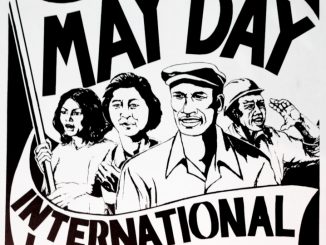
Thus, economic and political demands of “digital” workers aren’t fundamentally different from the demands all workers around the world raise on May Day, and the “digital” workers don’t delete Marx.

Farooque Chowdhury writes from Dhaka, Bangladesh

Source: Countercurrents

Strugglelalucha256


Karl Marx on the Paris Commune

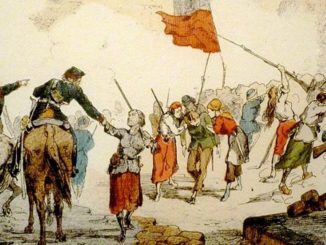
March 18, 2021, marks 150 years since the beginning of the Paris Commune, the first time in history that the working class seized power in its own name and established its own form of government. Although the Commune was crushed after only two months, it provided valuable experience that paved the way for successful worker-led revolutions in Russia, China, Cuba and other countries. The Paris Commune continues to hold important lessons for socialist revolutionaries today. 

Following is an excerpt from Karl Marx’s book, “The Civil War in France”:

On the dawn of March 18 [1871], Paris arose to the thunder-burst of “Vive la Commune!” What is the Commune, that sphinx so tantalizing to the bourgeois mind?

“The proletarians of Paris,” said the Central Committee in its manifesto of March 18, “amidst the failures and treasons of the ruling classes, have understood that the hour has struck for them to save the situation by taking into their own hands the direction of public affairs…. They have understood that it is their imperious duty, and their absolute right, to render themselves masters of their own destinies, by seizing upon the governmental power.”

But the working class cannot simply lay hold of the ready-made state machinery, and wield it for its own purposes.

The centralized state power, with its ubiquitous organs of standing army, police, bureaucracy, clergy, and judicature – organs wrought after the plan of a systematic and hierarchic division of labor – originates from the days of absolute monarchy, serving nascent middle class society as a mighty weapon in its struggle against feudalism. Still, its development remained clogged by all manner of medieval rubbish, seignorial rights, local privileges, municipal and guild monopolies, and provincial constitutions. 

The gigantic broom of the French Revolution of the 18th century swept away all these relics of bygone times, thus clearing simultaneously the social soil of its last hinderances to the superstructure of the modern state edifice raised under the First Empire, itself the offspring of the coalition wars of old semi-feudal Europe against modern France.

Against repressive capitalist state

During the subsequent regimes, the government, placed under parliamentary control – that is, under the direct control of the propertied classes – became not only a hotbed of huge national debts and crushing taxes; with its irresistible allurements of place, pelf, and patronage, it became not only the bone of contention between the rival factions and adventurers of the ruling classes; but its political character changed simultaneously with the economic changes of society. At the same pace at which the progress of modern industry developed, widened, intensified the class antagonism between capital and labor, the state power assumed more and more the character of the national power of capital over labor, of a public force organized for social enslavement, of an engine of class despotism.

After every revolution marking a progressive phase in the class struggle, the purely repressive character of the state power stands out in bolder and bolder relief. The Revolution of 1830, resulting in the transfer of government from the landlords to the capitalists, transferred it from the more remote to the more direct antagonists of the working people. The bourgeois republicans, who, in the name of the February Revolution, took the state power, used it for the June [1848] massacres, in order to convince the working class that “social” republic means the republic entrusting their social subjection, and in order to convince the royalist bulk of the bourgeois and landlord class that they might safely leave the cares and emoluments of government to the bourgeois “republicans.”

However, after their one heroic exploit of June, the bourgeois republicans had, from the front, to fall back to the rear of the “Party of Order” – a combination formed by all the rival fractions and factions of the appropriating classes. The proper form of their joint-stock government was the parliamentary republic, with Louis Bonaparte for its president. Theirs was a regime of avowed class terrorism and deliberate insult towards the “vile multitude.”

If the parliamentary republic, as M. Thiers said, “divided them [the different fractions of the ruling class] least,” it opened an abyss between that class and the whole body of society outside their spare ranks. The restraints by which their own divisions had under former regimes still checked the state power, were removed by their union; and in view of the threatening upheaval of the proletariat, they now used that state power mercilessly and ostentatiously as the national war engine of capital against labor.

In their uninterrupted crusade against the producing masses, they were, however, bound not only to invest the executive with continually increased powers of repression, but at the same time to divest their own parliamentary stronghold – the National Assembly – one by one, of all its own means of defence against the Executive. The Executive, in the person of Louis Bonaparte, turned them out. The natural offspring of the “Party of Order” republic was the Second Empire.

The empire, with the coup d’etat for its birth certificate, universal suffrage for its sanction, and the sword for its sceptre, professed to rest upon the peasantry, the large mass of producers not directly involved in the struggle of capital and labor. It professed to save the working class by breaking down parliamentarism, and, with it, the undisguised subserviency of government to the propertied classes. It professed to save the propertied classes by upholding their economic supremacy over the working class; and, finally, it professed to unite all classes by reviving for all the chimera of national glory.

In reality, it was the only form of government possible at a time when the bourgeoisie had already lost, and the working class had not yet acquired, the faculty of ruling the nation. It was acclaimed throughout the world as the savior of society. Under its sway, bourgeois society, freed from political cares, attained a development unexpected even by itself. Its industry and commerce expanded to colossal dimensions; financial swindling celebrated cosmopolitan orgies; the misery of the masses was set off by a shameless display of gorgeous, meretricious and debased luxury. The state power, apparently soaring high above society and the very hotbed of all its corruptions. Its own rottenness, and the rottenness of the society it had saved, were laid bare by the bayonet of Prussia, herself eagerly bent upon transferring the supreme seat of that regime from Paris to Berlin. Imperialism is, at the same time, the most prostitute and the ultimate form of the state power which nascent middle class society had commenced to elaborate as a means of its own emancipation from feudalism, and which full-grown bourgeois society had finally transformed into a means for the enslavement of labor by capital.

The direct antithesis to the empire was the Commune. The cry of “social republic,” with which the February Revolution was ushered in by the Paris proletariat, did but express a vague aspiration after a republic that was not only to supersede the monarchical form of class rule, but class rule itself. The Commune was the positive form of that republic.

Social stronghold of workers

Paris, the central seat of the old governmental power, and, at the same time, the social stronghold of the French working class, had risen in arms against the attempt of Thiers and the Rurals to restore and perpetuate that old governmental power bequeathed to them by the empire. Paris could resist only because, in consequence of the siege, it had got rid of the army, and replaced it by a National Guard, the bulk of which consisted of working people. This fact was now to be transformed into an institution. The first decree of the Commune, therefore, was the suppression of the standing army, and the substitution for it of the armed people.

The Commune was formed of the municipal councilors, chosen by universal suffrage in the various wards of the town, responsible and revocable at short terms. The majority of its members were naturally workers, or acknowledged representatives of the working class. The Commune was to be a working, not a parliamentary body, executive and legislative at the same time.

Instead of continuing to be the agent of the Central Government, the police was at once stripped of its political attributes, and turned into the responsible, and at all times revocable, agent of the Commune. So were the officials of all other branches of the administration. From the members of the Commune downwards, the public service had to be done at worker’s wage. The vested interests and the representation allowances of the high dignitaries of state disappeared along with the high dignitaries themselves. Public functions ceased to be the private property of the tools of the Central Government. Not only municipal administration, but the whole initiative hitherto exercised by the state was laid into the hands of the Commune.

Having once got rid of the standing army and the police – the physical force elements of the old government – the Commune was anxious to break the spiritual force of repression, the “parson-power,” by the disestablishment and disendowment of all churches as proprietary bodies. The priests were sent back to the recesses of private life, there to feed upon the alms of the faithful in imitation of their predecessors, the apostles.

The whole of the educational institutions were opened to the people gratuitously, and at the same time cleared of all interference of church and state. Thus, not only was education made accessible to all, but science itself freed from the fetters which class prejudice and governmental force had imposed upon it.

The judicial functionaries were to be divested of that sham independence which had but served to mask their abject subserviency to all succeeding governments to which, in turn, they had taken, and broken, the oaths of allegiance. Like the rest of public servants, magistrates and judges were to be elective, responsible, and revocable.

The Paris Commune was, of course, to serve as a model to all the great industrial centres of France. The communal regime once established in Paris and the secondary centres, the old centralized government would in the provinces, too, have to give way to the self-government of the producers.

In a rough sketch of national organization, which the Commune had no time to develop, it states clearly that the Commune was to be the political form of even the smallest country hamlet, and that in the rural districts the standing army was to be replaced by a national militia, with an extremely short term of service. The rural communities of every district were to administer their common affairs by an assembly of delegates in the central town, and these district assemblies were again to send deputies to the National Delegation in Paris, each delegate to be at any time revocable and bound by the mandat imperatif (formal instructions) of his constituents. The few but important functions which would still remain for a central government were not to be suppressed, as has been intentionally misstated, but were to be discharged by Communal and thereafter responsible agents.

The unity of the nation was not to be broken, but, on the contrary, to be organized by Communal Constitution, and to become a reality by the destruction of the state power which claimed to be the embodiment of that unity independent of, and superior to, the nation itself, from which it was but a parasitic excrescence.

While the merely repressive organs of the old governmental power were to be amputated, its legitimate functions were to be wrested from an authority usurping pre-eminence over society itself, and restored to the responsible agents of society. Instead of deciding once in three or six years which member of the ruling class was to misrepresent the people in Parliament, universal suffrage was to serve the people, constituted in Communes, as individual suffrage serves every other employer in the search for the workers and managers in his business. And it is well-known that companies, like individuals, in matters of real business generally know how to put the right person in the right place, and, if they for once make a mistake, to redress it promptly. On the other hand, nothing could be more foreign to the spirit of the Commune than to supersede universal suffrage by hierarchical investiture.

Mistaken conceptions of the Commune

It is generally the fate of completely new historical creations to be mistaken for the counterparts of older, and even defunct, forms of social life, to which they may bear a certain likeness. Thus, this new Commune, which breaks with the modern state power, has been mistaken for a reproduction of the medieval Communes, which first preceded, and afterward became the substratum of, that very state power. The Communal Constitution has been mistaken for an attempt to break up into the federation of small states, as dreamt of by Montesquieu and the Girondins,that unity of great nations which, if originally brought about by political force, has now become a powerful coefficient of social production. The antagonism of the Commune against the state power has been mistaken for an exaggerated form of the ancient struggle against over-centralization. Peculiar historical circumstances may have prevented the classical development, as in France, of the bourgeois form of government, and may have allowed, as in England, to complete the great central state organs by corrupt vestries, jobbing councilors, and ferocious poor-law guardians in the towns, and virtually hereditary magistrates in the counties.

The Communal Constitution would have restored to the social body all the forces hitherto absorbed by the state parasite feeding upon, and clogging the free movement of, society. By this one act, it would have initiated the regeneration of France.

The provincial French middle class saw in the Commune an attempt to restore the sway their order had held over the country under Louis Philippe, and which, under Louis Napoleon, was supplanted by the pretended rule of the country over the towns. In reality, the Communal Constitution brought the rural producers under the intellectual lead of the central towns of their districts, and there secured to them, in the workers, the natural trustees of their interests. The very existence of the Commune involved, as a matter of course, local municipal liberty, but no longer as a check upon the now superseded state power. It could only enter into the head of a Bismarck – who, when not engaged on his intrigues of blood and iron, always likes to resume his old trade, so befitting his mental calibre, of contributor to Kladderadatsch (the Berlin Punch) – it could only enter into such a head to ascribe to the Paris Commune aspirations after the caricature of the old French municipal organization of 1791, the Prussian municipal constitution which degrades the town governments to mere secondary wheels in the police machinery of the Prussian state. The Commune made that catchword of bourgeois revolutions – cheap government – a reality by destroying the two greatest sources of expenditure: the standing army and state functionarism. Its very existence presupposed the non-existence of monarchy, which, in Europe at least, is the normal encumbrance and indispensable cloak of class rule. It supplied the republic with the basis of really democratic institutions. But neither cheap government nor the “true republic” was its ultimate aim; they were its mere concomitants.

The multiplicity of interpretations to which the Commune has been subjected, and the multiplicity of interests which construed it in their favor, show that it was a thoroughly expansive political form, while all the previous forms of government had been emphatically repressive. Its true secret was this:

It was essentially a working-class government, the product of the struggle of the producing against the appropriating class, the political form at last discovered under which to work out the economical emancipation of labor.

Except on this last condition, the Communal Constitution would have been an impossibility and a delusion. The political rule of the producer cannot co-exist with the perpetuation of his social slavery. The Commune was therefore to serve as a lever for uprooting the economical foundation upon which rests the existence of classes, and therefore of class rule. With labor emancipated, every person becomes a worker, and productive labor ceases to be a class attribute.

Expropriation of the expropriators

It is a strange fact. In spite of all the tall talk and all the immense literature, for the last 60 years, about emancipation of labor, no sooner do the working people anywhere take the subject into their own hands with a will, than uprises at once all the apologetic phraseology of the mouthpieces of present society with its two poles of capital and wages-slavery (the landlord now is but the sleeping partner of the capitalist), as if the capitalist society was still in its purest state of virgin innocence, with its antagonisms still undeveloped, with its delusions still unexploded, with its prostitute realities not yet laid bare. The Commune, they exclaim, intends to abolish property, the basis of all civilization!

Yes, gentlemen, the Commune intended to abolish that class property which makes the labor of the many the wealth of the few. It aimed at the expropriation of the expropriators. It wanted to make individual property a truth by transforming the means of production, land, and capital, now chiefly the means of enslaving and exploiting labor, into mere instruments of free and associated labor. But this is communism, “impossible” communism! Why, those members of the ruling classes who are intelligent enough to perceive the impossibility of continuing the present system – and they are many – have become the obtrusive and full-mouthed apostles of co-operative production. If co-operative production is not to remain a sham and a snare; if it is to supersede the capitalist system; if united co-operative societies are to regulate national production upon common plan, thus taking it under their own control, and putting an end to the constant anarchy and periodical convulsions which are the fatality of capitalist production – what else, gentlemen, would it be but communism, “possible” communism?

The working class did not expect miracles from the Commune. They have no ready-made utopias to introduce par décret du peuple. They know that in order to work out their own emancipation, and along with it that higher form to which present society is irresistibly tending by its own economical agencies, they will have to pass through long struggles, through a series of historic processes, transforming circumstances and people. They have no ideals to realize, but to set free the elements of the new society with which old collapsing bourgeois society itself is pregnant. In the full consciousness of their historic mission, and with the heroic resolve to act up to it, the working class can afford to smile at the coarse invective of the gentlemen’s gentlemen with pen and inkhorn, and at the didactic patronage of well-wishing bourgeois-doctrinaires, pouring forth their ignorant platitudes and sectarian crotchets in the oracular tone of scientific infallibility.

When the Paris Commune took the management of the revolution in its own hands; when plain workers for the first time dared to infringe upon the governmental privilege of their “natural superiors,” and, under circumstances of unexampled difficulty, performed it at salaries the highest of which barely amounted to one-fifth of what, according to high scientific authority, is the minimum required for a secretary to a certain metropolitan school-board – the old world writhed in convulsions of rage at the sight of the Red Flag, the symbol of the Republic of Labor, floating over the Hôtel de Ville.

Source: Marxists Internet Archive

Strugglelalucha256


Fascist violence and the form of the state

Below is an excerpt from an article by Sam Marcy, a leading Marxist thinker and fighter of the second half of the 20th century. It was written shortly after Ronald Reagan’s inauguration in 1981 — that is, at the beginning of the long period of reaction that is peaking today.

Marcy argues for the importance of Marxist clarity on the difference between violence by the bourgeois-democratic state, however brutal, and that of fascist organizations, “particularly when they are armed and supported materially by right-wing, disaffected, but powerful elements of the ruling capitalist establishment, constitute a threatening parallel form to the legal (bourgeois-democratic) capitalist state.”

What is completely left out of consideration is that the spread of fascist organizations takes place in a vastly different, if not wholly new, social, political, and economic situation. The entire social environment in which the spread of this evil disease takes place imparts to it a significance which far surpasses the numerical strength of these organizations.

It is this which adds a really new dimension to the perilous growth of this virulent disease. Fascist violence has been endemic to the maintenance of the domination of the ruling class in the U.S. for a number of decades. It is, however, exceptionally important to distinguish between the violence which emanates directly and openly from the capitalist state, and the extra-legal, extra-governmental violence of fascist organizations.

The capitalist state is itself, of course, the main generator of force and violence. In its role as an instrument of capitalist domination over the working class and the oppressed, it operates as an organ of suppression in order to maintain and secure its rule over the masses.

Differentiate between government and extra-legal violence

Violence practiced upon the working class and the oppressed is therefore a concomitant element of the rule of the oppressing and exploiting bourgeoisie. Notwithstanding the viciousness, ferociousness or magnitude of the violence which the ruling class visits upon the oppressed, it must nevertheless be considered as violence within the framework of the bourgeois legal (“democratic”) system.

Such violence must be differentiated from, and not be confused with, the extra-legal, extra-governmental violence which is the essential characteristic of fascist organizations of the type under discussion. It is, of course, absolutely true that both legal and extra-legal violence have coexisted along with the bourgeois state since the very inception of the state itself.

In the U.S., legal and extra-legal violence have existed side-by-side for longer than a century. Ku Klux Klan violence is a principal example of how extra-legal violence visited upon the oppressed masses coexists with the legal forms of the capitalist state, and how one promotes the other.

Anti-labor violence employed on a huge scale for many decades by individual employers and industries has been of an extra-legal character. Most particularly noteworthy are strike-breaking organizations and the employment of underworld mobsters. “Right-to-work,” open-shop states are frequently the very same states which have either clandestinely or openly supported the Klan.

The pogroms visited upon oppressed nationalities in Czarst Russia are another example of how extra-legal forms of violence are carried out alongside with and encouraged and promoted by the legally constituted government. Pogrom violence in old Russia didn’t differ much from the massacres carried out by the Night Riders in the U.S.

Every capitalist state tolerates and occasionally promotes this sort of extra-legal violence. The difference, however, between fascist violence and other forms of illegal violence practiced by the government should be made clear.

For example, police brutality is frequently as vicious and as violent as that carried out by the fascists, and on occasion goes beyond legal limits (usually characterized by the bourgeois press as “excessive”). The two should not be confused even though the police may, and often do, collaborate with the Klan, neo-Nazis and other fascist and neo-fascist organizations.

Fascist groups threaten bourgeois-democratic state

Fascist organizations in their embryonic form, particularly when they are armed and supported materially by right-wing, disaffected, but powerful elements of the ruling capitalist establishment, constitute a threatening parallel form to the legal (bourgeois-democratic) capitalist state.

While receiving encouragement and sustenance from the capitalist state, embryonic fascist forms at the same time rival and stand in antagonism to the bourgeois democratic state. If historical conditions favor them, they have the propensity and organic tendency to overpower the bourgeois-democratic form of the capitalist state.

Such a situation can only exist in periods of extraordinarily acute social crisis when the capitalist state is so torn by accumulating inner contradictions and weakened by its inability to overcome its social crisis that it inevitably gives way to extra-parliamentary, extra-legal forms of rule.


Strugglelalucha256


Frederick Engels at 200 – better than ever

Nov. 28, 2020, marks the 200th anniversary of the birth of Frederick Engels, co-founder of scientific socialism with Karl Marx. The following article, written by the Russian revolutionary V.I. Lenin after Engels’ death in 1895, reviews his historic contributions to the struggle for working-class emancipation and socialism.

What a torch of reason ceased to burn,
What a heart has ceased to beat!

On Aug. 5, 1895, Frederick Engels died in London. After his friend Karl Marx (who died in 1883), Engels was the finest scholar and teacher of the modern proletariat in the whole world. 

From the time that fate brought Karl Marx and Frederick Engels together, the two friends devoted their life’s work to a common cause. And so to understand what Frederick Engels has done for the proletariat, one must have a clear idea of the significance of Marx’s teaching and work for the development of the contemporary working-class movement. 

Marx and Engels were the first to show that the working class and its demands are a necessary outcome of the present economic system, which together with the bourgeoisie inevitably creates and organizes the proletariat. They showed that it is not the well-meaning efforts of noble-minded individuals, but the class struggle of the organized proletariat that will deliver humanity from the evils which now oppress it. 

In their scientific works, Marx and Engels were the first to explain that socialism is not the invention of dreamers, but the final aim and necessary result of the development of the productive forces in modern society. All recorded history hitherto has been a history of class struggle, of the succession of the rule and victory of certain social classes over others. And this will continue until the foundations of class struggle and of class domination – private property and anarchic social production – disappear. The interests of the proletariat demand the destruction of these foundations, and therefore the conscious class struggle of the organized workers must be directed against them. And every class struggle is a political struggle.

‘Engels’ name should be known to every worker’

These views of Marx and Engels have now been adopted by all proletarians who are fighting for their emancipation. But when in the 1840s the two friends took part in the socialist literature and the social movements of their time, they were absolutely novel. There were then many people, talented and without talent, honest and dishonest, who, absorbed in the struggle for political freedom, in the struggle against the despotism of kings, police and priests, failed to observe the antagonism between the interests of the bourgeoisie and those of the proletariat. These people would not entertain the idea of the workers acting as an independent social force. 

On the other hand, there were many dreamers, some of them geniuses, who thought that it was only necessary to convince the rulers and the governing classes of the injustice of the contemporary social order, and it would then be easy to establish peace and general well-being on earth. They dreamt of a socialism without struggle. 

Lastly, nearly all the socialists of that time and the friends of the working class generally regarded the proletariat only as an ulcer, and observed with horror how it grew with the growth of industry. They all, therefore, sought for a means to stop the development of industry and of the proletariat, to stop the “wheel of history.” 

Marx and Engels did not share the general fear of the development of the proletariat; on the contrary, they placed all their hopes on its continued growth. The more proletarians there are, the greater is their strength as a revolutionary class, and the nearer and more possible does socialism become. The services rendered by Marx and Engels to the working class may be expressed in a few words thus: they taught the working class to know itself and be conscious of itself, and they substituted science for dreams.

That is why the name and life of Engels should be known to every worker. That is why in this collection of articles, the aim of which, as of all our publications, is to awaken class-consciousness in the Russian workers, we must give a sketch of the life and work of Frederick Engels, one of the two great teachers of the modern proletariat.

An enemy of tyranny

Engels was born in 1820 in Barmen, in the Rhine Province of the kingdom of Prussia. His father was a manufacturer. In 1838 Engels, without having completed his high-school studies, was forced by family circumstances to enter a commercial house in Bremen as a clerk. 

Commercial affairs did not prevent Engels from pursuing his scientific and political education. He had come to hate autocracy and the tyranny of bureaucrats while still at high school. The study of philosophy led him further. 

At that time Hegel’s teaching dominated German philosophy, and Engels became his follower. Although Hegel himself was an admirer of the autocratic Prussian state, in whose service he was as a professor at Berlin University, Hegel’s teachings were revolutionary. Hegel’s faith in human reason and its rights, and the fundamental thesis of Hegelian philosophy that the universe is undergoing a constant process of change and development, led some of the disciples of the Berlin philosopher – those who refused to accept the existing situation – to the idea that the struggle against this situation, the struggle against existing wrong and prevalent evil, is also rooted in the universal law of eternal development. 

If all things develop, if institutions of one kind give place to others, why should the autocracy of the Prussian king or of the Russian tsar, the enrichment of an insignificant minority at the expense of the vast majority, or the domination of the bourgeoisie over the people, continue forever? 

Hegel’s philosophy spoke of the development of the mind and of ideas; it was idealistic. From the development of the mind it deduced the development of nature, of man, and of human, social relations. While retaining Hegel’s idea of the eternal process of development, Marx and Engels rejected the preconceived idealist view; turning to life, they saw that it is not the development of mind that explains the development of nature but that, on the contrary, the explanation of mind must be derived from nature, from matter. … 

Unlike Hegel and the other Hegelians, Marx and Engels were materialists. Regarding the world and humanity materialistically, they perceived that just as material causes underlie all natural phenomena, so the development of human society is conditioned by the development of material forces, the productive forces. On the development of the productive forces depend the relations into which men enter with one another in the production of the things required for the satisfaction of human needs. And in these relations lies the explanation of all the phenomena of social life, human aspirations, ideas and laws. 

The development of the productive forces creates social relations based upon private property, but now we see that this same development of the productive forces deprives the majority of their property and concentrates it in the hands of an insignificant minority. It abolishes property, the basis of the modern social order, it itself strives towards the very aim which the socialists have set themselves. All the socialists have to do is to realise which social force, owing to its position in modern society, is interested in bringing socialism about, and to impart to this force the consciousness of its interests and of its historical task. This force is the proletariat. 

Socialism and the working class

Engels got to know the proletariat in England, in the centre of English industry, Manchester, where he settled in 1842, entering the service of a commercial firm of which his father was a shareholder. Here Engels not only sat in the factory office but wandered about the slums in which the workers were cooped up, and saw their poverty and misery with his own eyes. 

But he did not confine himself to personal observations. He read all that had been revealed before him about the condition of the British working class and carefully studied all the official documents he could lay his hands on. The fruit of these studies and observations was the book which appeared in 1845: The Condition of the Working Class in England.” 

We have already mentioned the chief service rendered by Engels in writing “The Condition of the Working Class in England.” Even before Engels, many people had described the sufferings of the proletariat and had pointed to the necessity of helping it. Engels was the first to say that the proletariat is not only a suffering class; that it is, in fact, the disgraceful economic condition of the proletariat that drives it irresistibly forward and compels it to fight for its ultimate emancipation. And the fighting proletariat will help itself. The political movement of the working class will inevitably lead the workers to realise that their only salvation lies in socialism. On the other hand, socialism will become a force only when it becomes the aim of the political struggle of the working class. 

Such are the main ideas of Engels’ book on the condition of the working class in England, ideas which have now been adopted by all thinking and fighting proletarians, but which at that time were entirely new. These ideas were set out in a book written in absorbing style and filled with most authentic and shocking pictures of the misery of the English proletariat. 

The book was a terrible indictment of capitalism and the bourgeoisie and created a profound impression. Engels’ book began to be quoted everywhere as presenting the best picture of the condition of the modern proletariat. And, in fact, neither before 1845 nor after has there appeared so striking and truthful a picture of the misery of the working class.

Meeting Marx

It was not until he came to England that Engels became a socialist. In Manchester he established contacts with people active in the English labor movement at the time and began to write for English socialist publications. 

In 1844, while on his way back to Germany, he became acquainted in Paris with Marx, with whom he had already started to correspond. In Paris, under the influence of the French socialists and French life, Marx had also become a socialist. 

Here the friends jointly wrote a book entitled The Holy Family, or Critique of Critical Critique.” This book, which appeared a year before “The Condition of the Working Class in England,” and the greater part of which was written by Marx, contains the foundations of revolutionary materialist socialism, the main ideas of which we have expounded above. 

“The holy family” is a facetious nickname for the Bauer brothers, the philosophers, and their followers. These gentlemen preached a criticism which stood above all reality, above parties and politics, which rejected all practical activity, and which only “critically” contemplated the surrounding world and the events going on within it. These gentlemen, the Bauers, looked down on the proletariat as an uncritical mass. 

Marx and Engels vigorously opposed this absurd and harmful tendency. In the name of a real, human person – the worker, trampled down by the ruling classes and the state – they demanded, not contemplation, but a struggle for a better order of society. They, of course, regarded the proletariat as the force that is capable of waging this struggle and that is interested in it. 

Even before the appearance of “The Holy Family,” Engels had published in Marx’s and Ruge’s Deutsch-Franzosische Jahrbucher his “Critical Essays on Political Economy,” in which he examined the principal phenomena of the contemporary economic order from a socialist standpoint, regarding them as necessary consequences of the rule of private property. Contact with Engels was undoubtedly a factor in Marx’s decision to study political economy, the science in which his works have produced a veritable revolution.

1848 and the Communist Manifesto

From 1845 to 1847 Engels lived in Brussels and Paris, combining scientific work with practical activities among the German workers in those cities. Here Marx and Engels established contact with the secret German Communist League, which commissioned them to expound the main principles of the socialism they had worked out. Thus arose the famous Manifesto of the Communist Party of Marx and Engels, published in 1848. This little booklet is worth whole volumes: to this day its spirit inspires and guides the entire organized and fighting proletariat of the world.

The revolution of 1848, which broke out first in France and then spread to other West European countries, brought Marx and Engels back to their native country. Here, in Rhenish Prussia, they took charge of the democratic Neue Rheinische Zeitung published in Cologne. 

The two friends were the heart and soul of all revolutionary-democratic aspirations in Rhenish Prussia. They fought to the last ditch in defense of freedom and of the interests of the people against the forces of reaction. The latter, as we know, gained the upper hand. The Neue Rheinische Zeitung was suppressed. Marx, who during his exile had lost his Prussian citizenship, was deported; Engels took part in the armed popular uprising, fought for liberty in three battles, and after the defeat of the rebels fled, via Switzerland, to London.

Marx also settled in London. Engels soon became a clerk again, and then a shareholder, in the Manchester commercial firm in which he had worked in the forties. Until 1870 he lived in Manchester, while Marx lived in London, but this did not prevent their maintaining a most lively interchange of ideas: they corresponded almost daily. In this correspondence the two friends exchanged views and discoveries and continued to collaborate in working out scientific socialism. 

Engels and ‘Capital’

In 1870 Engels moved to London, and their joint intellectual life, of the most strenuous nature, continued until 1883, when Marx died. Its fruit was, on Marx’s side, Capital,” the greatest work on political economy of our age, and on Engels’ side, a number of works both large and small. Marx worked on the analysis of the complex phenomena of capitalist economy. Engels, in simply written works, often of a polemical character, dealt with more general scientific problems and with diverse phenomena of the past and present in the spirit of the materialist conception of history and Marx’s economic theory. 

Of Engels’ works we shall mention: the polemical work against Dühring (analyzing highly important problems in the domain of philosophy, natural science and the social sciences), The Origin of the Family, Private Property and the State,” “Ludwig Feuerbach,” an article on the foreign policy of the Russian government, splendid articles on the housing question, and finally, two small but very valuable articles on Russia’s economic development (“Frederick Engels on Russia,” translated into Russian by Zasulich, Geneva, 1894). 

Marx died before he could put the final touches to his vast work on capital. The draft, however, was already finished, and after the death of his friend, Engels undertook the onerous task of preparing and publishing the second and the third volumes of “Capital.” He published Volume II in 1885 and Volume III in 1894. (His death prevented the preparation of Volume IV.) 

These two volumes entailed a vast amount of labor. Adler, the Austrian Social-Democrat, has rightly remarked that by publishing Volumes II and III of “Capital” Engels erected a majestic monument to the genius who had been his friend, a monument on which, without intending it, he indelibly carved his own name. Indeed these two volumes of “Capital” are the work of two men: Marx and Engels. 

Old legends contain various moving instances of friendship. The European proletariat may say that its science was created by two scholars and fighters, whose relationship to each other surpasses the most moving stories of the ancients about human friendship. Engels always – and, on the whole, quite justly – placed himself after Marx. “In Marx’s lifetime,” he wrote to an old friend, “I played second fiddle.” His love for the living Marx, and his reverence for the memory of the dead Marx were boundless. This stern fighter and austere thinker possessed a deeply loving soul.

First and Second Internationals

After the movement of 1848-1849, Marx and Engels in exile did not confine themselves to scientific research. In 1864 Marx founded the International Working Men’s Association, and led this society for a whole decade. Engels also took an active part in its affairs. The work of the International Association, which, in accordance with Marx’s idea, united proletarians of all countries, was of tremendous significance in the development of the working-class movement. 

But even with the closing down of the International Association in the 1870s, the unifying role of Marx and Engels did not cease. On the contrary, it may be said that their importance as the spiritual leaders of the working-class movement grew continuously, because the movement itself grew uninterruptedly. 

After the death of Marx, Engels continued alone as the counsellor and leader of the European socialists. His advice and directions were sought for equally by the German socialists, whose strength, despite government persecution, grew rapidly and steadily, and by representatives of backward countries, such as the Spaniards, Romanians and Russians, who were obliged to ponder and weigh their first steps. They all drew on the rich store of knowledge and experience of Engels in his old age.

Marx and Engels, who both knew Russian and read Russian books, took a lively interest in the country, followed the Russian revolutionary movement with sympathy and maintained contact with Russian revolutionaries. They both became socialists after being democrats, and the democratic feeling of hatred for political despotism was exceedingly strong in them. 

This direct political feeling, combined with a profound theoretical understanding of the connection between political despotism and economic oppression, and also their rich experience of life, made Marx and Engels uncommonly responsive politically. That is why the heroic struggle of the handful of Russian revolutionaries against the mighty tsarist government evoked a most sympathetic echo in the hearts of these tried revolutionaries. 

On the other hand, the tendency, for the sake of illusory economic advantages, to turn away from the most immediate and important task of the Russian socialists, namely, the winning of political freedom, naturally appeared suspicious to them and was even regarded by them as a direct betrayal of the great cause of the social revolution. 

“The emancipation of the workers must be the act of the working class itself” – Marx and Engels constantly taught. But in order to fight for its economic emancipation, the proletariat must win itself certain political rights. Moreover, Marx and Engels clearly saw that a political revolution in Russia would be of tremendous significance to the West European working-class movement as well. 

Autocratic Russia had always been a bulwark of European reaction in general. The extraordinarily favorable international position enjoyed by Russia as a result of the war of 1870, which for a long time sowed discord between Germany and France, of course only enhanced the importance of autocratic Russia as a reactionary force. Only a free Russia, a Russia that had no need either to oppress the Poles, Finns, Germans, Armenians or any other small nations, or constantly to set France and Germany at loggerheads, would enable modern Europe, rid of the burden of war, to breathe freely, would weaken all the reactionary elements in Europe and strengthen the European working class. 

That was why Engels ardently desired the establishment of political freedom in Russia for the sake of the progress of the working-class movement in the West as well. In him the Russian revolutionaries have lost their best friend.

Let us always honor the memory of Frederick Engels, a great fighter and teacher of the proletariat!

Written in autumn 1895

Source: Marxists Internet Archive


Strugglelalucha256


100 years after his death, John Reed’s example still shines

One hundred years ago, the communist journalist John Reed died in Moscow. (The date of his death is given variously between Oct. 17 and Oct. 20, 1920; the Russian comrades say Oct. 19, so I’ll go with that.) He is one of a handful of U.S. revolutionaries interred in the Kremlin wall.

Amidst the devastation of the Russian Civil War, 1918 to 1920, Reed had contracted typhus on his return trip from the historic Congress of the Peoples of the East in Baku, Azerbaijan, where he gave a roaring speech warning the oppressed peoples of the world not to trust U.S. imperialism’s honeyed words about “democracy” – a warning that is still 100 percent relevant today.

Reed is best remembered as the author of Ten Days That Shook the World,” his on-the-scene account of the Great October Socialist Revolution, with an approving foreword by Lenin. This is still the best introduction to the events of the socialist revolution of 1917.

But Reed was much more than one book. He was a founder of the U.S. communist movement, coming over from the radical wing of the Socialist Party. He was an outstanding journalist of working-class struggles in the U.S. — see, for example, his account of the 1913 Paterson Silk Strike — and of the struggles of the oppressed workers of the world, including his book Insurgent Mexico about the great Mexican Revolution.

“Ten Days” was the second piece of communist literature I ever read as a teenager, and Reed continues to be an inspiration for me after over 30 years as a revolutionary writer and journalist. Reed rejected the bogus ideology of “impartial journalism” taught by U.S. academics and media, which always winds up as a justification of the capitalist status quo. He knew that honest reporting and analysis goes hand-in-hand with a clear, open and unashamed working-class point of view.

Despite various biographical attempts to tame his image for the anti-communist purposes of U.S. intellectuals (such as the film “Reds”), John Reed was a communist revolutionary to the bone — an independent thinker who was not afraid to challenge the class enemy or his own comrades when he believed they were mistaken, who made mistakes of his own (such as his initial position, shared by many socialists, in support of the Entente in World War I) but corrected them, and who understood the importance of standing on the right side of the class barricades. 

One hundred years later, John Reed’s revolutionary example still shines.

Strugglelalucha256


The 45-year-long billionaire bonanza

Almost 13 million people in the U.S. are “officially” jobless. The real number is far higher. Many haven’t received an unemployment check in weeks.

Then there’s Jeff Bezos, who runs Amazon and owns the Washington Post. His stash ballooned by another $72 billion in the last six months.

Over a million people have died of the coronavirus around the world. More than 210,000 expired in the United States of Trump.

But it’s been partytime for the super rich. Millions line up at food pantries and worry about being evicted or losing their home. Meanwhile, U.S. billionaires gained another $845 billion in wealth according to the Institute for Policy Studies

This nearly trillion-dollar gain during the pandemic is merely dessert for these parasites. They’ve been having a feast for nearly 50 years.

If workers were receiving the same share of the economy as they had in 1975, their wages would have approximately doubled by 2018. 

The bottom quarter of wage earners would be taking home an average of $61,000 per year instead of $33,000. Those in the middle would be making $92,000 instead of $50,000. 

These figures represent another $2.5 trillion dollars stolen every year from poor and working people by the wealthy and powerful.

The study showing this “Grand Theft Payday” was commissioned by Seattle’s Fair Work Center and carried out by the RAND Corporation, a Pentagon think tank. Inequality has become so massive and repulsive that it’s obvious to RAND analysts who usually work for the military-industrial complex.

Big Capital’s counterattack

This massive transfer of income isn’t the result of sunspots or UFOs. It’s the product of a worldwide class struggle between the rich and the rest of us.

The class struggle doesn’t just include workers on strike or future union organizing drives at Amazon or Walmart. Every fightback against oppression is a class struggle.

The Black Lives Matter movement is a class struggle. So is the struggle of the Filipino people against the U.S.-backed dictatorship of Rodrigo Duterte. Transgender people trying to survive is a class struggle.

The height of the Black liberation struggle was in the 1960s and early 1970s. The master class was pushed back.

The Vietnamese people defeated the Pentagon war machine. Africans in Angola, Guinea-Bissau and Mozambique won independence. French workers carried out a general strike in 1968. 

Big Capital staged a counteroffensive. Dozens of Black Panther Party members were murdered by police. 

New York Gov. Nelson Rockefeller massacred the Attica prisoners. Decades before Iraq was invaded, war criminals Donald Rumsfeld and Dick Cheney were destroying anti-poverty programs for President Richard Nixon.

Harlem Congressperson Adam Clayton Powell Jr. fought to increase the minimum wage and make it cover millions more workers. Just to keep up with inflation, the federal minimum wage of $1.60 per hour — enacted in February 1968 — would have to be $12.16 today.  

Instead it’s $7.25. That’s a pay cut for the poorest workers of $4.91 per hour or $196.16 for every 40-hour workweek. This wage theft of over $10,000 per year has meant hundreds of billions of more profits for capitalists.

Union workers suffered job cuts because of automation. Thousands of unionized workplaces were shut down, particularly in the Midwest and Northeast.

Members of Local 3 of the International Brotherhood of Electrical Workers in New York have been on strike against the Spectrum cable monopoly since March 28, 2017. The banksters that lent Spectrum billions have insisted on this union busting.

In the capital of capitalism, 114,000 New York City schoolchildren are homeless. Despite a 60-year-long U.S. economic blockade, not a single child in socialist Cuba is homeless.

We need a socialist revolution

The biggest defeat for poor people was the overthrow of the Soviet Union and the socialist countries of Eastern Europe. Reconstruction’s bloody overthrow guaranteed decades of hell for Black people in the U.S. The Soviet Union’s downfall was followed by 30 years of more cutbacks.

The Fair Work Center is demanding a new deal of the capitalist card game, at least back to the conditions of 1975. The RAND study shows that a minimum wage of at least $20 per hour is perfectly feasible.

Why don’t we get rid of the capitalist card game altogether? Every cent of profit is produced by the working class, both employed and unemployed.

Karl Marx called what the banksters, landlords and capitalists steal from us “surplus value.” That’s because the wages and benefits we get are only a fraction of the value that the entire working class produces.

The long period of reaction we’ve suffered isn’t unique. Globalization isn’t new. The capitalist world market was jumpstarted by the African Holocaust and the genocide of Indigenous peoples throughout the Americas.

Hundreds of billions of dollars in profits continue to flow to Wall Street from super exploited workers in Africa, Asia, Latin America and the Pacific islands. They need reparations, as do Black and Indigenous people in the U.S.  

Two hundred years ago, real wages fell by half during Britain’s industrial revolution. Workers rebelled and formed unions.

Decades of struggle around the world led to the Bolshevik Revolution in 1917. Other socialist revolutions were inspired by the Bolshevik example.

A growing tide of struggle will continue no matter what happens in the presidential election. Part of that struggle is spreading knowledge of socialism. We need a socialist revolution just to stop capitalism from cooking the earth.

Strugglelalucha256


Fascism: how it develops and how to fight back

With the 2020 elections fast approaching, the workers’ and progressive movements in the U.S. are debating the best tactics to fight the Donald Trump regime and the growth of violent white-supremacist, neofascist groups. As a contribution to this urgent discussion, Struggle-La Lucha is publishing excerpts from two articles by Sam Marcy, a leading Marxist thinker and fighter of the second half of the 20th century, about the nature of fascism and how to fight it.

From The specter of fascism,” originally published in December 1993.

Bourgeois democracy won in struggle

Bourgeois democracy is not a gift from the ruling class. It was won in struggle. A capitalist democracy, whether in Britain or France or other countries, is the result of working-class struggles that have forced the bourgeoisie to grant democratic rights.

For all too long there were no rights for the masses in this country. Only property-owning white men could vote. Native people had no rights. In a great section of the U.S., there was chattel slavery. Even after abolition, Black people had no rights at all for many years. Women couldn’t vote.

It was only in 1971 that every citizen at least 18 years old was legally enfranchised, although registration is still made difficult enough to discourage many.

So this democracy we have was earned in the course of struggle, including a bloody civil war. Bourgeois politicians, however, give the impression that it is part of the “benefits of capitalism.”

But capitalism and democracy are not synonymous. Democracy is a form of state, as is fascism. The essence of a capitalist state is the rule of the bourgeoisie. Capitalism as a system can exist without capitalist democracy.

The working-class movement can thrive and advance if it utilizes capitalist democracy to its own advantage in the struggle to bring about a socialist revolution.

This introduction is necessary because the bourgeoisie never refers to the real significance of the struggle between bourgeois democracy and fascism. They always give the impression that they are in the forefront of the struggle against fascism and are the proponents of democracy.

There is nothing the bourgeoisie likes so much as to cover themselves with sugary, unctuous phrases about democracy as long as it seems to serve their ends — and as long as the workers don’t use that democracy for their own class interests, but only to advance this or that capitalist politician.

Full-scale fascism means the complete abolition of capitalist democracy. That has happened several times in the 20th century. The experiences in some of the countries of Europe give us object lessons in what fascism is.

Lessons of fascism in Europe

The earliest form of fascism took place in Italy. Later, it took over in Germany and then in Spain.

Why did it come first in those countries? It is often explained as due to the development of a dictatorial mentality in certain individual leaders.

It is said that in Italy it was all Mussolini’s fault; that in Germany it was Hitler; and that Franco brought about fascism in Spain. The emphasis is always on the individual and not on the social basis for the rise of that individual.

We do not deny the role of the individual in history. But we ask ourselves why it is that in these particular countries, individuals were able to turn a bourgeois democracy into a fascist dictatorship.

Is it because they were unusual and extraordinary people? Why didn’t they do something else? Why didn’t they bring about a greater democracy — a socialist democracy? As individuals, how did they build a following strong enough to take power?

The individual becomes important, most of all, if he or she is a representative of a class.

Some capitalist historians will say fascism came as a result of a deep economic crisis. That is true, but it is not the whole truth. Poverty is deeply embedded in so many countries, but that does not necessarily bring a fascist dictatorship. The worst economic crisis that ever took place was in the United States, and it did not bring about a fascist dictatorship. Some fascist groupings did arise, but on the whole, fascism did not take hold here.

But it did in three leading capitalist countries: Germany, Italy and Spain.

What was their common social and political denominator?

What turns the bourgeoisie into fascists

The first prerequisite of classical fascism is the existence of a revolutionary mood in the working class.

In Italy, Spain and Germany there was a revolutionary situation. The working class was on the edge of a socialist revolution. That is what impelled the bourgeoisie to support a fascist dictatorship in its most brutal and complete form.

In these three capitalist countries, the working class had learned to use capitalist democracy to defend its own interests to some extent. There were entrenched elected representatives of workers’ parties. They controlled a number of cities and states, were in the legislatures and sometimes in the federal government.

Wherever you went in Europe, socialists and communists had some part in the capitalist state. The workers’ movement was strong and seemed unvanquishable.

Under the democratic form of the capitalist state, the workers’ movement had reached a stage in its development where it had become a threat to the very existence of capitalist rule. Even Frederick Engels thought at one point at the end of the 19th century that the workers’ movement would take over in Germany. It was the general understanding that as a result of parliamentary means the workers’ movement would ultimately rule.

But that turned out to be an illusion.

The ruling class could not easily overcome the great achievements of the working class by mere elections. Even if they could win absolute majorities in a few elections, they could not fundamentally change the class position of the working class. So much had been won that it would take a military struggle to change it. That is where fascism came in.

The bourgeoisie in a number of European countries turned in an utterly different direction. Instead of being the patron saint of bourgeois democracy, they slowly and gradually gravitated toward a violent break with that tradition.

They began to instigate movements for the overthrow of capitalist democracy altogether, as a means to abolish the gains of the workers, and revamp and redesign the form of class rule. Their objective was to develop on a world scale and become the most aggressive group of capitalist countries in order to redivide the colonies in their favor.

Personality of leaders not decisive

The development of fascism didn’t have anything to do with the psychological bent of leaders. It didn’t have anything to do with an aversion to liberty, free speech and the like.

It had to do with the necessity to sustain the rule of a particular class over another class, to sustain capitalism when it is very much under siege from the workers.

The enormous strength of the workers’ organizations on the European arena had frightened the bourgeoisie. The confidence of the workers’ movement was such that they were openly speaking not only about the overthrow of the bourgeoisie but also how they would soon govern over society. It was just a matter of time before the ruling class would be out of business.

When a ruling class sees its most substantial interests under siege, it doesn’t care much about democracy, freedom or anything else. It is ready to stake its all on retaining its system, even to the point of the loss of millions of lives. It will think of its class interests above all and will throw overboard everything it has taught about democracy, freedom, god or whatever — in the interest of retaining its class position.

This is how the fascist movements developed. Not as an automatic, anti-democratic tendency, but because of the ruling class’s organic need to save its class interests and system.

What led to Mussolini’s takeover

The first to go over was Italy. The working class was strong in Italy. Even the monarchy did not stand in the way of the workers’ organizing. When it did, it was soundly trounced. The workers’ movement was also reaching out to the peasants.

In the years immediately after the Russian Revolution, the Italian masses tried to take it all. They organized general strikes and tried to take over all of industry by occupying the plants. They wanted to make short shrift of the slow, eventual growth of the working class — particularly in a country that was not the richest and whose colonies did not bring in the kind of superprofits that Britain, for example, enjoyed.

Under those circumstances, the ruling class instigated the development of fascism by sponsoring Mussolini to open a violent struggle against the working class.

Bourgeois historians write a lot about Mussolini. But they will not tell you how the ruling class conducted itself, what the bankers and industrialists did. What were they doing while the workers were making gains?

Even if Mussolini had organized the fascist coup d’etat on his own, his subsequent stay in power shows support by the ruling class in Italy and by the imperialists as a whole. His march on Rome to “rescue Italy from Bolshevism” and his Black Shirts would have been a temporary thing with no importance had big capital not supported him.

So the first characteristic in the development of a fascist regime of the classical type is the existence of a revolutionary situation caused by the rise of a workers’ movement. This in turn causes the capitalist ruling class to abandon capitalist democracy and turn to naked force and violence in the struggle to retain its rule.

True, a fascist dictatorship means that even the bourgeoisie has to give up certain of its rights. Nonetheless, the results of fascism everywhere were to strengthen the ruling class as against the working class.

In Italy, this classical form of fascism existed from 1922 all the way up to the end of World War II, when the workers overthrew Mussolini as a result of their own independent efforts.

Fascism in Spain

In Spain, fascism took a different route. The revolutionary working class developed very rapidly in the 1930s — threatening not only the monarchy but the capitalist system, which was still tied in with all the ancient feudal institutions.

Spain seemed to be the country par excellence where feudal institutions could exist within the womb of capitalist society. It seemed as if the working class was more removed from Marxism than in Italy, Germany and elsewhere in Europe. But this theory vanished into thin air when the workers’ movement went on revolutionary strikes and threatened to topple not only the monarchy but also the capitalist institutions.

There is a legend in the U.S. that the whole struggle in Spain was between democracy and fascism. That is not true. It was between the revolutionary working class and the capitalist class. The bourgeoisie masked itself in a democratic form late in the day.

The existence of an armed and revolutionary working class in Spain compelled the ruling class to appeal to the military. Not being able to convince the entire military to stage a counterrevolutionary insurrection, they got one of the leading militarists — Francisco Franco — to lead an open, violent, counterrevolutionary assault on the workers’ movement in 1936. He openly denounced bourgeois democracy as responsible for all the evils in Spain. He got the support of the Catholic hierarchy.

Armed to the teeth, Franco began a bloody extermination of the workers’ organizations: the communists, socialists and anarchists.

Fascism was brought about in Spain as retaliation against the workers’ movement for daring to take destiny in its own hands. Before the workers could succeed, the bourgeoisie intervened militarily, with no resistance from England, France or the U.S.

Why German fascism was so destructive

In Germany, it was the same, only more dramatic and more destructive.

The workers’ movement in Germany was the strongest and most educated in all the world at that time. So many great Marxists had come from there: Marx and Engels, Mehring, Kautsky, Liebknecht and others.

It was the land where socialism seemed to have originated, where the soil seemed ready for a takeover by the socialists and communists.

But that was not to happen, especially given the existence of a world ruling class with its eye sharply focused on the situation. Germany was the center of Europe. A revolution there would change the basis for capitalist society.

I am not unmindful of the policy of the communist parties in these countries; not unmindful of the fear of the Communist Party leadership under Stalin of supporting the German revolution; not unmindful of the politics of the Kremlin at the time and how it dealt with the various situations. That is a history of the struggle between the policy of accommodation and conciliation of the Soviet leadership under Stalin versus the revolutionary program of Trotsky.

In Germany, the bourgeoisie had on its side not only the army and police but outside military organizations that they began to build out of fear that they couldn’t rely on the military. The communists and left socialists in the workers’ movement began to counter this by building up their own military formations. They all were preparing for what was sure to come: a showdown between the two antagonistic classes.

That is all a matter of documentation. Everyone knew. I remember reading the papers every day at the time to find out about the street struggles in Germany between the communists and the fascists — counting how many the workers won and the Nazis lost, faithfully hoping that the day of reckoning would come.

The Social-Democratic Party was numerically the strongest working-class party. Its electoral strength was enormous. It had not only won seats in the Reichstag (parliament), but had majorities in a number of the smaller cities and strong representation in the larger cities. The Nazis aimed their guns at both socialists and communists.

The workers’ parties failed to recognize that the hour of the struggle for power was coming closer and closer, and that electoral gains or losses would not be decisive. The struggle could not be resolved by so-called democratic or constitutional means. Both sides of the barricades were being armed: the workers on the one side and the Nazi goons supported by the ruling class on the other. The question was which side would be ready to strike first.

Trotsky urged the revolutionary workers to be on guard and prepare for insurrection. He also urged the Soviet Union to open up military maneuvers on its Western front and to give courage and support to the communists and the workers’ movement.

None of this happened. The Nazis struck first, preparing a frame-up with the Reichstag fire. This demoralized the leadership and paralyzed the working class so that it could not take up arms.

There was a complete failure of leadership by the most developed, most serious, most loved working-class party at the time. It went down to defeat — and that changed the international situation, leading to a bloody war.

From Marxism and mass action: Strategies for the struggle ahead,” published in December 1994

What to do next

The art of revolutionary politics is knowing what to do next. It is okay to theorize about fascism or the strength of the right wing. But our organization differs from a debating society. We must take a firm, indeed revolutionary, stance.

Individuals can change, but the ruling class’s trend is toward repression, solidifying in the most undemocratic way possible its control over the resources of the country and indeed of the globe. U.S. imperialism is on the march everywhere. The devastating results fall on the backs of the workers at home as well.

What do we do? We know the right wing is moving, and that there is only a thin difference between the right and the ultraright.

One of the great lessons of the 1930s was Leon Trotsky’s writings on the question of how to fight fascism. He stressed how important it is not to overlook what is happening, how it is possible to lose the historic moment and allow the ruling class to be victorious.

He delineated in a dramatic and readable way the steps that led to the victory of fascism in Germany.

In the U.S. at that time there were only the beginnings of fascist groupings. No sooner did the wave of reaction sweeping Europe reach these shores than the great sit-down strikes among the workers wiped them out completely.

They were never able to get a foothold among the workers. The myriad of small fascist groups were washed away by the upsurge of the working class.

That is the surest way to end any fascist attempt to establish itself as a political force over the working class.

There’s been no experience here with fascism on a mass scale. So we are basically looking at a theoretical and ideological discussion.

Our task is not to wait until things happen, in which case you can be absolutely sure the liberal bourgeoisie as well as certain sections of the big bourgeoisie will get into it. Right now, the working class is either indifferent or apathetic in this great struggle.

The possibility for the growth of neofascism, if you can call it that, and for political reaction generally is in the soil because monopoly is growing. The contradiction between the forms of capitalist production and the forms of capitalist distribution grows wider and wider.

The struggle among the imperialist nations grows sharper. There is no tendency toward political equilibrium there.

None of the small countries that were actual colonies and became independent has shown any move toward economic independence. They would like to do it but cannot because of the monstrous growth and position of the big banks and corporations over the entire planet.

Opportunity for a mass struggle

We can go to the masses and promote tremendous activity to challenge the capitalist class. We needn’t be fearful about going beyond the legal limits that the bourgeoisie constrains us to. On a picket line, you never know when you’re going to get arrested, but you don’t say, “Don’t have the picket line.” That kind of talk leads to failure. …

In the 1930s, the Communist Party and other organizations were very conscious of the growth of fascism. But to a large extent they were trying to win the big bourgeoisie to support the struggle against it.

There is nothing wrong with asking them to support the struggle against fascism, but it’s another thing to expect it from them. We have to explain this to the most oppressed and persecuted people, in the Black and Native and Latino districts. Fascism should not be an after-dinner conversation with bourgeois liberals. …

Marxism is as Marxism does. It is not merely an exposition of the tendencies in capitalist society that inevitably lead it to destruction. It is also a means for arming the workers and oppressed people on how to proceed in the next period.

Are we mainly directing our attention to the program of the right-wing Republicans? No. We shouldn’t leave the other Republicans and the Democrats off the hook.

To make it very clear, our struggle against the right wing is an extension of our general program and not some new development on our part. We are going to conduct a revolutionary and working-class struggle in the way we have conducted them before, with greater emphasis on developing an initiative in the struggle against the right wing and the neofascist tendencies that may spring up now and then.

Strugglelalucha256
https://www.struggle-la-lucha.org/capitalism/page/2/