Mensaje del activista chileno en la Conferencia de Solidaridad Antiimperialista en Cuba

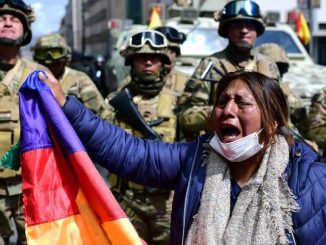
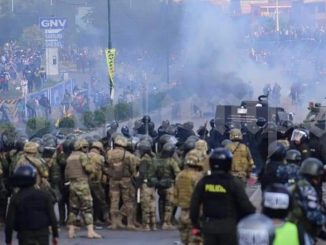
La lucha en chile sigue hasta conseguir la esperada asamblea constituyente, esperada por 30 años por nuestras generaciones pasadas nuestras madres y abuelas. Hoy en dia los jovenes chilenos produjeron un despertar social maravilloso y multigeneracional, no tenemoa nada que perder, hoy vamos por todo. Nos cansamos nos unimos, nos han quitado tanto que nos quitaron el miedo!

Saludos al pueblo norteamericano y del caribe un esperanzador saludo en su lucha que es de todos!

Gabriel Garcia
Coordinadora solidaridad con Cuba, Partido Comunista de Chile

Strugglelalucha256


Zimbabwe will never be a colony again!

The 16 countries comprising the Southern African Development Community called for Oct. 25 to be a Day of Action against the illegal sanctions on Zimbabwe. The day was made a public holiday in Zimbabwe, where tens of thousands of people demonstrated.

In New York City, the December 12th Movement answered SADC’s call by declaring “Zimbabwe will never be a colony again!” They called a demonstration in front of the United States Mission to the United Nations. People then marched through the streets to the Zimbabwe Mission to the U.N. to show their solidarity with the embattled African country. 

D12 members distributed a leaflet titled “Western sanctions are weapons of mass destruction.” It told the truth to people on the street, as follows:

“Sanctions are economic weapons of war and mass destruction. Their purpose is to destroy governments that do not submit to domination by Western political and economic interests. Their target is mainly former colonies who seek to break from Western dominance to advance the interests of their own people.

“Their main methods: Economic terrorism—to make a country’s economy ‘scream’ to destroy the quality of life of its people. Regime Change—create an opposition, financed and owned, to replace that current leadership.

“In Zimbabwe, where the liberation war freed their people from colonial rule, they dared to take back and redistribute land stolen. An act that threatened the continued exploitation of Africans not only in Zimbabwe, but Africa in general.

“For two decades, the United States and European Union have enforced sanctions against Zimbabwe in direct response to their land reclamation program. Sanctions, which have denied Zimbabwe access to international loans, financing and importation of vital medical, agricultural, industrial and chemical goods. The exact needs for running a country and insurance against disasters and crisis.

“Sanctions, which have attacked Zimbabwe’s currency, to undermine their ability to purchase goods at fair prices, while at the same time frightening away trade because of economic instability.

“The West also created an opposition. The MDC (Movement for Democratic Change), whose singular mission is to return land back to white farmers and the economy back to the West. To be accomplished by calling for more Western sanctions, violent/terroristic actions and a mass international propaganda campaign of lies and half-truths.”

The African countries demanding the lifting of sanctions against Zimbabwe include Angola, Botswana, Comoros, the Democratic Republic of Congo, Lesotho, Madagascar, Malawi, Mauritius, Mozambique, Namibia, Seychelles, South Africa, Swaziland, Tanzania, Zambia and Zimbabwe.

Zimbabwe diplomat speaks

On the evening of Oct. 25, the December 12th Movement International Secretariat and Friends of Zimbabwe held a Zimbabwe Anti-Sanctions Day meeting at Sistas’ Place in the Bedford Stuyvesant neighborhood of Brooklyn. Among those who came was a delegation from Zimbabwe’s mission to the U.N., New York City Council member Inez Barron and New York State Assembly member Charles Barron.

Omowale Clay of the December 12th Movement welcomed people to the meeting. He called Oct. 25 “a day of African unity.” Clay reported that people in Khartoum, the capital of Sudan, demonstrated against the sanctions imposed on Zimbabwe.

A moment of silence was held for two comrades from the December 12th Movement who have passed away: Robert “RT” Taylor, who served as chief-of-staff of the December 12th Movement and was the son of December 12th Chairperson Viola Plummer; and Field Marshall Coltrane Chimurenga, who was buried in the Harare Provincial Heroes’ Acre in Zimbabwe.

Vincent Verdree spoke from Friends of Zimbabwe. He declared that the U.S./EU “sanctions are an act of war.” A video was shown explaining the impact of sanctions on Zimbabwe.

A highlight of the meeting was Deputy Ambassador Nyagura of the Permanent Mission of the Republic of Zimbabwe to the U.N. 

She said that Zimbabwe has lost $42 billion in 18 years because of the cruel sanctions. That’s almost $2,500 stolen from each person in Zimbabwe.

The deputy ambassador reported that it was the “most vulnerable” who were most affected. These include patients needing kidney dialysis.  

There’s no credit and banks have been sanctioned by the U.S. for having financial dealings. These are truly acts of war against an African people that dared to take back their land from white settlers.

But as Deputy Ambassador Nyagura declared, “The land issue is irreversible.”

New York City Council member Inez Barron and New York State Assembly member Charles Barron also denounced the sanctions.

U.S. hands off Zimbabwe!

Strugglelalucha256


Victory to the Chilean people’s uprising!

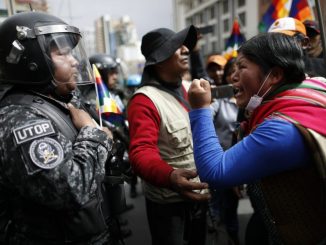
Hundreds of people gathered in New York City’s Union Square on Oct. 26 to demand that Chilean President Sebastián Piñera resign. The billionaire Piñera has had his army and police kill at least 19 people, with hundreds injured and thousands arrested. The metropolitan area of Chile’s capital Santiago has been under a state of siege.

Most of the people who came to Union Square were from New York’s Chilean community. Many were young, others were veterans of the struggle against the Pinochet dictatorship. The crowd sang songs by martyred Chilean poet/singer/songwriter Victor Jara, murdered in the U.S.-backed coup of Sept. 11, 1973. They also sang El Pueblo Unido, the anthem of the Popular Unity government of Salvador Allende, also martyred with thousands of his supporters in Washington’s coup. 

The flag of the Mapuche Indigenous nation of southern Chile was carried by many in the crowd. Activists from Honduras, Mexico and Brazil also carried their flags in support. 

Strugglelalucha256


Catalonia uprising exposes Spain’s fraudulent democracy

Militant protests erupted in Barcelona and other cities of Catalonia, a colonized region of the Spanish state, after a Spanish court handed down harsh sentences to nine Catalan independence leaders in mid-October. During an Oct. 18 general strike called by the Intersindical-CSC and Intersindical Alternativa de Catalunya, unions joined in massive “Marches for Freedom” throughout the Catalonia.

Struggle-La Lucha presents this commentary by Basque activist Iña Martinez on the recent developments and the long struggle of the Catalan and Basque peoples for revolution and national liberation. 

‘All without violence’ 

It’s the slogan/lie repeated ad-nauseam by the Spanish government to Basques and Catalans, among others. The Spanish government and its media said again and again, “All without violence,” so that we would believe that if ETA (Euskalerrria ‘Ta Askatasuna/Basque Homeland and Freedom movement) gave up its arms (which it did in 2011), we could talk and solve everything without violence.

Now, in 2019, we can see that “All without violence” was nothing more than a slogan to silence the demands of democracy and freedom of Basques, Catalans and all peoples colonized by Spain. The Spanish state has always wanted the monopoly on violence and that is how it wants things to remain. 

Catalonia 

A little bit of history: Catalonian President Lluís Companys was shot dead on Oct. 15, 1940, by the Spanish fascists, who made the coup d’état in 1936 against the left-leaning Republic and began the fascist dictatorship. Lluís Companys, as requested by the Catalan people, had declared the independence of Catalonia a few years prior. The Catalan people wanted to govern themselves. They didn’t like living under the Spanish yoke.

The Spanish dictatorship that subdued all peoples–Catalonians, Galicians, Basques and anyone who would not agree to the idea of “Spain: One, Big and Free”–lasted from 1939 to 1975, when the dictator Francisco Franco died peacefully in his bed just before his 83rd birthday.

The big capitalists and landlords of Spain wanted us to believe that once the dictator was dead, the dictatorship would die with him. Not at all. This dictator was not about to leave Spain without a follow-up. He prepared Juan Carlos I to be his substitute. 

In 1936, Spain was a republic (leaning left, nothing to do with the U.S. Republican Party) and the monarchy had been abolished. But in 1975, Franco groomed the grandson of the last king, Juan Carlos I, to take over, after he swore to the principles of the dictatorship, which he was happy to do. Juan Carlos I was sworn in as king two days after Franco’s death. And that is how we came to live under a fake “democracy” that is really a constitutional monarchy. (Juan Carlos I abdicated in 2014 in favor of his son, the current king of Spain, Felipe VI.)

Singer Evaristo Páramos of La Polla Records observed, “Fascism ate our freedom and after 40 years of digestion it pooped this democracy.”

The Catalan people have persisted in their demand to be independent from Spain. It’s not advisable to live under a regime that does not respect you. On Oct. 1, 2017, the Catalan government held a referendum in which 2 million Catalans voted — about half of the population. The Spanish police attacked voters leaving the polls. More than a thousand people were injured, some of them losing their eyes.

Nevertheless, of those who voted, 90 percent were in favor of independence, 5 percent against independence, and the other 5 percent were null. Then, the Spainish state detained and incarcerated the Catalan officials, elected by the Catalan population, who were ultimately the ones asking for the referendum to take place. The Catalan president at the time, Carles Puigdemont, asked for political asylum and since then has been living in Belgium. 

This year, on Oct. 14, the Tribunal Supremo (Spanish Judicial Court) gave sentences totalling 100 years to nine Catalan representatives. Since that day, the Catalan people have been protesting this unjust sentence. Basques, Galicians and even people in Madrid have been protesting and showing our solidarity to the Catalan political prisoners. 

That vaunted slogan of the Spanish government and its mass media, “All without violence,” is yet again exposed as a lie. Spanish police were seen and recorded as they burned trash bins in Barcelona. There are also recordings making evident the brotherly love between neo-Nazis and Spanish police. Other videos captured neo-Nazis beating up people and showing force, walking along streets without the police interfering. I don’t mean this was the only violence taking place, but these are instances of violence that the Spanish media are never going to recognize.

Basque Country 

Saturday, Oct. 19: There have been huge shows of solidarity with Catalonia from Euskal Herria (Basque Country).

Gure Esku Dago (It’s Our Right), a political platform that unites unions and many Basque political parties, organized a 42,000-strong march in solidarity with the Catalan political prisoners in Donostia (San Sebastian) to show our solidarity under the common banner: “Erreferenduma ez da delitua” (“The referendum is not a crime”).

The action was peaceful. There were no altercations whatsoever. I didn’t even see the police. As my aita (father) says: “When the forces of order arrived, disorder was established.”

We have more than 200 political prisoners also in Euskal Herria. In particular, we are suffering a great injustice in Altsasu (Alsasua). In October 2016, during a village holiday in Altsasu, two members of the Guardia Civil (Civil Guard) dressed in civilian clothes and accompanied by their girlfriends went into a bar and started a fight at about 4 a.m. Afterwards, eight young Basques were detained and accused of terrorism. Since then, they have remained incarcerated even though the terrorism charges had to be dismissed as it was proved that they were made up.

The Guardia Civil, as the occupation force they are, get paid extra money due to the danger of living in the Basque Country. Since ETA disarmed in 2011, the Guardia Civil are still being paid the extra money. Apparently, they felt the need to justify the bonus by doing this injustice to the eight Basque youth of Altsasu.

Spanish elections

And that is how we arrive at the upcoming general elections of Nov. 10 in Spain — the fourth in four years. The Spanish population gets bombarded with hate propaganda towards Basques, Catalans and others as it gives votes to the different Spanish political parties, including ones that call themselves left-leaning. These days, the Spanish media keep insisting about the violence in Barcelona and that gives lots of votes to the Spanish nationalist political parties (PP and PSOE) and even more to the openly fascistic ones, like VOX. 

Coincidentally with the timing of the election is the exhumation of the murderous fascist dictator Franco. What a coincidence that after 40 years of being buried in the insufferable Monument of the Caídos, it has to be Oct. 24, just before the election, that his remains need to be moved to a less spectacular location! And the fascists will take advantage of all this to grow.

Franco not only ordered people killed by firing squad during the Civil War, he ordered killings all the way until his death in 1975. The political genocide committed by Franco against people with any left-leaning ideals had no limit. People who died at his hands were political representatives chosen by the people, left-wing republicans, communists, socialists, union members, even people who had not attended mass (priests would tell the military who had not been to church). 

In conclusion, I adhere to Evaristo Páramos’ opinion of Spanish democracy. He’s right.

Strugglelalucha256


Levantamiento catalán expone fraudulenta democracia española

Las protestas militantes estallaron en Barcelona y otras ciudades de Cataluña, una región colonizada del estado español, después de que un tribunal español dictara duras condenas a nueve líderes independentistas catalanes a mediados de octubre. Durante una huelga general del 18 de octubre convocada por Intersindical-CSC e Intersindical Alternativa de Catalunya, los sindicatos se unieron en “Marchas por la Libertad” masivas en toda Cataluña.

Struggle-La Lucha presenta este comentario de la activista vasca Iña Martínez sobre los recientes eventos y la larga lucha de los pueblos catalán y vasco por la revolución y la liberación nacional.

“Todo sin violencia”

Es la frase-mentira repetida hasta la saciedad por el gobierno español para engañar a los pueblos catalán y vasco entre otros. El Gobierno español y sus medios decían una y otra vez “Todo sin violencia” para que nos creyéramos que si ETA (Euskalerrria ‘Ta Askatasuna=País Vasco y Libertad) dejaba las armas (que lo hizo en 2011) se podría hablar de todo sin violencia. A fecha de 2019 se ha visto que TODO SIN VIOLENCIA no era más que un eslogan más para no responder a las ansias de democracia y libertad de nuestro pueblo, el vasco, el pueblo catalán y cualquier otro pueblo colonizado por el estado español. El estado español siempre ha ejercido el monopolio de la violencia y así quiere que siga siendo.

Cataluña

Un poco de historia: El Presidente catalán Lluís Companys murió fusilado el 15 de octubre de  1940 por los fascistas españoles que instauraron la dictadura con el Golpe de Estado de 1936. Él, a petición del pueblo catalán, había declarado la Independencia de Cataluña unos años antes. El pueblo catalán sigue ansiando gobernarse a sí mismo. No le gusta vivir bajo el yugo español. 

La dictadura fascista que sometió a todos los pueblos, catalán, gallego, vasco, y a todo aquel que no concordara con la idea de “La España Una, Grande y Libre” duró de 1939 a 1975 cuando el dictador murió plácidamente en su cama el 20 de noviembre de 1975 a punto de cumplir los 83 años. Nos quisieron vender que una vez muerto el perro moría la rabia. No fue así. El dictador como buen dictador, no iba a dejar al azar la situación en España. Preparó durante años al que a su muerte iba a ser su sustituto, el Rey Juan Carlos I.

España en 1936 era una República (de izquierdas, nada que ver con los republicanos de EEUU) y la Monarquía había sido destituida. Vuelta a 1975, Franco antes de morir hace jurar a Juan Carlos I los Principios de la Dictadura, que Juan Carlos firma gustoso. Y así vivimos bajo una pretendida democracia pero realmente es una Monarquía Constitucional.

Evaristo Páramos, cantante de la Polla Records hace esta observación: “El fascismo se comió la libertad y tras 40 años de digestión cagó esta democracia.”

El pueblo catalán ha persistido en su afán de independizarse de España desde entonces, antes incluso, y seguirá persistiendo. Vivir bajo un régimen que te menosprecia no es aconsejable. El 1 de octubre del 2017 el gobierno catalán propuso un referéndum al que fueron a votar 2 millones de catalanes, más o menos la mitad de la población. La policía española atacó a los que salieron de sus casas a votar dejando más de mil heridos, algunos sin ojos.

No obstante, de los que consiguieron votar, el 90% votó por la independencia, el 5% en contra y el otro 5% fueron votos en blanco o nulos. España encarceló a los representantes catalanes elegidos democráticamente por la población catalana, que era quien pedía el referéndum. El presidente catalán de entonces, Carles Puigdemont pidió asilo político y todavía sigue exiliado en Bélgica.

Este pasado 14 de octubre el Tribunal Supremo sentenció a penas de 100 años de cárcel en su totalidad a los representantes catalanes. Desde ese día, los catalanes están saliendo todos los días a la calle a protestar por esa injusta sentencia. Vascos, gallegos y hasta madrileños se han unido en solidaridad con los presos políticos catalanes.

El eslogan tan vociferado por el gobierno español y sus medios, es otra mentira más del Gobierno español. Se vio y se grabó a policías españoles quemando contenedores en Barcelona. También están grabadas escenas de confraternización entre jóvenes neonazis y policías españoles. Así mismo se grabó a jóvenes neonazis dando palizas a gente y campando a sus anchas por Barcelona con el beneplácito de la policía. Yo no quiero decir que esta fue la única violencia, pero es la violencia que ni los medios de comunicación ni la versión oficial va nunca a reconocer como tal.

País Vasco 

Las muestras de apoyo y solidaridad con Cataluña han sido mayoritarias desde Euskal Herria (País Vasco). 

GURE ESKU DAGO (ES NUESTRO DERECHO), una plataforma que aglutinó sindicatos, y diversidad de partidos políticos vascos organizó la marcha solidaria con los presos políticos catalanes en Donostia (San Sebastián) a la que nos unimos 42,000 personas para manifestar nuestra solidaridad bajo el lema: “ERREFERENDUMA EZ DA DELITUA”(“EL REFERENDUM NO ES DELITO”).

Pacíficamente. No hubo altercados de ningún tipo. Ni siquiera vi a la policía. Y es que, como dice mi aita (padre) “las fuerzas del orden llegaron y el desorden quedó establecido”.

En Euskal Herria tenemos también más de 200 presos políticos. En particular el caso de Altsasu (Alsasua) ha sido y sigue siendo una gran injusticia. En octubre de 2016, en fiestas del pueblo de Altsasu dos Guardias Civiles vestidos de paisano con sus novias, entraron en un bar del pueblo y empezaron una pelea hacia las 4 de la madrugada. Esa misma noche, poco después, 8 jóvenes del pueblo eran llevados a prisión acusados de terrorismo. Desde entonces están encarcelados, aunque el delito de terrorismo no puedo ser demostrado en el posterior juicio.

Y es que la Guardia Civil, como fuerzas de ocupación que son, cobran un plus por peligrosidad al trabajar en territorio vasco. Como en el 2011 ETA (EUSKALERRIA ‘TA ASKATASUNA= TIERRA VASCA Y LIBERTAD) dejó su actividad terrorista, y a fecha de 2016 la Guardia Civil seguía cobrando su plus, de alguna manera quieren justificar que viven en territorio peligroso, que no es cierto, dicho sea de paso.

Elecciones en el estado español 

Y así llegamos a las elecciones que habrá el 10 de noviembre en el estado español. Las cuartas en cuatro años. A la población española se le alimenta con odio hacia vascos y catalanes por todos los partidos españolistas, incluidos los que se autodenominan a sí mismos de izquierdas. Estos días insisten en sus medios de comunicación-intoxicación en la violencia de Barcelona y eso da muchos votos a los partidos españoles nacionalistas (PP y PSOE) y más todavía a alguno abiertamente fascista, como VOX.

Otra circunstancia que coincide en el tiempo con las elecciones es la exhumación del asesino fascista Dictador Franco. (Vaya casualidad que después de 40 años de estar enterrado en el Insufrible Monumento a los Caídos sea este jueves que viene, justo antes de las cuartas elecciones en cuatro años que haya que sacar sus restos del monumento para enterrarlo en otro lugar menos aparatoso!) Y es que este acto lo aprovechan los fascistas para inflarse y sacar pecho. Y sacar más votos para los partidos nacionalistas españoles de derechas: PP, Ciudadanos, VOX. 

Franco no solo mandó a fusilar gente durante la guerra; él mandó a fusilar hasta el mismo año de su muerte en 1975. La limpieza política que hizo Franco de gente de izquierdas fue apoteósica. Murieron en sus manos los legítimos representantes políticos elegidos por el pueblo, republicanos de izquierdas, comunistas, socialistas, gente afiliada a sindicatos, gente que no iba a misa (los curas les decían quien no había ido a misa), etc. 

Así que yo sigo con la definición de España que hace Evaristo Páramos. Tiene toda la razón.

Strugglelalucha256


Class war rages across South America

On Oct. 20, Sebastián Piñera, the right-wing president of Chile, declared: “We are at war with a powerful, relentless enemy that does not respect anything, or anyone, and that is willing to use violence and crime without limits.” 

Piñera said these words to slander the popular uprising in Santiago, sparked by students righteously protesting in mass defiance of subway fare hikes, as he enacted a state of emergency to increase repression. The price hike was the last straw in the heavy burden of austerity measures imposed on the exploited masses of Chile by the U.S.-backed government. The pressure was too much, and the dam burst.

Although he is on the wrong side of history, Piñera was right about two things. There is a war–a class war–raging today, not just in Chile but across the South American continent, from the rainforests of Brazil to the Ayacucho mountains of Peru. And one side of that war–Piñera’s side, that of the capitalist oligarchy, repressive police and military forces, and the imperialist bosses and bankers who call the shots from Wall Street and Washington–“does not respect anything, or anyone, and … is willing to use violence and crime without limits.”

At least 15 people had been killed by the Piñera regime by Oct. 23. Tens of thousands are in the streets of Santiago in defiance of emergency decrees. The country’s main union federation, which includes economically critical miners and port workers, has called for a general strike on Oct. 23-24. But there were no calls in the U.S. Congress to sanction Piñera’s government or ban weapons sales to the military, whose structure and ideology is descended from the Pinochet dictatorship. 

What a contrast to the anti-China, pro-imperialist protests in Hong Kong! Democrats and Republicans alike have bent over backward to fawn over violent demonstrators who frequently target workers and symbols of national independence and socialism.

And that story is being repeated by U.S. officials and the corporate media in their attitude toward South America.  Protests fueled by popular movements against cutbacks, poverty and imperialist domination–in Ecuador, Colombia, Chile–are largely ignored, and if they can’t be ignored, condemned; their powerful and vicious enemies are treated with kid gloves. Meanwhile, popular governments struggling to protect the gains of workers and oppressed people, like that of President Nicolás Maduro of Venezuela, are sanctioned, threatened with war and denounced as “dictatorships.”

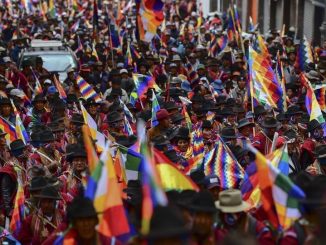
Take Bolivia. In national elections on Oct. 20, President Evo Morales, the country’s first Indigenous president and leader of the Movement Toward Socialism, who has overseen vast social programs to reduce poverty, provide health care and eliminate illiteracy, was re-elected with over 46 percent of the vote. He scored more than 10 points above his nearest opponent, right-winger Carlos Mesa, ruling out the need for a second round of voting. But even before the first vote was cast, the right-wing opposition had declared it would not recognize the results if Morales won. 

And sure enough, violent opposition protests broke out in at least nine Bolivian cities after the results were announced. Vote counting centers were burned. While international election observers said the vote was free and fair, the U.S. State Department dutifully declared the results in doubt and Western media claimed Bolivia’s democracy was endangered by Morales’ re-election.

The litmus test: U.S. imperialism

In moments like this, it is important for workers and oppressed people, students and youth here in the U.S. to be able to distinguish friend from foe. Not every protest is good, and not every government is bad.  

What decides is the class criterion. Does a movement strive to represent the interests of the working class, peasant farmers and all the exploited sectors of society for social justice, independence and equality? Or does it represent the interests of the wealthy and privileged sectors of society and of the imperialist powers seeking to continue their domination?

In the case of today’s class battles raging in Latin America, there is an easy litmus test: where does the protest movement or government stand in relation to U.S. imperialism? Is it struggling to lift the boot of Washington off the people’s necks, or seeking to give Trump & Co. free reign? 

For several years, the U.S. imperialists and South American oligarchs have been trying to roll back the social gains and moves toward independence won by the people during the years of the “red tide” of the early 2000s, inspired by the advances of the Bolivarian Revolution in Venezuela under Hugo Chávez as well as socialist Cuba’s tenacious will to survive. 

But enough rollback is enough. Now the people are fighting back. Students and teachers in Colombia are defying repression to challenge tuition hikes and unchecked assassinations of movement leaders and community activists. Peruvian workers pushed back a coup attempt by the ultraright in Congress. Powerful class forces are testing their strength. Workers, farmers, Indigenous communities and students are learning valuable lessons every day in the streets. 

Here in the U.S., we must come down unambiguously and firmly on the side of the workers and oppressed of South America. Our job is to tie the hands of U.S. imperialism by building the movement of solidarity, against sanctions and war, by educating our class, our communities and co-workers about the reality of developments in Latin America and the Caribbean, to make it too dangerous for the U.S. bankers and bosses and their political stooges to impose their will.

Victory to the popular uprisings in Chile and Ecuador!

Solidarity with the peoples’ movements in Brazil, Colombia and Peru!

Long live the popular governments of Bolivia and Venezuela!

In the words of Comandante Che Guevara: ¡Hasta la victoria siempre!

Strugglelalucha256


‘Solidarity with the struggle for a more just Chile’

Statement on the situation in Chile

The Network of Intellectuals, Artists and Social Movements in Defense of Humanity expresses its solidarity with the people of Chile, its high school students and workers, in the exercise of their legitimate right to social protest and civil disobedience in the face of an increasingly delegitimized democracy and an extremely unequal society.

What has developed during the last few days in the city of Santiago, as a consequence of the rise in the price of public transportation, adds up to the rejection of a series of measures that make the life of the people of Chile more expensive while at the same time benefiting the private companies that control the resources and basic services in that country.

We denounce before the international community, the human rights organizations and the fraternal people of Chile, the criminalization of social protest that the government of Sebastián Piñera has undertaken, especially against children and youth who have taken part in the protests in the last few days, and who for that reason were labeled as “violent,” “vandals” and “delinquents,” who have been persecuted and brutally repressed, and we declare that these facts constitute serious violations of human rights.

Similarly, we strongly condemn the shameful measures taken by the government, which include the decree of a state of emergency resulting in the restriction of the right of assembly and free movement, measures that are characteristic of a dictatorship and that far from resolving the complex situation actually aggravate it.

There is strong support from the government to maintain the neoliberal model at all costs, part of a framework and a strategy that seeks to impose that model on a continental level, which leads to restricting the rights of the people, and then calls for a supposed dialogue without addressing any of the problems.

Finally, we call on intellectuals, artists and honest people of the world to demonstrate and condemn the crisis in Chile, while reiterating our support for the popular protests and our full solidarity with the social struggles to achieve a more just Chile for all.

Secretariat of the Network in Defense of Humanity

October 19, 2019

Strugglelalucha256


‘Solidaridad con la lucha por lograr un Chile más justo’

Declaración por la situación que se vive en Chile

La Red de Intelectuales, Artistas y Movimientos Sociales en Defensa de la Humanidad manifiesta su solidaridad con el pueblo de Chile, con sus estudiantes secundarios, y los trabajadores y trabajadoras en el ejercicio de su legítimo derecho a la protesta social y la desobediencia civil frente a una democracia cada vez más deslegitimada y una sociedad extremadamente desigual.

Lo expresado durante los últimos días en la ciudad de Santiago, como consecuencia del alza del precio del transporte, se suma al rechazo de una serie de medidas que encarecen la vida del pueblo de Chile al tiempo que benefician en ganancia a las empresas privadas que controlan la provisión de los servicios básicos en ese país.

Denunciamos ante la comunidad internacional, los organismos de Derechos Humanos y los pueblos hermanos, la criminalización a la protesta social que ha emprendido el gobierno de Sebastián Piñera, especialmente contra los niños, niñas y adolescentes que han protagonizado las protestas de los últimos días y que por eso fueron catalogados como “violentistas”, “vándalos” y “delincuentes”, los cuales han sido perseguidos y reprimidos con brutalidad. Denunciamos que estos hechos constituyen graves violaciones a los derechos humanos.

De igual forma, condenamos enérgicamente las vergonzosas medidas tomadas por el gobierno, que incluyen haber decretado el estado de emergencia y la consecuente restricción del derecho de reunión y de libre locomoción, medidas propias de una dictadura, y que lejos de resolver la compleja situación, la acentúan.

Se constata una defensa férrea del modelo neoliberal a ultranza, en el marco de una estrategia que pretende imponer un modelo a nivel continental, que lleva a restringir los derechos del pueblo, y posteriormente se hace un llamado a un supuesto diálogo sin retroceder en las alzas.

Finalmente, hacemos un llamado a intelectuales, artistas y hombres y mujeres honestos del mundo a manifestarse y condenar la crisis en Chile, al tiempo que reiteramos nuestro respaldo a la protesta ciudadana y nuestra completa solidaridad con las luchas sociales por alcanzar un Chile más justo para todos y todas.

Secretaría de la Red en Defensa de la Humanidad

19 de octubre de 2019

Strugglelalucha256


Chileans defy curfew, state of emergency and continue their resistance

On Monday, tens of thousands of people took part in a massive national strike against the repression of protesters by the government and economic policies that have brought hardship to millions.

On Monday October 21, thousands of Chileans mobilized in different parts of the country as part of a national strike. Social movements, trade unions, students, teachers, women and human rights’ organizations called for the strike to reject the neoliberal policies of the right-wing government of Sebastian Piñera and the heavy police repression of social protests during the weekend.

Chileans are also demanding that the government immediately withdraw the state of emergency declared in different regions of the country. This measure has allowed the government to deploy the military in several cities across the country to fulfill the role of the police. Social movements and organizations have pointed out that the military has not patrolled the streets of Chile since the last civic-military dictatorship under Augusto Pinochet. For the past several nights, curfew has been in place in several cities in Chile, including Santiago, Coquimbo, La Serena, Valparaíso, Rancagua and Concepción, restricting the mobility and liberties of residents.

The levels of repression against protesters in the past couple of days have been unprecedented. Reports by human rights organizations on the ground indicate that over 10 protesters have been killed, over 1,500 people detained and hundreds injured. There have also been reports of plainclothes police officers detaining protesters and dragging them into non-official vehicles. Several protesters have been tortured and even sexually abused.

People resist! Photo: Frente Fotográfico

On Sunday night, Sebastian Piñera gave a press conference where he responded to the current social, political and economic crisis occurring in the country, as well as criticism about the heavy-handed response to protesters. He declared “We are at war with a powerful, relentless enemy that does not respect anything, or anyone, and that is willing to use violence and crime without limits.”

Despite the climate of heavy repression, militarization and criminalization, Monday’s national strike saw massive participation from broad sectors of Chilean society. In addition to youth and students, several important trade unions pledged their support to and participated in the strike.

The Trade Union of Dock Workers of Valparaíso released a communique on Saturday, pledging their support to the national strike and denouncing the government’s economic policies and repression. The communique said, “If it is true that today, the central motive of the social protest is the hike in the value of the metro fare in the capital, we must also underscore that this accumulated rage today is expressed by the rejection of the endless social, economic, and labor injustices that affect the working people. The union said that it considered the deeper problem to be the economic model of development which forces the working class to survive on miserable salaries and pensions, struggle with illnesses and poor social security cover and deal with exorbitant transport costs.

The union declared, “We want the political class to understand that all of us are Chile and that the solution to these injustices requires the transformation of the entire model.”

The Trade Union Number 1 of Workers of the Escondida Mine also joined the strike. Their statement said, “We cannot continue working and allow these powerful companies to function as if nothing happened, knowing that they are colluding with this government that is attacking and oppressing us. We cannot not stop our activities, because history will condemn us as cowards and accomplices of these attacks on the working class..We cannot not stop our work because we will not be capable of looking at our families in the eye, especially our children that today are in the struggle, without feeling that we did not do anything to support them and defend them.”

They called on their fellow mine workers “to stop work…to stop all of the mining in Chile along with other productive sectors until the military forces and oppressors in the streets retreat and until the government authorities are willing to sit down for dialogue on equal terms with the people who demand and fight for equality, justice, opportunities, work and a dignified life for our people.”

The recent wave of protests in Chile was sparked by the government ‘s decision to increase the cost of public transportation services in the capital. On October 11, high school students began refusing to buy metro tickets en masse and jumped the turnstiles to protest the hike.

The protests transformed into a demonstration against the neoliberal model imposed in the country since Augusto Pinochet’s dictatorship. It expanded and soon included different sectors of the Chilean society. On October 18, a massive demonstration was carried out in the capital city, Santiago, and was violently repressed by the national police force, the Carabineros. Following the mobilization, Piñera declared a state of emergency in Santiago in order to suppress the popular indignation.

The social movements of ALBA also expressed its support and solidarity with the people of Chile in their fight against neoliberalism and denounced the state’s repression of social protests. “We denounce the authoritarianism of Piñera’s government and demand an end to the State of Emergency. No more repression and arbitrary detentions. We embrace and join in solidarity from all over Our America in support of the general strike this Monday, October 21,” said ALBA in an official statement.

In Buenos Aires, Argentina, Chilean activists, as well as Argentine social movements and organizations, mobilized outside the Chilean embassy to denounce the brutal repression of the government and stand in solidarity with the dignified struggle of the people. Their mobilization was met with heavy repression by the Argentine police and several people were arrested.

Chile is the country with the highest numbers of free trade agreements in the world. Chileans are tired of the austerity and anti-people policies introduced by Pinochet and intensified by Piñera. They are determined to fight against the capitalist government, inspired by the recent struggle carried out by the people of Ecuador and their subsequent victory.

Source: Peoples Dispatch

Strugglelalucha256


Ecuador’s people have a won a victory but government repression continues

Following 12 days of massive protests, the government of Lenín Moreno repealed Decree 883 which formalized neoliberal reforms. At the same time, it launched a crackdown on political opponents.

On October 13, the people of Ecuador won a major victory when the government of Lenin Moreno was forced to withdraw the deeply unpopular package of neoliberal reforms. Hundreds of thousands, led by the Indigenous people of the country, had taken part in mass protests for over 10 days against Decree 883 which formalized these reforms. While the people won this round, the larger struggle against the government continues. Shortly after making the concession, the government arrested members of former president Rafael Correa’s political movement, indicating that it had no intention of ceasing its repression.

The withdrawal of the decree took place during talks between representatives of Indigenous movements and organizations and the government team, which included Moreno himself. Decree 883 removed subsidies on fuel, leading to massive price rises, and anti-labor measures. It was imposed as part of a USD 4.2 billion agreement with the International Monetary Fund.

The negotiations between the organizations and the government were broadcast live though only 16 journalists and media organizations were allowed to participate. In the opening address, Moreno announced that Decree 883 would be repealed and a new one would be formulated after further discussions.

At the discussions, Jaime Vargas, the president of CONAIE (Confederation of Indigenous Nationalities of Ecuador), spoke representing Ecuador’s Indigenous nationalities and peoples. “I am indignant for everything that has happened and it hurts my heart,” stated Vargas. He later said that during the protests, 10 people were killed, 2,000 were injured and over 1,000 were detained (official government statistics say that 7 people were killed).

According to the president of CONAIE Jaime Vargas, 2,000 were injured in the 12 days of protest.
The violent repression of the protests was unprecedented. The deployment of the Armed Forces was facilitated through the State of Emergency declared by Moreno on October 3.

Vargas also highlighted the importance of solidarity and and hailed the participation of social movements, the youth and people of Quito who welcomed, supported and fought besides the Indigenous movements for 12 days.

He said that Decree 883 hurt “the most impoverished of the population because their costs for basic needs and transportation increase…it does not generate any social benefit.” He later added that these actions taken by the government show that the right-wing and the International Monetary Fund are administering the country.

Jaime Vargas is the president of CONAIE and spoke in the dialogue with the government on October 13

He also warned the government, “We are not going to negotiate dignity. We will not negotiate our martyrs. We hope that today we will find a definitive and lasting solution, and if this is not achieved, we will continue, firm and united and with the unrelenting commitment of defending our people and we are ready to make all of the possible sacrifices. And if that means giving our lives, we will do it.”

These words are significant in light of Lenin Moreno’s attempts earlier to divide the masses who had taken part in the protests. Moreno claimed that he has “always respected Indigenous people” and “treated them with care” but then went on to say that the rest of the people protesting are violent and bad, those that “created chaos and an apocalyptic situation”. Moreno even resorted to the tired tropes of accusing the ‘violent’ protesters of having links to drug trafficking, being foreigners and employing tactics used by guerrilla groups in Colombia. He also reiterated the claim that they were instigated by Rafael Correa and his followers.

The distinction between protesters, was of course refuted by Vargas who highlighted the unity of those on the streets, as well as the righteous indignation of the people in Ecuador. The brutal repression of the Indigenous movements by the police and military is further evidence that Moreno both does not respect and treat Indigenous people and their demands with care, and that all protesters faced the same violence from the repressive forces.

Moreno’s words were followed by a wave of detentions on October 14 of key leaders and activists who are being accused of causing “violent episodes” during the protests. Many of them face serious charges.

On Monday morning, the attorney general of Ecuador announced on Twitter that after ‘investigations,’ three individuals – Paola Pabón, Christian González and Pablo D – had been detained. It is no accident that those who were arrested are active in the Citizen Revolution (a political project started by Rafael Correa) and two of them were members of his government.

Paola Pabón is the current prefect of the Pichincha province and served in the government of Correa. She said she was detained early in the morning on October 14 after an illegal raid was conducted in her home: “Today, they entered my house at dawn and knocked down the door while I was sleeping. They arrested me without any proof. To be from the opposition in a democracy cannot be a crime. It is not democracy when members of the political opposition are persecuted in this way.” She is accused of being one of the instigators of the protests against the package of neoliberal economic measures.

Christian González, a militant with the social organization Bulla Zurda, was also detained without any evidence on charges of  “rebellion,” according to Ecuadorian activists. González served as the sub-secretary of movements, organizations, and social and political actors in the government of Correa. Pablo Lastra, who was also arrested, is a member of Bulla Zurda.

The platform, Social Movements of ALBA, denounced the arrest of González in a communique, “[The arrest] is part of political persecution against members of the Citizen Revolution, and is a sign of an authoritarian and anti-democratic government. We hold Lenín Moreno responsible for the safety of this young person [Christian] and those detained for their political position.”

The state of emergency which was imposed on October 3, as well as the curfew, has been suspended.

Source: Peoples Dispatch

Strugglelalucha256
https://www.struggle-la-lucha.org/around-the-world/page/69/