New York protest condemns massacre in Philippines

SLL photo: Greg Butterfield

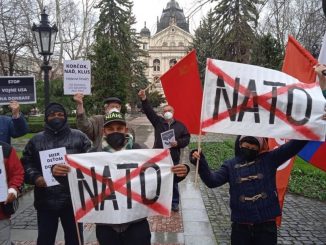
Chanting “Activism is not a crime!” and “Long live international solidarity!,” a rally outside the Philippine Consulate on New York’s swanky Fifth Avenue March 15 condemned the recent massacre dubbed Bloody Sunday. The action was called by BAYAN USA and the Malaya Movement.

Nine activists in Southern Tagalog were murdered by President Rodrigo Duterte’s regime on March 7. The rally began with the reading of their names and a minute of silence in their honor.

Nicole from Gabriela New Jersey, who participated in a delegation that lived and worked with Lumad peasants resisting corporate and government repression, declared: “It is our duty to continue their struggle, to amplify their voices.” 

She led the crowd in chanting, “Oust Duterte now!”

People spoke representing overseas national democratic organizations of the Philippines. Several U.S.-based groups gave solidarity statements, including the Teamsters union.

“On March 5, Duterte was quoted saying ‘kill them all’ and ‘disregard human rights,’” said a statement from the protest organizers. “This was an order to the Philippine National Police and the Armed Forces of the Philippines to kill ‘communist terrorist groups,’ a term the Duterte government uses to label all critics, cause-oriented groups and human rights defenders.

“On March 6, Philippine Ambassador to the United States confirmed that the Philippines will be receiving additional aid from the U.S. government. By the next day, the Philippine National Police and the Armed Forces of the Philippines launched a synchronized raid across the Cavite, Laguna, Batangas and Rizal leaving nine activists dead and six arrested.”

One of the chants at the rally was, “From Palestine to the Philippines, stop the U.S. war machine!”

This U.S. military, political and economic support for the Philippine government continues regardless of whether Democrats or Republicans occupy the White House. The Visiting Forces Agreement ensures a continuing Pentagon occupation of the archipelago.

In February, Reuters reported that the Philippines received $3.9 billion in “counter-terrorism” support since 2002, including $689 million in military hardware. U.S. “aid” is exclusively used to suppress the movements of workers, peasants, Indigenous peoples, women and students fighting for their rights and for the country’s independence from U.S. domination.

This bloody money, paid from the taxes of U.S. workers, is meant to ensure that Wall Street can continue to extract super-profits from the Philippines and exploit the millions of workers who are part of the Filipinx diaspora. 

Last year, migrant nurses from the Philippines and Filipina-American nurses born in the U.S. had the highest incidence of death from COVID-19 of all U.S. healthcare workers, as they are often on the frontline of hospital emergency rooms.

Justice for the victims of Bloody Sunday! U.S. out of the Philippines!

Strugglelalucha256


Militarization of Colombia is a key aspect of U.S. hemispheric control

Colombia has historically been of great importance as an ally of the United States. It could perhaps even be said that it has been the empire’s most constant and unfaltering ally in the region since at least World War II.

Today, under President Biden, Colombia is still of great importance for the U.S. and its geopolitical goals of hemispheric control. Colombia is part of the large SOUTHCOM (United States Southern Command) area of control. The country’s abundance of natural resources and cheap labor, proximity to the Panama Canal and Venezuela, and its access to both the Atlantic and Pacific oceans make it a key partner in the region.

Consequently, 11.6 billion U.S. dollars have been poured into the country since the start of Plan Colombia in the year 2000, with the majority of that money going to the military forces. In the beginning stages of Plan Colombia, the country was the highest recipient of U.S. military and police assistance in the world aside from Egypt and Israel; receiving more military aid than all of Latin America and the Caribbean combined.

This trend continues in 2021 as Colombia is still the largest military aid recipient in all of Latin America and the Caribbean.

Biden has long been involved in Colombian affairs. As a senator, he championed a hard line strategy for Plan Colombia, advocating the militarization of the country in order to strengthen “counternarcotic” strategies. The importance of the country in U.S. hemispheric control has made it so that any “concern” of the human rights violations by the military be ignored.

Billions of dollars have been poured into a military that committed over 6,402 extrajudicial executions from 2002 to 2008, not to mention the complicity between the military and paramilitary death squads that committed massacres and forced displacements all over the nation during this time.

Although the “original goal” of Plan Colombia was to eradicate cocaine production and its exportation, after 21 years and billions of dollars, the plan has miserably failed. However, the underlying goal of geopolitical control of the country is on track. Human rights defenders, peace advocates, ex-guerrilla combatants demobilized with the peace deal, union leaders, anti-capitalist leaders, and many more seeking a radical change in the nation are currently being killed, quelling any dissent that may lead to a change in the status quo.

One must not forget that it was the U.S. government that recommended the creation of paramilitary forces in Colombia in 1962 after a U.S. Army Warfare Special team visited the country. The explicit goal of the paramilitaries was to “carry out sabotage and terrorist attacks against communist proponents” – which in the language of the Cold War meant anyone challenging U.S. hegemony. The plan also called for training civilians in military tactics to be used in clandestine operations. Since that time, it has been clear to the U.S. government that hemispheric control means keeping Colombia in line.

In today’s political climate, given the proximity to Venezuela, a militarized Colombia is of key importance to the imperialist goals of the United States. The newly created “elite military force” of 7,000 members, the Command against Drug Trafficking and Transnational Threats (CONAT), can only be interpreted as another project to cement hemispheric control for the North. It is of utmost importance for the U.S. and its imperialist goals to keep Colombia in its back pocket if they are to keep control of the region.

Given these factors, the Biden administration will not signify any positive change for Colombia. In an article written for El Tiempo he stated that relations between the U.S. and Colombia during his presidency would bring “prosperity and security”. However, what they will bring is more militarization, greater hemispheric control by the U.S., and a deeper dependency of Colombia to the Northern empire.

Source: Resumen

Strugglelalucha256


Haiti: A day in the life of fighting dictatorship and neocolonialism

The day begins the night before. The cadre of hope dodge sleep and the police. Under the cover of night and the ancestors, they spray-paint the walls of Port-au-Prince to encourage communities to unite and rise up: “Aba enperyalis, Aba Jovenel!” (Down with imperialism! Down with Jovenel.) “PHTK, Bann volè.” (The PHTK – Haitian Bald Headed Party – is a bunch of thieves.) “Kote kòb PetroCaribe?” (Where is the PetroCaribe money?)

The young writers of the People, Poetry, Revolution collective go deeper, emblazoning the walls of alleyways and main boulevards with short poems. “Powèt, ekri chante k ap ede nou rete debou sou miray lavi sa k ap disparèt.” (Poets, write songs, which help us to stay standing up, on this wall of life which is disappearing.) That poem was spray-painted in black by its author Ricardo Boucher on an alleyway wall in the hilltop Port-au-Prince shantytown of Fort National.

It is Sun., Feb. 28 or Sun., Mar. 7. Sundays are when the showdowns take place between David versus Goliath, the most forgotten versus the empire. There are national mobilizations against the emerging dictator Jovenel Moïse, whose constitutional mandate (if he ever had one) ended three weeks ago on Feb. 7.

As the indefatigable sun rises over Port-au-Prince, families boil akasan (cornmeal) and chokola cho (hot chocolate) in massive pots. They dip their fresh bread into the delicious, scalding, sweet concoctions, focused on the long day ahead.

This is a family affair. They gather in the alleyways (koridò) to make hundreds of signs. “Sison + La Lime = Corruption in Haiti” says one, referring to U.S. Ambassador Michele Sison and Helen La Lime, head of United Nations Integrated Office in Haiti (BINUH). “Hands off Haiti’s Democracy,” says another. Haitians are polyglots. They know who the enemy is, and they speak directly to them. “U.S., UN and OAS: Hands Off Haiti” and “Haiti Can’t Breathe” say two others. The battle of ideas plays out in Port-au-Prince in many languages because Haitians know what many of us perhaps do not: this is an international and anti-imperialist struggle.

This latest democratic struggle is now in its fourth decade. “AYITI PA POU VANN NI AN GWO NI AN DETAY” (Haiti is not for sale, either wholesale or retail) is a slogan often written and chanted since Jean-Claude “Baby Doc” Duvalier fled Haiti on Feb. 7, 1986, the date marking the start of this historical chapter. It is a slogan again today.

At 11 a.m., the protestors start to gather on the Champs de Mars, the capital’s main square. The mobilization’s leaders make their rounds, pumping up the people. The march takes form.

They soak tires in gasoline, and, wufff , the lines are drawn, and the march is off.

Young men take a shot of Barbancourt rum to stave off hunger. There is no fear or anxiety to stave off. No such luxuries. This is a people born into struggle.

The rolling mass picks up momentum and members as they go. Suddenly 1,000 is 5,000. As they roll down Avenue John Brown (it’s telling that Haiti’s most important thoroughfare is named after the militant abolitionist), there are now tens of thousands. The crowd swells and blankets dozens of city blocks.

Delmas is a crucial intersection. South spells trouble where paramilitary kidnapping gangs battle social movements for hegemony. North is the move.

Will this be the day that chodyè chavire (the pot spills over) and the masses again overthrow a petty, second-rate, foreign-sponsored tyrant like they did in 1986?

The police are more careful with mass marches. They are far outnumbered. The neocolonial boomerang can swing back around.

At Delmas 32, the police make their move and attack the front of the march. Tear gas and plastic bullets send everyone sprinting for cover. Stampedes threaten to leave some behind but a helpful hand scoops them back up. Men anpil, chay pa lou. (Many hands lighten the load.)

Who is covering the story? History is in motion. Where is the BBC? CNN? The New York Times?

“This is not Hong Kong or Taiwan,” one marcher reminds us. “We are a neocolony,” chimes in another.

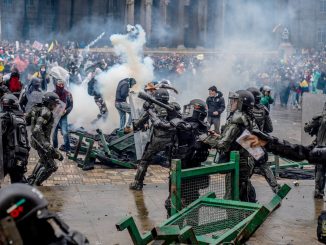
The Haitian National Police do not discriminate. They pounce upon massive marches or smaller youth-led marches. Their job is to discourage, disrupt, disburse, and dismantle. Tear gas, bullets. The masses are in retreat. Depending on the angles and specific terrain, the bravest throw back the tear gas, rocks, and whatever other makeshift weapons the streets provide.

This is when it gets dangerous. The policemen’s faces are covered and not because they fear COVID. They display no badge numbers nor license plates. They attack without fear, with impunity.

The united march has now scattered in different directions. Contingents play cat-and-mouse with the police trying to outmaneuver them. Anti-imperialist organizations whisk away their top leadership. It is too easy for them to be kidnapped or assassinated. The cadre of hope must live to fight another day.

At 4:30 p.m., a young 25-year-old community leader, Jean Réné “Chata” Laporte, is shot with a bullet. His comrades encircle him and evacuate him to safety. They rush him to the hospital but are careful lest the police take a second shot at him.

The popular organizations reassemble in their neighborhoods. Here they are safe. The police and kidnappers do not run these alleyways. The popular educators check in on one another. Who is injured? Who is caring for Chata? At 7 p.m., they debrief. They debate. They plan. They yell. The passion of centuries of resistance fills the humid air. “Who was responsible for the security breach?” asks someone. “We can’t afford any more dead.”

The struggle against dictatorship and neocolonialism continues…

Danny Shaw, a CUNY professor, slept, ate, and marched with militants from the Fort National neighborhood’s popular organization MOLEGHAF in late February and early March. He tweeted his experiences and reflections at @dannyshawcuny.

Source: Haiti Liberté

Strugglelalucha256


Condemn spate of state terrorist crimes in Southern Tagalog and Bicol regions in the Philippines

The Communist Party of the Philippines and all revolutionary forces condemn in the strongest terms the spate of extrajudicial killings and arrests carried out by the Armed Forces of the Philippines (AFP) and Philippine National Police (PNP) across the Southern Tagalog and Bicol regions. At least 11 people, mostly peasant activists, have been murdered in cold blood by police and military forces since March 1.

Early morning today, at least six activists and prominent leaders of the mass movement were killed and nine others arrested in operations carried out by police and military forces against various democratic mass organizations in Southern Tagalog.

These coordinated attacks in Southern Tagalog come at the heels of successive and coordinated murders by military and police forces in Camarines Norte and Camarines Sur provinces in the Bicol region since March 1 where at least five were killed.

The CPP holds Rodrigo Duterte himself, and his minions in the Armed Forces of the Philippines (AFP) and Philippine National Police (PNP) for these fascist crimes. We single out Gen. Antonio Parlade, commander of the Southern Luzon Command (SolCom), as among the key masterminds behind these crimes. Gen. Parlade has repeatedly red-tagged and threatened various mass organizations.

The murders and mass arrest of activists mark a heightening of the Duterte tyrannical regime’s dirty war against all patriotic and democratic forces in Southern Tagalog, Bicol and across the country. It follows the pattern of coordinated attacks carried out by the military and police against legal mass organizations in Panay, Negros, NCR, NEM, and other regions over the past years.

These attacks confirm that Duterte is the number one terrorist in the country today. He employs the armed forces and police to instill fear among the people in the hope of making them bow to his power. In killing unarmed people, Duterte continues to prove himself a big fascist coward.

The brutal crackdown confirms that the country is under undeclared martial law, after the enactment of the Anti-Terror Law. The attacks are clearly a frenzied response to Duterte’s marching orders two days ago where he told the AFP and PNP to “forget about human rights” and ordered them to “kill, kill, kill” members of the New People’s Army (NPA). Duterte’s counterinsurgency drive, however, continues to expand its scope targetting the peasants masses and legal democratic forces in the cities. To justify the extrajudicial killings, the military and police have resorted to their trite claims that the victims were armed and that they “fought back.”

In his desperation to silence the people and perpetuate his oppressive political dynasty of corruption, fascism and national treachery, more and more attacks are likely to be carried out soon.

We call on the Filipino people to manifest their indignation and protest these atrocious crimes of state terrorism and gross violations of human rights. We urge the friends of the Filipino people abroad to condemn and help expose the brutal attacks and the Duterte regime’s growing list of fascist crimes.

The New People’s Army (NPA) must mobilize its units to help secure the people being persecuted and hunted down by the fascist regime. Targets of Duterte’s state terrorism can be absorbed by NPA units or provided safe haven within the NPA’s guerrilla base areas. NPA commands must take the initiative to carry out tactical offensives to punish the perpetrators and masterminds of these crimes.

Marco Valbuena is the Chief Information Officer of the Communist Party Of The Philippines

Source: Philippine Revolution Web Central

Strugglelalucha256


How India’s farmers’ protests could upend the political landscape

For the past three months, Indian farmers and agricultural workers have been in the middle of a difficult struggle against the government of Prime Minister Narendra Modi. Tens of thousands of them have gathered around the capital city of New Delhi; they say that they will not disband unless the government repeals three laws that negatively impact their ability to remain economically viable. The government has shown no sign that it will withdraw these laws, which provide immense advantages to the large corporate houses that are close to Prime Minister Modi. The government’s attempt to crack down on the farmers and agricultural workers has altered the mood in the country: those who grow the food for the country are hard to depict as “terrorists” and as “anti-national.”

Modi’s party — the Bharatiya Janata Party (BJP) — currently holds power in several of the states that border Delhi. It is from these states — Haryana and Uttar Pradesh — that many of the farmers have gathered, although they have also come from far afield, from Bihar and Maharashtra (they have also come from Punjab, which is governed by the Congress Party). Even if there are some shifts in the political calculations in these states, particularly Uttar Pradesh (population 200 million), these will not be tested at the ballot box for some years to come: Punjab and Uttar Pradesh do not go to the polls until 2022, and Haryana will elect its legislative assembly in 2024 when the Indian parliament will face a general election. Modi is safe for the next three years, an eternity in contemporary political life.

Little wonder that he has not felt the need to make any concession to the farmers and that he has turned to the full arsenal of intimidation and violence to fragment the unity of the farmers. This intimidation includes a general attack on those branches of the media that have favorably reported the protest (Newsclick, a news portal, faces a bewildering investigation because—as is widely acknowledged—it had amplified the views of the protesting farmers).

State Elections

Over the next few months, assembly elections will take place in one union territory (Puducherry) and four states in India: Assam, Kerala, Tamil Nadu and West Bengal. To put this into perspective, the populations in these four states total 225 million, by itself the fifth-largest country in the world behind Indonesia. That the democratic fate of so many people will be decided by May 2 and that these elections get so little attention outside India tells one a great deal about the Eurocentrism of our global media (certainly the result of the national election in Germany—with a population of 83 million—will be far more consequential than these five regional elections in India, but nonetheless the lack of any interest should not be shrugged at).

The prime minister’s extreme right party, the BJP, is in power in only one of these states, Assam (population 31 million). It is likely that the BJP will retain hold of that state, although there is tension around the highly unpopular Citizenship Amendment Act (CAA) pushed by the BJP in 2019. In a triangular contest, the BJP and its allies will face on the one side a grand alliance of the center-right Congress Party and its Left and regional allies; and on the other side, newly formed anti-CAA parties (the Assam Jatiya Parishad and the Raijor Dal). Fragmentation of the anti-BJP vote could very well be decisive for its re-election, a point made by the Congress Party, which has sought unsuccessfully to bring in the new parties.

West Bengal (population 91 million), like Assam, will face a triangular contest between the ruling Trinamool Congress (TMC), the BJP, and a bloc of the Communists and the Congress. On February 28, 2021, more than a million people gathered at Kolkata’s Brigade Ground for a massive show of strength led by the Left and its allies against both the BJP and the TMC. The Left Front had been in power in West Bengal from 1977 to 2011, when it was ousted by the TMC. Since then, the TMC has gone in and out of alliance with the BJP in Delhi, and it has promoted corruption, cronyism and social despair. The power of BJP money and the projection of Prime Minister Modi as a charismatic figure have drawn key TMC leaders into the BJP. This is the first time that the Left and the Congress are going to the polls together. A recent ABP/C-Voter poll found that the TMC looks to be on track to hold the state government.

Regional parties such as the TMC are a familiar feature in India’s larger states. Here linguistic sub-nationalism provides the foundation for the local elites to drive their own agenda through such entities. In Tamil Nadu (population 68 million), the history of anti-Brahmin agitation led to the creation of a non-Brahmin party, which then fissured into several parties, two of which (AIADMK and DMK) remain the dominant forces in the state’s politics. The AIADMK, currently in power, is gripped most tightly by the regional elites and has an intimate relationship with the BJP even if there are some social divergences. The DMK, on the other hand, has been smart with its alliances, although it is dogged with accusations of nepotism. As in earlier elections, the DMK has made an alliance with the Left, which has deep pockets of support among the working class and the peasantry; anti-privatization fights, led by the Left, will help the alliance gain the support of workers in densely populated urban areas. Opinion polls suggest that the DMK-Left alliance will prevail in Tamil Nadu.

Kerala Flies the Red Flag

Since 1980, the electorate of Kerala (population 35 million) has not re-elected its state government, with power oscillating between the Left Democratic Front and the United Democratic Front. This year, the Left Democratic Front (LDF), which has been in office since 2016, looks set to break the pattern and return to power. There is widespread agreement that the LDF government — led by Chief Minister Pinarayi Vijayan — has fulfilled the promises of the communists’ 2016 manifesto; there is overwhelming clarity that the LDF administration has been efficient and rational. The LDF government confronted a series of cascading crises with calm competence: the aftereffects of Cyclone Ockhi in 2017, the Nipah virus outbreak of 2018, the floods of 2018 and 2019, and then the COVID-19 pandemic (Health Minister K.K. Shailaja was called the “Coronavirus Slayer” by the Guardian). Despite what seemed like a never-ending cycle of crises, the government pushed hard to strengthen public education and public health care, and to provide housing and food to the public.

No anti-incumbency was visible in the local body elections in 2020, when the young—largely female—candidates of the LDF triumphed. The LDF opened its 2021 campaign with a march to deepen development (Vikasana Munnetta Yatra) that began at the north and south ends of Kerala’s length. Development is the key theme—the promises that the LDF government has met include a major push to build basic infrastructure through the pro-people budgets of Finance Minister T.M. Thomas Isaac. The LDF record is strong, which is why it has entered the election campaign with the slogan “Urappaanu LDF” or “LDF for Sure.”

The return of the Left to government in Kerala would be significant, but it is not a bellwether of the Left’s overall strength in India. Nonetheless, the cycle of farmer agitations and the linkage with the main trade union federations suggests the possibility of the future growth of the progressive forces.

This article was produced by Globetrotter. Vijay Prashad is an Indian historian, editor and journalist. He is a writing fellow and chief correspondent at Globetrotter. He is the chief editor of LeftWord Books and the director of Tricontinental: Institute for Social Research. He is a senior non-resident fellow at Chongyang Institute for Financial Studies, Renmin University of China. He has written more than 20 books, including The Darker Nations and The Poorer Nations. His latest book is Washington Bullets, with an introduction by Evo Morales Ayma.

Strugglelalucha256


From the streets of Haiti: End the dictatorship of Jovenel Moïse

Paralleling the dictatorial aspirations of Trump, Haitian President Jovenel Moïse is attempting to hold onto office, a position that was stolen in the first place with the support and backing of the U.S. government. In 2016 with U.S. backing, Moïse took the office of president despite getting only 6% of the vote in the election. And, as protests swelled against that undemocratic placement of Moïse into office by the U.S., so now are they erupting in demands for his removal since his term in office has, by law, ended.

However, laws in and about Haiti — whether national or international — are irrelevant and cast aside for the will of imperialist interests. Especially in regards to the U.S. since its 1915 invasion and years of occupation of Haiti, which forced control of its economy and de facto control of its government into the hands of the U.S.

This denial of Haitian sovereignty continues under the Biden administration, since most imperialist foreign policies are consistent between Democratic and Republican administrations.

This interference by the U.S. and the ever worsening poverty and repression under President Moïse was again answered in the capital of Port-au-Prince on Feb. 14 with protests against the illegal hold on power that even the official institutions like the Haitian Bar Association and Superior Council of the Judicial Power cite as violations of the constitution and the 2015 Electoral Laws, according to a recent article in Haïti Liberté. 

2016 election fraud

Unlike the claims of a stolen election by Trump from his white supremacist, anti-science, anti-fact supporters, the claims of election fraud in 2016 that put Moïse into power, were echoed by all of the contending candidates, citing the elimination of ballots and disenfranchised voters, with only 21% of eligible voters being counted.

Although, for the most part, the mainstream media did not question the results of those elections, the Wall Street Journal had to admit a peculiarity in the low numbers of voter participation where voter turnout was just 21% with a large percentage of ballots being discarded for supposed irregularities. The Journal quotes a Haiti expert in Washington: “The real story is the collapse of a functioning democratic system, where 80% of the electorate decided not to participate or was unable to participate,” said Jake Johnston, a Haiti expert with the Center for Economic and Policy Research in Washington, who noted that in 2000 and 2006, Haitian presidential election turnouts were around 70% and 56%, respectively.

“There is a general dissatisfaction with the political and economic elite in Haiti that makes people think, not only does my vote not matter, but it may not be counted either,” Johnston continued. 

This history of the Moïse administration has been one of increased violence by police and gangs associated with the police. In 2019, a massive demonstration erupted in response to the repression and worsening poverty. Those who spoke out against the deteriorating situation in Haiti, whether civilians or officials, were met with violence and kidnappings. This strategy by the Haitian government is repeating today.

Officials who have questioned Moïse’s refusal to step down have been arrested or pursued for arrest. Haïti Progrès reported that on Feb. 7, at least 23 people were rounded up in the early morning hours, including Supreme Court justices. Also the mayor of Port-au-Prince was forced to flee to the Dominican Republic, fearing for his life after a police raid of his home. 

The deadly force being used against protesters and journalists has increased significantly and its international visibility has become an embarrassment for the U.S., and the United Nations which has worked in concert with U.S. policy in Haiti.

Although the Biden administration had echoed unconditional support for Moïse, that visibility forced a tweet from Julie Chung, Assistant Secretary of State for Western Hemisphere Affairs, on Feb. 16:  “I am alarmed by recent authoritarian and undemocratic acts — from unilateral removals and appointments of Supreme Court judges to attacks against journalists. … Respect for democratic norms is vital and non-negotiable.” Of course this sentiment does not include the extremely blatant sabotage of democracy that occurred when the U.S. removed from office and kidnapped the democratically elected president of Haiti in 2004, Jean-Bertrand Aristide, who put fighting poverty and Haitian sovereignty and self-determination before any subservience to the U.S.

The violence has reached a point where it had to be taken up in a UN Security Council meeting, reported Haïti Progrès. There, French Ambassador Nathalie Briadhurst asked Moïse to address the issue of the gang leader Jimmy Cherizier, who has been cited in national and international reports and accused of numerous massacres, yet remains free. 

Add to the refusal of the Biden administration to discontinue U.S. military and financial support for Moïse with the fact that since Feb. 1 over 500 Haitians were deported by ICE. It is clear that this administration, like the Trump and Obama administrations, is all about the appearance of democracy while denying it for African peoples and any targets of U.S. imperialism’s drive for profits and hegemony.

The Haiti Action Committee, a San Francisco Bay Area-based network of activists who have supported the Haitian struggle for democracy since 1991, is demanding of the U.S. government:

  • End all support for the dictatorship of Jovenel Moïse
  • End all recognition of the government of Jovenel Moïse as of Feb. 7, 2021, as required by Haiti’s constitution
  • Stop all funding of the criminal Haitian police and security forces.


Strugglelalucha256


Pandemic may have left over 250 million people with acute food shortages in 2020

As Black and Latinx families experience disproportionate food insecurity, experts warn of famine in dozens of countries.

Beyond the questions surrounding the availability, effectiveness and safety of a vaccine, the COVID-19 pandemic has led us to question where our food is coming from and whether we will have enough. According to a United Nations World Food Program (WFP) report, COVID-19 might have left up to 265 million people with acute food shortages in 2020. The combined effect of the pandemic as well as the emerging global recession “could, without large-scale coordinated action, disrupt the functioning of food systems,” which would “result in consequences for health and nutrition of a severity and scale unseen for more than half a century,” states another UN report.

In the United States, “food insecurity has doubled overall, and tripled among households with children” due to the pandemic, states a June 2020 report by the Institute for Policy Research (IPR) at Northwestern University, which relied on data provided by the U.S. Census Bureau’s Household Pulse Survey. In a recent interview with CBS News, IPR Director Diane Whitmore Schanzenbach warned that these statistics would likely “continue to hold,” with the numbers indicating particularly dramatic rises in food insecurity among Black and Latinx families. Indeed, families of color are being disproportionately impacted. According to an analysis of new Census data by the Center on Budget and Policy Priorities (CBPP), 22 percent of Black and 21 percent of Latinx respondents reported not having enough to eat, compared to just 9 percent of white people.

Globally, the effects of COVID-19 on food security are equally, if not more, severe. According to a CBS News report, WFP Director David Beasley told the UN Security Council in April 2020 that the world is on “the brink of a hunger pandemic.” He added, “In a worst-case scenario, we could be looking at famine in about three dozen countries, and in fact, in 10 of these countries we already have more than one million people per country who are on the verge of starvation.”

“The number of chronically hungry people increased by an estimated 130 million last year, to more than 800 million—about eight times the total number of COVID-19 cases to date,” wrote Mark Lowcock, the under-secretary-general and emergency relief coordinator at the United Nations Office for the Coordination of Humanitarian Affairs (OCHA), and Axel van Trotsenburg, managing director of operations at the World Bank. “Countries affected by conflict and climate change are particularly vulnerable to food insecurity. Empty stomachs can stunt whole generations.”

The U.S. Department of Agriculture (USDA) warns that climate change “is likely to diminish continued progress on global food security through production disruptions that lead to local availability limitations and price increases, interrupted transport conduits, and diminished food safety.” The same might be said about the pandemic, which has made it abundantly clear: climate resilience, food security and global health are closely intertwined.

In terms of food security, another major concern is the pandemic-related school closures that have occurred across the globe, with UNICEF reporting that more than 1.6 billion children and young people have been affected. Schools provide a food lifeline for children; for so many, that is where they get their only nutritious meal of the day. In January, the UNICEF Office of Research—Innocenti, and WFP released a new report that found that more than 39 billion in-school meals have been missed worldwide since the pandemic began, with 370 million children worldwide having missed 40 percent of in-school meals.

In early 2020, when COVID-19 was still a looming specter rather than the deadly virus we’re more familiar with today, the threat of food insecurity was a practical problem. Scenes of shoppers descending on aisles to stock up on supplies were a common sight. As CNN reported in March 2020, supermarkets around the world rationed food and other products such as toilet paper and cleaning supplies, in an effort to curb stockpiling.

In Vermont, for instance, a steady increase in food insecurity since the start of the pandemic has correlated to employment levels, according to a survey conducted by the University of Vermont between March and April 2020. Approximately 45 percent of respondents “had lost their jobs, been furloughed or had their hours reduced during the pandemic,” and a further two-thirds of survey participants who recorded scarcity of food in their households “had experienced job losses or work disruptions since the outbreak of the pandemic,” according to the survey. Vermont is just one example; the impact has been felt across the U.S. During the week before Thanksgiving in 2020, the Guardian reported that 5.6 million U.S. households “struggled to put enough food on the table,” while referring to the analysis of the Census data by CBPP.

As the pandemic continues to upend lives across the world, it has impacted the entire food supply chain. With factory and supermarket workers being highly susceptible to COVID-19, there’s been a concomitant decline in food production and a rise in prices. As Scott Faber, senior vice president of government affairs at the Environmental Working Group (EWG), reported, farmers in the U.S. were already facing labor shortages prior to the pandemic, and with tightened immigration as well as the heightened risk and poor compensation associated with these jobs, “food processors and farm labor contractors may struggle to find other workers willing to risk their lives to work in meat plants, packing sheds or produce fields.”

The pandemic has exposed the weakness of the industrialized global food system, which depends on long, complex transportation chains and cross-border travel. “[T]he monstrous and unsustainable food industry known as Big Ag… relies on the horrendous treatment of laborers, a wasteful allocation of resources, worldwide environmental devastation—and in a pinch, can quickly devolve into near-collapse of the entire system, as evidenced by the delays, shortages and pressure during the COVID-19 pandemic, and the deepening hunger crisis in America,” April M. Short, a fellow at the Independent Media Institute, recently wrote in Salon. “Among the many necessary systemic changes 2020 has illuminated is the need to majorly restructure the way we cultivate and access food in our communities.”

It didn’t take the pandemic to reveal the inefficiency and injustice of our food system: globally, a third of all food is wasted, while nearly 690 million people were undernourished in 2019—almost 60 million more people than in 2014. But the pandemic has underscored the matter: According to OCHA, “the number of acutely food insecure people could increase to 270 million due to COVID-19, representing an 82 percent increase compared to the number of acutely food insecure people pre-COVID-19.”

And the disruption of transportation has shown that the long distances it normally takes for food to get from one place to another can be a serious liability during a crisis. “[F]ood banks are under tremendous pressure to meet the skyrocketing demand,” said a CNN article quoting from a letter Claire Babineaux-Fontenot, Feeding America CEO, and Zippy Duvall, president of the American Farm Bureau Federation, wrote to then-Agriculture Secretary Sonny Perdue in April 2020. “At the same time, however, we are seeing literally tons of agricultural goods being discarded because of the shutdown of so much of the economy.”

Consumer demand has shifted from eating out at restaurants and food services away from home, and food supply chain operations have had to be retooled. And that impact has been felt within the transportation sector. Forbes reported that Andrew Novakovic, an agricultural economist at Cornell University, “points to a number of weak spots in the food transportation system that could be aggravated by the increased demand for food.” A shortage of truck drivers is one potential weak spot, says Novakovic. Although he concedes there is debate on this matter, Novakovic maintains that “[t]rucking companies are finding it much harder to recruit [those] long haul drivers.” China, which was the first country to be hit by the virus, offers insight into the prolonged impact of the pandemic on transportation and food systems. The lockdown in the Hubei province of China, which is home to 66 million people, led to a shortage in delivery of animal feed as well as refrigerated containers full of imported vegetables, fruit and frozen meat in February 2020, according to an article in the Conversation.

In addition to shifting consumer demand, the pandemic has also made us take a closer look at where our food comes from and how it impacts not only the lives of food workers but also the lives of animals trapped in the food system. According to a new public opinion survey conducted by Lake Research Partners and commissioned by the animal rights group American Society for the Prevention of Cruelty to Animals, “[t]he vast majority (89 percent) of Americans are concerned about industrial animal agriculture, citing animal welfare, worker safety or public health risks as a concern.” The survey also found that “85 percent of farmers and their families support a complete ban on new industrial animal agriculture facilities—almost twice the level of support expressed by the general public.” This finding shows key support for the Farm System Reform Act, legislation that was introduced in 2019 by Democratic Senator Cory Booker of New Jersey that, among other reforms, seeks to put a moratorium on new or expanding factory farms.

Food insecurity has long been a pressing issue, particularly for developing countries. However, as Mir Ashrafun Nahar, a research associate at the South Asian Network on Economic Modeling, explained in a Financial Express article, “the COVID-19 pandemic has made it more acute.” In response, Nahar argues for a policy-based approach that includes “subsidy based transportation systems for agriculture” to support supply chains, as well as policies aimed at cutting down on agricultural production costs in order to help farmers recover from the effects of the pandemic.

With the pandemic still affecting food supply, though, there are a number of logical measures for reducing the impact of the virus and maximizing output. “First, OSHA [the Occupational Safety and Health Administration] and the USDA must be directed to issue emergency standards that require employers to provide personal protective equipment, enough space to work without spreading the virus, and housing and transportation options that will reduce the spread of the virus,” wrote Faber.

Proposed in April 2020, Faber’s suggestions, unfortunately, remained unaddressed under the Trump administration. Faber’s relief measures further include the expansion of USDA programs to purchase surplus commodities to offset supply chain disruption; redirecting food that might be destroyed toward food banks; and increasing the standard SNAP benefit (food stamps) by 15 percent. And, echoing Nahar, Faber also proposes adopting policies that will help to alleviate financial burdens faced by farmers and food suppliers, as well as offering subsidy support.

The Organization for Economic Cooperation and Development (OECD), an intergovernmental economic group with 37 member countries, said that the pandemic “has laid bare pre-existing gaps in social protection systems” in a report published in June 2020. “While the impacts of COVID-19 are still unfolding, experience so far shows the importance of an open and predictable international trade environment to ensure food can move to where it is needed,” the OECD report states. “The biggest risk for food security is not with food availability but with consumers’ access to food: safety nets are essential to avoid an increase in hunger and food insecurity.”

Another problem is the lack of media coverage about the food insecurity being witnessed around the world, particularly during the COVID-19 era. As the Economist recently pointed out, journalists in 2020 “wrote more than 50,000 articles about the canceled Eurovision song contest, but only around 2,000 about drought and hunger in Zambia.”

Fortunately, beyond the failings of a state-led response to the pandemic, some positives have emerged at a community level. With restaurants and supermarkets becoming less viable options, there has been a growth in demand and supply of local food. According to HuffPost, farmers have seen “a massive rise in demand for local produce.” The result of this trend is that consumers who are able to access local food are changing their behavior toward procurement and consumption of food permanently.

Things are changing on a federal level, too. In a recent article about how the U.S. food system could be transformed during the Biden administration, New York Times food correspondent Kim Severson noted that “[h]unger relief is a pressing issue” for Tom Vilsack, who has been confirmed by the Senate to become the agriculture secretary in Biden’s Cabinet, a job the former Iowa governor also held under the Obama administration. However, while Severson notes that Vilsack has his critics, President Biden has already made changes at the top, signing an executive order meant to deliver relief to families and businesses amid the COVID-19 crisis, including “expanding and extending federal nutrition assistance programs” to “[a]ddress the growing hunger crisis facing 29 million Americans.” His proposal to Congress includes a $3 billion package to “help women, infants and children get the food they need” and “access to nutritious food for millions of children missing meals due to school closures.”

For meaningful reform to the food system to occur, change is going to have to happen at every level: from federal, state and local governments, to Big Ag, small farmers and everyday consumers. With the future looking ever more uncertain due to the climate crisis—one of President Biden’s top priorities—adapting to new ways of producing and transporting food will be key to our survival.

This article first appeared on Truthout and was produced in partnership with Earth | Food | Life, a project of the Independent Media Institute.

Robin Scher is a writer based in South Africa. He is a graduate of the Cultural Reporting and Criticism program at New York University. Find him on Twitter @RobScherHimself.

Strugglelalucha256


Arab states’ massive arms deals tribute to U.S., Western firms: Anti-war activist

Saudi Arabia and its regional allies entered into massive weapons deals with the United States and European countries in order to pay their tribute to American and other Western financial institutions and corporations.

In an interview with Press TV on Tuesday, Bill Dores, a writer for Struggle-La Lucha and longtime anti-war activist, said the U.S. has long been trying to “keep that tribute flowing” through endless wars, covert operations as well as sanctions, since the 1953 coup d’état in Iran that overthrew the government of then prime minister Mohammad Mossadeq until the current humanitarian catastrophes in Yemen and Syria.

He said, “U.S. policy in the so-called Middle East is basically a giant protection racket, the biggest, most lucrative and most violent one in history. It has been going since 1945, when President Roosevelt met Saud King Abdulaziz aboard the USS Quincy [heavy cruiser].

“FDR (Franklin Delano Roosevelt) made the King an offer he couldn’t refuse: ‘We keep you on your throne, you pay us tribute.’ The U.S. in that case was the Rockefeller-controlled Standard Oil monopoly, which then owned the Kingdom’s oil,” he added.

Dores went on to say that the approach expanded to include all oil-rich kingdoms of the Arabian Peninsula, and included Iran as well following the 1953 CIA coup that restored the monarchical rule of Mohammad Reza Pahlavi.

“The racist regime of Israel, created in 1948 on the stolen land of Palestine, is crucial to the functioning of the racket. That’s why it gets an endless stream of arm and dollars from the United States,” the American political analyst pointed out.

Dores added that Western corporations owned and exploited energy resources in the Middle East region from the end of World War II until the 1970s, and that half of all the overseas profits of U.S. corporations came from Arab and Iranian oil in 1960.

Even though the deposed Shah of Iran was the U.S. arms industry’s biggest paying customer after the Pentagon, he said, Iranian officials canceled arms deals worth billions of dollars following the victory of the 1979 Islamic Revolution and Washington has placed Tehran on its sanctions list ever since.

“Countries which didn’t pay tribute – Iraq, Libya, Syria, Egypt under [Gamal Abdel] Nasser and Iran after the 1979 Revolution – became targets of the Pentagon, the CIA and Israel. Since the administration of Venezuela’s [late President Hugo] Chavez began using its oil wealth for the people, the U.S. has targeted that country as well,” Dores said.

The pundit then noted that the U.S. has been selling arms to Saudi Arabia and the United Arab Emirates for the past six years in order to “murder and starve the people of Yemen,” casting doubt on the purported intention of the administration of U.S. President Joe Biden to end the war on Yemen.

“It’s unclear what that actually means, since U.S. contractors are pretty crucial to Saudi military operations,” he said.

Dores then lashed out at the U.S. protection racket over its humanitarian cost, asking, “How many more people must die to keep this racket going, to keep the wealth of [Saudi] Arabia flowing to Wall Street?

“Politicians tell people in the U.S. that the weapons industry creates jobs. But what if all those factories were making medical equipment or trains or other things that people need. What if the trillions spent on war went to healthcare or housing or schools. No one would be homeless or jobless. The world could defeat COVID-19 and many more diseases. The world could defeat climate change,” Dores said.

Source: Press TV

Strugglelalucha256


Condemn the U.S.-Duterte regime’s fascist attack in Cebu Bakwit School! Free the detained Lumad students, teachers and elders now!

Revolutionary forces, especially from Lumad and peasant organizations, in Southern Mindanao strongly denounce the brazen and violent assault in the Lumad bakwit school inside the University of San Carlos Talamban campus in Cebu City by a retinue led by armed police on February 15. Police forces arrested and continue to detain 22 students, two teachers and two elders. We join the resounding call for their immediate and unconditional release and for the perpetrators of the attack to be held responsible.

Photos and video footages of the raid against unarmed civilians inside an academic compound, which the reactionary police ironically called a “rescue operation,” show in bitter detail the sheer use of gratuitous force, made more harrowing by the tormenting screams of children being dragged out of the classrooms that for almost a year became a safe refuge for them.

The assault on the sanctuary of Lumad students, their teachers and elders, under deceptive and outrightly malicious pretext is a brazen display of the Duterte regime’s impunity. Not merely a show of contempt for its own reactionary rule of law, the assault is evidently the Duterte regime in full flexing of fascist force, meant to send a chilling caution to those who dare defy it: we can do this with no fear of repercussion or accountability.

To be sure, the peasants and Lumad of Southern Mindanao are no longer surprised by this bold-faced act of terrorism perpetrated by armed state forces against children and the people who protect them. In UCCP Haran in Davao City where hundreds of Lumad were forced to seek refuge since 2016 when Duterte came to power, AFP and PNP forces, aided by bellicose reactionary officials like Nancy Catamco and Paolo Duterte, have tried multiple times to mount attacks against the Lumad’s sanctuary and force them to return to their ancestral domains despite relentless militarization and forced paramilitary conscription.

This vile attack only proves that under Duterte’s tyranny, neither children nor the academic institutions that seek to educate and protect them are safe from the fascism that beleaguer the entire country. Safety nets such as the UP-DND accord, however tenuous it may prove to be, must therefore be defended and advocated for the protection of schools and universities from the fascist abuses of the AFP and the PNP.

The Lumad of Southern Mindanao and the entire revolutionary movement express their gratitude to the religious and academic sectors that continue to support the struggle of the Lumad. We urge them to remain steadfast and stand for truth and justice, as it is only to be expected that the Duterte regime will heighten pressure against them to break their solidarity with the Lumad and their struggle.

However monstrous it may currently appear to be, the U.S.-Duterte regime’s counterinsurgency war being presently steered to hitherto unknown fascist heights by the NTF-ELCAC is in fact self-defeating. By relentlessly launching intense militarization which breeds killings, abductions, red-tagging, and other human rights violations alongside palliative and graft-laden “development programs” but all the while refusing to address the roots of the armed struggle, this rabid fascist dictatorship only ensures the steady deluge of warm bodies who unyieldingly mount all forms of resistance and the well of NPA recruits who continue to fight tyranny until it is thoroughly defeated.

Rubi del Mundo is the spokesperson of the NDF-Southern Mindanao, National Democratic Front of the Philippines

Source: Philippine Revolution Web Central

Strugglelalucha256


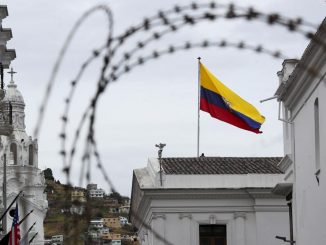
Lawfare threatens to derail presidential election In Ecuador

On February 7, the progressive presidential candidate for the Union of Hope Alliance (UNES) party, Andrés Arauz, won first place in Ecuador’s presidential election; this is uncontested. Arauz garnered 32.71% of the vote; right-wing former banker Guillermo Lasso 19.74%; and the “Indigenous” candidate, Yaku Pérez  19.38%. Since Arauz’s margin of victory was less than the required 40% plus at least ten points more than the closest competitor, a runoff is scheduled for April 11th. With the UN calling for transparency and Pérez contesting the outcome, Ecuador’s National Electoral Council (CNE) has agreed to conduct a partial recount to verify the second place contender.

This election will have enormous consequences for Ecuador as well as the entire region. After four years of President Lenin Moreno’s neoliberal turn, which reversed the economic and social gains of former President Rafael Correa’s Citizens’ Revolution, the majority of Ecuadorians have opted for a change of course. An Arauz victory would once again prioritize social investment over IMF imposed austerity and resume Ecuador’s leadership in the movement towards regional integration. If the ultra right in Ecuador and Colombia have their way, however, Arauz will not make it to the run-off election.

Just a week prior to the first round, with Arauz ahead in most polls, Ecuadorian President Lenin Moreno, who is a fierce opponent of the UNES candidate, met with the notoriously interventionist Secretary General of the OAS, Luis Almagro, in Washington. This meeting raised suspicions that efforts were underway to prevent a return of the Citizens’ Revolution in Ecuador.  On February 12th,  the Attorney General of Colombia, Francisco Barbosa arrived in Quito to meet with his Ecuadorian counterpart, Diana Salazar, armed with a dossier that allegedly shows the campaign of Arauz had received funding from the National Liberation Army (ELN) guerillas in Colombia. Although no independent corroboration of such charges have been presented to back these allegations, the echo chamber of right wing fake news is already urging election authorities in Ecuador to disqualify UNES in a bid to prevent Arauz from participating in the second round of the presidential election.

In his Facebook page, Arauz categorically denied this accusation: “I have no link with the ELN. This big lie has just one purpose, to prevent the Arauz-Rabascall ticket from participating in the second round.”

Prominent voices of the Americas have denounced these charges as fabrications designed to sabotage democratic procedures in Ecuador. Nobel Peace Prize Winner (1980), Adolfo Pérez Esquivel, tweeted: “They will not be able to fool the Ecuadorian people with judicial and media operations from the well known Lawfare manual. Democracy will prevail. Ecuador has suffered a great deal and needs a return to common sense. Our support for candidate Arauz.”

Former Colombian President Ernesto Samper, in response to an article published in the ultra-right wing Colombian magazine, Semana, alleging that Arauz had links to the ELN, wrote: “The people of Ecuador should be on the alert that the enemies of progressivism in our countries are intent on stopping by any means the transformations for which Latin America clamours.” In the face of criticism of the unsubstantiated charges made against Arauz in the article, the Director of Semana, Victoria Avila, remarked in an interview “I want to make it very clear. I do not want to say that this information is absolutely certain.”

The Puebla Group, which brings together several former presidents of the region, including the Brazilian Luiz Inácio Lula Da Silva, issued a statement in which it “categorically rejects the attempt to link Andrés Arauz with the National Liberation Army.”

Former President of Bolivia, Evo Morales, who himself was forced into exile by an OAS backed coup in November 2019, tweets: “We sound an alert about a plan by the right and the U.S. in Ecuador to try to prevent the triumph of Arauz in the second round, using the Attorney General of Colombia, right-wing parties and the OAS. We have the obligation to defend democracy and our regional integration. Be alert!”

The outcome of the presidential election in Ecuador will no doubt have a significant impact on the politics of the entire region. As Correa points out, these elections provide an opportunity “to recover UNASUR”. If elected, Arauz has promised to champion the revival of UNASUR and return this South American nation to ALBA. There is also a growing consensus in South America in support of these regional integration and cooperation mechanisms. With the election of the Movement Towards Socialism (MAS) candidate, Luis Arce, for President of Bolivia last October, an Arauz victory in Ecuador would fortify UNASUR at a most critical time. In the face of the ongoing COVID 19 pandemic, the benefits of multilateralism have become obvious in efforts throughout the Americas to obtain urgently needed medical supplies and vaccines from a variety of countries. Given the return of progressive governance in Argentina, Mexico, and Bolivia within the last three years, a victory in Ecuador could signal a new pink tide.

Fred Mills is co-Director of COHA. William Camacaro is Senior Analyst at COHA

Source: COHA

Strugglelalucha256
https://www.struggle-la-lucha.org/around-the-world/page/58/