‘Long live the spirit of Jonathan Jackson!’

Two 17-year-olds at the door of history

Jonathan Jackson in the Marin County courthouse, California, August 7, 1970.

Jonathan Jackson was just 17 years old when he gave his life for oppressed people on Aug. 7, 1970. He went to the San Rafael, California, courthouse to free his older brother George Jackson, Fleeta Drumgo, and John Clutchette — known as the “Soledad Brothers.”

These three revolutionary inmates were charged with killing Soledad prison guard John Mills. Just before Mills was thrown over a third-floor railing, a grand jury exonerated fellow officer O.G. Miller for shooting to death Black inmates Cleveland Edwards, Alvin Miller, and W.L. Nolan on Jan. 13, 1970. Black witnesses weren’t even allowed to testify at the whitewash.

No evidence linked the Soledad Brothers to the killing of Mills. California Governor and future U.S. President Ronald Reagan wanted to murder them in the state’s gas chamber because they were revolutionaries.

George Jackson was internationally known for “Soledad Brother,” a collection of his letters from prison. “I met Marx, Lenin, Trotsky, Engels and Mao when I entered prison and they redeemed me,” he wrote.

George Jackson, a field marshal of the Black Panther Party, had already spent a decade behind bars for a $70 robbery. As an 18-year-old, he was given a one-year-to-life sentence for being a passenger in a car whose driver allegedly stuck up a gas station.

Jonathan Jackson went to Judge Harold Haley’s courtroom armed with guns. San Quentin prisoner James McClain was defending himself against frame-up charges of assaulting a guard following the beating to death of Black inmate Fred Billingsley by prison officials. Fellow inmates Ruchell Cinque Magee and William Christmas were witnesses for McClain.

Like the enslaved Africans who joined John Brown’s band at Harper’s Ferry, these three San Quentin prisoners immediately joined Jonathan Jackson’s fight for freedom. Judge Haley, assistant prosecutor Gary Thomas, and three jurors were made their prisoners.

“We are revolutionaries,” they proclaimed. “We want the Soledad Brothers free by 12:30.”

Capitalist state sacrifices a judge

According to Black Panther Party veteran Kiilu Nyasha, “The plan was to use the hostages to take over a radio station and broadcast the racist, murderous prison conditions and demand the immediate release of the Soledad Brothers.” (San Francisco Bay View, August 3, 2009)

But the capitalist class would rather kill one of their judges than let Black people go free. As Jonathan Jackson drove away in a van, San Quentin guards and court cops started firing.

Jonathan Jackson, James McClain, and William Christmas were killed, along with Judge Haley. Ruchell Cinque Magee and assistant D.A. Thomas were wounded.

The courageous action of these four Black heroes at San Rafael shook the capitalist state from Nixon in the White House to the local police precinct. “Psychologically the slave masters have been terrified by the boldness and innovative tactical conception,” wrote Fred Goldstein. “No court is safe anymore.” (Workers World, Aug. 20, 1970)

Scapegoats had to be found. Survivor Ruchell Cinque Magee and Angela Davis, who had chaired the Soledad Brothers defense committee, were put on trial.

Jonathan Jackson was a bodyguard for Angela Davis, and three of the guns used at the San Rafael jailbreak were registered under her name. That was enough for Reagan to try to send Davis to the gas chamber as a “conspirator” who was responsible for Haley’s death. 

In 1969 Reagan got trustees at the University of California Los Angeles to fire the philosophy professor for being a member of the Communist Party.

For two months, Angela Davis eluded the FBI, which put the Black communist on its “ten most wanted” list. FBI Director J. Edgar Hoover listed her as “armed and dangerous” — an excuse to shoot her on sight. President “Watergate” Nixon congratulated Hoover for the capture of Davis and labeled the Black woman a “terrorist.”

From her prison cell, Angela Davis declared, “Long live the spirit of Jonathan Jackson!”

Free Angela! Free Ruchell!

The Black Community mobilized coast-to-coast to defend their sister. Over 200 “Free Angela Davis” defense committees were formed. People rallied in Cuba, the Soviet Union, and the German Democratic Republic (East Germany) as well. A jury acquitted Angela Davis of all charges on June 4, 1972.

Ruchell Cinque Magee was tried separately from Angela Davis. Magee adopted the name “Cinque” after the African leader of the 1839 slave revolt on the ship Amistad. 

The original Cinque was freed by a Connecticut court. Ruchell Cinque Magee, who was also part of a slave revolt, was convicted of kidnapping after murder charges were dismissed.

Judge Morton Colvin refused to adjourn the trial for a single day after Magee’s mother died. Yet Colvin recessed the hearing for two days following former President and Ku Klux Klan member Harry Truman’s death. At one point, the bigot-in-robes kicked all 40 Black spectators out of the courtroom. (Jet, March 1, 1973) An appeals court forced Colvin to allow former Attorney General Ramsey Clark to help defend Cinque. Jury foreman Bernard J. Suares stated in a 2001 affidavit that the jury actually voted to acquit Cinque of kidnapping for the purpose of extortion.

Ruchell Cinque Magee would remain in jail for another 50 years until he was finally released on July 21 at the age of 83. He was the longest-held political prisoner in the United States and possibly the world.

It shows how barbaric U.S. capitalism is that Comrade Magee spent over six decades in prison. (He had earlier been framed and served time in Louisiana.) An accomplished jailhouse lawyer, Cinque had helped free dozens of inmates.


One year after his younger brother sacrificed his life, George Jackson was assassinated by prison guards on Aug. 21, 1971. George Jackson’s murder sparked the Attica prison rebellion less than three weeks later. Billionaire New York Gov. Nelson Rockefeller had 29 prisoners slaughtered. 

On March 27, 1972, the two remaining Soledad Brothers — Fleeta Drumgo and John Clutchette — were acquitted by a San Francisco jury.

John Cluchette would finally be released from prison 36 years later, on June 6, 2018. Fleeta Drumgo would be killed in 1979 in a suspicious Oakland street shooting.

Another 17-year-old makes history

“Courage in one hand, the machine gun in the other,” was how George Jackson described his 17-year-old brother Jonathan. Vladimir Ulyanov was also 17 years old when his older brother Alexander was hanged in 1887 for trying to kill a tyrant called the Russian Czar.

Thirty years later, Vladimir Ulyanov — now known as Lenin — led the Bolshevik Revolution in 1917. Back in 1887, it seemed that the Russian Empire — like the United States today, a big prison house — was far from having a revolution.

The execution of Alexander Ulyanov affected Lenin so much that he could barely write about it. There are only two references to his brother in Lenin’s collected works. Yet thinking of Alexander’s execution must have helped Lenin develop his nerves of steel.

Lenin came from a better-off family than that of George and Jonathan Jackson. His father was a school superintendent who wanted peasants to be educated.

Despite the bloody overthrow of Reconstruction and thousands of lynchings, Black people built thousands of schools. Their literacy rate in 1917 was higher than that of Russian peasants, while the literacy rates of other peoples in the Czarist empire were often much lower.

Yet by 1957 — 40 years after the Bolshevik Revolution — the peoples of the Soviet Union sent the world’s first satellite called “sputnik” into outer space because of socialism.

Above all, Lenin had time to learn and organize — time that was denied to both Jonathan and George Jackson.

Today over two million people are locked-up throughout the United States. Four million have just been kicked off Medicaid. The minimum wage can buy about half what it could in 1968.

We need a revolution just as much as the workers and peasants ground down by the Czar did.

One of the first steps is to free political prisoners like Leonard Peltier, Mumia Abu-Jamal, and Ed Poindexter. Free them all!

Strugglelalucha256


What’s behind the U.S. military surge in West Asia?

In a significant move that sent worrying ripples across West Asia, the U.S. military has discreetly dispatched over 6,000 troops to the region, igniting tensions and triggering debates on regional stability. While the surge of forces into the Red Sea to counter Iran’s actions in the Persian Gulf has garnered attention, the deployment of a substantial U.S. military presence into Iraq and Syria has largely gone under the radar.

On 7 August, a formidable contingent of over 3,000 U.S. sailors and marines entered the Red Sea aboard two imposing warships. This maneuver has been widely interpreted as a response by the U.S. Navy to the alleged seizure of approximately 20 internationally-flagged ships by Iran in the Persian Gulf over the past couple of years.

While the Islamic Republic claims to have seized the tankers under legitimate security grounds and accuses the U.S. of breeding further instability with its troop deployment, Washington maintains that the move will work “to deter destabilizing activity and de-escalate regional tension.”

Weeks before, with much less fanfare, the U.S. military also readied some 2,500 light-infantry troops for deployment to Iraq and Syria in mid-July. According to a report from a local New York media outlet, these soldiers, hailing from the 10th Mountain Division’s 2nd Brigade Combat Team, embarked on their mission after departing from the Fort Drum military base. Their mission, spanning nine months, is to actively engage in Operation Inherent Resolve (OIR), the ongoing U.S.-led anti-ISIS operation across both Iraq and Syria.

Uncertain troop surge 

U.S. President Joe Biden’s administration has said that the U.S.-led combat mission inside Iraq was supposed to have officially ended in December of 2021. In July of that same year, Baghdad and Washington agreed to a plan under which all U.S. combat forces were to be withdrawn from the country by the end of the year. Despite this, combat units continue to be rotated into the country.

Officially, the stated number of U.S. service members currently operating in Iraq is 2,500; there is an unknown number of mercenaries who work for private military contractors. Although it is unclear what proportion of the 2,500 were headed to Iraq and Syria respectively, there is a clear increase in troop presence in both West Asian states. 

The 40th Infantry Division of California’s National Guard also deployed 500 soldiers to Iraq and Syria earlier this year. As recently as 8 August, another batch of soldiers from the 1889th Regional Support group had departed the U.S., with further deployments likely.

There have been allegations, initially surfacing in the Turkish newspaper Yeni Shafak, that the U.S. will be deploying some 2,500 troops into north-eastern Syria in order to bolster the position of their local partners, the Kurdish-led Syrian Democratic Forces (SDF). 

As of yet, there has been no confirmation of such a large troop surge, which would constitute a colossal leap from the publicly-stated 900 U.S. troops acknowledged to be illegally occupying Syrian territory. 

The Iran-Russia-Syria axis 

The Washington-based Institute for the Study of War recently published a report on an alleged Iranian-Russian-Syrian plan to force the U.S. out of the country altogether, claiming that “this campaign poses a serious risk to U.S. forces in Syria and U.S. interests in the Middle East (West Asia).” 

It is public knowledge that the U.S. bolstered its forces inside Syria back in March, when it dispatched a squadron of A-10 attack aircraft following a series of lethal strikes against their forces. Washington has complained several times this year about the conduct of Russian fighter pilots in Syrian airspace, while doubling down on its legally groundless claim that U.S. forces have the right to self-defense in sovereign states thousands of miles away. Despite these violations of international law, the U.S. administration has made clear it has no intention of withdrawing from West Asia.

Underpinning the U.S.’s occupation of a significant portion of Syrian territory and its troop presence in Iraq is OIR. Framed within the legal framework of the 1991 and 2002 Authorizations for Use of Military Force (AUMF), which previously served as the basis for the 2003 invasion of Iraq, OIR ostensibly targets ISIS. 

However, Baghdad has repeatedly called for the withdrawal of U.S. forces, most recently on 15 August, with Prime Minister Mohammed Shia al-Sudani stating that Iraq “no longer needs the presence of foreign combat forces on its soil.”

The 2023 justification for OIR also cites an Iraqi government request dating back to 2014 when ISIS was cutting a swathe through the country’s north. However, this reasoning sidesteps the Iraqi parliament’s 2020 vote demanding full U.S. troop withdrawal, coupled with widespread street protests echoing the same call. 

Beyond ISIS: OIR’s broader strategy

Drawing from data shared by the Combined Joint Task Force (CJTF) Commander Major-General Matthew McFarlane, there has been a remarkable decline in ISIS attacks. According to McFarlane, between January and April, there had been “a record of a 68 percent reduction in [ISIS] attacks when compared to the same period last year” inside Syria. 

In Iraq, there has been an 80 percent decrease in ISIS attacks this year when compared with 2022. As the number of ISIS militant attacks are decreasing exponentially, it would make no sense for the U.S. to increase its troop presence inside Iraq and Syria, unless it was for motives beyond the scope of OIR. 

If the recent naval deployment to the Red Sea was openly retaliation for Iran’s naval activities in the Persian Gulf, then it would make sense that perceived Iranian threats to U.S. interests in Iraq and Syria could merit a similar troop deployment increase. 

Earlier this year, the current Pentagon Chief, Lloyd Austin, made a surprise visit to Baghdad, where he declared that U.S. forces will remain inside Iraq and indicated that this decision is in line with the ongoing fight against ISIS. 

Senior officials within the Biden administration, including Deputy Assistant Secretary of Defense (DASD) for the Middle East Dana Stroul, have explicitly discussed the need to counter Tehran’s influence in the region. This discourse intertwines with the broader context of OIR, raising suspicions that the operation serves as both a legal pretext and a veiled strategy to contest Iranian and Russian presence in the region. 

Exploiting issues in the Gulf 

To provide context, it is essential to revisit some recent events in northeastern Syria. Following clashes between the Syrian Arab Army (SAA), its allies, and U.S. forces, the U.S.S George H.W. Bush, an American aircraft carrier, was repositioned closer to Syria. 

This move, explained Deputy Pentagon Press Secretary Sabrina Singh, was due to “increased attacks from [Iran’s Islamic Revolutionary Guard Corps (IRGC)]-affiliated groups targeting our service members across Syria.” 

In the Persian Gulf, tensions between Iran and the UAE over the ownership of the Abu Musa islands have provided an opportunity for the U.S. to leverage divisions among neighboring states. While the Gulf Cooperation Council (GCC) and Russia advocate for dialogue, Iran maintains its stance on the islands’ non-negotiability. The IRGC’s naval maneuvers have further accentuated the potential for escalating tensions as the U.S. seeks to exploit discord between Iran and its neighbors.

On the Syrian front, there have also been indications that the al-Qaeda-linked militant group, Hayat Tahrir al-Sham (HTS), which controls much of the Idlib province, may have signed a deal to unite themselves with the U.S.-backed SDF that helps occupy north-eastern Syria. 

According to Syrian opposition media outlet Syria TV, the U.S. was supportive of the idea of an HTS-SDF union. If this is true, it could indicate that Washington is seeking to unite the three fronts that oppose the government in Damascus: the al-Tanf mercenaries, the SDF in north-eastern Syria, and HTS in Idlib.

U.S. agenda in West Asia 

There are now grounds for questioning the U.S. claim that it is only operating 900 troops in Syria and 2,500 inside Iraq, especially with its new troop deployments. Moreover, by Washington’s own admission, the fight against ISIS has significantly decreased in scope. 

This then begs the question, what is the legality of the recent U.S. troop surge into West Asia, which is increasingly shaping up to be a force to confront Iran and Russia? If Washington’s real target is Tehran and Moscow, does the U.S. government have any legal justification for its stationing of military personnel inside Iraq and Syria, placing U.S. troops at risk over conflicts that have no congressional or popular domestic approval? 

In order to counter an emerging multipolar order and its impact on West Asia, it appears that Washington’s agenda is now set on doubling down on its pre-existing regional objectives. With the advent of the Chinese-brokered rapprochement between Saudi Arabia and Iran, the heat has been on the U.S. government to accomplish what the Biden administration views as a crowning achievement in the region: Israeli-Saudi normalization. 

Short of this, to maintain the dominance of the collective West over the region, the immediate hurdle is overcoming the influences of Iran and Russia. This is why the occupation of roughly a third of Syrian territory by the U.S. and its proxies, along with the imposition of deadly sanctions on Damascus, has become crucial in undermining the strength of its adversaries. 

By keeping Syria divided and weakening the government of President Bashar al-Assad, the U.S. is able to prevent the restoration of the Syrian state that now falls firmly under the Russian and Iranian spheres of influence. 

Moreover, the recent tentative agreement between Washington and Tehran, which aimed to unlock billions in frozen Iranian assets in exchange for the release of five American prisoners, holds the potential to pave a path toward the revival of discussions to reinstate the 2015 Joint Comprehensive Plan of Action (JCPOA). 

While the U.S.’s ability to secure a renewed nuclear deal with the Islamic Republic could hypothetically create a conducive environment for Saudi-Israeli normalization, the looming specter of a potential Republican victory in the 2024 U.S. elections may cast uncertainty over this prospect.

The use of sanctions, along with hostile intelligence measures and the deployment of troops closer to the Persian Gulf, all signal a U.S. intent to prevent a further diminishment of their role in the region. In the wake of the Ukraine conflict, the White House’s capacity to exert its once-dominant presence in West Asia has encountered challenges, potentially prompting the current assertive stance by the U.S. 

Source:  Internationalist 360°

Strugglelalucha256


As Senegal organizes troops to invade Niger, violence mars ‘constitutional order’ within its own borders

Senegal began “regrouping” its forces in the region of Thiès at the start of this week after the Economic Community of West African States (ECOWAS) ordered the activation of a standby force for a potential military intervention in Niger.

The bloc’s chiefs of defense staff concluded another two-day meeting in Ghana on August 18 on the deployment of military force as part of ECOWAS’ response to the July 26 military coup in Niger. ECOWAS Commissioner for Political Affairs, Peace and Security Abdel-Fatau Musah stated during Friday’s closing ceremony that the “D-Day” for the intervention had been decided: “We are ready to go anytime the order is given,” while adding that the bloc was readying a mediation mission as they had “not shut any door.”

Senegal is among five countries, including Benin and Côte d’Ivoire, reported to have pledged troops for the potential invasion. The move has been opposed by the Senegalese people both within the country as well as in the diaspora, with a protest against military action organized in Niamey on August 17.

Deciding that the ouster of Nigerien President Mohamed Bazoum was “one coup too many” in a region that has seen popularly-supported military coups in recent years, Senegal’s support for an invasion of Niger comes at a time when the country has been rocked by anti-government and anti-French unrest.

Much of this anger has manifested in the protests, often deadly, against the repeated arrests and imprisonment of leading opposition figure, Ousmane Sonko. On June 1, Sonko was sentenced in absentia to two years in prison in what is known as the ‘Sweet Beaute’ case. The ruling caused another round of protests, leading to the death of at least 16 people in two days.

On July 29, Senegal’s public prosecutor announced seven new charges against Sonko, including undermining state security, acts aimed at jeopardizing public security, theft, criminal association with a terrorist body, and creating serious political unrest. Sonko was already in police custody at the time, after being detained on July 28. On July 31, Sonko was indicted for fomenting an insurrection. A few hours later, the government declared that his party, the Patriots for Work, Ethics, and Fraternity (PASTEF), had been dissolved.

Meanwhile, Sonko launched a hunger strike in protest of the charges against him. On August 6, he was admitted to the main hospital in Dakar as his health continued to deteriorate. Sonko has continued his hunger strike, even resorting to refusing treatment for the past several days. His condition continued to worsen from the night of August 16, he was admitted to an intensive care unit. According to his lawyer, Sonko fell into a coma around 4:30 am local time on Thursday but has since regained consciousness.

The PASTEF leader’s condition has also sparked concern in France, with left-wing politician and leader of the France Unbowed coalition, Jean-Luc Mélenchon, warning that “Senegal must not let its democracy die.”

Even though mobile internet services were shut down following his indictment, protests broke out as Sonko was remanded in custody. At least two people were killed in the city of Ziguinchor, where Sonko was elected mayor in the 2022 elections. There have been rumors that Sonko’s name has been struck from the electoral list.

Positioning himself outside the “system” dominated by the French-allied political elite, Sonko has been considered the main opposition contender for the 2024 presidential elections. His supporters argue that the legal proceedings against him are an attempt by President Macky Sall to force Sonko off the ballot.

“This attempt to keep Sonko out is at the epicenter of all the violence, because his candidacy is supported by young people, who represent over 70% of the population,” Papa Saliou Gueye, a member of PASTEF, told Peoples Dispatch.

A former chief tax inspector, 48-year-old Sonko garnered popular support, especially among youth in urban areas, for speaking up against government corruption, exploitation of Senegal’s economy for the benefit of foreign corporations, and, importantly, the CFA Franc—the neocolonial currency through which France continues to exert immense economic control over its former colonies, including by forcing countries to keep 50% of their foreign reserves with the French Treasury. Efforts to establish a common currency had been initiated by ECOWAS but have since been stalled.

“France still controls key economic and financial sectors of the country, it has had military bases here, and continues to carry a lot of influence in the political system in Senegal…France tries to support a candidate during an election who will keep an eye on their interests. They did it with Macky Sall, and he is not running they will find someone else who could replace him,” Demba Moussa Dembélé, an economist and the director of Africaine de Recherche et de Cooperation pour l’Appui au Developpement Endogene (ARCADE), told Peoples Dispatch.

This trend is not unique to Senegal but can be found across former French colonies in West and Central Africa — “We were given the opportunity to elect our own leaders as long as they were obedient to the French, with the exception of Modibo Keïta in Mali and Sékou Touré in Guinea. Economically, French companies controlled everything from banks to trade and commercial sectors. French companies had no rivals to speak of, because some of the agreements that were signed at the time of independence, which were not disclosed, stated that France had priority in all economic sectors — including natural resources,” Dembélé stated.

Decades later, French companies continue to maintain this dominance, “be it uranium in Niger or gold in Senegal and Burkina Faso.” The Senegalese government also awarded French company Total Energies exploration licenses for oil and gas to the detriment of other foreign companies that had bids whose terms would have been better for Senegal, Dembélé added. One of the agreements signed between Senegal and Total in 2017 would have the French company retain 90% of the stake in the project.

While Sall was ultimately forced to bow to public pressure and declare that he would not seek a rumored third term, Dembélé warned that there might be a chance that he might renege on his promise. The president’s coalition is yet to announce a candidate for the upcoming polls.

Moreover, there is also concern that Sall might use the potential ECOWAS intervention in Niger to postpone the elections, Dembélé said. “Sall knows that as things stand now, even if his coalition has a candidate, they will be soundly defeated in 2024 because they are so unpopular.”

While the current government may be able to boast of high rates of economic growth, this has not translated into an improvement in the living conditions of the Senegalese people, around 40% of whom are impoverished and around 22% are unemployed.

“I believe that a country like Senegal, with its natural resources, arable land and available manpower, could have implemented an industrialization policy to make a significant dent in the unemployment rate,” Gueye said.

“However, given the misdirected and non-prioritized investments, for example— the Abdou Diouf International Conference Center which cost 50 billion CFA francs or the TER [an airport rail link train built by French companies Engie and Thales Group] estimated at 1,000 billion CFA Francs for a distance of less than 60 km, not to mention the financial losses resulting from oil exploitation contracts, and the financial embezzlement of state authorities, the Senegalese people, especially the young, could not accept an attempt at a third candidacy…”

“It is true that Senegal is experiencing sustainable growth rates, but unfortunately these are being driven by the tertiary sector, with no impact on the household income basket. Worse still, young people feel like foreigners in their own country, as they are exploited by foreign companies,” he added.

Protests in recent years have been marked by people targeting not just government buildings but supermarkets run by the French company Auchan, as well as Total Energies gas stations.

Sall has been repeatedly accused of instrumentalizing Senegal’s justice system to target his opponents, prominent activists, and journalists. According to the Front for a Popular and Pan-African Anti-Imperialist Revolution-France Dégage (FRAPP-France Dégage), 1,062 people are currently being held as political prisoners in Senegal.

Ahead of the 2019 elections, Sall’s main opponents, Karim Wade (the son of former president Abdoulaye Wade, who had unsuccessfully sought a third term in 2012) and Khalifa Sall (the former mayor of Dakar), were removed from the voter roll. The two had been separately prosecuted for financial crimes in 2015 and 2017, respectively, but were later pardoned by Sall. In June, the Senegalese parliament cleared both men to run in the upcoming election.

“The big question that people are asking is what will happen to the money that these two people squandered, will they be required to pay it back? These two leaders have a problem when it comes to public image, because the people do not understand why their names were cleared, and what is being done to keep Ousmane Sonko from running,” Dembélé said.

Notably, both Abdoulaye Wade’s Wallu Senegal coalition and Khalifa Sall’s Taxawu Senegal party had joined PASTEF to form the Yewwi Askan Wi coalition in 2022. They secured key electoral victories, which led to Macky Sall’s ruling coalition losing its majority in parliament. However, this alliance began to fracture with both Wade and Sall’s parties agreeing to take part in a National Dialogue organized by the President, which PASTEF boycotted. These consultations resulted in an agreement to review the case against Wade.

On August 10, Taxawu Senegal formally broke away from the Yewwi Askan Wi coalition.

“The battle in the upcoming elections is between keeping the same system, which has been in place since 1960, or putting forward an alternative, sovereignty, independence, and Pan-Africanism,” Dembélé stated.

At the regional level, the question of military intervention threatens to split ECOWAS and the region as a whole, as Cape Verde has become  the latest country to oppose any such action. Meanwhile, during an event in Bamako on August 17, Mali’s Prime Minister Choguel Maïga  made a separate appeal to Macky Sall and the president of Côte d’Ivoire, Alassane Outtara, “ to not be used by a foreign power for their own personal agenda…It is not honorable for your people… No one wants this war.”

At the regional level, “the ECOWAS leaders who met in Abuja, who took these harsh and inhumane and illegal measures, have been met with harsh criticism from public opinion … ECOWAS leaders have betrayed the ECOWAS people… We are saying no to war with Niger.”

Source: Peoples Dispatch

Strugglelalucha256


Human Rights Watch blesses foreign military intervention into Haiti

Just as missionaries preceded and prepared the ground for the sword-wielding conquistadors during Europe’s bloody conquest of the Americas, today, “human rights” groups are the imperial forerunners, attempting to politically and ideologically justify the coups, intrigues, and military interventions in rebellious neocolonies carried out by North American and European imperialisms, particularly that of the still hegemonic United States.

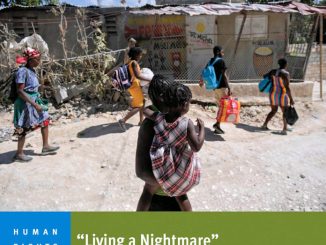
Right on schedule, just as the U.S. is making its final bid to ram through a resolution in the UN Security Council deputizing an armed force to invade Haiti to vanquish “gangs,” Human Rights Watch (HRW), the “human rights” arm of the Democratic Party establishment (largely funded by billionaire currency speculator and color-revolution backer George Soros’s Open Society Foundation), has released its long-awaited report “Living a Nightmare.

This report will be waved about by pro-intervention advocates like the incense canister at a Catholic mass, assuring all the faithful of the sanctity of their goals.

However, HRW is quite patently incoherent and defensive in the six-page presentation of its “Recommendations,” the only ones of the 98-page report worth reading. It brackets its call for foreign intervention with sentence upon sentence of legal gibberish about how the invaders need to be “focused on ensuring accountability,” denoting clear consciousness of the disastrous record of the two previous foreign military interventions over 20 of the past 29 years from 1994-2000 and 2004-2017. HRW piously vows to respect “the need to avoid more harm and abuses now, with adequate safeguards to avoid the serious abuses that resulted from past international interventions.” This is supremely unlikely given that the force Washington is proposing would not even have UN Security Council oversight and control, simply its imprimatur.

As one begins reading the report, the most glaring absurdity is the repeated use of the phrase “consensual deployment of an international force, as requested by Haitian authorities.” At the same time, in the press release presenting the report, HRW admits that “Haitian civil society representatives… said that other countries should stop supporting [de facto] Prime Minister [Ariel] Henry, whom they see as heading an illegitimate and corrupt government with alleged links to criminal groups.” So HRW justifies an armed intervention as “consensual” because it was “requested by Haitian authorities,” only to admit in the next breath that Haitians see these “authorities” as “illegitimate and corrupt” and linked to the very same “gangs” that they’re requesting foreigners to crush. Although asked to “stop supporting” Henry, Washington – and HRW – are rushing to fulfill his request and come to his rescue.

Furthermore, thousands of Haitians have held multiple large demonstrations against foreign military intervention across Haiti and its diaspora, while, in response to a Jul. 12 tweeted request by Russia’s UN Ambassador Dmitry Polyanskiy, scores of Haitian organizations have written expressing their opposition to the deployment of an “international force.”

Also outrageous was HRW’s chapter entitled “Rise of a Violent ‘Self-Defense Movement’.” The authors are referring to the spontaneous, autonomous, unorganized Bwa Kale movement, which arose from late April to late June, in which crowds of machete-wielding Haitians would capture and execute, after a short makeshift tribunal, criminal gang members. Kidnappings fell to zero during this period, as criminal gangs were on the defensive. Nonetheless, HRW disparages the movement, saying, “many residents unaffiliated with Bwa Kale fear violent reprisal attacks by criminal groups.” It also claims that the self-defense brigades are “following the same pattern of formation of the criminal groups” and are “very dangerous” because they threaten and shake down neighbors for money, so “many innocent people are victims.”

In short, the HRW puts more trust in foreign troops to save the Haitian people from the “gangs” than Haitians themselves, even after two military occupations marred by massacres, corruption, sexual predation, pollution, and the unleashing of a cholera epidemic which killed over 10,000. The Kenyan police force, which would in all likelihood nominally lead the invasion, has a record and reputation as one of the most brutal and corrupt on the African continent, having killed six in recent demonstrations, a crime they were asked to cover-up.

The report also attacks another self-defense movement, the “Revolutionary Forces of the G9 Family and Allies, You Mess with One, You Mess with All,” founded in 2020 by former cop Jimmy “Barbecue” Cherizier with other leaders of armed neighborhood committees fighting kidnapping, rape, and the extortion of small merchants in their localities.

In a video accompanying the report, HRW states that “G9 is the deadliest criminal group operating in Cité Soleil and other areas of Port-au-Prince.” Ironically, the footage playing under this statement was a rally where the G9 militants were chanting that they were fighting kidnapping, rape, and other crimes.

The G9 gave strong verbal support to the Bwa Kale movement, while the militants of its affiliated Chen Mechan (Bad Dog) armed group even accompanied Bwa Kale crowds in the dechoukaj (uprooting) of criminal gang members.

For much of the past three years, the G9 has been at war with the rival G-Pèp coalition, which comprises all of the criminal gangs avowedly engaged in kidnapping and other crimes, including the Kraze Baryè gang of Vitel’Homme Innocent, the 400 Mawozo gang of Joseph “Lanmò Sanjou” Wilson, the Five Seconds gang of Johnson “Izo” André, the Grande Ravine gang of Destina “Ti Lapli” Renel, and the Canaan gang led by Jeff Larose.

However, in its report, HRW mentions the G-Pèp confederation only 16 times, while focusing its umbrage on the G9 alliance 44 times.

In short, the entire report is rife with disinformation, retreading the tired and discredited charges against the G9 concocted by the Haitian National Network for the Defense of Human Rights (RNDDH), which is also supported by Soros as well as the infamous CIA cut-out agency, the National Endowment for Democracy (NED). The best example of its disinformation recycling is the report’s exhumation of the so-called “La Saline Massacre,” which Haïti Liberté and Uncaptured Media thoroughly debunk in their recent three-part documentary series “Another Vision: Inside Haiti’s Uprising.

“What we have here is a complex disinformation operation by Human Rights Watch and its miniature clones in Haiti, all with the intent of justifying and sugarcoating a military intervention to keep Haiti subdued to U.S. interests,” journalist Dan Cohen told Redacted on Aug. 15. “You can see all of these interests coming together: the human rights industry, the apparel industrythe U.S. government, all of them coming together as a popular uprising with revolutionary potential coalesces in Haiti.”

Source: Haiti Liberté 

Strugglelalucha256


African Union will not back ECOWAS intervention in Niger

The African Union (AU) said on Wednesday, August 16, that it will not support the military intervention that the Economic Community of West African States (ECOWAS) is planning, with the backing of France and the U.S., to restore ousted Mohamed Bazoum to Niger’s presidency. Bazoum was deposed in a popularly-welcomed coup on July 26.

10 days after the expiry of the deadline given by ECOWAS to Niger’s military government to restore Bazoum, the sub-regional bloc is beset by internal disagreements and domestic opposition in its member states.

After the ECOWAS heads of states ordered on August 10 “the deployment of the ECOWAS Standby Force” and directed “the Chiefs of Defense Staffs to immediately activate” it, the chiefs were scheduled to meet on August 12 to set the wheels in motion.

However, due to “technical reasons,” the meeting was postponed initially for an indefinite period. In the meantime, ECOWAS member Cabo Verde refused to support the military intervention, which its president Jose Maria Neves told AFP will only “make the situation worse, turning the region into an explosive zone.”

ECOWAS announced later on Tuesday that its member states’ chiefs of staff will meet in Ghana’s capital Accra on Thursday and Friday to work out further details of the troop deployment.

Ghanaian MPs oppose deployment of its troops

Ahead of this meeting, an anti-war rally was reported on Monday, August 14, in Ghana’s city of Takoradi. Warning Ghana’s president, Nana Akufo-Addo, against dragging the county into a “proxy geopolitical confrontation,” opposition MPs objected to the deployment of Ghanaian troops as a part of the ECOWAS effort.

“Military deployment will be the straw that breaks the back of the camel of “stability” in many West African countries. It could provoke mutinies, and accelerate, rather than halt, the wave of coups d’etat the region is experiencing,” the Socialist Movement of Ghana (SMG) had earlier warned.

Should Akufo-Addo go on to send Ghanaian troops, the Ghana Union Movement (GUM), the country’s third largest party, will “back a very serious demonstration in the country,” its founder Christian Kwabena Andrews warned on Tuesday.

Samuel Okudzeto Ablakwa, MP from the largest opposition party National Democratic Congress (NDC) and a Ranking Member of Parliament’s Foreign Affairs Committee deemed “Akufo-Addo’s refusal to submit his Niger Policy to Parliament” as “most undemocratic.” His statement added, “West African leaders who purport to be lecturing Niger on democracy must be seen leading by example at home.”

With the NDC having the same number of seats in the parliament as the ruling New Patriotic Party (NPP), Akufo-Addo may struggle to secure parliamentary approval to deploy Ghanaian troops.

ECOWAS chairperson unable to gain support of his own country’s senate

Nigeria’s senate earlier this month refused to support President Bola Tinubu’s plan to deploy troops. Nigeria is Africa’s most populous country and its largest economy, amounting to about 67% of ECOWAS’ GDP. It also has the largest military in the bloc.

The killing of 23 army personnel on August 14 in an ambush by terrorists in Nigeria’s Niger state is another reminder of the pertinence of the senators’ warning that Nigeria’s military “is highly ill-equipped and not prepared to fight any war.”

Under the circumstances, they had argued, “the Federal Government should focus on solving the Boko Haram, banditry, and ESN/IPOB menaces… instead of contemplating going to war in a foreign country.”

Nevertheless, ECOWAS has persisted in threatening military intervention in Niger, even though Tinubu, who is its current chair, is unable to secure the support of his own senate for such an intervention.

Waving flags of Nigeria and Niger together, anti-war protesters, who took to the streets on Saturday in Nigeria’s Kano State on the border with Niger, sloganeered: “Nigeriens are our brothers; Nigeriens are also our family.” They denounced the plans for aggression against their northern neighbor as “a plot by Western forces.”

Senegal and Benin have committed an unspecified number of troops for the ECOWAS invasion. Joining the fray is also Sierra Leone, whose president Julius Bio is facing a crisis of domestic legitimacy after retaining power in June this year in a violent election, the credibility of whose results is widely challenged by domestic observers, the U.S., UK, France, and the EU.

Ivory Coast has committed 850 to 1,100 troops. “This coup d’etat is not acceptable,” maintains its president Alassane Ouattara, who came to power in 2011 with the help of a military offensive backed by the U.S. and France against the incumbent to whom Ouattara had officially lost a disputed election.

Liberia, along with Gambia — where the ECOWAS had previously intervened in 2017 — have been sitting on the fence, undecided as yet on whether or not to send troops.

ECOWAS backers, France and U.S., disagree

Further stultifying the bloc is the fact that strong disagreements are also surfacing between its main backers — Niger’s former colonizer France, which has up to 1,500 troops in the country, and the U.S., with another 1,100 troops in two bases.

Keener on military action, France is reportedly opposed to the U.S. line of seeking further negotiations and is unwilling to accept anything less than the reinstatement of its close ally Bazoum.

Jean-Luc Mélenchon, a former member of France’s National Assembly and leader of France Unbowed, termed the French backing of ECOWAS’ military action as “irresponsible amateurism.” He insisted that “France must not engage in a military expedition against” the AU’s decision opposing it.

While this fractured coalition against Niger has been wavering after ordering the “deployment of the ECOWAS Standby Force,” Niger has received firm support from Mali, Burkina Faso, and Guinea. All three were suspended and sanctioned by ECOWAS after similar popularly-supported coups, backed by anti-French mass movements.

Mali and Burkina Faso, whose popular military governments have successfully ordered the French troops out, have declared that their military forces will come to the defense of Niger, treating any attack on it as an attack also on them.

Niger’s military government consolidates domestic support

In the meantime, Niger’s military government, the National Council for the Safeguard of the Homeland (CNSP), which ordered the French troops out soon after the coup against Bazoum, has been consolidating support domestically.

While France has refused to withdraw from Niger, arguing that it only recognizes the authority of Bazoum, thousands of Nigeriens protested outside its military base in capital Niamey last week.

On Monday, CNSP announced that Bazoum would be tried for “High Treason” for inviting foreign powers to invade Niger. The following day, Abdoulaye Seydou, leader of the M62 Movement which had been leading the protests demanding the removal of French and other foreign troops from the country, was released from prison.

Bazoum’s regime, which was cracking down on the anti-French movement, had arrested Seydou in January in what Frontline Defenders deemed to be an “arbitrary detention… directly linked to his peaceful and legitimate work in defense of human rights.”

Since the coup against Bazoum, tens of thousands have been taking part in demonstrations and rallies backing the CNSP against France and Bazoum, whom they perceive as the former colonizer’s puppet.

The statement released by the International Peoples’ Assembly (IPA) calling for the “immediate removal of foreign military bases from Niger and other African countries” was signed by organizations across the region such as Parti Comuniste de Benin, Nigerian Union of Allied Health Professionals, Socialist Movement of Ghana, Parti Communiste Révolutionaire de Côte d’Ivoire, Partido Africano para Independência de Guinee e Cabo Verde, Conféderation Libre des Travailleurs de la Mauritanie, Workers Democratic Way, The Collective of Saharawi Human Rights Defenders in Western Sahara, Communist Party of Jordan, Union of Iraqi Trade Unions, Party of Popular Socialist Coalition, Federation of Workers Councils and Unions, Tunisian Workers Party, Palestinian People Party, and the We Can Movement (Mauritania).

Source: Peoples Dispatch

Strugglelalucha256


Knocking out white supremacy in Montgomery, Alabama

A righteous fightback in the spirit of Rosa Parks

The whole world saw Black people successfully defend themselves against a drunken white mob on Aug. 5 in Montgomery, Alabama. Damien Pickett, a Black co-captain on the city-owned riverboat Harriott II, was attacked for merely trying to dock the vessel.

Pickett had repeatedly asked the owners of a private boat to move out of the designated docking space for the riverboat, whose 227 passengers were waiting to disembark. When Pickett finally started to pull a rope to move the boat, he was attacked by the white gang. The gang also beat a 16-year-old white co-worker of Pickett.

The Justice League then intervened. Black people came to the defense of Damien Pickett and his co-worker.

A 16-year-old Aquaman named Aeren jumped from the riverboat, swam to the dock, and started to throw hands in self-defense. Another member of the Justice League creatively used a folding chair to help pacify members of the mob.

Interestingly, one of the designs for a folding chair was created by the Black inventor Nathaniel Alexander, who was awarded patent number 997,108 in 1911 for it. As Mao Zedong — the leader of the Chinese Revolution — might have said, “Chair to struggle, chair to win!”

Musical superstar Stephanie Mills has offered to pay any legal expenses for these defenders.

All this drama was happening on the same riverfront where tens of thousands of enslaved Africans had been marched off boats to be sold. Montgomery — Alabama’s state capital — was a major center of slave trading.

And it was in Montgomery, Alabama, where Rosa Parks refused to give up her bus seat on Dec. 1, 1955, sparking a 381-day-long bus boycott. Dr. Martin Luther King Jr., the minister of Dexter Avenue Baptist Church, became president of the Montgomery Improvement Association that helped organize the boycott.

Dr. King’s home was firebombed, and so was the home of another boycott leader, E.D. Nixon. Dr. King was starting a struggle for justice that would end with his assassination in Memphis, Tennessee, on April 4, 1968.

Damien Pickett and all those who stood beside him on that Montgomery dock are continuing the work of Rosa Parks and Dr. King.

Slavery by another name

Montgomery was also the first capital of the slave masters’ confederacy. The plantation owners didn’t accept their defeat in the Civil War.

“The Ku Klux Klan was rampant in Alabama,” wrote W.E.B. DuBois in Black Reconstruction in America. “In one district, six churches were burned by incendiaries before the election of 1870. Many schoolhouses were burned. Between 1868 and 1871, there were 371 cases of violence, including 35 murders.”

According to the National Memorial for Peace and Justice in Montgomery, at least 340 Black people were lynched in Alabama.

Slavery didn’t end in Alabama in 1865. A convict leasing system supplied coal mines, lumber companies, and plantations with slave labor.

For decades much of the turpentine sold in hardware stores was made in Southern prison camps. The selling of inmates to capitalists — “the vast majority of them being held for trivial misdemeanors,” in the words of author Douglas Blackmon — became an important source of revenue to Alabama state and local governments.

United States Steel exploited hundreds of Black prisoners in its mines around Birmingham, Alabama. In 1911, an explosion in the Banner Mine killed 128 people, including 113 Black prisoners.

Founded with a big stock swindle in 1901 by the biggest U.S. banker, J.P. Morgan, U.S. Steel was the world’s first billion-dollar corporation. Today’s JP Morgan Chase bank is the biggest bank in the United States, with $3.7 trillion in assets. It owes reparations big time.

U.S. Steel used enslaved miners as a club against white and Black members of the United Mine Workers Union.

It wasn’t until June 1, 1928, that 800 Black prisoners marched out of Alabama’s last slave labor mine singing the spiritual “Swing Low, Sweet Chariot.” (“Slavery by Another Name, The Re-Enslavement of Black Americans from the Civil War to World War II,” by Douglas A. Blackmon.) Chain gangs on the highways continued to use enslaved prison labor.

Wall Street the real master

Behind the white supremacist regimes in the South were Northern capitalists. To get more subsidies from Congress, Pennsylvania Railroad president Thomas Scott helped push through a rotten deal that settled the disputed 1876 presidential election.

This betrayal of Black people pulled U.S. troops out of the South, guaranteeing the bloody overthrow of the Reconstruction state governments. Decades of hell followed.

A few months later, in 1877, railroad workers revolted against wage cuts. Scott responded by saying, “Put them on a rifle diet.” Dozens of strikers and their supporters were shot down in Pittsburgh, Philadelphia, and Reading, Pennsylvania.

Despite Ku Klux Klan terror, oppression bred resistance. Hosea Hudson and other communists helped organize unions and sharecroppers in Alabama during the 1930s. They demanded the right to vote.

In 1931, Scottsboro, Alabama, authorities sought to frame nine Black teenagers on phony rape charges and send them to the electric chair. Communists helped initiate a worldwide campaign that saved their lives. (“Hammer and Hoe: Alabama Communists During the Great Depression,” by Robin D. G. Kelley.)

Rosa Parks and other activists began a long struggle for voting rights.

In the 1960s, Birmingham, Alabama, became known as “Bombingham.” On Sept. 15, 1963, Klan terrorists bombed the city’s 16th Street Baptist Church, killing four Black girls.

They were Addie Mae Collins, 14; Cynthia Wesley, 14; Carole Robertson, 14; and Carol Denise McNair, 11. Always remember them.

In the spring of 1963, Birmingham’s top cop, Bull Connor, was using police dogs to attack Black people. Hundreds of children were jailed for demanding an end to racial segregation. Dr. King was jailed in Birmingham.

U.S. Steel employed 30,000 workers in 1963 around Birmingham and dominated Alabama’s economy. The then-sixth biggest U.S. corporation could have stopped Bull Connor.

The blue-chip corporation, whose headquarters were in Pittsburgh, refused to do so. The same year George Wallace was inaugurated Alabama’s governor in Montgomery, declaring, “Segregation now, segregation tomorrow, segregation forever.”

This didn’t prevent Wallace from coming to Wall Street and selling the state’s bonds. To help pay the interest, Alabama collected a sales tax on bread.

A legacy of racist violence

George Wallace encouraged racist violence wholesale. His state troopers beat and tried to kill future congressperson John Lewis on March 7, 1965, during a march from Selma, Alabama, to Montgomery for voting rights.

Eighteen days later, a gang of Klansmen murdered Viola Liuzzo, a mother in an Italian American family and civil rights volunteer, after she had dropped off bandleader Billy Eckstein and singer Tony Bennett — who were on the march — at the Montgomery airport. One of her murderers was Gary T. Rowe, who was on FBI Director J. Edgar Hoover’s payroll.

These crimes shocked the world and helped pass the 1965 Voting Rights Act. U.S. Supreme Court Chief Justice John Roberts and four others on the high court threw out most of the Voting Rights Act in 2013. We have to fight to put it back.

Gary T. Rowe was never convicted for his crimes. But the FBI framed Viola Liuzzo’s husband, Anthony Liuzzo, Business Agent of Teamsters Local 247 in Detroit, and had him imprisoned.

Since then, thousands of Alabama steelworkers have lost their jobs. Deindustrialization came to both the steel center of Birmingham and hundreds of closed Southern textile mills. Racism doesn’t save jobs.

Montgomery, which had been a railroad center, also suffered job losses. The shops of the Western Railroad of Alabama were closed.

In the 1950s, around 20 passenger trains stopped daily in Montgomery. E.D. Nixon helped organize the Montgomery bus boycott while working as a Pullman porter, traveling between Montgomery and Chicago three times a week.

But today, no Amtrak trains serve Montgomery, a state capital.

The military-industrial complex also helped promote white supremacy. Nazi scientist Wernher von Braun — who used slave labor to build Hitler’s V-2 rockets — led NASA’s efforts to develop missiles at its Huntsville, Alabama, complex.

Montgomery is home to the Maxwell Air Force Base, which includes Air University and the Curtis E. LeMay Center for Doctrine Development and Education. General LeMay wanted to launch a nuclear first strike against the Soviet Union and became George Wallace’s running mate in his fascist 1968 presidential campaign.

Centuries of oppression make the events on Montgomery’s riverfront all the more significant. As Frederick Douglass said, without struggle, there is no progress.

Strugglelalucha256


China issues report on U.S. violation of WTO rules

China issued, for the first time, a report comprehensively revealing the United States’ excessive violation of World Trade Organization rules on August 11, urging the world’s largest economy to shoulder responsibilities and safeguard the multilateral trading system with WTO at the core.

Reviewing the U.S.’s performance in following WTO rules via the report, China has expressed concerns over U.S. policy measures that undermine the multilateral trading rules, impose unilateral sanctions, adopt double standards in industrial policies, and disturb global industrial and supply chains.

The U.S. has not only refused to follow the WTO ruling but also rejected a proposal to start the process of selecting new judges for the Appellate Body of the WTO, which became non-functional in December 2019 for lack of judges, the report, which was released on the website of the Ministry of Commerce, pointed out.

The U.S. has long been imposing unilateral sanctions like additional tariffs on other countries under the so-called concerns of national security, human rights, and forced technology transfer, and forces others to take its side and meet its requirements, the report said.

The U.S. also implements exclusive and discriminatory subsidy policies and disrupts other countries’ industrial development through means like export control. It provokes decoupling, breaks global industrial and supply chains, expects to force industrial reshoring through the unilateral levying of tariffs, tries to establish U.S.-centered industrial and supply chains through massive and exclusive industrial subsidies, and promotes friendly-shoring outsourcing based on its so-called sharing similar values.

Source: China Daily

Strugglelalucha256


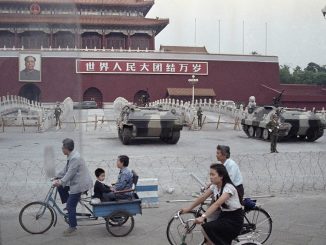
New book reveals Tiananmen square massacre, others fabricated by U.S.

For decades, Western media have been narrating the same story about China being this brutal “dictatorship” whose people are killed at the hands of the criminal communist regime, giving the Tiananmen Square massacre as a prime example of the brutality of the Chinese government, wherein supposedly scores of students were killed at the hands of the People’s Liberation Army. However, a new book emerged, proving that these claims are false and have no foundation to them except for Washington’s aspirations to tarnish the image of the Chinese Communist Party.

Atrocity Fabrication and Its Consequences: How Fake News Shapes World Order, a new book by A. B. Abrams, highlights that there never were any killings in the infamous Tiananmen Square back in 1989 as had been spread by Western propaganda for decades, and it was revealed that the entire affair was but a mere attempt at showing China as the villain in the geopolitical arena. The book underlines that no killings, let alone a massacre as is proclaimed, took place in Tiananmen Square.

How did the U.S. succeed in manipulating the mainstream narrative and have millions upon millions of people believe that China initiated a mass murder of its own people – young college students – crushing them with tanks and shooting them down with machine guns? The answer is simple: the manipulation of public perception through the press. This could be done using media out of context and providing an incomplete version of the truth.

For example, the most infamous piece of media “documenting” the crime to ever exist is a video showing a tank marching onto a person alleged to have been a student, and right as the tank gets close enough to the young man and stops, the video is cut, with there being some text accompanying the video hinting or proclaiming that the tank went on to run over the protester. However, that could not be further from the truth. In reality, other protesters rushed to the scene and accompanied him from there as the tank was standing in place, waiting for him to comply and get out of its way.

The book argues that all the acts committed by the United States were in a bid to “justify wars of conquest and exploitation” and generate multi-billion-dollar profits for the notorious military-industrial complex, as reported by CovertAction Magazine.

Abrams highlighted that the Tiananmen Square protests initially took place not as a push for Westernization or the downfall of the Chinese government. Instead, their primary focus was on reinforcing the principles of China’s 1949 Communist Revolution and addressing the issue of corrupt officials who had deviated from Maoist principles.

This movement encompassed not only students but also a significant number of workers who exhibited a stronger anti-CCP stance. Their collective objective aimed at the establishment of a socialist democracy within the framework of the movement.

The book cited a cable from the U.S. Embassy in Beijing that WikiLeaks published in 2016. The leak included reports on the eyewitness account of a Chilean diplomat and his wife, who were present when the PLA made it to Tiananmen Square to disperse the protesters. The pair made it in and out of the square, numerous times without any harassment and observed no mass firing of weapons into the crowds. They never saw any use of lethal force, to begin with.

Moreover, the book cited former Washington Post Beijing Bureau chief Jay Mathews who, in 1998, admitted that “all verified eyewitness accounts say that the students who remained in the square when troops arrived were allowed to leave peacefully.”

It also cited Reuters correspondent Graham Earnshaw, who spent the night of June 3-4 at the center of Tiananmen Square and reported that most of the students left the square peacefully, with the remainder of them being persuaded to do the same.

As is customary, the main source the Western media used to claim that a massacre took place was an anonymous student from Qinghua University making claims to the Hong Kong press, who then made it to the British media.

Still, BBC‘s Beijing correspondent James Miles said there was no massacre. “Western reporting had conveyed the wrong impression and protesters who were still in the square when the army reached it were allowed to leave after negotiations.”

The narrative was also completely spun out of proportion, with the perpetrators being painted as the victims of a crime that was never committed in the first place. The book underlined that those who did die in Beijing during the events lost their lives in street battles between the PLA and insurgents far from the square. Reports from the U.S. Department of State underlined that the unarmed PLA officers were attacked with petrol bombs, burning many alive.

Uyghurs, another ‘crime’ China committed

The hoax built around Tiananmen Square was a blueprint for U.S. media campaigns aimed at showing the Chinese government in a bad light, as Washington went on to accuse Beijing of perpetrating a genocide against the Uyghur people in Xinjiang province.

The book stressed that the claims about the so-called Uyghur genocide relied on nothing but hardline extremist U.S.-funded anti-China groups. Namely, they were funded by the CIA-affiliated National Endowment for Democracy, which was tasked with carrying out what the notorious spy agency had done alone under the covers for decades.

Amid the claims of Beijing genociding the Uyghurs, the Uyghur population in Xinjiang saw an increase of 25% between 2010 and 2018 instead of the population experiencing a contraction. Even facilities the West claimed to have been “concentration camps” in which Uyghurs were killed en masse and “brainwashed” or “indoctrinated” appeared to have been a logistics park, a regular detention center, and elementary and middle schools.

Xinjiang looks good, safe, and secure, and all the people I spoke with seemed happy about it, former London Metropolitan Police Officer Jerry Grey, who spent a lot of time traveling in Xinjiang, said.

“Uyghurs in China have been growing faster than the majority Han Chinese in part because they weren’t subject to the one-child policy, they have 20,000 mosques built […] Uyghur children can get into top universities easier than Han Chinese, and have halal foods prepared for them in canteens and they have a prayer area on campus,” Daniel Dumbrill, a Canadian businessman and Chinese political analyst said.

“Portraying an adversary as committing particularly egregious crimes, especially when one intends to initiate military action or other hostile measures against the adversary, has consistently provided an effective means of moving public and international opinion and justifying [U.S. imperial] actions,” Abrams said in his book.

Yugoslavia

The book also shed light on the U.S. propaganda focused in the 1990s on Serb leader Slobodan Milosevic, a socialist who sought to keep Yugoslavia together, accusing him of genocide in Kosovo and elsewhere.

Milosevic, a socialist, aimed to maintain the unity of Yugoslavia and prevent its fragmentation. This effort was driven by his desire to counteract Western nations’ potential expansion of influence and the establishment of U.S. military bases in a strategically vital area.

Interestingly, the most severe instances of ethnic cleansing during the war were actually executed by the Croats through Operation Storm, a plan devised by the CIA.

The Clinton administration additionally provided support to the Kosovo Liberation Army (KLA), which sought to establish an ethnically homogeneous Albanian state. This endeavor involved targeting Serbs and other minority groups.

Financing from the drug trade played a significant role in sustaining the KLA, leading the State Department to label it a “terrorist organization”. The NATO North Atlantic Council identified the KLA as the primary instigator of violence in Kosovo.

The narrative of genocide and the Serbs running concentration camps once again heavily relied on the testimony of an individual who openly admitted to not witnessing any killings – propagandist reporter Roy Gutman. This account was eventually discredited when a British journalist visited an alleged death camp, discovering that the inmates had voluntarily sought refuge from the nearby conflict in surrounding villages.

Yugoslavia was a highly successful state that united numerous contemporary Baltic nations under the banner of communism, and it met its demise when the United States and NATO waged a war against it, killing hundreds of civilians in the notorious bombing campaign it launched on the country in order to “sow democracy” there.

Syria

The same man who was one of the main reasons behind the collapse of Yugoslavia was almost able to do the same with Syria. Gutman played a major role in another similar war launched over a decade later against Syrian President Bashar Al-Assad.

The propaganda effort pushed by Gutman was similar to the one he peddled earlier, with it including the mass murder of people at the hands of the government without any evidence backing up these claims.

Western media and regimes falsely accused Al-Assad of carrying out attacks with chemical weapons against his own people while the attacks were likely carried out by U.S.-backed terrorists.

Back in November, the Grayzone website published a series of leaks that expose how senior officials of the OPCW censored this explosive finding in the Syrian city of Douma.

In its investigation, the website stated that “in the early days of the OPCW’s investigation of an alleged chemical attack in Douma, Syria, expert toxicologists ruled out chlorine gas as the cause of death for more than 40 civilians reported at the scene.”

The Korean War: Another ‘atrocity’

The Korean War, a war peddled by the United States that wound up splitting one people into two, was presented to the public as a “humanitarian intervention” aimed at rescuing the local population from communist forces. To establish this narrative, the Pentagon sponsored a propaganda film, titled The Crime of Korea narrated by Humphrey Bogart. This film falsely attributed atrocities committed by the South Korean government, with U.S. support, to the Democratic People’s Republic of Korea.

This narrative gained traction within the U.S. media and significantly bolstered the perception of the war as “morally justified”. An influential Time magazine column titled “Barbarity” furthered this perspective by describing a communist massacre in Taejon, which subsequent investigations revealed was actually perpetrated by South Korean troops allied with the U.S..

Charles E. Potter, Chairman of the Senate Subcommittee on Korean Atrocities and appointed by Senator Joseph McCarthy, notorious for McCarthyism, which was responsible for the persecution of anyone even thought to be affiliated with any leftist organization or held any left-wing beliefs, emphasized the inhumane acts committed by U.S. adversaries. He recounted gruesome incidents, such as a “Red Chinese” nurse using garden shears to sever a GI’s toes without anesthesia and American POWs being subjected to torture with bamboo spears and confinement in small iron cages until death, with maggots infesting their eye sockets.

However, the accounts presented by Potter contradicted the testimonies of American and British POWs, who indicated that their treatment by captors was generally decent, although they had to attend lectures on communism.

Meanwhile, U.S.-run POW camps subjected DPRK and Chinese prisoners to severe brutality. These inmates were massacred for singing revolutionary songs and subjected to violent coercion to renounce repatriation to their homelands. This strategy aimed to score Cold War propaganda points by portraying defection to the West as a desire born out of the perceived superiority of its political-economic system.

The campaign of propaganda against the DPRK extended well into the 21st century, with increasingly extravagant made-up tales to portray the country in a negative light. Many of these stories were propagated by DPRK defectors, some of whom were influenced or incentivized by South Korea and possibly the CIA.

Shin Dong-hyuk, a defector, collaborated with Washington Post correspondent Blaine Harden to write a highly successful book Escape From Camp 14: One Man’s Remarkable Odyssey from North Korea to Freedom in the West. However, this account was later revealed to be a fabrication.

Yeonmi Park, another defector, who charges a speaking fee of $12,500 on Western media outlets, even made the ludicrous claim that her friend’s mother was executed for watching a Hollywood movie.

Lee Soon-ok, yet another defector, testified before a House committee in 2004 that she had witnessed Christians being tortured and burned to death in DPRK political prisons. However, the head of the North Korean Defectors’ Association, Chang In-suk, contradicted this, asserting that Lee was never a political prisoner.

Abrams noted that fabricated reports about DPRK state executions of prominent figures often coincided with the surprising reappearance of these supposedly deceased individuals on camera.

In a CNN report from May 2015, it was alleged that DPRK leader Kim Jong Un had ordered the poisoning and killing of his aunt, Kim Kyong Hui. However, Mrs. Kim appeared in public in January 2020, highlighting the inaccuracy of the claim.

Abrams suggested that these false defector testimonies and biased media coverage were embraced in the West due to the “self-gratification” they provided, seemingly affirming the notion of Western superiority over the least Westernized state. Additionally, they often served as justifications for hostile policies, including economic sanctions, against the DPRK.

The book talks about the demonization of the Russian and Vietnamese governments, as well as that of Libya and Iraq in a bid to validate the Gulf War, while also revisiting numerous cases of U.S. propaganda aimed at subverting its foes while giving impetus to itself and its beliefs in a bid to uphold the unipolar system that it has been trying so hard to keep propped up – to no avail. The recounting of the countless crimes committed by the United States comes as no surprise to many as the latter has done so for decades and continues to do so, exploiting its hold on the media to give itself the moral high ground over its geopolitical enemies.

Source: Al Mayadeen English

Strugglelalucha256


Five key features of imperialism

War and Lenin in the 21st century, part 2


Vladimir Lenin, the revolutionary leader of the Soviet Union and a key contributor to Marxist theory, outlined his theory of imperialism in “Imperialism, the Highest Stage of Capitalism,” published in 1916. In this work, he identified five key features of imperialism in the early 20th century:

  1. The concentration of capital and production: Capitalism had reached a stage where large corporations and financial institutions were becoming dominant, leading to the concentration of production and capital in a few powerful monopolies. These monopolies played a decisive role in economic life.
  2. Finance capital: The merging of industrial capital with banking capital and the creation on this basis of a “finance capital,” a financial oligarchy. This combination allowed financial institutions to exert significant control over the economy as well as the government.
  3. Export of capital: Capitalists had been exporting goods. In the age of imperialism, there is added to this the massive export of capital itself.
  4. Monopoly and cartels: The emergence of powerful international capitalist monopolies, cartels, syndicates, and trusts that divided the world among themselves.
  5. Division of the world among the biggest capitalist powers: Lenin noted that the world had been divided into distinct spheres of influence and control among the major imperialist powers. These powers competed for dominance over colonies and territories, leading to conflicts and tensions that ultimately contributed to wars like World War I.

Do Lenin’s defining features of imperialism hold up today?

1. Concentration of capital and production

Feature number 1 is accepted as a fact of life by almost everyone. The concentration of capital and production has been a central feature of capitalism since its inception. 

This tendency has only accelerated in recent decades. For example, the top 1% in the United States now own more wealth than the bottom 90% combined. According to a 2020 report by Oxfam, the world’s 2,153 billionaires now own more wealth than the bottom 4.6 billion people combined. The level of inequality is staggering.

A handful of monopolies dominate the entire economy. The top 10 of the Fortune 500 — Walmart, Amazon, Exxon Mobil, Apple, UnitedHealth, CVS, Berkshire Hathaway, Alphabet, McKesson, Chevron — controlled an estimated 20% of the U.S. economy in 2023. This is up from 18% in 2022 and 16% in 2021. The increasing concentration of economic power in the hands of a few large companies has been going on for decades

These monopolies have become the most powerful economic and political institutions. They control the main sources of raw materials, the main means of production, and the main means of communication. They dictate to the whole of society what to produce, how to produce it, and where to sell it.

Production is becoming increasingly planned and coordinated. This is happening even though capitalists often sing the praises of “competition.”

For example, supply chain management is a system for planning, coordinating, and controlling the flow of materials, information, and finances through a network of businesses. Joint ventures are agreements between two or more businesses to share resources and knowledge.

In reality, capitalists are relying on economic planning and coordination; production is socialized.

2. Finance capital

Finance capital is “capital controlled by banks and employed by industrialists,” which develops into the dominance of finance capital and the financial oligarchy that owns but does not manage finance capital or the real economy.

Finance capital is the ownership of great concentrations of stocks, bonds, and large bank deposits.

The countries that are richest in finance capital — not necessarily richest in industrial capital — are the imperialist countries that economically exploit all other capitalist countries.

One of the changes in monopoly capitalism since Lenin’s day is that individuals still owned and managed the great mass of corporate shares back then. Today, in contrast, most stocks, bonds, and other securities are managed by institutional investors such as bank-managed trust funds, pension funds, mutual funds, hedge funds, insurance companies, and money market funds. These institutions, in turn, are increasingly owned or controlled by the few universal banks. In this way, “moneyed capital” is transformed into finance capital controlled by a few gigantic banking institutions.

A country can be poor in finance capital even if it is relatively rich in industrial capital. For example, many factories, mines, and large-scale capitalist farms might be located in such a country, making it rich in industrial capital. 

While a century ago, the U.S. was very rich in industrial capital, today, globalization has considerably reduced the relative wealth of the U.S. in industrial capital. According to a 2017 report by the Economic Policy Institute, between 1997 and 2016, the U.S. lost an estimated 6.9 million manufacturing jobs, of which 2.8 million were due to offshoring, that is, moving manufacturing operations overseas where industry pays the lowest possible wage. Technological advances — automation and AI — have made producing goods with fewer workers possible, which has led to significant job loss in manufacturing industries. This deindustrialization represents a significant loss of production capacity in the U.S.

However, the U.S. remains on top of the world in finance capital.

Since the time when Lenin wrote “Imperialism,” centralization of bank capital has proceeded well beyond what it was then. In 1914, the two largest banking groups on Wall Street were the J.P. Morgan and Company (now JPMorgan Chase), and National City Bank of New York (now Citibank). 

Today there are four megabanks towering over the U.S. economy: JPMorgan Chase (assets $3.67 Trillion), Citigroup (assets $2.3 Trillion), Bank of America (assets $3.1 Trillion), and Wells Fargo (assets $1.875 Trillion.

In addition, there is what is called the “shadow banking system,” which includes BlackRock, the largest asset manager in the world, as well as Goldman Sachs and Morgan Stanley. Shadow banks are not regulated and include hedge funds, private equity funds, mortgage lenders, and some large investment banks.

3. Export of capital

During the first phase of imperialism — the period analyzed by Lenin — the export of British capital was mostly to the settler states, mainly the United States, Canada, Australia, and New Zealand. A smaller portion of British export capital was invested in other European countries, while only a small fraction was invested in the colonies of the Global South — India, Africa, and the Caribbean. The same pattern can be observed in the export of capital of France and Germany.

While the bulk of the capital exported by the imperialist powers following World War II was to other imperialist powers, a portion of the capital was invested in the colonized and neo-colonial nations of the Global South. However, there was relatively little industrialization of the Global South countries. 

Kwame Nkrumah wrote in 1965:

“In place of colonialism, as the main instrument of imperialism, we have today neo-colonialism… [which] like colonialism, is an attempt to export the social conflicts of the capitalist countries… The result of neo-colonialism is that foreign capital is used for the exploitation rather than for the development of the less developed parts of the world. Investment, under neo-colonialism, increases, rather than decreases, the gap between the rich and the poor countries of the world. The struggle against neo-colonialism is not aimed at excluding the capital of the developed world from operating in less developed countries. It is also dubious in consideration of the name given being strongly related to the concept of colonialism itself. It is aimed at preventing the financial power of the developed countries being used in such a way as to impoverish the less developed. (Kwame  Nkrumah, “Introduction to Neo-Colonialism, The Last Stage of Imperialism”)

One key factor that influences where capitalists choose to invest their capital is the guarantee of their property rights and a military to enforce that. Capitalists are especially reluctant to invest large amounts of capital in countries that are not under their direct control since the danger is too great that they will lose their capital if these countries are seized by rival capitalist states or, worst of all, in the event of revolution.

An important factor that slowed down the industrial development of the countries of the Global South was that they became dumping grounds for commodities produced in the imperialist states. In “How Europe Underdeveloped Africa,” Walter Rodney explained:

“Europe exported to Africa goods which were already being produced and used in Europe itself — Dutch linen, Spanish iron, English pewter, Portuguese wines, French brandy, Venetian glass beads, German muskets, etc. Europeans were also able to unload on the African continent goods which had become unsaleable in Europe. Thus, items like old sheets, cast-off uniforms, technologically outdated firearms, and lots of odds and ends found guaranteed markets in Africa. …

“From the beginning, Europe assumed the power to make decisions within the international trading system. … European decision-making power was exercised in selecting what Africa should [import and] export — in accordance with European needs.”

Therefore, the industrialization of Africa and all the Global South countries, including China, was primarily confined to the development of railroads, seaports, and the extraction industries. 

However, the super-profits squeezed out of the working class of the colonized countries enabled the capitalists to realize super-profits above and beyond the average rate of profit. In various ways, the capitalists shared some of these super-profits with a portion of the working class in the imperialist countries. The upper layer of the workers who share in the super-profits of imperialism formed the base of the bureaucracies of the labor unions and the social democratic parties in Lenin’s time and since.

Lenin related the issue of the colonies to opportunism in the European workers’ movement:

“As a result of the extensive colonial policy, the European proletarian partly finds himself in a position when it is not his labor, but the labor of the practically enslaved natives in the colonies, that maintains the whole of society. The British bourgeoisie, for example, derives more profit from the many millions of the population of India and other colonies than from the British workers. In certain countries, this provides the material and economic basis for infecting the proletariat with colonial chauvinism. Of course, this may be only a temporary phenomenon, but the evil must nonetheless be clearly realized and its causes understood in order to be able to rally the proletariat of all countries for the struggle against such opportunism.” 

The collapse of the Social Democratic leaders and the vote for war credits by party members in the German Reichstag symbolized the disastrous consequences of the victory of opportunism

The dependency of the imperialist countries on the workers of the oppressed countries — those free of colonial rule but still economically exploited and militarily threatened by the imperialist countries — has qualitatively increased. 

The current stage of imperialism, where much of surplus value production has shifted from the imperialist countries to the oppressed nations — not just extracting super-profits in the Global South — is the most significant change in capitalism since the imperialist era began. 

4. Trusts and cartels

The fourth feature, the formation of monopolist capitalist associations which share the world among themselves — is generally accepted as descriptive of today’s conditions when all large corporations operate on a multinational scale.

Lenin notes that capitalist monopolies take two basic forms: trusts and cartels. 

The term “trust” was used in economics to refer to a large business enterprise controlling a significant market share. 

However, the term “trust” fell out of favor as antitrust laws were passed to break up these large monopolies The term “giant corporation” is now more commonly used to refer to these large businesses.

In contrast to a trust, a cartel is not a single legal entity. A cartel is a formal agreement between independent capitalists to fix prices, limit production, or otherwise control the market for a particular good or service. Cartels are illegal in most countries but are still common in some industries.

A form of cartelization historically tolerated in the U.S. is the organization of cartels by organized crime in industries where capital was still relatively decentralized. For example, in New York City, the garment, construction, cement, garbage collection, and longshore industries were dominated by organized crime. Even pizzerias. These cartels were built by making offers to small capitalists that they “could not refuse.” 

Donald Trump comes out of such a hotel and casino cartel in New York.

5. Imperialist division of the world

Feature number 5 of Lenin’s definition of imperialism, the territorial division of the whole world among capitalist powers, was completed around the turn of the 20th century. This is a statement of historical fact that is accepted by almost everyone.

By the end of the 19th century, the European powers had colonized most of the world. The United States and Japan also had significant colonial empires. This division of the world into spheres of influence was a major factor in the outbreak of World War I. The territorial division of the world was not static. Many wars and revolutions in the early 20th century led to changes. However, the basic division of the world into spheres of influence remained in place until after World War II.

The Russian Revolution of 1917 led to the establishment of the Soviet Union, which was the first socialist state in the world. The Soviet Union’s withdrawal from the capitalist world system ended, however, in the 1990s as the result of the Russian bourgeois counterrevolution that restored capitalism (but not the czarist feudal military empire). 

However, the rest of the 20th century had more wars, revolutions, and counterrevolutions than any preceding century in recorded history. World War II signaled a turning point in world imperialist relations. The United States emerged from WWII as the world’s most powerful imperialist country, gaining control of former European empires in Asia and Africa. The U.S. has engaged in a never-ending series of wars to maintain what the Cubans call “The Empire.”

The U.S. is currently engaged in what is called hybrid warfare to maintain its dominance. Hybrid warfare, as explained by Wikipedia, is a blend of conventional military actions with information warfare, cyber attacks, economic sanctions, political subversion, and other non-traditional means. 

Today the U.S. is openly engaged in hybrid warfare against Cuba, Venezuela, Iran, Zimbabwe, and North Korea, as well as Russia and China. There is more than that. The U.S. Africa Force, for example, has been engaged in military operations across Africa, including in Burkina Faso, Mali, Niger, Cameroon, Somalia, Libya, Djibouti, Uganda, Sudan, Rwanda, and Chad.

The United States operates a global network of military installations and is by far the largest operator of military bases in the world. Wikipedia says that the total number of foreign sites with installations and facilities that are either in active use and service or that may be activated and operated by U.S. military personnel and allies is just over 1,000.

The U.S. has over 240,000 active-duty and reserve troops in at least 172 countries and territories. Of those, some 40,000 are engaged in “classified missions,” that is secret operations, according to the New York Times.

Japan, Hawaii, and South Korea have the biggest concentration of U.S. troops: 53,973 in Japan, 40,485 in Hawaii, and 25,372 in South Korea. The other big concentration is 35,781 in Germany.

War and Lenin in the 21st century

Strugglelalucha256


U.S. funds war, takes over Ukraine assets

War and Lenin in the 21st century, part 1

The U.S. is funding a proxy war against Russia — Congress has approved $113 billion for Ukraine — seizing Ukraine’s assets in the process. 

The U.S. is spending $2.5 billion per month just on weaponry in Ukraine, which is seven times what was spent on weaponry in Afghanistan at its height, according to Special Inspector General for Afghanistan Reconstruction John Sopko speaking on NPR August 17.

The Obama administration helped overthrow Ukraine’s elected president in February 2014 and installed a far-right regime loyal to Washington. At the time, Joe Biden was the Obama administration’s point man on Ukraine. He visited the country more than half a dozen times from 2014 to 2016. 

Beginning in 2014, Joe Biden’s son Hunter served on the board of a Ukrainian energy company, Burisma. Hunter was paid “as much as $50,000 per month,” according to the New York Times. Burisma was under investigation by a Ukrainian prosecutor, Viktor Shokin, for corruption. NPR reported in 2018: 

“At an event at the Council on Foreign Relations in 2018, Biden said that on one of his many trips to Ukraine, he told the country’s leaders that they had to get rid of the prosecutor if they wanted $1 billion in U.S. aid.”

On Aug. 11, 2023, Attorney General Merrick Garland appointed U.S. Attorney David Weiss as special counsel to lead an investigation into Hunter Biden.

Donald Trump says this shows Joe Biden committed corruption in Ukraine. Trump wants to dig up dirt on Biden for political purposes, but he is not and has never been against corruption. Corruption is Trump’s mode of operating.

Trump used his position as president to enrich himself and his family personally. For example, he stayed at his own hotels while on official business, which cost millions (much more than $50,000 a month). He also used his office to promote his own businesses, such as his Trump Organization.

In addition, Trump engaged in a more general, broader pattern of corruption. For example, he has been accused of making deals with foreign governments that benefited him personally, and he used his power as president to silence any complaints.

U.S. finance capital takes over

Meanwhile, U.S.-based finance capital really has taken Ukraine’s assets. “Your money is not charity, it’s an investment.” That’s what Ukrainian President Volodymyr Zelensky said in his address to the U.S. Congress while visiting Washington on Dec. 21, 2022.

John Parker reported in Struggle-La Lucha:

The trajectory of the latest vampiric deals of the foreign investors was set in November when Zelensky signed over even more of his country’s sovereignty to a U.S. firm that will help broker the deals of the International Monetary Fund (IMF) and independent foreign investors.

BlackRock Financial Markets Advisory and the Ukrainian Ministry of Economy signed a memorandum of understanding in November. According to President Zelensky’s official website: “In accordance with the preliminary agreements struck earlier this year between the Head of State and Larry Fink, the BlackRock team has been working for several months on a project to advise the Ukrainian government on how to structure the country’s reconstruction funds. 

A report on the takeover of Ukraine’s agricultural land by the Oakland Institute published in 2023 says:

The war in Ukraine has been at the center stage of foreign policy and media reports since February 2022. Little attention, however, has been given to a major issue, which is at the core of the conflict – who controls the agricultural land in the country known as the “breadbasket of Europe?” …

 “War and Theft: The Takeover of Ukraine’s Agricultural Land” exposes the financial interests and the dynamics at play leading to further concentration of land and finance.

The total amount of land controlled by oligarchs, corrupt individuals, and large agribusinesses is over nine million hectares — exceeding 28% of Ukraine’s arable land. The largest landholders are a mix of Ukrainian oligarchs and foreign interests — mostly European and North American …

Several agribusinesses, still largely controlled by oligarchs, have opened up to Western banks and investment funds — including prominent ones such as Kopernik, BNP, or Vanguard — who now control part of their shares. Most of the large landholders are substantially indebted to Western funds and institutions, notably the European Bank for Reconstruction and Development (EBRD) and the World Bank.

Western financing to Ukraine in recent years has been tied to a drastic structural adjustment program that has required austerity and privatization measures, including the creation of a land market for the sale of agricultural land. President Zelensky put the land reform into law in 2020 against the will of the vast majority of the population who feared it would exacerbate corruption and reinforce control by powerful interests in the agricultural sector. Findings of the report concur with these concerns. While large landholders are securing massive financing from Western financial institutions, Ukrainian farmers — essential for ensuring domestic food supply — receive virtually no support. With the land market in place, amidst high economic stress and war, this difference of treatment will lead to more land consolidation by large agribusinesses.

The report also sounds the alarm that Ukraine’s crippling debt is being used as a leverage by the financial institutions to drive post-war reconstruction towards further privatization and liberalization reforms in several sectors, including agriculture.

This is imperialism

Few would dispute that the war in Ukraine is an imperialist war, but the term is often distorted or misapplied.

Lenin’s book “Imperialism, the Highest Stage of Capitalism” is one of the most well-known and influential works on imperialism. It has been translated into many languages and read by millions of people around the world.

In it, Lenin sought to explain the economic roots of World War I and the roots of the split in the international labor and socialist movement, what was then called the Second International. 

The Second International was shattered by the outbreak of the 1914 imperialist war. The international socialist movement had pledged to oppose imperialist wars and to oppose their own capitalists. But when the war erupted, many parties in the Second International failed to do that and supported their own capitalists’ imperialist war efforts. 

The subtitle for Lenin’s “Imperialism” is “A Popular Outline.” It wasn’t intended to be a scholarly work. It was meant for a broad audience, the anti-war movement of the time who wanted to understand the war and how to stop it.

The war split the Second International into three factions: the pro-war social democratic parties in the Central Powers (Germany, Austria-Hungary, the Ottoman Empire, and Bulgaria), the pro-war parties of the Triple Entente (France, Britain, Russia, the United States, Italy, and Japan) and the Zimmerwald movement made up of various anti-war pacifist or revolutionary socialist parties. 

In the Zimmerwald movement, the pacifists wanted to restore the Second International, something that never happened. The revolutionary socialists wanted to build a new Third International. That happened.

Lenin’s book is still a fundamental source for understanding imperialism, capitalism, and war.

In  “Socialism and War,” Lenin wrote: “Capitalism has developed concentration to such a degree that whole branches of industry have been seized by syndicates, trusts, and associations of capitalist billionaires, and almost the entire globe has been divided up among the ‘lords of capital,’ either in the form of colonies or by enmeshing other countries in thousands of threads of financial exploitation. Free trade and competition have been superseded by the striving for monopoly, for the seizure of territory for the investment of capital, for the export of raw materials from them, and so forth. From the liberator of nations that capitalism was in the struggle against feudalism, imperialist capitalism has become the greatest oppressor of nations. Formerly progressive, capitalism has become reactionary; it has developed the forces of production to such a degree that mankind is faced with the alternative of going over to Socialism or of suffering years and even decades of armed struggle between the ‘great powers’ for the artificial preservation of capitalism by means of colonies, monopolies, privileges and national oppression of every kind.”

War and Lenin in the 21st century

Strugglelalucha256
https://www.struggle-la-lucha.org/2023/08/page/3/