LIVE BLOG | Jenin Under Massive Israeli Attack, Many Killed, Wounded
Los Angeles: Cuba’s Queer Rights Revolution & Peoples Pride Celebration, July 23

SUNDAY, JULY 23, 2023, AT 4:00 PM PDT
Cuba’s Queer Rights Revolution – Eyewitness
Harriet Tubman Center for Social Justice – L.A.
Celebrate Queer Pride – Learn about the revolutionary Families Code in Cuba that puts Love first. Hear reports from the Women in Struggle LGBTQ+ delegation to Cuba in May 2023.
Eyewitness reports: Melinda Butterfield – Women in Struggle, co-editor Struggle La Lucha newspaper & Jordan David – Lavender Guard
Special guest: Tsukuru Fors – founder Red Berets for Queers
Peoples Righteous Pride Celebration. Music/Food/Drag. Donation requested – no one turned away for lack of funds! 4pm – 6pm-ish. Come early, stay late – don’t miss the best parts! 323-304-1185 or 323-306-6240.
Eight killed as Israel bombs, bulldozes Jenin refugee camp
Israeli forces have killed at least eight Palestinians during an ongoing major military offensive in the northern occupied West Bank city of Jenin – the largest operation in the territory since 2002.
Hundreds of Palestinians were streaming out of Jenin refugee camp in yet another chapter of displacement as Monday came to a close. The Israeli military denied that it had ordered the evacuation of part of the camp. The Palestine Red Crescent Society said that it evacuated 3,000 Palestinians from the camp.
At least two of those killed since early Monday were civilians, according to the Palestinian Center for Human Rights.
Defense for Children International-Palestine said that two of those killed were children: Nour al-Deen Marshoud, 15, and Majdi Ararawi, 17.
Ayed Abu Eqtaish, a program director for the children’s rights group, called on Karim Khan, chief prosecutor of the International Criminal Court, to “at a minimum issue a preventative statement in an effort to deter ongoing Israeli war crimes.”
Al-Haq, a Palestinian human rights group, called on third states to “stop empty verbal condemnations and implement concrete measures to end Israel’s impunity.”
The invasion began at around 1 am on Monday when Israeli forces moved into Jenin and its refugee camp and closed off the camp entrances, “isolating it from the city,” PCHR added, while Israeli airstrikes targeted civilian infrastructure.
Four Palestinian fighters were killed as residents attempted to repel the invading forces. PCHR identified them as Nour al-Deen Marshoud, Sameeh Abu al-Wafa, Aws al-Hanoun and Husam Abu Thibah.
One or more Israeli snipers executed three Palestinians whose bodies were seen piled on top of each other on a street in Jenin refugee camp in videos and photos that circulated on social media.
The first shot was fired at Ali al-Ghoul, 20, who was hit in the chest, according to PCHR. When Majdi Ararawi, 17, attempted to pull al-Ghoul out of the street, he was shot in the head by a sniper. The third man, Muhammad al-Shami, 18, was hit when he attempted to evacuate the other wounded men.
“The three of them were left to bleed for more than half an hour when people managed to pull them inside one of the houses,” according to PCHR. By then, all three were dead.
The Palestinian health ministry in the West Bank reported at least 28 injuries, mostly among civilians, with nine in critical condition.
In addition to those killed in the ongoing incursion in Jenin, 21-year-old Muhammad Hassanein was shot in the head and killed before dawn on Monday during a protest against the raid in Jenin near Beit El settlement in the central West Bank.
Civilian infrastructure destroyed
Israel has destroyed civilian infrastructure and troops have targeted paramedics and journalists during the Jenin invasion, which Israeli officials said could last for two or three days.
Videos showed Israeli military vehicles ripping up roads in Jenin refugee camp and the widespread destruction left in their wake:
The municipality of Jenin said that its water supply was cut off after Israeli troops destroyed infrastructure. Defense for Children International-Palestine said that camp residents were also shut off from electricity and telecommunications.
The Palestine Red Crescent Society said that Israeli troops blocked roads and intercepted ambulances trying to enter the refugee camp.
Red Crescent director Ahmed Jebril told the UK charity Medical Aid for Palestinians that “ambulances came under direct fire” and were obstructed after Israeli bulldozers destroyed main roads in the camp.
Video also showed Palestinians reacting to tear gas fired outside of the Jenin governmental hospital:
The World Health Organization in the West Bank and Gaza condemned as “deplorable” the “ongoing attacks against health care, including [the] prevention of access to persons critically injured.”
WAFA reported that Israeli forces rammed an ambulance attempting to enter Jenin refugee camp in order to transport a woman in labor to a hospital.
Journalists attacked
Journalists also came under attack.
Video shows an Israeli sniper firing directly at a camera on a tripod belonging to the crew of Al-Araby TV, in what the broadcaster said was a deliberate attack:
Just over a year ago, an Israeli sniper shot and killed Shireen Abu Akleh, a longtime correspondent for Al Jazeera, during a raid in Jenin. No one has been held accountable for her death.
Another video from Monday’s invasion shows an Israeli soldier smashing a hole in the wall of a building housing lawyers’ offices so it could be used as a sniper’s position:
WAFA, the official Palestinian news agency, said that the internationally celebrated Freedom Theater in Jenin refugee camp was hit in a drone missile strike, injuring a child.
The director of the theater, where families had taken refuge, said that the Israeli military bulldozed roads and a memorial for Palestinians killed in the camp near the theater’s entrance.
https://twitter.com/freedom_theatre/status/1675810846553849856?ref_src=twsrc%5Etfw%7Ctwcamp%5Etweetembed%7Ctwterm%5E1675810846553849856%7Ctwgr%5E45af17e18157f4f22bb98226d381f7a91f453462%7Ctwcon%5Es1_c10&ref_url=https%3A%2F%2Felectronicintifada.net%2Fblogs%2Fmaureen-clare-murphy%2Feight-killed-israel-bombs-bulldozes-jenin-refugee-camp
Defense for Children International-Palestine said that in addition to the Freedom Theater, several mosques and the Jenin Sport Club were bombed.
The Israeli military claimed that it found a cache of weapons in tunnels underneath a mosque that was used as a hideout by fighters.
The army also says troops found a workshop for making explosives and that it confiscated parts of a rocket launcher.
Twenty Palestinians have been arrested as soldiers search for weapons in houses in the camp, Israeli media reported. Defense for Children International-Palestine said that “many Palestinian children” were detained.
Early in the invasion, Israeli forces targeted what they said was a command center and safehouse for fighters in the refugee camp.
The military operation was reportedly approved more than a week ago and Israeli officials gave their US counterparts advance notice, according to Israeli media.
The White House on Monday gave its support for “Israel’s security and right to defend its people against Hamas, Palestinian Islamic Jihad and other terrorist groups.”
Extremist figures in Benjamin Netanyahu’s far-right government have long agitated for a major operation targeting Jenin – a stronghold of armed resistance in the West Bank aimed at hindering Israeli colonization and rendering the military occupation untenable.
That pressure became acute after four Israelis were killed in a settlement and after a seemingly routine arrest raid in Jenin in late June went awry when an armored vehicle was incapacitated by a roadside bomb detonated by Palestinian fighters.
During last month’s raid, Israel deployed an Apache attack helicopter in the West Bank for the first time in around two decades in order to evacuate ambushed troops. Seven Palestinians, including two children, were killed in the raid.
The ambush marked an advancement in the military capabilities of fighters in the West Bank, with Palestinians comparing it to the resistance that helped lead to Israel’s unilateral withdrawal of its settlers from the Gaza Strip in 2005 and redeployment of the military to the periphery of the territory.
Israel’s ultranationalist national security minister Itamar Ben-Gvir, speaking at a notorious settlement outpost in the northern West Bank, recently called for “a military operation taking down buildings and killing terrorists.”
“Not one or two, but dozens and hundreds, and if need be thousands!” he said, adding that such slaughter was necessary to secure exclusive Jewish rule from the Jordan River to the Mediterranean sea.

Anshel Pfeffer, a correspondent writing for the Tel Aviv daily Haaretz, said the Jenin operation “is probably larger than the [Israeli military] would have envisaged if it didn’t also have to supply a fireworks display for the politicians.”
Pfeffer added that “it certainly isn’t what Ben-Gvir and his cohorts have been demanding, but it at least allows Netanyahu to look as if he’s acting decisively and his partners to claim that they have shifted the paradigm.”
The operation has been met with the approval of Yair Lapid, the opposition leader in Israel, who described it as “justified and necessary” and said that the goal was not to further undermine the already weakened Palestinian Authority
“Symbol of the struggle”
Ismail Haniyeh, the head of Hamas’ political bureau, called on Palestinians in the West Bank to come to Jenin’s aid, adding that “the blood spilled in Jenin will decide the next phase in all directions and on all axes.”
Salah al-Arouri, the head of Hamas’ political bureau in the West Bank, called on “all fighters in the West Bank to fight with all means at their disposal to protect Jenin and the al-Aqsa mosque.”
Islamic Jihad said that Israel would not succeed in its aims to disarm Jenin, adding that the city “will remain the symbol of the struggle and the firm stand against the occupation.”
Al Jazeera reported on Monday that Palestinian resistance factions in Gaza called on the public “to rally around Jenin, raising the possibility of a stronger Palestinian response to the strengthening Israeli operations.”
Jenin refugee camp is densely populated, with 14,000 Palestinians living in less than half a square kilometer – smaller than a quarter square mile.
The camp is one of dozens in the West Bank, Gaza and nearby countries housing millions of Palestinians who were forced from their homes and land before, during and after the establishment of the state of Israel in 1948 and their descendants.
Israel denies Palestinian refugees their right to return to their homes and property because they are not Jews in its drive to engineer a demographic majority.
The ongoing incursion in Jenin refugee camp has disturbing parallels to Israel’s 2002 invasion, during which at least 52 Palestinians and 23 Israeli soldiers were killed.
The Israeli military left “a landscape of ruin,” with “the smell of death” permeating the camp, according to a witness to the aftermath of the 11-day siege. More than 400 houses were destroyed, displacing a quarter of the camp’s population, according to UNRWA, the UN agency for Palestine refugees.
Some observers have described Israel’s multiple deadly raids in Jenin and its surroundings during the past year and a half as an incremental massacre:
More than 180 Palestinians have been killed by Israeli troops, police and settlers in the West Bank and Gaza so far this year, or died from injuries sustained previously, according to The Electronic Intifada’s tracking.
Nine Palestinian children have been killed by Israeli forces in the Jenin area since the beginning of the year, according to Defense for Children International-Palestine.
In the same period, 28 people have been killed by Palestinians in Israel and the West Bank in occupation-related violence, or died from previous injuries.
Source: Electronic Intifada
Los Angeles protesters: Take Cuba off ‘Terror’ list
A hundred or more people joined a June 25 protest in Los Angeles to demand that the White House take Cuba off the State Sponsors of Terrorism (SSOT) list. The turnout included a broad range of progressive organizations in L.A.
Cuba was put on the SSOT list in the closing weeks of Donny Trump’s term in the White House. At the same time, he added 243 more trade sanctions to the sixty-year-old U.S. blockade against revolutionary Cuba.
The SSOT is especially damaging to Cuba’s economy. Some 70 international banks cut ties with Cuba within weeks of Trump’s action, leaving little chance of being able to buy badly needed goods on the international market. The U.S. levies fines against banks that break the SSOT restrictions, which can collectively add up to billions of U.S. dollars. Even big European banks that had previously facilitated trade between Cuba and other countries no longer do so.
Cuba supporters throughout Los Angeles joined the effort to spread the word starting in April in response to a call put out by the National Network on Cuba for actions in as many places as possible on June 25. The L.A. action was initiated by the Harriet Tubman Center for Social Justice, but the groups working on it soon formed the June 25 Ad Hoc Committee.
Individuals and organizations joined the effort to build an event that could help amplify the message to Biden: Get Cuba off the SSOT and end the U.S. blockade.
Among the organizations that helped organize and participated in the protest were Black Alliance for Peace, Union del Barrio, Code Pink, Red Berets for Queers, Association of Raza Educators, Peace and Freedom Party, L.A. U.S. Hands off Cuba Committee, and Healthcare for US.
Not a spy balloon, but the propaganda sticks
On Feb. 4, the U.S. Air Force carried out an elaborate operation to shoot down a Chinese weather balloon.
At 2:39 p.m. Eastern time, an F-22 Raptor from the 1st Fighter Wing at Joint Base Langley-Eustis, Virginia, fired an AIM-9X Sidewinder into the approximately 90-foot-wide balloon, causing it to fall towards the Atlantic Ocean, according to U.S. military officials.
At the time, war tensions were rising. The Pentagon managed the daily news reports. The generals were in charge.
But it was all propaganda. All the news coverage in the U.S. called it a spy craft, never a weather research balloon, as China said.
Nothing the Pentagon and White House said at the time was true, and they knew it. But the purpose wasn’t to speak truth; the purpose was to justify the Pentagon’s war buildup against China.
Now, the Pentagon admits that the balloon was not a spy balloon. Reuters reported on June 29 that the Pentagon now says that the Chinese balloon wasn’t a spy craft and it did not collect any information while in U.S. airspace. This is exactly opposite from what they said back in February, claiming it was a spy balloon that had collected intelligence on U.S. military sites.
The Pentagon says that after a reassessment based on an analysis of the balloon’s components and flight path, the balloon did not have the necessary equipment to collect intelligence and was not flying in a pattern that would have allowed it to do so.
Also, President Biden acknowledged that the balloon had been blown off course. He said the U.S. government knows the balloon was originally intended to fly over the Pacific Ocean but had been caught in a strong wind current that carried it over land. Biden also said that China had no intention of letting the balloon cross Canada and the United States.
Of course, this news hasn’t made it to any front pages or top stories in the big business media. That’s because the war propaganda against China isn’t over.
Not-so-soft coups and the use of blackouts in Honduras
These days, we are entering a new phase in Honduras in the attempt of the right to provoke a color revolution.
This time, the issue seems more organized: power stations that turn off their generators, constant blackouts, people who become enraged, go out to protest in various parts of the country, and even enter frenzies by firing at electrical power transformers.
Faced with allegations of commercial sabotage made by the progressive government, and while the president completed a successful tour of the People’s Republic of China, the Honduran fascist right-wing notes that Venezuela’s President Nicolás Maduro also condemned attacks on the Venezuelan energy grid in recent years. They raise this point in order to claim that this condemnation is a ploy used by the left. The video in which Donald Trump confessed that during his administration, he brought Venezuela to the brink of collapse with the intention of stealing all its oil does not circulate much in the Honduran media.
Perhaps unintentionally, the Honduran right is undergoing a radicalization towards fascism, ideologically directed by the Miami virus and driven by an elite that controls everything, including the electrical grid. All this is multiplied by the fact that this elite does not pay taxes of any kind. If capitalism is just a crude theoretical plot to enable systematic looting, what happened in Honduras demonstrates the terrible reality that the rich can only accumulate wealth if they steal from those who have less. While they make money without contributing anything, society subsists on the taxes of the majority.
In fact, the electrical companies that are causing the blackouts belong to four families who have dedicated themselves to speculating and getting rich through lucrative business with the state. Since the first big blackout in 1994 forced the privatization of the national electricity company, these families enjoyed extensive exemptions in order to fulfill the role of the neoliberal policy, which left everything in the hands of private companies and strengthened speculative financial capital without investing in the development of the country.
Mysteriously, these companies stopped generating electricity, claiming that they must maintain their machines just when peak demands are reached in the country in the midst of an unprecedented drought. In Honduras, these companies buy fuel without paying taxes, and their operations are indirectly aided by a fuel subsidy that has been in force since President Xiomara Castro took over the leadership of the country in 2022.
In brief, there are four families that do not pay taxes, that benefit from subsidies, and that are at the top of the 25 families that concentrate more than 80 percent of all the country’s wealth. These families concentrate in their hands more than 90 percent of the media, which, as is easy to suppose, did not stop for a single day its incessant attack against the government of President Castro, which is never forgiven for its sovereign determination and independence.
The energy crisis occurs at the same time that Honduras has received attention from China, which offers a different model of relating to a poor, backward, highly indebted country for which none of the members of its ruling class is willing to give up on anything. For right-wingers, sowing violence is not complicated. They have manuals for it and compete to hurl the most serious insults and provocations at the president and her officials.
Now, there are signs that they seek to create sources of unrest, using humble people who do not notice the fact that these businesspeople are responsible for the problem—those who sell the most expensive electricity on the continent. In Guatemala, for example, electricity costs about $0.04 per kW/h, while in Honduras, prices often reach $0.26 per kW/h.
In addition, it is important to note that many of the predatory contracts awarded to these companies were awarded at the end of 2021, just after the dictatorship had already lost the elections. The narrative of the right aims to relativize the class nature behind this phenomenon of looting and extortion against the left government, which is nothing more than a direct aggression against the people of Honduras, whom the right-wingers hope will become so enraged that they will burn down the country.
It is common to hear political spokespersons with secure links to drug trafficking, organized crime, human trafficking, and many other crimes appear on television, speaking about the Sao Paulo Forum as if it were a diabolical sect with a deranged plan of world domination. These politicians are grouped in various opposition parties, all right-wing, but with little political training. They repeat the scripts of Miami without even having to know what they are talking about. In this, all the Latin American right-wing movements are very similar.
In Honduras, these groups have not given up on the idea of a coup but are no longer expected to try to make it a “soft” coup. It is more likely that they will try to repeat the experience of Venezuela’s guarimbas or the coup attempt in Nicaragua in 2018. The point is that the steps that the government is taking under the leadership of President Castro are getting closer and closer to solving many problems of society, and this could be a factor that spoils the plans of the Honduran schizophrenic oligarchy. Hence, the rush and fascist anxieties increase.
It is possible that the right predicted the dramatic change in Honduras’ government in mid-2022. For that reason, they set up numerous traps at the level of state management, e.g., more than 200 trusts that emptied the state’s funds and basically made it impossible to access funds to tackle the country’s most pressing social problems. Today, a combination of factors drives them to remove all masks, opposing any hint of potential development. Time plays against them, which is why they have high hopes that the energy crisis will help them get their Honduran Spring.
Source: Rebelion.org. Translation: Orinoco Tribune
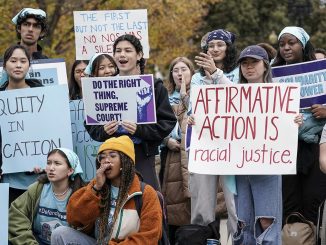
Indigenous activists respond to gutting of affirmative action
Boston – Indigenous activists in Boston reaffirm their commitment to overcome historic barriers to higher education for students in light of today’s ruling delivered by the Supreme Court of the United States (SCOTUS) that guts Affirmative Action in college admissions at institutions of higher education across the country. The Indigenous activists demand the passage of two bills in the state legislature specifically addressing Native issues in public education.
Today’s SCOTUS ruling overturns a longstanding precedent that had previously benefited Black, Indigenous, and Latine students in higher education due to a demonstrable historic lack of opportunities for those students. The Court’s decision emphasizes that considering race as a specific factor in admissions violates the Equal Protection Clause.
In delivering the dissent, Justice Sotomayor, herself a beneficiary of affirmative action, said of the argument by Students for Fair Admissions, Inc., “One of SFFA’s top percentage plans would even ‘nearly erase the Native American incoming class’ at UNC. The courts below correctly concluded that UNC is not required to adopt SFFA’s unrealistic proposals to satisfy strict scrutiny.”
“It should be noted that SCOTUS sidestepped the issue of equal protection in its recent decision on the Indian Child Welfare Act,” said Jean-Luc Pierite, president of North American Indian Center of Boston. “SCOTUS has only relied upon federal recognition of tribes to uphold preferential employment placement against equal protection challenges. This leaves so many ways Indigenous people fall through the cracks.”
“We must now work harder to contain the disproportionate harm to Indigenous students caused by today’s SCOTUS ruling.” Pierite cited a 2018 resolution by the National Congress of American Indians in stating that, “Native students experience lower rates of completion at postsecondary degree programs, where 41% of first-time, full time Native students who enrolled in a four-year public institution in 2008 completed a Bachelor’s degree by 2014 compared to 60% in the general population and 70% of white students.”
Mahtowin Munro, co-leader of United American Indians of New England, said that “Only about 19% of Native students attend college, compared to about 40% of white students. Educational disparities and reduced opportunities for Indigenous students begin in preschool and continue all the way up through the university level. If anything, we need more affirmative action to address these disparities, not less.”
“In addition,” Munro continued, “many Native students end up dropping out because of a lack of respect and support at their schools and because they do not have adequate funding – despite the persistent false belief among some non-Native people that ‘Indigenous students can go to college for free.’ It is heartbreaking to see generation after generation of our very capable and talented students be denied such a basic opportunity as a college education, and today’s decision will only increase the problem.”
In Massachusetts, HD.2237/SD.387, “An Act Relative to Celebrating and Teaching Native American Culture & History,” addresses the lack of Indigenous curriculum in Massachusetts public schools. Schoolchildren rarely learn about the Native American history of the region nor about the contemporary Indigenous peoples who live here, including the Aquinnah Wampanoag, Mashpee Wampanoag, and other bands of the Wampanoag, Nipmuc and Massachusett as well as Native people in Massachusetts enrolled in tribal nations throughout the US and Canada. The goal is to develop a curriculum by working with tribal nations in-state and ensure that all children in the schools attain cultural competence in understanding regional and national Native history, cultures and current issues.
In addition, HD.932/ SD.1826, “An Act providing for the creation of a permanent commission relative to the education of American Indian and Alaska Native residents of the Commonwealth,” proposes the establishment of a permanent commission to improve educational outcomes and opportunities for American Indian and Alaska Native students. Broader impacts of the commission would include the promotion of tribal self-determination by providing students with the opportunity to learn their heritage, languages and histories while preparing them for higher education.
The date for a teach-in as part of an “Indigenous Liberation Speaker Series” addressing the issues of Indigenous peoples in higher education will be announced soon.
Tree plantations and logging industry make wildfires hazardous
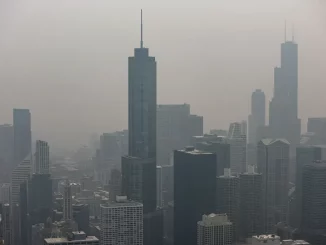
Canada is currently experiencing its worst wildfire season on record. As of June 29, 2023, over 3,000 wildfires in Canada have burned over 19 million acres of land. This is more than ten times the average number of fires and acreage burned during this time of year.
The fires have been particularly destructive in Quebec, where over 2 million acres have burned. The smoke from the fires has made air in parts of Canada and the U.S. among the most polluted in the world.
On June 29, Chicago and Washington, D.C., had the worst air quality in the world, while Detroit and Minneapolis were in the top 10, according to IQAir.com.
The smoke from the Canadian wildfires has laid a thick blanket over parts of the Midwestern and Eastern U.S. Over 120 million people, or more than a third of the U.S. population, were under air quality alerts. It’s a major health hazard. The unhealthy air quality conditions, while rising or falling on a daily basis, are expected to last for several months, if not longer.
Because the shroud of smoke, solar power generation in parts of the Eastern U.S. plummeted by more than 50%. According to the region’s grid operator, solar farms powering New England were producing 56% less energy at times of peak demand compared with the week before.
Reports in the big business media generally mention weather conditions and climate change as factors, including:
- Drought: Much of Canada is experiencing a severe drought, which has dried out vegetation and made it more susceptible to fire.
- Warm temperatures: The average temperature in Canada has been above normal this year, contributing to the severity of the fires.
- Wind: Strong winds have helped to spread the fires and make them more difficult to control.
- Climate change: Climate change makes wildfires more likely and severe in Canada. As the planet warms, the risk of drought and extreme weather increases, creating the perfect conditions for wildfires to start and spread.
Nothing to argue with there. But it leaves out another key factor: the industrialization of Canada’s forests.
A reference to this can be found in a careful reading of a New York Times report, “How Could This Happen?: Canadian Fires Burning Where They Rarely Have Before”:
“A combination of factors, fire officials said, laid the groundwork for the spread of wildfires in the Chibougamau area … Built on mining and the logging industry, Chibougamau is one of the few bold names on maps of Quebec’s vast, thinly populated northern regions.”
Canada is now mostly tree plantations and “managed forest,” which is more like a mono-crop farm than a forest, and much more prone to catastrophic burns. Clearcut logging and mono-crop replanting make wildfires worse.
A report, “Are the Canadian wildfires really ‘natural’ disasters” by Lambert Strether, documents this.
First, from the Natural Resources Defense Council:
The logging industry relies heavily on replanting efforts that create tree stands that are less biologically and structurally diverse and less resilient to future disturbances like extreme weather and climate change than the trees that have been removed. This exacerbates clearcutting impacts because even when these forests regrow, many have been turned into monoculture tree plantations that do not have the same ecological health as intact, multispecies forest ecosystems.
One 2012 study argued that “the widespread application of even-aged, single species management at all scales of boreal forest management interferes with fundamental ecological processes that maintain ecosystem integrity in boreal forests.”
In the report “Forest Herbicides, Monocultures Drive Wildfires, Harm Wild Species,” the Edmonton Journal says:
Forest companies using herbicides and mechanical removal methods to eradicate aspen from the spruce and pine crops they want to harvest are depriving moose of a winter food source and making wildfires more likely in Alberta forests, the Edmonton Journal reports.
The clumps and colonies of aspen that grow around Edmonton and northern Alberta “are less likely to burn than spruce or pine and cool the forest so well that, when fully-leafed out, wildland firefighters flee to a stand of aspen if the fire unexpectedly shifts,” the Journal explains.
But “forestry companies consider aspen a weed when growing conifers, spruce or pine. So roughly 30,000 hectares a year of forest are sprayed with glyphosate, the active ingredient in RoundUp. That’s roughly half the size of Edmonton, or 40% of the 80,000 hectares of forest harvested annually” across the province.
By killing off all the broad-leafed species, the companies create a monoculture, “making a coniferous tree plantation instead of a forest,” the paper adds.
The Halifax, Nova Scotia, Examiner reported in “The NS wildfires are not ‘natural’ disasters: climate change, forest management, and human folly are all to blame”:
“What’s really changed is the condition of our forest,” [professional forester Wade] Prest tells me. “It’s no longer diverse.
“Our original forest was probably mostly mixed. It tended towards a softwood mix in some areas, and to hardwood mix in others,” Prest explains. Prior to European settlement, he says Wabanaki-Acadian forests would have good canopy coverage, and underneath the canopy, it would be generally damp most of the time, without a lot of sunlight getting through to the forest floor.
“And that in itself would be what would stop the fires from either starting or being widespread,” Prest says. “Certainly, the forest has changed.
“I’ve always been critical of industrial forestry practices, and have vigorously promoted the natural Acadian forest as a model for ecological, social, and economic sustainability for Nova Scotia,” Prest says.
The Halifax Examiner report adds:
One of the greatest defenses that we have against fire risk is diversity … not just of species composition but also age and physical attributes. [Mike Lancaster, coordinator of the Healthy Forest Coalition in Nova Scotia] notes that after World War II and the Vietnam War, there was an explosion in the development of herbicides that were used to kill off deciduous species and manage forests for softwood species industry was looking for.
“It is widely known that conifer forests present a greater forest fire risk than those which are deciduous dominant,” Lancaster says. Because the forestry industry in Nova Scotia has historically been geared to favor coniferous species, in his view, “That translates as an increased forest fire hazard.”
Finally, author Peter Gelderloos in Quebec says on a Twitter thread:
The fires in Quebec are raging in tree plantations that get counted as carbon offsets. … Tree plantations are part of the industrial system of extraction and production. A form of mono-crop farming, they are the basis for the profits of the logging industry, which is more in demand as green products proliferate. … Tree plantations are also advantageous because they are fully integrated with the mining industry, using some of the same extraction infrastructure and helping cover up part of the sacrifice zones mining leaves behind. …
Most urban people and settlers do not know what a forest is. They see trees and think it is a forest.
Governments use the term “forest” without distinguishing between a forest ecosystem and a tree plantation. When I talk about a forest, I’m talking about a robust ecosystem. Granted, non-forests exist on a continuum from mono-crop tree plantations planted in rows to post-clearcut regrowth that is managed and commercially harvested.
The forest fires in Quebec and Ontario originate disproportionately in “managed forest,” which are on the continuum of tree plantations.
Rechazo al aumento del costo de energía

Esta pasada semana en Puerto Rico, el tema más importante, por ser crucial para el desarrollo económico del país y para la calidad de vida del pueblo, ha sido la energía.
Y es que coincidieron tres sucesos en ese sector tan importante: uno fue lo relativo a la deuda de la Autoridad de Energía, el segundo la privatización de la generación, y tercero, la marcha de pueblo en contra de los aumentos.
Recordemos que Puerto Rico está sometido a una Junta de Control Fiscal impuesta por el Congreso estadounidense, para obligar al pueblo a pagar una deuda ilegítima de más de $70 mil millones. Parte de esa deuda, $9 mil millones, es de la AEE donde administradores corruptos despilfarraron hasta los fondos de pensiones de los trabajadores.
Ahora se requiere un Ajuste de la deuda para esclarecer lo que se le pagará a los bonistas. Pero al igual que en la deuda argentina de años atrás, la Junta, que supuestamente representa al gobierno boricua, pero que realmente es quien defiende los intereses de los bonistas buitres, quiere que se les pague muy por encima del valor original de los bonos, por lo que intentan aumentar el costo de la luz, haciéndola impagable para el pueblo.
El segundo hecho es la privatización de la generación a manos de GeneraPR el 1ro de julio. Sin experiencia en generación ni suficientes trabajadores, y con un contrato leonino que nos recuerda el firmado con Luma Energy a cargo de distribución y transmisión, se inicia esta etapa de total desastre en el sector energético.
El sindicato Utier incluso puso una demanda en el tribunal de bancarrota para que se invalidara este contrato por ir en contra de la ley de Monopolio de PR, pero la jueza descalificó al sindicato aduciendo que “no tienen legitimación” para objetar el contrato.
Mientras, el pueblo sufre de constantes apagones por el servicio tan deficiente de Luma, lo que se verá agravado con un deficiente servicio de generación. Por eso, el pasado miércoles, pese a intensas lluvias en la isla, cientos de personas, incluyendo organizaciones de comerciantes que al principio favorecían la privatización, bajo la consigna de El pueblo contra los aumentos, marcharon al palacio del gobernador Pierluisi para rechazar esta alza en el costo de la energía.
Desde Puerto Rico, para Radio Clarín de Colombia, les habló, Berta Joubert-Ceci
UPS Teamsters union struggle is critical for all workers
Strengthen the union for this contract and the upcoming battle to save tens of thousands of jobs from automation.

340,000 workers, members of the Teamsters Union, worked tirelessly during the worst of the COVID pandemic. Despite exhaustion from overwork, disease, and family tragedies, they saved lives by delivering packages to those quarantined. Meanwhile, bosses at UPS lived in luxury as profits soared to $56.3 billion from 2019 to 2023. In 2023 alone, UPS says it will spend $3 billion in stock buybacks and $5.4 billion in dividends. Every penny of that profit is due to the labor of the workers.
Teamsters union negotiators reject insulting UPS economic proposal
The current contract expires in less than five weeks. Every day the company delays making a realistic offer to the union, the closer workers come to a strike authorized by 97% of the rank-and-file who voted. The union has already achieved 55 tentative agreements on essential issues, including outfitting of new vehicles with AC and retrofitting others with fans; new protections against discrimination based on gender identity or sexual orientation; increased penalties to the company for wage theft, harassment, and working management; and a host of other items.
On Wednesday, June 21, the Union submitted a 23-page economic proposal on critical remaining issues, including base pay and catch-up raises, elimination of the two-tiered driver classification (22.4s), cutting out sub-contracting (to truck companies or personal vehicle drivers) and more full-time job opportunities for part-time workers who make up 65% of the workforce. UPS responded with “an appalling economic counterproposal,” according to Teamsters National Negotiating Committee.
UPS, know this: The union will strike on August 1 if necessary
CEO Carol Tome mistakenly believes she can become a capitalist hero and housebreak the Teamsters on behalf of billionaire UPS shareholders and Wall Street. But she has, in fact, lit a renewed fire. UPS will need to make significant offers to avert a strike.
Wall Street is watching – all unions need to join this battle
In the June 21 update by Teamster President Sean O’Brien and four rank-and-file negotiating team members, the union made the call to intensify unity and solidarity, practice picket lines, identify strike captains, and get information out to all members.
The union has resisted pulling back despite Wall Street’s tactic of threatening workers with a loss of jobs to other carriers. But this threat is, first and foremost, a problem for UPS if it loses a big chunk of the market share of logistics contracts.
Teamsters president denounces Supreme Court attack on the right to strike
On June 1, 2023, the Supreme Court ruled that a union can be held liable for damages caused by a strike. This judgment represents the strong drive by the capitalists—who control all branches of government—to destroy the most basic labor rights won through workers’ struggle and sacrifice. They ultimately seek to undermine labor’s right to carry out effective strikes that will economically injure companies. Immediately, Teamster President O’Brien shot back: “The Teamsters will strike any employer, when necessary, no matter their size or the depth of their pockets. Unions will never be broken by this court or any other. Today’s shameful ruling is simply one more reminder that the American people cannot rely on their government to protect them. They cannot rely on their employers. We must rely on each other. We must engage in organized, collective action. We can only rely on the protections inherent in the power of our unions.”
Strengthening the union by encouraging activism and rank-and-file involvement is on target — still more is needed in the locals
The Teamsters international union has continuously called for rank-and-file organizing, parking lot rallies, and education among the members. Rallies and trainings have taken place across the country, uniting workers of all nationalities, genders, and job classifications. Every worker, every steward, and every union local official needs to do all they can to ensure that members are getting information and otherwise prepare for the possibility of a strike. The UPS Teamsters app is helpful, but in many hubs, workers still don’t know it exists. Many local officials and rank-and-filers are getting the word out while others resist.
Southern workers deserve equity in regional agreements
There are many Teamster regions in UPS, each with a contract supplemental to the national contract. The Southern Region is extensive, encompassing nine states. Regional negotiations have already resulted in tentative agreements that affect everything from vacations to pensions, grievances, sick pay, and PTO. A regional comparison of past supplemental contracts reveals a vast difference in these categories. For example, a worker in Northern California gains three weeks of vacation after three years of work. In contrast, a Southern worker must work ten years to get the same amount. These disparities are mainly due to unions’ continued lack of attention to the South. Still, it also shows the need for more activity by the Southern Region leadership and some locals.
Southern workers will revive union militancy
Some locals in the South have been failing to enforce current contract provisions, press grievances, or mobilize members. Unions in “right-to-work” states need to sign up new members, which many locals have neglected. Signing up new members this month is especially critical because workers who are not in the union will not get strike pay. Many workers—particularly part-timers—don’t know there is a union, much less what it does, what the contract is, or how a grievance is carried out. Most UPS workers are part-time, and many have second jobs. Now is the time to prepare workers to walk the picket line on their usual shift (if not more) and promote unity between workers with different job classifications and seniority levels. Rank-and-file members and stewards need to put in extra effort to organize, educate, and inspire their fellow workers in places where local leadership is apathetic or worse.
Strike solidarity is important and should be encouraged. But those doing it should try to understand the problems and uplift members’ leadership, not substitute for them. No union, however large or strong, can succeed in isolation. Done right, solidarity can help lift morale and provide material support.
A well-organized strike can create a revolution in class consciousness and class unity if it fosters worker leadership, especially among members who may be stepping into that role for the first time. A strike can also clear the path to a stronger union by shaking up the cozy relationships that sometimes develop between local officials and the company.
UPS is using automation (AI, robotics) and uberization to destroy jobs
Whether UPS workers strike or not, the efforts already made to strengthen the union are critical. This contract is only one battle in the class war that pits the workers against UPS and its government supporters.
In some places, UPS has imposed hiring freezes for new drivers, creating a situation where the company gets too many packages for the current fleet to deliver. UPS then hires personal vehicle drivers (PVDs) to fill in the gaps that the company has created. PVDs make less and get no benefits while they pick up the costs for the upkeep and insurance of their vehicle. This Uberization is a major way for UPS to lower labor costs. They also want to subcontract to smaller trucking companies for the company-created overflow. A subcontracted company makes a profit while their drivers get much less than Teamster drivers, driving wages down across the industry.
The Teamsters Union has come to tentative agreements to prohibit the use of drones and driverless vehicles for the period of the next contract. But automation in the form of robotics and AI is already a significant threat to workers who sort and load packages. The union negotiated that UPS will notify them 45 days before any technological changes. This tentative agreement is good. But companies plan these changes for years, and UPS is likely looking to remove tens of thousands of inside workers who sort and load packages. The union needs to plan its offensive and lay the groundwork among the members to pursue new strategies to deal with this threat.
Unions need to find new ways to protect jobs and communities
Whatever you call it — AI, robotics, computerization, kiosks — it is all automation. The problem is not the technology itself. The problem is that we live in a capitalist system of private ownership of industry and business.
The capital used to retool and install new technology comes from the unpaid labor of the workers in the form of profits. The collective labor of the world’s workers could be used to our collective benefit—to make unsafe jobs safer, lessen the burden of work, or shorten work hours while maintaining living wages. But under capitalism, we workers wind up financing the destruction of our own jobs.
The capitalist U.S. government—local, state, and federal—is dedicated to protecting private corporate property using our tax dollars. In May, the Biden administration announced a $140 million subsidy to launch seven new AI research centers.
Workers have a property right to our jobs by virtue of our labor
We must fight to declare that workers have a property right in our jobs. Through united collective action—work actions, occupations, or general strikes—we need to assert control over the technology that our labor creates.
Hundreds of thousands of workers lost jobs in the auto and steel industries due to high-tech automation. This meant the destruction of entire communities. Unions at that time thought that working with their bosses to impose tariffs on cars and steel imports was the answer. While that charade played out, the companies downsized, set tiered wages and benefits, and made joint agreements with automakers from abroad, who the capitalists had previously called the enemy. The enemy was at home. As fewer workers could purchase cars, all these companies turned to military contracts with their unlimited money and war profiteering gotten by looting the federal treasury.
The best way for the Teamsters to prepare for the struggles ahead is to step up what is being done now to strengthen union forces nationally and locally for the best possible contract and to work towards victory if it comes to a strike. Even if everything is not won, the effort to educate and inspire the rank-and-file to action will be necessary for the future.
Source: Workers Voice
1