Los Angeles: Harriet Tubman Center Reopening Celebration, June 10

Los Angeles: Grand Reopening Celebration for Harriet Tubman Center for Social Justice

Saturday, June 10 – 2:00 to 6:00 p.m.
5278 W. Pico Blvd., Los Angeles
Free admission

Welcome back to the Harriet Tubman Center for Social Justice as we show how our space is an even greater representation of our movement — in both beautiful depictions of the struggle on our walls and interior design.

Plus, speakers who will show this space is a part of their community organizing and building of our working class and liberation movements … including your voice and activism. It’s a place to discover others who want to also build a better world and community with you.

Strugglelalucha256


South Korean prisoners of conscience: ‘They are still warriors’

Beginning in 1905, the Empire of Japan occupied Korea. Korean resistance fighters throughout the nation were highly organized. By the time World War II was concluding, the guerilla army led by Kim Il Sung had driven the Japanese out of the northern half of the peninsula. 

Resistance was also powerful in the South, and the occupiers killed and jailed thousands as they tried to hold on to power. When Japan was defeated, the United States moved into what is now South Korea. They continued the brutal occupation that Koreans had suffered since 1905.

 The heroic resistance in the south delayed the U.S. attack on North Korea for five years as the U.S. and quisling Koreans who had collaborated with Japan barely held onto power. In the process, they murdered thousands of peasants, students, communist fighters, and unionists. They jailed tens of thousands. 

Just before the 1950-53 Korean War, the U.S. oversaw mass executions of political prisoners carried out by their comprador South Korean puppets. Many who were spared execution spent the rest of their days in prison, refusing to renounce their desire for socialism, liberation, and reunification with the North. 

Korea’s National Security Law remains in place today. Arrests have continued. Those refusing to renounce their desire for reunification and socialism serve some of the world’s longest sentences for political prisoners. 

Struggle-La Lucha spoke with Peter Kim, a Los Angeles activist with the Support Committee for Korean Prisoners of Conscience.

SLL: You visited with some of the Prisoners of Conscience in South Korean prisons. Can you explain briefly what a prisoner of conscience is? 

Peter Kim: A Prisoner of Conscience is a person imprisoned for holding political or religious views that are not tolerated by their own government. In Korea, prisoners of conscience are unconverted long-term prisoners. Who are unconverted prisoners? They are POWs from the Korean War. They were in the People’s Army to be returned under the cease-fire treaty but were sent to prison instead. This is a violation of the cease-fire treaty and the Geneva Convention. It’s a war crime. 

SLL: What did it mean to be converted or unconverted?

Peter Kim: People living in the south who opposed the U.S. invasion supported the People’s Army. After the Korean War, they were victims of the KCIA’s fabricated spy allegations. What is conversion? When the Japanese occupied Korea, they tried to eliminate the national liberation movement. Koreans who fought for liberation were jailed, tortured, and eventually executed if they refused to pledge their loyalty to the Japanese. To prove loyalty, the prisoners had to write about their regretful behavior and sign their loyalty to the Japanese. People who did this received lighter sentences, and were pardoned and freed. Even the Nazis did not have a conversion program for dissenters. Japanese imperialism still has not apologized for its sexual slavery, forced labor, and occupation of neighboring countries. 

SLL: What was the treatment of people, particularly the unconverted prisoners, after the U.S. moved in?

Peter Kim: After liberation from Japan, Americans used the same National Security Law that the Japanese used in the colonial era to put down their political enemies, those who resisted the government and were socialists. It’s shameful to say that unconverted long-term prisoners are going through a conversion course much worse than what the Japanese did to the Koreans. Many of them were killed in the conversion process. How can you change someone’s ideology or thought? Being able to think and speak freely is a basic human right! 

SLL: That same National Security Law is still in place, and speaking out for reunification or visiting North Korea still gets people arrested in South Korea. Are there still long prison sentences?

Peter Kim: Yes. Nelson Mandela was a long-term prisoner. He was in prison for 27 years. Korean unconverted long-term prisoners’ average prison time is 33 years; the longest is 43 years and ten months. As a result of the North-South Korea summit in 2000, some 63 unconverted long-term prisoners, excluding those who wanted to remain in the south, returned to their motherland in September 2000. 

They got a warm welcome and were treated as national heroes. Back then, the distinction between conversion and non-conversion mattered. So the few converted long-term prisoners didn’t go back. After the first repatriation, 46 people waited for the second repatriation. We are constantly asking the authorities for a second repatriation for those who were left out. After 23 years, most of them passed away without being able to return to their motherland and family. Only nine remain. 

On my visit to Korea, I met 4 of the remaining 9. Two of them just underwent surgery, even though they are in their 90s. It is not easy to decide on surgery, and they may die during the operation. However, their tenacity to return to their motherland and report to the Workers Party of Korea seems to have led them to such determination. They recovered faster than expected and worked hard for rehabilitation. They are still warriors!

Strugglelalucha256


They stole us, they sold us, they owe us: Reparations must be paid!

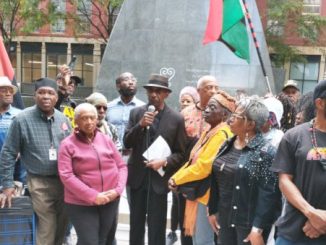
The wealthy and powerful in New York are trying to sideline a state reparations bill. To protest and stop this sabotage, a powerful news conference was held in front of the African Burial Ground in Lower Manhattan on June 5.

Roger Wareham, a December 12th Movement’s International Secretariat member, chaired it. Wareham reminded listeners that the late Sonny Abubadika Carson helped save the sacred ground – where 20,000 Black people are buried –from being destroyed.

Activists, including Rev. Herbert Daughtry, Sr., put their bodies on the line against government bulldozers.

“We built this country,” declared New York City Councilperson Charles Barron. Up to the Civil War, the vast majority of U.S. exports were produced by enslaved Africans.

Barron pointed out that New York City was only second to Charleston, South Carolina, in its dependence on enslaved Africans. Wall Street had a slave market.

The very name “Wall Street” was born of slavery, with enslaved Africans building the wall in 1653. In 1711, Wall Street was declared the city’s first official slave market for selling and renting enslaved Africans and Indigenous Peoples. Wall Street was the primary New York slave market for the next hundred years. 

It was the struggle of Black people that forced New York State to abolish slavery in 1827, said Barron. As a New York State Assembly member, he sponsored a reparations bill that passed with over 100 votes.

The legislation would set up a commission with members of community organizations that have advocated reparations for decades. These groups included the December 12th Movement; N’COBRA (The National Coalition of Blacks for Reparations in America); and the Institute of Black World.

The bill was, however, held up in the State Senate.

Justice thwarted by ‘petty politics’

Roger Wareham then read from the press statement:

“The current legislative session in Albany ends in three days. An issue of monumental importance – reparations for New York State’s citizens of African Descent – hangs in the balance, reputedly a prisoner to hurt feelings and petty career ambitions.

“One State Senate version, S2416, sponsored by Sen. Brisport, replicates the bill introduced by then-Assemblyman Charles Barron, which was passed by the Assembly in two separate sessions. What makes this version of the Reparations legislation unique from those anywhere else in the United States is the provision for a Commission which has a majority community-selected membership. Three community organizations, of which we are one, will select 6 of the 11 Commission members. The legislature will have the final determination and execution on the Commission’s findings and recommendations.

“Apparently, progress on the Senate bill and even the assignment of a number to the Assembly bill, sponsored by Assemblymember Solages, is being held up for reasons so petty that they won’t survive public discussion.

“Our three organizations each have more than 30 years of demonstrated commitment to the demand for reparations. Our participation on the Commission gives us no material benefit, only an opportunity to bring our experience to help develop a comprehensive program that will improve the quality of life for the state’s Black residents.

“This is a time for real leadership from Assembly leader Carl Heastie and Senate leader Stewart Cousins. They need to cut through the smoke and shepherd the Brisport and Solages bill into passage before the session ends.

“We ask those who support the bill to call the offices of Assemblyman Hastie (518-455-3791; 718-654-6539; speaker@nyassembly.gov), Senator Andrea Stewart-Cousins (518-455-2585; 914-423-4031; scousins@nysenate.gov), as well as their local state representatives.”

Never forget the Buffalo massacre 

Kennis Henry, a National Co-Chair of N’COBRA, recalled the murder of 10 people in Buffalo on May 14, 2022, by a white supremacist. “Here are your reparations” was written on his rifle.

“Prove him wrong!” she declared, adding, “I’m so proud to be with you.”

December 12th Movement Chairwoman Viola Plummer declared we are “ready to go to war – not in Ukraine, but here in New York State. We’ve got to let them know that we’re mad as hell!”

The banks control the political system that’s derailing the reparations bill. Plummer denounced JPMorgan Chase CEO Jammie Dimon as a bloodsucker.

The press conference ended with the participants chanting: “They stole us! They sold us! They owe us!”

Reparations now!


Strugglelalucha256


Defienden educación pública


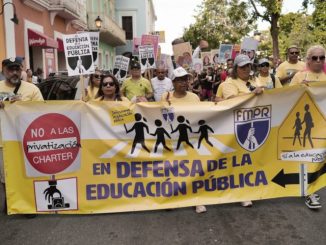
Estos días, la indignación que el magisterio boricua ha sentido constantemente por varios años de atropellos a la educación pública, aumentó de manera dramática y les indujo a formar una Coalición Multisectorial para salir a las calles masivamente en defensa de la educación pública y gratuita.

Y es que los buitres, mayormente gringos, que se benefician de la ley 22 que convierte a PR en un paraíso fiscal para millonarios extranjeros corruptos, ahora han puesto la mira en la educación boricua. Pero no para aportar ayudas, sino para destruir lo poco que queda de las escuelas públicas y convertirlas en escuelas chárter de tipo privado, que aquí le llaman eufemísticamente Escuelas Alianza que no tienen un currículo común, sino que obedecen a la ideología que sus propietarios quieran avanzar.

Para eso, están comprando o construyendo edificios cerca de las escuelas públicas existentes, para robarse a esos estudiantes y beneficiarse del erario público. Un ejemplo visto en un video que se ha hecho viral últimamente, es el de la gringa Kira Golden que recibe un mantengo de la Ley 22 y ha comprado ya varios edificios en la zona de Río Piedras. Es asqueante su visión sobre PR comprobado en el video donde expresa que es “maravilloso” lo que ha pasado en PR luego del Huracán María, porque bajó el valor inmobiliario y pudo comprar muchas propiedades. 

Pero esos gringos millonarios tendrán que tragarse la lengua porque el movimiento magisterial junto al pueblo y a legisladores progresistas ya han montado una campaña para exigir una moratoria en las Escuelas alianza y eventualmente, derogar la ley 85 que las crea, y sustituirla por una verdadera Reforma Educativa.

Desde Puerto Rico, para Radio Clarín de Colombia, les habló, Berta Joubert-Ceci.

Strugglelalucha256


New York City’s biggest hate march protested

The largest white supremacist event in New York City is the annual “Israel” parade. Held this year on June 4, it celebrated the 75th anniversary of the apartheid state created by expelling over 700,000 Palestinians from their homeland.

Called the Nakba ― Arabic for catastrophe ― the forced removal of Indigenous people included killing 15,000 Palestinians. Massacres were conducted at Deir Yassin and other villages.

A protest against this parade was called by Al-Awda NY: the Palestine Right to Return Coalition; American Muslims for Palestine; and NY4Palestine.

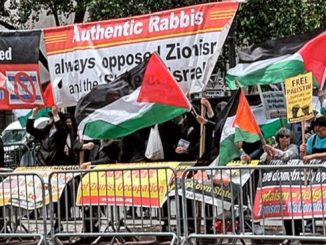
This courageous grouping confronted the “Israel” parade bigots. They carried Palestinian flags, signs, and banners denouncing the racist Zionist state and the support it gets from the U.S. 

Among them were rabbis and other members of Neturei Karta, Orthodox Jews who oppose Zionism and support Palestinians’ right to return to their homeland. Other groups present included the ANSWER Coalition, Socialist Action, and Struggle-La Lucha newspaper.

The “Israel” parade is not a celebration of Jewish contributions to world culture. It’s a racist mobilization of the most reactionary elements, with cops on horses and other police detachments in the lead.

Particularly repulsive was the float celebrating the Zionist settlers in Al-Khalīl (Hebron) who constantly attack Palestinians. One of the settlers, Brooklyn-born Baruch Goldstein, murdered 25 worshippers in a mosque on Feb. 25, 1994, before survivors killed him.  

There were also many contingents of students from Yeshivas, which function like the “seg academies” do in the South and elsewhere. These schools keep Jewish youth from contact with Black and Latinx students. Many of the older Yeshiva students were furious at the Palestinian supporters.

As disgusting as this annual parade is, it was important that there was opposition to it. Palestine will win!

Strugglelalucha256


ILWU to celebrate Juneteenth with a shutdown

Seattle port bosses fired the International Longshore and Warehouse (ILWU) Local 52 workers on the June 2 night shift and again on the morning shift, says Gabriel Prawl, a longshore worker and a leading member of the Million Worker March Movement as well as the President of the Seattle A. Philip Randolph Institute.

The firings are the latest outrage taken by West Coast port terminal operators against over 22,000 longshore workers at 29 ports fighting to get a decent union contract. Prawl says, “It’s time for the rank and file to speak up and make their voices heard.”

In San Francisco, militant ILWU Local 10 rank and filers voluntarily stopped picking up jobs during dispatch on June 2, 3, and 4. CNBC reported that port shutdowns were expected to spread up and down the West Coast as workers protest over negotiations in contract talks with port management.

ILWU members have been working without a contract for a year. The Pacific Maritime Association (PMA) represents over 70 multinational ocean carriers and maritime companies with whom the ILWU negotiates a contract.

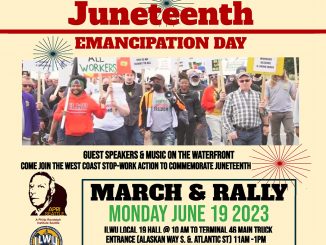
Many ILWU locals are following the call by Locals 10 and 52 to shut down all West Coast ports on June 19 — Juneteenth, the day in 1865 when news about the emancipation from slavery finally reached the last workers in Texas. Prawl added, “It is a day for workers to protest conditions rising out of slavery that are currently getting worse — homelessness, child labor, hunger. … The ILWU needs to celebrate Juneteenth with a shutdown to show the PMA that they are a strong and angry workforce.”

Port bosses made historic profits

There is plenty to be angry about. According to a June 2 ILWU press release, “PMA member carriers and terminal operators made historic profits of $510 billion during the pandemic. In some cases, profits jumped nearly 1000%. Even as shipping volumes return to normal in 2023, PMA members have continued to post revenues that far exceed pre-pandemic times by billions of dollars.

“ILWU workers risked and lost their lives during the pandemic to ensure grocery store shelves were stocked, PPE was made available, essential medical supplies were reaching our hospitals.” Record volumes of goods were moved, enabling the shipping industries’ astronomical revenues. “Despite this fact, from pre-pandemic levels through 2022, the percentage of ILWU wages and benefits continued to drop compared to PMA rising revenues.”

According to ILWU International President Willie Adams, “West Coast dockworkers kept the economy going during the pandemic and lost their lives doing so. We aren’t going to settle for an economic package that doesn’t recognize the heroic efforts and personal sacrifices of the ILWU workforce that lifted the shipping industry to record profits.”

ILWU Local 13 reported: “Despite the enormous profit and record-breaking cargo volumes that the labor force moved through Southern California ports, ocean carriers, and terminal operators have thumbed their noses at the workforce’s basic requests, intimating that the health risks and loss of lives these working people endured during the pandemic did not matter to them and they were expendable in the name of profits.

Local 10 in front lines during pandemic

Clarence Thomas, a retired third-generation member of ILWU Local 10 in San Francisco, said he had been involved in lockouts and witnessed the port bosses’ ruthless disregard for the longshore workers.

Thomas said, “Local 10, with predominantly African American membership, was in the front lines fighting for safe working conditions and protective gear during the pandemic. The Princess cruise ship whose passengers were infected with COVID docked in the Port of Oakland and the crew was stranded on the ship. Local 10 took action not only to protect themselves and their families. They organized a response to protect all the communities in the Bay area.”

Thomas continued, “It is remarkable to see young workers far removed from the Civil Rights Movement and heroic battles on the waterfront led by longshore leaders like Harry Bridges and Henry Schmidt, those who led the 1934 General Strike in San Francisco, young workers who understand that legacy. Longshore workers’ power rests in their job at the point of production. If they don’t unload the ships, the bosses can’t make a profit.

The commitment of the union to protect the workers’ families is evidenced by Thomas’ mother, Charlene Thomas, who is 94 years old, and Sadie Williams, 99 years old, the spouse of Cleophas Williams, the first Black president of Local 10. Both of them enjoy all of the benefits won by the ILWU.

Gabriel Prawl says, “Longshore workers on the whole coast have been working above and beyond the requirements of their jobs thereby violating their own safety rules to keep the supply chain moving.

“Now, with the cost of living rising sharply, the PMA is balking at contract negotiations. Prices for basic items like food and gas are cutting into the workers’ pay determined by the union contract. To make themselves heard, ILWU members are beginning to follow their safety protocols designated for dangerous jobs, ‘working by the book.’”

Working safely antagonizes the carriers and terminal operators. It’s safer, slower and lowers profits.

Commenting on the pro-boss June 1 Supreme Court ruling against the Teamsters in their fight with a Seattle concrete firm, Glacier Northwest v. Teamsters 174, Prawl quoted the single dissenting Justice, Ketanji Brown Jackson, who wrote: “Workers are not indentured servants, bound to continue laboring until any planned work stoppage would be as painless as possible for their master. They are employees whose collective and peaceful decision to withhold their labor is protected by the NLRA even if economic injury results.”

Prawl said, “It is the rank-and-file who needs to fight to defend their labor rights. Just imagine what would happen if workers around the world stopped work for just one day.”

First step: Stop all work on Juneteenth! 


Strugglelalucha256


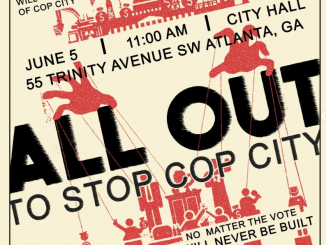
Atlanta: All Out to Stop Cop City, June 5

Atlanta: All Out to Stop Cop City
Monday, June 5 – 11:00 am
City Hall, 55 Trinity Avenue SW, Atlanta, GA

On June 5, City Council will vote on the funding of Cop City. No matter the vote, Cop City will NEVER BE BUILT!

Strugglelalucha256


Eyewitness Report: LGBTQ Rights in Cuba – June 22, New Orleans

THURSDAY, JUNE 22, 2023 AT 6:00 PM CDT
Eyewitness Report: LGBTQ Rights in Cuba
2533 Columbus St, New Orleans

Join us at Parish Hall, 2533 Columbus St., Jun 22 at 6pm for an eyewitness report back on LGBTQ rights on this progressive island!

In May, a solidarity delegation organized by Women in Struggle traveled to Havana to bear witness to the achievements of the LGBTQ community there.

We saw the fruits of the new Families Code, a groundbreaking law advancing equality for all families, women, LGBTQ people, disabled people, and elders. Come learn about the country with us!

Strugglelalucha256


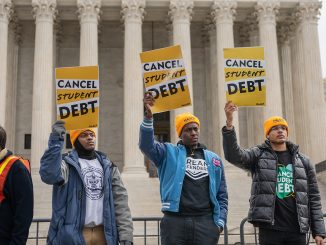
Attacks on student loan forgiveness threaten millions in the U.S.

Congress is spearheading an effort to force millions of student debtors deeper into financial despair

U.S. Senators from the Republican and Democrat parties pushed to quickly approve the bipartisan debt ceiling deal on Thursday night, June 1. Republicans, led by Speaker of the House Kevin McCarthy, successfully negotiated severe cuts on government spending in a way that will hurt workers the most out of any class: by kicking millions off of food and health benefits, cutting the IRS making it easier for the wealthy to evade taxes, and officially putting an end date to the current freeze on student loan payments. Senate leaders pushed this bill through ostensibly to avoid a government default. The typically slow-moving Congress quickly funneled through the debt ceiling deal, much as it infamously funneled through a bill putting down a potential rail workers strike last year in record time.

A bad deal

As explained by The Debt Collective, which organizes working-class debtors in the U.S., the codification of an end to the student debt payments pause, which will terminate the pause on September 1, will put millions of borrowers in a deeply precarious financial position.

The pause has been extended seven times, but the debt ceiling deal will take away that option for good. Biden has been trying to push through a student debt cancellation program since August 2022, but these efforts have been hamstrung by conservatives who have thus far successfully prevented the measure from being implemented. The program would have eliminated entire debt balances for 20 million people. Student debt cancellation is popular in the U.S.: 55% support student debt cancellation of up to $10,000 per borrower, and 47% support up to $50,000. Only a minority (31%) oppose student debt cancellation entirely.

The fate of Biden’s program will be sealed by the Supreme Court in a decision coming later this year. It is likely that the Court, now majority ultra-conservative, will rule against the measure. If this happens, Biden will probably try a different tactic to implement loan forgiveness. But the debt ceiling deal will ensure that if the Court rules against Biden’s program, the administration cannot continue to provide temporary relief past September 1, no matter what. Debtors will be on the hook for payments that they largely cannot afford to pay.

“What if the Biden admin comes across a new reason to extend the pause before Sept 1? What if they learn that 20% of the people with student loan accounts have incorrect information, leading to illegal debt collection practices?” asks the Debt Collective in a recent Twitter thread. “Too bad. The end to the pause was codified. Collect.”

Some politicians, such as progressive Senator Bernie Sanders, refused to vote in favor of the debt ceiling deal based on the fact that Biden could have taken executive action to avoid a default by invoking the 14th Amendment. Therefore, such a deal was unnecessary in the first place. “The willingness of Republicans to hold the economy hostage to their cruel demands has made it extremely difficult to enact a bipartisan budget deal,” Sanders tweeted on May 24. “President Biden has the authority under the 14th Amendment to avoid a default. It must be exercised.”

The larger problem

Student loan debt is a crisis in the United States, as even the country’s comparably few public universities are quite expensive when compared with the rest of the world. As a result, even the average public university student borrows $31,410 to obtain a Bachelor’s degree.

45 million people in the U.S. have student debt — around one in five adults. 43.8 million of those have federal loans, which account for 93.1% of the total U.S. outstanding student loan balance of $1.635 trillion.

Federal student loan payments have been frozen for debtors since the height of the COVID-19 pandemic in March 2020. In September 2022, when payments were set to resume in January of 2023 before the deadline was once again extended, a survey found that three out of five borrowers could not afford these payments.

According to a recent report by the Student Debt Crisis Center, those who owe student loans are more precarious than the overall population, which is already in economic despair in the U.S. While 34 million people are food insecure, student debt borrowers experience food insecurity at a 61% higher rate than the rest of the country. The percentage of borrowers struggling to pay for healthcare and medicine increased by 34% between 2020 and 2022, and the percentage of those who could not afford rent increased by 17% in the same period. A majority of borrowers (51%) reported feeling “anxious, stressed, or depressed,” compared to a national average of 15.6%. And borrowers were eight times more likely to be housing insecure than the rest of the U.S. in 2022.

Attacks continue

Another attack on Biden’s student loan program has been making headlines. On May 24, the House of Representatives approved a measure that would not only eliminate student debt relief and end the pause on payments, it would charge interest canceled due to the pause, and it could potentially hold borrowers responsible for retroactive payments from the past three years of the pause. The Senate passed the same bill on June 2, but Biden has vowed to veto the resolution once it reaches his desk. Luckily for borrowers, this will almost certainly prevent it from becoming law.

However, many have pointed out the hypocrisy of the Republicans and Democrats who voted for the measure. Marie Gluesenkamp Pérez, one of only two Democrats in the House that voted for the resolution, had a Paycheck Protection Program loan of over $63,000 forgiven by the U.S. government. Her spokesperson has doubled down in a response to criticism, saying, “She didn’t choose to live through a pandemic …  Access to PPP loans was practically universal,” despite such loans being only available to business owners, not workers.

Source: Peoples Dispatch

Strugglelalucha256


War criminal Kissinger doesn’t deserve to be 100 years old

It’s obscene that Henry Kissinger could celebrate his 100th birthday on May 27. Patrice Lumumba, Medgar Evers, Malcolm X, Che Guevara, and Dr. King were all murdered before they reached 40.

Each of these heroes would be younger today than this war criminal if they had not been assassinated and were able to have long lives.

Kissinger deserves Nuremberg justice for mass murder on three continents. On his watch, millions of people were killed in Vietnam, Cambodia, Laos, Bangladesh, Chile, East Timor, Angola, South Africa, and Palestine.

Using his credentials as an “elder statesman,” Nixon’s former accomplice is a cheerleader for the proxy war against the Russian Federation in Ukraine. In a lengthy interview with “The Economist” ― a mouthpiece of the British and U.S. financial aristocracy ― Kissinger demanded that Ukraine be admitted to NATO.

That would turn the present conflict into a world war involving four nuclear powers: the United States, Britain, France, and Russia.

Kissinger also believes that Japan will develop nuclear weapons within five years. This is part of the war drive against the socialist People’s Republic of China.

It was by advocating so-called tactical nuclear weapons that Kissinger rose to prominence in the U.S. foreign policy establishment. His 1957 book, “Nuclear Weapons and Foreign Policy,” claimed that wars could still be fought with nukes yet prevented from turning into World War 3.

The key would be using “only ” nukes equivalent to 50 kilotons (50,000 tons) of TNT. The bomb that killed over 100,000 people in Nagasaki, Japan, was less than one-third that size.

Kissinger hit the big time as a protégé of New York Gov. Nelson Rockefeller, a member of the world’s first billionaire family that founded Big Oil. When Indian Prime Minister Jawaharlal Nehru visited the United Nations in 1961, Rockefeller harangued him.

“He talked to me about nothing but bomb shelters,” said Nehru. “Why does he think I am interested in bomb shelters? He gave me a pamphlet on how to build my own shelter.”

Like Reagan’s “Star Wars” program, the campaign to build fallout shelters was an attempt to convince people they could survive a U.S. nuclear war on the socialist countries.

Kissinger’s nuclear bullying

For decades the U.S. State Department was a Rockefeller property. John Foster Dulles ― Eisenhower’s first Secretary of State ― was managing partner of Sullivan & Cromwell, the family’s law firm.

Dean Rusk ― Secretary of State under Kennedy and Johnson ― had been president of the Rockefeller Foundation. Even Trump’s first Secretary of State ― Rex Tillerson ― was former CEO of ExxonMobil, the descendant of Rockefeller’s crown jewel, Standard Oil of New Jersey.

Henry Kissinger was another Rockefeller employee. Upon becoming Nixon’s National Security Adviser, the New York governor thoughtfully gave Kissinger $50,000, worth $426,000 today

No one was prosecuted for this bribe. Kissinger illegally stored State Department papers in Nelson Rockefeller’s private vault at the family’s six-square-mile Kykuit estate in Westchester County, north of New York City. 

Less than two months after Nixon was inaugurated president in 1969, he and Kissinger launched Operation Menu, the massive bombing of Cambodia. The killing of thousands of people in a sovereign country was a war crime and a violation of international law.

So is Biden’s occupation and bombing of Syria.

Nixon and Kissinger could have made the same peace agreement in 1969 with Vietnam that they finally did in 1973. Millions of lives would have been saved in Vietnam, Cambodia, and Laos, as well as 20,000 fewer dead GIs.

Despite Kissinger’s barely disguised threats at the Paris peace talks to use nuclear weapons, Vietnam refused to surrender. At the Dec. 4, 1972 meeting, Vietnamese negotiator Lê Đức Thọ told Kissinger off:

“We … sometimes think that you would also use atomic weapons because, during the resistance against the French, Vice President Nixon proposed the use of atomic weapons. …

“If we do not achieve … [our] goal in our lifetime our children will continue the struggle … We have been subjected to tens of millions of bombs and shells. The equal of … 600 atomic bombs. …

“The simple truth is that we will not submit and reconcile ourselves to being slaves. So your threats and broken promises, we say, that is not a really serious way to carry on negotiations.” 

It was because of these nuclear threats and the U.S. killing of millions that Lê Đức Thọ refused the Nobel Peace Prize that was awarded to himself and Kissinger.

All the power of the Pentagon couldn’t prevent a Vietnamese tank from smashing through the gate of the former U.S. embassy in what became Hồ Chí Minh City on April 30, 1975. Vietnam’s victory continues to inspire oppressed people from Palestine to the Philippines.

Chile’s 9-11 and Operation Condor

Vietnam wasn’t the only place where Kissinger’s bloody imprint was felt. U.S. copper companies and the ITT conglomerate couldn’t tolerate the election of the socialist Salvador Allende as Chile’s president in 1970.

Even before Allende was elected, Kissinger was plotting to overthrow him. “I don’t see why we need to stand by and watch a country go communist because of the irresponsibility of its own people,” said Kissinger. So much for democracy and self-determination.

More people were killed when General Pinochet and the CIA overthrew Chile’s government on 9-11-73 than were killed on 9-11-01 in Manhattan. President Allende was among the victims. Santiago’s football stadium was filled with prisoners awaiting execution, including the folk singer Victor Jara who was tortured to death.

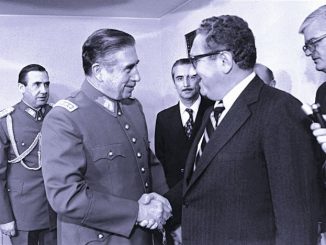
Secretary of State Kissinger approved of these atrocities. “We are sympathetic with what you are trying to do here,” Kissinger told Pinochet when they met in Chile on June 8, 1976. “You did a great service to the West in overthrowing Allende.”

Three months later, former Chilean foreign minister Orlando Letelier and an aide, Ronni Moffitt, were murdered in a Washington, D.C., car bombing on Sept. 21, 1976. Their assassination by Pinochet’s secret police agents was part of Operation Condor, a joint effort by six South American dictatorships to exterminate leftists.

Operation Condor’s lynchpin was Argentina dictator Jorge Videla. Kissinger told Videla’s foreign minister, César Guzzetti, on June 10, 1976, that he “hoped the Argentine government could get the terrorist problem under control as quickly as possible.” 

By “terrorists,” Kissinger meant any opponents of the bloody military regime that murdered as many as 30,000 political prisoners. Hundreds were thrown out of helicopters into the Atlantic Ocean.

Kissinger vs. African liberation

Kissinger’s Eurocentric arrogance and contempt toward all oppressed countries was evident in his exchange with Chilean Foreign Minister Gabriel Valdés in June 1969. (Valdés was a member of the Christian Democratic government that preceded Allende’s.)

Kissinger told Valdés, “You come here speaking of Latin America, but this is not important. Nothing important can come from the South. History has never been produced in the South.”

In 1972, Kissinger described Bangladesh as a “basket case,” a terrible, bigoted term for a country looted by British colonialism for 190 years. The year before, the U.S. aircraft carrier Enterprise was sent to the Bay of Bengal to try to intimidate India, which was supporting the independence struggle in Bangladesh.

Pakistan’s military, using the codename “Operation Searchlight,” carried out massacres against Bengali people with Nixon’s and Kissinger’s consent.

When Nixon and Kissinger arrived in Washington in 1969, Nelson Mandela had been in jail for over six years. U.S. imperialism was determined to keep him there. The CIA helped the apartheid secret police arrest the African National Congress leader in 1962.

The fascist government in Portugal ― a founding member of NATO ― was dropping U.S.-supplied napalm bombs on African liberation fighters in Angola, Guinea-Bissau, and Mozambique.

Ian Smith declared “Rhodesia” (occupied Zimbabwe) independent and said that he didn’t “believe in Black majority rule ever in Rhodesia — not in a thousand years.”

White settlers occupied Namibia, a former German colony, where they celebrated Hitler’s birthday.

Change was coming, however. The armed struggle of Africans led to the overthrow of the fascist regime in Lisbon on April 25, 1974.

Fighting for their liberation, Africans also brought some freedom to Portuguese working people. The Portuguese Communist Party played a key role in the Portuguese Revolution while extending aid to their comrades in Africa.

Africa called, Cuba answered, Kissinger threatened

After tremendous sacrifice, all of Portugal’s African colonies won their freedom. The People’s Republic of Angola was born on Nov. 11, 1975.

Vice President Nelson Rockefeller, along with his employees, Secretary of State Henry Kissinger and White House occupant Gerald Ford, sought to kill it. They had the Nazi armies of then-apartheid South Africa invade the African country.

Africa needed help. Over 2,000 Cuban soldiers died fighting alongside their African comrades in defeating the apartheid forces.

As Elombe Brath ― the late Pan-African educator and organizer who was a founder of the December 12th Movement ― declared, “When Africa called, Cuba answered!”

The White House and the entire U.S. ruling class were furious. Kissinger wanted to invade Cuba.

“I think we are going to have to smash Castro,” Kissinger told President Ford on March 24, 1976. Ford said, “I agree.”

Kissinger told a meeting that included Gen. George Brown of the Joint Chiefs of Staff and Secretary of Defense Donald Rumsfeld, “If we decide to use military power, it must succeed. There should be no halfway measures.”

A Black shield stopped Kissinger. Because of the “economic draft,” poor people are driven to enlist in the military. At the time, one out-of-four GIs were Black.

Even the generals had to take this into account. For the same reason, Trump was stopped from declaring martial law on June 1, 2020, against the Black Lives Matter movement.

It was the courage of the Cuban people led by Comrade Fidel Castro, the Black community in the United States, and the existence of the Soviet Union that prevented an attack on Cuba.

The dramatic throwing back of the apartheid forces at the gates of Luanda, Angola’s capital, sent shock waves through Africa. Less than a year later, Black youth in Soweto rebelled on June 16, 1976.

At least 700 Africans were murdered by apartheid forces, often armed with Israeli-made weapons. The Israeli newspaper Haaretz acknowledges that “South Africa under apartheid was the Israeli defense industry’s biggest customer.”

David Rockefeller ― the real “Dr. Evil” who was Nelson’s brother ― came to apartheid’s rescue. As CEO of the Chase Manhattan bank, now JPMorgan Chase, with $3.7 trillion in assets, David loaned hundreds of millions to the apartheid regime.

David Rockefeller repeated the extension of hundreds of millions in loans after the March 21, 1960, Sharpeville massacre in which 69 Africans were murdered.

Despite these banksters propping up apartheid, the “Soweto generation” of African youth led the way to overthrow it.

Petrodollars and splitting the socialist countries

The Portuguese colony of East Timor in Southeast Asia also declared its freedom in 1975. However, Indonesian dictator Suharto ― who rose to power a decade before by killing a million communists, workers, and peasants ― couldn’t tolerate a neighboring free state.

President Gerald Ford and Kissinger gave the green light to Suharto to crush East Timor when they visited him in early December 1975. Suharto respectfully delayed his invasion of East Timor until Dec. 7, 1975, one day after Ford and Kissinger had departed.

At least 200,000 people in East Timor, one-third of its population, were slaughtered.

Key to Wall Street’s wealth and power is plundering the oil-producing countries in Western Asia. The Pentagon’s biggest weapon in making this happen is the Israeli apartheid regime that occupies Palestine.

That’s why the U.S. has given more than $158 billion to the Zionist regime.

General Alexander the Haig ― as Gil Scott-Heron called him ― described Israel as “America’s largest aircraft carrier which never could be sunk.” Haig had been an aide to Kissinger before becoming National Security Adviser and later Reagan’s first Secretary of State.

The billions of dollars of weapons shipped by the Pentagon to Israel during the Ramadan war (also called the Yom Kippur war) in October 1973 enraged Arab people. An oil embargo began.

As a result of this strike, Big Oil had to, at least temporarily, jack up what it was paying for petroleum. Kissinger’s “shuttle diplomacy” aimed to claw this money back in this period.

The petrodollar was born. The oil-producing countries had to put their reserves in U.S. banks.

It was Nixon going off the gold standard in 1971 and the petrodollar that allowed the United States to roll up huge foreign trade deficits. The U.S. dollar has become world money, a mighty weapon for Wall Street to use against its European and Japanese imperialist rivals.

Even after Kissinger left office, he was a power player for Big Oil. It was David Rockefeller and Henry Kissinger that demanded the bloody Shah be admitted to the U.S. after the Iranian people overthrew him.

Just as poisonous as his other crimes were Kissinger’s efforts to further the split in the socialist camp between the Soviet Union and the People’s Republic of China. All of Kissinger’s trips to Beijing and Moscow were for this purpose.

When Kissinger croaks, he will be remembered as a nightmare.

Strugglelalucha256
https://www.struggle-la-lucha.org/2023/06/page/6/