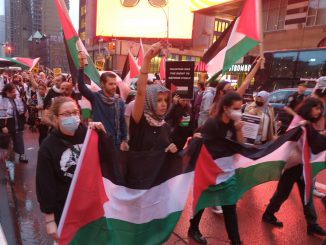
Stop lying about Zionist murder! Shireen Abu Akleh was assassinated

New York, May 13. SLL photo

Hundreds protested on short notice outside the headquarters of the New York Times on May 13, 2022. They came to protest the coverage by the capitalist media about the murder of Al Jazeera reporter Shireen Abu Akleh by an Israeli sniper.

The Times’ coverage was typical. Its headlines disguise the fact that the Palestinian journalist was assassinated.

The emergency memorial and protest was called by Al-Awda NY: The Palestine Right to Return Coalition. It called for “justice for honorable journalist Shireen Abu Akleh.”

During the rush-hour rally on Manhattan’s Eighth Avenue, news was received that Zionist cops attacked the pallbearers of Abu Akleh’s casket and tore Palestinian flags from it. Their viciousness underlined the desperation of the apartheid regime occupying Palestine.

Lamis Deek of Al-Awda described how Shireen Abu Akleh helped give a voice to the Palestinian people. Deek denounced the corporate media for covering-up Zionist war crimes. Deek, a human rights attorney, hailed Palestinian resistance groups.

Protesters marched from the Times building to the Zionist regime’s U.N. mission on Second Avenue. Forty-Second street was filled with Palestinian flags as protesters took to the streets.

People on the sidewalk greeted the marchers while many cars honked in approval. 

Long live the memory of Shireen Abu Akleh! Palestine will win!

In Los Angeles. SLL photo

Strugglelalucha256


Baltimore commemorates 8-year anniversary of Odessa massacre

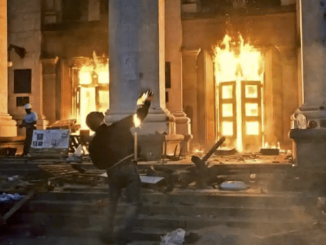
On May 2, the 8-year anniversary of the Odessa House of Trade Unions massacre was commemorated in Baltimore.

The anniversary is particularly important this year as the U.S. corporate media continue to spread war lies about the situation in Ukraine.

On May 2, 2014 nearly 50 anti-fascists were massacred in Odessa, Ukraine. Activists were attacked by a racist neo-Nazi mob. Activists were driven into the House of Trade Unions, which was then set afire. Some anti-fascists were burned alive; others were shot or beaten to death as they tried to escape the blaze. The youngest victim was just 17.

Baltimore solidarity activists read the names of those who died, performed a rendition of Woody Guthrie’s “All You Fascists Bound to Lose,” and mounted a memorial on a fence next to the Harriet Tubman Solidarity Center. The commemoration was initiated by the Baltimore Socialist Unity Party.

Strugglelalucha256


How a century of political violence in Ukraine is linked to the atrocities of today

Troops shot in the legs screaming in pain. Others dying from blood loss and shock. With no one around to provide medical assistance. A Russian soldier crucified on an anti-tank barrier, chained to a metal ‘hedgehog’ and then burned alive…

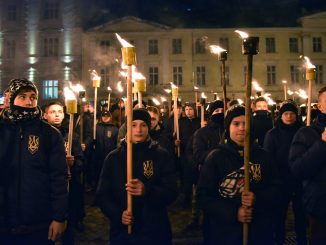
For many, graphic footage of Russian servicemen tortured and killed by the Ukrainian Armed Forces, and nationalist battalions, came as a real shock. But this did not surprise those who are familiar with the ‘traditions’ of Ukraine’s ‘fighters for national freedom’, as they have more than a century of history in this sort of thing.

Europes First Concentration Camps

The first concentration camps in Europe – Terezin and Thalerhof – were established in Austria-Hungary in the fall of 1914, not to hold prisoners of war, but the empire’s own citizens. This is how Vienna, then the ‘sick man of Europe’, tried to protect its eastern border areas from members of its population which sympathized with neighboring Russia. Fighting between the two countries had broken out just before the beginning of the First World War. Austria-Hungary’s last emperor, Charles I, confessed in his edict of May 7, 1917, “All the arrested Russians are innocent, but they were detained to prevent them becoming guilty.”

People from Galicia who did not want to call themselves Ukrainians, as the Austrian authorities insisted, and continued to use the name ‘Rusyns’, were arrested and incarcerated in two places – in a garrison fortress in Terezin and in a valley near Graz, the capital of Styria. While the prisoners in Terezin were held in the vaults and dungeons of the fortress, with the support of local Czechs, the concentration camp later known as Thalerhof was little more than a bare field fenced in with barbed wire.

Today, most of Galicia is in Western Ukraine and the largest city is Lviv, which was known as Lemberg by the Austrians and Lvov by the Soviets and Polish.

The initial prisoners were brought there in September of 1915, and the first barracks began to be built only at the beginning of the following year. Prior to that, the people were forced to lie in the open in the rain and cold. According to US Congressman Joseph McCormick, the prisoners were often beaten and tortured. (Terrorism in Bohemia; Medill McCormick Gets Details of Austrian Cruelty. ‘New York Times’, December 16, 1917)

According to the memoirs of those who survived the inhumane conditions (about 20,000 prisoners passed through the camp), 3,800 people were executed in the first half of 1915 alone, and 3,000 people died from the horrific conditions and diseases in a year and a half. Vasily Varvik, a writer, poet, literary critic, and historian who endured Thalerhof’s hell describes the atrocities in the internment camp as follows: “In order to intimidate people, to prove their power over us, the prison authorities drove poles into the ground all over Thalerhof Square, on which brutally beaten martyrs often hung in unspoken torment.”

What do the Ukrainians have to do with it? The fact is that Ukrainian nationalists were specially recruited to guard the Thalerhof camp. According to numerous testimonies, the arrested, which comprised nearly the entire Russian intelligentsia of Galicia and thousands of peasants, were also escorted to the camp by the Ukrainians.

Indeed, descriptions given in the Thalerhof Almanac detail how Ukrainian Sichoviki in the Carpathian village of Lavochnoye tried to bayonet the prisoners, among whom there was not a single Russian, but only their fellow Galicians.

It was the Ukrainian nationalists who were the concentration camp guards’ cruelest torturers and murderers. “In the end, the atrocities committed by the Germans do not equate to the victimization of your own people. A soulless German could not get his iron boots so deeply into the soul of a Slavonic Rusyn as well as a Rusyn who called himself a Ukrainian,” wrote Vasily Varvik.

From the Volyn Massacre to 1954

At the end of February 1943, the ‘revolutionary’ wing of the Organization of Ukrainian Nationalists (OUP), headed by the current idol of many Ukrainians, Stepan Bandera, decided to create the so-called ‘Ukrainian Insurgent Army’ (UPA) to ‘fight the advancing Red Army’, which was driving the Nazis from the country. But the first detachments that emerged in March and April, of the same year, began to fight not the Soviets, whose troops were still waiting for the Nazis to strike near Kursk, but Polish peasants in territory that had belonged to Warsaw up until 1939. These events, which lasted for more than six months, were called the ‘Volyn Massacre’. UPA detachments and units from the SS Galicia division, which was made up of locals from the eponymous area, killed from 40,000 to 200,000 people, according to various estimates. The Polish Sejm and Senate put the number of victims at approximately 100,000 people, and July 11 is recognized as a ‘National Day of Remembrance of the Victims of the Genocide of Polish Citizens by Ukrainian Nationalists’

The Polish ‘Association of Memory of Victims of Crimes of Ukrainian Nationalists’ (Stowarzyszenie Upamiętnienia Ofiar Zbrodni Ukraińskich Nacjonalistów (SUOZUN)) is engaged in reconstructing the course of events surrounding the Volyn Massacre. The materials collected by SUOZUN reveal shocking details with respect to the cruelty with which Ukrainian nationalists dealt with even babies and pregnant women. Polish researchers have uncovered 135 methods of torture and murder practiced by Ukrainian nationalists. Among them are:

  • Running children through with stakes
  • Cutting a person’s throat and pulling their tongue out through the hole
  • Sawing a person’s torso in half with a carpenter’s saw
  • Cutting open the belly of a woman in an advanced stage of pregnancy, removing the fetus, and replacing it with a live cat, before sewing up her abdomen.
  • Cutting open a pregnant women’s abdomen and pouring in broken glass
  • Nailing a small child to a door.

According to Polish historians, it came to the point that even the German butchers, having been shocked by these atrocities, began to protect the Poles from the Ukrainian Sokirniki (from the Ukrainian word sokira, meaning ‘axe’).

All this, including the ingenuity employed in conducting torture and executions, continued after the Nazis had been expelled from Ukraine. Only now the victims of the nationalists were citizens of Soviet Ukraine – specialists like agronomists, engineers, doctors, and teachers who had been sent from the eastern part of the republic to restore western Ukraine after the war. Though the vast majority of these were ethnic Ukrainians, the nationalists killed not only them, but even their own fellow villagers who had cooperated with the Soviets.

These acts were carried out in accordance with instructions given by the head of the UPA and former Wehrmacht hauptman Roman Shukhevich, who is now an idol for many Ukrainians: “The OUN should act so that all those who recognized the Soviet government are destroyed. Not intimidated, but physically destroyed! Do not be afraid that people will curse us for cruelty. Let half of the 40 million Ukrainian population remain – there is nothing terrible in this,” he wrote. (Tchaikovsky A., Nevidoma viina, K., 1994, p. 224). According to the KGB of the USSR, in 1944–1953, the irretrievable losses of the Soviet side were 30,676 people. Among them are 697 employees of state security agencies, 1,864 employees of the Ministry of Internal Affairs, 3,199 military personnel, 2,590 fighters of destruction battalions; 2,732 – representatives of authorities, 251 communists, 207 Komsomol workers, 314 – chairmen of collective farms, 15,355 collective farmers and peasants, 676 workers, 1,931 – representatives of the intelligentsia, 860 – children, old people and housewives.

Maidan of Hate

With the return of the nationalists to Ukraine’s political scene, after the Soviet collapse, the violence resumed as well. The existence of torture rooms in Kiev City Hall, which was seized by ‘peaceful protesters’ at the end of 2013, has been reported.

A lot of video footage from the ‘Revolution of Dignity’ has been preserved showing the bullying captured police officers suffered at the hands of ‘peaceful protesters’. Some doctors working on the Maidan had to protect wounded officers that had been captured from being massacred. Shots from the Hromadske.tv TV channel also captured a Maidan medic categorically prohibiting people from calling an ambulance for a policeman who had lost an eye on the grounds that he served in the Berkut special unit, which was trying to suppress the uprising.

Here is how Kiev journalist Sergey Rulev describes his experience in the torture chamber: “Four people beat me. There was a woman in a headscarf with them, who kicked me in the groin without saying a word. Then they dragged me to the occupied Ministry of Agriculture, where they searched me, took away my documents, a press pass, accreditation to the Verkhovna Rada, business cards, two phones, and two cameras. When they dragged me back to Khreshchatyk, I started screaming and calling for help. I fell to the ground and was kicked again, but no one reacted. At about 12:00, I was dragged into the burned-out House of Trade Unions. In the lobby, I was immediately beaten up. In the courtyard, unknown people in camouflage fatigues bound my hands, stripped me to my underwear, and continued to beat me… After that, the four of them pinned me to the floor, injected something into my arm again, and said, ‘Now you’re going to talk to us, bitch! Which special services do you work for?’”

Once he was tied up, an unknown woman began to rip out Sergey’s nails with pliers. Subsequently, he identified this sadist as Amina Okuyeva, a medic in the ‘8th hundred’ Maidan Self-Defense unit, who later fought in the ‘ATO (Anti-Terrorist Operation) Zone’ as part of the neo-Nazi Kiev-2 and Dzhokhar Dudayev Battalions. She was awarded the title People’s Hero of Ukraine for her efforts.

The Ukrainian State and the Nazis

It would be surprising if the Ukrainian nationalists, who were part of the troops operating in the so-called ‘Anti-Terrorist Operation’ (ATO) in the east of Ukraine, were to abandon their propensity for violence and stop bullying, torturing, and murdering their enemies, as this is the legacy of the totalitarian ideologies they have inherited from the last century. Andrei Ilyenko, a member of the neo-Nazi Svoboda party who is one of Ukrainian nationalism’s modern ideologists, admits, “Italian fascism, German nationalism, Croatian Ustashism, authentic Ukrainian nationalism, Spanish Falangism, and other integral movements doubtlessly share a single ideological basis.” (Patriot of Ukraine organization, Ukrainian Social Nationalism: a collection of ideological works and program documents, Kharkov – 2007).

And this has not happened. Literally from the first days of the ‘Anti-Terrorist Operation’, information began to arrive about atrocities committed by nationalist battalions in the Donbass. After all, in addition to radical nationalists brought up to hate everything Russian, many of the participants were criminals convicted of violent crimes. Usurper Oleksandr Turchynov, who does not hide the fact that he threatened MPs with physical violence if they did not vote for his appointment as acting president, recalled“I remember one meeting at the front with volunteer units where one of those present, who was covered in tattoos, asked: ‘Boss, will there be amnesty or not? The guys are interested in us there.’ I asked, ‘What do they want with you?’ ‘Well, for stuff like… murder, robbery…’”

The crimes committed by nationalist battalion members went ‘unnoticed’ by the authorities for a long time, but when international human rights organizations began to scream about the most egregious cases, some facts regarding their atrocities finally reached the courts. Several leaders from the nationalist Aidar Battalion were convicted. For example, they created a prison in a sausage shop’s smokehouse and placed prisoners there in unheated cells measuring 80×150 cm, where people had to crouch for several months.

A lot of people got away with serious crimes on the grounds that they were ‘Patriots of Ukraine’, and this was shown to be a government policy in practice. For example, Sergey Sternenko, a nationalist from Maidan’s Right Sector, escaped punishment for protecting drug trafficking and murder on the basis of ‘patriotism’. Though Sternenko was sentenced to a prison term of 7 years and 3 months for abducting a pro-Russian deputy from Odessa named Sergey Shcherbich, his punishment was reduced to one year of probation after just three months. Given this policy, it is not surprising that none of the participants in burning 49 people alive in the Odessa House of Trade Unions on May 2, 2014, have yet been brought to justice.

Criminal cases have been initiated against Ukrainian nationalist Nikolay Kokhanovsky more than once. This ATO participant and OUN battalion commander is also a member of the Azov Regiment, which has been recognized by the US Congress as a neo-Nazi organization. He has been accused of attacking opposition TV channels, Moscow Patriarchate churches, Russian diplomatic missions, and Russian banks, as well as committing an armed assault on a nationalist like himself without a weapons permit. After his supporters smashed up the court, Kokhanovsky was set free.

Perhaps the most horrific crime committed by Ukrainian nationalists was the creation of a prison in the refrigerator at the airport in Mariupol in June of 2014, which the jailers called the ‘library’. There, Mariupol residents were subjected to beatings, death by torture, and rape for even the suspicion of harboring sympathies for Russia or the unrecognized eastern republics. The ‘library’ was headed by the Security Service of Ukraine (SBU), whose chief, Valentin Nalivaichenko, was a friend of the leader of the Right Sector, Dmitry Yarosh. And Nalivaichenko’s assistant, Yuri Mikhalchishin, a member of the nationalist Svoboda party who goes by the pseudonym ‘Nahtigal88’ (in honor of a sabotage battalion that was part of the Third Reich’s counterintelligence division and the letters ‘NN’ denoting Heil Hitler), was responsible for the ideology of the special service. Mikhalchishin openly asserts that Mein Kampf has been his guidebook since the age of 16. After being dismissed from the SBU, he went to fight as part of the Azov Regiment.

***

The ideology of racial superiority has a long criminal history grounded in hate. When its bearers get their hands on power, national pride invariably turns into ruthless violence, and the radicals reveal their willingness to employ bestial cruelty and exterminate ‘outsiders’. The true foundations of their worldview will be seen more than once until this lesson in history is finally learned.

Olga Sukharevskaya is an ex-Ukrainian diplomat

Strugglelalucha256


Why ‘Bolivia is the center of the world’ for people’s movements

Humanity finds itself at a crucial moment. It’s not only war and climate change that threaten life on our planet. Ideologies and some people do too.

We know that money and the production of wealth and well-being have created an ever greater and more profound gap between people, neighborhoods, cities and countries—a gap that has been exacerbated by the pandemic.

So, I’d like us (my fellow Bolivians and Indigenous peoples) to stop thinking of ourselves as the poor periphery of a process of globalization that has been unequal, colonial and racist.

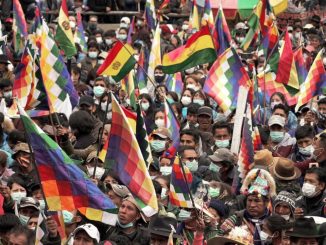
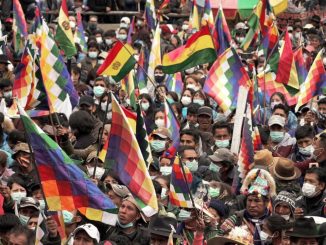
In Bolivia, since the beginning of this century, we have battled some of the most important and decisive questions for the future of the human race: water, our sacred coca leaf, the goods we have which we can share thanks to the generosity of the Pachamama and, of course, the right to make decisions collectively about our lives.

Each battle, each sacrifice made, from places like El Alto and Cochabamba, has repeatedly confronted us with the owners of power and money.

At the core of each one of our struggles is our overriding need to stay alive, to finally construct a world fit for all of us to live with dignity.

Not tomorrow, today. Bolivia is the center of the world, as is North Dakota or Chiapas, or the poor neighborhoods of Caracas.

Yes, we are poor and far from the powerful centers of economic and political decision-making. But at the same time, we live in the center of the most important battles—battles fought from our smallest trenches, communities, neighborhoods, cities, jungles and forests.

What I’m describing to you isn’t merely a simple change in discourse. We want to think about ourselves differently, because if we do that at the core of the true struggle for survival, we can look at the world and at our sisters and our brothers with new eyes. If we are condemned to be at the margins, we will not get far.

It is by constructing in this way, from the hundreds and thousands of centers in which life is defined, that we fight for what is most essential: water, food, shelter, education and dignity—perhaps from this we can construct a new horizon. Weaving together our needs, our achievements, and even our errors, it’s possible to dismantle centuries of colonialism, the brutal pillaging of our territories, and the forced subjugation of our people.

In Bolivia, we have had to draw on our millennia-old Aymara and Quechua traditions and knowledge, for example, peoples who define much of what this country is. But it’s not only Indigenous peoples who have fought against imperialism, nor is it the obligation of one people to be the vanguard or the moral reserve for the human race.

We are what we are. We know, among ourselves, what our grandparents passed down to us. For that reason, from our lived experience, I invite you to begin this journey, firstly by reestablishing what is important so that we can begin to view ourselves like the people in the streets of Cochabamba were viewed after the Water Wars, knowing that it is possible and that there is another life waiting beyond the barricades, beyond the strikes and the roadblocks, and that is our common heritage.

This also happened to us in October 2003, when El Alto (near the capital city of La Paz) was converted, for a few moments, into the center of the world. With sticks and with stones, with their will, the Aymara rejected the selling off of our riches—a death prescribed by a corrupt and foolish president.

There, in this burning epicenter, everything that matters was at stake. The centers of power and global decision-making were our periphery. Without a doubt, I do not think we are the periphery. This mini-census is not intended to be paralyzing. Quite the opposite.

As a Bolivian, as an Aymara, as someone who has lived within one of the most decisive battles to change everything, I know that we can’t ignore the daily catastrophe we saw in Sri Lanka, in the boats filled with refugees in the Mediterranean, in that wall that separates North America from the rest of the Americas, in the Aboriginal territories of Australia, or in the famine experienced by the girls and boys in La Guajira in Colombia.

To be able to view the immensity of our horizon, to be able to daydream when we look upon the Andean Altiplano and its peaks, perhaps we should give ourselves a different perspective, a new center.

In Bolivia, like in so many other places, what’s at stake is not a set of goods or a piece of land, not even a government. We have fought to defend life itself, to nourish it, and to watch it grow with dignity. We do not know of anything more important to do in these difficult times.

We are the center of the world.

Adapted from Rogelio Mayta’s speech to the Progressive International’s Summit at the End of the World on May 12, 2022.

This article was produced by Globetrotter. Rogelio Mayta is the foreign minister for the Plurinational State of Bolivia.

Strugglelalucha256


Bolivia: ‘somos el centro del mundo’

La humanidad se encuentra en un momento crucial. No solamente la guerra y el cambio climático amenazan la vida en nuestro planeta. Las ideologías y algunas personas también.

Sabemos que el dinero y la producción de riqueza y de bienestar han creado una brecha cada vez más grande y profunda entre personas, barrios, ciudades y países que se ha exacerbado tras la pandemia.

Entonces quisiera dejar de pensarnos como la periferia pobre de una globalización desigual, colonial y racista.

En Bolivia, desde el inicio de este siglo, batallamos con algunas de las cuestiones más importantes y decisivas para el futuro de la especie humana: el agua, nuestra sagrada hoja de coca, los bienes que podemos repartir gracias a la generosidad de la Pachamama y – por supuesto – el derecho a decidir colectivamente sobre nuestras vidas.

Cada lucha, cada esfuerzo realizado desde lugares como el Alto Cochabamba nos enfrentaron y enfrentan no sólo con los dueños del poder y del dinero.

En el fondo de cada una de nuestras luchas está la imperiosa necesidad que tenemos de seguir con vida, de construir por fin un mundo a la medida de todos y todas para vivir con dignidad.

No mañana, hoy. Bolivia es el centro del mundo, como lo es Dakota del Norte o Chiapas, o los barrios pobres de Caracas.

Sí, somos pobres y estamos alejados de los omnipotentes centros de decisión política y económica. Pero al mismo tiempo vivimos en el centro de las más importantes batallas. Batallas que se libran desde nuestras pequeñas trincheras, comunidades, barrios, ciudades, selvas y bosques.

Lo que les digo no es para nosotros un simple cambio de discurso. Queremos pensarnos de manera diferente, porque así, en el centro de la verdadera lucha por la vida, podemos mirar al mundo y a nuestras hermanas y hermanos con ojos nuevos. Condenados a la marginalidad no vamos a llegar muy lejos.

Es así que construyendo desde los cientos y miles de centros en los que se define la vida, se pelea por lo más elemental: agua, comida, techo, educación y dignidad. Quizá podamos construir un horizonte nuevo. Tejiendo nuestras necesidades, nuestros logros y hasta nuestros errores, es posible ir desmantelando siglos de colonialismo, de brutal expolio de los territorios y de sometimiento forzado de la gente.

En Bolivia hemos tenido que echar mano de nuestras tradiciones y conocimientos milenarios aymaras y quechuas, por ejemplo, pueblos que definen mucho de lo que este país es. Pero no es solamente indígena originario, que hemos luchado contra el capital, ni es tampoco obligación de ningún pueblo ser la vanguardia o la reserva moral para la especie humana.

Somos lo que hay, sabemos entre nosotros lo que nos legaron nuestros abuelos y abuelas. Por eso, desde nuestra experiencia vivida les invito a iniciar este camino primero, resignificando lo que importa, para luego mirarnos así, como se miraba la gente en las calles de Cochabamba luego de la Guerra del Agua, sabiendo que se puede, que hay otra vida esperando detrás de las barricadas, de las huelgas y de los bloqueos de caminos y que es nuestro patrimonio común.

También nos ocurrió en octubre de 2003, cuando el Alto se convirtió por unos instantes en el Centro del mundo. Con palos y con piedras, con voluntad, los aymaras rechazaron la venta de nuestra riqueza. La muerte recetada por un presidente corrupto e insensato.

Ahí, en ese epicentro ardiendo, todo lo que es vital estaba en juego. Los centros de poder y de decisión mundial eran nuestra periferia. Definitivamente, no pienso que seamos la periferia. Este mini censo no pretende ser paralizador. Todo lo contrario.

Como boliviano, como aymara, como alguien que ha vivido dentro de las más decisivas batallas para cambiarlo todo, sé que no podemos ignorar la catástrofe cotidiana que vivimos en Sri Lanka, en los botes llenos de refugiados en el Mediterráneo, en ese muro que separa Norteamérica de toda América, en los territorios aborígenes de Australia, o en la hambruna de niñas y niños en La Guajira colombiana.

Para mirar la inmensidad de nuestro horizonte, para soñar despiertos como miramos el altiplano andino y sus cumbres, quizá debiéramos darnos una perspectiva distinta, una centralidad nueva.

En Bolivia, como en tantos otros lugares, lo que ha estado en juego no es un conjunto de bienes o un pedazo de tierra, ni un Gobierno. Hemos peleado para defender la vida, para alimentarla y verla crecer con dignidad. No conocemos nada más importante que hacer en estos tiempos difíciles.

Somos el centro del mundo.

Adaptación del discurso de Rogelio Mayta del 12 de mayo de 2022, durante la Cumbre del Fin del Mundo, de la Internacional Progresista.

Este artículo fue producido para Globetrotter.

Rogelio Mayta es el ministro de Asuntos Exteriores del Estado Plurinacional de Bolivia.

Strugglelalucha256


Los héroes del Saratoga

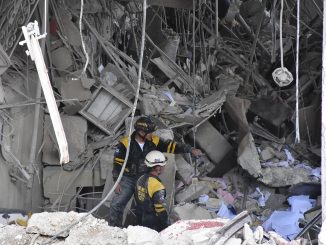
Primero, la explosión. El edificio, de seis pisos, vibró, se saltaron unos cables después, con la fuerza de un latigazo. Acto seguido, se desplomó más de la mitad de la fachada sin dar tiempo, sin anunciar nada, cada pedazo de piso tragándose al de arriba, aplastados techo contra piso y piso contra techo, en medio de un estrépito y una nube de polvo que ocultaba todo, menos los gritos desesperados. Parecía como si acabara de abrirse y cerrarse la tierra, cuando otros dos edificios se vinieron abajo.

De inmediato se conocieron las causas del siniestro del seis de mayo en el Hotel Saratoga, de La Habana Vieja, aunque está abierta la investigación: fue un escape de gas, mientras un camión cisterna habilitaba al edificio que se preparaba para reabrir esta semana. Sin huéspedes, las habitaciones permanecían cerradas a cal y canto, y puede que un simple clic del interruptor de la luz fuera suficiente para que la masa de gas acumulado provocara la onda expansiva que hizo añicos los cristales, la marquetería y la fachada ligera con adornos de estuco verde y blanco, original del siglo XIX.

No es la primera vez que Cuba se enluta. Podría parecer hasta menor un accidente como este en un país que ha padecido en medio siglo más de treinta huracanes de gran magnitud, decenas de muertos durante el sabotaje de la CIA al vapor La Coubre en el puerto de La Habana en 1960, la voladura de un avión civil con 73 pasajeros en 1976, una cadena de bombas en hoteles y restaurantes en la década de los 90, el bloqueo sempiterno del Gobierno de Estados Unidos – “acción canallesca”, lo llama el Presidente Andrés Manuel López Obrador – que ha naturalizado la escasez de casi todo y que hizo más desesperante la pandemia, por citar algunos ejemplos dramáticos.

Pero no. La explosión en el Hotel Saratoga, con casi un centenar de lesionados – de ellos 43 muertes hasta el 11 de mayo –, es otra cosa. Lo que hizo de esta historia en particular la Gran Historia no fue la explosión que se sintió en La Habana, ni el humo denso que se podía ver desde las zonas altas, ni la sensación de vulnerabilidad que nos dejó a todos, sino la solidaridad de la ciudadanía que se apiñaba en los alrededores exigiendo un lugar para rescatar a las víctimas de los escombros, donar su sangre para los heridos o aliviar la angustia de los damnificados. Dos horas después del accidente, la fila de voluntarios y voluntarias frente a los bancos de sangre, los policlínicos y los hospitales superaban los miles, y la mayoría eran jóvenes, esos mismos que la propaganda de Miami dice que se están yendo en masa de Cuba.

Mientras el Gobierno actúa y la prensa pública da lecciones de inmediatez y sensibilidad, personas de la calle, con todo tipo de profesiones, siguen ayudando a sus compatriotas. No sabemos los nombres de todos los rescatistas – muchos de ellos bomberos voluntarios –, de los maestros de la escuela “Concepción Arenal” que colinda con el hotel y protegieron a sus alumnos, de los niños que salvaron a otros niños, de los transeúntes que socorrieron a los trabajadores del Saratoga y a las familias de los dos edificios que implosionaron en la vecindad, ni de los perros rastreadores que todavía buscan las huellas de al menos dos desaparecidos entre los escombros.

Al romperse, los edificios mostraron sus vísceras, sus arterias, sus nervios y su fragilidad, que es la nuestra. Pero también expusieron a esa especie de sentimentales decentes que no está en peligro de extinción y que son los mejores de todos nosotros, los héroes que se lanzaron a salvar a los demás, sin reparar en que otra explosión y otro derrumbe habrían podido convertirlos en víctimas. Y, a la par, hay un ejército anónimo de trabajadores de la salud que no ha descansado en más de cien horas desde el accidente.

En Los soldados de Salamina, el novelista español Javier Cercas nos recuerda que “en el comportamiento de un héroe hay casi siempre algo ciego, irracional, instintivo, algo que está en su naturaleza y a lo que no puede escapar”. Es el que mira de frente el absurdo y la crueldad de la vida para hacernos más humanos, el que nos advierte que de la desesperación nace la lucha.

La muerte no prevalece. Una vez más.

Este artículo fue producido para Globetrotter y publicado primero en La Jornada.

Rosa Miriam Elizalde es una periodista cubana y fundadora de Cubadebate. Es vicepresidenta de la Unión de Periodistas de Cuba (UPEC) y de la Federación Latinoamericana de Periodistas (FELAP). Es autora y coautora de varios libros, incluyendo Jineteros en La Habana y Chávez Nuestro. Por su destacada labor, ha sido merecedora en varias ocasiones del Premio Nacional de Periodismo Juan Gualberto Gómez. Es columnista semanal de La Jornada, México.

Strugglelalucha256


Never forget the MOVE bombing

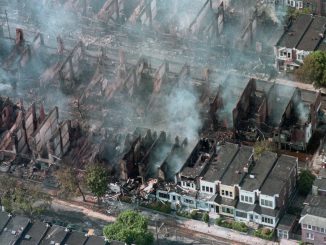
“Let the fire burn.” That was the order that Philadelphia police commissioner Gregore Sambor gave to firefighters as a residential home blazed on May 13, 1985.

Philadelphia police, with assistance from the Pentagon and FBI, had dropped a bomb from a helicopter on the home.

Inside the house at 6221 Osage Avenue were 13 members of the MOVE organization including its founder John Africa. Only two people survived: Ramona Africa and nine-year-old Birdie Africa.

Six adults and five children were burned to death. They were nine-year-old Tomaso Africa; 12-year-olds Little Phil Africa and Netta Africa; 13-year-old Delisha Africa and 14-year-old Tree Africa. And adults Conrad Africa, Frank Africa, John Africa, Raymond Africa, Rhoda Africa and Theresa Africa.

The Philadelphia Special Investigation Commission found that police fired “over 10,000 rounds of ammunition in under 90 minutes at a row house containing children.” The cops fired so many bullets that they had to get more ammunition from their armory.

According to author John L. Puckett, “Police were outfitted with M16 semi-automatic rifles, Uzis, shotguns, 30.06 and .22-250 sharpshooter rifles, a Browning automatic rifle, and a Thompson submachine gun.”

Tear gas canisters were used as well as high pressure water hoses. Ramona Africa reported that police shot at people trying to flee from the house.

This was a terrorist crime like the Ku Klux Klan bombing of the 16th Street Baptist Church in Birmingham, Alabama. Four little girls were killed there on Sept. 15, 1963. They were 14-year-olds Addie Mae Collins, Denise McNair, Carole Robertson, and 11-year-old Cynthia Wesley.

Not one official was ever prosecuted for the Philadelphia atrocity that killed 11 people, burned 61 homes and left 253 people homeless. Instead it was Ramona Africa who escaped from the inferno with serious burns who was sent to jail for seven years.

Not satisfied with killing MOVE members, Philadelphia also tried to rob their dignity. Bones of the MOVE children were stolen and used in anthropology classes at the University of Pennsylvania and Princeton University. 

The MOVE 9

The capitalist government can’t tolerate independent organizations of oppressed people.

Los Angeles police attacked the Nation of Islam’s Mosque No. 27 on April 27, 1962. Mosque secretary Ronald X Stokes was shot in the heart and killed. Six other NOI members were wounded, including William X Rogers, who was left paralysed. 

More than 25 members of the Black Panther Party were murdered by police, including Fred Hampton and Mark Clark in Chicago on Dec. 4, 1969. Former Black Panther Mumia Abu-Jamal has now spent over 40 years in prison after being framed in the killing of Philadelphia police officer Daniel Faulkner.

Twice a death warrant was signed by Pennsylvania’s governor to execute Mumia. It was the people’s struggle that saved his life.

“When I began covering MOVE as part of my work as a reporter for a radio station in the seventies,” wrote Mumia Abu-Jamal, “what I found were idealistic, committed, strong, unshakable men and women, who had a deep spirit-level aversion to everything this system represents. … To them everything this system radiated was poison.”

The Philadelphia establishment hated MOVE and its founder John Africa. The wealthy and powerful put super racist Frank Rizzo in Philadelphia’s city hall during the 1970s.

Mayor Rizzo staged a police raid upon the MOVE house in the Powelton Village neighborhood on Aug. 8, 1978. The cops were so reckless that they killed fellow police officer James Ramp with a bullet to the back of his head.

Rizzo had the MOVE house destroyed so it couldn’t be proven that it was impossible to fire the shot from there. Nine MOVE members were framed for killing Ramp.

Chuck Africa, Debbie Africa, Delbert Africa, Eddie Africa, Janet Africa, Janine Africa, Merle Africa, Michael Africa and Phil Africa were sentenced to between 30 and 100 years in jail.

Merle Africa died in prison in 1998 and Phil Africa died while incarcerated in 2015. After 40 or more years in jail, Chuck Africa, Debbie Africa, Delbert Africa, Eddie Africa, Janet Africa, Janine Africa and Michael Africa were finally released between October 2018 and February 2020.

From Philadelphia to Odessa

After being released from prison on Feb. 7, 2020, Chuck Africa died of cancer on Sept. 20, 2021.

Delbert Africa lived less than five months after being released on Jan. 13, 2020. His daughter Yvonne Orr-El said he died on June 15, 2020 because of inadequate care by prison officials for a kidney condition.

When Delbert Africa was arrested in 1978 with his arms raised, three cops viciously kicked and beat him. This brutality was captured on film and seen worldwide.

Yet none of these police officers were convicted. Then police commissioner Joseph O’Neill defended their assault by testifying “Delbert Africa wasn’t a man, he was a savage.”

This racist violence is exported to the rest of the world. Just as it helped drop the bomb on the MOVE family, the Pentagon is shipping billions of dollars of bombs to Ukraine.

The CIA and other U.S. spy shops spent $5 billion in Ukraine during the years up to the 2014 coup that overthrew the then Ukrainian government. On May 2, 2014, Ukrainian fascists set fire to the House of Trade Unions in Odessa, Ukraine.

Like the Philadelphia cops, these neo-Nazis refused to let people escape from the building. At least 46 people died.

Congress has approved $40 billion in more weapons for a Ukrainian regime that has banned every opposition party. This money could be used for childcare subsidies or to fix-up public housing instead.

Don’t believe the war lies against the Donbass republics and the Russian Federation. Our struggle is at home for jobs and justice.

We need to free all political prisoners including Mumia Abu-Jamal and Leonard Peltier. Two million prisoners need to come home to their families.

Always remember the MOVE bombing. Long live John Africa!

Strugglelalucha256


The heroes of Hotel Saratoga

At first, there was an explosion. The six-story building vibrated, and a few wires snapped with the force of a whiplash. Immediately afterward, more than half of the facade collapsed without any warning, with each floor swallowing the one above as the ceiling crushed against the floor and the floor against the ceiling during the explosion, and a cloud of dust hid everything except the desperate screams of people. It seemed as if the ground had just opened and closed when two other buildings collapsed in the vicinity.

The causes of the incident at the Hotel Saratoga in Old Havana on May 6 were immediately known, although the investigation is still ongoing: it was a gas leak from a tanker truck servicing the hotel building, which was preparing to reopen during the second week of May. With no guests, the rooms were locked tight, and a simple click of the light switch would have been enough for the mass of accumulated gas to cause the shock wave that shattered the glass, marquetry and ornately decorated facade of green and white stucco, which was originally from the 19th century.

It is not the first time that Cuba has mourned tragedies like this. An accident like this might seem even minor in a country that has suffered more than 30 major hurricanes in half a century, dozens of deaths during the CIA sabotage of the steamship La Coubre in the port of Havana in 1960, the blowing up of a commercial airliner with 73 passengers in 1976, a chain of bombs in hotels and restaurants in the 1990s, the eternal blockade imposed by the United States government, a “rogue action,” as Mexican President Andrés Manuel López Obrador calls it—that has naturalized the shortage of almost everything and made the pandemic more desperate, just to cite a few dramatic examples.

But no. The explosion at the Saratoga Hotel, with almost 100 injured victims—including 43 deaths as of May 11—is something else. What made this story in particular the big news story was not the explosion that was felt in Havana, nor the dense smoke that could be seen overhead, nor the feeling of vulnerability that it left us all experiencing, but rather it was the solidarity of the citizens who crowded around the area demanding a place to rescue the victims from the rubble, and donated their blood for the wounded or helped alleviate the anguish of the victims. Two hours after the accident, the line of volunteers in front of blood banks, polyclinics and hospitals exceeded thousands, and most of them were young people, the same ones who Miami’s propaganda says are leaving Cuba en masse.

While the government acts and the public press teaches immediacy and sensitivity, people from the streets, from all kinds of professions, continue to help their compatriots. We do not know the names of all those who were part of the rescue teams—many of them are volunteer firefighters—or of the teachers of the “Concepción Arenal” school that is right next to the hotel who protected their students, of the children who saved other children, of the passersby who helped the Saratoga workers and the families residing in the other two buildings that imploded in the neighborhood, nor the sniffer dogs that are still looking for the traces of at least two missing persons in the rubble.

When crashing, the buildings showed their viscera, their arteries, their nerves and their fragility, similar to ours. But they also exposed that kind of decent sentimentalists who are not in danger of extinction and who are the best of us all, the heroes who went out to save others, not realizing that another explosion and another collapse could have made them victims. And, at the same time, there is an anonymous army of health workers who have not rested for more than 100 hours since the accident.

In Soldiers of Salamis, the Spanish novelist Javier Cercas reminds us that “in the behavior of a hero there is almost always something blind, irrational, instinctive, something that is in their nature and from which they cannot escape.” They are the ones who look squarely at the absurdity and cruelty of life to make us more human, and they are the ones who warn us that struggle is born from despair.

And once again, death does not prevail.

This article was produced by Globetrotter. Rosa Miriam Elizalde is a Cuban journalist and founder of the site Cubadebate. She is vice president of both the Union of Cuban Journalists (UPEC) and the Latin American Federation of Journalists (FELAP). She has written and co-written several books including Jineteros en la Habana and Our Chavez. She has received the Juan Gualberto Gómez National Prize for Journalism on multiple occasions for her outstanding work. She is currently a weekly columnist for La Jornada of Mexico City.

Strugglelalucha256


Mali’s military ejects France but faces serious challenges

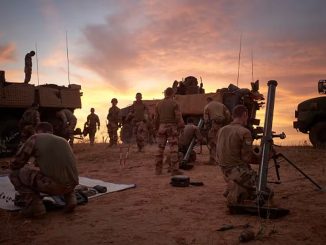
On May 2, 2022, a statement was made by Mali’s military spokesperson Colonel Abdoulaye Maïga on the country’s national television, where he said that Mali was ending the defense accords it had with France, effectively making the presence of French troops in Mali illegal. The statement was written by the military leadership of the country, which has been in power since May 2021.

Colonel Maïga said that there were three reasons why Mali’s military had taken this dramatic decision. The first was that they were reacting to France’s “unilateral attitude,” reflected in the way France’s military operated in Mali and in the June 2021 decision by French President Emmanuel Macron to withdraw French forces from the country “without consulting Mali.” France’s military forces moved to nearby Niger thereafter and continued to fly French military planes over Malian airspace. These violations of Malian airspace “despite the establishment of a temporary no-fly zone by the Malian military authorities” constituted the second reason for the new declaration, according to the statement. Thirdly, Mali’s military had asked the French in December 2021 to revise the France-Mali Defense Cooperation treaty. Apparently, France’s answer to relatively minor revisions from Mali on April 29 displeased the military, which then issued its statement a few days later.

‘Neither Peace, Nor Security, Nor Reconciliation’

Over the past few years, French forces in Mali have earned a reputation for ruthless use of aerial power that has resulted in countless civilian casualties. A dramatic incident took place on January 3, 2021, in the village of Bounti in the central Mopti region of Mali, not far from Burkina Faso. A French drone strike killed 19 civilians who were part of a wedding party. France’s Defense Minister Florence Parly said, “The French armed forces targeted a terrorist group, which had been formally identified as such.” However, an investigation by the United Nations mission in Mali (the United Nations Multidimensional Integrated Stabilization Mission in Mali, or MINUSMA) found that the French drone fired at a marriage celebration attended by about 100 people (which might have included five armed persons).

Two months later, on March 5, 2021, in the village of Talataye, east of Bounti, a French airstrike killed three teenage children and injured two others, who were all out hunting birds. The father of the three deceased children—Adamou Ag Hamadou, a shepherd—said that the children had taken their cattle to drink water and then had gone off to hunt birds with their two hunting rifles. “When I arrived at the scene of the airstrike,” Ag Hamadou remembered, “there were other people from this [hunting] camp. From 1 p.m. until 6 p.m., we were able to collect the pieces of their bodies that we buried.”

These are some of the most dramatic incidents. Others litter the debate over the French military intervention in Mali, but few of these stories make it beyond the country’s borders. There are several reasons for the global indifference to these civilian deaths, one of them being that these atrocities perpetrated by Western states during their interventions in Africa do not elicit outrage from the international press, and another is that the French have consistently denied even well-proven incidents of what should be considered war crimes.

For example, on June 8, 2019, French soldiers fired at a car in Razelma, outside Timbuktu, killing three civilians (one of them a young child). The French military made a bizarre statement about the killing. On the one hand, the French said that the killing was “unintentional.” But then, on the other hand, the French authorities said that the car was suspicious because the car did not stop despite warning shots being fired at it. Eyewitnesses said that the driver of the car was helping a family move to Agaghayassane and that they were not linked to any terrorist group. Ahmad Ag Handoune, who is a relative of those killed in this attack and who drove up to the site after the incident, said that the French soldiers “took gasoline and then poured it on the vehicle to set everything on fire so that nothing was identifiable.”

Protests against the French military presence have been taking place for over a year, and it is plausible to say that the May 2021 military coup, which installed the present military leadership of the country to power, was partly due to both the failure of the French intervention in Mali to bring about stability and its excesses. Colonel Assimi Goïta, who leads the military junta, said that the agreement with the French “brought neither peace, nor security, nor reconciliation” and that the population aspires “to stop the flow of Malian blood.”

No Way Forward

On the day that the Malians said that the presence of French troops on their soil was illegal with the ending of the defense accords, United Nations Secretary-General António Guterres paid a visit to neighboring Niger. When France’s army withdrew from Mali, they relocated to Niger, whose president, Mohamed Bazoum, tweeted his welcome to these troops. Guterres, standing beside Bazoum, said that terrorism is “not just a regional or African issue, but one that threatens the whole world.”

No one denies the fact that the chaos in the Sahel region of Africa was deepened by the 2011 NATO war against Libya. Mali’s earlier challenges—including a decades-long Tuareg insurgency and conflicts between Fulani herders and Dogon farmers—were now convulsed by the entry of arms and men from Libya and Algeria. Three jihadi groups appeared in the country as if from nowhere—Al Qaeda in the Islamic Maghreb, Movement for the Unification of Jihad in the African West, and Ansar Dine. They used the older tensions to seize northern Mali in 2012 and declared the state of Azawad. French military intervention followed in January 2013.

Iyad Ag Ghali, a Tuareg leader from Kidal, fought in Libya and Mali. In the early 2000s, Ag Ghali set up the Alliance for Democracy and Change, which advocated for Tuareg rights. “Soft-spoken and reserved,” said a 2007 U.S. Embassy cable about him. “Ag Ghali showed nothing of the cold-blooded warrior persona created by the Malian press.” After a brief stint as a diplomat to Saudi Arabia, Ag Ghali returned to Mali, befriended Amadou Koufa, the leader of the Macina Liberation Front, and drifted into the world of Sahelian jihad. In a famous 2017 audio message, Amadou Koufa said, “The day that France started the war against us, no Fulani or anyone else was practicing jihad.” That kind of warfare was a product of NATO’s war on Libya and the arrival of Al Qaeda, and later ISIS, to seek local franchise with local grievances to nurture their ambitions.

Conflicts in Mali, as the former President Alpha Oumar Konaré said over a decade ago, are inflamed due to the suffocation of the country’s economy. Neither did the country receive any debt relief nor infrastructure support from the West or international organizations. This landlocked state of more than 20 million people imports 70 percent of its food, the prices for which have skyrocketed in recent weeks, and could further worsen food insecurity in Mali. Part of the instability of the post-NATO war has been the military coups in Mali, Guinea and Burkina Faso. Mali faces harsh sanctions from the Economic Community of West African States (ECOWAS), sanctions that will only deepen the crisis and provoke greater conflict north of Mali’s capital, Bamako.

Anti-French sentiment is not the whole story in Mali. What France and other global leaders need to recognize is that there are many larger questions at the root of the issues Malians face—questions around their livelihood and their dignity, which need to be answered to secure a better future for the country.

This article was produced by Globetrotter. Vijay Prashad is an Indian historian, editor and journalist. He is a writing fellow and chief correspondent at Globetrotter. He is the chief editor of LeftWord Books and the director of Tricontinental: Institute for Social Research. He is a senior non-resident fellow at Chongyang Institute for Financial Studies, Renmin University of China. He has written more than 20 books, including The Darker Nations and The Poorer Nations. His latest book is Washington Bullets, with an introduction by Evo Morales Ayma.

Strugglelalucha256


Continental meeting calls for closure of illegal U.S. torture camp in Guantanamo Bay, Cuba

May 11 – At the invitation of the Cuban Institute for Friendship with the Peoples (ICAP) and the World Peace Council (WPC), the VII International Seminar for Peace and Abolition of Foreign Military Bases was held. Delegates from anti-imperialist, peace and solidarity movements gathered since Wednesday to debate current issues of peace work within the framework of the WPC’s “Regional Continental Meeting of the Americas and the Caribbean.” The event was attended by delegates from 23 countries and 70 Cubans.

After a welcome by the governor of Guantánamo Province, Emilio Matos Mosqueda, the president of ICAP, Fernando González Llort, opened the seminar with the words: “The planet needs peace now more than ever, and to achieve it we need unity.” He thanked those present for their solidarity with Cuba. Silvio Platero, leader of the Cuban peace movement, added that the meeting was taking place “under difficult conditions” because the United States was stepping up its aggression against Cuba and other Latin American countries. This also includes tightening economic sanctions under the blockade that has lasted for more than 60 years.

Return demanded

The seminar is taking place “in a complex context characterized by the increasing aggressiveness and interference of U.S. imperialism and NATO, media propaganda wars, military conflicts and tensions in the world,” said González. The Cuban people therefore demand compliance with the United Nations Charter by “returning occupied territories to their rightful owners.” The area of ​​the U.S. Guantanamo Bay Naval Base, which has been occupied by the U.S. since 1903, is “the oldest imperialist outpost in the world,” which Washington uses to supply the U.S. fleet with logistical supplies and has repeatedly been “the starting point for invasions of Latin American countries and the whole world.”

Under the banner “Guantánamo – World Capital for the Restoration of Peace,” WPC President Maria do Socorro Gomes condemned the “unlawful appropriation of Cuban territory” and the atrocities commited in the Guantanamo torture camp. “This deeply affects all of us who defend human rights and peace,” she said. In the Russia-Ukraine conflict, too, NATO played the decisive role “as the spark of the war.” The president called for “breaking the siege of the media that distorts the truth.” The WPC is “against the permanent establishment of military bases in sovereign countries.” They serve “the exercise of domination.”

With around 800 U.S. military bases in 100 countries around the world, U.S. policy was at the center of the debates. As a representative from the U.S., Gloria Verdieu spoke for the Socialist Unity Party and the group Women In Struggle and recalled the developments since the last international seminar in 2019. Cuba has achieved a lot despite the coronavirus pandemic. The implementation of its immunization program has not only benefited the Cuban people, but also those most in need of vaccines and medical supplies around the world through the dispatch of doctors and medicines.

“But what did the U.S. rulers do during this time?” asked Verdieu. They failed in their attempts to contain the coronavirus “because they are relying on the market instead of pursuing a democratic and common approach with the international community,” said the socialist. “Too little and too late” have they helped to fight the virus, especially on the African continent.

Danger of a world war

Now the U.S. government is exacerbating the crisis by misappropriating another $33 billion needed to fight the spread of the virus “to finance a proxy war in Ukraine, including arming Nazi regiments there.” This only exacerbates “NATO’s hunger for oil profits and regime change in Russia and China,” according to Verdieu. Since the unilateral dissolution of the Soviet Union and the Warsaw Pact, NATO has expanded from 17 to 30 member states. The 1999 bombing war against Yugoslavia claimed thousands of lives. 

“The recent U.S.-NATO proxy war, in which the media acts as a propaganda force,” Verdieu said, not only carries a serious risk of triggering World War III, but “exacerbates the national and international crises of global warming, critical health care shortages and hunger – crises that affect children the most.”

At the conclusion of the seminar on Thursday, delegates visited Caimanera, a small fishing village that borders the illegal U.S. naval base, to get an idea of ​​the area cordoned-off by the U.S. military. There, in the presence of the villagers, the final communiqué was read. The goal is to “strengthen the unity of the global campaign against U.S. and NATO foreign military bases” through “massive national actions coordinated with other anti-war and environmental organizations” to “denounce the possession and growth of military bases in our region and around the world.”

Background: Guantanamo Bay

In 1898, during the Spanish-American War, the U.S. conquered areas of the old colonial power Spain and occupied Cuba, Puerto Rico, Guam and the Philippines. Although Cuba was formally granted independence in the “Peace of Paris,” Washington took the island under its “military administration” and, through the Platt Amendment of 1901, contractually secured a right of intervention “in the event of internal unrest” and the territorial claim of a port for the U.S. Navy. In 1903, the U.S. and Cuba signed a 99-year contract for the 117.6 square kilometer area in Guantanamo Bay as a “coal loading station” for their steam-powered war fleet at a lease price of $2,000 a year. Washington’s condition was “complete jurisdiction and control” over the area.

Source: junge Welt 

Strugglelalucha256
https://www.struggle-la-lucha.org/2022/page/51/