NATO was rehearsing for an amphibious assault on Eastern Ukraine

French Navy’s aircraft carrier Charles de Gaulle during mission Clemenceau 21.

From November 18 to December 3, 2021, a NATO maritime exercise was organized by the French Navy (Marine National) off the Mediterranean coast and along France’s Atlantic seafront.

Code-named POLARIS 21, the large-scale simulation aimed to “mobilize all components of the French Navy, including its latest-generation assets, land and air assets from the French Army and Air Force, as well as combat ships and aircraft from France’s partner nations: the United States, Spain, Greece, Italy and the United Kingdom.”

Billed as a “laboratory for tomorrow’s warfare,” POLARIS 21 was to be conducted around what was termed “high-spectrum” military actions, corresponding to the future missions of the French Navy in a hardened strategic context. It in turn completed the preparation of the naval air group before its next operational deployment, which began in February 2022.[1]

The technical file for POLARIS 21 described “Mercure” (the Russian Federation) as the main threat in this war-game simulation.

“Mercure is a huge country straddling North Asia and Europe that forms a federation of 16 autonomous regions with no direct access to the Mediterranean. The legislative power is represented by a parliament of 400 deputies elected by direct universal suffrage for 5 years. There are several political parties all represented in parliament. The executive branch headed by the head of government appointed by the president. The president elected for 6 years. Current president Virgo Medvetine has managed to stay in power for 20 years and has silenced his main opponents. He advocates a strong Mercure and exacerbates the nationalist feeling of the Catharist people…

… Mercure’s foreign policy is expansionist. Leader Mercure seeks to reaffirm his country as a major player on the world stage, after years of self-effacement from the U.S. superpower. Moskulova (capital of Mercure) is today essential in the resolution of the crisis of Mercmania, which could lead to a civil war at any time. The President of Mercure does not hesitate to challenge the Western countries to which he blames the overthrow of the VIOLETA regime in 2011 and the support for OTSOE against the independence of MERCMANIA in 2015. Moskulova could intervene militarily to support the independence of this separatist territory. The ambition of President Virgo Medvetine is to restore the unity of the ‘Catharist world’”[2]

The file goes on to describe MERCMANIA (Crimea) as:

“almost autonomous and the government of Otsoe (UKRAINE) does not really care because there is hardly any exchange with the rest of the country because of the Catharist community. The latter, completely infiltrated, by the mafias who take advantage of its geographical location outside the direct control of Mercure. The secret services of Mercure also use the enclave to settle a few miscellaneous cases outside of any jurisdiction. During the 2015 Mercmania crisis, Otsoe sought diplomatic and military support from Akitania, but with no real success. It was ultimately from the UN and the threat of action by a few members of the Security Council that restrained the ardor of Mercure, which obtained a status quo. It is now an autonomous enclave recognized only by Mercure since 2015. The Septime inhabitants driven out of almost the entire enclave and kept around the edges with Otsoe. As early as 2013, Catharist militias appeared, demanded autonomy, and refused to recognize Otsoe as an official language. The young Catharists refuse their incorporation into the army and join the self-defense forces set up by Mercure’s military secret service. In 2014, the Otsoe government attempted to negotiate a rapprochement with the Catharist majority. The self-appointed parliament of Montluqon (capital of Mercmania) refuses any discussion and officially calls for its attachment to Mercure. In 2015, Mercure paramilitary troops sent by 12 NATO UNCLASS RELEASABLE TO EXERCISE POLARIS 21 plane to Mercmania and established barbed-wire borders. Europe is sending observers who stationed in a sort of buffer zone near Saint-Yorre. Under international pressure, Mercure returns half of its troops and maintains a contingent of 500 men. Mercmania is the cradle of the Catharist royalty of the 9th century and of the orthodox Catharist religion.”

At this point, it is of interest for the reader to recall three notable elements:

a) The first involves the Western refusal to ever recognize the result of the referendum held in Crimea in 2014, which saw the local population vote overwhelmingly in favor of rejoining Russia.

b) The second deals with a naval agreement between Ukraine and the UK that was signed on June 21, 2021, which calls for the United Kingdom “to sell two refurbished Sandown-class mine-hunters to Ukraine and produce eight small missile warships for the country. The Agreement also calls on the United Kingdom to construct a new naval base on the Black Sea as the primary fleet base for the Ukrainian Navy and a base on the Sea of Azov. The agreement [further] provided for the sale of missiles to Ukraine, and for training and support for these.”[3]

c) The last is an incident involving UK warship “HMS Defender” in the Black Sea on June 23, 2021 (two days after the signing of the above-mentioned naval agreement).

Wikipedia recalls the latter incident as follows:

“On 23 June 2021, the United Kingdom’s HMS Defender undertook a freedom of navigation patrol through the disputed waters around the Crimean Peninsula.[6]

In an account partially contradicted by the UK government, the Ministry of Defence of the Russian Federation and border guards said they fired warning shots from coast guard patrol ships and dropped bombs from a Sukhoi Su-24 attack aircraft in the path of Defender after, according to the Russian Defence Ministry, it had allegedly strayed for about 20 minutes as far as 3 km (2 miles) into waters off the coast of Crimea, which Russia annexed in 2014 in a move mostly unrecognised internationally. The UK military denied any warning shots were fired and said the ship was in innocent passage in Ukraine’s territorial sea, later clarifying that heavy guns were fired three miles astern and could not be considered to be warning shots….

On 27 June, secret documents relating to the passage of HMS Defender through Ukraine’s territorial waters were discovered at a bus stop in Kent. These documents revealed that the Royal Navy considered different hypothetical reactions from Russia in response to the ship’s passage and was prepared for the possibility that Russia may respond in an aggressive manner.” [4]

What are the implications of these events when viewed through the prism of the Russian Federation’s initiating of the Special Military Operation?

The West never recognized the reattachment of Crimea to Russia. It was therefore likely that, not unlike what is transpiring on a regular basis off the western coast of Syria, American Poseidon reconnaissance flights would have gained in frequency in order to probe the coast off the peninsula and supervise the movements of ships based in Sevastopol.

The naval agreement between Ukraine and the United Kingdom was to act as a tripwire. These “Ukrainian” naval bases in the Black and Azov Seas were likely going to be used as hubs for NATO ships to prepare an amphibious assault on the port cities of Odessa and Mariupol while Kyiv was massing ground troops on the western front lines of these regions.

Had Moscow ignored the quickly developing situation, it would have been forced to confront a situation which would have impeded its ability not only to prevent a genocide on its doorstep but also to preserve its own territorial integrity. With NATO warships allowed to roam in the area, time was of the essence and Moscow could not afford not to act.

The POLARIS 21 simulation under these circumstances was likely designed to prepare to engage the Russian fleet before it got the chance (as it did in Syria) to create a buffer zone in order to confront the incoming NATO fleet and thwart its amphibious operation.

This could help explain POLARIS 21’s stated goal of “winning the war before the war.”[5]

  1. Martin Manaranche, ”French Navy to Kick Off ‘POLARIS’: Its Largest Ever Exercise,” Naval News, November 16, 2021, https://www.navalnews.com/naval-news/2021/11/french-navy-to-kick-off-polaris-largest-exercise/ 
  2. http://eurasia-sever.by/wp-content/uploads/2022/10/nato-unclass-releasable-to-exercise-polaris-21-1.pdf
  3. Alan Tovey, “Ukraine navy deal to boost British shipbuilding,” June 23, 2021, The [London] Telegraphhttps://www.telegraph.co.uk/business/2021/06/23/ukraine-navy-deal-boost-british-shipbuilding/; Dan Sabbagh, “UK-Russian naval dispute: both sides will claim victory,” The Guardian, June 23, 2021, https://www.theguardian.com/uk-news/2021/jun/23/londons-recent-naval-deal-with-kyiv-will-add-to-russias-concerns; https://www.gov.uk/government/news/uk-signs-agreement-to-support-enhancement-of-ukrainian-naval-capabilities 
  4. Lucy Fisher, “Exclusive: Dominic Raab warned MoD about Royal Navy’s Crimea plans,” The Telegraph, June 24, 2021, https://www.telegraph.co.uk/politics/2021/06/24/exclusive-dominic-raab-warned-mod-royal-navys-crimea-plans/; Paul Adams, “Classified Ministry of Defence documents found at bus stop,” BBC News, June 27, 2021, https://www.bbc.com/news/uk-57624942 
  5. Paul Adams, ”Classified Ministry of Defence documents found at bus stop,” BBC News, June 27, 2021, https://www.bbc.com/news/uk-57624942 

Arnaud Develay is an international lawyer and participated in the defense of former President Saddam Hussein along with Former U.S. Attorney General Ramsey Clark. In the wake of the Caesar Act, he documented the illegal sanction regime imposed on Syria while living in Damascus. Arnaud is now based in Moscow and can be reached at international.lawyer75@yahoo.com.

Source: CovertAction Magazine

Strugglelalucha256


Why Biden is unleashing a full scale chip war against China

The following article, by Marc Vandepitte and Jan Jonckheere, was originally published in Dutch on De Wereld Morgen. It explains the crucial significance of semiconductor chips to advances in modern technology, and goes on to describe the “chip war” currently being waged by the US government against China. The authors note that this is not the first time the US has attempted to suppress another country’s technological development, but they express significant doubt about the chances of success in this case. “In the past, the US has often succeeded in bringing countries to order and keeping them in line. However, whether it will succeed with China is highly questionable.”

Keith Lamb’s article Blocking China’s semiconductor industry is an attempt to impede the construction of socialism provides useful supplementary reading.

Recently, the US has identified China as its main enemy and is trying to thwart its economic and technological rise. Chips play a key role in this as they are the backbone of economic and military performance in the digital age. Whether the U.S. will succeed in its endeavor is highly questionable.

The key to the future

Technology is the key to the future. It is the basis for military might on the one hand, and economic productivity and a competitive position in the world market on the other.

Until recently, the US had an unassailable, dominant position on both fronts. The White House wants to maintain that hegemony at all costs, but the rise of China threatens to put an end to that.

According to US Presidential Security Adviser Sullivan, “we are facing a competitor that is determined to overtake US technological leadership and willing to devote nearly limitless resources to that goal”.

That is why the US has identified the People’s Republic of China as its main enemy and is trying to thwart the economic and technological ascent of this Asian giant.

Chip War

Semiconductors and chips[1] are particularly targeted. This makes sense because in the future geopolitical supremacy may increasingly depend on computer chips. Chips are integrated circuits that are pretty much the nervous system of electronic devices.

Until last century, military strength was based on firearms, warships, fighter jets, or (nuclear) missiles. In the digital age, chips are the backbone of economic as well as military performance.

According to James Mulvenon, an expert on Chinese cybersecurity, “the Pentagon has decided that semiconductors is the hill that they are willing to die on. The sector of semiconductors is the last industry in which the US is leading, and it is the one on which everything else is built”.

In early October 2022, the White House put its money where its mouth is. The Biden administration introduced sweeping export controls that will severely hamper Chinese companies’ attempts to obtain or manufacture advanced computer chips.

Under Trump, US companies were no longer allowed to sell chips to Huawei. Biden has now extended those trade restrictions to more than 40 Chinese companies, including several chip makers. The new measure effectively prohibits any US or non-US company from supplying those Chinese companies with hardware or software whose supply chain includes US technology.

The export restrictions not only target military applications but seek to block the development of China’s technological power by all means available. The strategy is to cut China off from the rest of the world in chip supply chains in order to deny it the opportunity to indigenize its semiconductor industry.

Paul Triolo, China and technology expert describes the new measure as a “major watershed” in US-China relations. “The US has essentially declared war on China’s ability to advance the country’s use of high-performance computing for economic and security gains.”

Conversely, the US is doing all it can to further increase its technological lead. For example, the White House’s National Science and Technology Council has just published a 47-page ‘National Strategy for Advanced Manufacturing’ that includes 11 strategic goals to increase US competitiveness in chips.

Geopolitics aside, the chip industry is also big business. The market capitalization of the largest listed chip firms now exceeds $4,000 billion. China spends more on computer chip imports than on oil.

Quest for allies

Although Biden claims to be eager to work with allies, this chip war is only initiated by the US. Experts admit that if other countries continue to supply China, the restrictions will have little effect. The only consequence then is that US chip companies will miss out on the large Chinese market.

In the past, the US already pressured other countries and regions to stop supplying high-tech products to China. In the case of chips, this mainly involves South Korea, Japan, the Netherlands, and the de facto autonomous Chinese province of Taiwan. With the new measure, foreign companies working with US technology are now supposed to act following US restrictions. They must seek US permission on a case-by-case basis.

Of course, foreign countries are not eager to comply with that, because China is a very important if not the most important customer. Samsung, for example, is the world’s largest builder of memory chips. Partly as a result of the new measure, this South Korean company expects 32 percent less revenue. It remains to be seen whether and to what extent these countries will seek and find possible loopholes.

Washington especially wants to bring Taiwan along in its isolation strategy. Taiwan accounts for 92 percent of the world’s high-value chips. For China, imports from Taiwan are economically and technologically vital.

It is in the context of this chip war that the provocative visit by Pelosi and other US politicians to the separatist leadership of Taiwan must be viewed. Mid-September, the US Senate approved a bill providing $6.5 billion in direct military aid to the island. Washington is putting pressure on China on several fronts.

Chances of success?

Chips are the main engine of electronics. China itself manufactures about 12 percent of global production. That is by no means enough for its own use. Only one-sixth of what it needs in chips is produced domestically. Moreover, for the time being, it is still unable to produce the most advanced chips.

In other words, in terms of chips, the country is highly dependent on imports. Annually they account for about $400 billion. If that supply were compromised, it would not only mean a very large economic loss, but it would also seriously undermine technological progress. In this sense, chips are considered the Achilles heel of Chinese industry.

To overcome that dependency and catch up with the technological backlog, China is investing more than any other country in this strategic industry. The country has already made serious progress in a number of areas. For example, it has successfully produced a 7-nanometer chip.[2] This puts it only one or two ‘generations’ behind industry leaders in Taiwan and South Korea.

But with these breakthroughs, it will remain dependent on imports of parts from other countries for the time being.[3] It doesn’t have to stay that way. Analysys Mason, a leading consulting firm, says in a recent report that China could be self-sufficient in chips within three to four years.

In any case, the US restrictive strategy will motivate the Chinese government to allocate even more resources and make breakthroughs. Asia Times gives the example of the 2015 blocking of the supply of Intel’s high-end Xeon Phi processors to Chinese supercomputer makers. A year later, Chinese researchers developed those processors themselves.

In the past, the US has often succeeded in bringing countries to order and keeping them in line. However, whether it will succeed with China is highly questionable. By the end of this decade, we will know whether the US attempt to wreck China’s chip industry has succeeded or failed.

Notes:

[1] Semiconductors are electronic components based on semiconductor material. A diode and a transistor are examples of semiconductors. In a sense, you can think of semiconductors as the building blocks of chips. Chips are integrated circuits, small in size. They are part of a computer or other electronic devices. In the mainstream media, there is usually no distinction between semiconductors and chips.

[2] The company in question, SMCI, is reportedly now working on even more advanced 5-nanometer chips.

[3] For example, China cannot make advanced semiconductor devices without EUV lithography equipment from ASML (Netherlands) and electronic design automation (EDA) tools from Synopsis and Cadence (US) or Siemens (Germany).

Source: Friends of Socialist China

Strugglelalucha256


Charting the rise of anti-French sentiment across Northern Africa

In November 2021, a French military convoy was making its way to Mali while passing through Burkina Faso and Niger. It did not get very far. It was stopped in Téra, Niger, and before that at several points in Burkina Faso (in Bobo-Dioulasso and Kaya as well as in Ouagadougou, the country’s capital). Two civilians were killed as a result of clashes between the French convoy and protestors who were “angry at the failure of French forces to reign in terrorism in the region.” When the convoy crossed into Mali, it was attacked near the city of Gao.

Colonel Pascal Ianni, French Chief of Defense Staff spokesperson, told Julien Fanciulli of France 24 that there was a lot of “false information circulating” about the French convoy. Blame for the attacks was placed on “terrorists,” namely Islamic groups that continue to hold large parts of Mali and Burkina Faso. These groups have been emboldened and hardened by the 2011 war on Libya, prosecuted by the North Atlantic Treaty Organization and egged on by France. What Colonel Ianni would not admit is that the protests that followed the convoy revealed the depth of anti-French sentiment across North Africa and the Sahel region.

Coups d’états in the region have been taking place for more than two years—from the coup in Mali in August 2020 to the coup in Burkina Faso in September 2022. The coups in the region, including the coup in Guinea in September 2021 as well and the two other coups in Mali (August 2020 and May 2021), and another coup in Burkina Faso (January 2022), were driven in large part due to the anti-French sentiment in the Sahel. In May 2022, the military leaders in Mali ejected the French military bases set up in 2014, while France’s political project—G5 Sahel—flounders in this atmosphere of animosity. Protests against the French in Morocco and Algeria have only added weight to the anti-French sentiment spreading across the African continent, with French President Emmanuel Macron showered with insults as he tried to walk the streets of Oran in Algeria in August 2022.

Animosities

“The situation in the former French colonies (Burkina Faso, Chad, Côte d’Ivoire, Niger, and Mali) is different from the situation in northern Africa,” Abdallah El Harif of the Workers’ Democratic Way Party of Morocco told me. “The bad relations between the regime in Morocco and France is due to the fact that the Moroccan regime has developed important economic, political, and security relations with the regimes of West Africa at the expense of the French,” he said. About the former French colonies along the Sahel in particular, El Harif said that “many popular insurrections” had taken place against the continued French colonial presence in these countries. With Morocco distancing itself from France, Paris is angered by its growing ties with the United States, while in the Sahel region people want to eject France from their lives.

Morocco’s monarchy has reacted quietly to the coups in the Sahel, not willing to associate itself with the kind of anti-French sentiment in the region. Such an association would call attention to Morocco’s close relationship with the United States. This US-Morocco relationship has provided the monarchy with dividends: military equipment from the United States and permission for Morocco to continue with its occupation of Western Sahara, including the mining of the region’s precious phosphates (in exchange for Morocco opening ties with Israel). Each year, since 2004, Morocco has hosted a US military exercise, the African Lion. In June 2022, 10 African countries participated in the African Lion 2022, with observers from Israel (for the first time) and the North Atlantic Treaty Organization. Morocco, El Harif told me, “has enormously developed its military relations with the United States.” France has been sidelined by these maneuvers, which has annoyed Paris. As he left behind the jeering crowds in Oran, Algeria, President Macron said that he would visit Morocco in late October.

In the Sahel region, unlike in Morocco, there is a growing popular sentiment against the French colonial interference (called Françafrique). Chad’s former President Idriss Déby Itno, who died in 2021, told Jeune Afrique in 2019 that “Françafrique is over. Sovereignty is indisputable, we must stop sticking this label of French backyard to our countries.” “The French control the currency of these states,” El Harif told me. “They have many military bases [in the Sahel region], and their corporations plunder the natural resources of these countries, while pretending to combat terrorism.” When political challenges arise, the French have colluded in assassinating leaders who challenge their authority (such as Burkina Faso’s Thomas Sankara in 1987) or have had them arrested and jailed (such as Côte d’Ivoire’s Laurent Gbagbo in 2011).

Why is Françafrique over?

In a recent interview with Atalayar, France’s former ambassador to Mali Nicolas Normand blamed the rising anti-French sentiment on “the repeated anti-French accusations of Mali’s prime minister and the virulent media campaign carried out by Russia on social media, accusing France of looting Mali and actually supporting the jihadists by pretending to fight them, with fake videos.” Indeed, Mali’s prime minister before August 22, 2022, Choguel Maïga, made strong statements against French military intervention in his country. In February 2022, Maïga told France 24 that the French government “have tried to divide his country by fueling autonomy claims in the north.” Malian singer Salif Keïta posted a video in which he said, “Aren’t you aware that France is financing our enemies against our children?” accusing France of collaborating with the jihadis.

Meanwhile, about the accusation that the Russian Wagner Group was operating in Mali, Maïga responded in his interview with France 24 and said that “The word Wagner. It’s the French who say that. We don’t know any Wagner.” However, Mali, he said in February, is working “with Russia cooperators.” Following an investigation by Facebook in 2020, it removed several social media accounts that were traced back to France and Russia and were “going head to head in the Central African Republic.”

In an important article in Le Monde in December 2021, senior researcher at Leiden University’s African Studies Center Rahmane Idrissa pointed out three reasons for the rise in anti-French sentiment in the Sahel. First, France, he said, “is paying the bill in the Sahel for half a century of military interventions in sub-Saharan Africa,” including France’s protection of regimes “generally odious to the population.” Second, the failure of the war against the jihadists has disillusioned the public regarding the utility of the French project. Third, and this is key, Idrissa argued that the inability of the military rulers in the region “to mobilize the population against an enemy (jihadist),” against whom they have no real strategy, has led to this anger being turned toward the French. The departure of the French, welcome as it is, “will certainly not resolve the jihadist crisis, ” Idrissa noted. The people will feel “sovereign,” he wrote, “even if part of the territory remains in the hands of terrorist gangs.”

Vijay Prashad is an Indian historian, editor, and journalist. He is a writing fellow and chief correspondent at Globetrotter. He is an editor of LeftWord Books and the director of Tricontinental: Institute for Social Research. He is a senior non-resident fellow at Chongyang Institute for Financial Studies, Renmin University of China. He has written more than 20 books, including The Darker Nations and The Poorer Nations. His latest books are Struggle Makes Us Human: Learning from Movements for Socialism and (with Noam Chomsky) The Withdrawal: Iraq, Libya, Afghanistan, and the Fragility of U.S. Power.

This article was produced by Globetrotter.

Strugglelalucha256


Trazado del aumento del sentimiento antifrancés en el norte de África

En noviembre de 2021, un convoy militar francés se dirigía a Mali pasando por Burkina Faso y Níger. No llegó muy lejos. Fue detenido en Téra, Níger, y antes de eso, en varios puntos de Burkina Faso (en Bobo-Dioulasso y Kaya, así como en Ouagadougou, la capital del país). Dos civiles murieron como consecuencia de los enfrentamientos entre el convoy francés y los manifestantes “enfadados por la incapacidad de las fuerzas francesas para reprimir el terrorismo en la región”. Cuando el convoy entró en Malí, fue atacado cerca de la ciudad de Gao.

El coronel Pascal Ianni, portavoz del Estado Mayor de la Defensa francés, declaró a Julien Fanciulli, de France 24, que había mucha “información falsa circulando” sobre el convoy francés. La culpa de los atentados se atribuyó a los “terroristas”, es decir, a los grupos islámicos que siguen controlando amplias zonas de Malí y Burkina Faso. Estos grupos se han visto envalentonados y endurecidos por la guerra de 2011 contra Libia, llevada a cabo por la Organización del Tratado del Atlántico Norte y alentada por Francia. Lo que el coronel Ianni no quiso admitir es que las protestas que siguieron al convoy revelaron la profundidad del sentimiento antifrancés en todo el norte de África y la región del Sahel.

Desde hace más de dos años se producen golpes de Estado en la región: entre el Golpe en Malí (agosto de 2020) y el de Burkina Faso (septiembre de 2022), se dió el Golpe de Guinea (septiembre de 2021), otros dos en Malí (agosto de 2020 y mayo de 2021), y otro más en Burkina Faso (enero de 2022). Todos fueron impulsados en gran parte, por el sentimiento antifrancés en el Sahel. En mayo de 2022, los líderes militares de Malí expulsaron las bases militares francesas establecidas allí en 2014, mientras que el proyecto político de Francia G5 Sahel se tambalea en esta atmósfera de hostilidad. Las protestas contra los franceses en Marruecos y Argelia no han hecho más que aumentar el sentimiento antifrancés que se extiende por el continente africano, y el presidente francés Emmanuel Macron recibió una lluvia de insultos cuando intentaba recorrer las calles de Orán, en Argelia, en agosto de 2022.

Hostilidad

La situación en las antiguas colonias francesas (Burkina Faso, Chad, Costa de Marfil, Níger y Malí) es diferente de la situación en el norte de África”, me dijo Abdallah El Harif, del partido Camino Democrático de los Trabajadores, de Marruecos. “Las malas relaciones entre el régimen de Marruecos y Francia se deben a que el régimen marroquí ha desarrollado importantes relaciones económicas, políticas y de seguridad con los regímenes de África Occidental a costa de los franceses”, dijo. Sobre las antiguas colonias francesas a lo largo del Sahel en particular, El Harif mencionó que se habían producido “muchas insurrecciones populares” contra la continua presencia colonial francesa en estos países. Con el distanciamiento de Marruecos de Francia, París está enfadado por sus crecientes lazos con los Estados Unidos, mientras que en la región del Sahel la gente quiere expulsar a Francia de sus vidas.

La monarquía marroquí ha reaccionado en silencio a los golpes de Estado en el Sahel, sin querer asociarse con la suerte de “sentimiento antifrancés” en la región. Tal asociación llamaría la atención sobre la estrecha relación de Marruecos con los Estados Unidos. Esta relación ha proporcionado dividendos a la monarquía: equipamiento militar de los Estados Unidos y permiso para que Marruecos continúe con su ocupación del Sáhara Occidental, incluida la extracción de los preciosos fosfatos de la región (a cambio de que Marruecos estreche relaciones con Israel). Cada año, desde 2004, Marruecos ha acogido un ejercicio militar estadounidense, el León Africano. En junio de 2022, 10 países africanos participaron en el León Africano 2022, con observadores de Israel (por primera vez) y de la Organización del Tratado del Atlántico Norte. Marruecos, me dijo El Harif, “ha desarrollado enormemente sus relaciones militares con los Estados Unidos”. Francia ha quedado al margen de estas maniobras, lo que ha molestado a París. Al dejar atrás a las multitudes abucheadas en Orán, Argelia, el presidente Macron dijo que visitaría Marruecos a finales de octubre.

En la región del Sahel, a diferencia de Marruecos, existe un creciente sentimiento popular contra la injerencia colonial francesa (llamada Françafrique). El ex presidente de Chad, Idriss Déby Itno, fallecido en 2021, declaró a Jeune Afrique en 2019 que “la Françafrique se ha acabado. La soberanía es indiscutible, debemos dejar de pegar esta etiqueta de patio trasero francés a nuestros países”. “Los franceses controlan la moneda de estos Estados”, me dijo El Harif. “Tienen muchas bases militares [en la región del Sahel], y sus empresas saquean los recursos naturales de estos países, mientras fingen combatir el terrorismo”. Cuando surgen desafíos políticos, los franceses se han confabulado para asesinar a los líderes que desafían su autoridad (como el burkinés Thomas Sankara en 1987) o los han hecho detener y encarcelar (como el marfileño Laurent Gbagbo en 2011).

¿Por qué se acabó Françafrique?

En una entrevista reciente con Atalayar, el ex embajador de Francia en Malí, Nicolas Normand, achacó el aumento del sentimiento antifrancés a “las reiteradas acusaciones antifrancesas del primer ministro de Malí y a la virulenta campaña mediática llevada a cabo por Rusia en las redes sociales, en la que se acusa a Francia de saquear Malí y de apoyar en realidad a los yihadistas fingiendo que los combate, con vídeos falsos”. De hecho, el primer ministro de Malí antes del 22 de agosto de 2022, Choguel Maïga, hizo fuertes declaraciones contra la intervención militar francesa en su país. En febrero de 2022, Maïga declaró a France 24 que el Gobierno francés “ha intentado dividir su país alimentando las reivindicaciones de autonomía en el norte”. El cantante maliense Salif Keïta publicó un vídeo en el que decía: “¿No sois conscientes de que Francia financia a nuestros enemigos contra nuestros hijos?”, acusando a Francia de colaborar con los yihadistas.

Mientras tanto, sobre la acusación de que el grupo ruso Wagner estaba operando en Malí, Maïga respondió en una entrevista con France 24, diciendo que “La palabra Wagner… son los franceses los que dicen eso. Nosotros no conocemos a ningún Wagner”. Sin embargo, en febrero dijo que Malí estaba trabajando “con cooperadores de Rusia”. A raíz de una investigación realizada por Facebook en 2020, la compañía eliminó varias cuentas falsas que rastreadas conducían a Francia y Rusia y que “estaban compitiendo reñidamente en la República Centroafricana”.

En un importante artículo publicado en Le Monde en diciembre de 2021, el investigador principal del Centro de Estudios Africanos de la Universidad de Leiden, Rahmane Idrissa, señaló tres razones para el aumento del sentimiento antifrancés en el Sahel. En primer lugar, Francia, dijo, “está pagando la factura en el Sahel por medio siglo de intervenciones militares en el África subsahariana”, incluyendo la protección de Francia a regímenes “generalmente odiosos para la población”. En segundo lugar, el fracaso de la guerra contra los yihadistas ha desilusionado a la opinión pública respecto a la utilidad del proyecto francés. En tercer lugar, y esto es clave, Idrissa argumentó que la incapacidad de los gobernantes militares de la región “para movilizar a la población contra un enemigo (los yihadistas)”, contra el que no tienen ninguna estrategia real, ha hecho que esta ira se dirija hacia los franceses. La salida de los franceses, por muy bienvenida que sea, “no resolverá ciertamente la crisis yihadista”, señaló Idrissa. El pueblo se sentirá “soberano”, escribió, “aunque una parte del territorio siga en manos de las bandas terroristas”.

Este artículo fue producido para Globetrotter. Vijay Prashad es un historiador, editor y periodista indio. Es miembro de la redacción y corresponsal en jefe de Globetrotter. Es editor en jefe de LeftWord Books y director del Instituto Tricontinental de Investigación Social. También es miembro senior no-residente del Instituto Chongyang de Estudios Financieros de la Universidad Renmin de China. Ha escrito más de 20 libros, entre ellos The Darker Nations y The Poorer Nations. Sus últimos libros son Struggle Makes Us Human: Learning from Movements for Socialism y The Withdrawal: Iraq, Libya, Afghanistan, and the Fragility of U.S. Power (con Noam Chomsky).

Strugglelalucha256


Palestinians in West Bank declare general strike after six killed by Israel

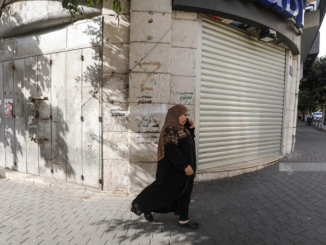
A general strike was called for by Palestinian political movements across the occupied West Bank, The New Arab reported. Businesses and institutions were closed in response to the call to strike in all major West Bank cities, including Ramallah.

“As soon as the news broke about the Israeli raid, many of us in Jenin headed to Nablus to stand beside our people there,” Atta Abu Rmeileh, secretary of the Fatah faction in the Jenin refugee camp, told The New Arab.

“There were large crowds of people at the Rafidia hospital, where Wadee al-Hawah was taken, among whom were many members of the Palestinian security forces who were all mobilized to confront any attempt by the occupation forces to reach the hospital,” Abu Rmeileh remarked.

“It was a scene of unity between residents, security forces and resistance fighters, as the whole city was targeted.”

Meanwhile, Palestinian fighters attacked the Israeli checkpoints of Salem and Jalamah outside Jenin. In a statement, the ‘Jenin brigade’ said that dozens of its members opened fire at the Israeli positions in support of the ‘Lions’ Den.’

More shootings at Israeli forces were reported at the Qalandia checkpoint and outside the town of Abu Dis, near Jerusalem.

In a statement, the ‘Lions’ Den’ group threatened Israel on Sunday with more armed actions against its forces.

“Besiege everywhere now, unleash your drones and your spies, for we have prepared a fire for you,” the statement read.

The ‘Lions’ Den’ statement came following the killing of 33-year-old Tamer Kilani in an explosion inside Nablus’ old city. The group accused Israel of being behind the killing, describing Kilani as “one of its fiercest fighters.”

Source: Palestine Chronicle

Strugglelalucha256


Alabama prison strike on hold after 3 weeks

Alabama – Prisoners in Alabama announced on Oct. 14 that they had paused their historic three-week work stoppage. The strike, which started Sept. 26, involved thousands of prisoners throughout the state, causing the breakdown of normal operations at most major male prisons this month.

According to organizers, the strike’s end was announced following a protest at the state capitol in Montgomery hosted by Both Sides of the Wall. Diyawn Caldwell, founder of the prisoner advocacy group, explained that the strike may only be on pause, depending upon the government’s response.

“It’s been a collective effort from us on the outside and those on the inside that are organizing the strike to put it on hold to give the state, the governor, and the department of corrections time to address our grievances and concerns surrounding our demands,” said Caldwell. “If those grievances have not been addressed within an appropriate amount of time, we will resume the strike.”

Unicorn Riot interviewed Diyawn Caldwell and Christina Horvat, who is also with Both Sides of the Wall. They provided an intimate and in-depth look into the Alabama prison system:

On Oct. 18, the Alabama Department of Corrections (ADOC) confirmed that the prison work strike was over.

Strikers decided to put their protest on hold, in part, due to the impact that reduced caloric intake was having on prisoners with medical issues such as diabetes. During the strike, the ADOC reduced meal portions dramatically, feeding prisoners about 1000 calories or less per day.

“Our brothers, particularly those with health conditions, addiction and mental health challenges, have faced challenges not only to their psychological well-being but also their very lives,” strikers wrote in a public statement. “Especially alarming is ADOC’S intentional ‘bird feeding’ food [deprivation], which presents a severe health risk to those who suffer from diabetes and other illnesses that require a wellness diet.”

“Unlike the ADOC,” they wrote, “we value life.”

The Alabama Department of Corrections admitted at the beginning of the strike that their reliance on free prisoner labor meant that the strike had severely disrupted their ability to run their facilities.

In response to the reduction in food portions, attorneys representing more than 35 Alabama prisoners filed a motion in federal court on Oct. 7 requesting that a federal judge grant immediate injunctive relief to the strikers. The motion, which was filed in an ongoing federal lawsuit brought by the U.S. Department of Justice against the Alabama Department of Corrections, claimed that the effect on the prisoners of the “bird feeding” “has been injurious, and their medical and psychological conditions will continue to deteriorate as their bodies are affected by inadequate dietary and medical access.”

“Some Plaintiff-Intervenors have lost a dangerous amount of body mass,” the motion reads. Prisoners “have had blood sugar drop to dangerous levels, and have experienced other acute medical symptoms (e.g., nausea) as a direct result of Defendants’ decisions to reduce calories and meal frequency.”

Judge R. David Proctor has yet to rule on the motion, although the Department of Justice has filed a motion in court opposing the prisoners’ attempt to intervene in the case, claiming that taking on additional considerations at this time would slow down the progress of the overall case.

The inhumane conditions in Alabama prisons have been extensively documented, including in a 2019 Department of Justice report that found that the ADOC “does not reasonably protect prisoners from rampant violence” and sexual abuse, and that conditions in Alabama prisons “violate the Constitution.”

Alabama Governor Kay Ivey’s solution to the ongoing crisis within the Alabama prison system is to use coronavirus federal relief funds to build three new prisons in her state. Ivey’s plan involves using up to $400 million of American Rescue Plan coronavirus relief funds on prison projects, according to the Associated Press.

Prisoners and their advocates have pushed back against this plan, claiming that building more prisons is not the solution to mass incarceration in Alabama.

The recent federal court motion in defense of the striking prisoners echoed these criticisms: “The Defendants and their affiliates are using this litigation to justify enormous expenditures on physical infrastructure, much of which is undoubtedly in poor repair (and practically all of which is unairconditioned, moldy and dilapidated, making recruitment of correctional officers difficult, especially at relatively low levels of pay).”

“As a result, the money that Defendants would use to hire correctional officers (not to mention feed or medicate prisoners) is going or will go to build new prisons that may improve conditions in the distant future, rather than to ameliorate the cruel and unusual punishment immediately at hand.”

Motion for Leave to Intervene

Incarcerated prisoner rights activist Kinetik Justice below told Unicorn Riot that during the first week of the labor strike, he was beaten by correctional officers and subsequently placed in solitary confinement:

When the strike was put on hold on October 14, strikers released a statement explaining why at least some prisoners were deciding to return to work. “Since the peaceful labor strike within the Alabama Department of Corrections began on September 26,” the statement reads. “Those who are striking have faced relentless attempts to break our spirit by the correctional staff.”

“We have been starved, placed into solitary confinement and suicide cells as retaliation, and forced into dangerous situations as ADOC tries to turn us against each other…The world is watching.”

Striking prisoners’ statement on Oct. 14

Organizers with Both Sides of the Wall say that the struggle is far from over. “We’re going to continue to fight,” said Caldwell. “It’s going to take the death of me if that’s what they’re looking for. We’ll fight tooth and nail.”

Source: Unicorn Riot

Strugglelalucha256


China and Cuba: A relationship of solidarity, friendship and cooperation

We are very pleased to publish below an interview with Carlos Miguel Pereira Hernández, Cuba’s ambassador to China, conducted by People’s Daily and published in Chinese on 13 October. The unabridged English translation has been provided to us by the Cuban Embassy in Beijing.

Timed to coincide with the 62nd anniversary of the establishment of diplomatic relations between the Republic of Cuba and the People’s Republic of China, the interview gives an overview of the history and contemporary reality of relations between the two countries.

Noting that revolutionary Cuba was the first country in the Western hemisphere to extend diplomatic recognition to the People’s Republic of China – in 1960, just a year after the 26th of July Movement came to power – Pereira references the role played by Chinese immigrants in Cuba’s independence struggle. He points out that Cuba and China consider themselves “mutual referents in the construction of socialism with our own characteristics” and notes that President Miguel Díaz-Canel describes Cuba-China ties as “paradigmatic”, and President Xi Jinping describes them as those of “good friends, good comrades and good brothers”.

Describing the cooperation between China and Cuba fields in a vast array of fields, Comrade Pereira expresses confidence that the relationship will continue to deepen.

– Friends of Socialist China


This year marks the 62nd anniversary of the establishment of diplomatic relations between China and Cuba, how do you assess the fraternal friendship between the two countries? What are your specific plans to further promote economic, trade and people-to-people exchanges between the two countries?     

Relations between Cuba and China were made official on September 28, 1960, a formal step after the announcement by Commander in Chief Fidel Castro a few days earlier in front of more than a million Cubans, in the context of the historic First Declaration of Havana, to recognize the New China and rescind ties with Taiwan. That just decision was born of the political and popular will that have accompanied our relations throughout these 62 years.

The nascent Cuban Revolution definitively broke with the Monroe Doctrine and blind obedience to Washington, allowing Cuba to become the first country in the entire Western Hemisphere to establish ties with New China. We are honored to have made that modest contribution as one of the first manifestations of independence from our foreign policy.

The historical foundations and deep bonds of friendship between our peoples go back to the arrival of those first Chinese immigrants 175 years ago, who also had an outstanding and glorious participation in our struggles for independence.

Throughout these years of uninterrupted relations, Cuba has had the historic privilege of always being in the front row in promoting exchanges with China. Our relations represent a model of cooperation based on equality, respect and mutual benefit. We consider ourselves mutual referents in the construction of socialism with our own characteristics and on that basis, we carry out a broad and systematic exchange of experiences.

Our bilateral relations, as we reach the 62nd anniversary of diplomatic relations, are accurate and broadly in line with the definitions given in this regard by our top leaders. In the words of President Miguel Díaz-Canel, the ties between Cuba and China are paradigmatic, and President Xi Jinping has described our bonds as those of good friends, good comrades and good brothers.

The special character of our bilateral ties is a historic consensus, which reaches today an unprecedented solidity, by virtue of the high level of political mutual trust, the broad coincidence of positions in the international arena and the multidimensional and full development of our ties.

In the last two years, even in the midst of the pandemic, our ties continued to grow, the mechanisms of inter-party dialogue, government, parliamentarians and thus of various sectors, continued to strengthen in pursuit of coordination and cooperation both bilaterally and in international organizations.

It can be said that Cuba and China have been fraternal countries, which have supported each other on core issues and, above all, in difficult times. Since our official ties were established, Cuba has always shown its unequivocal support for the “One China” policy, and the firm rejection of any action that threatens China’s sovereignty and territorial integrity. For our part, we have counted on the sustained support from the Chinese government and people, and in particular, in our fight against U.S. blockade, which continues to intensify even in times of pandemic.

On September 24, in the framework of the 77th Session of the General Debate of the United Nations, State Councilor and Foreign Minister, Wang Yi, in a historic and unprecedented pronouncement, requested for the first time in that important scenario, the lifting and immediate end of the genocidal blockade policy. This transcendental support from China becomes a new milestone in our bilateral relations that ratifies the special and exceptional character of our ties, as well as mutual support on core issues.

Our ties have had a multidimensional growth, including the integral development of economic, commercial and financial ties. Despite the differences in terms of volume and productive capacity, the complementarity of our economies and the excellent political environment in which they develop, confirm the enormous potential to be exploited in this area.

Today, our ties cover almost all sectors of the economy of both countries. China continues to be Cuba’s second largest trading partner, a fundamental source of financing on favorable terms and the main technological supplier for the execution of projects prioritized for the economic and social development of our country.

China has also consolidated as the main market for our exports of goods. Sugar, nickel, rum and tobacco are emblematic products with great acceptance and demand in the Chinese market, for their good quality and recognition in the international market. New items have been added in recent years and others represent very promising prospects such as lobster, white and sea shrimp, coffee, honey and biotechnology products.

Likewise, we are inserted in new business models such as cross-border electronic commerce, through the creation of the Cuban Pavilion “Cuban Excellences” on JD.com Group platform. This has also been part of strategy of deepening our relations with China and a new milestone in bilateral cooperation, allowing the introduction of more Cuban products to this market, as well as a greater promotion of Cuba’s image, through its tourist and cultural resources.

It is worth mentioning as a milestone in our economic ties, the signing of the Memorandum of Understanding in 2018 and subsequently the Action Plan for the joint construction of the “Belt and Road”. Under this initiative, we hope to promote new projects linked to tourism, renewable energies, communications with the Digital Silk Road, health, biotechnology and science and technology.

In this context, an important area for cooperation is foreign investment in which China has much to contribute in the development of Sino-Cuban investments in Cuba, especially in the development of infrastructure such as airports, ports, roads, tourism infrastructure, telecommunications, as well as in projects related to renewable energies, biotechnology and health.

It is also of great interest to promote cooperation in the biotechnology sector between Cuban scientific entities and Chinese companies and to promote cooperation in this area, through the models that we are developing today in China, such as joint ventures.

Similarly, and taking into account that China promotes and encourages domestic consumption of high-quality products, we believe that the export of Cuban products to the Asian giant is also an area of potential for cooperation.

Another sector with promise is the export of Cuban medical services. In this regard, our exchanges with Chinese counterparts have transcended broad interests in cooperating in specialties such as oncology, ophthalmology, primary health care, health and wellness tourism and the possibility of applying the innovative products of Cuban biotechnology, which have great impact and recognition at the international level.

People-to-people exchanges are fluid and close, highlighting the close historical and cultural links. There is an increasing interest in Cuba to know the culture and language of China, while, to cite just two examples, the learning of the Spanish language and Cuban salsa, are gaining more and more followers in China. On the other hand, Cuba is a safe destination and could be the gateway for Chinese tourism to the Caribbean.

The Communist Party of China and the Communist Party of Cuba are the leading nucleus of their countries’ respective socialist causes. How do you see the inter-party exchanges and cooperation between Cuba and China? What do you think is the greatest contribution made by the Communist Party of China to world political civilization in the last decade?

The relations between the Communist Party of Cuba and the Communist Party are forged on the basis of numerous affinities and consensuses, and also by the common challenge of building socialism based on different national realities, in the midst of a complex international situation characterized by growing unilateralism and the hegemonic attempt to impose on us the patterns and models of others.

The fluid inter-party dialogue throughout these 62 years, together with the frequent exchange of experiences in the construction of socialism, according to the conditions of each country, constitute essential pillars of the solid mutual trust that exists.

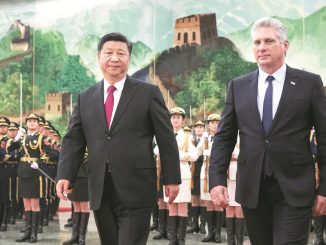
The recent exchanges between the party structures of both countries have been projected towards the implementation of the consensus reached between First Secretary Miguel Díaz-Canel Bermúdez and Secretary General Xi Jinping, from a face-to-face meeting they had in Beijing in 2018 and the two telephone calls held after the beginning of the pandemic.

This year we celebrate the virtual IV Theoretical Seminar between both Communist Parties that strengthens the practice of the exchange of experiences in socialist construction.  In this context, the messages of both leaders were relevant, ratifying the utmost importance that both countries attach to strengthening the Parties in pursuit of the consolidation of strategic communication and political trust at the highest level.

On the other hand, the Communist Party of China has been central to the achievements of the New China, so it is of great importance in the international arena, for socialist countries such as Cuba and for left-wing and progressive movements.

The CPC was able to innovate Marxist theory by adjusting it to China’s own characteristics, which constitutes a valuable contribution to the study, dissemination and promotion of Marxism in the twenty-first century. The process of “sinicization” of Marxism is an example of the application of materialist dialectics, achieving a socioeconomic model, whose successes are undeniable.  The feat of eradicating extreme poverty in China is a tangible demonstration of the accurate leadership of the party organization.

For Cuba, China constitutes a benchmark of the conquests of socialism in modern times, which, under the leadership of the Communist Party of China, has managed to overcome adversities and meet development goals such as the revitalization of the nation.

In this regard, the holding of the Twentieth Congress of the Communist Party of China will be a historic moment, to which we will pay maximum attention and follow-up. Cuba wishes China success in celebrating this momentous event. We are convinced that as a result of the Twentieth Congress of the Communist Party of China we will find a strengthened China, determined to maintain its conquests, to build socialism, and to fulfill its second centennial goal.

The strengthening of inter-party exchange will continue at the end of the XX Congress, because it will be a favorable moment to promote new spaces for bilateral dialogue, based on the exchange of experiences, consultation and support in regional and international forums.

Strugglelalucha256


Gag rule on Palestinians continues, TikTok joins ban policy

A malfunctioning Israeli military drone crashed in the occupied West Bank city of Nablus on Friday was and seized by a Palestinian Resistance group.

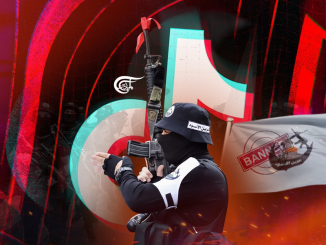
The Areen Al-Ousoud “Lion’s Den” Resistance group affirmed capturing the unmanned aerial vehicle that crashed in Nablus, posting images of the captured Israeli drone on TikTok.

The Resistance group was later banned from the popular video-sharing platform.

What TikTok and Meta want to ban 

Unsurprisingly, the Israeli occupation labels Palestinian Resistance groups as “terrorist”, despite the fact that there is a legitimate sovereign in the occupied West Bank under international law. The Israeli occupation practices its act of barbarism, killing, arresting, and raiding Palestinian houses on a daily basis.

Here’s the latest spree of Israeli violence: The occupation forces maintain their siege on the city of Nablus in the northern West Bank, amid the full closure of occupation military checkpoints and roads leading to the city.

In a similar context, two Palestinians were shot dead and six others were injured, on Saturday, during confrontations that erupted between the Israeli occupation forces and Palestinians following an Israeli raid on the Jenin refugee camp.

Local sources reported that Israeli Special Forces infiltrated Jenin, and snipers were stationed on the rooftops. IOF’s raid resulted in the outbreak of violent confrontations, during which the occupation forces used excessive force.

The same sources confirmed that the occupation forces prevented any ambulance from getting to the site of injuries. In yet another act of Israeli barbarism, a Palestinian doctor was shot by an Israeli sniper while treating one of the injured in the hospital yard.

Killed while live streaming

When a 29-year-old Palestinian, Mohammed Musa Sabaaneh, a resident of Jenin refugee camp, was live-streaming as Israeli occupation forces (IOF) raided the camp, he was directly shot by the IOF in his chest.

Around 15,000 people were watching the broadcast during which “Israel” murdered Sabaaneh.

Viewers could hear what was going on but couldn’t see the video, at which point people could be heard in the background calling for an ambulance.

“The host is injured!” one viewer wrote in the comments.

Meta suppressing rights of Palestinians: HRW

Facebook and Instagram’s parent company, Meta, censored and removed content documenting human rights abuses committed by “Israel” during the May 2021 Israeli aggression on Gaza, Human Rights Watch has recently revealed.

The human rights organization said Meta’s social media platforms censoring content relating to human rights abuses “particularly during periods of violence” is especially harmful to human rights.

Years of accounts from Palestinian journalists and activists that Facebook and Instagram appear to censor their posts were confirmed.

Human Rights Watch accused Meta last year of wrongfully removing and suppressing content by Palestinians and their supporters, including content regarding human rights abuses against Palestinians.

No such exceptions were ever granted to Palestinian victims of Israeli state brutality, and the sources don’t indicate that any other suffering group was given a similar level of latitude.

Systemic censorship against Palestinians facing daily brutal oppression

Back in 2021, during the holy month of Ramadan, Israeli occupation forces carried out a massive assault against hundreds of Palestinian worshipers in Al-Aqsa mosque in an attempt to repress them during the holiest month for Muslims. Palestinian Ministry of Health reported back then that at least 200 Palestinians sustained wounds due to the IOF’s aggressive attacks many of which required medical attention in hospitals.

However, that was not the only incident of Israeli aggression against Palestinians that took place that day. Earlier, Palestinian residents of Sheikh Jarrah confronted the occupation forces that were trying to illegally and forcefully expel them from their neighborhood following an Israeli occupation court order.

In the midst of all the oppression, Palestinians and the supporters of their cause launched a social media campaign, sharing images and videos in addition to posts accompanied by hashtags, reporting and documenting the occupation’s attacks, in an attempt to expose the violence and brutal practices of the occupying entity.

However, to many user’s surprise, much of the content that was posted on several social media outlets, including Twitter, Facebook, YouTube, and Instagram, suddenly was removed with some users reporting that their posts were flagged over alleged violation of the terms of use of the platform, while others where outright banned and had their accounts suspended.

Mona Al-Kurd was one of many live streaming the ongoing events in Sheikh Jarrah when her streaming cut off suddenly. Al-Kurd explained that her live-streaming feature was blocked while she was documenting the moment Al-Salhiyya’s family home was demolished. This exposed Instagram’s complicity and censorship of Palestinian content.

Censorship of Palestinian content is not new to some of the giant tech companies. Toward the end of last year, activists and journalists started a campaign against Meta’s policies, which have been targeting Palestinian content and the Palestinian narrative.

When these media outlets failed the Palestinians, especially during Sheikh Jarrah Neighborhood events, they decided to snatch the cameras for themselves and press “play”.

“Israeli propaganda is truly powerful, I witnessed this, especially in the West, Israel is the victim and we Palestinians are the aggressors,” Mariam Afifi, 27, a Palestinian musician and contrabassist with the Palestine Youth Orchestra told Al Mayadeen English.

The censorship of Palestinian voices, however, was not limited to the ones living in Palestine. On March 8 of 2022, Meta removed the FaceBook account of a Palestinian organization based in NYC, Within our lifetime, over a post praising Palestinian revolutionary women in celebration of Women’s International Day.

In a statement, the organization said, “While the restoration of our main account following a massive outpouring of support from our comrades and supporters around the world marks a victory, we know that Instagram continues to uphold anti-Palestinian racism and actively works directly with our oppressors to silence us.”

Big tech has long been an accomplice to the Israeli crimes against Palestinians, like Meta, then Facebook, which acknowledged in 2017 that it was complying with 95% of the Israeli government’s requests to remove Palestinian accounts and pages. YouTube was an accomplice as well, less so, but still as bad, with an 80% compliance rate.

The censorship battle that the Palestinians are facing is still ongoing, ranging from the filter that some media outlets use to blocking social media accounts and removing some of them.

Meta’s Instagram admitted that the platforms censored and removed posts and hashtags related to Al-Aqsa Holy Mosque and released an apology statement claiming that the site’s algorithm “mistakenly” flagged the posts as promoting “terrorist” content.

The social media giants admitted to the removal of some content and suspension of some accounts and released apologies while claiming that it was due to “technical errors”, but Palestinian organizations and users labeled these claims as illogical and irrational.

Activists and journalists have started a campaign against Meta’s policies, which have been targeting Palestinian content and the Palestinian narrative.

This campaign, which is calling for protesting the social media giant’s policies online under the hashtag “#FbCensorsJerusalem”, has accused Meta of ignoring the Palestinian narrative on the Israeli occupation’s crimes in occupied Al-Quds.

The group released a statement saying, “While [Meta] is escalating its crackdown on the Palestinian narrative under flimsy pretexts, it does not lift a finger about the Israeli incitement, which calls for the killing and apprehension of Palestinians, especially after the recent incident at the Chain Gate in occupied Jerusalem,” adding that “Facebook’s algorithms strictly censor any pro-Palestinian content and do not take into account what’s happening on the ground in Palestine.”

Palestine is not a ‘harmful content’

Since the beginning of Russia’s special military operation in Ukraine, pro-Palestine activists on social media platforms started to compare how tech giants, specifically Meta, are handling the Ukraine crisis.

Meta, who was censoring every pro-Palestinian post, story, or even a live stream, has allowed hate speech and violence against Russian President Putin and Russians, even allowing the spread of “gore” content if it involves dead Russian soldiers. While Meta is encouraging the spread of fake news on its platforms, it did not encourage the Palestinians to spread the truth all over its platform.

Why is it that when it comes to the Israeli most hideous massacres against Palestinians, it is a “controversial cause”, while when it comes to a topic such as Russia, Meta tries to forcefully impose the “truthful news” on its users?

Source: Al Mayadeen English

Strugglelalucha256


Open Letter to Maureen Faulkner from Julia Wright

Dear Maureen Faulkner,

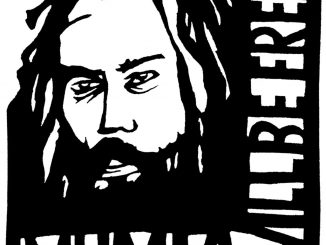
As Mumia Abu-Jamal’s October 26th court hearing approaches, you will be yet again letting the world know what a  stab of pain you feel at seeing the “murderer” of your husband still appealing for freedom.

And we, who know Mumia is innocent, still have the grace to understand your pain just as we understand the pain of Mumia’s family. We recall, too,how Mumia’s sister Lydia expressed his family’s and our movement’s awareness of your loss.

For that night of December 1981, you were deprived forever of a beloved husband – just as Mumia’s wife saw her husband go to death row for three decades and to death by incarceration for thirteen more years.

The United Nations having declared that solitary confinement as practiced on U.S. death row is torture and having been recently solicited to declare death by incarceration as torture as well – we, who have investigated Mumia’s case, know to what extent his family is impacted daily by the stab of pain you will feel on October  26th.

You famously declared in front of an FOP gathering :

We know Mumia will be free. But we want to delay his release for as long as possible.

May I suggest that your words: “We know Mumia will be free” – indicate that you know Mumia is innocent as well? Those words indicate that you have reviewed the facts and evidence collected by Mumia’s defense and that you know those facts and that evidence are more than enough to set him free.

So the second part of your statement is what draws our attention: ” But we want to delay his release for as long as possible”.

Deconstructing the meaning of your words or the subtext, we begin to understand that you are aware you have the power to delay his release and you will use that power because you consider it to be absolute.

We also understand that your delaying tactics come from a position of race privilege that the family of Mumia is far from enjoying.

So may I suggest that there are two women in the United States who sit today in the docks of HIstory.

You, Maureen Faulkner, and Carolyn Bryant Donham, the woman whose accusations against 14-year old Emmett Till led to his brutal abduction, torture and lynching in 1955 Mississippi.


Both of you are faced with choices which could change History.
Both of you could stand up and speak Truth to power.
Both of you could confess to your own reasonable doubts.


Ms Bryant Donham faltered twice as she walked the tightrope between truth and lie – both in 1955 and in 2017, she half-admitted and retreated.

You, Maureen Faulkner, admitted that you knew Mumia would be free – indicating you knew more than you were saying. And yet you too remain silent on the wrong side of History.

How difficult it must be to be you.
How difficult it must be to be faced with a double bind such as yours: having lost your husband to murder and yet accepting police pressures to incriminate an innocent for that murder.

The choice remains yours – and that choice will go down in HIstory.
History is a strange place where we no longer control time or the only opinion that matters.
History is the most exacting judge of all.

You would say that you have no historical examples of white women in your shoes – women who chose to speak up in time and say the Truth to save lives – Black lives.

You would be wrong.

Our civil rights History retains at least two luminous examples of white women who challenged the police narratives that endangered the lives of innocent Black men.

The first is Ruby Bates, the white prostitute whose crystal clear testimony in a racially charged trial did so much to get the Scottsboro Boys off the hook of execution for rape in the South of the 1930s.
Her example was so uplifting that it crossed the ocean and inspired a play by France’s renowned philoshopher, Jean-Paul Sartre: The Respectful Prostitute.

The second heroine is Leontine “Teenie” Rogers, the widow of Brent Miller, an Angola prison guard who, the late Albert Woodfox, a Black Panther, was accused of killing “because he was white”.

Ms Rogers was 17 years old at the time of the loss of her beloved husband and like you, Maureen, devastated.

But, unlike you, her deep love for her deceased husband led her to doubt the lies: she did her own investigation, including interviews of former colleagues of her husband, and came to believe that a terrible miscarriage of justice had taken place.
Ms Rogers wrote to the Governor of Louisiana in support of Albert Woodfox and his co-defendant, Herman Wallace, asking the state to admit its mistakes, reopen the case, and find the real killers of her husband
When Albert Woodfox was finally released, he had lunch with Ms Rogers.

As my own father wrote from Paris in 1955 in a column he shared with William Faulkner, commenting on the non-guilty verdict for the lynchers of Emmett Till :

The world will judge the judges.

And the world will judge all those who enabled them.

My belated and sincere condolences,

Julia Wright
October 14, 2022

IF YOU WISH TO ENDORSE THIS OPEN LETTER, PLEASE SEND julianahrv1966@gmail.com YOUR NAME AND THE GROUP WITH WHICH YOU WISH TO BE IDENTIFIED.

DEADLINE TUESDAY OCTOBER 25TH 2022, MIDNIGHT ET.

First 77 endorsements as of October 14th 2022 :

–  PAM AFRICA, National Co-ordinator of the Mumia Coalition

–  ALICE WALKER, Pullitzer prize-winning author, human rights activist, abolitionist and poet

–  Pr MARK LEWIS TAYLOR , Educators For Mumia, Spiritual Adviser to Mumia

–  NOELLE HANRAHAN, Prison Radio

–  LAURA WHITEHORN,  former U.S.-held political prisoner

–  ATTORNEY NKECHI TAIFA, civil and human rights attorney

–  Pr PAUL ORTIZ, Director Samuel Proctor Oral History Program, Professor of History, University of Florida

–  THE REVEREND DOCTOR MARY OLSON, United Methodist Retired Clergy, The Elaine Museum and the Richard Wright Civil Rights Center, Elaine Arkansas

–  ANDREA A. GLUCKMAN, photography/education/activism, the Elaine Museum and the Richard Wright Civil Rights Center, Elaine, Arkansas

–  JEREMIAH WRIGHT Jr

–  DR JARED BALL, Ph.D, Morgan State University

–  KALONJI CHANGA, Defending The Poor

–  GWENDOLYN DEBROW, organizer, CAMPAIGN TO BRING MUMIA HOME

–  THE FREE MUMIA ABU-JAMAL COALITION – NYC

–   THE NEW YORK CITY JERICHO MOVEMENT

–  THE GOT  REPARATIONS ? MOBILIZATION CAMPAIGN – The Parable of the Sower Coop

–  THE MAROON PARTY FOR LIBERATION

–  THE MALCOLM X GRASSROOTS MOVEMENT, IKEMBA AGULU

–   CO-CHAIR DETROIT CHAPTER OF THE MALCOLM X GRASSROOTS MOVEMENT, SHUSHANNA SHAKUR

 –  MORATORIUM NOW !  COALITION, SARAH TORRES

–   DETROIT SHAKUR SQUAD, VERBENA LEA

–   URBAN ART BEAT

–   COMMUSAIC

–   NEW BLACK ARTS MOVEMENT

–   XPERIMENTAL

–   SIXTH REGION OF THE AFRICAN DIASPORA – ZONE FRENCH CARIBBEAN, MAKEDA KANDEKE

–  FREEDOM ARCHIVES, CLAUDE MARKS

–   Pr ANITA ROSENBLITHE, Ph.d, member, MUMIA ABU-JAMAL HEALTH COMMITTEE

–   Pr NAN ELIZABETH WOODRUFF, professor emerita of African-American Studies and Modern U.S. History, Penn State University

–   Pr IRENE SILVERBLATT, professor emerita of cultural anthropology and History, Duke University

–   Pr MICHAEL WEST, professor of African-American Studies, History and African Studies, Penn State University

–   Pr CHARLES E. SIMMONS, Black Community Museum Detroit

–  MARYEMMA GRAHAM, Ph.d, retired, author, essayist

–   JENNIFER BLACK, abolitionist, prison art graphist

–   TOVA FRY, anti-racist and anti-war activist, COMMUNIST WORKERS LEAGUE , Newark

–   MEGAN ANDERSON, disabled member of the BLACK ALLIANCE FOR PEACE AND SOLIDARITY NETWORK

–   JEFFREY L. EDISON, NATIONAL CONFERENCE OF BLACK LAWYERS, Michigan Chapter

–   YVONNE JONES, retired City of Detroit worker

–   O’HARA-BRUCE, retired criminal defence attorney

–  JUDITH ACKERMAN, puppeteer and activist

–  REBECCA B. WILK ,  activist

    CHARLIE BRAXTON, poet, musician, essayist

    KEVIN POWELL, writer, civil and human rights activist

    VICTOR WALLIS, activist, editor

–     SALLY JANE GELLERT, Occupy Bergen Country ( New Jersey )

    GARBO HEARNE, bookseller

    AUNA HEARNE, electronic engineer

    SPIRITCHILD,  freedom singer

    MIKE SHANE, COMMUNIST WORKERS LEAGUE , Detroit

    JENNIFER FASSBENDER

    CHARLIE HINTON , San Francisco, CA

    JULIE HURWITZ , civil rights attorney, NATIONAL LAWYERS GUILD

    J. D. STARKS

    JESSE GINSBURG

    PETER LEMA, videographer, INTERNATIONAL PANAFRICAN MUMIA ABU-JAMAL COLLECTIVE TO FREE POLITICAL PRISONERS IN THE USA, France

    RACHEL FANDI, singer, France

    FANTA KABA, INTERNATIONAL MOVEMENT FOR REPARATIONS (MIR) – France

    RAMATA DIENG, “VIES VOLEES” ( Stolen Lives ) COLLECTIVE, France

    APA MUMIA MAKEBA, PRESIDENT MIR -France, Trade Union of Guyanese Workers, French Guiana

    MEGAN KRAUSCH, Ph.D, public sociologist

–   SUZANNE ROSS, Ph.D., clinical psychologist, INTERNATIONAL CONCERNED FAMILY AND FRIENDS FOR MUMIA ABU-JAMAL, 29 year Mumia supporter

–   JAMES AND GRACE LEE BOGGS CENTER

–   NATIONAL LAWYERS GUILD, Detroit and Michigan Chapters

–   JOHN LESLIE, CENTRAL COMMITTEE WORKERS’ VOICE U.S / VOZ DE LOS TRABAJADORES

–   Dr WILLIE AND MARY RATCLIFFE, San Francisco Bay View National Black Newspaper

–   M. GABRIEL, writer

–    JENNIFER BEACH, PRISON RADIO

  –   RAFAEL OUTLAND, Ph.D, CSC,CPE, Onondaga Territory, Turtle Island, LOVENOTPHEAR / FREE KAMAU COALITION organizer

–     RALPH POYNTER, BETTY DAVIS , the LYNNE STEWART ORGANIZATION AND       THE NEW ABOLITIONIST MOVEMENT

    CAROLINA SALDANA, AMIGXS DE MUMIA EN MEXICO

    BEATRICE PHI, PRISON RADIO, STANFORD UNIVERSITY

    PATRICK BOBULESCO, bookseller, Paris, France

    Dr CORNEL WEST , theologian, philosopher, civil and human rights leader

    DIALO DIOP, activist for the cause of Pan Africanism, Dakar, SENEGAL

    Dr RICARDO ALVAREZ, Independent Medical Consultant to Mumia Abu-Jamal, MUMIA HEALTH COMMITTEE

    NANCY PARKER, THE DETROIT JUSTICE CENTER

    VALERIE JONES, sister of the late VERONICA JONES, a witness who was famously arrested off the stand when she refused to incriminate Mumia

FREE MUMIA ABU-JAMAL OUTREACH COMMITTEE 

WEDNESDAY, OCTOBER 26, 2022 UPDATE

Join us outside the courthouse from 8:30 AM until 1 PM on Wednesday, October 26th, 2022 for the next hearing in the current appeal of Mumia Abu-Jamal’s unjust 1982 conviction in the death of Daniel Faulkner.

The current case is based upon six boxes of evidence discovered by Philadelphia DA Larry Krasner in an office storeroom and released to the courts in December 2019 during an earlier appeal in Mumia’s case. The boxes were marked indicating they are part of an overall lot of 32 boxes. However, the location of the other (presumed) twenty-six boxes of suppressed evidence in his case is still unknown.

For more information about the court date, see mobilization4mumia.com/new-events 


NEW YORK CITY FREEDOM FIGHTER BUS

If you wish to travel down (and back) to the courthouse from New York City with the Free Mumia Abu-Jamal Coalition NYC please contact us at our hotline [ 212.330.8029 ] to arrange this. You can also purchase a ticket online to travel with us at Get Bus Ticket .


NEWARK FREEDOM FIGHTER BUS

There will also be a bus sponsored by POP (People’s Organization for Progress) leaving from Newark that morning.   

Bus leaves 6:00 am #Newark City Hall, 920 Broad Street

Arrive at 5:30am Wear mask, temp taken

Donation $25. If facing financial difficulties, let us know

Reservation required, 1st come basis: 973-801-0001

Source: Fighting Words

Strugglelalucha256


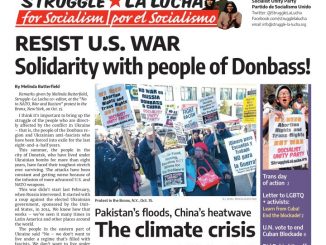
Struggle ★ La Lucha PDF – October 24, 2022

Get PDF here

  • Resist U.S. war! Solidarity with people of Donbass!
  • Pakistan’s floods, China’s heatwave: The climate crisis
  • Open letter to LGBTQ+ activists: Learn from Cuba! End the blockade!
  • Nat’l day of action to end violence and genocide on transgender people
  • New Yorkers rally to stop anti-trans violence
  • Did Marco Rubio bite off more than he can chew?
  • Alabama prisoners strike against racism and unlivable conditions
  • A Nobel Prize in foreclosures
  • Thousands rally: ‘Free Assange!’
  • No U.S. intervention in Haiti!
  • Imperialist crimes and U.S.-led NATO war in Ukraine
  • Hands off Donbass, Zaporozhye and Kherson: Respect the referendum!
  • U.S. launches ‘practice’ nuclear bombing of Europe
  • On November 3 at the UN: The people say yes, will Biden say no?
  • Puerto Rico: La visita de Biden
Strugglelalucha256
https://www.struggle-la-lucha.org/2022/page/15/