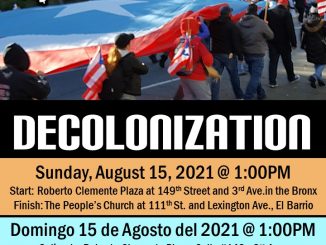
March for decolonization Aug. 15

Strugglelalucha256


Why Hiroshima and Nagasaki were incinerated

Barack Obama visited Hiroshima on May 27, 2016, the first sitting U.S. president to do so. Obama’s visit to the Japanese city revived the question of whether killing hundreds of thousands of people in Hiroshima and Nagasaki with atom bombs was a military necessity.

Dwight Eisenhower didn’t think so. The former president and five-star general wrote in his autobiography “Mandate for Change” that dropping atom bombs on Japan “was completely unnecessary.” Ike claimed that he said this to War Secretary Henry Stimson.

General Curtis LeMay told a Sept. 20, 1945, news conference, “The atomic bomb had nothing to do with the end of the war at all.” Even President Truman declared that dropping the bombs “did not win the war.” (“Hiroshima in America, Fifty Years of Denial” by Robert Lifton and Greg Mitchell)

A big reason why Japan surrendered was that the Soviet Army and Mongolian, Korean and Chinese allies rolled through northeastern China and all of Korea. This not only destroyed the biggest Japanese army but threatened a socialist revolution in Japan itself.

Yet talking heads at Fox News still claim that burning babies alive in Hiroshima and Nagasaki “saved the lives of U.S. soldiers” by averting an amphibious invasion of Japan.

Complete barbarism

After breaching the walls of a besieged city, Roman soldiers killed or enslaved every human being they could find. Even cats were sliced in two. Among their victims was the famous mathematician Archimedes, killed by a legionnaire after Syracuse in Sicily was overrun in 212 BCE (Before the Common Era).

Two thousand years later, international law was supposed to prevent such war crimes. Nazi leaders were hanged in Nuremberg for deliberately killing civilians.

But U.S. war leaders committed war crimes, too. General LeMay burned alive over 100,000 people during the March 9-10, 1945, firebombing of Tokyo.

At least 200,000 people, including thousands of children, were killed by the atom bombs dropped on Hiroshima on Aug. 6, 1945, and Nagasaki three days later. Even decades later people died from radiation-caused illnesses.

A diplomat from the Democratic People’s Republic of Korea told this writer that 30,000 of the people killed in Hiroshima were Korean forced laborers. Truman murdered these Korean workers held hostage by the Japanese emperor and big business.

President Teddy Roosevelt turned Korea over to the Japanese Empire in the 1905 peace treaty, signed in Portsmouth, N.H., that ended the Russian-Japanese war. Teddy got a Nobel Peace Prize for his crime.

People’s Korea has found it absolutely necessary to develop nuclear weapons to defend itself against the Pentagon. This is not only because of U.S. nuclear missiles aimed at Korea.

At least 4 million Koreans were killed during the Korean war. Using napalm and white phosphorous bombs on human flesh didn’t satisfy U.S. generals and politicians. Then Texas Congressperson Lloyd Bentsen can be seen in “The Atomic Cafe” demanding that atom bombs be dropped on Koreans.

This didn’t stop Bentsen from being the Democratic candidate for vice president in 1988 or from serving as President Bill Clinton’s first Treasury Secretary. Korea also remembers the Hiroshima holocaust.

The Manhattan Project’s real target

More than 100,000 workers were mobilized by the U.S. Army’s Manhattan Project to build the death bombs. At least $2 billion was spent, which, as a percentage of the U.S. economy, is equal to $180 billion today.

The excuse for the Manhattan Project was that the U.S. had to “beat Hitler” at developing the atom bomb. This was the reason given to scientists like the young physicist and future Nobel Prize winner Richard Feynman.

But the real target of the Manhattan Project was the Soviet Union. 

According to William Shirer in “The Rise and Fall of the Third Reich,” U.S. brass hats expected the Soviet Union to collapse within six weeks of Hitler’s invasion in June 1941.

A representative of Kansas City’s corrupt Pendergast Machine — Sen. Harry Truman — declared, “If we see that Germany is winning we ought to help Russia and if Russia is winning we ought to help Germany, and that way let them kill as many as possible.” (New York Times, June 24, 1941)

The Soviet Union didn’t collapse. At a cost of 27 million Soviet lives, Nazi forces were forced back from Stalingrad to Berlin. It was the Red Army of workers and peasants that liberated Auschwitz on Jan. 27, 1945.

Despite pleas from Treasury Secretary Henry Morgenthau, War Secretary Stimson refused to bomb the railroad lines to Auschwitz that took millions of people to their death.

USSR deterred nuclear war

The Manhattan Project was Wall Street’s response to the phoenix-like resurrection of the Red Army. The U.S. and British ruling classes dreaded Soviet forces marching all the way to Paris and being welcomed by workers.

Capitalists also feared a revival of the German working class who had been crushed by Hitler.

The physicist Joseph Rotblat was present when Leslie Groves the Manhattan Project’s director — admitted that the Soviets were the real target:

“General Leslie Groves, when visiting Los Alamos, frequently came to the Chadwicks for dinner and relaxed palaver. During one such conversation, Groves said that, of course, the real purpose in making the bomb was to subdue the Soviets. (Whatever his exact words, his real meaning was clear.)” 

During World War II, Time magazine publisher Henry Luce proclaimed an upcoming “American Century.” The Pentagon was planning to confront the USSR not just with the bomb, but also with military forces numbering 16 million GIs and the biggest air force in history.

This immense power was also to be used against the Chinese Revolution and as a threat to all oppressed people.

Super-racist U.S. General George Patton talked about rearming Nazi SS troops and marching to the Volga. Winston Churchill considered an invasion of the Soviet Union in “Operation Unthinkable.”

The U.S. had half the world’s industrial capacity in 1945. President Kennedy correctly noted in 1963 that the Nazi destruction of the Soviet Union would have equaled everything in the United States east of the Mississippi River being destroyed.

But the millions of GIs whom Wall Street wanted to use against the Soviet Union wanted to go home. Even though it was still a Jim Crow army, tens of thousands of soldiers demonstrated in Paris, Manila and other cities demanding to go home. This GI revolt was the greatest gift of the U.S. working class to the world revolution— and probably the least known.

Despite billions of aid lavished on Chiang Kai-shek, the Pentagon couldn’t stop the Chinese Revolution.

The only reason that a nuclear holocaust hasn’t destroyed humankind is that the Soviet Union, at tremendous cost, was able to develop a deterrent nuclear force against a Pentagon attack.

Strategic Air Command head Curtis LeMay and Chair of the Joint Chiefs of Staff Lyman Lemnitzer both wanted to launch a nuclear first strike on the Soviet Union. In 1968 LeMay was George Wallace’s running mate during the segregationist’s fascist presidential campaign.

LeMay actually had hydrogen-bomb-equipped planes continually in the air ready to attack. Inevitable crashes happened, including one off Spain’s Mediterranean coast in 1966. It took 12 weeks and over 20 naval ships to recover the bomb.

A 1958 accident dropped a Mark 15 thermonuclear bomb off the Atlantic Coast of Georgia. It has never been recovered.

That unexploded bomb is a real threat to people in the U.S., not the small number of nuclear weapons that People’s Korea needs to defend itself.

Strugglelalucha256


The good people who will give internet to Cuba

GitHub, the largest free software platform in the world, has published an incomplete list of 60 computer programs, sites and services restricted for Cuba by the unreasonable U.S. blockade, which according to Senator Marco Rubio does not exist. The list includes everything from the most popular videoconferencing platform in these times of pandemic, Zoom, to most Google applications, such as Code, Cloud, Maps and Play Publics.

The list is partial because services blocked a few weeks ago, such as Wetransfer, which allows anyone who does not live in Cuba to transfer computer files over the Internet and which journalists used to send photos, audios or videos to our newsrooms, are not included. Wetransfer is a company based in Amsterdam, which suddenly decided to abide by U.S. laws and deny access to Cubans.

The paradox is that this is happening when the White House, always such good friends with those from the South, has focused on two axes of the same interference discourse: it will dialogue with the Cubans (meaning Miami) to decide what new sanctions it will impose on the island, and it has decided to provide Cuba with a “new free Internet infrastructure” to make us very happy.

The dialogue with (Miami) Cubans, who do not want to talk to Biden, for whom they did not vote for and still believe he stole the election from Donald Trump, are seen as an extravagance of U.S. foreign policy. David Brooks, correspondent of La Jornada newspaper in the U.S., referred a few days ago to Biden’s meeting with a small group of Cuban-Americans at the White House to hear opinions on what is happening on the island, although most of those present have not set foot on our archipelago in a long time. Senator Robert Menendez, for example, has only seen a Cuban palm tree in photographs, while businessman Emilio Estefan has not known for 58 years what the street lamp on the Morro de Santiago de Cuba, the land where he was born, looks like.

However, as Brooks states, experts in foreign policy and bilateral relations “have confirmed that the case of Cuba is unique, in which Washington, under both parties, consults with the diaspora of a country within the United States to elaborate policy towards that nation”.

The Internet is even stranger. Washington accuses the Cuban government of being the enemy of the Internet, but blocks applications commonly used anywhere on the planet. It promises a new infrastructure with stratospheric balloons and other surrealistic variants, but these days it has subjected Cuba to every possible variant of network information warfare and direct cyberwarfare.

Cuban users have seen an unprecedented increase in the deployment of fake news, photos and videos from junk sites in Florida, which are even replicated by transnational media companies. Videos from July 11 have been repeated ad infinitum as if they were new, a deceptive tactic to give the impression that the protests have continued until today, although the country is in total calm. The use of electronic gateways (VPN) is encouraged to circumvent the national public network and, in particular, the use of Psiphon, a technology developed and financed by the United States Agency for Global Media, Washington’s propaganda agency, is advertised.

Cuban media and institutional websites have received hundreds of denial of service attacks from U.S. soil, where, in addition, domain names have been registered with rude words that redirect to pages of the national network. And if that were not enough, we live under the harassment of cybertroops organized from Miami that use troll farms and robots to generate on Twitter and Facebook the perception of chaos in Cuba and insult and even threaten to kill the main leaders, journalists, artists and other public figures, as well as ordinary citizens who dare to criticize the riots, to call for common sense against the alleged military intervention or simply do not express explicit rejection of the Cuban government or join the fascism with lies, trash and gossip that floods the networks.

Source: Cubadebate, translation Resumen Latinoamericano – English

Strugglelalucha256


Olympics without the closet

From Juventud Rebelde. Translated and edited by Walter Lippmann for CubaNews.

New generations are born with a willingness to excel admirably, and it is good that the fire of Olympus burns, without discriminating, in all hearts

Wanting to be someone else is a waste of the person you are.
–Marilyn Monroe

If there’s one thing that distinguishes Olympic competitions, it’s their exhibitionist nature. More than to beat their rivals, whatever the sport, each athlete goes out to demonstrate how far we can go in life when we set out to break the limits that someone else set before and seemed immovable.

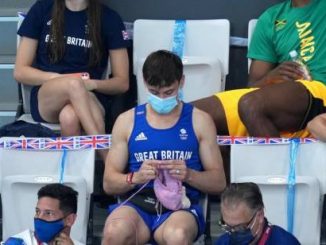
In that spirit, records are also broken from the stands, as evidenced by the photo of British diver Tom Daley, the new Olympic champion, knitting in concentration as his teammates compete in the Aquatics Center.

The image is iconic because it confirms another challenge overcome in these Games, historic since their inception for many reasons: Tokyo 2020 is the first Olympics in which at least 130 people with homosexual or bisexual erotic orientation, or non-binary identity, and one trans person will openly compete.

Daley declared, “I am gay and an Olympic champion,” to show that these are not incompatible qualities, as has been taboo for too long in modern sport. And the knitting thing is not just a hobby: his fame and activism on Instagram allows him to sell those pieces and donate resources to shelters for gay boys with no family of their own to give them love and respect. The gold didn’t go to his head because he already had it in his heart.

This is his third Olympics and the second time he has come openly gay, an attitude that inspires more athletes to shed the fear of showing who they are in front of the world’s cameras. One less element of stress for their competing bodies and their minds, pending also pandemic.

“When I was younger I always felt like the one who was alone and different and didn’t fit in. There was something in me that was never going to be as good as society wanted me to be,” he told the Guardian. “I hope that any young LGBT person can see that no matter how alone you feel now. You are not alone. You can achieve anything.”

Triple somersault

Tokyo 2020 is not the first step, but it is the most forceful in bringing sport out of the closet of sexual prejudice. The sports magazine Outsports states that in the London 2012 Games, 23 self-declared athletes participated outside the heteronormative canons; and in Rio 2016 there were 56.

The Japanese event almost triples the number with athletes from 25 countries. To mention the most significant: from the United States there are 30 and from the United Kingdom 15. There are 12 from the Netherlands and 11 from Canada. New Zealand and Australia had nine each, and Brazil seven. And these figures do not include the technical staff and Paralympic athletes who will come later.

They are in sports as varied as swimming, basketball, canoeing, horseback riding, field hockey, golf, fencing, judo, handball, rowing, rugby, cycling, diving, boxing, BMX freestyle, soccer, softball, tennis, athletics, taekwondo, wrestling and volleyball. At first glance, we can see figures with non-binary identities, that is, that break the typical culturally constructed expectation of feminine and masculine.

And if we are talking about challenging stereotypes, one who does so in a forceful way is New Zealand’s Laurel Hubbard, 43, the first trans woman to compete in weightlifting. Registered as a male at birth, in 2013 she completed her physical and legal transition process. Her case has raised strong controversy, but her hormone levels meet the international requirements to compete with women in this sport, which is controversial for gender reasons.

Hubbard did not win a medal, but she was still happy to be in competition, and before the press she thanked the International Olympic Committee for reaffirming its commitment to the principles of Olympianism and making it clear “that sports is something for everyone, that it is inclusive and accessible”.

For now, trans people who take up sports competitively face complaints from those who believe that genes, bone weight or pubertal development give them certain biological advantages, especially if they compete with women. The curious thing is that many of these sportswomen or their predecessors faced similar resistance to breakthrough in sports that were considered very masculine, and proved that they could give an equally honorable and exciting show for the public, something that could also be said of Paralympic competitions.

As we have already said: if in any area society quickly applauds those who leave behind obsolete marks, it is in sports. The new generations are born with the physical and mental disposition to excel in an admirable way, and it is good that the fire of Olympus burns, without discrimination, in all hearts.

Strugglelalucha256


Remembering the great scientific crusader who showed that no biological basis for race exists — Richard Lewontin

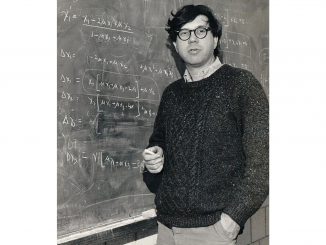
On July 4, Richard Lewontin, the dialectical biologist, Marxist and activist, died at the age of 92, just three days after the death of his wife of more than 70 years, Mary Jane. He was one of the founders of modern biology who brought together three different disciplines—statistics, molecular biology and evolutionary biology—that mark the discipline today. In doing so, he not only battled crude racism masquerading as science, but also helped shed light on what science really is. In this sense, he belongs to the rare group of scientists who are equally at home in the laboratory and while talking about science and ideology at a philosophical level. Lewontin is a popular exponent of what science is, and more pertinently, what it is not.

Lewontin always harked back to what being radical means: going back to fundamentals in deriving a viewpoint. This method is important, as it makes radical inquiry a powerful tool in science, compared to lazier ways of relating positions to certain class viewpoints. What is the relation between genes and race, class, or gender? Does social superiority spring from superior genes, or from biological differences between the sexes? As a Marxist and activist, Lewontin believed that we need to fight at both levels: to expose class, race and gender stereotypes as a reflection of power within society, and also at the level of radical science, meaning from the fundamentals of scientific theory and data.

Richard Lewontin and the population geneticist and mathematical ecologist Richard Levins shared a passion for biology, social activism and Marxism. It is not so well known that Lewontin’s close friend Stephen Jay Gould—the paleontologist, evolutionary biologist, and popular science writer—was also a fellow Marxist. All three of them fought a lifelong battle against the racializing of biology and, later, sociobiology, which sought to ‘explain’ every social phenomenon as derived from our genes. Evolutionary biologists E.O. Wilson and Richard Dawkins—and many others—believed that humans are programmed so that society merely expresses what is already embedded in our genes. Through their eyes, white races are superior because of their genetic superiority; as are the rich. In India, there is also a genetic theory of caste to explain the supposed differences between caste groups. And as long as there are significant differences between groups of people—based on class, race, gender or caste—biological ‘explanations’ for these differences will be offered.

One of Lewontin’s pathbreaking works was to find out how much genetic diversity exists within species. This was at a time when we did not know how many genes humans had. Lewontin’s inspired guess was 20,000, far smaller than what most biologists thought then and remarkably close to what is known today. Most biologists then also believed that races had significant biological differences, which was one of the reasons why they thought that there was a much larger number of genes carrying different traits. Lewontin and geneticist John Hubby used a technique, protein gel electrophoresis, developed by Hubby, to quantify the genetic diversity in fruit flies. At that time, fruit flies were the favorite target for testing genetic theories in the laboratory. This pathbreaking exercise traced evolution at the species level to changes at the molecular level—a foundation for the field of molecular evolution—using statistical methods. The result was startling. Contrary to what most biologists believed, the exercise showed a surprising amount of genetic diversity within a given population and further revealed that evolution led to stable and diverse populations within a species. Later on, Lewontin used this method on human blood groups, to show that the result of stable genetic diversity held true for humans as well. The other result of the human blood group study was that it showed that 85.4 percent of the genetic diversity in humans was found within a population, and only 6.3 percent between ‘races.’ Race was not a biological construct but a social one.

Lewontin went on to co-author a paper along with Stephen Jay Gould on how evolution is not directed to develop every feature that we see in an organism today, but is also the result of accidental offshoots accompanying a specific genetic change that occurs due to evolutionary pressure. Gould and Lewontin likened it to spandrels in architecture. When an arch is carved out of a rectangular wall (say, a door), the triangular part left between the arch and the wall is called a spandrel. This is also what happens when domes rest on rectangular structures. That these spandrels are then carved and decorated is not the reason for their existence, but once created, they can be used for other purposes. Similarly, in species, nature makes use of accidental offshoots of an evolutionary change, just as those who built arches or domes do with spandrels.

What distinguished Lewontin’s popular and scientific writings were his ability to connect the larger issues of science to society and his critique of the crude reductionist understanding of biology. He called it the Cartesian fallacy: that if we can break up the parts of a whole into its constituent parts and find the laws of the parts, we can then assemble the whole and understand it fully. Of course, this Cartesian viewpoint is no longer viable even in physics, let alone to explain chemistry from physics, biology from (organic) chemistry, or society from biology.

Why, then, does this view recur, particularly in understanding inequalities in society? Lewontin traced this repeated attempt to give biological explanations for inequality to the deep structural inequalities within society. This hydra-headed monster will rear new heads again and again as long as structural inequalities exist in society. This was the battle that he and his close colleagues fought against, racism, the fallacy of putting stock in IQ tests, and sociobiology, which sought explanations for all social inequalities in biology, i.e., that inequalities were preprogrammed in our genes.

This was the lifelong battle that he carried out not only in his specific field of biology but also in the larger domain of sciences. His ideological struggle against racism, class and imperialism was not separated from his science. He saw it as an everyday struggle within sciences as well as outside them, to be fought at both levels: at the level of society as well as at the level of science. He did not simply argue that race was a wrong way of looking at societal differences but showed it with hard experimental data and a theoretical framework to explain that evidence. This was his integrity as a scientist and as a social activist.

A large number of progressive scientists in the United States came together in the late ’60s and early ’70s, forming an organization called Science for the People. It has been revived recently. The organization was a reflection of the anti-racism and anti-war movements in the United States of that time. Their discussions on science and society paralleled what science and social activists were experiencing in India that led to the people’s science movement, and resulted in the formation of the All India People’s Science Network. In the U.S., Science for the People decided to become more of a movement within the scientific community, while the movement in India decided that it should be a larger people’s movement not only on the issues of science and society but also by building scientific temper in society.

The recent Netflix film “The Trial of the Chicago 7” depicted the ’60s struggle against the Vietnam War. Bobby Seale, a co-founder of the Black Panthers, was one of the people who was charged in the trial by the U.S. government with “conspiracy charges related to anti-Vietnam War protests in Chicago, Illinois, during the 1968 Democratic National Convention.” (A much better film is the older HBO movie “Conspiracy: The Trial of the Chicago 8,” which is available on YouTube.) During the trial, the Chicago police assassinated Fred Hampton, an important Black Panther leader there who was helping with the defense of Bobby Seale. I will let Lewontin and his close comrade Levins, co-authors of Biology Under the Influence, tell us in their words how they related to these movements:

“We have also been political activists and comrades in Science for the People; Science for Vietnam; the New University Conference; and struggles against biological determinism and ‘scientific’ racism, against creationism, and in support for the student movement and antiwar movement. On the day that Chicago police murdered Black Panther leader Fred Hampton, we went together to his still bloody bedroom and saw the books on his night table: he was killed because of his thoughtful, inquiring militancy. Our activism is a constant reminder of the need to relate theory to real-world problems as well as the importance of theoretical critique. In political movements we often have to defend the importance of theory as a protection against being overwhelmed by the urgency of need in the momentary and the local, while in academia we still have to argue that for the hungry the right to food is not a philosophical problem.”

Biology Under the Influence, a collection of essays by Levins and Lewontin published in 2007, was dedicated to five Cubans—the Cuban Five—who had infiltrated Cuban American terrorist groups in Miami that were actively supported by U.S. agencies. They were then serving long prison sentences in the United States.

Lewontin and Levins were both Marxists and activists and fought a lifelong battle against racism, imperialism, and capitalist oppression. They brought their Marxism to biology and its larger philosophical issues. They dedicated their 1985 book, The Dialectical Biologist, to Frederick Engels, “who got it wrong a lot of the time but who got it right where it counted.” This also applies to Lewontin, who also got race, class and genetics right where it counted.

This article was produced in partnership by Newsclick and Globetrotter. Prabir Purkayastha is the founding editor of Newsclick.in, a digital media platform. He is an activist for science and the free software movement.
Strugglelalucha256


Extreme weather events and capitalism: a deadly combination

Climate scientists around the world are alarmed by a triple climate-change-related crisis that hit the western U.S. and Canada in June and July. 

Normally climatologists are careful in their assessment of extreme weather events, under pressure from energy industry profiteers and anti-science climate change deniers. They go to great pains to avoid being accused of exaggeration, and rarely (really never) point to climate change as the cause of specific freakish weather events. 

The severity of what has happened in June and July has pushed past many of their carefully calculated projections. The fingerprints of capitalist-induced global warming are all over the crime scene.

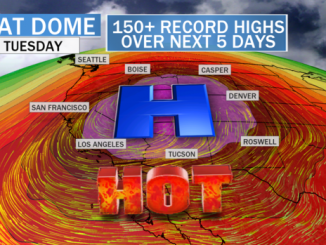
A severe drought in the western states of the U.S. that has been worsening for months has nearly drained Lake Mead in Nevada, Lake Oroville in California and other major reservoirs, threatening power generation for millions of people. A series of intense, widespread, sustained heat waves tortured a quarter of the U.S. as well as western Canada for weeks, taking the lives of hundreds of people. 

The super-dry conditions in the region have caused 83 wildfires, including the Dixie Fire in northern California and the Bootleg Fire in southern Oregon. They are two of the largest wildfires in history and are both still raging.

Mild Pacific Northwest goes wild

The southwest U.S. is no stranger to deadly heat, but what is most unexpected is that this extreme heat has hit the Pacific Northwest, a region known for mild temperatures and damp weather. 

Roads buckled in Seattle from the sweltering heat. For several days Portland, Ore., was the fourth-hottest place on earth. British Columbia suffered the highest death toll with more than 800 deaths between the end of June and middle of July — quadruple the average number of deaths. 

The village of Lytton in British Columbia burned to the ground just as Paradise, Calif., did in 2018 — essentially nothing left but ashes and smoke. 

In Canada’s British Columbia province, and the U.S. states of Washington, Oregon and northern California, the heat broke all-time temperature records, and then broke those records again, and then again.

Electric power for millions threatened

Nevada and California’s livability depends on a system of 1,500 human-made reservoirs, not only for drinking water and agriculture but for electricity from hydroelectric generators. 

Engineers say that the water level in Lake Mead will be below the minimum water level needed to generate power to 1.3 million people in a matter of days. Lake Oroville will likely last until September, when it won’t be able to supply electricity for another 800,000. 

Normally, power companies buy power from nearby regions when needed. But constantly running air conditioning in a wide swath of the western U.S. during 2021 has diminished power surpluses that normally allow that to happen.

All told, the fires have burned 1.3 million acres — an area larger than Los Angeles, New York City and Chicago combined. The smoke has journeyed cross-country to the East Coast, prompting air quality warnings along the northern part of the Eastern Seaboard and as far inland as central Virginia.

In addition to California, Oregon, Washington and British Columbia, the heatwaves hit Nevada, Arizona, New Mexico, Utah, Colorado, Wyoming, Montana and Idaho.

Heat deadly for agricultural workers

Thirty-eight-year-old Sebastián Francisco Pérez from Guatemala was working at an Oregon tree farm on June 26 when he collapsed and died from the heat. The Bureau of Labor Statistics reports that 53 agricultural workers died from heat nationwide in 2019, but this was the first in Oregon directly attributable to heat. 

Only four states have laws in place to protect farmworkers. Oregon became the third after the death of Sebastián. Washington State quickly followed with some emergency measures. Some other states merely have “guidelines.” 

Irene Ruiz, an environmental justice organizer from Boise, Idaho, messaged Struggle-La Lucha about the heightened danger to agricultural workers during heatwaves. “Guidelines are not enough. These are the people who put food on our tables and are the most affected and in danger of extreme heat.”

Imperialism and global warming

Recent decades have seen extreme weather events become more frequent and much more severe than previous periods. Experts point to that quickening pace and increasing severity as caused directly by global warming, even though they usually avoid blaming global warming for specific weather events. 

The opposing narrative, motivated by energy profiteers, is that the warming of the atmosphere during this period is a natural cycle, that it has happened before over the millennia, and that it will pass. 

But a scientific paper published in the journal Nature on July 28 referenced two large, decades-long studies of the Earth’s “energy balance” — the amount of the sun’s energy entering Earth’s atmosphere compared to the amount of energy reflected back out into space. Both studies confirm that greenhouse gases are keeping the sun’s energy trapped in our atmosphere. 

The paper asserts that there is less than a 1% chance that the rise in global temperatures and all of its frightening consequences are a natural occurrence. 

Greenhouse gases began to heat the atmosphere with the dawn of industrial capitalism in the latter part of the 19th century. That much is readily admitted in the capitalist press these days. What isn’t written about enough is the role of imperialist domination in this crisis for humanity.

The machinery of war is the greatest consumer of oil, and like a dog chasing its tail, pollutes the world while fighting to control oil markets. If the U.S. military machine were to be ranked in the list of countries that indicates how much they contribute to pollutants that heat the atmosphere, the list would show it ahead of 46 countries.

Estimates of the cost of stopping global warming vary from $300 billion to Forbes Magazine’s price tag of $50 trillion. Underdevelopment and poverty have been imposed on much of the world by imperialist military force and economic leverage for more than a century. The stolen wealth is now concentrated in the hands of the tiny group of billionaires that have profited immensely — as a class — from the control of oil markets. That stolen wealth is key to mitigating climate change.

The world is being told to put its faith in international agreements to solve the crisis. The Paris Climate Agreement is supposed to oblige each participating country to limit greenhouse gases and commit rich nations — and in some cases private corporations — to help fund efforts by poor nations with $100 billion per year in grants, loans and other forms of financing, to help them switch to clean energy. 

That agreement still shifts the blame to the poorest countries, when in fact 20 industrialized countries are responsible for 78% of greenhouse gases. 

Historically, no country has put more carbon dioxide into the air than the imperialist U.S. empire. The ultimate goal of the Paris Agreement is to limit greenhouse gases to a 2% increase per year, and “if possible” to 1.5% per year. As of today, the rich countries haven’t come up with the first $100 billion that was due in 2018.

Capitalism is a roadblock on the path to mitigating this huge crisis for humankind. It will take a global environmental movement that is revolutionary — conscious of the need to eradicate imperialism — to stop the crisis of global warming and climate change.

Strugglelalucha256


If the U.S. really cared about freedom in Cuba, it would end its punishing sanctions

The violent protests that erupted in Cuba in early July were the first serious social disturbances since the “Maleconazo” of 1994, 27 years ago. Both these periods were characterized by deep economic crises. I was living in Havana in the mid-90s and witnessed the conditions that triggered the uprising: empty food markets, shops and pharmacy shelves, regular electricity cuts, production and transport ground to a halt. Such were the consequences of the collapse of the socialist bloc, which accounted for about 90% of the island’s trade.

Betting on the collapse of Cuban socialism, the U.S. approved the Torricelli Act of 1992 and the Helms-Burton Act of 1996 to obstruct the island’s trade and financial relations with the rest of the world. Meanwhile, more sophisticated and multifaceted “regime change” programs were developed, from Clinton’s people-to-people programs to Bush’s Commission for a Free Cuba. From the mid-1990s to 2015, U.S. congress appropriated some $284 million to promote (capitalist) democracy.

The story of how, against the odds, the Cuban revolution survived the past three decades is the focus of my book. In some fields, like biotechnology and medical internationalism, it thrived. Since 2019, however, conditions reminiscent of the “special period” have been returning to Cuba, a direct result of U.S. sanctions. The Trump administration implemented 243 new coercive measures against Cuba, blocking its access to international trade, finance and investments at a time when foreign capital had been awarded a pivotal role in the island’s development strategy. The inevitable and intended result has been shortages of food, fuel, basic goods and medical supplies. Thus, while Cuba has Covid-19 vaccines, they cannot buy sufficient syringes to administer them, nor medical ventilators for their ICU units.

Strict sanitary restrictions, imposed by Cuban authorities in response to the pandemic, have impeded Cubans’ capacity to “resolver” (resolve problems through alternative channels), and to socialize. Covid cases keep rising, generating anxiety among Cubans, even though infection and death rates remain low relative to the region. In every Cuban household, people take turns to rise at dawn to join queues for basic goods. No one should be surprised that there is frustration and discontent.

Cuba’s critics blame the government for the daily hardships Cubans face, dismissing U.S. sanctions as an excuse. This is like blaming a person for not swimming well when they are chained to the ground. The U.S. blockade of Cuba is real. It is the longest and most extensive system of unilateral sanctions applied against any country in modern history. It affects every aspect of Cuban life.

At the UN general assembly on June 23, a total of 184 countries supported Cuba’s motion for the end of the U.S. blockade. It was the 29th year that Cuba’s vote had won. The U.S. representative, Rodney Hunter, claimed sanctions were “a legitimate way to achieve foreign policy, national security and other national and international objectives”. He also described them as “one set of tools in our broader effort towards Cuba”.

Another key tool in recent years has been social media. In 2018, Trump set up an internet taskforce to promote “the free and unregulated flow of information” to Cuba, just as the country expanded facilities enabling Cubans to access the internet via their phones. During this summer, the social media campaign, which sees Miami-based influencers and YouTubers encourage Cubans on the island to take to the streets, was ratcheted up. As spontaneous and authentic as this may seem, behind it lies U.S. funding and coordination.

On July 11, I was in Havana, watching the Euro finals at a Cuban home when the broadcast was interrupted by an announcement from the president, Miguel Díaz-Canel. He had been to San Antonio de los Banos, on the outskirts of the capital, where a protest had turned into a riot, with shops looted, police cars overturned and rocks thrown. Simultaneous protests had taken place in dozens of locations around the island. In Matanzas, where Covid-19 cases have soared, there was extensive destruction. Díaz-Canel ended the broadcast by calling for revolutionaries to take to the streets. Thousands of Cubans answered his call.

Meanwhile, the mayor of Miami asked Biden to consider airstrikes on Cuba, while there were half-baked plans for a naval flotilla from Florida. The international media depicted mass opposition to an incompetent government, peaceful protests violently repressed, and a regime in crisis. This narrative has counted on exaggerations and manipulations. Images have been shared in the press and social media purporting to show anti-government protests that have, in fact, been the opposite. Photos of protests in Egypt and sports celebrations in Argentina have been attributed to the Cuban protests of 11 July.

From the U.S., where violent protests and police killings happen with tragic regularity, and where a rightwing insurrection tried to overturn the 2020 election result, new president Joe Biden described Cuba as a “failed state”. By July 30 he had already imposed new sanctions, despite campaign promises to roll such sanctions back.

Since the July 11 protests, I have traveled throughout Havana for my work. The only significant protests I have seen in the capital have been those in support of the government, including a rally of 200,000 in Havana on July 17. The Cubans I speak to reject the violence and U.S. interference. They are confident that Cubans know how to swim, but they need the chains of the U.S. blockade to be cut.

Helen Yaffe is a senior lecturer in economic and social history at the University of Glasgow

Source: Resumen

Strugglelalucha256


The ‘Land Back’ Campaign: Oklahoma is only a start

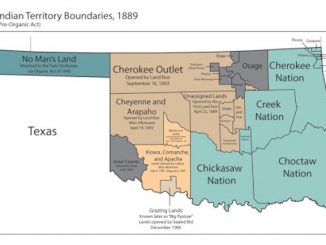
Last year the U.S. Supreme Court made a decision that affected 40% of Oklahoma. The court decided to uphold a 19th century treaty made with five Indigenous tribes of Oklahoma: Choctaw, Chickasaw, Creek, Cherokee and Seminole. This was very significant for the five tribes. 

Tulsa, the second biggest city in Oklahoma, sits on Creek land. So does the fourth biggest city, Broken Arrow. The ruling gives Native governments better protections over the citizens of each nation. 

The state of Oklahoma no longer has the legal authority to prosecute cases involving Native Americans in territory previously owned by the state. 

The Creek Nation released a statement that partly read: “Today’s decision will allow the Nation to honor our ancestors by maintaining our established sovereignty and territorial boundaries.” 

The Supreme Court decision was 5-4, with Justices Neil Gorsuch, Sonia Sotomayor, Ruth Bader Ginsburg, Elena Kagan and Stephen Breyer in the majority, while Justices John Roberts, Brett Kavanaugh, Samuel Alito and Clarence Thomas dissented.

This was a good start for the LANDBACK Campaign. The 40% of land is Eastern and expands to the South of Oklahoma. 

Trail of Tears

The history of the five tribes is a sad one. The traditional lands of the tribes are Mississippi, Alabama and Louisiana. The Seminoles’ homeland was as far as Florida. 

The Trail of Tears was brutal and not all made it. They were colonized along the way. Most became farmers with crops of corn, beans and squash. Wild turkeys were also a food source. 

The colonial government quickly broke the treaty it had signed and the tribes were forced onto a small portion of what was promised. Other Native peoples already inhabited Oklahoma. The Wichita, Plains Apache, Quapaw and Caddo tribes were there during the colonization of the Spanish and French. 

By the early 1800s the Osage, Pawnee, Kiowa, Comanche, Cheyenne and Arapaho tribes migrated into “Indian Territory” — also known as Oklahoma. Tribes Native to present day Oklahoma are the Caddo, Osage and the Wichita. 

There is a “Land Back” movement building momentum. It’s beginning with the Black Hills and is trying to shut down the Mount Rushmore monument. 

To quote the NDN Collective working on the LANDBACK Campaign: “South Dakota is our cornerstone battle, from which we will build out this campaign. Not only does Mount Rushmore sit in the heart of the sacred Black Hills, but it is an international symbol of white supremacy and colonization.”

The land that was given back to the five tribes is a good start, but we want all of our land back. 

Zola Fish is a member of the Choctaw Nation.

Strugglelalucha256


Baltimore: Unemployment Crisis Town Hall Part 2, August 7

Urgent! Your Voice Is Needed at Thursday’s Town Hall Assembly

Come out & speak out at the Workers Assembly on Maryland’s Unemployment Benefits Crisis

When: Thursday, August 7, 5:00 pm to 7:00 pm
Where: War Memorial Plaza (outside) across from City Hall,
Nearest the corner of Fayette & Gay Street, Baltimore, MD 21202

We realize that a number of people could not come out last Thursday because of storm and tornado warnings. Over 30 people did come and we eventually took testimony from everyone present. But we wanted to give people another opportunity.

Signup and share on Facebook

Tell your story and let the world know that the crisis is not over!

Thousands of Marylanders have still not received a dime of unemployment insurance and benefits owed to them. Instead, their claims are languishing in hold, false fraud claims, or simply not being paid.
Don’t let the Labor Department sweep us under the rug.

We are continuing to fight inside the courts, but that will not be enough. Only your voice and actions will ensure we win again.

What to Expect & Logistics

Bring your neighbors, friends, and family.

Children are welcome. There is a big grassy field for them to play inside the Plaza. Our sound system will drown out any rambunctious children.

We will be outside, but we ask you to wear a mask when you are not social-distancing to protect those who may not have been vaccinated.

Water will be provided. Please bring snacks and food for yourself and your family.

We will have limited folding chairs. Please bring a lawn or folding chair if you are able.

Note we will not have the regular “Unemployed and Workers Rights Clinic” at our office. Instead, we will have grievances to fill out at the Town Hall Assembly.

There will be a sign-up sheet for those unemployed workers who would like to testify when you arrive. We will call on speakers in the order you sign up, and we ask each person to not go over the 5-minute time limit to allow everyone a chance.

There will be a brief opening from our attorney to update attendee’s on the case and other representatives of the Unemployed Workers Union before workers testify. Following testimony, the sign-up will be open to other community, union, and political leaders including state and city delegates and representatives.

You can usually find street parking in the area, but be very careful to check for rush hour tow away zones (The city loves to tow). There is a parking lot across from the War Memorial Plaza at 510 E Lexington St, Baltimore, MD 21202. The lot closes at 8 pm, and prices may have increased. Multiple bus lines stop near the War Memorial Plaza: 54, 76, 80, CITYLINK GREEN, CITYLINK PURPLE, CITYLINK RED, CITYLINK YELLOW

Strugglelalucha256


Save our homes — by any means necessary


Eleven million families face being thrown out of their homes. That’s because the Centers for Disease Control (CDC) ban on evictions and foreclosures expired July 31. 

So at least 30 million people have no legal protection from a landlord or bank kicking them out of their apartments and houses. At the same time, there’s another upsurge in the coronavirus pandemic.

The grave health risks caused by being homeless during the COVID-19 crisis are why the CDC imposed the moratorium. Evictions led to hundreds of thousands of more cases of the coronavirus.

Families living in shelters or in their cars are much more likely to get infected. So are elderly and disabled people.

Overcrowded housing is a big reason why the death rates from COVID-19 are two and three times as high among Black, Indigenous and Latinx people as among whites.

These facts of life and death don’t mean much to sexual predator Brett Kavanaugh. The U.S. Supreme Court judge told the Biden administration that he wasn’t going to allow more than a one-month extension on the CDC moratorium.

To judges like Kavanaugh, property rights always come before human rights. How are families supposed to pay their rent or mortgage when more than 30 million lost their jobs since the pandemic began? 

California, Illinois, Maryland, New Jersey, New York and Washington, D.C., have imposed their own bans on evictions and foreclosures. People living in these areas won’t be immediately affected by the CDC moratorium coming to an end.

Worst housing crisis since Great Depression

But in the rest of the United States, landlords and banksters will be running to court demanding an avalanche of evictions and foreclosures. This is the worst housing crisis since 90 years ago during the Great Depression. 

What is to be done?

Both the Biden administration and the Democratic Party leaders in Congress knew this catastrophe was coming. They did practically nothing to stop the runaway train.

Rep. Cori Bush from St. Louis is outraged at this inaction. She slept overnight outside the U.S. Capitol to demand Congress reconvene and stop evictions.

Representative Bush knows what it is to be homeless. After being evicted, she had to live in her car with her children.

Congress did authorize $47 billion to help pay back rent. But only $3 billion has been spent.

Many landlords are refusing to accept the money. They just want to evict people. That’s criminal.

That’s what Roxanne Schaefer is facing in West Warwick, R.I. The disabled woman lives in an apartment that is not properly serviced or maintained, with a rent of $995 per month. Her slumlord refuses to take federal rental assistance. 

Behind even the biggest landlords are the banks that own the mortgages. They would rather have millions on the street in cardboard boxes than lower rents.

It was because 26 million people took to the streets demanding justice for George Floyd that Congress did anything to stop evictions and foreclosures. They need to fear us again.

We need to join and support organizations like the Crown Heights Tenant Union in Brooklyn. The housing courts need to be surrounded by people.

Ninety years ago the Unemployed Councils stopped evictions in Chicago. The power of the people can stop the tidal wave of evictions and foreclosures.

Strugglelalucha256
https://www.struggle-la-lucha.org/2021/08/page/5/