Death toll rises to 10 following Israeli army ‘massacre’ in Jenin

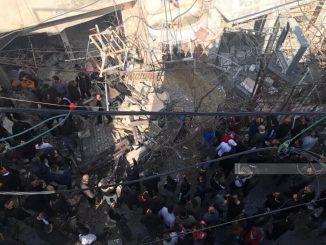
Scene of the destruction in jenin refugee camp on the morning of Thursday, January 26, 2023. Photo: Ayman Nobani via Telegram

In a brutal assault on the Jenin refugee camp Thursday morning, Israeli forces killed nine Palestinians and injured over a dozen others, making it the deadliest day for Palestinians in 2023 and one of the single deadliest raids in the West Bank in years. A tenth Palestinian was killed later in the day in al-Ram during clashes with the Israeli army.

According to the Palestinian Ministry of Health (MOH), among those killed was an “elderly” woman identified as Magda Obaid, 61. Eight others were killed in the brutal assault on the camp.

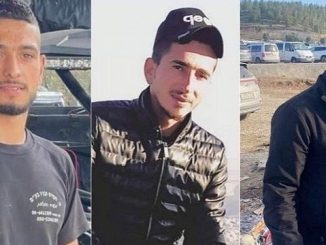
According to Defense for Children International Palestine, two of the Palestinians killed during the raid were children. DCIP identified them as Abdallah Marwan Juma’a Mousa, 17, and Waseem Amjad Aref al-Ja’s, 16. DCIP’s reports conflict with initial reports from the MOH, which reported Mousa to be 18, and al-Ja’s to be 22.

The others were identified by the MOH as Motasem Mahmoud Abu Hasan, 40, Noor Eldin Sami Ghnaim, 25, Mohammad Sami Ghnaim, 28, Mohammad Mahmoud Subuh, 30, Saeb Izreiqi, 24, and Izzidin Salahat, 22.

The ministry reported that more than 20 people were injured, including four in critical condition. Among the injuries were gunshot wounds to the chest, abdomen, and lower extremities. “Most injuries that arrived at the hospital today were in the head and chest area,” the MOH said in a statement on Thursday evening. “This means that the shooting of live ammunition towards residents was with the intent to kill,” the statement said.

Though the identities of the remaining six slain Palestinians were being reported by local media, their names had not yet been confirmed by the MOH as of Thursday afternoon.

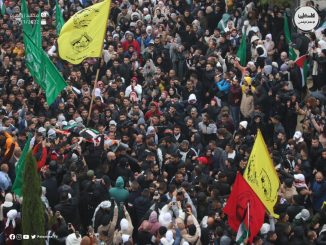
Mourners carry the bodies of Palestinians who were killed in an Israeli raid during their funeral in the West Bank city of Jenin on January 26, 2023. Photo: Ahmed Ibrahim

Minister of Health Mai al-Kaileh said in a statement that Israeli forces “hampered” ambulances from evacuating the wounded from the camp during the raid and restricted the access of medics to the camp. Local media reported that some ambulances were shot at.

Al-Kaileh added that Israeli forces fired tear gas toward the pediatric unit of the Jenin Government Hospital, causing suffocation cases from gas inhalation among patients at the hospital, including mothers and children.

“We deplore in the strongest terms what happened…in terms of a fierce and barbaric attack against medical and emergency personnel, and the obstruction of their work in transporting the injured and treating patients,” al-Kaileh said.

Palestinians inspect a house that was blown up by Israeli forces in the West Bank city of Jenin on January 26, 2023. Photo: Ahmed Ibrahim

The raid 

The raid began around 7:15 am on Thursday morning when undercover Israeli special forces entered the camp in a commercial truck. According to local sources, the special forces were targeting the apartment of Alaa Sabbagh, a former leader of the Al-Aqsa Martyrs Brigade, Fatah’s armed wing, who was killed by Israeli forces in the camp in 2002.

Sabbagh’s home was reportedly being used by a number of fighters affiliated with the Jenin Brigade, an armed resistance group from the camp composed of fighters from various political factions.

Israeli forces fired rocket launchers and other explosives at the apartment building, causing the fighters inside to respond with live ammunition. The attack on the apartment also sparked clashes in the surrounding areas, with armed fighters firing toward the Israeli troops.

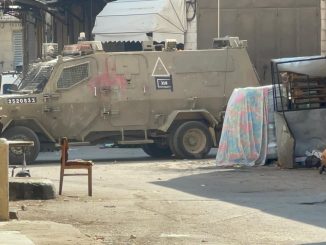
Shortly after the operation began, “hundreds” of Israeli troops raided the area, with a convoy of military jeeps and bulldozers entering the boundaries of the camp. Sources told Mondoweiss that as the bulldozers moved through the streets, they destroyed cars parked in the area and “everything in their wake.”

The troops entered the camp from the north, south, and western entrances of the camp, Mohammad Abed, a local journalist, told Mondoweiss. He added that Israeli forces closed off all the entrances and exits of the camp, preventing anyone from moving in or out.

The Israeli army invades. Photo: Ahmed Ibrahim

Abed said that Israeli forces “completely destroyed and ransacked” the local community center in the camp, which is used by residents for community gatherings, funerals, and other events.

He added that at least three people were killed inside the Sabbagh family apartment building. “The building is completely destroyed due to the sheer number of bombs and explosives fired toward it,” he said.

The Israeli army released a statement saying that its forces “were active in the Jenin refugee camp” under the pretext of searching for fighters with the Islamic Jihad movement. The army claimed the raid was conducted to “foil imminent attack plans” by fighters in the camp.

No Israeli forces were injured during the assault, Israeli media reported.

The local branch of the Islamic Jihad movement said its fighters responded to Israeli forces with live fire and explosives.

Palestinians clash with Israeli army. Photos: Ahmed Ibrahim

‘A real massacre’

Israeli forces began pulling out of the camp around noon, close to five hours after the raid began, leaving devastation and destruction in their wake.

Videos posted on social media show rubble strewn across the street of the camp, bombed out buildings, and damaged vehicles, including cars that had been flipped over by Israeli bulldozers.

“It was a massacre, a real massacre,” Abed told Mondoweiss, saying that it was “the
worst and most violent” raid he had seen on the camp in years.

“There was another raid last year on the camp that lasted several hours, but this one is not even comparable. Nine people were killed. That is not an insignificant number,” he said.

Abed added that Israeli forces were “shooting everywhere,” not just towards resistance fighters who were engaging in shootouts with the army. “They were shooting at anything that moved. This is evidenced by the 60-year-old woman who was killed. How can you explain that?”

Israeli media reported that the army was “launching an investigation” into the death of Magda Obaid, the woman who was killed.

The raid on Thursday brought the death toll of Palestinians killed by Israeli gunfire this month to 29. Less than 24 hours prior, on Wednesday January 25, two Palestinians were killed in separate incidents in the West Bank and Jerusalem, including 20-year-old Aref Lahlouh, a resident of the Jenin refugee camp.

2022 was one of the deadliest years for Palestinians in the occupied West Bank in decades, with 173 Palestinians killed in the territory. According to Mondoweiss documentation, 34% of the total casualties in the West Bank in 2022 were from Jenin.

Provoking confrontations across Palestine

Mourners carry the bodies of Palestinians who were killed in an Israeli raid of Jenin refugee camp that killed 9 Palestinians, January 26, 2023. Photo: Ahmed Ibrahim

Palestinians held the funeral of the slain nine later in the afternoon where thousands participated in the procession. Mourners chanted for the martyrs and vowed to persist for freedom as armed resistance fighters shot live ammunition in the air as a symbol of continued confrontation.

The particularly high number of killings in the northern West Bank city can be attributed to the resurgence of armed resistance witnessed in the area, which the Israeli military focused its efforts on quashing last year. 

However with the persistence of Israeli settler expansion in tandem with a large-scale military assault dubbed Operation Break the Wave, Palestinian confrontation continues to grow.

Since the beginning of the year, 178 acts of resistance were conducted from armed resistance groups in Jenin alone (also known as “the Wasp’s Nest“), according to the Palestinian Center for Information. This includes 42 shooting operations, while the rest range from stone throwing to impeding settler invasions into Palestinian towns and villages.

Following Thursday’s lethal assault in Jenin refugee camp, protests and clashes erupted in cities across the West Bank including Bethlehem, Ramallah, Qalqilya, Hebron, and Nablus. Additional protests by Palestinians with Israeli citizenship in Akka, Nazareth, and Umm El-Fahem were also planned for later Thursday evening. Youth in Gaza also set tires aflame near the border fence with Israel in protest against the killings in Jenin, according to local news reports.

Palestinian protesters in Hebron clash with Israeli soldiers after Israeli forces raided Jenin refugee camp and killed 9 Palestinians, January 26, 2023. Photo: Mamoun Wazwaz

Israeli forces responded with lethal weapons against youth, leading to the death of 22-year-old Yousef Abdul Karim Muheisin, who was fatally injured by Israeli forces in the town of al-Ram outside of Jerusalem during clashes, and was pronounced dead at the Ramallah Medical Complex, raising that day’s death toll to 10, according to the MOH. The ministry also recorded four injuries in Ramallah, and two others in Qalqilya and Bethlehem. Dozens of injuries as a result of teargas inhalation and high velocity canisters were treated on the field, according to the ministry.

The first month of 2023 has witnessed a steep increase in the average number of Palestinians killed compared to previous years. With 30 Palestinians killed in the first month of 2023 according to the MOH, the new year shows an intensified escalation in the Israeli assault on Palestinians. More Palestinians were killed in January of this year than in the first three months of 2022 combined.

Source: Mondoweiss

Strugglelalucha256


75 years after partition, U.S. guns and dollars still murder Palestinians

Dec. 2 – Seventy-five years ago, on Nov. 29, 1947, the United Nations partitioned the land of Palestine against the wishes of its people. The chief architect of this crime was the U.S. Truman administration. The State Department threatened dozens of countries with economic retaliation if they did not vote to create a colonial settler state on 57% of the land of Palestine.  

Most countries in Africa and many in Asia and the Caribbean were still under West European colonial rule and not allowed to vote. 

Within months Al Nakba began – the campaign of mass murder and ethnic cleansing that drove the majority of Palestinian people from their homes and created the racist state called “Israel” on their stolen land. In 1967 that state seized all of Palestine and part of Syria and Egypt as well.

The United Nations now marks Nov. 29 as the International Day of Solidarity with the Palestinian People. The U.S.-armed and -funded Israeli occupation forces marked that date this year with a murder spree in the camps and villages of the West Bank, killing 10 people in four days.

At 4 a.m. on Nov. 29, in the village of Kafr Ein near Ramallah, an Israeli military hit squad murdered Bir Zeit university students Jawad Al Rimawi, 22, and Zafer Al Rimawi, 21. The two brothers were the only sons of their family. 

Around the same time, Mufid Khalil, 44, was murdered when Israeli occupation troops invaded the town of Beit Ummar, near Al Khalil (Hebron).  Eight other villagers were wounded.  

Rani Abu Ali, 45, was shot near Jerusalem after he rammed an Israeli soldier with his car in retaliation for the murders. Raed Nassar, 21, was gunned down in Al Mughayyir near Ramallah. His “crime”: joining with people from his village to block Israeli troops from demolishing “illegally built” homes. The Israeli occupation regime denies Palestinians building permits. 

On Nov. 30, Israeli troops invaded the village of Ya’bad near Jenin and murdered Mohammad Tawfiq Badarna, 25. The same day Issa Hani Talaqat, 13, died of gunshot wounds. He had been shot by an occupation cop on Nov. 1. The young Palestinian was from Arara, a Bedouin community in the 1948-occupied territories, and held “Israeli” citizenship. 

Early in the morning of Dec. 1, the occupation forces invaded Jenin Camp, home to 12,000 people whose families were expelled from their homes when the Israeli state was created in 1948. They are crowded on less than a quarter of a square mile. Muhammad Al Saadi and Naim Zubeidi, resistance fighters of the Jenin Brigade, gave their lives defending the camp. 

Also, on Dec. 1, 17-year-old Wadi’h Sidr was found unconscious in Al Khalil after being beaten by a mob of Zionist settlers.

On Dec. 2, in Huwwara near Nablus, an Israeli “border” cop shot and murdered unarmed Palestinian Ammar Mefleh, 22, after a scuffle. Witnesses described the shooting as a “cold-blooded execution.” Mefleh died as Israeli soldiers prevented him from getting medical aid. Israeli Police Commissioner Kobi Shabtai said the killer cop “acted professionally.”

These murders are part of an escalating reign of terror by Israeli occupation troops and armed settlers against Palestinians on the West Bank, in Jerusalem, and inside the 1948 territories. Shootings, beatings, arrests without charge, home invasions, home demolitions, fire bombings, settler mob attacks, destruction of olive trees, crops, and farm animals, desecration of places of worship and cemeteries, and other crimes are daily occurrences under the occupation. 

These are the tactics the U.S.-funded Israeli state uses to grab more land for racist settlers from the U.S. and Europe and pump up the profits of its real estate industry.

Israeli occupiers have murdered 216 Palestinian people this year, 54 of them children. More than 5,000 Palestinians, 153 of them children, languish in Israeli occupation prisons. Nearly 500 are held under “administrative detention” without charge or trial. The Israeli military also holds the bodies of 117 Palestinian martyrs, refusing to return them to their families.

When blood flows, money flows

This reign of terror is funded entirely by U.S. tax dollars. Palestine’s blood is on the hands of Joe Biden, Donald Trump, and every other U.S. President going back to Harry S Truman. 

It is on the hands of every member of Congress who has voted for the constant flow of arms and dollars to the racist settler state. 

It is on the hands of the Pentagon brass, who view Israel as “our unsinkable aircraft carrier” in Washington’s permanent state of war against the people of the region. 

It’s no coincidence that Truman forced the partition of Palestine within months of signing the National Security Act of 1947, which created the Defense Department, National Security Council, U.S. Air Force and CIA.

Under a 2018 “memorandum of understanding,” the U.S. promised the occupation regime $3.8 billion a year in direct military aid through 2028. This includes the most advanced weapons in the Pentagon’s arsenal. 

On his visit to occupied Palestine in July, President Biden pledged that aid would continue until at least 2038. In the “U.S.-Israel Strategic Partnership Joint Declaration” issued in Jerusalem, he promised even more money whenever Israel starts a war. 

That direct military aid, which began under the Nixon administration, is only the tip of the iceberg. Loan guarantees, massive tax-exempt donations, state and city investment in Israel Bonds, and the $35-billion-a-year free-trade agreement signed by Ronald Reagan are among the mechanisms that ultimately send Israel tens of billions of dollars a year. 

This massive flow of arms and dollars allows the racist settler state to maintain a permanent state of war against the people of Palestine. It has not, however, defeated their resistance, which intensifies daily. The Palestinian people are defending their homes and land, both with mass action and with arms in hand. 

In the face of overwhelming force, young Palestinians take to the streets every day to confront invading colonial troops and settlers. On Friday, Dec. 2, 60,000 Palestinians gathered to pray at Al Aqsa mosque in Jerusalem, which is a target of Zionist settlers and authorities. 

The Lion’s Den, the Jenin Brigade, and the Balata Brigade are among the armed groups that have sprung up in the last three months to resist the colonizers’ attacks. In a Nov. 30 statement, the Lion’s Den, based in the Old City of Nablus, said, “It is worth asking the occupying regime who has surrounded it. Freedom-loving resistance fighters have their fingers on the trigger and besieged the Zionist regime. Israel and its allies will be caught by surprise in the aftermath of our unexpected measures.” 

The past 75 years have shown that the Palestinian people will never accept colonial occupation. They will fight for their right to live in peace and freedom in every corner of their land. They also show that the Israeli occupation regime cannot exist without the constant infusion of U.S. arms and dollars. 

Those dollars could save lives here rather than destroy lives in Palestine. This must end!

Strugglelalucha256


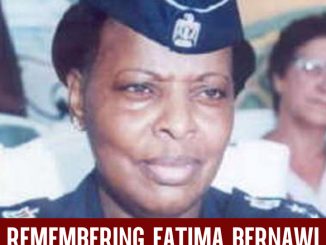
Remembering Fatima Bernawi: Historic Palestinian fighter and liberated prisoner (1939-2022)

On Thursday, 3 November, Palestinian struggler and liberated prisoner, Fatima Bernawi, the first Palestinian woman prisoner of the modern Palestinian revolutionary era and a prominent Afro-Palestinian figure, passed away in the Palestine Hospital in Cairo, Egypt at the age of 83. Bernawi was renowned as a symbol of Palestinian women’s participation and the participation of Palestinians of African descent in the armed struggle and the Palestinian prisoners’ movement.

Bernawi was born in Jerusalem in 1939 to her Nigerian father and Palestinian mother. In 1948, she was forced to a refugee camp near Amman with her mother before returning to Jerusalem, where her father had remained, in 1960; they lived in the African quarter of Jerusalem. At the age of 9, Bernawi had earlier smuggled herself into Jerusalem to reunite with her father. Bernawi’s father had been an active participant in the 1936-39 revolution in Palestine and in the defense of Palestine during al-Nakba, and she became an early member of the newly formed Fateh movement.

Bernawi worked as a UNRWA nurse in Qalqilya during the 1967 occupation and saw firsthand the impacts of the Zionist onslaught on the West Bank of Palestine. She would later declare that she undertook armed struggle “because you destroyed Qalqilya,” in a statement to the interrogators who held her.

She was one of the first women to plan an armed operation in Palestine, the attempted bombing of a cinema screening a film celebrating the occupation of 1967 in Jerusalem; she and a fellow woman freedom fighter left behind a handbag containing an explosive. Although it was found before being detonated, she was seized by occupation forces on 19 October 1967 and became the first Palestinian woman political prisoner of the contemporary Palestinian revolution.

She was sentenced to 30 years in prison and was released on 11 November 1977 in a prisoner release agreement. She was exiled to Jordan and then Lebanon under the exchange terms, where she returned to the Palestinian revolution as a member of social organizations. She later returned to Gaza in 1994 and lived with her husband, fellow liberated prisoner Fawzi al-Nimr, who died last year. She and al-Nimr have lived in Cairo for the past several years. Al-Nimr, who had been a fighter with the Akkawi group that targeted specific Zionist military installations, served over 15 years in occupation prisons with his comrades, and he was freed in an exchange with the Palestinian resistance in May 1985.

Her sister, Enaam Bernawi, was jailed for one year alongside her sister. During Fatima Bernawi’s time in the occupation prisons, she was jailed with fellow Palestinian woman freedom fighter Zakia Shammout, who was pregnant and gave birth in her prison cell accompanied by her fellow women prisoners. As a trained nurse, Bernawi cut the umbilical cord and ensured the life and health of Shammout and her daughter, Nadia.

While Bernawi was the first Palestinian woman prisoner of the contemporary (post-1967) Palestinian revolution, she was always certain to cite fellow Palestinian women who had been jailed in the two decades of occupation prior, including many women detained, held in forced labor camps and subjected to harsh violence by occupation soldiers during the Nakba, as well as notable Palestinians like Ikhlas Ali, jailed for teaching children revolutionary songs in Palestine ’48, and Nayfeh Akilah, a member of Al-Ard group — one of the first Palestinian revolutionary organizations formed following the Nakba — accused of sharing military information about Zionist forces with the Syrian army in 1956.

One journalist who interviewed Bernawi recalled that she discussed a memorable interaction with Omar al-Qasim, the imprisoned leader of the Democratic Front for the Liberation of Palestine who is renowned for his role in sparking Palestinian armed resistance inside the occupied West Bank of Palestine as well as for his later leading role in the prisoners’ movement. Both she and al-Qasim were brought by occupation soldiers where several Palestinian resistance fighters were holding Zionist military trainees hostage, while prison guards demanded they use a megaphone to call on the fighters to let the soldiers go. Bernawi refused to speak through the megaphone at all, while al-Qasim took up the megaphone and instead called on the fighters to carry through with the orders of their leadership. Al-Qasim was beaten and dragged away by occupation forces; later, in 1989, he died in Israeli occupation prisons after lengthy medical neglect and following weeks of appeals by his family for his freedom.

Along with Dalal al-Mughrabi, Shadia Abu Ghazaleh, and Leila Khaled, Bernawi remained a symbol of Palestinian women’s steadfastness and commitment by all means to liberate their homeland from the river to the sea. In fact, Bernawi met Dalal al-Mughrabi before she led her commando operation to occupied Palestine, although she was not aware of the operation planned; al-Mughrabi told Bernawi, “I am going to the place you came from.” Bernawi understood the full meaning of al-Mughrabi’s words when she received news of the commando operation and her martyrdom.

Fellow freed prisoner Aisha Odeh saluted Bernawi in a Facebook post: “Goodbye Fatima Bernawi, daughter of Jerusalem and great fighter, the first to seek freedom and dignity and refuse defeat…she became a beacon for us, guiding us to the path of struggle,” Odeh wrote.

Source: Samidoun

Strugglelalucha256


Palestinians in West Bank declare general strike after six killed by Israel

A general strike was called for by Palestinian political movements across the occupied West Bank, The New Arab reported. Businesses and institutions were closed in response to the call to strike in all major West Bank cities, including Ramallah.

“As soon as the news broke about the Israeli raid, many of us in Jenin headed to Nablus to stand beside our people there,” Atta Abu Rmeileh, secretary of the Fatah faction in the Jenin refugee camp, told The New Arab.

“There were large crowds of people at the Rafidia hospital, where Wadee al-Hawah was taken, among whom were many members of the Palestinian security forces who were all mobilized to confront any attempt by the occupation forces to reach the hospital,” Abu Rmeileh remarked.

“It was a scene of unity between residents, security forces and resistance fighters, as the whole city was targeted.”

Meanwhile, Palestinian fighters attacked the Israeli checkpoints of Salem and Jalamah outside Jenin. In a statement, the ‘Jenin brigade’ said that dozens of its members opened fire at the Israeli positions in support of the ‘Lions’ Den.’

More shootings at Israeli forces were reported at the Qalandia checkpoint and outside the town of Abu Dis, near Jerusalem.

In a statement, the ‘Lions’ Den’ group threatened Israel on Sunday with more armed actions against its forces.

“Besiege everywhere now, unleash your drones and your spies, for we have prepared a fire for you,” the statement read.

The ‘Lions’ Den’ statement came following the killing of 33-year-old Tamer Kilani in an explosion inside Nablus’ old city. The group accused Israel of being behind the killing, describing Kilani as “one of its fiercest fighters.”

Source: Palestine Chronicle

Strugglelalucha256


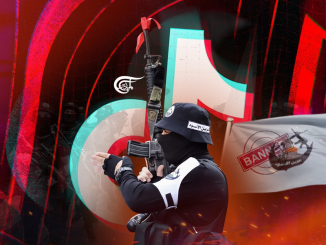
Gag rule on Palestinians continues, TikTok joins ban policy

A malfunctioning Israeli military drone crashed in the occupied West Bank city of Nablus on Friday was and seized by a Palestinian Resistance group.

The Areen Al-Ousoud “Lion’s Den” Resistance group affirmed capturing the unmanned aerial vehicle that crashed in Nablus, posting images of the captured Israeli drone on TikTok.

The Resistance group was later banned from the popular video-sharing platform.

What TikTok and Meta want to ban 

Unsurprisingly, the Israeli occupation labels Palestinian Resistance groups as “terrorist”, despite the fact that there is a legitimate sovereign in the occupied West Bank under international law. The Israeli occupation practices its act of barbarism, killing, arresting, and raiding Palestinian houses on a daily basis.

Here’s the latest spree of Israeli violence: The occupation forces maintain their siege on the city of Nablus in the northern West Bank, amid the full closure of occupation military checkpoints and roads leading to the city.

In a similar context, two Palestinians were shot dead and six others were injured, on Saturday, during confrontations that erupted between the Israeli occupation forces and Palestinians following an Israeli raid on the Jenin refugee camp.

Local sources reported that Israeli Special Forces infiltrated Jenin, and snipers were stationed on the rooftops. IOF’s raid resulted in the outbreak of violent confrontations, during which the occupation forces used excessive force.

The same sources confirmed that the occupation forces prevented any ambulance from getting to the site of injuries. In yet another act of Israeli barbarism, a Palestinian doctor was shot by an Israeli sniper while treating one of the injured in the hospital yard.

Killed while live streaming

When a 29-year-old Palestinian, Mohammed Musa Sabaaneh, a resident of Jenin refugee camp, was live-streaming as Israeli occupation forces (IOF) raided the camp, he was directly shot by the IOF in his chest.

Around 15,000 people were watching the broadcast during which “Israel” murdered Sabaaneh.

Viewers could hear what was going on but couldn’t see the video, at which point people could be heard in the background calling for an ambulance.

“The host is injured!” one viewer wrote in the comments.

Meta suppressing rights of Palestinians: HRW

Facebook and Instagram’s parent company, Meta, censored and removed content documenting human rights abuses committed by “Israel” during the May 2021 Israeli aggression on Gaza, Human Rights Watch has recently revealed.

The human rights organization said Meta’s social media platforms censoring content relating to human rights abuses “particularly during periods of violence” is especially harmful to human rights.

Years of accounts from Palestinian journalists and activists that Facebook and Instagram appear to censor their posts were confirmed.

Human Rights Watch accused Meta last year of wrongfully removing and suppressing content by Palestinians and their supporters, including content regarding human rights abuses against Palestinians.

No such exceptions were ever granted to Palestinian victims of Israeli state brutality, and the sources don’t indicate that any other suffering group was given a similar level of latitude.

Systemic censorship against Palestinians facing daily brutal oppression

Back in 2021, during the holy month of Ramadan, Israeli occupation forces carried out a massive assault against hundreds of Palestinian worshipers in Al-Aqsa mosque in an attempt to repress them during the holiest month for Muslims. Palestinian Ministry of Health reported back then that at least 200 Palestinians sustained wounds due to the IOF’s aggressive attacks many of which required medical attention in hospitals.

However, that was not the only incident of Israeli aggression against Palestinians that took place that day. Earlier, Palestinian residents of Sheikh Jarrah confronted the occupation forces that were trying to illegally and forcefully expel them from their neighborhood following an Israeli occupation court order.

In the midst of all the oppression, Palestinians and the supporters of their cause launched a social media campaign, sharing images and videos in addition to posts accompanied by hashtags, reporting and documenting the occupation’s attacks, in an attempt to expose the violence and brutal practices of the occupying entity.

However, to many user’s surprise, much of the content that was posted on several social media outlets, including Twitter, Facebook, YouTube, and Instagram, suddenly was removed with some users reporting that their posts were flagged over alleged violation of the terms of use of the platform, while others where outright banned and had their accounts suspended.

Mona Al-Kurd was one of many live streaming the ongoing events in Sheikh Jarrah when her streaming cut off suddenly. Al-Kurd explained that her live-streaming feature was blocked while she was documenting the moment Al-Salhiyya’s family home was demolished. This exposed Instagram’s complicity and censorship of Palestinian content.

Censorship of Palestinian content is not new to some of the giant tech companies. Toward the end of last year, activists and journalists started a campaign against Meta’s policies, which have been targeting Palestinian content and the Palestinian narrative.

When these media outlets failed the Palestinians, especially during Sheikh Jarrah Neighborhood events, they decided to snatch the cameras for themselves and press “play”.

“Israeli propaganda is truly powerful, I witnessed this, especially in the West, Israel is the victim and we Palestinians are the aggressors,” Mariam Afifi, 27, a Palestinian musician and contrabassist with the Palestine Youth Orchestra told Al Mayadeen English.

The censorship of Palestinian voices, however, was not limited to the ones living in Palestine. On March 8 of 2022, Meta removed the FaceBook account of a Palestinian organization based in NYC, Within our lifetime, over a post praising Palestinian revolutionary women in celebration of Women’s International Day.

In a statement, the organization said, “While the restoration of our main account following a massive outpouring of support from our comrades and supporters around the world marks a victory, we know that Instagram continues to uphold anti-Palestinian racism and actively works directly with our oppressors to silence us.”

Big tech has long been an accomplice to the Israeli crimes against Palestinians, like Meta, then Facebook, which acknowledged in 2017 that it was complying with 95% of the Israeli government’s requests to remove Palestinian accounts and pages. YouTube was an accomplice as well, less so, but still as bad, with an 80% compliance rate.

The censorship battle that the Palestinians are facing is still ongoing, ranging from the filter that some media outlets use to blocking social media accounts and removing some of them.

Meta’s Instagram admitted that the platforms censored and removed posts and hashtags related to Al-Aqsa Holy Mosque and released an apology statement claiming that the site’s algorithm “mistakenly” flagged the posts as promoting “terrorist” content.

The social media giants admitted to the removal of some content and suspension of some accounts and released apologies while claiming that it was due to “technical errors”, but Palestinian organizations and users labeled these claims as illogical and irrational.

Activists and journalists have started a campaign against Meta’s policies, which have been targeting Palestinian content and the Palestinian narrative.

This campaign, which is calling for protesting the social media giant’s policies online under the hashtag “#FbCensorsJerusalem”, has accused Meta of ignoring the Palestinian narrative on the Israeli occupation’s crimes in occupied Al-Quds.

The group released a statement saying, “While [Meta] is escalating its crackdown on the Palestinian narrative under flimsy pretexts, it does not lift a finger about the Israeli incitement, which calls for the killing and apprehension of Palestinians, especially after the recent incident at the Chain Gate in occupied Jerusalem,” adding that “Facebook’s algorithms strictly censor any pro-Palestinian content and do not take into account what’s happening on the ground in Palestine.”

Palestine is not a ‘harmful content’

Since the beginning of Russia’s special military operation in Ukraine, pro-Palestine activists on social media platforms started to compare how tech giants, specifically Meta, are handling the Ukraine crisis.

Meta, who was censoring every pro-Palestinian post, story, or even a live stream, has allowed hate speech and violence against Russian President Putin and Russians, even allowing the spread of “gore” content if it involves dead Russian soldiers. While Meta is encouraging the spread of fake news on its platforms, it did not encourage the Palestinians to spread the truth all over its platform.

Why is it that when it comes to the Israeli most hideous massacres against Palestinians, it is a “controversial cause”, while when it comes to a topic such as Russia, Meta tries to forcefully impose the “truthful news” on its users?

Source: Al Mayadeen English

Strugglelalucha256


Palestinians observe general strike to honor young man killed in West Bank

Palestinians are observing a general strike across the occupied West Bank and al-Quds to mourn a young Palestinian man who was killed by Israeli forces in a confrontation.

Heeding a call from nationalist factions, Palestinians observed the one-day general strike on Thursday to pay homage to Udai Tamimi, who was gunned down during a reported firefight with the Israeli forces at the entrance of the West Bank settlement of Maale Adumim in the east of the holy occupied city of al-Quds on Wednesday.

Businesses, schools and different facilities shut down their doors in different areas of the West Bank and al-Quds. The strike also included public transportation.

Tamimi, 22, was wanted by the Israeli military after killing an Israeli soldier, identified as Noa Lazar, at a checkpoint near the Shuafat Palestinian refugee camp in al-Quds on Oct. 8.

The 10-day search for Tamimi witnessed the Israeli military shutting down the entrances to the camp and laying siege that paralyzed healthcare services and schools there.

Palestinian resistance factions called for the strike and urged Palestinians to take to the streets to denounce Tamimi’s killing and other acts of violence by the Israeli regime, including the ongoing blockade on Nablus.

The Israeli regime has intensified its deadly crackdown on Palestinians in the occupied territories.

According to the Health Ministry, a total of 174 Palestinians, including 41 minors, were killed by Israeli forces since the start of 2022.

It added that 123 Palestinians were killed in the West Bank and 51 others in the besieged Gaza Strip.

The Israeli regime occupied the West Bank during a heavily-Western-backed war in 1967. Ever since, it has dotted the territory with hundreds of illegal settlements that have come to house more than 600,000 Israeli settlers.

Palestinian youth succumbs to wounds from Israeli violence in West Bank

Meanwhile, another Palestinian youth on Oct. 20 lost his life due to Israeli violence in the occupied West Bank, according to the Health Ministry.

The Ministry said in a press release that 16-year-old Muhammad Fadi Nuri died of his critical wounds he had sustained after being shot by Israeli forces in the abdomen at the northern entrance of al-Bireh city in September.

Source: Press TV

Strugglelalucha256


Settler attacks in West Bank drive farmers to treetops

Firas Yusef is taking all the precautions he can to fend off ever more aggressive settler attacks on his land west of Salfit in the occupied West Bank.

The farmer, 37, has already seen his land – 30,000 square meters outside the town of Az-Zawiya – divided in two by Israel’s separation wall where it dips deep into the West Bank south-west of Nablus in the Salfit governorate.

Never peaceful, settlers from the nearby settlements of Ariel, Alei Zahav, Pduel and Barkan have been acting even more aggressively over the past several months.

Last year, according to the UN, Palestinians in the West Bank had to endure the “highest recorded levels of [settler] violence” in recent years.

Fearing for his safety as well as his livelihood, Yusef has constructed a wooden hut on top of one of his bigger olive trees.

The hut is about five meter squared and is built on the tree trunk some three meters up. It is outfitted with plastic windows and boasts a sheet metal roof.

A single solar panel provides electricity.

Inside, there are chairs, covers and bedding, enabling Yusef to stay overnight on his land.

This serves two purposes. He can keep an eye on his land at night and he is not subject to the capricious moods of soldiers at checkpoints to reach his land in the mornings.

Yusef is by no means the only farmer to come up with this idea. He estimates that around 230 other local farmers have built huts on their lands for the same purpose.

He fears, however, that the Israeli military might come and destroy the hut, as has happened to others.

“I am near the wall and settlements. The Israeli occupation authorities have recently resorted to monitoring the construction of these huts with drones. I hope they don’t locate mine and make me destroy it.”

Wreaking havoc

Settlers are wreaking havoc in small communities around the West Bank. Hardly a day goes by without some report of cars being vandalized, civilians being assaulted or trees being targeted.

There are more than 280 settlements in the West Bank, outside of East Jerusalem. These are home to some 440,000 settlers, lured there by tax breaks and other financial incentives offered by the Israeli state.

Some 150 of these are so-called settlement outposts, attracting the more extreme elements among the settlers.

Some of these outposts are being “legalized” to become full settlements. A third of the outposts were established over the last decade.

All pose a threat to the security of Palestinians in the vicinity. And Israel’s military is another source of danger for farmers and others.

At least 26 children have been killed by soldiers or settlers this year alone.

Most settler attacks take place in Area C, some 60 percent of the occupied West Bank which is under direct Israeli military and administrative control.

Yusef’s farm is in Area C, where Israel’s apartheid system is quite brazen: Israeli settlers are treated as civilians under Israeli law, while Palestinians like Yusef in the same area are subject to military rule.

There is little to no protection for Palestinians in Area C (or anywhere else). The military does not have the authority to intervene against settlers, since they are seen as civilians.

It is a fine distinction that B’Tselem, an Israeli human rights group, calls meaningless. Settler violence, the group holds, “is a form of government policy.”

And soldiers almost never have to face any consequences for their actions. According to another Israeli rights group, Yesh Din, in the years 2019 and 2020, the Israeli military received a total of 273 complaints related to violations committed by soldiers against Palestinian civilians.

Of these complaints, just 56 investigations were opened, or about a fifth of all complaints submitted. Yesh DIn attributed the small number of opened investigations – a number that is decreasing year on year – to a “deliberate policy to raise the threshold for opening criminal investigations.”

Ultimately, the group found, only 2 percent of complaints resulted in prosecution.

Neverending expansion

Ahmad al-Mahmoud, 66, from Kafr al-Deek, further west from Salfit, suffers constant vandalism by settlers from the nearby Alei Zahav settlement, to which he has already lost 6,000 square meters of his 13,000 square meters of land, now surrounded by a metal fence and off limits to him.

Murad Shtewi, head of the Colonization and Wall Resistance Commission of the Northern West Bank and a coordinator for unarmed resistance marches, told The Electronic Intifada that “settlements have led to the confiscation of thousands of dunums of agricultural land” in the Salfit governorate.

The entire area of the governorate is about 26,000 dunums, Shtewi said, with 11,000 located in Area A, and under the Palestinian Authority, and 15,000 dunums are in Area C. A dunum is the equivalent of 1,000 square meters.

Salfit governorate contains 25 Israeli settlements, Shtewi added, the largest of which is Ariel, which is built on land belonging to the villages of the area, including Kafr al-Deek and Az-Zawiya.

“The most dangerous settlement project in Salfit is the occupation’s attempt to expand the Ariel settlement, by establishing an industrial zone there and linking it to a settlement that is being planned in the Ras area and Khallet Hassan area west of Salfit.”

Ahmad al-Mahmoud also built a hut on his land. In fact, it was built several times, because the military kept demolishing it.

The latest demolition was in September 2020. He rebuilt it less than two months later.

Today, the hut is multi-functional, including as a recreational place for his family and grandchildren.

“Settler attacks increase more during the harvest seasons,” al-Mahmoud told The Electronic Intifada, “especially the olive harvest. Settler gangs prepare themselves for the September-November harvest, by cutting down olive trees and stealing their fruits.”

And it is not just Palestinians who are targets. Settlers have been known to target foreign and Israeli activists when these have turned up to protect farmers for the harvest, pelting them with stones or assaulting them with clubs.

Al-Mahmoud does not only have to contend with direct assaults, he told The Electronic Intifada.

With Israel in administrative control over the area, he has yet to receive permission to dig a water well for irrigation purposes. He still has to rely on trucks carrying water tanks to irrigate his trees once a week.

Taghreed Ali is a journalist based in Hebron.

Source: Electronic Intifada

Strugglelalucha256


Is Palestine on the brink of a full-scale revolt?

Events in the occupied West Bank over the past week indicate that the Palestinian liberation struggle, and Israel’s efforts to repress it with with brutal violence, have entered a new phase.

In this looming scenario, the formerly extremist fringe settlers see themselves represented at the top levels of Israeli government, emboldened and beyond the restraint of the army.

Meanwhile, the Palestinian Authority is proving increasingly ineffective at quelling armed resistance and teetering on what some Israeli analysts fear is the verge of collapse.

The PA exists to serve as an enforcement arm of the Israeli occupation and its presence would not be missed by many Palestinians except for those who are currently on its payroll.

But in a situation of complete Israeli impunity, and only empty gestures by international parties towards a nonexistent peace process, the grim statistic of more than 100 Palestinians killed in the West Bank so far this year foretells the even worse violence likely to come.

Despite the Israeli brutality – indeed, because of it – Palestinians have risen up in defense of their existence on their land, with as much fearlessness and determination as every previous generation.

Palestinian neighborhoods in Jerusalem have been transformed into battlegrounds this week, with residents burning tires and dumpsters, throwing firecrackers at raiding Israeli forces and even lighting police vehicles on fire:

Israeli settlers, some of them armed, streamed into Sheikh Jarrah, an East Jerusalem neighborhood they seek to take over, on Thursday night and attacked Palestinian residents and their property.

In this video, Jawad Burqan, a resident of Sheikh Jarrah, describes how people in the neighborhood, including members of his family, are constantly harassed by settlers who invade the neighborhood and indiscriminately fire weapons:

The settlers were apparently led by Israeli lawmaker Itamar Ben-Gvir, who brandished a pistol and told the vigilantes that if Palestinians “throw stones, shoot them.”

Ben-Gvir, an ally of former prime minister Benjamin Netanyahu (who seeks to make a comeback in next month’s Israeli election), once proclaimed Baruch Goldstein as his hero.

Goldstein was a Jewish settler from Brooklyn who shot to death 29 Palestinian men and boys as they prayed at Hebron’s Ibrahimi mosque during Ramadan in 1994.

After that massacre, Israeli forces partitioned the holy site and shuttered the formerly bustling adjacent Old City.

Palestinians fear that without determined resistance, Israel will seize any opportunity to impose similar measures at al-Aqsa mosque in Jerusalem, where tensions are rising due to provocative, record-breaking visits by Jewish extremists who seek to change the status quo at the holy site during the Jewish holidays.

Violence in Jerusalem this week must be understood as part of Israel’s wider efforts to erase Palestinian life from the city.

After the settler mob dispersed from Sheikh Jarrah on Thursday, Israeli police fired water smelling of sewage on Palestinian homes in the neighborhood:

Settlers meanwhile attacked Palestinians in Huwwara, a town near Nablus in the northern West Bank, on Friday for a second consecutive day:

Haaretz, a Tel Aviv newspaper, reported that settlers attacked Palestinian shopkeepers and threw stones at homes in Huwwara.

“The Israeli army later arrived and shot two Palestinians, who are being treated for their wounds,” Haaretz added, citing the Palestine Red Crescent Society.

Video shows settlers attacking businesses in Huwwara under the protection of Israeli soldiers on Thursday:

The surge in confrontations across the West Bank this week was precipitated by Israel’s closure of Shuafat refugee camp, as well as the nearby East Jerusalem neighborhoods of Dahiyat al-Salam, Ras Shahda, Ras Khamis and Anata, since Saturday night.

Already surrounded by Israel’s wall and cut off from the rest of the city, the neighborhoods were under a state of siege for several days following the fatal shooting of a soldier at Shuafat checkpoint late Saturday.

Israel was purportedly looking for the suspected shooter, a 21-year-old resident of Shuafat refugee camp.

On Tuesday, Palestinians in the camp announced a general strike and a campaign of civil disobedience in protest of the severe Israeli restrictions, which prevented residents from accessing work, healthcare and schools and bringing life to a standstill.

Adalah, a Palestinian human rights group, said that the “sweeping collective punishment including power cuts, spraying of foul-smelling ‘skunk’ water, and firing of tear gas in densely populated civilian areas” was in violation of the Fourth Geneva Convention.

The closure violated “the freedom of movement of some 130,000 Palestinian residents,” Adalah added.

Israel issued instructions to ease those measures on Thursday in an effort to defuse the situation and on Friday, Palestinians in the camp reportedly announced the suspension of the civil disobedience campaign.

But by Friday night, it seemed that the severe movement restrictions had been reimposed:

For all the upheaval caused, Israeli forces still haven’t managed to capture Palestinians wanted for shooting and killing soldiers in two separate instances in Jerusalem and Nablus, which was also subjected to closure, since Saturday.

It would seem that Israel has all but lost control of both cities as a whole, in addition to Jenin, where occupation forces shot and killed two Palestinians on Friday.

Both Nablus and Jenin have re-emerged as centers of armed resistance to the Israeli military occupation. In recent months, Israel and the Palestinian Authority have stepped up their attacks in these areas amid concerns among Israeli leaders that they are slipping out of the occupation’s grip.

For Israel, the nightmare scenario – one that appears to be becoming reality – is that the Palestinian Authority collapses or ceases to function as an auxiliary police force.

In that case, Israeli forces would have to be deployed directly in major Palestinian population centers, as they were during the first intifada prior to the signing of the 1993 Oslo accords which created the PA.

If that were to happen, the confrontations in East Jerusalem would be just a tiny taste of what would likely be a full-scale Palestinian revolt across the West Bank.

The level of violence and brutality that Israel would have to deploy in an effort to crush such a revolt is unthinkable. And if sustained, it could be even more costly to Israel in terms of international support than its regular spasms of killing in Gaza.

And as was seen in May 2021, the confrontations would not necessarily be contained to the West Bank, including East Jerusalem, and Gaza.

At least one Israeli commentator for the influential newspaper Haaretz expressed fear that the current unrest in Nablus, Jenin and East Jerusalem “will slither across the Green Line again, including possible clashes in the mixed (Jewish-Arab) cities.”

Another writer for the same publication likened it to “the terrible feeling of a car hurling down the slope toward an abyss,” offering only prayer as a prescription because ending the structural causes of violence, principally Israel’s supremacist settler-colony regime, is beyond imagination.

For these writers, the fear is that Jewish Israeli communities might be affected by the violence that Palestinians on both sides of the Green Line are subjected to on a daily basis.

Jenin has endured almost daily raids after a string of deadly attacks in Israel by Palestinians from the area in March.

Around 40 Palestinians in the Jenin area have been killed so far this year.

One of those killed during an Israeli raid in Jenin on Friday was Abdallah Abu al-Teen, a 43-year-old doctor. The Palestinian Authority health ministry said that Abu al-Teen was shot in the head by soldiers in front of a government hospital in the northern West Bank city.

Israeli authorities suggested that Abu al-Teen may have been killed by armed Palestinians and then claimed that the doctor was engaged in a firefight with soldiers when he was killed.

The shifting narrative is similar to that proffered by Israel in the hours and days after Shireen Abu Akleh was killed in the same city.

Several investigations in the months following Abu Akleh’s death found that the Al Jazeera journalist was shot by Israeli troops when there were no armed Palestinians present or confrontations occurring.

The research group Forensic Architecture and Palestinian human rights group Al-Haq stated last month that their investigation, which involved spatial imaging and reconstructions of the incident, shows that Abu Akleh and her colleagues were deliberately targeted. No Israeli soldier has been held criminally liable for her death.

The other Palestinian killed in Jenin on Friday was identified as Mateen Dabaya, in his twenties. Al Jazeera, citing the Palestinian health ministry, reported that Dabaya was shot with a bullet to the head.

Also on Friday, a third Palestinian from Jenin, 17-year-old Muhammad Maher Ghawadreh, died in Israeli detention from injuries sustained last month:

Ghawadreh was being detained at an Israeli hospital while being treated for injuries sustained while he allegedly carried out a shooting attack on a bus carrying Israeli soldiers in the West Bank’s Jordan Valley in early September.

Seven were injured in the attack that Israeli authorities said was carried out by two others in addition to Ghawadreh, all members of the same family.

Maher Ghawadreh, Muhammad’s father, was present with the father of Raed and Abdalrahman Khazem at the funeral of Mateen Dabaya in Jenin on Friday:

https://twitter.com/Alaqsavoice_Brk/status/1580879545175244800

The elder Ghawadreh, remarkably seen openly and armed in public on Friday, is also wanted by Israel for allegedly carrying out the shooting attack in the Jordan Valley in September.

Israeli raids and Palestinian resistance were ongoing in various points across the West Bank, including East Jerusalem, late Friday.

Palestinian gunmen reportedly opened fire at Beit El settlement, near the West Bank city of Ramallah, on Friday, lightly injuring an Israeli man.

Israeli media reported that an alleged Palestinian assailant was shot and killed by troops as he attempted to flee.

Meanwhile, video showed Israeli police beating and detaining Palestinians in Sheikh Jarrah as confrontations were ongoing in East Jerusalem:

The siege on Shuafat this week united Palestinians across East Jerusalem, where long-simmering frustration was already high due to a daily atmosphere of repression as Israel seeks to crush Palestinian life in the city.

Earlier this year, history-making masses of Palestinians accompanied journalist Shireen Abu Akleh’s coffin during her funeral procession after she was shot and killed by Israeli forces in Jenin refugee camp during May.

Sheikh Jarrah resident and writer Muhammad El-Kurd described the huge mobilization for Abu Akleh’s funeral, despite Israel’s restrictions on public gathering, “a reclamation of public space” in the city.

The events in Jerusalem this week will likely be remembered as something similar.

Ali Abunimah is executive director and Maureen Clare Murphy is senior editor of The Electronic Intifada.

Source: Electronic Intifada

Strugglelalucha256


Israel admits its troops responsible for Abu Akleh’s death

As we previously reported, senior Al Jazeera journalist Shireen Abu Akleh was murdered earlier this year while covering an Israeli Defense Force (IDF) raid on the Jenin refugee camp in the occupied West Bank. Early reports indicated that Abu Akleh was killed by Israeli weapons fire. 

The IDF followed its murder of Abu Akleh with an attack on her funeral procession. Her procession included Muslims, Christians and Jews. Abu Akleh herself was a Christian. The Israeli forces beat pallbearers and other attendees. 

Until recently, the Israeli government denied any culpability in Abu Akleh’s death. However, on Sept. 5, 2022, the IDF released a statement admitting a “high possibility that Ms. Abu Akleh was accidentally hit by IDF gunfire fired towards suspects identified as armed Palestinian gunmen.” 

Eyewitnesses reported that Israeli troops appeared to be firing directly at journalists. The IDF indicated that the stormtroopers responsible for Abu Akleh’s death would face no criminal charges or prosecutions.

Translated: “We launched an attack on Palestinian refugees and murdered a prolific Palestinian journlaist because that is what Zionists do.”

Blood of Palestine on hands of U.S. defense industry

As Abu-Akleh was an American citizen, her family requested a meeting with U.S. President Joe Biden during his July visit to Israel. The family simply wanted to express their concerns and demands for justice directly. Biden refused the meeting, instead inviting Abu Akleh’s family to visit Washington, D.C. 

The U.S. has provided Israel with $63 billion in military aid and security assistance since 2001. $8 billion of this aid came in 2021 and 2022. The planes that terrorize Gaza City are from the U.S. The semi-automatic rifles that murder Palestinian teenagers are from the U.S. The entire military infrastructure of Israel is provided by the United States of America, which is why Biden’s refusal to meet with Abu Akleh’s family is so cold and detestable. 

The U.S. defense industry’s hands are covered in Palestinian blood. Israel enforces apartheid while Northrup Grumman, Lockheed Martin and Raytheon make billions in profits. The least the President could do is meet with the family of the slain Palestinian-American journalist.  

IDF continues siege of Jenin

Unfortunately, the IDF raid on the Jenin refugee camp in the West Bank that killed Shireen Abu-Akleh was not an isolated incident. The raid is part of a broader swath of Israeli offensives against Palestinian communities in Gaza and the West Bank. Syria has also felt the wrath of this offensive. 

On Sept. 5, 2022, the IDF launched another attack on Jenin with artillery and ground forces. Sixteen Palestinians were injured, and one was martyred. The Palestinian person killed was a 29-year-old man attempting to capture the vicious Israeli attack on the social media site TikTok. The IDF claimed that the operation in Jenin was aimed at demolishing the home of an alleged “terrorist.” Indeed, the IDF regularly demolishes the homes of Palestinians they label as “terror suspects” as punishment for their families. 

This attack, much like the one that killed Abu Akleh, also included IDF forces firing at journalists and other individuals trying to capture the raid on video. The U.S. accuses countries like Cuba and China of violating freedom of the press while materially supporting an apartheid regime that targets journalists with impunity. No U.S. journalist has ever been shot and killed while reporting by military forces in Cuba or China.

The global anti-Zionist community must unite in solidarity with Shireen Abu-Akleh, the Palestinian people, and all those who would attempt to uncover the truth about Zionist apartheid.

Down with Israeli apartheid! Free Gaza! Israeli settlers out of the West Bank!

Strugglelalucha256


Rising to Return: the 14th Al Awda National Conference

Rising to Return: the 14th Al Awda National Conference Mobilizes for Global Peace by Launching Holistic Strategies Toward Dismantling Zionist Colonization and Supremacy 

The 14th National Al-Awda Conference at The People’s Forum in New York from May 6-8, 2022 was a three-day long weekend  of intensive discussion and strategy aimed at advancing the Palestinian struggle for liberation from zionist supremacy and colonization. As renowned artist Samia Halaby noted, “If we want peace, we must work to dismantle Israel,” a sentiment shared by Lamis Deek, who identified the return of Palestinian refugees and the dismantling of zionist colonization as a critical step toward removling a key cog in the global war machine and western imperialism. The conference also hosted Palestinian artists, film screenings, and convened community to strengthen bonds and cross-sector support and coordination.

The keynote speakers expressed confidence in the liberation of Palestine. One academician stressed that there is no technical or military superiority that can defeat the Palestinian struggle for liberation, while noting the need for a paradigm shift as offered and adopted at the Al Awda Conference. Speakers stressed the need to revive indigenous knowledge and practices, to engage in critical inquiry and investigations, and to build active strategic solidarity networks (vertical and horizontal, especially outside the US). Speakers also addressed the need to recenter Palestinian self-determination in the Palestinian and solidarity movements, with Palestinian author and journalist Ramzy Baroud detailing the “super-structure” of Palestinian culture itself as playing a decisive role in Palestinian survival, resistance and victories — big and small. Raja Abdulhaq also addressed the need to discursively embrace Palestinian Muslim and Muslim culture as a needed tactic against the violent, islamophobic rhetoric advancing the judaization of Palestine’s Christian and Muslim communities and institutions.

The conference’s three tracks — “implementing return”; “from zionist accountability to enhanced Palestinian support and resistance”; and “strategic coordination” — were dedicated to each aspect of the work required to meet this primary goal.

On the implementing return track, discussants and attendees considered prior global efforts to break the siege on Gaza — and delegations generally — as a paradigm for developing return and reunification support convoys to implement UN Resolution 194, which calls for the safe and immediate return of Palestinian refugees, and which “israel” has violently breached and never honored since agreeing to its implementation in 1948. Discussants also began consideration of US and global political advocacy campaigns for return, so as to recenter return in all Palestinian liberation efforts. Discussants in this and other tracks also reviewed and assesed needed support to facilitate independent Palestinian efforts to return and reenter Palestine safe from zionist privacy invasions, interrogations, and threats to their families.

The conference’s second track was dedicated to identifying and holding accountable zionist organizations in the US which mobilize human and financial resources to colonization and violence in Palestine, in order to launch campaigns to dismantle, defund, and disempower these criminal organizations. Shortly after the conference, the US government, by way of this “democratic” administration, legalized a Jewish terrorist organization, the Kach Group, which is tied to murder and home invasion operations against Palestinians. Discussants at the conference identified several key zionist actors and organizations around which to launch multi-tiered campaigns in the coming months — and investigative partnerships to identify US citizens involved in prosecutable actions in Palestine. Reciprocally, discussants on this track also considered strategies to increase Palestinian access to resources, to allow them to withstand and preempt the escalating violent zionist colonization by the zionist regime and its settler agents. In this regard discussants addressed the need to reframe zionist and western demonization and criminalization of the Palestinian right to life and self-defense, and to launch discursive and material strategies globally to mobilize for Palestinian defense resources. Simultaneously the conference addressed the need to rebuild Palestinian self-sustainability and to move away from the imposed NGO dependency, so as to build sovereign economies of resistance and sumoud. Palestinian organizations, in coordination with Al Awda, will be launching mechanisms to allow for borderless economies in the coming months.

Recognizing the central need to continue empowering youth and student organizing for Palestinian liberation, the third track considered strengths, weaknesses and needs of the student and youth organizers. Discussants considered challenges faced by youth and student organizers,and academics, concluding that strong offensive strategies in dealing with school and campus administrations were more effective than defensive postures- especially when joined by community, intergenerational, and cross-sector organizing. Students requested detailed materials in this regard, and for other challenges, while discussants offered tactics and potential, and tested, avenues for successful organizing. The Campus to Community sessions stressed the need to confront and remove racist, anti-Palestinian examination questions and curriculum, and the murky administrative recourse process in the public school system. Al Awda NY will be releasing support resources and manuals addressing these issues, along with policy manuals.

In sync with the global shift toward cyber/electronic war, the conference dedicated substantial time to addressing the global zionist surveillance, social media and IT war on Palestinians. Experts described the “israeli” surveillance system against Palestinians as a panopticon system: a constant all-consuming surveillance and information gathering system aimed at exacting near-total control and intimidation of Palestinians inside and outside Palestine, with the US government a willing collaborator and facilitator of such illegal practices. Discussants assessed US and western based companies’ adoption of policies of digital discrimination against Palestinians under pressure from US and “israeli” forces, in both the banking and social media arenas. Experts shared strategies to defend against and preempt zionist electronic repression of Palestinians and Palestinian advocacy — and ways to seek accountability for zionist incitement to violence in these arenas. They also discussed the need to expose the relationships between zionists, weapons manufacturers, and social media/media outlets as key to confronting and exposing these practices. Social and alternative media experts covered best practices and tactics to expose and bypass zionist narratives and media dominance. Building from these discussions, their own strategies developed over the years, and expert information, Al Awda NY will be releasing resources addressing this aspect of the struggle as well.

The conference also addressed the recent lack of central coordination to support Palestinian prisoners and targets. Survivors and targets of “israeli” imprisonment shared their experiences and called for more meaningful coordination, including boycotting and shutting down the corporations engaged in prison building and services, and delegitimizing the legal and political framework that sustain the zionist colonial prison system — while supporting and coordinating with legal institutions doing this work in Palestine.

As the Jewish anti-Zionist community grows, the founders of organizations doing the earliest work in this regard convened a space to discuss strategies for Jews to build community and actions to support their work — with several tactics proposed and in continued development, including strategies to confront Kahanists, documenting and exposing Zionists, and pushing back against the weaponized manipulation of anti-Semitism.

Across the board, for all efforts, and particularly through a hard-hitting panel on electoral activism, the conference presentors and attendees were in consensus that building horizontal power must be the main goal, while a smaller segment should be engaging in vertical organizing as well — provided that such vertical government advocacy does not compromise the Palestinian demand for full liberation, return, and reparations.

Keynote speakers underscored the class nature of the war of colonization and incremental genocide in Palestine, and that racial capitalism is at the heart of the struggle of all oppressed people, inside and outside the US. Councilman Charles Barron, Black liberation activist-attorney Roger Wareham, and New England American Indian organizer Jean-Luc Pierite stressed the need for solidarity against a common enemy and common practices which have stolen land, environmental integrity, and safety from Black, Indigenous, and Palestinian people.

To that end, the conference launched a coalition dedicated to self-determination and liberation of oppressed people — to be led by Black and people of color organizations committed to racial and socioeconomic justice, and to work in support of those fighting against US and western imperialism. The coalition infrastructure is under development and will go public in a few weeks.

Al Awda NY which crafted and hosted the program and its tracks has been at the forefront of advancing the Palestinian struggle for liberation for over 23 years, and has been dedicated to redistributing power to oppressed communities and struggles since then.

As we plan to advance the work of our conference in an era of escalated need, we request your help and support. We have set an ambitious goal to raise $125,000 for unpaid costs from the conference, and to hire staff, secure equipment, and to launch digital and material work detailed above.

This amount would cover outstanding conference costs for venue, speaker travel and hotel expenses, youth, travel expenses and food. $31,000 is needed to cover the money spent to develop and launch the Conference micro-site and related publicity, and to go towards video editing and publication  of the conference plenary sessions in consumable format. With the balance we hope to hire a program coordinator and use the funds to build our electronic assets, launch and make accessible the above listed programs and materials, along with centralizing and digitizing 23 years of Palestine organizing in NY, to provide legal and political support to students, parents and communities in need of support,  and to cover costs of trainings and materials for the coming two years- to ensure that the paradigm shifting work devised at the conference is implemented and that the movement for Palestinian liberation steadily proceeds.

You can donate via:

PayPal: https://al-awdany.org/support-our-work/ 

Venmo: @alawdany

CashApp: $AlAwdaNY

Our deepest thanks and ongoing commitment to justice and liberation, eternally.

Al Awda

Strugglelalucha256
https://www.struggle-la-lucha.org/palestine/page/40/