Peru: Was it a coup?

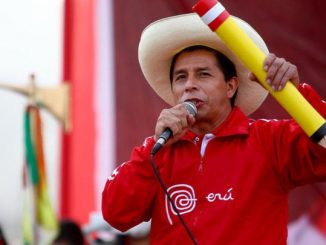
When Professor Pedro Castillo won the presidential election against Keiko Fujimori — in the second round and by a very narrow margin of 50.125% against 49.875%, a difference of just over 40 thousand votes in a country of 33 million inhabitants — he had two possible paths.

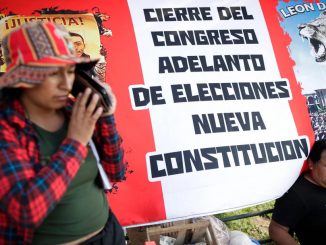
The first was to take to the streets the people of the regions historically forgotten by the political, economic, and media elites, as opposed to the middle and upper classes of the capital Lima, which, with 35% of the electoral roll, had traditionally defined the President of Peru. To take to the streets a people that demanded a new Constitution to replace the one promulgated by Fujimori in 1993. To convene a Constituent Assembly that, faced with the power of a unicameral Parliament designed as a counterweight to presidential power, would give rise to a power capable of generating the necessary balance.

The other path, the other alternative, was to try to govern. And Pedro Castillo, in what -now it is easy to say- was his first big mistake, chose to govern.

The problem is that he had to govern in the court (a perverse institutional system totally inclined and designed to the detriment of popular interests), with the rules (Fujimori’s Constitution), and with the referee against him (a Parliament with a Fujimori majority and a leftist minority).

Once Pedro Castillo chose to try to govern, an impeachment process was set in motion, driven by Fujimorism with the coverage of the media oligopolies. And obviously, he could never govern with an ultra-fragmented Congress from which he had to ask permission even to appoint ministers.

But Fujimorism had a weapon as perverse as it was powerful, Article 113 of the Constitution, which establishes among the different causes for the vacancy of the President (some are common sense, such as death or resignation) the “permanent moral or physical incapacity, declared by the Congress.”

The first motion of vacancy for permanent moral incapacity came in November, only four months after having been in office, followed by a second one in March 2022 and the third and last one this December. To illustrate the powerful arguments of the parliamentary opposition to Pedro Castillo, one only has to read the 20 points of the second motion of vacancy, where in addition to accusing Castillo of systematically lying, it is stated that “he has not reflected, much less corrected his conduct; on the contrary, he has insisted on defending his actions.” There are no more words, your honor.

But if we take any definition in political science of coup d’état (translation from French coup d’État), which is normally understood as a usurpation (often violent) of the government of a country, and which we can clearly visualize in what happened in 2019 in the neighboring country, sister Bolivia, we could affirm that the only coup plotters were those who tried to usurp from the legislative power the executive power through motions of vacancy due to permanent moral incapacity.

It is not the purpose of this brief analysis to point out Pedro Castillo’s mistakes: whether he managed the post-pandemic and vaccination well or not, whether he should have been tougher or more inflexible both with the caviar left and with his (former) allies of Perú Libre, whether Aníbal Torres had more or

less power than he should have as President of the Council of Ministers, even less if Pedro Castillo was wrong to isolate himself or to look for the OAS as a salvation/legitimization table. Not even if there were enough votes for the vacancy motion or if his actions in the last hours of his term were clumsy, not to say suicidal.

None of the above justifies the parliamentary coup by Fujimorism and its political, economic, and media allies before the complicit silence of the international community and the loneliness in which it was left by a good part of the left that continues to seek revolutions in their classic 20th-century format, and does not understand (not to say despises) the popular and the forms of representation, full of contradictions, that it finds to dispute power.

Now it is the turn of Dina Boluarte, the sixth President in six years of a country once ruled by Marshal Santa Cruz. Before her the dilemma is repeated for the second time (and if the first one ended in tragedy with the imprisonment of Pedro Castillo, let us hope this second one does not end in farce): either she tries to govern and finish the mandate in 2026, for which she will undoubtedly have to make a pact with the coup plotters, which is a good part of her cabinet (and policies), or she brings forward the elections to place the Constituent Assembly again on the horizon.

In the meantime, it is about time to change the question Vargas Llosa asks in Conversation in the Cathedral, “when did Peru get screwed” to the question of who screwed Peru. Peru was and continues to be screwed by the political, economic, and media coup plotters, with the complicity of some sectors of the left, who do not respect the will of the social majorities.

Source: Tierra Adentro, translation Resumen Latinoamericano – US

Strugglelalucha256


U.S. sanctions Haiti

Crime has played a dominant role in Haiti since the Taíno and Arawakan people were decimated by Spanish and French colonialists, and its earliest workers were kidnapped from their homes in Africa and exploited with unimaginable violence. 

When those early workers freed themselves from bondage, they were forced to pay France reparations — a looting and impoverishing of Haiti’s economy. Can it be today that they are still being punished for the first revolution led by Toussaint L’ouverture in 1804, the world’s first Black republic guaranteeing the rights and freedoms for all Black people?

The Haitian Lavalas Movement overthrew the U.S./French puppet dictator Jean-Claude Duvalier in 1990 with the popular election of Jean-Bertrand Aristide. Aristide was ousted from Haiti by a CIA-backed coup d’etat in 1991 and then again in 2004. The Fanmi Lavalas Party has been denied an electoral role in Haiti ever since.

Today, the U.S. political administration speculates on the exploitation of an extremely low-wage workforce as well as Haiti’s strategic location in the Caribbean.  

In 2021, President Jovenel Moïse was assassinated. Ariel Henry, a suspect in the assassination, is now Haiti’s acting president, with U.S. support.

The global conditions of inflation, food and fuel shortages caused by the U.S./NATO war drive are taking a toll on the poorest countries like Haiti. New cases of cholera, first introduced by the U.N. intervention following the 2010 earthquake, have reemerged in Haiti along with a crisis in potable water.

A deepening crisis is sweeping Haiti. The racist mainstream U.S. media reports unimaginable violence of gang wars and drug trafficking. Their unsympathetic reports are designed to justify one more intervention by the governments of the U.S., Canada and France in the sovereign nation of Haiti. On Oct. 15, the United States submitted a draft resolution to the U.N. Security Council calling for the “immediate deployment of a multinational rapid reaction force” to Haiti. Haiti is the most intervened-in country in the hemisphere. Each previous invasion and intervention has destabilized the economy and left people stranded on the edge of survival.

Haitians want to secure their own country

In Haiti, anti-government protests are sweeping the country. There are reports that the “gangs” most targeted by the White House are actually those struggling to liberate their country. The newspaper Haïti Liberté, in conjunction with Uncaptured Media, has released a documentary: “Another Vision: Inside Haiti’s Uprising.” Haïti Liberté says that “the film plumbs the origins, actors, and tactics of a multi-faceted demonization campaign against Jimmy Cherizier, the FRG-9 and its allies.”

In Washington, D.C., and in other U.S. cities, Haitians and their supporters are holding protests to demand that the Biden administration end its support for the regime of Ariel Henry. Protesters demand that Haitian sovereignty be respected, that there be no intervention. Haitians are the only ones who can solve their crisis and determine their own future. The U.S. and Canada have already announced the dispatch of military aircraft to carry weapons for the country’s security services, Resumen reported Oct. 24.

Sanctions

Demands for self-determination coming from almost every social sector of Haiti may have temporarily stalled the imperialist intervention. But it has not paused the sinister machinations of the U.S. Treasury or FBI.

Brian Nelson, Undersecretary of the Treasury for Terrorism and Financial Intelligence, issued a hypocritical statement stressing U.S. “commitment to act against those who encourage drug trafficking, allow corruption and seek to profit from the social-economic crisis that is facing the country.” Nelson’s ridiculously transparent statement cannot hide the source of weapons, drugs, and corruption in one of the world’s poorest countries.

The Nov.15 issue of Haiti Progress reported that the U.S. and Canada have jointly placed sanctions on Haitian politicians and the business sector, as well as suspected gang leaders. On Oct. 21, the U.N. passed a resolution establishing specific sanctions, most notably on Jimmy Cherizier, the FRG-9, and all who give them support. It is widely recognized that sanctions, however specifically targeted, are intended to deny critical support to the whole population and force them to accept foreign domination.

Further, the FBI is bringing criminal charges against alleged gang leaders in Haiti, using the kidnapping in 2021 of 16 U.S. missionaries in Port-au-Prince as their excuse. In addition to the indictments for the kidnapping, the U.S. Department of Justice has announced charges against the leaders of other gangs. According to Christopher Wray, director of the FBI: “These charges are a reminder of the bureau’s ability to reach criminal actors overseas.” In so saying, Wray is asserting the U.S. intention to police the world.

Once again, Haitians are being punished for struggling to liberate their country. They suffer an inflation rate of 33%, and 4.7 million people are suffering from food insecurity, according to data from the United Nations World Food Program.

What Haiti needs is solidarity – food and fuel – and support for their liberation struggle. NOT sanctions and criminalization.

Strugglelalucha256


Peru: A reactionary coup is consummated

Dec. 7 was a particularly complicated day in Peru. In a few hours, the ultra-right partially achieved its goal: to overthrow the government of Pedro Castillo and open the way to a new scenario in national life, in which it can preserve its privileges and recover its positions of power, in some way questioned by the regime established as of July 28 last year.

After a few hours of tension, Dina Boluarte, the Vice President of the Republic, was installed as head of State and called for the “unity of all Peruvians.”

This outcome was somewhat unexpected. And it was precipitated because Castillo himself made what could be called a leap into the void. Without coordinating with anyone, without seeking the support of the social and mass organizations, without the support of the Armed Forces or of the political collectives with progressive and advanced positions, he decided to establish an Emergency Government, dissolving the other branches of government.

This surprised the citizens and the popular movement as a whole and was responded to by the most reactionary sectors of national life.

The Congress of the Republic, which was to discuss today the vacancy of the Presidency of the Republic, for which it could not count on the 87 votes required, saw its task made easier. In the new scenario, 101 congressmen joined the vacancy proposal, with only 6 votes against and 9 abstentions.

There was a possibility that the reaction would pressure Dina Boluarte to resign as Vice President, in which case the power would immediately pass to the President of Congress, former General José Williams Zapata. This pressure did not exist, and in the afternoon, the first woman to be sworn in as President of the Republic was sworn in.

Dina Boluarte has made a call for “national unity,” understood as the sum of all the political forces acting in the Peruvian scenario. We will see what will be the composition of her first Ministerial Cabinet.

For the time being, the Peruvian ultra-right has sung victory.  It is aware that it has managed to get rid of a president it detested and wanted to overthrow since the beginning of his administration.  However, it has not been able to fully impose itself. Although Dina Boluarte is not a “militant of the left,” she cannot be compared to Jannine Añez, the Bolivian who replaced Evo Morales in La Paz.

It is not foreseeable, however, that she will follow Castillo’s path nor that she will engage in any popular battle. She will try to “ride the wave” until 2026, trying not to be devoured by the Mafia on the prowl.

From this accumulation of circumstances, some lessons can be deduced. Let’s see:

Castillo represented a Popular, Democratic, and Progressive Government. He could not be considered, by the way, either leftist, revolutionary or socialist. It was not indispensable for the Left to support him in terms of personal adhesion but to help him in his administration for the fulfillment of his Unity Program, subscribed by all the forces of the popular movement, which would give him victory in June 2021.

He led a weak, precarious, and largely inconsistent government. In truth, he did not manage to govern because, from the first day, he was harassed by an intense campaign of hatred unleashed against him by the traditional oligarchic nuclei. He never counted on the real collaboration of the left — which he sought very little — and he surrounded himself with a group of very questionable “advisers” who finally became evident for their ineptitude and corruption. By their actions, he was severely compromised.

Randomly, Castillo reacted belatedly to the enemy’s campaign. In doing so, he opted for the path of “direct dealings” between himself and the populations of the interior of the country, ignoring the natural links created by the popular movement itself. Moreover, his “collaborators” acted outside the masses because they did not come from the heart of the people either.

That is why he could not realize the real situation nor perceive his political isolation. He thought that by relying on people who could “scare” his enemies, he could neutralize them, and that did not happen.

In this way, it was confirmed that it is not possible to lead a process of change without forging the unity of the popular movement, without organizing the masses and politicizing them. Nor turning our backs on their struggles.

The future of the country is at risk. In the interior, there will undoubtedly be mobilizations in support of the deposed President. Their fear of them was what induced their reaction not to assume power directly but to accept Dina Boluarte as a “mediator,” but she has neither a Party nor an organized force to back her up. It is foreseeable that she will have even greater difficulties than Castillo in the perspective.

It is foreseeable that the new administration will register negative changes.  The media, which claimed to be on the verge of bankruptcy for not receiving subsidies from the State, will obtain juicy compensations. But both will not change their attitude. They will continue their struggle against the people so that greater difficulties are foreseen in the future.

In terms of foreign policy, this will also be felt. A “cooling” of ties with some sister countries is foreseeable, especially Mexico, Venezuela, Nicaragua, or even Cuba, because the ultra-right will continue its campaign against them.

In other words, the battle of the Peruvians will be harder and more difficult, but it will have to be faced.

Source: Resumen Latinonamericano

Strugglelalucha256


Report from Honduras on the new government of Libre Party leader Xiomara Castro

Honduran Vice Minister of Foreign Relations Gerardo Torres was introduced by a teacher, Lucy Pagoada — Coordinator of D19: Libre Party USA-Canada and Costa Rica, which is coordinated in Honduras by former President Manuel Zelaya — at a full house in the People’s Forum in New York on Dec. 6. Following is a summary of his remarks, addressed to the enthusiastic gathering of Hondurans and their supporters.

Honduras did not have regular elections for 13 years. After the government of Honduran President Manuel Zelaya was overthrown by a military coup d’etat in 2009. Xiomara Castro Zelaya, the first lady, went to the streets and became the leader of a revolutionary process that put an end to one of the most violent, weaponized dictatorships in Latin America.

The regime was violent and, at the same time, one of the largest drug cartels in Central America. In November 2021, despite the years of brutal repression and murder, the Honduran people defeated the Juan Orlando Hernández regime by electing President Xiomara Castro, making her the first female president of Honduras.

Immediately after the inauguration of President Castro, the U.S. extradited Hernandez for drug trafficking and money laundering. Obviously, the U.S. had not just discovered that Hernández was running a drug cartel. If the Hondurans did not have an election victory, that cartel would still be flourishing.

Why did they have to wait for a political and electoral defeat to bring down the cartel? Why did it last 12 years? Why were the heroic Hondurans — who struggled for their country, its natural resources, for control of the Honduran military forces — condemned and murdered? Would they allow this criminal organization to take over the country and enrich themselves under their extremely violent rule?

A couple of years ago, the U.S. government may have asked themselves, what do we do with this country that has been historically the most conservative and obedient to the U.S.? It is a country that the U.S. used as a base for attacks on revolutions in Guatemala, Nicaragua, and El Salvador. This country, with valuable resources, has been one of the most important U.S. military bases in the region.

They saw that Hondurans were trying to create a new constitution. They were trying to establish relations in Latin America with countries like Brazil and Venezuela. They didn’t accept the “free trade,” policies that were robbing their resources and destroying the environment. So the U.S. said do we let this socialist, leftist movement get into power, or do we stop them by allowing a drug cartel to take over Honduras?

Why, when they are willing to do so much to stop progressive movements from gaining power — why is it still possible that elections can be won in Venezuela, Uruguay, Brazil, Colombia, and Chile? [Cheers] Why are progressive elections taking place in Honduras and Mexico despite years of brutal repression?

[Torres said that he was visiting New York as Libre Party International Secretary, Director of the Political Education Institutes to take part in The New International 1974 -2024 Economic Order (NEIO). This meeting is called to analyze the possibility of creating alternative economic models. He said the discussion is opening now because many countries are moving away from the destructive capitalist, neo-liberal economic model.]

When Fidel Castro and Berta Cáceres and other fighters, intellectuals (the majority of whom came from underdeveloped countries) told us that if you continued to extract natural resources to expand industry and exploit people, to reduce them just to merchandise with no wages or jobs, the consequences is that our way of life will be destroyed. If we don’t resist the greed of the small minority of capitalists, all will be lost.

If we want to participate in the transformation of our society, we have responsibilities. First of all, we have to organize in our communities. Second, we have to understand our environment, have critical thinking to see the truth behind what we are being told, and to be able to grasp reality. The third is to have the imagination to see a different way of moving forward. We need to rethink economics, culture, social relationships, couples, children, neighbors, and friends. That is revolutionary ideology, and in Latin America, that is an anti-capitalist, anti-neo-liberal model that is winning elections. Now it has the responsibility to change things.

We are most focused on the way wealth is produced and distributed. Wealth in Honduras has always been concentrated among a rare few. It has been based on extracting resources and also on the monoculture of agriculture, bananas, and sugar. In our country, a small group of powerful businesses benefits from their relationship to the government.

The Venezuelan government of President Nicolas Maduro is currently creating an International Commission Against Corruption and Impunity at the U.N. Within the next two years, it plans to bring this body from the international community to Honduras with the goal of ending corruption.

Changes under the Castro government

Until now, Honduran people have only had electric light if they can pay for it. It is expensive. President Castro’s government is guaranteeing access to electricity and other forms of energy to all Hondurans.

In another area, Castro is planning new development that will come from the communities. The process may be slower, but it is the only way economic growth will be democratic. In the past, development was concentrated in small isolated areas with enormous capacities for production.

We are a social-political movement that focuses on human rights. We organized our party in the streets, protesting against the coup, calling ourselves the resistance. We are the resistance. President Xiomara Castro has stood up to the police forces, to the military forces. One of her main goals is to promise that there will never be another coup, that the police and military will never again be used to torture, criminalize and murder the Honduran people who protest.

We are reestablishing connections with the international community. With the support of this community, the government is investigating incidents carried on by the coup, such as the disappearance of Garifuna leaders and hate crimes like the murder of transsexual woman Vicky Hernadez on the same day as the coup in 2009.

The electoral victories in Latin America are only part of a much larger struggle. While each country is making its own way, we see the alliance with each of these progressive movements as a base of support for our own development.

Strugglelalucha256


Haiti in the Caribbean: A political economy perspective on the urgent crisis of imperialism

If Haiti is “the poorest country in the hemisphere,” it is because imperialist policies continue to impoverish and destabilize that nation. 

Often, when you mention Haiti in conversation and the anti-imperial struggle that has consistently been waged by the Haitian people against imperialist forces for centuries, you are met with minor acknowledgment and some confusion by the listener. Even in cases where there are those who understand Haiti’s battle against imperialist interventions and incursions – many people are still unclear about: “why Haiti.” This is especially true in the present, where there exists a propagandized belief that there are no broader imperialist aspirations in the Caribbean, insofar as those interests cannot be tied to interests in Latin America and especially to Cuba.  Persistent myths about Haiti and confusion about the nature of politics in the Caribbean have allowed systematic investigations into (neo) imperial enterprises in the broader region to go largely uninvestigated. This is all at the peril of failing to contextualize sustained foreign meddling in the Caribbean region and the consistent need by those forces for sustained violence to maintain their dominant position.

On November 10, 2022, I was invited by the Black Alliance for Peace (BAP) Haiti/Americas Team to participate as a panelist on a teach-in webinar discussing the urgent crisis of imperialism in Haiti. Although my invitation on the panel was to focus on the role of states like Jamaica in helping to facilitate imperialism and persistent intervention in Haiti, I spent a major part of my own analysis discussing “Why Haiti.’” This is because, unlike most states in the Caribbean region – Haiti stands out as one that not only had a revolution but one in which the rights and freedoms for all Black people were guaranteed. This is quite different from other states like Jamaica, for instance, whose radical and revolutionary fervor were cut short or co-opted by liberal reformists. Co-opted revolutionary defeat in the states which this occurred has made those states’ exploitation amenable to strong political rhetoric and sustained conservative governance, especially as it relates to security. With a revolutionary history less forgiving towards co-option, Haiti poses a constant threat to European and Anglosphere economic and ideological investments and interests in the region. The analysis below comes from an extended version of my discussion on that day.

Today, there is an ongoing narrative – largely popularized by Europe and the Anglosphere (referred to collectively as “the West” from here on) – that Haiti is poor and that nothing good is in or comes out of Haiti. This lie is so persistent that many people do not know that Haiti is the manufacturing hub in the Caribbean – and that Haiti continues to compete against countries in Asia for foreign corporations to set up shop to exploit cheap labor. While the manufacturing and assembly line exploitation in Asia are made much more readily available by Western media sources, less widely recognized is how these same exploitations also happen systematically in Haiti, perpetuated by foreign corporations and co-signed by local elites and political puppeteers to those interests. Component parts are shipped from the U.S. and Canada for assembly in Haiti, as finished products are reimported back to these developed countries, essentially duty-free, with a small charge or tax on the cheap labor used in Haiti.

This is expressly stated in U.S. tariff code 807, whereby in the 1980s, “the major part of the total duty-free content of item 807.00 imports from the principal Caribbean countries [included] almost 80 percent for the Dominican Republic, 60 percent for Haiti, and more than 90 percent for Costa Rica and Jamaica” (U.S. International Trade Commission, 1970). This same sort of exploitative trade policy that screws over workers also expresses itself in deals like NAFTA, wherein U.S. HTS 9802.00.80 allows for “a reduction in duties for articles assembled abroad in whole or in part of U.S. components” (U.S. Customs and Border Protection, 2014). Thus, when examining Haiti, what you essentially have is a nearby site in the Americas with cheap and exploited labor that must remain so for external interests. Or, as Democratic representative William J. Green III stated in 1970, “item 807 merely promotes a competition between Hong Kong and Haiti for lower wage labor to serve this market – without building markets worldwide” (House of Representatives).

The distance to Haiti for states like Canada and the U.S. makes the costs of doing certain kinds of business cheaper there than in Asia. So, when popular talking points such as “Haiti is the poorest country in the Americas” are repeated – it is imperative to understand that what is really going on is that Haiti is made to have the lowest wages in the Americas, because Haiti is – and there is interests in keeping Haiti — the most exploited manufacturing hub in the Americas. It is not accidental that prior to the onset of the Global COVID-19 pandemic, Haiti was being touted as the future “manufacturing Taiwan of the Caribbean” due to the impacts of the 2010 Earthquake and the worsening of the cholera epidemic in the country due to UN intervention. Part of that potential – it is admitted – lay in the fact that Haiti is seen as “a low-wage economy lying just south of the huge U.S. market and just north of the emerging economies of Latin America” (Edwards, 2015). Not ironically pushing this narrative are the same corporate entities that have made Taiwan, in the present, a supplier of military and security gear to Haiti to suppress protests (Blanchard, 2022).

In order to maintain this situation and to strengthen aspirations for a continuous site of cheap exploitation, Haiti is the most intervened-in country in the hemisphere. Worst yet, when we consider interventions into Haiti by Canada, for example, we see how it has been enabled by Haiti’s own neighbors like Jamaica. In the 1990s when Aristide was first ousted from Haiti by a CIA-backed coup d’etat, weapons sent into Haiti from apartheid South Africa landed in Kingston first. After the second coup d’etat against Aristide in 2004, weapons sent to Haiti from South Africa yet again landed in Jamaica before being sent to Haiti – highlighting the crucial role of Jamaica as an arms shipment site into Haiti (BBC Caribbean, 2004). This reality is due to conservative governance in Jamaica which allies with Western imperialisms in its history of revolutionary suppression and liberal co-option. After all, it was Jamaican politicians who agreed to aid the U.S. in its invasion of Grenada in 1983 – so it is not surprising that it was also Jamaica who, in the 1990s, pushed the call for multinational forces in Haiti after the coup. Today it is in Jamaica where Canada has its “Latin America and the Caribbean” military base, which specifies Haiti as a site for military intervention while using seaports and airports in Jamaica’s capital as its staging post.

While it is easy to dismiss Jamaica as a counterrevolutionary force in the region, understanding why Jamaica’s role is this way matters. The Jamaican Defense Forces were created in the interest of Western Capitalist Imperialisms in the Caribbean region, helping to stop Black rebellions and alleged burgeoning communisms. Shortly after independence, Jamaica allowed states like Canada to conduct espionage operations from Kingston against Cuba, Venezuela, Haiti, and other countries in which the West had a fear of growing communism or socialism (Maloney, 1988). Jamaica’s proximity to states like Haiti and Cuba has made it a strong historical, and present, ally of Western security objectives in the region, whereby Jamaica gets the most amount of military and security funding from external donors in the Caribbean. This is also why Jamaica’s security doctrine and mandates, including its stance on Haiti, are beholden to Western interests. While there is some nuance in this very brief and quick history, it helps to contextualize the present-day actions of Jamaica – as well as CARICOM (The Caribbean Community Market) as a whole. CARICOM’s stance on security actions cannot be discussed outside of the fact that 52% of its security funding, thus its security objectives and goals, are externally determined (Hoffman, 2020).

Jamaica, and other CARICOM states, while having the ability to espouse activist rhetoric often times are tied in the kinds of ensuing governmental actions that can be taken. While Haiti is exploited due to its resistance against imperialism, other countries in the region are subservient to Western capital and other elite interests which purport an unattainable dream of development – so long as they stay in their exploitable or minor reform friendly positions. After all, it was during Manley’s administration that Jamaica spied on its more radical regional neighbors. And it is during times of conservative governance where Jamaica experiences an increase in security funding, aids, and grants (the difference in this type of Western support is most clearly illustrated in comparing external support that Manley got versus Seaga).

Jamaica’s security history and its acceptance of a Canadian military base in its country (OSH-LAC), makes its political class a willing participant in ensuring Haiti remains under western occupation. Thus, when Canada calls on CARICOM to intervene in Haiti, we can expect Jamaica to be a leading force in that intervention – unless our opposition to it is vocal, as our understanding of the ‘why’ becomes clearer.

Sources:

BBC Caribbean. 2004. “South Africa admits sending weapons to Haiti.” BBC Caribbean. web: https://www.bbc.co.uk/caribbean/news/story/2004/03/printable/040305_haitisouthafrica.shtml

Blanchard, Ben.2022. “Taiwan helping Haiti get bullet-proof vests for its police. Reuters. web: https://www.reuters.com/world/taiwan-helping-haiti-get-bullet-proof-vests-its-police-2022-10-25/

Edwards, William. 2015. “Manufacturing could make Haiti ‘Taiwan of the Caribbean’.” Taipei Times. web: https://www.taipeitimes.com/News/biz/archives/2015/01/18/2003609486

Hoffmann, Anne M. 2020. “The Finances of the Caribbean Community (CARICOM)” In The Finances of Regional Organisations in The Global South: Follow the Money. Routledge.

Item 807 Of Tariff Schedules. Hon. William J. Green of Pennsylvania in the House of Representatives. Tuesday, June 30, 1970.

John, Tamanisha J. 2021. “Haiti’s Ongoing Struggle for Uninterrupted Democracy against International Interventionism.” COHA. web: https://www.coha.org/haitis-ongoing-struggle-for-uninterrupted-democracy-against-international-interventionism/

Klepak, Hal P. 1996. “Canada and Caribbean Security.” In Security Problems and Policies in the Post-Cold War Caribbean, 245. International Political Economy Series. Great Britain.

Lenin, V.I. 2011. Imperialism, The Highest Stage of Capitalism: A Popular Outline. Mansfield Centre, CT: Martino Publishing.

Maloney, Sean M. 1988. “Maple Leaf Over the Caribbean: Gunboat Diplomacy Canadian Style?” In Canadian Gunboat Diplomacy: The Canadian Navy and Foreign Policy, 147–83. Halifax, Nova Scotia, Canada: Centre for Foreign Policy Studies, Dalhousie University.

Monaghan, Jeffrey. 2017. Security Aid: Canada and the Development Regime of Security. Toronto: University of Toronto Press.

Roper, L.H. “Private Enterprise, Colonialism, and the Atlantic World.” 2018. Oxford Research Encyclopedia of Latin American History. web: https://doi.org/10.1093/acrefore/9780199366439.013.684

United Nations High Commissioner for Refugees. 2000. “South Africa: Question of Principle: Arms Trade & Human Rights.” UNHCR. web: https://www.refworld.org/docid/3ae6a8734.html

United States Customs and Border Protection. 2014. “Assembly Operations (U.S. HTS 9802.00.80). U.S.CBP. web: https://www.cbp.gov/trade/nafta/guide-customs-procedures/effect-nafta/en-assembly-operations

United States International Trade Commission. 1986. “Imports Under Items 806.30 and 807.00 of the Tariff Schedules of the United States, 1982-85.” U.S.ITC Publication. web: https://usitc.gov/publications/other/pub1920.pdf

Tamanisha J. John is an Assistant Professor of International Political Economy in Clark Atlanta University’s Political Science Department. She studies Caribbean development, sovereignty and politics, as well as economic imperialism, financial exclusion, and corporate power. 

Source: Black Agenda Report

Strugglelalucha256


Poisons in the World Cup: Qatar is largest U.S. military base in Middle East

The FIFA 2022 World Cup in Qatar hides a tragic reality on which the political-media mainstream has dropped a veil of silence. Above all the fact that this Gulf emirate has been chosen by FIFA to organize the 2022 World Cup. FIFA, the International Football Federation, is deeply corrupt, to the point that its top administrators have been arrested for fraud, racketeering, and money laundering. No wonder FIFA, while choosing Qatar, kicked Russia out of the World Cup. The 2022 World Cup is the most expensive in history: Qatar spent $220 billion (compared to the $4 billion spent by Germany to organize the 2006 World Cup).

Qatar — an emirate of 3 million people, 95% of whose labor force is made up of 2 million immigrants — used immigrant workers recruited from Nepal, Bangladesh, and other Asian countries to build the stadiums and infrastructure for the World Cup. Lured by false promises, once in Qatar, they were subjected to slave-like exploitation. Their passports were sequestered to prevent them from leaving the country. They have been forced to work massively long hours, in dangerous conditions, with temperatures of 40-50 degrees, for wages much lower than those promised. They have been forced to live in slums with disastrous hygiene conditions. There is evidence that about 15,000 of them died, their deaths being officially attributed to “natural causes.” The families were therefore denied any compensation.

All this is ignored by the “international community” because Qatar, a country that violates the most basic human rights, has been named by President Biden as “America’s greatest Non-NATO ally.” The Al Udeid airbase in Qatar is the largest U.S. military base in the Middle East. It is home to, among other things, strategic nuclear attack bombers. Italy, which has sent more than 600 military personnel to guard the stadiums where the World Cup is being held, has important military agreements with Qatar, to which it supplies helicopter gunships and other weapons.

Source: Italian TV channel Byoblu

Strugglelalucha256


In latest election, Nicaraguans decisively reject attempted U.S. subversion

The Sandinista National Liberation Front (FSLN) won big in Nicaragua’s municipal elections on Nov. 6. The party won every mayoral race nationwide with 73% of voters turning out. The high turnout was in spite of a call by right-wing opposition parties calling for a boycott.

In 1979, the Sandinista guerrillas finally drove out the last dictator of the 42-year-old Somoza dynasty. The reign of the Somozas began with the first of them executing Nicaragua’s greatest hero – Augusto Sandino. 

During their decades of control, the Somozas amassed incredible riches. It was only their close relationship with and protection offered by the U.S. and the sheer brutality inflicted on peoples’ resistance that kept them in power. 

But the years of repression, and the invasion and occupation by U.S. Marines in the early 20th century on behalf of U.S. agribusiness – Dole in particular – were etched in the consciousness of 3 million Nicaraguan people and formed the basis of support for the revolutionary Sandinistas. 

After Somoza’s thugs assassinated a liberal newspaper editor in January 1979, a general strike shut down 80% of all businesses. Protests became more frequent. In the weeks preceding the Sandinista’s revolutionary overthrow of Somoza, the streets were already filled with tens of thousands of people thirsting for liberation.

The Somozas’ National Guard had killed some 30,000 people over the years and impoverished most of the population. The Sandinistas inherited a country with 500,000 people homeless, and with the exception of Managua and a handful of smaller cities, a largely agricultural and desperately poor population.

Upon victory, President Daniel Ortega and the FSLN enacted important reforms that deepened their support. They nationalized banks and insurance companies, placed import and export of food under government control, and attempted to improve the lives of poor people with a series of programs. 

Under Somoza, some 70% of land was farmed by a handful of rich landowners who primarily exported food to the U.S. The Sandinistas distributed unused land to impoverished agricultural workers and formed agricultural cooperatives and state-owned farms to begin the eradication of rural poverty. 

The Sandinista government provided medical care to tens of thousands who had never seen a doctor in their lives. They successfully ended polio and other diseases. They launched a literacy program modeled after Cuba’s that reduced illiteracy by nearly 40% and earned the UNESCO Literacy Award.

U.S. launches Contra War

Those reforms also earned them the wrath of the White House. The Reagan administration opened up a brutal campaign to recapture Nicaragua and halt the momentum for liberation that was spreading in Central America. Reagan imposed sanctions that prohibited all trade between the U.S. and Nicaragua, and armed and funded the so-called Contra War.

President Jimmy Carter had already authorized CIA funding of the anti-Sandinista opposition, paving the way for Reagan’s escalation. Reagan’s White House organized Somoza’s former National Guard members that had been rousted by the Sandinistas, as well as other right-wing forces from the region, in an illegal and bloody war. 

The Contras murdered tens of thousands of Nicaraguans. The Contra War was illegal according to the Boland Amendment, passed by the U.S. Congress in 1984, and Reagan’s regime claimed that it was being wound down. 

But in 1985, the Sandinistas shot down a plane piloted by Eugene Hasenfus, who was flying arms shipments to the Contras for the CIA. Facing a 30-year prison sentence, Hasenfus opted to sing like a canary to earn leniency. Ortega’s government released Hasenfus after revealing the depth of the CIA’s continued war against them. 

The terrible war and the sanctions, the global setbacks to the socialist camp, and perhaps yet-to-be-revealed election sabotage, led to the election of neoliberal Violetta Chamorro as president in 1990. Even after taking back the presidential palace, the U.S. and its proxies did not attempt to take back all of the progressive measures put in place during the first wave of Sandinista power, out of fear of reigniting the liberation struggle.

In the 2006 elections, the FSLN retook the presidency, and since then, each municipal election has given them a higher vote than the previous one. In spite of all manner of U.S. sabotage, the uplifting of the poor, the spread of medical care, the provision of housing to the homeless and continued efforts to end illiteracy by the Sandinista government, has built unshakable support.

In 2018, an attempted coup against the FSLN failed. The U.S. State Department narrative claims that this was due to severe repression, and that all electoral opposition figures were jailed, which paved the way for the FSLN victory this month. The reality is that the forces behind the months of violence were well-funded by the U.S. National Endowment for Democracy and were only the latest iteration of the desires of U.S. imperialism to turn back the clock. 

Taking funds from an enemy country is a high crime all over the world. Nicaraguans have now expressed their overwhelming rejection of the aims of the 2018 “uprising” and their continued hunger for sovereignty and economic justice. 

Solidarity with Nicaragua! Long live the spirit of Augusto Sandino!

Strugglelalucha256


‘Leaving no one and no place behind’: Zimbabwe is moving ahead

Sistas’ Place in the Bedford-Stuyvesant neighborhood of Brooklyn, New York, was packed on Nov. 15 as members of the December 12th Movement reported on their trip to Zimbabwe. D12 Chairwoman Viola Plummer, along with Omowale Clay, Colette Pean and Sekou Willis, were invited guests to the Seventh Congress of the Zimbabwe African National Union-Patriotic Front. 

ZANU-PF is the governing party in Zimbabwe. Its founders waged a guerilla war against the racist white settler regime of Ian Smith and won independence. As a teenaged freedom fighter, Zimbabwe’s President Emerson Mnangagwa awaited execution by British colonial authorities before being reprieved.

Zimbabwe is one of many nations that are being punished with economic sanctions because it refuses to surrender to U.S. and European banksters. To these colonialists, Zimbabwe’s great crime was to allow its people to take back their land from European settlers.

Despite 22 years of these harsh sanctions, Zimbabwe is moving forward! A slogan of ZANU-PF’s Seventh Congress is “leaving no one and no place behind.”

While the capitalist media claimed land redistribution was ruining agriculture, Zimbabwe had a record wheat crop of 2.5 million tons.

On Nov. 7, Zimbabwe’s first satellite went into orbit. As Omowale Clay said, “Europeans do not own space.” 

Colette Pean pointed out that the ZIM-SAT 1 satellite will help with weather forecasting, better mapping and reforestation. Zimbabwean engineers helped design it. It’s part of Africa’s fight against capitalist climate change.

Sekou Willis told of Zimbabwe’s resilience. The economy has sharply increased in the last two years. Inflation is coming down despite the U.S./NATO war against Russia that’s increased prices on many goods.

The African country is producing more of its own fertilizer and cement. Hydroelectric dams are being built. Textile plants are being opened to use Zimbabwe’s cotton.

Solar power is being harnessed in every part of Zimbabwe to help irrigate farmland. Crops are becoming more drought resistant.

Zimbabwe will never surrender

The meeting’s special guests were New York City Council Member Charles Barron and former New York State Assembly Member Inez Barron. Both have fought tirelessly for reparations.

Charles Barron invited the late Zimbabwe President Robert Mugabe to speak at City Hall. The Barrons donated $5,000 to help Zimbabwe.

Viola Plummer reminded listeners of D12’s vanguard role in supporting African liberation. Its founders helped build the African Liberation Day marches in both Washington, D.C., and San Francisco.

D12 Field Marshal Coltrane Chimurenga was buried in the capital of Zimbabwe—Harare’s Hero’s Acre—with a 21-gun salute. Charles Barron described D12 as “our ambassadors in Africa.”

The Museum of African Liberation is being built in Harare.

Many African countries sent representatives to ZANU-PF’s Seventh Congress. The 14 countries that belong to the Southern Africa Development Community (SADC) have demanded that the sanctions on Zimbabwe be lifted.

According to Plummer, the biggest cheers were for the Palestinian delegates.

Like the people of Zimbabwe, Palestinians had their land stolen by European settlers. Among the Israeli settlers are several thousand who formerly lorded over Africans in Zimbabwe.

“There was no such thing as Palestinians,” claimed the former Zionist Prime Minister Golda Meir, who was educated in Milwaukee. White settler leader Ian Smith claimed Black people wouldn’t rule Zimbabwe for a thousand years. Palestine, like Zimbabwe, will be free.

Zimbabwe still faces many challenges. Super-pig Elon Musk eyes the country’s reserves of lithium, which are used in electric cars. Western capitalists would also like to snatch the world’s biggest diamond mine in Zimbabwe.

British colonialists hanged and decapitated Mbuya Nehanda, the leader of Zimbabwe’s first Chimurenga or liberation war. Today her statue stands tall in Harare. Zimbabwe will never surrender.

Strugglelalucha256


Bolivia in the crosshairs of Yankee hegemonism

Once again, the oligarchy allied with the U.S. government and the Yankee transnationals are waving in Bolivia the banner of division, rupture and regression to the past of exclusion, inequality and oblivion.

Camouflaged under the cloak of “rights,” the narrative of the soft coup seeks to destabilize the country, tear down the pillars that support the plurinational State and bring about chaos leading to a new coup d’état.

It is not surprising that, recently, the governor of Santa Cruz, Luis Fernando Camacho, took up again his proposal for a “federal Bolivia,” a project that aims “to confront the plurinational State model” established in the Constitution.

The plurinational State was consecrated by the 2009 Constitution, Magna Carta promulgated by President Evo Morales (2006-2019), which proclaims a “decentralized and autonomous” Bolivia.

The conservative sectors of Santa Cruz defend the idea of federalism, even with a proposal for autonomy that did not prosper in the Constituent Assembly of 2007-2008.

The national strike called in the department of Santa Cruz (east) to demand a census in 2023 is going on without its organizers listening to reason, despite the government’s constant commitment to dialogue and understanding.

The President of Bolivia, Luis Arce, presented, this past Friday night, the work of the technical table that will have the purpose of defining the date of the new national census.

At the opening ceremony, held in the city of Trinidad, capital of the department of Beni, the Bolivian president denounced the attempts of the ultra-right to overthrow him.

“This view of the census, unfortunately, generated a political approach, since it was not only used as an instrument of destabilization of the government, but also seeks to overthrow it,” said the Bolivian Head of State.

The Population and Housing Census, established in the Bolivian Constitution to be carried out every ten years, was announced for November 16, 2022, but was postponed for technical reasons to 2024.

The results from the population registry are used for the reallocation of parliamentary seats in each region and the redistribution of public resources, which is based on data from the last census in 2012.

Recently, President Arce exposed the true coup intentions of the opposition, which are hidden behind destabilizing actions, such as the indefinite departmental strike called by Governor Luis Fernando Camacho in Santa Cruz on October 22.

According to Bolivian political analyst and sociologist Eduardo Paz Rada, this is an action that seeks to bring about the fall of the government. “For the great majority of the people of Santa Cruz, this is an action of the oligarchic elites of Santa Cruz, who want to generate a political conflict,” said the analyst to Telescopio.

Meanwhile, the leader of the Movement Towards Socialism (MAS) and former Bolivian president, Evo Morales, asked the militancy of that organization to avoid the provocations of those who want to generate violence in the country.

Who pulls the strings that rocks the cradle

The social researcher and writer Marcelo Colussi, born in Argentina, wrote: “we must never forget that the enemy is not the master’s bodyguard: he is still the master.”

The United States is losing ground, and its projected dream of an American 21st century is fading. It is no secret to anyone today that the People’s Republic of China, with its booming economy, is on its way to becoming the world’s number one power by 2030 at the latest, and Russia is not far behind.

The confluence of international interests of these two powerful nations and their allies make them an influential alternative front to U.S. power, with increasing weight south of the Rio Grande.

In these circumstances, the United States believes it is more necessary than ever to control its “backyard” to subdue the restless nations of the continent in any way possible. In the U.S. geopolitical map, Bolivia plays an extremely important role due to its geographic location and the enormous wealth of its minerals in the soil.

These are the reasons this nation is in the crosshairs of the main actions of unconventional warfare to bring about a regime change that favors the interests of the empire. If we follow, step by step, what is happening today in the South American sister nation, we will see that the tactic used in 2019 is being repeated.

It is not surprising then that, in the recent U.S. report presented by the Government of Joe Biden, the farce that, in October 2019, the then-candidate and also president, Evo Morales (2006-2019), committed electoral fraud to stay in power, a version sustained by the Organization of American States (OAS), is reaffirmed.

This document constitutes an endorsement of the de facto government that the U.S. financed, supported, and defended, as well as a significant encouragement to the opposition to Luis Arce’s government.

Source: Granma, translation Resumen Latinoamericano – US

Strugglelalucha256


Japan’s discomfort in the New Cold War

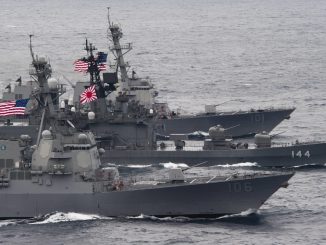
In early December 2021, Japan’s Self-Defense Force joined the U.S. armed forces for Resolute Dragon 2021, which the U.S. Marines called the “largest bilateral training exercise of the year.” Major General Jay Bargeron of the U.S. 3rd Marine Division said at the start of the exercise that the United States is “ready to fight and win if called upon.” Resolute Dragon 2022 followed the resumption in September of trilateral military drills by Japan, South Korea, and the United States off the Korean peninsula; these drills had been suspended as the former South Korean government attempted a policy of rapprochement with North Korea.

These military maneuvers take place in the context of heightened tension between the United States and China, with the most recent U.S. National Security Strategy identifying China as the “only competitor” of the United States in the world and therefore in need of being constrained by the United States and its allies (which, in the region, are Japan and South Korea). This U.S. posture comes despite repeated denials by China—including by Foreign Ministry spokesperson Zhao Lijian on November 1, 2022—that it will “never seek hegemony or engage in expansionism.” These military exercises, therefore, place Japan center-stage in the New Cold War being prosecuted by the United States against China.

Article 9

The Constitution of Japan (1947) forbids the country from building up an aggressive military force. Two years after Article 9 was inserted into the Constitution at the urging of the U.S. Occupation, the Chinese Revolution succeeded and the United States began to reassess the disarmament of Japan. Discussions about the revocation of Article 9 began at the start of the Korean War in 1950, with the U.S. government putting pressure on Japanese Prime Minister Shigeru Yoshida to build up the army and militarize the National Police Reserve; in fact, the Ashida Amendment to Article 9 weakened Japan’s commitment to demilitarization and left open the door to full-scale rearmament.

Public opinion in Japan is against the formal removal of Article 9. Nonetheless, Japan has continued to build up its military capacity. In the 2021 budget, Japan added $7 billion (7.3 percent) to spend $54.1 billion on its military, “the highest annual increase since 1972,” notes the Stockholm International Peace Research Institute. In September 2022, Japan’s Defense Minister Yasukazu Hamada said that his country would “radically strengthen the defense capabilities we need….To protect Japan, it’s important for us to have not only hardware such as aircrafts and ships, but also enough ammunition for them.” Japan has indicated that it would increase its military budget by 11 percent a year from now till 2024.

In December, Japan will release a new National Security Strategy, the first since 2014. Prime Minister Fumio Kishida told the Financial Times, “We will be fully prepared to respond to any possible scenario in east Asia to protect the lives and livelihoods of our people.” It appears that Japan is rushing into a conflict with China, its largest trading partner.

This article was produced by Globetrotter. Vijay Prashad is an Indian historian, editor, and journalist. He is a writing fellow and chief correspondent at Globetrotter. He is an editor of LeftWord Books and the director of Tricontinental: Institute for Social Research. He is a senior non-resident fellow at Chongyang Institute for Financial Studies, Renmin University of China. He has written more than 20 books, including The Darker Nations and The Poorer Nations. His latest books are Struggle Makes Us Human: Learning from Movements for Socialism and (with Noam Chomsky) The Withdrawal: Iraq, Libya, Afghanistan, and the Fragility of U.S. Power.

Strugglelalucha256
https://www.struggle-la-lucha.org/around-the-world/page/36/