
The U.S. House of Representatives voted 216-212 on July 22 for legislation that would write the merger of U.S. and Israeli military industry into permanent law.
Section 219 of the fiscal 2027 National Defense Authorization Act would create a United States-Israel Defense Technology Cooperation Initiative. A Pentagon executive agent, answering to the secretary of defense, would direct joint research, development, testing and industrial production between the two militaries.
The House Rules Committee blocked an amendment from Reps. Thomas Massie of Kentucky and Ro Khanna of California that would have struck the section. It allowed two cosmetic changes in its place. One deleted the word “integration” from the text. The other extended reporting to Congress for as long as the executive-agent position exists. Neither touched the Pentagon executive agent or the joint production lines it would oversee.
Both were swept through by voice vote, buried in a package of more than 50 amendments, with no recorded vote of any kind. The House struck the word “integration” and left the integration in place.
A permanent joint war industry
The vote came nearly five months into the U.S. war on Iran. The renewed bombing paused after 13 straight nights of U.S. strikes through July 23. Trump said the halt was intended to give negotiations with Tehran room to proceed, even as Washington threatened an assault larger than the war’s opening campaign if the talks failed. Iran likewise suspended retaliatory attacks for as long as the U.S. pause continues. The reciprocal pause has now lasted two days, but no formal ceasefire has been announced.
Washington is preparing for a war whose reach and demands continue to grow. Section 219 would make the military industry of Israel, a garrison state of U.S. imperialism in West Asia, a permanent part of that preparation.
Instead of relying only on annual military aid, Section 219 would build a permanent joint military-industrial base. The Pentagon and U.S. military contractors would direct one side. Israeli military industry would operate on the other. Built to outlast any one administration, the arrangement would make withdrawal harder for any future president.
The Senate bill says ‘integration’
The corresponding provision in the Senate bill is Section 1217. It does not establish the Pentagon executive-agent position contained in the House bill, but it lays out substantially the same program. It calls for Israeli-origin technology to be integrated into U.S. military systems and for joint ventures, licensing agreements and U.S.-based production with Israeli military companies. It calls for joint training, information sharing, network integration and data fusion. Its required reports would recommend any further authority needed for the “long-term integration of joint capabilities” between the two states.
The two bills differ over the machinery. They agree on the destination.
Who commands whom
Some of the loudest opposition to Section 219 comes from the right, which argues that Israel and its lobby have seized control of Washington and dragged the United States into a war against its own interests. Netanyahu himself has fed that reading. In a June 1 letter to a member of Congress, the Israeli prime minister claimed the shift from aid to partnership as “my plan.”
But Netanyahu wanting something does not mean Israel runs Washington. U.S. aid to Israel has grown unpopular as the images from Gaza pile up. Washington’s answer is to hide the aid, not end it — to bury it inside weapons contracts and joint factories where the public can’t see it and Congress can’t easily cut it. Netanyahu backs that plan because it keeps the weapons flowing. Washington writes it into law because a joint war industry serves a U.S. war. Israel asking to be tied more tightly to the U.S. war machine is not Israel commanding it.
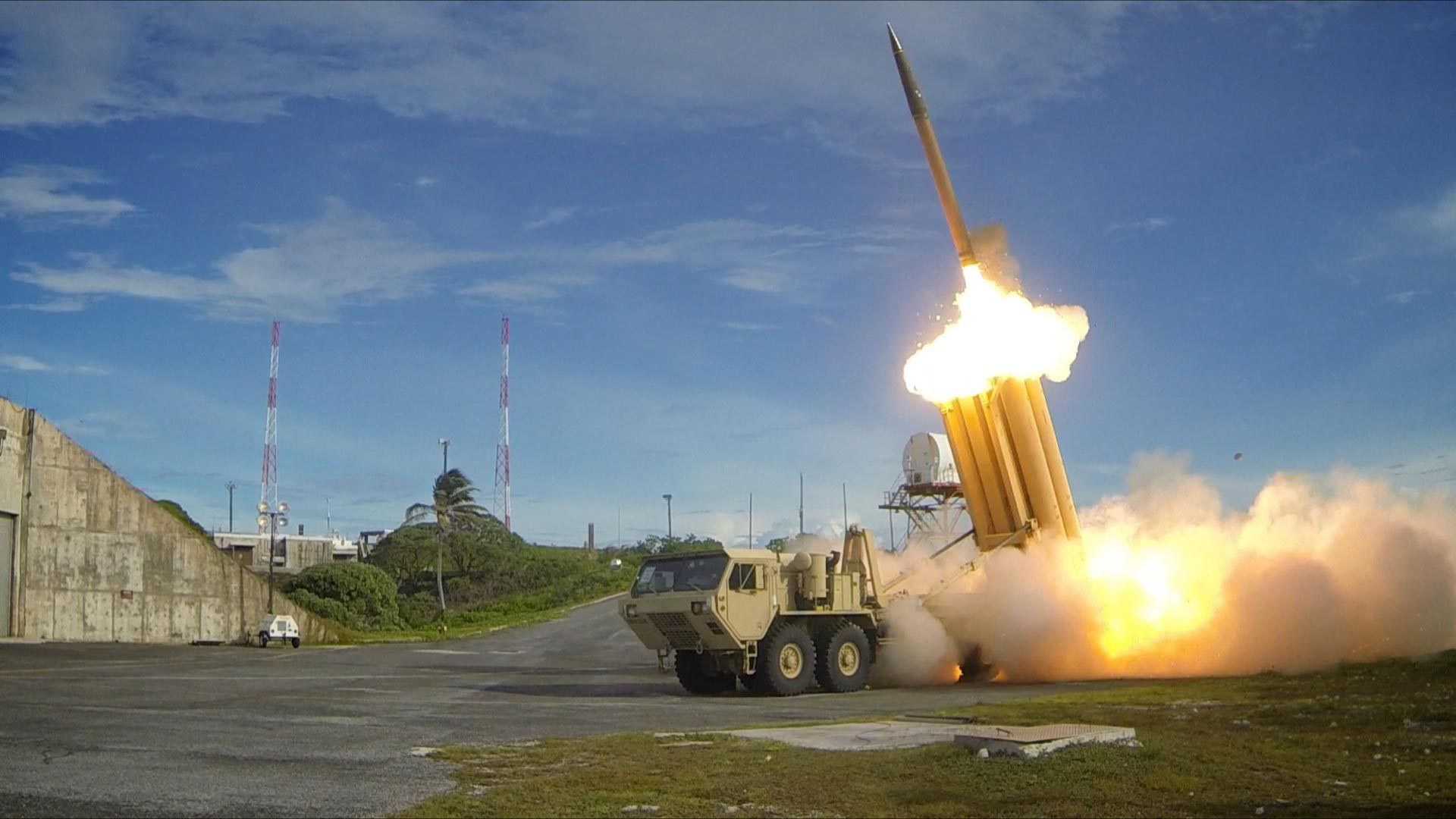
The war on Iran has shown how complete that dependence is. When Iran struck back at Israel, U.S. forces engaged twice as many incoming missiles as Israel’s own forces did and expended roughly half of the Pentagon’s THAAD interceptor inventory in the process. Israel was running short and told Washington so. A U.S. official put it plainly to The Washington Post: Israel can’t fight and win a war on its own, but the public never sees it, because they never see “the back end.” In one 24-hour stretch in late April, the U.S. shipped Israel 6,500 tons of bombs and equipment.
Israel cannot sustain a major war without U.S. weapons, missile defense and resupply. During Israel’s June 2025 attack on Iran, its aircraft and weapons could not reach the deepest fortified nuclear sites. The United States carried out that part of the war itself, sending seven B-2 bombers to drop 14 30,000-pound Massive Ordnance Penetrators.
U.S. pilots flew that mission. Israel’s warplanes are American-built. Its bunker-busting bombs are American-made. Its missile-defense systems depend heavily on U.S. financing, technology, components and joint production. And since the war on Gaza began in October 2023, Washington has quietly sent Israel more than 100 separate weapons shipments, each kept just under the size that would require telling Congress.
A garrison that depends on the empire for large-scale replenishment and its hardest missions does not command the empire that arms it.
Israel already holds the ultimate weapon. It built a nuclear arsenal decades ago with Western help, and Washington has shielded it ever since — never officially acknowledged and never placed under international inspection or IAEA safeguards. The U.S. makes war on Iran over the bomb Iran does not have while guarding the one its garrison already keeps.
The lobby and the ruling class
The pro-Israel lobby is real, and it spends. All four sponsors of the U.S.-Israel FUTURES Act, the bill whose language became Section 219, have taken substantial support from the American Israel Public Affairs Committee and allied donors. When Massie broke with the war and with the aid, AIPAC’s super PAC and two allied pro-Israel groups spent more than $15.8 million to defeat him, part of a record $32 million spent on the race. He lost.
But the lobby acted for the ruling class, not against it. Massie’s challenger was Trump’s handpicked candidate. Reporting on the election found the president’s hostility drove Republican voters as much as the money did. The lobby moves when it lines up with the war aims of U.S. monopoly capital. It is an instrument of that policy, not a foreign hand steering it from outside.
The liberal opposition makes a softer version of the same mistake. The Massie-Khanna amendment drew support from Democrats including Reps. Jim McGovern, Jesús “Chuy” García and Rashida Tlaib. Rep. Alexandria Ocasio-Cortez called Section 219 an “existential threat” to U.S. sovereignty. Sen. Bernie Sanders objected that Congress should not tie Israel closer than a NATO ally. Each of them treats the danger as the U.S. surrendering its sovereignty to Israel. It is the reverse. Section 219 does not give U.S. power away — it hardens the machinery of U.S. imperialist war.
Built for a wider war
Washington entered the war on Iran to defend U.S. control of oil, the shipping lanes that carry it, the dollar system and U.S. imperialist power throughout West Asia. Israel is an instrument of that project. That is why Washington wants more than an ally cashing an annual check. It wants Israeli weapons production fused to the Pentagon and available for a longer and wider war.
Section 219 grew out of the U.S.-Israel FUTURES Act, introduced in the House by Republican Rep. Ronny Jackson of Texas and Democratic Rep. Don Davis of North Carolina, with Senate companions from Republican Ted Budd of North Carolina and Democrat Kirsten Gillibrand of New York. The sponsorship is bipartisan because the policy is bipartisan. The merger of the two war industries serves the U.S. ruling class and the war plans both parties carry out.
The Senate has not passed its defense bill. A July 14 vote to advance S. 4784 failed 50-46, and Majority Leader John Thune withdrew a second motion to proceed on July 23. The chamber returns July 27. No House-Senate conference has begun, and Section 219 is not yet law. But the Senate’s delay is no break with the policy. Its bill carries the same initiative and states the goal openly: long-term integration of U.S. and Israeli military capabilities.
The House vote was not Israel taking control of the U.S. war machine. It was the U.S. war machine voting to lock its forward base more tightly into place for the wars ahead.
Join the Struggle-La Lucha Telegram channel