
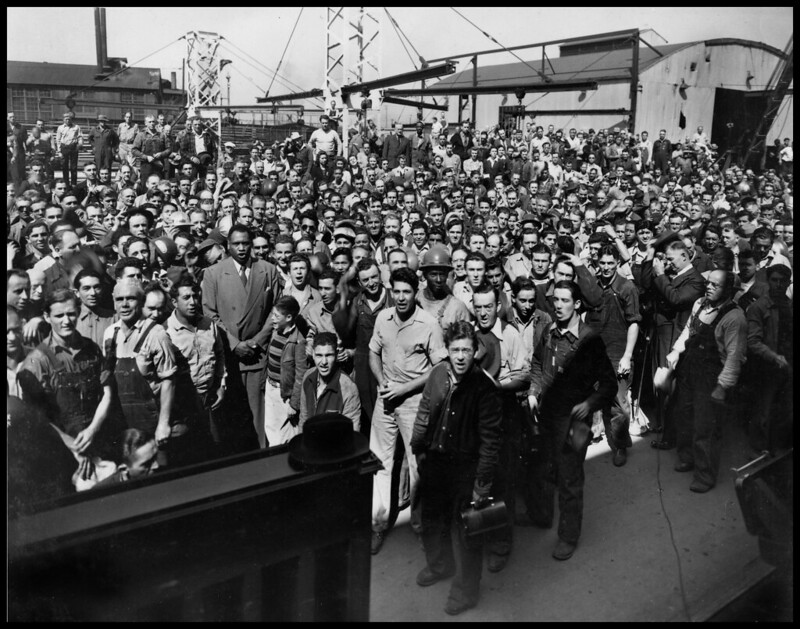
On June 30, Denver voters ended the 30-year congressional career of Diana DeGette. They gave the Democratic nomination in Colorado’s 1st District to Melat Kiros, a 29-year-old barista, first-time candidate and member of the Democratic Socialists of America. Kiros was fired from her corporate law job in 2023 for speaking out against the U.S.-backed genocide in Gaza. The district is heavily Democratic. She is expected to win the general election and enter Congress in January.
The same night, state Sen. Julie Gonzales, a former DSA member, mounted a serious statewide challenge to two-term Sen. John Hickenlooper. U.S. Sen. Michael Bennet, a fixture of the Washington establishment for nearly two decades, lost the party’s nomination for governor to Attorney General Phil Weiser.
Colorado follows New York, where on June 23 three congressional candidates backed by Mayor Zohran Mamdani, two of them DSA members, won their primaries. Claire Valdez, a United Auto Workers organizer, won decisively in the Brooklyn-Queens district. Darializa Avila Chevalier, who came to politics through the Palestine solidarity movement, unseated Rep. Adriano Espaillat, an Upper Manhattan machine politician who had called to abolish ICE while voting to fund ICE and backing U.S. military aid for Israel’s genocidal war on Gaza. A DSA member, Janeese Lewis George, won the Democratic primary for mayor of Washington, D.C. — tantamount to election in the capital. Candidates calling themselves democratic socialists have won races in Seattle, Minneapolis, Detroit and other cities.
When the new Congress is seated in January, DSA’s members in the House are set to number six. Valdez, Avila Chevalier and Kiros, along with Chris Rabb, who won his Philadelphia primary in May, will join Alexandria Ocasio-Cortez and Rashida Tlaib.
That is a larger organized socialist bloc than the Farmer-Labor Party held at its peak in the mid-1930s — the previous high-water mark for the left in Congress. At least three of the incoming members were carried into politics by the mass movement against the U.S.-backed genocidal war on Gaza.
U.S. capitalism has put its full weight behind making socialism unspeakable. In 2026, millions hear the word and vote for it. The ruling class understands what happened. Their fear is not about one primary night.
‘A bigger threat than Pearl Harbor’
Trump said it out loud on July 1, standing in the new Theodore Roosevelt Presidential Library in North Dakota, where he praised Roosevelt as “a ferocious opponent of a thing called communism.”
“It’s the biggest threat to our country, including World War I, World War II, Pearl Harbor, September 11,” Trump said. “It’s a bigger threat, potentially a bigger threat than that, because it’s like a cancer that spreads, and you better stop it fast.”
The hysteria aside, Trump is stating a class truth. For the capitalist class, war is a means of profit, plunder and control. A working class that has stopped believing in capitalism is a mortal threat because it begins to question the property relations behind that profit and control. Trump ranks the dangers correctly — for his class.
The whole Republican leadership is on message. Vice President JD Vance warns of communism as “something we haven’t seen in the U.S.” House Speaker Mike Johnson denounces “self-described, self-identifying Marxists.” The Associated Press observes that the red-baiting drive gives Republicans a way to change the subject after a year spent on the defensive over the war on Iran and the price spikes it set off.
The billionaires’ newspapers have long hammered the same message into the working class — and when the message failed, the state supplied the force. Joe Hill was shot by a Utah firing squad in 1915 for organizing workers and writing songs. The Palmer Raids of 1919-20 jailed thousands of radicals and filled the deportation ships. Sacco and Vanzetti went to the electric chair in 1927; Julius and Ethel Rosenberg in 1953. The purges in the studios, the schools and the shops, the loyalty oaths, the McCarthy hearings and the Cold War textbooks did the daily work, and when a new generation found its way back to revolutionary politics anyway, the FBI’s COINTELPRO answered with assassination and frame-up — Black Panthers and Black liberation fighters murdered, jailed on manufactured evidence, driven into exile. Chicago police, working from an FBI floor plan, murdered 21-year-old Fred Hampton in his bed on Dec. 4, 1969. Mark Clark died with him.
It was the most sustained campaign of repression and ideological conditioning in U.S. history, and it has stopped working.
It’s not a mystery why. The lesson came from life. A generation priced out of housing and buried in medical debt watched Washington arm the genocide in Gaza. It watched masked ICE agents drag neighbors from their homes and federal troops occupy U.S. cities. It watched Washington kidnap the president of Venezuela on Jan. 3. It has paid for the war on Iran every week since at the gas pump and the grocery store. It watched the president and his family collect billions in office. People drew the conclusion the facts demanded: The wars, the raids and the rents all flow from one source — the profit system.
Housing is organized for landlords and real estate capital. Health care is organized for hospitals, insurers, pharmaceutical monopolies and creditors. War feeds the military contractors and defends U.S. control over oil, trade and the dollar. Deportation raids drive down wages by keeping immigrant workers in fear, and divide the working class.
The alternative is socialism.
The Democrats reach for the purge
The Democratic leadership reads the moment the way Trump does. In June, 13 House Democrats led by Reps. Tom Suozzi of New York and Adam Gray of California unveiled a pledge titled “Promise to America.” Its first principle: “We are capitalist, not socialist.” The rest follows the same catechism — “We are responsible, not reckless,” “We want safety, not lawlessness” — secure borders, fiscal discipline, “confident patriotism.”
The Democratic Party’s own voters lean the other way. Even Gallup — no friend of socialism — finds 66% of Democrats viewing socialism favorably, against only 42% for capitalism.
With the old red-baiting script, Rep. Josh Gottheimer of New Jersey, one of the signers, called the Colorado and New York results “aberrations.” “We’ve got to fight like hell to keep our party from being hijacked by socialists,” he said. “Most of them are bomb throwers, not problem solvers.”
The last time socialists and communists gained real ground in the working class, both capitalist parties answered with a purge. Today’s pledge-signers are reaching for that same playbook.
In March 1947, Democratic President Harry Truman ordered loyalty investigations of every federal worker. Three months later came the Taft-Hartley Act, forcing union officers to swear they were not communists. The Smith Act — used first, in 1941, to imprison the socialist leaders of the Minneapolis Teamsters — sent the country’s leading communists to prison in 1949. Washington spent two decades trying to deport longshore leader Harry Bridges and did deport the Trinidad-born communist Claudia Jones. Paul Robeson’s passport was seized. W.E.B. Du Bois, 83 years old, was arraigned in handcuffs.
Understand who was being purged. The CIO’s top leadership was a mix of liberals and pragmatic trade unionists, but the unions themselves were built by communists and socialists. Communist organizers had been doing that work for a decade before the CIO existed — organizing the unemployed councils, leading strikes, building unions in industries the American Federation of Labor refused to touch. In 1934, revolutionary socialists led the Minneapolis Teamsters strikes that broke the open shop and made Minneapolis a union town — one of the three great strikes of that year, alongside the San Francisco longshore general strike and the Toledo Auto-Lite strike, that opened the road to mass industrial unionism. The AFL organized the skilled crafts and barred the door to everyone else. Industrial unionism threw the door open: the unskilled workers of the factory floor — women, workers of color, immigrants, the whole mass-production workforce the craft unions had shut out — were organized into unions of their own. When John L. Lewis set out in the 1930s to organize steel, auto, rubber and electrical manufacturing, he hired hundreds of communists as organizers, because they were the militants willing and able to do it.
By 1950, under pressure from the U.S. government, the CIO had expelled 11 unions with a million members and driven communists from the affiliates that remained — expelling the organizers who had organized the unorganized and fought Jim Crow on the shop floor. Both capitalist parties ran the purge together, and the Democrats’ liberal heroes led from the front: Hubert Humphrey went on to sponsor the 1954 law that outlawed communist organization outright.
The purge beheaded the U.S. labor movement and cut the throat of the alliance between labor and Black liberation. It removed the organizers who understood the fight against the boss and the fight against racism as one fight. That defeat helped prepare 80 years of retreat: falling union density, wage stagnation, the rust belt, the gig economy. The conditions that drove Denver to vote for a socialist on June 30 grew out of that defeat.
They would rather run the anticommunist purge again — and lose to Trump again — than permit a socialist voice within their party or an organized working class outside it.
Red-baiting with teeth
Trump’s anticommunist “cancer” talk is more than talk. The machinery for “stopping it fast” is already running.
Fifteen organizers of the January general strike in Minneapolis face federal indictment under National Security Presidential Memorandum 7, which directs the federal counterterrorism apparatus against domestic political movements. Protesters at the Prairieland detention center in Texas were sentenced to a combined 450 years.
ICE has carried out the largest arrest surge in the agency’s history, feeding a detention industry that pays dividends to GEO Group shareholders.
Trump called Zohran Mamdani a communist and threatened to deport him in the same breath — a U.S. citizen, born in Uganda to South Asian parents. That is how the anticommunist label works: fused to the racist attack, it becomes the legal spearhead of repression.
The movement he calls a cancer is multiracial and heavily immigrant — a Muslim mayor of New York, an East African woman headed for Congress from Denver, and a socialist who unseated an Upper Manhattan machine politician. The label does the work the evidence cannot. It will be aimed at every striker, every immigrant defender, every antiwar organizer — union card or party card or neither. Racism is the wedge and anticommunism is the blade. They are one weapon, and every blow against racism strikes at the exploitation the weapon defends.
Krugman reassures the shareholders
Economist Paul Krugman published a column July 2 on his Substack titled “There Are Very Few Socialists in America.” Very few of those voting socialist really mean it, he writes; what a majority actually supports is “social democracy,” an ideology “that is OK with living in a mostly market-driven economic system in which some people make much more money than others.”
The column is addressed to capital, and its message is: Don’t worry, they don’t mean it.
They mean it. When workers say socialism, they mean health care that does not bankrupt the sick. They mean rent a paycheck can cover. They mean an end to masked agents in the streets, to troops in their cities, to wars paid for in their wages and their blood. They mean the abolition of the conditions — and the conditions are capitalism. Each demand runs into private ownership — of housing, hospitals, factories, banks, weapons plants and the state power that protects them.
Krugman’s job is to shrink the demand until it fits inside capitalism. It does not fit.
New York settled the question. In the Brooklyn-Queens congressional race, Valdez faced Antonio Reynoso, a progressive Democrat backed by the Working Families Party. Both candidates converged on the headline demands: abolishing ICE, ending the genocide in Gaza, treating housing as a human right. The difference on the ballot was that Valdez ran openly as a democratic socialist, backed by a socialist organization — and free of the real estate money Reynoso took. She won by more than 20 points. Voters were offered progressive policy without the banner and progressive policy with it. They chose the banner.
The rest of the press ran Krugman’s operation from the other end. Politico and the New York Daily News judged that the challengers and the incumbents were nearly indistinguishable on policy — setting aside Israel. Setting aside Israel: as if funding a genocide were a footnote. For the voters it was the heart of the matter, and the incumbents who armed the slaughter answered for it at the polls.
The ballot is a barometer
A vote registers consciousness. It does not create power. The June 30 results are the electoral echo of struggles already underway: the Minneapolis general strike, the NewYork-Presbyterian nurses’ picket lines, the JBS meatpackers, the immigrant defense committees that turned out whole neighborhoods against ICE, the millions in the streets against genocide, deportations and war. The movement built the consciousness. The primaries recorded it — and organization carried it to the polls. Tens of thousands of volunteers turned out for the socialist campaigns; by NYC-DSA’s own count, they knocked on 720,000 doors across the city.
The returns also showed who is moving. The New York Times’ Thomas Edsall assured his readers that DSA’s voters are a professional elite with no claim on the name of the working class. The precinct maps answer him. Avila Chevalier won Black voters in Harlem — the historic capital of Black America — against a 10-year incumbent. Valdez carried every age bracket and every racial group in her district. Even Politico conceded that the socialists won younger Latine voters in Brooklyn and a majority of Black voters in Harlem, and that the results point toward a lasting reorientation of the electorate. These are the same neighborhoods — Harlem, the South Bronx, Jackson Heights, Central Brooklyn — that delivered Mamdani’s million votes in November 2025, while Sutton Place and Howard Beach went for Cuomo. The coalition did not appear in June. It held, and it extended. That alliance is beginning to knit itself back together, and it shows first in the ballot box.
That is why the ruling class is afraid. Politicians can be pressured, co-opted, purged — 1947 proved it. The ballot itself is under attack: the Supreme Court’s dismantling of the Voting Rights Act and the rigged district maps that follow are aimed above all at Black political power — the heart of the coalition now showing itself in the returns. A working class organized in its workplaces and communities, conscious of itself as a class, is a different problem. It cannot be redistricted. No purge reaches it if the class defends its own.
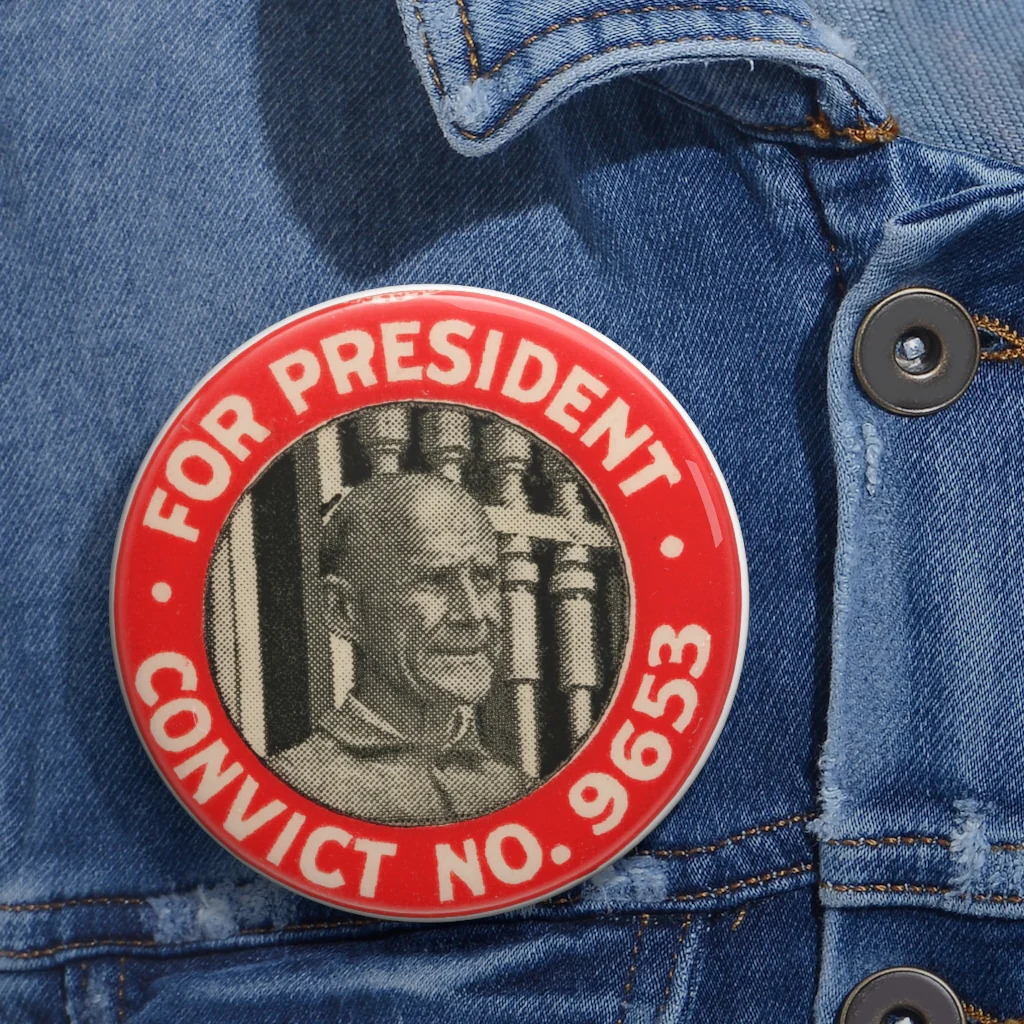
There is a long U.S. tradition here, whatever the schoolbooks say. In 1920, Eugene Debs ran for president from a cell in Atlanta federal prison, convicted for opposing the first imperialist world war, and nearly a million people voted for him. Socialism was beaten out of the U.S. working class with clubs, purges and prisons.
It is returning because capitalism has again produced the conditions that drive workers toward socialism: wealth more concentrated than at the 1929 peak, insecurity, debt, war, repression and the open rule of profit over human need.
Trump says stop it fast. A century of anticommunism could not stop it. The strikes, the walkouts, the neighborhood defense lines and now the ballots all say the same thing: The U.S. working class is finding its way back to its own banner.
Join the Struggle-La Lucha Telegram channel