
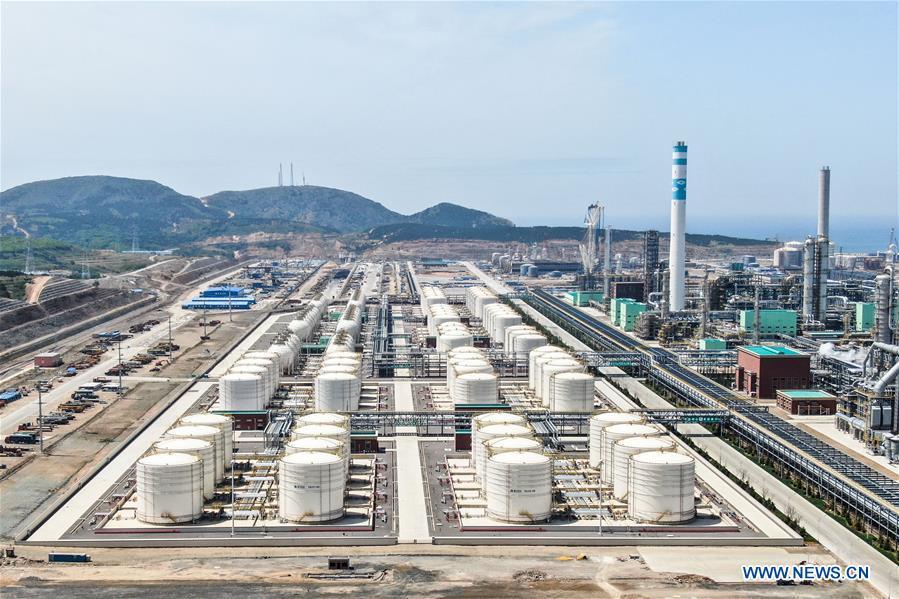
China has directly challenged the U.S. sanctions campaign against Iran, ordering all Chinese firms and individuals to ignore U.S. penalties targeting five oil refineries accused of buying Iranian crude.
China’s Ministry of Commerce invoked its 2021 Blocking Statute on May 2 — the first time Beijing has ever used the law. The order was issued by China’s Ministry of Commerce and reported the next day in People’s Daily, the Communist Party’s official newspaper. Its language is unambiguous: The U.S. sanctions targeting the five refineries “shall not be recognized, shall not be enforced, shall not be complied with.”
The targeted refineries were sanctioned under Operation Economic Fury, the Treasury Department’s economic warfare campaign against countries and firms buying Iranian oil, sharply escalated since the war began Feb. 28. Among the five named is Hengli Petrochemical — not a small independent processor but one of China’s largest integrated refining complexes, with annual crude capacity of 20 million tons.
Washington imposed the sanctions under two executive orders, EO 13902 and EO 13846. The ministry called the measures “illegal” extraterritorial overreach — Washington attempting to police what Chinese companies do inside China, with Chinese counterparties, using non-dollar transactions.
U.S. sanctions are not neutral regulations. They are one of the operating systems of U.S. imperialism. Washington uses control over banks, shipping, insurance, dollar clearing and access to the U.S. market to punish countries that sell oil, companies that buy it and financial institutions that handle the trade. The sanctions against the five Chinese refineries are meant to scare away banks, traders, shippers and insurers. China’s order strikes at that machinery. It tells companies and banks under Chinese jurisdiction: Washington put these refineries on a sanctions list; China says keep dealing with them.
China is Iran’s dominant oil customer. Analysts tracking Iranian crude exports put China’s share at around 90%. Beijing has not merely refused to comply with the sanctions — it has told Chinese firms to treat Washington’s penalties as invalid, clearing the ground for the trade to continue.
The move creates a direct legal conflict for any multinational firm or financial institution operating in both markets. Comply with U.S. sanctions and violate Chinese law. Comply with Chinese law and face U.S. secondary sanctions. For firms whose primary market is China, the calculation is not difficult.
Washington now faces an enforcement problem. It can sanction major Chinese banks that continue servicing the affected refineries — an escalation that would send shockwaves through global financial markets and effectively constitute a financial war against China. Or it can back down and absorb the enforcement failure, watching the credibility of Operation Economic Fury — and the extraterritorial reach of Washington’s dollar-centered financial weapon — take a permanent hit.
Neither option is clean. The Trump administration has a summit with Chinese President Xi Jinping on the near horizon. Sanctioning major Chinese banks in the weeks before the summit would poison the meeting before it began. But letting the defiance stand without consequence signals to every country watching that U.S. secondary sanctions have limits Beijing can enforce.
The Blocking Statute itself has existed since 2021, written precisely for this moment — a legal instrument designed to give China the tools to push back against extraterritorial U.S. financial coercion. For five years it sat unused. The Iran war is what finally put it into motion.
The sanctions campaign against Iran was premised on the assumption that no major economy would openly defy it. That assumption no longer holds.
Join the Struggle-La Lucha Telegram channel