
Washington is selling Trump’s announced two-week ceasefire with Iran as a diplomatic victory. In reality, it looks like a retreat dressed up as a deal, following a U.S. operation near Isfahan that appears to have gone badly wrong.
Iran and the U.S. are not describing the same terms because Washington did not emerge from the confrontation in a position to dictate them. Tehran says it retains control over passage through the Strait of Hormuz, including the right to charge fees. Trump is presenting this as a pause in his threat to “end Iran as a civilization,” tied to reopening the Strait on terms Iran has not accepted.
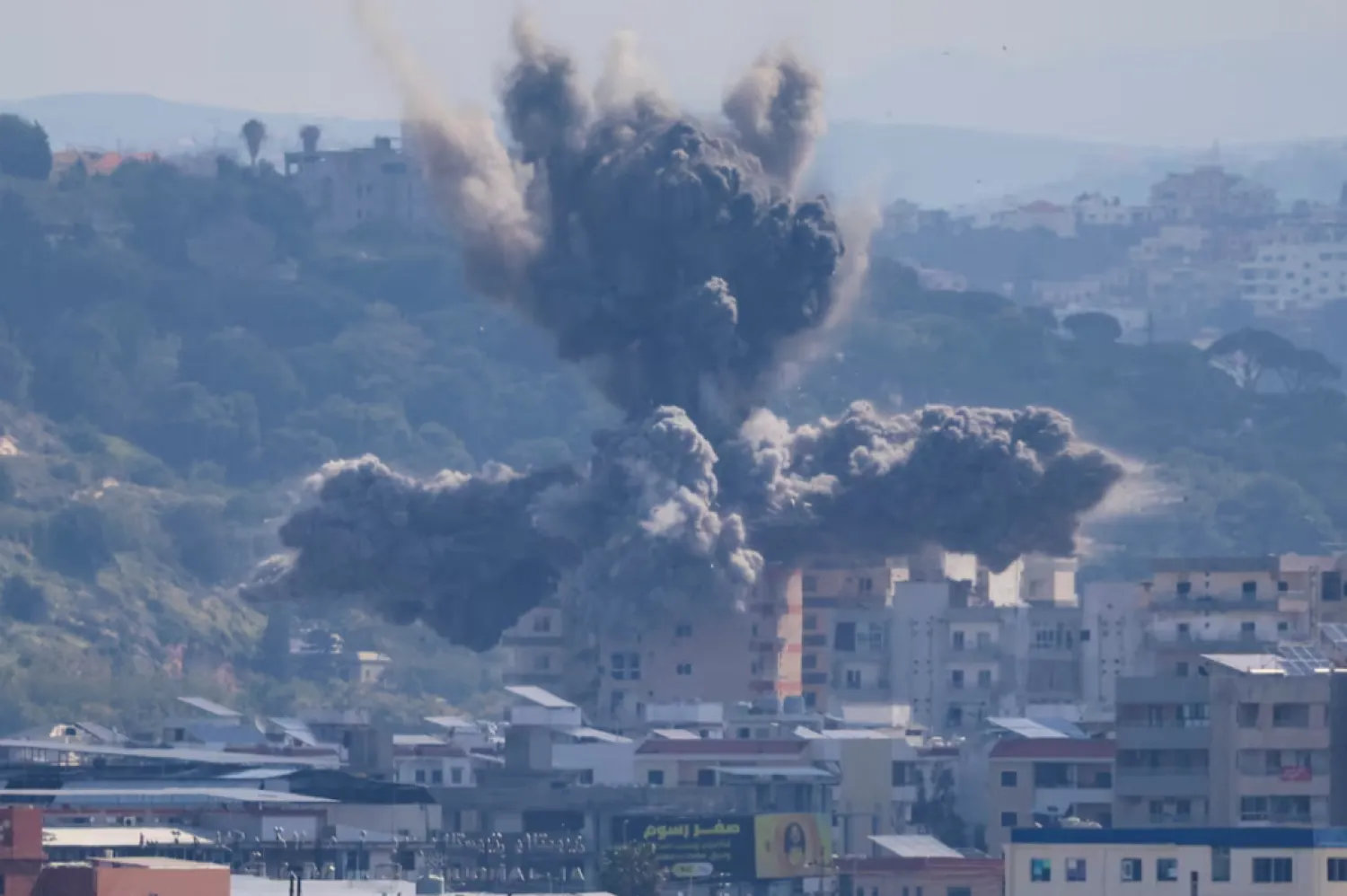
Iran’s terms go beyond a U.S.-Iran pause. They call for an end to all hostile action, including Israeli attacks on Lebanon and Gaza and strikes on Iraq. Israel said it backed the ceasefire only as it applied to Iran — and on April 8 continued some of its heaviest strikes on Lebanon.
This is not a single agreed-upon text. It is two governments announcing different terms and calling it a deal.
What Washington is calling a ceasefire looks more like a retreat it was forced to disguise — particularly after what appears to have been a serious military setback near Isfahan. Twenty-four hours earlier, Trump was threatening to “end Iran as a civilization over a four-hour period.” Iran is a country of 94 million people.
The threat was not a metaphor. Carried out, it would have meant genocidal mass killing. Stepping back from that brink is not a diplomatic achievement. It is the bare minimum after a threat of a monstrous criminal apocalypse.
But what happened at Isfahan remains an open question, and Iran’s account has received almost no serious airing in the U.S. press.
What Iran says happened
The U.S. has acknowledged only part of what happened near Isfahan. An F-15E was shot down over central Iran. A large rescue mission involving dozens of aircraft and special operations forces operating inside Iranian territory recovered the surviving crew member. Two C-130 transports were then destroyed on the ground to prevent capture. Trump still celebrated the operation as a triumph.
Iran tells a sharply different story.
Iranian Revolutionary Guard commanders and Foreign Ministry officials say their air defenses shot down the F-15E and then repelled a much larger follow-on U.S. operation that escalated into air and ground combat on Iranian soil.
Iranian military briefings say their forces destroyed the two transport aircraft and other U.S. helicopters and drones. How many and what types are still disputed, and Washington has not confirmed them.
Iran also claims it struck U.S. positions in Kuwait and the UAE during the same period and caused dozens of casualties.
Struggle-La Lucha cannot independently verify these claims, and the U.S. has confirmed only the loss of the F-15E and the destruction of the two disabled transports.
Iran’s account goes beyond aircraft losses to the question of what the operation was for. Iranian military officials have accused the U.S. of using the rescue mission as cover for an attempt to seize enriched uranium near Isfahan. Foreign Ministry spokesperson Esmaeil Baghaei was more measured, saying that explanation “should not be ruled out.” Iranian officials note that southern Isfahan, where multiple U.S. aircraft reportedly came down, sits near a key node in Iran’s 60% enriched uranium program. In their telling, U.S. forces were driven off before they could achieve their objective.
Tehran is drawing a broader political conclusion: that Washington has abandoned any genuine interest in diplomacy and is combining military force with deception against Iran’s nuclear program. On that basis, Iran first rejected Trump’s proposal and later agreed only to terms that differ sharply from Washington’s version of the deal.
Whether or not Iran’s full account proves accurate, the scale of the U.S. operation and the abrupt turn to a ceasefire suggest Washington hit limits it could not acknowledge without exposing the weakness behind its threats.
That pressure extends beyond Isfahan. An investigation by The Intercept found that nearly 750 U.S. troops have been killed or wounded in the region since October 2023, with one defense official calling it a “casualty cover-up” by U.S. Central Command.
What is being presented as a diplomatic success looks instead like an attempt to contain a war where Washington’s threats ran ahead of what it could actually carry out.
Join the Struggle-La Lucha Telegram channel