
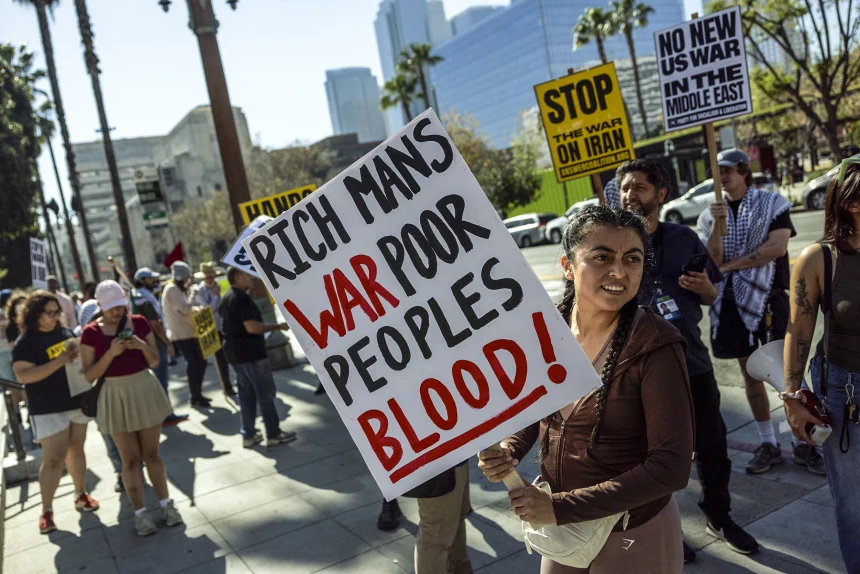
JPMorgan Chase chairman and CEO Jamie Dimon has broken with the careful silence most corporate executives have maintained since Operation Epic Fury began. In an interview with “The Axios Show,” the leader of the largest bank in the United States came out plainly in favor of a war that was unpopular from the start and has only grown more so, with nearly two-thirds of the people now opposed.
“Having those folks, their grip on the Strait of Hormuz and funding all these proxy wars — why the Western world put up with these proxy wars for 45 years is kind of beyond me,” Dimon told Axios CEO Jim VandeHei.
The comments are notable not just for their candor, but for who is making them. Most ruling-class figures have hedged, citing economic uncertainty or the need for diplomacy. Dimon skipped that. When the head of the country’s biggest bank backs the war, finance capital is no longer hiding behind diplomatic language. He acknowledged the war creates short-term risk for oil prices and market stability. He said he is “praying it ends well.” Then he endorsed it anyway.
His reasoning was not about law or any immediate threat. It was simpler than that: Iran has resisted U.S. domination for too long. Dimon said critics who argue there was “no imminent threat” from Iran are simply saying “the bad thing hasn’t happened” yet. “They were bad,” he said.
Dimon is a registered Democrat and longtime donor to the party — which makes his endorsement more telling, not less. His willingness to defend the war publicly at his bank’s new Manhattan headquarters shows how openly sections of the ruling class are now prepared to do so across party lines.
What Dimon left out is the part that explains everything else.
Of all the wars the U.S. ruling class has ever waged, few make the motive so plain. Iran holds roughly 17% of the world’s natural gas reserves and 12% of its oil — fourth or fifth largest on the planet. Those resources once flowed directly into U.S. corporate coffers. The 1979 revolution ended that. Washington has never accepted the loss.
The U.S. is an imperialist power, and before 1979 Iran was a neocolony ruled by a monarchy Washington helped install and protect. That is the history behind the war. In 1953, the CIA helped overthrow Prime Minister Mohammad Mosaddegh after he nationalized Iran’s oil. The aim now, as then, is to bring Iran’s energy wealth back under U.S. domination.
Dimon said he hopes for permanent peace in West Asia. What he means is a settlement favorable to U.S. capital. Those are not the same thing. They never have been.
Join the Struggle-La Lucha Telegram channel