
The war on Iran is showing up at the gas station.
Prices started moving within days of the first U.S.-Israeli strikes on Iran on Feb. 28. What had been just under $3 a gallon pushed toward $3.50 in about a week and kept climbing. By the third week, the national average was around $3.72 — roughly 80 cents higher than a month earlier.
That’s another $10 to $15 to fill a tank. For Big Oil, it’s a windfall.
To see why, follow the fuel.
The chain
Crude doesn’t move through one market. It passes through a chain of operations dominated by large oil companies, each taking a share.
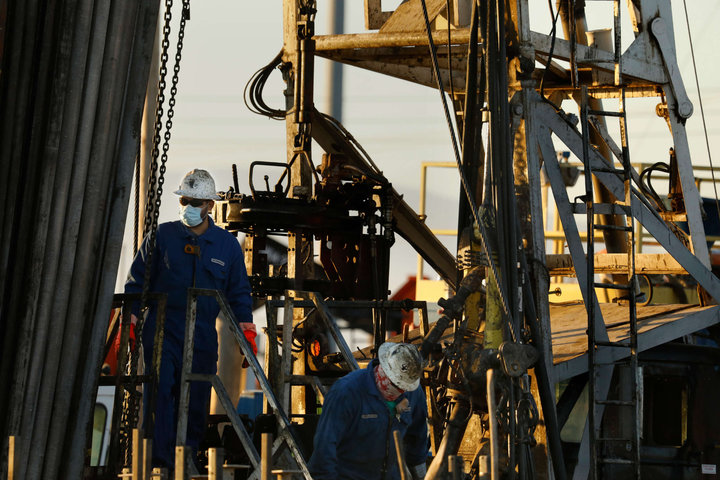
At the wellhead, workers extract oil using machinery. The cost doesn’t change when crude prices spike. But the price of that oil does. Oil companies collect more for the same work. That’s where the extra profit comes from.
The spike
Just before the war, Brent crude was around $73 a barrel. Within days it moved into the $80s. As fighting spread and shipping through the Strait of Hormuz came into question, it broke past $100 and briefly neared $120.
Some supply has been disrupted. At the same time, traders and speculators are pushing prices higher in anticipation that shipments could be cut or delayed.
Refiners pay those higher prices immediately. Wholesale gasoline follows within days.
The next delivery will cost more. Prices go up right away.
At the pump
There’s a rough rule: A $10 jump in crude adds about 25 cents per gallon. The $30–$40 increase in the first weeks of the war works out to roughly 70 to 90 cents more.
That’s what drivers are seeing.
Prices are not set independently at each station. Big Oil and the companies tied to it rely on shared pricing software used across competing stations. These systems use algorithms to track nearby prices and adjust them automatically, often within minutes.
Prices move together because the same systems are setting them. When crude rises, prices move up quickly across entire areas. When crude falls, they come down more slowly and tend to stay elevated.
The take
Oil prices jumped as the war began, and higher costs reached the pump within days.
The biggest profits are taken before the fuel ever reaches the pump.
A barrel that costs ExxonMobil roughly $35 to pull from the ground sells for $70, then $110.
The oil is the same. The work is the same. What changes is the price.
War risk and trading push prices higher, but the gains go to the companies that control production, refining and supply.
Industry estimates point to tens of billions in additional profit this year if prices stay elevated. That will go to the companies’ owners and financial backers, not to producing more fuel.
The roughnecks and refinery workers who produce the fuel are also paying more at the pump. Their wages don’t move when crude does.
Who pays
Drivers feel it right away.
Gas prices rise quickly and stay high. A few extra dollars at the pump, week after week.
Then it spreads. Higher fuel costs feed into shipping and delivery, and from there into grocery bills.
Join the Struggle-La Lucha Telegram channel