Anniversary of Russian Special Military Operation: A victory for Russia will be a victory for the international working class!

Graphic: Henry Wong

Marxists Speak Out has been working since February 2022 to bring together the communist forces internationally that support a Russian victory over NATO and support the Russian-speaking territories that have chosen to break from Ukraine. We have done so through joint statements, panels and promoting protests.

Español / 한국어 / Português / Ελληνικά / हिंदी / Française / Tagalog / Русский

Feb. 24 will mark the first anniversary of Russia coming to the aid of the people in the Lugansk and Donetsk People’s Republics, defending those in the Eastern Ukraine region that had seceded in 2014 due to the Kiev regime’s Neo-Nazi ties. German fascism was the spearhead used by imperialism to try and destroy the Soviet Union workers’ state in World War II. Fascist forces have once again been utilized by imperialism within Ukraine, this time to target the people of the Donbass and capitalist Russia. Now that the U.S./EU/NATO bloc have dropped their policy of limited intervention for open escalation, the world is once again on the brink of a destructive war between nuclear-armed powers.

For 30 years, NATO has lied to the Russian people and closed the distance between NATO-aligned countries and the Russian border. Russophobia has been a convenient cover for imperialism as it dismisses any concerns about NATO’s ambition to place weapons on the border between Russia and Ukraine as Russian aggression. We now know that every step of so-called diplomacy of the Minsk Agreement was nothing more than broken promises and opportunities to further prepare for imperialist war. Angela Merkel and former Ukrainian President Petro Poroshenko have both admitted the Minsk agreement was aimed to stall Russia so NATO could supply Ukraine with weaponry.

The fascist militias and battalions of the Ukrainian Armed Forces terrorized the citizens of Donbass between 2014 and 2022, killing thousands of civilians and ultimately leaving Russia no choice but to launch an offensive in the region to protect the Russian-speaking population. Russians have never forgotten how many of their ancestors, who fought as citizens of the Soviet Union, died to defeat Nazi Germany during WWII. Given this history, it was intolerable for many Russians to see the resurgence of the likes of Stepan Bandera gaining a foothold to threaten Russia at the behest of imperialism.

Ukraine has been propped up by imperialist forces from the beginning of the conflict and Zelensky is increasingly calling for more aid from the West: first long-range missiles, then tanks, and now fighter jets. There appears to be no “red line” the Western imperialists will not cross as they escalate the conflict. In addition to the billions of dollars in weapons, the imperialists have stooped to terrorism over the past year, blowing up the Nord Stream pipeline and launching terrorist attacks within Russian territory.

The U.S./EU/NATO alliance is prepared to destroy the working class of their own countries to undermine Russia, destabilize the region and make way for territorial conquest. Many citizens are feeling the real consequences of rampant militarism in the U.S., UK, France, and across all of Europe in the form of austerity and inflation. As many liberal forces bay for war, it is the working class that pays the price. U.S. President Joe Biden has overseen upwards of $100 billion in equipment sent to Ukraine, at a time when Americans are facing layoffs, pay cuts, and growing unrest.

A victory for the U.S./EU/NATO bloc in the current war would spell devastation for the world anti-imperialist struggle. It would likely lead to the break up of Russia and the opening up of its resources for full exploitation by Western imperialism. The removal of Russia as a military obstacle would accelerate the war drive of the U.S. against the People’s Republic of China to complete its aim to dominate the Eurasian landmass. The proxy war against Russia is inseparable from the war drive against China.

The failure of so many Marxist groups across all traditions to oppose the imperialist war against Russia has been an historic failure. However, out of this failure comes the opportunity for genuinely anti-imperialist forces to join together, overcoming traditional sectarian divides. In this way, building the struggle against the war against Russia is a stepping stone to rebuilding and uniting the international communist movement and towards the ultimate victory of socialism!

Defeat for the NATO-led imperialist alliance! Victory to the resistance! No cooperation with imperialist war!

Current Endorsers:

Anti-War West Sydney (Australia)
볼셰비키그룹/Bolshevik Group (South Korea)
Classconscious.org (U.S. and Australia)
κομμουνιστικη επαναστατικη δραση / Communist Revolutionary Action (Greece)
Liaison Committee for the Fourth International, and its sections:

Mohammad Basir Ul Haq Sinha – Socialist Republican Movement (Bangladesh)
नेशनल डेमोक्रेटिक पीपुल्स फ्रंट/ National Democratic People’s Front (NDPF) (India)
Partido Comunista do Povo Brasileiro, PCPB; (Communist Party of the Brazilian People – PCPB (Brazil)
Partido Obrero Socialista CR/ Socialist Workers Party CR (Costa Rica)
RedLine/Κόκκινη γραμμή (Greece)
Socialist Unity Party (U.S.)
Socialist Fight (Britain)
U.S. Friends of the Soviet People

Individuals

Mark Andresen (Britain)
Fábio Sobral (Brazil)
Fernando Gaebler / Organización Internacional Comunista (Brazil)
Gaukhar Datkhabayeva (Kazakhstan)
Askar Aisin (Kazakhstan)

If you would like to sign the statement, send your endorsement to: nowaronrussiaandchina@proton.me

Source: Marxists Speak Out

Strugglelalucha256


Los Angeles: Roll Back Prices Protest – No to War & Inflation, March 4 & 11

SATURDAY, MARCH 4, 2023 AT 3 PM – 5:30 PM EST
Roll Back Prices Protests – No to War & Inflation
Albertsons
3901 Crenshaw Blvd Los Angeles, CA 90008

Event by Harriet Tubman Center for Social Justice – L.A.

Are your utility rates skyrocketing along with the price of groceries, rent, and more? Join these actions at Albertsons to build for a demonstration at the nearby SoCal Gas Company payment center.

We will be demanding that Biden sign an executive order to roll back prices now!

Why? Because inflation has hit record levels this year.

Inflation’s Primary Causes? Spending Over $100 Billion Dollars on escalating war in Ukraine to expand NATO and price gouging! Both of these Biden could stop immediately.

We need unity and action. Union members, students, unemployed workers, gig workers, everyone who is living paycheck to paycheck must come together to stop this assault on our livelihoods.

On Facebook

Strugglelalucha256


Baltimore: Protest food stamp cuts, Feb. 27

MONDAY, FEBRUARY 27, 2023 AT 5 PM – 5:30 PM
Protest Food Stamp Cuts
Baltimore City Hall

Press Conference & Rally
Monday, February 27, 5 pm
City Hall, 100 Holliday Street

Emergency food stamp allotments are scheduled to end in 32 states, including Maryland, on February 28, 2023. Eighteen states already cut food stamps. On average, people will lose $82 of SNAP benefits a month. A family of four could see a cut of $328 a month. Seniors could see reductions from $281 to as little as $23 per month.

The Peoples Power Assembly, Matthew Henson Neighborhood Association, Unemployed Workers Union, and others are demanding that these cuts be restored immediately and that the program be expanded due to the continuing inflationary crisis affecting Marylanders.

Dr. Marvin ‘Doc’ Cheatham, Matthew Henson Neighborhood Association and civil rights advocate, stated, “The federal government must address this crisis, but local state and city governments can and must act too. Everyone from the Mayor to the Governor can and must find the resources to keep people from starving and suffering!”

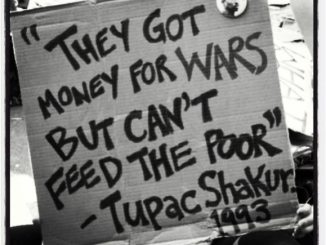
Reverend Annie Chambers, Douglas Homes housing advocate and Peoples Power Assembly organizer, declared, “They can find $100 billion for the Ukraine war, but nothing for the people. This is an outrage! Food stamps must be extended, not cut.”

Baltimore is already hard hit by food deserts and what activists are calling “Baltimore food apartheid.”

Groups have banded together in a campaign to “End Food Apartheid in Baltimore.” They are demanding that the food stamp program be expanded, including lowering requirements to allow seniors and low-wage workers more access. The campaign has called for rolling back prices, including enacting a people’s control board that has the power to freeze and roll back prices and enacting stiff penalties for price gougers.

Strugglelalucha256


Queens, NYC: Protest Fidelis Care boss Patrick Frawley, April 9

SUNDAY, APRIL 9, 2023 AT 12 PM – 2 PM
Fidelis Carens Cura – Faithful Lack of Care
95-25 Queens Blvd, Rego Park, NY

We are calling for “Father” Patrick J Frawley (Senior VP:Social Responsibility, Centene Corp / Fidelis) to renounce legalized manslaughter that he has profited from and demand that he returns to his God’s teachings of Healing Us on this Easter Sunday.

We demand that as a sign of his repentance that he join us in our fight for single payer universal healthcare as did #M4All champion Wendell Potter. One can Not call himself a “man of God” and profit off denying the poorest among us Medicaid, the healthcare we need to live!

Strugglelalucha256


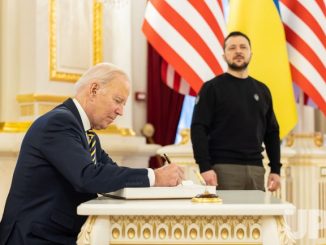
Biden in Kiev: reality of the ‘global’ war

Feb. 21 — Of late, Ukraine’s Western allies, which include some of the world’s major military powers, have admitted the difficulties they are experiencing in securing supplies of weapons and especially ammunition for a war unmatched by any conflict in which they have participated in recent years. 

Accustomed to conflicts with a great imbalance of forces, in which they have been able to impose their air superiority and artillery power over militias, guerrillas and smaller armies that they have faced – and whom they have not always been able to defeat – Ukraine’s Western allies now face, albeit in a subsidiary way, a well-armed army supported by a country with the military capacity to supply its armed forces in a long conflict.

In the year since the Russian military intervention, Kiev and its partners, especially Washington, London and Brussels, but also the smaller capitals of Europe, have tried to present a discourse of world unity in the face of an aggressor that caused an unstoppable war, unprovoked and unprecedented in the rule-based international order, specifically those of the United States. 

This simplistic speech tries to make us forget the eight years of war that preceded the Russian intervention, Ukraine’s attitude towards the peace agreements signed in 2015 and the use that external actors such as the United States have made of the conflict in their successful attempt at hindering political and economic relations between Moscow and the European capitals, mainly Berlin.

However, as evidenced by the case of sanctions, to which a large part of the countries of Asia, Africa or the Americas have not joined, this global unity against Russia that European and North American officials proclaim lacks a foundation. 

Aware of this, High Representative of the European Union for Foreign Affairs Josep Borrell has lamented the situation. But even in those moments when the leader of European diplomacy has managed to carry out a correct analysis of the situation, its causes are always found in those commonplaces based on the condescension of seeing the countries of the global south as easy to manipulate through “disinformation.” With Russian media banned from the European Union despite its more than limited diffusion, Borrell observes the danger it poses to those countries that he tries to convince “with arguments.” 

“That battle against misinformation must also be fought. Because whether we like it or not, there is still an anti-colonial sentiment in Africa, and in Latin America, an anti-imperialist sentiment that makes many of its leaders – and its inhabitants – look at this war with different eyes from ours”, affirmed the High Representative of the European Union in one of his many speeches. 

“Minister Lavrov is touring Africa again these days. Mali, Eritrea. Well, those are easy countries for him, but others are not so easy,” he added on another occasion, a comment that can hardly be misunderstood as anything other than European condescension about the credulity of countries that are not part of his garden.

Like Borrell, Emmanuel Macron has also recently been surprised by the unwillingness of the former colonies to accept the discourse of the old metropolis. But beyond disinformation – defined as any message from Russia, whether false or not – France has focused on political and military issues and views, with extreme concern for the tendency of several countries to prefer the presence of Russian mercenaries instead of the armed forces of countries like the one he himself presides over.

The refusal of the African countries to take a position on a war that is completely foreign to them was made clear by Zelensky’s failure in his meeting with the countries of the African Union. Western diplomacy in Africa has only one great success: convincing Morocco, a staunch ally of the United States, to send Russian-sourced tanks purchased from Belarus to Ukraine.

The case of Latin America, for its part, is even more painful for Western countries, since not only has a political position been required of them, but they have also been required to get directly involved in the European and North American effort to finance and equip war. 

Without understanding why progressive governments and the working classes, who have suffered the consequences of U.S. interventionism in the region and their fight “against Moscow” through death squads or coups in the Cold War era, the United States and its European partners are also surprised by the Latin American refusal to join the war drums.

Even before his electoral victory, in an interview published by Time magazine, Lula da Silva described Zelensky as a bad actor and stated that “this guy is as responsible as Putin for the war. Because in war, there is not just one guilty person.” Lula, comparing the current situation with the 1962 missile crisis, a comparison that has been made in recent years, argued that diplomacy should be favored instead of “motivating this guy and thinking that he is the icing on the cake” and, above all, to guarantee Russia that Ukraine will not be part of NATO. 

Lula’s speech, similar to that maintained by other continental political leaders such as Andrés Manuel López Obrador or Alberto Fernández, does not seek to defend the Russian position but simply advocates peace.

However, in the current context of exaltation of the war, this position is such a surprise for Western countries, accustomed to the fact that the global south complies without question with the orders of the United States, that even large media publish reports about it. “The U.S. offer sounded attractive: if Latin American countries donated their aging Russian-made equipment to Ukraine, Washington would replace it with superior U.S. weaponry,” the Financial Times wrote last week, surprised that “far from accepting the U.S. proposal, revealed last month by General Laura Richardson, head of the U.S. Southern Command, Latin American leaders have lined up to denounce it.” 

Richardson, who in the past has not hesitated to speak of Russia and China as enemies “that are there to undermine the United States” or to refer to the natural resources of the region as a fundamental interest of the U.S., presented, smiling, a proposal that always she must have known would be widely rejected. The same thing happened with the European attempt to obtain Western weapons and, above all, ammunition for the Ukrainian Armed Forces.

It is possible that the surprise was actually the public way in which, from Mexico to Argentina passing through Brazil, Chile and Colombia, one by one, the Latin American countries have refused to interfere in an alien war between two European countries in which they aspire to mediate. Unlike the European countries, many of which sought war against Russia since the war years in Donbass, the Latin American countries have shown an independence that those who colonized them politically or economically did not expect to face in their backyard.

“With all due respect, we are all America,” said Andrés Manuel López Obrador, criticizing that Joe Biden had welcomed Volodymyr Zelensky “to America,” not to the United States, during his visit. Those same Latin American countries whose existence they forget to the point of having appropriated for themselves the name of the continent, they now demand to join their war against Russia. 

The surprise caused by the Latin American refusal to join a conflict and the autonomy shown in these times of geopolitical pressures is as relevant as the complete lack of independence shown by the European countries in this war that Rishi Sunak has already described as “global.” 

Joe Biden’s visit to Kiev yesterday, more propaganda than strategic, sought to show the importance of the Ukrainian issue for the Western alliance. The war in Ukraine has reached the pinnacle of global prominence to which Kiev has been aspiring for years. But in that global war, a large part of the globe is missing. Unless it is forgotten that the West, defined as NATO and its closest allies, can no longer impose its will on countries that it considers should, as a matter of course, follow orders without question.

Translated by Melinda Butterfield

Source: Slavyangrad.es

Strugglelalucha256


The Communist Manifesto: A clarion call full of ideas

The Communist Manifesto was first published 175 years ago on Feb. 21, 1848.

The following is from notes written in 1983 by Sam Marcy, a leading Marxist thinker and fighter of the second half of the 20th century.

Of all the great classics in the treasury of Marxism, The Communist Manifesto unquestionably stands out as the most popular and widely read throughout the world. Bourgeois ideologists, even the most virulent opponents of Marxism, never fail to be astonished by the persistent attraction the Manifesto has for each new generation of revolutionary militants.

The Manifesto, written by Karl Marx and Frederick Engels in 1848, is a creative revolutionary synthesis of propaganda and agitation, as these terms were originally defined by George Plekhanov when he was still a revolutionary Marxist.

“Propaganda” was then understood as the presentation of many complex ideas to a small group of people, while “agitation” was conceived as the presentation of a few ideas or a single idea to a large audience. Of course, there’s no wall between the two.

The Manifesto illuminates a great number of complex ideas.

It presents the materialist conception of history in clear, brilliant language. It traces the history of the class struggle from its earliest days to 1848. It analyzes the rise of the bourgeoisie, explains its revolutionary role — and not only analyzes the intermediate classes in bourgeois society, but also mercilessly exposes the nature of capitalist exploitation and oppression as it had never been done before.

The Manifesto’s diagnosis of capitalist society is at the same time a prognosis of the destruction of capitalism at the hands of what the Manifesto calls the “grave diggers” of capitalism — the revolutionary proletariat.

Not just a critique but a guide to action

Far from being merely a criticism of feudal and bourgeois society, the Manifesto thus unequivocally points the way to the revolutionary overthrow of the bourgeoisie.

Furthermore, the Manifesto subjects to critical analysis the nature of the capitalist state, as well as the role of the family, religion and culture.

Above all, in tracing the development of the proletariat from its earliest days in mere handicraft production to its role in large-scale industry by 1848, the Manifesto points to the “proletariat alone as the really revolutionary class” and the historic agent for constituting a new social order, free of exploitation or oppression.

All of this is propaganda — irreplaceable working-class propaganda. Yet at the same time it is also revolutionary agitation of the highest order. It fans the flames of revolution.

On the one hand, the Manifesto directs itself toward presenting a succinct, coherent and lucid exposition of the basic principles of Marxism. To that extent, it directs itself to “the few” — not necessarily the middle class, but the advanced sections of the working class.

On the other hand, with its ringing call to overthrow the oppressors and exploiters, the Manifesto addresses itself directly to the broadest and widest sections of the working class.

It is this dialectical unity of opposites — propaganda and agitation — so skillfully blended together that makes the Manifesto such a monumental achievement.

Nothing could be a more crystal-clear call to the proletariat than the final paragraph of the Manifesto.

It ends with this ringing call to action:

“Communists disdain to conceal their views and aims. They openly declare that their ends can be attained only by the forcible overthrow of all existing social conditions. Let the ruling classes tremble at a Communistic revolution. The proletarians have nothing to lose but their chains. They have a world to win.

“Workingmen of all countries, unite!”

Such a mighty clarion call for revolutionary worldwide action by the proletariat has yet to be surpassed.

Marx and Engels were not unaware that the working class was a narrow segment of society at the time the Manifesto was written. As Engels said in the 1890 preface to a Polish edition of the Manifesto, “Few voices responded to ‘Workingmen of all countries, unite!’ when we proclaimed these words to the world … on the eve of the first Paris revolution in which the proletariat came out with demands of its own.”

However, wrote Engels, “On Sept. 28, 1864, the proletarians of most of the Western European countries joined hands in the International Workingmen’s Association.” And even though that International — the first attempt at a world organization of the proletariat — lasted only a few years, said Engels, it left a glorious heritage.

National chauvinism vs. internationalism

Just prior to the start of World War I, the working-class movement in Europe, under the leadership of the Social Democratic parties, reached the zenith of its authority over the broadest masses on the continent. Immediately after the outbreak of the war, however, the movement was virtually smashed as a result of the betrayal by the Social Democratic leadership.

The adherents of revolutionary Marxism — in reality the adherents of the principles enunciated by the Manifesto — were temporarily reduced to a small minority. The majority had succumbed to chauvinism. They had forgotten one of the principal tenets in the Manifesto: that the workers in a capitalist country have no fatherland. “The workingmen have no country. We cannot take from them what they have not got.”

The Social Democratic leaders’ surrender to chauvinism cost the proletariat dearly in World War I: millions upon millions of lives lost and untold devastation and destruction.

Nothing so much arouses the prejudices of the bourgeois ideologists, nothing so much enrages them and exposes their deep-seated chauvinism, as the question of “patriotism,” the “defense of the national interest.” Today, more than ever, this invariably means the defense of the capitalist state and giant finance capital.

Any lie, any falsification will do to corrupt, vulgarize and distort the real meaning and significance of the defense of one’s country, as it was understood both in Marx’s time and in the imperialist epoch.

Marx and Engels had written extensively about the autonomy and unity of each nation. It is well known that they had fought for the independence of Poland, Hungary, Ireland and Italy. Engels wrote in 1893 in a preface to the Italian edition of the Manifesto that the defeat of the 1848 revolutions resulted in “the fruits of the revolution being reaped by the capitalist class.”

“Through the impetus given to large-scale industry in all countries,” he wrote, “the bourgeois regime during the last 45 years has everywhere created a numerous, concentrated and powerful pro letariat. It has thus raised, to use the language of the Manifesto, its own grave-diggers.”

Engels then added this remarkable thought, as pertinent today as it was then: “Without restoring autonomy and unity to each nation, it will be impossible to achieve the international union of the proletariat, or the peaceful and intelligent cooperation of these nations toward common aims.”

The progressive epoch of the bourgeoisie in the struggle against feudalism — especially the period when Marx was writing — demonstrated a trend toward diminishing national differences and antagonisms. It was due to the development of the bourgeoisie, to freedom of commerce, to the world market.

The subsequent evolution into monopoly capitalism diverted this trend. Indeed, capitalism has not been able to carry out a single one of its economic trends to its ultimate conclusion.

The classical example of this is the failure of the various trusts and combinations, through the process of competition, to be converted into total monopoly and become a worldwide trust or “super imperialism,” which Karl Kautsky thought would abolish the anarchy of capitalism.

As industrial and technological development grows by leaps and bounds, monopoly capitalism, rather than narrowing national differences and ameliorating national oppression, exacerbates them. It is no wonder that the bourgeois world is literally divided into oppressing and oppressed nations.

But this does not at all disqualify the class struggle. It merely imparts a greater urgency for the revolutionary cooperation and solidarity of all the workers in both the oppressing and oppressed nations — in a common struggle against imperialism, capitalism and all forms of bourgeois reaction and feudal rubbish left by centuries of oppression.

The revolutionary contribution of the bourgeoisie, as Marx explained, was in developing the world market, which has “given a cosmopolitan character to production.” This has greatly increased the strategic role of the working class in production and in relation to the class struggle.

Marx’s words are even more true today: “In place of the old local and national seclusion and self-sufficiency,” the bourgeoisie has tremendously enhanced “intercourse in every direction, universal interdependence of nations.”

The bourgeoisie cannot create even the semblance of world unity, despite the obvious foundations laid by the gargantuan growth of the productive forces and the ensuing economic interdependence.

Only the proletariat in alliance with the oppressed peoples and the socialist countries can lay the political and social foundations for worldwide solidarity. This is precisely because only socialism, which is based on planning and the common ownership of the means of production, can purge the worldwide market of its imperialist chaos, its unpredictable crises, and the reign of the arbitrary based on superprofits.

Indeed, the world market, as Marx said, “makes national one-sidedness and narrow-mindedness become more and more impossible.” It inevitably generates proletarian class solidarity — the truest basis for bringing about the solidarity of the human race.

Source: Marxists Internet Archive

Strugglelalucha256


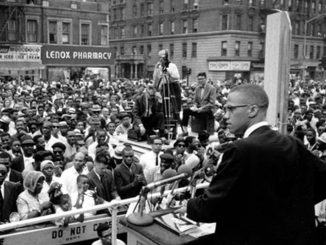
Who killed Malcolm X and why?

“And we will know him then for what he was and is―a  prince―our own Black shining prince!―who didn’t hesitate to die, because he loved us so.” That was how the legendary actor Ossie Davis ended his eulogy at Malcolm X’s funeral.

Over a half-century later, two of the convicted assassins of Malcolm X, Muhammad Aziz and Khalil Islam, were exonerated on Nov. 18, 2021. They were framed in a 1966 show trial.

Justice delayed is justice denied. Muhammad Aziz, now 83 years old, spent 20 years in prison, while Khalil Islam served 22 years.

Both Black men survived years in solitary confinement. Khalil Islam, who died in 2009, never got to see his name cleared.

Muhammad Aziz, then known as Norman 3X Butler, and Khalil Islam, then known as Thomas 15X Johnson, were convicted with Mujahid Abdul Halim. Then known as Talmadge Hayer or Thomas Hagan, Halim confessed during the trial to killing Malcolm X but said his two co-defendants were innocent.

That didn’t matter to the police and the courts. All three defendants were convicted and given life sentences by Judge Charles Marks. 

The police were so disinterested in finding out who killed Malcolm X that they even didn’t close off the crime scene. A dance was allowed to be held the evening of the assassination at the Audubon Ballroom with Malcolm’s blood still on the stage.

All of the physical evidence, including a sawed-off shotgun that was one of the weapons used to murder Malcolm X, has disappeared. 

Judge Marks turned down a defense motion to reveal the police interviews with a hundred eyewitnesses. Why?

When Halim gave the names of four people who were his fellow assassins in two affidavits in 1977 and 1978, Judge Harold Rothwax refused to reopen the case. New York police and the FBI didn’t investigate.

Both Muhammad Aziz and Khalil Islam had strong alibis. Aziz was at home suffering from thrombophlebitis in his right leg. Islam was also at his home when Malcolm X was killed, as confirmed by a neighbor who visited him.

Manhattan District Attorney Cyrus Vance Jr. apologized for the convictions of the two men. So why doesn’t Vance announce an investigation into who assisted Mujahid Abdul Halim in murdering Malcolm X?

Vance refused to prosecute Dominique Strauss-Kahn, then head of the International Monetary Fund, for raping the Black hotel worker Nafissatou Diallo. The DA is the son of former Secretary of State Cyrus Vance, who was a top Pentagon official during the dirty war against Vietnam and Laos.

FBI war against Black people

Black leaders have been targeted by the U.S. Government for over a century. The army considered Dr. Martin Luther King Jr. to be a threat. FBI Director J. Edgar Hoover wanted him dead.

Dr. King denounced the war against Vietnam. He declared at New York’s Riverside Church that “the greatest purveyor of violence in the world today (is) my own government.”

Exactly one year later, Dr. King was assassinated in Memphis on April 4, 1968. The same day, eight Green Berets were in Memphis.

During World War I, the Military Intelligence Division investigated one of Dr. King’s grandfathers for “subversive activity” because he gave a sermon against lynching.

The FBI had the Nation of Islam under surveillance since the early 1940s. During World War II, NOI leader Elijah Muhammad was sent to prison for four years on charges of urging his followers not to register for the draft.

The U.S. armed forces were then completely segregated. So was its blood supply, a Nazi-like practice. 

In response, the Pittsburgh Courier started a “Double V” campaign, calling for victory over the Hitlers at home and abroad. Other Black newspapers joined the campaign and exposed racism inside and outside the military. With the support of President Franklin Roosevelt, J. Edgar Hoover wanted the Black newspaper publishers tried for treason.

During the anti-communist witch hunt after the war, the FBI tried to destroy every progressive organization in the country. Hoover launched COINTELPRO, short for counterintelligence program. It sought to provoke dissension within groups and between organizations.

Along with the Communist Party and Socialist Workers Party, COINTELPRO targeted Black activist groups. These included the Southern Christian Leadership Conference led by Dr. King, the Nation of Islam and the Student Nonviolent Coordinating Committee, known as SNCC.

COINTELPRO later waged a war of extermination against the Black Panther Party. As shown in the film “Judas and the Black Messiah,” the FBI planted its informant William O’Neal within the Illinois Black Panther Party. O’Neal was crucial to Chicago police murdering Illinois chapter chairman Fred Hampton and fellow Panther member Mark Clark on Dec. 4, 1969.

J. Edgar Hoover sent a telegram to the New York City FBI office on June 6, 1964, demanding that they “do something about Malcolm X.” Eight-and-a-half months later the Black shining prince was murdered in front of his family and an audience of 400.

Letting Malcolm X be murdered

Malcolm X was assassinated in the Audubon Ballroom on Feb. 21, 1965. Now called the Malcolm X & Dr. Betty Shabazz Memorial and Educational Center, it’s located in the Washington Heights section of Manhattan.

A week before, on Feb. 14, the home of Malcolm X and his family―at 23-11 97th St. in the East Elmhurst section of Queens―was firebombed. The police refused to investigate. They planted a bottle filled with gasoline in the house, implying Malcolm set the fire himself.

There were always at least a half-dozen cops in front of any place where Malcolm X spoke in order to try to intimidate people. Yet a week after Malcolm and his family were nearly killed, there was just one cop stationed at the Audubon Ballroom’s entrance. Other police were kept hidden nearby.

The well-known journalist Jimmy Breslin got a tip from the police that he should go to the meeting at the Audubon Ballroom. Did the NYPD know what was going to happen?

Cyrus Vance said, “that on orders from director J. Edgar Hoover himself, the FBI ordered multiple witnesses not to tell police or prosecutors that they were in fact FBI informants.” In addition there were undercover cops in the audience belonging to the Bureau of Special Services (BOSS), the NYPD’s Red Squad.

Several people shot at Malcolm. None of the dozen or so FBI agents and police inside the ballroom did anything to try to prevent the assassination. Nor were they responsible for arresting Talmadge Hayer (Mujahid Abdul Halim), the sole killer who was apprehended.

Hayer was wounded by Reuben Francis, an aide to Malcolm X, and then seized by members of the audience. The cop at the door and two officers who were driving by in a squad car arrested Hayer.

The first edition of the old New York Herald Tribune carried Jimmy Breslin’s article that stated two suspects were arrested. The “two suspects” were changed to one suspect in later editions of the Tribune and other New York City newspapers. 

Who was this second suspect and why did the media and police have him disappear? (“The Assassination of Malcolm X” by George Breitman, Herman Porter and Baxter Smith)

Among the BOSS operatives present was Detective Gene Roberts, who wormed his way into Malcolm’s security detail. Roberts can be seen in pictures next to the mortally wounded Malcolm X, whose head was cradled by Asian American activist Yuri Kochiyama.

“Brother Gene” later infiltrated the Black Panther Party. He gave lying testimony in the attempted frame-up of the Panther 21. One of the defendants was Afeni Shakur, the mother of Tupac Shakur.

It took the jury two hours to acquit the Panthers of attempting to bomb department stores and the Bronx Zoo. As fantastic as these charges were, they’re not much different from the allegations used to jail Arabs and Muslims after 9/11. 

Prosecutor Chris Christie used his frame-up of the Fort Dix 5 to become New Jersey governor.

‘Too much power’

The capitalist media has always insisted the murder of Malcolm X was the result of differences between himself and Elijah Muhammad. Malcolm X left the NOI in March 1964.

What the media never mentions is that the FBI and local police departments were trying to destroy the Nation of Islam. Tens of thousands of Black people belonged to the NOI.

Los Angeles police attacked Mosque No. 27 on April 27, 1962. Mosque secretary Ronald X Stokes was shot in the heart and killed. Six other NOI members were wounded, including William X Rogers, who was left paralysed. Like Kyle Rittenhouse, the police claimed “self-defense.”

Malcolm X came to Los Angeles and gave a eulogy for his friend Ronald X Stokes. Two thousand people attended the funeral. The atrocity was one of the sparks that led to the 1965 Watts rebellion. 

New York police never forgave Malcolm X for 2,600 NOI members surrounding the 28th precinct in Harlem on an April night in 1957. They were demanding justice for Hinton Johnson, who was clubbed viciously by police.

The police were forced to send Johnson to Harlem Hospital. Upon Malcolm’s signal, the thousands of Muslims and their supporters dispersed.

A police officer told Amsterdam News editor James Hicks that “this was too much power for one man to have,” referring to Malcolm X.  “He meant one Black man,” said Hicks. (“The Death and Life of Malcolm X” by Peter Goldman.) 

That cop’s real employer ― the super rich ― felt the same way. Wall Street didn’t appreciate Malcolm X supporting Local 1199’s union organizing drive among New York City hospital workers.

And they sure didn’t like him saying “show me a capitalist and I’ll show you a bloodsucker.” The Black revolutionary declared, “We are today seeing a global rebellion of the oppressed against the oppressor, the exploited against the exploiter.”

Did CIA try to poison Malcolm X?

Things happened to Malcolm X during the last year of his short life that were beyond the reach of any NOI member. In July 1964, Malcolm nearly died of food poisoning in Cairo and had to have his stomach pumped. 

No one else eating with Malcolm fell ill. The CIA’s fingerprints are all over this attempted rubout. The world’s biggest terrorist network had its own poison department.

Its head was Sidney Gottlieb, who tried to kill Fidel Castro with toxins. Gottlieb flew to Congo in 1960 and delivered a poison kit to CIA station boss Larry Devlin. The intended victim was Patrice Lumumba, the first leader of the Democratic Republic of Congo. President Eisenhower authorized Lumumba’s assassination. 

Although the CIA wasn’t able to poison Lumumba, the beloved African leader was murdered on Jan. 17, 1961. 

Malcolm X spent months in Africa pointing out the oppression of Black people in the United States. He was a one-person truth squad that U.S. embassies couldn’t answer. With the support of African governments, Malcolm sought to present these violations of human rights to the United Nations.

Like Che Guevara, the Black leader visited Gaza and expressed his solidarity with the Palestinian people. Malcolm met with Che when he spoke at the United Nations in 1964.

Malcolm X was the only prominent Black leader in the United States to denounce the mass lynching of the followers of the slain Patrice Lumumba. Belgian paratroopers and white mercenaries attacked Kisangani, then called Stanleyville, in November 1964, killing and raping thousands of Africans. President Lyndon Johnson supplied C-430 Hercules planes to transport these terrorists.

On Feb. 9, 1965, 12 days before he was assassinated, Malcolm X was stopped at the Orly airport in Paris and deported from France. Malcolm had spoken in France before without incident. Many people thought that President Charles de Gaulle feared Malcolm X would be assassinated on French soil and didn’t want to be blamed for it. 

The Pentagon had special reasons to silence Malcolm X. In 1965 and 1966, one fifth of all U.S. combat deaths in Vietnam were Black soldiers and marines.

Racist officers forced Black GIs to carry out the most dangerous tasks. Malcolm’s friend, Muhammad Ali, risked going to prison because he refused to kill Vietnamese people.

The military brass must have feared Malcolm X leading a draft resistance campaign that would eventually find support not only from the Black community but also from Asian, Indigenous, Latinx and poor white people as well.

Malcolm’s assassination was a tragedy for all working and oppressed people. Like Che Guevara, who was also murdered, Malcolm X became an inspiration for everyone struggling against capitalism and racism.

The exoneration of Muhammad Aziz and Khalil Islam demands an investigation into who were Mujahid Abdul Halim’s fellow assassins and who allowed the murder to happen. The leading suspect is the U.S. government.

If the capitalist government refuses to investigate itself, the people must find the truth by any means necessary.

Strugglelalucha256


‘Azov’ fascist units in Ukrainian National Guard and Army are being expanded

The Ukrainian military is recruiting forces for new offensive brigades. In addition to a police unit and a border guard unit, six brigades of the National Guard are said to belong to them. These assault units will be made up entirely of volunteers, most of whom have “been through hell” and “driven by patriotism,” Interior Minister Igor Klimenko said on Feb. 2. “There are a lot of those in our country.” So far, more than 27,000 applications are said to have been received.

The new offensive formation also includes the best-known fascist elite unit of the National Guard, which has achieved cult status in Ukraine and throughout the Western world as the “heroic defenders of Azovstal.” Recently, an Azov delegation with celebrities from France’s politics, business and culture – including former President François Hollande – celebrated the premiere of the propaganda film “Glory to Ukraine” by right-wing publicist Bernard-Henri Lévy in Paris.

A Nazi special unit commanded by Azov founder Andriy Biletsky, which was formed in February 2022 and shortly afterward incorporated into the regular army, was expanded to a brigade three weeks ago. Recently, however, Azov has also again become a paramilitary organization inside the National Guard, where it was originally created in 2014 – a large association that can operate independently. 

“It’s time to go on the offensive” was the call for supporters to volunteer. “Write history with us. Come to Azov!” As a reward, there are privileges that regular soldiers of the army, who are often driven into the meat grinders of the Donbass without any significant training and adequate equipment, can only dream of: several months of intensive training in artillery, tanks, and drones by experienced officers, a lucrative salary, medical treatment in state hospitals, later a university degree or a career in the Ministry of the Interior.

The announcement that “We guarantee combat operations on the front lines with like-minded people” is likely to attract militant right-wingers with a great bloodlust. Ultimately tempting for them is the destination of the “combat trip,” which Biletsky praised as the “most difficult area”: ​​Bakhmut. “The decisive battle of this war is yet to come. It requires a new standard. That’s why the military command is giving us a new responsibility,” Biletsky boasted on Jan. 26 about the increase in power of his troops. He announced a “hot winter” for the Russian enemies: “We are preparing many surprises for you.”

Azov has launched an extensive recruitment campaign. The promotional videos are designed according to the highest cultural-industrial standards of Hollywood war films. With extremely fast cuts from dramatic action images, underlined with archaic battle horns and Wagnerian bombast sounds as well as beats made of pulses to increase the adrenaline output, the lowest violent instincts are appealed to. “Without a fight there is no glory!” was the motto. On Tuesday, Azov already presented footage of the first days of its army brigade’s deployment in Bakhmut.

In January, U.S. tech giant Meta, which owns Instagram, Facebook and other social media outlets, removed Azov from its list of dangerous organizations. Hundreds of Azov accounts were unlocked. Since then, Azov as a movement – ​​which, in addition to the combat units, also includes militias for terrorizing opposition members and minorities inside Ukraine, a political party, its own fashion and music labels and a merchandise network – has been able to operate worldwide without restrictions.

With its ever-expanding propaganda machine, Azov not only produces fascist warmongering, ideologies of a master race and heroic myths, but also targeted disinformation: above all, the lie that Azov has broken away from Nazism, which is the lie that politicians and the media in the European Union and the United States put forward, being disseminated on a large scale. 

Azov leader Biletsky exposed the lie himself on Feb. 3, on the occasion of the 94th anniversary of the founding of the Organization of Ukrainian Nationalists (OUN). He paid tribute to Stepan Bandera, Roman Shukhevych and other collaborators with Hitler’s Germany who shared responsibility for the Holocaust, and urged his followers to act decisively: “The OUN has fulfilled its historic mission. Now is our time.”

Translated by Melinda Butterfield

Source: Junge Welt

Strugglelalucha256


NATO, Ukraine decree: ‘This is not the time for dialogue’

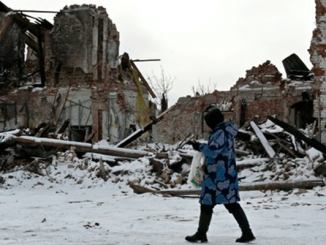
Feb. 18 — The last week has meant minimal changes on the front. The slight Russian advances on the Artyomovsk front, although slow, costly, and few, are the only ones of note at a time of fierce positional battles in the fortified areas of Donbass. Possibly seeking more air coverage and munitions, Yevgeny Prigozhin complained this week about the “monstrous Russian bureaucracy” and warned that the capture of Artyomovsk will take months longer than it should. The fight continues to be practically hand-to-hand in a city already destroyed and in which Ukraine calls on the population for an immediate evacuation.

In her usual tone, Deputy Prime Minister of Ukraine Irina Vereschuk, known for having appealed to the citizens of the territories under Russian control not to send children to school, called on “every correct, law-abiding and patriotic citizen” to abandon the city immediately. The presence of civilians, Ukraine alleges, is the determining factor in a battle in which Ukraine defends itself at all costs with the sole objective of concentrating Russian efforts at one point, thus trying to inflict the greatest possible number of casualties and limit the combat capacity of the troops of the Russian Federation and wear them down to the maximum while Kiev and its partners prepare the great spring-summer offensive.

On the political and informational level, Volodymyr Zelensky has enjoyed two major events this week in which to present his demands. The Ukrainian president not only opened the Munich Security Conference yesterday, in which the war in Ukraine will be the main issue, but also the Berlin International Film Festival. Before an audience, that of his previous profession, which has turned to the Ukrainian cause, Zelensky wondered if “art can stay out of politics.” The almost nine years of war have shown that art, like other aspects of culture and life, have never been left out. Examples such as the award-winning film by Sergey Loznitsa, which dehumanized the population of Donbass to the point of turning it into a parody, show that Ukraine has always been favored by the cultural industry, ready to present the Ukrainian side, also at times when it was the only aggressor, as an innocent victim of an evil and inhuman internal or external adversary.

The Munich Security Conference, since 2014 a forum in which Ukraine has sought weapons and support from its partners for a war that, in its vision, was always against Russia, began yesterday without the Russian presence. According to its president, Angela Merkel’s former foreign affairs adviser Christoph Heusgen, the summit should not become “a space for Kremlin propaganda.” However, as the journalist for Televisión Española Víctor García Guerrero recalled, “In 2004, with Iraq in flames, Rumsfeld taught doctrine in Bavaria.”

In his speech at the opening of the conference, the Ukrainian president returned to his usual topic: the demand for arms from his partners, with which he is preparing this offensive with which the West intends to threaten Crimea. However, as Victoria Nuland, who explicitly approved the idea of ​​Ukrainian attacks against Crimea, recalled in her last appearance, Ukraine will have to advance over a large territory before being able to attack the peninsula, “Russia’s red line” according to Anthony Blinken, and territory that Moscow will defend with all its resources. Bringing the war closer to Crimea necessarily implies a significant escalation in terms of violence, the intensity of the use of weapons, and, above all, danger.

None of this, not even the ammunition supply difficulties that Western countries are experiencing due to Ukraine’s rapid squandering of reserves, is the concern of Zelensky, who, as commander-in-chief of the Ukrainian Armed Forces, always demands more weapons, more ammunition, and more speed. “We have to hurry. We need speed: speed of our agreements, speed of our delivery… speed of decisions to limit Russian potential. There is no alternative to speed because it is the speed on which life depends,” he stated in the speech that will mark the Munich Security Conference. 

Without the need to maintain a minimum consistency, the reason given for this attempt to speed up, on these occasions, is to speed up peace – in reality, victory – but recently also to prevent a Russian offensive. Like Kiev, Ukraine’s Western partners navigate indistinctly between the idea that Russia is planning an offensive similar to the one that opened the military intervention on Feb. 24, 2022, and the constant allegations that Russian troops have suffered such casualties that they are on the verge of collapse.

The idea of ​​accelerating events was also at the center of Olaf Scholz’s speech, who repeated the idea put forward by Jens Stoltenberg that the West must prepare for a long war. German aid is, according to Chancellor Scholz, “meant to last.” After weeks of pressure and reluctance, the German chancellor not only accepted the export and shipment of Leopard-2 tanks but has also become the main supplier of such precious ammunition. Yesterday, aware that those countries that pressured him for shipments themselves offer only a handful of tanks, the German leader appealed to his partners to send the necessary tanks and “do it now.” The German chancellor finds himself alone again. First, it was to prevent the shipment of Leopard tanks, and now to get the material and ammunition for them.

Faced with the opposition shown, for example, by Lula da Silva, in the shadow of the United States, the United Kingdom, the Baltic countries and Poland and NATO, the two powers of old Europe also show their growing belligerence. The Western countries of the European Union, which have not presented any peace plan since Mario Draghi’s proposal, actually a proposal for a unilateral surrender of Russia in the spring of 2022, have already adapted, not only to the idea of a long war, but to the increasingly belligerent and warmongering discourse.

“This is not the time for dialogue with Russia,” Emmanuel Macron declared in his speech, also inducted in the dynamics of more war. Despite the change in discourse that could be perceived in the only European leader who tried to the end to maintain dialogue with Russia in 2022, the position of the European countries has not changed: It has never been the time for dialogue with Russia, from whom only concessions were demanded and never listened to, especially in the long years of the Minsk process, in which neither Berlin nor Paris sought to pressure Kiev to comply with the signed agreements or to negotiate politically with Moscow, Donetsk and Lugansk. Macron called for a Ukrainian counter-offensive to “force Russia to negotiate.” As the precedent of the seven years of Minsk and the attitude of Kiev, with Paris and Berlin behind it, shows, the term negotiation must always be understood as negotiation under the dictates of Ukraine.

Translation by Melinda Butterfield

Source: Slavyangrad.es


Strugglelalucha256


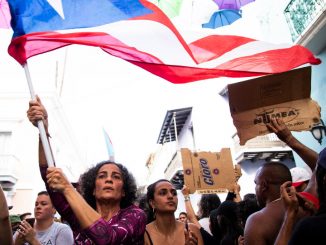
Airbnb desplaza Boricuas

Hace días, los medios celebraban la noticia de que Puerto Rico ocupa el primer lugar de “superanfitriones” en Airbnb, por delante de EUA y Corea. Según esta plataforma de alquileres, cualquier anfitrión puede convertirse en Súperanfitrión si ofrece una hospitalidad excepcional.

Lo que no cuentan estos medios es que debido al alza de estos alquileres, ahora es más caro comprar o alquilar viviendas en Puerto Rico. Mientras una familia boricua que en promedio gana $20,000 de ingreso anual, el alquiler promedio ha subido a $2,990 mensuales.

Si bien la crisis económica ha forzado a muchas familias a que alquilen cuartos o su casa por esta plataforma para poder sobrevivir, el mayor incremento de alquileres Airbnb se ha debido a la compra de casas por inversionistas ricos extranjeros que se aprovechan de la Ley 60 de exención contributiva. 

Esto ha llevado, no solo al aumento de los precios en la vivienda, sino que ha desplazado a cientos de familias pobres y de medianos ingresos. Un ejemplo nefasto es en un residencial público del sector Puerta de Tierra a la entrada del Viejo San Juan, donde un inversionista extranjero compró 15 edificios para convertirlos en Airbnb.

Y el gobierno, que además de avalar esta infame ley que se podría llamar Ley de Desplazamiento Boricua, tiene al mismísimo hijo del gobernador Pierluisi, Anthony Pierluisi, como uno de los beneficiarios locales del desplazamiento. Él controla el mercado de estos alquileres en San Juan donde posee sobre 88 propiedades. Y además, utiliza los servicios gubernamentales de la Compañía de Turismo, pagados por el pueblo, para darle publicidad.

Pero las comunidades, aunque hayan desplazamientos, se han están organizado y están dando la batalla. Queda que el resto dl pueblo y los movimientos progresistas se unan a esta importante lucha y decirle a gobierno y a los millonarios: ¡No pasarán!

Desde Puerto Rico, para Radio Clarín de Colombia, les habló Berta Joubert-Ceci.

Strugglelalucha256
https://www.struggle-la-lucha.org/2023/page/67/