‘Israel is built on the ruins of hundreds of Palestinian villages’

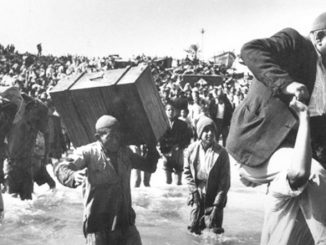
Around 800,000 people are believed to have been displaced during the Nakba in 1948.

Today’s Israel is built over the ruins of hundreds of Palestinian villages which were destroyed by Zionist militias during Israel’s formation in 1948, said professor and historian Ilan Pappé. He emphasized that the expulsion of hundreds of thousands of Palestinians from their lands and homes was nothing but ethnic cleansing carried out by Israeli armed forces.

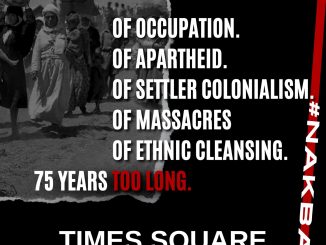
Professor Pappé was speaking during an online event called “75 years of Nakba, 75 years of people’s resistance,” organized by the International People’s Assembly (IPA) on Wednesday, May 10, ahead of the Palestinian Nakba Day, which is commemorated annually on May 15.

Thousands of Palestinians were killed, and hundreds of thousands (according to some estimates around 750,000 to 800,000) were forcefully expelled by Israeli forces from their lands and villages inside the historic Palestine during the months leading up to Israel’s creation in 1948. Each year, Palestinians commemorate their forceful expulsion and dispossession as the Nakba, or the “great catastrophe” in Arabic.

Apart from Professor Pappé, Bassam al-Salhi, Secretary General of the Palestinian People’s Party and a member of the executive committee of the Palestinian Liberation Organization (PLO), Palestinian journalist Mariam Barghouti, and Mehdi Salhi from the Belgium Workers Party also spoke during the event moderated by Georgia Gusciglio of INTAL Belgium.

The occupation is unleashing Nakba every day 

All the speakers underlined the fact that Nakba was not a one-time event and that Palestinians continue to face Israeli oppression, atrocities, discrimination, killings, and forceful displacement on a daily basis.

Pappé pointed out that contrary to common understanding, even in 1948, the Nakba was not a brief event but, as now established by professional historians, went on for months between November 1947 and December 1948. He claimed that during these months, more than half of all Palestinian villages in historical Palestine were demolished (530 villages), and nearly half of the Palestinian population was forced to become refugees.

Pappé claimed that with the collaboration of the colonial powers at the time, Zionists were able to undertake this ethnic cleansing of Palestinians in order to establish the “facts on the ground” to legitimize their occupation of the land. He categorically refuted Israeli claims that  Palestinians were asked to leave their homes by the Arab armies, who were, in fact, trying to defend the Palestinian land from Israeli aggression.

Now, “the only possible way of rectifying the past evil is by respecting Palestinian refugees’ right to return and by the establishment of a state all over the historical Palestine based on the principles of democracy, equality and social justice built through the process of restitutive justice which compensates the people who have lost land, careers, and lives,” Pappé emphasized.

Palestinian resistance has never ceased 

Agreeing with Pappé, Bassam Salhi said that Palestinians “continue to fight against the apartheid Zionist system on a day-to-day basis and a third intifada is already building up” in the occupied territories. However, he also emphasized the need to promote international solidarity movements such as Boycott, Divestment, and Sanctions (BDS) to build greater popular pressure on the occupation.

Mariam Barghouti, who was unable to attend the event, sent her views in writing, which were read by Gusciglio. She reiterated that the Nakba neither started nor ended on May 15, 1948. The date is remembered because, on this day, the massacre and bloodbath of Palestinians were institutionalized by the creation of Israel. She pointed out that Israel still continues to massacre Palestinians because the world community is silent and the Palestinians are termed as “terrorists.”

Noting that it has been a year since senior Al-Jazeera journalist Shireen Abu Akleh was killed by Israeli forces and no one has been held guilty for the crime yet, and that Gaza is being bombed again—as in the last several years with scores of innocent civilians killed—Barghouti questioned the logic of peace as propagated by the West, which asks Palestinians to make peace with the entity that has killed and massacred their family members.

Mehdi Salihi spoke on the growing strength of Palestinian solidarity movements in Europe. He highlighted that due to growing engagements with larger working-class sections across Europe, a new solidarity with Palestinians is emerging. He cited examples of how public campaigns have led to city councils in Barcelona in Spain and Liege in Belgium, among others, taking proactive positions in support of Palestine and against Israeli apartheid.

All speakers noted the need to expand movements like BDS, which are facing greater challenges due to the weaponization of anti-Semitism as well as anti-BDS legislation in several countries. They also acknowledged the growing significance of anti-apartheid committees across the globe.

Source: Peoples Dispatch

Strugglelalucha256


Only struggle can bring justice: The lyncher of Jordan Neely must be punished

Only struggle forced Manhattan District Attorney Alvin Bragg to charge Daniel Penny ― the killer of Jordan Neely ― with manslaughter. The white vigilante Penny choked to death Neely, a Black homeless man, on a New York City subway train on May 1.

The 15-minute-long strangulation was recorded on video and seen by millions. Even the medical examiner ruled the death of Jordan Neely to be a homicide.

Yet the ex-Marine Penny was let go by the cops at the subway station. New York City Mayor Eric Adams denounced not the killer but those who rightfully described Neely’s death as murder and a lynching.

Why wasn’t Penny taken to Rikers Island prison like the Black teenager Kalief Browder was? Accused of stealing a backpack, Browder spent almost three years in Rikers because he couldn’t afford bail. Browder’s charges were dropped, but he was so traumatized that he hanged himself two years later in 2015.

Jordan Neely’s death by the ex-U.S. Marine Corps sergeant was no accident. The Amsterdam News quoted Bill Dores’ Facebook post:

Chokeholds kill. Cops are no longer allowed to use them. They stop blood flow to the brain. At 1 minute brain cells start to die, 3 minutes permanent brain damage, 5 minutes death. USMC-trained martial artists know that.”

It took 11 days after Jordan Neely’s death for Daniel Perry to be charged with second-degree manslaughter. Many people believe that Perry should have been charged with murder.

District Attorney Bragg had to be compelled to bring any charges. So while Jordan Neely’s killer was walking free, police arrested those protesting the attempted cover-up.

The series of demonstrations that demanded justice for Jordan Neely reflected the anger of millions.

These protests included a May 6 action at the Lexington and 63rd Street subway station, where people jumped on the tracks, halting trains. Earlier demonstrations included hundreds of people marching from Brooklyn across the Manhattan Bridge.

New York no different than Georgia

Labor Against Racist Terror spokesperson Johnnie Stevens compared the killing of Jordan Neely to the 2020 murder of the Black jogger Ahmaud Arbery in Georgia.

“The local Brunswick, Georgia, prosecutor refused to indict the white vigilantes who lynched Ahmaud Arbery,” said Stevens. “It took a long struggle by the local and national movement that forced the authorities to do anything.”

Jordan Neely was killed as homeless people are constantly being demonized by the corporate media. Migrants are being targeted by the super-bigot Texas Gov. Greg Abbott.

Mayor Adams has ordered police to hound poor people on the subways. Cops have attacked homeless encampments.

Meanwhile, the family of Manuel “Manny” Mayi is still waiting for his killers to be indicted. The 18-year-old Dominican honor student was lynched by a white racist mob on March 30, 1991, in Corona, Queens, New York City.

Some of Mayi’s killers may have become police officers.

“The labor movement needs to take a stand against this racist terror,” said Johnnie Stevens. “We have to stand in solidarity with the migrants and all those being attacked.”

Frederick Douglass was right when he declared that “without struggle there is no progress.” Only mass struggle can stop the lynchings and police killings.

Strugglelalucha256


TSEUA niega acceso a información de la Junta de Control Fiscal

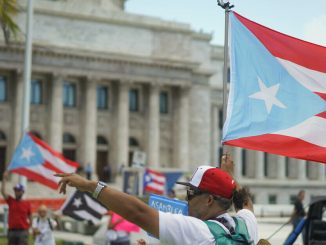
Si el Primero de Mayo arrestaron a 3 líderes de la lucha boricua por intentar llegar camino del Banco Popular, hacia la meta final: el edificio que alberga a la Junta de Control Fiscal, una reciente decisión del Tribunal Supremo de Estados Unidos, definitivamente ha encendido la mecha de un verano de resistencia en este archipiélago.

El pasado 11 de mayo, ese Tribunal gringo reafirmó la condición colonial de este país, al negar el acceso a información de la Junta dictatorial al pueblo boricua. 

Una Junta que desde su imposición en el 2016 bajo la Ley PROMESA del Congreso estadounidense, se ha convertido en el más cruel verdugo del pueblo, eliminando derechos y leyes, promoviendo la privatización y el encarecimiento de los servicios públicos, y tantos crímenes más contra la población que han causado un migración forzada de nuestra gente.

Y encima, ahora ni se les puede cuestionar bajo una supuesta Inmunidad Soberana bajo la Constitución de EUA. Pero es que para unas cosas es una entidad estadounidense donde les rigen sus leyes, pero para otras que le convienen para imponer políticas en contra del pueblo, le rigen las leyes del gobierno de Puerto Rico. 

Por ejemplo, desde el 1982 el gobierno de PR no posee inmunidad en cuestión al acceso de información, así que bajo esa ley, deberíamos tener la información que requerimos.  

Pero la determinación del la Corte Suprema en esta demanda puesta por el Centro de Periodismo Invesigativo a nombre del pueblo de PR no se va a quedar en el limbo. Tanto en la corte como en la calle se seguirá insistiendo hasta que saquemos a la maldita Junta.

Desde Puerto Rico, para Radio Clarín de Colombia, les habló Berta Joubert-Ceci

Strugglelalucha256


Rally and march Sunday in solidarity with Palestine Nakba 75 – NYC, May 14

Strugglelalucha256


‘First on the Fifth’: Marching with Cuba’s Cenesex on a historic May Day

Havana — May Day in Cuba. Nothing quite like it – even if it takes place a little later than expected. 

Havana is renowned for its huge, colorful, and powerful marches every May 1, International Workers’ Day. This year was already planned to be different. Because of severe fuel shortages caused by the U.S. blockade, it was decided to focus on local marches in Cuba’s provinces and the various municipalities that make up Havana. 

Then severe weather struck. Havana’s May 1 celebrations had to be postponed. Instead, it was “the First on the Fifth” — the great workers’ action was held on Friday, May 5, the 205th birthday of Karl Marx, the founder of scientific socialism. 

Another difference: in an additional move to conserve fuel for urgent people’s needs, the usual march through the Plaza of the Revolution was changed to a mass rally along the Malecón, Havana’s famous sea wall.

I arrived in Cuba from New York City on May 3 to attend the VII International Colloquium on Trans Identities, Gender, and Culture, hosted by the National Center for Sex Education (Cenesex), together with Serena Sojic-Borne, a comrade from the New Orleans chapter of Freedom Road Socialist Organization.

Comrade Mariela Castro Espin, director of Cenesex, invited the international delegates from Mexico, Italy, the United States, and other countries to join the center’s delegation in the May Day action, a proposal we gladly accepted.

Queer youth for socialism 

In the U.S., it’s impossible to imagine a city full of workers rising well before dawn to defend the system they live under. U.S. workers are exploited by their bosses, lied to by politicians, overworked and underpaid, without universal health care or the right to housing.

How different is Cuba! In Havana, workers from every sector, along with students and other organized groups, began gathering by 4 a.m. As the international delegates walked by the University of Havana, contingents of young people were already starting to arrive, chanting, singing, and drumming.

Across the wide boulevard, workers representing Radio Rebelde (founded by Che Guevara) and other media outlets were gathering around their banners.

As we reached the intersection where Cenesex was gathering, outside a movie theater, comrade Mariela Castro was among the first to arrive — greeting people, keeping the group motivated and excited. Organizers from TransCuba Nacional, the national network of trans women, distributed trans flags to the many young queer people as they arrived and kept folx from wandering too far afield. 

At the intersection where we gathered, we witnessed young people organized by the Committees in Defense of the Revolution (CDRs) blocking streets and directing traffic away from the marchers. A CDR leader took time to snap some group photos of our contingent for Mariela. 

‘Love is the law’

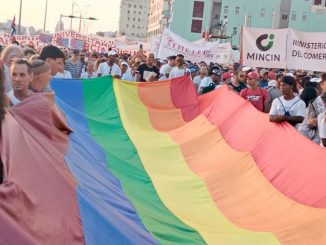
The dozens of queer youth who gathered with Cenesex, a majority of them Black Cubans, carried an enormous rainbow flag and a lead banner that read, “Por todas las familias, el amor es ley” — “For all Cuban families, love is the law.”

This refers to the revolutionary new Families Code approved last year, which expands the rights of all families, including LGBTQ+ families and chosen families. May is also the International Month Against Homophobia and Transphobia and is celebrated in Cuba much like Pride Month is in the U.S.

For Cenesex and the networks of trans, gay, lesbian, and bisexual people, this is a key time to educate the queer community and the broader Cuban public about the provisions of the new code.

As we marched down the wide, dark street toward the Malecón, more people streamed into the contingent at each intersection. We took our place among the tens of thousands already gathered beside the sea, while revolutionary songs played over gigantic speakers that reached everyone in the rally.

Dozens of hands of all colors and gender expressions took hold of the massive Pride flag and shook it in time to beat. Beside the Cenesex group were health care workers’ unions, unions of the economic ministry, parents holding small children on their shoulders, and portraits of Marti, Fidel, and Che, all awaiting the inspiring words of Ulises Guilarte, general secretary of the Cuban Workers Federation (CTC). 

The beautiful sunrise over the sea slowly spread across the massive demonstration — a beautiful symbolic moment.

Together we sang, chanted, and celebrated the triumph of the Cuban Revolution, the achievements of socialism despite the punishing and illegal U.S. blockade, and the continuing struggles of the world’s workers and oppressed.

Viva Cuba! El amor es ley!

Strugglelalucha256


LGBTIQ activists from Cuba and U.S. exchange on struggles and challenges

Defending their rights and denouncing religious and political fundamentalisms are common goals shared by LGBTIQ (lesbian, gay, bisexual, trans, intersex and queer) activists from Cuba and the United States.

Representatives of the TransCuba Network, the Network of Lesbian and Bisexual Women, HSH (men who have sex with other men) and LGBTIQ activists from the United States exchanged about the approval of the Families Code in the Caribbean nation, the forms of organization of activism, and homo-lesbo-transphobic violence.

The meeting was held on May 8 at the National Center for Sexual Education (Cenesex), as part of the 16 Cuban Days against Homophobia and Transphobia, which are held until May 20 in Havana and Santi Spíritus.

Melinda Butterfield, trans activist from the U.S. organization Women in Struggle, recalled her previous visit to the country, since she has been a member of the solidarity movement with Cuba for 30 years.

“I came before and after I transitioned. Now we have been motivated by the victory of the Families Code and we want to bring people from our communities to learn about this law and, when they return, they can educate about the need to end the blockade on Cuba,” said Butterfield.

The group of activists visiting Cuba was interested in the process of approving the Families Code and how it attracted the support of the Cuban government.

“In the United States the government is against us; in various states, laws are being passed that seek to annihilate and eliminate us. That’s why we’re here, to learn how you have accomplished all of this,” said lesbian activist Elizabeth Toledo of the Socialist Unity Party.

Gustavo Alberto Pi, a specialist from Cenesex, highlighted the support of the Cuban state as a crucial element in the process of approving the code. A struggle that was not easy, he said.

“The approval of the Families Code is the result of political will and decades of education and awareness by institutions such as Cenesex and civil society,” he explained.

“From a legal point of view, it’s a precious document. It is not only a code that recognizes the right to marriage and adoption by LGBTIQ people. It is a law that protects the rights of all people in society, particularly the most vulnerable, and settles a historical debt with gay and trans people,” added Alberto Pi.

The group of visitors was also interested in the functions and agenda of the existing collectives in Cuba, spaces for socialization and challenges that still persist.

Representatives of the TransCuba Network, the Network of Lesbian and Bisexual Women and HSH pointed out some of the issues they work on and the forms of organization of their networks, present in all the country’s provinces and in most of its municipalities.

At the meeting, it emerged that, unlike TransCuba and HSH, the Lesbian and Bisexual Women’s Network faces the challenge of not having its own budget.

“Since they are not considered a population at risk for HIV and sexually transmitted infections, lesbians cannot access international financing dedicated to the prevention of the HIV epidemic,” explained Alberto Pi.

Other challenges shared by activists from both countries were violence and religious fundamentalisms, which in the case of the United States have seeped into politics and the media, increasing hate speech.

“There are many differences between the various states in the U.S. In some the rights of LGBTIQ people are being taken away and they are making it illegal to exist in public. In a few states we maintain our rights, but there is no national protection policy and the national government refuses to intervene,” said Melinda Butterfield.

“Now there is a lot of hate in the media and that means more violence everywhere. New York, where I live, is considered a safe city, but fascists are coming into our spaces and as a community we have to stand up to them. In Florida and Texas, it’s worse,” added the trans activist.

“Here we are also victims, especially trans people. We suffer police harassment, family abandonment and social discrimination. That often forces us to drop out of school, turn to sex work as a way to survive, and many live with HIV,” said Alexandra Hernández Naranjo, coordinator of TransCuba in the Habana del Este municipality.

For her part, Teresa de Jesús Fernández, national coordinator of the Network of Lesbian and Bisexual Women, shared some of the points on the agenda developed by the network, among them: the approach to sexist violence, internalized lesbophobia, the recognition of lesbian parental families, the exercise of reproductive rights of lesbian women, the visibility and reality of their rights, bullying at school, work and in the community.

“Our fundamental objective is to contribute to the transformation of society and to dismantle patriarchy,” the activist concluded.

Source: SEMlac Cuba

Strugglelalucha256


Activistas LGBTIQ intercambian sobre luchas y desafíos

La defensa de sus derechos y la denuncia de los fundamentalismos religiosos y políticos son propóstios comunes que comparten activistas LGBTIQ (lesbianas, gays, bisexuales, trans, intersex y queer) de Cuba y Estados Unidos.

Representantes de la Red TransCuba, la Red de Mujeres Lesbianas y Bisexuales , HSH (hombres que tienen sexo con otros hombres) y activistas LGBTQ de los Estados Unidos intercambiaron sobre la aprobación del Código de las Familias en la nación caribeña, las formas de organización del activismo y las violencias homolesbotransfóbicas.

El encuentro se realizó el 8 de mayo en el Centro Nacional de Educación Sexual (Cenesex), como parte de las 16 Jornadas Cubanas contra la Homofobia y la Transfobia, que se celebran hasta el próximo 20 de mayo en La Habana y Santi Spíritus.

Melinda Butterfield, activista trans de la organización estadounidense “Mujeres en lucha”, recordó sus visitas anteriores al país, pues desde hace 30 años integra el movimiento de solidaridad con Cuba.

“Vine antes y después de hacer la transición. Ahora nos ha motivado la victoria del Código de las Familias y queremos traer a personas de nuestras comunidades para que aprendan sobre esta ley y que, al regresar, puedan educar sobre la necesidad de terminar con el bloqueo a Cuba”, dijo Butterfield.

El grupo de activistas que visita Cuba se interesó por el proceso de aprobación del Código de las Familias y cómo concitó el apoyo del gobierno cubano.

“En Estados Unidos el gobierno está contra nosotros; en diferentes Estados se están aprobando leyes que buscan aniquilarnos y eliminarnos. Por eso estamos aquí, para aprender cómo ustedes han logrado todo esto”, aseveró la activista lesbiana Elizabeth Toledo, del Partido Socialista Unido.

Gustavo Alberto Pi, especialista del Cenesex, resaltó el apoyo del Estado cubano como elemento crucial en el proceso de aprobación del Código. Una lucha que no fue fácil, dijo.

“La aprobación del Código de las Familias es resultado de la voluntad política y de las décadas de educación y sensibilización por parte de instituciones como el Cenesex y la sociedad civil”, explicó.

“Desde el punto de vista legal, es un documento precioso. No es solo el Código que reconoce el derecho al matrimonio y a la adopción por parte de las personas LGBTIQ. Es una ley que protege los derechos de todas las personas en la sociedad, en particular las más vulnerables, y salda una deuda histórica con las personas homosexuales y trans”, agregó Alberto Pi.

El grupo de visitantes también se interesó por el funcionamiento y la agenda de los colectivos existentes en Cuba, los espacios de socialización y los desafíos que aún persisten.

Representantes de la Red TransCuba, la Red de Mujeres Lesbianas y Bisexuales y HSH apuntaron algunos de los temas que trabajan y las formas de organización de sus colectivos, presentes en todas las provincias del país y en la mayoría de sus municipios.

En el encuentro trascendió que, a diferencia de TransCuba y HSH, la Red de Mujeres Lesbianas y Bisexuales enfrenta el desafío de no contar con presupuesto propio.

“Al no ser consideradas como población de riesgo ante el VIH e infecciones de transmisión sexual, las lesbianas no logran acceder a financiamientos internacionales dedicados a la prevención de la epidemia del VIH”, explicó Alberto Pi.

Otros desafíos compartidos por activistas de ambos países fueron las violencias y los fundamentalismos religiosos, que en el caso de los Estados Unidos se han filtrado en la política y los medios de comunicación, incrementando el discurso de odio.

“Existen muchas diferencias entre los diferentes Estados de la nación, en algunos se les están quitando derechos a las personas LGBTIQ y haciendo que sea ilegal existir en público. En unos pocos Estados mantenemos nuestros derechos, pues no existe una política nacional de protección y el gobierno nacional se rehúsa a intervenir”, contó Melinda Butterfield.

“Ahora existe mucho odio en los medios y eso significa más violencia en todos los lugares. Nueva York, donde vivo, es considerada una ciudad segura, pero los fascistas están yendo a nuestros espacios y como comunidad tenemos que hacerles frente. En Florida y Texas es peor”, agregó la activista trans.

“Aquí también somos víctimas, sobre todo las personas trans. Sufrimos acoso policial, abandono familiar y discriminación social; eso nos obliga muchas veces a dejar los estudios, acudir a la prostitución como sobrevivencia y la mayoría vive con VIH”, dijo Alexandra Hernández Naranjo, coordinadora de TransCuba en el municipio Habana del Este.

Por su parte, Teresa de Jesús Fernández, coordinadora nacional de la Red de Mujeres Lesbianas y Bisexuales, compartió algunos de los puntos de la agenda que desarrolla la Red, entre ellos: el abordaje de las violencias machistas, la lesbofobia interiorizada, el reconocimiento de las familias lesboparentales, el ejercicio de los derechos reproductivos de las mujeres lesbianas, la visibilidad y realidad de sus derechos, el acoso escolar, laboral y en la comunidad.

“Nuestro objetivo fundamental es contribuir a la transformación de la sociedad y a desmotar el patriarcado”, concluyó la activista.


Strugglelalucha256


U.S. LGBTQ+ delegation travels to Cuba to learn about new Families Code

On May 8, the U.S. Friends Against Homophobia and Transphobia delegation, led by Women in Struggle – Mujeres en Lucha, met with Cuban activists at the National Center for Sex Education (CENESEX) headquarters in Havana. These activists represent multiple LGBTQ+ organizations, including TransCuba, La Red HSH (the Network of Men Who Have Sex with Men), and the Network of Lesbian and Bisexual Women in Cuba. These are autonomous organizations of people from these communities that work closely with CENESEX, which is under the Ministry of Health.

Before departing for Cuba, our delegation began learning about Cuba’s revolutionary new Families Code. But it was incredible to be among these activists — to hear about their work, life experiences, and analysis of the ongoing revolutionary process in Cuba. These activists vividly conveyed how far Cuba has come, rising from a legacy of colonialism and patriarchal values, even while impeded by Washington’s criminal blockade.

They were completely candid about problems of homophobia and transphobia in Cuba, with resistance to progressive change coming especially from the U.S.-funded evangelical movement. An activist with the Network of Lesbian and Bisexual Women in Cuba explained the problems with these reactionary forces, putting them in historical context. Nevertheless, these problems of backward mentalities in some people are not comparable to the neo-fascist attacks in the United States on LGBTQ+ people, women, people of color, and the working class more broadly. There is a stark difference between the social systems in the two countries, and this accounts for the difference in the political situation.

In the U.S., there is an imperialist capitalist class that can exist only so long as the people are divided. This tiny class of exploiters has a material interest in spreading division and alienation. For them, it is a necessity. They accomplish this task not just through rhetoric — that is, by talking about divisive issues in the misnamed “culture war” — but by materially carrying out attacks that cost lives. For example, now, the billionaire-funded fascist politicians are cruelly blocking access to gender-affirming care for children, youth, and adults, when this is shown to reduce suicide; these politicians know very well that their policies are a form of violence against some of the most vulnerable people in our society.

By contrast, in Cuba, the working class is in power. There, the government uses all available science to develop its stance toward LGBTQ+ people, as with other social questions. We learned from doctors when visiting a Cuban polyclinic later in the day that CENESEX’s work is integrated across all health institutions as part of the Ministry of Health. The Communist Party, the mass organizations of the Cuban people, the autonomous networks, etc., work together to transform society in a progressive way. This is demonstrated by the way that the new Families Code was developed through countless hours of outreach, with people meeting in every part of the island to discuss this important step not only for the Cuban people but for the social evolution of humanity.

A continuation of the Cuban Revolution

One activist emphasized that this process can’t be exported. That is because this is a continuation of the Cuban Revolution, which has stood against imperialist aggression since 1959. In the United States, there is no close connection between the government and the people. We do not have progressive mass organizations that can develop, through ongoing conversation, a shared vision for moving forward as a society. On the contrary, we have a growing crisis of legitimacy in all existing institutions and not just the strictly political ones.

A legal advisor for CENESEX, Sonia Zaldivar, explained to us that this Families Code “was conceived and resulted from many years of fighting and the study of science. … By combining every type of knowledge – from the streets, from the academy, from other countries – [a Families Code was crafted] that stayed true to our conception of life. After 26-27 versions of the document, which changed with discussions across society, the Code went into effect with over 60% approval.”

While U.S. lawmakers are attempting to prevent discussion of LGBTQ+ life in schools, Cuba is ensuring that schools include lessons about sexual orientation and gender identity in the curriculum. The law affirms that parents have a responsibility to teach their children about these things and to respect their children’s identities.

Cuba has redefined marriage and the family structure to include all types of actually existing families, from those with LGBTQ+ parents to households led by grandparents. The patriarchal nuclear family does not capture the reality on the ground, and in Cuba, it is no longer privileged in the legal framework. The new Code even gives more rights to step-parents (including step-fathers or step-grandparents) who have dedicated themselves to the care of a child.

Even though this process cannot be exported, we can learn from the tremendous experience of the Cuban people about how to make a revolution for a humane society. We have to make our own revolution. And we should understand that the blockade is not only an economic one targeting the Cuban people and causing them to suffer. It is also a blockade of knowledge, with people in the U.S. being denied information about Cuba’s achievements – not to mention solidarity and material benefit, for example, if U.S. people could access Cuba’s lung cancer vaccine.  

In the U.S., there is a near-total media blackout on the new Families Code, as with other matters. The imperialists do not want us to know about this achievement. But, as the Biblical saying goes, “you cannot light a candle and hide it under a bushel.” This Families Code is a light, and it is vital that people in the U.S. and other countries learn what is possible in this time when the bourgeoise and their fascist shock troops attempt to roll back every right we have gained. The Cuban experience teaches us the necessity of struggle. We must and will struggle.

End the blockade! Build solidarity between people in the U.S. and Cuba! 

Strugglelalucha256


NNOC brigadistas detained and harassed

From: National Network on Cuba

Several of our May Day brigadistas were detained, harassed, threatened with jail time & had electronics taken by U.S. Customs/Border Patrol on return from Cuba today. In face of persecution, we reaffirm our right to travel to Cuba. SOLIDARITY IS NOT A CRIME – THE U.S. BLOCKADE IS!

This is an onslaught against Cuba solidarity activism. NNOC stands with @peoplesassembl_ & @ushandsoffcuba members detained returning from Cuba this week; as well as @APSPusa, @Puentesdeamor1, Puerto Rico CSC & Oklahoma activists who have been targeted by the U.S. government this year.

The U.S. says Cuba is a repressive police state, but in reality, we experienced freedom for the first time in Cuba, & when we stepped foot back into the U.S., we were immediately met with state repression, hostile interrogation, seizure of personal property & illegitimate threats.

Let’s not forget that our trip to Cuba was completely licensed & legal. This harassment by the U.S. government attempts to scare & intimidate the U.S. people out of traveling to Cuba & building solidarity with the Cuban people. But we know that our solidarity can never be blockaded!

From the very first U.S. brigades to Cuba, we’ve been followed, harassed & had our personal possessions seized by Border Patrol & the FBI. Today, we were interrogated clearly in a political nature, with questions designed to obstruct our movement against the blockade.

Above all, this backlash is a reminder of why our work is so important. United together, we’ll never back down! Join us in calling on Biden to LIFT the Blockade, take Cuba OFF the list of “State Sponsors of Terrorism,” and give Guantánamo BACK to Cuba.

#MayDayCuba2023 #OffTheList

Strugglelalucha256


Detenidos y acosados los brigadistas del NNOC

Varios de nuestros brigadistas del Primero de Mayo fueron detenidos, acosados, amenazados con ir a la cárcel y la Patrulla Fronteriza de Aduanas de EE.UU. les confiscó sus aparatos electrónicos al regresar hoy de Cuba. Ante la persecución, reafirmamos nuestro derecho a viajar a Cuba. LA SOLIDARIDAD NO ES UN CRIMEN – ¡EL BLOQUEO DE EEUU LO ES!

Esta es una arremetida contra el activismo de solidaridad con Cuba. NNOC está con los miembros de @peoplesassembl_ y @ushandsoffcuba detenidos al regresar de Cuba esta semana; así como @APSPusa, @Puentesdeamor1, Puerto Rico CSC y activistas de Oklahoma que han sido blanco del gobierno de EE.UU. este año.

Los EE.UU. dicen que Cuba es un estado policial represivo, pero en realidad, experimentamos la libertad por primera vez en Cuba, y cuando pusimos un pie de nuevo en los EE.UU., nos encontramos inmediatamente con la represión estatal, interrogatorios hostiles, confiscación de bienes personales y amenazas ilegítimas.

No olvidemos que nuestro viaje a Cuba fue completamente autorizado y legal. Este acoso por parte del gobierno de EE.UU. intenta asustar e intimidar al pueblo de EE.UU. para que no viaje a Cuba y se solidarice con el pueblo cubano. Pero sabemos que nuestra solidaridad nunca puede ser bloqueada.

Desde las primeras brigadas de EE.UU. a Cuba, hemos sido seguidos, acosados y confiscados por la Patrulla Fronteriza y el FBI. Hoy, fuimos interrogados claramente en una naturaleza política, con preguntas diseñadas para obstruir nuestro movimiento contra el bloqueo.

Por encima de todo, esta reacción nos recuerda por qué nuestro trabajo es tan importante. Unidos, ¡nunca retrocederemos! Únete a nosotros para pedir a Biden que levante el bloqueo, saque a Cuba de la lista de “Estados patrocinadores del terrorismo” y devuelva Guantánamo a Cuba.

Strugglelalucha256
https://www.struggle-la-lucha.org/2023/page/49/