Anti-trans bills threaten youth in many states

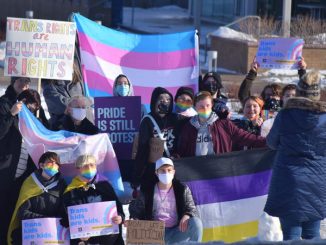
High school students joined a Protect Trans Kids rally in Sioux Falls, South Dakota, on Jan. 16 to protest legislation that would ban trans kids from sports programs and restrict bathroom access in schools. Actions were held in six cities across the state.

Struggle-La Lucha spoke with activist Erin Reed (she/her) about anti-trans measures currently flooding state legislatures, and how people are fighting back.

Struggle-La Lucha: Can you tell our readers a bit about who you are and your work for trans rights?

Erin Reed: I have been a longtime advocate for transgender rights, especially when it comes to accessibility of trans health care. I created the largest map of informed consent hormone therapy clinics in the United States. Informed consent is a method of obtaining hormone therapy that does not require years of expensive therapy to obtain hormones. Instead doctors tell you the risks and benefits, letting you make the choice if it is right for you. They then monitor your hormone levels and aid in your transition. This resource has been accessed over 1.6 million times.

I also have been extremely active in marginalized spaces which include transgender people. I created Maryland Equity Vaccine Hunters, which ultimately obtained nearly 10,000 vaccines for Marylanders in underprivileged communities, including transgender Marylanders and especially trans people of color.

Lastly, I openly advocate for transgender legal rights and have been tracking bills this cycle that seek to detransition trans youth, remove transgender people from public spaces like bathrooms and changing rooms, remove the ability of transgender people to update legal documents, and call those who affirm trans youth child abusers.

SLL: Can you give us an overview of the current anti-trans legislation? 

ER: As of right now, multiple trackers exist showing dozens of anti-trans bills pending. The ACLU says 79 anti-transgender bills have been filed so far in the first month of 2022. Step Up lists 65 active anti-trans bills being proposed. 

These bills all share very similar language. Many go after those who provide trans teenagers with transition-related medical care, threatening prison sentences for doctors or defining parents as child abusers. Others seek to ban changes to identification documents. Some propose banning transgender people from bathrooms. Others will ban transgender people from competing in sports, even youth sports and even for youth transitioners. 

Many of these bills have no enforcement mechanisms or outrageous enforcement mechanisms like genital inspections. They all will increase harm to the transgender community.

SLL: For you, what is most dangerous about these attacks on trans rights, especially for youth?

ER: Youth are at an enormously high risk of suicide when denied the ability to transition. Most statistics show that transgender people are at a 41% likelihood of attempting suicide at some point in their life. 

However, being able to access gender-affirming care lowers transgender youth’s chance of suicide attempts by 40%, according to an article published in the Journal of Adolescent Health in December 2021. This makes transition-related care for trans youth one of the most lifesaving treatments you can give to someone under the age of 18. 

That several states are looking to ban transition care should terrify many people. So many trans youth will be stuck in these states and withdrawn from their hormone therapy should the bills pass.

SLL: How are trans people fighting back in different states, and how can others get involved?

ER: Local organizations are best — every state usually has its own local LGBTQ organizations that mobilize when an anti-trans bill takes effect. There have been some particularly effective national organizations. Lambda Legal, Transgender Legal Defense & Education Fund, Transgender Law Center and the ACLU have been essential in challenging these bills and organizing advocacy. If you live in one of the states in the ACLU or Step Up’s tracker, contact your representatives about these bills and show up for the hearings. 

Sometimes trans youth as young as 11 are the ones that show up and make all the difference. Kai Shappely stood in front of Texas legislators and was essential to defeating anti-trans youth bills. She is now a finalist for Time Kid of the Year.

SLL: Reproductive rights and Black people’s voting rights are also under threat in many of the same states. Can you talk about the importance of building unity among all the communities under attack?

ER: Solidarity among all communities under attack is extremely important. Reproductive rights are intricately tied to transgender rights – anti-abortion laws are inseparable from anti-trans laws and represent an attack designed to enforce a gender heirarchy that reduces our gender and sexuality to a biological role of reproduction and control of our bodies. The same organizations that fight against abortion rights fight against trans rights and fund anti-trans organizations around the globe. 

You can’t separate either of these from attacks on the Black community. Bills targeting trans youth in sports often get brought up when Black athletes perform well, regardless of if they are trans. In 2021, three cisgender women were banned from the Olympics in some sports categories for not taking birth control to lower their natural testosterone because of trans panic: Castor Semenya, Christine Mboma and Beatrice Masilingi. 

And the latest attacks on education in the United States banning books often target “critical race theory” and “gender theory.” Both transness and Blackness are seen as dangerous and are constantly under attack by a white patriarchal society.

Strugglelalucha256


Morocco drives a war in Western Sahara for its phosphates

In November 2020, the Moroccan government sent its military to the Guerguerat area, a buffer zone between the territory claimed by the Kingdom of Morocco and the Sahrawi Arab Democratic Republic (SADR). The Guerguerat border post is at the very southern edge of Western Sahara along the road that goes to Mauritania. The presence of Moroccan troops “in the Buffer Strip in the Guerguerat area” violated the 1991 ceasefire agreed upon by the Moroccan monarchy and the Polisario Front of the Sahrawi. That ceasefire deal was crafted with the assumption that the United Nations would hold a referendum in Western Sahara to decide on its fate; no such referendum has been held, and the region has existed in stasis for three decades now.

In mid-January 2022, the United Nations sent its Personal Envoy for Western Sahara Staffan de Mistura to Morocco, Algeria, and Mauritania to begin a new dialogue “toward a constructive resumption of the political process on Western Sahara.” De Mistura was previously deputed to solve the crises of U.S. wars in Afghanistan, Iraq, and Syria; none of his missions have ended well and have mostly been lost causes. The UN has appointed five personal envoys for Western Sahara so far—including Mistura—beginning with former U.S. Secretary of State James Baker III, who served from 1997 to 2004. De Mistura, meanwhile, succeeded former German President Horst Köhler, who resigned in 2019. Köhler’s main achievement was to bring the four main parties—Morocco, the Polisario Front, Algeria, and Mauritania—to a first roundtable discussion in Geneva in December 2018: this roundtable process resulted in a few gains, where all participants agreed on “cooperation and regional integration,” but no further progress seems to have been made to resolve the issues in the region since then. When the UN initially put forward De Mistura’s nomination to this post, Morocco had initially resisted his appointment, but under pressure from the West, Morocco finally accepted his appointment in October 2021, with Moroccan Foreign Minister Nasser Bourita welcoming him to Rabat on January 14. De Mistura also met the Polisario Front representative to the UN in New York on November 6, 2021, before meeting other representatives in Tindouf, Algeria, at Sahrawi refugee camps in January. There is very little expectation that these meetings will result in any productive solution in the region.

Abraham Accords

In August 2020, the United States government engineered a major diplomatic feat called the Abraham Accords. The U.S. secured a deal with Morocco and the United Arab Emirates to agree to a rapprochement with Israel in return for the U.S. making arms sales to these countries as well as for the United States legitimizing Morocco’s annexation of Western Sahara. The arms deals were of considerable amounts—$23 billion worth of weapons to the UAE and $1 billion worth of drones and munitions to Morocco. For Morocco, the main prize was that the United States—breaking decades of precedent—decided to back its claim to the vast territory of Western Sahara. The United States is now the only Western country to recognize Morocco’s claim to sovereignty over Western Sahara.

When President Joe Biden took office in January 2021, it was expected that he might review parts of the Abraham Accords. However, U.S. Secretary of State Antony Blinken made it clear during his meeting with Bourita in November 2021 that the U.S. government would continue to maintain the position taken by the previous Trump administration that Morocco has sovereignty over Western Sahara. The U.S., meanwhile, has continued with its arms sales to Morocco but has suspended weapons sales to the United Arab Emirates.

Phosphates

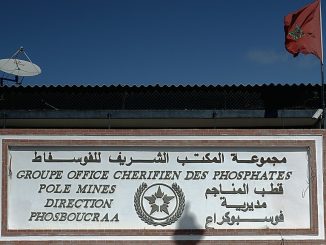
By the end of November 2021, the government of Morocco announced that it had earned $6.45 billion from the export of phosphate from the kingdom and from the occupied territory of Western Sahara. If you add up the phosphate reserves in this entire region, it amounts to 72 percent of the entire phosphate reserves in the world (the second-highest percentage of these reserves is in China, which has around 6 percent). Phosphate, along with nitrogen, makes synthetic fertilizer, a key element in modern food production. While nitrogen is recoverable from the air, phosphates, found in the soil, are a finite reserve. This gives Morocco a tight grip over world food production. There is no doubt that the occupation of Western Sahara is not merely about national pride, but it is largely about the presence of a vast number of resources—especially phosphates—that can be found in the territory.

In 1975, a UN delegation that visited Western Sahara noted that “eventually the territory will be among the largest exporters of phosphate in the world.” While Western Sahara’s phosphate reserves are less than those of Morocco, the Moroccan state-owned firm OCP SA has been mining the phosphate in Western Sahara and manufacturing phosphate fertilizer for great profit. The most spectacular mine in Western Sahara is in Bou Craa, from which 10 percent of OCP SA’s profits come; Bou Craa, which is known as “the world’s longest conveyor belt system,” carries the phosphate rock more than 60 miles to the port at El Aaiún. In 2002, the UN’s Under-Secretary General for Legal Affairs at that time, Hans Corell, noted in a letter to the president of the UN Security Council that “if further exploration and exploitation activities were to proceed in disregard of the interests and wishes of the people of Western Sahara, they would be in violation of the principles of international law applicable to mineral resource activities in Non-Self-Governing Territories.” An international campaign to prevent the extraction of the “conflict phosphate from Western Sahara by Morocco has led many firms around the world to stop buying phosphate from OCP SA. Nutrien, the largest fertilizer manufacturer in the United States that used Moroccan phosphates, decided to stop imports from Morocco in 2018. That same year, the South African court challenged the right of ships carrying phosphate from the region to dock in their ports, ruling that “the Moroccan shippers of the product had no legal right to it.”

Only three known companies continue to buy conflict phosphate mined in Western Sahara: two from New Zealand (Ballance Agri-Nutrients Limited and Ravensdown) and one from India (Paradeep Phosphates Limited).

Human Rights

After the 1991 ceasefire, the UN set up a Mission for the Referendum in Western Sahara (MINURSO). This is the only UN peacekeeping force that does not have a mandate to report on human rights. The UN made this concession to appease the Kingdom of Morocco. The Moroccan government has tried to intervene several times when the UN team in Western Sahara attempted to make the slightest noise about the human rights violations in the region. In March 2016, the kingdom expelled MINURSO staff because the then UN Secretary-General Ban Ki-moon referred to the Moroccan presence in Western Sahara as an “occupation.”

Pressure from the United States is going to ensure that the only realistic outcome of negotiations is for continued Moroccan control of Western Sahara. All parties involved in the conflict are readying for battle. Far from peace, the Abraham Accords are going to accelerate a return to war in this part of Africa.

Vijay Prashad is an Indian historian, editor and journalist. He is a writing fellow and chief correspondent at Globetrotter. He is the chief editor of LeftWord Books and the director of Tricontinental: Institute for Social Research. He is a senior non-resident fellow at Chongyang Institute for Financial Studies, Renmin University of China. He has written more than 20 books, including The Darker Nations and The Poorer Nations. His latest book is Washington Bullets, with an introduction by Evo Morales Ayma.

This article was produced by Globetrotter.

Strugglelalucha256


For first time in 37 years: No cops, ICE or military in large MLK Caravan for Social Justice in Los Angeles

Los Angeles, Jan. 17 — More than a hundred cars and floats joined the MLK Day Caravan for Social Justice down Martin Luther King Jr. Boulevard, decorated with anti-racist, anti-imperialist, pro-people slogans reflecting today’s struggles.

Organizations, including the Southern Christian Leadership conference; the Harriet Tubman Center for Social Justice; African American Writers & Artists Inc.; Friends of Malcolm X Library; Harvard Blvd Block Club; Africa Town Coalition; Black Pact; Union del Barrio; Al-Awda – LA; Veterans for Peace; Topanga Peace Alliance; Boycott Divestment Sanctions (BDS); Socialist Unity Party; Health Care for All – LA; BAYAN USA and more raised the messages of Dr. King today and the various social justice issues that he championed.

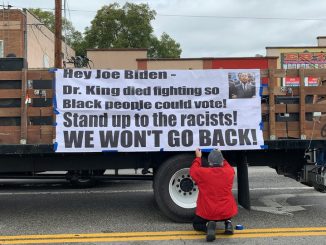
One of the primary focuses of the day was voting rights, demanding that the Biden administration stop surrendering to white supremacists. The day before the caravan in Los Angeles, Dr. King’s son — Martin Luther King III — Andrea Waters King and their daughter Yolanda Renee King, who is 13, led a march in Arizona, demanding Biden do more than talk to stop the further disenfranchisement of Black people.

“This MLK Day we are finally able to be true to Dr. King’s vision of social justice and honor the wishes of his family today,” Jefferson Azevedo declared at the Los Angeles MLK Day event. “That is only because of the unity that over 25 organizations had in fighting to take this King Day back from those who would have the police, ICE and the military and corporate sponsors like insurance companies and fast food parasites in our community, for the past 37 years, stomping on the legacy of Dr. King with messages enabling capitalist exploitation and police terror in our communities.”

This indeed was an unprecedented event. In Los Angeles for the past 37 years the “Kingdom Day Parade,” led by the California branch of the Congress of Racial Equality (CORE – CA), was a corporate-driven event, charging $500 for each grassroots, community organization to participate. Many felt this cost to the community was unnecessary, since corporate sponsors already paid thousands of dollars to attend. This year, however, there was no cost to participants since the Harriet Tubman Center for Social Justice filed for the permit last July on behalf of the Ad Hoc Coalition for the MLK Day March, and successfully fought the police to keep the permit.

“We tried to respectfully negotiate with CORE and were willing to share the permit,” said John Parker, coordinator of the Harriet Tubman Center. “Our only condition — which was also insisted upon by the many Black organizations leading this effort along with other community organizations in the coalition — was to keep the police, military and ICE out of the parade. Unfortunately, the CEO of CORE, Dr. Adrian Dove, insisted the police be included.”

Parker continued: “Given the history of terror by the LAPD and Sheriffs and especially considering the recent killing of a child by the LAPD, that was a non-starter. But our control over the permit, which we had to fight with the LAPD to keep, even threatening legal action, allowed not only greater access for the community to the King Day activities, it also banned the police, ICE and the military from having contingents or any representatives in the procession for the first time in 37 years.”

Ron Gochez of Union del Barrio said, “We’re proud to be here today standing shoulder to shoulder with our Black community and our African sisters and brothers taking the righteous step to say that the LAPD, Sheriffs, ICE and the military have no place in an event to honor Dr. Martin Luther King. We all know that Dr. King was against police brutality, against imperialism and all types of oppression of any kind of people. So, for us today as Latin American people it’s our duty and responsibility to be in solidarity.”

Gochez’ words reflected the tremendous multinational, multi-gender, multi-age participation and especially Black and Brown unity at this event with Latin American, Indigenous, Filipino grassroots organizations helping to organize this event, including the day-of livestreaming courtesy of the Filipino organization BAYAN-USA.

The livestream over Zoom was emceed by Andrew Mayton of the Peoples Power Assembly in Baltimore and Beto Rios of Union del Barrio, allowing those who couldn’t attend the large car caravan to get a bird’s-eye view of the demonstration and commemoration of King.

All of the organizers said this was the beginning of the end for the corporate-sponsored event and that they would work together and gather more grassroots and community and progressive organizations, united in solidarity with each other’s struggles, to make this a yearly event.

Billion Godsun of the Africa Town Coalition said: “Having no law enforcement, military or big corporations involved set a new precedent for how King Day events should be. Even though this first one was a little bit smaller than the traditional parade, a number of people shared that the overall energy was better. We will expand on this and grow next year.”

There were many hurdles to overcome, including the omicron variant and multiple broadcasts by the major corporate media that the King activities for the day were canceled, even though they were sent numerous press releases saying otherwise. In spite of that, the caravan was the largest event in Los Angeles County on MLK Day, and the safest — turning the first proposed march into a caravan with plenty of masks and sanitizer for each float and participating cars. And defying the false news about cancellations, at least a hundred cars and floats participated, and organizers estimate that already thousands of people have seen the livestream of the event.

Rebecka Jackson, a member of the Harriet Tubman Center for Social Justice and the executive director of “Resist This Pac: Give Us The Ballot,” an initiative of Martin Luther King III, said: “For the sake of 14-yr-old Valentina Orellana-Peralta, murdered by the recklessness of the LAPD, we’re not going back. For the sake of George Floyd and Eric Garner and Breonna Taylor and all the victims here in LA of police violence and terror, we’re not going back. This is our day, this is our legacy, not the corporate sponsors, but our united us.”

Photos: Tira Denise Jones-Parker

Strugglelalucha256


The smearing of Emma Watson

Anyone who has ever been critical of Israeli actions toward the Palestinian people knows what to expect next—an avalanche of pit-bull attacks and smears that their criticisms of Israel are motivated by racism and anti-Semitism. The latest example is the response to actress Emma Watson’s pro-Palestinian Instagram post, which led (predictably) to Israeli officials and supporters accusing her of anti-Semitism. Among many others, former Israeli UN Representative Danny Danon—in a tone-deaf post—wrote, “10 points from Gryffindor for being an antisemite.”

The purpose of such false accusations is of course to deflect attention away from what is happening on the ground—the real (war) crimes that Israel is perpetrating against the Palestinian people—to the supposed motivations of the critics. Unable to defend its criminal actions, all that Israel’s increasingly desperate defenders have left is smear and innuendo, as the attacks on Emma Watson make clear.

But the accusations may also have some other unintended consequences—they make real anti-Semitism (the right-wing fascist variety that really does hate Jews as Jews) more respectable and legitimate—and thus even more deadly. In that sense, the Zionist defenders of Israel are among the most dangerous purveyors of contemporary anti-Semitism—the hatred of Jews as a collective.

There are two steps to how these unintended consequences are blundered into.

First, there is the claim that Israel and Jewishness are the same thing—that Israel is not the state of all its citizens but is the state of the Jewish people alone. The nation-state law, passed in 2018—which gives Jews alone the right of self-determination in Israel, recognizing Hebrew as the sole official national language, and establishing “Jewish settlement as a national value”—makes the link between the Israeli state and Jewishness formal and official. Similarly, the widely adopted International Holocaust Remembrance Alliance (IHRA) definition of anti-Semitism cites one example as “the targeting of the state of Israel, conceived as a Jewish collectivity” and has a similar thrust—Israel equals Jews.

The second step is the increasing visibility of Israeli violence toward Palestinians. Although Israeli propaganda had succeeded for decades in deflecting mainstream attention away from Israel’s crimes, the cloak of invisibility created by its public relations efforts—its hasbara—is disintegrating before the force of reality, its own increasingly cruel and vicious actions, as well as the work of the growing number of pro-Palestinian activists around the world who are using the power of social media to bypass the normal media gatekeepers. While anyone with a passing knowledge of the situation has long known about the brutal matrix of violence and control—from the river to the sea—exerted by Israel over the Palestinian population, that understanding is now increasingly visible and mainstream. (As evidence of this, Emma Watson’s post quickly drew over 1 million likes.)

The problem for all of us, not just Israel, is when these two things are put together—the equation of Israel with Jews and the visibility of Israeli atrocities—then Jews as a whole become tarred with the crimes of the Israeli state. As the Israeli journalist Gideon Levy wrote in 2015, “Some of the hatred toward Jews elsewhere in the world—emphatically, only some and not all of it—is fed by the policies of the state of Israel and especially by its continuing occupation and abuse, decade after decade, of the Palestinian people.”

In this process, the danger is that actually existing anti-Semitism is being made more respectable as there seems to be some rational basis for it—Israeli atrocities. At a time when the real and dangerous anti-Semitism of the fascist right is on the rise—remember the white supremacist Charlottesville thugs were chanting “Jews will not replace us”—the last thing that is needed is to give it any sheen of respectability, as, albeit unwittingly, do those who insist on the indissoluble link between the brutal violence of the Zionist project and Jewishness.

Such a link is of course nonsense. Jews of all political stripes have long been on the front lines of the fight against the racist Zionist enterprise, insisting that it has no part in their own Jewish values based on a belief in universal—not particular—human rights. It is why groups such as Rabbis for Human Rights act as human shields against the attacks on Palestinians by settlers and the Israel Defense Forces. The fight against Israeli policies and Zionist violence is driven by the concerns of social justice and solidarity, not racism toward Jews.

Emma Watson is part of an exponentially fast-growing choir of decent like-minded men and women of good faith all over the world, united in their belief that all people, irrespective of their ethnicity or their religion or their nationality, must have inalienable human rights, including the right to life and liberty and self-determination, from every river to every sea everywhere. That includes the long-suffering people of Palestine. The attempted weaponization of anti-Semitism against this movement not only weakens the term as a description of real fascist racism, but in fact serves to legitimate it. If criticizing cruel Israeli policies toward the Palestinians is anti-Semitic, then what is so wrong with anti-Semitism, so this misguided line of thinking goes. As Robert Fisk once noted, “if this continued campaign of abuse against decent people, trying to shut them up by falsely accusing them of anti-Semitism, continues, the word ‘anti-Semitism’ will begin to become respectable. And that is a great danger.”

The solution to this is clear: break the erroneous link between Israel and all Jews (between Israel and Judaism) and concentrate on the reality that the Zionist enterprise is an old-fashioned settler-colonial project—driven in large part by the geopolitical interests of its principal sponsor, the United States. Once we eliminate the obfuscation and confusion that result from the lazy (but calculated) accusation of anti-Semitism, the building of an unstoppable international movement of justice for the Palestinians can continue. Let’s get to it!

This article was produced by Globetrotter.

Sut Jhally is professor emeritus at the University of Massachusetts at Amherst and founder and executive director of the Media Education Foundation.

Roger Waters is a musician

Strugglelalucha256


After a year of Biden, why do we still have Trump’s foreign policy?


Joe Biden and the Democrats were highly critical of Donald Trump’s foreign policy, so it was reasonable to expect that Biden would quickly remedy its worst impacts. As a senior member of the Obama administration, Biden surely needed no schooling on Obama’s diplomatic agreements with Cuba and Iran, both of which began to resolve longstanding foreign policy problems and provided models for the renewed emphasis on diplomacy that Biden was promising.Tragically for America and the world, Biden has failed to restore Obama’s progressive initiatives, and has instead doubled down on many of Trump’s most dangerous and destabilizing policies. It is especially ironic and sad that a president who ran so stridently on being different from Trump has been so reluctant to reverse his regressive policies. Now the Democrats’ failure to deliver on their promises with respect to both domestic and foreign policy is undermining their prospects in November’s midterm election.Here is our assessment of Biden’s handling of 10 critical foreign policy issues:

1. Prolonging the agony of the people of Afghanistan.It is perhaps symptomatic of Biden’s foreign policy problems that the signal achievement of his first year in office was an initiative launched by Trump, to withdraw the U.S. from its 20-year war in Afghanistan. But Biden’s implementation of this policy was tainted by the same failure to understand Afghanistan that doomed and dogged at least three prior administrations and the hostile military occupation for 20 years, leading to the speedy restoration of the Taliban government and the televised chaos of the U.S. withdrawal.

Now, instead of helping the Afghan people recover from two decades of U.S.-inflicted destruction, Biden has seized $9.4 billion in Afghan foreign currency reserves, while the people of Afghanistan suffer through a desperate humanitarian crisis. It is hard to imagine how even Donald Trump could be more cruel or vindictive.

2. Provoking a crisis with Russia over Ukraine.Biden’s first year in office is ending with a dangerous escalation of tensions at the Russia/Ukraine border, a situation that threatens to devolve into a military conflict between the world’s two most heavily armed nuclear states. The U.S. bears much responsibility for this crisis by supporting the violent overthrow of the elected government of Ukraine in 2014, backing NATO expansion right up to Russia’s border, and arming and training Ukrainian forces.

Biden’s failure to acknowledge Russia’s legitimate security concerns has led to the present impasse, and Cold Warriors within his administration are threatening Russia instead of proposing concrete measures to de-escalate the situation.

3. Escalating Cold War tensions and a dangerous arms race with China.President Trump launched a tariff war with China that economically damaged both countries, and reignited a dangerous Cold War and arms race with China and Russia to justify an ever-increasing U.S. military budget.

After a decade of unprecedented U.S. military spending and aggressive military expansion under George W. Bush and Obama, the U.S. “pivot to Asia” militarily encircled China, forcing it to invest in more robust defense forces and advanced weapons. Trump, in turn, used China’s strengthened defenses as a pretext for further increases in U.S. military spending, launching a new arms race that has raised the existential risk of nuclear war to a new level.

Biden has only exacerbated these dangerous international tensions. Alongside the risk of war, his aggressive policies toward China have led to an ominous rise in hate crimes against Asian Americans, and created obstacles to much-needed cooperation with China to address climate change, the pandemic and other global problems.

4. Abandoning Obama’s nuclear agreement with Iran.After Obama’s sanctions against Iran utterly failed to force it to halt its civilian nuclear program, he finally took a progressive, diplomatic approach, which led to the JCPOA nuclear agreement in 2015. Iran scrupulously met all its obligations under the treaty, but Trump withdrew the U.S. from the agreement in 2018. Trump’s withdrawal was vigorously condemned by Democrats, including candidate Biden, and Sen. Bernie Sanders promised to rejoin the JCPOA on his first day in office if he became president.

Instead of immediately rejoining an agreement that worked for all parties, the Biden administration thought it could pressure Iran to negotiate a “better deal.” Exasperated Iranians instead elected a more conservative government and Iran moved forward on enhancing its nuclear program.

A year later, and after eight rounds of shuttle diplomacy in Vienna, Biden has still not rejoined the agreement. Ending his first year in the White House with the threat of another Middle East war is enough to give Biden an “F” in diplomacy.

5. Backing Big Pharma over a People’s Vaccine.Biden took office as the first COVID vaccines were being approved and rolled out across the U.S. and the world. Severe inequities in global vaccine distribution between rich and poor countries were immediately apparent and became known as “vaccine apartheid.”

Instead of manufacturing and distributing vaccines on a nonprofit basis to tackle the pandemic as the global public health crisis that it is, the U.S. and other Western countries have chosen to maintain the neoliberal regime of patents and corporate monopolies on vaccine manufacture and distribution. The failure to open up the manufacture and distribution of vaccines to poorer countries gave the COVID virus free rein to spread and mutate, leading to new global waves of infection and death from the delta and omicron variants.

Biden belatedly agreed to support a patent waiver for COVID vaccines under World Trade Organization (WTO) rules, but with no real plan for a “People’s Vaccine,” Biden’s concession has made no impact on millions of preventable deaths.

6. Ensuring catastrophic global warming at COP26 in Glasgow.After Trump stubbornly ignored the climate crisis for four years, environmentalists were encouraged when Biden used his first days in office to rejoin the Paris climate accord and cancel the Keystone XL Pipeline.

But by the time Biden got to Glasgow, he had let the centerpiece of his own climate plan, the Clean Energy Performance Program (CEPP), be stripped out of the Build Back Better bill in Congress at the behest of fossil-fuel industry sock puppet Joe Manchin, turning the U.S. pledge of a 50% cut from 2005 emissions by 2030 into an empty promise.

Biden’s speech in Glasgow highlighted China and Russia’s failures, neglecting to mention that the U.S. has higher emissions per capita than either of them. Even as COP26 was taking place, the Biden administration infuriated activists by putting oil and gas leases up for auction for 730,000 acres of the American West and 80 million acres in the Gulf of Mexico. At the one-year mark, Biden has talked the talk, but when it comes to confronting Big Oil, he is not walking the walk, and the whole world is paying the price.

7. Political prosecutions of Julian Assange, Daniel Hale and Guantánamo torture victimsUnder Biden, the United States remains a country where the systematic killing of civilians and other war crimes go unpunished, while whistleblowers who muster the courage to expose these horrific crimes to the public are prosecuted and jailed as political prisoners.

In July 2021, former drone pilot Daniel Hale was sentenced to 45 months in prison for exposing the killing of civilians in America’s drone wars. WikiLeaks publisher Julian Assange still languishes in Belmarsh Prison in England, after 11 years fighting extradition to the United States for exposing U.S. war crimes.

Twenty years after the U.S. set up an illegal concentration camp at Guantánamo Bay, Cuba, to imprison 779 mostly innocent people kidnapped around the world, 39 prisoners remain there in illegal, extrajudicial detention. Despite promises to close this sordid chapter of U.S. history, the prison is still functioning and Biden is allowing the Pentagon to actually build a new closed courtroom at Guantanamo to more easily keep the workings of this gulag hidden from public scrutiny.

8. Economic siege warfare against the people of Cuba, Venezuela and other countries.Trump unilaterally rolled back Obama’s reforms on Cuba and recognized unelected Juan Guaidó as the “president” of Venezuela, as the U.S. tightened the screws on its economy with “maximum pressure” sanctions.

Biden has continued Trump’s failed economic siege warfare against countries that resist U.S. imperial dictates, inflicting endless pain on their people without seriously imperiling, let alone bringing down, their governments. Brutal U.S. sanctions and efforts at regime change have universally failed for decades, serving mainly to undermine the U.S. claim to democratic and human rights credentials.

Guaidó is now the least popular opposition figure in Venezuela, and genuine grassroots movements opposed to U.S. intervention are bringing popular democratic and socialist governments to power across Latin America, in Bolivia, Peru, Chile and Honduras — and maybe Brazil in 2022.

9. Still supporting Saudi Arabia’s war in Yemen, and its repressive ruler.Under Trump, Democrats and a minority of Republicans in Congress gradually built a bipartisan majority that voted to withdraw from the Saudi-led coalition attacking Yemen and to stop sending arms to Saudi Arabia. Trump vetoed their efforts, but the Democratic election victory in 2020 should have led to an end to the war and humanitarian crisis in Yemen.

Instead, Biden only issued an order to stop selling “offensive” weapons to Saudi Arabia, without clearly defining that term, and went on to OK a $650 million weapons sale. The U.S. still supports the Saudi war, even as the resulting humanitarian crisis kills thousands of Yemeni children. And despite Biden’s pledge to treat the Saudis’ cruel leader, Crown Prince Mohammad bin Salman, as a pariah, Biden refused to even sanction MBS for his barbaric murder of Washington Post journalist Jamal Khashoggi.

10. Still complicit in illegal Israeli occupation, settlements and war crimes.The U.S. is Israel’s largest arms supplier, and Israel is the world’s largest recipient of U.S. military aid (approximately $4 billion annually), despite its illegal occupation of Palestine, widely condemned war crimes in Gaza and illegal settlement building. U.S. military aid and arms sales to Israel clearly violate the U.S. Leahy Laws and Arms Export Control Act.

Donald Trump was flagrant in his disdain for Palestinian rights, including transferring the U.S. embassy from Tel Aviv to a property in Jerusalem that is only partly within Israel’s internationally recognized borders, a move that infuriated Palestinians and drew international condemnation.

But nothing has changed under Biden. The U.S. position on Israel and Palestine is as illegitimate and contradictory as ever, and the U.S. embassy remains on illegally occupied land. In May, Biden supported the latest Israeli assault on Gaza, which killed 256 Palestinians, half of them civilians, including 66 children.

Conclusion

Each part of this foreign policy fiasco costs human lives and creates regional, even global, instability. In every case, progressive alternative policies are readily available. The only thing lacking is political will and independence from corrupt vested interests.

The U.S. has squandered unprecedented wealth, global goodwill and a historic position of international leadership to pursue unattainable imperial ambitions, using military force and other forms of violence and coercion in flagrant violation of the UN Charter and international law.

As a presidential candidate, Biden promised to restore America’s position of global leadership, but as president he has instead doubled down on the policies through which the U.S. lost that position in the first place, under a succession of Republican and Democratic administrations. Trump was only the latest iteration in America’s race to the bottom.

Biden has wasted a vital year doubling down on Trump’s failed policies. In the coming year, we hope that the public will remind Biden of its deep-seated aversion to war and that he will respond, however reluctantly, by adopting more rational ways.

Medea Benjamin, co-founder of CODEPINK for Peace, is the author of “Inside Iran: The Real History and Politics of the Islamic Republic of Iran” and “Kingdom of the Unjust: Behind the U.S.-Saudi Connection.”Nicolas J.S. Davies is an independent journalist, a researcher for CODEPINK and the author of “Blood on Our Hands: The American Invasion and Destruction of Iraq.”
Strugglelalucha256


Matar de hambre al pueblo de Afganistán: ¿Una determinación de los países ricos de occidente?

El 11 de enero de 2022, el Coordinador de Ayudas de Emergencia de la ONU, Martin Griffiths, hizo un llamado a la comunidad internacional para que ayude a recaudar 4.400 millones de dólares destinados a ayuda humanitaria para Afganistán, calificando este esfuerzo como “el mayor llamado jamás realizado por un solo país para ayuda humanitaria”. Esta cantidad es necesaria “con la esperanza de recuperar los servicios básicos que están colapsando allí”, según la ONU. Si este llamado no tiene respuesta, dijo Griffiths, entonces “el próximo año [2023] estaremos pidiendo diez mil millones de dólares”.

Diez mil millones es una cifra significativa. Unos días antes de que los talibanes tomaran el poder en Afganistán a mediados de agosto de 2021, el Gobierno de Estados Unidos anunció la incautación de 9.500 millones de dólares en activos afganos que estaban depositados en el sistema bancario estadounidense. Bajo la presión del Gobierno de EE. UU., el Fondo Monetario Internacional también le negó a Afganistán acceso a 455 millones de dólares de su cuota de derechos especiales de giro, el activo de reserva internacional que el FMI proporciona a sus países miembros para complementar sus reservas originales. Estas dos cifras (que constituyen las reservas monetarias de Afganistán) ascienden a unos diez mil millones de dólares, la cifra exacta que Griffiths dijo que el país necesitaría si las Naciones Unidas no consiguen inmediatamente un desembolso de emergencia para proporcionar ayuda humanitaria a Afganistán.

Un análisis reciente titulado “Cómo mitigar las crisis económicas y humanitarias de Afganistán”, realizado por el Dr. William Byrd, economista especializado en desarrollo del Instituto de la Paz de Estados Unidos; señalaba que las crisis económicas y humanitarias a las que se enfrenta el país son consecuencia directa del corte de ocho mil millones de dólares de ayuda anual a Afganistán y de la congelación de 9.500 millones de dólares de las “reservas de divisas” del país por parte de Estados Unidos. El análisis señalaba, además, que la suspensión de las sanciones – otorgada por el Departamento del Tesoro de Estados Unidos y el Consejo de Seguridad de las Naciones Unidas el 22 de diciembre de 2021 – para proporcionar ayuda humanitaria a Afganistán debería extenderse también a “los negocios privados y las transacciones comerciales”. Byrd también mencionó la necesidad de encontrar formas de pagar los salarios de los trabajadores y trabajadoras de salud, profesores, profesoras y otros proveedores de servicios esenciales para evitar un colapso económico en Afganistán y sugirió utilizar “una combinación de ingresos afganos y fondos de ayuda” para este fin.

Mientras tanto, en una reunión entre la enviada especial de la ONU para Afganistán, Deborah Lyons, y el viceministro de Asuntos Exteriores de Afganistán, Sher Mohammad Abbas Stanikzai – realizada a principios de diciembre de 2021 – surgió la idea de pagar los salarios directamente a los profesores y profesoras.

Ninguna de estas dos propuestas parece haber sido tomada en cuenta en Washington, D.C.

Una crisis humanitaria

En julio de 2020, antes de que la pandemia golpeara con fuerza el país, y mucho antes de que los talibanes volvieran al poder en Kabul, el Ministerio de Economía de Afganistán dijo que el 90% de la población del país vivía por debajo del umbral de pobreza internacional (menos de 2 dólares por día). Mientras tanto, desde 2021 (cuando empezó la guerra en Afganistán) el Gobierno de Estados Unidos ha gastado 2,313 billones de dólares en sus esfuerzos bélicos, según las cifras proporcionadas por el Instituto Watson de Asuntos Internacionales y Públicos de la Universidad de Brown. A la vez – y a pesar de llevar 20 años en esta guerra – el Gobierno de Estados Unidos sólo gastó 145.000 millones de dólares en la reconstrucción de las instituciones del país, según sus propias estimaciones. En agosto, antes de que los talibanes derrotaran a las fuerzas militares estadounidenses, el Inspector General Especial para la Reconstrucción de Afganistán (SIGAR) del Gobierno de Estados Unidos publicó un importante informe que evaluaba el dinero gastado por Estados Unidos en el desarrollo del país. Los autores escribieron que, a pesar de algunos modestos avances, “el progreso ha resultado escurridizo y las perspectivas de mantenerlo son dudosas”. El informe señalaba la falta de desarrollo de una estrategia coherente por parte del Gobierno estadounidense, la excesiva dependencia de la ayuda exterior y la corrupción generalizada dentro del proceso de contratación de Estados Unidos como algunas de las razones que finalmente condujeron a un “esfuerzo de reconstrucción problemático” en Afganistán. Esto supuso un enorme despilfarro de recursos para los afganos, que necesitaban desesperadamente estos recursos para reconstruir su país, destruido por años de guerra.

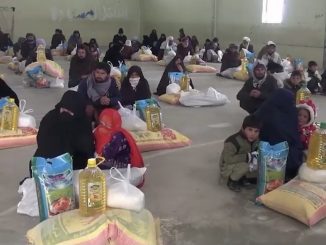
El 1 de diciembre de 2021, el Programa de las Naciones Unidas para el Desarrollo (PNUD) publicó un informe vital sobre la devastadora situación de Afganistán. En la última década de la ocupación estadounidense, la renta anual per cápita en Afganistán cayó de 650 dólares en 2012 a unos 500 dólares en 2020 y se espera que caiga a 350 dólares en 2022 si la población aumenta al mismo ritmo que en el pasado reciente. El producto interior bruto del país se contraerá un 20% en 2022, seguido de una caída del 30% en los años siguientes. Vale la pena citar íntegramente las siguientes frases del informe del PNUD para comprender la magnitud de la crisis humanitaria a la que se enfrenta la población del país: “Según estimaciones recientes, sólo el 5% de la población tiene suficiente para comer, mientras que se calcula que el número de personas que padecen hambre aguda ha alcanzado la cifra récord de 23 millones. Es probable que casi 14 millones de niños se enfrenten a niveles de crisis o emergencia de inseguridad alimentaria este invierno, y se espera que 3,5 millones de niños menores de cinco años sufran desnutrición aguda, y un millón de niños corren el riesgo de morir de hambre y bajas temperaturas”.

Esperanzas

La crisis humanitaria que se está desencadenando en Afganistán es el motivo del llamado del 11 de enero a la comunidad internacional por parte de la ONU. El 18 de diciembre de 2021, el Consejo de Ministros de Asuntos Exteriores de la Organización de Cooperación Islámica (OCI) celebró una reunión de emergencia en Islamabad, Pakistán (convocada por Arabia Saudí) para tratar el tema de Afganistán. Fuera de la sala de reuniones – que se limitó a elaborar una declaración –, los distintos ministros de Asuntos Exteriores se reunieron con el ministro interino de Asuntos Exteriores de Afganistán, Amir Khan Muttaqi. Durante su estancia en Islamabad, Muttaqi se reunió con el representante especial de Estados Unidos para Afganistán, Thomas West. Un alto funcionario de la delegación estadounidense dio la siguiente declaración a Kamran Yousaf, del Express Tribune (Pakistán): “Hemos trabajado discretamente para que el dinero en efectivo… [entre] en el país en denominaciones cada vez mayores”. Por otro lado, uno de los ministros de Asuntos Exteriores presente en la reunión de la OCI me dijo que los Estados de la OCI ya están trabajando discretamente para enviar ayuda humanitaria a Afganistán.

Cuatro días después, el 22 de diciembre, Estados Unidos presentó una resolución (2615) en el Consejo de Seguridad de la ONU que instaba a una “excepción humanitaria” a las duras sanciones contra Afganistán. Durante la reunión, que duró aproximadamente 40 minutos, nadie planteó que Estados Unidos, que propuso la resolución, había decidido congelar los 10.000 millones de dólares que le correspondían a Afganistán. Sin embargo, la aprobación de esta resolución fue muy celebrada, ya que todo el mundo comprende la gravedad de la crisis que atraviesa este Estado. Mientras tanto, Zhang Jun, representante permanente de China ante la ONU, planteó problemas relacionados con los efectos de largo alcance de dichas sanciones e instó al Consejo a “guiar a los talibanes para que consoliden las estructuras provisionales, permitiéndoles mantener la seguridad y la estabilidad, y promover la reconstrucción y la recuperación”.

Un alto cargo del banco central afgano (Da Afghanistan Bank) me dijo que se espera que entren en el país recursos muy necesarios como parte de la ayuda humanitaria que están proporcionando los vecinos de Afganistán, en particular de China, Irán y Pakistán (la ayuda de India llegará a través de Irán). También ha llegado ayuda de otros países vecinos, como Uzbekistán, que envió 3.700 toneladas de alimentos, combustible y ropa de invierno, y Turkmenistán, que envió combustible y alimentos. A principios de enero de 2022, Muttaqi viajó a Teherán (Irán) para reunirse con el ministro de Asuntos Exteriores iraní, Hossein Amirabdollahian, y con el representante especial de Irán para Afganistán, Hassan Kazemi Qomi. Aunque Irán no ha reconocido al Gobierno talibán como el Gobierno oficial de Afganistán, ha estado en estrecho contacto este “para ayudar al pueblo despojado de Afganistán a reducir su sufrimiento”. Por su parte, Muttaqi ha subrayado que su Gobierno quiere comprometer a las grandes potencias sobre el futuro de Afganistán.

El 10 de enero, un día antes de que la ONU hiciera su último llamado para acudir en ayuda de Afganistán, un grupo de organizaciones de caridad y ONG (organizados por la Zakat Foundation of America) celebró en Washington una reunión del Afghan Peace and Humanitarian Task Force. La mayor preocupación es la crisis humanitaria a la que se enfrenta el pueblo de Afganistán, especialmente la inminente cuestión de la hambruna en el país, con las carreteras ya cerradas debido al duro invierno que se vive en la región.

En noviembre de 2021, el viceministro de Asuntos Exteriores de Afganistán, Sher Mohammad Abbas Stanikzai, instó a Estados Unidos a reabrir su embajada en Kabul; unas semanas más tarde, dijo que Estados Unidos es responsable de la crisis en Afganistán, y que “debería desempeñar un papel activo” en la reparación del daño que ha hecho al país. Esto resume el estado de ánimo actual en Afganistán: abierto a las relaciones con Estados Unidos, pero sólo después de que este permita al pueblo afgano acceder su propio dinero, el de la nación, para salvar vidas afganas.

Este artículo fue producido para Globetrotter.

Vijay Prashad es un historiador, editor y periodista indio. Es miembro de la redacción y corresponsal en jefe de Globetrotter. Es editor en jefe de LeftWord Books y director del Instituto Tricontinental de Investigación Social. También es miembro senior no-residente del Instituto Chongyang de Estudios Financieros de la Universidad Renmin de China. Ha escrito más de 20 libros, entre ellos The Darker Nations y The Poorer Nations. Su último libro es Washington Bullets, con una introducción de Evo Morales Ayma.

Strugglelalucha256


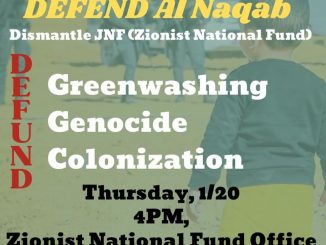
New York City: Emergency rally for Palestine, Jan. 20

Join @AlAwda on Thurs, Jan 20th, 4pm at Zionist National Fund, 42 E 69th St NYC

Answer the call from Palestine to #DefendAlNaqab

-Mobilize to support Al Naqab of Palestine
-Demand State & Federal Aurhorities
#ShutDownGenocide & racism #ShutDownJNF
-Sanction “israel” #ZionistWarCrimes & settler organizations in US & globally until the dismantlement of the zionist colonization project
-Provide #Palestinians with all supplies needed to defend & preempt zionist violence!

Strugglelalucha256


Aafia Siddiqui, political prisoner

The media coverage of the hostage-taking at a synagogue in Texas has been predictably hysterical, Islamophobic and inaccurate about Aafia Siddiqui, the apparent political cause of the hostage-taker Malik Faisad Akram.

According to his family in England he has “mental health issues.” He was “said to have” weapons and explosives. He was “said to have” threatened the four hostages but everyone seems to agree no one was harmed. He wanted Siddiqui free from the near-by maximum security Carswell Prison; he wanted to speak to her. Under heavy criticism the FBI has said that his hostage-taking had nothing to do with their being Jews, “not his issue.” But to the press, Siddiqui “has a history of anti-Semitism,” hence the universal media criticism. To the police, FBI, government, killing Akram represented a successful outcome to the crisis.

Siddiqui’s lawyer and family distanced themselves from Akram’s actions, but to say they remain completely frustrated by their thwarted attempts to free a very ill, frail, and innocent Aafia Siddiqui, after repeated pleas to the U.S. government and unfulfilled promises by the Pakistani government, would be to vastly understate the case.

Pakistani-born Boston graduate student Aafia Siddiqui’s crime was to be caught in America’s post 9/11 anti-Muslim hysteria. She had come to America in 1990 to study, earning a biology degree and then a Ph.D in neuroscience from MIT. Her colleagues called her quiet and religious (but not a fundamentalist).

Her marriage to Mohammed Amjad Khan ended in divorce when he proved to be violent and more fundamentalist than Siddiqui. She was mistakenly accused of anti-American Muslim activism initially (partially because of mistaken identity), but the accusations ballooned. In the early War On Terror days, “associations” became much more significant and damning.

Siddiqui ended up on Attorney General John Ashcroft’s “Watchlist.” As the Big Lies of government grew, soon the New York Post was calling her “Lady Al Queda.”

Once the government labeled her a “terrorist,” she had no chance of escaping the Empire’s punishment. When her true story began to emerge, it was necessary to take action. While visiting in Pakistan, helped by Pakistani-American operatives, she was “disappeared.” Her youngest child was killed when she was taken, and her other two children imprisoned separately for years. She was beaten, raped, tortured and kept in solitary in black-site prisons of the American Empire, particularly in Afghanistan. Other prisoners have testified that they saw her at Bagram, a prison from which the Obama administration prevented prisoners’ court appearances because they might talk about the conditions of their imprisonment. Eventually Aafia Siddiqui would be set up for final punishment and disposal.

From my book Women Politicals in America:

At the trial—in January 2010—the soldiers said that Aafia Siddiqui, accused would-be assassin and presumed Al Qaeda terrorist, did, in fact, get hold of an unsecured M-4 automatic rifle and open fire on U.S. soldiers and FBI agents in Ghazni, Afghanistan. The day before, she had been picked up by local policemen as a “possible suicide bomber” because she had been “loitering” in a public square with a young boy [whose identity is not clear]. She carried instructions to create biological weapons, descriptions of U.S. “military assets,” numerous jars containing “chemical substances,” and documents containing words like “Empire State Building” and “Brooklyn Bridge.” The soldiers said that the day after her discovery and arrest, an American army captain, a warrant officer, two army interpreters and two FBI agents came to question Siddiqui at Ghazni police headquarters. The soldiers said that none of those men were “aware that Siddiqui was being held, unsecured, behind [a] curtain.” Oddly, no one looked behind it. And also oddly, the American warrant officer placed his M-4 rifle next to the curtain. What happened next, said the soldiers, was that Siddiqui pulled the rifle to her, unlatched the safety, pointed the gun at the captain, and while one of the interpreters grabbed for the gun, Siddiqui fired the gun twice. The soldiers agreed she had said, “Get the fuck out of here!” She hit no one.

The soldiers said the interpreter knocked her to the ground and the warrant officer fired “approximately two rounds” into Siddiqui’s stomach. She collapsed, unconscious. FBI special Agent Eric Negron testified at her trial that he saw the rifle raised (although he could not see her face behind the curtain). Negron said that after she was shot he helped restrain the struggling Siddiqui. “I had to strike her several times with a closed fist across the face.” Finally she “either fainted or faked that she had fainted” and was handcuffed. The soldiers had successfully restrained the suspected terrorist Siddiqui. Although her prints were not on the rifle, the holes in the police station wall put there by the rifle Siddiqui allegedly fired were proved to have been there before the July 2008 incident, and since, if she had tried to kill the soldiers, she missed and was herself grievously shot in the abdomen, her sentence seemed disproportionate. Aafia Siddiqui was given 86 years in prison. She had been labeled a terrorist enemy of the Empire and its soldiers, and her case was disposed of accordingly.

Siddiqui had been extradited for the offense of attempting to kill soldiers, but she was tried, completely illegally, as a notorious female terrorist. She was not allowed to speak of her torture or the killing of her baby. The trial — then as now — of a “terrorist, as with Julian Assange, allows for only the government/prosecutorial side. The defendant cannot win. Siddiqui was also in very bad shape, physically and mentally during her trial, with a badly dressed stomach wound that the judge had to intervene to have treated. She was forced to undergo strip searches every day and was forced to testify. When she mentioned being in a secret prison, with her children tortured in front of her, the testimony was stricken from the record. She also, and this is arguably something the hostage-taker Malik Faisad Akram was aware of, did not want “Zionists” chosen as jurors and said her guilty verdict came from Israel, not America. Some said she was irrational which was entirely possible, but with the anti-Muslim elements of her trial, perhaps not so irrational.

She has been in prison since 2010 and has, according to her family, suffered unjust punishments within the prison, and her medical problems are not treated. For much of the last 11 years, she has also not been able to communicate with her family. According to the Free Aafia website, maintained by her family and friends, she was attacked last July and suffered serious injuries. After a number of years, she and her family are still waiting for Pakistani Prime Minister Imran Khan to follow through on promises to help free her from the Empire’s prison. For the press to continue to call her a hardened terrorist and to overlook the treatment, the torture she has endured at American hands, echoes the ignorant liberal sentiment that Afghanistan is so much worse off without the American government there to torture and kill. I would like to end this with a 2012 statement from Moazzam Begg, prisoner at U.S. Air Force Base, Bagram, Afghanistan:

Of all the abuses [prisoner Abu Yahya al-Libi] describes in his account, the presence of a woman and her humiliation and degradation were the most inflammatory to all the prisoners [at Bagram]—they would never forget it. He describes how she was regularly stripped naked and manhandled by guards, and how she used to scream incessantly in isolation for two years. He said prisoners protested her treatment, going on hunger strike, feeling ashamed they could do nothing to help. He described her in detail: a Pakistani mother—torn away from her children—in her mid-thirties, who had begun to lose her mind. Her number, he said, was 650.

Linda Ford is a retired history professor, living in Madison, NY.  She is the author of Iron-Jawed Angels: The Suffrage Militancy of the National Woman’s Party, and Women Politicals:  From Mother Jones to Lynne Stewart.

Source: Countercurrents

Strugglelalucha256


Brooklyn, NYC: Speak out to free Ahmad Sa’adat and all Palestinian prisoners, Jan. 22

SATURDAY, JANUARY 22, 2022 AT 2 PM
Speak out to free Ahmad Sa’adat and all Palestinian prisoners
7114 5th Ave, Brooklyn, NY

Join our collective call for the freedom of Ahmad Sa’adat and all Palestinian prisoners. Take action to escalate the boycott of Israel, end aid and support to Israel, organize for justice in Palestine and resist imperialism and colonialism.

Strugglelalucha256


Richmond: 5th Annual Virginia Prison Justice Rally, Jan. 22

SATURDAY AT 11 AM – 2:30 PM
5th Annual VIRGINIA PRISON JUSTICE RALLY!
Monroe Park, Richmond, Va.

VIRGINIA PRISON JUSTICE
CAR CARAVAN & RALLY!
Saturday, Jan. 22, 2022
* Bring Back Parole!
* End Solitary Confinement!
* Outside Oversight over Virginia’s Prisons & Jails!
* Pass “Second Look” Resentencing!
CAR CARAVAN:
11 am – GATHER in the parking lot by the Devil’s Half-Acre (site of Lumpkin’s jail),
just south of East Broad Street in Richmond between I-95 & the CSX railroad tracks.
(On Google Maps search for “Lumpkin’s Slave Jail Richmond”)
11:45 am – Begin the CAR CARAVAN
RALLY!
1 – 2:30 pm – RALLY in Monroe Park, 620 W. Main St, Richmond, VA 23220.
(On Google Maps search for “Monroe Park Richmond”)
Please show your concern for others: WEAR A MASK & SOCIALLY DISTANCE.
This annual rally, sponsored by the Virginia Prison Justice Network, is Virginia’s largest gathering supporting the human rights of prisoners. As the General Assembly meets to vote on bills affecting the lives of our communities, we want the state’s legislators to know that addressing the injustices in Virginia’s legal and prison systems must be a priority. No matter who is in the governor’s mansion, we the people can effect change if we come out in massive numbers and DEMAND it!
YOU CAN HELP by spreading the word and making plans to join us at the rally!
MORE INFORMATION will be posted as it becomes available. (See contact information below.)
To VOLUNTEER to help, email DefendersFJE@hotmail.com or call or text 804-644-5834.
VIRGINIA PRISON JUSTICE NETWORK
A statewide alliance of 21 prisoner advocacy organizations founded in 2018.
Web: vapjn.wordpress.com
Facebook: Virginia Prison Justice Network
Email: vapjn1@gmail.com
Strugglelalucha256
https://www.struggle-la-lucha.org/2022/page/79/