Nicaragua stands up to U.S. election interference

Celebration of the 42nd anniversary of the Sandinista Revolution in Managua, Nicaragua, July 19.

On Sunday, Nov. 7, voters in Nicaragua will go to the polls in elections for president, vice president and National Assembly representatives. According to polls, they are likely to hand a convincing victory to incumbent President Daniel Ortega and the Sandinista party. Wall Street, Washington and reactionary forces throughout Latin America are not happy about it.

Reports in mainstream U.S. media present as fact that the upcoming elections will be “fraudulent” and denounce “dictator” Ortega’s administration for detaining opposition leaders and businesspeople. 

Left out is the fact that those who’ve been arrested, detained or disqualified from the elections have been exposed for participating in the violent 2018 anti-government protest movement and collaborating with Western governments and NGOs to halt the country’s progressive social reforms.

Rarely mentioned is that seven political parties, including pro-U.S. opposition parties, are on the ballot.

“It is every country’s right to defend its peace and sovereignty. That is what we will do, in accordance with the United Nations Charter. The Nicaraguan people are the only ones responsible to resolve their problems,” President Ortega declared Oct. 26.

The Nicaraguan Ministry of Foreign Affairs has condemned U.S. Ambassador Kevin Sullivan. A Donald Trump appointee kept in his position by Joe Biden, Sullivan continues a long and inglorious tradition of U.S. diplomatic personnel coordinating counterrevolutionary plots and scheming with the CIA against the peoples of Latin America.

“We demand that Mr. Sullivan cease his covert attacks, his hypocritical salutations, disguised as a diplomatic courtesy that he abandoned long ago, and that rather has been, and is, an example of the continuous, perverse, detestable, invasive interference of the U.S. in our Nicaragua, so many abusive and criminal interventions that we have denounced and will continue to denounce,” according to the ministry’s Oct. 11 statement.

A delegation from the U.S., led by the Nicaragua Network/Alliance for Global Justice, visited the country from Oct. 3-10 to observe election preparations firsthand and investigate Nicaragua’s progress in the fight against COVID-19. The delegation met with numerous government officials and leaders of the National Assembly. They also traveled to cities and towns throughout the country to see Nicaragua’s public healthcare system in action.

At the end of the visit, the delegates condemned “the tsunami of false information generated daily by the U.S. State Department and its allies in the national and international media against Nicaragua” and called for “the mobilization of the entire progressive movement in defense of Nicaragua.”

On Oct. 18, the Bolivarian Alliance for the Peoples of Our America – People’s Trade Treaty (ALBA-TCP), an alliance of Latin American and Caribbean countries that seek to be independent of U.S. domination, also condemned the U.S. and Organization of American States for “destabilizing attempts against the legitimate government of the sister Republic of Nicaragua.

“The Alliance welcomes the preparation of the electoral process of the Republic of Nicaragua. Moreover, it reaffirms its support to the Sandinista government, President Daniel Ortega Saavedra, Vice President Rosario Murillo and the Nicaraguan people in their decision to continue defending the sovereignty, peace and notable social, economic and security advances, as well as the national unity achieved.

“The member countries of the Alliance call on the international community to reject [U.S.-directed] intimidations and to defend the sovereignty, the self-determination and the political independence” of Nicaragua. 

Setbacks and advances

The Sandinista political party is the offspring of the Sandinista National Liberation Front (FSLN), an alliance of guerrilla movements which overthrew the U.S. puppet Anastosio Somoza in 1979. The wealthy and brutal Somoza family had ruled the country nonstop since the 1930s. As President Franklin D. Roosevelt (FDR) said in 1939, “Somoza may be a son of a bitch, but he’s our son of a bitch.”

Because of an unrelenting U.S. proxy war throughout the 1980s, coupled with internal differences in the FSLN, the Nicaraguan Revolution was not able to fully overturn the capitalist state and uproot the system of exploitation for profit. Nevertheless, great efforts were made throughout the decade to raise the living standards of the masses, eliminate illiteracy and increase access to housing and healthcare, in the midst of a civil war that killed more than 30,000 people.

(Washington famously funded the so-called “contra war” in part by flooding Black and other oppressed communities in the U.S. with cocaine — serving the additional purpose of accelerating racist mass incarceration of “surplus” workers here at home.)

In 1990, after years of bloody war and as counterrevolutionary developments overwhelmed Nicaragua’s socialist allies in the USSR and Eastern Europe, U.S.-allied Violeta Chamorro was able to capture the presidency. Over the next two decades, Nicaragua’s capitalist class rolled back many of the gains of the revolution.

The Sandinista movement was converted into an opposition political party with an essentially social-democratic program. Nevertheless, its strong popular roots allowed the party to reemerge as a force in the early 2000s with the rise of Chavismo in Venezuela and the subsequent “pink tide” in Latin America. In 2006, Sandinista leader Daniel Ortega was elected president again, and the party has led Nicaragua since.

In 2018, a violent, far-right protest movement, financed and encouraged by the U.S. government, threw the country into chaos. It attempted to topple Nicaragua’s government the same way the right ousted Bolivian leader Evo Morales in 2019. 

Fortunately the Sandinistas were able to weather this storm and begin rebuilding from the attempts to wreck the country’s economy, including U.S. sanctions.

‘Liberal’ media used against Nicaragua

A key role in the information war against Nicaragua is being played by some left/liberal media. These efforts aim to isolate Nicaragua by breaking down solidarity from supporters among Western progressives.

For example, British newspaper The Guardian has recently published articles attacking Nicaragua’s election process. An Oct. 22 piece by Guardian Latin America correspondent Tom Phillips sports the headline, “Nicaraguan business leaders arrested in Ortega’s pre-election crackdown.”

Leading off with the detention of Michael Healey, president of Nicaragua’s business association Cosep, Phillips quotes unnamed opposition activists who called it a “kidnapping” of “a key figure in the unusual alliance between student activists and big business that tried to topple Nicaragua’s strongman president in 2018.” 

The Guardian then goes on to spread the slander, approvingly quoting right-wing newspaper La Prensa’s claim that Nicaragua is experiencing “a level of repression that surpasses even violent and oppressive governments such as Venezuela’s.”

Similarly, The Nation magazine has been drawn into the imperialist propaganda war, publishing a hit piece on Sept. 28 entitled “Why the media no longer cares about Nicaragua” by Eric Alterman. After reviewing the long history of U.S. intervention in Nicaragua, Alterman then stands reality on its head, asserting that the current Sandinista government is somehow the modern version of the U.S. contras, shielded by Washington and media “elites.”

Alterman’s lies were exposed in a letter to the editor of The Nation written by Richard Kohn, a member of Friends Of Latin America, and shared with Struggle-La Lucha:

“The Nation should be embarrassed for publishing such right-wing drivel and CIA propaganda. … Neoliberal governments that let their people starve while shipping their resources north for a pittance are ‘free’ and ‘democratic’ and what we all want. Governments that try to improve the lives of their own people are corrupt Marxist dictatorships. …

“In the 1980s, Stephen Kinzer corresponded for the New York Times, writing some of the most virulently anti-Sandinista lies that were dutifully repeated by most other outlets. The Nation was one of the few outlets that occasionally reminded us that the Sandinistas’ supposed human rights violations were exaggerated, and that they did improve the lives of many Nicaraguan people early after overthrowing the dictator Somoza and before the U.S. sanctions and war had their full impact. They had reduced illiteracy and poverty and built health clinics throughout the countryside, all achievements that were systematically attacked by U.S.-backed terrorists (Contras).

“Ortega returned to power in 2007 and Alterman claims he ‘proved himself not to be a [Bernie] Sanders-style democratic socialist’. That may be true. The Sandinistas built 21 hospitals, hundreds of health clinics, and low-income homes. They supported women’s rights and now Nicaragua is fifth in the world (after the Nordic countries) for gender equity. They did not legalize abortion because most of their population would not support it. They reintroduced free public education to everyone from primary school through university. I don’t recall Senator Sanders accomplishing anything like that. 

“What the Sandinistas didn’t do is arrest people for running for office or speaking out against President Ortega. Some people were arrested for laundering money from the U.S. to promote violent protests, but none of them were candidates for office, although some became candidates after being arrested. The police eventually used force against violent street protests that had killed many bystanders and police officers in 2018. They did not censor the press or kill or torture journalists (that’s the U.S.).”

With the Biden administration continuing to promote anti-people, pro-war policies against Cuba and Venezuela to Colombia and Peru, it is important for workers, anti-war activists and progressive people not to be misled by the deluge of anti-Nicaragua propaganda. 

We must be ready to take to the streets in solidarity with Nicaragua if the U.S. engineers another right-wing attack tied to the upcoming election.

Strugglelalucha256


NYC rally demands: End sanctions on Zimbabwe

Oct. 25 is Zimbabwe Anti-Sanctions Day. That day was marked in New York City by the December 12th Movement, which led a militant march and rally at midday outside the U.S. Mission to the United Nations. 

Carrying Zimbabwean and African liberation flags, the well-organized marchers chanted: “Fight on, ZANU-PF!” and “Sanctions are murder! End the sanctions now!”

The day of protest was launched three years ago when the Southern Africa Development Community (SADC) passed a resolution demanding an end to devastating economic sanctions imposed on the African country by the United States, Britain and the European Union. SADC comprises the nations of Angola, Botswana, Democratic Republic of Congo, Lesotho, Madagascar, Malawi, Mauritius, Mozambique, Namibia, Seychelles, South Africa, Swaziland,  Tanzania, Zambia and Zimbabwe.

The world’s imperialist powers have imposed sanctions on Zimbabwe for nearly 20 years. Western ruling classes were outraged when the country’s elected government, led by the Zimbabwe African National Union-Patriotic Front (ZANU-PF), redistributed land stolen by British settlers to landless Zimbabwean freedom fighters. 

From 1964 to 1979, ZANU-PF waged a liberation war to free the country from white settler minority rule. Under the 1980 agreement that ended the war, Britain was supposed to pay white landowners to give back land their ancestors had stolen from African people at the point of British guns. 

But Britain broke the agreement. So in 2000, Zimbabwe’s revolutionary government asserted its rightful sovereignty over Zimbabwean land.

The sanctions, begun by the George W. Bush regime, were tightened by the Obama administration and made even harsher under Trump. Despite the overwhelming opposition of the countries of Africa and around the world, the Biden White House has refused to end them.

At the rally in New York, members of the December 12th Movement read statements condemning the sanctions by the foreign ministers of SADC states, President Cyril Ramaphosa of South Africa, President Uhuru Kenyatta of Kenya and the foreign ministers of China, Cuba and the Russian Federation. 

Addressing the rally, D12 Chair, Viola Plummer, stressed that sanctions are murder. She said they are designed to deny Zimbabwe, a country rich in natural resources, the right to economic development. She pointed out that the poverty inflicted deliberately on Black communities in the U.S., the denial of access to resources, amounts to sanctions by another name. 

Members of the Socialist Unity Party and Struggle-La Lucha newspaper participated in the demonstration.

The very wealth plundered from Africa by the U.S., British and other Western ruling classes gives them the power to inflict sanctions on African countries. That stolen wealth must be returned. The people of Zimbabwe have a right to control their own land and resources. 

Hands off Zimbabwe! Reparations not sanctions!

Strugglelalucha256


The memory of Ka Oris will live forever

The Central Committee of the Communist Party of the Philippines (CPP) and the National Operational Command of the New People’s Army (NPA) pay the highest tribute and give the firmest Red salute to Ka Oris (Comrade Jorge Madlos), erstwhile spokesperson of the NPA. Ka Oris, together with his medical aide, Ka Pika, were murdered in cold-blood on October 29, 2021 as they were en route for his regular health checkup and to seek medical treatment. Ka Oris was 74 years old.

The entire Party, all revolutionary forces and friends of the revolutionary movement are deeply saddened by the death of Ka Oris. The Party, the New People’s Army and the entire revolutionary movement lost an important cadre and leader. But the enemy has nothing to celebrate with his murder. Long before he was killed, Ka Oris had already inspired, trained and developed thousands of successors. His martyrdom further inspires the current generation and further generations to continue the people’s democratic revolution through protracted people’s war.

The Central Committee extends its deepest sympathies to Ka Maria Malaya, wife of Ka Oris, their children, as well as to his and Ka Pika’s family and friends. The Filipino people are deeply saddened by their deaths. The broad masses, especially the countless peasants and Lumad people whom Ka Oris personally encountered in more than five decades of revolutionary service, feel a deep sense of loss with Ka Oris’ death, but at the same time, are enraged over how he was killed by the cowardly and dishonorable fascists.

We condemn in the strongest terms the Armed Forces of the Philippines (AFP), particularly the 4th Infantry Division, for carrying out the murder of Ka Oris and Ka Pika and the subsequent lies propagated by military officers to cover up their crime. Ka Oris and his aide were aboard a motorcycle and traversing the road from the center of Impasug-ong town in Bukidnon province going to the national highway when they were ambushed by soldiers belonging to the 403rd Infantry Brigade.

The AFP could easily have arrested them as both were unarmed and were in no position to give battle. Instead, the fascists finished them off with bullets in a shameless demonstration of their cowardice. There is absolutely no honor in murdering a defenseless enemy. The claim that Ka Oris was killed in an armed encounter with an NPA unit is a gargantuan lie propped up by a multimillion aerial bombardment in a nearby mountain staged to create the impression of an intense battle.

We are aware that the plot to kill Ka Oris was personally directed by the tyrant himself. Without a doubt, the final order to kill Ka Oris was issued by none other than Rodrigo Duterte. Duterte is obsessed with murdering the leaders of the Party and the NPA on the mistaken belief that he could end the revolution by killing its leaders. On the contrary, Ka Oris’ blood will further nourish the ground from which patriots, democrats and revolutionaries sprout and take root.

Ka Oris died a hero’s death, murdered by the fascists while fighting for the cause of national and social liberation. To his last breath, Ka Oris was a true communist cadre and fighter. For more than five decades, he devoted his life wholly and unwaveringly to the cause of all the oppressed and exploited people to free them from the yoke of imperialism, feudalism and bureaucrat capitalism.

As a young student activist in the early 1970s, he was driven by the cause of democracy and social action, working to uplift the people from poverty and hunger. He helped organize his fellow students in the Central Mindanao University Musuan Campus in Maramag, Bukidnon. He was on his fifth year as a student of agricultural engineering when martial law was declared in 1972 which crystallized his decision to join the armed revolution.

He joined the New People’s Army as a young man and belonged to one of the first squads of Red fighters who broke ground in Mindanao, particularly in Northern Mindanao. He played an important role in the growth of the NPA through the 1970s and 1980s. From a few squads, the NPA grew to several companies as they carried out mass work, military work and waging antifeudal struggles. The NPA fought for the interests of the peasant masses and Lumad people (ethnic minorities) and defended themselves against the armed agents of the state and big capitalist logging and mining companies and plantations which grabbed farms and ancestral land.

Ka Oris put into practice the Party’s line of people’s democratic revolution through protracted people’s war and saw for himself its correctness. The Party and NPA took deep and wide roots in the countryside. Myriad forms of revolutionary mass organizations sprouted and served as foundation for establishing organs of political power which governed and administered the economic, political, educational, cultural and military affairs at the village level and up. Despite the threats of fascist repression, thousands upon thousands joined the Party to help lead the people’s war.

Ka Oris was captured in 1987 after the collapse of peace talks with the Corazon Aquino government. He was imprisoned for five years. During this time, the NPA in Mindanao saw the height of errors of premature regularization and insurrectionism during which Red fighters of the NPA were overly concentrated in battalions disproportionate to its horizontal spread and to the detriment of sustaining and expanding the mass base. Ultimately, mass support contracted and proved insufficient for sustaining the military victories during the latter part of the 1980s until 1990.

Ka Oris served as one of the strongest pillars of the Second Great Rectification Movement which the Central Committee declared in 1992 to reaffirm the Party’s basic Marxist-Leninist-Maoist ideological principles and its strategic line of people’s democratic revolution through protracted people’s war. He stood firm against the revisionists and “Left” opportunists among whom were former cadres in the Mindanao Commission who eventually turned traitors to the revolutionary cause. He would always say that it was not the enemy which almost decimated the NPA in Mindanao in the 1980s and early 1990s, but the NPA’s own weaknesses and bad decisions.

Over the course of the past two decades, Ka Oris and other comrades led the Party, NPA and revolutionary forces in Northeast Mindanao region. The people’s war would rage across the five regions in Mindanao island as the NPA carried out the line of intensive and extensive guerrilla warfare on the basis of an ever widening and deepening mass base.

In 2015, he was appointed to serve as one of the leading commanders of the National Operational Command of the NPA in recognition of the advanced experience of waging people’s war in the island. In 2016, Ka Oris played an important role in bringing together around one hundred cadres from all regional Party committees across the Philippines to convene the historic 2nd Congress of the CPP. During the congress, Ka Oris was elected as a member of the Central Committee, the Political Bureau and the Executive Committee, and was tasked to be among the leading cadres in the Military Commission and the Mindanao Commission. He was also assigned as a consultant of the NDFP in peace negotiations.

As a Party leader, Ka Oris studied and firmly applied Marxism-Leninism-Maoism. He would spend time reading and rereading classic military writings especially those of such great communist leaders as Mao Zedong, Ho Chi Minh and Vo Nguyen Giap. He meticulously studied the history and successful experiences of waging people’s war in semicolonial and semifeudal countries. He was always inspired by the epic struggles of the oppressed and exploited classes throughout history.

He devoted time and effort to training the young cadres and Red fighters in the art and science of guerrilla warfare. He wrote manuals and training courses for officers and men of the NPA enriched by the past and new experiences in waging guerrilla warfare. He made it a point to gather Party cadres in big and small meetings, consultations and conferences where he intently listened, discussed and debated with comrades. He trekked long distances from one guerrilla front to another, to observe first hand the work of Party committees and NPA units. Over the past years, he took risks to go around the archipelago to inspire and impart his knowledge of waging people’s war. He always said that to be able to gather cadres and assess their revolutionary work amid intense military operations is a feat in itself.

Ka Oris was a staunch defender of the environment. One of the first demonstrations he organized as an activist was a protest action against a logging company. For several decades, he led units of the NPA who fought against big bourgeois comprador companies which ravaged the environment. He took it a point to issue a statement every year during Earth Day especially amid the worsening environmental crisis brought about by capitalist anarchy in production and its destructive effect and impact on global ecology. He defended the NPA’s actions to render useless the machines and tools with which logging and mining companies exploit and destroy the land and the people.

Ka Oris had always played a publicly prominent role. He was assigned as one of the representatives of the National Democratic Front (NDF)-Mindanao in peace negotiations with the Corazon Aquino government in 1986-1987. He served as spokesperson of the NDFP-Mindanao and later of the New People’s Army. He took the name “Oris” from his uncle and foster father, Mauricio Ravelo, who raised him since he was 3 years old. He recalled that his first interview as Ka Oris was by a Bombo Radyo reporter in 1978.

Having served as spokesperson, Ka Oris had numerous encounters with journalists. He made a lot of friends among reporters and writers not only because he gave interviews whenever possible, but more so because he was always cordial to journalists, even to those who made known their animosity to the revolutionary cause. He ardently supported the struggle for press freedom. Through his efforts, not a few journalists saw how different the revolutionary movement was from the image of “terrorists” persistently being painted by the real terrorists—the fascist reactionaries. He engaged journalists in discussions with the aim of reaching out to the public and clarifying the views of the revolutionary movement. Reporters who had the opportunity to join the press conferences organized by Ka Oris would attest to both his charisma and humility.

Indeed, despite his public and organizational stature, Ka Oris remained a humble revolutionary who shunned the easy life and chose the difficult and arduous life of a Party cadre and guerrilla fighter. He was able to manage his condition of having a permanently damaged urinary bladder (which resulted from an untreated infection in prison) by maintaining a meticulously clean and spartan lifestyle. He laughed at repeated claims of the military that he was sick and ailing. He remained generally healthy and able to march for days on end even recently. Young Red fighters and revolutionaries are always inspired by Ka Oris, who despite his medical condition and advanced age, continued to take the difficult road of people’s war.

Ka Oris was a quintessential family man, deeply devoted to his wife, Ka Maria Malaya, and their two children. As with many revolutionaries, they endured long stretches of separation. He had the highest respect for Ka Maria, who is a leading Party cadre herself.

He treated comrades with warm affection, especially the younger ones. He had boundless love and concern for comrades and the masses. He made it a point to ensure that everyone is well taken care of. He had a wry sense of humor making him easy to be with. Ka Oris was a comrade beloved by Red fighters, by the peasant masses, Lumads, and workers, as well as by various sectors in the cities. To many, he was a loving fatherly figure who was concerned with the comrades’ big and small concerns.

The love of the broad masses of workers and peasants for Ka Oris is matched only by the hatred of big landlords, the big bourgeois compradors, the mining companies, plantations, the bureaucrat capitalists, tyrants and dictators, and the fascist terrorists who perpetuate the oppressive and exploitative system. They have used all their wealth and resources to demonize and blacken the image of Ka Oris. The cowardly and dishonorable fascists are beyond themselves in celebrating their murder of Ka Oris. They are only fooling themselves in thinking that killing Ka Oris will put an end to the revolution. As Ka Oris himself said, the revolution will continue because it is just.

By taking away his life, the fascists have succeeded only in immortalizing Ka Oris. He now lives forever in the hearts and minds of the Filipino people as one of their heroes and icons. His indomitable spirit of revolutionary resistance continues to imbue the new generation of Party cadres and young Red fighters. It will serve to inspire future generations who will carry on the fight for genuine national freedom and social liberation, land for the landless and national industrialization, and for the emancipation of people from all forms of oppression and exploitation.

Long live the memory of Ka Oris!

Bear high the torch of Marxism-Leninism-Maoism!

Advance the cause of the people’s democratic revolution!

Carry forward the people’s war until complete victory!

Long live the New People’s Army!

Long live the Communist Party of the Philippines!

Long live the Filipino people!

Strugglelalucha256


Expropriate the landlords! – PDF

From the pages of Struggle La Lucha.

Get the PDF here


8.5 x 11 flyer


11 x 17 brochure

Strugglelalucha256


Berlin voters say: Expropriate the landlords!

Renters around the world should watch developments in Germany’s capital city, Berlin. Housing activists there achieved a tremendous breakthrough by getting a referendum passed to expropriate the property of big corporate landlords owning 3,000 or more units. The referendum states that these properties are to be converted into public housing. The vote was 56.4% in favor.

Many of the properties in question were publicly owned to begin with; in the mid 2000s, the city privatized half of its 400,000 units, and there were previous rounds beginning in the 1990s, after the overturn of the socialist German Democratic Republic (GDR) and the creation of a single capitalist state.

The campaign for the referendum, “Deutsche Wohnen & Co. enteignen” (expropriate Deutsche Wohnen & Co.), goes back to 2018. But it got a boost in April when a constitutional court struck down Berlin’s rent cap, which froze rents at 2019 levels for 90% of apartments for five years. 

It was the big landlords and real estate investors, along with a coalition of right-wing parties, that brought the issue to court. Among them was Deutsche Wohnen, the campaign’s namesake, which alone owns 240,000 units, or 11% of all units in Berlin.

The court ruling was, therefore, the result of an organized capitalist assault on working-class Berliners, who had overwhelmingly supported the rent cap. Renters were enraged, as they say their rents jacked up during the pandemic.

But activists met the capitalists’ organization with their own. Dont Rhine, of the Los Angeles Tenants Union, spoke with referendum organizers and observed: “The referendum campaign mobilized large numbers of people to canvas neighborhoods. This meant organizing neighborhood campaign captains and block committees to canvas buildings and have many tenant-to-tenant conversations. 

“Much of this effort was organized autonomously from large organizations but conducted from within activist and social relationships. The grassroots nature of the mobilization also ensures an active base in possible future fights to ensure that the referendum is translated into law.”

Die Linke (the Left Party) and the Green Party supported the referendum, even though they did not spearhead it.

Broader lessons

Now, the challenge is for the movement to keep up the pressure so that the city government carries through with the expropriations. The referendum is not legally binding. However, with 80% of the Berlin population being renters and one victory already behind them, there seems to be a basis for intensifying the struggle.

The implications for the world outside the city are not being lost on commentators. Even a writer for the Guardian noted that “this successful campaign marks a potentially transformative moment — one that could have a major impact on housing struggles in other cities, and also serve as a template and inspiration for activists in Europe and elsewhere.”

There may be many strategic lessons here. For one, Berlin is showing that it is possible to take on the big landlords. Indeed, the sheer size of these corporate and financial entities could be their weakness.

As property companies grow to massive proportions, buying up more and more units, a basically new situation arises, and it mirrors the overall tendency of capitalism towards monopoly. 

Historically, one barrier to tenant organizing has been that housing ownership is dispersed. Tenants across a city might be facing similar situations, but they are dealing with countless different landlords. Apartment complex-level organizing has happened in many places, along with wider rent strikes. But now the situation is that there are, in Berlin as in cities around the world, thousands of tenants renting from the same landlord; In New York City, Blackstone Group owns some 13,000 rental units.

The Berlin referendum shows that it is possible to build an effective city-wide housing movement (and why not bigger?). Imagine thousands of tenants working together to take on their landlords, as union workers take on bosses.

What causes housing crisis?

In 1872, Frederick Engels entered into the German housing debate, penning three articles that were collected as “The Housing Question.” In these articles, Engels outlined fundamental dynamics of modern society that cause housing prices to rise over time.

Agricultural landed property is beyond our scope here. In regard to housing, Engels emphasizes that the industrial revolution led to rapid urbanization, which turned land in the cities into a scarce resource. Under capitalism, land is privately owned, because of historical processes of theft and dispossession — Marx and Engels called this primary accumulation.

If land is privately owned there will be a market for it. It will be bought and sold. The value of housing is determined in part by land and in part by what it costs to build the housing, as with any other commodity. Housing is produced by workers, and is a commodity in the strict sense; land has a capitalized value that goes back to the land owner via rent.

However, land determines the value of housing — and by extension the price — in a special way, that is, through location. Property values and rents vary widely, depending on proximity of city centers, schools, hospitals, transportation infrastructure, etc. An apartment in Manhattan costs more than one the same size in a Midwestern town.

Public investment, as with roads, is a big part of the equation. Put another way, workers’ tax money increases the value of private property when it is used to improve an area.

The point of all this, for Engels, is that housing becomes a scarce commodity that eats up a huge portion of workers’ income. Workers are first exploited by the boss, and then made to part with even more of the value that their labor has produced in the form of rent payments. 

When Engels was writing about the situation in Germany, housing scarcity was absolute. That is to say, there simply weren’t enough units to house all the workers who were moving to the industrial cities, and this drove prices up.

But it is now evident that the logic of capitalism reproduces housing scarcity even when homes sit vacant. This is the case in the United States today where some 17 million homes are vacant for one reason or another, according to U.S. Census data for 2017. Homes are scarce as commodities, and especially so for workers whose real wages have fallen for decades. 

This trend has only been sped up through shocks like the 2007-2008 global financial crisis — through boom cycles of speculation and then foreclosures. The rapid financialization and monopolization of the Berlin housing market, for example, occurred following the 2008 Great Recession.

There’s no reason to assume that the long-term trend of soaring prices won’t continue. Currently, 55% of the world’s people live in urban areas, and the United Nations reckons that it will be 68% by 2050. And what might happen as climate refugees flee from one region to another, putting pressure on housing and other infrastructure? 

Engels’ conclusion was that the housing problem could not be solved without abolishing the private ownership of housing, land and the rest of the economy. As long as housing is a commodity to be bought and sold, all attempts to improve the situation through rent caps or other policies, will be of limited benefit. This is why the fight for public housing has always been so important, even short of full socialist revolution.

The long view of German struggle

Modern German history, overall, provides a rich case study of the housing question, as the German people made great strides on this front and experienced tremendous setbacks. Germany has had capitalist and socialist systems.

Tenants waged major street battles in Berlin in the 1860s and 1870s, as in the Blumenstrasse riots of 1872. For days, thousands of workers battled the eviction of a carpenter family.

Along with Hungary, Germany almost became a socialist state as revolutionaries got the upper hand at the end of World War I. Though the revolutionaries were defeated, by the time of the Weimar Republic (1918-1933), workers’ power had developed to such an extent that the constitution guaranteed the right to housing, ensuring “a healthy dwelling” for all people. The state introduced a rental income tax to subsidize the creation of public housing, introduced rent controls and more.

The Nazi regime undermined almost all social gains of the Weimar period. But after 1945, the socialist government of the GDR struggled to provide housing for all. Much of the housing was destroyed or damaged during the war, but because they were developing a publicly-owned economy, they were able to marshall the society to the cause of reconstruction. 

The GDR expropriated big land owners and built “socialist new towns” like Halle-Neustadt in industrial boom areas, where city planners carefully designed the layout so that workplaces, shopping districts, recreational facilities, etc., were well integrated and accessible. Most importantly, they abolished the private housing commodity market. 

Because of the extent of wartime damage and the GDR’s isolation by the imperialists, it wasn’t until the 1970s that they were able to truly begin addressing the housing shortage. Nevertheless, the average tenant paid only about 5% of income, and their lives were also integrated into broader support networks, like state-run childcare facilities and holiday camps provided by workplaces and mass organizations. 

All of these things must be considered in terms of quality of life. The strides that the people of the GDR made were tremendous.

In the capitalist West, reconstruction got off to a much better start. This is because the West was traditionally more industrialized and prosperous, and suffered much less damage during the war. Furthermore, as part of the Cold War strategy, Washington steered investment into West Germany in order to build the state up to undermine the GDR and the other socialist countries.

Nevertheless, despite the western Federal Republic’s status as an explicitly anti-communist bludgeon, workers there enjoyed many advantages. The continued strength of the workers’ movement and the pressure exerted by the mere existence of a socialist alternative at the border contributed to the fact that the Federal Republic was the biggest social spender in the Western world until the early 1970s.

Indeed, after World War II, the Deutsch Gewekschaftsbund, or German Trade Union Confederation, created the biggest housing construction companies in all of Europe. They alone built some 400,000 publicly-owned apartments.

When the Federal Republic devoured the GDR in 1990, it was not just the socialist system in the East that was destroyed. Most of the achievements of the working class in the West were also dismantled through successive rounds of privatization.

Many German workers have an acute sense of what was lost, again, having experienced both socialism and capitalism, as well as a capitalism characterized by many concessions resulting from organized workers’ power.

In President John F. Kennedy’s famous “Ich bin ein Berliner” speech, he also said: “There are some who say that communism is the wave of the future. Let them come to Berlin.” He meant to imply that life on the other side of the defensive wall was unbearable. Today, we can reverse this. If some say that the continued domination of capital is the wave of the future, let them come to Berlin, where the working class knows what they’ve lost.

Imperialism, migration and housing

In 2015, Margot Honecker, former education minister of the GDR and spouse of GDR leader Erich Honecker, gave an interview. She made the following observation about German imperialism:

“Let me remind you that the socialist GDR was a guarantee of peace in Europe. It never sent its sons and daughters to war. The Federal Republic of Germany, however, participates in bloody wars that the U.S. and NATO instigate throughout the world. 

“French Socialist Jean Jaurès (1859-1914) underlined this connection: ‘Capitalism carries war within itself like the clouds carry rain.’ And not only that. Capitalism also carries the seeds of fascism in itself. We had eradicated the economic roots of war and fascism in the GDR. The west of the country remained capitalist. 

“In 1990, the GDR was absorbed into this society, which has caused so much harm in German history. The past was brought back. No one can name that ‘revolution.’”

Today, Germany is the premier political and economic power in Europe, dictating austerity for weaker states like Greece. In 2021, Germany’s spending for NATO hit a record high of $63.8 billion. This is money that could go toward uplifting people.

German troops began occupying Afghanistan in 2003, and didn’t begin withdrawing until June of this year, as part of the U.S. exit. German imperialism, then, has been a key factor in the destabilization of West Asia. Like their counterparts in Washington, German leaders are to blame for the refugee crisis. In the first six months of 2021, 1,146 refugees died trying to get to Europe.

In North Rhine-Westphalia, over 30% of the population is made up of first or second generation immigrants. The German military participated in imperialist intervention in the Syrian Civil War. So far in 2021, 40,472 new Syrian refugees have been counted in Germany. 

The German state owes these people housing and more. The damage done, it is necessary that a large percentage of the existing housing stock be converted into public housing in order to accomodate all people fleeing war and climate disasters.

Strugglelalucha256


The Horn of Africa against imperialism

Horn of Africa Pan Africans for Liberation and Solidary (HOA PALS) understands the Horn as Ethiopia, Sudan, Kenya, South Sudan, Djibouti, Uganda, Somalia, and Eritrea. Of these eight countries, only Eritrea does not have a relationship with U.S. Africa Command (AFRICOM), subjecting it to continuous threats, sanctions, and other forms of imperial stronghold.

Between the seven remaining countries, AFRICOM has approximately eleven bases in the Horn, meaning that over 1/3rd of the permanent and semi-permanent AFRICOM bases are in the horn of Africa region. Divided by country, there are three bases in Kenya, two in Djibouti, one in Uganda, and five in Somalia. Each of these bases plays varying roles, such as the Somalia and Djibouti bases supporting the U.S and other western powers in gaining access to the Gulf of Aden, the Indian Ocean, and other water pathways to extract, appropriate, and export oil for their corporate interests.

In this way, we must understand the fight against AFRICOM as not only a land battle, but also a battle of waterways – a war arena often left out of conversations on militarism and imperialism. It is through these waterways that these exploits are moved to the west. One of the main exercises leading the ocean exploits is Cutlass express – a U.S. NAVAL forces domain exercise in “East African” coastal regions and the West Indian Ocean. Horn of Africa countries participating in this include Kenya, Somalia, Sudan, and Djibouti. While AFRICOM claims that it is in the region for the security and protection of African peoples, we know that its true interest is centered on capitalist exploitation. The positioning and timing of AFRICOM bases align with what resources exist.

For example, in 2009, a large discovery of about 1.7billion barrels of oil was made at the Congo and Uganda border. Soon after, the area became heavily militarized, and Uganda was made a key partner for multinational oil conglomerates. By 2012, the Black-ish president Barack Obama conveniently announced he would be deploying U.S. troops on the ground in Uganda, presumably to capture Joseph Kony, the leader of a small rebel group. The timing of this is critical to our understanding of the true interests of these western leaders – even the Black and so-called African ones. First, by 2012, Joseph Kony had been out of Uganda for almost 6 years. In fact, many of us, especially South Sudanese refugees who were impacted in Northern Uganda, had sought asylum elsewhere or went back to South Sudan. Second, the timing of AFRICOM’s deployment came at the same exact time as accusations that some high ranked officials in the Ugandan government were guilty of accepting bribes from international oil companies, creating a clear pathway for U.S military personnel.

Most have probably heard of “Kony 2012 ,” the film that led to wide public support for an American military expansion in Africa to “save the children.” Obama’s same administration, who rationalized saving the children as a premise for further militarization in Uganda, also signed multiple waivers to bypass congressional ruling that bars the U.S from providing military weapons to countries where child soldiers are trained – such as in South Sudan.

It’s critical for us to be vigilant when certain cries are made around single “enemies,” when the deaths of AfricanBlack people, particularly children, are utilized as weapons to further exploit our people. The deployment of these forces in Uganda had less to do with Kony, and all to do with securing U.S. oil interests. Imperialists manipulate crises in order to advance their own national interests. AFRICOM is not in the Horn of Africa for regional security, stability, and prosperity. The materialist impacts speak for themselves.

Horn of Africa PALS and anti-imperialism

HOA PALS understands present day policing in Africa whether by AFRICOM, the French, Britain, etc., cannot be divorced from the foundations of these very nation states. Though our focus is on the eight Horn of Africa countries, we understand that many of these states were carved up and divided by European colonizers, and we argue that our liberation can only come from uniting our communities on the basis of Pan Africanist movement building.

We are building an organization that seeks to educate the diaspora, challenge us to learn and unlearn, and increase consciousness, so that we become better comrades for liberation struggles everywhere. Primarily, we focus on the foundations of political education, building mutual aid networks, and collaborating with like-minded organizations from the diaspora.

HOA PALS recognizes that it is our responsibility, those in the diaspora, to understand the methodologies of the empire so that we can easily recognize them when they are deployed. Through a materialist lens, we understand AFRICOM as part of a long history of policing in African states. Many of the nation-states in the region are still playing their colonially assigned roles. That is because “flag independence” actually meant the sharpening of  imperialist grips, as opposed to true liberation.

For example, through AFRICOM Uganda still maintains its role as the policing arm for imperialists in the Horn , military intensifying conflicts in South Sudan, Congo, and even Somalia.

We must see Western militarism and policing for what it is – a way to control movement and crush rebellion in the interests of capital. That is the case for Somalia, Ethiopia, Uganda, Kenya, and all African countries.

Two ways we have worked to make these realities clear have been through the #ShutdownAFRICOMSomalia Campaign and a detailed report on Tigray.

Earlier this spring, HOA PALS launched the #ShutDownAFRICOMSomalia campaign in order to raise the public’s consciousness and build towards an end to the U.S Shadow War in Somalia.

As mentioned earlier, the horn has eleven AFRICOM bases. Five of those are in Somalia. About 14 years ago, prior to the official establishment of AFRICOM, George Bush began an undeclared war on Somalia as part of the “War on Terror.” Under the Horn’s own Barack Obama, drone strikes intensified and escalated through AFRICOM. All of this has resulted in 249 declared U.S military actions on Somalia since 2007, leading to the murder of thousands and the displacement of hundreds of thousands of people.

Right now, though some U.S troops have relocated to other parts of the Horn, there’s still aggressive action on Somalia – including under the first Black-ish woman vice president, Kamala Harris. The war on Somalia is also made possible by the complicity of neighboring African nations with western military forces.

HOA PALS understands that the purpose of this war on Somalia is rooted in capitalist exploitation. Somalia’s coastline is on the Indian Ocean and is an access point to the Arabian Peninsula and Gulf of Aden. That is why whether it’s Somalia, Uganda, or Tigray, we must be vehemently anti-imperialist and materialist in our understandings of conflicts. Otherwise, we may fall for the pitfalls of neoliberalism and support imperialism.

This is why we make it a point to create clear positions and historical backgrounds on matters impacting AfricanBlack people in the Horn. Our detailed report on the Tigray War was an example of working to provide clarity from a Pan-Africanist anti-imperialist lens. The report concludes:

As anti-imperialists, we vehemently oppose any and all United States, United Kingdom and European Union-led interventionist politics in the region working to further Western hegemonic geopolitical interests. Further, we decry all forces weaponizing misinformation, disinformation, and sensationalism, by way of falsifying facts, images, videos, and figures, particularly by Western media and rights organizations, sowing discord, tension, and hostilities amongst all parties to the conflict.

We implore all to consider the ongoing conflicts in Ethiopia and Eritrea as they are driven and fortified by the functions of neo-colonialism, imperialism, and its proxy actors, that are fueling the growing material contradictions in the region.

Finally, we support African-owned, localized conflict resolution – not tied to advancing imperialism, neo-colonialism, and other nefarious Western agendas – as we believe in the inherent agency and ability of Africans on the continent to reach a resolution to the conflict peacefully and independent of Western aggression, destabilization, and extractive and exploitative economic interests.

The Tigray report and the #ShutdownAFRICOM Somalia campaign speaks to key parts  of  our vision for building a popular movement to demilitarize Africa.

In order for AfricanBlack people in one part of the Horn of Africa to be free, we need the entire region and, frankly, all African peoples to be united. As Pan-Africanists, HOA PALS understands that we have a responsibility to each other as AfricanBlack people. As such, we have a responsibility to learn, understand, and disentangle the contradictions that keep us falling for the same imperialist games. We have a responsibility to fight for liberation wherever we are situated in this world. We have a responsibility to build a popular movement to demilitarize Africa. While how the fight looks in each given context should be determined by those people, we recognize that it must be rooted in anti-imperialism.

Source: Hood Communist

Strugglelalucha256


U.S. empire drags Lebanon towards civil war

Seven people were killed on Thursday in Lebanon, as an unarmed protest was ambushed by snipers in a Beirut suburb.

The protest had been organized to call for the removal of the judge investigating the horrific Beirut port explosion last year. The protesters say that the investigation has been politicized by judge Tariq Bitar.

The killings were widely blamed in Lebanon on the Lebanese Forces, a right-wing, sectarian Christian militia. Al-Akhbar, a left-wing daily, compared Lebanese Forces leader Samir Geagea to Hitler on its front page the next morning.

The protesters were mostly supporters of Hizballah and Amal, as were the victims.

In response to the killings, supporters of Hizballah and Amal brought out their weapons and engaged in a four hour gun battle with the snipers.

Hizballah is a Shia Muslim political movement. Its armed wing led the resistance forces that kicked Israeli occupation forces out of South Lebanon in 2000, and inflicted a second defeat on Israel in 2006.

But the Lebanese Forces actually collaborated with Israel during Lebanon’s civil war. In alliance with Israeli troops during their invasion and occupation of Beirut in 1982, the Lebanese Forces — along with other far-right sectarian Christian militias — massacred more than 3,000 Palestinian refugees during the infamous Sabra and Shatila massacre.

Israeli troops surrounded the camps, stopped the refugees from escaping the slaughter and even fired flares to literally light the way for the bloody rampage to continue.

Thursday’s killings invoked for many the spectre of reigniting the Lebanese civil war, which lasted from 1975 to 1990. The neighbourhood where the snipers massacred the protesters — Tayouneh — was actually the same one where the Lebanese civil war started.

On that day in April 1975 the Phalangists — a precursor to the Lebanese Forces, and modelled on and named after Franco’s fascists Falange militia — attacked a bus, massacring 26 Palestinian refugees.

Geagea is today a politician. But his move into politics was only possible thanks to the US-backed, fake “Cedar Revolution” of 2005, which ejected Syria from the country. Before that Geagea had spent 11 years in jail, after having been convicted of murdering a rival Christian politician. There’s no doubt he still commands the loyalty of Lebanese Forces gunmen today.

Geagea is today funded by two of Israel’s regional allies: the dictatorial Saudi Arabian and Emeriti regimes. The US has for decades demanded the disarming of Hizballah, in order to support the Israeli settler-colony.

US embassy cable published by WikiLeaks showed that Geagea in 2008 offered to start a war in Lebanon against Hizballah, as a proxy force for the United States. The diplomatic cable stated that:

Geagea said he wanted to make sure Washington knows he has between 7,000 and 10,000 well-trained Lebanese Forces fighters who could be mobilized. “We can fight against Hizballah,” he stated with confidence, adding, “We just need your support to get arms for these fighters.

Although Hizballah is a essentially a Shia militia, it takes seriously its role as a defender of the nation against armed aggression from Israel, and from takfiri terrorists like al-Qaida and ISIS. It acts in alliance with other, pro-resistance Christian factions in Lebanon.

I was living in Palestine, in the West Bank in 2006 during Israel’s war of aggression against Lebanon. I will never forget the enthusiastic and unequivocal support the Palestinian masses — the majority of whom are Sunni Muslims, remember — gave to Hizballah.

The resistance is a national calculus.

As I write this on Monday night, Hizballah’s leader Hassan Nasrallah is giving a live speech detailing the Lebanese Forces’ responsibility for the massacre. During the war in Syria, Hizballah has protected Christians in Lebanon and Syria against ISIS and al-Qaida.

To learn more, I recommend this Twitter thread by the brilliant Lebanese-American academic As’ad AbuKhalil, as well as these two videos by the wonderful Lebanese-American journalist Rania Khalek and the brilliant Syrian YouTuber Richard Medhurst.


Source: Palestine is Still the Issue


Strugglelalucha256


How Washington suppresses free speech from Ukraine to Iraq

President Zelensky promised to plant a billion trees in Ukraine. The “servant of the people” lied to the people, as he always does. He has not yet planted any new trees or corrupt rulers. But we, the activists of the Red Association [Червоні], together with representatives of other left-wing organizations, decided to help him fulfill at least one of his promises.

We planted trees — the Alley of Freedom of Speech named after Taras Protsyuk.

Taras was known as a wonderful person, a participant of the student movement and a journalist who objectively covered the “Ukraine without Kuchma” action and events in hot spots around the world. He was killed during the armed aggression against Iraq, along with his Spanish counterpart Jose Couso. A U.S. tank fired on a hotel in Baghdad where these reporters worked. Even though the U.S. Armed Forces Command knew that there were representatives of the international media in the building.

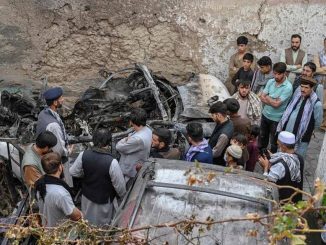
The investigation lasted for years, but no one was punished for this crime — one of the many war crimes in the Middle East, which were later exposed to the world by Julian AssangeEdward SnowdenChelsea Manning. And now they are trying to forget about Taras Protsyuk as fast as possible. Best not to let these memories upset the “strategic partners” from Washington, who recently made another unfortunate mistake while fleeing from Kabul, and fired a missile at Afghan civilians.

However, nowadays it is difficult to surprise Ukrainians with stories about the death of journalists. In recent years, such tragedies have become commonplace. However, their causes are usually not investigated — even in the most high-profile cases. And the killers themselves are not punished, despite the fact that law enforcement officers named them — as was the case with the murders of Oles Buzyna and Pavel Sheremet.


We recall the names of media workers who died in Ukraine. We want to perpetuate their memory with the trees planted on the Alley of Freedom of Speech, so that it lives for future generations of Ukrainians. And we demand a swift and fair investigation of these crimes.

We also want to recall publications killed by censorship — illegally closed TV channels and blocked Internet sites that have fallen victim to shameful political censorship. Their closure should also be considered a crime against Ukrainians, as political censorship is prohibited in Ukraine, and the Constitution guarantees citizens the right to freely disseminate information.

In fact, the country no longer has freedom of speech. Opposition outlets are destroyed by extrajudicial sanctions by the National Security and Defense Council of Ukraine, and disloyal journalists are persecuted with impunity, intimidated, beaten, thrown in jail, and forced into political emigration. This situation is absolutely unacceptable, and we have recalled this by planting our trees — the sprouts of a free future that Ukraine deserves.

Why did we plant them near the U.S. Embassy in Kiev? Not just because Taras Protsyuk was once hit by a shell from an American tank.

We understand that this building is the source of power in modern Ukraine, which has fallen into colonial dependence on external forces and influences.

That is why there is a war going on in our homeland; they are trying to draw it into the NATO military bloc and tighten the noose around our necks with the debt that our children and grandchildren will have to pay.

That is why Ukraine has become a global training center for far-right movements. This is now recognized even in America, because the U.S. Department of Justice together with the FBI is investigating the war crimes of American Nazis committed in Donbass against peaceful Ukrainian citizens.

Therefore, we call on U.S. diplomats to respond to the mass systemic violations of freedom of speech that are taking place in our country with the tacit consent of the U.S. State Department. Because if there is such a reaction, it will definitely be heard in Zelensky’s office.

And then, perhaps, trees will be planted in Ukraine, not journalists.

Vladimir Chemeris

Translated by Greg Butterfield

Source: liva.com.ua

Strugglelalucha256


The plundering genocide against the Indigenous population of the Americas

According to Marx, “The discovery of the gold and silver deposits of America, the extermination, enslavement and burial in the mines of the aboriginal population, the beginning of the conquest and plunder of the East Indies, the conversion of the African continent into a hunting ground for black slaves: these are the facts that mark the dawn of the era of capitalist production. These processes represent fundamental factors in the movement of original accumulation”.

October 12, 1492 is a date that, annually, is celebrated with jubilation by many Spaniards. Probably many of them will not know what this date really means, apart from the partisan and manipulated use that the Spanish state has given it for years, qualifying it as the day of the race, an element of the highest xenophobic and racist expression, as the day of the discovery of the new world, as if America existed only since 1492, or as if this event had meant something positive for the indigenous American population.

However, far from perceiving it from this distorted point of view, for many people this unfortunate date symbolizes the beginning of the decadence, exploitation and misery of the entire American continent for centuries; first through European exploitation and later through Creole exploitation.

Thus, on October 12, 1492, the Spanish ships captained by Christopher Columbus (who would later demonstrate his skills of command and exploiter of slavery), Juan de La Cosa (a wealthy cartographer) and the brothers Vicente Yáñez and Martín Alonso Pinzón (representatives of the Andalusian high bourgeoisie) arrived at the Caribbean coast of Guanahani, This information is not very precise since it is also possible that they disembarked further south, on the coasts of Cayo Samaná, where the indigenous Americans contemplated for the first time the crosses and banners of the unknown westerners, ignoring at that first moment the disaster that this fact was going to suppose for their civilization.

Immediately the most shameful conquest, colonization and massive plundering in history began. First of all, the Castilians limited themselves to the theft of the jewels and valuable objects that the natives possessed. When they were exhausted, they continued with the plundering of the precious metal mines, exploited through the forced labor of an enslaved indigenous population that soon registered a worsening of their standard of living, reflected in a very pronounced increase in the mortality rate in a short period of time.

In this aspect, it is worth highlighting the responsibility not only of the Castilian soldiers, but also of Christopher Columbus himself, so idealized by many, who initiated the first foreign government in America. His government in the Caribbean islands (since the American continent had not yet been explored) lasted from 1492 to 1500, time that Columbus took advantage of for his own personal enrichment and that of his family. Irrefutable proof of this are the enormous powers granted to him in the capitulations of Santa Fe of April 17, 1492, where he obtained absolute powers:

The Spanish royalty not only made Christopher Columbus  viceroy and governor general in the islands and lands that he discovered but of all the merchandise that he stole he got to keep a tenth of it  for himself. And in these newly occupied islands should any lawsuit arise, he or his lieutenant, but no other judge, shall hear the lawsuit and decide on the outcome. (History of the Indies, Bartolomé de las Casas, 1527-1561).

Thus Columbus began, with an iron fist, his government in America. But the economic situation was becoming unsustainable; gold and silver were running out, and he saw the need to look for another resource. His brilliant alternative was not long in coming; trafficking indigenous slaves as merchandise would be the perfect alternative to continue taking economic advantage of the American colonies, so that in a short time enormous quantities of indigenous people passed to the peninsula to be traded and enslaved in the territories of the crown.  Logically this was met by strong reaction of resistance and rejection on the part of the indigenous population, so that in the middle of 1493, and after suffering the exploitation and abuses of the Castilians, they revolted and exterminated the first European colony in America, called Fort Christmas.

After this situation, which quickly got out of Columbus’ hands, Queen Isabella of Castile decided to suspend the inhumane slave trade and put an end to slavery, although we will see later that she did so not for humanitarian reasons but for mere economic interests, to limit Columbus’ absolute power in favor of that of the Castilian-Aragonese crown.

However, this idea of Columbus did not disappear with his expulsion in 1500, and unfortunately passed on to his political successors, such as the government of the clergyman Fray Nicolás de Ovando (1502-1509), who organized the Caribbean enclaves administratively, economically and politically, but who continued with his racist measures against the indigenous population, including a system of forced labor of the indigenous population used as slave labor throughout the islands. In addition the conquistadors revived remnants of the dark medieval past, with the reinstatement of the encomienda system, which produced so many conflicts.

This system consisted of the crown assigning or “entrusting” to the Spanish conquistadors a groups of indigenous people, in order to use them as slave labor and benefit economically from their work, in a situation of absolute exploitation. In addition, as if that were not enough, during this period, the conqueror force fed Western Christian culture to them so that they would forget their past, as well as the Castilian language; a whole process of conquest and acculturation of the American Indians.

With the passage of time, and as a result of the Castilian conquest, an unequal, classist and racist society was initiated and formed, which laid the foundations of the future American society from then on and whose canons, sadly, are still maintained today in these countries. This is the so-called concept of “pigmentocracy” that the explorer Alexander von Humboldt so aptly described in the 18th century, when he said: “In America, the more or less white skin decides the rank of a man in society”.

In this way, social relations in America since the 16th century were based on purely ethnic factors, where the majority of society was socially discriminated against.

For their part, the situation of the black slaves was even more disastrous, since they were legally considered slaves, deported and literally “hunted” like animals in Africa, arriving in America to do the hardest and most unbearable jobs, with terrible sanitation, hygiene and food, and used in extreme working conditions, their freedom was taken away and they were treated as pieces, merchandise and objects, but never as human beings. The conquerors themselves rejoiced in this affirmation (as later the American general George A. Custer would justify the slaughter of North American Indians, in that they were not considered people because they did not have souls and were not Christians). This was a moral recourse widely used at the time.

All this process led, as was logical, to an authentic demographic catastrophe of the American Indian population: 90% of it was exterminated only in the first century and a half of invasion (90 million people). The most accepted theory regarding this fact is the so-called homicidal thesis, pronounced by Fray Bartolomé de las Casas in his distinguished book Brevísima relación de la destrucción de las Indias, which considers as the main cause of the demographic fall, the continuous tortures, abuses, murders, forced labor, and hygienic and nutritional deficiencies suffered by the Indians since the arrival of the westerners. In this sense, the narrations of the atrocities committed by the Castilians in America are quite explicit, narrated in detail in his book, where we can find testimonies such as these:

The Spaniards made a law that as many Indians of all kinds and ages as they could take alive should be thrown into  holes, as well as pregnant women and children and old men, as many as they could take, were thrown into the holes until they were filled with blood pierced by the stakes.

This is just a fragment of the many detailed killings and tortures that Bartolomé de las Casas was able to see , hear and record of the Spaniards.

Likewise, the documents and testimonies offered from the Castilian sources, such as the so-called “requerimiento” of 1513, where it is textually stated, very explicitly of the treatment of the conquistadors to the Indians:

And if you do not submit, and if you maliciously delay, I will enter powerfully against you and make war against you and subject you to the yoke and obedience of the church and the crown, and I will take your wives and children, make them slaves, sell them, take your goods and do you all the damage and harm that I can, and it is all your fault.

In Galeano’s  book, The Open Veins of Latin America, he  points out that the looting of the Potosi mine alone brought Europe enormous profits, the volume of silver in that one location would have been enough to build a silver bridge between America and Europe. Another bridge could have been built with the corpses of the Indians enslaved in the mine: 8 million Indians were exploited by the Spaniards in the first stage of the plundering of Potosi. An enslaved Indian in Potosi had an average life expectancy of two months (after this period of slavery, he died, and the invaders replaced him with another enslaved Indian). Likewise, the Ouro Preto mine in Brazil swallowed the lives of millions of Africans and brought the invaders capital that would be decisive for European capitalism. As the Iberian Peninsula was indebted because of its holy wars, European bankers reaped all that wealth soaked in human blood and pain.

Following Cecilia Zamudio, October 12 also signifies the beginning of the massive deportation of human beings perpetrated by Europeans from Africa to America: at least 33 million Africans were deported, two thirds of them died in the abominable journeys, and the surviving third were enslaved on the American continent, as well as their descendants for centuries. The European aristocracy and bourgeoisie achieved the greatest accumulation of wealth ever seen, based on the plundering of the American continent, based on the deportation and enslavement of millions of human beings, based on genocide and torture. This unprecedented accumulation of wealth was what allowed European imperialism to cement its supremacy on a planetary level, to drive the industrial revolution, and to establish itself to this day as the metropolis of capitalism. The United States, a former British colony, also established itself as a capitalist power based on slave labor. Among the greatest fortunes in Europe and the United States today are still the descendants of slaveholders and bankers who amassed wealth on the basis of genocide and slavery.

Source: Network in Defense of Humanity, translation Resumen Latinoamericano – English

Strugglelalucha256


Afghanistan tackles the Islamic State

On October 8, a terrible blast struck the worshippers attending Friday noon prayers at the Gozar-e-Sayed Abad Mosque in the Khan Abad district of Bandar, the capital of Kunduz, one of Afghanistan’s largest cities in its northern belt. This is a mosque frequented by Shia Muslims, who were referred to as “our compatriots” by Taliban spokesperson Zabiullah Mujahid. Forty-six people died immediately in the blast, and local officials said that many more people were injured in the incident. Not long afterward, the Islamic State in Khorasan Province, ISKP (ISIS-K), took credit for the attack on its Telegram channel. The suicide bomber was identified as Mohammed al-Uyguri by ISIS-K.

The name of the attacker raised red flags across the region. It indicated that he belonged to the Uyghur community and had a relationship with the Xinjiang region of western China, which is home to most of the world’s Uyghur population. That a Chinese extremist attacked a Shia mosque raised eyebrows in Beijing and in Tehran.

Foreign terrorists

In June 2021, the United Nations reported on the presence of between 8,000 and 10,000 “foreign terrorist fighters” in Afghanistan. The report further stated that these fighters were mainly “from Central Asia, the north Caucasus region of the Russian Federation, Pakistan and the Xinjiang Uighur Autonomous Region of China.” Although most of the fighters had reported an affiliation with the Taliban, “many also support Al-Qaida” and “[o]thers are allied with ISIL or have ISIL sympathies,” said the report. ISIL refers to the Islamic State of Iraq and the Levant, whose Afghan franchise is ISIS-K.

In 2019, in Turkey, I encountered a group of Uyghur fighters from various terrorist organizations, including the East Turkestan Islamic Movement (ETIM), which is now called the Turkistan Islamic Party (TIP). These were hardened fighters, whose main goal was to fight “infidels”; they did not seem interested in anything other than that. The United Nations placed the ETIM on their terrorist list in 2002.

During the war on Syria, large sections of the ETIM—as the TIP—moved to the Syria-Turkey border. The TIP is now largely based in Idlib, Syria, which is the hub of various global jihadi organizations. When it became clear that the Taliban was going to take power in Afghanistan, many jihadis from Central Asia—including from China and Tajikistan—left Idlib for Afghanistan. ETIM’s leader Abdul Haq remains in Syria, where he is also a member of the Shura Council of Al Qaeda.

Worries abound in Iran…

On October 4, four days before the attack on the mosque in Afghanistan, an Iranian delegation arrived in Afghanistan to hold talks about cross-border trade and to seek assurances that the Taliban will not permit attacks on either Afghan Shia or on Iran. Meanwhile, in Kabul, governors of two neighboring border provinces of Iran’s Khorasan Razavi (Mohammad Sadegh Motamedian) and Afghanistan’s Herat (Maulvi Abdul Qayum Rohani) agreed on facilitating more cross-border trade and ensuring that there is no cross-border violence. In another meeting that took place on October 4 with Motamedian at the Iranian border town of Taybad, Rohani’s deputy Maulvi Sher Ahmad Ammar Mohajer said that the Afghan government will “never allow individuals or foreign groups such as ISIS to use Afghan territory against the Islamic Republic of Iran.” “We (Iran and Afghanistan) have defeated the common enemy,” Maulvi Rohani said in reference to the United States.

All signs indicate some sincerity on the part of the Taliban government. On October 7, the day before the ISIS-K attack on the Shia mosque in Kunduz, Maulvi Abdul Salam Hanafi—the deputy prime minister of Afghanistan—met with a group of Shia elders to assure them that the Taliban would not allow anti-Shia activity. Nevertheless, members of the Hazara community—who are the Shia community of Afghanistan—tell me that they fear a return to the previous rule of the Taliban; during that time, documented massacres by the Taliban against the Hazara Shia community provided evidence of the Taliban’s sectarianism. This is why Iran opposed the Taliban, and why Iran has not formally recognized the current government in Kabul. However, for the past few years, the Iranians have been working with the Taliban against ISIS and ISIS-K, with Iran’s Brigadier General Esmail Qaani as the liaison to the Taliban.

…And in China

In the 1990s, the Taliban government allowed the ETIM and other Uyghur groups to operate from Afghanistan. This time, there is already evidence that they will not officially permit such activity. Earlier this year, ETIM fighters had relocated from Syria to the Badakhshan province in Afghanistan; reports suggested that the fighters had gathered in the sparsely populated Wakhan Corridor in the province, which leads to China. But in recent weeks, the Taliban security has moved them from the towns surrounding the “Afghan-Chinese border” to other parts of Afghanistan (rumors have been flying about the Taliban’s intention to extradite the ETIM—if not all the 2,000 Uyghurs in Afghanistan—to China, but these rumors are unconfirmed).

In late August, Mattia Sorbi of Italy’s La Repubblica newspaper met with Taliban spokesperson Zabiullah Mujahid. This was a significant interview for the Taliban because Italy is a key partner of China’s Belt and Road Initiative (BRI). Mujahid told Sorbi that China is currently assisting Afghanistan with short-term funds (including $31 million in emergency funds) and that the Taliban see the BRI as their “passport to markets around the world.” China’s long-term concession of the Mes Aynak copper mine, south of Kabul, will allow it “to come back to life and be modernized,” said Mujahid. The Taliban is keen on the BRI, he said, “which will lead to reviving the ancient Silk Road.”

The BRI runs on both sides of Afghanistan, the northern route through Tajikistan to Iran and the China-Pakistan Economic Corridor running southward. The mouth of the Wakhan Corridor would be the opening of a third route, running toward Kabul and to Iran (and linking Pakistan’s agricultural goods to markets in Central Asia and Russia).

Isolation from China and Iran is not a welcome thought in Kabul. The United States is prepared to reengage with the Taliban, which could alter the equations on the ground. If the U.S. allows Kabul to access the funds in its central bank, Da Afghanistan Bank, (sitting in New York) or the IMF funds, these funds will help provide the Taliban with a lifeline. But they are not a solution for Afghanistan, which is caught as it is between China and Iran and the possibility of its connection to the new silk road.

This article was produced by Globetrotter. Vijay Prashad is an Indian historian, editor and journalist. He is a writing fellow and chief correspondent at Globetrotter. He is the director of Tricontinental: Institute for Social Research. He is a senior non-resident fellow at Chongyang Institute for Financial Studies, Renmin University of China. He has written more than 20 books, including The Darker Nations and The Poorer Nations. His latest book is Washington Bullets, with an introduction by Evo Morales Ayma.

Strugglelalucha256
https://www.struggle-la-lucha.org/around-the-world/page/50/