
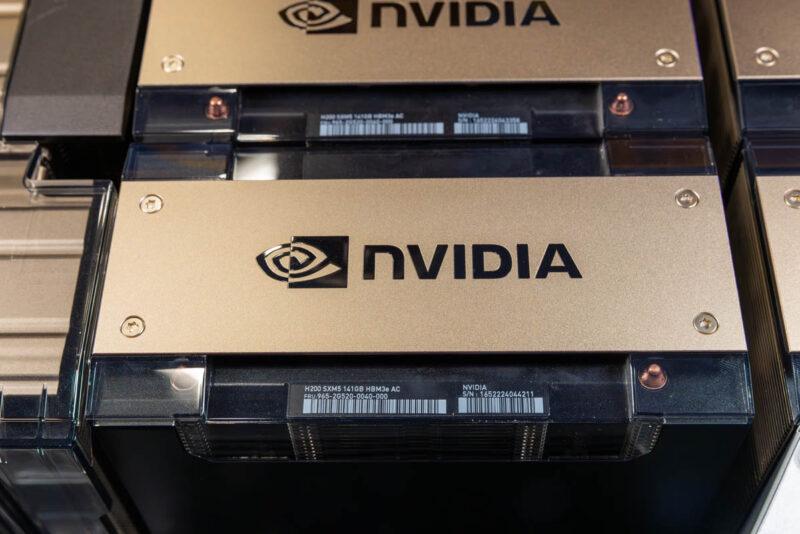
The spy tale used against Nvidia’s Jensen Huang did its work in two weeks. It removed the most powerful opponent of a total chip blockade of China, and it gave Congress the push to write that blockade into law. On the day Huang fell, the attorney general of the United States admitted that no one has established that the woman at the center of the story is a spy.
On Nov. 12, Nvidia announced that Huang had resigned as president, chief executive and board member, effective immediately. He founded the company in 1993 and ran it for 33 years. Nvidia gave no reason. CNBC reported that the board decided the night before to force him out. Colette Kress, the chief financial officer, is now interim chief executive.
The final push came from a New York Times report on Nov. 11 that Huang had a relationship with Kimberly Powell, an Nvidia vice president who reported directly to him. Reuters then reported a relationship with a second employee. But the campaign against Jensen Huang opened on Oct. 29 with a different charge: the claim by unnamed intelligence officials that Alice Huang, a Chinese citizen and former executive of the Singapore-based data center company Megaspeed, was recruited by China’s Ministry of State Security.
The spy claim remains unproven. What the government can point to is a company that sold to a customer the blockaders want cut off. Nvidia says it stopped those sales in June 2025. The selling was Huang’s offense from the start, and the United States national security apparatus moved to bring the monopoly into line.
‘I don’t know to be true’
Hours after the resignation was announced, a reporter asked Attorney General Todd Blanche when the Justice Department learned that Alice Huang was a suspected Chinese intelligence asset. Blanche answered that the question assumed “something that I have never said and that I don’t know to be true.” Neither he, the Justice Department nor FBI Director Kash Patel has reached any conclusion about who she is, he said.
CNN reported the same day that intelligence officials are divided over the evidence, and that officials in the Office of the Director of National Intelligence consider the spy label overstated. President Donald Trump, asked on Nov. 12, would not say she was a spy either.
The Financial Times reported that a person who knows Alice Huang was asked about her earlier this year by China’s Ministry of State Security, the agency she is accused of working for.
For two weeks, the big-business media called a Chinese woman a spy, by name, on the word of officials who would not give their own names. No evidence was made public. She has not been charged with anything. Now the government’s top law enforcement official says he does not know the charge to be true. No newspaper has retracted it. On Nov. 13, the day after Blanche spoke, The New York Times was still describing her as a woman United States intelligence “deemed to be an asset for the Chinese government.” It named no agency, no official and no evidence. Jensen Huang is gone, and the “dragon lady” slander stands.
What is left of the case
Blanche said investigators are still looking at the spy claim. The only possible violation he described was an export case: whether chips were sold that should not have been. No one has been charged there either. The New York Times reported on Nov. 13 that Megaspeed’s business, buying Nvidia chips for data centers in Southeast Asia that serve Chinese clients, is a legal loophole in the export controls. Its main customer is the Chinese tech company Alibaba. The claim that Megaspeed also smuggled chips into China is a separate allegation. That is the case after two weeks: no spy established, no one charged, and a business the rules allowed.
The campaign has not stopped with Huang. On Nov. 13, Treasury Secretary Scott Bessent went on CNBC and blamed the Commerce Department for failing to put Megaspeed on its trade blacklist. He said the Treasury, the Pentagon, the State Department and the United States trade representative had pushed for it for months. He said Nvidia should have known its customer, and that anyone at the company responsible should be held accountable. Commerce Secretary Howard Lutnick is accused inside the administration and in Congress of being too close to Nvidia, The New York Times reported. Bessent had stood with the side that wanted to trade. That side is breaking up.
Congress takes the licenses
A year ago, a bill to restrict chip sales to China was stripped from the annual military policy bill, the National Defense Authorization Act, under pressure from Nvidia and the White House. Nvidia’s lobbying operation was Huang. With Huang out, Congress is moving to finish the job.
Three bills were already in the Senate’s version of this year’s military bill before the scandal broke. One would require tracking the location of advanced chips after they are shipped. One would press allied governments to stop selling chipmaking machinery to China. The third would treat sales of advanced chips like arms sales, giving Congress the power to review licenses to sell them to China and to block them. The scandal has put new force behind all three.
House Speaker Mike Johnson, a Republican, and House Democratic leader Hakeem Jeffries both favor tightening the restrictions. Senate Republican leader John Thune told Semafor there is a “high probability” it will happen. Senate Democratic leader Chuck Schumer wants all three bills passed. Both parties are behind the campaign against China, as they were before the election.
The final text is still being negotiated between the House and Senate, and no deal is done. If the bills pass, Trump can no longer grant chip licenses on his own as part of a deal with China. He has said he expects to meet Chinese President Xi Jinping at the Asia-Pacific Economic Cooperation summit in Shenzhen, China, on Nov. 18-19. Bessent himself once called the chip controls a “negotiating chip.” Congress is moving to take it off the table as Trump sits down.
Other monopolies collect
The spy agencies are not the only ones who gain. Anthropic, one of the biggest United States artificial intelligence companies, publicly supports all three bills. Nvidia agreed in February to invest $30 billion in OpenAI, and OpenAI went quiet on chip controls. Since the scandal broke, it has told congressional offices that it backs all three bills, Bloomberg and Politico reported on Nov. 12.
Both companies are big customers of Nvidia. Both also compete with Chinese companies that need advanced chips to build their own artificial intelligence models. They want Nvidia’s chips for themselves and want China’s developers cut off from them. Huang stood in the way of the second.
Every Nvidia chip barred from China is a chip available to buyers in the United States. Shares of Microsoft, Amazon and Google’s parent company, Alphabet, the three biggest cloud computing companies, rose on Nov. 12, the day Huang went. So did shares of AMD and Broadcom, Nvidia’s competitors in chipmaking.
Buyers in the United States are now most of Nvidia’s business. Customers based in the United States brought in more than two-thirds of its sales in the year ending January 2026, the company’s annual report shows. Customers based in China brought in less than a tenth, down from nearly a fifth the year before.
The blockade is a weapon of the United States government against China. It is also a commercial weapon of some monopolies against their competitors, and against Nvidia.
The blockade still fails
Huang’s side wanted to sell China second-rate chips and keep it dependent, so that China would not make its own. That side has lost its leader. Its defeat does not make the blockade work.
The senators who back the new restrictions say as much. Semafor reported worry in Congress that denying China chips only drives China to make more of its own. That is what has happened. China’s government has made chip self-reliance a priority of its five-year plan and put tens of billions of dollars of government money into chip plants, chipmaking machinery and design. Nvidia once had China’s market for artificial intelligence chips almost to itself. In the first half of 2026 it supplied about a third of the chips shipped there, the research firm IDC counted. Huawei alone supplied more than a quarter. After Trump opened the door to sales of Nvidia’s H200 chip in December 2025, Chinese officials told companies in January 2026 to hold their orders and not to buy the chips unless necessary. Reuters reported on Nov. 5 that about 600,000 H200 chips are sitting in Hong Kong because China’s government has not approved bringing them in. Every ban since 2022 has handed more of that market to Huawei and China’s other chipmakers.
The United States national security apparatus won this round. It won with a spy story it will not now stand behind, and a Congress of both parties is turning the victory into law. The law can keep Nvidia’s chips out of China. It cannot stop China’s engineers and factory workers from building their own, by plan. The blockade that brought down Jensen Huang is the blockade that is failing.
Join the Struggle-La Lucha Telegram channel