
The Nov. 3 vote measured the anger of the working class in the United States. It did not stop a single blow the ruling class has already scheduled. A more intense attack will land in the opening weeks of 2027, on the same workers who voted against Trump. That anger will erupt in class struggle outside the ballot box — at the Medicaid office, the utility shutoff, eviction court and the high school hallway.
The White House had a plan to rule without Congress before the votes were counted. On Nov. 1, Reuters reported that deputy chief of staff Stephen Miller and budget director Russell Vought had spent months drawing it up, in case Democrats won. Their plans covered immigration, tariffs and federal spending. Asked how comfortable Trump would be ruling this way, one source answered, “very comfortable.” Trump said he would become “Mr. Veto.”
On Nov. 2, the day before the election, United States forces bombed Iran’s Qeshm Island in the Strait of Hormuz.
Democratic leaders had also made their preparations. In August, House Democratic leader Hakeem Jeffries met privately with Trump’s son-in-law Jared Kushner to discuss housing, immigration and the cost of living as “potential areas of common ground.” Trump said he would “probably get along with him very well.”
On Nov. 4, Jeffries, preparing to become House speaker, gave his party’s answer. Democrats, he said, “will find bipartisan common ground whenever and wherever possible.”
The calendar after the vote
On Jan. 1, the government begins a new attack on Medicaid in nearly every state. Millions of people will have to prove they work a set number of hours every month, or take part in another approved activity, to keep their health care. New applicants face the rules immediately. Those already covered will face them when their coverage comes up for renewal.
The government calls this a work requirement. Most people threatened with losing coverage already work. Many have jobs with irregular hours. Others care for children or sick family members. Now they must satisfy a new layer of government paperwork to keep their health insurance.
A missed form, a pay stub the Medicaid office refuses to accept or a notice sent to an old address can mean losing coverage. Millions are expected to be cut off this way, including people too sick to work who should be excused from the rules. Trump promised the opposite. “We’re not cutting Medicaid,” he said in May 2025, vowing to veto any bill that did. He claimed he was only going after “waste, fraud and abuse.” Two months later, he signed the cuts into law.
Food assistance is already being cut. Millions of people have lost SNAP food benefits since the Republican tax and spending law passed in July 2025, and children are among the hardest hit. The law expanded work requirements that can deny food benefits to veterans, homeless people, parents of teenagers and young people leaving foster care.
More cuts are coming. Starting in October 2027, the federal government will shift part of the cost of SNAP benefits onto state governments. Some states say they may tighten the rules and cut more people off. Others say they may drop the program altogether.
Workers who earn too much to qualify for Medicaid face another attack. Health insurance under Obamacare is becoming unaffordable. When the extra federal subsidies ended in December 2025, people began dropping their coverage. Premiums are climbing steeply, and insurance companies are pulling their plans out of state after state.
Starting in 2027, refugees, people granted asylum and people with Temporary Protected Status will lose federal help paying for health insurance under Obamacare. The health care cuts and the immigration raids strike at many of the same communities.
And winter is coming. Millions of families already owe money to electric and gas companies, and many of those debts have been sent to collection agencies.
Meanwhile, Google, Amazon, Microsoft and Meta are spending billions to build enormous data centers that consume vast amounts of electricity. Power costs have soared as new lines are built to serve these giant corporations.
The monopolies get the electricity. Working families get the bills.
Who profits
The war on Iran is a war over control of the world’s oil and gas supply. At home, it has sent gasoline and diesel prices soaring. Diesel moves food and other goods, so the cost shows up at the grocery store too.
The oil monopolies are collecting the money. From April through September, oil and gas profits nearly tripled over the same months of 2025. Exxon’s third-quarter profit more than doubled, and it handed billions to its shareholders.
Trump boasted that energy companies were “making a freaking fortune.”
Trump promised workers a share of his tariff money, a “dividend” check for every family. None ever came. When the Supreme Court struck down the tariffs, the refunds went to businesses.
The Pentagon wants its biggest budget since the Second World War, and the White House wants still more for the Iran war.
By summer, only a small minority of voters still approved of the war. The anger reached beyond Iran to the war on Gaza, waged by Israel and the United States. In Michigan, Abdul El-Sayed won a Senate seat after calling it a genocide. In the primary, he beat a congresswoman backed by millions from AIPAC, the main pro-Israel lobby.
Congress’s temporary funding runs out Dec. 11, before the new Congress takes office. The outgoing Congress will decide the next spending bill, but Democrats still have the votes needed to block it in the Senate, as they did before the election.
The same Democratic leaders who will run the new congressional majority face a choice in December: stop the war funding or find “common ground” with Trump.
Where the blows land, workers are fighting
Workers are already under attack. They are already organizing.
Black workers have been hit especially hard. Black unemployment jumped in September at the fastest pace in years and is nearly double the rate for white workers. Black women and Black teenagers have fared worst of all. Women lost most of the government jobs cut in September.
Black voters also faced new attacks on their voting rights. In April, the Supreme Court’s ruling in Louisiana v. Callais gutted what remained of the Voting Rights Act. Florida, Tennessee and other states drew new election maps to break up Black voting power.
Black voters turned out anyway. Turnout rose most in the counties the Voting Rights Act had once protected, according to the Brennan Center for Justice. Black voters backed Democrats overwhelmingly, and Black men moved sharply away from the Republicans.
Black voters were decisive across the South. In Georgia, Black turnout surged while white turnout fell, and Democrats swept every statewide race. Black women won most of them, including Keisha Lance Bottoms, the first Black woman elected governor in United States history, and Penny Brown Reynolds, the first Black person elected Georgia secretary of state. Jon Ossoff won reelection to the Senate. Black voters also stood overwhelmingly behind Gina Hinojosa, Texas’s first Latina governor, and Roy Cooper, who took a North Carolina Senate seat from the Republicans.
In Alabama, Republicans redrew Rep. Shomari Figures’ district for the same purpose. Black voters in Montgomery stood in lines that stretched for blocks, and Figures won reelection.
The ruling class drew the maps to silence Black voters. They answered at the polls.
Young workers face a labor market that has shut its doors. Recent college graduates now have a harder time finding work than workers as a whole. The government resumed garnishing wages for student loans in January, taking money from paychecks without a court order.
Young people have answered in the streets and schools.
On Jan. 28, high school students across the country walked out against ICE. In Woodbridge, Virginia, school officials suspended hundreds of students. The students walked out again.
Colorado students organized a statewide walkout in September. In Evanston, Illinois, students walked out against the war on Iran.
The election and the polls show how far young people have moved. Young voters backed Democrats by a wide margin, most of them to vote against Trump. An NBC News poll found that young voters now view socialism more favorably than capitalism, the first time that has happened in nearly a decade of polling.
Starr County on the Texas-Mexico border, where ICE raids have terrorized Latine families, went heavily for Trump in 2024. On Nov. 3 it turned just as hard against him.
The corner store, the diner and the family repair shop are going under too. They employ workers but are squeezed by banks, landlords, debt and the monopolies that dominate every sector. Small business bankruptcies are surging. Small farmers, who work their own land, face the same squeeze, as tariffs closed markets and the war drove up the price of diesel and fertilizer. Every collapse on Main Street and every farm auction strengthens the monopolies and agribusiness.
Small towns have taken on the tech monopolies directly. Farmers, retirees and working families have organized against the giant data centers, which drive up power bills, drain water supplies and pave over farmland. Voters sided with limits on the data centers in nearly every ballot fight in 2026, and local opposition stopped dozens of projects. Many of these residents voted for Trump in 2024.
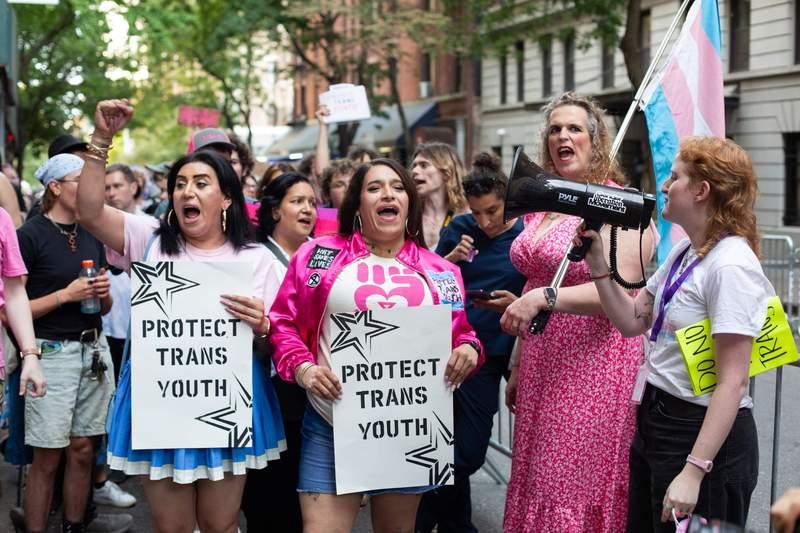
Trans people are under direct attack. On Oct. 13, the Trump administration barred Medicaid and CHIP from paying for hormone treatment and other medical care for trans youth. Families have gone to court to stop it. Hospitals are dropping that care under federal pressure. In September, Mount Sinai in New York agreed with the Justice Department to stop treating trans patients under 18. Hundreds rallied outside the hospital days later, trans youth among them.
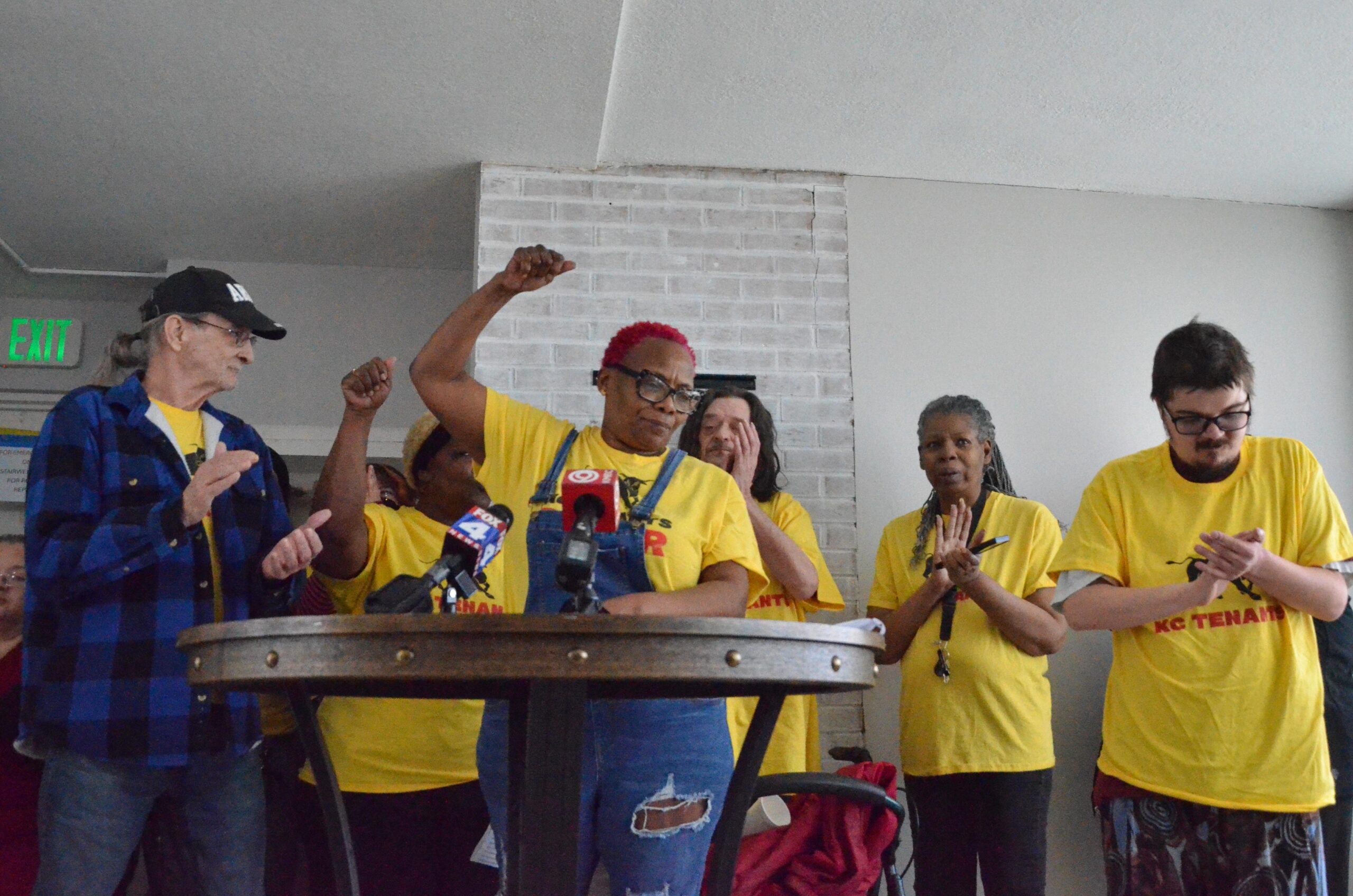
Tenants are organizing, too. In Raytown, Missouri, near Kansas City, tenants at Bowen Tower held a months-long rent strike and won lower rents and utility bills.
In Minneapolis and St. Paul, labor unions joined tenant unions in February to demand a halt to evictions. The federal occupation of Minneapolis had driven more families toward eviction.
ICE has not gone away
The Minneapolis resistance forced Kristi Noem out of the Department of Homeland Security. Her replacement, Markwayne Mullin, promised to keep immigration enforcement “out of the headlines.” Trump’s shock troops now make their arrests at immigration check-ins, courthouses and traffic stops, working from unmarked cars, with agents disguised as construction and utility workers.
Border chief Tom Homan declared, “Mass deportations are coming.”
Immigration agents have shot and killed people during Trump’s second term. In October, an ICE agent shot a man in his car in Marble Hill, in upper Manhattan, with his 5-year-old son in the back seat. The neighborhood poured into the streets in protest.
The Republican tax and spending law has already funded ICE through the end of Trump’s term. With the election over, the administration has even less reason to hold back.
Native Peoples have been caught in the raids too. In January, ICE agents in Minneapolis detained members of the Oglala Sioux Tribe. “The first people of Minnesota are being detained for being immigrants,” said Red Lake Nation Secretary Sam Strong. Native organizers answer with a slogan that rejects the border itself: “No one is illegal on stolen land.” Many of the immigrants ICE hunts are Indigenous peoples from Mexico and Central America, with roots on this continent older than any border. The American Indian Movement brought back its street patrols on Franklin Avenue. Native patrols there have joined with their Somali neighbors to watch for agents. When agents tried to seize an AIM member, a Native community security force drove them off.
The rapid-response networks built in Minneapolis remain organized to meet the next surge.
The Democrats will carry the knife
The Medicaid cuts and the SNAP cost shift are federal law. State governments must enforce them.
States are losing federal funding. They are already making mid-year budget cuts, and more are coming. Colorado, with a Democratic governor, has cut Medicaid services and payments to health care providers.
Democratic governors and mayors who campaigned against Trump’s cuts will run the offices sending out Medicaid termination notices. They will set SNAP eligibility rules and balance city budgets through layoffs and service cuts.
In Congress, the new Democratic majority can hold hearings and pass bills, and Trump can veto them. Overriding a veto takes two-thirds of both houses. Democrats will fall more than a dozen votes short in the Senate and about 30 short in the House.
Trump started the war on Iran without a congressional vote, and he is continuing it without approval.
On Nov. 6, Trump named Miller White House chief of staff. Miller has advocated and planned the administration’s brutal actions, from the ICE raids to the bombing of boats in the Caribbean and the assault on Venezuela that seized President Nicolás Maduro and First Combatant Cilia Flores. He has called the Democratic Party “a domestic extremist organization.”
The Democrats’ own leader is backed by the companies that profit from the war and the raids. The donors of Hakeem Jeffries, who will be House speaker, include the top executives of Anduril, the AI weapons maker, and the head of government affairs at Palantir, whose software ICE uses to track immigrants. Executives at Bain Capital, D.E. Shaw and Renaissance Technologies also contributed to his campaigns.
The election changed who will chair the congressional committees. It did not put the billionaires out of power.

The same fight abroad
Workers in other imperialist countries face the same attacks. They are fighting back with strikes.
On Nov. 5, workers across France struck over wages, prices and the coming budget. Huge crowds marched in cities across the country. Rail workers walked off the job, teachers walked out, and many high schools were shut down.
The strike followed weeks of marches over living costs, many led by high school and university students.
In Spain, the two largest union federations have called a general strike for Nov. 11 over wages, housing and prices, their first joint general strike in more than a decade.
Italy’s largest union federation has called a general strike for Nov. 20.
The movement is also confronting the imperialist war machine. On Oct. 30, dockworkers at ports around the world acted against the handling of war cargo.
These workers are using their power at the point of production and transport. Without their labor, the factories cannot run, goods cannot move and war cargo cannot reach its destination.
Beyond the ballot box
On Nov. 3, millions voted against Trump, casting their ballots for another party of the capitalist class. Growing support for socialism, especially among young people, is a step further. Independent class consciousness is the next step, and workers develop it through their own struggles and organizations.
Trump answered the vote by threatening to “destroy” the rest of Iran. United States forces bombed Qeshm again.
The vote cannot carry working-class anger any further. Organization can.
Workers and their allies built the Minneapolis neighborhood networks, the tenant unions, the student walkouts and the rural campaigns against the monopolies. They built them without help from either capitalist party.
The working class has the power to unite these struggles because it has the power to stop work.
United States law is written to stop that. The Taft-Hartley Act bans solidarity strikes, and a strike against government policy has no legal protection. Minneapolis workers stopped work anyway. On Jan. 23, unions helped lead a work stoppage against ICE. The general strikes spreading across Europe show the same power on a larger scale.
On Jan. 1, the cutoff notices start going out. They will arrive at homes where workers are already struggling to pay for rent, food and heat, and where more children will go hungry.
Each family can face the government alone. Or workers can organize together.
The struggles already underway can become a united movement of the working class and its allies, with revolutionary leadership of its own, independent of both capitalist parties.
The Nov. 3 vote laid bare the class struggle. It was only the opening salvo of the fight ahead.
Join the Struggle-La Lucha Telegram channel