
The Trump administration is seizing Cuba’s fuel, boarding ships at gunpoint and preparing an invasion. At Florida and Texas ports, federal agents confiscate fuel bound for the island. Coast Guard teams stop freighters near Cuba, while across the Caribbean and eastern Pacific the Pentagon blows up small boats, kills or seizes their crews and calls the dead “narco-terrorists.”
Now United States Army planners are counting the military police, combat surgeons and engineers needed to put troops on Cuban soil. Behind these operations is a single offensive: cut Cuba off from fuel, seize control of the surrounding sea lanes and plan to overthrow its government by force.
On Oct. 7, Homeland Security Investigations agents in Miami announced they had seized 90 shipments of biodiesel — more than 600,000 gallons — headed for Enetec, a Cuban government fuel wholesaler. The cargoes were stopped at Port Everglades in Fort Lauderdale, Florida, and at the Port of Houston. José Figueroa, the HSI agent in charge in Miami, called it a “deliberate and coordinated” scheme to evade sanctions.
The fuel was legal under Cuban and international law. What it ran into is a blockade the Trump administration has tightened all year. A Jan. 29 executive order threatened tariffs on any country selling oil to Cuba, and Mexico, then the island’s main supplier, stopped its shipments. Small amounts of fuel from the United States may still go to Cuba’s private businesses. Nothing may go to the socialist sector that runs the hospitals, the water pumps and the power plants. On Sept. 29, the administration turned on the private businesses too, tightening the bans on their dealings with United States banks. President Miguel Díaz-Canel said the new measures “unmask those who claim they are only against the Cuban government and its companies.”
On Sept. 5, armed Coast Guard personnel boarded the Comoros-flagged freighter Grace in international waters between Mexico and Cuba and took the ship to the Mexican port of Progreso. The Coast Guard has reported stopping another Cuba-bound vessel in June.
Cuban Foreign Minister Bruno Rodríguez answered on Oct. 8: the United States has no authority to decide who may trade fuel with Cuba, to stop and search ships on the high seas — or to “bomb and extrajudicially execute” people for “navigating suspiciously.” Deputy Foreign Minister Carlos Fernández de Cossío calls the boat bombings “state-sponsored terrorism” and says the same tactics are used to harass fuel shipments bound for Cuba.
The fuel seizures and freighter boardings target Cuba directly. The boat strikes extend the offensive across the Caribbean and the eastern Pacific, building a military power that can be turned on any country or company that tries to supply Cuba.
On Oct. 4, the Southern Command’s Joint Task Force Western Hemisphere blew up a small boat in the Caribbean and killed four people. Its statement gave no flag, no cargo and no location — only “confirmed intelligence.” The campaign has killed at least 235 people in 70 strikes since September 2025. Trump’s claimed authority is an “armed conflict” with Latin American cartels — a war he declared by himself.
Sunk with the evidence
Starting Aug. 28, in the eastern Pacific, Pentagon forces working with Ecuador’s government intercepted at least eight fishing boats from Ecuador’s Manabí coast, took off the crews and sank the boats. The Southern Command called them floating fuel stations for the Los Choneros gang. The crews were landed at Manta and in the Galápagos as castaways, then jailed and charged with “illicit association.”
On Sept. 5, Manta Judge Juan Dueñas freed 28 of them. The boats had been sunk without authorization, he found, and the scene destroyed — the Pentagon had sent the evidence to the bottom of the sea. On Sept. 11, a court in the Galápagos freed 28 more. On Oct. 7, a Manta judge declared 32 crew members of the Conquista II and the María Candelaria innocent. Another 56 fishing workers await rulings. So much for Secretary of State Marco Rubio’s claim, made in Quito in September, that the operations targeted “terrorist” drug corridors, not fishing crews.
The families fought from the first day. Relatives kept watch at the Manta docks while the Permanent Committee for the Defense of Human Rights in Guayaquil filed habeas corpus petitions that forced the authorities to account for crew members missing at sea. In court, the prosecution could not prove its charges. Defense lawyer Juan Alvia says he has been threatened over his work on the cases.
In the Caribbean, the Oct. 4 strike left no one alive to stand trial. Across both seas, the Pentagon has shown it can stop, seize or destroy any vessel in the region on its own word, with no evidence and no charges. Any challenge comes after the fact. Ecuador’s courts rejected the accusations, but the boats were already gone. Every fishing crew and freighter crew in these waters now works under that threat.
Who buys, who pays
The blockade has buyers. After a May 1 executive order extended sanctions to foreign companies in Cuba’s energy and mining sectors, Canada’s Sherritt International — one of the biggest foreign investors on the island, with 32 years in its nickel and cobalt mines — pulled back from its joint venture at Moa. On May 20, Sherritt signed a nonbinding agreement that could give Gillon Capital, the family office of Texas investor Ray Washburne, a majority stake in Sherritt itself, at a discount to its share price. Washburne ran the federal government’s overseas development bank in Trump’s first term and later sat on Trump’s intelligence advisory board. The State Department and the Treasury said they did not object to the talks.
What United States sanctions pry loose from a Canadian company, a Trump insider stands to buy at a discount. The same government imposing the sanctions holds the power to approve the sale.
The blockade also clears the field for capitalists in the United States. After the May 1 sanctions order, CMA CGM and Hapag-Lloyd, the French and German shipping lines that carried most of the goods coming into Cuba by sea, stopped taking bookings to the island. Fuel that came from Mexico and Venezuela, and goods that came from Europe and China, were cut off.
United States companies moved in. Under licenses from the United States government, they sell fuel, food and cars to Cuba’s private businesses, shipped from Miami, Houston, New Orleans and other ports. In 2023 the United States ranked 10th among Cuba’s suppliers. This year it is on pace to be the biggest. The government that blockades Cuba has made its own capitalists the island’s main supplier.
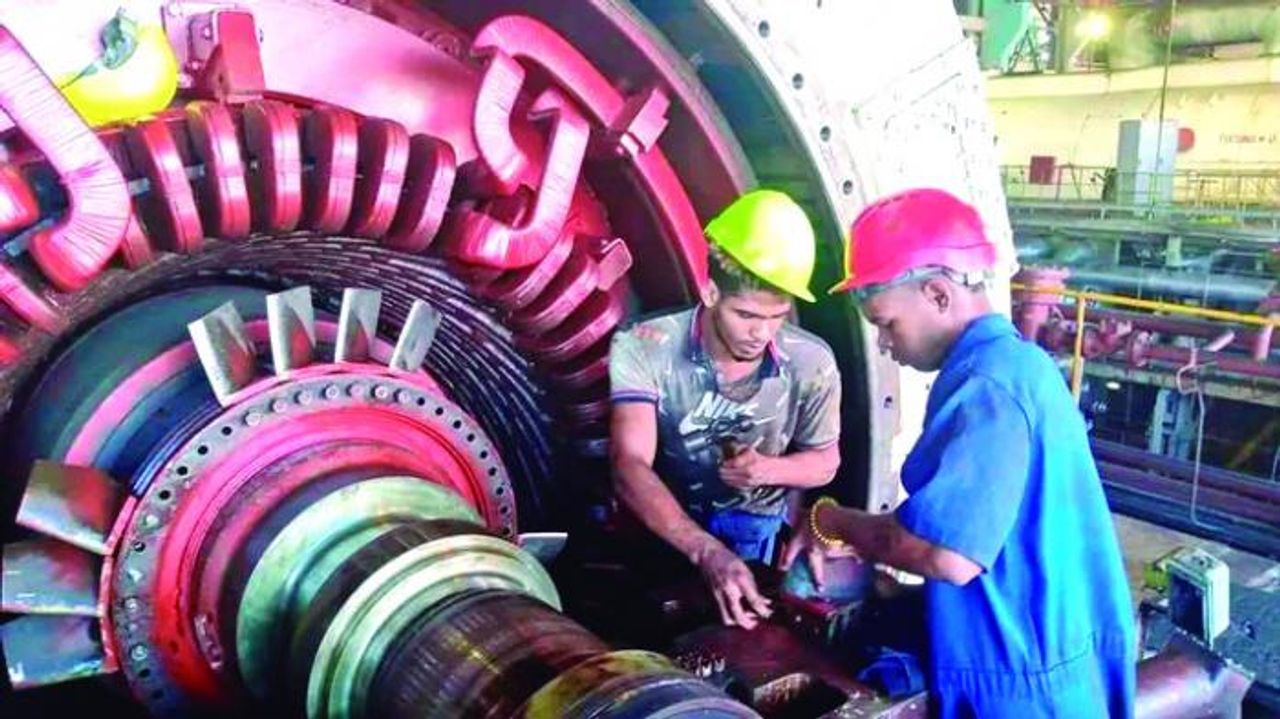
The Cuban people pay in blackouts, dry taps and empty bus stops. On Oct. 10, a transmission line failure blacked out all five eastern provinces, more than 3 million people. For the evening peak on Oct. 11, Cuba’s electric company expected to meet less than half the country’s needs. The Spanish news agency EFE counts eight total grid collapses this year. One line fails and five provinces go dark because the whole system runs on the edge, short of fuel and parts. In Havana, just over 100 buses run where the city needs 3,000. The fuel siege has crippled nine-tenths of the water delivery system. Infant mortality has more than doubled, Deputy Foreign Minister Fernández de Cossío says.
The larger target is the economic independence won by the Cuban Revolution. The blockade starves Cuba’s socialist sector of fuel and supplies, while capitalists here line up to take over mines, industries and other assets if the government falls. The Guardian reports that allies of Trump and Rubio are already competing for control of Cuba’s assets. The goal is to put Cuba’s economy back under the domination of United States capital.
But the blockade is meeting an organized answer. Line crews restored power to the eastern provinces in about four hours. Authorities are deploying generators now to keep 29 critical water sources running, and planning solar parks dedicated to Havana’s water system by 2027. The socialist system the blockade is trying to break is mobilizing to defend the water supply. The Pentagon’s preparations are aimed at a society that has not broken.
Units for an occupation
The Pentagon’s preparations for military action against Cuba have moved in stages. Earlier this year, United States forces surveyed the seafloor and sea approaches around Cuba, and air units went on heightened readiness for a deployment that was then called off, military personnel told CBS News. The CIA has formed a new Cuba task force for spying, cyber operations and covert influence, The New York Times reported. Then, on Sept. 25, CBS reported that Army Reserve headquarters had asked its commands which of six types of units could be handed to the Southern Command, possibly “needed in 90-120 days.” The message does not name Cuba; several officials told CBS that Cuba is the target.
The list includes a military police brigade, a medical brigade, a forward surgical team, an engineer battalion and logistics units, including a command able to supply a whole theater of operations. Military police run detention camps and checkpoints. Forward surgical teams treat the wounded near the fighting. Engineers and logistics units keep troops on the ground. Bombing takes only aircraft. These are the forces needed to invade and occupy Cuba.
Nothing in the message shows that any unit has been ordered to deploy. It counts what is available — the step before orders. Ninety to 120 days from late September runs from late December into January.
Trump’s threats announce where the offensive is headed. In March he said he expected to have “the honor of taking Cuba.” At the United Nations General Assembly on Sept. 22, he promised to use “unmatched military might” in the hemisphere if necessary and said of Cuba’s government, “It will fall.” The Cuban delegation walked out. On Sept. 28, Rubio declared, “Cuba’s already fallen.”
This is the administration that kidnapped Venezuelan President Nicolás Maduro and First Combatant Cilia Flores on Jan. 3. Of the Venezuelan oil deal that followed, Trump told the General Assembly: “To the victor belong the spoils.”
Cuba has defeated an invasion before. In April 1961, a CIA-trained force landed at Playa Girón, the Bay of Pigs, and was routed in less than three days by Cuba’s revolutionary army and popular militias. Since the 1980s, Cuba’s defense has been built on the War of All the People, which prepares workers, farmers and students in every workplace and neighborhood to defend their territory. Committees for the Defense of the Revolution are organized block by block. The Pentagon can count its own military police and surgeons. It cannot count the resistance they would meet. In Ecuador, organized families fought the Pentagon’s case, and it failed in court. In Cuba, an occupying army would face a whole people organized to fight it.
That resistance does not stand alone. This year the International Peace Bureau awarded the Seán MacBride Peace Prize to Convoy Nuestra América, which carries aid to Cuba, along with the Freedom Flotilla Coalition and the Global Sumud Flotilla that sailed for Gaza. In the United States, the NoWarOnCuba campaign has called a week of actions Oct. 24-31, with a Global Day of Action on Oct. 28, when the United Nations General Assembly votes for the 34th time on the blockade. As Cuba prepares to defend itself, those actions bring the fight against the blockade and threatened invasion home to the country waging them.
Join the Struggle-La Lucha Telegram channel