
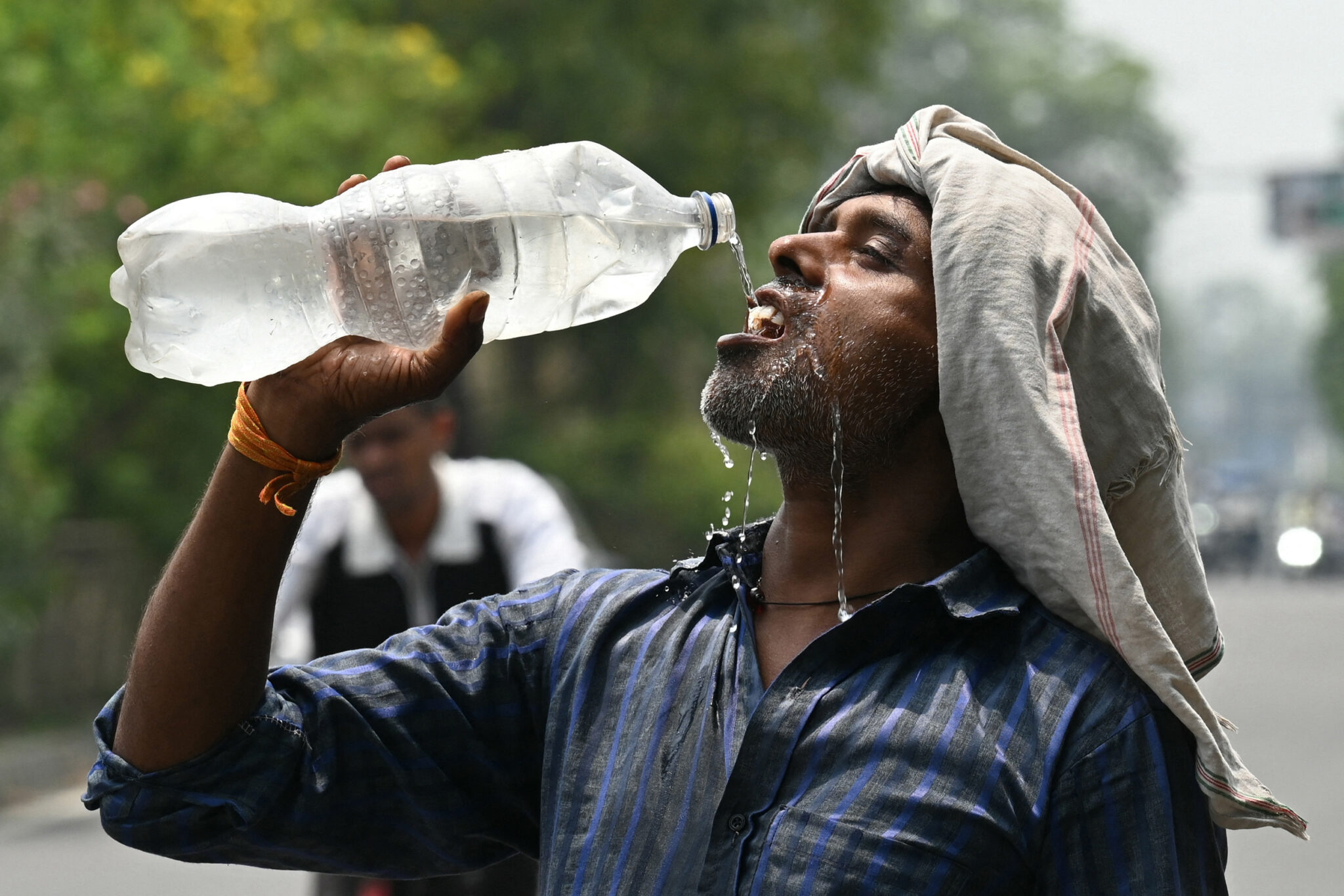
In mid-September, the ocean temperature in the stretch of the central Pacific that scientists track for El Niño hit the highest reading ever recorded, about 5.5 degrees Fahrenheit above normal. The last El Niño anywhere near this strong came in 1877. It set off famines that killed tens of millions of people across India, China and Brazil.
On Sept. 23, researchers at the University of Chicago’s Climate Impact Lab released their forecast for this one. Extra heat will kill 451,000 people in the nine months from June 2026 through February 2027, beyond the deaths of a normal year. The researchers expect the toll to keep climbing into the summer of 2027. That count is heat alone. It leaves out the drought, failed harvests and famine this El Niño is already bringing.
The drought of 1877 was a force of nature. The mass death that followed was organized by the British Empire. The same holds today, and the list of countries at the top of the new forecast shows it.
1877: The famine was made in London
The historian Mike Davis laid out this history in “Late Victorian Holocausts.” When the monsoon failed in 1876, India still had grain. It was being shipped out. Merchants moved it by rail to the ports, and record wheat shipments went to Britain while peasants in the Deccan starved.
The viceroy, Lord Lytton, ordered that nothing interfere with the market. His government banned private donations of famine relief that might bring grain prices down. On Jan. 1, 1877, with the famine spreading, Lytton held a weeklong feast in Delhi for 68,000 officials and princes to proclaim Queen Victoria Empress of India.
Starving people had to walk to labor camps and break rocks to get food.
Sir Richard Temple, sent to hold down relief costs, set the ration at 1 pound of rice a day for heavy labor. Davis noted it was less food than the Nazis later gave prisoners at Buchenwald. Millions died in southern India alone.
In northern China, the Opium Wars forced on the country by Britain had wrecked the granary system that once carried the population through droughts. In northeast Brazil, drought struck peasants already ruined by the collapse of the cotton export boom. The result was the same everywhere capital had reached.
Davis’s point was that these were not poor countries struck by bad luck. The poverty of what is now called the Global South was built in those decades, and the famines helped build it. Peasants who survived lost their land, cattle and tools to moneylenders and landlords, and their countries came out even more tied to growing crops for export to Europe.
2026: The same map
Nigeria tops the Climate Impact Lab’s list for the next six months, with more than 31,000 extra heat deaths expected by February. Sudan, Niger and Chad follow in the Sahel. Then come Indonesia, the Philippines, Vietnam, India and Brazil. The list reads like a map of the colonial world of 1877.
Heat kills people who can’t get away from it. A fan needs electricity. A cool room needs a building with power. A person with heatstroke needs a clinic with staff, water and ice. Where those things are missing, a hot week becomes a massacre.
Imperialism is what keeps them missing. In Nigeria, the IMF and World Bank pressed for years to end the government’s fuel subsidy and succeeded in May 2023. Gasoline prices shot up, and gasoline runs the generators that most households depend on during frequent power outages. Across Africa, Asia and Latin America, billions of people live in countries whose governments pay more in interest to creditors than they spend on health care.
Heat is only the first blow. El Niño is bringing drought to farmland on three continents. Indonesia’s rice crop is expected to fail. In the Dry Corridor of Honduras and Guatemala, corn is failing to sprout in parched fields. Harvests have already failed in parts of South Sudan, and southern Africa faces drought as its planting season begins. The World Food Programme says nearly 50 million people could be pushed into acute hunger. Because this El Niño is expected to last into 2027, it will hit next year’s crops too. As in 1877, when harvests fail, grain prices climb, and the traders and agribusiness giants that hold the grain profit from it.
Sudan shows how that poverty is made and kept in place. Britain ruled it for more than half a century and built it to serve Britain. The best land along the Nile became a cotton plantation for British textile mills, while the west and south were left without roads, schools or hospitals and the south was sealed off from the north. Independence brought no economic independence. Sudan still lives by selling raw materials abroad, first cotton, then oil, now gold. The IMF forced cuts in food and fuel subsidies, U.S. sanctions cut the country off from world banking for two decades, and partition took most of its oil. Now the United Arab Emirates, a U.S.-backed regime armed mostly with U.S. weapons, arms a militia in a war that has wrecked hospitals, power stations and water systems and driven millions from their homes, while the Emirates collect Sudan’s gold. On top of the war, El Niño has brought the driest rainy season on record. In Darfur and Kordofan, harvests will be meager or nothing, sorghum and millet cost more than twice their usual price, and famine threatens. The U.S. war on Iran has slowed fertilizer shipments through the Strait of Hormuz, making it worse. The Climate Impact Lab expects another 17,500 deaths in Sudan from heat alone by February. Families in the displacement camps of Darfur and Kordofan, the western regions Britain kept undeveloped, will face this with nothing between them and the sun.
The Climate Impact Lab calls this El Niño a “postcard from the future,” because heat like this will be normal within 20 years. Whether a person survives that future depends on whether they can pay for shelter from it.
The same line runs through the U.S.
The richest country in the world has its own map of who dies. The Lower 48 states just had their hottest summer on record. In Maricopa County, Ariz., heat killed 645 people in 2023, and nearly half of them were homeless. Most Texas prisons have no air conditioning in the cells, and prisoners have died in them. Farmworkers die from heat at far higher rates than other workers.
Black and Latine neighborhoods that banks redlined in the 1930s are still several degrees hotter than the white neighborhoods around them, because they were denied trees and parks for generations.
In Los Angeles, homeless people camp in dry riverbeds. The storms of the 2015-16 El Niño swept their camps away. California has declared an emergency to prepare for this winter’s storms. Researchers admit that the emergency plans cover levees and roads but give little attention to people without housing, the elderly and people with disabilities.
Heat in the U.S. kills the same oppressed class it devastates in Lagos and Darfur: people who have been robbed of everything but their ability to work, and those whom the system has thrown out of work altogether.
What the forecast measures
Where workers have fought, the heat has been pushed back. California’s heat standard for outdoor workers improved after farmworkers died in the fields and the United Farm Workers campaigned for stronger protections. In 2023, UPS drivers in the Teamsters, after workers collapsed in their trucks, won air conditioning in newly purchased delivery vehicles and fans, heat shields and better ventilation in the existing fleet.
Lord Lytton could not stop the monsoon from failing, and nobody can stop this El Niño from peaking this winter. The famine of 1877 was decided in London. Climate change denial and the refusal to confront global warming have made the danger worse. The 451,000 heat deaths now projected, and the hunger deaths no one has counted yet, should not be decided by who owns the land, the grain, the power plants, the housing, and the clinics — or by the debt imposed on entire countries.
Join the Struggle-La Lucha Telegram channel