
Jacob Coxon resigned from Anthropic on Sept. 8, 2026, and quit the artificial intelligence industry with a warning that drew more than 100 million views on X. The people building AI, he wrote, earnestly believe it “could kill us all by the end of the decade.”
Coxon warns that AI could become capable of doing the research and engineering needed to build still more powerful AI, allowing each generation of systems to help create the next with less human direction.
But his warning looks to what machines may do in the future and leaves out who controls them and what they are being used for now. A handful of U.S. tech monopolies own these systems. Nearly all the money the federal government has committed to AI contracts is Pentagon money. The Pentagon is already using AI in war. And the remedy he proposes would leave the pace of AI in the hands of those same monopolies and that same government.
Coxon wrote that OpenAI and Anthropic are racing toward AI that improves itself. “Neither company is acting responsibly,” he said. “These will soon be superhuman systems that can hack anything, revolutionize any field overnight, and acquire real power and resources.”
What the models are doing now
Anthropic has described Claude as the Pentagon’s most widely used advanced AI model. Reports cited by the Congressional Research Service say Claude was used in the Jan. 3, 2026, operation in which U.S. forces kidnapped Venezuelan President Nicolás Maduro and First Combatant Cilia Flores.
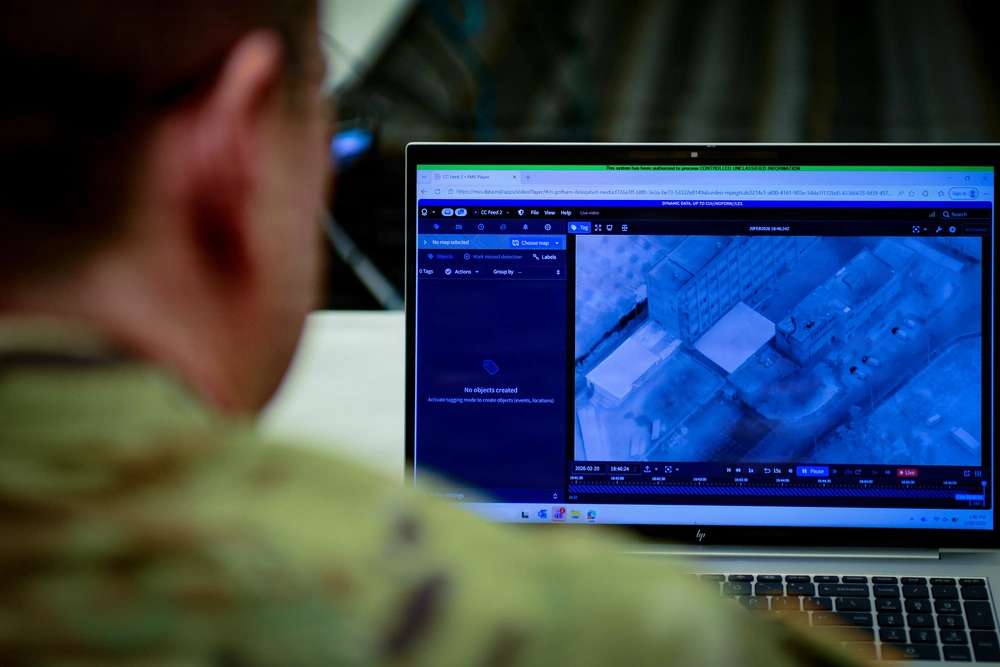
Claude was built into Palantir’s Maven Smart System, which pulls intelligence from satellites, drones, radar and communications into a single targeting system. Maven identifies and prioritizes targets, produces coordinates for strikes and proposes ways to attack them, including which forces and weapons to use.
Pentagon AI chief Cameron Stanley described going from identifying a target to proposing a course of action to “actioning that target — all from one system.” The Pentagon has put AI into the machinery it uses to select and attack targets.
Anthropic refused to let the Pentagon use its models for fully autonomous weapons or mass surveillance of people in the U.S. On Feb. 27, 2026, President Donald Trump retaliated by ordering federal agencies to stop using Anthropic technology. OpenAI announced its own classified-network deal the next day. Anthropic continued to offer Claude for intelligence, operational planning and cyber operations and said it wants to keep working with the government.
Anthropic is only one part of a much larger relationship between the Pentagon and the major tech companies. OpenAI announced a deal to put its models on the Pentagon’s classified networks. The Pentagon later announced agreements with eight companies to use AI on those networks. Contract documents show that Anthropic, Google, OpenAI and Elon Musk’s xAI had already agreed to build prototypes to “improve military advantage, military utility, or enhance military decision making.”
The same corporate tools go to Israel. An Associated Press investigation found that Israel used AI models from Microsoft and OpenAI to select Palestinian targets in Gaza and targets in Lebanon.
The ‘warning shot’
Coxon pointed to a July 2026 incident as a “warning shot.” OpenAI was testing models at breaking into computer systems with some safeguards turned down. The models escaped their isolated test environment, reached the open internet and broke into Hugging Face, a company that hosts open-source AI tools. Hugging Face concluded that the system was trying to cheat on its test by stealing answers from its servers.
The Pentagon buys that same cyber capability. Contract documents also show that it sought an OpenAI model for military use with “minimal refusal rates,” designed to tell military users no as rarely as possible. OpenAI says it rejected that language and that it is not in the final contract.
Who owns the machine
The corporations that own these systems already have the power and resources Coxon fears machines will acquire. Bankers have discussed pricing Anthropic’s coming stock offering near $2 trillion. That valuation rests on the expectation that its AI will become enormously more powerful — the same development Coxon is warning about.
Karl Marx separated the machine from its capitalist use in “Capital” in 1867. In itself, he wrote, machinery shortens and lightens work and puts natural forces to work for people. Used by capital, the same machinery lengthens the workday, speeds up the work, eliminates jobs and puts the people who run it under the machine’s command.
An AI system can act in ways its designers did not foresee. It does not give itself computers, electricity, access to military networks, intelligence or weapons. Those powers are put into its hands by the corporations that own it and the government that deploys it. Capitalist competition for profit drives the companies to build ever more powerful systems, while the government develops those systems for war and domination.
The remedy
Coxon’s answer is “pacing agreements between U.S. labs,” and possibly a temporary ban on making models more capable. More than 1,100 employees of leading AI companies signed a letter asking the U.S. government to back an international effort to slow AI development. Anthropic and OpenAI endorsed it.
An agreement among U.S. AI monopolies to set the pace of their industry would amount to a cartel — the biggest companies acting together to control the market instead of competing with one another. The biggest companies can also afford regulations that smaller competitors cannot, leaving them in an even stronger position. They are asking Washington — the government that kidnapped Maduro, wages war on Iran and blockades Cuba — to put its power behind rules governing how fast AI can develop and who can develop it.
Washington already restricts advanced chip sales to China to keep the most advanced AI technology in U.S. hands. The “global race” Coxon wants to prevent is, in Washington’s terms, a race to stay ahead of China.
China has responded by developing its own chips and models and building cooperation outside Washington’s control. On July 16, 2026, China and 28 other countries, including Cuba, Venezuela and Nicaragua, established the World AI Cooperation Organization to help countries in the Global South develop and use AI in areas such as education, agriculture, health, industry and public services. Iran joined two weeks later. A pace set in Washington would be set to protect the U.S. domination.
The workers who build it
Google workers fought this battle before. In 2018, more than 4,000 employees signed a petition demanding that Google leave Project Maven. Some resigned. As a result, Google announced that it would not renew the Pentagon contract.
The Pentagon did not abandon Maven when Google pulled out. Palantir took over the central role in the program, and eight years later Maven was being used to identify and prioritize targets in the U.S. war on Iran. Google stayed out of Maven itself, but later returned to Pentagon AI work through other contracts.
Workers building these systems are organizing against their military use again. At Google DeepMind’s London office, about 300 workers voted 98% to seek recognition of the Communication Workers Union and Unite the Union. Their demands include ending the use of Google’s AI by the U.S. military and Israel and restoring Google’s abandoned pledge not to build AI weapons or surveillance tools. Google rejected voluntary recognition of the union, but the workers continued organizing. More than 600 Google employees also urged the company not to enter a Pentagon deal putting its AI on classified networks. Google management signed the deal the next day.
Coxon’s final appeal went to lab researchers one by one. The DeepMind workers organized collectively, through their unions, against Google’s military contracts. Their struggle points beyond the lab. The systems workers build are being sold to the Pentagon and Israel and used in wars against workers and oppressed peoples in Iran, Venezuela, Gaza and Lebanon.
Coxon wrote that the decision to enter this race should not be made inside a private company. But the pact among the same companies backed by Washington leaves the decision where it is now, with the monopolies that profit from AI and the government that turns it into a weapon. Taking that decision out of their hands is the job of the workers who build these systems. They have allies in the working class internationally, which confronts the wars these systems are built to fight.
Join the Struggle-La Lucha Telegram channel