
The U.S. war on Iran is driving up Japan’s oil bill and exposing a deep weakness in its economy.
Japan buys nearly all its oil from West Asia, most of it shipped through the Strait of Hormuz. The war has choked tanker traffic and driven up the cost of oil, shipping and insurance.
Oil is bought in dollars, and the scramble for dollars has made the yen worth less. In late July, it took more yen to buy one dollar than at almost any time in the past 40 years — making every barrel of imported oil cost even more.
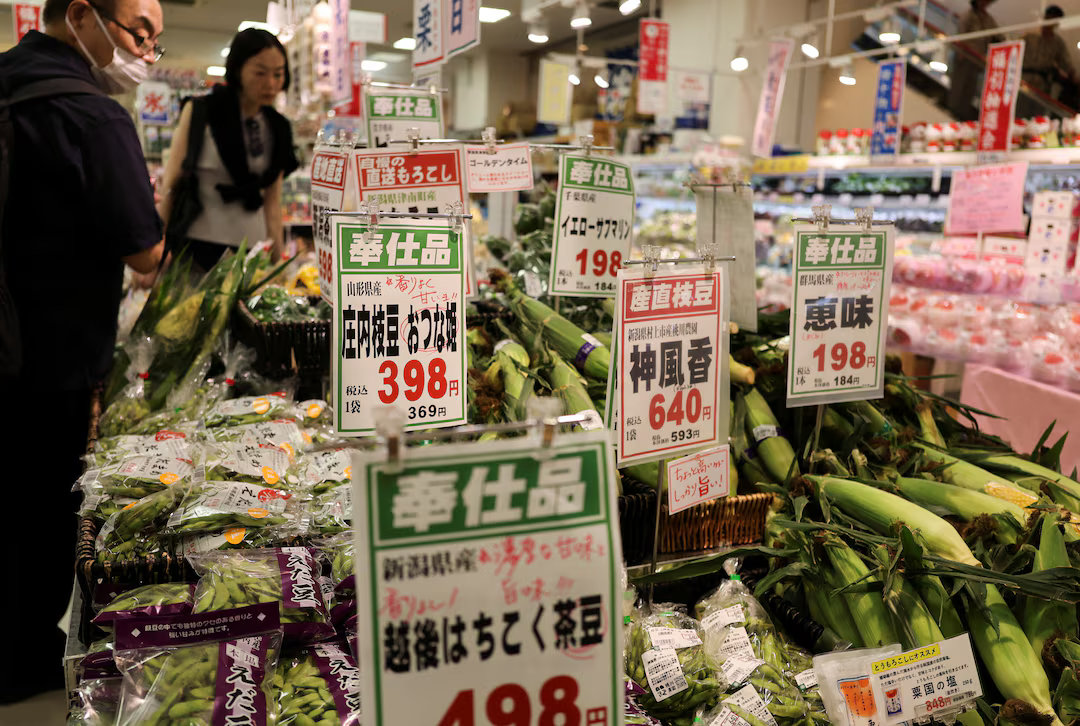
For Japanese workers, that means higher prices for food, fuel and daily necessities. Japan’s economy was already barely growing: real GDP is little higher than it was in 2018. Consumer prices have risen about 12% since 2021, while real wages are about 7% below their 2018 level. The war is making that squeeze worse.
The damage is now reaching Japan’s banks.
For years, Japan’s banks, insurers and pension funds lent the government enormous sums, buying its bonds when interest rates were near zero. Those bonds looked safe. They aren’t. On July 9, the government’s cost of borrowing hit its highest in nearly 30 years, and the old low-interest bonds are now worth far less than the banks paid. They are stuck holding mountains of them.
The Bank of Japan is cornered. Raising interest rates could slow the yen’s fall, but it would drive down the value of those bank-held bonds still further. It would also make business and housing loans more expensive and threaten companies that have survived for years on cheap credit. Keeping rates low lets the yen keep sliding, driving up the cost of imported oil, food and raw materials.
There is no safe way out. The war did not create these weaknesses, but it is driving them together and pushing Japan toward a currency and economic crisis.
An unequal imperialist alliance
Japan is not a colony or a poor country dominated by foreign capital. It is an imperialist power with powerful banks, industrial monopolies and investments around the world.
But its alliance with the United States is unequal.
Japan’s formal U.S. occupation ended in 1952, but the troops never left. About 54,000 U.S. troops remain stationed across a vast network of bases and military installations in Japan — the largest permanent U.S. garrison in any foreign country. Okinawa makes up less than 1% of Japan’s territory but carries about 70% of the land reserved exclusively for U.S. bases.
Japan remains, in military terms, an occupied country. No other major capitalist power carries a foreign military occupation on this scale. Germany comes closest, with more than 36,000 U.S. troops — another military presence that grew directly out of Washington’s occupation after World War II.
The occupation of Japan is one piece of a U.S. military grip on the whole region. Washington also stations about 29,000 troops in South Korea, an occupation that began when it seized the southern half of Korea after Japan’s defeat in 1945. The 1953 armistice halted open fighting, but the U.S. war on Korea never ended.
Japan’s postwar constitution, written under the U.S. occupation, renounced war. Japan created Self-Defense Forces in 1954. But Article 9 — backed by a powerful antiwar movement — kept them largely to home defense for decades and out of Washington’s wars.
That limit benefited Japanese capitalism. While Washington supplied the main war machine, Japan could put more of its wealth into factories, technology and exports instead of maintaining armed forces for war abroad. West Germany prospered under a similar arrangement during the Cold War.
Over the past decade, Washington has pushed Japan to cast aside the limits its own postwar occupation put in place. New laws allow Japanese forces to fight in support of the United States. Tokyo is buying long-range missiles and rapidly increasing military spending for the U.S. buildup against China.
Japan’s armed forces are growing, but they are being built into the U.S. war machine. Japan’s southwestern islands, especially Okinawa, form the northern anchor of the “first island chain” — the line of bases, missiles and warships Washington is building along China’s coast.
Washington controls the larger military apparatus.
The occupation also built the political order that still governs Japan. Washington strengthened the conservative ruling bloc against the labor and communist movements. After the Liberal Democratic Party was formed in 1955, the CIA secretly financed the party that ruled Japan for most of the next seven decades.
The arrangement serves both ruling classes. U.S. military power protects the sea routes, investments and foreign markets on which Japanese capital depends. Japan supplies bases, industrial capacity and financial support for the U.S.-led imperialist system.
The two powers cooperate to defend capitalist property, confront China and preserve the dollar-centered financial system. They also compete over markets, technology and profits.
Washington holds the dominant position. It controls the alliance’s main war machine and issues the dollar used for most world trade.
The war on Iran shows how the unequal alliance works.
Washington made the decision and launched the attack. Japan did not send its own forces to bomb Iran, and Prime Minister Sanae Takaichi held back from Trump’s demand for Japanese warships in the Strait of Hormuz.
But Japan is not outside the war. Two U.S. destroyers based at Yokosuka — the USS John Finn and USS Milius — were sent to the Arabian Sea for the attack on Iran. The Milius fired Tomahawk missiles during the operation. Japan also keeps a destroyer and patrol aircraft in the Gulf of Oman and northern Arabian Sea, gathering information on shipping.
Tokyo backed statements blaming Iran for the disruption of the Strait and said it would consider sending Japanese forces to clear mines from the Strait once the fighting stopped.
Japan’s ruling class helps supply the bases, money and political support behind the U.S. war machine. But it does not control that machine. Washington launches the war, while Japan absorbs part of the damage through higher energy costs, a falling currency and turmoil in its banks.
Japan helps finance U.S. power
The unequal alliance is financial as well as military.
For decades, Japan sold cars, machinery and electronics across the world and took in dollars. To keep those goods cheap abroad, Tokyo pushed the yen down, buying up still more dollars to do it. The hoard grew enormous.
Japanese banks, insurers and government agencies have lent Washington about $1.1 trillion by buying U.S. Treasury bonds. That money helps finance the U.S. government, its military and its wars.
The arrangement also helps Japan’s biggest corporations. When one dollar buys more yen, Japanese companies can charge less for their cars and machinery abroad without taking in less money at home. The dollars they earn overseas also bring them more yen when they bring the profits back to Japan.
But it ties Japanese finance to Washington.
To stop the yen from losing more value, Japan can use some of the dollars it has saved to buy yen. But much of Japan’s dollar wealth is tied up in U.S. government bonds. If Japan sells large amounts of those bonds, their price falls and Washington has to pay more interest to borrow money. The bonds Japan still owns also lose value.
On Aug. 1, Washington joined Japan in buying yen — the first such U.S. intervention since 1998. The yen recovered part of its losses.
U.S. officials also urged Japan to use a Federal Reserve lending program that would let it borrow dollars against its Treasury bonds instead of selling them.
Washington had its own interests to protect. Large Japanese sales of U.S. government bonds could raise Washington’s borrowing costs. And as investors sold yen and bought dollars, the dollar became more expensive, making U.S. goods harder to sell abroad. But the intervention did nothing about the war’s oil bill or the demand for dollars pushing the yen down.
The dependence runs both ways, but Washington holds the upper hand.
Too many data centers
Japan’s financial danger extends beyond its holdings of U.S. bonds. For years, speculators borrowed yen at near-zero interest and used the money to buy stocks, bonds and other assets around the world. That flood of cheap credit helped inflate technology stocks tied to the AI and data-center boom.
Now Japanese interest rates are rising. That makes borrowing yen less attractive. Speculators who borrowed yen to buy stocks and other investments may have to sell those investments and buy yen to repay what they owe. When that happened suddenly in August 2024, stock markets around the world fell sharply. A larger selloff could hit technology companies already depending on enormous spending and easy credit.
Washington has demanded that Japan spend more on war and build up its armed forces for the U.S. confrontation with China. Takaichi has folded that buildup into her economic program, sharply increasing military spending and weapons production. At the same time, her government is directing public and private investment toward industries such as AI, semiconductors and aerospace.
That may keep orders flowing for a time. But it also adds debt, electricity demand and productive capacity just as energy and credit are becoming more expensive. The same program meant to rescue Japanese capitalism may deepen the crisis already taking shape.
The oil shock is hitting a capitalist economy already loaded with debt, speculation and excess productive capacity. The data-center boom is one of the clearest examples.
Japan is part of a worldwide boom in AI and data centers, much of it driven by the biggest U.S. technology corporations. Their spending creates orders far beyond the United States — for chips, electrical equipment, machinery and power infrastructure, including products made by Japanese companies.
Amazon, Microsoft, Alphabet and Meta plan to spend more than $700 billion in 2026, much of it on data centers, chips, servers and the power systems needed to run them. Each is betting that it will capture a large share of the future market for artificial intelligence. The boom creates huge orders for steel, concrete, servers, transformers and electrical equipment. Rising stock prices and easy credit make the expansion appear limitless.
But the technology companies do not plan production together. Each builds for its own profit without knowing how much total computing capacity can actually earn a profit. The industry may find it has built more than the market can support — not more than society could use, but more than can be run at a profit.
The expansion depends on cheap power and cheap credit. Both are becoming more expensive. If projects are delayed or canceled, orders for chips, transformers, construction materials and power equipment will fall. Suppliers will then cut their own orders.
For workers, that is when the boom becomes a crisis: production is cut, jobs disappear, and families lose the wages they depend on to live.
Credit hides the crisis
Capitalist crises are crises of general overproduction — more commodities are produced than can be sold at a profit, leaving factories and other productive capacity idle.
Credit hides the problem during the boom. A new data center creates orders for servers, steel and electrical equipment. Suppliers expand and borrow in turn.
Then costs rise and banks pull back. Projects are canceled. Orders fall. Factories cut production. Weaker companies collapse.
There is no contradiction between scarce oil and too many cars, chips or data centers. Oil can be expensive while other industries have built more than the market can support.
Japan’s falling yen and bond losses show the strain is already building. If it spreads, construction projects will be canceled, goods will pile up unsold, banks will cut lending, factories will cut production and workers will lose their jobs.
A deal over Hormuz might calm markets. It cannot erase the debts and losses already created.
The oil shortage is not itself the capitalist crisis. But it may bring the deeper crisis of general overproduction into the open.
Japan helps provide the bases, money and industry for a U.S. war machine it does not control. Now Washington’s war on Iran is driving up Japan’s costs and pushing its economy toward crisis.
Japanese workers get the bill first: a weaker currency, costlier food and fuel, and wages that buy less. They had no say in the war being waged in their name.
Join the Struggle-La Lucha Telegram channel